Sleep Apnea Tests for DOT Compliance: What tests are accepted?
Sleep apnea testing for DOT compliance helps determine whether commercial drivers can safely operate a commercial motor vehicle under FMCSA guidance. The article explains why untreated obstructive sleep apnea raises crash risk and how medical examiners screen for risk during a DOT physical. It outlines common referral triggers such as BMI, neck circumference, hypertension, and symptoms like snoring and daytime sleepiness. It clarifies that only in-lab polysomnography and physician-ordered home sleep tests are accepted for DOT documentation. Readers learn how to interpret AHI/RDI results and what scores mean for certification. It also covers treatment options, required compliance evidence, and how to stay certified with proper documentation.
Struggling with sleep?
Find out if sleep apnea is the reason.
FDA-cleared. $149 flat. Physician-reviewed results in 48 hours.

Sleep Apnea Tests for DOT Compliance: What tests are accepted?
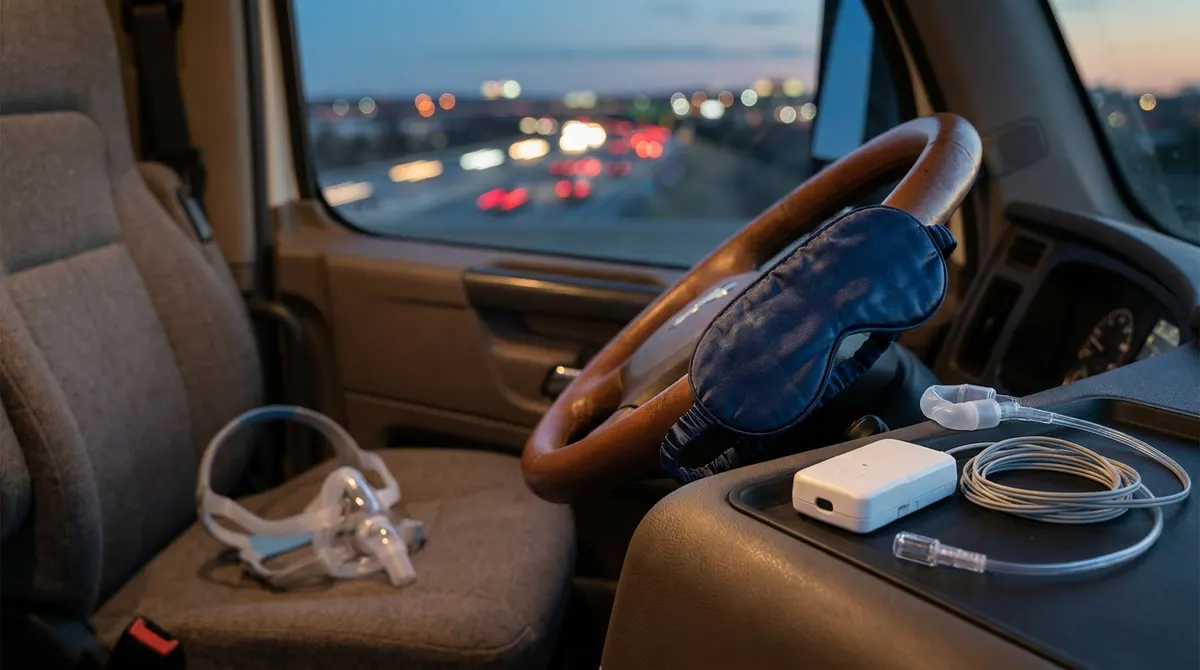
Sleep apnea testing for DOT compliance is the medically required process that determines whether a commercial driver is safe to operate a commercial motor vehicle under Federal Motor Carrier Safety Administration guidelines. According to the FMCSA, any medical condition that impairs safe driving can disqualify a driver from operating a commercial motor vehicle, and untreated obstructive sleep apnea ranks among the most common conditions flagged during DOT physicals. This guide covers which sleep apnea tests are accepted for DOT compliance, how the testing process works, what your results mean for your CDL, and how to demonstrate treatment adherence so you can stay on the road. Whether you are a long-haul truck driver, a bus operator, or any other commercial vehicle operator working under Department of Transportation regulations, understanding these requirements protects both your career and everyone sharing the road with you.
Why Sleep Apnea Testing is Non-Negotiable for DOT Commercial Drivers
Sleep apnea testing is non-negotiable for commercial drivers because the FMCSA holds medical examiners responsible for certifying that every driver is physically qualified to operate a commercial motor vehicle safely. Untreated obstructive sleep apnea directly impairs the alertness and reaction times that commercial driving demands.
The Link Between Obstructive Sleep Apnea (OSA) and Driving Performance

Obstructive sleep apnea is a respiratory disorder in which the upper airway repeatedly collapses during sleep, causing brief but repeated breathing interruptions throughout the night. According to the NIH, these interruptions fragment sleep architecture, preventing restorative deep sleep and leaving the driver in a state of chronic sleep deprivation regardless of how many hours they spend in bed.
The consequences for driving performance are measurable. Research reviewed by the FMCSA shows that commercial drivers with untreated obstructive sleep apnea can have crash rates up to five times higher than drivers without the condition. Reaction times are significantly slower, lane-keeping deteriorates, and the risk of microsleep episodes increases during long hours behind the wheel. For a truck driver operating a vehicle weighing tens of thousands of pounds, even a two-second lapse in attention at highway speed covers enough distance to cause a fatal collision.
Daytime sleepiness is not simply a matter of feeling tired. The Sleep Foundation explains that fragmented sleep caused by repeated apnea events reduces cognitive function in ways that the affected driver often cannot self-assess accurately, meaning many commercial drivers with moderate to severe obstructive sleep apnea genuinely believe they are performing normally when their driving performance is significantly compromised.
DID YOU KNOW: Studies reviewed by the FMCSA suggest that commercial motor vehicle drivers with untreated obstructive sleep apnea are involved in significantly more crashes compared to drivers who have received adequate treatment, underscoring why the Department of Transportation treats sleep disorders as a road safety priority.
How Fatigue and Sleepiness Increase Accident Risk for Commercial Motor Vehicle Operators
Fatigue from untreated sleep apnea is distinct from ordinary tiredness. Obstructive sleep apnea causes oxygen desaturation during each apnea event, which triggers a micro-arousal from deep sleep to lighter sleep stages. Over a typical night, a driver with moderate to severe obstructive sleep apnea may experience 15 to 30 or more of these events per hour, resulting in hundreds of micro-arousals without the driver ever fully waking. The cumulative effect on daytime alertness mirrors the impairment seen with acute sleep deprivation.
For commercial motor vehicle operators, who frequently work long hours, irregular schedules, and overnight routes, this chronic impairment compounds existing fatigue risk factors. The FMCSA has consistently identified driver fatigue as one of the leading contributors to large truck crashes, and sleep disorders such as obstructive sleep apnea are a primary medical cause of that fatigue.
FMCSA's Stance on Sleep Disorders and Road Safety
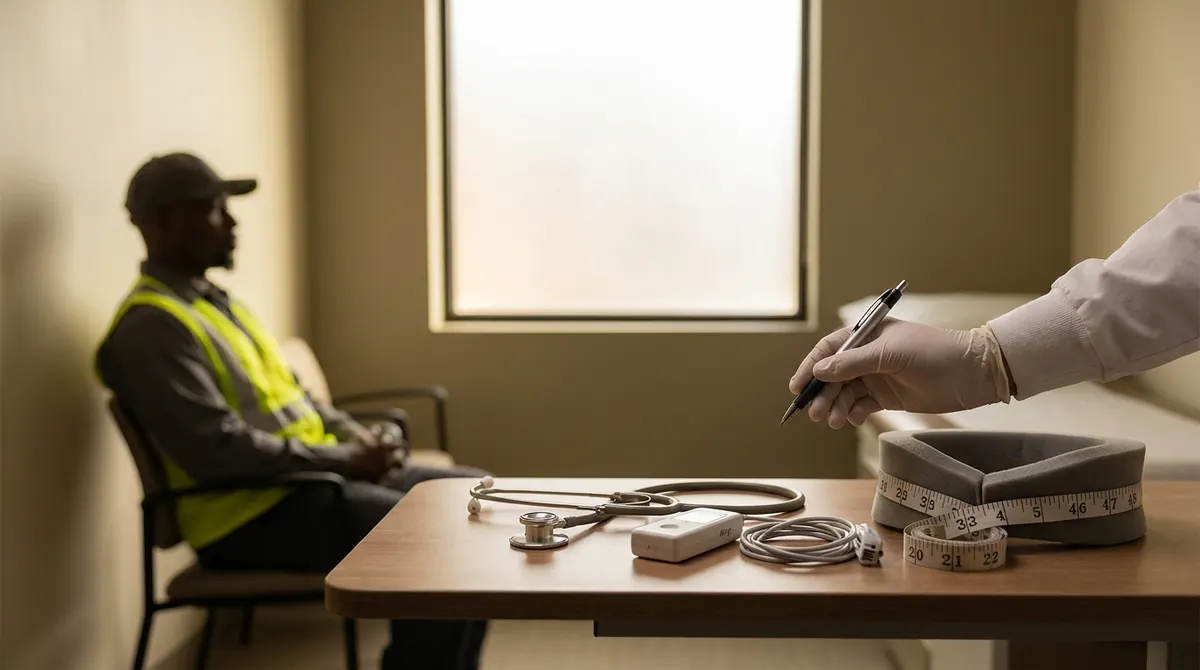
The FMCSA does not currently have a single federal regulation that mandates sleep apnea testing for all commercial drivers. However, the FMCSA's Pulmonary Standard grants medical examiners the authority and the professional discretion to require sleep apnea testing when a driver presents risk factors during a DOT physical. This means the decision rests with the certified medical examiner, and drivers who present identifiable risk factors should expect to be referred for formal sleep apnea testing before receiving full medical certification.
Drivers who receive a three-month temporary medical certificate are typically given that window specifically to complete a sleep study and return with documented results. Failing to complete the required sleep apnea test within that window can result in loss of medical certification.
The Medical Examiner's Role in Assessing Sleep Apnea Risk during a DOT Physical
Medical examiners listed on the FMCSA's National Registry are trained to screen for sleep apnea risk during a DOT physical exam. Screening criteria include body mass index, neck size, blood pressure readings, reported symptoms of daytime sleepiness, and prior sleep apnea diagnosis history. A neck circumference greater than 17 inches in males or 15.5 inches in females is widely recognised as a significant anatomical risk factor. A body mass index above 33 combined with other risk factors, or a BMI above 40 alone, typically triggers a mandatory referral for sleep apnea testing. High blood pressure, particularly when resistant to treatment, is also a recognised marker that medical examiners are trained to flag.
If your medical history, physical measurements, or reported symptoms meet these thresholds, your medical examiner will require you to undergo a sleep apnea test before issuing a full two-year medical certificate.
Consequences of Non-Compliance: Certification Issues and CDL Revocation

Ignoring a referral for sleep apnea testing has direct consequences for your commercial driver's license. A driver who fails to complete required testing within the period specified on a temporary medical certificate will be considered medically unqualified to drive. If a driver continues to operate a commercial motor vehicle after their medical certificate expires or is restricted, they and their employer are exposed to serious regulatory and legal liability. A diagnosis of moderate to severe obstructive sleep apnea, without demonstrated treatment, results in immediate disqualification from driving a commercial motor vehicle. Drivers who receive treatment and demonstrate compliance can be recertified, typically on an annual basis rather than the standard two-year cycle.
KEY TAKEAWAY: Untreated obstructive sleep apnea is a direct disqualifier for commercial drivers, but drivers who complete appropriate testing and demonstrate treatment compliance can maintain their CDL and continue working.
Understanding what triggers a referral for sleep apnea testing sets the foundation for knowing exactly which tests your medical examiner will accept as valid for DOT compliance purposes.
The Core: Which Sleep Apnea Tests Are Accepted for DOT Compliance?
The two accepted sleep apnea tests for DOT compliance are in-laboratory polysomnography and home sleep testing. Both methods can produce the diagnostic evidence a medical examiner needs to certify a driver's sleep apnea status, provided they are ordered by a qualified medical provider and interpreted by a certified sleep physician.
In-Lab Polysomnography (PSG): The "Gold Standard" Sleep Study
In-laboratory polysomnography is the most comprehensive sleep apnea test available and is widely regarded as the diagnostic gold standard by the American Academy of Sleep Medicine. During a full polysomnography study, the patient spends a night in a sleep lab while a technician monitors and records a wide range of physiological data including brain activity via electroencephalogram, eye movements, muscle activity, heart rhythm, respiratory effort, airflow, and blood oxygen levels.
Polysomnography produces an Apnea-Hypopnea Index score, which measures the number of breathing interruptions per hour of sleep. An AHI of 5 to 14 indicates mild obstructive sleep apnea, an AHI of 15 to 30 indicates moderate obstructive sleep apnea, and an AHI above 30 indicates severe obstructive sleep apnea. For commercial drivers, an AHI above 20 events per hour is generally considered the threshold at which treatment becomes mandatory under most medical examiner guidance frameworks.
In-lab polysomnography is particularly recommended when a driver's presentation is complex, when initial home sleep test results are inconclusive, or when the driver presents with comorbidities such as heart disease, severe obesity, or neurological conditions that could affect sleep architecture. Many drivers find that access to a sleep lab near you is easier than expected, as sleep medicine centres are available in most major cities and can often schedule studies within a few weeks of referral.
Home Sleep Tests (HST): A Convenient and Increasingly Accepted Option
A home sleep test is a simplified sleep apnea diagnostic tool that a driver uses in their own environment, typically at home or in a hotel room, making it a particularly practical option for commercial drivers with demanding travel schedules. Home sleep testing uses a portable device with chest, finger, and wrist sensors that measure airflow, respiratory effort, blood oxygen levels, and body position throughout the night.
Home sleep tests are increasingly accepted for DOT compliance purposes when ordered by a qualified physician and interpreted by a certified sleep physician. The key requirement is that the test must generate a formal diagnostic report with an AHI or Respiratory Disturbance Index score that a medical examiner can review and document. Advanced at-home sleep testing technology has improved significantly, and modern home sleep test devices produce clinically valid results for the majority of commercial drivers who do not have complex comorbidities.
Dumbo Health's at-home sleep test offers a convenient option for commercial drivers who need fast, clinically valid sleep apnea testing without taking extended time away from their route. The process involves an online consultation, a mailed device, and a results report reviewed by a certified sleep physician, which can then be shared directly with your medical examiner.
Home sleep tests are generally less expensive than in-lab polysomnography and produce results more quickly, making them a strong first-line option for drivers who are referred for sleep apnea testing during a DOT physical exam. If you are looking for providers in your area, telehealth-enabled home sleep testing means geography is rarely a barrier.
DID YOU KNOW: According to the American Academy of Sleep Medicine, home sleep testing is clinically appropriate for the diagnosis of obstructive sleep apnea in patients without significant comorbid conditions, which describes the majority of commercial drivers referred for sleep apnea testing during a DOT physical.
What Tests and Screenings are NOT Accepted for DOT Compliance
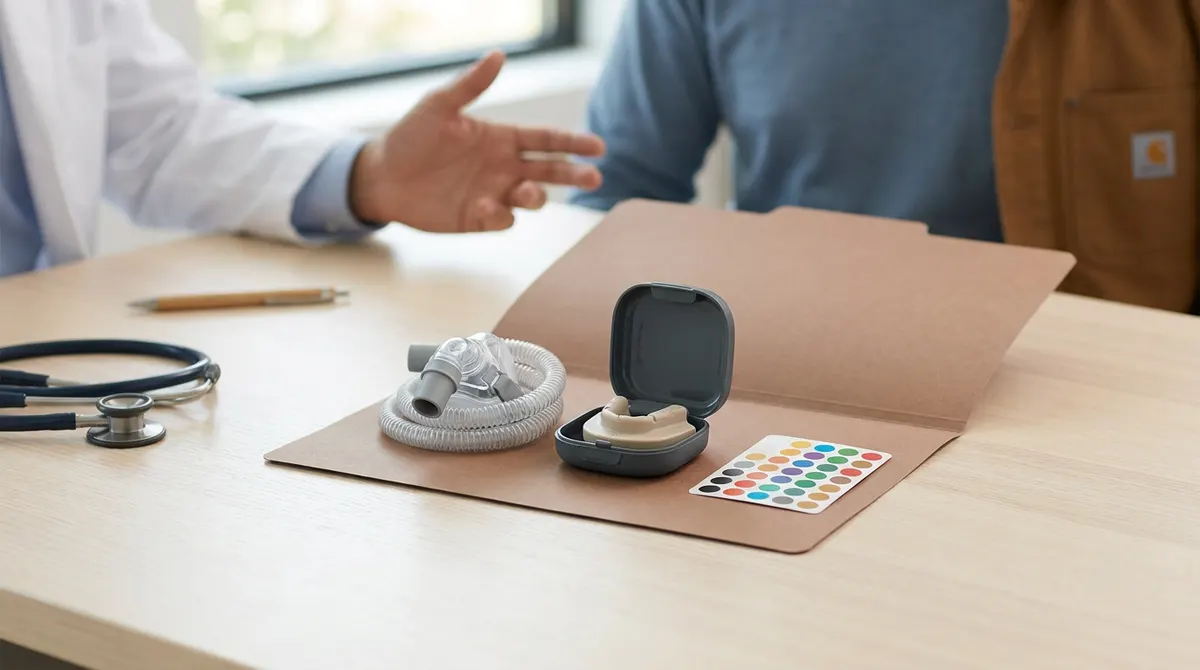
Several commonly available screening tools do not meet the standard required for DOT compliance and cannot substitute for a formal diagnostic sleep study. These include:
Questionnaires such as the Epworth Sleepiness Scale or the STOP-BANG sleep apnea screener, which are risk-stratification tools and not diagnostic tests
Consumer wearables such as smartwatches or fitness rings that estimate sleep patterns, even if they provide AHI-like metrics
Oximetry testing alone, which records blood oxygen levels but does not produce the full diagnostic picture required for formal sleep apnea diagnosis
Self-reported sleep data or app-based sleep tracking, regardless of the platform
A general physician's clinical opinion without supporting sleep study data, unless that physician is also a certified sleep physician interpreting a formal study
A sleep apnea screener used during a DOT physical is a risk identification tool, not a diagnostic result. A driver flagged by a screener still requires a formal polysomnography or home sleep test before a medical examiner can make a determination about their certification status.
KEY TAKEAWAY: Only in-laboratory polysomnography and physician-ordered home sleep tests produce the formal diagnostic reports that medical examiners can accept for DOT compliance. Screenings, wearables, and questionnaires do not qualify.
Knowing which tests are accepted is only the first step. Understanding how to navigate the actual testing process ensures you complete it efficiently and get back behind the wheel with full certification.
Navigating the Sleep Apnea Testing Process for DOT-Certified Drivers
The sleep apnea testing process for DOT-certified drivers follows a clear sequence from initial referral to formal diagnosis. Knowing each step in advance allows you to move through it efficiently and minimise disruption to your driving schedule.
Identifying the Need: Symptoms and Risk Factors for Sleep Apnea
Common symptoms that prompt a medical examiner to require sleep apnea testing include loud snoring, witnessed pauses in breathing during sleep, waking with headaches, persistent daytime sleepiness despite adequate time in bed, and difficulty concentrating during long hours of driving. You can review a full breakdown of the 9 most common sleep apnea symptoms to assess your own risk before your next DOT physical.
Key physical risk factors include a body mass index above 33, neck size above 17 inches for males or 15.5 inches for females, high blood pressure, and a prior sleep apnea diagnosis. Age above 40 and male sex are also recognised risk factors. Identifying these factors before your DOT physical exam allows you to proactively consult a sleep physician rather than waiting for a referral.
Consulting with Medical Professionals: Your First Steps
Once referred for sleep apnea testing, your first step is to consult with a qualified medical provider who can order the appropriate test. This may be a sleep physician, a pulmonologist, or a primary care provider with the authority to order sleep diagnostics. Many commercial drivers now access this consultation through telehealth, which eliminates the need to travel to a clinic and can be completed between routes.
The consulting provider will review your medical history, risk assessment findings from your DOT physical, and current symptoms before determining whether an in-lab polysomnography or a home sleep test is more appropriate for your situation. For most drivers without significant comorbidities, a home sleep test is the recommended starting point.
Obtaining Your Sleep Apnea Test: Prescription and Provider Choice
A formal sleep apnea test requires a prescription or order from a licensed medical provider. You cannot simply purchase a home sleep test device and use the results for DOT compliance purposes. The test must be ordered through a clinical pathway that includes physician oversight and a formal diagnostic interpretation.
When choosing a provider, prioritise sleep medicine professionals who are familiar with DOT requirements and can produce a report formatted to meet medical examiner standards. Providers in your area who specialise in occupational sleep medicine will typically be most efficient at producing the documentation your medical examiner needs.
What to Expect During Your Sleep Apnea Test
For an in-lab polysomnography, you arrive at a sleep lab in the early evening, are fitted with monitoring equipment by a trained technician, and sleep through the night while data is recorded. The study is completely non-invasive. You can expect to sleep in a private room and leave the next morning. Results are typically reviewed and reported within a few days to a week.
For a home sleep test, the device is mailed or collected from a provider. You receive brief setup instructions and wear the device during a normal night of sleep in your own environment. The device records respiratory and oxygen data, which is downloaded and reviewed by a certified sleep physician. Results from a home sleep test are often available within two to five business days of the device being returned, which is significantly faster than most in-lab studies.
People who undergo a home sleep test often find the experience far less disruptive than they anticipated, and many commercial drivers appreciate being able to complete the test during a scheduled rest period without needing to check into a clinic.
KEY TAKEAWAY: The sleep apnea testing process is straightforward and, with home sleep testing, can be completed with minimal disruption to a commercial driver's schedule.
Once your test is complete, the results need to be properly interpreted and documented in a format your medical examiner can accept. Understanding what your results actually mean is the next critical step.
Interpreting Your Sleep Apnea Test Results for DOT Recertification
Sleep apnea test results must be formally interpreted by a certified sleep physician and presented to your medical examiner in a structured diagnostic report. Understanding what the key metrics mean allows you to approach your recertification appointment with confidence.
Understanding the Apnea-Hypopnea Index (AHI) and Respiratory Disturbance Index (RDI)
The Apnea-Hypopnea Index is the primary metric used to classify obstructive sleep apnea severity. It measures the average number of complete breathing pauses (apneas) and partial breathing reductions (hypopneas) per hour of sleep. The Respiratory Disturbance Index is a broader measure that also includes respiratory effort-related arousals and may produce a slightly higher number than the AHI for the same patient.
For DOT compliance purposes, the following AHI thresholds are clinically significant:
| AHI Range | Classification | DOT Implication |
|---|---|---|
| Under 5 | No obstructive sleep apnea | Full certification eligible |
| 5 to 14 | Mild obstructive sleep apnea | Treatment may be recommended; certification review |
| 15 to 30 | Moderate obstructive sleep apnea | Treatment required before certification |
| Above 30 | Severe obstructive sleep apnea | Treatment required; annual recertification |
FMCSA expert panel guidance identifies an AHI above 20 events per hour as the threshold most commonly used to require mandatory treatment before a driver can receive medical certification. For most commercial drivers, mild obstructive sleep apnea with no significant symptoms allows full certification to proceed, while moderate to severe obstructive sleep apnea triggers a treatment requirement before the medical examiner can issue a standard certificate.
The Importance of the Diagnostic Report and Physician's Interpretation
The diagnostic report produced by the interpreting sleep physician is the formal document your medical examiner needs. A complete, compliant report should include the patient's name and date of birth, the test date, the AHI or RDI score, the severity classification, oxygen saturation data, and the interpreting physician's clinical conclusion with their name and credentials.
Bring two copies of this report to your DOT physical exam: one for the medical examiner's file and one for your personal records. Medical examiners are required to document the basis for their certification decision, and a clear diagnostic report makes that process efficient and unambiguous.
Next Steps Based on Diagnosis: From Testing to Treatment Plans
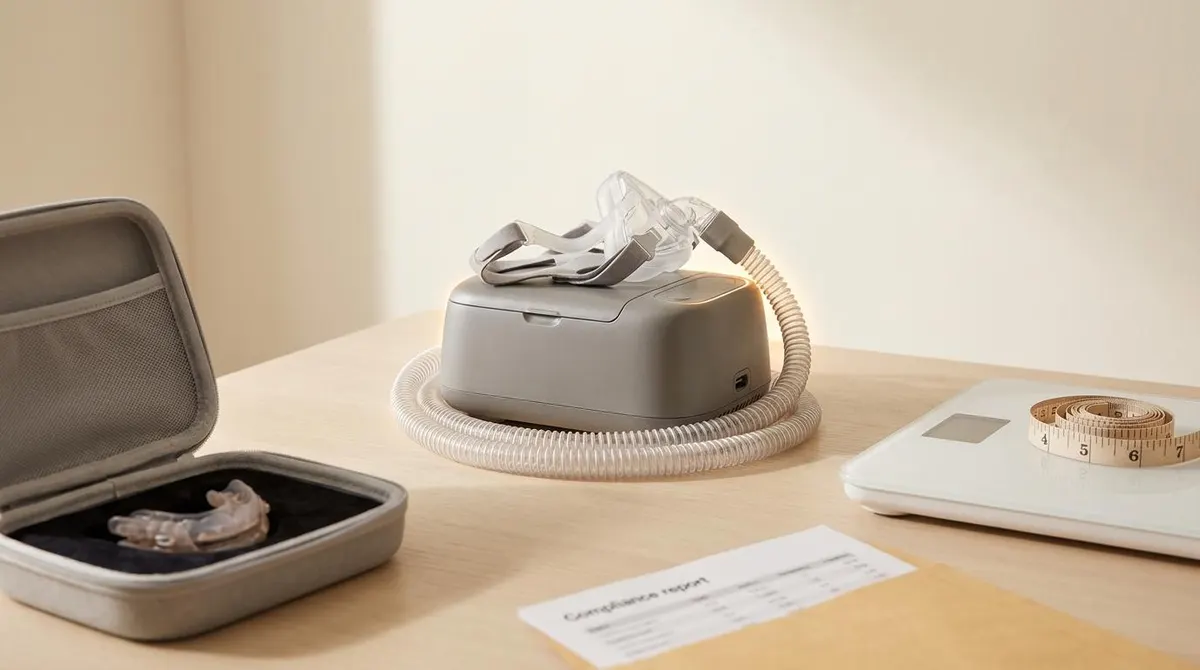
If your results show no sleep apnea or mild obstructive sleep apnea without significant symptoms, your medical examiner can typically issue a standard medical certificate. If your results show moderate to severe obstructive sleep apnea, you will need to begin an approved treatment plan before you can receive full medical certification. Your sleep physician or primary care provider will work with you to identify the most appropriate treatment, and your medical examiner will want to see documentation of treatment initiation and adherence before certifying you to drive.
For an overview of what obstructive sleep apnea in adults looks like and how it is treated, including guidance on symptoms and solution pathways, Dumbo Health provides a detailed reference resource.
KEY TAKEAWAY: Your AHI score and the formal diagnostic report from a certified sleep physician are the two most critical elements your medical examiner needs to make a certification decision after sleep apnea testing.
With a diagnosis in hand and a classification understood, the path forward is treatment and demonstrating the compliance data your medical examiner will need at every future DOT physical.
From Diagnosis to DOT Compliance: Treatment and Ongoing Monitoring
Receiving a sleep apnea diagnosis does not end your driving career. What matters for DOT compliance is whether you are receiving effective treatment and whether you can demonstrate consistent adherence. The FMCSA framework is built around managing medical conditions, not automatically disqualifying drivers who have them.
Accepted Treatment Options for DOT-Compliant Drivers
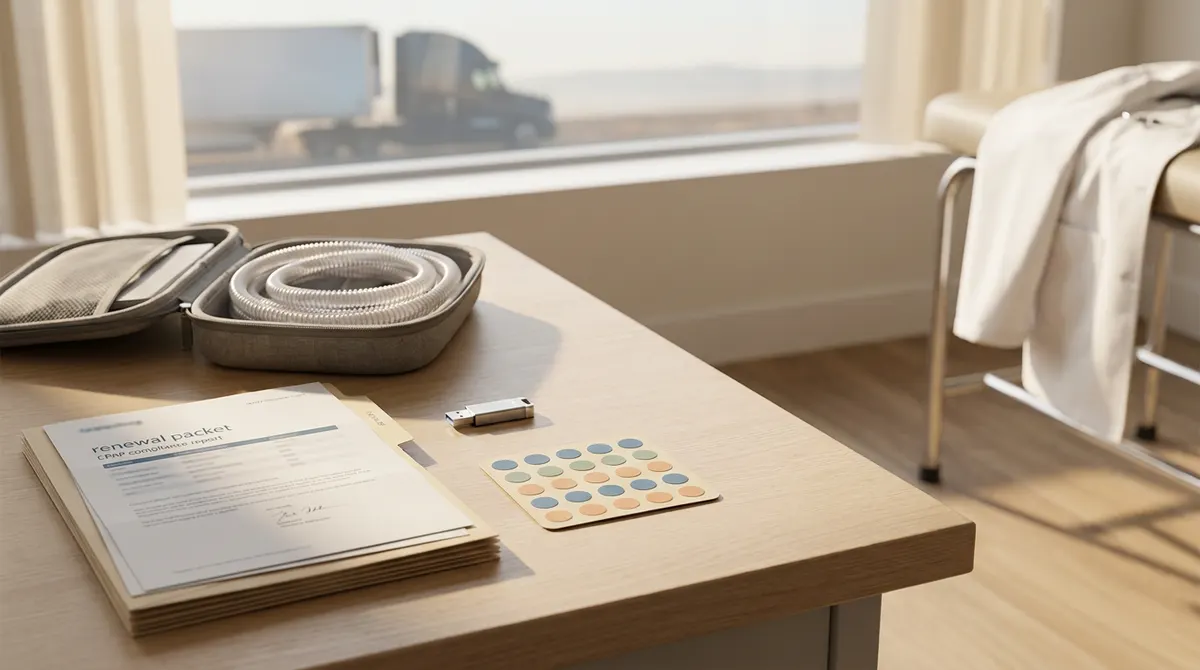
Several treatment options are recognised as effective for obstructive sleep apnea, and each has implications for how compliance is documented and verified for DOT purposes.
Continuous Positive Airway Pressure therapy, commonly known as CPAP, remains the most widely prescribed and most thoroughly documented treatment for moderate to severe obstructive sleep apnea. A CPAP machine delivers a continuous stream of pressurised air through a mask, preventing the upper airway from collapsing during sleep. CPAP devices record usage data automatically, making compliance reporting straightforward. APAP and BiPAP are pressure-adjusting variants of PAP therapy that serve different clinical profiles. You can explore the differences between CPAP, APAP, and BiPAP to understand which device type your treatment plan may involve.
Oral appliance therapy is a recognised alternative for drivers with mild to moderate obstructive sleep apnea or for those who are unable to tolerate CPAP therapy. Custom-fitted oral devices are designed by a sleep medicine dentist or orthodontist and work by repositioning the jaw to maintain upper airway patency during sleep. Oral device therapy is a clinically validated option, though compliance verification is more complex than with CPAP because oral devices do not generate electronic usage data automatically. For a detailed breakdown of how these oral devices work and who they are best suited for, Dumbo Health's guide on the oral appliance for sleep apnea covers the full clinical picture.
For drivers interested in non-CPAP options, Dumbo Health's guide on treating sleep apnea without CPAP covers the full range of accepted alternatives, including positional therapy, weight management, and oral appliance therapy.
Weight loss is a significant modifier of sleep apnea severity. Research indicates that a 10 percent reduction in body weight can reduce AHI by approximately 26 percent in some patients. The relationship between sleep apnea and weight loss is well established and worth understanding for drivers who are working on both their health and their CDL compliance simultaneously.
The following table summarises the main treatment options available to commercial drivers with obstructive sleep apnea:
| Treatment | Best For | Compliance Verification | DOT Acceptance |
|---|---|---|---|
| CPAP therapy | Moderate to severe OSA | Electronic usage data via device report | Widely accepted |
| APAP or BiPAP | Pressure-variable or complex OSA | Electronic usage data | Widely accepted |
| Oral appliance therapy / oral device therapy | Mild to moderate OSA or CPAP intolerant | Follow-up sleep test required | Accepted with documented efficacy |
| Weight management | Overweight drivers with OSA | Follow-up sleep test required | Accepted as adjunct |
| Positional therapy | Positional OSA only | Follow-up sleep test required | Accepted with documented efficacy |
For most commercial drivers with moderate to severe obstructive sleep apnea, CPAP therapy is the most practical first-line treatment because it generates automatic electronic compliance data that satisfies medical examiner documentation requirements without requiring a follow-up sleep study.
Demonstrating Treatment Adherence and Compliance Data
For CPAP therapy, compliance data is the electronic record downloaded from the PAP device's onboard data chip or transmitted via wireless connectivity. The standard compliance threshold used for DOT purposes mirrors the CMS requirement: CPAP use for at least 4 hours per night on at least 70 percent of nights over a 30-day period. Your sleep physician or CPAP supplier can generate a printed or digital compliance report from your device that documents this adherence.
Bring this compliance report to every DOT physical exam as part of your documentation package. Medical examiners are required to record how a driver's sleep apnea is being managed, and a clean 30-day compliance report is the most efficient way to demonstrate that your condition is under control. Drivers who fall below the 70 percent threshold risk being placed on a temporary certificate while compliance is re-established.
For drivers using oral appliances or other non-PAP treatments, compliance verification typically requires a follow-up sleep test showing that the treatment is effectively reducing your AHI to below the threshold set by your sleep physician and medical examiner. This follow-up study should be conducted within 60 to 90 days of starting the oral appliance to verify efficacy before your next DOT physical.
IMPORTANT: A CPAP compliance report that shows usage below the 4-hour minimum on more than 30 percent of nights may result in your medical examiner issuing a shorter certification period or placing conditions on your certificate until adherence improves.
Maintaining Long-Term DOT Compliance and Road Safety
Drivers with a diagnosis of moderate to severe obstructive sleep apnea are typically recertified on a 12-month cycle rather than the standard 24-month cycle. Each annual DOT physical will require you to bring updated compliance data, a current physician's statement confirming that your treatment plan is ongoing and effective, and any follow-up sleep test results if your treatment type requires them.
Ongoing monitoring matters not just for regulatory compliance but for your own safety and health. Untreated or undertreated obstructive sleep apnea is associated with elevated risk of high blood pressure, heart disease, type 2 diabetes, and stroke, all of which carry their own implications for CDL eligibility. Staying consistent with treatment protects your long-term health as well as your driving career.
KEY TAKEAWAY: CPAP therapy with documented 4-hour minimum usage on 70 percent of nights is the most efficient path to demonstrating DOT compliance for commercial drivers with obstructive sleep apnea, but oral device therapy is a valid alternative when efficacy is verified with a follow-up sleep test.
Common Myths About Sleep Apnea and DOT Compliance Debunked
Commercial drivers frequently encounter misinformation about sleep apnea and DOT requirements. Separating facts from myths protects both your career and your health.
MYTH: A sleep apnea diagnosis automatically means you lose your CDL.
FACT: A sleep apnea diagnosis does not automatically disqualify a commercial driver. According to FMCSA guidance and medical examiner protocols, drivers who receive a diagnosis of moderate to severe obstructive sleep apnea and begin an approved treatment plan can be recertified to drive. Disqualification only applies to drivers with untreated moderate to severe obstructive sleep apnea who cannot demonstrate that their condition is managed. Many commercial drivers successfully maintain their CDL for years after a sleep apnea diagnosis by staying compliant with their treatment regimen.
MYTH: If you feel fine during the day, you do not have sleep apnea and do not need to be tested.
FACT: The Sleep Foundation explains that many people with obstructive sleep apnea do not feel obviously sleepy during the day because they have adapted to a chronically impaired sleep state over years. This adaptation does not mean their driving performance is unaffected. Research consistently shows that drivers with undiagnosed obstructive sleep apnea demonstrate measurably slower reaction times and poorer lane-keeping compared to drivers without the condition, regardless of whether they report feeling tired. Self-assessment of daytime alertness is not a reliable screening tool.
MYTH: A home sleep test is not valid for DOT compliance and you must go to a sleep lab.
FACT: Physician-ordered home sleep testing is an accepted diagnostic method for obstructive sleep apnea and produces results that medical examiners can use for DOT compliance purposes. The FMCSA does not mandate a specific testing modality. What matters is that the test is ordered by a qualified physician, conducted with a clinically validated device, and interpreted by a certified sleep physician who provides a formal diagnostic report. Home sleep testing is clinically appropriate for most commercial drivers and is widely used in DOT-related sleep medicine practice.
MYTH: Once you pass a DOT physical without being flagged for sleep apnea, you are permanently cleared and do not need to worry about it.
FACT: DOT medical certification is not a one-time clearance. Drivers are recertified on regular cycles of up to 24 months, and a medical examiner who was not present at your previous exam may apply different screening criteria. Risk factors for obstructive sleep apnea such as weight gain, increasing age, and new hypertension can develop between certification periods. Drivers should monitor their own symptoms and proactively discuss any changes with their medical provider rather than assuming that a prior clear exam guarantees future clearance.
MYTH: Over-the-counter devices such as mouth tape or mandibular advancement strips are sufficient to treat sleep apnea for DOT purposes.
FACT: Over-the-counter devices are not accepted substitutes for clinically prescribed treatment in a DOT compliance context. Consumer-level oral devices and strips do not produce the verifiable compliance data that medical examiners require, and they are not the same as custom-fitted oral devices prescribed through a sleep medicine dentist. As Dumbo Health's analysis of OTC sleep apnea treatments explains, these products are not a substitute for formally diagnosed and medically supervised treatment for obstructive sleep apnea.
KEY TAKEAWAY: The most dangerous myth for commercial drivers is believing that a sleep apnea diagnosis ends their career. With appropriate testing, treatment, and compliance documentation, the majority of drivers with obstructive sleep apnea can maintain full CDL eligibility.
Frequently Asked Questions
Can I still drive my commercial motor vehicle while waiting for sleep apnea test results?
Whether you can continue driving while awaiting sleep apnea test results depends on what your medical examiner documented at your DOT physical. If the examiner issued a temporary three-month medical certificate pending sleep study results, you are generally permitted to drive under that certificate until it expires, provided you complete the required testing within the specified window. If the examiner determined you are immediately medically unqualified due to risk factors or a prior known diagnosis of untreated severe obstructive sleep apnea, you may not legally operate a commercial motor vehicle until you receive appropriate medical clearance. Always clarify your current certification status directly with your medical examiner before continuing to drive.
Is my medical insurance going to cover my sleep apnea test?
Coverage for sleep apnea testing varies by insurance plan, but most major medical insurance plans including Medicare, United Health Care, Humana, and TRICARE typically cover in-laboratory polysomnography and, increasingly, home sleep testing when ordered by a physician for documented clinical reasons. Most insurers require a physician referral or order, and some require prior authorisation, particularly for in-lab studies. Commercial drivers who are self-pay or whose insurance has limited sleep study coverage often find that home sleep testing is a significantly more affordable option. Contact your insurance provider directly to verify your specific coverage before scheduling a study.
What happens if my sleep apnea test shows moderate to severe obstructive sleep apnea?
A result showing moderate to severe obstructive sleep apnea means you will not receive full medical certification until you begin and demonstrate adherence to an approved treatment plan. Your medical examiner will typically issue a temporary certificate giving you time to initiate treatment. Once you have at least 30 days of documented CPAP compliance meeting the 4-hour minimum on 70 percent of nights, you can return to your medical examiner with your compliance data and physician's statement to receive a formal one-year medical certificate. Drivers with AHI above 30 are generally placed on an annual recertification cycle rather than the standard 24-month cycle.
How quickly can I get my sleep apnea test results for my DOT physical exam?
Timeline depends on the type of test. Home sleep test results are typically available within two to five business days of the device being returned to the provider, making them the fastest option for commercial drivers working against a certification deadline. In-laboratory polysomnography results are generally available within five to ten business days, though some sleep labs offer expedited reporting. If you are using a telehealth-enabled home sleep testing service such as Dumbo Health's at-home sleep test, the process from ordering to receiving your formal diagnostic report can often be completed within a week. Always allow extra time before your DOT physical exam deadline to account for any delays.
Do I need a new sleep apnea test for every CDL renewal or DOT physical?
Not necessarily. If you have a prior diagnosis and are actively receiving treatment, your medical examiner will want updated compliance data rather than a new diagnostic sleep study at each annual physical. A new diagnostic study may be required if your treatment changes, if your symptoms worsen, if your weight changes significantly, or if your medical examiner determines that your original diagnosis needs updating. Drivers without a prior diagnosis who are flagged during a routine DOT physical do require a new formal sleep study. Consult your sleep physician about when a follow-up diagnostic test is clinically warranted versus when updated compliance documentation is sufficient.
What documentation do I need to provide to my medical examiner after testing and treatment?
Bring the following documents to your DOT physical exam after completing sleep apnea testing and starting treatment: a copy of your formal sleep study diagnostic report with your AHI or RDI score and the interpreting physician's credentials; a written statement from your treating physician confirming your diagnosis, treatment plan, and current treatment status; a 30-day CPAP compliance report downloaded from your PAP device if you are using CPAP therapy; and any follow-up sleep test results if your treatment type requires efficacy verification. Organise these as a single packet for your medical examiner. Some drivers working with providers close to you who specialise in DOT-related sleep medicine may receive pre-formatted documentation designed to meet medical examiner requirements directly.
What is the 3% rule for sleep apnea?
The 3 percent rule in sleep apnea refers to a scoring criterion used in polysomnography protocols, where a hypopnea is counted when there is a 3 percent or greater drop in blood oxygen saturation associated with a reduction in airflow. This is distinct from the 4 percent desaturation threshold used in older scoring systems. The American Academy of Sleep Medicine updated its scoring guidelines to recommend the 3 percent desaturation criterion as the standard, which can produce higher AHI scores compared to the older 4 percent rule. For commercial drivers, this scoring difference matters because a higher AHI from 3 percent scoring may affect severity classification and therefore DOT certification decisions. Ask your sleep physician which scoring criteria their lab uses when reviewing your results.
How do you pass a DOT physical for sleep apnea?
Passing a DOT physical when you have a sleep apnea diagnosis requires three things: an accepted diagnostic sleep study showing your current AHI classification, documentation that you are receiving an approved treatment, and compliance data demonstrating consistent treatment adherence. For CPAP users, this means a 30-day compliance report showing usage of at least 4 hours per night on at least 70 percent of nights. For drivers using oral appliance therapy, it means a follow-up sleep test showing that your AHI has been reduced to below the threshold your medical examiner requires. Arrive at your DOT physical with a complete documentation package, and notify your medical examiner in advance if you have a sleep apnea diagnosis so they can allocate adequate time for your assessment.
Conclusion
Sleep apnea testing for DOT compliance is not a bureaucratic hurdle. It is a medically grounded safeguard that protects commercial drivers, their passengers, and everyone sharing the road. A diagnosis of obstructive sleep apnea does not end a driving career. Proper sleep testing with an accepted method, whether in-lab polysomnography or a physician-ordered home sleep test, followed by evidence-based treatment and consistent compliance documentation, allows the vast majority of affected drivers to maintain full CDL eligibility. The most important action any commercial driver can take is to engage with the process proactively rather than avoid it. If you are ready to get tested quickly and conveniently, Dumbo Health's at-home sleep test connects you with certified sleep physicians who can provide the formal diagnostic report your medical examiner needs to keep you moving forward.
AI summary
Sleep apnea testing for DOT compliance is the clinical process used to document obstructive sleep apnea (OSA) status for a DOT medical examiner under FMCSA guidance. Untreated OSA can impair alertness and is associated with higher crash risk, so examiners may require testing when risk factors are present. Accepted diagnostic tests are in-laboratory polysomnography (PSG) and physician-ordered home sleep testing (HST) interpreted by a certified sleep physician, with a formal report. Not accepted: questionnaires (Epworth, STOP-BANG), consumer wearables, oximetry alone, app tracking, or unsupported clinical opinion. Medical exam screening commonly considers BMI (above 33 with other risks or above 40 alone), neck circumference (over 17 inches in men or 15.5 inches in women), blood pressure, symptoms, and prior diagnosis. Results are reported as AHI or RDI. AHI 5–14 is mild, 15–30 moderate, and above 30 severe; AHI above 20 often triggers mandatory treatment guidance. DOT documentation includes the diagnostic report and, for CPAP/PAP therapy, a 30-day compliance report showing at least 4 hours per night on at least 70% of nights. Oral appliance and other non-PAP therapies typically require follow-up sleep testing to verify efficacy.

Nicolas Nemeth
Co-Founder
Nico is the co-founder of Dumbo Health, a digital sleep clinic that brings the entire obstructive sleep apnea journey home. Patients skip the sleep lab and the long wait to see a specialist. Dumbo Health ships an at home test, connects patients with licensed sleep clinicians by video, and delivers CPAP or a custom oral appliance with ongoing coaching and automatic resupply in one clear subscription.
Keep reading

How Long Does a DOT Physical Take? A Complete Guide for Commercial Drivers

What Happens If You Fail a DOT Drug Test? The Complete Guide for Commercial Drivers


