Day 25: Mindful Eating Before Bed
Avoid heavy, spicy, or large meals within 3 hours of bedtime. If you need a snack, choose something light and sleep-friendly.

Day 25: Your Evening Plate, Your Midnight Peace
You're on Day 25 of your journey, and honestly? You've built something remarkable here. Today we're looking at something that happens hours before your head hits the pillow but makes all the difference once it does: what and when you eat in the evening.
Here's the thing: every choice you make at dinner time is actually a choice you're making for midnight-you. Your body's listening.
Why Your Evening Food Choices Matter
Think about what your body does at night. While you sleep, it's not just resting, it's repairing cells, consolidating memories, balancing hormones, clearing out waste from your brain. That's serious restoration work.
But if your body is busy digesting a heavy meal or dealing with spicy foods that are causing heartburn, it can't fully commit to that deep repair work. Digestion takes real energy and attention. When you eat a big or challenging meal close to bedtime, you're essentially asking your body to do two major jobs at once.
The result? Lighter, more fragmented sleep. More tossing and turning. That uncomfortable feeling of being too full to get comfortable. Maybe heartburn that wakes you up at 2 AM.
When you finish eating at least three hours before bed and choose lighter, gentler foods in the evening, you give your body a clear runway for sleep. Digestion wraps up, your system starts to calm, and by the time you're ready for bed, your body can fully shift into restoration mode.
How to Make Evening Eating Work for Your Sleep
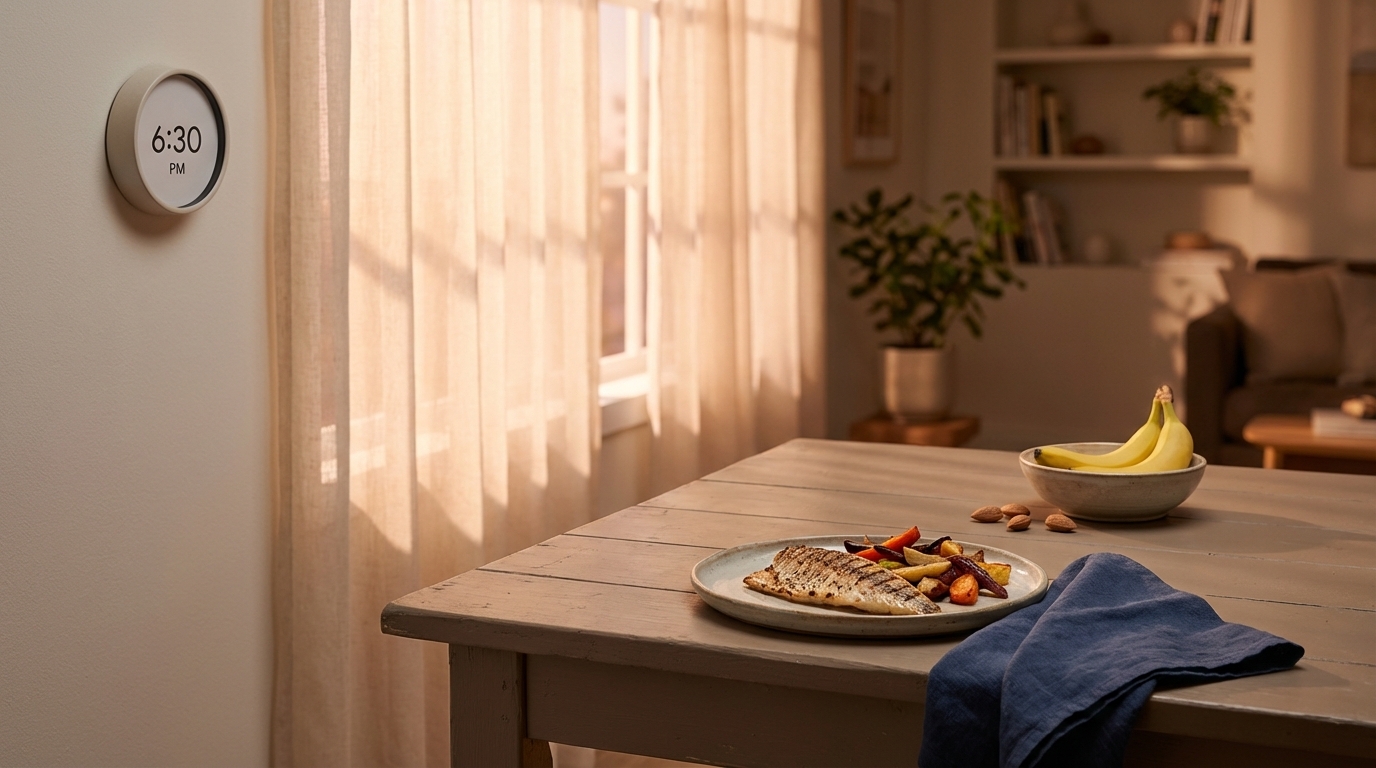
Set your cutoff time. Look at your target bedtime and count back three hours. That's your dinner deadline. If you're aiming for bed at 10:30 PM, try to finish dinner by 7:30 PM. Mark it in your calendar this week and see how it feels.
Choose foods that cooperate with sleep. In the evening, think gentle. Lean proteins, cooked vegetables, whole grains, soup. Foods that are easy on your system. Save the spicy curry, the giant steak, the rich creamy pasta for lunch when your digestion is strongest.
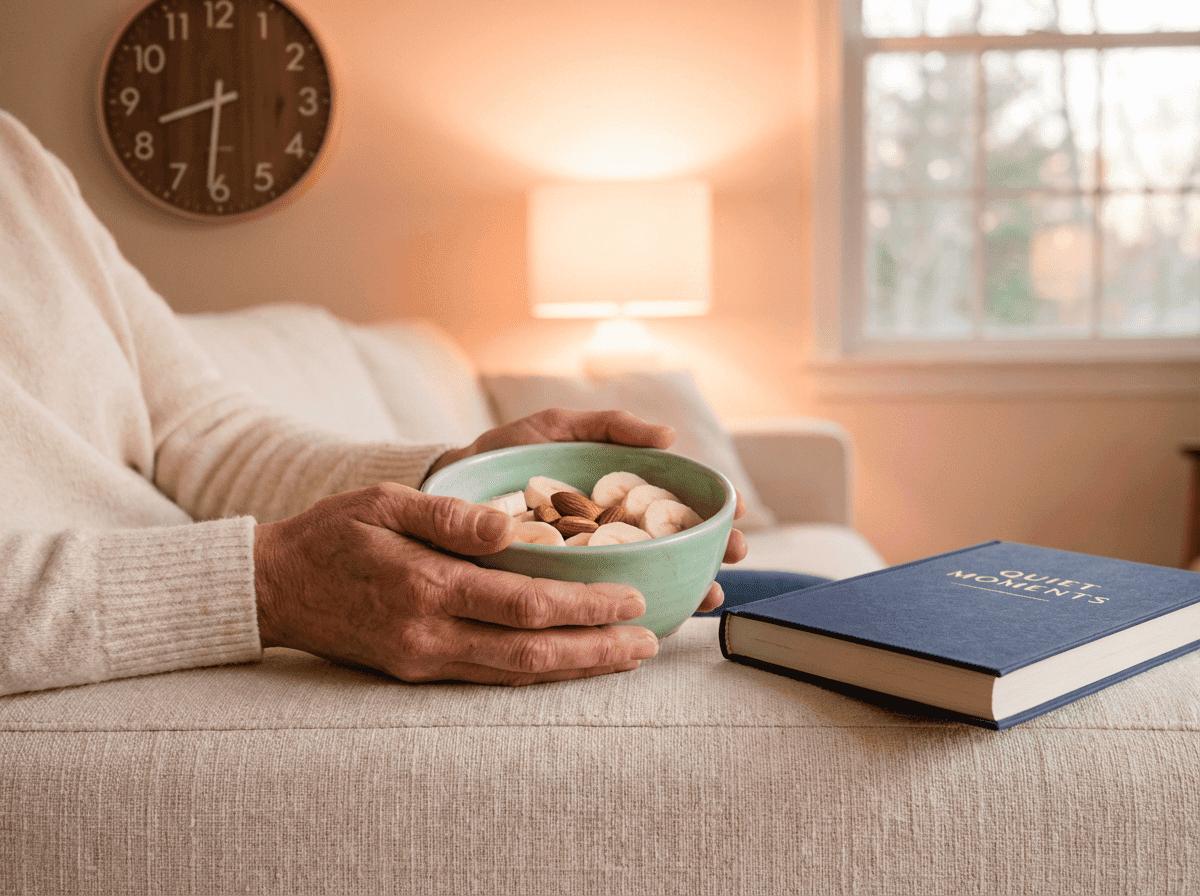
Keep late-night snacks simple and small. If you need something after dinner, go for options that actually support sleep: a banana (natural melatonin), a small handful of almonds (magnesium), warm milk (tryptophan), or a bit of whole grain toast. Think nourishment, not entertainment.
Notice how different foods affect your sleep. Some people sleep terribly after tomato sauce. Others can't sleep well with too much sugar before bed. Your sleep diary is the perfect place to track this. Pay attention and adjust.
The Timing Is a Gift to Yourself
This three-hour buffer isn't a punishment or a restriction. It's space you're creating for your body to do what it does best. It's respect for the transition from active day to restorative night.
You're not going to be perfect with this every single night. Life happens. Dinners run late. You go out with friends. That's okay. What matters is that most nights, you're giving your body this gift of time between your last bite and your first dream.
And here's what you might notice: not only might you sleep better, but you might also wake up actually feeling hungry for breakfast. That's your body's way of saying "thank you for the break."
See you tomorrow, friend. You're five days away from completing this entire program, and that's incredible. Tomorrow on Day 26, we're going to pause and look back at how far you've really come. Bring your sleep diary. You're going to want to see this. Rest well tonight 🌙