The Ultimate DOT Preparation Checklist for Motor Carriers and Commercial Drivers
DOT preparation is an ongoing process to ensure drivers, vehicles, records, and safety programs meet FMCSA requirements before inspections and audits. This guide explains how violations raise Safety Measurement System scores and can trigger interventions, out-of-service orders, and safety rating impacts. It walks through vehicle readiness, daily pre-trip and post-trip inspections, Level 1 inspection focus areas, and annual inspection documentation under 49 CFR 396.17. It also covers driver qualification files under 49 CFR Part 391, HOS rules and ELD recordkeeping, DOT physical exam standards, and drug and alcohol program obligations. You will learn what records auditors review, how to run internal mock audits, and how to reduce common violations year-round.
Struggling with sleep?
Find out if sleep apnea is the reason.
FDA-cleared. $149 flat. Physician-reviewed results in 48 hours.

The Ultimate DOT Preparation Checklist for Motor Carriers and Commercial Drivers

DOT preparation is the systematic process of ensuring your drivers, vehicles, documentation, and compliance programs meet every Federal Motor Carrier Safety Administration standard before a roadside inspection, compliance review, or audit takes place. According to the FMCSA, more than 100,000 violations were recorded in a single year, split between driver violations and vehicle violations, making proactive preparation essential for any carrier that wants to protect its operating authority and avoid costly out-of-service orders. This guide walks you through every critical compliance area, from vehicle readiness and driver qualification files to hours of service management and DOT physical exam requirements, giving you a single authoritative resource to prepare your fleet and your drivers. Whether you manage a small owner-operator setup or a large motor carrier, the steps here apply to your operation. Read through each section to build a compliance infrastructure that keeps your fleet moving and your safety rating protected.
Why Proactive DOT Preparation is Non-Negotiable

Proactive DOT preparation protects your operating authority, your drivers, and the public by ensuring your fleet meets FMCSA safety standards before an inspector arrives.
Failing a DOT inspection or compliance review is not simply a paperwork problem. A single out-of-service order removes a vehicle or driver from revenue-generating operations immediately, and a pattern of violations elevates your FMCSA Safety Measurement System (SMS) score, which can trigger targeted enforcement interventions, mandatory compliance reviews, and ultimately a conditional or unsatisfactory safety rating. The FMCSA Safety Measurement System measures performance across seven Behavior Analysis and Safety Improvement Categories known as BASICs, including unsafe driving, hours-of-service compliance, vehicle maintenance, controlled substances and alcohol, hazardous materials compliance, driver fitness, and crash indicators. Carriers with high BASIC percentile scores are flagged for interventions ranging from warning letters to full onsite comprehensive investigations.
The financial stakes are equally serious. Operating a commercial motor vehicle with an expired annual inspection under 49 CFR 396.17 generates approximately 133,000 citations per year, with penalties that can reach up to $19,277 per violation. Beyond fines, a conditional or unsatisfactory safety rating can trigger shipper contract cancellations, insurance premium increases, and in extreme cases, a cease-operations order.
DID YOU KNOW: The FMCSA uses SMS data from roadside inspections, crash reports, and investigation results to assign BASIC percentile scores from 0 to 100, with higher scores indicating worse safety performance and increased likelihood of enforcement intervention.
Preparation is not a one-time event. It is an ongoing operational commitment that requires daily pre-trip inspections, up-to-date driver qualification files, current medical certifications, and proactive vehicle maintenance records. Carriers that build compliance into their daily workflow consistently outperform reactive peers when inspectors arrive.
KEY TAKEAWAY: Proactive DOT preparation prevents out-of-service orders, protects your SMS score, and defends your operating authority against FMCSA enforcement interventions.
The following section establishes the regulatory foundation that governs every aspect of your compliance program.
The Foundation: FMCSA and Department of Transportation Mandates for Motor Carriers

The Federal Motor Carrier Safety Administration is the agency within the U.S. Department of Transportation responsible for regulating commercial motor vehicle safety in interstate commerce. The FMCSA enforces the Federal Motor Carrier Safety Regulations (FMCSRs) found in Title 49 of the Code of Federal Regulations, which govern every aspect of motor carrier operations from driver qualification and hours of service to vehicle maintenance and drug testing.
Motor carriers that operate commercial motor vehicles weighing more than 10,001 pounds in interstate commerce are subject to FMCSA jurisdiction. Carriers transporting hazardous materials requiring placards or operating vehicles designed to carry 15 or more passengers must also comply regardless of weight. Each motor carrier receives a USDOT number, and their safety performance data is publicly accessible through the FMCSA's online portal, meaning poor safety records directly affect your business reputation and insurability.
The FMCSA enforces compliance through three primary mechanisms: roadside inspections conducted by certified enforcement officers, compliance reviews initiated based on SMS data or complaints, and new entrant safety audits required within 12 months for property carriers and 3 months for passenger carriers after registration. Understanding these three mechanisms helps you build a preparation strategy that performs well across all of them.
IMPORTANT: New entrant motor carriers are monitored for an 18-month period following registration, during which a failed safety audit can result in immediate revocation of operating authority.
KEY TAKEAWAY: Every motor carrier operating in interstate commerce must meet FMCSA regulatory requirements across driver qualification, vehicle maintenance, hours of service, and drug testing, with performance tracked publicly through the SMS system.
Understanding the regulatory framework sets the stage for addressing your most time-sensitive preparation priority: vehicle readiness.
The Ultimate Vehicle Readiness Checklist: Ensuring Your Fleet is Road-Ready

A road-ready commercial vehicle meets all FMCSA mechanical and safety standards, passes every applicable item on the Level 1 North American Standard Inspection checklist, and carries current documentation on board.
Implementing Daily Pre-Trip and Post-Trip Inspection Fundamentals

Every commercial driver is required under FMCSA regulations to conduct a pre-trip inspection before operating a commercial motor vehicle and a post-trip inspection at the end of each duty day. The pre-trip inspection ensures the vehicle is safe to operate before it enters traffic. The post-trip inspection identifies defects that developed during the trip and must be documented in a Driver Vehicle Inspection Report (DVIR) so that maintenance personnel can address them before the next dispatch.
A thorough pre-trip inspection covers the following areas at minimum:
Brake system: air pressure levels, hose condition, brake linings, drums, and slack adjusters
Tires: tread depth, sidewall condition, and inflation levels
Lights: headlights, brake lights, turn signals, marker lights, and hazard lights
Steering and suspension: steering wheel play, linkage condition, and suspension components
Fuel system: fuel lines, tank condition, and absence of leaks
Air lines: condition of all air hoses and connections
Seat belts: functional condition for driver and all passengers
Fifth wheel: proper coupling and locking mechanism engagement
Emergency equipment: fire extinguisher, warning triangles, and spare fuses
Load securement: proper restraint of all cargo per applicable regulations
Clinicians and safety managers frequently observe that drivers who complete thorough pre-trip inspections identify minor defects early, preventing the kind of mechanical failures that trigger out-of-service orders during roadside inspections. Build the DVIR submission habit into your dispatch workflow so that documentation is never missing during a compliance review.
TIP: Keep a laminated pre-trip inspection checklist in every cab so drivers can work systematically through each area without missing safety-critical items.
Key Components for a Thorough Vehicle Inspection (Focusing on Level 1 Inspection Standards)

The Level 1 North American Standard Inspection is the most comprehensive inspection level and the one most commonly performed during the CVSA International Roadcheck blitz. Understanding exactly what a certified inspector examines during a Level 1 inspection allows you to prepare your vehicles to pass every item.
A Level 1 inspection covers the following vehicle components as detailed by the Commercial Vehicle Safety Alliance:
Brake system: air pressure integrity, hose and line condition, brake adjustment, lining thickness, and drum condition
Fuel system: fuel tank mounting, cap security, and absence of leaks
Exhaust system: routing, condition, and absence of leaks near flammable components
Lighting and electrical: all required operational lights including headlamps, brake lights, and turn signals
Steering system: free play limits, linkage wear, and power steering fluid
Suspension: leaf spring condition, shock absorbers, and air suspension integrity
Tires: tread depth minimums, sidewall integrity, inflation within acceptable range, and wheel fastener security
Wheels and rims: absence of cracks, proper fastening, and absence of mismatched rim types
Frame and chassis: absence of cracks, breaks, or improper repairs
Fifth wheel: proper operation, locking jaw engagement, and mounting security
Emergency equipment: presence and accessibility of fire extinguisher, reflective triangles, and spare fuses
Windshield and wipers: absence of prohibited cracks and functioning wiper system
Load securement: tie-down count and condition meeting the applicable cargo securement standard
A Level 1 inspection typically takes 45 to 60 minutes and results in either a CVSA decal being issued or a violation report and potential out-of-service order.
Beyond the Inspection: Proactive Vehicle Maintenance and Records (49 CFR 396.17)
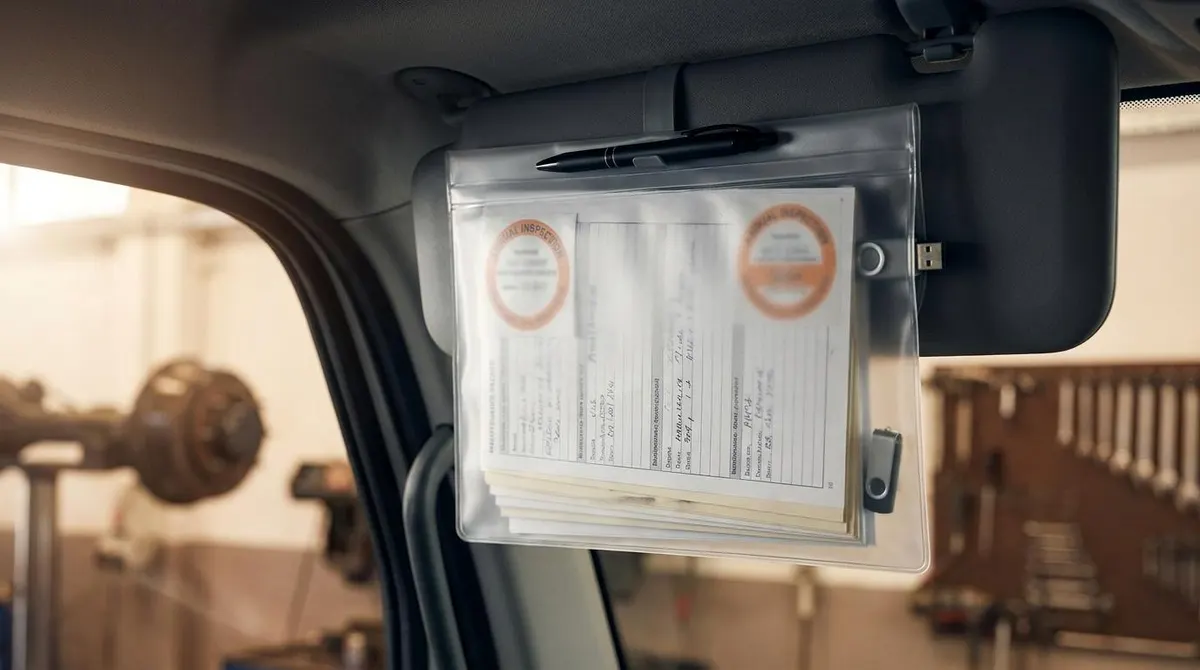
Under 49 CFR 396.17, every commercial motor vehicle must pass a periodic inspection at least once every 12 months, and documentation of that inspection must be kept on the vehicle at all times. The inspection must include, at minimum, the parts and accessories specified in Appendix A to Part 396, which covers all of the major mechanical systems addressed in a Level 1 inspection.
The annual inspection requirement applies to interstate CMVs over 10,001 pounds GVWR, intrastate CMVs over 26,001 pounds GVWR, all vehicles transporting hazardous materials regardless of weight, and passenger-carrying vehicles with nine or more passengers. Motor carriers may perform required annual inspections themselves provided they use qualified inspectors meeting the standards in 49 CFR 396.19.
Proactive vehicle maintenance records must document every repair, scheduled service, and inspection outcome. For each vehicle, maintain:
Annual inspection reports with inspector certification
Preventive maintenance logs with dates, mileage, and scope of work
Repair orders for every defect identified on a DVIR
Documentation of out-of-service condition corrections
Tire replacement and rotation records
KEY TAKEAWAY: Under 49 CFR 396.17, documentation proving a valid annual inspection must be on every commercial motor vehicle at all times, and missing or expired documentation generates immediate violation exposure during any roadside inspection.
Keeping vehicles mechanically sound is only half the compliance equation. The other half depends entirely on the qualification status of your drivers.
The Driver Qualification Checklist: Ensuring Your Operators Meet Standards

A qualified commercial driver holds a current commercial driver's license, carries a valid medical examiner's certificate, and has a complete driver qualification file on record with the motor carrier that meets every requirement under 49 CFR Part 391.
Comprehensive Driver Qualification Files (DQF): What Must Be Included

A Driver Qualification File is a mandatory collection of records that verifies a driver's eligibility, training, and regulatory compliance under FMCSA regulations. Motor carriers must maintain a driver qualification file for every driver they employ, whether full-time, part-time, or contract-based, as required by 49 CFR 391.51.
Each complete driver qualification file must contain the following documents:
Driver's application for employment, including three years of prior employment history and ten years for drivers of vehicles over 26,000 pounds GVWR
Copy of the driver's license or commercial driver's license
Motor Vehicle Record (MVR) obtained at the time of hire and annually thereafter
Medical Examiner's Certificate, with the examiner's National Registry verification noted in the file
Road test certificate or equivalent documentation of driving competency
Pre-employment drug and alcohol test results and clearinghouse query confirmation
Annual review of driving record with documentation of no disqualifying violations
Any applicable FMCSA Skills Performance Evaluation certificate
Records within the driver qualification file must be retained for at least three years following the date of termination. The employment application itself must be retained for the life of employment plus three years. Motor carriers must also run an annual FMCSA Drug and Alcohol Clearinghouse limited query for every CDL driver, with the query result documented in the driver qualification file.
IMPORTANT: Failing to conduct a pre-employment Clearinghouse query is among the top documented DOT audit violations recorded by the FMCSA, and it carries direct liability exposure if the omitted driver subsequently causes an accident.
Hours of Service (HOS) Compliance and ELD Data Management

Hours of service compliance is one of the most frequently cited violation categories during FMCSA roadside inspections and audits. The HOS regulations are designed to prevent fatigued driving by capping the number of hours a commercial driver can operate within a given duty period. Under current FMCSA rules for property-carrying drivers, the primary limits are 11 hours of driving within a 14-hour on-duty window, followed by a mandatory 10-hour off-duty period. Drivers must also take a 30-minute break before driving after 8 cumulative hours of driving time.
The Electronic Logging Device mandate requires most commercial drivers to use FMCSA-registered ELDs to record their duty status automatically. ELDs capture engine data to create a tamper-evident record of driving time, on-duty time, off-duty time, and sleeper berth time. Inspectors and auditors examine ELD records closely for signs of falsification, manipulation, or unreported driving.
During the 2026 CVSA International Roadcheck scheduled for May 12 to 14, 2026, ELD tampering and falsification will be a primary driver inspection focus, meaning every carrier must ensure their ELD devices are properly calibrated, correctly assigned to drivers, and producing accurate records.
For HOS record retention, motor carriers must retain HOS records for at least six months. Supporting documents including fuel receipts, toll records, and dispatch records that can corroborate ELD data must also be retained and be available for review during a compliance audit.
KEY TAKEAWAY: Hours of service compliance and accurate ELD data management are among the highest-risk areas during both roadside inspections and FMCSA audits, and ELD falsification was identified as a primary inspection focus for the 2026 International Roadcheck.
Completing the driver qualification picture requires understanding the medical standards every commercial driver must meet through the DOT physical exam.
Navigating the DOT Physical Exam: What Drivers Need to Know

The DOT physical exam is a mandatory medical evaluation required by the FMCSA to ensure every commercial driver is physically and mentally capable of safely operating a commercial motor vehicle in interstate commerce.
The FMCSA requires that commercial drivers who operate vehicles weighing 10,001 pounds or more, carry 15 or more passengers, or transport hazardous materials requiring placards must complete a DOT physical exam at least once every 24 months. Drivers with certain medical conditions may receive shorter certification periods requiring more frequent exams. Starting June 23, 2025, a major FMCSA rule change took effect requiring certified medical examiners to submit exam results electronically to the FMCSA National Registry by midnight of the next calendar day, which then transmits results directly to state driver licensing agencies, eliminating the need for drivers to hand-carry and submit paper medical certificates.
A certified medical examiner conducts the DOT physical exam and evaluates the following areas:
Vision: minimum acuity of 20/40 in both eyes with or without corrective lenses, and the ability to recognize the colors of traffic signals
Hearing: ability to perceive a forced whispered voice in the better ear at five feet or more without a hearing aid
Blood pressure: certification period varies by reading; blood pressure below 140/90 earns a two-year certification, a reading of 140 to 159 systolic earns one-year certification, a reading of 160 to 179 systolic earns a three-month conditional certification, and a reading of 180 systolic or above results in disqualification pending treatment
Urinalysis: screening for uncontrolled diabetes or kidney disease, not a drug test
Physical examination: cardiovascular, neurological, musculoskeletal, and respiratory systems
Medical history review: disclosure of all existing conditions and medications
Drivers with controlled medical conditions such as high blood pressure, sleep apnea, or type 2 diabetes can often qualify for DOT certification provided they demonstrate proper management and bring required supporting documentation to the exam. For example, drivers managing sleep apnea must bring a recent CPAP compliance report showing therapeutic use, while drivers with diabetes must typically provide a current A1C reading no more than three months old.
Sleep apnea receives particular attention during DOT physical exams because untreated obstructive sleep apnea causes excessive daytime sleepiness, a condition incompatible with safe commercial vehicle operation. According to the FMCSA, a motor carrier may not permit a driver to operate a commercial motor vehicle if the driver has a condition including sleep apnea that would affect the ability to drive safely. Drivers whose body mass index or physical characteristics suggest elevated sleep apnea risk may be referred for a sleep study before receiving full certification.
For drivers who need a convenient, affordable pathway to sleep apnea testing, Dumbo Health's at-home sleep test offers an FDA-cleared home sleep test for $149 as a one-time cost, with results reviewed by a licensed physician. Drivers who receive a sleep apnea diagnosis can enroll in Dumbo Health's ongoing CPAP therapy program starting at $59 per month with no contracts and no insurance required, making it straightforward to achieve and document the compliance status a medical examiner needs to see.
For a complete breakdown of the DOT physical process, refer to Dumbo Health's ultimate DOT physical guide for commercial drivers.
TIP: Bring all supporting medical documentation to your DOT physical in a dedicated folder, including CPAP reports, recent lab results, physician clearance letters, and any specialist consultation notes. Failing to bring required documents often results in a second appointment and full payment again.
KEY TAKEAWAY: The DOT physical exam must be completed at minimum every 24 months, and drivers with conditions such as sleep apnea, high blood pressure, or diabetes must provide supporting documentation demonstrating effective management to receive or maintain their medical certification.
Medical certification connects directly to the drug and alcohol testing program, which is the other primary health and safety compliance requirement for every driver in your fleet.
Drug and Alcohol Testing Program Compliance

A compliant drug and alcohol testing program under 49 CFR Part 382 is mandatory for every motor carrier that employs CDL holders. The program must include pre-employment testing, random testing at minimum annual rates set by the FMCSA, post-accident testing, reasonable suspicion testing, return-to-duty testing, and follow-up testing for drivers who violated the program.
The FMCSA Drug and Alcohol Clearinghouse, which became mandatory in January 2020, is a secure online database that records drug and alcohol program violations by CDL holders. Motor carriers must query the Clearinghouse before hiring any CDL driver and run a limited annual query for every current CDL driver on their roster. Drivers with unresolved violations in the Clearinghouse are prohibited from operating a commercial motor vehicle until they complete the required return-to-duty process with a Substance Abuse Professional.
Mastering Essential Documentation and Record-Keeping for Compliance

Comprehensive, organized documentation is the single most important preparation factor during an FMCSA compliance review or DOT audit. Auditors examine records directly and assess whether your documented practices match your stated safety management procedures.
Comprehensive Vehicle Maintenance Records

Every motor carrier must maintain systematic vehicle maintenance records demonstrating compliance with 49 CFR Part 396. For each vehicle in the fleet, the maintenance file must include the vehicle identification information, a record of all inspections and their outcomes, documentation of every defect identified on a DVIR and how it was corrected, and the annual inspection report. Records must be retained for one year while the vehicle remains under the carrier's control and for six months after the vehicle leaves the fleet.
Auditors cross-reference DVIR records against maintenance logs to verify that reported defects were actually repaired before the vehicle returned to service. Discrepancies between driver-reported defects and maintenance documentation are a significant red flag during a compliance review and can contribute to a conditional or unsatisfactory safety rating.
Accident Register and Accident History: Detailed Reporting and Follow-Up

Motor carriers must maintain an accident register under 49 CFR 390.15 for all accidents involving a commercial motor vehicle, regardless of fault. The register must include the date and location of the accident, the driver's name, the number of injuries and fatalities if any, and whether any hazardous materials were released. Accident records must be retained for three years from the date of each accident.
After any accident meeting the definition under FMCSA regulations, including those involving a fatality, a bodily injury requiring treatment away from the scene, or vehicle towing, the motor carrier must also conduct post-accident drug and alcohol testing on the driver as soon as practicable. A blood alcohol test must be performed within eight hours and a urine drug test within 32 hours of the accident.
Proof of Financial Responsibility: Understanding the MCS-90 Endorsement

The MCS-90 endorsement is a mandated endorsement attached to a motor carrier's public liability insurance policy that guarantees minimum levels of financial responsibility for bodily injury, property damage, and environmental restoration. The FMCSA requires carriers to have an MCS-90 endorsement on file as evidence of required financial responsibility, and auditors will verify this documentation during a compliance review.
Minimum financial responsibility requirements vary by cargo type and vehicle size. For most property-carrying vehicles in interstate commerce, the minimum is $750,000, rising to $5,000,000 for vehicles transporting certain quantities of hazardous materials. Carriers must ensure their MCS-90 endorsement is current and reflects their actual operations at all times.
ELD Data and HOS Records Retention: Digital and Physical Storage

ELD data and HOS records must be retained for a minimum of six months. Motor carriers must be able to produce these records in a format that auditors can review, either through the ELD provider's back-office portal or as printed or downloadable records. Supporting documents such as fuel receipts, bills of lading, and dispatch records that corroborate duty status entries must also be retained for the same six-month period.
FMCSA auditors increasingly cross-reference ELD data against supporting documents to identify discrepancies that suggest falsification. Ensure your drivers understand that every fuel stop, toll payment, and delivery receipt creates a digital timestamp that auditors can use to verify that logged duty status entries are accurate.
KEY TAKEAWAY: Organized, complete, and cross-referenced documentation across vehicle maintenance, accident history, financial responsibility, and ELD records is the foundation of a successful DOT compliance review, and any gap in documentation will be treated as a compliance failure.
Strong documentation practices are the evidence layer of a compliance program. The infrastructure layer that keeps those practices consistent is addressed next.
Compliance Infrastructure and Internal Audit Readiness

A compliance infrastructure is the combination of systems, training programs, performance monitoring tools, and safety culture practices that produce consistent regulatory adherence across your entire fleet.
Beyond the Checklist: Implementing a Proactive Compliance Strategy

A proactive compliance strategy goes beyond completing required tasks on schedule. It builds early warning systems that identify compliance gaps before an inspector or auditor does. Conduct internal mock audits at least twice per year, using the same categories that FMCSA auditors examine: driver qualification files, HOS compliance, vehicle maintenance records, drug and alcohol testing documentation, accident register, and proof of financial responsibility. Assign a compliance officer or third-party consultant responsibility for tracking renewal dates for medical certificates, CDL endorsements, annual inspections, and insurance coverage.
Use a centralized compliance calendar that sends automatic alerts at 60, 30, and 7 days before any critical deadline. This simple system prevents the most common administrative violations that appear during audits, including expired medical examiner's certificates and missing annual MVR reviews. Many carriers working with a DOT compliance specialist near you can identify systematic gaps that internal teams overlook.
The Role of Continuous Training and Driver Education
Continuous driver training and continuing education reduces violation frequency, lowers SMS BASIC scores, and demonstrates to auditors that your safety management practices are genuine rather than cosmetic. Effective training programs cover pre-trip and post-trip inspection procedures, HOS rules and ELD operation, cargo securement standards, defensive driving techniques, and the consequences of drug and alcohol violations.
Training records must be documented and retained in each driver's qualification file or a separate training file. During a compliance review, auditors may ask about your training curriculum and request evidence that drivers have completed required training. Carriers that maintain thorough training records consistently receive more favorable audit outcomes than those who cannot demonstrate an active training program.
Leveraging Driver Scorecards and Performance Monitoring

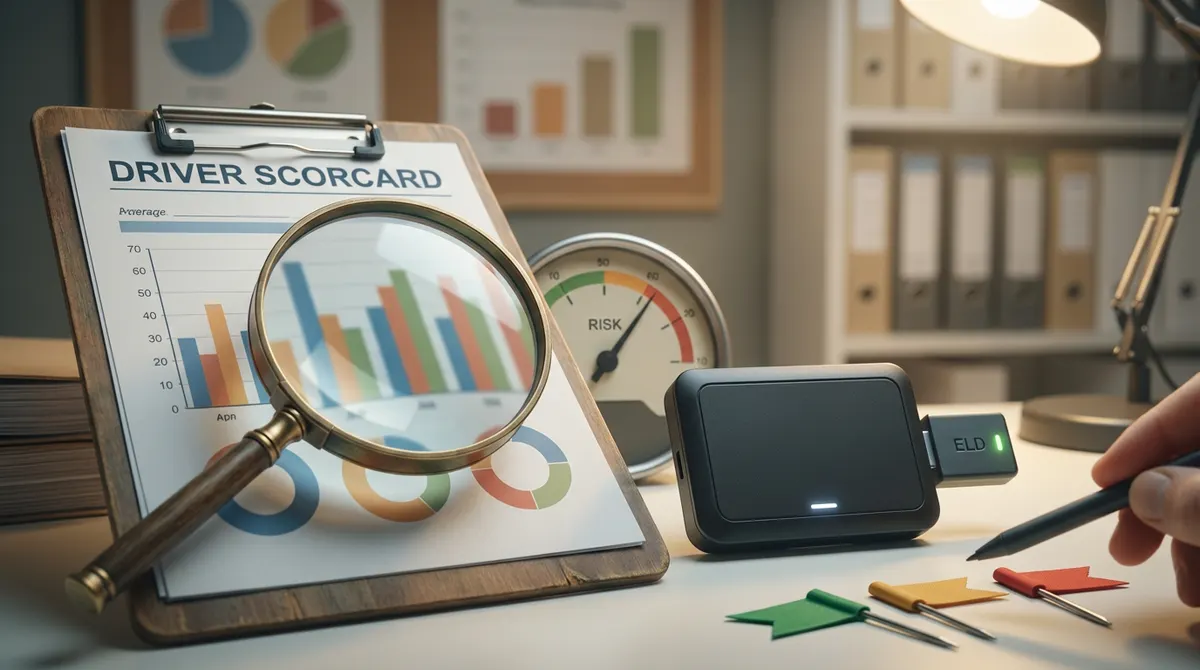
Driver scorecards are performance measurement tools that aggregate data from ELD records, roadside inspection history, FMCSA Clearinghouse status, MVR reviews, and telematics systems to give safety managers a quantified view of each driver's compliance risk profile. High-scoring drivers who consistently pass pre-trip inspections, maintain clean HOS records, and avoid moving violations contribute to lower BASIC percentile scores for the carrier. Conversely, drivers with patterns of HOS violations or failed inspections elevate the carrier's SMS exposure.
Review driver scorecards monthly and use them to target coaching and remedial training. Many carriers in your area use commercially available fleet management platforms that integrate ELD data with scorecard reporting to automate this process. Early intervention based on scorecard data prevents the accumulation of violations that trigger FMCSA enforcement actions.
Building a Culture of Safety Within Your Fleet Management

A genuine culture of safety is the differentiating factor between carriers who maintain consistently clean compliance records and those who are perpetually reactive. Safety culture starts with leadership commitment. When fleet managers treat compliance as a core operational value rather than a regulatory burden, drivers internalize the same perspective and make better decisions independently.
Practical culture-building practices include recognizing drivers with clean inspection records during company communications, using post-accident reviews as learning exercises rather than purely punitive events, and ensuring that drivers feel comfortable reporting vehicle defects without fear of being taken off a load. In real-world use, carriers that hold regular safety meetings and involve drivers in developing inspection and reporting procedures see measurable reductions in roadside violation rates over time.
Understanding the FMCSA Safety Measurement System (SMS)

The FMCSA Safety Measurement System is the data-driven tool the FMCSA uses to identify motor carriers that pose elevated safety risks and prioritize them for intervention. The SMS measures carrier performance across seven BASIC categories using data from roadside inspections, crash reports, and investigation results collected over a rolling 24-month window.
Each BASIC generates a percentile score from 0 to 100 based on how your carrier compares to peers with a similar number of safety events. Carriers with percentile scores above established intervention thresholds receive alerts in the SMS, which can trigger warning letters, targeted inspections, and compliance reviews. The 2025 and 2026 SMS updates are streamlining the BASIC categories, simplifying violation severity weights, and improving the accuracy of high-risk carrier identification to focus enforcement resources more effectively.
KEY TAKEAWAY: A proactive compliance infrastructure combining internal audits, continuous training, driver scorecards, and safety culture investment produces lower SMS BASIC scores and significantly reduces the risk of FMCSA enforcement intervention.
Understanding your compliance infrastructure prepares you for the moment an inspector initiates contact with your driver at the roadside.
DOT Inspection Checklist: Preparing Your Vehicle and Driver on the Day

A DOT inspection checklist is a structured pre-inspection preparation tool that ensures every verifiable item on a FMCSA inspection form is addressed before a certified inspector begins their evaluation.
1. Address Vehicle Maintenance

Complete a comprehensive pre-trip inspection and resolve every identified defect before dispatch. Verify that the annual inspection decal or report required by 49 CFR 396.17 is current and present on the vehicle. Check that all required lights are operational, all brake components pass the applicable pressure and adjustment tests, tires meet minimum tread depth and inflation standards, and all safety systems including the fifth wheel, air lines, and fuel system are free of defects.
2. Gather and Organize Paperwork

Ensure the driver carries all required documents in the cab. Required documents include a valid commercial driver's license with all applicable endorsements, a current medical examiner's certificate, a current registration and proof of insurance, the vehicle's annual inspection report, the most recent DVIR, a current ELD record showing compliant HOS status, and any applicable permits or hazardous materials documentation. Keep documents organized in a consistent location so the driver can produce them immediately without fumbling.
3. Clean Vehicle

A clean, well-maintained vehicle signals to inspectors that the carrier takes compliance seriously. While cleanliness is not itself an inspection criterion, inspectors who encounter vehicles in obvious disrepair are more likely to conduct a thorough examination. Keep the cab, cargo area, and exterior clean and free of damage that suggests deferred maintenance.
4. Double-Check Vehicle Safety Kit

Verify that the required safety kit is complete and accessible. Every commercial motor vehicle must carry at minimum a fire extinguisher meeting FMCSA specifications, three bidirectional emergency reflective triangles, and spare fuses if the vehicle uses fuses. Safety kit items are checked during every Level 1 inspection and their absence generates immediate violations.
5. Create an Ongoing Safety Plan

An ongoing safety plan is a documented, scheduled approach to maintaining compliance between inspections. The plan should include monthly pre-trip inspection audits by a safety manager, quarterly review of driver qualification files, annual vehicle inspection scheduling with at least 30 days lead time, and a Clearinghouse query calendar. Carriers with a written safety plan in place have a documented good-faith compliance effort to present to auditors when questions arise.
KEY TAKEAWAY: A completed DOT inspection checklist covering vehicle maintenance, organized paperwork, a complete safety kit, and a written ongoing safety plan puts your driver and vehicle in the best possible position before any inspection begins.
Knowing your checklist items is important. Knowing exactly what inspection levels you may face is equally critical.
DOT Inspection Levels: What Every Motor Carrier Must Know

DOT inspection levels are standardized categories defined by the Commercial Vehicle Safety Alliance (CVSA) that specify the scope and focus of each type of commercial vehicle inspection conducted in North America.
Understanding each inspection level helps you train drivers to respond appropriately and ensures your preparation addresses the areas an inspector will actually examine.
| Inspection Level | Name | Who and What is Inspected | Typical Duration |
|---|---|---|---|
| Level 1 | North American Standard Inspection | Driver and vehicle, full scope | 45 to 60 minutes |
| Level 2 | Walk-Around Driver/Vehicle Inspection | Driver and vehicle, no undercarriage | 30 to 45 minutes |
| Level 3 | Driver/Credential/Administrative Inspection | Driver credentials only, no vehicle | 15 to 30 minutes |
| Level 4 | Special Inspections | Specific targeted item | Varies |
| Level 5 | Vehicle-Only Inspection | Vehicle only, no driver required | 30 to 60 minutes |
| Level 6 | North American Standard Inspection for Transuranic Waste and HRCQ Radioactive Material | Driver and vehicle, enhanced hazmat protocol | 60+ minutes |
| Level 7 | Jurisdictional-Mandated Commercial Vehicle Inspection | Varies by jurisdiction | Varies |
| Level 8 | North American Standard Electronic Inspection | Electronic records and ELD data | Varies |
The Level 1 inspection is the most comprehensive and the most common during the CVSA International Roadcheck blitz events. It covers 37 specific examination steps across both the driver and the vehicle and is the benchmark against which all pre-inspection preparation should be measured.
Different Inspection Levels: Focusing on the Comprehensive Level 1 Inspection

The Level 1 North American Standard Inspection is a 37-step procedure that examines driver credentials and vehicle systems together. During a Level 1 inspection, a certified inspector verifies the driver's commercial driver's license and all endorsements, the medical examiner's certificate, HOS compliance through ELD records, the driver's duty status log, signs of fatigue or alcohol and drug impairment, seat belt use, and all applicable vehicle systems as described in the vehicle readiness section above. A Level 1 inspection during International Roadcheck 2026 from May 12 to 14, 2026 will focus specifically on ELD tampering and cargo securement, so those two areas require particular attention in your pre-Roadcheck preparation.
2025 and 2026 DOT Inspection Dates

Mark these CVSA enforcement events on your compliance calendar:
International Roadcheck 2025: May 13 to 15, 2025, with a focus on hours-of-service compliance and tire maintenance
Operation Safe Driver Week 2025: July 13 to 19, 2025
Brake Safety Week 2025: August 24 to 30, 2025
International Roadcheck 2026: May 12 to 14, 2026, with a focus on ELD tampering and cargo securement
Operation Safe Driver Week 2026: July 12 to 18, 2026
Brake Safety Week 2026: August 23 to 29, 2026
These blitz events involve intensive inspection activity with inspectors performing a Level 1 inspection approximately every minute during the 72-hour Roadcheck window across the United States, Canada, and Mexico. Preparation in the weeks leading up to these dates significantly reduces your fleet's violation exposure.
7 Most Common DOT Violations

According to FMCSA data and compliance specialists, the violations most frequently cited across roadside inspections and compliance reviews include:
Hours of service violations, including false logs and missing ELD records
Vehicle maintenance violations, particularly inoperative required lamps and brake defects
Driver qualification violations, including expired medical certificates and incomplete driver qualification files
Controlled substances and alcohol violations, including missing Clearinghouse queries
Tire violations, including insufficient tread depth and inflation below 50 percent of maximum pressure
Defective brake systems, particularly adjusted brakes that are out of specification
Load securement violations, including insufficient tie-downs and unsecured dunnage
The FMCSA recorded more than 32,000 driver violations and over 77,000 vehicle violations in a single year, underscoring how frequently these categories appear during routine inspections.
Common Reasons for Out-of-Service Orders

An out-of-service order is an enforcement action that prohibits a driver or vehicle from operating until a violation is corrected. The 2025 CVSA North American Standard Out-of-Service Criteria, which took effect April 1, 2025, define the specific conditions that trigger an out-of-service designation. Common vehicle out-of-service conditions include:
Brakes: inoperative brake components, disconnected air lines, or brake adjustment outside specification
Tires: tread depth below minimum threshold or inflation below 50 percent of maximum pressure
Lights: inoperative required running lights, brake lights, or turn signals
Cargo securement: insufficient restraints or loose dunnage classified as a vehicle out-of-service condition under 2025 criteria
Suspension: cracked or broken U-bolt bottom plates, a new out-of-service condition added in the 2025 update
Driver out-of-service conditions include absence of a valid medical certificate (regardless of vehicle type under the 2025 update), HOS violations placing the driver in excess of maximum driving time, and evidence of drug or alcohol impairment.
Best Practices During an Inspection by a Certified Inspector
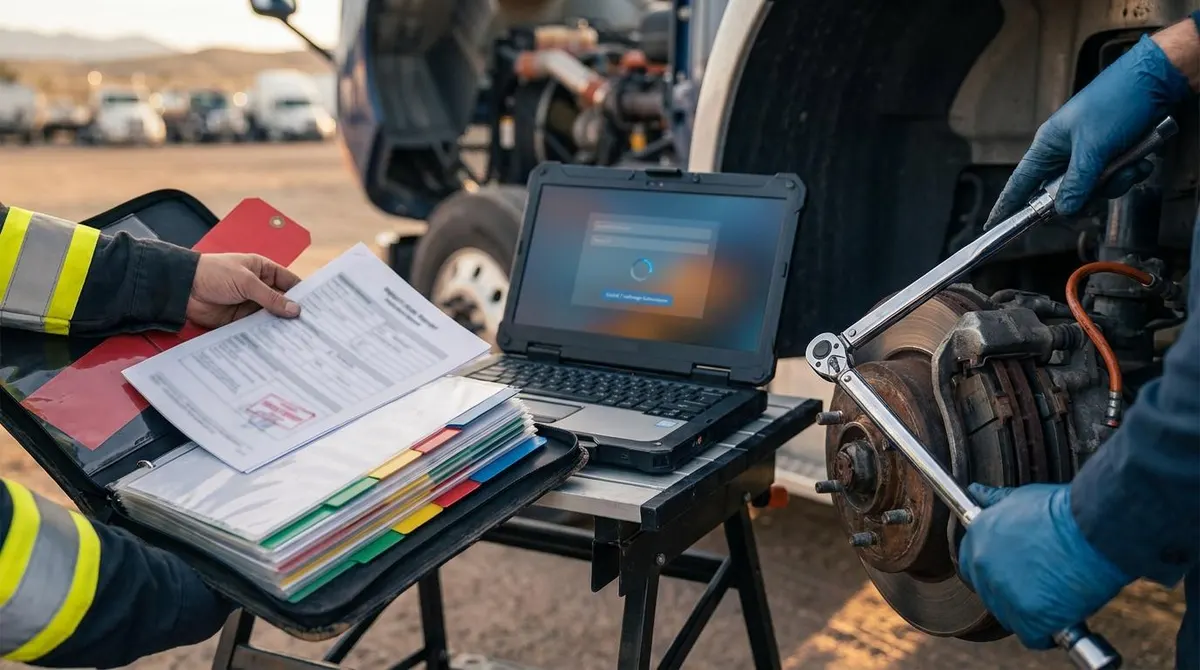
When an inspector initiates a roadside inspection, the driver should remain professional, produce all requested documents promptly, and avoid interfering with the inspector's access to the vehicle. Drivers should know exactly where every required document is stored in the cab and be prepared to explain their ELD records accurately. If an inspector identifies a potential defect, the driver should allow the inspection to proceed without argument while carefully noting every item cited for later review with the carrier's compliance officer.
What to Do If Violations Are Found

If violations are found during an inspection, the driver and carrier must address them systematically. Vehicle out-of-service conditions must be corrected before the vehicle can return to service. The carrier must retain the inspection report and log it in the vehicle's maintenance records. For violations that do not rise to the out-of-service level, the carrier has the right to challenge violations through the DataQ system if the citation is inaccurate or erroneous. Successful DataQ challenges remove inaccurate violations from the SMS database and protect the carrier's BASIC scores.
KEY TAKEAWAY: Knowing all eight inspection levels, the specific criteria for out-of-service orders, and the proper response protocol when violations are found protects your drivers and your fleet's SMS record every time an inspector arrives.
Even carriers with excellent field performance can face challenges during a formal compliance review. The next section prepares you for that scenario.
Common Myths About DOT Compliance Debunked

Several widespread misconceptions lead motor carriers and commercial drivers to underestimate compliance risks or rely on outdated assumptions. Addressing these directly helps you build a compliance approach grounded in current FMCSA standards.
MYTH: You only need to worry about DOT inspections during blitz weeks like International Roadcheck.
FACT: Roadside inspections occur throughout the year at weigh stations, mobile patrol sites, and highway checkpoints. Blitz weeks concentrate inspection activity over 72 hours, but FMCSA data shows that the majority of citations are issued outside of blitz events. According to the FMCSA, inspections are conducted year-round as part of the Motor Carrier Safety Assistance Program. Carriers that only prepare for known blitz dates routinely fail routine inspections and accumulate SMS violations that trigger compliance reviews.
MYTH: A DOT physical is just a routine check-up and any driver can pass it without preparation.
FACT: The DOT physical exam evaluates specific medical thresholds that can disqualify a driver if not managed proactively. Blood pressure above 180/110 results in immediate disqualification. Uncontrolled sleep apnea can disqualify a driver even without a formal diagnosis if the medical examiner identifies risk factors during the physical examination. Drivers who arrive without required supporting documentation for managed conditions such as high blood pressure, sleep apnea, or diabetes must often schedule a second appointment at full cost. Preparation before the exam, including managing blood pressure, obtaining CPAP compliance reports, and bringing current lab results, is directly correlated with exam outcomes.
MYTH: Small carriers with few vehicles are rarely audited and can operate with less rigorous documentation practices.
FACT: New entrant motor carriers are legally required to undergo a safety audit within 12 months of receiving their operating authority for property carriers and within 3 months for passenger carriers. Beyond the new entrant audit, high SMS BASIC scores, failed roadside inspections, and whistleblower complaints can trigger a compliance review regardless of fleet size. The FMCSA does not exempt small carriers from documentation requirements, and a failed audit for a small carrier can result in the same consequences as for a large fleet, including revocation of operating authority.
MYTH: If a driver passes a DOT physical, they are cleared for two full years without any further medical monitoring.
FACT: While the standard DOT medical certification period is 24 months, medical examiners can and routinely do issue shorter certification periods when a driver's condition requires closer monitoring. A driver with a blood pressure reading between 140 and 159 systolic, for example, receives only a one-year certification. A reading between 160 and 179 systolic produces a three-month conditional certification. Additionally, if a driver's medical condition changes materially between exams, the motor carrier has an obligation not to permit that driver to operate a commercial motor vehicle even if the current medical card has not yet expired.
KEY TAKEAWAY: DOT compliance is a continuous, year-round obligation that applies to carriers of all sizes, and common misconceptions about inspection frequency, medical exam simplicity, and small-carrier exemptions create real enforcement and liability exposure.
Clearing up these misconceptions sets the stage for the most comprehensive preparation scenario: a formal DOT compliance review or audit.
Preparing for a Comprehensive DOT Compliance Review (Audit)

A DOT compliance review is an official FMCSA examination of a motor carrier's records, safety management practices, and operational procedures, conducted either offsite, onsite focused, or onsite comprehensive.
Understanding the Scope of an FMCSA Audit or DOT Compliance Review

The FMCSA conducts thousands of compliance reviews annually targeting interstate motor carriers and in-state carriers transporting hazardous materials. Triggers for a compliance review include high SMS BASIC scores, patterns of failed roadside inspections, new entrant status, accidents, or whistleblower complaints. An onsite comprehensive investigation is the only type of audit that results in an official safety rating of satisfactory, conditional, or unsatisfactory being assigned to the carrier.
A compliance review can be triggered without advance notice in some circumstances, meaning your records must always be current, complete, and organized for immediate production. Carriers that maintain real-time compliance management systems experience significantly lower stress and better outcomes during unannounced audits than those who scramble to organize documentation after notification.
Key Areas Reviewed During a Compliance Review

During a DOT compliance review, auditors examine records across six primary categories:
General: operating authority, insurance coverage, MCS-90 endorsement, and USDOT registration accuracy
Driver records: driver qualification files, medical certificates, MVRs, Clearinghouse queries, and training documentation
Operational: HOS records, ELD data, supporting documents, and duty status consistency
Vehicle: maintenance records, DVIRs, annual inspection documentation, and defect correction records
Hazardous materials: shipping papers, placarding, driver training, and emergency response information where applicable
Accidents: accident register completeness, post-accident drug and alcohol test documentation, and follow-up actions
Auditors assess whether your documented procedures match actual operational practice. Inconsistencies between written safety policies and actual driver behavior captured in ELD data or inspection records are a serious finding that can elevate a safety rating to conditional.
KEY TAKEAWAY: A DOT compliance review examines six key record categories and results in an official safety rating if conducted as an onsite comprehensive investigation, making organized, current, and complete documentation your single most important defense.
Final Thoughts: Your Blueprint for Unwavering DOT Compliance

DOT compliance is not a destination you reach once. It is a continuous operational standard that protects your drivers, your fleet, your business, and everyone sharing the road with your vehicles. Carriers that build compliance into daily operations through thorough pre-trip inspections, complete driver qualification files, current medical certifications, accurate ELD records, and a proactive safety culture consistently achieve better roadside inspection outcomes, lower SMS BASIC scores, and stronger audit results than those who treat compliance as a periodic task.
Your blueprint starts with the checklists in this guide and extends into every operational decision your fleet makes. Review your driver qualification files quarterly. Audit your vehicle maintenance records before every blitz week. Ensure every driver knows their medical certification expiration date and has a plan for renewal well in advance. For drivers navigating sleep apnea requirements, explore the transparent cash-pay CPAP therapy and sleep apnea care solutions at Dumbo Health, where pricing starts at $59 per month with no contracts, no insurance required, and no surprise bills, making it one of the most accessible pathways to documented CPAP compliance for commercial drivers.
Frequently Asked Questions
How much does a DOT physical cost in the US?
The cost of a DOT physical exam in the United States typically ranges from $75 to $200, depending on the provider, location, and whether the exam is conducted at a dedicated occupational health clinic, urgent care center, or through a telehealth platform. Cash-pay providers often offer competitive pricing without requiring insurance. Dumbo Health provides information on DOT physical self-pay costs to help drivers find affordable options. The cost does not include any additional testing such as a sleep study, which is billed separately if ordered by the medical examiner.
Can you walk in for a DOT physical?
Yes, many urgent care centers and occupational health clinics offer walk-in DOT physicals on a self-pay basis without requiring a prior appointment. Wait times vary by location and time of day. Calling ahead to confirm that a certified medical examiner is available and that the clinic is listed on the FMCSA National Registry of Certified Medical Examiners is always recommended before making the trip. Bringing all required medical documentation with you prevents delays.
How long does a DOT physical exam take?
A DOT physical exam typically takes between 30 and 60 minutes from check-in to completion, depending on your medical history, the number of systems requiring evaluation, and whether you need to provide supporting documentation for any managed conditions. Drivers with straightforward medical histories and no managed conditions usually complete the exam in under 45 minutes. Drivers with conditions such as high blood pressure, sleep apnea, or diabetes who bring complete supporting documentation may take slightly longer as the examiner reviews the records and documents certifications or restrictions.
What do I need to bring to my DOT physical?
Bring a valid photo identification, your commercial driver's license, a list of all current medications including dosages, your most recent medical records for any managed conditions, eyeglasses or contact lenses if you use them, and hearing aids if applicable. Drivers managing sleep apnea should bring a CPAP compliance report from the past month showing therapeutic use and acceptable AHI levels. Drivers with diabetes should bring a current A1C reading no more than three months old. Drivers with a history of cardiac events should bring cardiologist clearance and a recent stress test result. The more complete your documentation, the smoother your exam will be.
What conditions can disqualify you from a DOT physical?
Conditions that can disqualify a driver from receiving DOT medical certification include uncontrolled high blood pressure above 180/110, vision below 20/40 in either eye that cannot be corrected to that level, inability to hear a forced whispered voice at five feet in the better ear, a current clinical diagnosis of alcoholism, use of certain Schedule I substances, insulin-dependent diabetes without an FMCSA exemption, epilepsy without an established exemption, a current heart disease diagnosis with a significant cardiac risk, and any mental health condition or physical impairment that would interfere with safe vehicle operation. Many of these conditions are manageable with treatment, and successfully treated drivers may qualify for certification. Consulting with a medical examiner or a provider near you before your scheduled exam can help you identify which supporting documentation to bring.
How long is a DOT medical card valid?
A standard DOT medical card, also called a Medical Examiner's Certificate, is valid for up to 24 months. However, medical examiners issue shorter certification periods when a driver's condition requires closer monitoring. A blood pressure reading of 140 to 159 systolic results in a one-year card. A reading of 160 to 179 systolic results in a three-month conditional card. Drivers with sleep apnea who are newly starting CPAP therapy may receive a shorter initial certification period until they demonstrate adequate treatment compliance. Starting June 23, 2025, CDL holders no longer need to carry a paper medical card, as certification status is transmitted electronically to state driver licensing agencies.
What areas does Dumbo Health DOT Physicals serve?
Dumbo Health is a telehealth-based platform that serves commercial drivers and motor carriers across the United States with at-home sleep testing, CPAP therapy, and DOT physical compliance resources. Drivers can access online DOT physical guidance and sleep apnea testing without insurance from anywhere in the country. For sleep apnea specifically, the home sleep test kit is shipped directly to the driver's home, with physician interpretation completed remotely. Drivers looking for providers in your area for in-person DOT physicals should use the FMCSA National Registry of Certified Medical Examiners to locate a certified examiner close to you.
What will fail a DOT inspection?
A DOT inspection will result in a violation or out-of-service order for conditions including: inoperative required lights, brake components outside adjustment specifications or missing, tires with insufficient tread depth or inflation below 50 percent of maximum pressure, an expired medical examiner's certificate, hours of service records showing violations or falsification, missing or incomplete required documents such as registration or proof of insurance, defective or missing safety equipment, and any other condition listed in the CVSA North American Standard Out-of-Service Criteria. Vehicle and driver out-of-service conditions require immediate correction before operations can resume.
How often is a DOT inspection required?
Annual vehicle inspections are required at minimum once every 12 months under 49 CFR 396.17 for all covered commercial motor vehicles, and documentation must remain on the vehicle at all times. Roadside inspections by certified enforcement officers can occur at any time and are not scheduled. CVSA blitz events including International Roadcheck, Brake Safety Week, and Operation Safe Driver Week create periods of heightened inspection activity. Drivers should expect to be inspected during any roadside stop by a certified inspector, regardless of whether a blitz event is in progress.
Can I do my own DOT inspection on my truck?
An owner-operator may perform the daily pre-trip and post-trip Driver Vehicle Inspection Report required under FMCSA regulations. However, the annual periodic inspection required under 49 CFR 396.17 must be performed by a qualified inspector meeting the requirements of 49 CFR 396.19, which requires knowledge of applicable inspection criteria, ability to identify defects, and access to appropriate tools and equipment. A motor carrier may employ qualified inspectors to perform annual inspections on vehicles under their control. Owner-operators who are not qualified under 49 CFR 396.19 should use a qualified third-party inspection service.
Do you have to be certified to do annual DOT inspections?
Yes. Inspectors who perform annual periodic inspections under 49 CFR 396.17 must meet the qualification requirements set out in 49 CFR 396.19. Qualified inspectors must understand the inspection criteria for the parts and accessories required to be inspected, be able to identify defective components, have access to any tools necessary to perform the inspection, and demonstrate knowledge of applicable regulations. There is no federally mandated certification examination, but inspectors must be able to demonstrate qualification if asked during a compliance review. Many carriers use third-party inspection services with documented inspector qualifications to ensure this standard is met.
How long does a DOT inspection take?
The duration of a DOT inspection depends on the inspection level. A Level 1 North American Standard Inspection, which is the most comprehensive and most common during blitz events, typically takes 45 to 60 minutes to complete. A Level 2 walk-around inspection takes 30 to 45 minutes. A Level 3 driver-only credential and administrative inspection takes 15 to 30 minutes. A Level 5 vehicle-only inspection with no driver present takes 30 to 60 minutes. Level 6 inspections for vehicles transporting radioactive materials take 60 minutes or more due to the enhanced protocol involved.
AI summary
DOT preparation is the process of aligning motor carrier operations with FMCSA standards before roadside inspections, compliance reviews, or audits. It focuses on preventing out-of-service orders and protecting Safety Measurement System (SMS) BASIC scores. Key components include vehicle readiness for CVSA Level 1 North American Standard Inspections, with daily pre-trip and post-trip inspections and DVIR documentation. Carriers must meet annual periodic inspection requirements under 49 CFR 396.17 and keep inspection proof on the vehicle; maintenance files should include preventive maintenance logs, repair orders, and defect corrections. Driver compliance includes maintaining Driver Qualification Files (49 CFR Part 391) with items such as CDL copies, MVRs, Medical Examiner’s Certificates, road test documentation, and FMCSA Drug and Alcohol Clearinghouse queries. Hours of service rules for property carriers include 11 driving hours within a 14-hour window, a 10-hour off-duty period, and a 30-minute break after 8 hours of driving; ELD records and supporting documents must be retained for six months. DOT physical exams are required at least every 24 months, with specific vision, hearing, and blood pressure thresholds and additional documentation needs for conditions like sleep apnea, hypertension, and diabetes.

Nicolas Nemeth
Co-Founder
Nico is the co-founder of Dumbo Health, a digital sleep clinic that brings the entire obstructive sleep apnea journey home. Patients skip the sleep lab and the long wait to see a specialist. Dumbo Health ships an at home test, connects patients with licensed sleep clinicians by video, and delivers CPAP or a custom oral appliance with ongoing coaching and automatic resupply in one clear subscription.
Keep reading

How Long Does a DOT Physical Take? A Complete Guide for Commercial Drivers

What Happens If You Fail a DOT Drug Test? The Complete Guide for Commercial Drivers


