Navigating DOT Stroke Guidelines for CMV Drivers: What You Need To Know
This guide explains how FMCSA uses DOT stroke guidelines to determine whether a commercial motor vehicle driver can safely return to driving after a stroke or transient ischemic attack. It outlines the medical expert panel’s recommended minimum one-year waiting period and what happens after that point, including neurologist clearance and a detailed DOT physical. The article reviews common post-stroke issues that affect certification, such as weakness, balance problems, visual field loss, cognitive changes, fatigue, and seizure risk. It also covers key co-factors examiners weigh, including blood pressure, diabetes stability, heart disease, sleep apnea, and medication side effects. You will learn what documentation to gather, how exam outcomes work, and practical steps to improve long-term fitness to drive.
Struggling with sleep?
Find out if sleep apnea is the reason.
FDA-cleared. $149 flat. Physician-reviewed results in 48 hours.

Navigating DOT Stroke Guidelines for CMV Drivers: What You Need To Know

Navigating DOT stroke guidelines is the process the Federal Motor Carrier Safety Administration uses to decide if you can safely return to driving a commercial motor vehicle after a stroke. According to the FMCSA’s medical expert panel, drivers should not return to commercial driving within one year of a stroke, and clearance after that depends on a detailed neurological evaluation and overall health review. This page walks you through how stroke affects driver safety, what the FMCSA looks for, how the DOT physical works after a stroke, and what you can do to improve your chances of safe recertification. You will learn about waiting periods, common neurological issues, blood pressure and diabetes rules, sleep disorders, and practical steps to protect both your health and your career. By the end, you will have a clear roadmap to navigate DOT stroke guidelines with confidence and realistic expectations.
Introduction: Navigating Your CDL After a Stroke

Returning to commercial driving after a stroke is possible for some drivers, but DOT stroke guidelines require careful medical evaluation and defined waiting periods before you can be certified again. The FMCSA’s stroke medical expert panel recommends that no commercial driver should return to driving within one year of a stroke or transient ischemic attack, and that recertification after that point must be based on neurologist clearance and functional status. For you as a commercial motor vehicle driver, this means your recovery, neurological exam, blood pressure, and other medical conditions are all reviewed as part of your DOT physical. You will need to understand how stroke affects crash risk, what documentation your certified medical examiner expects, and how to manage long-term health issues such as sleep apnea and heart disease. This guide explains the full pathway from the day of your stroke to a possible return to driving, including practical steps, timelines, and how modern sleep apnea care options like Dumbo Health’s at‑home sleep testing and CPAP plans can support ongoing driver safety.
The Challenge for Commercial Motor Vehicle (CMV) Drivers

Commercial motor vehicle drivers face unique challenges after a stroke because DOT stroke guidelines focus on preventing sudden impairment that could lead to a motor vehicle crash. According to FMCSA medical expert panel findings, drivers who have suffered a stroke are at increased crash risk, although the exact size of that risk is difficult to quantify from current research. For you, this translates into stricter scrutiny of neurological recovery, seizure risk, cognitive function, and cardiovascular stability before a DOT physical examiner can issue a new medical card.
Professional drivers already carry a higher burden of cardiovascular risk factors than the general population, including hypertension, obesity, and limited physical activity, all of which can increase stroke risk. A Danish registry study found that professional drivers had a standardized hospitalization ratio for stroke of around 132 compared with other workers, highlighting the elevated risk in this group. Real-world experience shows that CMV drivers often must balance demanding schedules, irregular sleep, and long hours with complex post-stroke care plans. This combination makes it essential to have clear guidance on how to safely return to driving and how to maintain fitness to drive over the long term.
DID YOU KNOW: FMCSA health screening data show that about 35 percent of long-haul truck drivers have hypertension at or above 140/90 mmHg, which is roughly 1.8 times the national average, underlining why stroke and cardiovascular risk are key regulatory concerns.
KEY TAKEAWAY: CMV drivers face higher cardiovascular and stroke risks, so DOT stroke guidelines and medical card decisions focus tightly on preventing sudden impairment and protecting driver safety.
As you understand the challenges, the next step is to learn why DOT stroke guidelines exist and how they protect both you and others on the road.
Why DOT Stroke Guidelines Matter for Driver Safety and Certification

DOT stroke guidelines exist to make sure that a commercial motor vehicle driver returning after a stroke can operate a large truck safely without sudden neurological events that increase crash risk. The FMCSA’s stroke medical expert panel concluded that drivers with a history of stroke or TIA have an increased risk of crashes and recommended that no driver return to CMV driving during the first year after the event.
Stroke is a leading cause of serious long-term disability and can leave residual problems with strength, coordination, vision, thinking, and alertness, all of which matter for driver safety. The FMCSA uses its medical standards and expert panel recommendations to balance your livelihood with public safety, requiring that drivers be free of neurological deficits that could interfere with operating a large truck safely. For drivers in your area and across the country, this means clear expectations about waiting periods, needed documentation, and specific health conditions such as seizures or uncontrolled high blood pressure that can delay or prevent certification.
DID YOU KNOW: The FMCSA medical expert panel emphasized that the highest stroke risk occurs immediately after a TIA or minor stroke and decreases over time, which is why early driving cessation followed by structured review is built into DOT stroke guidance.
KEY TAKEAWAY: DOT stroke guidelines are designed to minimize crash risk by requiring a waiting period and detailed medical assessment before a driver with a history of stroke can regain certification.
Once you understand why the rules exist, you can use them as a roadmap to navigate FMCSA regulations and step-by-step recertification.
A Roadmap to Understanding FMCSA Regulations and Recertification

The most effective way to navigate FMCSA regulations after a stroke is to break the process into clear stages from driving cessation to possible recertification. The FMCSA medical expert panel recommends that drivers stay out of commercial driving for at least one year after a stroke or TIA, and only then be considered for certification based on a neurologist’s evaluation and overall medical stability.
Your roadmap typically includes: the initial period off work; stroke recovery with your treating neurologist and primary care clinician; completion of all recommended imaging and tests; and then a comprehensive DOT physical. Medical examiners look at neurological exams, cognitive status, seizure risk, cardiovascular health, sleep disorders, and medication side effects before issuing a medical card. In practical terms, many CMV drivers gather medical records, specialist letters, and test results in a binder so that the certified medical examiner can see a complete picture in one visit.
IMPORTANT: The FMCSA’s newer Medical Examiner’s Handbook does not always list specific waiting periods, but examiners are expected to use current regulations, expert panel reports, and clinical judgment; this can lead to some variability between examiners in how post-stroke cases are handled.
KEY TAKEAWAY: Your path back to commercial driving follows a staged roadmap of at least one year off driving, specialist-led recovery, evidence gathering, and a detailed DOT physical guided by FMCSA medical standards.
With the roadmap in mind, the next step is to understand what a stroke actually is and why it affects driving so much.
Understanding Stroke: Impact on Driving and FMCSA Concerns

Stroke after-effects directly influence whether you can safely control a commercial motor vehicle and meet DOT physical standards. The FMCSA’s medical expert panel notes that stroke-related deficits in strength, coordination, vision, and cognition can meaningfully increase crash risk for CMV drivers.
What is a Stroke? Types and Potential Impairments

Stroke is a sudden interruption of blood flow to part of the brain (ischemic stroke) or bleeding into or around the brain (hemorrhagic stroke), leading to brain cell injury and loss of function. The NIH explains that stroke can affect movement, speech, vision, cognition, and emotional control depending on which area of the brain is involved and how large the affected region is. For you as a driver, this can translate into weakness in one arm or leg, slower reaction times, difficulty judging distances, or trouble with complex decision-making in heavy traffic.
Ischemic stroke is the most common type and occurs when a clot blocks an artery supplying the brain, while hemorrhagic stroke happens when a blood vessel ruptures and bleeds into brain tissue. According to population data, professional drivers tend to have more cerebral infarctions than intracranial hemorrhages, reflecting a higher burden of vascular risk factors that affect brain arteries. Because different stroke types have different seizure risks and different chances of recurrence, they may influence how long you need to wait before being considered for DOT recertification.
KEY TAKEAWAY: Stroke is a brain blood-flow problem that can cause lasting issues with movement, vision, and thinking, all of which are critical for safe CMV driving under FMCSA rules.
Once you know what a stroke is, the next question is why FMCSA is so strict about it in relation to crash risk and driver safety.
The "Why" Behind FMCSA Regulations: Stroke, Crash Risk, and Driver Safety

FMCSA stroke regulations exist because research shows that a history of stroke or TIA can increase the risk of a motor vehicle crash for commercial drivers. The FMCSA stroke medical expert panel reviewed available studies and concluded that drivers who have suffered a stroke are at increased crash risk, although evidence was rated as minimally acceptable and more research was recommended.
After a stroke, you may have subtle cognitive changes, slower processing speed, or visual field loss that you may not fully notice but that can matter during sudden lane changes or emergency stops in a large truck. Stroke can also lead to seizures, and abrupt loss of consciousness or control at highway speeds poses obvious dangers for both you and other road users. Because of this, FMCSA stresses seizure risk, neurological examination results, and compliance with treatment when medical examiners consider reissuing a medical card.
DID YOU KNOW: Expert panel guidance suggests that clearance to return to commercial driving after stroke should be made by a neurologist with appropriate imaging and testing, underscoring how seriously FMCSA takes post-stroke driver safety.
KEY TAKEAWAY: FMCSA stroke rules are built around evidence that stroke survivors have higher crash risk, especially early after the event, so regulations focus on seizure risk, neurological deficits, and careful specialist evaluation.
Understanding FMCSA’s reasoning also means recognizing which neurological residuals matter most for your on-road performance.
Common Neurological Residuals of Stroke Affecting Driving Ability

The neurological residuals that matter most for driving after a stroke include weakness, coordination problems, visual deficits, and cognitive changes. FMCSA’s expert panel recommends that any driver with a stroke-related deficit that interferes with the ability to perform CMV tasks should not be certified.
In real-world DOT physical exams, medical examiners look for hemiparesis (weakness on one side of the body), difficulty with balance or gait, loss of peripheral vision, problems with attention or concentration, and slowed reaction time. Even mild visual field loss can make it harder to detect vehicles in adjacent lanes, and mild cognitive impairment can affect your ability to manage long shifts, changing conditions, and complex decisions on the highway. Many patients report that fatigue is one of the most persistent residuals after stroke, and fatigue can combine with long work hours and untreated sleep apnea to further erode alertness.
KEY TAKEAWAY: Stroke-related residuals such as weakness, vision loss, balance issues, and cognitive changes are central to DOT stroke decisions because they directly affect real-world CMV driving safety.
With a clear view of stroke and its residuals, the next step is to see how the FMCSA regulatory framework and DOT physical process fit together after a stroke.
The FMCSA Framework: Regulations for Commercial Drivers Post-Stroke

The FMCSA framework for commercial drivers after a stroke sets out when you can be considered for recertification and which factors a medical examiner must review to protect driver safety. FMCSA expert panel recommendations state that CMV drivers should not return to driving within one year after a stroke or TIA, and that neurologist clearance and functional assessments are key to any later certification decision.
The Federal Motor Carrier Safety Administration (FMCSA) and Your Medical Card

The Federal Motor Carrier Safety Administration is the federal agency that regulates interstate commercial motor vehicle safety, including the medical standards required to hold a DOT medical card. FMCSA’s role is not to treat disease but to establish medical fitness criteria so that drivers do not have conditions that increase crash risk or sudden incapacitation while operating large trucks or buses. For you, this means that your private neurologist and cardiologist manage your stroke care, but your certified medical examiner must decide whether you meet FMCSA standards based on their reports and your exam.
Research from FMCSA-related data shows that highway transportation incidents are a leading cause of occupational death, especially for older workers, which helps explain why the agency pays close attention to neurological and cardiovascular conditions like stroke. To maintain a valid medical card, you must meet vision, hearing, blood pressure, and neurological standards, and you must disclose all relevant medical conditions honestly on your DOT physical history form.
KEY TAKEAWAY: FMCSA sets the medical rules and your certified examiner applies them, so your stroke history, specialist reports, and exam findings all feed into a single decision about your DOT medical card.
Once you understand FMCSA’s role, it is easier to see how general disqualification criteria are applied to medical conditions after a stroke.
General Disqualification Criteria for Medical Conditions

General disqualification criteria for medical conditions used by FMCSA focus on any condition that could cause sudden loss of consciousness, impaired judgment, or inability to control a commercial motor vehicle safely. The FMCSA expert panel advises that post-stroke drivers with significant neurological deficits, uncontrolled seizures, or unstable cardiovascular disease should not be certified.
For you, this means that conditions like uncontrolled high blood pressure, poorly managed diabetes with frequent hypoglycemia, severe sleep apnea that is not treated, or heart disease with high risk of sudden incapacitation can delay or prevent recertification. Medical examiners evaluate these factors together rather than in isolation, which is why a comprehensive approach to recovery and chronic disease management can strengthen your certification case. If you have multiple medical conditions, the longest relevant waiting period usually applies before the examiner can consider you for a new card.
KEY TAKEAWAY: FMCSA disqualifies or defers drivers when medical conditions create unacceptably high risk for sudden impairment or crash, so your overall medical stability matters as much as your stroke history.
Understanding the general criteria leads naturally into the key role of the certified medical examiner and the detailed DOT physical after a stroke.
The Role of the Certified Medical Examiner and the DOT Physical

The certified medical examiner is the clinician trained and listed in the National Registry who performs your DOT physical and decides whether you meet FMCSA standards after a stroke. FMCSA expert panel guidance recommends that clearance after a stroke be made in consultation with or by a neurologist, but the final certification decision belongs to the certified medical examiner who signs your medical card.
During a DOT physical, the examiner reviews your stroke history, waiting period, neurological exam findings, blood pressure, vision, hearing, medication list, and any related medical conditions such as sleep apnea or heart disease. Many examiners rely on specialist letters that clearly state whether you are stable, seizure-free, and safe to return to commercial driving, while also documenting any residual deficits. In practice, medical examiners often issue shorter certification periods, such as one year, for drivers with complex histories so that health and driver safety can be reviewed more often.
KEY TAKEAWAY: The certified medical examiner uses FMCSA stroke guidelines, your specialist reports, and the DOT physical findings to decide whether to issue, shorten, or deny your medical certification.
Once the framework is clear, the next major step is to understand the specific medical considerations that shape your post-stroke DOT evaluation.
Key Medical Considerations and Assessments for DOT Certification Post-Stroke

The most important medical considerations for DOT certification after a stroke include neurological recovery, cognitive function, seizure risk, cardiovascular health, blood pressure, diabetes, vision, hearing, sleep disorders, and medication effects. FMCSA and its expert panel highlight that certification decisions should weigh all of these factors together to determine whether you can safely return to driving a commercial motor vehicle.
Neurological Function and Recovery Assessment

Neurological function and recovery assessment after a stroke is central to DOT stroke decisions because it shows whether you have regained enough strength, coordination, and sensory function to control a CMV safely. FMCSA guidance recommends that drivers be evaluated by a neurologist and that any remaining deficit that interferes with CMV tasks should disqualify the driver from certification.
A typical neurological evaluation may include tests of strength in arms and legs, reflexes, coordination, balance, gait, sensation, visual fields, and cranial nerve function. Many clinicians also perform bedside cognitive screening to check attention, memory, and problem-solving, all of which are important for complex driving tasks. Clinicians frequently observe that drivers with subtle visual neglect or mild weakness may underestimate its impact on real-world driving, which is why examiner observation and formal testing both matter.
KEY TAKEAWAY: A thorough neurological assessment documenting stable recovery and absence of function-limiting deficits is essential for a strong DOT recertification case after a stroke.
Once basic neurological function is assessed, more detailed cognitive and neuropsychological testing may be needed, especially when cognitive changes could affect driver safety.
Cognitive and Neuropsychological Assessments

Cognitive and neuropsychological assessments help determine whether stroke-related changes in attention, memory, processing speed, or judgment could interfere with safe CMV driving. The FMCSA medical expert panel recommended research into tools like the Stroke Driver Screening Assessment to better predict on-road performance after stroke and TIA, reflecting the importance of cognitive function in driver safety.
In practice, your neurologist or neuropsychologist may perform standardized tests that measure reaction time, divided attention, visual scanning, and executive function. Neuropsychological testing is particularly helpful if you or your family notice changes in concentration, decision-making, or multitasking, even when basic neurological exam findings look normal. For drivers near you or in your area, documented cognitive stability and the ability to manage complex tasks can reassure both examiners and employers about safe return to work.
KEY TAKEAWAY: Cognitive and neuropsychological assessments provide objective evidence about your thinking and reaction abilities, which can strongly influence DOT decisions after a stroke.
Seizure risk is another major concern, since seizures can cause sudden loss of control that threatens driver safety in a large truck.
Seizure Risk and Management

Seizure risk and its management are critical in DOT stroke guidelines because any seizure while driving a CMV could cause catastrophic loss of control. The FMCSA expert panel recommended at least a one-year waiting period before considering any driver with a history of stroke or TIA for recertification, in part to monitor for seizures and ensure stability.
The risk of seizures after a cortical stroke is higher than after some cerebellar or brainstem strokes, which is why some clinical recommendations suggest longer practical waiting periods for cerebral strokes. For example, occupational medicine guidance commonly cites at least one year for strokes without seizure risk and up to five years for strokes involving regions with higher seizure risk before considering DOT recertification. If you require anticonvulsant medication, examiners will want to know that your seizure disorder is stable, that you are fully compliant with medication, and that side effects do not impair alertness.
KEY TAKEAWAY: Demonstrating that seizure risk is low, stable, and well managed is a cornerstone of FMCSA stroke-related certification, especially after cortical strokes.
Because stroke often shares risk factors with heart disease and other cardiovascular issues, your heart health also becomes a key part of the DOT evaluation.
Cardiovascular Health: A Critical Co-Factor

Cardiovascular health is a critical co-factor in DOT stroke guidelines because conditions that lead to stroke, such as hypertension and heart disease, also raise the risk of sudden incapacitation on the road. Data on truck drivers show that cardiovascular disease mortality is about 27 percent higher than in average workers, underscoring the importance of aggressive risk factor control in this group.
Your examiner will assess your history of heart attack, arrhythmias such as atrial fibrillation, heart failure, and structural heart disease that might predispose you to further strokes or sudden events. FMCSA cardiovascular guidance commonly involves additional waiting periods and testing, such as stress tests or echocardiograms, after major cardiac events before recertification is considered. Stroke in the setting of uncontrolled atrial fibrillation or severe heart disease may prompt more conservative certification decisions until your cardiologist documents stable management.
KEY TAKEAWAY: Strong cardiovascular control after a stroke can reduce both future stroke risk and sudden cardiac events, which is crucial for DOT medical card decisions.
Blood pressure management is one of the most modifiable and heavily scrutinized cardiovascular factors in both stroke prevention and DOT certification.
Blood Pressure Management: A Cornerstone of Stroke Recovery

Blood pressure control is central to both stroke recovery and DOT medical fitness because uncontrolled hypertension increases the risk of recurrent stroke and cardiovascular events. FMCSA health screening data indicate that about 35 percent of long-haul drivers have hypertension at or above 140/90 mmHg, highlighting why blood pressure thresholds are built into DOT physical standards.
During your DOT physical, the certified examiner will measure your blood pressure and may repeat readings to rule out white coat syndrome. DOT standards generally allow certification for drivers with blood pressure below specific thresholds when stabilized with or without medication, while more severe or uncontrolled hypertension may lead to shorter certification intervals or temporary disqualification until managed. Clinicians frequently observe that drivers who engage in regular follow-up, medication adherence, and lifestyle changes such as reducing sodium and increasing activity can bring blood pressure under clearer control for future exams.
KEY TAKEAWAY: Keeping your blood pressure within accepted DOT thresholds through medication and lifestyle changes is one of the most effective ways to support safe post-stroke recertification.
Diabetes is another common condition among CMV drivers and can influence both stroke risk and DOT certification.
Diabetes Management and Certification

Diabetes management is important in DOT stroke evaluations because poorly controlled blood sugar can increase both stroke risk and the danger of sudden hypoglycemia while driving. The CDC and NIH emphasize that long-term uncontrolled diabetes accelerates vascular damage, raising the likelihood of stroke, heart disease, and other complications that affect driving safety.
Your medical examiner will review your diabetes type, treatment regimen, recent lab results such as A1c, history of low blood sugar episodes, and any diabetes-related complications like neuropathy or retinopathy. Drivers with frequent hypoglycemia, poor adherence, or advanced complications may face delays or shorter certification periods until their blood sugar pattern is more stable. Many patients report that structured follow-up with their primary care clinician or endocrinologist, combined with better meal timing and medication adjustments, reduces hypoglycemic episodes during long driving days.
KEY TAKEAWAY: Demonstrating stable diabetes control without frequent hypoglycemia is essential for post-stroke DOT certification, given the combined vascular and safety risks.
vision and hearing are foundational to safe driving and therefore receive careful attention during your DOT physical after a stroke.
Vision and Hearing Requirements

Vision and hearing requirements are non-negotiable components of DOT physical standards because they directly affect hazard detection and communication on the road. FMCSA regulations specify minimum vision thresholds for distant visual acuity and horizontal visual fields, and drivers must meet or exceed these standards with or without corrective lenses.
After a stroke, visual field defects such as homonymous hemianopia can be particularly concerning, as they may leave you unaware of vehicles or obstacles on one side. Your examiner may request formal visual field testing if there is concern about stroke-related visual loss. Hearing is evaluated with either an audiometric test or whisper test, and drivers must be able to hear adequately to respond to warnings and communication. According to Sleep Foundation and other safety organizations, sensory deficits combined with fatigue and long work hours can compound crash risk, so examiners consider the whole sensory picture when making decisions.
KEY TAKEAWAY: Meeting DOT vision and hearing standards after a stroke, including having adequate visual fields, is essential for demonstrating that sensory function supports safe CMV operation.
Sleep disorders, especially sleep apnea, are common in truck drivers and can interact with stroke history to affect alertness and crash risk.
Sleep Disorders and Breathing Issues
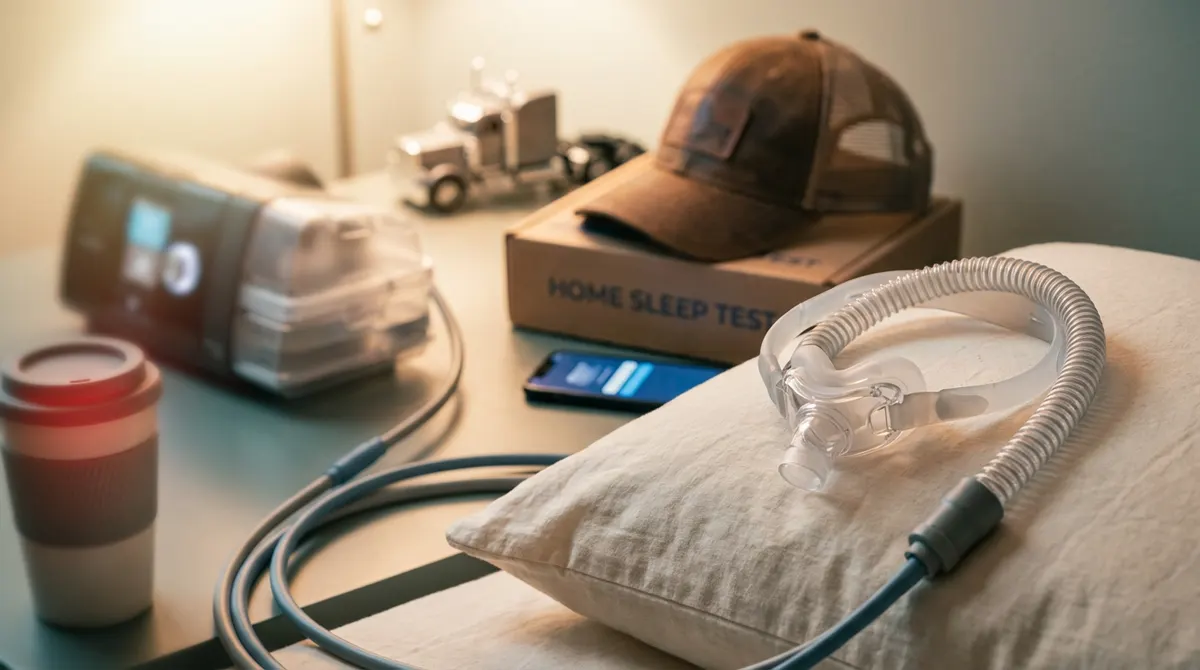
Sleep disorders such as obstructive sleep apnea are frequent among CMV drivers and can significantly increase crash risk if untreated, particularly after a stroke. The Sleep Foundation explains that untreated sleep apnea leads to fragmented sleep and daytime sleepiness, and that commercial drivers with sleep apnea have higher crash rates than those without the disorder.
Because stroke and sleep apnea share risk factors like obesity and hypertension, your examiner may ask about snoring, witnessed apneas, and daytime fatigue, or may review prior sleep study results. If you have moderate to severe sleep apnea, FMCSA and expert guidelines generally expect effective treatment, commonly with CPAP therapy, and evidence of adherence before long-term certification. This is where at-home sleep testing and treatment support through Dumbo Health can be especially helpful, allowing you to complete testing near you without major schedule disruptions and to document treatment adherence for your DOT physical. You can learn more about at-home testing options on the dedicated at-home sleep test page or explore ongoing CPAP therapy support via Dumbo Health’s CPAP care page.
TIP: If you are uncertain whether sleep apnea contributes to your fatigue, taking a structured assessment such as the free sleep assessment quiz available through Dumbo Health’s get started page can help you decide whether to pursue further testing.
KEY TAKEAWAY: Identifying and effectively treating sleep disorders such as sleep apnea is a key part of safe post-stroke driving, and it is closely reviewed in DOT physicals for CMV drivers.
Finally, medication management and full disclosure are crucial to making sure that your treatment does not inadvertently impair safe driving.
Medication Management and Disclosure

Medication management and full disclosure are essential because some stroke-related medications can affect alertness, blood pressure, or bleeding risk, all of which influence driver safety. FMCSA expects drivers to list all prescription, over-the-counter, and supplement medications on their DOT physical forms so that medical examiners can evaluate side effects and interactions.
Common post-stroke medications may include antiplatelet agents, anticoagulants, antihypertensives, lipid-lowering drugs, and sometimes anticonvulsants or antidepressants. Your examiner will consider whether any medication causes excessive drowsiness, increases the risk of sudden hypotension, or interacts with other conditions such as diabetes or sleep apnea. In practice, many drivers achieve safe regimens through close collaboration with neurologists and primary care clinicians so that therapeutic benefits are maintained while minimizing sedating or destabilizing side effects.
KEY TAKEAWAY: Listing every medication and working with your clinicians to minimize sedating side effects are vital steps to safe post-stroke DOT certification.
With the medical considerations in mind, you can now focus on the actual path to recertification and the steps you need to follow.
The Path to Recertification: A Step-by-Step Guide for Drivers

The path to recertification after a stroke follows a series of steps, starting with mandatory driving cessation and moving through recovery, documentation, a DOT physical, and potential appeals. FMCSA’s expert panel recommends that no driver return to commercial driving within one year of a stroke or TIA, and that recertification afterward be based on neurologist clearance and comprehensive assessment.
Initial Driving Cessation and Required Waiting Periods

Initial driving cessation and the required waiting period are intended to allow time for neurological stability and to monitor for seizures or other complications. The FMCSA stroke medical expert panel clearly states that CMV drivers should not return to commercial driving within one year of a stroke or TIA, and that only after this interval should certification be considered.
Occupational medicine sources commonly interpret these recommendations as a minimum one-year waiting period for strokes without significant seizure risk and up to five years for cerebral strokes that carry higher seizure potential. If you experience other serious events, such as a heart attack or cardiac surgery during this period, heavier waiting periods may apply, and examiners will usually follow the longest relevant interval. Many drivers use this time to focus on rehabilitation, risk factor control, and building a documentation file that will later support their DOT physical.
KEY TAKEAWAY: You should expect at least one year of driving cessation after a stroke, and possibly longer for higher-risk stroke types or additional medical conditions.
Once the waiting period is nearing completion, your next task is to gather medical documentation and schedule specialist consultations.
Gathering Required Medical Documentation and Specialist Consultations

Gathering required medical documentation and scheduling specialist consultations create the foundation for your post-stroke DOT certification decision. FMCSA expert panel guidance emphasizes the importance of neurologist evaluation and documentation of stability, seizure risk, and functional capacity before considering a driver’s return to CMV duties.
You will typically need: a detailed neurologist letter summarizing your stroke type, imaging findings, residual deficits, seizure history, and overall prognosis; reports from your cardiologist if you have heart disease or arrhythmias; diabetes-related records if applicable; and any sleep study and CPAP adherence reports if you have sleep apnea. Drivers in your area often find it efficient to request printed copies of these reports and keep them in a clearly organized folder for the certified medical examiner to review at the DOT physical. Including any neuropsychological testing summary can further strengthen your file, especially when cognitive recovery has been documented.
KEY TAKEAWAY: Clear, comprehensive specialist documentation showing stable recovery and low risk of sudden impairment is one of the strongest tools you have when seeking recertification.
Once your documents are ready, you can schedule and prepare for your actual DOT physical examination.
Preparing for and Undergoing the DOT Physical Examination

Preparing for and undergoing the DOT physical after a stroke involves both health optimization and paperwork readiness. FMCSA guidance expects medical examiners to review your stroke history, specialist letters, medications, and overall health status, so arriving prepared can make the process smoother and more accurate.
In the days leading up to your exam, you can: follow your medication schedule carefully, especially blood pressure medication; aim for adequate sleep; avoid excess caffeine or nicotine that may temporarily raise blood pressure; and bring a list of all medications with dosing. On the day of your DOT physical, you will complete a health history form disclosing your stroke and other conditions, undergo vital signs checks including blood pressure, vision and hearing tests, and a physical and neurological exam. Many drivers report that examiners appreciate organized documentation and clear answers, which can support a thoughtful decision about certification, deferral, or further testing.
TIP: If you know that sleep issues or snoring are part of your history, using an at-home sleep test through a service like Dumbo Health’s at-home sleep test program ahead of time can provide objective data and treatment pathways to strengthen your DOT physical outcome.
KEY TAKEAWAY: A well-prepared DOT physical visit, with optimized health and complete documentation, gives you the best chance of a clear and timely post-stroke certification decision.
After the exam, you will receive one of several possible outcomes, each with different next steps.
Understanding Certification Outcomes: Pass, Deferral, or Disqualification

Certification outcomes after a post-stroke DOT physical typically fall into three categories: certification (usually for a limited period), deferral pending additional information, or disqualification when safety concerns remain too high. FMCSA guidance allows examiners to issue medical cards for shorter durations, such as one year, when ongoing monitoring of conditions like stroke residuals, hypertension, or sleep apnea is appropriate.
If you receive certification, you can resume CMV driving within any restrictions set by your employer or medical team, while maintaining follow-up care. If your case is deferred, the examiner will usually specify what additional documentation or testing is required, such as updated neurologist reports, neuropsychological assessments, or CPAP adherence data. A disqualification decision means that the examiner believes FMCSA standards are not met at this time, often due to uncontrolled seizures, significant neurological deficits, or unstable cardiovascular disease. Drivers sometimes seek a second opinion from another certified examiner after addressing the identified issues, but examiners are expected to adhere to FMCSA standards consistently.
KEY TAKEAWAY: Post-stroke DOT outcomes range from limited-term certification to deferral or disqualification, depending on how convincingly your health status meets FMCSA safety standards.
If you disagree with a decision or believe new information could change it, you may consider the informal appeals and review pathways that are available.
The Appeals Process and Seeking Further Review

The appeals process and seeking further review are informal rather than a single formal FMCSA appeal mechanism, but there are still practical steps you can take. FMCSA expects certified medical examiners to make independent decisions based on current medical standards, but drivers can often strengthen their case by obtaining additional specialist input or clarification and presenting it to the same or another examiner.
If you are disqualified or deferred and believe the decision does not fully reflect your current health, you can: ask your examiner to explain the specific FMCSA concerns; request updated neurologist or cardiology letters addressing those concerns directly; and schedule a follow-up exam once the documentation is available. Some drivers consult occupational medicine clinics experienced in DOT evaluations for complex cases such as stroke, heart disease, or sleep apnea to ensure that their documentation clearly addresses FMCSA criteria. For issues involving regulatory interpretation, your employer or legal counsel may also seek clarification from FMCSA, but individual medical certification decisions remain with certified examiners.
KEY TAKEAWAY: While there is no single formal appeals system, you can often improve your chances with a second review by strengthening your documentation and addressing safety concerns highlighted by the examiner.
After you have navigated recertification, ongoing proactive health management becomes critical to protect your long-term driving career.
Proactive Health and Long-Term Well-being for CMV Drivers

The most effective long-term strategy for CMV drivers after a stroke is proactive health management, including lifestyle changes, regular health screenings, and personal responsibility for fitness to drive. Research on professional drivers shows elevated risks for hypertension, cardiovascular disease, inadequate sleep, and stroke, making regular monitoring and preventive care especially important in this group.
Lifestyle Modifications for Stroke Prevention and Recovery

Lifestyle modifications are one of the most powerful tools you have to reduce future stroke risk and support DOT medical fitness. According to the CDC and NIH, controlling blood pressure, managing cholesterol, avoiding tobacco, maintaining a healthy weight, and engaging in regular physical activity significantly reduce the risk of recurrent stroke and cardiovascular events.
For CMV drivers, practical steps often include choosing healthier food options on the road, incorporating short walking or stretching breaks into daily routes, limiting sodium and sugary drinks, and working with clinicians to set realistic exercise goals that fit long-haul schedules. Many patients report that small, consistent changes such as walking 15 to 20 minutes on most days and improving sleep patterns produce noticeable improvements in energy and blood pressure. When sleep apnea is present, regular CPAP use can further improve daytime alertness and blood pressure control, with services such as Dumbo Health’s CPAP care solutions providing equipment and adherence support tailored to ongoing driver needs.
KEY TAKEAWAY: Sustainable lifestyle changes that improve blood pressure, sleep, and cardiovascular health are key to preventing another stroke and preserving your ability to pass future DOT physicals.
Lifestyle changes work best when paired with structured medical follow-up and screenings tailored to your risk profile.
Regular Health Screenings and Ongoing Medical Care

Regular health screenings and ongoing medical care are essential to detect problems early and maintain DOT medical fitness after a stroke. FMCSA-related health data and occupational safety analyses show that older drivers and those with multiple medical conditions have higher highway fatality rates, which underscores the value of routine monitoring and proactive care.
For you, this typically means scheduled follow-ups with your neurologist, cardiologist, primary care clinician, and any sleep specialist involved in your care. Key screenings often include blood pressure checks, cholesterol and diabetes labs, ECGs or echocardiograms for heart disease, and periodic sleep studies or CPAP adherence checks when sleep apnea is present. Using a structured program such as Dumbo Health’s sleep apnea care solutions can make it easier to combine ongoing sleep care with your driving schedule and to have up-to-date documentation ready for each DOT physical. Many clinicians recommend annual or semiannual reviews for high-risk drivers so that medical issues can be addressed before they result in disqualification or health crises.
KEY TAKEAWAY: Regular screenings and coordinated care with your medical team support both your long-term health and your ability to maintain a valid DOT medical card.
Ultimately, your own commitment to safety and honesty in reporting is what ties all of these elements together.
The Importance of Personal Responsibility in Maintaining Fitness to Drive

Personal responsibility in maintaining fitness to drive means being honest about symptoms, following treatment plans, and recognizing when it is not safe to continue driving. FMCSA regulations rely on both clinician judgment and driver disclosure, and the integrity of the DOT medical system depends on accurate information about conditions like stroke, seizures, and sleep apnea.
Many drivers find that their careers and health are best protected when they take an active role in understanding their conditions, asking questions about risks, and following up on recommended tests or therapies. Clinicians frequently observe that drivers who view stroke recovery and chronic disease management as part of their professional responsibility tend to have more stable health and better certification outcomes over time. In your area or near you, taking advantage of resources such as sleep testing, blood pressure monitoring, and lifestyle programs can help you stay on the right side of both medical and regulatory expectations.
KEY TAKEAWAY: Your honest engagement with treatment and your own fitness to drive is crucial for maintaining both safety and eligibility under DOT stroke guidelines.
Once you commit to proactive health, understanding how myths and facts differ around stroke and DOT certification can help you make clearer decisions.
Common Myths About DOT Stroke Guidelines Debunked

Common myths about DOT stroke guidelines can cause confusion and delay safe return to work, so separating myth from fact is essential. FMCSA expert panel reports and occupational health guidance provide a more accurate picture of what is actually required after a stroke.
MYTH: A stroke automatically ends a CMV driving career permanently.
FACT: FMCSA expert panel guidance recommends at least a one-year waiting period after stroke or TIA before considering CMV recertification, but it does not mandate permanent disqualification in all cases. For some drivers with good recovery, stable risk factors, and neurologist clearance, a return to driving with periodic monitoring is possible.
MYTH: You can go back to driving as soon as you feel better, without waiting.
FACT: The FMCSA stroke medical expert panel specifically states that no driver should return to commercial driving within one year of a stroke or TIA, regardless of how quickly symptoms seem to improve. This waiting period reflects evidence that stroke recurrence and seizure risk are highest in the first months after the event and decline over time.
MYTH: If one medical examiner disqualifies you after a stroke, no other examiner will ever certify you.
FACT: Certified medical examiners must follow FMCSA standards, but they may reach different conclusions depending on the documentation and recovery evidence you provide. Strengthening your medical records, addressing risk factors, and seeking evaluation at a clinic experienced with DOT stroke cases can sometimes change the outcome when safety concerns have been resolved.
MYTH: Sleep apnea is unrelated to stroke or DOT certification decisions.
FACT: Sleep disorders such as obstructive sleep apnea increase cardiovascular risk and crash risk, and they are commonly reviewed in DOT physicals for stroke survivors. Effective treatment with CPAP and documented adherence can support both stroke prevention and DOT recertification, which is why at-home sleep testing and CPAP programs like those offered by Dumbo Health are important resources for CMV drivers.
KEY TAKEAWAY: Many drivers overestimate how final a stroke diagnosis is for their CDL, but FMCSA guidelines actually focus on documented recovery, risk control, and specialist clearance rather than automatic lifetime disqualification.
Understanding these myths and facts makes it easier to see your responsibilities and opportunities as you move forward on the road ahead.
Frequently Asked Questions
Can you pass a DOT physical if you had a stroke?
You can sometimes pass a DOT physical after a stroke, but only if you meet FMCSA safety criteria and have completed the recommended waiting period. FMCSA’s stroke medical expert panel advises that CMV drivers should not return to commercial driving within one year after a stroke or TIA; after that, certification depends on neurologist clearance, seizure risk, and functional status. You will need documentation showing stable recovery, absence of disabling neurological deficits, controlled blood pressure and other cardiovascular risks, and well-managed conditions such as diabetes or sleep apnea. A certified medical examiner will review all of this information and may issue a limited-term medical card if your overall risk profile supports safe driving.
What is new in the 2026 stroke guidelines for CMV drivers?
Detailed, formal FMCSA regulations specific to a 2026 update for stroke are limited, but recent guidance reflects the trend toward using medical expert panel recommendations and examiner judgment rather than rigid waiting period tables. Reports on the updated Medical Examiner’s Handbook note that many of the older suggested waiting periods have been removed from the handbook, which can create more variability in how post-stroke cases are handled. However, the core principles remain: at least one year off CMV driving after stroke or TIA, neurologist evaluation, and careful assessment of seizure risk and residual deficits. For you, this means that high-quality documentation and working with an examiner experienced in complex FMCSA cases are more important than ever.
Can a CDL driver return to driving after having a stroke?
A CDL driver can sometimes return to driving after a stroke if the driver completes the minimum recommended waiting period and satisfies all FMCSA safety requirements. FMCSA expert panel guidance recommends that no commercial driver return to CMV duties within the first year after a stroke or TIA and that clearance after that depend on the interval history, neurological examination, and compliance with treatment. If you have stable neurological function, well-controlled blood pressure and cardiovascular risk factors, managed conditions such as diabetes and sleep apnea, and no recurrent events or seizures, a certified medical examiner may issue a limited-term DOT medical card. Regular follow-up and adherence to treatment are essential to maintaining that certification.
What is the 1-3-6-12 rule for stroke, and does it apply to CMV drivers?
The 1-3-6-12 rule is a clinical concept used in stroke care to guide when to start anticoagulation after different severities of ischemic stroke, such as starting at one day for TIA, three days for minor stroke, six days for moderate stroke, and 12 days for severe stroke. This rule is about when to restart blood-thinning medications and is not a DOT or FMCSA driving rule. FMCSA stroke guidance for CMV drivers instead focuses on a minimum of one year before considering return to commercial driving, regardless of how quickly anticoagulation is resumed. For DOT certification, what matters is overall stability, seizure risk, residual deficits, and whether your neurologist and cardiologist confirm that you can safely operate a commercial motor vehicle.
How do sleep apnea and stroke affect DOT certification together?
Sleep apnea and stroke interact to influence DOT certification because both conditions increase cardiovascular and crash risk, especially when untreated. The Sleep Foundation and related safety organizations note that untreated obstructive sleep apnea in drivers leads to fragmented sleep, daytime sleepiness, and higher crash rates, while stroke further adds neurological and cardiovascular vulnerability. If you have both conditions, FMCSA expects effective treatment of sleep apnea, usually with CPAP, along with stable stroke recovery and controlled blood pressure and diabetes. Using an at-home sleep test and ongoing CPAP support through services such as Dumbo Health’s at-home sleep test and CPAP solutions can help generate the objective data examiners look for when deciding whether to certify you.
How can I find post-stroke DOT medical support near me?
You can find post-stroke DOT medical support near you by looking for certified medical examiners in the FMCSA National Registry, talking with your neurologist or primary care clinician about occupational medicine referrals, and exploring telehealth and at-home testing services. FMCSA’s registry helps you locate certified examiners in your area who are authorized to perform DOT physicals and familiar with FMCSA stroke guidance. For sleep-related concerns, at-home services from platforms like Dumbo Health allow you to complete a sleep test or manage CPAP therapy without needing a local sleep lab visit, which can be especially helpful if you live far from major centers. In all cases, having organized documentation from your specialists and an honest summary of your stroke recovery will make consultations more productive.
Conclusion: Your Responsibility and the Road Ahead

Your path through DOT stroke guidelines is about aligning your health, documentation, and responsibilities with FMCSA’s core goal of protecting driver safety. FMCSA expert recommendations make clear that at least one year of driving cessation after a stroke or TIA, followed by neurologist clearance and careful evaluation of seizure risk and residual deficits, is the foundation for any potential return to commercial motor vehicle driving. By actively managing blood pressure, diabetes, sleep apnea, and heart disease, and by working with experienced certified medical examiners, you can give yourself the best chance of safe recertification and long-term fitness to drive. As you plan your next steps, consider using structured tools like Dumbo Health’s sleep apnea care solutions and free sleep assessment quiz on the get started page to support better sleep, health, and documentation for your future DOT physicals.
Related DOT Physical Topics
- BMI for DOT Physical What Commercial Drivers Need to Know
- What Forms Do You Need for a DOT Physical
- Online DOT Exam What Drivers and Medical Examiners Need to Know
- DOT Physical Blood Pressure Requirements What Drivers Need to Know
- DOT Physical at Urgent Care What Commercial Drivers Need to Know
- DOT Physical & Drug Test What Drivers Need to Know
- What are the current DOT requirements for sleep apnea testing for commercial drivers
- What Happens If You Fail a DOT Physical Twice The Complete Guide for Commercial Drivers
- What Happens If You Fail a DOT Drug Test The Complete Guide for Commercial Drivers
- Can You Get a DOT Physical in Any State The Complete Guide for Commercial Drivers
- Can You Get a DOT Physical Online The Complete Guide for Commercial Drivers
- Does a DOT Physical Test for Weed or THC The Complete Guide for Commercial Drivers
- Navigating the Florida DOT Physical Your Essential Guide for CDL Drivers
- DOT Hypertension Guidelines The Complete Blood Pressure Guide for Commercial Drivers
- New DOT Physical Requirements What Drivers MUST Know About New Updates
- What Are the DOT Requirements for Drivers With Sleep Apnea
- What blood pressure do you need to pass a DOT physical
- What Happens During the DOT Physical Exam The Complete Guide for Drivers
- What are the current FMCSA guidelines on sleep apnea for commercial drivers
- What Happens If Your DOT Physical Expires Compliance Guide for Commercial Drivers
- What Does DOT Stand for in a DOT Physical
- Can You Get a Second Opinion on Your DOT Physical A Complete Guide for Commercial Drivers
- What drugs do they test for in a DOT drug test
- What Can Disqualify You From a DOT Physical
- Remote DOT Physical The Complete Guide for Commercial Drivers
- Essential 171 DOT Definitions for Commercial Drivers
- DOT Physical Cost Breakdown What Drivers Pay & Why
- DOT Physical Forms & Paperwork The Complete Guide for Commercial Drivers
- Online DOT Physical Without Insurance A Complete Guide for Commercial Drivers
- DOT Physical Out of Pocket What Commercial Drivers Actually Pay
- What Is the Urine Test for in a DOT Physical
- Online DOT Physical Self-Pay The Complete Guide for CDL Drivers and Owner-Operators
- What Should You Bring to a DOT Physical
- DOT physical self pay guide for commercial drivers paying out of pocket
- Can You Fail a DOT Physical for Being Overweight
- The Ultimate DOT Preparation Checklist for Motor Carriers and Commercial Drivers
- DOT Medical Exam Self-Pay A Complete Guide for Commercial Drivers
- Can You Fail a DOT Physical for High Blood Pressure
- What happens if you fail a DOT physical due to sleep apnea
- Sleep Apnea Tests for DOT Compliance What tests are accepted
- The Ultimate DOT Physical Guide for Commercial Drivers (2025–2026)
- DOT Physical Requirements A Complete Guide for CDL Drivers
- What Is the Difference Between a DOT and Non-DOT Physical
- What eye chart is used for a DOT physical
- The DOT Physical Exam Ensuring You're Fit for the Road
- Online DOT Physical The Complete Guide for Commercial Drivers and Medical Examiners
- Failing a DOT Physical What Every Commercial Driver Needs to Know
- How Do You Submit Your DOT Physical to the DMV
- Can You Pass a DOT Physical with Epilepsy
- Can You Pass a DOT Physical With a Hernia
- Is a drug test required for a DOT physical
- DOT Physical ICD-10 & Billing Codes The Complete Guide for Accurate Compliance and Reimbursement
- Can You Pass a DOT Physical With a Pacemaker
- Can You Pass a DOT Physical With One Eye
- Home Sleep Apnea Test for Commercial Drivers The CDL Holder's Complete Guide
- Sleep Apnea Test for CDL Drivers
- Medical Examiner's Certificate (Form MCSA-5876) The Complete Guide for Commercial Drivers
- Navigating Your DOT Physical with Common Medical Conditions
- How can drivers with sleep apnea qualify again after a failed DOT physical
- Why DOT Sleep Tests at Home Matter for Your Career and Health
- What Precautions Should Drivers With Sleep Apnea Take
- Are there legal requirements for drivers with sleep apnea
- Can You Get a DOT Physical Online
- Your Complete Guide What's Included in a DOT Physical Exam
- Can you fail a DOT physical because of sleep apnea
- DOT Physical Insurance or Self Pay How to Choose the Right Payment Option for Your Exam
- Can you pass a DOT physical with sleep apnea
- What should I expect at a DOT physical
- What Does a DOT Physical Consist Of
- At Home Sleep Test for Truck Drivers
- Can You Pass a DOT Physical with Diabetes
- Can You Pass a DOT Physical with High Blood Pressure
- Medical Examination Report (MER) – Form MCSA-5875 The Complete Guide for Commercial Drivers
- Is a Sleep Study Required for a DOT Physical
- Do They Check for Hernia During a DOT Physical
- Do You Have to Pee During a DOT Physical
- What Are the Requirements to Pass a DOT Physical
- What Do They Check During a DOT Physical
- Can You Fail a DOT Physical
- What is DOT Physical
- Are There New DOT Rules or Laws on Sleep Apnea Testing
- Does a DOT physical include a drug test
- DOT Physical Self Pay Cost
- DOT Physical Exam Basics
- 2026 DOT Inspection Dates
- Best Treatments for Sleep Apnea to Improve Driving Safety
- Telehealth Dot Physical
- Who needs a DOT physical
- DOT Physical & Alcohol Requirements
- Why do they measure your neck during a DOT physical
- DOT Physical Online Cost
- Walk In DOT Physical Self Pay
- DOT Physical Insurance & Recertification The Complete Driver's Guide
- DOT Physical Cash Pay
- Same Day DOT Physical
- Virtual DOT Physical
- DOT Physical Vision & Eye Requirements
- When Can Sleep Apnea Affect a DOT Physical
- Do They Check Your Private Parts During a DOT Physical
- The Comprehensive Guide to Suboxone, Sleep Apnea, and FMCSA Compliance for Commercial Motor Vehicle Operators
AI summary
DOT stroke guidelines describe how the Federal Motor Carrier Safety Administration (FMCSA) evaluates whether a commercial motor vehicle (CMV) driver can be medically certified after a stroke or transient ischemic attack (TIA). FMCSA medical expert panel guidance recommends that drivers not return to CMV driving within one year of a stroke or TIA. After the waiting period, certification depends on specialist evidence and a DOT physical performed by a certified medical examiner. Key evaluation areas include neurologic recovery (strength, coordination, balance, gait, sensation, cranial nerves), visual fields and other vision standards, cognitive function and processing speed, and seizure risk. Examiners also assess co-morbid risks that affect sudden impairment, including hypertension, diabetes (especially hypoglycemia history), cardiovascular disease (for example atrial fibrillation, heart failure), sleep disorders such as obstructive sleep apnea and CPAP adherence, and medication side effects (sedation, hypotension). Outcomes may include limited-term certification, deferral for additional records, or disqualification if safety risk remains high. Strong documentation from neurology, cardiology, and sleep/diabetes care supports recertification decisions.

Nicolas Nemeth
Co-Founder
Nico is the co-founder of Dumbo Health, a digital sleep clinic that brings the entire obstructive sleep apnea journey home. Patients skip the sleep lab and the long wait to see a specialist. Dumbo Health ships an at home test, connects patients with licensed sleep clinicians by video, and delivers CPAP or a custom oral appliance with ongoing coaching and automatic resupply in one clear subscription.
Keep reading

How Long Does a DOT Physical Take? A Complete Guide for Commercial Drivers

What Happens If You Fail a DOT Drug Test? The Complete Guide for Commercial Drivers


