What are the current FMCSA guidelines on sleep apnea for commercial drivers?
This article explains how obstructive sleep apnea is handled during a DOT physical for commercial drivers under current FMCSA guidance. It clarifies that there is no separate new federal sleep apnea law; certification decisions are based on medical fitness for duty under existing standards. It reviews why untreated moderate to severe OSA raises crash risk through fatigue and impaired attention. You will learn what examiners look for during screening, including loud snoring, daytime sleepiness, BMI, neck circumference, blood pressure, diabetes, and cardiovascular history. It outlines when a sleep study may be recommended, how AHI severity is classified, and how home sleep testing can be used in appropriate cases. It also covers treatment documentation, common PAP compliance expectations, and practical record-keeping steps to protect your DOT medical card.
Struggling with sleep?
Find out if sleep apnea is the reason.
FDA-cleared. $149 flat. Physician-reviewed results in 48 hours.

What are the current FMCSA guidelines on sleep apnea for commercial drivers?

DOT physical sleep apnea screening is how a certified examiner evaluates whether obstructive sleep apnea could affect your ability to drive safely and keep your medical certification. According to the Federal Motor Carrier Safety Administration, the issue is not a separate new sleep apnea law, but whether a driver is medically fit for duty under existing standards. If you are a truck driver or other commercial driver, this affects how your DOT physical, medical history, symptoms, treatment records, and sleep study results are reviewed. This guide explains how obstructive sleep apnea is screened, when testing may be required, what treatment compliance usually looks like, and how to protect your DOT medical card. The more clearly you understand the process, the easier it becomes to stay compliant and stay on the road. (FMCSA)
The Critical Link Between Sleep Apnea, Fatigue, and Road Safety

sleep apnea matters in commercial driving because untreated breathing interruptions during sleep can lead to daytime sleepiness, slower reaction time, and reduced attention behind the wheel.
Obstructive sleep apnea is a sleep disorder in which the upper airway repeatedly narrows or collapses during sleep. Obstructive sleep apnea matters for commercial drivers because fragmented sleep can reduce alertness even after a full night in bed. Mayo Clinic explains that common symptoms include loud snoring, gasping, witnessed pauses in breathing, morning headaches, and excessive daytime sleepiness. (Mayo Clinic)
The Federal Motor Carrier Safety Administration states that untreated moderate to severe obstructive sleep apnea can interfere with attention, concentration, situational awareness, and memory. Those are not minor issues in a commercial motor vehicle. Those are core functions tied directly to lane control, braking decisions, hazard recognition, and motor vehicle crash prevention. (FMCSA)
Sleep apnea affects more than sleep quality. Sleep apnea can also overlap with High Blood Pressure, heart disease, metabolic disease, and other sleep disorders that complicate driver qualification. When a truck driver has fatigue, poor sleep, and related medical risk factors at the same time, medical examiners become more cautious because the full safety picture matters more than any single symptom. (FMCSA)
Not sure if sleep apnea applies to you?
Take our 2-minute sleep risk quiz to see whether sleep apnea could affect your DOT physical. No account required.
According to the CDC, workers should generally aim for 7 to 9 hours of sleep each day, and fatigue that persists despite enough time in bed should trigger screening for conditions such as sleep apnea. For commercial drivers, that number matters because chronic short sleep and sleep-disordered breathing can combine to worsen drowsy driving risk. (CDC)
DID YOU KNOW: The CDC notes that fatigue can persist even when someone allows enough time for sleep, which is one reason persistent daytime sleepiness should never be brushed off as normal job stress. (CDC)
KEY TAKEAWAY: sleep apnea is not just a nighttime issue. Sleep apnea becomes a road safety issue when it affects daytime alertness and driving performance.
That is why the next question is not whether sleep apnea exists, but how current federal guidance actually treats it.
Clarifying the Current Landscape: No New Law, But Consistent Enforcement

There is no separate new federal sleep apnea law for CDL drivers, but sleep apnea is still consistently evaluated under existing medical standards.
Many drivers search for new DOT requirements or a new Department of Transportation sleep apnea law. The more accurate answer is that the Federal Motor Carrier Safety Administration relies on its existing medical standards, the Code of Federal Regulations, and examiner judgment. The 2024 Medical Examiner's Handbook states that the FMCSRs do not include specific requirements for medical examiners to screen individuals for obstructive sleep apnea, do not mandate preferred diagnostic testing methods, and do not establish fixed treatment methods, waiting periods, or maximum certification periods specific to OSA. (FMCSA)
That does not mean sleep apnea is ignored. It means the issue is assessed through the broader standard of whether a driver has a respiratory disorder, respiratory dysfunction, or another condition likely to interfere with safe operation of a commercial motor vehicle. In practice, that leads to consistent enforcement even without one standalone sleep apnea regulation. (FMCSA)
The Medical Examiner's Handbook, the Medical Advisory Criteria, the National Registry of Certified Medical Examiners, and prior input from groups such as the Medical Review Board and Motor Carrier Safety Advisory Committee all shape how occupational medicine clinics approach risk. The exact workflow can vary slightly between clinics, but the core principle stays the same: a driver must be medically fit for duty. (FMCSA)
This is why one driver may be referred for apnea testing while another is not. Medical examiners look at the total risk picture, not just one metric. Body mass index, loud snoring, daytime sleepiness, blood pressure, neck circumference, and medical history all influence the outcome.
IMPORTANT: No "new law" does not mean no scrutiny. It means sleep apnea is enforced through existing driver qualification standards rather than through one separate OSA rule. (FMCSA)
KEY TAKEAWAY: The current landscape is built on medical fitness for duty, not on a brand-new sleep apnea regulation.
Once that is clear, the next step is understanding obstructive sleep apnea itself and why it receives so much attention.
Already diagnosed and need CPAP support?
Dumbo Health helps patients start CPAP without the usual confusion, paperwork, or upfront cost. Equipment, setup, supplies, and ongoing support are all handled in one place.
What Is Obstructive Sleep Apnea and Why Does It Matter for Drivers?

Obstructive sleep apnea is repeated upper airway blockage during sleep, and it matters because it can reduce restorative sleep and increase daytime impairment.
Obstructive sleep apnea is the most common form of sleep apnea. Mayo Clinic defines it as a condition in which throat muscles relax during sleep and block the airway, causing repeated breathing pauses or shallow breathing. Obstructive sleep apnea matters for commercial drivers because poor sleep quality can create fatigue even when total sleep time looks reasonable on paper. (Mayo Clinic)
A sleep apnea diagnosis does not automatically end a driving career. The FMCSA handbook states that treated moderate to severe OSA does not preclude certification. The real concern is untreated or inadequately treated disease, especially when it leads to daytime sleepiness, cognitive dysfunction, or unreliable performance behind the wheel. (FMCSA)
Sleep apnea often overlaps with other risk factors seen in occupational medicine. Common risk factors include obesity, increased body mass index, neck size, large neck circumference, High Blood Pressure, heart disease, type 2 diabetes, age, and loud snoring. Many patients report that they first dismissed these signs as part of shift work or aging, only to realize later that sleep-disordered breathing was the bigger issue. (Mayo Clinic)
Obstructive sleep apnea is a breathing disorder. Obstructive sleep apnea can affect daytime function. Obstructive sleep apnea is treatable in many cases, which is why early identification matters more than denial.
KEY TAKEAWAY: Obstructive sleep apnea matters because it is common, measurable, and directly relevant to safe commercial driving.
That leads into how medical examiners decide who is at higher risk during a DOT physical.
The DOT Physical: How Medical Examiners Screen for Sleep Apnea Risk
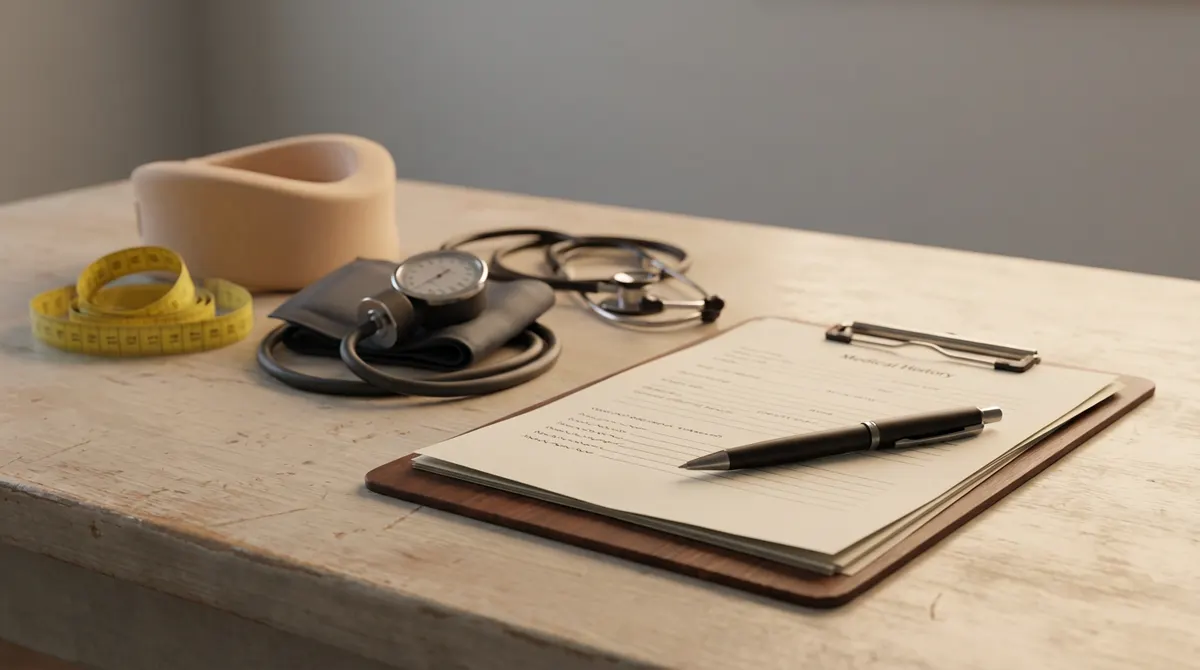
The DOT physical screens for sleep apnea risk by combining your answers, your physical exam findings, and visible screening criteria that point toward possible moderate to severe disease.
The DOT physical is not a sleep test. The DOT physical is a medical certification exam used to decide whether you meet federal medical standards for commercial driving. During that process, medical examiners review your medical history, medication list, blood pressure, symptoms, and responses to the sleep disorder question on the driver health history form. (FMCSA)
The FMCSA handbook specifically says examiners should consider responses to questions about sleep disorders and readily identifiable screening criteria during the physical exam. Common screening criteria include loud snoring, witnessed breathing pauses, daytime sleepiness, obesity, body mass index, large neck circumference, neck circumference concerns, high blood pressure, diabetes, and cardiovascular disease. No single factor automatically triggers referral, but several together often do. (FMCSA)
The Epworth Sleepiness Scale is sometimes used in occupational medicine settings, even though the FMCSA does not mandate one universal questionnaire. The Epworth Sleepiness Scale is a short tool that estimates how likely a person is to doze in everyday situations. For a truck driver, a higher score may support concern about daytime sleepiness, but it does not replace examiner judgment, a physical exam, or diagnostic testing. (FMCSA)
Blood pressure is another important clue. The FMCSA handbook uses staged hypertension thresholds, including Stage 1 at 140 to 159 systolic or 90 to 99 diastolic. Elevated blood pressure does not prove sleep apnea, but it can strengthen concern when combined with snoring, obesity, or fatigue. The same is true for a larger neck size or large neck circumference, which are commonly associated with a narrower airway. (FMCSA)
People who undergo this exam often find that paperwork matters almost as much as symptoms. If you already have a sleep apnea diagnosis, bring your prior sleep study, treatment records, compliance data, and recent note from your medical providers. Good documentation can reduce delays and make your DOT medical card renewal smoother.
If you need a diagnostic path after screening, Dumbo Health's at-home sleep test explains a practical route for home sleep testing when appropriate.
TIP: Bring every relevant record to the appointment, especially your compliance report, recent sleep study, and current treatment summary.
KEY TAKEAWAY: The DOT physical identifies risk. It does not diagnose sleep apnea, but it can trigger the next step toward diagnosis.
That next step is formal testing and confirmation.
Diagnosing Sleep Apnea: From Screening to Confirmation
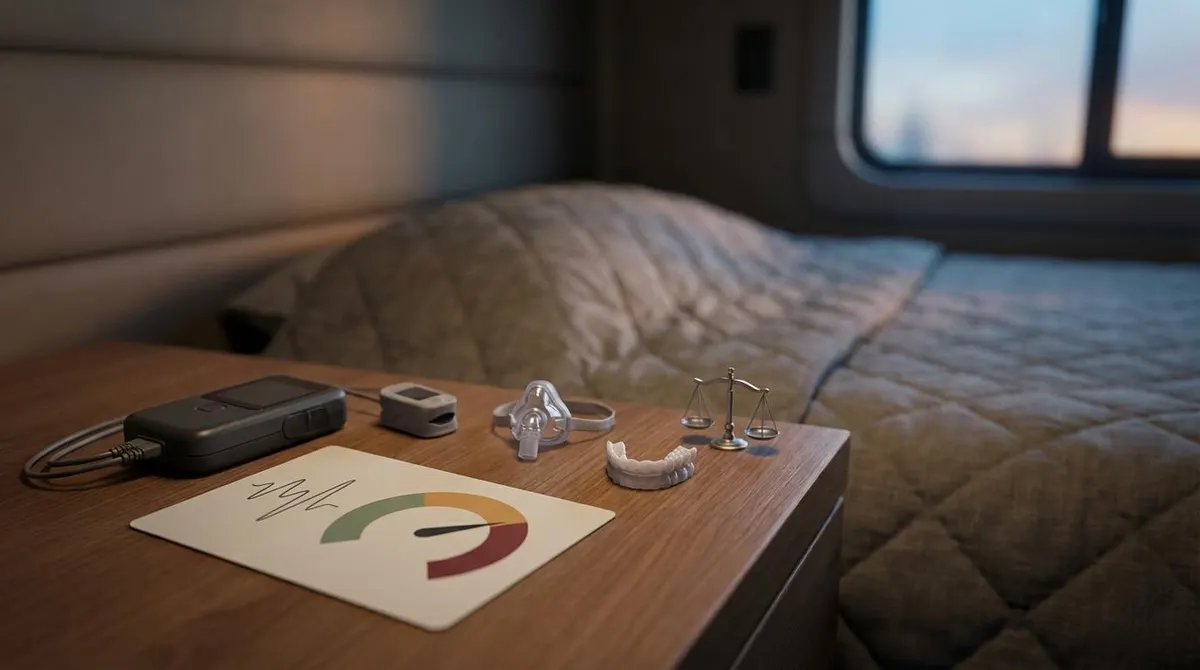
A sleep study confirms sleep apnea after screening suggests significant risk, and the result helps determine both severity and next treatment steps.
A sleep study is the formal test used to confirm a sleep apnea diagnosis. The FMCSA handbook says that when medical examiners observe multiple risk factors for moderate to severe OSA in someone who has not been evaluated, they should consider recommending referral for a sleep study. That makes the sleep study the bridge between suspicion and diagnosis. (FMCSA)
There are different diagnostic testing methods. One option is an in-lab study in a sleep lab, often called polysomnography. Another option is home sleep testing, sometimes called a home sleep test or home sleep apnea test. Mayo Clinic explains that in-lab testing records a broader range of signals, while home sleep testing uses fewer measures but can still diagnose obstructive sleep apnea in many adults with straightforward symptoms. (Mayo Clinic)
The apnea-hypopnea index is one of the most important numbers in the final report. The apnea-hypopnea index measures the average number of apneas and hypopneas per hour of sleep. AHI values are commonly grouped as fewer than 5 events per hour as normal, 5 to 14 as mild, 15 to 29 as moderate, and 30 or more as severe. Some reports may also mention the respiratory disturbance index, especially when subtle arousals are part of the interpretation. (Mayo Clinic)
sleep study results matter because they change the conversation from "possible risk" to "documented condition." Sleep study results also help sleep medicine professionals decide whether positive airway pressure, oral appliances, weight loss strategies, or further specialist review makes sense. If you are trying to find a provider near you, it helps to choose medical providers who understand both sleep medicine and CDL certification workflows.
| Testing option | Best for | Convenience | Turnaround time | Accuracy depth | Recommended when |
|---|---|---|---|---|---|
| Home sleep testing | Adults with likely obstructive sleep apnea and straightforward symptoms | High | Often faster | Good for many uncomplicated cases | Screening suggests OSA and a simpler pathway is appropriate |
| In-lab sleep lab study | Complex symptoms, other sleep disorders, or unclear cases | Lower | Often slower | Broader physiologic data | Symptoms are severe, mixed, or another disorder is suspected |
| Follow-up or repeat sleep test | Drivers with changed symptoms or major weight or treatment changes | Moderate | Varies | Depends on method used | Prior results are outdated or treatment status has changed |
For the most common use case, home sleep testing is often the most convenient starting point. For complex cases, a sleep lab usually provides more complete data and stronger context for sleep medicine professionals.
KEY TAKEAWAY: Diagnosis requires a sleep study, and the apnea-hypopnea index helps determine how serious the condition is.
Once the diagnosis is confirmed, treatment and certification become the next practical issues.
Treatment Options and FMCSA Compliance Requirements
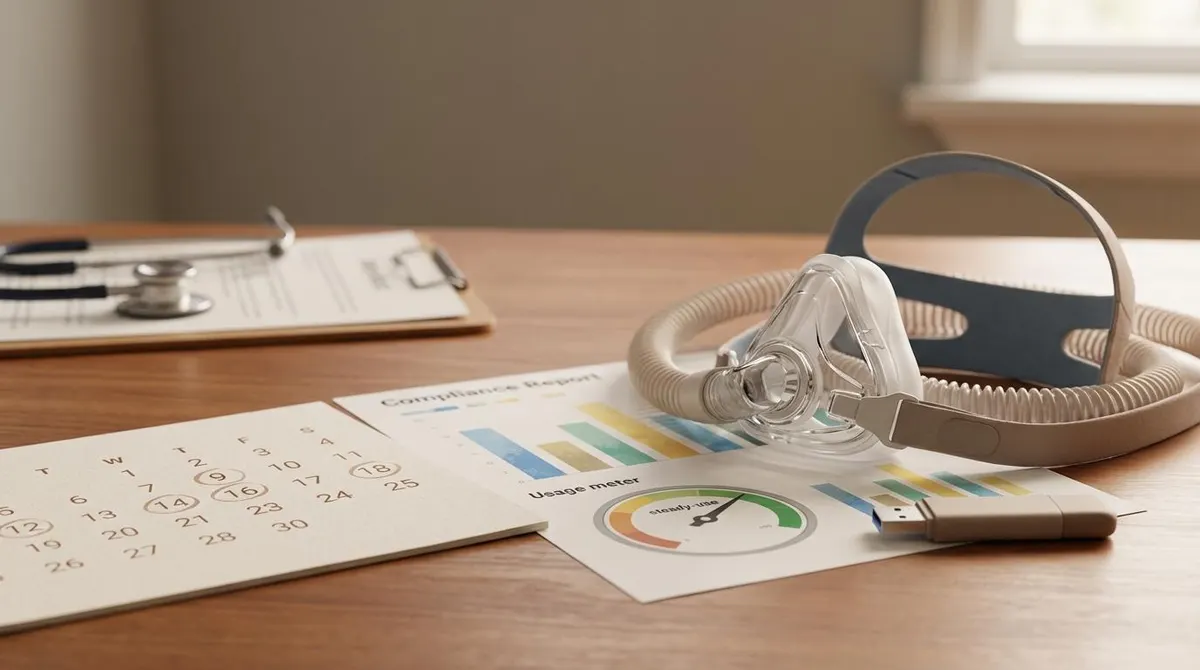
Treatment can keep you eligible for certification, but medical examiners usually want evidence that the treatment is actually working and being used consistently.
Continuous positive airway pressure is widely considered the standard first-line treatment for many people with moderate to severe obstructive sleep apnea. Mayo Clinic explains that continuous positive airway pressure works by delivering air pressure through a mask to keep the airway open during sleep. Positive airway pressure reduces breathing interruptions and can improve daytime alertness when used regularly. (Mayo Clinic)
A CPAP machine is the device most drivers know by name, but positive airway pressure can include other formats such as APAP or bilevel positive airway pressure depending on the clinical situation. PAP therapy and CPAP therapy matter in DOT certification because they generate objective compliance data. That means treatment compliance can often be documented with machine usage records instead of relying only on how a patient feels. (Mayo Clinic)
The FMCSA handbook does not publish one binding national compliance formula. However, many examiners still look for the commonly used benchmark of at least 4 hours of PAP use per night on at least 70 percent of nights, which comes from longstanding sleep medicine and advisory practice patterns referenced in commercial driving discussions. In real-world use, this often means a compliance report covering roughly 30 days or more before recertification. (FMCSA)
Alternative treatments also exist. Mayo Clinic notes that oral appliances can help some people, particularly when CPAP is not tolerated or when obstructive sleep apnea is mild to moderate. Weight loss, positional strategies, alcohol reduction, and smoking reduction may also help, especially when body mass index is part of the problem. But drivers should not assume that lifestyle changes or dental appliances alone will satisfy a medical examiner without supporting records from sleep medicine professionals. (Mayo Clinic)
If you are comparing device options, this guide to CPAP vs APAP vs BiPAP can help you understand how different positive airway pressure options fit different use cases.
Many patients report that the first two to four weeks of PAP therapy are the hardest. Mask fit, dryness, pressure settings, and routine changes can all affect adherence. Drivers who troubleshoot early with sleep medicine professionals usually have a better chance of producing a strong compliance report later.
IMPORTANT: Treatment alone is not enough for certification. Treatment plus documented treatment compliance is what usually matters during recertification.
KEY TAKEAWAY: The most effective treatment is often PAP therapy, but success for CDL purposes depends on both symptom improvement and usable compliance data.
The next issue is how that treatment translates into medical certification and recertification.
Maintaining Your Commercial Driver's License With Sleep Apnea

You can often keep or regain your certification with sleep apnea if the condition is treated, stable, and documented well enough to show safe driving fitness.
The FMCSA handbook clearly states that treated moderate to severe obstructive sleep apnea does not preclude certification. That is one of the most important sentences a commercial driver can understand. A sleep apnea diagnosis is not an automatic denial. The actual question is whether the driver can safely operate a commercial motor vehicle under the current medical standards. (FMCSA)
Initial medical certification after a sleep apnea diagnosis may be shorter than the full certification period if the examiner wants closer follow-up. That can happen when treatment has only recently started, when the compliance report is limited, or when symptoms such as daytime sleepiness have not fully resolved. A shorter period is not necessarily a failure. It is often a way for medical examiners to verify progress before granting a longer DOT medical card period. (FMCSA)
Recertification usually goes more smoothly when you arrive with a recent compliance report, treatment notes, your medical history, and any updated sleep study findings. If you do not bring records, the examiner may have less confidence in your treatment compliance even if you feel much better. Many people who undergo this process say the most frustrating delays come from missing paperwork rather than from the diagnosis itself.
Non-compliance can create real consequences. Untreated symptoms, inadequate PAP therapy use, or obvious daytime sleepiness can lead to delays, shortened certification, or failure to obtain a medical card until the condition is addressed. That is why drivers should treat follow-up care as part of driver safety and not as an optional side task.
Sleep apnea can be managed. Sleep apnea can be certified around. Sleep apnea becomes most disruptive when a driver waits too long to test, treat, or document the condition.
KEY TAKEAWAY: A driver with sleep apnea can often stay certified, but ongoing eligibility depends on stability, safety, and documentation.
Before closing, it helps to correct several common misconceptions that make the process seem more confusing than it is.
Common Myths About Sleep Apnea Debunked

Many fears about DOT physical sleep apnea come from misunderstanding how screening, diagnosis, and certification actually work.
MYTH: sleep apnea automatically disqualifies you from commercial driving.
FACT: The Federal Motor Carrier Safety Administration states that treated moderate to severe obstructive sleep apnea does not preclude certification. The real issue is whether the condition is untreated or likely to interfere with safe operation of a commercial motor vehicle. A documented sleep apnea diagnosis with successful treatment is very different from untreated daytime sleepiness and uncontrolled symptoms. (FMCSA)
MYTH: There is one national FMCSA rule that says exactly who must get tested.
FACT: The 2024 Medical Examiner's Handbook says the FMCSRs do not include specific OSA screening requirements or preferred diagnostic testing methods. That means medical examiners rely on screening criteria, medical judgment, and the full driver qualification picture instead of one fixed national formula. (FMCSA)
MYTH: Loud snoring alone means you will fail the DOT physical.
FACT: Loud snoring matters, but it is only one risk factor. Medical examiners usually look at combinations such as body mass index, neck circumference, blood pressure, daytime sleepiness, observed apneas, and medical history before deciding whether a sleep study is needed. (FMCSA)
MYTH: A home sleep test never counts for CDL drivers.
FACT: Home sleep testing is an accepted diagnostic option in many adult cases of suspected obstructive sleep apnea. Mayo Clinic explains that at-home sleep apnea testing can be used under certain circumstances, especially in more straightforward cases. (Mayo Clinic)
MYTH: Once you start using a CPAP machine, you never need follow-up again.
FACT: Follow-up remains important because certification often depends on a current compliance report and evidence that symptoms have improved. A driver may feel better quickly, but medical examiners still need objective proof that PAP therapy is being used consistently enough to support safe driving. (FMCSA)
KEY TAKEAWAY: Most sleep apnea fears are based on myths about automatic disqualification, when the real standard is documented medical fitness for duty.
The final practical step is knowing how to manage the process proactively instead of reacting under deadline pressure.
Proactive Management and Empowerment for Commercial Drivers
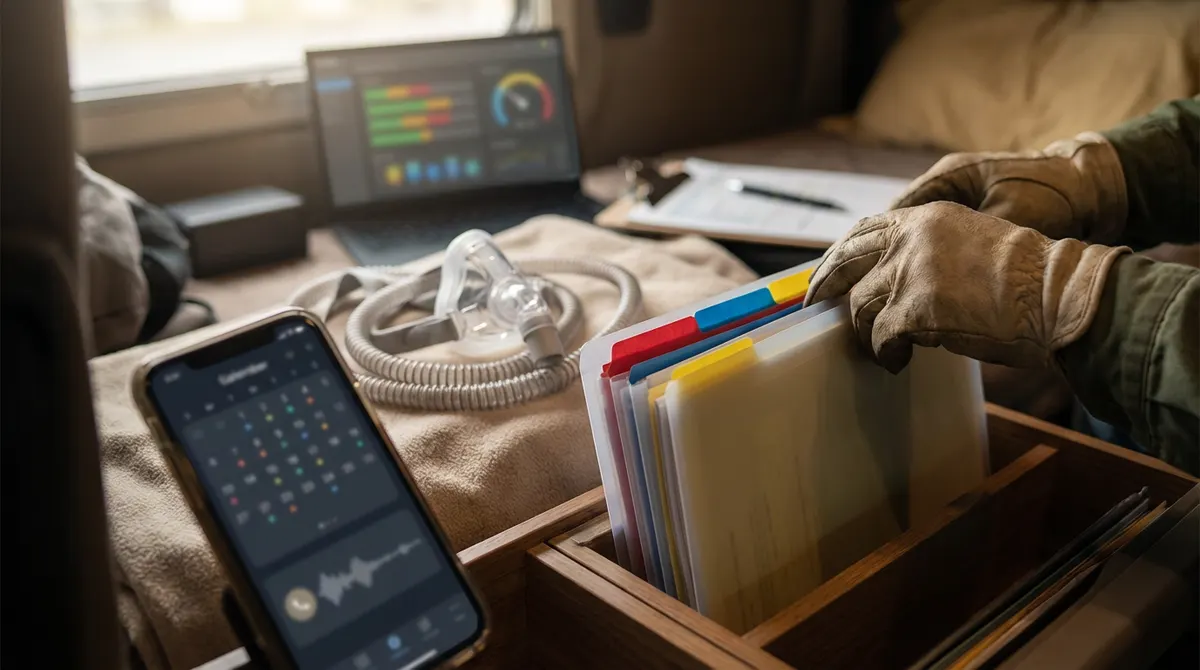
The best way to protect your certification is to manage sleep apnea early, keep strong records, and communicate clearly with the right medical providers.
Start with awareness. If you have loud snoring, waking gasps, daytime sleepiness, rising blood pressure, increasing body mass index, or a large neck circumference, do not wait for a failed DOT physical to force the issue. Early evaluation gives you more control over timelines, treatment choices, and certification planning. (Mayo Clinic)
Keep your records organized. Save your sleep study, assessment form, machine downloads, treatment notes, and any compliance data in one place. If you use a CPAP machine or PAP therapy machine, check your compliance report before your appointment rather than the night before. This matters even more if you are looking for providers in your area who may not know your full history unless you bring it with you.
Take lifestyle changes seriously, but realistically. Weight loss, reduced alcohol use, and better sleep timing may improve symptoms and reduce risk factors. At the same time, drivers with moderate to severe obstructive sleep apnea should not assume lifestyle changes alone will replace medical treatment without guidance from sleep medicine professionals. The safest approach is to combine long-term health improvements with whatever treatment the diagnosis supports. (Mayo Clinic)
Effective communication also matters. Tell your examiner if symptoms changed. Tell your sleep disorder expert if the mask leaks or the pressure feels wrong. Tell your employer early if you are in the middle of apnea testing and need a clear timeline. Clinicians frequently observe that drivers who communicate early solve problems faster than drivers who go silent and hope the issue disappears.
If you want a practical next step before your next DOT physical, Dumbo Health's guide to how at-home sleep studies work can help you understand what the testing experience looks like.
TIP: The easiest way to reduce certification stress is to treat sleep apnea management like part of the job, not like an emergency project once your DOT medical card is about to expire.
KEY TAKEAWAY: Proactive drivers usually have better outcomes because early testing, better communication, and organized records prevent avoidable certification problems.
The most common remaining questions are usually direct, practical, and tied to real search behavior, so the FAQ section answers those clearly.
Frequently Asked Questions
Can you drive a CDL with sleep apnea?
Yes, you can often drive with sleep apnea if the condition is treated and a certified examiner decides you are medically safe to operate a commercial motor vehicle. The FMCSA states that treated moderate to severe obstructive sleep apnea does not preclude certification. In practice, medical examiners look at symptoms, medical history, treatment status, and whether daytime sleepiness is under control. They may also ask for a recent compliance report if you use PAP therapy. The key point is that a sleep apnea diagnosis alone is not the same as being disqualified. (FMCSA)
What are the rules for sleep apnea in the FMCSA?
The FMCSA does not have one separate sleep apnea rule with fixed national testing and treatment cutoffs for every driver. Instead, sleep apnea is handled through the existing medical standards framework and the examiner's responsibility to decide whether a condition may interfere with safe driving. The 2024 Medical Examiner's Handbook says the regulations do not specify exact OSA screening requirements, preferred diagnostic testing methods, or one mandatory compliance formula. That is why the process can feel individualized even though the safety standard remains the same. (FMCSA)
What is the 3% rule for sleep apnea?
The so-called 3% rule is usually a sleep study scoring concept, not a standalone FMCSA certification law. In some sleep medicine settings, it refers to how hypopneas are counted using oxygen desaturation criteria. For CDL purposes, the more relevant questions are whether a sleep study confirms obstructive sleep apnea, what the apnea-hypopnea index shows, whether symptoms such as daytime sleepiness are present, and whether treatment is effectively controlled. Drivers should avoid relying on internet shorthand when the real issue is the full certification picture. (Mayo Clinic)
Can you get DOT certified with sleep apnea?
Yes, many commercial drivers get DOT certified with sleep apnea. The most important requirement is showing that the condition is being managed well enough that it does not interfere with safe driving. That usually means bringing the right documentation, such as a sleep study, treatment summary, and compliance data if you use a CPAP machine. A medical examiner may issue a shorter certification period at first if treatment is new or records are incomplete, but that is often a monitoring step rather than a final denial. (FMCSA)
What happens if a DOT examiner sends you for a sleep study?
If an examiner recommends a sleep study, it usually means multiple screening criteria suggested a meaningful risk of obstructive sleep apnea. The next step is formal diagnostic testing through either home sleep testing or an in-lab sleep lab, depending on what medical providers recommend. Once the results are available, the conversation becomes much more specific because treatment decisions and certification planning can be based on documented findings instead of suspicion alone. This is usually the most important turning point in the whole DOT physical sleep apnea process. (FMCSA)
Can you regain a DOT medical card after failing because of sleep apnea?
In many cases, yes. Drivers often regain a DOT medical card by completing the required apnea testing, starting treatment, documenting treatment compliance, and returning for reevaluation. Because the standard is current medical fitness for duty, untreated sleep apnea does not always create permanent loss of certification. What matters is whether the condition is now controlled and supported by records that the examiner can review. If you need a starting point close to you, it helps to work with medical providers who understand both sleep medicine and commercial driver certification. (FMCSA)
Does a home sleep test count for commercial drivers?
A home sleep test can count when it is clinically appropriate and the results are accepted within the driver's certification workflow. Mayo Clinic explains that at-home sleep apnea testing is a legitimate option in certain adult cases of suspected obstructive sleep apnea. Home sleep testing is often attractive for commercial drivers because it is more convenient and may reduce delays. The important part is making sure the result is complete, clearly interpreted, and available for the medical examiner who is reviewing your certification. (Mayo Clinic)
How much CPAP use do medical examiners usually want to see?
While the FMCSA does not publish one fixed national CPAP use rule in the regulations, many medical examiners look for the commonly used benchmark of at least 4 hours per night on at least 70 percent of nights. That expectation usually comes up through clinic policy, longstanding advisory practice, and general sleep medicine standards rather than through one single regulation. In practical terms, drivers should keep a current compliance report ready because objective machine data is often more persuasive than a verbal statement that treatment is going well. (FMCSA)
Conclusion: Driving Safely, Staying Compliant

Sleep apnea and commercial driving can coexist when the condition is recognized early, confirmed properly, and managed with consistent follow-up. The most important point is that the FMCSA framework focuses on medical fitness for duty, not automatic disqualification for a diagnosis. If you have risk factors, symptoms, or a recent referral, addressing the issue early usually protects both your health and your commercial driver's license. For a clear next step, review Dumbo Health's at-home sleep test options if you want to understand a practical testing pathway and what to expect before your next DOT physical. (FMCSA)
Related DOT Physical Topics
- What are the current DOT requirements for sleep apnea testing for commercial drivers
- Home Sleep Apnea Test for Commercial Drivers The CDL Holder's Complete Guide
- The Comprehensive Guide to Suboxone, Sleep Apnea, and FMCSA Compliance for Commercial Motor Vehicle Operators
- Does a DOT Physical Test for Weed or THC The Complete Guide for Commercial Drivers
- Are there legal requirements for drivers with sleep apnea
- What Happens During the DOT Physical Exam The Complete Guide for Drivers
- Remote DOT Physical The Complete Guide for Commercial Drivers
- The Ultimate DOT Physical Guide for Commercial Drivers (2025–2026)
- DOT Physical Forms & Paperwork The Complete Guide for Commercial Drivers
- Online DOT Physical The Complete Guide for Commercial Drivers and Medical Examiners
- Sleep Apnea Test for CDL Drivers
- What Precautions Should Drivers With Sleep Apnea Take
- BMI for DOT Physical What Commercial Drivers Need to Know
- Medical Examination Report (MER) – Form MCSA-5875 The Complete Guide for Commercial Drivers
- How can drivers with sleep apnea qualify again after a failed DOT physical
- DOT Physical Out of Pocket What Commercial Drivers Actually Pay
- Are There New DOT Rules or Laws on Sleep Apnea Testing
- Essential 171 DOT Definitions for Commercial Drivers
- Navigating the Florida DOT Physical Your Essential Guide for CDL Drivers
- What Are the Requirements to Pass a DOT Physical
- Online DOT Physical Without Insurance A Complete Guide for Commercial Drivers
- What Is the Urine Test for in a DOT Physical
- DOT physical self pay guide for commercial drivers paying out of pocket
- Online DOT Physical Self-Pay The Complete Guide for CDL Drivers and Owner-Operators
- Can You Get a Second Opinion on Your DOT Physical A Complete Guide for Commercial Drivers
- Best Treatments for Sleep Apnea to Improve Driving Safety
- DOT Medical Exam Self-Pay A Complete Guide for Commercial Drivers
- DOT Physical at Urgent Care What Commercial Drivers Need to Know
- What happens if you fail a DOT physical due to sleep apnea
- At Home Sleep Test for Truck Drivers
- The DOT Physical Exam Ensuring You're Fit for the Road
- What drugs do they test for in a DOT drug test
- What Does DOT Stand for in a DOT Physical
- When Can Sleep Apnea Affect a DOT Physical
- How Sleep Apnea Affects Overall Driving Safety
- DOT Physical Cost Breakdown What Drivers Pay & Why
- What Forms Do You Need for a DOT Physical
- Why DOT Sleep Tests at Home Matter for Your Career and Health
- Online DOT Exam What Drivers and Medical Examiners Need to Know
- DOT Physical Blood Pressure Requirements What Drivers Need to Know
- How Does Sleep Apnea Affect Driving Ability
- New DOT Physical Requirements What Drivers MUST Know About New Updates
- DOT sleep apnea test at home
- Can you fail a DOT physical because of sleep apnea
- How to Pass a DOT Physical The Complete Commercial Driver's Guide
- DOT Physical ICD-10 & Billing Codes The Complete Guide for Accurate Compliance and Reimbursement
- DOT Physical Insurance or Self Pay How to Choose the Right Payment Option for Your Exam
- Can you pass a DOT physical with sleep apnea
- DOT Physical & Drug Test What Drivers Need to Know
- DOT Physical Requirements A Complete Guide for CDL Drivers
- Is a Sleep Study Required for a DOT Physical
- What Is the Difference Between a DOT and Non-DOT Physical
- What eye chart is used for a DOT physical
- Failing a DOT Physical What Every Commercial Driver Needs to Know
- What Can Disqualify You From a DOT Physical
- What Should You Bring to a DOT Physical
- DOT Physical Insurance & Recertification The Complete Driver's Guide
- Can You Fail a DOT Physical for Being Overweight
- Your Complete Guide What's Included in a DOT Physical Exam
- Do They Check for Hernia During a DOT Physical
- What blood pressure do you need to pass a DOT physical
- Is a drug test required for a DOT physical
- How Do You Submit Your DOT Physical to the DMV
- Can You Fail a DOT Physical for High Blood Pressure
- Is a DOT physical the same as a regular physical
- What should I expect at a DOT physical
- What Does a DOT Physical Consist Of
- DOT Physical Texas The Essential Guide to Your Exam, Medical Card, and CDL Compliance
- What Do They Check During a DOT Physical
- What is DOT Physical
- DOT Physical Online Cost
- Does a DOT physical include a drug test
- Can You Pass a DOT Physical with Epilepsy
- Online CDL Physical
- DOT Physical Vision & Eye Requirements
- DOT Physical Self Pay Cost
- Navigating Your DOT Physical with Common Medical Conditions
- 2026 DOT Inspection Dates
- Can You Get a DOT Physical Online
- Walk In DOT Physical Self Pay
- Can You Pass a DOT Physical With a Pacemaker
- Telehealth Dot Physical
- Can You Pass a DOT Physical With One Eye
- DOT Physical Exam Basics
- DOT Physical & Alcohol Requirements
- DOT Physical Duration and Validity How Long Your Medical Card Lasts
- Why do they measure your neck during a DOT physical
- Can You Pass a DOT Physical With a Hernia
- Cheap DOT Physical Online
- CDL PHYSICAL SELF PAY
- DOT Physical Cash Pay
- Same Day DOT Physical
- Virtual DOT Physical
- Who needs a DOT physical
- Do They Check Your Private Parts During a DOT Physical
- DOT Physical Chiropractor Your Complete Guide to CDL Exams
- Can You Pass a DOT Physical with Diabetes
- Can You Pass a DOT Physical with High Blood Pressure
- Navigating Your CDL Health Requirements
- Non-DOT Physical A Comprehensive Guide to Workforce Health and Safety
Take the next step before your DOT physical
Start with the free quiz if you are unsure about your risk, or order an at-home sleep test if you have already been flagged for possible sleep apnea.
AI summary
FMCSA guidance on sleep apnea for commercial drivers focuses on medical fitness for duty, not a separate sleep apnea regulation. The 2024 Medical Examiner’s Handbook states FMCSRs do not set fixed OSA screening rules, preferred diagnostic tests, or specific treatment waiting periods and certification lengths. DOT physical sleep apnea screening evaluates risk using driver history and exam findings. Common criteria include loud snoring, witnessed apneas, daytime sleepiness, obesity and body mass index, large neck circumference, high blood pressure, diabetes, and cardiovascular disease. Tools like the Epworth Sleepiness Scale may be used, but are not mandated. If multiple risk factors suggest moderate to severe obstructive sleep apnea, an examiner may recommend a sleep study. Diagnosis is confirmed by polysomnography or a home sleep test when clinically appropriate. Severity is commonly described by apnea-hypopnea index (AHI): <5 normal, 5–14 mild, 15–29 moderate, ≥30 severe. Treated moderate to severe OSA does not preclude certification. Examiners often require documentation such as sleep study results, treatment notes, and PAP compliance data; many clinics use a benchmark of at least 4 hours per night on at least 70% of nights.

Nicolas Nemeth
Co-Founder
Nico is the co-founder of Dumbo Health, a digital sleep clinic that brings the entire obstructive sleep apnea journey home. Patients skip the sleep lab and the long wait to see a specialist. Dumbo Health ships an at home test, connects patients with licensed sleep clinicians by video, and delivers CPAP or a custom oral appliance with ongoing coaching and automatic resupply in one clear subscription.
Keep reading

How Long Does a DOT Physical Take? A Complete Guide for Commercial Drivers

What Happens If You Fail a DOT Drug Test? The Complete Guide for Commercial Drivers


