Non-DOT Physical: A Comprehensive Guide to Workforce Health and Safety
Non-DOT physicals are employer-initiated medical exams used to confirm an employee can safely perform specific job functions. This guide explains how they differ from DOT physicals, which follow FMCSA standards for commercial drivers, and why Non-DOT exams are customizable by role. It outlines common components such as medical history review, vital signs, general physical assessment, vision and hearing testing, and urinalysis, with possible add-ons like drug screening. The article also covers specialized testing tied to essential job functions, including musculoskeletal exams, pulmonary function tests, and functional capacity evaluations. It reviews when these exams are used, from post-offer hiring to fitness-for-duty, return-to-work, and periodic surveillance. Practical sections address preparation, confidentiality, ADA-related considerations, and choosing an occupational health provider.
Struggling with sleep?
Find out if sleep apnea is the reason.
FDA-cleared. $149 flat. Physician-reviewed results in 48 hours.

Non-DOT Physical: A Comprehensive Guide to Workforce Health and Safety
In today's dynamic work environment, ensuring the health, safety, and capability of every employee is paramount. While regulatory bodies mandate certain health assessments for specific industries, a crucial category of medical examinations exists outside these strict guidelines: the non-DOT physical. These assessments, often tailored and employer-driven, play a vital role in maintaining a productive, secure, and resilient workforce. This article provides a comprehensive overview of Non-DOT physicals, exploring their purpose, components, strategic value for both employers and employees, and what individuals can expect during the examination process.
Understanding the Non-DOT Physical: A Comprehensive Overview
Navigating the landscape of occupational health can be complex, with various requirements and assessments designed to ensure worker well-being and operational integrity. Among these, the Non-DOT physical stands out for its flexibility and applicability across a broad spectrum of roles and industries. Unlike its federally regulated counterpart, the Non-DOT physical is a customizable medical evaluation.
What is a Non-DOT Physical?
A Non-DOT physical examination is a medical assessment designed to evaluate an individual's overall health status and their physical or medical ability to perform specific job functions. The "Non-DOT" designation signifies that these exams are not mandated by the U.S. Department of Transportation (DOT) for roles such as commercial drivers. Instead, they are typically initiated by employers to ensure that prospective or current employees meet the physical demands and health standards required for their particular roles, or as part of a company's broader health and safety program. The scope and focus of a Non-DOT physical are determined by the employer, making them highly adaptable to diverse occupational needs.
Non-DOT vs. DOT Physicals: Key Distinctions
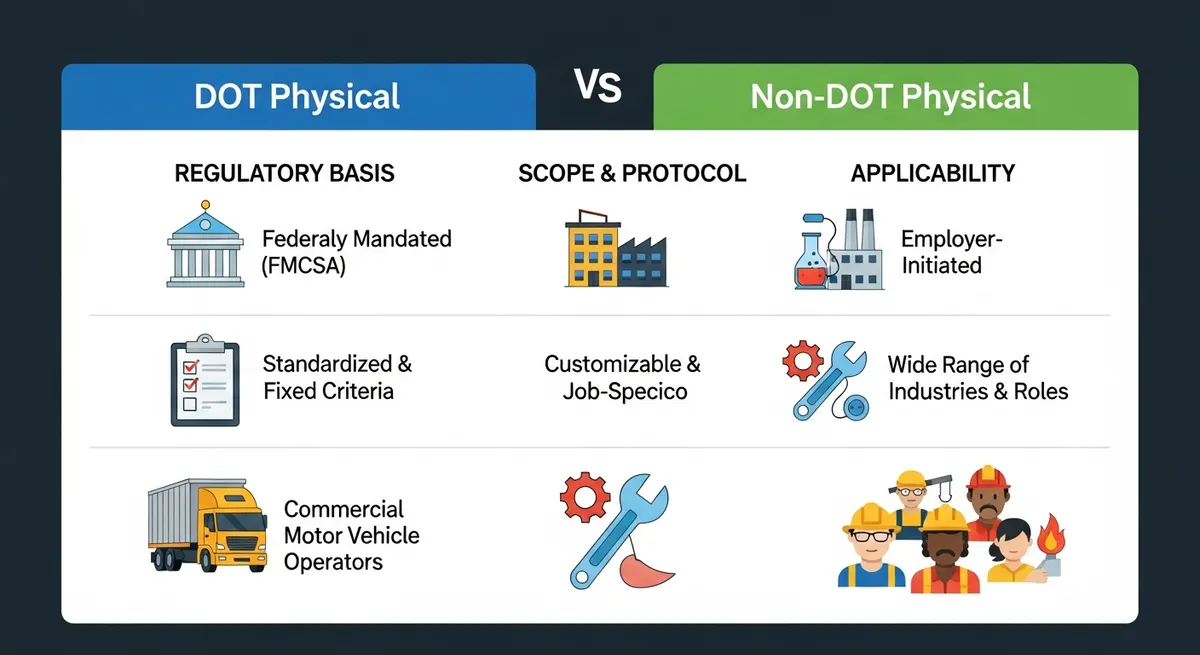
At a glance: Key differences between federally mandated DOT physicals and employer-driven Non-DOT physicals.
The fundamental difference between DOT and Non-DOT physicals lies in their regulatory basis and scope. DOT physicals are federally mandated for individuals operating commercial motor vehicles in interstate commerce, ensuring they meet stringent federal health and safety standards to operate safely on public roads. These exams follow a standardized protocol defined by the Federal Motor Carrier Safety Administration (FMCSA).
Not sure if sleep apnea applies to you?
Take our 2-minute sleep risk quiz to see whether sleep apnea could affect your DOT physical. No account required.
In contrast, Non-DOT physicals are employer-initiated and not subject to specific federal regulations like those from the FMCSA. This lack of federal standardization allows employers to tailor the examination to the unique demands of specific job roles. While a DOT physical has a fixed set of criteria, a Non-DOT physical can be customized to assess an employee's fitness for tasks such as heavy lifting, working in hazardous environments, operating specialized machinery, or fulfilling other physically or medically intensive job requirements. This adaptability makes Non-DOT physicals a valuable tool for a wider range of businesses and industries beyond transportation.
The Strategic Value of Non-DOT Physicals for Employers and Employees
The implementation of Non-DOT physicals offers significant strategic advantages, fostering a healthier, safer, and more productive work environment. These benefits extend to both the organization and its workforce.
For Employers: Enhancing Workforce Health, Safety, and Productivity
Employers utilize Non-DOT physicals as a proactive measure to mitigate risks and optimize operational efficiency. By ensuring employees are physically capable of performing their duties, companies can significantly reduce the incidence of workplace injuries and accidents. This not only protects employees but also lowers associated costs, including workers' compensation claims, medical expenses, and lost productivity due to absenteeism. Furthermore, these exams can help identify pre-existing conditions that might be exacerbated by job demands, allowing for early intervention or appropriate accommodations. This careful matching of employee capabilities to job requirements ultimately contributes to a more stable, reliable, and productive workforce, reinforcing a strong safety culture and potentially reducing employer liability.
For Employees: Securing Your Role and Understanding Your Health
From an employee's perspective, a Non-DOT physical serves as an opportunity to confirm their physical readiness for their role and to gain a clearer understanding of their own health status. Successfully passing a physical can be a prerequisite for employment or continued employment, securing an individual's position. Beyond mere compliance, these exams can act as an early warning system, highlighting potential health concerns that an individual may not have been aware of. This allows for timely consultation with healthcare providers, potentially leading to early diagnosis and management of conditions, thereby promoting long-term well-being and sustained employability. It empowers employees with knowledge about their health relative to their occupational demands.
What to Expect: Key Components of a Non-DOT Physical Exam
While Non-DOT physicals are variable, they typically include a core set of assessments designed to provide a broad overview of an individual's health, with additional components added based on specific job requirements.
Comprehensive Medical History Review
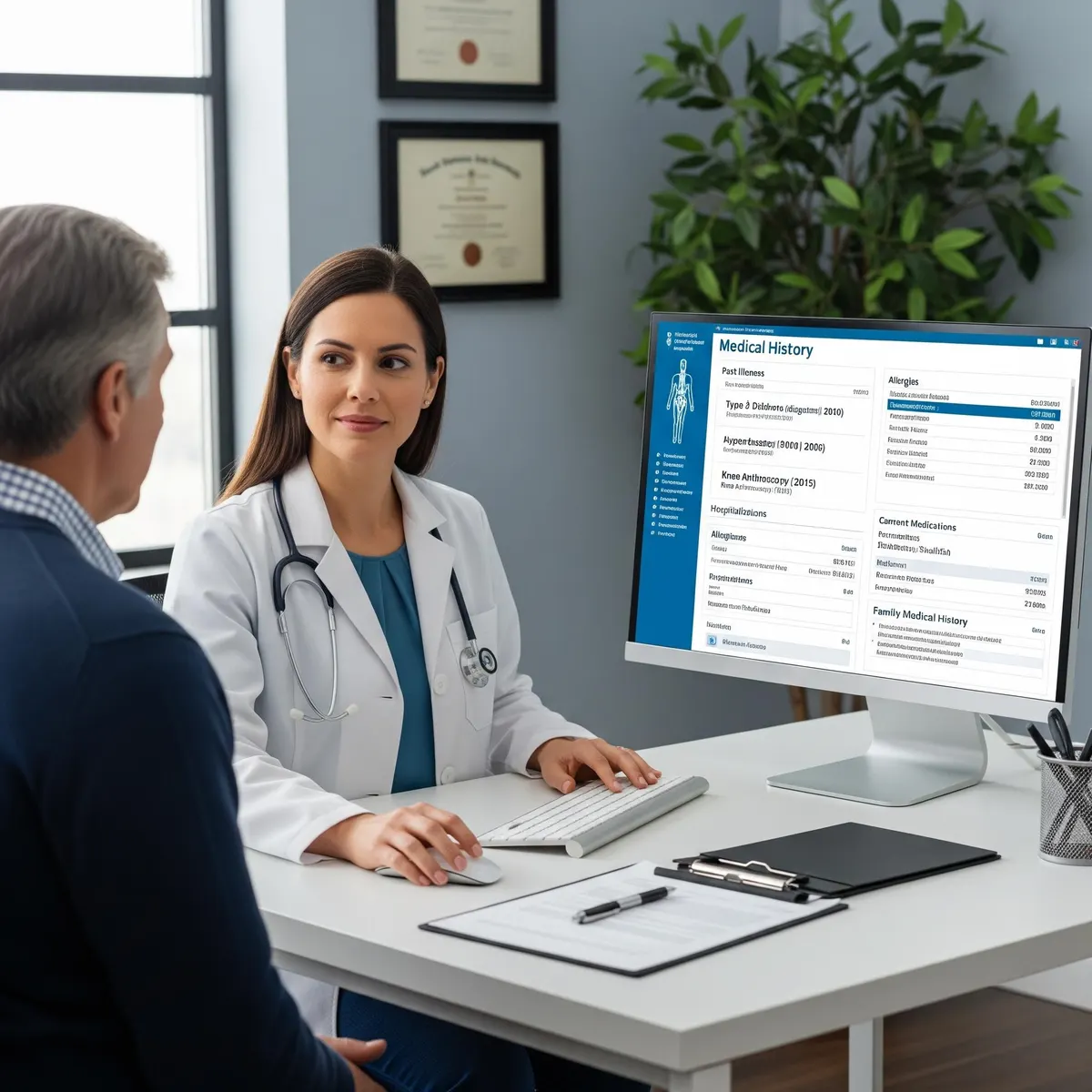
The examination usually begins with a thorough review of the individual's medical history. This includes past illnesses, surgeries, hospitalizations, allergies, current medications, and family medical history. This information helps the examining physician understand potential health risks, chronic conditions, or sensitivities that might be relevant to the demands of the job. Open and honest disclosure of this information is critical for an accurate assessment.
Vital Signs and General Physical Assessment
Standard physiological measurements are taken to establish baseline health indicators. This typically includes checking blood pressure, pulse rate, respiratory rate, and body temperature. The physician will also conduct a general physical examination, observing the individual's overall appearance, listening to heart and lung sounds, and palpating the abdomen. This provides a snapshot of the body's fundamental functioning.

Vision and Hearing Evaluations
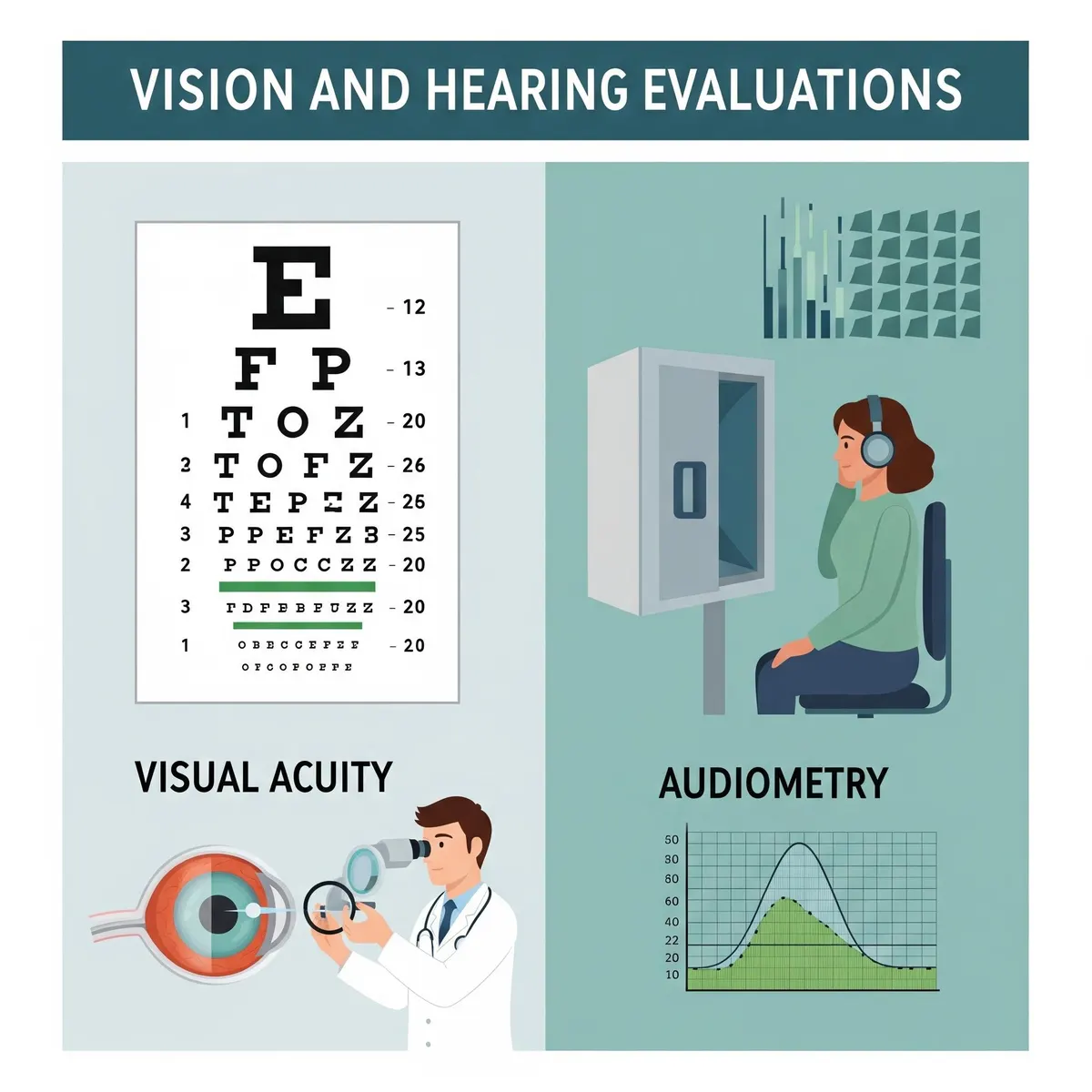
For many roles, clear vision and adequate hearing are essential for safety and performance. Vision tests may include assessments of visual acuity (near and far), peripheral vision, and color perception. Hearing tests, such as audiometry, evaluate the ability to hear a range of frequencies at different volumes. These evaluations ensure the individual can adequately perceive their work environment and respond to auditory cues.
Urinalysis and Potential Drug Screening
A urinalysis may be performed as part of a general health assessment to check for indicators of various health conditions, such as kidney function or diabetes. It is important to note that while a urinalysis can reveal certain health markers, it is distinct from a drug and alcohol screening. Employers may also require a separate drug and alcohol test, often bundled with the physical, to ensure a drug-free workplace, particularly if the job involves safety-sensitive responsibilities or operates in a high-risk environment.

Specialized Assessments Based on Job Demands
Beyond the standard components, Non-DOT physicals can include specialized assessments directly linked to the essential functions of a particular job. This might involve musculoskeletal examinations to assess strength, flexibility, and range of motion for roles requiring heavy lifting or repetitive physical tasks. Pulmonary function tests could be required for jobs involving exposure to respiratory irritants. Functional capacity evaluations, simulating job-specific activities like lifting, carrying, or prolonged standing, may also be incorporated to accurately gauge an individual's physical capability for the role.
Beyond Pre-Employment: Types of Non-DOT Physicals
Non-DOT physicals are not exclusively for initial hiring; they serve critical functions throughout an employee's tenure within an organization.
Pre-Employment and Post-Offer Physicals
These are among the most common types of Non-DOT physicals. A pre-employment physical is typically conducted after a conditional offer of employment has been made. It serves to verify that the candidate possesses the physical and medical capabilities necessary to perform the essential functions of the job without posing a direct threat to themselves or others. This helps employers make informed hiring decisions and ensures a good fit between the employee and the role.
Already diagnosed and need CPAP support?
Dumbo Health helps patients start CPAP without the usual confusion, paperwork, or upfront cost. Equipment, setup, supplies, and ongoing support are all handled in one place.
Fitness-for-Duty and Return-to-Work Evaluations
Fitness-for-duty (FFD) evaluations are performed when there is a reasonable suspicion that an employee may not be able to perform their job safely due to a medical condition, injury, or substance abuse. Return-to-work (RTW) evaluations are conducted after an employee has been absent due to illness or injury. These assessments determine if the employee has recovered sufficiently to resume their job duties, and if any modifications or accommodations are necessary to ensure their safety and the safety of others.
Periodic and Surveillance Physicals
Some employers implement periodic or surveillance physical examinations as part of ongoing health and safety programs. These exams, often conducted annually or biennially, help monitor employee health over time, especially for those in roles with potential exposure to hazards or with high physical demands. They are crucial for early detection of occupational illnesses or cumulative injuries, allowing for proactive management and intervention to maintain long-term employee health and employability.
Customizing the Non-DOT Physical: Tailoring to Specific Job Demands
The inherent flexibility of the Non-DOT physical is its greatest strength, allowing it to be precisely aligned with an organization's unique operational needs and safety protocols.
Understanding Employer-Specific Requirements
The specific requirements of a Non-DOT physical are dictated by the employer and are directly linked to the essential job functions (EJFs) of the position. Employers must clearly define these EJFs and then design the physical examination to assess an individual's ability to meet those demands. For instance, a warehouse position requiring frequent heavy lifting will have different assessment criteria than a customer service role requiring prolonged sitting. This customization ensures that the examination is relevant, effective, and legally defensible.
Partnering with Occupational Health Services
To effectively design and implement Non-DOT physical programs, employers often partner with specialized occupational health service providers. These professionals possess the expertise to develop job-specific medical questionnaires and examination protocols. They ensure that the assessments are comprehensive, objective, and compliant with relevant legal standards. This partnership helps employers manage the process efficiently while maintaining a high standard of employee health evaluation.
Legal and Ethical Considerations
When designing and administering Non-DOT physicals, employers must adhere to legal and ethical guidelines. This includes ensuring that all evaluations are job-related and consistent with business necessity, as mandated by laws such as the Americans with Disabilities Act (ADA) in the United States. Medical information gathered during these exams is confidential and must be protected. Employers must avoid discriminatory practices, ensuring that the physical requirements do not screen out individuals with disabilities unless those requirements are essential to the job and cannot be reasonably accommodated. Transparency with employees about the purpose and scope of the examination is also a critical ethical consideration.
Navigating the Process: What Individuals and Employers Need to Know
Successfully undergoing or implementing a Non-DOT physical requires preparation and understanding from both the employee and the employer.
Scheduling Your Appointment
Employers typically initiate the scheduling process, often coordinating with an occupational health clinic. Employees may be given a specific timeframe or choice of appointment slots. Prompt scheduling is important, especially if the physical is a condition of employment. Employers should provide clear instructions on where and when the appointment will take place, and any specific preparation required.
Preparing for the Exam
For individuals, preparation is key to a smooth experience. This includes gathering accurate medical history details, listing all current medications (including dosages), and noting any allergies. It is advisable to get adequate rest the night before and avoid strenuous physical activity immediately prior to the exam. Being honest and forthright with the examining physician about health status and symptoms is crucial for an accurate assessment. Employers should ensure employees receive a clear list of what to bring, such as identification and any required forms.
Receiving and Understanding Results
Following the examination, the occupational health provider will typically prepare a report. This report is usually shared with the employer, often indicating whether the individual is deemed fit for duty, fit with restrictions, or unfit. The specifics of the medical findings are usually kept confidential between the healthcare provider and the employee, with only the fitness-for-duty determination shared with the employer, unless the employee provides explicit consent for more detailed information to be shared. Employees should review their results with the examining physician to fully understand any findings, recommendations, or potential next steps.
Choosing the Right Occupational Health Provider
The selection of an occupational health provider is a critical decision for employers seeking to establish robust Non-DOT physical programs.
Key Considerations for Employers
Employers should look for providers with extensive experience in occupational health and a deep understanding of various industry requirements. Factors to consider include the provider's clinical expertise, the range of services offered (e.g., drug screening, specialized testing), their ability to customize protocols, their geographic reach, and their commitment to compliance and confidentiality. A provider with a strong reputation for efficient service and clear communication can streamline the process for both the company and its employees.
What Individuals Should Look For
Individuals undergoing a Non-DOT physical should ensure the provider is licensed and reputable. While employees generally do not choose their provider for employer-mandated exams, understanding the clinic's credentials and their approach to patient care can provide reassurance. The examining physician should be approachable, attentive, and willing to answer questions about the examination process and results.
Conclusion: Investing in a Healthy and Safe Workforce
Non-DOT physical examinations are far more than a bureaucratic requirement; they represent a strategic investment in an organization's most valuable asset: its people. By meticulously assessing an individual's ability to meet job demands, employers can foster environments that are not only safer and more productive but also supportive of long-term employee well-being. These flexible evaluations, when thoughtfully designed and executed, allow businesses to proactively manage health-related risks, reduce operational disruptions, and build a resilient workforce capable of meeting the challenges of any role.
The Enduring Value of Non-DOT Physicals
In conclusion, Non-DOT physicals offer a vital mechanism for ensuring that employees are physically and medically suited for their roles. They are a cornerstone of comprehensive occupational health and safety programs, providing tangible benefits such as reduced injury rates, lower healthcare costs, and enhanced overall productivity. For employers, partnering with qualified occupational health providers and understanding the legal and ethical framework is paramount to establishing effective and compliant programs. For employees, these exams offer clarity on their health status relative to their work and can be a gateway to proactive health management. By embracing the strategic value of Non-DOT physicals, organizations can cultivate a culture of health, safety, and sustained performance, ensuring a thriving future for both the business and its workforce.
Related DOT Physical Topics
- What Is the Difference Between a DOT and Non-DOT Physical
- DOT Physical ICD-10 & Billing Codes The Complete Guide for Accurate Compliance and Reimbursement
- Online DOT Physical Self-Pay The Complete Guide for CDL Drivers and Owner-Operators
- Online DOT Physical The Complete Guide for Commercial Drivers and Medical Examiners
- DOT Physical Texas The Essential Guide to Your Exam, Medical Card, and CDL Compliance
- DOT Physical Forms & Paperwork The Complete Guide for Commercial Drivers
- DOT Physical Insurance & Recertification The Complete Driver's Guide
- Remote DOT Physical The Complete Guide for Commercial Drivers
- The Ultimate DOT Physical Guide for Commercial Drivers (2025–2026)
- What Does DOT Stand for in a DOT Physical
- How to Pass a DOT Physical The Complete Commercial Driver's Guide
- Navigating the Florida DOT Physical Your Essential Guide for CDL Drivers
- DOT Physical Chiropractor Your Complete Guide to CDL Exams
- Can You Get a Second Opinion on Your DOT Physical A Complete Guide for Commercial Drivers
- DOT Physical Duration and Validity How Long Your Medical Card Lasts
- Online DOT Physical Without Insurance A Complete Guide for Commercial Drivers
- Why DOT Sleep Tests at Home Matter for Your Career and Health
- Your Complete Guide What's Included in a DOT Physical Exam
- DOT physical self pay guide for commercial drivers paying out of pocket
- The Comprehensive Guide to Suboxone, Sleep Apnea, and FMCSA Compliance for Commercial Motor Vehicle Operators
- Is a DOT physical the same as a regular physical
- What Happens During the DOT Physical Exam The Complete Guide for Drivers
- DOT Physical Requirements A Complete Guide for CDL Drivers
- Guide to Obtaining and Managing Your DOT Medical Card Online
- DOT Physical Vision & Eye Requirements
- DOT Physical Cost Breakdown What Drivers Pay & Why
- DOT Physical & Alcohol Requirements
- DOT Physical & Drug Test What Drivers Need to Know
- How can drivers with sleep apnea qualify again after a failed DOT physical
- DOT Physical Online Cost
- Can You Pass a DOT Physical with Epilepsy
- How Do You Submit Your DOT Physical to the DMV
- What Can Disqualify You From a DOT Physical
- Virtual DOT Physical
- DOT Physical Out of Pocket What Commercial Drivers Actually Pay
- Who needs a DOT physical
- DOT Physical Self Pay Cost
- Navigating Your DOT Physical with Common Medical Conditions
- Does a DOT physical include a drug test
- When Can Sleep Apnea Affect a DOT Physical
- Can you pass a DOT physical with sleep apnea
- What happens if you fail a DOT physical due to sleep apnea
- Can you fail a DOT physical because of sleep apnea
- Can You Get a DOT Physical Online
- Walk In DOT Physical Self Pay
- Can You Pass a DOT Physical With a Pacemaker
- What Should You Bring to a DOT Physical
- Telehealth Dot Physical
- What should I expect at a DOT physical
- Can You Pass a DOT Physical With One Eye
- What Forms Do You Need for a DOT Physical
- DOT Physical Exam Basics
- What Are the Requirements to Pass a DOT Physical
- Can You Fail a DOT Physical for Being Overweight
- Why do they measure your neck during a DOT physical
- Can You Pass a DOT Physical with High Blood Pressure
- Cheap DOT Physical Online
- What Is the Urine Test for in a DOT Physical
- Can You Pass a DOT Physical With a Hernia
- Do They Check for Hernia During a DOT Physical
- What blood pressure do you need to pass a DOT physical
- DOT Physical Cash Pay
- Online DOT Exam What Drivers and Medical Examiners Need to Know
- Is a drug test required for a DOT physical
- DOT Physical Blood Pressure Requirements What Drivers Need to Know
- Can You Fail a DOT Physical for High Blood Pressure
- Same Day DOT Physical
- DOT Medical Exam Self-Pay A Complete Guide for Commercial Drivers
- DOT Physical at Urgent Care What Commercial Drivers Need to Know
- Do They Check Your Private Parts During a DOT Physical
- New DOT Physical Requirements What Drivers MUST Know About New Updates
- DOT Physical Insurance or Self Pay How to Choose the Right Payment Option for Your Exam
- What Does a DOT Physical Consist Of
- Is a Sleep Study Required for a DOT Physical
- BMI for DOT Physical What Commercial Drivers Need to Know
- Can You Pass a DOT Physical with Diabetes
- Do You Have to Pee During a DOT Physical
- What eye chart is used for a DOT physical
- What Do They Check During a DOT Physical
- The DOT Physical Exam Ensuring You're Fit for the Road
- Failing a DOT Physical What Every Commercial Driver Needs to Know
- Can You Fail a DOT Physical
- What is DOT Physical
- Online CDL Physical
- Are There New DOT Rules or Laws on Sleep Apnea Testing
- Essential 171 DOT Definitions for Commercial Drivers
- 2026 DOT Inspection Dates
- How Sleep Apnea Affects Overall Driving Safety
- Home Sleep Apnea Test for Commercial Drivers The CDL Holder's Complete Guide
- Best Treatments for Sleep Apnea to Improve Driving Safety
- CDL PHYSICAL SELF PAY
- DOT sleep apnea test at home
- What are the current DOT requirements for sleep apnea testing for commercial drivers
- Medical Examination Report (MER) – Form MCSA-5875 The Complete Guide for Commercial Drivers
- Navigating Your CDL Health Requirements
- Expected 2027 DOT Inspection Dates
- Sleep Apnea Test for CDL Drivers
- Are there legal requirements for drivers with sleep apnea
- How Does Sleep Apnea Affect Driving Ability
- What are the current FMCSA guidelines on sleep apnea for commercial drivers
Take the next step before your DOT physical
Start with the free quiz if you are unsure about your risk, or order an at-home sleep test if you have already been flagged for possible sleep apnea.
AI summary
A Non-DOT physical is an employer-driven medical examination used to determine whether a person is medically and physically able to perform specific job duties. Unlike DOT physicals, which are federally mandated for commercial drivers and follow FMCSA protocols, Non-DOT exams are customizable to the role and workplace risks. Typical components include a medical history review, vital signs, a general physical exam, and vision and hearing evaluations. Many programs include urinalysis for general health markers, and some employers also require separate drug and alcohol screening. Additional job-specific elements may include musculoskeletal assessment, pulmonary function testing for respiratory exposures, and functional capacity evaluations that simulate tasks such as lifting, carrying, or prolonged standing. Non-DOT physicals may be used for post-offer pre-employment screening, fitness-for-duty evaluations, return-to-work clearance, and periodic or surveillance exams. Programs should be tied to essential job functions and consistent with business necessity under the ADA, with medical information kept confidential and employers typically receiving only fit-for-duty status, restrictions, or unfitness determinations.

Nicolas Nemeth
Co-Founder
Nico is the co-founder of Dumbo Health, a digital sleep clinic that brings the entire obstructive sleep apnea journey home. Patients skip the sleep lab and the long wait to see a specialist. Dumbo Health ships an at home test, connects patients with licensed sleep clinicians by video, and delivers CPAP or a custom oral appliance with ongoing coaching and automatic resupply in one clear subscription.
Keep reading

How Long Does a DOT Physical Take? A Complete Guide for Commercial Drivers

What Happens If You Fail a DOT Drug Test? The Complete Guide for Commercial Drivers


