Do You Have to Pee During a DOT Physical
Commercial drivers are required to provide a urine sample during every DOT physical for an FMCSA-mandated health screen. The article explains how urinalysis checks glucose, protein, blood, and specific gravity to flag risks like diabetes, kidney disease, and hydration problems. It clarifies that this medical urinalysis is different from a DOT drug test, which follows strict chain-of-custody rules and has separate outcomes. You will learn what happens at the clinic, including privacy expectations and paperwork. Practical preparation tips cover moderate hydration, avoiding energy drinks, and disclosing medications. It also outlines the shy bladder protocol and how results can affect certification length.
Struggling with sleep?
Find out if sleep apnea is the reason.
FDA-cleared. $149 flat. Physician-reviewed results in 48 hours.

Do You Have to Pee During a DOT Physical?
DOT physical is a mandatory medical evaluation required for commercial drivers to ensure they meet federal safety standards and are physically fit to operate a vehicle. Every commercial driver must provide a urine sample as part of the initial and recertification process to screen for underlying health issues. This guide covers the clinical reasons behind the requirement, the differences between medical screens and drug testing, and how to manage the process successfully at a clinic near you. By understanding the "why" and "how" of the urination requirement, you can approach your next exam with confidence and professional readiness.
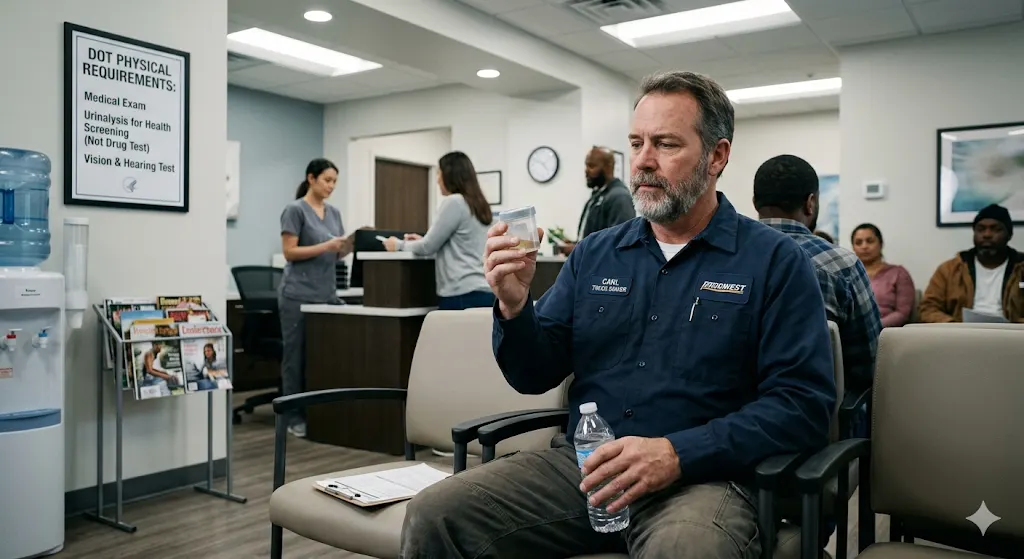
The Direct Answer: Yes, and Here's Why
Urination is a mandatory component of every DOT physical exam because it allows the examiner to perform a "kidney screen" for vital health markers. Providing a urine sample is required by the Federal Motor Carrier Safety Administration (FMCSA) to detect protein, blood, and sugar, which may indicate uncontrolled chronic diseases.
This part of the exam is meant to help identify problems that could lead to sudden impairment behind the wheel. While many drivers assume the primary purpose is drug detection, the standard medical urinalysis focuses on metabolic and renal health. Specifically, the test looks for glucose, which can signal undiagnosed diabetes, and protein, which may indicate kidney damage or chronic high blood pressure.
Not sure if sleep apnea applies to you?
Take our 2-minute sleep risk quiz to see whether sleep apnea could affect your DOT physical. No account required.
Seeing the exam as a health screen rather than a trap makes the process easier to understand.
DID YOU KNOW: According to the FMCSA, over 3.5 million commercial drivers must undergo this examination periodically to maintain their license and ensure road safety.
KEY TAKEAWAY: You are required to provide a urine sample during your exam primarily to screen for chronic health conditions like diabetes and kidney disease rather than just for drug use.
Knowing why the medical examiner requires a sample helps clarify the difference between standard health monitoring and compliance testing.
Understanding the Urination Requirement for Commercial Drivers
The urination requirement exists to verify that a driver does not have a hidden respiratory, metabolic, or renal dysfunction likely to interfere with safe driving. The FMCSA mandates this test under 49 CFR Part 391 to ensure public safety by identifying drivers at risk of sudden medical emergencies.
The DOT Urinalysis: A Critical Health Screening Tool
Urinalysis is a laboratory or dipstick test that analyzes the chemical properties of your urine to assess overall physiological stability. This is not a diagnostic test on its own, but a signal for further investigation if abnormalities are found.
What Your Urine Reveals About Your Overall Health
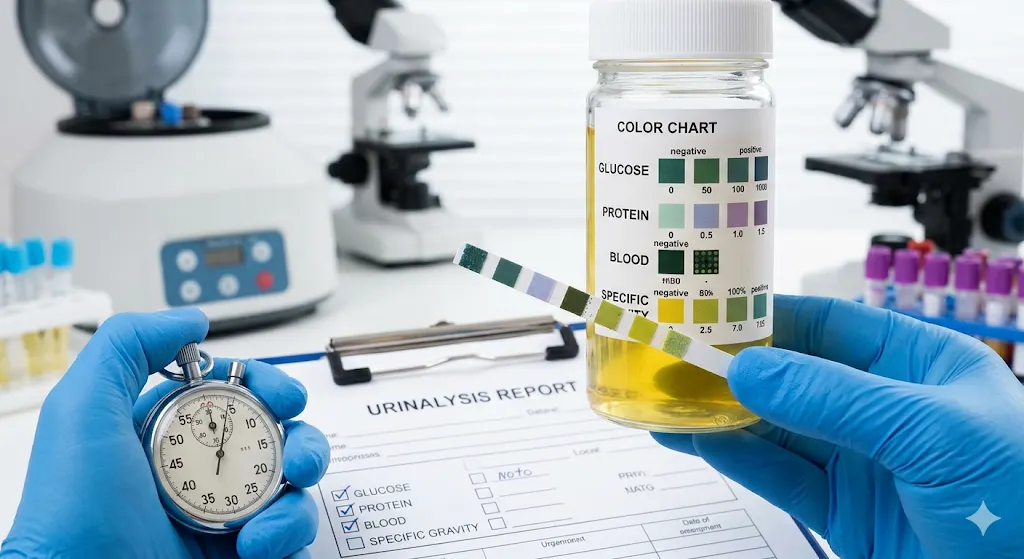
During a DOT physical, the examiner uses a reagent strip to check for four main indicators:
• Glucose (Sugar): High levels often indicate undiagnosed or poorly managed diabetes, which can cause dizziness or loss of consciousness.
• Protein: Excess protein can be a sign of kidney disease or damage caused by long-term high blood pressure.
Already diagnosed and need CPAP support?
Dumbo Health helps patients start CPAP without the usual confusion, paperwork, or upfront cost. Equipment, setup, supplies, and ongoing support are all handled in one place.
• Blood (Hematuria): The presence of blood may suggest kidney stones, infections, or bladder issues that require specialist evaluation.
• Specific Gravity: This measures urine concentration to evaluate your hydration levels, which is essential for maintaining cognitive focus during long-haul trips.
A urinalysis image fits best here because it reflects the exact health markers the examiner is screening for.
TIP: If you have a history of diabetes or kidney issues, bring your most recent lab results, such as an A1C report, to help the examiner verify your condition is stable.
KEY TAKEAWAY: Your urine provides a window into your cardiovascular and metabolic health, allowing examiners to catch issues before they become safety hazards.
While health screening is mandatory, the inclusion of a drug panel depends on the specific reason for your visit.
The DOT drug test Component: What to Expect
A drug test is a separate procedure from the medical urinalysis, though they are often performed during the same clinic visit for administrative efficiency. While the physical exam is a health assessment, the DOT drug test is a regulatory requirement for pre-employment, random, or post-accident scenarios.
Differentiating Between Urinalysis for Health and a Drug Test
It is essential to distinguish between the health screen and the substance screen. The medical urinalysis checks for sugar and protein, while the drug test identifies prohibited substances like marijuana, cocaine, and opioids.
| Feature | Medical Urinalysis | DOT Drug Test |
|---|---|---|
| Purpose | Health screening (EEAT) | Safety compliance |
| Tested For | Sugar, Protein, Blood | THC, Cocaine, Amphetamines, Opioids, PCP |
| Required By | FMCSA (Every 2 Years) | Employer/FMCSA (Varies) |
| Procedure | Standard clinic cup | Split sample / chain of custody |
The Drug Testing Procedure and Collection Process
The collection process for a drug screen is more rigorous than a standard health sample. It requires a specific volume, at least 45 mL, and follows a strict chain of custody to ensure the sample is not tampered with or substituted. The collector will check the temperature of the urine within four minutes of collection, and it must be between 90 and 100 degrees Fahrenheit.
A specimen image works well in this section because the process and paperwork are more controlled than a routine medical screen.
Potential Outcomes of a DOT Drug Test
There are three primary results for a substance screen:
• Negative: No prohibited substances were found at or above the cutoff levels.
• Positive: One or more substances were detected. This results in an immediate removal from safety-sensitive duties.
• Refusal to Test: This includes leaving the clinic early or failing to provide a sample without a medical reason. A refusal carries the same weight as a positive result.
IMPORTANT: Even if you are in a state where marijuana is legal, it remains prohibited for DOT-regulated drivers and will result in a failed test.
KEY TAKEAWAY: A drug test uses different protocols and paperwork than a health screen, and failing one leads to immediate disqualification and a mandatory return-to-duty process.
Preparation is key to avoiding delays or suspicious results during both types of testing.
Preparing for Your DOT Physical Urine Sample: A Driver's Practical Guide
Proper preparation ensures that your DOT physical exam goes smoothly and provides accurate results. Many drivers inadvertently skew their results by over-hydrating or consuming the wrong foods right before their appointment.
Strategic Hydration: Not Too Much, Not Too Little
Finding a happy medium with fluid consumption is vital. Dehydration can make it difficult to produce the required volume, while over-hydration can lead to a negative dilute result, which may require a retest.
Dietary Considerations and Medication Disclosure
Certain foods and drinks can affect your urinalysis results:
• Avoid energy drinks: High caffeine and sugar can elevate your blood pressure and cause glucose to show up in your urine.
• Watch your diet: Foods like fava beans, rhubarb, and blackberries can discolor your urine, which may be mistaken for blood or tampering.
• Disclose medications: Always tell your examiner about every medication you take, including vitamins and over-the-counter supplements.
Managing Anxiety and Ensuring a Successful Sample
Many drivers experience shy bladder, or paruresis, due to the pressure of the exam. If you cannot provide a sample on the first attempt, the clinic must follow the 3-hour rule. You will be urged to drink up to 40 ounces of fluid and given up to three hours to produce a sample.
TIP: Arrive at the clinic with your first morning urine still in your bladder for the most concentrated and accurate sample.
KEY TAKEAWAY: Avoid extreme hydration or sugary drinks before your exam to ensure your sample accurately reflects your health status.
Once you are ready, the clinic follows a specific step-by-step process to collect your specimen.
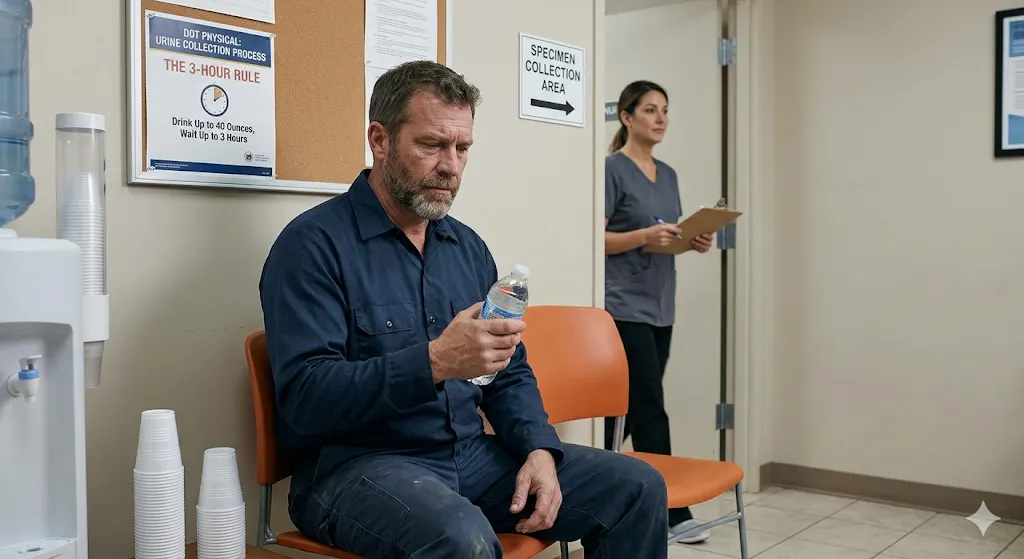
The Urination Process at the Clinic: Step-by-Step
Understanding the clinic workflow can reduce anxiety before you visit a provider in your area. The process is designed to protect your privacy while maintaining the integrity of the medical record.
Your Arrival and Initial paperwork
When you arrive, you will provide a photo ID and fill out the Medical Examination Report form. You must disclose your medical history, including any previous diagnoses of heart disease or 9 most common sleep apnea symptoms to look out for.
The Collection Experience
For a health screen, the process is straightforward:
• You will be given a collection cup and directed to a private restroom.
• The restroom will typically have a bluing agent in the toilet to prevent tampering.
• You will provide a midstream sample and return it to the examiner or a designated collection window.
Post-Collection Procedures
The examiner immediately checks the sample for markers using a dipstick. If the sample is for a drug test, the collector will pour it into two separate bottles, seal them in your presence, and have you sign the Custody and Control Form (CCF).
DID YOU KNOW: You have the right to keep your wallet during the collection process, but you must remove outer garments like jackets for safekeeping.
KEY TAKEAWAY: The clinic process is a structured sequence of ID verification, private collection, and immediate assessment to ensure accuracy and compliance.
The urine test is only one piece of the puzzle in determining your fitness for duty.
Beyond the Urine Test: The Full DOT Physical Examination
While the urine sample is a major focus, the DOT physical exam involves a comprehensive assessment of your cardiovascular, neurological, and physical health. The examiner's goal is to confirm you are safe to operate a commercial motor vehicle (CMV).
Integrating Your Urine Test Results with Other Health Assessments
If your urine shows high glucose, the examiner will likely check your blood pressure and may require a finger-stick blood sugar test. High sugar combined with obesity or a large neck circumference might lead to a referral for a sleep study to see how do at-home sleep studies work.
The Role of the FMCSA-Certified Medical Examiner
Only an FMCSA-certified medical examiner listed on the National Registry can perform this exam. These professionals are trained to evaluate the unique stresses of commercial driving and determine if your medical history presents a risk to the public.
Receiving Your DOT Medical Certificate
If you meet all standards, you will receive your medical certificate, also called a DOT medical card.
• Standard Qualification: 2-year certification.
• Monitoring Status: 1-year or shorter card if you have controlled conditions like high blood pressure or diabetes.
• Pending Status: If the examiner needs more info, such as a specialist note or lab results, your exam may be put on pending for up to 45 days.
A certificate-related visual belongs here because this is the point where the exam outcome turns into legal driving eligibility.
Medical exam results are submitted electronically to the National Registry and then transmitted to State Driver Licensing Agencies, and FMCSA says this electronic submission requirement has remained in place since 2018.[1]
KEY TAKEAWAY: Your urinalysis results are interpreted alongside your blood pressure, vision, and hearing tests to create a complete picture of your driving fitness.
Clearing up common misunderstandings can make your next visit much less stressful.
Common Myths About DOT Physicals Debunked
Many drivers avoid the clinic due to misinformation. Here are the facts behind common misconceptions regarding the urination process.
Myth: The urine test during a DOT physical is always a drug test
Fact: The health screen is mandatory for every physical, but a DOT Drug Test is a separate regulation often requested only for pre-employment or random draws.
Myth: If I have sugar in my urine, I automatically fail the physical
Fact: Sugar in the urine, or glucosuria, is a signal for the examiner to look closer, not an automatic failure. You may just need to provide proof that your blood sugar is under control via an A1C test.
Myth: Someone has to watch me urinate for the health screen
Fact: Standard collections are private. Direct observation is only used for drug tests in very specific cases, such as if a previous sample was the wrong temperature or showed signs of tampering.
Myth: I can cheat the test by drinking gallons of water before I go
Fact: Labs and examiners check the specific gravity and creatinine levels. If your urine is too watery, it is flagged as dilute, and you will likely have to take the test again.
KEY TAKEAWAY: Most failure fears are based on myths; the exam is a collaborative process to ensure you are managing your health correctly.
By preparing correctly, you help ensure your career continues without unnecessary interruptions.
Conclusion: Be Prepared, Be Informed, Be Compliant
Successful certification depends on your ability to provide a valid sample while demonstrating overall health stability. The urination requirement is not a trap but a vital safety check that protects you and everyone else on the road. By managing your diet, staying moderately hydrated, and being honest about your medical history, you help ensure a smooth visit to the clinic.
Key Takeaways for Your Next DOT Physical
• A urine sample is mandatory for every DOT physical exam to screen for diabetes and kidney issues.
• The health screen is different from a DOT Drug Test, though they may happen at the same time.
• Disclose all medications and conditions, including what is sleep apnea, to your examiner to avoid delays.
• Avoid energy drinks and excessive water right before your appointment.
Empowering Commercial Drivers Through Knowledge and Preparation
Commercial driving is a demanding profession that requires peak physical condition. Understanding the clinical requirements of your exam allows you to take control of your health rather than being surprised by the results. If you are concerned about your respiratory health or snoring, check if is CPAP covered by insurance to stay proactive before your next recertification.
Ensuring Safety and Compliance on the Road for All
Maintaining a valid DOT medical certificate is a sign of your professionalism and commitment to safety. When you visit a provider in your area, remember that the goal is to keep you healthy and your career moving forward. Be sure to find a provider near you who is on the National Registry to ensure your results are valid and legally recognized.
Frequently Asked Questions
Does the DOT physical test for kratom?
No, the standard DOT drug test panel only screens for five specific classes of drugs: marijuana, cocaine, amphetamines, opioids, and PCP. Kratom is currently not part of the federal testing panel, although the FMCSA notes that any substance causing impairment can be a safety concern.
What happens if I can't pee during my DOT physical?
If you cannot produce a sample, the shy bladder protocol begins. You will be given up to three hours to provide 45 mL of urine and urged to drink up to 40 ounces of water during that time. If you still cannot produce a sample, you must undergo a medical evaluation within five days to determine if there is a physiological or psychological reason for the failure.
Do they check your privates during a DOT physical?
The examiner does not typically perform a genital exam during a standard DOT physical. They focus on heart, lungs, abdomen, and spine. However, they may check for hernias, which involves a brief examination of the groin area to ensure you can safely lift heavy loads.
Will my prescribed medications cause me to fail the urine test?
Prescription medications will not cause a fail on a health urinalysis. For a drug test, if you take a controlled substance, like certain pain medications or ADHD medication, the Medical Review Officer (MRO) will contact you to verify your prescription. If you have a valid prescription and the doctor says you are safe to drive, the result is reported as negative.
Can I fail for high blood pressure during the urine test?
No, blood pressure is measured separately using a cuff. However, the urine test checks for protein, which is often a long-term indicator that high blood pressure is damaging your kidneys. If protein is found, the examiner will look closely at your blood pressure readings to determine your certification length.
Why do they need a split sample for drug testing?
A split sample means your urine is poured into two bottles, A and B. Bottle A is tested first. If it is positive, you have 72 hours to request that Bottle B be sent to a different lab for confirmation, providing you with a layer of protection against lab errors.
Related DOT Physical Topics
- Can You Pass a DOT Physical with Epilepsy
- How Do You Submit Your DOT Physical to the DMV
- What Can Disqualify You From a DOT Physical
- What Does DOT Stand for in a DOT Physical
- Can you pass a DOT physical with sleep apnea
- What happens if you fail a DOT physical due to sleep apnea
- Can you fail a DOT physical because of sleep apnea
- Can You Get a Second Opinion on Your DOT Physical A Complete Guide for Commercial Drivers
- Can You Get a DOT Physical Online
- Can You Pass a DOT Physical With a Pacemaker
- What Should You Bring to a DOT Physical
- Can You Pass a DOT Physical With One Eye
- What Forms Do You Need for a DOT Physical
- Can You Fail a DOT Physical for Being Overweight
- Why do they measure your neck during a DOT physical
- Can You Pass a DOT Physical with High Blood Pressure
- Can You Pass a DOT Physical With a Hernia
- Do They Check for Hernia During a DOT Physical
- What blood pressure do you need to pass a DOT physical
- Can You Fail a DOT Physical for High Blood Pressure
- Do They Check Your Private Parts During a DOT Physical
- Is a DOT physical the same as a regular physical
- What Happens During the DOT Physical Exam The Complete Guide for Drivers
- Can You Pass a DOT Physical with Diabetes
- What Is the Difference Between a DOT and Non-DOT Physical
- What Do They Check During a DOT Physical
- The DOT Physical Exam Ensuring You're Fit for the Road
- Can You Fail a DOT Physical
- How can drivers with sleep apnea qualify again after a failed DOT physical
- DOT Physical Online Cost
- Virtual DOT Physical
- DOT Physical Vision & Eye Requirements
- Remote DOT Physical The Complete Guide for Commercial Drivers
- DOT Physical Out of Pocket What Commercial Drivers Actually Pay
- The Ultimate DOT Physical Guide for Commercial Drivers (2025–2026)
- Who needs a DOT physical
- DOT Physical Self Pay Cost
- Navigating Your DOT Physical with Common Medical Conditions
- How to Pass a DOT Physical The Complete Commercial Driver's Guide
- Does a DOT physical include a drug test
- Navigating the Florida DOT Physical Your Essential Guide for CDL Drivers
- When Can Sleep Apnea Affect a DOT Physical
- DOT Physical Chiropractor Your Complete Guide to CDL Exams
- DOT Physical Cost Breakdown What Drivers Pay & Why
- Walk In DOT Physical Self Pay
- Telehealth Dot Physical
- What should I expect at a DOT physical
- DOT Physical Forms & Paperwork The Complete Guide for Commercial Drivers
- DOT Physical Exam Basics
- DOT Physical & Alcohol Requirements
- DOT Physical Duration and Validity How Long Your Medical Card Lasts
- What Are the Requirements to Pass a DOT Physical
- DOT Physical Insurance & Recertification The Complete Driver's Guide
- Online DOT Physical Without Insurance A Complete Guide for Commercial Drivers
- Your Complete Guide What's Included in a DOT Physical Exam
- Cheap DOT Physical Online
- What Is the Urine Test for in a DOT Physical
- Online DOT Physical Self-Pay The Complete Guide for CDL Drivers and Owner-Operators
- DOT physical self pay guide for commercial drivers paying out of pocket
- DOT Physical Cash Pay
- Is a drug test required for a DOT physical
- DOT Physical Blood Pressure Requirements What Drivers Need to Know
- Same Day DOT Physical
- Online DOT Physical The Complete Guide for Commercial Drivers and Medical Examiners
- DOT Physical at Urgent Care What Commercial Drivers Need to Know
- DOT Physical ICD-10 & Billing Codes The Complete Guide for Accurate Compliance and Reimbursement
- New DOT Physical Requirements What Drivers MUST Know About New Updates
- DOT Physical Insurance or Self Pay How to Choose the Right Payment Option for Your Exam
- What Does a DOT Physical Consist Of
- Is a Sleep Study Required for a DOT Physical
- BMI for DOT Physical What Commercial Drivers Need to Know
- DOT Physical & Drug Test What Drivers Need to Know
- Non-DOT Physical A Comprehensive Guide to Workforce Health and Safety
- DOT Physical Texas The Essential Guide to Your Exam, Medical Card, and CDL Compliance
- DOT Physical Requirements A Complete Guide for CDL Drivers
- What eye chart is used for a DOT physical
- Failing a DOT Physical What Every Commercial Driver Needs to Know
- What is DOT Physical
- Online CDL Physical
- Are There New DOT Rules or Laws on Sleep Apnea Testing
- Essential 171 DOT Definitions for Commercial Drivers
- 2026 DOT Inspection Dates
- Why DOT Sleep Tests at Home Matter for Your Career and Health
- Online DOT Exam What Drivers and Medical Examiners Need to Know
- CDL PHYSICAL SELF PAY
- DOT sleep apnea test at home
- What are the current DOT requirements for sleep apnea testing for commercial drivers
- DOT Medical Exam Self-Pay A Complete Guide for Commercial Drivers
- Guide to Obtaining and Managing Your DOT Medical Card Online
- Expected 2027 DOT Inspection Dates
- Sleep Apnea Test for CDL Drivers
- How Sleep Apnea Affects Overall Driving Safety
- Home Sleep Apnea Test for Commercial Drivers The CDL Holder's Complete Guide
- Best Treatments for Sleep Apnea to Improve Driving Safety
- Are there legal requirements for drivers with sleep apnea
- How Does Sleep Apnea Affect Driving Ability
- What are the current FMCSA guidelines on sleep apnea for commercial drivers
- The Comprehensive Guide to Suboxone, Sleep Apnea, and FMCSA Compliance for Commercial Motor Vehicle Operators
- At Home Sleep Test for Truck Drivers
- Medical Examination Report (MER) – Form MCSA-5875 The Complete Guide for Commercial Drivers
Take the next step before your DOT physical
Start with the free quiz if you are unsure about your risk, or order an at-home sleep test if you have already been flagged for possible sleep apnea.
AI summary
A DOT physical is an FMCSA-required medical exam for commercial motor vehicle drivers to confirm fitness for duty. A urine sample is mandatory because DOT urinalysis functions as a health screen, not a drug test. Key points: - FMCSA requires urinalysis under 49 CFR Part 391. - The examiner uses a dipstick/reagent strip to check glucose, protein, blood (hematuria), and specific gravity. - Abnormal findings can indicate diabetes (glucose), kidney disease or chronic high blood pressure effects (protein), urinary tract or kidney issues (blood), or hydration problems (specific gravity). - A DOT drug test is a separate procedure often tied to pre-employment, random, or post-accident testing; it includes chain of custody, split specimen, minimum 45 mL volume, and temperature checks (90–100°F within 4 minutes). - Preparation guidance includes moderate hydration, avoiding energy drinks and certain foods that can discolor urine, and disclosing all medications and supplements. - If a driver cannot urinate, clinics follow a 3-hour shy bladder protocol with up to 40 ounces of fluid.

Nicolas Nemeth
Co-Founder
Nico is the co-founder of Dumbo Health, a digital sleep clinic that brings the entire obstructive sleep apnea journey home. Patients skip the sleep lab and the long wait to see a specialist. Dumbo Health ships an at home test, connects patients with licensed sleep clinicians by video, and delivers CPAP or a custom oral appliance with ongoing coaching and automatic resupply in one clear subscription.
Keep reading

How Long Does a DOT Physical Take? A Complete Guide for Commercial Drivers

What Happens If You Fail a DOT Drug Test? The Complete Guide for Commercial Drivers


