Can You Pass a DOT Physical With a Pacemaker?
Commercial drivers with a pacemaker can often still qualify for a DOT medical card under FMCSA standards. Certification depends on stable pacemaker function, completion of any recommended waiting period, and a cardiac condition that is not likely to cause syncope, dyspnea, collapse, or congestive heart failure. The article explains how medical examiners weigh symptoms, device follow-up, and cardiology documentation, and why a cardiologist note does not guarantee approval. It outlines typical timing guidance (such as 1 month for sinus node dysfunction or AV block and 3 months for neurocardiogenic syncope). You will also learn what records to bring and the most common reasons certification is delayed or denied.
Struggling with sleep?
Find out if sleep apnea is the reason.
FDA-cleared. $149 flat. Physician-reviewed results in 48 hours.

Can You Pass a DOT Physical With a Pacemaker?
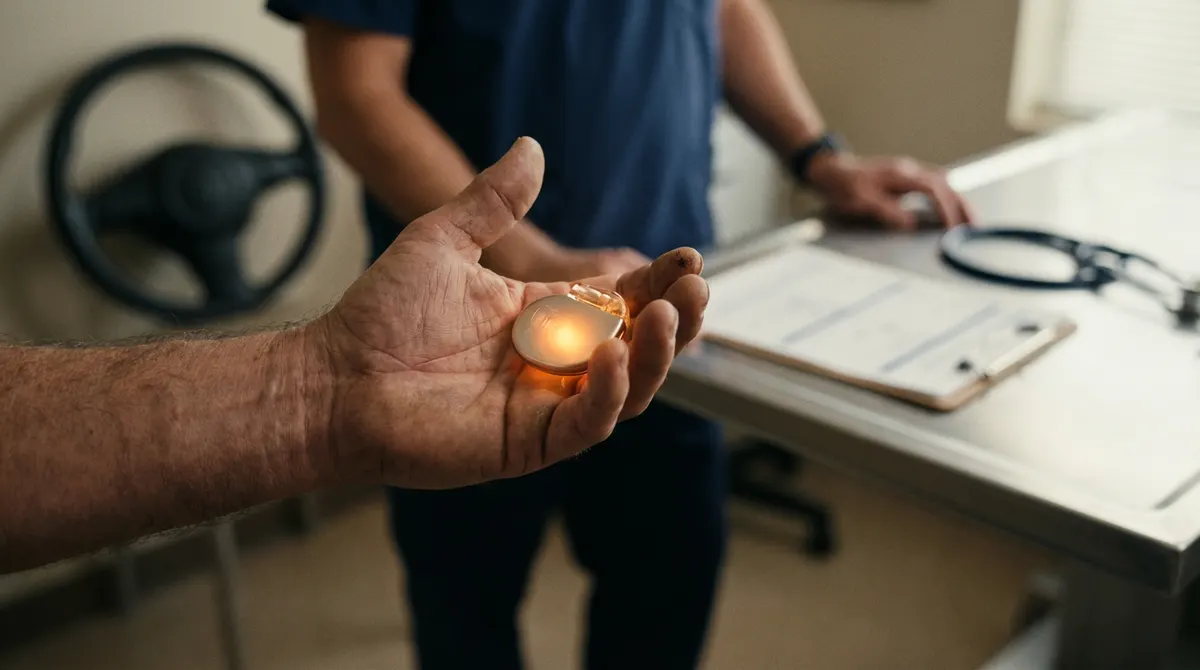
Can you pass a DOT physical with a pacemaker? Yes. A pacemaker does not automatically disqualify you from commercial driving if the device is functioning properly, the underlying cardiac condition is stable, and you meet FMCSA medical standards. According to the FMCSA, pacemaker implantation is a remedial procedure that does not by itself preclude medical certification. This matters because the decision is based less on the device alone and more on whether the medical condition behind it could cause syncope, dyspnea, collapse, or congestive cardiac failure while you operate a Commercial Motor Vehicle. This guide explains the FMCSA rules, what the medical examiner looks for, which cardiology evaluations matter, what documentation you need, and what can still lead to denial. Keep reading so you can show up prepared and protect both your DOT medical card and your Truck Driving Job. (FMCSA)
Navigating Your DOT Physical With a Pacemaker

A pacemaker can be compatible with a DOT physical exam when the pacemaker function is stable and the underlying cardiovascular condition is not disqualifying. The key issue is fitness to safely operate a Commercial Motor Vehicle, not simply whether pacemaker implantation occurred. According to the FMCSA, the cardiovascular standard requires that a driver have no current clinical diagnosis of myocardial infarction, Angina pectoris, coronary insufficiency, thrombosis, or another cardiovascular condition likely to cause syncope, dyspnea, collapse, or congestive cardiac failure. (FMCSA)
A DOT physical exam is the health screening used to determine whether you can safely perform the duties of inter-state driving under the Federal Motor Carrier Safety Regulations. The Federal Motor Carrier Safety Administration gives the medical examiner authority to certify you for up to 24 months in many cases, but the examiner can shorten that period when more frequent monitoring is needed. For pacemaker recipients, shorter certification is common because medical history, ongoing cardiology evaluations, and device follow-up matter as much as the physical examination itself. (FMCSA)
The central expectation is simple. Yes, you may qualify for a medical certificate, but you will usually need documentation showing successful pacemaker implantation, proper pacemaker function, and no symptoms that would interfere with safe driving. That is why preparation matters more for this topic than for routine DOT Physicals.
KEY TAKEAWAY: A pacemaker does not automatically disqualify you, but FMCSA certification depends on stability, symptoms, and documentation of safe pacemaker function.
Not sure if sleep apnea applies to you?
Take our 2-minute sleep risk quiz to see whether sleep apnea could affect your DOT physical. No account required.
The next step is understanding exactly how FMCSA views pacemakers in commercial drivers.
The Core Question: Can a Pacemaker Recipient Drive a Commercial Motor Vehicle?

Yes, a pacemaker recipient can drive a Commercial Motor Vehicle if FMCSA criteria are met after the required waiting period and the underlying medical condition is not disqualifying. The real decision is based on risk, symptoms, and evidence of stable treatment. According to the FMCSA, certification may be considered after 1 month for sinus node dysfunction or AV block when pacemaker function is documented and the underlying disease is not disqualifying. Older FMCSA cardiovascular advisory criteria also recommend 3 months after pacemaker implantation for neurocardiogenic syncope, with no symptom recurrence and documented device checks. (FMCSA)
Pacemaker is a small implanted device that treats bradycardia by helping maintain an adequate heart rate. This matters because a pacemaker can reduce the risk of cerebral hypoperfusion from slow rhythms, which lowers the chance of sudden incapacity behind the wheel. According to the FMCSA, pacemakers and lead systems are generally reliable over the long term, but the medical examiner must still consider whether you have signs the device is not working properly, such as syncope, weakness, or unstable arrhythmia. (FMCSA)
The distinction between a pacemaker and an implantable cardioverter defibrillator matters. The FMCSA states that ICDs are treated differently because they are associated with ongoing risk of sudden incapacitation and can themselves discharge in a way that affects driver safety. A pacemaker is potentially certifiable. An ICD or implantable cardiac defibrillator pacemaker combination device is generally not. (FMCSA)
| Device or condition | Typical FMCSA certification view | Waiting period or follow-up | Why it matters |
|---|---|---|---|
| Pacemaker for sinus node dysfunction | Potentially certifiable | 1 month after pacemaker implantation with documented correct function | Risk may be controlled if the underlying disease is stable |
| Pacemaker for AV block or heart block | Potentially certifiable | 1 month after pacemaker implantation with documented correct function | The device may correct bradycardia and reduce collapse risk |
| Pacemaker for neurocardiogenic syncope | Potentially certifiable in selected cases | 3 months after pacemaker implantation and absence of symptom recurrence | Vasodepressor symptoms may persist even after pacing |
| ICD for ventricular tachycardia or ventricular fibrillation | Generally disqualifying | Not treated like routine pacemaker cases | Sudden shock or underlying arrhythmia creates higher safety risk |
For most truck drivers asking whether they can keep working after pacemaker implantation, the answer is yes if the reason for the device was something like heart block or sick sinus syndrome and the follow-up is clean. If the underlying issue is ventricular tachycardia, unstable coronary artery disease, or another high-risk cardiovascular condition, the analysis becomes much stricter. (FMCSA)
DID YOU KNOW: The FMCSA allows a maximum certification period of 24 months in many cases, but medical examiners may certify for less time whenever closer monitoring is needed. (FMCSA)
KEY TAKEAWAY: You can have a DOT medical card with a pacemaker, but only if the waiting period is complete, the device is functioning correctly, and the underlying cardiac condition is stable.
To see why FMCSA is careful here, it helps to look at the safety logic behind the cardiovascular rules.
Understanding the FMCSA's Stance on Pacemakers for Commercial Drivers

FMCSA focuses on public safety by asking whether your cardiovascular condition could cause sudden or gradual loss of control while driving. A pacemaker may support certification, but it does not erase concern about the disease that led to implantation. According to the FMCSA, the examiner should consider the likelihood of syncope, dyspnea, or collapse due to both the medical condition and its treatment. (FMCSA)
Federal Motor Carrier Safety Administration is the U.S. agency that sets the medical qualification framework for interstate commercial drivers. This matters because every DOT medical examination form, Medical Examiner's Certificate, and certification decision must align with FMCSA standards rather than with a general return-to-driving note from a local clinic. (FMCSA)
The main reason pacemakers receive specific scrutiny is that pacemaker implantation is usually the consequence of a cardiovascular condition, not the condition itself. Common reasons include heart block, sick sinus syndrome, and some rhythm-related syncope syndromes. According to Mayo Clinic, sick sinus syndrome affects the heart’s natural pacemaker and can cause slow heartbeats, pauses, or irregular rhythms. That matters because a driver may feel much better after treatment, yet the medical examiner still needs evidence that the condition no longer poses a safety threat. (Mayo Clinic)
Heart block is a conduction problem in which the electrical signal between the upper and lower chambers is delayed or blocked. This matters because second-degree or third-degree heart block can cause fatigue, dizziness, or fainting before treatment, which is exactly the type of event FMCSA wants to prevent in inter-state driving. According to Mayo Clinic, rhythm disorders are often evaluated with ECG tracings and other cardiac tests when deciding on pacemaker therapy. (Mayo Clinic)
Already diagnosed and need CPAP support?
Dumbo Health helps patients start CPAP without the usual confusion, paperwork, or upfront cost. Equipment, setup, supplies, and ongoing support are all handled in one place.
Some drivers assume the Department of Transportation only cares whether a device was implanted. FMCSA guidance says otherwise. The medical examiner must consider whether treatment is adequate, effective, safe, and stable, and whether the driver is compliant with the ongoing treatment plan. That is why your medical records, hospital records, and cardiology evaluations carry real weight during the medical examination. (FMCSA)
KEY TAKEAWAY: FMCSA evaluates the reason for the pacemaker and the risk of incapacitation, not just the presence of an implanted device.
Once you understand the rule, the next question is how the medical examiner actually applies it during the DOT physical exam.
The Role of Your Medical Examiner in the DOT Physical Process

The medical examiner decides whether you meet FMCSA standards on the day of the DOT physical exam. The examiner does not simply rubber-stamp your cardiologist’s note, but specialist documentation often shapes the final decision. According to the FMCSA Medical Examiner’s Handbook, examiners may certify for less than the maximum period whenever they believe more frequent monitoring is necessary. (FMCSA)
Medical examiner is the certified clinician on the National Registry who performs the DOT medical examination and issues your Medical Examiner's Certificate when you qualify. This matters because even if you go to urgent care for the visit, the person signing the certification must still apply FMCSA rules. A convenient urgent care location near you may help with scheduling, but it does not change the underlying standard. (FMCSA)
During the physical examination, the examiner reviews your medical history, medications, symptoms, blood pressure, vision standards, hearing, and general function. According to the FMCSA, blood pressure above 139/89 should be confirmed with a second reading, and stage-based blood pressure categories can shorten certification or prevent qualification until better control is documented. Vision standards also matter separately from your cardiac status, including a special pathway for certain drivers who need the alternative vision standard. (FMCSA)
For pacemaker patients, specific focus areas usually include recent symptoms, device follow-up, medication tolerance, cardiology reports, and whether the underlying medical condition remains likely to cause syncope or collapse. If you report dizziness, near-fainting, chest pain, worsening fatigue, or poor exercise tolerance, the medical examiner may pause certification and request more information. That is true even if your incision healed and you feel mostly normal in daily life. (FMCSA)
IMPORTANT: A DOT physical exam is not the same thing as a DOT drug screen. Drug testing can be required under separate employer or regulatory rules, but a driver can pass or fail the medical certification decision for reasons unrelated to a drug test.
KEY TAKEAWAY: The medical examiner evaluates your whole medical condition, not just your pacemaker, and can shorten or delay certification when more evidence is needed.
That makes your cardiologist the most important partner in building a strong clearance file.
The Cardiologist's Crucial Role: Your Ally in Securing Your DOT Medical Card

A thorough cardiology evaluation is often the difference between a smooth certification and an avoidable delay. The medical examiner wants objective evidence that the pacemaker works, your symptoms are controlled, and the underlying cardiovascular condition is not disqualifying. According to the FMCSA, the driver should comply with scheduled pacemaker function checks and provide documentation of those checks at the examination. (FMCSA)
Cardiology evaluations are specialist assessments that document diagnosis, treatment response, and risk. This matters because DOT Physicals involving a pacemaker are rarely decided on a short office summary alone. A strong report can explain whether the device was placed for heart block, sick sinus syndrome, Atrial fibrillation management after ablation, or another cardiovascular condition, and whether current pacemaker function is stable. (FMCSA)
Your cardiologist may provide ECG tracings, echocardiogram findings, recent office notes, and device interrogations or pacemaker clinic summaries. FMCSA does not require the same exact packet for every driver, but the goal is consistent: show that treatment is adequate, effective, safe, and stable. When coronary artery disease, prior angioplasty surgery, prior heart attack, or ventricular tachycardia are part of the story, the examiner may also want more testing or more recent specialist input. The FMCSA notes that Exercise Tolerance Test assessment is commonly used for workload capacity and coronary evaluation, and cardiologists recommend an ETT 4 to 6 weeks after an acute Myocardial Infarction and at least every 2 years thereafter in appropriate cases. (FMCSA)
Stress tests are not automatically required for every pacemaker recipient, but they can become relevant when the pacemaker is only one part of a larger cardiac history. A driver with isolated heart block and excellent follow-up may need far less testing than a driver with coronary artery disease, Angina pectoris, reduced exercise capacity, or symptoms suggesting coronary insufficiency. That distinction is where good cardiology documentation protects your CDL certification. (FMCSA)
Many patients report that the most stressful part is not the pacemaker itself but trying to guess what paperwork the examiner will want. If you want to move faster, reviewing a sleep-related comorbidity at the same time can help. If Sleep Apnea is part of your file or you have symptoms of a sleep disorder, you can explore Dumbo’s at-home sleep test options before your next renewal. (FMCSA)
KEY TAKEAWAY: The best cardiology report clearly states why the pacemaker was implanted, confirms stable device function, and addresses whether any remaining cardiac risk could affect safe driving.
With that in mind, the next section covers exactly what documents to bring.
Preparing for Your DOT Physical With a Pacemaker: A Comprehensive Checklist

Preparation improves your odds of certification because it reduces uncertainty for the medical examiner. The goal is to walk in with enough objective documentation that the examiner can make a confident decision during the visit. According to the FMCSA, drivers with pacemakers should provide documentation of pacemaker function checks and demonstrate compliance with scheduled follow-up. (FMCSA)
Bring your most recent medical records, cardiologist letter, pacemaker clinic report, and hospital records related to pacemaker implantation. Include your medication list, procedure date, diagnosis, recent office visit notes, and any relevant ECG tracings. If your case involved heart block, sick sinus syndrome, ventricular tachycardia evaluation, Atrial fibrillation, valve disease, or coronary artery disease, make sure the paperwork explains the current status and not just the original event. This is especially important if you changed providers or need a second opinion. (Mayo Clinic)
Here is a practical checklist for the DOT medical examination form visit:
Pacemaker implantation date
Pacemaker follow-up or device interrogation summary
Cardiologist clearance note
Current medication list
Hospital discharge summary if the implant was recent
Most recent echocardiogram or relevant cardiac test if available
Any Exercise Tolerance Test or stress tests if performed
Summary of symptoms, including whether you have had syncope, chest pain, or shortness of breath
blood pressure log if hypertension has been an issue
diabetes records if applicable, including blood sugar data and Hemoglobin A1C from your treating clinician
sleep apnea treatment information if you use CPAP or APAP
Drivers with insulin-treated diabetes should know that FMCSA requires the Insulin Treated Diabetes Mellitus Assessment Form and at least 3 months of electronic blood glucose self-monitoring records in many situations. That rule is separate from pacemaker certification, but it can affect your final medical certificate if diabetes is one of your co-existing medical condition issues. (FMCSA)
Communicate clearly and honestly. If your pacemaker was implanted 3 weeks ago, say so. If you had a heart attack 6 weeks ago, say so. If you feel dizzy with exertion, say so. Hiding symptoms can lead to a worse outcome later and may jeopardize both safety and your Commercial Drivers License. Some drivers look for providers in your area who can move quickly, but the fastest path is usually the most complete file, not the fastest appointment slot.
TIP: Call the clinic before your visit and ask whether the medical examiner wants cardiology clearance faxed in advance. That one step can save a wasted trip to urgent care.
KEY TAKEAWAY: Bring organized documentation that proves stable pacemaker function, explains the underlying diagnosis, and addresses any other medical condition that could affect driving.
After preparation, the biggest issue becomes whether you are likely to receive certification, shorter-term monitoring, or disqualification.
Certification, Disqualification, and Next Steps for Drivers With Pacemakers

Certification with a pacemaker is possible, but it is never automatic. The examiner must be satisfied that the waiting period has passed, the device is functioning correctly, symptoms are controlled, and the underlying cardiovascular condition is not likely to cause sudden impairment. According to the FMCSA, the pacemaker case should include documented function checks, and an implantable cardiac defibrillator pacemaker combination device is not recommended for certification. (FMCSA)
Medical certificate is the official document, often called the DOT medical card or Medical Examiner's Certificate, that confirms you are physically qualified to operate a Commercial Motor Vehicle. This matters because even when you qualify, the certification period may be shorter than 24 months if the examiner believes closer follow-up is needed. Annual recertification is common in cardiovascular cases. (FMCSA)
Potential disqualification usually happens for one of five reasons:
The waiting period after pacemaker implantation is not complete
The pacemaker function is not adequately documented
The underlying cardiovascular condition remains unstable
You still have symptoms such as syncope, dyspnea, chest pain, or collapse risk
You have an ICD, ventricular tachycardia risk, or another disqualifying cardiovascular condition
The pacemaker itself may support a return to work, but it does not erase every other FMCSA concern. According to the FMCSA, no driver is physically qualified if there is a current clinical diagnosis of myocardial infarction, angina pectoris, coronary insufficiency, thrombosis, or another cardiovascular disease likely to cause syncope, dyspnea, collapse, or congestive cardiac failure. That means a driver recovering from an acute Myocardial Infarction, active Angina pectoris, or unstable coronary artery disease may need additional time and documentation even if a pacemaker has already been placed. (FMCSA)
If you are initially denied, do not assume your Truck Driving Job is permanently over. Ask what specific records are missing. In many cases, the solution is updated cardiology evaluations, a clearer specialist letter, more time after pacemaker implantation, or better control of a second medical condition such as high blood pressure, Sleep Apnea, or diabetes. If OSA is part of the issue, Dumbo’s guide on what sleep apnea is and its CPAP support page can help you understand what examiners often want to see from treatment follow-up. (FMCSA)
KEY TAKEAWAY: A pacemaker can support certification, but final approval depends on stable treatment, adequate documentation, and the absence of disqualifying cardiac risk.
Before the FAQ, it helps to clear up several myths that often confuse drivers and employers alike.
Common Myths About DOT Physicals and Pacemakers Debunked
A lot of certification anxiety comes from misinformation. DOT Physicals for pacemaker recipients are rule-based, not rumor-based, and most myths fall apart once you read the FMCSA standards.
MYTH: A pacemaker automatically means you fail the DOT physical exam.
FACT: The FMCSA states that pacemaker implantation is a remedial procedure and does not by itself preclude medical certification. What matters is whether the pacemaker is functioning properly and whether the underlying cardiovascular condition is stable and unlikely to cause syncope, dyspnea, or collapse. (FMCSA)
MYTH: A cardiologist note guarantees a DOT medical card.
FACT: A cardiologist note is important, but the medical examiner makes the final certification decision under FMCSA rules. The FMCSA also allows the examiner to issue a shorter medical certificate than the maximum 24 months when closer monitoring is needed. (FMCSA)
MYTH: If you feel fine after pacemaker implantation, you can drive immediately.
FACT: FMCSA guidance includes waiting periods. For sinus node dysfunction and AV block, advisory criteria recommend 1 month after pacemaker implantation with documented correct function. For neurocardiogenic syncope, the recommended period is 3 months with no symptom recurrence. (FMCSA)
MYTH: Passing the heart portion means the rest of the DOT physical exam does not matter.
FACT: The DOT medical examination form also involves blood pressure, vision standards, hearing, medication review, and other systems. For example, FMCSA guidance notes that readings above 139/89 should be rechecked, and stage-based hypertension can shorten certification or delay qualification. (FMCSA)
KEY TAKEAWAY: Most pacemaker-related DOT myths ignore the real standard, which is stable function plus no remaining condition likely to impair safe driving.
The final section answers the most common questions drivers ask before booking an exam.
Frequently Asked Questions
Does having a pacemaker disqualify you for a DOT physical?
No. Having a pacemaker does not automatically disqualify you for a DOT physical. According to the FMCSA, pacemaker implantation is a remedial procedure and does not by itself preclude medical certification. The medical examiner looks at whether the pacemaker is working properly, whether the required waiting period has passed, and whether the underlying cardiovascular condition is stable and unlikely to cause syncope, dyspnea, or collapse. You may still be denied if symptoms persist or if the original diagnosis remains disqualifying. (FMCSA)
Can you be a truck driver if you have a pacemaker?
Yes, many truck drivers can continue driving after pacemaker implantation if they satisfy FMCSA medical standards. The key issues are the reason for the pacemaker, the date of implantation, current symptoms, and documented pacemaker function. Drivers with heart block or sick sinus syndrome often have a clearer path than drivers with ventricular tachycardia or an ICD. If you are searching for a certified examiner close to you, remember that the most important factor is bringing complete cardiology documentation, not just finding the fastest appointment. (FMCSA)
How long is a driver with a pacemaker certified for?
Certification length varies. FMCSA rules generally allow a maximum certification period of 24 months, but the medical examiner may issue a shorter medical certificate if closer monitoring is needed. In cardiovascular cases, annual recertification is common because the examiner may want regular review of symptoms, medications, and pacemaker follow-up. The exact period depends on your medical history, the stability of your device, and whether any other medical condition such as hypertension, diabetes, or Sleep Apnea needs added monitoring. (FMCSA)
Can you have a DOT medical card with a pacemaker after a recent implant?
Yes, but not immediately in every case. FMCSA advisory criteria recommend waiting at least 1 month after pacemaker implantation for sinus node dysfunction or AV block, with documented correct function by a pacemaker center and no disqualifying underlying disease. For neurocardiogenic syncope, the recommended waiting period is 3 months with absence of symptom recurrence. That means the pacemaker implantation date is one of the first facts the medical examiner will review during your DOT physical exam. (FMCSA)
What paperwork should you bring to a DOT physical if you have a pacemaker?
Bring the most recent cardiologist note, pacemaker clinic summary, device interrogation or function check report, medication list, hospital records from the implant if recent, and any relevant testing such as an echocardiogram, ECG tracings, or Exercise Tolerance Test if your broader cardiac history required one. FMCSA guidance specifically says drivers should comply with scheduled pacemaker checks and provide documentation of those checks at the examination. Organized medical records can make the difference between same-day certification and a delayed decision. (FMCSA)
What happens if you fail your DOT physical with a pacemaker?
Failure is not always final. In many cases, the examiner is not saying you can never drive again. The examiner may be saying that more documentation is needed, the waiting period is incomplete, or another cardiovascular condition remains unstable. Ask exactly what triggered the denial. Updated cardiology evaluations, clearer hospital records, better blood pressure control, or treatment for co-existing Sleep Apnea can sometimes resolve the issue before the next exam. If you need to address possible OSA, Dumbo’s guide to at-home sleep studies explains a practical next step. (FMCSA)
Do you still need a DOT physical if you are not currently driving but want to keep CDL certification active?
Licensing and medical certification rules can vary based on how and where you drive, but FMCSA medical certification is required for many drivers operating a Commercial Motor Vehicle in interstate commerce. If you are trying to maintain active employability for a future Truck Driving Job, confirm both your state licensing requirements and your current FMCSA medical certification status. The safest approach is not to assume that keeping your Driver's Licenses current means your DOT medical card remains valid. A certified medical examiner can tell you what is required in your situation. (FMCSA)
Can co-existing conditions like sleep apnea or diabetes affect pacemaker-related DOT certification?
Yes. The pacemaker may be only one part of the decision. FMCSA guidance says untreated or inadequately treated obstructive sleep apnea may contribute to fatigue and unintended sleep episodes, while insulin-treated diabetes has separate documentation requirements including the Insulin Treated Diabetes Mellitus Assessment Form and blood sugar monitoring records. That means a driver can have stable pacemaker function and still face delays because of another medical condition. If you need to understand treatment coverage, Dumbo’s guide on whether CPAP is covered by insurance may help. (FMCSA)
Conclusion: Driving Forward With Confidence and a Healthy Heart

A pacemaker does not automatically end your commercial driving career. In most cases, the real question is whether your medical condition is stable, your pacemaker function is documented, and your overall cardiovascular health supports safe driving under FMCSA standards. If you approach the DOT physical exam with current cardiology paperwork, honest symptom reporting, and a plan for any co-existing conditions, you give yourself the best chance of getting or renewing your DOT medical card. If sleep-related fatigue is part of your risk profile, a practical next step is to explore Dumbo’s get started page for at-home sleep testing and support.
Related DOT Physical Topics
- Can You Pass a DOT Physical with Epilepsy
- Can You Pass a DOT Physical With a Hernia
- Can You Pass a DOT Physical With One Eye
- Can you pass a DOT physical with sleep apnea
- Can You Pass a DOT Physical with Diabetes
- Can You Pass a DOT Physical with High Blood Pressure
- Can You Get a DOT Physical in Any State The Complete Guide for Commercial Drivers
- Can You Get a DOT Physical Online The Complete Guide for Commercial Drivers
- What Can Disqualify You From a DOT Physical
- How can drivers with sleep apnea qualify again after a failed DOT physical
- Can You Get a DOT Physical Online
- Can You Fail a DOT Physical for Being Overweight
- Can you fail a DOT physical because of sleep apnea
- What blood pressure do you need to pass a DOT physical
- Can You Fail a DOT Physical for High Blood Pressure
- Can You Get a Second Opinion on Your DOT Physical A Complete Guide for Commercial Drivers
- Can You Fail a DOT Physical
- How Do You Submit Your DOT Physical to the DMV
- What Forms Do You Need for a DOT Physical
- Navigating Your DOT Physical with Common Medical Conditions
- What Should You Bring to a DOT Physical
- When Can Sleep Apnea Affect a DOT Physical
- Is a DOT physical the same as a regular physical
- How to Pass a DOT Physical The Complete Commercial Driver's Guide
- What happens if you fail a DOT physical due to sleep apnea
- What Does DOT Stand for in a DOT Physical
- What Happens If You Fail a DOT Physical Twice The Complete Guide for Commercial Drivers
- What Is the Difference Between a DOT and Non-DOT Physical
- Do You Have to Pee During a DOT Physical
- What Are the Requirements to Pass a DOT Physical
- The DOT Physical Exam Ensuring You're Fit for the Road
- Does a DOT Physical Test for Weed or THC The Complete Guide for Commercial Drivers
- Does a DOT physical include a drug test
- DOT Physical Self Pay Cost
- Remote DOT Physical The Complete Guide for Commercial Drivers
- DOT Physical Exam Basics
- Is a drug test required for a DOT physical
- DOT Physical Cost Breakdown What Drivers Pay & Why
- DOT Physical ICD-10 & Billing Codes The Complete Guide for Accurate Compliance and Reimbursement
- Telehealth Dot Physical
- DOT Physical Forms & Paperwork The Complete Guide for Commercial Drivers
- Who needs a DOT physical
- Navigating DOT Stroke Guidelines for CMV Drivers What You Need To Know
- DOT Physical & Alcohol Requirements
- Online DOT Physical Without Insurance A Complete Guide for Commercial Drivers
- DOT Physical Out of Pocket What Commercial Drivers Actually Pay
- Why do they measure your neck during a DOT physical
- Navigating the Florida DOT Physical Your Essential Guide for CDL Drivers
- What Is the Urine Test for in a DOT Physical
- DOT Physical Online Cost
- Walk In DOT Physical Self Pay
- Online DOT Physical Self-Pay The Complete Guide for CDL Drivers and Owner-Operators
- DOT physical self pay guide for commercial drivers paying out of pocket
- Your Complete Guide What's Included in a DOT Physical Exam
- New DOT Physical Requirements What Drivers MUST Know About New Updates
- DOT Physical Insurance & Recertification The Complete Driver's Guide
- DOT Physical Cash Pay
- Same Day DOT Physical
- Virtual DOT Physical
- DOT Physical Vision & Eye Requirements
- What Are the DOT Requirements for Drivers With Sleep Apnea
- Do They Check Your Private Parts During a DOT Physical
- DOT Physical Blood Pressure Requirements What Drivers Need to Know
- DOT Physical Insurance or Self Pay How to Choose the Right Payment Option for Your Exam
- DOT Physical Chiropractor Your Complete Guide to CDL Exams
- What should I expect at a DOT physical
- What Does a DOT Physical Consist Of
- DOT Physical at Urgent Care What Commercial Drivers Need to Know
- BMI for DOT Physical What Commercial Drivers Need to Know
- What Happens During the DOT Physical Exam The Complete Guide for Drivers
- What Happens If Your DOT Physical Expires Compliance Guide for Commercial Drivers
- Does insurance cover a DOT physical
- DOT Physical & Drug Test What Drivers Need to Know
- DOT Physical Duration and Validity How Long Your Medical Card Lasts
- The Ultimate DOT Physical Guide for Commercial Drivers (2025–2026)
- Non-DOT Physical A Comprehensive Guide to Workforce Health and Safety
- DOT Physical Texas The Essential Guide to Your Exam, Medical Card, and CDL Compliance
- DOT Physical Requirements A Complete Guide for CDL Drivers
- Is a Sleep Study Required for a DOT Physical
- Do They Check for Hernia During a DOT Physical
- What Happens If You Fail a DOT Drug Test The Complete Guide for Commercial Drivers
- How Long Does a DOT Physical Take A Complete Guide for Commercial Drivers
- What eye chart is used for a DOT physical
- What Do They Check During a DOT Physical
- Cheap DOT Physical Online
- Online DOT Physical The Complete Guide for Commercial Drivers and Medical Examiners
- Failing a DOT Physical What Every Commercial Driver Needs to Know
- What is DOT Physical
- What drugs do they test for in a DOT drug test
- Are There New DOT Rules or Laws on Sleep Apnea Testing
- Essential 171 DOT Definitions for Commercial Drivers
- 2026 DOT Inspection Dates
- Why DOT Sleep Tests at Home Matter for Your Career and Health
- What Precautions Should Drivers With Sleep Apnea Take
- Are there legal requirements for drivers with sleep apnea
- CDL PHYSICAL SELF PAY
- DOT Hypertension Guidelines The Complete Blood Pressure Guide for Commercial Drivers
- The Ultimate DOT Preparation Checklist for Motor Carriers and Commercial Drivers
- DOT Medical Exam Self-Pay A Complete Guide for Commercial Drivers
- Online DOT Exam What Drivers and Medical Examiners Need to Know
Take the next step before your DOT physical
Start with the free quiz if you are unsure about your risk, or order an at-home sleep test if you have already been flagged for possible sleep apnea.
AI summary
A DOT physical is an FMCSA-required medical exam used to determine whether a commercial driver can safely operate a Commercial Motor Vehicle. Having a pacemaker does not automatically disqualify a driver because pacemaker implantation is considered a remedial procedure. FMCSA certification hinges on safety risk from the underlying cardiovascular condition and treatment. The examiner evaluates whether the driver has any condition likely to cause syncope, dyspnea, collapse, or congestive cardiac failure, and whether the pacemaker is functioning properly. Key criteria discussed include: completion of a waiting period (often 1 month after implantation for sinus node dysfunction or AV block with documented correct function; 3 months after implantation for neurocardiogenic syncope with no recurrence), absence of concerning symptoms (dizziness, fainting, chest pain, poor exercise tolerance), and documented device checks. ICDs and pacemaker-ICD combination devices are generally treated as disqualifying. Recommended documentation includes cardiologist clearance, device interrogation reports, implantation date and hospital records, medication list, ECG/echocardiogram results, and any stress testing when relevant. Certification may be shorter than 24 months when closer monitoring is needed.

Nicolas Nemeth
Co-Founder
Nico is the co-founder of Dumbo Health, a digital sleep clinic that brings the entire obstructive sleep apnea journey home. Patients skip the sleep lab and the long wait to see a specialist. Dumbo Health ships an at home test, connects patients with licensed sleep clinicians by video, and delivers CPAP or a custom oral appliance with ongoing coaching and automatic resupply in one clear subscription.
Keep reading

How Long Does a DOT Physical Take? A Complete Guide for Commercial Drivers

What Happens If You Fail a DOT Drug Test? The Complete Guide for Commercial Drivers


