Virtual DOT Physical
A virtual DOT physical is a hybrid workflow that moves scheduling, intake, forms, document review, and a virtual consultation online before the required in-person DOT exam. The guide clarifies what can be done remotely and what must be completed in a clinic, including vision and hearing tests, blood pressure measurement, urinalysis, and the hands-on physical exam. It explains FMCSA compliance, the role of a National Registry certified medical examiner, and how the Medical Examiner’s Certificate is issued. You will also learn how common conditions like hypertension, diabetes, and sleep apnea can affect certification length. Practical preparation tips focus on accurate medication lists, uploading specialist letters, and reducing repeat visits.
Struggling with sleep?
Find out if sleep apnea is the reason.
FDA-cleared. $149 flat. Physician-reviewed results in 48 hours.

Virtual DOT Physical
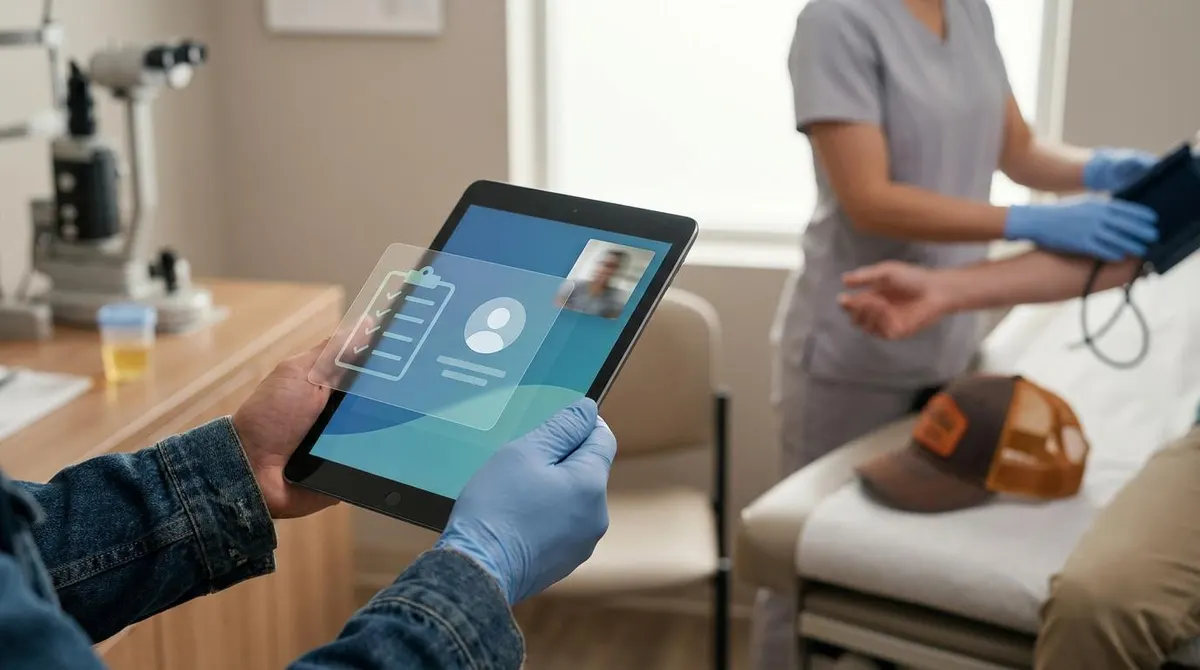
Virtual DOT physical is a hybrid DOT physical exam workflow that lets you complete intake, document reviews, and a Virtual Consultation online before the required in-person physical exam. According to the Federal Motor Carrier Safety Administration, interstate drivers still need a certified medical examiner to complete the physical examination and issue a Medical Examiner's Certificate when appropriate. This means a virtual DOT physical can save time, reduce administrative friction, and improve preparation, but it does not replace the hands-on DOT exam. This guide explains what a virtual model can and cannot do, how the examination process works, which medical conditions matter most, and how to prepare so you can pass the first time. The details below help you use the hybrid model correctly and stay compliant.
Introduction: The Evolving Landscape of DOT Physicals

A virtual DOT physical is a hybrid process, not a fully remote medical exam. The virtual model moves scheduling, forms, health history review, and some consultation steps online while keeping the required in-person testing and physical examination in the clinic.
Modernizing driver health assessments matters because commercial drivers and employers want less downtime without weakening safety standards. The Department of Transportation medical framework still centers on a physical exam, a medical history review, vision and hearing tests, blood pressure, a urine test, and an examiner decision about fitness for duty. The difference is that digital tools can shorten the non-clinical parts of the visit.
Why the virtual approach is gaining traction is simple. Truck Drivers often lose work hours when they sit in waiting rooms filling out DOT physical forms or hunting down medication lists. A virtual model lets you complete more of the process in advance, upload medical documents from Google Drive or Microsoft One Drive, and arrive ready for the part that has to happen face to face.
A DOT physical exam is the medical exam used to determine whether a commercial driver can safely operate a commercial motor vehicle under federal standards. A virtual workflow matters because it can improve convenience without changing the FMCSA qualification standard.
Not sure if sleep apnea applies to you?
Take our 2-minute sleep risk quiz to see whether sleep apnea could affect your DOT physical. No account required.
Many patients report that the stressful part is not the exam itself. Many patients report that missing paperwork, unclear medication details, or unanswered questions about medical conditions create the biggest delays. A better hybrid system solves those workflow problems first.
DID YOU KNOW: According to the FMCSA, a certified examiner must submit results of a CMV driver physical qualification examination to the National Registry by midnight of the next calendar day after the examination.
KEY TAKEAWAY: A virtual DOT physical modernizes the workflow around the DOT exam, but it does not eliminate the required in-person medical exam.
The next section explains the legal and clinical foundation that the virtual model must still follow.
Understanding the DOT Physical: Core Requirements and Virtual Adaptation

A DOT physical exam is a required safety screening for many drivers who operate a commercial motor vehicle. A virtual model can support the process, but it cannot change DOT physical requirements set by federal rules.
What is a DOT Physical Exam? A DOT exam is the standardized medical exam used to decide whether you are physically qualified to drive a commercial vehicle safely. According to the FMCSA Medical Examiner Handbook, the required tests recorded on the Medical Examination Report include vision, hearing, blood pressure or pulse, and urinalysis, along with a full medical history and physical examination.
Who needs a DOT Physical? Many people who operate a commercial motor vehicle in interstate commerce need one, especially when the vehicle or job falls under Federal Motor Carrier Safety Administration medical certification rules. If you want a broader overview of eligibility, who needs a DOT physical and what are the requirements to pass a DOT physical help explain the broader framework.
The foundation of the DOT physical is safety and regulations. The medical examiner is not trying to diagnose every possible disease. The medical examiner is deciding whether a commercial driver has any medical conditions, medication effects, or functional limitations that could increase crash risk or lead to a medical emergency while operating a motor vehicle.
The shift to virtual care changes administration, not the safety standard. A web-based platform can collect your health history, medication list, surgeries, prior certifications, and supporting document reviews before you arrive. That allows the examiner to focus on the parts that require direct observation and measurement.
The Department of Transportation medical framework works because it looks at the conditions most likely to affect alertness, vision, hearing, reaction time, cardiovascular stability, neurological control, and safe use of commercial vehicles. The key adaptation in a virtual model is timing. The same information is reviewed earlier and more efficiently.
KEY TAKEAWAY: The virtual approach can improve speed and organization, but the core DOT physical exam and certification decision still follow FMCSA medical rules.
That makes it important to separate what a virtual DOT physical actually includes from what it cannot replace.
Already diagnosed and need CPAP support?
Dumbo Health helps patients start CPAP without the usual confusion, paperwork, or upfront cost. Equipment, setup, supplies, and ongoing support are all handled in one place.
Demystifying the Virtual DOT Physical: What It Is and Isn't
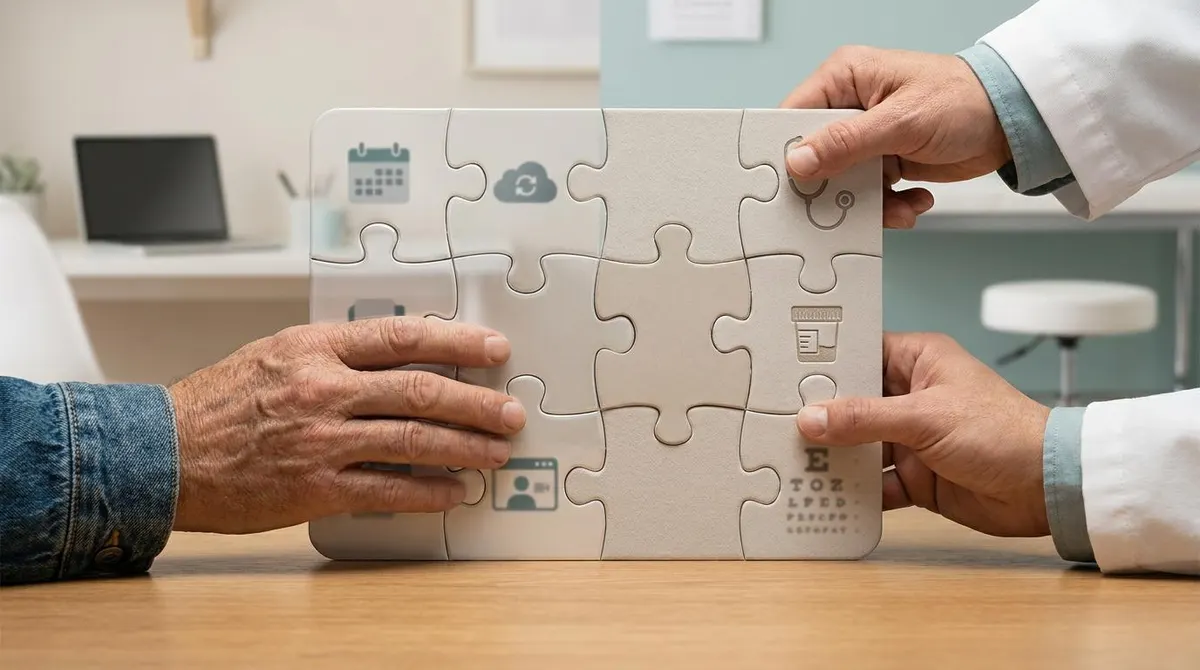
A virtual DOT physical is a hybrid exam workflow that combines a Virtual consult, a web-based platform, and an in-person clinic visit. A virtual DOT physical is not a fully online physical exam because the physical examination, urine test, and measured findings still require a qualified examiner in person.
Defining virtual DOT physical as a hybrid approach helps remove a common misunderstanding. In practice, the virtual side may include appointment booking systems, a Request to Book form, a Health History Review, document reviews, forms submission, and a Virtual Consultation with a medical examiner or clinical support team. The in-person side still includes the actual DOT physical exam.
What can be done virtually? Pre-screening can be done virtually. Health history review can be done virtually. Medical history, medications, prior surgeries, known medical conditions, specialist letters, and parts of the Medical Examination Report preparation can all be reviewed ahead of time. Some occupational health services also let you complete consent forms, Payment Policy review, and identity steps before arrival.
What still requires an in-person component? The physical examination still requires an in-person component. A vision test, hearing test, blood pressure test, urine test, pulse check, general physical exam, and condition-specific observations still need to be performed or confirmed in person. The FMCSA also expects the medical examiner conducting the driver’s physical examination to complete the entire medical examination even if a potentially disqualifying condition is detected during the visit.
Can a DOT physical be done online? The practical answer is no, not entirely. The correct answer is that parts of the DOT exam can be done online, but the DOT physical itself remains a hybrid model because certification depends on measured findings and an examiner’s direct assessment.
Can you do a physical exam virtually? You can do parts of the preparation virtually. You cannot complete the full DOT medical exam virtually because the examination process still depends on a physical urine test, visual and hearing assessment, blood pressure levels, and a hands-on physical examination.
IMPORTANT: A virtual consult can reduce wasted time, but it cannot replace the examiner’s duty to verify exam findings in person.
KEY TAKEAWAY: A virtual DOT physical is best understood as a hybrid pathway that moves preparation online while preserving the in-person exam components that FMCSA still requires.
Once you understand that boundary, the step-by-step process becomes much easier to plan.
The Step-by-Step Process of a Virtual/Hybrid DOT Physical
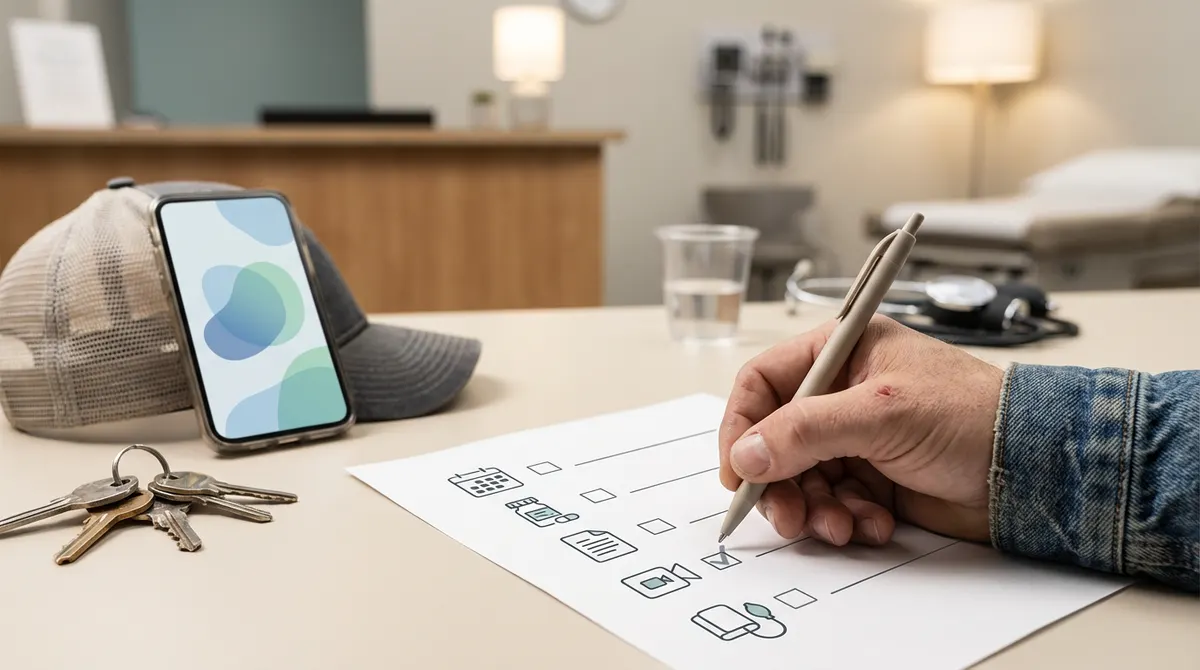
A virtual DOT physical usually starts online and ends with an in-person medical exam. The hybrid process works best when you complete every digital step honestly and completely before the clinic visit.
Initial scheduling and digital intake usually begin with Scheduling Appointments through appointment booking systems. Some clinics use Request to Book workflows, others use a Third Party Portal, and others use direct email or text confirmation. The goal is to collect your identification details, Commercial Driver's License information, driver's license number, employer details if relevant, and your preferred exam time.
Virtual pre-screening and health history review come next. This step usually covers your medical history, current medications, prior surgeries, specialist care, hospital visits, sleep disorder history, diabetes treatment, cardiac disease, and any medication side effects that could affect driving. According to the 2025 Medical Examination Report Form MCSA-5875, the examiner reviews the driver health history section, discusses all yes or not sure responses, and compares the medication list with reported medical conditions.
The Virtual Consultation is the discussion stage. During a Virtual Consultation, the medical examiner or clinic team may review your medications, ask about recent symptoms, request extra records, and explain what additional testing may be needed. This is especially useful if you have diabetes, hypertension, pacemaker history, neurological issues, or concern about a sleep disorder. People who undergo this exam often find that early clarification prevents same-day delays.
The in-person examination is still the essential step. The examiner confirms identity, performs the physical examination, measures blood pressure, completes the hearing test and vision test, checks urine, and evaluates whether your physical exam results support certification. A drug test is not automatically part of the DOT physical exam itself. According to the FMCSA Medical Examiner Handbook, drug and alcohol testing are not required for the driver physical examination unless findings indicate they are needed to determine medical fitness for duty.
Digital submission and reporting happen after the exam. Certified Medical Examiners use the National Registry and related systems to upload results, issue a Medical Examiner's Certificate when appropriate, and document the examination process in EMRs or similar systems. Some clinics may also use a 3bExam portal to move data between intake and reporting stages.
If you want to understand the paperwork in more detail before booking, DOT physical forms and paperwork can help you prepare before your appointment.
KEY TAKEAWAY: The most effective hybrid workflow completes forms, history review, and record collection online so the in-person DOT exam focuses only on the medical findings that must be verified face to face.
That leads directly to the specific exam elements that still matter most in a virtual-first model.
Key Components of the DOT Physical Exam: A Hybrid Perspective
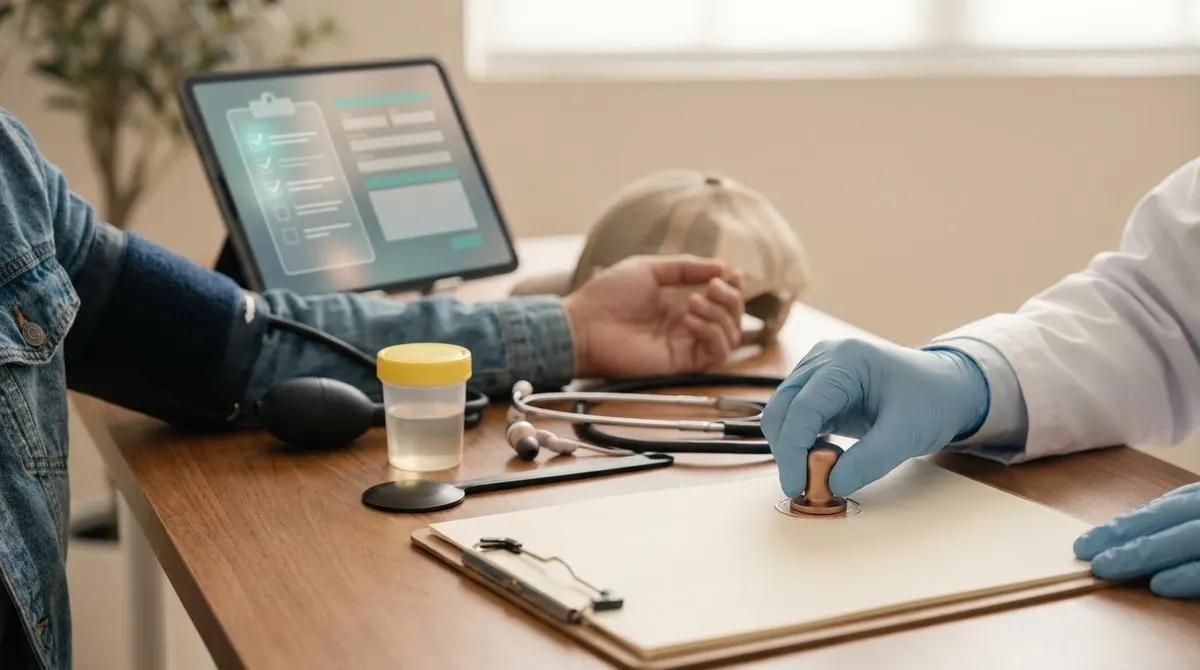
The key components of the DOT physical exam do not change in a hybrid model. The virtual part improves preparation, but the examiner still decides certification based on in-person findings.
Vision requirements are one of the clearest examples. According to the FMCSA Medical Examiner Handbook, visual acuity must be at least 20/40 in each eye, with or without corrective lenses, and field of vision must be at least 70 degrees in the horizontal meridian in each eye. Color vision must be sufficient to recognize standard red, amber, and green traffic signals. That means a virtual review can flag past cataracts, glaucoma, or vision loss, but the actual vision test still requires measured confirmation. What eye chart is used for a DOT physical can help if you want a more detailed explanation of the testing method.
Hearing standards also stay in the clinic. According to the FMCSA Medical Examiner Handbook, a driver must first perceive a forced whispered voice in one ear at not less than five feet, or meet the audiometric standard of average hearing loss of 40 decibels or less in one ear. If hearing aids are used to meet the standard, the hearing aids must be worn while driving. A virtual intake can document hearing loss history and hearing aids use, but the hearing test remains in person.
Cardiovascular health is another area where hybrid prep helps but does not replace testing. Blood pressure is measured in clinic. The FMCSA handbook defines blood pressure levels as Stage 1 at 140 to 159 over 90 to 99, Stage 2 at 160 to 179 over 100 to 109, and Stage 3 at 180 over 110 or higher. A driver with blood pressure greater than or equal to 180 over 110 is not certified at that visit. A first Stage 2 reading may allow a one-time three-month certificate, and a reading at or below 140 over 90 can support recertification, depending on the case. What blood pressure do you need to pass a DOT physical and can you fail a DOT physical for high blood pressure explain the blood pressure test in more detail.
Respiratory and other systems matter because a sleep disorder can affect alertness and decision-making. According to the National Heart, Lung, and Blood Institute, untreated sleep apnea can impair concentration and increase the risk of serious health problems. Musculoskeletal and neurological assessment also remain important because reflexes, mobility, prior surgeries, seizure history, weakness, or balance issues can affect safe control of a commercial vehicle. Review of medical conditions and medications matters for the same reason. Diabetes, blood sugar swings, sedating medications, and cardiac disease may require extra records or closer follow-up.
Here is a comparison of what usually happens online and what still happens in person:
| Exam component | Can be handled virtually | Must be in person | Why it matters |
|---|---|---|---|
| Health history and medications | Yes | Sometimes clarified again | Helps identify risks before the visit |
| Document reviews and forms | Yes | No | Speeds intake and reduces errors |
| Virtual consult | Yes | No | Helps explain medical conditions and required records |
| Vision test | No | Yes | Measured visual acuity, peripheral vision, and color recognition are required |
| Hearing test | No | Yes | Hearing qualification must be measured directly |
| Blood pressure test | No | Yes | Certification depends on actual blood pressure levels |
| Urine test | No | Yes | Urinalysis is part of the DOT exam |
| Physical examination | No | Yes | Examiner must assess functional and physical findings directly |
| Certificate issuance | Partly | Yes, after exam | Depends on final examiner decision and compliance reporting |
For most drivers, the best option is the hybrid model that moves paperwork and consultation online but keeps all measured findings in the clinic. That is the safest and most compliant use case for a virtual DOT physical.
TIP: If you have a chronic condition, upload specialist notes before the exam instead of bringing loose papers and hoping the clinic can review them on the spot.
KEY TAKEAWAY: The hybrid model helps most when it removes paperwork friction, because the decisive parts of the DOT physical exam still depend on direct testing and examiner judgment.
Once those core components are clear, the practical benefits for drivers and employers become easier to measure.
Benefits of Embracing a Virtual DOT Physical for Drivers and Companies

A virtual DOT physical improves efficiency, access, and record handling when it is used as a hybrid system. The biggest gains come from reducing non-clinical delays without compromising the physical exam itself.
Enhanced convenience and accessibility are the first benefits. Drivers can complete forms before the visit, upload medical documents, and confirm what records are needed. That makes it easier to find a provider near you, compare availability, and avoid wasted trips when a clinic needs more documentation. For employers managing commercial vehicles across different routes, that can simplify coordination across providers in your area.
Increased efficiency and reduced downtime are often the strongest business case. Truck Drivers lose income when an exam takes longer than expected or requires a repeat visit because medication history was incomplete. Trained clinic staff can review forms in advance, flag gaps, and tell the driver exactly what to bring. For trucking companies, fewer failed same-day appointments can mean more predictable scheduling and less disruption to dispatch and compliance planning.
Streamlined documentation and record keeping are another major benefit. EMRs, secure portals, and pre-filled DOT physical forms reduce handwriting errors, duplicate entry, and missing pages. Digital workflows also make it easier to retain prior certificates, medical exam card history, and specialist letters in one place.
Proactive health management and follow-up is where hybrid care adds expert-level value. If your blood pressure is borderline, if you use oral diabetes medications, or if a sleep disorder needs follow-up, a virtual model makes it easier to collect the right documents before renewal. That can improve the odds that you pass the first time rather than leaving with a shorter certificate or a deferred decision.
Midway through planning, many drivers also want to know how chronic conditions affect certification. Navigating your DOT physical with common medical conditions is a helpful next step if you have a specific condition and want a more targeted guide.
A virtual DOT physical works best for preparation, scheduling, and records. A virtual DOT physical does not lower the medical standard, but it can lower the friction that keeps otherwise qualified drivers from moving through the process efficiently.
KEY TAKEAWAY: The biggest benefit of a virtual DOT physical is reduced downtime through better preparation, better documentation, and earlier follow-up on medical conditions.
Those gains depend on the technology behind the workflow, which is the next piece to understand.
Technology and Platforms Powering the Virtual DOT Physical

The technology behind a virtual DOT physical is mostly administrative, communication, and record-management software. The value of the technology is not automation for its own sake. The value is secure, accurate, and faster preparation for the DOT exam.
Web-based platforms for intake and communication often include consent forms, symptom questionnaires, medication lists, and appointment instructions. Some clinics may use systems described as a 3bExam portal, MedFiller, Doximity, or another web-based platform. The exact software matters less than the workflow. The important questions are whether the platform supports complete intake, secure document uploads, and clear communication with the Occupational Medicine team.
Electronic Medical Records, or EMRs, are the backbone of hybrid documentation. EMRs allow exam findings, forms, medication history, and follow-up notes to be stored in one system. That helps support Privacy and Confidentiality expectations, especially when sensitive medical conditions and certification records are being reviewed.
Appointment booking systems and communication tools reduce delays when they send clear pre-visit instructions. Good systems tell you whether you need specialist clearance, whether the clinic accepts credit card or FSA/HSA cards, and whether the service is treated as an out-of-pocket service. They also help clinics manage Request to Book workflows and reminder messages.
Digital forms and certificate generation can make the process cleaner after the visit. A clinic may use digital templates for the Medical Examination Report, certificate issuance, and employer-facing paperwork. Some systems may also generate a QR Code for record access or follow-up tracking, although the medical standard still comes from the examiner, not from the software.
The National Registry Data System matters because the final certification step still depends on a certified examiner and formal reporting. According to the FMCSA, interstate CMV drivers must obtain their exam and Medical Examiner's Certificate from a medical examiner listed on the National Registry.
IMPORTANT: Technology can improve workflow, but no portal or app can substitute for a certified examiner’s legal responsibility to complete and document the DOT exam.
KEY TAKEAWAY: The best technology for a virtual DOT physical is technology that makes intake, record sharing, communication, and compliance reporting more accurate and more secure.
With the technology understood, the next priority is how to prepare so the hybrid process works in your favor.
Preparing for Your Virtual DOT Physical: Maximizing Efficiency
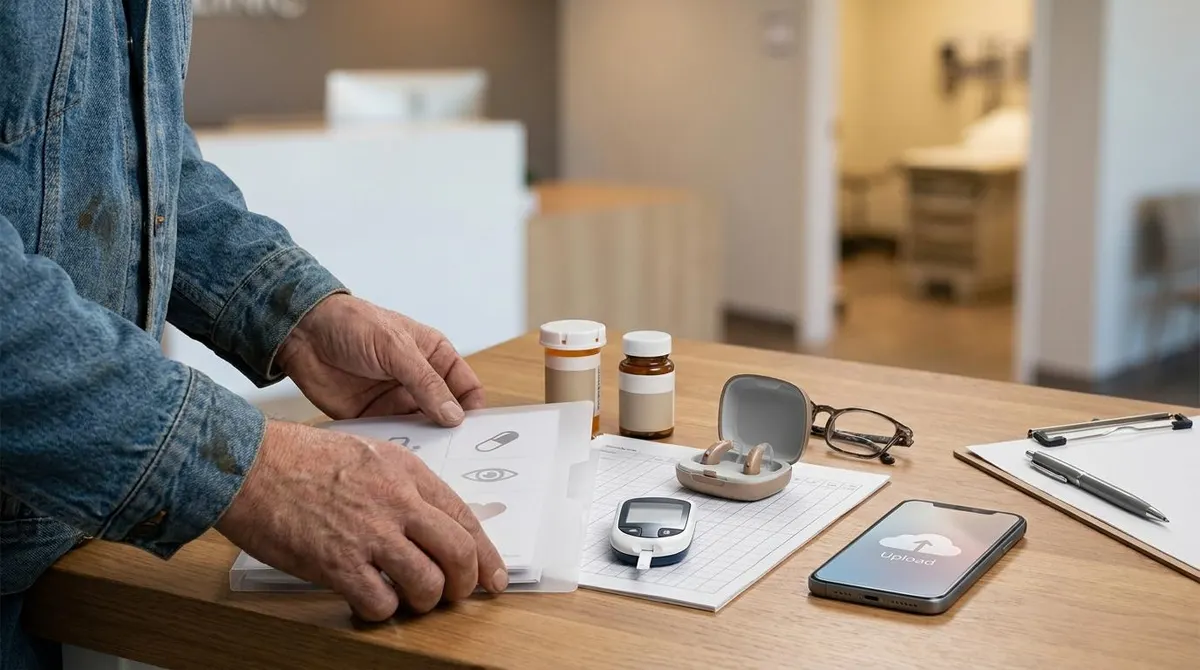
Preparation is the part of the virtual DOT physical you can control most. Better preparation usually means fewer delays, fewer repeat visits, and better physical exam results documentation.
Gathering essential medical information should happen before you schedule if possible. Bring or upload your medication list, dosage details, prior surgeries, diagnoses, treating clinician names, recent test results, and any notes about work restrictions or follow-up plans. If you have cardiac disease, prior stress test results, a pacemaker, diabetes, or a neurological history, assume the clinic may need more than a simple checkbox answer.
Understanding specific requirements for your condition can save a great deal of time. Diabetes is a good example. Diabetes does not automatically disqualify you, but the examiner may want evidence that your condition is stable and that treatment does not create unsafe low blood sugar episodes. According to Mayo Clinic, an A1C of 6.5 percent or higher on two tests supports a diabetes diagnosis, while fasting blood sugar of 126 mg/dL or higher on two tests also supports diabetes. Those numbers matter because they help you understand what your treating clinician may monitor, even though DOT certification is based on driving safety, not diagnosis alone. Can you pass a DOT physical with diabetes gives a more condition-specific overview.
Navigating digital forms and portals is worth doing carefully. Review every answer before submitting. Make sure medication names match your health history. If a clinic accepts uploads through Google Drive or Microsoft One Drive, label documents clearly so the Occupational Medicine team can review them fast. If the clinic uses a 3bExam portal, complete every section rather than leaving blanks for the front desk to fix later.
What to bring to your in-person segment should include your driver's license, corrective lenses if used, hearing aids if used, a full medication list, specialist letters, and any requested lab or clearance records. If you are unsure whether sleep testing may be relevant, Dumbo Health’s at-home sleep test can help you understand home testing options before the exam if sleep apnea concerns have already been raised.
Payment and policy information should be confirmed in advance. Ask whether the exam is an out-of-pocket service, whether credit card and FSA/HSA cards are accepted, and what the Payment Policy says about cancellations or rescheduling.
People who undergo this exam often find that the most preventable problem is incomplete medication disclosure. Many delays happen because the examiner needs to reconcile medications with the medical history and cannot do that safely when the list is vague.
KEY TAKEAWAY: The fastest way to improve a hybrid DOT exam experience is to organize your records, clarify chronic conditions, and complete digital intake carefully before the visit.
After preparation comes the part many drivers care about most, which is what happens after the exam and how certification is handled.
After the Exam: Certification, Renewals, and Compliance
After the exam, the main outcomes are certification, shorter-term monitoring, or temporary non-certification pending more information. A hybrid process can speed paperwork, but it cannot shortcut the examiner’s final compliance decision.
Receiving your Medical Examiner's Certificate is the central outcome. If you meet the standard, the examiner may issue a Medical Examiner's Certificate, often called a medical exam card or DOT health cards. Some drivers also informally refer to these as Medical DOT cards. According to the FMCSA, interstate drivers must obtain this certificate from a certified examiner listed on the National Registry.
The National Registry of Certified Medical Examiners is the system that validates who can perform and report these exams. Certified DOT Medical Examiners and other Certified Medical Examiners on the registry are trained to apply FMCSA standards and upload results. That registry status matters more than whether the clinic markets itself as urgent care, occupational medicine, or a virtual-first service.
Understanding certificate validity and renewal is important because not every passing exam results in a two-year card. According to the FMCSA handbook, some drivers may be certified for up to 2 years when there are no other conditions requiring periodic monitoring. Shorter certification can apply when blood pressure, diabetes, sleep disorder follow-up, or other medical conditions need closer review. If renewal timing is your main concern, DOT physical duration and validity explains how renewal timing usually works.
Maintaining compliance with FMCSA regulations means more than holding the card. It means renewing on time, keeping records current, updating employer files when needed, and following any condition-specific monitoring plan. Federal processing and employer-side compliance systems can vary, but the safest approach is to keep digital copies of your certificate and supporting paperwork.
A commercial driver should think of renewal as an ongoing compliance cycle, not a one-day event. A commercial driver who tracks blood pressure, medications, and follow-up care during the year usually has a smoother renewal than a driver who waits until the expiration date to gather records.
TIP: Put your renewal reminder on your calendar at least 60 to 90 days before expiration so you have time to gather specialist letters or repeat testing if needed.
KEY TAKEAWAY: The examiner’s final certificate decision depends on the in-person findings and the stability of any relevant medical conditions, so digital convenience should be used to support compliance, not replace it.
Before the final questions, it helps to clear up a few common myths that cause unnecessary anxiety.
Common Myths About Virtual DOT Physicals Debunked
Common myths about virtual DOT physicals usually come from confusing paperwork convenience with medical certification. The hybrid model can make the process easier, but it does not remove the FMCSA medical standard.
MYTH: A virtual DOT physical means you never need to go to a clinic.
FACT: A virtual DOT physical can shift intake, history review, and consultation online, but the required physical exam, vision and hearing tests, blood pressure measurement, and urine test still need direct confirmation in person. According to the FMCSA, the examiner conducting the driver’s physical examination must complete the medical examination and determine fitness for duty.
MYTH: The DOT physical automatically includes a drug test every time.
FACT: The DOT physical exam and employer drug testing program are related but not identical. According to the FMCSA Medical Examiner Handbook, drug and alcohol testing are not required for the driver physical examination unless findings indicate they are needed to determine medical fitness. Employer drug testing rules may still apply separately.
MYTH: Any online provider can issue a valid DOT medical card.
FACT: The certificate must come from a medical examiner listed on the National Registry. According to the FMCSA, interstate CMV drivers are required to obtain the exam and Medical Examiner's Certificate from a certified medical examiner on that registry. Convenience alone does not make a provider compliant.
MYTH: sleep apnea always disqualifies a driver.
FACT: sleep apnea is not an automatic lifetime disqualification. What matters is whether the condition is evaluated, treated when needed, and compatible with safe driving. According to the NHLBI, untreated sleep apnea can impair concentration and increase serious health risks, which is why examiners may require more documentation or treatment follow-up.
MYTH: Borderline blood pressure is not a big deal during a DOT exam.
FACT: Blood pressure can directly affect certification length. According to the FMCSA handbook, Stage 1 hypertension is 140 to 159 over 90 to 99, Stage 2 is 160 to 179 over 100 to 109, and Stage 3 is 180 over 110 or higher. Those ranges can change whether you receive a shorter card, a one-time three-month certificate, or no certification at that visit.
KEY TAKEAWAY: The safest way to think about a virtual DOT physical is as a compliance-friendly hybrid process, not as a loophole that removes the examiner, the clinic visit, or the medical standard.
With those myths addressed, the remaining concerns are easier to answer directly.
Addressing Common Questions and Concerns About Virtual DOT Physicals

The most common concern is legal compliance. A virtual DOT physical is legally compliant only when it is used as part of a hybrid process that still includes the required in-person examination by a certified examiner.
Is a virtual DOT physical legally compliant? Yes, the administrative and consultation parts can be handled virtually, but the DOT physical exam itself must still meet FMCSA requirements. The legal risk comes when a clinic markets the service as fully online even though certification still depends on in-person measured findings and registry-listed examiner oversight.
How thorough can a virtual exam be? The virtual portion can be very thorough for forms, medication review, medical history, and document reviews. In some cases, the virtual portion is more thorough than a rushed front-desk intake because the Occupational Medicine team has time to read records in advance. What it cannot do is substitute for hands-on testing or direct observation of physical findings.
Google SERP style questions often show where confusion comes from. Can a dot physical be done online? Not fully. Is methadone disqualifying for DOT? Medication use is not judged by a simple yes or no label alone. The examiner looks at side effects, safety, stability, and whether the medication could impair safe driving. Can you get a DOT medical card with diabetes? Yes, many drivers can, but the examiner may need evidence that treatment is stable and safe. Can you do a physical exam virtually? Not in the fully remote sense needed for DOT certification.
Forum-style concerns are also common. Drivers ask whether they should avoid certain clinics, how to obtain the long form, whether a physical burner card is a real thing, or whether examiners can see every diagnosis automatically. The practical answer is that you should focus on using a National Registry examiner, telling the truth on your health history, and keeping copies of your own records. The long form is the Medical Examination Report. Your broader medical history is not magically pulled from every source in the country, but the examiner may review records you provide and ask questions needed to determine safe qualification.
A virtual DOT physical works best when it sets clear expectations early. A virtual DOT physical becomes frustrating only when a driver expects a fully remote certificate and discovers that the decisive parts still happen in person.
IMPORTANT: If a clinic promises a fully online DOT medical card with no in-person exam, treat that as a compliance red flag and verify whether the examiner is listed on the National Registry.
KEY TAKEAWAY: Most anxiety about virtual DOT physicals comes from misunderstanding the hybrid model, so legal compliance and examiner status should be confirmed before you book.
The final section answers the most common search questions in a direct, self-contained format.
Frequently Asked Questions
Can a DOT physical be done online from start to finish?
No, a DOT physical cannot be completed fully online from start to finish under the standard hybrid model used today. The online portion can cover intake, medical history, medications, document reviews, and a Virtual Consultation, but the required physical exam, urine test, vision test, hearing test, and blood pressure measurement still need to happen in person. According to the FMCSA, the final Medical Examiner's Certificate must come from a certified examiner listed on the National Registry. That means online preparation can save time, but a clinic visit is still required for certification.
What parts of a virtual DOT physical can be done before the clinic visit?
Most of the administrative and discussion-based steps can be completed before the clinic visit. That usually includes Scheduling Appointments, Request to Book, DOT physical forms, health history, medication lists, prior surgeries, specialist letters, and document reviews. Many clinics also use a Virtual consult to clarify medical conditions before the in-person exam. This is especially helpful if you have diabetes, a sleep disorder, cardiac disease, or a long medication list. Completing those steps early can reduce delays and help you find a provider near you with the right documentation requirements.
Do you still need a urine test and physical examination for a virtual DOT physical?
Yes, you still need a urine test and a physical examination even if the process begins online. The virtual model does not remove the in-person part of the DOT exam. According to the FMCSA Medical Examiner Handbook, the required tests recorded on the report include vision, hearing, blood pressure or pulse, and urinalysis. The physical examination is also still required because the examiner must assess whether you can safely operate a commercial motor vehicle. A virtual process only improves preparation and record handling. It does not replace the medical exam itself.
Can you get a DOT medical card with diabetes through a hybrid exam process?
Yes, many drivers with diabetes can still receive a Medical Examiner's Certificate through a hybrid process if the condition is stable and safe for driving. The key issue is not the online format. The key issue is whether your blood sugar control, treatment plan, and history of symptoms support safe operation of a commercial vehicle. If the examiner needs more information, you may be asked for records from your treating clinician. Bringing medication details, glucose records, and recent follow-up notes can make the process smoother. Providers in your area may differ in documentation requests, so ask in advance.
Is sleep apnea an automatic failure on a DOT physical exam?
No, sleep apnea is not an automatic failure on a DOT physical exam. What matters is whether the condition is suspected, diagnosed, treated when needed, and compatible with safe driving. According to the NHLBI, untreated sleep apnea can impair concentration and increase serious health risks, which is why examiners take it seriously. If symptoms or risk factors raise concern, the examiner may request more information or a sleep study. If you are already being evaluated, is a sleep study required for a DOT physical and can you pass a DOT physical with sleep apnea can help you understand the next steps.
Does the DOT physical include a drug test every time?
No, the DOT physical does not automatically include a drug test every time as part of the medical exam itself. The DOT physical and an employer’s DOT drug testing program are separate processes, even though drivers often experience them close together. According to the FMCSA Medical Examiner Handbook, drug and alcohol testing are not required for the driver physical examination unless findings indicate they are needed to determine medical fitness. Your employer may still require drug testing under separate rules, so it is important to confirm which appointment covers which requirement.
What blood pressure reading do you need to pass the DOT exam?
The safest target is a blood pressure reading below 140 over 90 if you want the best chance of standard certification. According to the FMCSA handbook, Stage 1 hypertension is 140 to 159 over 90 to 99, Stage 2 is 160 to 179 over 100 to 109, and Stage 3 is 180 over 110 or higher. Those ranges can change certification length or lead to temporary non-certification. If high blood pressure is your main concern, it is wise to monitor at home, bring treatment details, and review can you pass a DOT physical with high blood pressure before booking.
How do you get the long form of your DOT physical after the exam?
The long form usually refers to the Medical Examination Report completed during the DOT exam. The exact release process depends on the clinic, employer, and record policy, but you can request a copy directly from the exam provider. If your clinic uses EMRs or a secure portal, the report may be delivered electronically. Asking before the appointment is the best way to avoid confusion. Keep your own copy of the report, your medical exam card, and any supporting clearance letters so future renewals are easier, especially if you use multiple providers in your area.
Conclusion

A virtual DOT physical is best understood as a smarter workflow around a traditional DOT physical exam, not as a replacement for the in-person medical exam. The hybrid model can make scheduling easier, improve document reviews, support earlier follow-up for medical conditions, and reduce lost time for commercial drivers and employers. The key is to use a certified medical examiner, prepare your records carefully, and understand which steps still require direct testing. If you want to improve your odds of a smooth appointment, start with how to pass a DOT physical and build your preparation from there.
Related DOT Physical Topics
- Is a DOT physical the same as a regular physical
- What Does DOT Stand for in a DOT Physical
- What Is the Difference Between a DOT and Non-DOT Physical
- Can You Get a DOT Physical in Any State The Complete Guide for Commercial Drivers
- Can You Get a DOT Physical Online The Complete Guide for Commercial Drivers
- Does a DOT Physical Test for Weed or THC The Complete Guide for Commercial Drivers
- What Can Disqualify You From a DOT Physical
- Does a DOT physical include a drug test
- Can You Pass a DOT Physical with Epilepsy
- DOT Physical Self Pay Cost
- Remote DOT Physical The Complete Guide for Commercial Drivers
- DOT Physical Out of Pocket What Commercial Drivers Actually Pay
- Navigating the Florida DOT Physical Your Essential Guide for CDL Drivers
- When Can Sleep Apnea Affect a DOT Physical
- Is a drug test required for a DOT physical
- DOT Physical Cost Breakdown What Drivers Pay & Why
- Can You Pass a DOT Physical With a Pacemaker
- What Should You Bring to a DOT Physical
- Can You Pass a DOT Physical With One Eye
- Telehealth Dot Physical
- DOT Physical Forms & Paperwork The Complete Guide for Commercial Drivers
- Who needs a DOT physical
- What Forms Do You Need for a DOT Physical
- DOT Physical & Alcohol Requirements
- DOT Physical Online Cost
- DOT Physical Vision & Eye Requirements
- DOT Physical ICD-10 & Billing Codes The Complete Guide for Accurate Compliance and Reimbursement
- Navigating Your DOT Physical with Common Medical Conditions
- Online DOT Physical Without Insurance A Complete Guide for Commercial Drivers
- Can You Fail a DOT Physical for Being Overweight
- Why do they measure your neck during a DOT physical
- How can drivers with sleep apnea qualify again after a failed DOT physical
- Your Complete Guide What's Included in a DOT Physical Exam
- Walk In DOT Physical Self Pay
- What Is the Urine Test for in a DOT Physical
- DOT physical self pay guide for commercial drivers paying out of pocket
- Can You Get a DOT Physical Online
- Online DOT Physical Self-Pay The Complete Guide for CDL Drivers and Owner-Operators
- How Do You Submit Your DOT Physical to the DMV
- New DOT Physical Requirements What Drivers MUST Know About New Updates
- DOT Physical Exam Basics
- DOT Physical Insurance & Recertification The Complete Driver's Guide
- Can You Pass a DOT Physical With a Hernia
- Same Day DOT Physical
- DOT Physical Cash Pay
- Can you fail a DOT physical because of sleep apnea
- What blood pressure do you need to pass a DOT physical
- Do They Check Your Private Parts During a DOT Physical
- DOT Physical Blood Pressure Requirements What Drivers Need to Know
- DOT Physical Insurance or Self Pay How to Choose the Right Payment Option for Your Exam
- DOT Physical Chiropractor Your Complete Guide to CDL Exams
- Can You Fail a DOT Physical for High Blood Pressure
- How to Pass a DOT Physical The Complete Commercial Driver's Guide
- Can you pass a DOT physical with sleep apnea
- What should I expect at a DOT physical
- What Does a DOT Physical Consist Of
- What happens if you fail a DOT physical due to sleep apnea
- DOT Physical at Urgent Care What Commercial Drivers Need to Know
- Can You Pass a DOT Physical with Diabetes
- Can You Pass a DOT Physical with High Blood Pressure
- BMI for DOT Physical What Commercial Drivers Need to Know
- What Happens During the DOT Physical Exam The Complete Guide for Drivers
- What Happens If Your DOT Physical Expires Compliance Guide for Commercial Drivers
- Does insurance cover a DOT physical
- DOT Physical & Drug Test What Drivers Need to Know
- DOT Physical Duration and Validity How Long Your Medical Card Lasts
- The Ultimate DOT Physical Guide for Commercial Drivers (2025–2026)
- Non-DOT Physical A Comprehensive Guide to Workforce Health and Safety
- DOT Physical Texas The Essential Guide to Your Exam, Medical Card, and CDL Compliance
- DOT Physical Requirements A Complete Guide for CDL Drivers
- Is a Sleep Study Required for a DOT Physical
- Do They Check for Hernia During a DOT Physical
- Do You Have to Pee During a DOT Physical
- What Are the Requirements to Pass a DOT Physical
- What eye chart is used for a DOT physical
- Can You Get a Second Opinion on Your DOT Physical A Complete Guide for Commercial Drivers
- What Do They Check During a DOT Physical
- Cheap DOT Physical Online
- The DOT Physical Exam Ensuring You're Fit for the Road
- Online DOT Physical The Complete Guide for Commercial Drivers and Medical Examiners
- Failing a DOT Physical What Every Commercial Driver Needs to Know
- Can You Fail a DOT Physical
- What is DOT Physical
- What drugs do they test for in a DOT drug test
- Are There New DOT Rules or Laws on Sleep Apnea Testing
- Essential 171 DOT Definitions for Commercial Drivers
- 2026 DOT Inspection Dates
- Why DOT Sleep Tests at Home Matter for Your Career and Health
- CDL PHYSICAL SELF PAY
- DOT Medical Exam Self-Pay A Complete Guide for Commercial Drivers
- Online DOT Exam What Drivers and Medical Examiners Need to Know
- Online CDL Physical
- What are the current DOT requirements for sleep apnea testing for commercial drivers
- DOT sleep apnea test at home
- Guide to Obtaining and Managing Your DOT Medical Card Online
- Expected 2027 DOT Inspection Dates
- Medical Examiner's Certificate (Form MCSA-5876) The Complete Guide for Commercial Drivers
- How Sleep Apnea Affects Overall Driving Safety
- Best Treatments for Sleep Apnea to Improve Driving Safety
- Home Sleep Apnea Test for Commercial Drivers The CDL Holder's Complete Guide
Take the next step before your DOT physical
Start with the free quiz if you are unsure about your risk, or order an at-home sleep test if you have already been flagged for possible sleep apnea.
AI summary
A virtual DOT physical is a hybrid DOT physical exam workflow. It allows online scheduling, digital intake, health history review, medication reconciliation, document upload, and a virtual consultation, followed by a required in-person exam. FMCSA rules still require an in-person evaluation by a certified medical examiner listed on the National Registry to issue a Medical Examiner’s Certificate. Components that must be completed in clinic include the hands-on physical examination, vision testing (20/40 acuity each eye and 70-degree field of vision), hearing testing (whisper test at 5 feet or audiometric criteria), blood pressure measurement, pulse check, and urinalysis. Drug and alcohol testing are not automatically part of the DOT physical unless needed to determine fitness for duty. The hybrid model reduces delays by completing forms and record review ahead of time, which is especially useful for drivers with hypertension, diabetes, pacemaker history, neurological issues, or possible sleep apnea. Outcomes include certification, shorter-term certificates for monitoring, or temporary non-certification pending additional records.

Nicolas Nemeth
Co-Founder
Nico is the co-founder of Dumbo Health, a digital sleep clinic that brings the entire obstructive sleep apnea journey home. Patients skip the sleep lab and the long wait to see a specialist. Dumbo Health ships an at home test, connects patients with licensed sleep clinicians by video, and delivers CPAP or a custom oral appliance with ongoing coaching and automatic resupply in one clear subscription.
Keep reading

How Long Does a DOT Physical Take? A Complete Guide for Commercial Drivers

What Happens If You Fail a DOT Drug Test? The Complete Guide for Commercial Drivers


