Sleep Apnea Test for CDL Drivers
Sleep apnea testing for CDL drivers is usually triggered by symptoms and a cluster of risk factors found during a DOT physical, not a universal rule that applies to everyone. The article explains why untreated moderate to severe obstructive sleep apnea can impair alertness, reaction time, and attention, raising safety concerns and affecting medical certification. It reviews common screening signals such as loud snoring, witnessed apneas, daytime sleepiness, high blood pressure, obesity, and large neck size. Readers learn how home sleep apnea tests compare with in-lab polysomnography and when in-lab follow-up is needed. It also covers treatment pathways like PAP therapy (CPAP and APAP), what compliance documentation typically looks like, and how recertification and renewal work. Practical guidance is included on costs, insurance, employer support, and common myths that delay care.
Struggling with sleep?
Find out if sleep apnea is the reason.
FDA-cleared. $149 flat. Physician-reviewed results in 48 hours.

Sleep Apnea Test for CDL Drivers
Sleep apnea test for CDL drivers is a diagnostic process used when a driver has symptoms or risk factors that may affect safe commercial driving and DOT medical certification. According to the Federal Motor Carrier Safety Administration, untreated moderate to severe obstructive sleep apnea may contribute to fatigue, unintended sleep episodes, and deficits in attention, concentration, situational awareness, and memory. This matters because commercial drivers operate a commercial motor vehicle in conditions where reaction times, alertness, and judgment directly affect road safety. This guide explains what sleep apnea is, when a DOT physical may trigger a sleep study referral, how home and in-lab testing compare, what treatment compliance means for CDL medical certification, and how CDL renewal and DOT recertification work after diagnosis and treatment. This guide also covers costs, insurance, myths, trucking company support, and the questions CDL drivers ask most often. Keep reading to understand how to protect your health, your license, and your livelihood. (FMCSA)
Why sleep apnea matters for commercial drivers

Sleep apnea matters for commercial drivers because untreated breathing interruptions during sleep can reduce alertness and increase safety risk on the road. For CDL drivers, sleep apnea can affect both personal health and the ability to maintain medical certification. (FMCSA)
Sleep apnea is a sleep disorder in which breathing repeatedly stops or becomes shallow during sleep. Sleep apnea matters because poor oxygen levels, fragmented sleep, and repeated arousals can produce daytime sleepiness and poorer sleep quality the next day. The National Heart, Lung, and Blood Institute explains that sleep apnea can lower oxygen levels and contribute to symptoms such as loud snoring, gasping for air, and excessive daytime sleepiness. (NHLBI, NIH)
Commercial drivers and truck drivers are especially vulnerable because irregular schedules, overnight routes, sedentary work, and chronic sleep deprivation can combine with a sleep disorder and make fatigue worse. The National Highway Traffic Safety Administration estimates that in 2017, 91,000 police-reported crashes involved drowsy drivers, leading to about 50,000 injuries and nearly 800 deaths. Drowsy driving does not always mean a driver has sleep apnea, but sleep apnea can be one of the most important hidden contributors to drowsy driving in commercial truck drivers. (NHTSA)
Obstructive sleep apnea is also linked with high blood pressure, heart disease, and reduced sleep quality, which is why the issue goes beyond snoring. Many patients report that the first obvious signs are loud snoring, waking unrefreshed, or dozing off too easily, while clinicians frequently observe that blood pressure problems and daytime sleepiness can be the bigger warning signs during medical examinations. Sleep apnea risk therefore affects both health outcomes and CDL requirements. (NHLBI, NIH)
Not sure if sleep apnea applies to you?
Take our 2-minute sleep risk quiz to see whether sleep apnea could affect your DOT physical. No account required.
Sleep apnea in commercial drivers affects alertness, reaction times, and certification decisions. Sleep apnea in commercial drivers is a safety issue first and a paperwork issue second. (FMCSA)
DID YOU KNOW: The FMCSA handbook states that untreated moderate to severe obstructive sleep apnea may contribute to fatigue and unintended sleep episodes that interfere with safe operation of a commercial motor vehicle. (FMCSA)
KEY TAKEAWAY: sleep apnea matters for commercial drivers because untreated symptoms can harm health, slow reaction times, increase drowsy driving risk, and complicate CDL medical certification.
To understand why screening happens, it helps to look closely at what sleep apnea is and which risk factors matter most.
Understanding sleep apnea and why CDL drivers are at higher risk
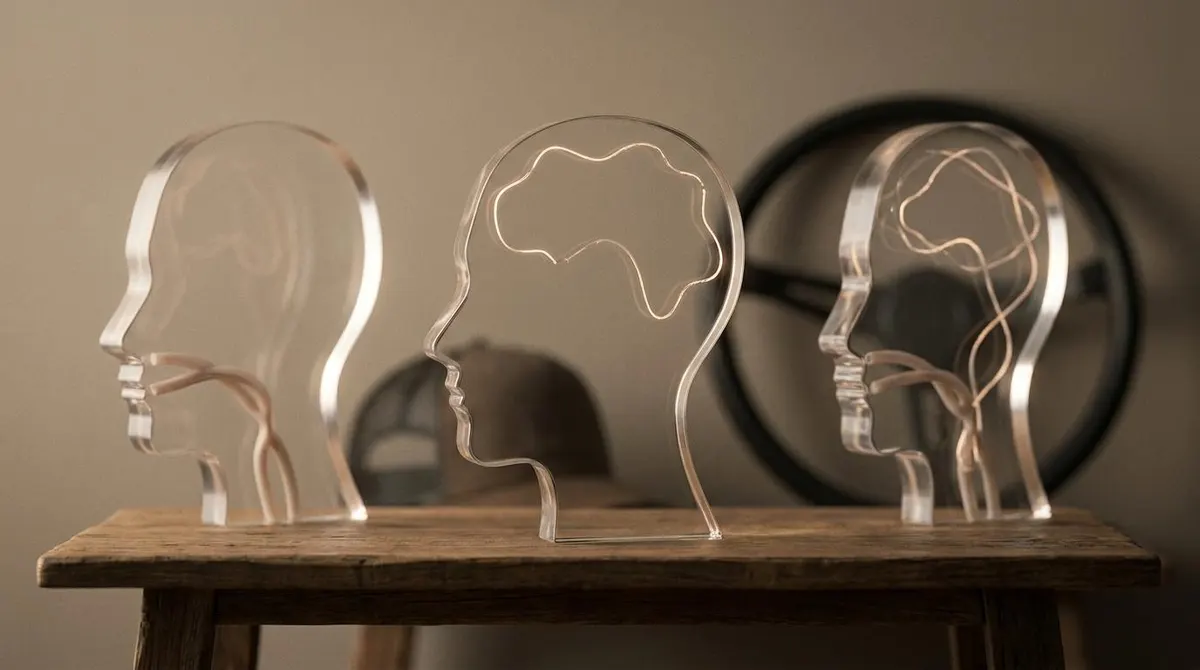
Sleep apnea is more than snoring. Sleep apnea is a breathing disorder that can be obstructive, central, or mixed, and the type and severity influence diagnosis and treatment. (NHLBI, NIH)
Obstructive sleep apnea is the most common form. Obstructive sleep apnea happens when the upper airway narrows or collapses during sleep, often because the muscles at the back of the throat relax too much. Central sleep apnea is different because breathing pauses happen when the brain does not consistently send the right breathing signals. Mixed sleep apnea includes features of both obstructive sleep apnea and central sleep apnea. The NHLBI defines sleep apnea broadly as repeated stops and restarts in breathing during sleep, while FMCSA specifically discusses obstructive sleep apnea because of its relevance to commercial driving safety. (NHLBI, NIH)
CDL Drivers face several overlapping risk factors. The FMCSA says medical examiners may consider loud snoring, witnessed apneas, self-reported sleepiness during major wake periods, obesity, high body mass index, large neck size, hypertension, cardiovascular disease, history of stroke, diabetes, or other co-morbid conditions when evaluating risk. That is why neck circumference matters. Neck circumference is a practical screening clue because a larger neck circumference can suggest a narrow airway. Neck circumference is not a diagnosis on its own, but neck circumference may become more significant when combined with loud snoring, high blood pressure, and daytime sleepiness. Neck circumference is one reason two drivers with the same weight may still face different screening outcomes. Neck circumference, symptoms, and medical history are usually reviewed together. (FMCSA)
The practical implication for CDL holders is simple. A driver may not feel severely sleepy yet still have clinically important obstructive sleep apnea. Some people with sleep deprivation dismiss fatigue as part of the job, but a sleep physician and a medical examiner will look at the full pattern, including neck circumference, blood pressure, witnessed pauses in breathing, and cognitive challenges during the day. For this reason, FMCSA supports using multiple risk factors rather than relying on a single criterion. (FMCSA)
Moderate to severe sleep apnea generally carries more concern because untreated symptoms are more likely to interfere with safe driving. A sleep apnea diagnosis is usually based on the number of breathing events per hour and the clinical picture, not on snoring alone. Diagnosis and treatment matter because treated moderate to severe obstructive sleep apnea does not automatically preclude certification under FMCSA guidance. (FMCSA)
IMPORTANT: A screening concern is not the same as a diagnosis. A sleep apnea diagnosis should come from an appropriate sleep test interpreted by a qualified clinician, usually a sleep physician or board-certified physician with sleep expertise. (AASM)
KEY TAKEAWAY: CDL drivers are screened for sleep apnea based on a cluster of risk factors, with neck circumference, blood pressure, symptoms, and medical history carrying more weight together than separately.
The next issue is how those risk factors are handled during the DOT physical and Department of Transportation certification process.
Already diagnosed and need CPAP support?
Dumbo Health helps patients start CPAP without the usual confusion, paperwork, or upfront cost. Equipment, setup, supplies, and ongoing support are all handled in one place.
DOT regulations, the DOT physical, and medical certification
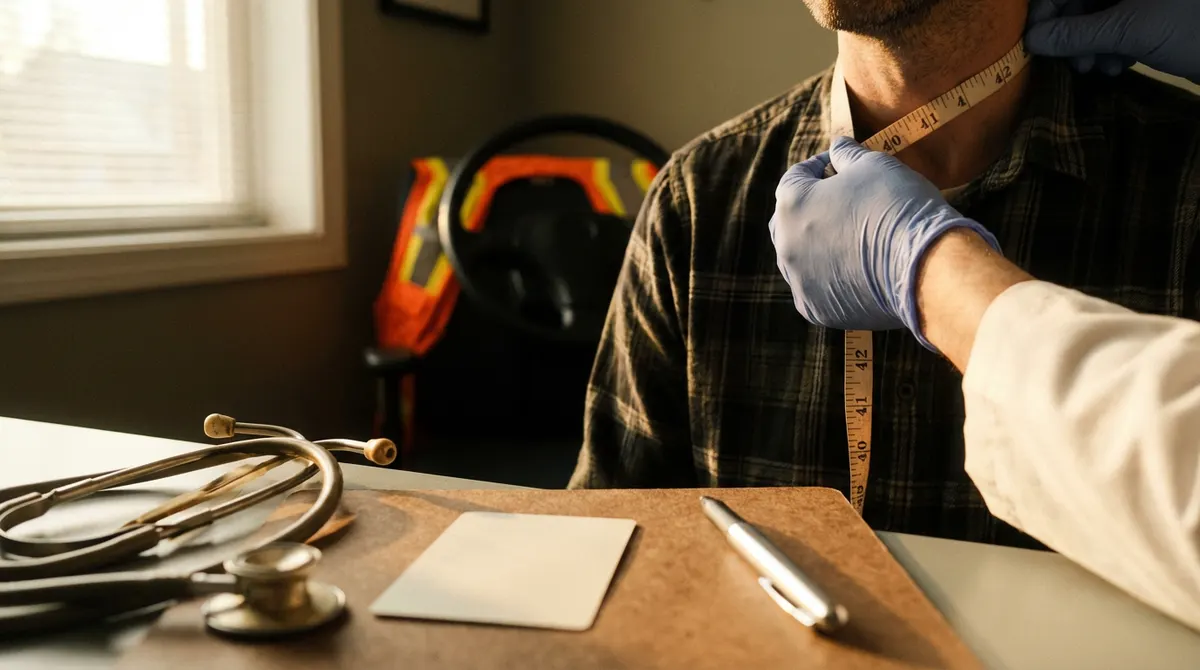
The DOT physical does not require every CDL driver to take a sleep apnea test. The DOT physical allows the medical examiner to assess risk and decide whether more evaluation is needed for safe medical certification. (FMCSA)
The Department of Transportation medical process for interstate drivers is governed by the Federal Motor Carrier Safety Administration. The FMCSA Medical Examiner's Handbook 2024 Edition states that the Federal Motor Carrier Safety Regulations do not include requirements for medical examiners to screen all individuals for obstructive sleep apnea, do not specify preferred diagnostic testing methods, and do not set fixed rules for how to assess compliance with OSA treatment. That is an important distinction because many CDL drivers assume there is a mandatory universal test, when the real rule is individualized medical judgment. (FMCSA)
During the DOT physical examination, the medical examiner reviews medical history, symptoms, medications, blood pressure, and findings from the physical exam. The DOT physical examination may raise concern when a driver reports loud snoring, observed apneas, daytime sleepiness, or has a combination of obesity, neck circumference risk, and hypertension. Certified Medical Examiners and DOT doctors are expected to use medical judgment when deciding whether a sleep study referral is appropriate. Certified Medical Examiners do not need one single trigger. Certified Medical Examiners can look at the total picture. (FMCSA)
Commercial driver's license holders can often still qualify after a sleep apnea diagnosis if diagnosis and treatment show the condition is adequately controlled. FMCSA states that if treated, moderate to severe OSA does not preclude certification. FMCSA also says examiners may certify an individual for less than the maximum 24 months when closer follow-up is needed. This is why some drivers receive shorter certification periods during diagnosis and treatment or during DOT recertification. (FMCSA)
CDL Medical Certification is therefore about safety, not automatic disqualification. CDL Medical Certification can continue when a medical condition is stable, treatment compliance is documented, and the medical examiner is satisfied that the driver can safely operate a commercial motor vehicle. If you need a separate explanation of certificate timing, dumbo.health’s guide to DOT physical duration and validity explains how long a medical card can last and why shorter intervals happen. (FMCSA)
The key difference between a rumor and the actual rule is simple. The Federal Motor Carrier Administration framework does not force a sleep test for every driver, but the Federal Motor Carrier Safety Administration gives the medical examiner broad responsibility to identify risk that may interfere with safe driving. (FMCSA)
KEY TAKEAWAY: The DOT physical is a risk-based medical review, not a universal sleep testing program, and treated sleep apnea can still be compatible with certification.
Once you know how the rule works, the next step is knowing which symptoms make a referral more likely.
Recognizing the signs and knowing when to suspect sleep apnea

You should suspect sleep apnea when snoring, breathing pauses, poor sleep, and daytime symptoms appear together. For commercial drivers, daytime sleepiness and reduced alertness are the most important red flags. (NHLBI, NIH)
Common symptoms include loud snoring, witnessed pauses in breathing, gasping for air, waking with headaches, poor concentration, and daytime sleepiness. The NHLBI says people should talk with a healthcare provider if they snore, gasp for air during sleep, or experience poor sleep quality and excessive daytime sleepiness. For CDL drivers, these symptoms matter because even mild cognitive challenges can translate into slower reaction times and worse hazard recognition on the road. (NHLBI, NIH)
A realistic self-assessment includes more than one symptom. A driver who has loud snoring, high blood pressure, sleep deprivation from irregular routes, and a larger neck circumference is different from a driver who only snores occasionally. A driver who wakes feeling unrefreshed despite spending enough time in bed should also take that seriously. Sleep deprivation from work schedules and sleep apnea from repeated airway obstruction can overlap, making the overall fatigue burden more dangerous. (FMCSA)
Blood pressure is a major clue. Blood pressure problems are common in drivers with untreated OSA, and high blood pressure can increase the chance that a DOT doctor looks more closely at sleep risk. Many CDL Drivers first hear about sleep apnea during a DOT physical because blood pressure is elevated and the examiner then asks about snoring, sleep quality, and neck circumference. If you are already worried about hypertension, dumbo.health’s article on what blood pressure you need to pass a DOT physical adds helpful context. (FMCSA)
Many patients report that they did not realize how impaired they felt until treatment started. Clinicians frequently observe the same pattern. People normalize fatigue, mental health strain, and poor sleep quality when symptoms build gradually, but a sleep disorder can be affecting driving performance long before a formal sleep apnea diagnosis happens. (NHLBI, NIH)
TIP: If a partner, roommate, or family member has noticed loud snoring, pauses in breathing, or gasping for air, bring that detail to your DOT physical examination because witnessed symptoms can influence whether a sleep study is recommended. (FMCSA)
KEY TAKEAWAY: Loud snoring, daytime sleepiness, blood pressure issues, and a larger neck circumference are some of the strongest clues that a CDL driver should be evaluated for sleep apnea.
The next logical question is what the sleep apnea testing process actually looks like from screening to diagnosis.
The sleep apnea testing process for CDL drivers
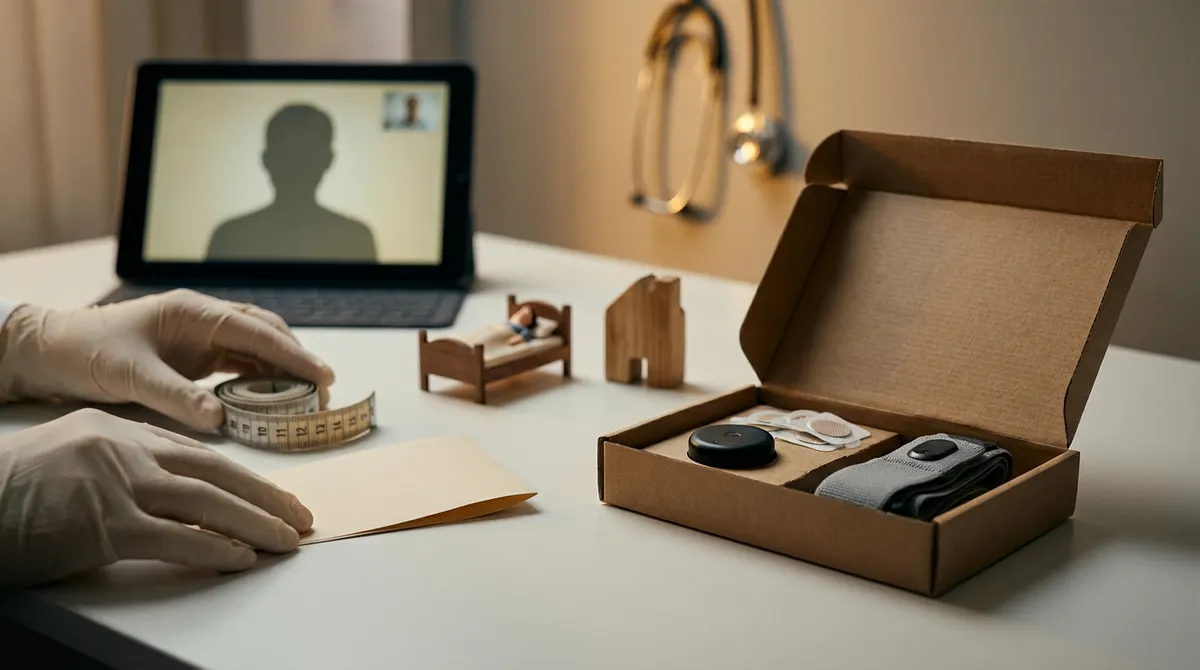
The sleep apnea testing process usually begins with screening and only moves to formal testing when the medical examiner believes risk is meaningful. The process is designed to confirm a sleep apnea diagnosis, not to punish CDL holders. (FMCSA)
The first step is often the DOT doctor or other medical examiner identifying multiple risk factors during the DOT physical. The FMCSA says the examiner should consider the driver’s responses about sleep disorders and readily identifiable risk factors during the physical examination. If the medical examiner sees multiple indicators of moderate to severe OSA, the examiner should consider recommending referral for a sleep study if the driver has not been evaluated before. (FMCSA)
The second step is referral to a sleep physician, sleep care online provider, or sleep laboratory. A sleep physician is a clinician trained to evaluate and manage sleep disorders. A board-certified physician in pulmonary critical care or sleep medicine may also supervise testing and diagnosis and treatment. In real-world care, some drivers use local sleep lab services, while others prefer a telehealth visit and a home sleep test if their case is uncomplicated. The American Academy of Sleep Medicine states that a home sleep apnea test is an alternative to polysomnography for uncomplicated adults with signs and symptoms that indicate increased risk of moderate to severe OSA. (AASM)
The third step is choosing the type of sleep test. A home sleep test is usually simpler and more convenient. An in-lab sleep study, also called polysomnography, is more comprehensive and may be preferred when another sleep disorder is possible or when a home result is negative, inconclusive, or technically inadequate. AASM guidance says that if a single home sleep apnea test is negative, inconclusive, or technically inadequate, polysomnography should be performed. That is why a home sleep test is useful but not perfect. (AASM)
Some modern home systems are described in the market as a disposable home sleep apnea test or a disposable home sleep test kit. Some services also describe a type III setup as a 4-channel confirmation test because the device commonly tracks airflow, breathing effort, heart rate, and oxygen levels. In plain terms, a 4-channel confirmation test is a simplified sleep test designed to confirm likely obstructive sleep apnea outside a sleep laboratory. A 4-channel confirmation test can be helpful for many uncomplicated adults, but a 4-channel confirmation test is not the best choice when more complex sleep disorders are suspected. (AASM)
Before you book a provider near you, remember that convenience should not replace clinical quality. The most effective way to choose a sleep test is to match the test to the medical picture, the examiner’s concern, and the sleep physician’s judgment. Dumbo.health’s at-home sleep test is relevant if you need a streamlined at-home pathway and want to find a provider near you without starting from scratch. (AASM)
| Test option | Best for | Turnaround time | Convenience | Accuracy depth | Recommended when |
|---|---|---|---|---|---|
| Home sleep test | Uncomplicated adults at higher risk of moderate to severe obstructive sleep apnea | Usually faster | High | Focused rather than comprehensive | Suspected OSA without major complicating conditions |
| In-lab sleep study in a sleep lab or sleep laboratory | More complex cases or unclear results | Often slower | Lower | Most comprehensive | When another sleep disorder is possible or home results are inconclusive |
| Telehealth visit plus mailed kit | Drivers who need access in your area or close to you | Often fast | High | Depends on kit quality and follow-up | When access and speed matter, but clinician oversight is still available |
For the most common CDL use case, a home sleep test is often the fastest and most practical first step when the case appears uncomplicated. An in-lab sleep study is usually the better option when the diagnosis is uncertain or when a prior sleep test did not answer the question clearly. (AASM)
KEY TAKEAWAY: The sleep apnea testing process starts with risk-based screening, then moves to home or in-lab testing based on the driver’s symptoms, medical history, and likelihood of moderate to severe OSA.
Once the diagnosis is confirmed, the next decision is how treatment works and what compliance means for your CDL.
From diagnosis to treatment: CPAP, APAP, and compliance
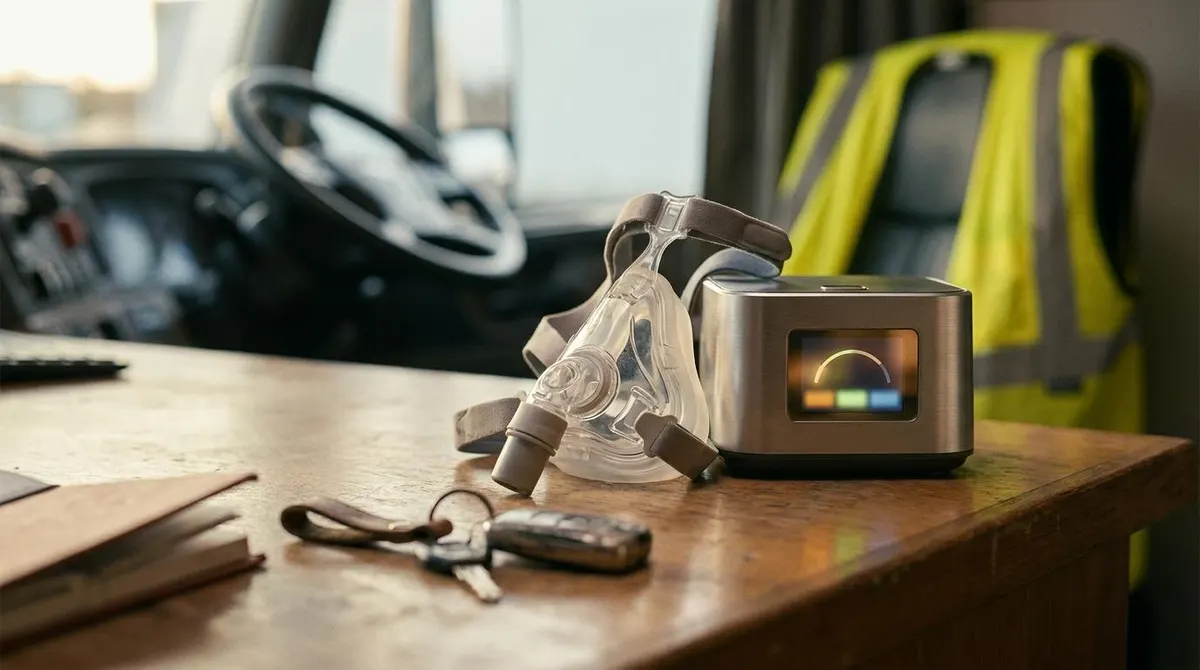
The main treatment for obstructive sleep apnea is positive airway pressure therapy, and the main DOT issue is whether treatment is effective and documented. For CDL drivers, treatment compliance is usually more important than the mere fact of diagnosis. (FMCSA)
Continuous Positive Airway Pressure is the standard therapy most people know as CPAP therapy. Continuous Positive Airway Pressure works by sending steady air pressure through a mask to help keep the upper airway open during sleep. Positive Airway Pressure is the broader category that includes Continuous Positive Airway Pressure, bilevel PAP, and automatic positive airway pressure. A CPAP machine delivers fixed pressure settings. An APAP machine or AutoPAP device automatically adjusts air pressure through the night. An automatic positive airway pressure device may be more comfortable for some people, but the right choice depends on the treatment regimen and clinician judgment. (FMCSA)
CPAP therapy improves airflow, oxygen levels, and sleep quality when used consistently. A CPAP machine can also reduce symptoms such as daytime sleepiness and improve function when pressure settings are appropriate. Research summarized in AASM materials and clinical literature shows that PAP therapy is effective for many patients with OSA, and FMCSA notes that treated moderate to severe OSA does not preclude certification. That is why diagnosis and treatment should be seen as a pathway back to safer driving, not a dead end. (FMCSA)
Alternative treatment options exist, but they are not equally suitable for every driver. Oral Appliances can help some patients with milder obstructive sleep apnea, especially when CPAP therapy is not tolerated. Oral Appliances are less commonly discussed in DOT settings because PAP therapy usually produces clearer compliance data. In some cases, a sleep physician may also recommend weight loss, positional therapy, or surgery, but those options vary more in speed and predictability. (AASM)
Treatment compliance usually means showing that therapy is being used regularly and effectively. FMCSA does not set one universal federal formula for every compliance report, but medical examiners often expect objective device data. Treatment compliance is commonly demonstrated through a compliance report from the PAP device, and a compliance report may show usage hours, mask-on time, and treatment trends. Treatment compliance documentation is one reason PAP is often preferred in a DOT context. (FMCSA)
In practical terms, drivers often need a sleep physician and medical examiner to communicate clearly. A sleep physician can adjust pressure settings, troubleshoot comfort problems, and produce a compliance report, while the medical examiner decides how that information affects medical certification. Sleep apnea treatment works best when the driver, the sleep physician, and the examiner treat the process as a shared safety plan. (FMCSA)
KEY TAKEAWAY: PAP treatment, especially CPAP therapy, is the most common way CDL drivers manage obstructive sleep apnea and protect certification through documented treatment compliance.
That brings us to the most practical concern of all: how to keep your CDL active after diagnosis.
Maintaining your CDL with sleep apnea: recertification, renewal, and employer support
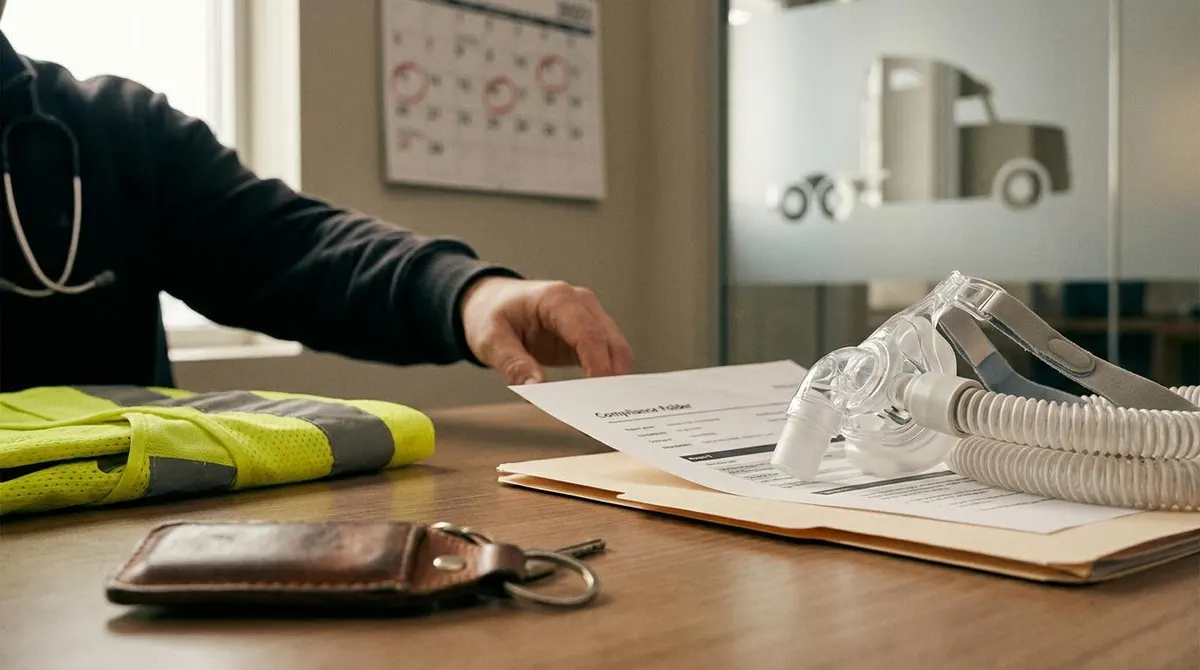
You can usually keep your CDL if sleep apnea is treated and the medical examiner is satisfied that the condition is stable. The key issue during CDL renewal and DOT recertification is whether treatment is effective, safe, and supported by documentation. (FMCSA)
FMCSA states that if an individual is diagnosed with moderate to severe OSA, the medical examiner should consider whether treatment has been shown to be adequate, effective, safe, and stable. FMCSA also states that the regulations do not prescribe a universal maximum certification period for OSA cases, but the examiner may certify for less than 24 months when closer monitoring is needed. In practice, that means CDL renewal may involve shorter follow-up intervals, especially soon after a new sleep apnea diagnosis. DOT recertification may also require updated clinical documentation. DOT recertification is often smoother when you prepare your records in advance. DOT recertification becomes harder when data are incomplete or treatment has been inconsistent. (FMCSA)
A typical record packet may include the prior sleep study, a letter from the sleep physician, recent device download data, and a compliance report. A compliance report can help show whether the CPAP machine or AutoPAP device is being used consistently. A compliance report also helps the examiner assess whether daytime sleepiness is likely improving. If the medical examiner is uncertain, the examiner may ask for more documentation before issuing or renewing the certificate. (FMCSA)
Trucking companies also play a role. Trucking companies may refer drivers for screening, provide education, or help drivers navigate a partnership program with outside testing vendors. Trucking companies sometimes prefer faster pathways because untreated sleep apnea can create liability and schedule disruptions. The FMCSA also notes that motor carriers may not require or permit a driver to operate a CMV if the driver has a condition, including sleep apnea, that would affect safe operation. That means trucking companies have both a safety interest and a compliance interest in getting diagnosis and treatment handled properly. (FMCSA)
Some drivers ask whether a second opinion is possible. The FMCSA handbook says that if an individual does not agree with the outcome of the examination, the employer may, at its discretion, send the driver for a second physical qualification examination from an employer-preferred certified medical examiner. A second opinion is therefore possible in some circumstances, but it does not erase the need for proper clinical evidence. (FMCSA)
If you are also reviewing broader pass-fail issues, dumbo.health’s guide on what can disqualify you from a DOT physical helps place sleep apnea within the wider medical certification picture. (FMCSA)
IMPORTANT: Losing your license is not the automatic outcome of a sleep apnea diagnosis. The more common issue is temporary delay, shorter certification, or follow-up requirements until the examiner has enough evidence that the condition is controlled. (FMCSA)
KEY TAKEAWAY: Most CDL holders can maintain certification with treated sleep apnea, but successful CDL renewal depends on clear documentation, treatment compliance, and proactive follow-up.
Before the myths section, it helps to address one under-covered topic that often determines whether drivers get help in time: cost and access.
Treatment costs, insurance, and real-world access to testing
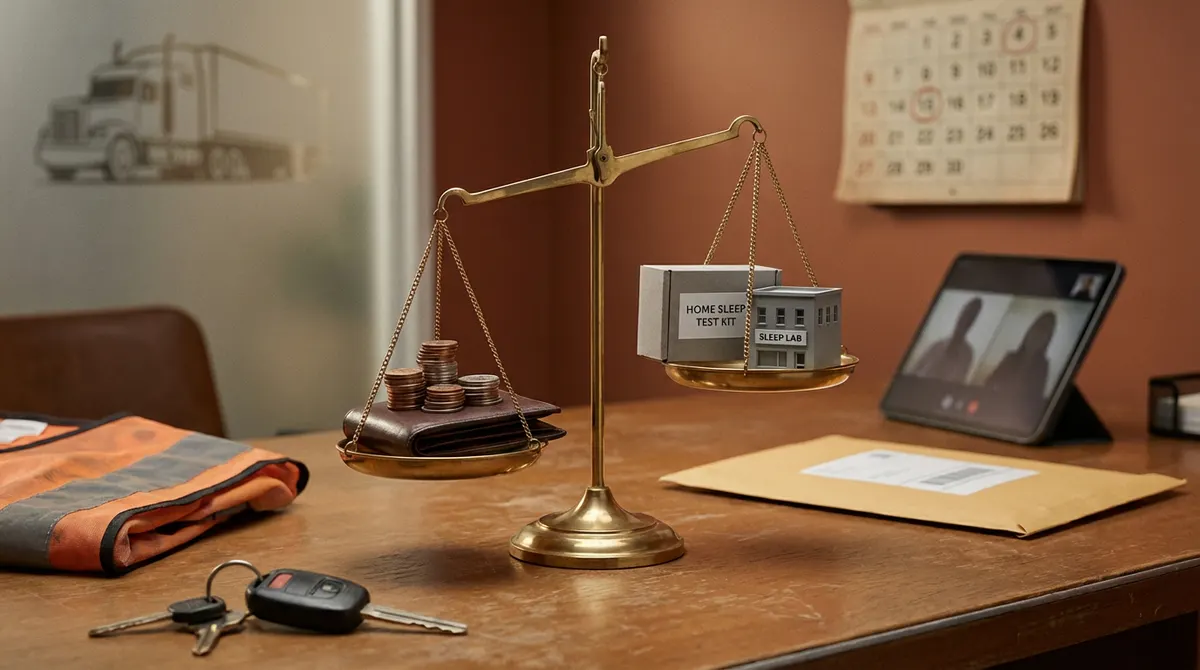
Cost and access matter because delays in diagnosis and treatment can put certification at risk. For most CDL drivers, the most practical path is the one that combines speed, affordability, and clinically appropriate follow-up. (AASM)
Testing costs vary depending on whether you use a home sleep test, an in-lab sleep study, or a telehealth-supported program. A home sleep test is often less expensive than a sleep lab evaluation, while a sleep laboratory generally provides more comprehensive data. Coverage also depends on the payer. Publicly available Highmark BCBS policy materials describe home sleep apnea testing as an alternative to polysomnography in uncomplicated adults with signs and symptoms indicating increased risk of moderate to severe OSA, which is broadly consistent with AASM guidance. Highmark BCBS policy materials also show that PAP coverage decisions are tied to documented diagnostic criteria and medical need. Highmark BCBS is only one example, but it illustrates how payer rules can shape access. (securecms.highmark.com)
Real-world care pathways vary widely. Some drivers use a local sleep lab close to you, while others use a telehealth visit with a mailed kit because schedules make in-person appointments difficult. Some clinics advertise a disposable home sleep apnea test or disposable home sleep test kit for convenience. Speed matters, but the safest choice is still the one a sleep physician can support clinically. A fast but poor-quality workflow can create more delay later if results are inadequate or the medical examiner does not accept the documentation. (AASM)
Public-facing provider examples show how varied the market can be. Midlands Exams & Drug Screening discusses how sleep apnea can affect CDL physical certification and says it can facilitate sleep studies when needed. Midlands Exams & Drug Screening is one example of an occupational health provider interacting with trucking companies and drivers. Midlands Exams & Drug Screening is not the rule maker, but Midlands Exams & Drug Screening reflects the practical reality that many DOT clinics now have referral workflows. Midlands Exams & Drug Screening also shows why local operational support can matter for drivers with tight schedules. (midlandsexams.com)
Other examples show the specialist side of the pathway. Westmoreland Sleep Medicine offers both home sleep testing and in-lab sleep study services. Westmoreland Sleep Medicine describes home testing as a more comfortable option for many patients, while its in-lab pages explain when more comprehensive monitoring is needed. A board-certified physician such as Dr. Jain at Westmoreland Sleep Medicine represents the kind of specialist review many drivers need after an abnormal sleep test. (wsmsleep.com)
Some drivers also work with pulmonary and sleep specialists. Covenant Pulmonary Critical Care publicly states that it offers sleep and diagnostics services, and Ngozika Orjioke is described there as a board-certified physician in pulmonary critical care. Covenant Pulmonary Critical Care and Ngozika Orjioke are examples of the kind of specialty care support that may help when diagnosis and treatment need closer follow-up. Covenant Pulmonary Critical Care is not a DOT authority, but Covenant Pulmonary Critical Care shows how pulmonary critical care expertise can overlap with sleep medicine in real practice. Ngozika Orjioke is one example of a clinician profile that highlights board-certified physician credentials in pulmonary critical care and sleep-related care. (Covenant PCC)
Rural access can also change the experience. Rolla, MO and other smaller markets may rely on occupational exam clinics for the DOT side and separate specialists for testing and treatment. That split does not reduce quality, but it can add coordination steps and make planning more important. (Moreland Chiropractic Clinic)
KEY TAKEAWAY: The best testing pathway balances cost, speed, clinical appropriateness, and documentation quality, because access problems can delay both treatment and certification.
Misunderstandings about sleep apnea create many of those delays, so the next section addresses the most common myths directly.
Common myths about sleep apnea for CDL drivers debunked
Sleep apnea myths can delay care and create avoidable certification problems. The truth is that FMCSA focuses on safety and functional control, not on punishing drivers for getting diagnosed. (FMCSA)
MYTH: Every CDL driver must take a sleep apnea test.
FACT: The FMCSA handbook says the regulations do not require medical examiners to screen every individual for OSA and do not specify required diagnostic methods for every driver. Instead, the medical examiner reviews symptoms, medical history, neck circumference, blood pressure, and other risk factors. A sleep apnea test is usually ordered when the examiner sees multiple clues that point to moderate to severe OSA. (FMCSA)
MYTH: A sleep apnea diagnosis automatically means you lose your commercial driver's license.
FACT: FMCSA states that if treated, moderate to severe OSA does not preclude certification. In practice, many CDL holders continue driving after diagnosis and treatment once the medical examiner is satisfied that the treatment regimen is adequate, effective, safe, and stable. The more common problem is incomplete documentation, not the diagnosis itself. (FMCSA)
MYTH: Home testing is never acceptable for DOT purposes.
FACT: AASM states that a home sleep apnea test is an alternative to polysomnography for uncomplicated adults with signs and symptoms suggesting increased risk of moderate to severe OSA. A home sleep test is not right for every case, and a negative or technically inadequate result may need follow-up in a sleep laboratory, but home testing is a legitimate diagnostic tool when used correctly. (AASM)
MYTH: Snoring alone proves you have sleep apnea.
FACT: Loud snoring is one risk factor, not a diagnosis. FMCSA says medical examiners should consider multiple factors such as witnessed apneas, self-reported sleepiness, obesity, large neck size, hypertension, and other medical conditions. A proper sleep apnea diagnosis requires a sleep test interpreted in clinical context. (FMCSA)
MYTH: If CPAP feels uncomfortable at first, treatment probably will not work.
FACT: Many patients need adjustment time, mask changes, or different pressure settings before PAP feels manageable. Some people do better with an APAP machine or AutoPAP device because air pressure can adjust through the night. Early friction does not mean failure. It usually means the treatment plan needs refinement and closer support from a sleep physician. (Sleep Foundation)
KEY TAKEAWAY: The biggest sleep apnea myths are wrong in the same way: they treat diagnosis as punishment, when the real goal is safe driving through evidence-based diagnosis and treatment.
After the myths are cleared up, the remaining questions are the highly specific ones drivers usually ask before testing or renewal.
Frequently Asked Questions
Do all CDL drivers receive a sleep apnea test?
No. The Federal Motor Carrier Safety Administration says the regulations do not require medical examiners to screen every driver for obstructive sleep apnea or to use one mandatory testing method for all drivers. A sleep apnea test is usually considered when a medical examiner identifies multiple risk factors such as loud snoring, daytime sleepiness, obesity, large neck size, high blood pressure, or a concerning medical history during the DOT physical. In other words, testing is risk-based rather than universal. That is why some CDL drivers are referred for a sleep study while others are not. (FMCSA)
Can I be a CDL driver if I have sleep apnea?
Yes, many CDL drivers continue to work with sleep apnea if diagnosis and treatment show the condition is controlled well enough for safe driving. The FMCSA handbook states that treated moderate to severe obstructive sleep apnea does not preclude certification. The key issue is whether the medical examiner believes the condition and treatment regimen are adequate, effective, safe, and stable. That usually means showing clinical follow-up and objective PAP data when treatment is prescribed. A diagnosis alone is not the automatic reason you lose certification. (FMCSA)
What is the 3% rule for sleep apnea?
The 3% rule usually refers to a hypopnea scoring criterion used in sleep medicine. The American Academy of Sleep Medicine explains that hypopneas in adults are commonly scored when airflow drops by at least 30% for at least 10 seconds and the event is associated with either a 3% oxygen desaturation or an arousal. In practical terms, the 3% rule can increase detection of clinically meaningful breathing disturbances compared with stricter 4% desaturation-only scoring approaches. For CDL drivers, that matters because a sleep study report may look different depending on how events were scored. (AASM)
What is the DOT approved home sleep apnea test?
There is no single federal list of one DOT approved home sleep apnea test for all drivers. FMCSA says the regulations do not specify preferred diagnostic testing methods, and AASM states that a home sleep apnea test can be an alternative to polysomnography for uncomplicated adults with signs and symptoms suggesting increased risk of moderate to severe OSA. In practical terms, the right home sleep test is one that is clinically appropriate, ordered through the right care pathway, and acceptable to the medical examiner reviewing your case. If you need an at-home option, you can review dumbo.health’s at-home sleep test pathway. (FMCSA)
Will I lose my CDL if I am diagnosed with sleep apnea?
Not usually. A sleep apnea diagnosis often leads to more paperwork, follow-up, or a shorter certification period, but it does not automatically end a commercial driver's license career. The FMCSA handbook specifically says that treated moderate to severe OSA does not preclude certification. The more important question is whether you complete diagnosis and treatment, follow the prescribed treatment regimen, and provide the documentation the medical examiner needs for CDL renewal or DOT recertification. Many drivers run into problems because they delay testing or cannot produce a recent compliance report, not because diagnosis itself is forbidden. (FMCSA)
Can I ask for a second opinion if the medical examiner recommends a sleep study?
A second opinion may be possible, but it is not a shortcut around the medical evidence. The FMCSA handbook notes that if a driver does not agree with the examination outcome, the employer may choose to send the driver for a second physical qualification examination from another certified medical examiner. However, if multiple risk factors strongly suggest moderate to severe obstructive sleep apnea, a second opinion still has to deal with the same symptoms, blood pressure findings, neck circumference issues, and sleep-related complaints. The most effective strategy is to get proper testing and bring clear documentation back to the examiner. (FMCSA)
How long does a sleep apnea test and follow-up usually take?
The timeline depends on the testing route. A home sleep test often moves faster than an in-lab sleep study because scheduling is simpler and the device can be used at home. An in-lab sleep study may take longer to book but can be more informative when the case is complex or a home result is inconclusive. After the test, the sleep physician still needs to review the data, explain the sleep apnea diagnosis, and set up diagnosis and treatment if needed. If you need a provider near you or providers in your area, choosing a telehealth-supported pathway can sometimes reduce delay. (AASM)
What documents should I bring for CDL renewal after starting CPAP therapy?
Bring everything that helps the medical examiner see that treatment is stable and effective. That usually includes the original sleep study, a recent note from the sleep physician, PAP download data, and a compliance report from the CPAP machine or AutoPAP device. Some examiners may also want a short summary confirming symptom improvement and current pressure settings. FMCSA does not set one identical paperwork list for every driver, but objective evidence of treatment compliance is usually the most useful part of the packet. Organizing those records before the DOT physical can make CDL renewal much smoother. (FMCSA)
Conclusion
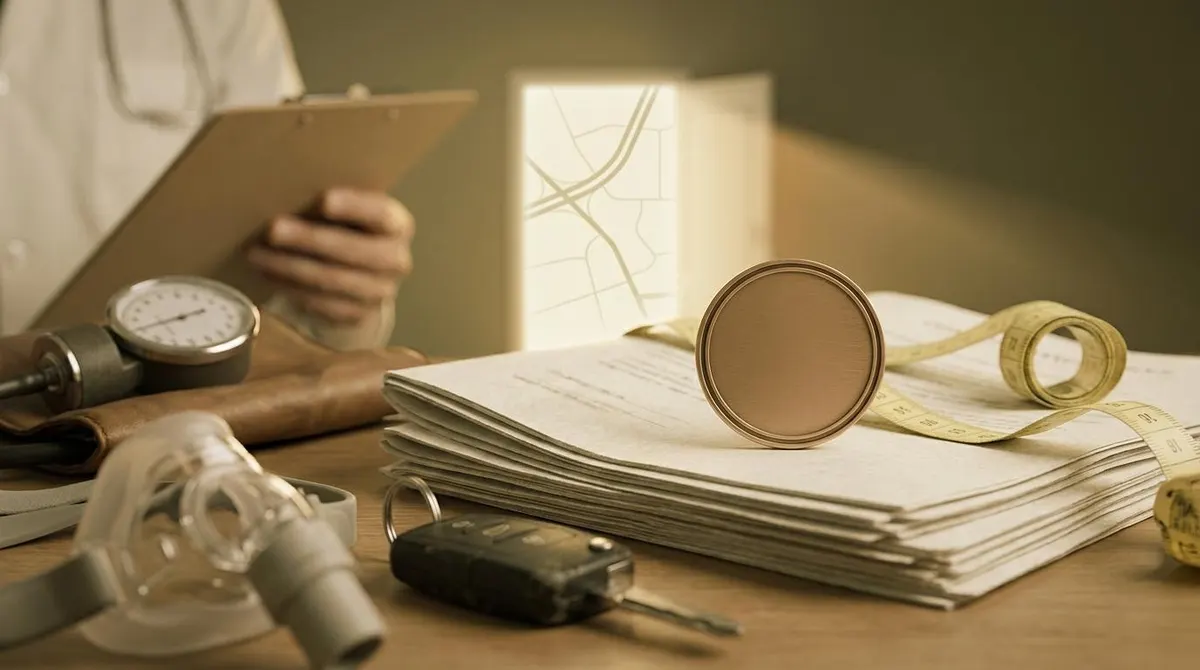
A sleep apnea test for CDL drivers is best understood as a safety and certification tool, not an automatic threat to your career. The FMCSA framework is risk-based, which means symptoms, neck circumference, blood pressure, and medical history matter, but successful diagnosis and treatment often allow drivers to stay certified and keep working. The most practical approach is to address symptoms early, choose the right testing pathway, and keep clear compliance records for your next DOT physical. For a related next step, review dumbo.health’s guide to what can disqualify you from a DOT physical so you can prepare for the broader certification picture. (FMCSA)
Related DOT Physical Topics
- Home Sleep Apnea Test for Commercial Drivers The CDL Holder's Complete Guide
- What are the current DOT requirements for sleep apnea testing for commercial drivers
- Does a DOT Physical Test for Weed or THC The Complete Guide for Commercial Drivers
- Are there legal requirements for drivers with sleep apnea
- What Are the DOT Requirements for Drivers With Sleep Apnea
- At Home Sleep Test for Truck Drivers
- What are the current FMCSA guidelines on sleep apnea for commercial drivers
- What drugs do they test for in a DOT drug test
- Best Treatments for Sleep Apnea to Improve Driving Safety
- How can drivers with sleep apnea qualify again after a failed DOT physical
- What Precautions Should Drivers With Sleep Apnea Take
- Navigating the Florida DOT Physical Your Essential Guide for CDL Drivers
- Online DOT Physical Self-Pay The Complete Guide for CDL Drivers and Owner-Operators
- The Comprehensive Guide to Suboxone, Sleep Apnea, and FMCSA Compliance for Commercial Motor Vehicle Operators
- Sleep Apnea Tests for DOT Compliance What tests are accepted
- DOT Physical Requirements A Complete Guide for CDL Drivers
- DOT sleep apnea test at home
- What Happens If You Fail a DOT Drug Test The Complete Guide for Commercial Drivers
- Can You Get a DOT Physical in Any State The Complete Guide for Commercial Drivers
- Can You Get a DOT Physical Online The Complete Guide for Commercial Drivers
- Are There New DOT Rules or Laws on Sleep Apnea Testing
- Remote DOT Physical The Complete Guide for Commercial Drivers
- Essential 171 DOT Definitions for Commercial Drivers
- Is a drug test required for a DOT physical
- How Sleep Apnea Affects Overall Driving Safety
- DOT Physical Forms & Paperwork The Complete Guide for Commercial Drivers
- Navigating DOT Stroke Guidelines for CMV Drivers What You Need To Know
- Medical Examiner's Certificate (Form MCSA-5876) The Complete Guide for Commercial Drivers
- Online DOT Physical Without Insurance A Complete Guide for Commercial Drivers
- Why DOT Sleep Tests at Home Matter for Your Career and Health
- What Is the Urine Test for in a DOT Physical
- DOT physical self pay guide for commercial drivers paying out of pocket
- DOT Hypertension Guidelines The Complete Blood Pressure Guide for Commercial Drivers
- The Ultimate DOT Preparation Checklist for Motor Carriers and Commercial Drivers
- Can you fail a DOT physical because of sleep apnea
- When Can Sleep Apnea Affect a DOT Physical
- DOT Medical Exam Self-Pay A Complete Guide for Commercial Drivers
- Can you pass a DOT physical with sleep apnea
- What happens if you fail a DOT physical due to sleep apnea
- BMI for DOT Physical What Commercial Drivers Need to Know
- What Happens During the DOT Physical Exam The Complete Guide for Drivers
- How Does Sleep Apnea Affect Driving Ability
- What Happens If Your DOT Physical Expires Compliance Guide for Commercial Drivers
- DOT Physical & Drug Test What Drivers Need to Know
- Medical Examination Report (MER) – Form MCSA-5875 The Complete Guide for Commercial Drivers
- The Ultimate DOT Physical Guide for Commercial Drivers (2025–2026)
- Is a Sleep Study Required for a DOT Physical
- What Happens If You Fail a DOT Physical Twice The Complete Guide for Commercial Drivers
- Can You Get a Second Opinion on Your DOT Physical A Complete Guide for Commercial Drivers
- Online DOT Physical The Complete Guide for Commercial Drivers and Medical Examiners
- Does a DOT physical include a drug test
- DOT Physical Cost Breakdown What Drivers Pay & Why
- DOT Physical ICD-10 & Billing Codes The Complete Guide for Accurate Compliance and Reimbursement
- What Forms Do You Need for a DOT Physical
- DOT Physical Out of Pocket What Commercial Drivers Actually Pay
- Can You Fail a DOT Physical for Being Overweight
- CDL PHYSICAL SELF PAY
- New DOT Physical Requirements What Drivers MUST Know About New Updates
- Online DOT Exam What Drivers and Medical Examiners Need to Know
- DOT Physical Blood Pressure Requirements What Drivers Need to Know
- DOT Physical Insurance or Self Pay How to Choose the Right Payment Option for Your Exam
- DOT Physical Chiropractor Your Complete Guide to CDL Exams
- Can You Fail a DOT Physical for High Blood Pressure
- DOT Physical at Urgent Care What Commercial Drivers Need to Know
- Navigating Your CDL Health Requirements
- Online CDL Physical
- DOT Physical Texas The Essential Guide to Your Exam, Medical Card, and CDL Compliance
- What Does DOT Stand for in a DOT Physical
- Do They Check for Hernia During a DOT Physical
- What eye chart is used for a DOT physical
- The DOT Physical Exam Ensuring You're Fit for the Road
- How Do You Submit Your DOT Physical to the DMV
- What Can Disqualify You From a DOT Physical
- Can You Pass a DOT Physical with Epilepsy
- DOT Physical Self Pay Cost
- DOT Physical Exam Basics
- 2026 DOT Inspection Dates
- Can You Pass a DOT Physical With a Hernia
- Can You Pass a DOT Physical With a Pacemaker
- Can You Pass a DOT Physical With One Eye
- Telehealth Dot Physical
- Who needs a DOT physical
- DOT Physical & Alcohol Requirements
- Navigating Your DOT Physical with Common Medical Conditions
- Why do they measure your neck during a DOT physical
- DOT Physical Online Cost
- Walk In DOT Physical Self Pay
- What Should You Bring to a DOT Physical
- Can You Get a DOT Physical Online
- Your Complete Guide What's Included in a DOT Physical Exam
- DOT Physical Insurance & Recertification The Complete Driver's Guide
- DOT Physical Cash Pay
- Same Day DOT Physical
- Virtual DOT Physical
- DOT Physical Vision & Eye Requirements
- What blood pressure do you need to pass a DOT physical
- Do They Check Your Private Parts During a DOT Physical
- Is a DOT physical the same as a regular physical
- How to Pass a DOT Physical The Complete Commercial Driver's Guide
- What should I expect at a DOT physical
Take the next step before your DOT physical
Start with the free quiz if you are unsure about your risk, or order an at-home sleep test if you have already been flagged for possible sleep apnea.
AI summary
A sleep apnea test for CDL drivers is a diagnostic evaluation used when a DOT medical examiner identifies symptoms or risk factors that may impair safe driving and affect DOT medical certification. FMCSA guidance describes a risk-based approach; regulations do not require universal obstructive sleep apnea (OSA) screening or a single mandated test method. Key screening factors include loud snoring, witnessed apneas, daytime sleepiness, obesity or high BMI, large neck circumference, hypertension, cardiovascular disease, stroke history, diabetes, and other co-morbid conditions. Sleep apnea is classified as obstructive, central, or mixed, with obstructive sleep apnea most emphasized for commercial driving safety. Testing may use a home sleep apnea test for uncomplicated adults at higher risk of moderate to severe OSA, consistent with American Academy of Sleep Medicine (AASM) guidance. Polysomnography (in-lab sleep study) is recommended when home testing is negative, inconclusive, technically inadequate, or when other sleep disorders are suspected. Treatment commonly involves positive airway pressure (PAP) therapy, including CPAP and APAP. Certification decisions often depend on documented treatment effectiveness and compliance reports, and medical examiners may issue shorter certification periods to support follow-up.

Nicolas Nemeth
Co-Founder
Nico is the co-founder of Dumbo Health, a digital sleep clinic that brings the entire obstructive sleep apnea journey home. Patients skip the sleep lab and the long wait to see a specialist. Dumbo Health ships an at home test, connects patients with licensed sleep clinicians by video, and delivers CPAP or a custom oral appliance with ongoing coaching and automatic resupply in one clear subscription.
Keep reading

How Long Does a DOT Physical Take? A Complete Guide for Commercial Drivers

What Happens If You Fail a DOT Drug Test? The Complete Guide for Commercial Drivers


