What Does DOT Stand for in a DOT Physical?
This article explains what “DOT” means in a DOT physical and why the exam is required for many U.S. commercial drivers. It outlines how the Department of Transportation and the Federal Motor Carrier Safety Administration (FMCSA) set medical qualification standards under 49 CFR Part 391. You will learn who needs a Medical Examiner’s Certificate based on vehicle weight, passenger counts, and hazardous materials rules. The guide walks through what a certified medical examiner evaluates, including vision, hearing, blood pressure, urinalysis, and neurological and physical assessments. It clarifies common myths, including that the exam urine test is not a drug test. It also covers outcomes, documentation tips, renewal timing, and long-term compliance.
Struggling with sleep?
Find out if sleep apnea is the reason.
FDA-cleared. $149 flat. Physician-reviewed results in 48 hours.

What Does DOT Stand for in a DOT Physical?

A certified medical examiner conducts a DOT physical exam to assess a commercial driver's fitness for duty.
DOT physical is a federally mandated medical examination that commercial motor vehicle (CMV) drivers must pass to legally operate on public roads in the United States. According to the Federal Motor Carrier Safety Administration (FMCSA), approximately 9 million CMV drivers operate in the United States, and every one of them subject to interstate commerce rules must hold a valid Medical Examiner's Certificate to drive legally. This guide covers everything you need to know about the DOT physical exam: what the acronym means, who is required to take it, what the exam involves step by step, what conditions can disqualify you, how to prepare, and how to stay compliant over the long term. Whether you are applying for your Commercial Driver's License (CDL) for the first time or renewing your certification, this page gives you the complete picture so you walk into your exam ready and confident.
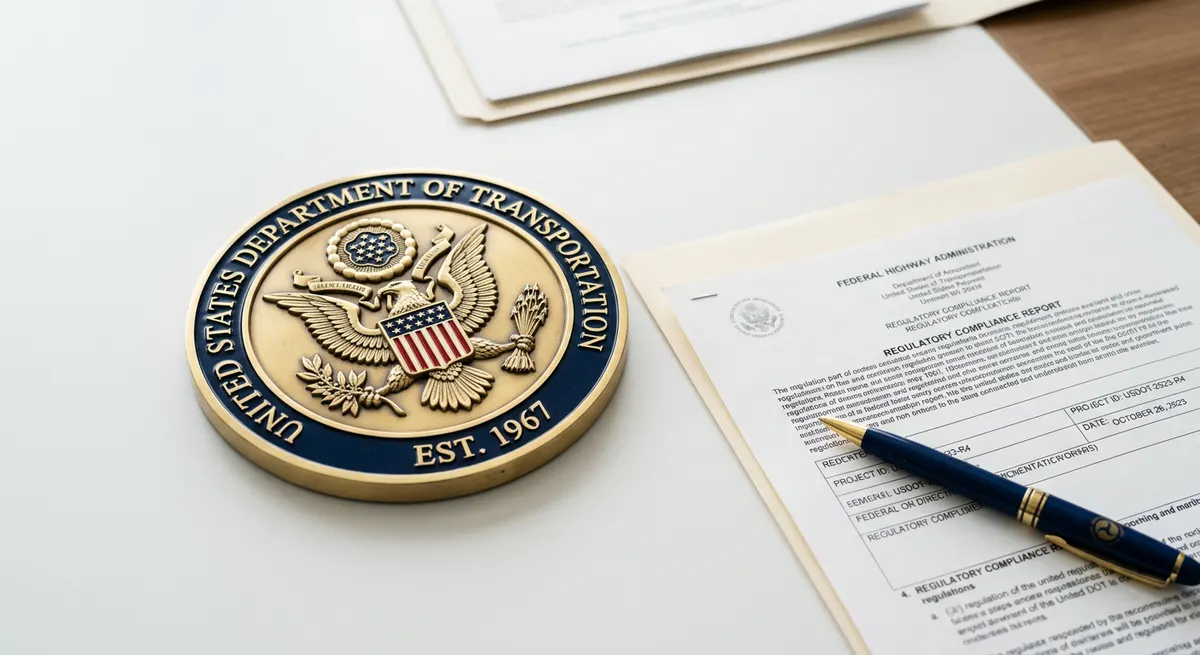
The Department of Transportation sets the federal regulatory framework that makes the DOT physical mandatory.
The DOT in "DOT physical" stands for the Department of Transportation, the federal cabinet agency responsible for all transportation policy and safety in the United States. When commercial drivers talk about a "DOT physical," they are specifically referring to the medical examination program administered under the Department of Transportation's Federal Motor Carrier Safety Administration (FMCSA) to qualify CMV drivers.
Unpacking the Acronym: Department of Transportation
Not sure if sleep apnea applies to you?
Take our 2-minute sleep risk quiz to see whether sleep apnea could affect your DOT physical. No account required.
The Department of Transportation was established in 1966 and oversees all major transportation sectors in the United States, including aviation, rail, maritime, and road transport. Within this broad mandate, commercial road safety falls under the FMCSA, which was established in 2000 as a dedicated agency focused exclusively on reducing crashes, injuries, and fatalities involving large trucks and buses.
The FMCSA operates the National Registry of Certified Medical Examiners (NRCME), which is the official database of healthcare professionals who are trained, tested, and authorized to conduct DOT physical exams. To perform a DOT physical examination, a medical examiner must register with the NRCME, complete FMCSA-approved training, and pass the National Registry Medical Examiner Certification Test before they can legally certify a commercial driver.
The Federal Mandate: Department of Transportation and Public Safety
The DOT physical requirement exists under federal law found in Title 49 of the Code of Federal Regulations, specifically 49 CFR Part 391. This regulation sets the minimum physical qualification standards every interstate CMV driver must meet. The law applies to all drivers who operate vehicles in interstate commerce that meet size, weight, or passenger-capacity thresholds, making this one of the most broadly applied occupational health requirements in the country.
DID YOU KNOW: According to FMCSA data, approximately 3.7 million CDL holders operate interstate commercial motor vehicles in the United States, making the DOT physical one of the most widely required occupational medical exams in any industry.
The "Why" Behind the DOT Physical: Ensuring Safety on Our Roads
The DOT physical's core purpose is to protect the public. Operating a vehicle weighing 80,000 pounds at highway speeds while managing fatigue, route pressure, and varying weather demands a level of physical and cognitive fitness far beyond that required for a standard passenger car. The examination ensures that conditions such as uncontrolled hypertension, severe vision loss, untreated sleep apnea, or seizure disorders do not go undetected in drivers who could cause catastrophic harm on public roads.
Many patients report feeling nervous before their first DOT physical, but the exam is not designed to disqualify drivers. It is designed to identify conditions that, when properly managed and documented, still allow drivers to work safely and legally. The FMCSA structures the certification process so that many common health conditions result in shorter certification periods with closer monitoring rather than outright disqualification.
KEY TAKEAWAY: DOT stands for Department of Transportation, and the DOT physical is a federally mandated medical exam administered by FMCSA to ensure commercial drivers are physically qualified to operate large vehicles safely.
Understanding what 'DOT' means gives important context, but the more practical question for most drivers is whether they personally fall under the requirement.
Who needs a DOT physical? Understanding Commercial Driver Requirements

Any driver operating a commercial motor vehicle that meets FMCSA thresholds must hold a valid DOT medical certificate.
Already diagnosed and need CPAP support?
Dumbo Health helps patients start CPAP without the usual confusion, paperwork, or upfront cost. Equipment, setup, supplies, and ongoing support are all handled in one place.
A DOT physical exam is required for any driver who operates a commercial motor vehicle (CMV) in interstate commerce that meets one or more of the following criteria set by the FMCSA. Understanding these thresholds is essential because many drivers are surprised to discover they fall within the requirement even without a traditional long-haul trucking role.
Defining the Commercial Motor Vehicle (CMV) Operator
According to the FMCSA, you are required to hold a valid Medical Examiner's Certificate if you operate a vehicle that:
•Has a gross vehicle weight rating (GVWR) or gross combination weight rating (GCWR) of 10,001 pounds or more
•Is designed or used to transport more than 8 passengers (including the driver) for compensation
•Is designed or used to transport more than 15 passengers (including the driver) regardless of whether compensation is involved
•Transports hazardous materials in quantities requiring a placard under federal regulations
This means school bus drivers, passenger van operators, hazardous materials transporters, and construction vehicle operators may all require a DOT physical, not just long-haul truck drivers.
Commercial Driver's License (CDL) Holders and Beyond
All CDL holders and Commercial Learner's Permit (CLP) holders who drive interstate CMVs are required to obtain and maintain a valid Medical Examiner's Certificate. Beginning June 23, 2025, the FMCSA's Medical Examiner's Certification Integration Rule requires certified medical examiners to electronically transmit exam results directly to the FMCSA, which then forwards them to state licensing agencies for integration into each driver's CDL record. This means your medical status is now tied directly to your CDL at the state level.
If you are unsure whether your vehicle type or role requires a DOT physical, the FMCSA's National Registry website allows you to verify requirements for your specific operating situation. You can also search for certified medical examiners near you to get qualified guidance from a provider in your area.
IMPORTANT: Intrastate-only drivers may be subject to different state-specific rules rather than the federal FMCSA standard. Always confirm your state's requirements with a certified medical examiner or your state driver licensing agency.
KEY TAKEAWAY: Any driver operating an interstate CMV weighing over 10,001 pounds, carrying passengers for compensation, or hauling hazardous materials must hold a valid DOT Medical Examiner's Certificate.
Once you confirm the exam is required for your situation, the next logical question is what the exam actually involves.
What to Expect During Your DOT physical exam: A Comprehensive Overview

The DOT physical begins with a comprehensive medical history review before the clinical assessments begin.
The DOT physical exam is a systematic, multi-part medical evaluation that typically takes 30 to 45 minutes when a driver arrives prepared with all required documentation. A certified medical examiner listed on the FMCSA's National Registry of Certified Medical Examiners conducts the examination following the standards outlined in 49 CFR 391.41.
The Role of the Certified Medical Examiner
A Certified Medical Examiner (CME) is a healthcare professional who has registered with the NRCME, completed FMCSA-approved medical examiner training, and passed the National Registry certification test. The FMCSA notes that qualified CMEs may include medical doctors (MDs), doctors of osteopathy (DOs), chiropractors, advanced practice nurses, and physician's assistants, as long as they hold the relevant state license and NRCME certification.
The CME's role is to assess your fitness for the specific demands of commercial driving, not simply to conduct a general wellness check. Clinicians frequently observe that many drivers confuse the DOT physical with a standard annual physical, but the DOT exam uses federally defined thresholds and must result in a clear certification decision.
Reviewing Your Medical History and Current Medications
The examination begins with a health history questionnaire, Form MCSA-5875, which you complete prior to or at the start of your appointment. This form covers previous surgeries, hospitalizations, current medications, family history, and any chronic conditions. Your examiner will review your answers in detail and ask follow-up questions about anything that warrants clarification.
Medications receive particular attention during this review. Prescription drugs do not automatically disqualify you, but they must not cause side effects such as sedation, dizziness, or impaired coordination that would make driving unsafe. If you take any controlled substances or medications with sedating properties, you should bring a letter from your prescribing physician confirming that the medication does not impair your ability to drive safely.
Bring to your appointment:
•A complete list of all current medications with dosages
•Names and contact information of prescribing physicians
•Any relevant specialist reports (cardiology, neurology, sleep medicine)
•Documentation of managed conditions such as diabetes or sleep apnea compliance reports
•Glasses, contact lenses, or hearing aids you use while driving
vision and Hearing Evaluations: Critical for Road Awareness
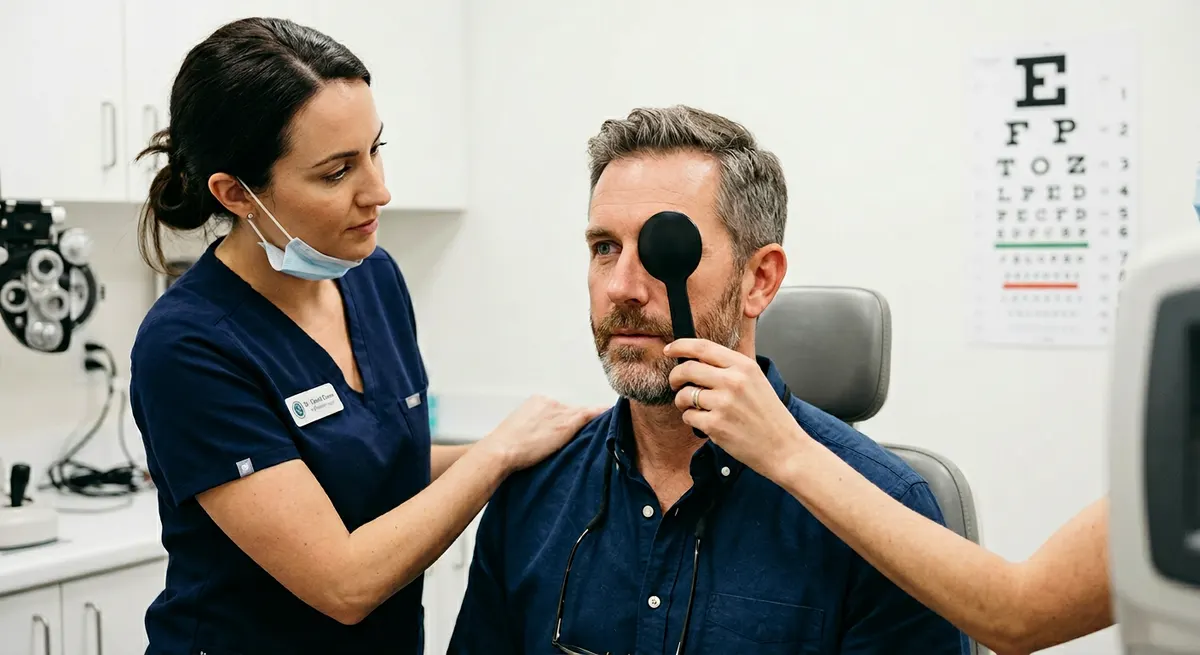
Vision acuity and peripheral vision screening are mandatory components of the DOT physical examination.
Vision and hearing screening are two of the most critical components of the DOT physical because both directly affect a driver's ability to perceive hazards, read road signs, and respond to audio signals.
For vision, drivers must demonstrate:
•Minimum 20/40 visual acuity in each eye, with or without corrective lenses
•Peripheral vision of at least 70 degrees in both eyes
•The ability to distinguish colors on traffic signals (color recognition test)
Corrective lenses including glasses and contact lenses are fully acceptable. If you only meet the standard in one eye, you may still qualify under the Alternative Vision Standard, which requires a Vision Evaluation Report (Form MCSA-5871) completed by your eye specialist.
For hearing, drivers must be able to perceive a forced whispered voice at a distance of not less than 5 feet, with or without the use of a hearing aid. The FMCSA permits the use of hearing aids to meet the hearing standard, and drivers who use hearing aids must wear them while driving.
TIP: Wear your glasses or contact lenses to the exam if you use them for driving. Arriving without your corrective lenses and failing the unaided vision test creates unnecessary complications for your certification.
blood pressure and Cardiovascular Health: Monitoring the Engine of a Driver
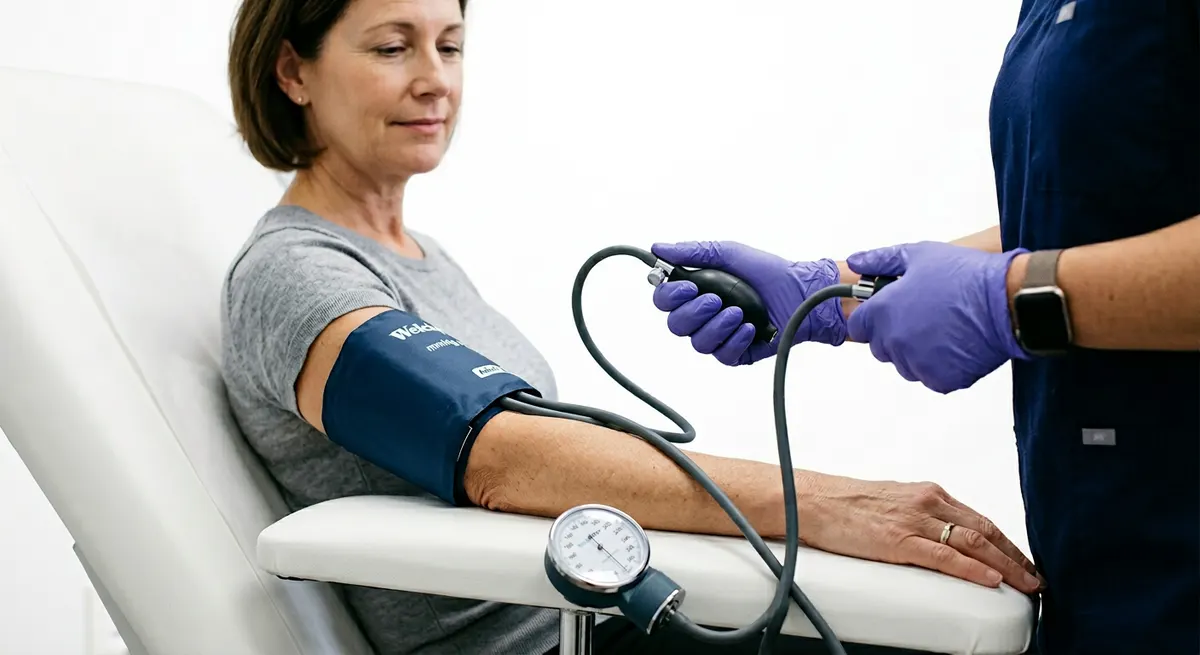
Blood pressure is one of the most scrutinized metrics in a DOT physical, directly affecting certification duration.
blood pressure is among the most scrutinized metrics during the DOT physical exam because hypertension significantly increases the risk of sudden incapacitation events such as stroke or heart attack while driving. The FMCSA ties your certification duration directly to your blood pressure reading.
| Blood Pressure Reading | Certification Outcome |
|---|---|
| Below 140/90 mmHg | Full 2-year certification |
| 140/90 to 159/99 mmHg (Stage 1) | 1-year certification; must address BP before next exam |
| 160/100 to 179/109 mmHg (Stage 2) | 3-month temporary certificate; annual cert if controlled |
| 180/110 mmHg or higher (Stage 3) | Disqualified until BP falls below 140/90 mmHg |
The examiner also assesses cardiovascular health beyond blood pressure. A history of heart attack, coronary artery disease, stent placement, or cardiac surgery requires a cardiologist's clearance letter before certification can be issued. If you have a known blood pressure condition, work with your primary care physician to bring your readings under control before your exam date.
Urinalysis and Blood Sugar Management: Detecting Underlying Conditions
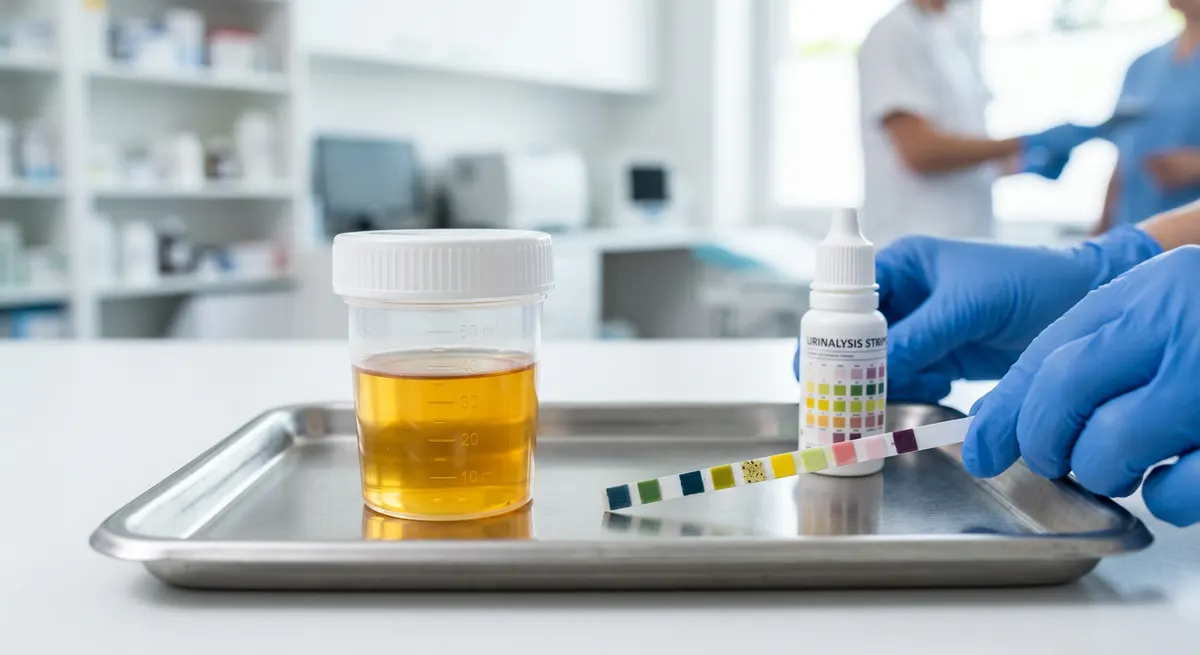
Urinalysis screens for kidney disease, diabetes markers, and other underlying health conditions, not for drugs.
The urinalysis component of the DOT physical is one of the most misunderstood parts of the exam. Many drivers assume it is a drug test. It is not. The urine sample collected during the DOT physical is tested for specific gravity, protein, blood, and glucose to screen for signs of kidney disease, uncontrolled diabetes, or other metabolic conditions that could affect driving fitness.
Drivers with insulin-treated diabetes mellitus (ITDM) must follow a specific FMCSA protocol, which includes a signed assessment form completed by an endocrinologist or treating physician and documentation of at least three months of stable blood glucose control before the exam.
DID YOU KNOW: The urinalysis in a DOT physical screens for kidney and metabolic conditions, not controlled substances. A separate DOT drug test screens for five drug classes: marijuana, cocaine, amphetamines, opioids, and PCP and is an employment requirement, not part of the DOT physical itself.
Neurological Examination and Reflexes: Ensuring Quick Responses
The neurological portion of the DOT physical examines reflex responses, coordination, and the driver's history of any conditions that could cause sudden incapacitation. The examiner will assess grip strength, balance, and basic neurological function.
A history of epilepsy or seizures is taken very seriously. According to FMCSA regulations, drivers with a diagnosis of epilepsy are generally disqualified unless they have been seizure-free without medication for at least 10 years or have been granted a specific FMCSA seizure exemption. Similarly, a diagnosis of narcolepsy is disqualifying regardless of treatment because the likelihood of excessive daytime somnolence poses an unacceptable risk of sudden incapacitation behind the wheel.
sleep apnea is addressed differently. A diagnosis of sleep apnea does not automatically disqualify a driver, but untreated or non-compliant sleep apnea typically results in delayed certification. Drivers who are CPAP-compliant and bring a compliance report from their sleep therapy provider are generally certified. Learn more about sleep apnea treatments without CPAP at dumbo.health.
General Physical Exam: Assessing Overall Health and Mobility
The physical examination component assesses general appearance, cardiovascular and respiratory function, abdominal health (including a hernia check), musculoskeletal fitness, and extremity function. The examiner checks your heart and lungs with a stethoscope, examines your spine and posture, tests your range of motion, and evaluates your ability to perform the physical tasks of commercial driving such as climbing, steering, and coupling.
A hernia found during the exam is not an automatic disqualifier. If the hernia does not cause you pain or limit your ability to operate a CMV, most examiners will allow you to pass. If your hernia causes significant discomfort or physical limitation, the examiner may require documentation from a treating physician before certification.
Is There a Drug Screening? Clarifying Common Misconceptions
The DOT physical exam does not include a drug test. The urine sample collected during the exam is used solely for medical screening purposes. Many employers require a separate DOT drug test as a condition of employment, governed by 49 CFR Part 40. The DOT pre-employment drug test screens for five substance classes and uses SAMHSA-certified laboratory analysis with a Medical Review Officer to verify results. These are two distinct processes: the DOT physical certifies your health for driving, while the DOT drug test certifies your sobriety as an employment condition.
KEY TAKEAWAY: The DOT physical exam is a comprehensive, multi-system health evaluation that takes 30 to 45 minutes and covers medical history, vision, hearing, blood pressure, urinalysis, neurological function, and a full physical assessment by an FMCSA-certified medical examiner.
Once you complete the exam, your examiner will communicate the outcome and, if you pass, issue your Medical Examiner's Certificate.
The Outcome: Medical Examiner's Certificate (DOT medical card)

The Medical Examiner's Certificate confirms a driver's physical qualification and specifies the certification period.
The Medical Examiner's Certificate (MEC), officially Form MCSA-5876, is the document that confirms your physical qualification to operate a commercial motor vehicle. It is often referred to informally as the 'DOT medical card.' Passing your DOT physical exam results in this certificate being issued, and you are legally required to carry it with you while driving a CMV.
Receiving Your Medical Examiner's Certificate
Following the FMCSA's Medical Examiner's Certification Integration Rule, which took effect on June 23, 2025, certified medical examiners are required to electronically transmit your exam results to the FMCSA National Registry by midnight on the day after your examination. The FMCSA then forwards your results to your state driver licensing agency for integration into your CDL record.
You should also receive a physical copy of the MEC from your examiner. Keep a copy for your own records and provide a copy to your employer for your Driver Qualification File (DQF). The certificate specifies the expiration date of your medical qualification and any restrictions or conditions attached to your certification.
Understanding Pass, Fail, and Conditional Outcomes
Not every DOT physical results in a straightforward pass or fail. The FMCSA and the certified medical examiner can issue several different outcomes:
| Outcome | Meaning | Next Step |
|---|---|---|
| Full Certification (2 years) | All standards met with no qualifying conditions | Carry MEC, renew within 24 months |
| Conditional Certification (1 year) | Standards met but condition requires monitoring | Annual DOT physical, follow treatment plan |
| Short-Term Certificate (3 months) | Blood pressure in Stage 2 range or similar | Treat condition, return for re-evaluation |
| Pending Documentation | Missing specialist clearance or compliance data | Provide required records to examiner |
| Disqualified | Medical condition currently prevents safe CMV operation | Treat condition, then reapply |
Drivers who are temporarily disqualified or issued a short-term certificate must wait at least 14 days before retaking the exam. The FMCSA's conflict resolution process allows drivers who believe a disqualification is unreasonable to present a complete medical history for secondary review.
KEY TAKEAWAY: Passing the DOT physical exam results in a Medical Examiner's Certificate valid for up to two years, with shorter periods assigned for monitored conditions. Exam results are now electronically transmitted directly to the FMCSA and your state licensing agency.
Knowing what to expect from the outcome naturally leads to the most actionable question: how do you prepare to pass the first time?
Preparing for Your DOT Physical: Tips for a Smooth Exam

Organized preparation with complete medical records significantly improves your DOT physical experience and outcome.
Proper preparation is the most reliable way to ensure a smooth DOT physical experience. Many drivers who receive short-term certificates or face delays are not failing due to uncontrollable health issues. In real-world use, the most common reason for delays or conditional outcomes is missing paperwork rather than a genuinely disqualifying condition.
Gathering Your Medical Documents and Information
Before your appointment, compile the following documents and bring them to your exam:
•A comprehensive list of all current prescription and over-the-counter medications, including dosages and the prescribing physician's contact information
•Specialist letters or clearance reports for any known cardiac, neurological, or endocrine conditions
•CPAP compliance data if you have a sleep apnea diagnosis (most CPAP machines generate a compliance report via SD card or app)
•Diabetes management documentation including blood glucose logs if you use insulin
•vision evaluation reports or specialist letters if you have a monocular condition
•Records of any surgeries, hospitalizations, or major medical events in the past three years
•Your corrective lenses or hearing aids if you use them while driving
Many patients report that arriving with a well-organized folder of medical records dramatically reduces the time spent at the appointment and eliminates the risk of the examiner placing a certification on hold pending additional documentation.
If you are curious about how sleep health conditions like sleep apnea are assessed, you may benefit from reviewing the common causes of sleep apnea before your appointment.
Being Honest with Your Medical Examiner
Honesty during the DOT physical is both a legal and practical necessity. You are signing a federal health declaration, and providing false information on Form MCSA-5875 can result in civil penalties, disqualification, and potential criminal liability. More practically, your examiner is your ally in finding pathways to certification. Many conditions that drivers fear will automatically fail them have managed pathways if disclosed transparently and supported with appropriate medical documentation.
IMPORTANT: Hiding a known medical condition from your DOT medical examiner is illegal and counterproductive. Certified medical examiners are trained to identify documentation gaps, and undisclosed conditions that emerge during the physical assessment often create far more complications than honest disclosure would have.
Locating a Certified Medical Examiner
You can find a certified medical examiner near you through the FMCSA's National Registry of Certified Medical Examiners, which allows you to search by city, state, or zip code. urgent care centers, occupational health clinics, and dedicated DOT physical providers in your area frequently perform these exams at competitive pricing. The average DOT physical cost in the United States typically ranges from $75 to $150 depending on location and provider type.
KEY TAKEAWAY: Thorough preparation including organized medical records, medication lists, specialist clearance letters, and CPAP compliance data is the most effective way to achieve a full two-year certification on your first appointment.
Passing the exam is only part of the equation. Staying qualified over the long term requires ongoing attention to your health and timely renewal.
Common Myths About DOT Physicals Debunked

Several widely held myths about the DOT physical lead drivers to delay or avoid a required exam unnecessarily.
Many drivers delay or avoid scheduling their DOT physical based on misconceptions that are not supported by FMCSA regulations. Addressing these myths directly helps drivers make informed decisions instead of avoiding a required exam out of unfounded fear.
MYTH: The DOT physical includes a drug test, so recreational marijuana use will fail me.
FACT: The DOT physical's urinalysis does not test for controlled substances. It screens for medical conditions such as kidney disease and blood sugar abnormalities. The separate DOT drug test that some employers require is a distinct process governed by 49 CFR Part 40. However, marijuana remains on the FMCSA's list of disqualifying substances for DOT drug testing, and medical marijuana use does not exempt a driver from this requirement regardless of state law.
MYTH: Any prescription medication will disqualify you from passing the DOT physical.
FACT: Prescription medications are not automatically disqualifying. The FMCSA evaluates medications based on whether their side effects impair driving safety. Many common medications for blood pressure, cholesterol, thyroid conditions, and mild depression are fully compatible with DOT certification when properly documented. Bringing a letter from your prescribing physician confirming that your medication does not impair driving function resolves most concerns efficiently.
MYTH: If you have diabetes, you cannot get a DOT medical card.
FACT: Diabetes is not an automatic disqualifier. Drivers with well-controlled Type 2 diabetes managed with oral medications are routinely certified for two-year periods. Drivers using insulin face more documentation requirements under the FMCSA's ITDM protocol, including a signed assessment form and glucose control logs, but a pathway to certification exists. The key factor is documented evidence of stable blood sugar management, not the diagnosis itself.
MYTH: A hernia will automatically fail you at the DOT physical.
FACT: According to FMCSA medical examination guidelines, a hernia only becomes a disqualifying issue if it causes pain or physically limits your ability to operate a commercial motor vehicle. Certified medical examiners have discretion in assessing hernias, and most drivers with asymptomatic hernias pass without issue. If your hernia is actively painful or restrictive, addressing it with treatment before your exam is advisable.
MYTH: You only need a DOT physical if you drive a big rig.
FACT: The DOT physical requirement applies to any driver operating a CMV meeting FMCSA thresholds, not just long-haul truck drivers. Drivers of passenger vans carrying more than 8 passengers for compensation, school buses with more than 15 passengers, delivery vehicles exceeding 10,001 pounds GVWR, and any vehicle transporting hazardous materials requiring a placard are subject to the same requirement.
KEY TAKEAWAY: The most common DOT physical myths involve drug testing, medications, and specific conditions like diabetes or hernias. In most cases, well-managed conditions with proper documentation do not prevent certification.
Understanding what is true and what is myth empowers you to approach your exam without unnecessary anxiety. The final step is understanding what happens after the exam and how to maintain your certification.
Beyond the Physical: Maintaining Your Health and Compliance

Ongoing health maintenance between DOT physicals protects both long-term certification and career longevity.
Passing your DOT physical is not a one-time milestone. It is the beginning of an ongoing commitment to maintaining the health standards required for commercial driver certification throughout your career.
The Importance of Regular Health Maintenance and Preventive Medicine
Commercial driving is a physically demanding occupation that creates specific health risks including elevated blood pressure from sedentary behavior and stress, increased risk of obesity and metabolic syndrome, disrupted sleep patterns that can contribute to or worsen sleep apnea, and higher rates of cardiovascular disease compared to the general population. Many patients report that the DOT physical is one of the few times they see a healthcare provider, making it an important touchpoint for preventive care.
Clinicians frequently observe that drivers who actively manage their blood pressure, maintain healthy body weight, and monitor blood glucose between exams not only pass their renewals more easily but also experience measurably better health outcomes over a 10-to-20-year driving career. Regular visits to a healthcare provider near you for blood pressure monitoring and basic metabolic screening are among the most effective investments in long-term certification compliance.
If you are concerned about whether a sleep disorder might be affecting your health and certification status, review the guide to what sleep tracking rings are and whether smartwatches can track sleep apnea at dumbo.health.
Renewing Your DOT Medical Exam: Staying Qualified
Most commercial drivers must renew their DOT physical every two years. Drivers with managed conditions such as hypertension, diabetes, or sleep apnea may need to renew annually or as frequently as every three months depending on the severity and stability of their condition. Your Medical Examiner's Certificate clearly states your expiration date.
The renewal process follows the same steps as your initial exam. Driving on an expired Medical Examiner's Certificate is a federal violation that can result in fines and removal from service, so it is critical to schedule your renewal appointment at least four to six weeks before your certificate expires to allow time for any follow-up testing that may arise.
Drivers with controlled hypertension should monitor their blood pressure regularly at home or at a pharmacy near you in the weeks leading up to renewal to ensure their readings are consistently within the certification threshold.
KEY TAKEAWAY: Long-term DOT physical compliance depends on proactive health management between exams, including regular monitoring of blood pressure, blood sugar, sleep health, and timely scheduling of renewal appointments before certification expires.
Frequently Asked Questions
Does the DOT physical check for a hernia?
Yes, the DOT physical includes a hernia check as part of the abdominal examination. The certified medical examiner will check for both abdominal and inguinal hernias. However, the presence of a hernia does not automatically disqualify you. The FMCSA has no strict categorical rule on hernias. The examiner evaluates whether the hernia causes pain, limits your range of motion, or interferes with your ability to safely operate a commercial motor vehicle. A small, asymptomatic hernia will typically not prevent certification. If your hernia is painful or physically limiting, the examiner may recommend treatment before issuing your Medical Examiner's Certificate.
Is narcolepsy disqualifying for the DOT physical?
Yes. According to official FMCSA guidance, narcolepsy is disqualifying regardless of treatment. The FMCSA's medical advisory criteria state that CMV drivers with a confirmed diagnosis of narcolepsy cannot be certified because of the likelihood of excessive daytime somnolence, which creates an unacceptable risk of sudden incapacitation while operating a large vehicle. Unlike sleep apnea, which can be managed and monitored to allow certification, narcolepsy does not have an established compliance pathway under current FMCSA regulations. If you have been diagnosed with narcolepsy, discuss your situation with a certified medical examiner and your treating physician.
What will cause you to fail a DOT physical?
The most common reasons drivers do not pass a DOT physical include blood pressure readings of 180/110 mmHg or higher, vision below 20/40 in both eyes that cannot be corrected, hearing below the 5-foot whisper test threshold without a hearing aid, uncontrolled diabetes without proper documentation, untreated or non-compliant sleep apnea, epilepsy or a history of seizures without FMCSA exemption, severe cardiovascular conditions without cardiologist clearance, and current clinical diagnosis of substance abuse. Many of these do not result in permanent disqualification. Properly treating the condition and providing appropriate documentation at a follow-up appointment often resolves the issue.
Is methadone disqualifying for the DOT physical?
Methadone is listed among the medications that raise significant concerns under FMCSA regulations. Under 49 CFR 391.41(b)(12), a driver cannot be medically certified if using a Schedule II controlled substance without a legitimate medical use confirmed by proper documentation. Methadone, when prescribed for opioid use disorder treatment, creates particular complexity because FMCSA guidelines have historically been cautious about certifying drivers on opioid replacement therapies. The current consensus in occupational medicine is that methadone treatment typically results in disqualification unless an exemption or special waiver applies. Drivers on methadone therapy should consult directly with a certified medical examiner.
How much does a DOT physical cost?
The average cost of a DOT physical in the United States typically ranges from $75 to $150 for most drivers. Low-cost clinics may charge $60 to $90, while specialized or high-demand providers may charge $150 to $200 or more. The exam is almost always a flat, self-pay fee because it is classified as a work-related certification rather than preventive healthcare, meaning most health insurance plans do not cover it. Many employers and trucking companies reimburse the cost as part of onboarding or renewal expenses. To find a competitively priced provider in your area, search the FMCSA's National Registry.
How long does a DOT physical take?
A DOT physical typically takes 30 to 45 minutes for a well-prepared driver. The duration depends on your medical history complexity, whether additional tests are needed, and how quickly you can complete the health history questionnaire. Drivers with multiple managed conditions, missing documentation, or borderline blood pressure or vision readings may spend longer at the appointment. Arriving with a complete, organized set of documents significantly reduces the total visit duration and streamlines the certification process.
Do DOT physicals expire? How often do I need to renew?
Yes, DOT medical certifications expire. The standard certification period is two years for drivers who meet all health thresholds without qualifying conditions. Drivers with managed blood pressure, diabetes, sleep apnea, or other conditions requiring monitoring may receive one-year, three-month, or other abbreviated certification periods based on the examiner's assessment. Your Medical Examiner's Certificate clearly states your expiration date. Driving on an expired certificate is a federal violation. Schedule your renewal appointment four to six weeks before expiration to allow time for any follow-up testing that may be required.
Conclusion
The DOT physical exam is a federally mandated, systematic evaluation that ensures commercial motor vehicle drivers meet the health standards required to operate safely on public roads. Passing your exam and maintaining your Medical Examiner's Certificate is not just a regulatory formality. It is a commitment to your own health and the safety of every person sharing the road with you. Most common health conditions, including high blood pressure, diabetes, and sleep apnea, have managed pathways to certification when properly treated and documented. Arriving prepared, being transparent with your examiner, and actively managing your health between renewals are the three pillars of long-term compliance. If you suspect an undiagnosed sleep disorder may be affecting your health and your certification, a home sleep study is a convenient first step you can take from anywhere in the country.
Related DOT Physical Topics
- Does a DOT Physical Test for Weed or THC The Complete Guide for Commercial Drivers
- What Happens If Your DOT Physical Expires Compliance Guide for Commercial Drivers
- What Forms Do You Need for a DOT Physical
- What Is the Urine Test for in a DOT Physical
- What Does a DOT Physical Consist Of
- BMI for DOT Physical What Commercial Drivers Need to Know
- What Happens During the DOT Physical Exam The Complete Guide for Drivers
- What are the current DOT requirements for sleep apnea testing for commercial drivers
- What Is the Difference Between a DOT and Non-DOT Physical
- What eye chart is used for a DOT physical
- What drugs do they test for in a DOT drug test
- What Can Disqualify You From a DOT Physical
- Does a DOT physical include a drug test
- The Ultimate DOT Physical Guide for Commercial Drivers (2025–2026)
- Remote DOT Physical The Complete Guide for Commercial Drivers
- DOT Physical Out of Pocket What Commercial Drivers Actually Pay
- Navigating the Florida DOT Physical Your Essential Guide for CDL Drivers
- Is a drug test required for a DOT physical
- DOT Physical Cost Breakdown What Drivers Pay & Why
- What Should You Bring to a DOT Physical
- DOT Physical Forms & Paperwork The Complete Guide for Commercial Drivers
- Does insurance cover a DOT physical
- DOT Physical ICD-10 & Billing Codes The Complete Guide for Accurate Compliance and Reimbursement
- Online DOT Physical Without Insurance A Complete Guide for Commercial Drivers
- Can You Fail a DOT Physical for Being Overweight
- Your Complete Guide What's Included in a DOT Physical Exam
- Do They Check for Hernia During a DOT Physical
- Online DOT Physical Self-Pay The Complete Guide for CDL Drivers and Owner-Operators
- DOT physical self pay guide for commercial drivers paying out of pocket
- What Are the Requirements to Pass a DOT Physical
- New DOT Physical Requirements What Drivers MUST Know About New Updates
- Can You Get a Second Opinion on Your DOT Physical A Complete Guide for Commercial Drivers
- What blood pressure do you need to pass a DOT physical
- Online DOT Physical The Complete Guide for Commercial Drivers and Medical Examiners
- DOT Physical Blood Pressure Requirements What Drivers Need to Know
- DOT Physical Insurance or Self Pay How to Choose the Right Payment Option for Your Exam
- Is a DOT physical the same as a regular physical
- Can You Fail a DOT Physical for High Blood Pressure
- What should I expect at a DOT physical
- What happens if you fail a DOT physical due to sleep apnea
- DOT Physical at Urgent Care What Commercial Drivers Need to Know
- Can You Get a DOT Physical in Any State The Complete Guide for Commercial Drivers
- DOT Physical & Drug Test What Drivers Need to Know
- DOT Physical Requirements A Complete Guide for CDL Drivers
- Is a Sleep Study Required for a DOT Physical
- What Do They Check During a DOT Physical
- The DOT Physical Exam Ensuring You're Fit for the Road
- Failing a DOT Physical What Every Commercial Driver Needs to Know
- What is DOT Physical
- Can You Pass a DOT Physical with Epilepsy
- DOT Physical Self Pay Cost
- Essential 171 DOT Definitions for Commercial Drivers
- When Can Sleep Apnea Affect a DOT Physical
- Can You Pass a DOT Physical With One Eye
- Can You Pass a DOT Physical With a Pacemaker
- Telehealth Dot Physical
- Who needs a DOT physical
- DOT Physical & Alcohol Requirements
- DOT Physical Online Cost
- DOT Physical Duration and Validity How Long Your Medical Card Lasts
- DOT Physical Vision & Eye Requirements
- Why do they measure your neck during a DOT physical
- Navigating Your DOT Physical with Common Medical Conditions
- Why DOT Sleep Tests at Home Matter for Your Career and Health
- How can drivers with sleep apnea qualify again after a failed DOT physical
- Walk In DOT Physical Self Pay
- Can You Get a DOT Physical Online
- How Do You Submit Your DOT Physical to the DMV
- DOT Physical Exam Basics
- DOT Physical Insurance & Recertification The Complete Driver's Guide
- Can You Pass a DOT Physical With a Hernia
- Cheap DOT Physical Online
- Same Day DOT Physical
- Virtual DOT Physical
- DOT Physical Cash Pay
- Can you fail a DOT physical because of sleep apnea
- DOT Medical Exam Self-Pay A Complete Guide for Commercial Drivers
- Online DOT Exam What Drivers and Medical Examiners Need to Know
- Do They Check Your Private Parts During a DOT Physical
- DOT Physical Chiropractor Your Complete Guide to CDL Exams
- How to Pass a DOT Physical The Complete Commercial Driver's Guide
- Can you pass a DOT physical with sleep apnea
- Can You Pass a DOT Physical with Diabetes
- Can You Pass a DOT Physical with High Blood Pressure
- What are the current FMCSA guidelines on sleep apnea for commercial drivers
- Non-DOT Physical A Comprehensive Guide to Workforce Health and Safety
- DOT Physical Texas The Essential Guide to Your Exam, Medical Card, and CDL Compliance
- Do You Have to Pee During a DOT Physical
- Can You Fail a DOT Physical
- Online CDL Physical
- Are There New DOT Rules or Laws on Sleep Apnea Testing
- 2026 DOT Inspection Dates
- Best Treatments for Sleep Apnea to Improve Driving Safety
- Home Sleep Apnea Test for Commercial Drivers The CDL Holder's Complete Guide
- Sleep Apnea Test for CDL Drivers
- DOT sleep apnea test at home
- What Precautions Should Drivers With Sleep Apnea Take
- Are there legal requirements for drivers with sleep apnea
- CDL PHYSICAL SELF PAY
- How Does Sleep Apnea Affect Driving Ability
Take the next step before your DOT physical
Start with the free quiz if you are unsure about your risk, or order an at-home sleep test if you have already been flagged for possible sleep apnea.
AI summary
A DOT physical is a federally required medical exam used to certify that commercial motor vehicle (CMV) drivers are medically fit to drive. In this context, DOT stands for the U.S. Department of Transportation, and the program is administered by the Federal Motor Carrier Safety Administration (FMCSA). Key points: - Legal basis: Title 49 CFR Part 391 sets minimum physical qualification standards for interstate CMV drivers. - Who needs it: Drivers operating in interstate commerce with GVWR/GCWR of 10,001+ lb, carrying more than 8 passengers for compensation, more than 15 passengers regardless of compensation, or hauling placarded hazardous materials. - Examiner credentialing: The exam must be completed by a Certified Medical Examiner listed on the National Registry of Certified Medical Examiners (NRCME). - What is evaluated: medical history (Form MCSA-5875), medications, vision (20/40 each eye; 70-degree peripheral; color recognition), hearing (5-foot whisper test), blood pressure thresholds affecting certification length, urinalysis (glucose, protein, blood; not a drug test), neurological and general physical exam. - Outcome: Medical Examiner’s Certificate (Form MCSA-5876), valid up to 2 years, with shorter periods for monitored conditions and possible pending documentation or disqualification.

Nicolas Nemeth
Co-Founder
Nico is the co-founder of Dumbo Health, a digital sleep clinic that brings the entire obstructive sleep apnea journey home. Patients skip the sleep lab and the long wait to see a specialist. Dumbo Health ships an at home test, connects patients with licensed sleep clinicians by video, and delivers CPAP or a custom oral appliance with ongoing coaching and automatic resupply in one clear subscription.
Keep reading

How Long Does a DOT Physical Take? A Complete Guide for Commercial Drivers

What Happens If You Fail a DOT Drug Test? The Complete Guide for Commercial Drivers


