What Are the Requirements to Pass a DOT Physical?
A DOT physical is a federally required medical certification exam used to determine whether a driver can safely operate a commercial motor vehicle under FMCSA rules. This article explains who typically needs the exam and why it must be performed by a National Registry Certified Medical Examiner. It walks through what happens at the appointment, including medical history, a system-based physical exam, vision and hearing standards, blood pressure measurement, and required urinalysis. It also outlines common conditions that trigger extra review, such as hypertension, diabetes (including insulin-treated diabetes with MCSA-5870), sleep apnea, and medication side effects. Readers learn the difference between the DOT physical urinalysis and a separate DOT drug and alcohol test program. It clarifies possible outcomes, including full, short-term, pending, or no certification, and offers practical prep steps to avoid delays from missing documentation.
Struggling with sleep?
Find out if sleep apnea is the reason.
FDA-cleared. $149 flat. Physician-reviewed results in 48 hours.

What Are the Requirements to Pass a DOT Physical?

A DOT physical is a medical certification exam that determines whether you can safely operate a commercial motor vehicle. According to the Federal Motor Carrier Safety Administration, the exam exists to protect both commercial drivers and the public by checking whether a health condition could interfere with safe driving. This guide explains who needs the exam, what happens during the appointment, what medical conditions get extra review, how the Medical Examiner's Certificate is issued, and what to do if you are only conditionally certified or not certified. The goal is not to make the process feel intimidating. The goal is to help you understand the standards and walk in prepared.
What Is a DOT Physical Exam and Who Needs One?

A DOT physical exam is the medical examination used to decide whether a commercial driver meets federal safety standards to drive. DOT physical requirements matter because the exam is tied to your ability to keep working legally and safely.
A DOT physical exam is the medical exam used for drivers who operate a commercial motor vehicle in interstate commerce. In practice, that often includes a truck driver, bus driver, or another worker operating a large or safety-sensitive commercial vehicle. The FMCSA Medical Examiner's Handbook explains that medical certification is generally required for drivers operating a commercial motor vehicle that meets weight or passenger thresholds in interstate commerce.
You will usually need a DOT Exam if you hold or need a Commercial Driver's License, transport passengers, or operate commercial motor vehicles above federal size thresholds. Some employers also require a DOT medical exam for roles that involve Operating a commercial motor vehicle even when the job title is not simply commercial driver. People often ask whether a courier needs one. The answer depends on the vehicle, the route, and whether the work falls under FMCSA rules.
The Department of Transportation itself does not perform the exam. The exam is performed by a Certified Medical Examiner listed on the National Registry. That distinction matters because only approved Medical Examiners can complete the medical examination and issue a valid Medical Examiner's Certificate.
Not sure if sleep apnea applies to you?
Take our 2-minute sleep risk quiz to see whether sleep apnea could affect your DOT physical. No account required.
Many drivers think the exam is only about obvious illness. In reality, the physical examination looks at whether vision, hearing, blood pressure, medication use, and medical conditions could raise crash risk or reduce your ability to respond to a medical emergency on the road.
KEY TAKEAWAY: A DOT physical exam is a federal medical certification exam for drivers whose work falls under commercial motor vehicle safety rules.
Understanding who performs the exam makes it much easier to prepare for the appointment itself.
Who Can Perform the Exam and What Certificate Do You Receive?

A Certified Medical Examiner must perform the DOT Physical, and a passing result can lead to a Medical Examiner's Certificate. The examiner's role is to assess fitness for duty under FMCSA rules.
A Certified Medical Examiner is a licensed clinician who is certified by FMCSA and listed on the National Registry. According to the 2024 FMCSA handbook, eligible Medical Examiners can include medical doctors, physician assistants, advanced practice nurses, doctors of osteopathy, and doctors of chiropractic when state scope-of-practice rules allow physical exams. The same handbook states that only examiners listed on the National Registry are allowed to conduct these medical exams and issue a Medical Examiner's Certificate. (FMCSA)
The National Registry is the federal directory that helps you find a qualified medical provider near you. Using a provider from the National Registry matters because a non-listed clinic cannot issue a valid medical certification for interstate commercial driving. If you already have a driver's license or commercial driving license application in progress, double-check the clinic before booking.
After the DOT medical exam, the examiner documents results on the FMCSA medical examination report and, if you qualify, issues the Medical Examiner's Certificate, also called the medical certificate or Medical card. The relevant FMCSA forms include the Medical Examination Report and Medical Examiner's Certificate forms. Depending on your health status, you may receive full certification, shorter certification, determination pending, or no certification until more information is provided. (FMCSA)
This is an important nuance that generic articles often miss. Passing is not always a simple yes or no. Medical certification can be time-limited if the examiner believes a condition needs periodic monitoring or recent records before a longer certificate can be issued.
KEY TAKEAWAY: To pass, you need an exam from a National Registry Certified Medical Examiner and a result that supports issuance of a Medical Examiner's Certificate.
Once you know who can certify you, the next step is preparing the right documents and details.
How Should You Prepare Before the Appointment?
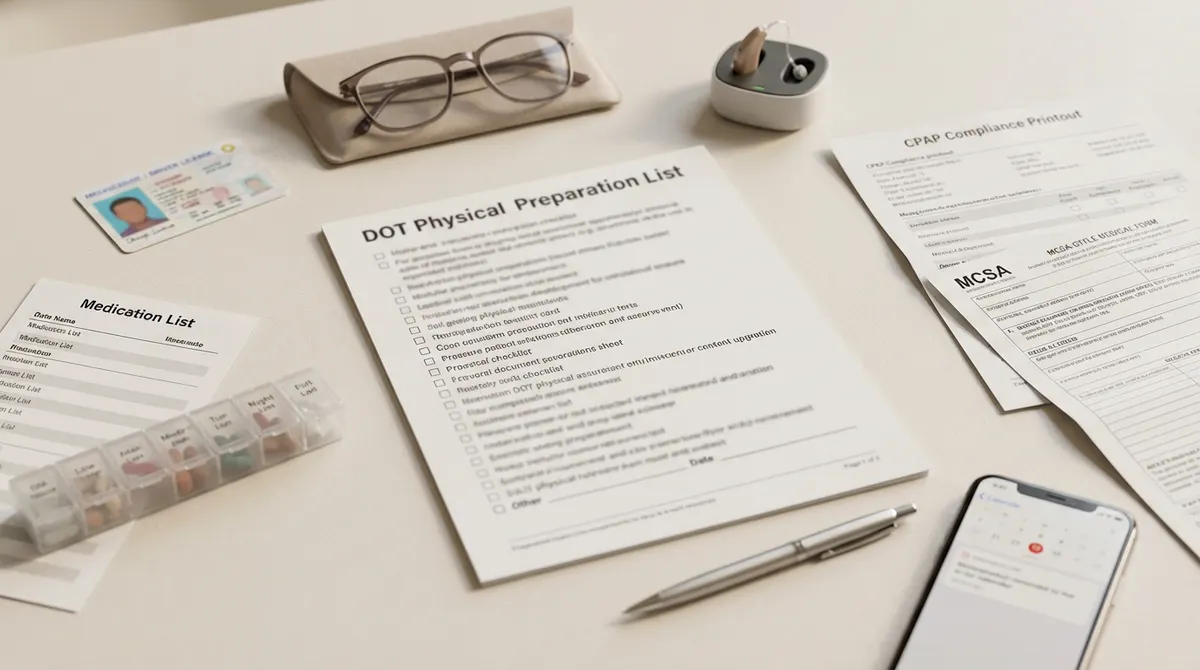
Good preparation improves your odds of a smooth DOT Physical because the examiner can review your medical history, medications, and supporting records without delay. DOT physical requirements are easier to meet when you bring proof, not just verbal explanations.
Medical history is the record of your past diagnoses, surgeries, symptoms, medications, and prior evaluations. Medical history matters because the examiner uses it to decide whether a current condition is stable enough for safe driving.
Already diagnosed and need CPAP support?
Dumbo Health helps patients start CPAP without the usual confusion, paperwork, or upfront cost. Equipment, setup, supplies, and ongoing support are all handled in one place.
Bring your driver's license, a current medication list, prescription glasses or contact lenses if you use them, and any relevant medical records. If you use a hearing aid, bring it. If you have sleep apnea, bring CPAP data or a CPAP machine compliance report if your clinic requests it. If you have insulin-treated diabetes, FMCSA requires the treating clinician to complete the MCSA-5870 assessment form and the form must be provided to the Certified Medical Examiner within 45 days of completion. (FMCSA)
For many drivers, the biggest issue is not the physical exam itself. The biggest issue is missing documentation. Clinicians frequently observe delays when a driver reports high blood pressure, heart disease, spinal surgery, or diabetes but arrives without recent follow-up notes, medication details, or specialist clearance. That can convert a same-day decision into determination pending.
TIP: If you have a chronic condition, call the clinic before the visit and ask what records they want you to bring.
If sleep is part of your risk profile, reading dumbo.health's guide to how at-home sleep studies work or its explainer on what sleep apnea is can help you understand what supporting evidence may be relevant.
A practical preparation checklist includes:
Government ID and driver's license
Medication list with dosage
Medical records for major diagnoses
Specialist letters if recently treated
Prescription glasses, contact lenses, or hearing aid
CPAP data, if applicable
Diabetes paperwork, if applicable
KEY TAKEAWAY: The best way to prepare is to bring complete records for any condition that could affect safe driving.
Preparation matters most because the actual exam covers several specific pass criteria.
What Happens During the DOT Physical Examination?
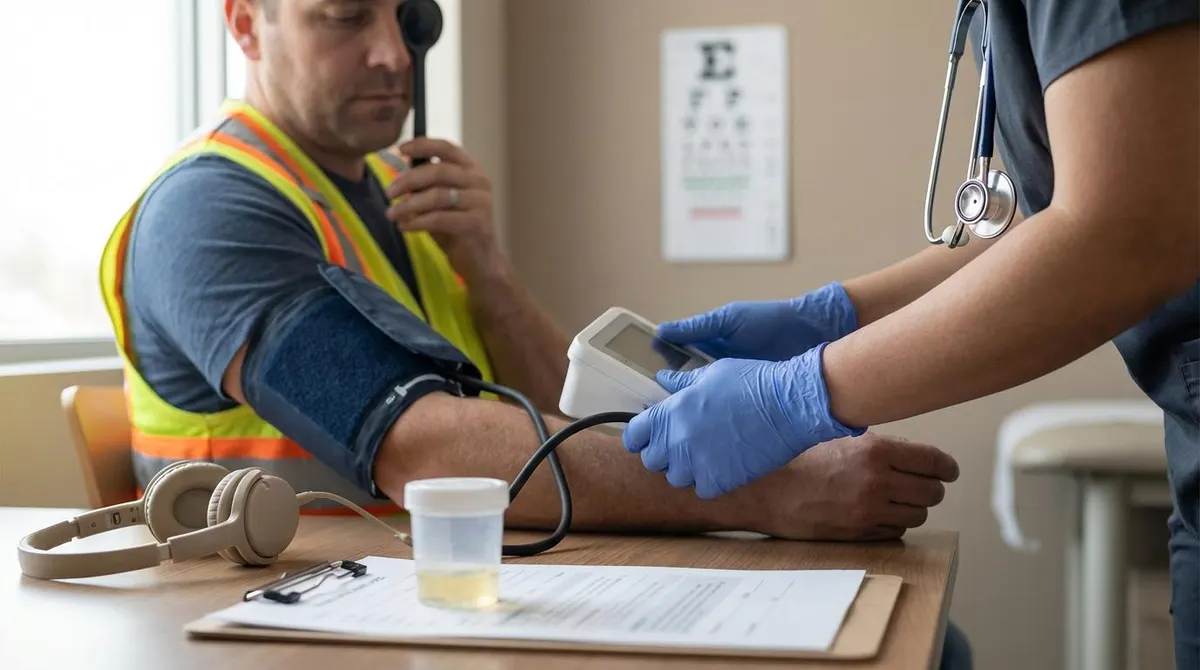
The DOT physical examination reviews your medical history, checks core body systems, and tests whether you meet minimum vision, hearing, and blood pressure requirements. The exam is structured to identify risks that could impair safe operation of a commercial vehicle.
The medical history review comes first. The examiner asks about prior illness, surgeries, medications, fainting, seizures, sleep problems, mental health, diabetes, and substance use. The medical history review matters because the answers guide the rest of the physical exam and may prompt requests for outside records.
The general physical examination usually includes height, weight, pulse, blood pressure reading, and a system-by-system check of your eyes, ears, heart, lungs, abdomen, spine, extremities, and neurological status. The neurological exam looks for reflexes, coordination, strength, or deficits that could interfere with driving. Some drivers worry about a spine check after back surgery or spinal fusion. A prior surgery is not automatically disqualifying, but persistent weakness, limited function, uncontrolled pain, or medication side effects can change the outcome.
The vision test and hearing test are among the clearest pass criteria. FMCSA Form MCSA-5875 states the vision standard is at least 20/40 visual acuity in each eye with or without correction, at least 70 degrees of field of vision in each eye, and the ability to distinguish traffic signal colors. The same form states hearing can be shown either by perceiving a forced whispered voice at not less than 5 feet in at least one ear, with or without a hearing aid, or by an audiometric test showing no more than 40 dB hearing loss in the better ear. If you use prescription glasses, contact lenses, or a hearing aid, you can still qualify if you meet the standard with correction. (FMCSA)
Urinalysis is required, but it is not the same as the DOT drug test. The routine urine test checks markers such as sugar, blood, protein, and specific gravity because they may point to an underlying medical problem. FMCSA also directs the examiner to record urine findings and blood pressure as part of the exam record. (FMCSA)
DID YOU KNOW: The routine urine test in a DOT physical is for health screening, not the federally regulated DOT drug test panel.
KEY TAKEAWAY: Passing depends on meeting minimum standards in vision, hearing, blood pressure, and overall medical fitness, not just finishing the appointment.
Once the exam basics are clear, the most important question becomes which medical conditions trigger extra scrutiny.
Which Medical Conditions Most Commonly Affect Whether You Pass?
Medical conditions do not automatically fail a DOT physical, but uncontrolled symptoms, missing records, or safety risk often do. The key issue is whether the condition could interfere with safe driving or create a sudden medical emergency.
High blood pressure is one of the most common reasons for a shorter certificate or no same-day medical certification. FMCSA guidance explains that Stage 1 hypertension, defined as 140 to 159 over 90 to 99, may allow a 1-year certificate. Stage 2, defined as 160 to 179 over 100 to 109, may allow a one-time 3-month certificate. Stage 3, above 180 over 110, is disqualifying until the blood pressure is reduced. (FMCSA)
Diabetes is another major review area. Blood sugar levels alone do not decide the outcome, but the examiner will consider control, symptoms, severe hypoglycemia history, and treatment stability. For insulin-treated diabetes mellitus, FMCSA requires the MCSA-5870 form from the treating clinician. Many clinics also look closely at A1C level trends, glucose monitoring, and whether insulin-treated diabetes has been stable enough for safe driving. (FMCSA)
Sleep apnea matters because untreated daytime sleepiness can raise crash risk. The FMCSA handbook updated its obstructive sleep apnea section in 2024, and the American Academy of Sleep Medicine reported in 2025 that 41 percent of U.S. adults said sleepiness had affected their ability to drive safely. If you are being evaluated for sleep apnea, dumbo.health offers helpful reading on sleep apnea symptoms, at-home sleep studies, and treatment options beyond CPAP. (FMCSA)
Other potentially disqualifying medical conditions can include poorly controlled heart disease, recent cardiovascular disease events, seizure disorders, serious neurological deficits, severe respiratory functions impairment, or medication effects that cause sedation, slowed reaction time, or impaired judgment. Stable treatment often matters more than the label itself. Many patients report that a condition they feared would fail them resulted instead in short-term certification plus follow-up.
This is also where examiner judgment becomes important. Methadone, for example, does not automatically preclude certification under the current FMCSA handbook, but the examiner needs enough information from the prescribing clinician to decide whether driving can be done safely. (FMCSA)
KEY TAKEAWAY: Most drivers do not fail because of a diagnosis alone; most problems come from uncontrolled symptoms, unsafe medication effects, or missing evidence that a condition is stable.
A separate source of confusion is drug and alcohol testing, which is related to DOT rules but different from the physical itself.
What Is the Difference Between a DOT Physical and a DOT Drug Test?
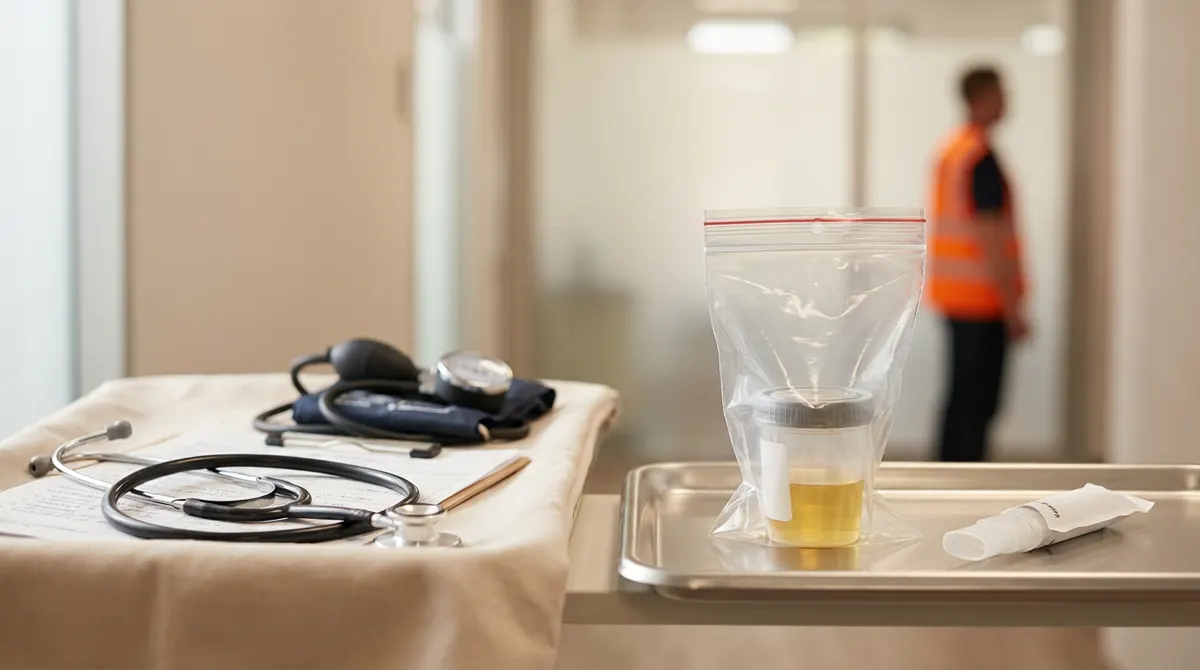
A DOT physical and a DOT drug test are different compliance processes. The physical evaluates medical fitness, while drug and alcohol testing checks for prohibited substance use under separate federal rules.
A DOT drug test is the federally regulated laboratory drug screening required in situations such as pre-employment, random selection, post-accident, return-to-duty, and reasonable suspicion. According to FMCSA, the standard DOT drug screening panel tests for marijuana, cocaine, opiates, amphetamines and methamphetamines, and PCP, while DOT alcohol tests identify alcohol concentration of 0.02 and greater. (FMCSA)
The key difference between a routine urine test in the DOT physical and a DOT drug test is purpose. The urine test in the physical looks for signs of underlying disease such as diabetes or kidney issues. The DOT drug test is a separate controlled process governed by different regulations. This is one of the most common misunderstandings in search results and on forums.
| Requirement | DOT Physical | DOT Drug Test | DOT Alcohol Testing |
|---|---|---|---|
| Main purpose | Medical certification | Drug screening | Alcohol misuse detection |
| Typical sample or method | Physical examination and urine test | Laboratory urine specimen | Breath or approved method |
| What it looks for | Vision, hearing, blood pressure, medical conditions | Prohibited drug classes | Alcohol concentration |
| When required | Before certification and recertification | Pre-employment, random, post-accident, return-to-duty | Safety-sensitive testing events |
| Common confusion | Urinalysis is mistaken for a drug test | Assumed to replace the physical | Assumed to happen only after crashes |
For most drivers, the best option is to treat these as separate boxes you must keep checked. Passing one does not mean you have completed the other.
IMPORTANT: A normal urine test during the physical does not substitute for DOT drug testing requirements.
If you are trying to find a provider near you, ask the clinic whether it offers both the DOT medical exam and drug testing so you do not have to schedule two different visits.
KEY TAKEAWAY: The DOT physical checks medical fitness, while drug and alcohol testing is a separate compliance program with different triggers and rules.
After the exam, what matters most is how the examiner records the result and how long your certification lasts.
What Happens After the Exam if You Pass, Need Follow-Up, or Do Not Pass?

Passing the DOT Exam usually means receiving a Medical Examiner's Certificate, but not every passing outcome looks the same. Medical certification can be full-length, shortened, pending, or delayed until more evidence is provided.
A medical certificate is the official document that shows you meet FMCSA physical qualification standards for the certification period listed. The certificate matters because employers, licensing agencies, and compliance teams may all rely on it.
Many drivers receive up to a 24-month certificate, but shorter periods are common when medical conditions need monitoring. A shorter certificate is not a failure. It often means the examiner wants closer review of blood pressure, sleep apnea treatment, diabetes control, cardiovascular screening, or medication stability before extending the next cycle. In real-world use, people who undergo this exam often find that shorter certification is a warning to tighten follow-up, not a dead end.
If you do not pass, the next step depends on the reason. You may need better blood pressure control, updated specialist records, proof of CPAP data use, medication clarification from a medical provider, or recovery time after surgery. A failed result can sometimes be reversed quickly once missing information is supplied. This is why it helps to keep regular records with your primary medical provider instead of waiting until the DOT medical exam to review a chronic issue.
Midway through your preparation, it can also help to review dumbo.health's guides to CPAP versus APAP versus BiPAP and whether CPAP is covered by insurance if sleep treatment adherence is part of your certification story.
A clean way to think about outcomes is:
Full certification when standards are met and risk is low
Short-term certification when monitoring is needed
Determination pending when records are incomplete
No certification when current safety risk is too high
KEY TAKEAWAY: Passing can still mean a shorter medical card, and failing often means you need follow-up evidence or better condition control rather than giving up.
Because many fears around the exam come from misinformation, it helps to separate myth from fact.
Common Myths About DOT Physicals Debunked
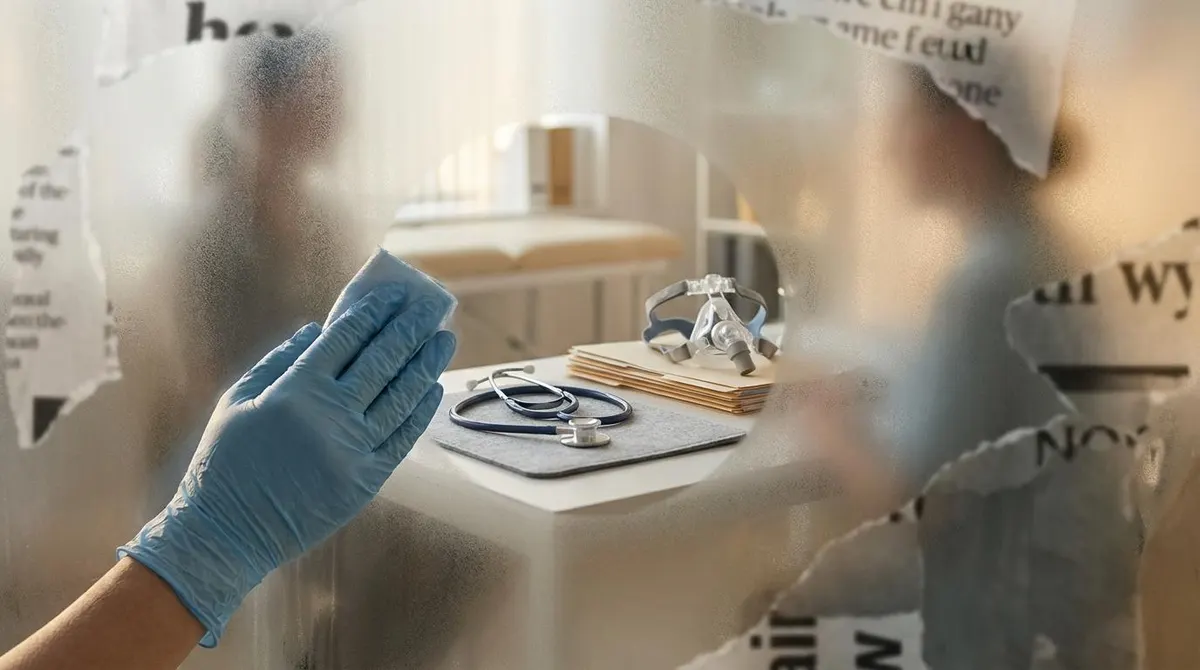
Common myths about DOT physical requirements make the exam seem harsher than it is. The real standard is whether you can drive safely, whether a condition is stable, and whether the examiner has enough evidence to make a sound decision.
MYTH: Any diagnosis of sleep apnea means you automatically fail.
FACT: sleep apnea is not an automatic failure. The FMCSA handbook focuses on whether obstructive sleep apnea is likely to impair safe driving, especially through excessive sleepiness or poor control. Drivers with treatment adherence and adequate follow-up may still qualify.
MYTH: high blood pressure means instant disqualification.
FACT: High blood pressure does not always lead to failure. FMCSA hypertension guidance allows different certification periods depending on the blood pressure reading, and many drivers receive either a 1-year certificate or a one-time 3-month certificate while improving control.
MYTH: Using methadone automatically disqualifies you from commercial driving.
FACT: The 2024 FMCSA handbook states that the prior reference to methadone has been removed from the advisory criteria and its use does not automatically preclude medical certification. The examiner still has to assess safety carefully and may need documentation from the prescribing clinician.
MYTH: The routine urine test is secretly a drug test.
FACT: The routine urine test in the physical is part of the health screening used in the medical examination. DOT drug testing is governed under separate drug and alcohol testing rules and follows a different process.
KEY TAKEAWAY: The strictness of the DOT Physical comes from safety standards, but many feared disqualifiers depend on control, documentation, and examiner judgment rather than automatic failure.
The best long-term strategy is to manage your health before the next exam is due.
How Can You Stay Compliant Between Exams?
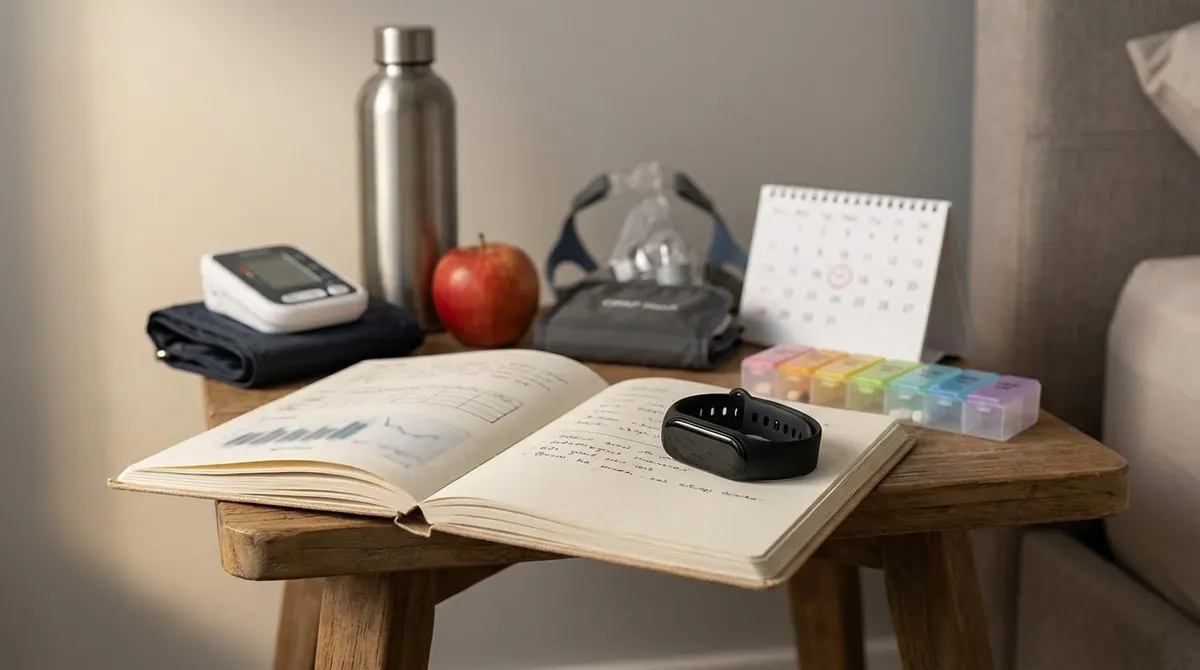
The most effective way to keep passing future DOT medical exams is to manage health continuously, not only before the appointment. Proactive care reduces surprises, protects your livelihood, and supports safer driving.
Health management is the ongoing work of monitoring conditions, taking treatment consistently, and following up before a problem becomes an exam-day issue. Health management matters because many DOT certification problems begin months before the appointment.
Focus on blood pressure requirements, sleep quality, medication side effects, diabetes control, weight trends, and regular check-ups with a trusted medical provider. If you snore heavily, wake up unrefreshed, or struggle with daytime fatigue, looking into dumbo.health resources on sleep apnea causes, sleep journals, or wearable sleep tracking can help you recognize patterns early.
Commercial driving safety depends on more than passing paperwork. Cardiovascular health, respiratory functions, alertness, neurological exam stability, and treatment adherence all affect real-world risk. People who monitor issues early often find a provider close to you before a small problem turns into a certificate problem.
A practical between-exams plan includes:
Recheck high blood pressure regularly
Keep medication lists current
Save specialist notes and test results
Use sleep treatment consistently if prescribed
Address fatigue, chest symptoms, dizziness, or new neurological symptoms early
Schedule follow-up before recertification deadlines
KEY TAKEAWAY: Ongoing health management is the easiest way to protect your DOT Certification and reduce the risk of delays at your next exam.
Below are direct answers to the questions drivers ask most often.
Frequently Asked Questions
What disqualifies you from a DOT physical?
A DOT physical can be failed when a condition creates an unacceptable safety risk or when the examiner cannot verify that the condition is controlled well enough for safe driving. Common reasons include severely elevated blood pressure, uncontrolled diabetes, untreated sleep apnea with significant daytime sleepiness, recent serious cardiovascular disease, seizure-related concerns, severe hearing loss that does not meet standard even with a hearing aid, or vision that does not meet the visual acuity standard. Missing records can also block certification. In many cases, the issue is not permanent disqualification. The issue is that more documentation or better medical control is needed before certification can be issued.
How strict is a DOT physical?
A DOT physical is strict in the sense that it follows federal safety standards, but it is not designed to fail healthy working drivers for minor issues. The examiner is trying to determine whether you can safely operate a commercial motor vehicle, not whether you are medically perfect. Many drivers with chronic medical conditions still qualify when the condition is stable, monitored, and documented. The exam becomes stricter when there is a risk of sudden incapacity, unsafe sleepiness, uncontrolled blood pressure, or medication effects that could impair judgment or reaction time. If you need providers in your area, choose one that regularly performs DOT medical exams.
Is methadone disqualifying for DOT?
Methadone is not automatically disqualifying under the current FMCSA handbook. The handbook states that the prior specific reference to methadone has been removed and that its use does not automatically preclude medical certification. However, the Certified Medical Examiner must decide whether treatment with methadone, alone or with other medications, can be used safely in the context of commercial driving. That usually means the examiner may want information from the prescribing clinician about stability, side effects, dose, and whether the medication adversely affects alertness or driving safety.
Can you pass a DOT physical after spinal fusion or a back problem?
Yes, many drivers can pass after spinal fusion or another back problem if they have recovered enough to perform driving tasks safely. A prior surgery is not an automatic failure. The examiner usually cares most about function, pain control, range of motion, neurological deficits, weakness, and medication side effects. If you have had recent surgery, bring operative notes, follow-up records, and clearance information from your treating clinician. A spine check during the physical exam is intended to evaluate current function, not punish you for a past procedure. If recovery is still incomplete, you may need a later re-evaluation.
Do you need to pass a DOT physical to be a courier?
Not every courier needs a DOT physical. The answer depends on whether the job involves operating a commercial motor vehicle under FMCSA rules, including certain weight and passenger thresholds and interstate commerce rules. Some courier roles use smaller vehicles that fall outside the standard DOT medical certification framework. Other courier roles involve larger commercial vehicles and do require a DOT medical exam and possibly a Commercial Driver's License. The safest approach is to ask the employer what class of vehicle you will be operating and whether the role is regulated. A provider near you that performs DOT exams can often explain the distinction.
What happens if sugar shows up in your urine during the DOT physical?
Sugar in the urine test does not automatically mean you fail the DOT physical. It does mean the examiner may want more information because sugar in urine can suggest diabetes or poor glucose control. The routine urine test is a health screen used in the physical examination, not a final diagnosis by itself. The examiner may ask about symptoms, medications, blood sugar levels, A1C level, or outside records from your medical provider. Some drivers are still certified, while others receive shorter certification or determination pending until the underlying issue is clarified.
Conclusion
The requirements to pass a DOT Physical come down to one core question: can you safely operate a commercial motor vehicle without undue risk to yourself or others. That means meeting minimum standards for vision, hearing, blood pressure, and overall medical fitness, while also showing that any chronic medical conditions are stable and well documented. The process is much easier when you prepare early, bring complete records, and address warning signs before exam day. If sleep-related risk is part of your story, dumbo.health's guide to what sleep apnea is is a smart next step for understanding symptoms, testing, and treatment options.
Related DOT Physical Topics
- What Happens During the DOT Physical Exam The Complete Guide for Drivers
- What are the current DOT requirements for sleep apnea testing for commercial drivers
- What Is the Difference Between a DOT and Non-DOT Physical
- What Does DOT Stand for in a DOT Physical
- What Is the Urine Test for in a DOT Physical
- New DOT Physical Requirements What Drivers MUST Know About New Updates
- What blood pressure do you need to pass a DOT physical
- DOT Physical Blood Pressure Requirements What Drivers Need to Know
- Is a DOT physical the same as a regular physical
- How to Pass a DOT Physical The Complete Commercial Driver's Guide
- The DOT Physical Exam Ensuring You're Fit for the Road
- What Happens If Your DOT Physical Expires Compliance Guide for Commercial Drivers
- Does a DOT Physical Test for Weed or THC The Complete Guide for Commercial Drivers
- What Can Disqualify You From a DOT Physical
- The Ultimate DOT Physical Guide for Commercial Drivers (2025–2026)
- Can You Pass a DOT Physical with Epilepsy
- Remote DOT Physical The Complete Guide for Commercial Drivers
- DOT Physical Out of Pocket What Commercial Drivers Actually Pay
- Navigating the Florida DOT Physical Your Essential Guide for CDL Drivers
- DOT Physical Cost Breakdown What Drivers Pay & Why
- Can You Pass a DOT Physical With One Eye
- Can You Pass a DOT Physical With a Pacemaker
- What Should You Bring to a DOT Physical
- DOT Physical Forms & Paperwork The Complete Guide for Commercial Drivers
- What Forms Do You Need for a DOT Physical
- DOT Physical & Alcohol Requirements
- DOT Physical ICD-10 & Billing Codes The Complete Guide for Accurate Compliance and Reimbursement
- DOT Physical Vision & Eye Requirements
- Your Complete Guide What's Included in a DOT Physical Exam
- Online DOT Physical Self-Pay The Complete Guide for CDL Drivers and Owner-Operators
- How Do You Submit Your DOT Physical to the DMV
- DOT Physical Insurance & Recertification The Complete Driver's Guide
- Can You Pass a DOT Physical With a Hernia
- Online DOT Physical The Complete Guide for Commercial Drivers and Medical Examiners
- DOT Physical Insurance or Self Pay How to Choose the Right Payment Option for Your Exam
- Can you pass a DOT physical with sleep apnea
- What should I expect at a DOT physical
- What Does a DOT Physical Consist Of
- What happens if you fail a DOT physical due to sleep apnea
- DOT Physical at Urgent Care What Commercial Drivers Need to Know
- Can You Get a DOT Physical in Any State The Complete Guide for Commercial Drivers
- Can You Pass a DOT Physical with Diabetes
- Can You Pass a DOT Physical with High Blood Pressure
- BMI for DOT Physical What Commercial Drivers Need to Know
- What are the current FMCSA guidelines on sleep apnea for commercial drivers
- DOT Physical & Drug Test What Drivers Need to Know
- DOT Physical Texas The Essential Guide to Your Exam, Medical Card, and CDL Compliance
- DOT Physical Requirements A Complete Guide for CDL Drivers
- What eye chart is used for a DOT physical
- What Do They Check During a DOT Physical
- Failing a DOT Physical What Every Commercial Driver Needs to Know
- What is DOT Physical
- What drugs do they test for in a DOT drug test
- Are There New DOT Rules or Laws on Sleep Apnea Testing
- Does a DOT physical include a drug test
- DOT Physical Self Pay Cost
- When Can Sleep Apnea Affect a DOT Physical
- Is a drug test required for a DOT physical
- Telehealth Dot Physical
- Who needs a DOT physical
- Does insurance cover a DOT physical
- DOT Physical Online Cost
- DOT Physical Duration and Validity How Long Your Medical Card Lasts
- Online DOT Physical Without Insurance A Complete Guide for Commercial Drivers
- Why do they measure your neck during a DOT physical
- Navigating Your DOT Physical with Common Medical Conditions
- Can You Fail a DOT Physical for Being Overweight
- How can drivers with sleep apnea qualify again after a failed DOT physical
- Do They Check for Hernia During a DOT Physical
- Walk In DOT Physical Self Pay
- Are there legal requirements for drivers with sleep apnea
- DOT physical self pay guide for commercial drivers paying out of pocket
- Can You Get a DOT Physical Online
- DOT Physical Exam Basics
- Can You Get a Second Opinion on Your DOT Physical A Complete Guide for Commercial Drivers
- Cheap DOT Physical Online
- Same Day DOT Physical
- Virtual DOT Physical
- DOT Physical Cash Pay
- Can you fail a DOT physical because of sleep apnea
- Online DOT Exam What Drivers and Medical Examiners Need to Know
- Do They Check Your Private Parts During a DOT Physical
- DOT Physical Chiropractor Your Complete Guide to CDL Exams
- Can You Fail a DOT Physical for High Blood Pressure
- Non-DOT Physical A Comprehensive Guide to Workforce Health and Safety
- Is a Sleep Study Required for a DOT Physical
- Do You Have to Pee During a DOT Physical
- Can You Fail a DOT Physical
- Online CDL Physical
- Essential 171 DOT Definitions for Commercial Drivers
- 2026 DOT Inspection Dates
- Home Sleep Apnea Test for Commercial Drivers The CDL Holder's Complete Guide
- DOT sleep apnea test at home
- Why DOT Sleep Tests at Home Matter for Your Career and Health
- What Precautions Should Drivers With Sleep Apnea Take
- CDL PHYSICAL SELF PAY
- DOT Medical Exam Self-Pay A Complete Guide for Commercial Drivers
- The Comprehensive Guide to Suboxone, Sleep Apnea, and FMCSA Compliance for Commercial Motor Vehicle Operators
- Navigating Your CDL Health Requirements
- Medical Examination Report (MER) – Form MCSA-5875 The Complete Guide for Commercial Drivers
Take the next step before your DOT physical
Start with the free quiz if you are unsure about your risk, or order an at-home sleep test if you have already been flagged for possible sleep apnea.
AI summary
A DOT physical is a medical certification exam required for many commercial motor vehicle drivers in interstate commerce under Federal Motor Carrier Safety Administration (FMCSA) rules. The exam must be performed by a National Registry Certified Medical Examiner, who may issue a Medical Examiner’s Certificate (medical card). Passing is based on meeting minimum safety standards and showing stable, well-documented health conditions. The exam includes a medical history review, vitals (including blood pressure), a system-based physical exam, vision and hearing testing, and required urinalysis for health screening (not a DOT drug test). Vision standards on FMCSA Form MCSA-5875 include at least 20/40 acuity in each eye and at least 70 degrees field of vision in each eye, with or without correction. Hearing may be confirmed by a forced whisper test at 5 feet or audiometry thresholds. Common reasons for extra review include hypertension (Stage 3 above 180/110 is disqualifying until controlled), diabetes (insulin-treated drivers need the MCSA-5870 form), obstructive sleep apnea and CPAP compliance, cardiovascular disease, seizure concerns, neurological deficits, and sedating medications. Outcomes can be full certification (often up to 24 months), shorter certification, determination pending, or no certification until issues are addressed.

Nicolas Nemeth
Co-Founder
Nico is the co-founder of Dumbo Health, a digital sleep clinic that brings the entire obstructive sleep apnea journey home. Patients skip the sleep lab and the long wait to see a specialist. Dumbo Health ships an at home test, connects patients with licensed sleep clinicians by video, and delivers CPAP or a custom oral appliance with ongoing coaching and automatic resupply in one clear subscription.
Keep reading

How Long Does a DOT Physical Take? A Complete Guide for Commercial Drivers

What Happens If You Fail a DOT Drug Test? The Complete Guide for Commercial Drivers


