What should I expect at a DOT physical?
A DOT physical is a federally required medical exam used to confirm a commercial driver can safely operate a commercial motor vehicle. This guide explains who needs a medical certificate and why FMCSA screening focuses on preventing sudden medical events on the road. It walks through what happens at the appointment, including history review, vision and hearing testing, vital signs, urinalysis, and a full physical exam. It outlines documentation to bring for conditions like hypertension, diabetes (including insulin forms), sleep apnea (CPAP compliance), and cardiac history. It also explains certification outcomes, renewal timing, and how to avoid delays by verifying your examiner’s National Registry status.
Struggling with sleep?
Find out if sleep apnea is the reason.
FDA-cleared. $149 flat. Physician-reviewed results in 48 hours.

What should I expect at a DOT physical?
A DOT physical is a mandated clinical evaluation ensuring commercial drivers possess the physiological capacity to operate heavy vehicles safely. According to the Federal Motor Carrier Safety Administration, this certification acts as a critical safeguard against sudden medical incapacitation on public roadways.This comprehensive guide covers the precise medical standards required to obtain your Medical Examiner's Certificate, the rigorous step-by-step clinical procedures involved, and the strategies for managing chronic conditions like hypertension and sleep apnea. By understanding the 2026 regulatory updates and clinical expectations, commercial operators can proactively manage their occupational health, avoid unnecessary certification delays, and maintain uninterrupted commercial driving privileges.
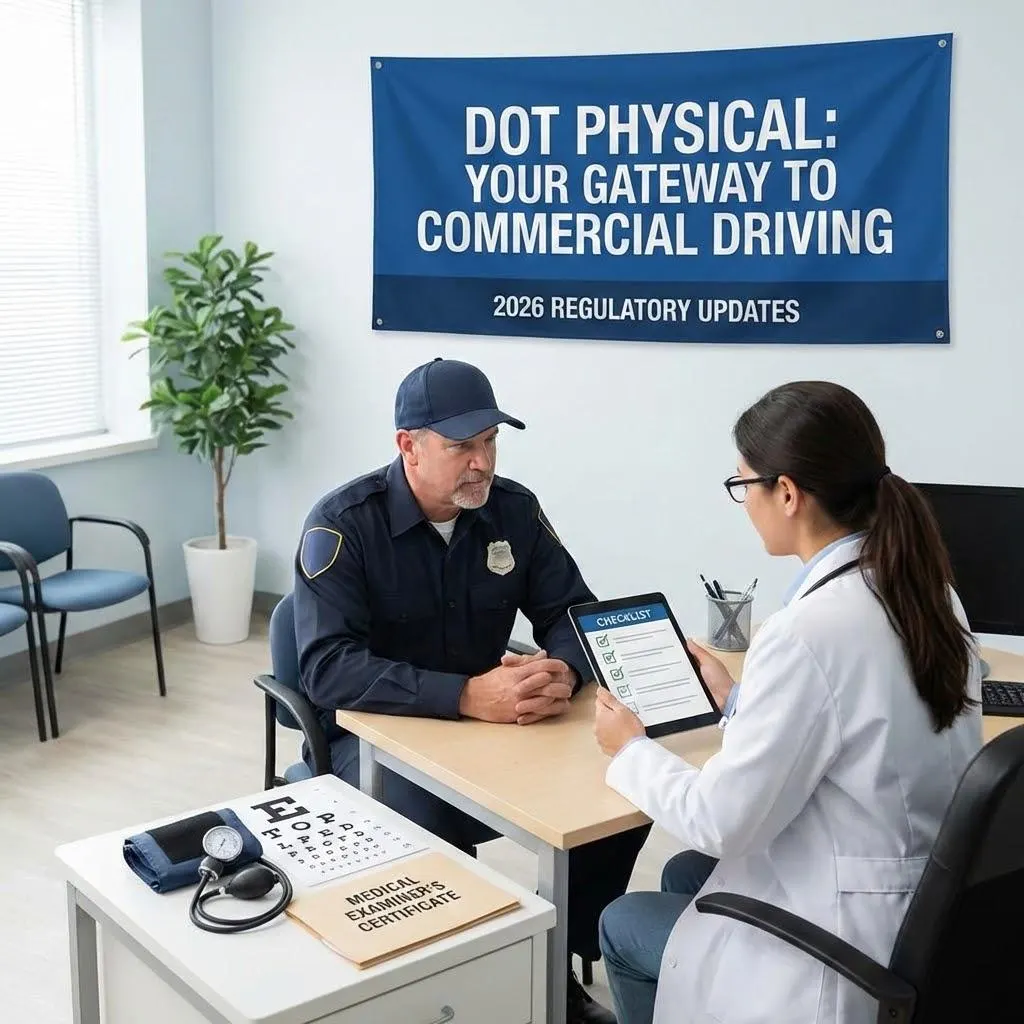
What is a DOT Physical and Who Needs It?
The Department of Transportation physical exam is a specialized occupational health assessment required for anyone operating a commercial motor vehicle in interstate commerce. This mandatory evaluation confirms that the applicant has no physical, mental, or organic defect that would compromise their ability to safely navigate a commercial vehicle.
Department of Transportation physicals are concise medical evaluations required for specific classes of professional drivers. They matter because they prevent medically compromised individuals from operating hazardous machinery, thereby protecting public infrastructure and civilian life.
Federal regulations explicitly dictate who falls under this mandate. Any individual operating a vehicle with a gross vehicle weight rating exceeding 10,000 pounds must hold a valid medical certificate.Furthermore, the requirement extends to drivers of vehicles designed to transport 16 or more passengers, including the driver, and anyone operating a vehicle of any size that is transporting hazardous materials requiring a placard.These statutes apply uniformly to long-haul truckers, interstate bus operators, and regional hazardous material couriers.
Many patients report confusion regarding state versus federal jurisdictions. While the Federal Motor Carrier Safety Administration governs interstate travel, most state licensing agencies have adopted these identical physical qualification standards for intrastate commercial drivers as well.Operating a commercial vehicle without a current, valid medical certificate is a severe violation that can result in immediate out-of-service orders and heavy financial penalties for both the driver and the employing motor carrier.
Not sure if sleep apnea applies to you?
Take our 2-minute sleep risk quiz to see whether sleep apnea could affect your DOT physical. No account required.
IMPORTANT: Driving a commercial motor vehicle without a valid medical certificate can result in the immediate suspension or revocation of your commercial driving privileges by your State Driver Licensing Agency.
KEY TAKEAWAY: A Department of Transportation medical evaluation is a strict federal requirement for anyone operating large passenger vehicles, transporting hazardous materials, or driving trucks over 10,000 pounds. This fundamental certification ensures baseline operational safety across all commercial transit sectors.
The Purpose: Ensuring Driver and Public Safety
The core purpose of the medical certification process is to mitigate the risk of catastrophic traffic incidents caused by acute medical emergencies or chronic driver impairment. By rigorously screening for conditions that cause sudden loss of consciousness or delayed reaction times, the assessment protects both the driver and the public.
Commercial motor vehicles present a unique kinetic threat due to their massive size and the long hours their operators spend on the road. According to the(https://www.cdc.gov/niosh/motor-vehicle/long-haul-truck-drivers/index.html), commercial truck drivers face profound occupational health disparities, including disproportionately high rates of obesity, diabetes, and cardiovascular disease.These conditions are exacerbated by sedentary work environments, irregular sleep schedules, and limited access to nutritious food along interstate routes.The medical examination functions as a critical public health intervention, catching deteriorating health conditions before they precipitate a fatal event at highway speeds.
The Federal Motor Carrier Safety Administration reports that while commercial vehicles account for a significant portion of highway miles, standardized medical screening drastically reduces the incidence of crashes attributed to driver physiological failure.The medical examiner evaluates not just the present health of the driver, but their projected stability over the next 24 months. This forward-looking risk assessment is why conditions like high blood pressure or insulin dependency require such rigorous documentation.
Clinicians frequently observe that the mandated physical is the only routine healthcare interaction many long-haul drivers experience.Consequently, the examination serves a dual purpose. It acts as a regulatory gatekeeper for the Department of Transportation while simultaneously functioning as an early warning system for the driver, highlighting chronic conditions that require primary care intervention.
DID YOU KNOW: Nearly half of the commercial truck driving population reports a past diagnosis of hypertension or pre-hypertension, making cardiovascular screening the most critical aspect of the evaluation.
KEY TAKEAWAY: The medical evaluation is designed to prevent highway fatalities by identifying and managing chronic occupational health conditions that could impair a driver's cognitive or physical abilities. Regular medical oversight is the cornerstone of a safe commercial transportation network.
The Role of the FMCSA-Certified Medical Examiner
An FMCSA-certified medical examiner is a specialized healthcare provider authorized by the federal government to determine if a commercial driver meets the rigorous physical qualification standards. Their specific role is to objectively evaluate driver health against federal statutes, not to act as the driver's primary care physician.
Certified Medical Examiners are clinical professionals trained to evaluate occupational safety risks. They matter because their objective assessments are the final legal determinant of a driver's fitness to operate heavy machinery.
Prior to 2014, commercial drivers could obtain a physical from nearly any medical practitioner. To eliminate inconsistencies and ensure a deep understanding of occupational demands, the federal government established the National Registry of Certified Medical Examiners.Today, a driver must visit a professional listed on this registry to obtain a valid certificate.These examiners include doctors of medicine, doctors of osteopathy, physician assistants, advanced practice nurses, and doctors of chiropractic.
Medical examiners undergo specialized training to understand the physical and psychological stressors of commercial driving.They learn to identify subtle clinical signs of sleep apnea, neurological deficits, and cardiovascular instability. During the evaluation, the examiner must synthesize the driver's medical history, current medication list, and real-time physical findings to render a binding certification decision.
Already diagnosed and need CPAP support?
Dumbo Health helps patients start CPAP without the usual confusion, paperwork, or upfront cost. Equipment, setup, supplies, and ongoing support are all handled in one place.
When looking to find a provider near you, it is imperative to verify their active status on the National Registry. If an uncertified clinician performs the physical, the State Driver Licensing Agency will reject the certificate, resulting in lost wages and operational downtime. The examiner also holds the authority to issue temporary certifications or demand clearance from a medical specialist before granting a full two-year approval.
TIP: Always confirm that your chosen healthcare provider's National Registry number is active before scheduling your appointment to ensure your paperwork will be legally recognized.
KEY TAKEAWAY: Only healthcare professionals who have completed federal training and maintain active status on the National Registry are legally permitted to issue commercial medical certificates. Verifying your provider's credentials prevents critical delays in your licensing process.
Preparing for Your DOT Physical: A Strategic Approach for Success
Preparing for your DOT physical requires gathering comprehensive medical records, optimizing your short-term health metrics, and organizing specific clearance forms. Proper preparation minimizes clinical friction and drastically reduces the likelihood of receiving a temporary disqualification.
A successful evaluation begins weeks before you step into the clinic. Drivers must compile a complete, accurate medical history. This includes a detailed list of all current prescription medications, over-the-counter drugs, and daily supplements.You must know the exact dosages and the names of the prescribing doctors.If you have a preexisting condition, bringing medical records that prove the condition is stable is essential.
For individuals with specific diagnoses, specialized documentation is non-negotiable. Drivers utilizing a CPAP machine must bring a data compliance report covering at least the last 90 days.Drivers with a history of cardiac events, such as a heart attack or stent placement, need a clearance letter from their cardiologist confirming they are asymptomatic and fit for duty.Those relying on the alternative vision standard must present a recently completed Vision Evaluation Report.
Proactive health strategies in the days leading up to the examination can positively influence your vital signs. Clinicians advise reducing sodium intake, eliminating caffeine, and staying highly hydrated for at least 48 hours before the test.These simple behavioral adjustments help stabilize blood pressure and ensure the urinalysis is not skewed by severe dehydration.
What you avoid is just as critical as what you consume. Drivers should avoid using tobacco products or consuming energy drinks on the morning of the exam, as these substances cause acute spikes in blood pressure and resting heart rate.Arriving well-rested and avoiding stressful activities immediately prior to the appointment will yield the most accurate physiological baseline.
IMPORTANT: Do not empty your bladder immediately before arriving at the clinic, as you will be required to provide a urine sample upon arrival for metabolic screening.
KEY TAKEAWAY: Arriving with perfectly organized medical records, specialist clearance letters, and stabilized vital signs is the most effective way to guarantee a seamless certification process. Preparation eliminates the anxiety and delays associated with incomplete clinical data.
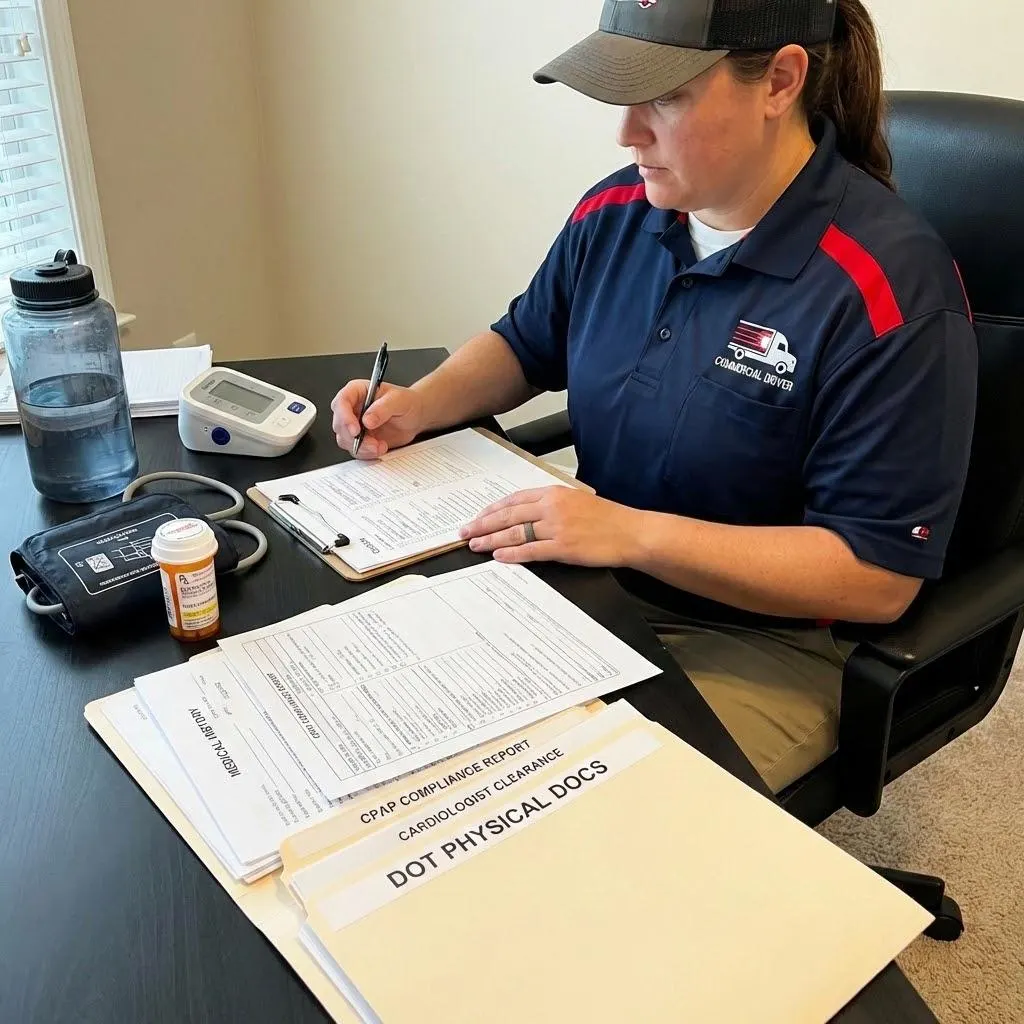
Step-by-Step Through the DOT Physical Examination
The step-by-step DOT physical examination is a comprehensive clinical assessment evaluating sensory acuity, metabolic health, cardiovascular stability, and neurological function. This rigorous process ensures drivers possess the physiological capacity to operate commercial motor vehicles safely.
The appointment begins with the Medical History Review.The examiner will review the questionnaire you completed, asking detailed questions regarding past surgeries, hospitalizations, psychiatric conditions, and any history of substance use.Honesty is paramount during this phase, as omitting critical medical history is a federal offense that can lead to permanent disqualification.
Next, the clinician assesses your sensory functions. The vision test demands a visual acuity of at least 20/40 in each eye, with or without corrective lenses.You must also demonstrate a peripheral vision arc of at least 70 degrees and the ability to distinguish standard traffic colors.The hearing test is typically conducted via a forced whisper at a distance of five feet.If you utilize hearing aids, you must wear them during this assessment.
The evaluation then transitions to vital signs and the urinalysis. The examiner measures your height, weight, pulse rate, and blood pressure.The urine sample is not utilized for a drug screen during the standard physical; instead, it tests for specific gravity, protein, blood, and sugar.Elevated sugar levels in the urine often serve as the first clinical indicator of unmanaged diabetes, prompting further investigation.
Finally, the examiner conducts a head-to-toe physical assessment.They will auscultate your heart and lungs to detect murmurs or respiratory impairment.They will examine your abdomen for hernias or enlarged organs.The musculoskeletal and neurological evaluation checks your spine, extremities, reflexes, and gait.The examiner is looking for any limitation of motion, muscle weakness, or loss of equilibrium that would hinder your ability to steer a heavy vehicle or react to an emergency.
If you are experiencing daytime fatigue that might affect your neurological baseline, learning about the9 most common sleep apnea symptoms to look out forcan help you address the issue before your evaluation.
DID YOU KNOW: The standard urinalysis performed during the commercial medical exam screens for metabolic disorders like kidney disease and diabetes, not illicit drugs.
KEY TAKEAWAY: The examination is a systematic review of your entire body, focusing heavily on vision, cardiovascular health, and physical mobility to ensure you can endure the rigors of commercial driving. Understanding each step demystifies the process and reduces clinical anxiety.
Navigating Common Medical Conditions and Potential Challenges for Drivers
Navigating common medical conditions requires commercial drivers to maintain strict pharmacological compliance and produce objective clinical data to prove their ailments are stable. Conditions like hypertension, diabetes, and sleep apnea do not guarantee disqualification if they are managed effectively.
High blood pressure is the most frequent hurdle drivers face. The Federal Motor Carrier Safety Administration uses a tiered system to determine certification length based on your blood pressure reading.If your pressure is below 140/90, you qualify for a two-year certificate.Stage 1 hypertension (140-159/90-99) limits certification to one year.Stage 2 hypertension (160-179/100-109) grants only a single three-month temporary certificate to allow time for medical intervention.A reading of 180/110 or higher is Stage 3 hypertension, which is an automatic, immediate disqualification until the pressure is controlled.
Diabetes management has evolved significantly. Drivers utilizing insulin must now use the Insulin-Treated Diabetes Mellitus Assessment Form.Your treating clinician must review at least three months of electronic blood glucose records and sign the form.You then have exactly 45 days to present this completed form to the medical examiner.Without this documentation, the examiner cannot legally issue a certificate.
Obstructive sleep apnea is another heavily scrutinized condition due to its impact on cognitive alertness. Examiners screen for this disorder based on body mass index, neck circumference, and a history of loud snoring.If you are wonderingwhat is sleep apnea, it is a respiratory condition that causes fragmented sleep. Drivers diagnosed with this condition must use a Continuous Positive Airway Pressure machine. To pass the physical, you must provide a data download proving you use the machine for at least four hours a night on 70 percent of nights.If you are curious abouthow do at-home sleep studies work, they are often the first step in diagnosing this critical condition.
Cardiovascular and neurological histories also present strict challenges. Drivers recovering from a heart attack or stent placement face mandatory waiting periods - often 1 to 2 weeks for stents and up to 6 months for bypass surgery - before they can be evaluated.Neurological conditions like epilepsy carry profound restrictions; drivers generally must be entirely seizure-free and off all anti-seizure medication for 8 years to qualify for a federal exemption.
Finally, medication disclosure is a major challenge. Schedule I drugs, including all forms of marijuana regardless of state law, are strictly prohibited.Prescription medications that cause sedation, such as strong painkillers or certain anti-anxiety pills, require a letter from your prescribing doctor stating the medication will not impede your driving ability.However, the medical examiner retains the ultimate authority to disqualify you if they feel the medication poses a safety risk.
If you struggle with airway obstruction but cannot tolerate standard therapy, exploring(https://www.dumbo.health/blog/can-sleep-apnea-be-treated-without-cpap-yes-heres-how) may provide alternative solutions acceptable under certain clinical guidelines.
IMPORTANT: The use of anti-seizure medication for the prevention of seizures is an automatic disqualifying factor under federal guidelines, requiring a rigorous exemption process.
KEY TAKEAWAY: Chronic diseases like hypertension, diabetes, and sleep apnea must be meticulously managed with objective medical data and strict treatment compliance to satisfy federal safety standards. Active health management is the only reliable way to maintain a long-term commercial driving career.
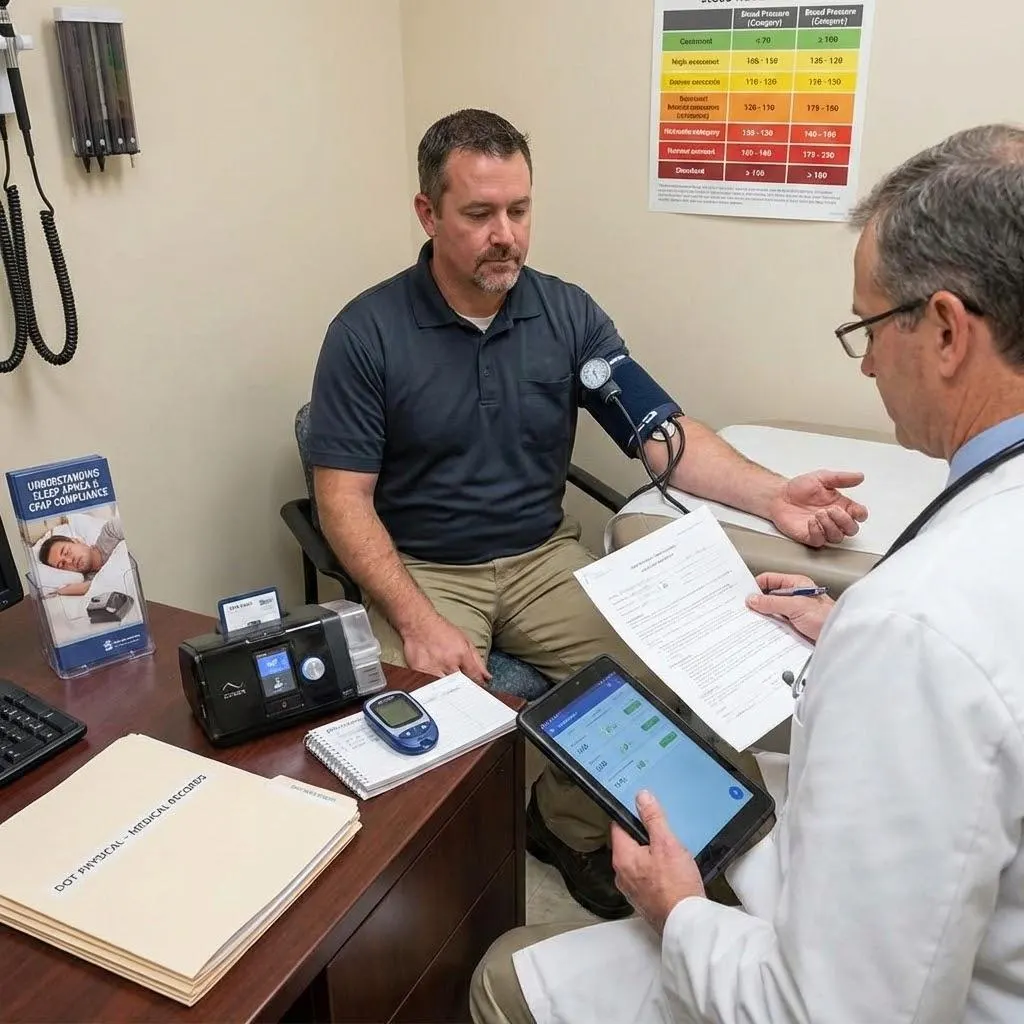
After Your DOT Physical: Understanding the Outcome and Next Steps
Understanding the outcome of your DOT physical requires knowing how to handle your new certification card, navigating temporary disqualifications, and ensuring your state licensing agency properly records your medical status. The immediate post-exam period is critical for maintaining uninterrupted compliance.
If you pass the evaluation with no significant health restrictions, the examiner will issue a Medical Examiner's Certificate, valid for up to 24 months.You should retain a physical copy of this certificate in your personal records. Under the 2026 National Registry II system, the medical examiner is required to transmit your examination results electronically to the federal database by midnight of the following day.The federal system then forwards this data to your State Driver Licensing Agency to update your motor vehicle record.
If you do not pass, you may receive a temporary disqualification or a shortened certification period.A shortened certification - such as three months or one year - is not a punishment; it is a clinical mechanism used to monitor conditions like elevated blood pressure or new CPAP therapies.If you are fully disqualified, the examiner must explain the specific medical reason.You are permitted to seek a second opinion from another certified provider, but that provider must evaluate you against the exact same federal criteria.
Following the exam, drivers must not assume the electronic transmission is flawless. It is your responsibility to verify with your state agency that your medical status has been successfully updated on your driving record.Mismatched identifiers or system outages can cause delays, and driving while your state record shows an expired medical status can result in a license downgrade.
TIP: Always request and keep a paper copy of your Medical Examiner's Certificate, as it serves as vital backup proof if electronic transmission errors occur between the clinic and your state agency.
KEY TAKEAWAY: After your physical, securing your physical certificate and verifying its electronic transmission to your state licensing agency ensures your commercial driving privileges remain active and legally sound. Proactive verification prevents unexpected operational downtime.
Renewing Your DOT Physical: Staying Compliant
Renewing your DOT physical on time is a mandatory administrative task that ensures continuous compliance with federal safety regulations. Failing to renew before your current certificate expires results in the immediate invalidation of your commercial driving privileges.
The renewal process involves undergoing the exact same comprehensive medical evaluation as your initial exam.Drivers should actively track their expiration dates, as the federal government does not send automated renewal notices. Industry experts recommend scheduling your renewal appointment at least 30 days prior to your current expiration date. This buffer period is crucial because it allows ample time to address any unexpected health issues, such as a slight spike in blood pressure or a missing CPAP compliance report, without suffering a lapse in certification.
If you are operating on a shortened medical certificate due to a monitored health condition, your renewal timeline is compressed.Drivers certified for only three or six months must remain highly proactive in scheduling their follow-up evaluations.Once a condition like high blood pressure is proven to be stable and well-managed over time, the examiner may extend your next renewal window to a full year.
There is no grace period for an expired medical certificate. If your certificate expires at midnight, you cannot legally drive a commercial vehicle the following morning.Operating with an expired medical card not only subjects the driver to severe fines but also exposes the motor carrier to liability and increased insurance premiums.
IMPORTANT: If your medical certificate expires, your State Driver Licensing Agency will automatically downgrade your commercial license to a standard civilian license until a new certificate is processed.
KEY TAKEAWAY: Anticipating your expiration date and scheduling your renewal exam well in advance protects your commercial license from automatic downgrades and keeps you legally positioned to work. Continuous compliance requires disciplined administrative foresight.
Finding a Qualified Medical Examiner for Your DOT Exam
Finding a qualified medical examiner for your DOT exam requires balancing cost, location convenience, and verifying the provider's active status on the federal registry. Selecting the right clinical facility ensures a smooth, legally binding evaluation.
Drivers have multiple options when selecting a healthcare facility, ranging from dedicated occupational health centers to local walk-in clinics.Each facility type offers different advantages regarding cost and appointment availability. When searching for providers in your area, it is critical to confirm that the specific clinician performing the exam is actively listed on the National Registry of Certified Medical Examiners.An exam performed by an uncertified doctor is invalid.
The cost of the evaluation varies significantly based on the chosen facility type, and these costs are typically paid out-of-pocket by independent drivers.
| Facility Type | Average Cost | Who It Is Best For | Turnaround Time |
|---|---|---|---|
| Chiropractor's Office | $50 - $80 | Budget-conscious independent drivers | Usually fast, requires appointment |
| Urgent Care / Walk-in Clinic | $75 - $125 | Drivers needing immediate, same-day exams | Variable depending on daily patient volume |
| Occupational Health Clinic | $80 - $160 | Fleet drivers requiring concurrent drug testing | Highly efficient, familiar with DOT paperwork |
| Private Medical Practice | $100 - $200+ | Drivers with complex, preexisting medical histories | Slowest, requires scheduling weeks in advance |
Occupational health clinics are generally the most efficient option for commercial operators. These facilities specialize in workplace compliance, meaning their staff is intimately familiar with the paperwork, the required clinical thresholds, and the National Registry transmission process.urgent care centers are excellent for drivers who notice their certificate is expiring imminently and need a walk-in appointment.Conversely, using your primary care physician might be more comfortable, but they are frequently the most expensive option and may lack the specialized occupational health focus.
TIP: If your employer requires a concurrent federal drug screen, scheduling your physical at an occupational health clinic ensures both tests can be completed simultaneously in one visit.
KEY TAKEAWAY: Selecting a certified provider based on facility type, cost, and expertise streamlines the certification process. Evaluating your local options ensures you receive an accurate, legally valid examination without overpaying.
Common Myths About DOT Physicals Debunked
Common myths about the DOT physical generate unnecessary anxiety and lead commercial drivers to make poor health decisions. Debunking these pervasive misunderstandings with factual clinical data ensures drivers approach the examination with confidence and transparency.
MYTH: Failing the physical is a permanent career-ender. FACT: A failed medical examination is rarely permanent.Most disqualifications are temporary and condition-specific; once the driver successfully treats the underlying issue - such as stabilizing high blood pressure or managing diabetes - they can reapply and regain their commercial certification.
MYTH: The required urinalysis is a secret drug test. FACT: The standard physical urinalysis solely screens for metabolic health indicators like specific gravity, blood, protein, and sugar to detect kidney disease or diabetes.A federal drug screen is a completely separate protocol that requires specialized chain-of-custody paperwork, though employers often request both be performed concurrently.
MYTH: You cannot pass if you have a history of heart disease. FACT: Drivers with a history of cardiovascular disease, including heart attacks or stent placements, can pass the evaluation.They must complete a mandatory waiting period, remain asymptomatic, and provide clearance from a cardiologist demonstrating they can endure rigorous cardiovascular stress testing.
MYTH: Using a CPAP machine automatically disqualifies you from driving. FACT: Treating sleep apnea with a CPAP machine is exactly what allows you to maintain your certification.The Federal Motor Carrier Safety Administration requires proof of therapy compliance; utilizing the machine for four hours a night on 70 percent of nights keeps you legally qualified to drive.
MYTH: Drivers can hide past medical history from the examiner. FACT: Falsifying or omitting medical history on the official federal questionnaire is a serious regulatory violation.With the implementation of electronic health records and the National Registry database, examiners are increasingly equipped to cross-reference medical claims, and discovering hidden conditions leads to immediate, severe disqualification.
KEY TAKEAWAY: Dispelling pervasive myths about the medical certification process allows drivers to prioritize honest, proactive healthcare. Understanding that the system is designed to manage risk, rather than punish drivers, encourages better long-term occupational health.
Drive Safely, Drive Compliantly: Your Commitment to Transportation Safety
Maintaining your commercial medical certification requires a continuous commitment to personal health and regulatory compliance. The physical examination is not merely an administrative hurdle; it is the fundamental baseline for public safety on national highways.
Your role in the transportation sector carries immense physical and psychological demands. The sedentary nature of driving heavy machinery for up to eleven hours a day naturally predisposes operators to metabolic and cardiovascular decline.By viewing the medical guidelines not as a burden, but as a blueprint for longevity, you can proactively defend against career-ending ailments. Engaging in mild daily physical activity during mandated rest periods, selecting heart-healthy nutritional options, and prioritizing consistent sleep hygiene are the most effective strategies for extending your commercial driving career.
Ultimately, your medical certificate is a testament to your professional reliability. When you manage your blood pressure, comply with CPAP therapies, and communicate honestly with your medical examiner, you uphold the highest standards of the transportation industry. Staying proactive about your health ensures that you return home safely after every route while protecting the countless civilians who share the road. For more information on managing your rest and recovery,explore obstructive sleep apnea in adults: symptoms, causes, and solutionsto optimize your health before your next examination.
KEY TAKEAWAY: A proactive approach to diet, exercise, and sleep hygiene guarantees long-term compliance with federal medical standards. Protecting your occupational health is the ultimate commitment to professional commercial driving safety.
Frequently Asked Questions
How Long Does a DOT Physical Typically Take?
A standard DOT physical takes approximately 30 to 45 minutes to complete from start to finish.This timeframe includes reviewing your medical history paperwork, checking your vital signs, testing your vision and hearing, and completing the head-to-toe physical assessment. If you arrive with complex preexisting conditions or missing medical records, the appointment may take significantly longer while the examiner attempts to verify your clinical stability.
What is the Average Cost of a DOT Physical?
The average cost of a DOT physical in 2026 ranges between $75 and $150, depending heavily on the type of facility you choose.Walk-in clinics and occupational health centers generally offer the most competitive pricing, while private primary care physicians tend to be more expensive.Drivers should contact providers in your area to compare prices, as independent operators usually pay this fee out-of-pocket.
Is Drug & Alcohol Testing Always Part of the DOT Physical?
No, a DOT drug and alcohol test is not a standard component of the required medical physical.The physical relies on a urinalysis to check for metabolic issues like sugar and protein, not illicit substances.However, many motor carriers mandate that a federal 5-panel drug screen be performed at the exact same time as the physical to streamline the hiring process.
Can I Fail My DOT Physical for Taking Prescription Medications?
Yes, certain prescription medications can cause you to fail the evaluation.Any medication classified as a Schedule I substance, or any prescription that causes severe sedation, cognitive impairment, or delayed reflexes, is strictly prohibited.If you take a controlled substance like a strong painkiller or anti-anxiety medication, you must provide a letter from your prescribing doctor confirming it will not impede your driving abilities.
What are Medical Exemptions, and How Do I Apply for One?
A medical exemption is a formal waiver granted by the FMCSA that allows a driver to operate a commercial vehicle despite not meeting a specific physical standard, such as the seizure or hearing requirements.To apply, you must submit an extensive application to the FMCSA containing your medical records, driving history, and a recent physical examination report.The federal review process can take up to 180 days to reach a final decision.
Does the DOT Physical Check for Diabetes?
Yes, the examination aggressively checks for signs of diabetes.The mandatory urinalysis screens for glycosuria, which is sugar in the urine, indicating poor metabolic control.If you are already diagnosed with diabetes, the examiner will require logs of your blood sugar.Drivers treated with insulin must present a specialized assessment form completed by their treating clinician to prove the condition is stable.
Conclusion
Securing your commercial medical certification is the most vital step in establishing and maintaining a safe, compliant career in the transportation industry. By thoroughly understanding the rigorous clinical standards, proactively managing chronic conditions like hypertension and sleep apnea, and arriving at the clinic fully prepared, you can navigate the examination process with confidence. Remember that this evaluation is not designed to end careers, but to ensure that every driver possesses the health and vitality required to navigate heavy machinery safely. Prioritizing your well-being guarantees your longevity on the road. For comprehensive guidance on managing your respiratory health and passing your upcoming evaluations, learn more about how to treat sleep apnea without CPAP through our specialized resources.
Related DOT Physical Topics
- What Does DOT Stand for in a DOT Physical
- What Should You Bring to a DOT Physical
- What Is the Difference Between a DOT and Non-DOT Physical
- What Happens If Your DOT Physical Expires Compliance Guide for Commercial Drivers
- What Can Disqualify You From a DOT Physical
- DOT Physical Out of Pocket What Commercial Drivers Actually Pay
- DOT Physical Cost Breakdown What Drivers Pay & Why
- What Forms Do You Need for a DOT Physical
- What Are the Requirements to Pass a DOT Physical
- Your Complete Guide What's Included in a DOT Physical Exam
- What Is the Urine Test for in a DOT Physical
- What blood pressure do you need to pass a DOT physical
- DOT Physical Blood Pressure Requirements What Drivers Need to Know
- New DOT Physical Requirements What Drivers MUST Know About New Updates
- DOT Physical at Urgent Care What Commercial Drivers Need to Know
- Is a DOT physical the same as a regular physical
- What Does a DOT Physical Consist Of
- What happens if you fail a DOT physical due to sleep apnea
- What Happens During the DOT Physical Exam The Complete Guide for Drivers
- BMI for DOT Physical What Commercial Drivers Need to Know
- DOT Physical & Drug Test What Drivers Need to Know
- What eye chart is used for a DOT physical
- What Do They Check During a DOT Physical
- Failing a DOT Physical What Every Commercial Driver Needs to Know
- What is DOT Physical
- What drugs do they test for in a DOT drug test
- Does a DOT Physical Test for Weed or THC The Complete Guide for Commercial Drivers
- DOT Physical Online Cost
- DOT Physical Vision & Eye Requirements
- How can drivers with sleep apnea qualify again after a failed DOT physical
- Does a DOT physical include a drug test
- Can You Pass a DOT Physical with Epilepsy
- DOT Physical Self Pay Cost
- Remote DOT Physical The Complete Guide for Commercial Drivers
- Navigating Your DOT Physical with Common Medical Conditions
- Navigating the Florida DOT Physical Your Essential Guide for CDL Drivers
- The Ultimate DOT Physical Guide for Commercial Drivers (2025–2026)
- When Can Sleep Apnea Affect a DOT Physical
- Walk In DOT Physical Self Pay
- Can You Pass a DOT Physical With One Eye
- Is a drug test required for a DOT physical
- How Do You Submit Your DOT Physical to the DMV
- Can You Get a DOT Physical Online
- Can You Pass a DOT Physical With a Pacemaker
- Telehealth Dot Physical
- DOT Physical Forms & Paperwork The Complete Guide for Commercial Drivers
- DOT Physical Exam Basics
- DOT Physical & Alcohol Requirements
- DOT Physical Duration and Validity How Long Your Medical Card Lasts
- DOT Physical Insurance & Recertification The Complete Driver's Guide
- DOT Physical ICD-10 & Billing Codes The Complete Guide for Accurate Compliance and Reimbursement
- Online DOT Physical Without Insurance A Complete Guide for Commercial Drivers
- Why do they measure your neck during a DOT physical
- Can You Fail a DOT Physical for Being Overweight
- What Precautions Should Drivers With Sleep Apnea Take
- Do They Check for Hernia During a DOT Physical
- Cheap DOT Physical Online
- Can You Pass a DOT Physical With a Hernia
- DOT physical self pay guide for commercial drivers paying out of pocket
- Online DOT Physical Self-Pay The Complete Guide for CDL Drivers and Owner-Operators
- Online DOT Exam What Drivers and Medical Examiners Need to Know
- DOT Physical Cash Pay
- Can You Get a Second Opinion on Your DOT Physical A Complete Guide for Commercial Drivers
- Can You Fail a DOT Physical for High Blood Pressure
- Same Day DOT Physical
- Virtual DOT Physical
- Can you fail a DOT physical because of sleep apnea
- Online DOT Physical The Complete Guide for Commercial Drivers and Medical Examiners
- Who needs a DOT physical
- How to Pass a DOT Physical The Complete Commercial Driver's Guide
- Do They Check Your Private Parts During a DOT Physical
- DOT Physical Chiropractor Your Complete Guide to CDL Exams
- DOT Physical Insurance or Self Pay How to Choose the Right Payment Option for Your Exam
- Can you pass a DOT physical with sleep apnea
- Can You Pass a DOT Physical with Diabetes
- Can You Pass a DOT Physical with High Blood Pressure
- What are the current DOT requirements for sleep apnea testing for commercial drivers
- Non-DOT Physical A Comprehensive Guide to Workforce Health and Safety
- DOT Physical Texas The Essential Guide to Your Exam, Medical Card, and CDL Compliance
- DOT Physical Requirements A Complete Guide for CDL Drivers
- Is a Sleep Study Required for a DOT Physical
- Do You Have to Pee During a DOT Physical
- The DOT Physical Exam Ensuring You're Fit for the Road
- Can You Fail a DOT Physical
- Online CDL Physical
- Are There New DOT Rules or Laws on Sleep Apnea Testing
- Essential 171 DOT Definitions for Commercial Drivers
- 2026 DOT Inspection Dates
- Why DOT Sleep Tests at Home Matter for Your Career and Health
- CDL PHYSICAL SELF PAY
- DOT sleep apnea test at home
- DOT Medical Exam Self-Pay A Complete Guide for Commercial Drivers
- What are the current FMCSA guidelines on sleep apnea for commercial drivers
- Guide to Obtaining and Managing Your DOT Medical Card Online
- Expected 2027 DOT Inspection Dates
- How Sleep Apnea Affects Overall Driving Safety
- Home Sleep Apnea Test for Commercial Drivers The CDL Holder's Complete Guide
- Sleep Apnea Test for CDL Drivers
- Are there legal requirements for drivers with sleep apnea
- How Does Sleep Apnea Affect Driving Ability
Take the next step before your DOT physical
Start with the free quiz if you are unsure about your risk, or order an at-home sleep test if you have already been flagged for possible sleep apnea.
AI summary
A DOT physical is a mandatory occupational health exam required for many commercial motor vehicle drivers to receive a Medical Examiner’s Certificate under Federal Motor Carrier Safety Administration (FMCSA) rules. It applies to interstate drivers operating vehicles over 10,000 pounds, vehicles carrying 16+ passengers, or placarded hazardous materials; many states use similar standards for intrastate drivers. The exam is performed by an FMCSA-certified medical examiner listed on the National Registry of Certified Medical Examiners. The visit includes: medical history review, vision testing (20/40 each eye, 70-degree peripheral vision, color recognition), hearing screening (forced whisper at 5 feet), vital signs and blood pressure, urinalysis (specific gravity, protein, blood, sugar), and a head-to-toe cardiovascular, respiratory, neurological, and musculoskeletal assessment. Common certification constraints involve hypertension tiers, insulin-treated diabetes requiring the Insulin-Treated Diabetes Mellitus Assessment Form, and obstructive sleep apnea requiring CPAP compliance data (4 hours/night on 70% of nights). Outcomes can include up to 24-month certification, shortened certificates, temporary disqualification, or disqualification. In 2026, results are transmitted electronically via National Registry II; drivers should keep a paper certificate and verify state record updates.

Nicolas Nemeth
Co-Founder
Nico is the co-founder of Dumbo Health, a digital sleep clinic that brings the entire obstructive sleep apnea journey home. Patients skip the sleep lab and the long wait to see a specialist. Dumbo Health ships an at home test, connects patients with licensed sleep clinicians by video, and delivers CPAP or a custom oral appliance with ongoing coaching and automatic resupply in one clear subscription.
Keep reading

How Long Does a DOT Physical Take? A Complete Guide for Commercial Drivers

What Happens If You Fail a DOT Drug Test? The Complete Guide for Commercial Drivers


