DOT Physical Insurance or Self Pay: How to Choose the Right Payment Option for Your Exam
Choosing how to pay for a DOT physical affects more than the exam fee, including scheduling speed, claim risk, and follow-up costs. This guide explains what the DOT medical exam evaluates and why it is often treated as an occupational requirement rather than preventive care. It outlines when insurance may help, such as employer-arranged visits, and how to verify coverage before booking. It also breaks down typical self-pay pricing, common hidden expenses, and how conditions like high blood pressure, diabetes, and obstructive sleep apnea can shorten certification and increase costs. You will learn what to bring, how to compare clinics, and what outcomes to expect if you are not certified the first time.
Struggling with sleep?
Find out if sleep apnea is the reason.
FDA-cleared. $149 flat. Physician-reviewed results in 48 hours.

DOT Physical Insurance or Self Pay: How to Choose the Right Payment Option for Your Exam

DOT physical insurance or self pay is the decision between trying to use insurance coverage or paying out of pocket for a required exam. According to the Federal Motor Carrier Safety Administration, a DOT physical exam can be valid for up to 24 months, although shorter certification periods are common when a medical examiner needs to monitor a condition such as high blood pressure. This matters because the way you pay can affect your total cost, appointment speed, and follow-up burden. This guide explains what the Department of Transportation exam includes, why standard insurance plans often do not pay for it, how self-pay works, and how medical conditions can change both certification and price. It also covers what to bring, how to compare providers, and what happens if you do not pass on the first try. Keep reading to make a financially smart and medically informed decision.
Navigating Your DOT Physical Payment Options

Most commercial drivers can complete a DOT physical through either self-pay or limited insurance coverage, but self-pay is often the simpler path. The right choice depends on your insurance provider, your medical history, how quickly you need the appointment, and whether extra follow-up care is likely.
The core dilemma is straightforward. A DOT physical is a regulatory physical exam tied to driver qualification, not a standard wellness visit. That distinction is the main reason many insurance plans treat DOT physical exams differently from routine preventive care. A driver may assume an insurance company will process the claim, only to learn later that the service falls outside normal reimbursement policies.
A DOT physical is a medical examination used to determine whether a commercial driver is physically qualified to operate a commercial motor vehicle safely. A DOT physical matters because you generally need a valid Medical Examiner's Certificate to stay compliant under 49 CFR Part 391 and continue working in a safety-sensitive role.
In practice, self-pay usually offers clearer pricing and faster scheduling, especially at urgent care, occupational medicine, or occupational health clinics. Insurance coverage may still help in some cases, particularly when an employer arranges the visit or when related follow-up care is billed separately through medical insurance. The payment question is not just about the exam fee. It is also about hidden costs such as missed work, retesting fees, sleep study referrals, medication adjustments, and follow-up consultations.
Not sure if sleep apnea applies to you?
Take our 2-minute sleep risk quiz to see whether sleep apnea could affect your DOT physical. No account required.
A good decision starts with four questions:
Is the exam employer-paid or your own responsibility?
Does your insurance provider explicitly cover work-related physical exams?
Do you have medical conditions that may trigger added costs?
Do you need the certificate quickly to avoid lost driving time?
Many patients report that the best payment option is the one that minimizes delays, not just the one with the lowest advertised price. For a commercial driver whose income depends on staying certified, convenience can have real financial value.
KEY TAKEAWAY: The best DOT physical payment option is the one that balances predictable cost, speed, and your risk of follow-up expenses.
To understand why payment works this way, it helps to start with what the exam is actually designed to do.
Understanding the DOT Physical: Purpose and Core Requirements

A DOT physical is mandatory for many people who operate a commercial motor vehicle in interstate commerce. The exam exists to confirm that a driver meets federal health standards for safe driving.
The Department of Transportation exam is not just paperwork. It is a structured medical examination performed by a certified medical examiner listed on the National Registry. According to the FMCSA, the Medical Examiner's Certificate is documented on Form MCSA-5876 and serves as proof that a driver is physically qualified when the standards are met. That certificate can be issued for up to 24 months, but shorter periods are common when a medical professional wants closer monitoring.
Who needs a DOT physical? In general, many drivers who operate a commercial motor vehicle above federal thresholds, transport passengers, or haul hazardous materials need one. That group can include people with a Commercial Driver's License, company drivers, owner-operators, and drivers of certain commercial vehicles used in interstate commerce. The exact trigger depends on the type of commercial vehicle, job duties, and how the motor vehicle is used.
The physical exam typically includes:
Already diagnosed and need CPAP support?
Dumbo Health helps patients start CPAP without the usual confusion, paperwork, or upfront cost. Equipment, setup, supplies, and ongoing support are all handled in one place.
Review of medical history and current medications
Blood pressure and pulse rate check
vision test, including visual acuity and peripheral vision
Hearing test or hearing assessment, with a hearing aid if needed
Urine test for health screening
General physical examination focused on conditions that could impair safe operation
According to the FMCSA Medical Examiner's Handbook, the four required testing areas include vision, hearing, blood pressure and pulse rate check, and urinalysis. That helps explain why even a short exam can still affect certification in meaningful ways.
A DOT medical exam is a regulatory fitness exam, not the same as a yearly primary care visit. A DOT medical exam matters because the medical examiner must decide whether any condition, medication, or functional limitation could interfere with safe operation of a commercial motor vehicle.
For example, vision standards are not casual. FMCSA materials describe a distant visual acuity standard of at least 20/40 in each eye, with or without corrective lenses, and at least 70 degrees of peripheral vision in the horizontal meridian in each eye. Hearing standards are also specific. A driver may qualify by perceiving a forced whisper at five feet, with or without a hearing aid, or by meeting an audiometric threshold.
IMPORTANT: A DOT physical does not automatically include a urine drug test. The urine test in the medical examination screens for health markers such as protein, blood, and sugar, while a urine drug test is a separate employment or regulatory test unless ordered separately.
People who undergo this exam often find that the rules feel stricter than a routine physical exam because the question is not whether you feel generally healthy. The question is whether you meet health standards for commercial driving safety at that moment.
KEY TAKEAWAY: A DOT physical is a safety-focused federal medical examination that evaluates whether you can operate a commercial motor vehicle safely and legally.
Once the exam purpose is clear, the next step is understanding why insurance coverage is often limited.
The Insurance Route: Decoding Your Coverage for DOT Physicals

Standard health insurance often does not cover a DOT physical because the exam is usually treated as an employment or regulatory requirement rather than medically necessary care. Insurance coverage varies, but many drivers discover that coverage is limited only after they call or submit a claim.
This is the general rule that causes confusion. A standard insurer may pay for treatment of high blood pressure, diabetes, or sleep apnea, but decline the DOT physical exam itself because the visit is tied to commercial driving certification. That difference between clinical care and occupational clearance is central to how many insurance plans handle the claim.
Insurance plans are benefit contracts that define which services are covered, excluded, or subject to reimbursement policies. Insurance plans matter here because a work-related physical exam may sit outside preventive care benefits even when the same clinic accepts your insurance for other visits.
How should you verify your insurance coverage?
Call the member services number on your card
Ask whether a DOT / CDL physical exams visit is covered
Ask whether preauthorization is required
Check online portals and policy documents for occupational medicine exclusions
Confirm whether the medical facility is in network
Ask whether the claim depends on billing code or diagnosis code combinations
When you call, use direct wording. Ask whether the plan covers a Department of Transportation physical exam performed by a certified medical examiner for commercial driver certification. If the representative seems unsure, ask for written confirmation through the plan's online portals or secure message system.
Employer coverage changes the picture. Company drivers may have employer coverage, a preferred provider network, or reimbursement programs arranged through occupational health vendors. Owner-operators usually shoulder the full cost unless a contract, fleet program, or special plan helps. That is why two drivers in the same city can get very different answers on price and coverage.
Occupational medicine providers sometimes bundle the exam into employer contracts. Occupational medicine matters because these clinics are used to handling work-related physical exam requests, documentation, and scheduling pressure. In some regions, urgent care facilities also offer DOT physical exams as an out-of-pocket service, especially for drivers who want speed and predictable pricing.
Government coverage is usually not a simple fallback. Medicaid rules vary by state and plan, but many drivers find that government coverage is not set up to pay for this kind of certification exam. Medicare is also not designed around commercial driver qualification. If you are relying on public insurance, you should verify details before booking.
If a claim is denied, you still have options:
Ask for the denial reason in writing
Review the policy language
Appeal if the plan appears to cover occupational health services
Ask whether the related follow-up care can be billed separately
Speak with a medical billing advocate if the claim is substantial
A medical billing advocate is a professional who helps patients review bills, denials, and coding issues. A medical billing advocate matters when a rejected claim, duplicate charge, or unclear billing pathway leaves you paying more than expected.
Some providers may mention CPT 99455 or CPT 99456 when discussing work-related evaluations, but billing practices vary and a DOT physical is not always processed the same way as an impairment exam. That is another reason to confirm coverage before the visit, not after it.
DID YOU KNOW: The same clinic may bill your blood pressure treatment through insurance but require self-pay for the DOT medical exam that evaluates your fitness to drive.
KEY TAKEAWAY: Insurance coverage for DOT physical exams is often limited because the exam is a regulatory work requirement, so verification before the visit is essential.
If insurance is uncertain, the self-pay route becomes the main alternative to compare.
The Self-Pay Option: Costs, Benefits, and Smart Strategies

Self-pay is often the fastest and most predictable way to complete a DOT physical. For many drivers, self-pay removes billing uncertainty and makes scheduling easier.
The average cost range for a DOT physical varies by provider, region, and whether extra services are bundled. In many markets, the basic exam falls somewhere around $75 to $150, although pricing above or below that range exists. Urgent care, occupational health, and independent certified medical examiner clinics may all price the exam differently. A provider close to you may charge more for same-day availability, while providers in your area with fleet contracts may charge less.
Cost range matters because the base fee is only part of the equation. Additional services, repeat visits, specialist letters, or retesting fees can turn a low advertised price into a more expensive total bill.
Here is a practical comparison of the two main payment options:
| Payment option | Upfront cost clarity | Claim uncertainty | Best for | Main downside |
|---|---|---|---|---|
| Self-pay | High | Low | Drivers who need speed and predictable pricing | You pay immediately |
| Insurance coverage | Low to moderate | High | Drivers with confirmed employer or plan support | Delays, denials, paperwork |
| Employer-paid network visit | High | Low | Company drivers with arranged coverage | Limited provider choice |
For the most common use case, self-pay is usually the best fit when you need a certificate quickly and you do not already have confirmed employer coverage. Insurance works better only when the payment pathway is clearly established before the visit.
Advantages of choosing self-pay include:
Faster scheduling
Transparent pricing
Less risk of claim denial
More flexibility to compare provider experience and location
Better control over where you get the physical exam
Many drivers prefer self-pay because the exam becomes a direct transaction. There is no waiting to see whether an insurance company reclassifies the visit or requests more documents. That simplicity matters when a valid Medical Examiner's Certificate determines whether you can keep driving.
Smart financial strategies can reduce your total out-of-pocket cost:
Get quotes from at least three providers
Ask if the quote includes retesting fees or only the first visit
Ask whether blood pressure rechecks are charged separately
Ask about fleet discounts if you drive under a small carrier
Use health savings accounts when eligible
Ask whether payment plans are available for related follow-up care
Health savings accounts are tax-advantaged accounts used for eligible medical expenses. Health savings accounts matter because they may help offset the cost of exam-related spending, even when your regular insurance company does not cover the exam itself.
FSA/HSA cards can make self-pay easier at checkout when the merchant accepts them. FSA/HSA cards matter because they can reduce the sting of a one-time out-of-pocket payment for a work-related medical examination.
Some clinics market Affordable Exams, but the better question is whether the quote is complete. Ask whether it includes the urine test, hearing test, vision testing, blood pressure and pulse rate check, forms, and any short-term recheck if your numbers are borderline. A cheap visit can become expensive if the quote excludes common extras.
If your concern is sleep apnea screening after the exam, a soft next step may be reviewing whether a sleep study is required for a DOT physical or exploring an at-home sleep test if a provider recommends further evaluation.
TIP: Ask for the full cash price before booking, including form completion, recheck policy, and any added fee for a same-day certificate.
KEY TAKEAWAY: Self-pay usually wins on speed, price clarity, and convenience, especially when you do not have confirmed employer or insurer support.
The next cost question is bigger than the exam itself because medical conditions can change both eligibility and total spending.
Beyond the Basic Exam: Financial Implications of Medical Conditions

Medical conditions can affect both certification length and total cost far more than the base exam fee. The more complex your health picture, the more important it is to plan for follow-up expenses.
Pre-existing conditions do not automatically disqualify you, but they can change how long you are certified, whether more documentation is required, and whether extra testing becomes necessary. That means the real financial question is not only how much the exam costs. It is also how much the condition will cost to document, monitor, or treat.
Medical conditions are health issues that may affect safe driving, such as high blood pressure, diabetes, obstructive sleep apnea, hearing loss, or vision impairment. Medical conditions matter because the medical examiner must judge whether the condition is stable, treated, and unlikely to impair safe operation of a commercial motor vehicle.
High blood pressure is one of the most common examples. According to the CDC, 48.1% of U.S. adults have high blood pressure. FMCSA guidance states that a commercial motor vehicle driver with a blood pressure below 140/90 may be certified for two years, while higher readings can result in shorter certification periods. That means high blood pressure can increase both the chance of repeat visits and the need for more frequent medication monitoring.
Commercial drivers often ask whether one elevated reading will ruin the visit. The answer is usually no, but repeated or significantly elevated readings may shorten the certificate. That is why many patients monitor blood pressure at home before the appointment and bring medication lists or recent physician notes when appropriate. If you are worried about the numbers, this related guide on what blood pressure you need to pass a DOT physical can help you prepare.
Diabetes also affects both certification and costs. For insulin-treated diabetes mellitus, FMCSA rules require additional documentation and annual certification at most. For non-insulin-treated diabetes, the medical examiner may certify up to 24 months when control is good, but the decision is case specific. Lab work, clinician forms, glucose records, and eye evaluations can all add cost. If diabetes is part of your medical history, it helps to understand whether you can pass a DOT physical with diabetes before the visit.
Obstructive sleep apnea deserves special attention because it can create the biggest financial swing. Obstructive sleep apnea is a condition in which breathing repeatedly narrows or stops during sleep. Obstructive sleep apnea matters because untreated daytime sleepiness, poor sleep quality, and reduced alertness can raise safety concerns for a commercial driver. According to the NHLBI, diagnosis may require a sleep study and treatment often involves CPAP. That can mean costs for testing, equipment, specialist review, and compliance monitoring.
Here is a practical comparison of common condition-related cost drivers:
| Condition | Common exam issue | Possible added costs | Typical impact on certification |
|---|---|---|---|
| High blood pressure | Elevated reading at visit | Medication changes, recheck visit, primary care follow-up | Shorter certificate or recheck |
| Diabetes mellitus | Need for control documentation | Treating clinician forms, glucose logs, eye care | Annual review or case-by-case certification |
| Obstructive sleep apnea | Sleepiness, neck size, symptom review | Sleep study, CPAP, compliance reports | Delayed or shorter certification until managed |
| Vision concerns | Failing visual acuity or peripheral vision | Glasses, specialist exam, vision testing | Conditional or delayed certification |
| Hearing loss | Borderline hearing test or hearing assessment | Hearing aid, audiology review | Possible added review before certification |
Vision and hearing concerns also add cost in less obvious ways. Corrective lenses, specialist letters, and replacement devices can matter if you rely on them to meet the standard. A hearing aid may allow you to satisfy hearing requirements, but broken equipment or outdated documentation can delay the certificate. Visual acuity and peripheral vision issues may require an eye exam before the certificate can be issued with confidence.
Hidden costs often matter as much as the exam fee:
Lost work time
Extra medical professional visits
Retesting fees
Prescription changes
Follow-up consultations
Travel to a provider near you
Delays in returning to full driving duty
Many patients report that the most frustrating cost is not the exam itself. It is the gap in working days while waiting for follow-up letters or treatment documentation. That is why proactive preparation matters more than bargain shopping alone.
IMPORTANT: A DOT physical is not just a pass or fail moment. A DOT physical can become a care coordination issue when untreated high blood pressure, obstructive sleep apnea, or other medical conditions require follow-up documentation.
High blood pressure affects certification length because FMCSA guidance ties certification to measured risk. Obstructive sleep apnea affects certification cost because diagnosis and treatment may involve a sleep study, CPAP, and compliance records. Diabetes affects certification paperwork because insulin-treated diabetes mellitus requires specific clinician documentation.
KEY TAKEAWAY: The biggest cost difference in a DOT physical often comes from related medical conditions, not from the exam fee itself.
That makes a structured decision process the best way to choose between insurance and self-pay.
Making Your Decision: A Step-by-Step Action Plan

The smartest way to choose between insurance and self-pay is to compare total cost, speed, and medical risk before booking. A simple five-step process can prevent billing surprises and certification delays.
Step 1 is to review your insurance policy and contact your insurance provider. Do not ask a vague question such as whether a physical exam is covered. Ask whether a DOT physical exam for commercial driver certification is covered, whether occupational health visits are included, and whether the provider must be in network. Request written confirmation if possible.
Step 2 is to get self-pay quotes from several certified medical examiner clinics. Ask for a complete quote, not just a headline number. Confirm whether the quote includes the physical exam, urine test, hearing test, vision test, certificate issuance, and any short-term recheck for blood pressure or documentation updates.
Step 3 is to assess your medical history. This is where honest planning matters. If you have high blood pressure, obstructive sleep apnea, diabetes, or hearing loss, anticipate possible follow-up costs. Bring recent medical documentation where relevant. A provider with more DOT-specific provider experience may cost a little more upfront but save time by handling borderline cases more efficiently.
Step 4 is to weigh convenience against savings. A medical facility close to you may have a higher fee, but a same-day appointment can still be cheaper than missing a load or delaying work. Providers in your area that specialize in urgent care services or occupational medicine may also handle documentation faster than a general clinic unfamiliar with DOT physical requirements.
Step 5 is to use available financial tools. Health savings accounts, flexible spending accounts, and reimbursement programs can soften the cost. Some carriers also offer fleet discounts for drivers. If you are paying out of pocket, ask whether payment plans exist for condition-related services even if the basic exam must be paid on the day of the visit.
A practical decision checklist looks like this:
Confirm insurance coverage in writing
Compare at least three self-pay quotes
Estimate condition-related follow-up costs
Favor a National Registry provider with DOT experience
Value turnaround time, not just sticker price
The National Registry is the federal list of examiners authorized to perform these exams. The National Registry matters because only a certified medical examiner on that list can issue the required certificate for most interstate commercial vehicle drivers.
Many drivers assume the cheapest visit is the best visit. In real-world use, the best option is often the clinic that gives a complete quote, has solid provider experience, and can manage follow-up quickly. That is especially true when your medical history is not perfectly simple.
TIP: If you have a borderline condition, ask the clinic what documentation they prefer before you arrive so you can avoid retesting the DOT physical later.
KEY TAKEAWAY: A five-step comparison of coverage, cash price, medical risk, convenience, and financial tools leads to a better payment decision than price alone.
Once the payment choice is made, preparation becomes the easiest way to reduce delays and added costs.
Preparing for Your DOT Physical: Essential Tips for a Smooth Process
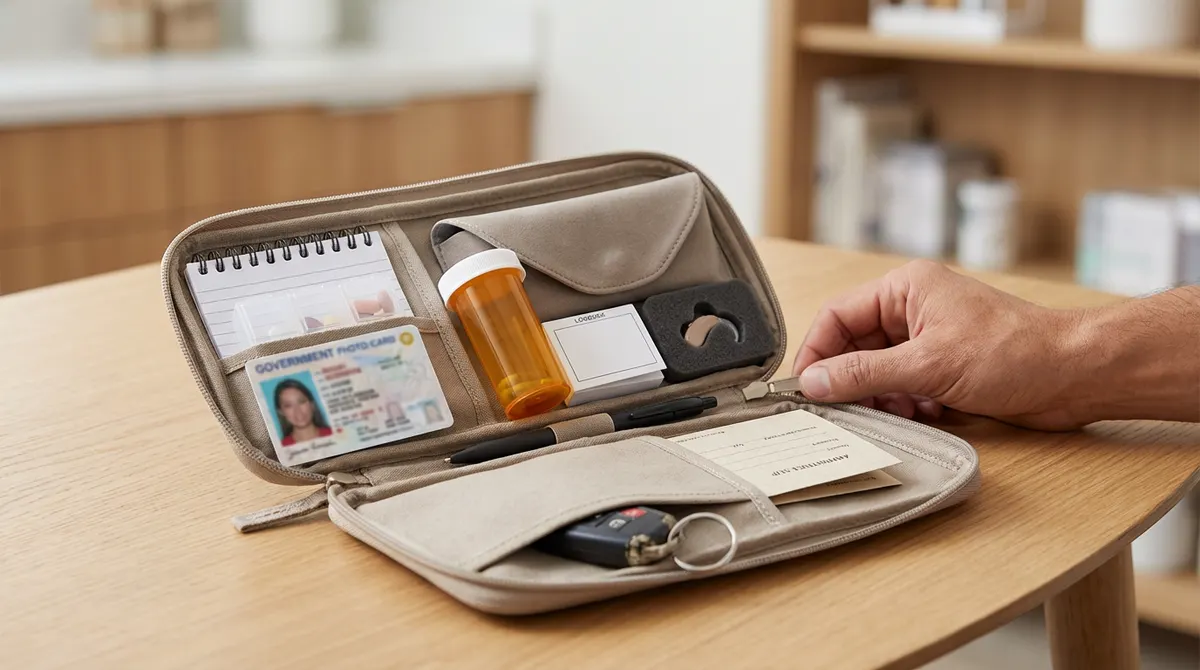
Good preparation can lower stress, improve your odds of passing, and reduce unnecessary follow-up costs. Most avoidable problems happen before the appointment, not during it.
Start with what to bring. A complete file helps the medical examiner make a clean decision without delaying the certificate. Bring your driver's license, a current medication list, glasses or contact lenses, any hearing aid you use, and relevant medical documentation such as specialist letters, sleep apnea compliance records, or diabetes forms. If you have recent treatment changes, include them.
Medical history is the record of past diagnoses, treatments, medications, and current symptoms. Medical history matters because the medical examiner uses it to judge whether a condition is stable, monitored, and compatible with safe driving.
Preparation on the day of the exam also matters. Sleep enough the night before. Be well hydrated. Avoid excess caffeine, nicotine, or stimulants just before the appointment if they raise your blood pressure. Mayo Clinic notes that caffeine can cause a short-term rise in blood pressure, which matters if your numbers are already close to a certification threshold. Eat normally unless your own clinician has told you otherwise.
A strong preparation checklist includes:
Bring a government photo ID and driver's license
Bring your medication list and dosages
Bring specialist reports and recent medical documentation
Bring corrective lenses and hearing aid if used
Arrive early to reduce stress-related pulse rate changes
Avoid rushing in after heavy exercise or smoking
Finding the right examiner matters too. Look for a National Registry provider with experience in DOT physical exams, not just any clinic that offers general physical exam services. A National Register Certified Medical Examiner understands the rules, common documentation needs, and how to handle commercial drivers with ongoing medical conditions. That can save time and reduce confusion.
A certified medical examiner is a medical professional authorized through the federal National Registry to perform DOT medical examination visits. A certified medical examiner matters because only an authorized examiner can properly determine qualification and issue the certificate.
If sleep apnea is a concern, the key is not to panic. The goal is to show that symptoms are being evaluated and managed. Clinicians frequently observe that untreated fatigue concerns create more delay than well-documented treated cases. If you suspect a problem, it may be helpful to review whether you can pass a DOT physical with sleep apnea before your appointment.
For drivers searching online, it can be tempting to book the first urgent care near you. A better approach is to compare urgent care facilities, occupational medicine clinics, and Family Medicine Physician offices that specifically list DOT physical exams and understand commercial motor vehicle rules.
KEY TAKEAWAY: The best way to lower cost and delay risk is to arrive with full documentation, stable numbers, and a certified examiner who knows DOT rules well.
After the appointment, the next question is what outcome you receive and what happens next.
What Happens After the Exam? Outcomes and Next Steps

After a DOT physical, the medical examiner may issue a certificate, issue a shorter certification, request more information, or determine that you are not qualified at that time. The outcome depends on whether the examiner believes you meet current health standards for safe driving.
If you qualify, you receive a Medical Examiner's Certificate, also called the MCSA-5876. According to the FMCSA, the examiner keeps a copy on file for at least three years. The certificate length may be up to 24 months, but drivers with high blood pressure, diabetes, or another monitored issue may receive less time.
Conditional certifications are common. A shorter certificate does not necessarily mean failure. It often means the examiner wants ongoing medical management and future review. This is especially common for high blood pressure and some sleep apnea cases. For insulin-treated diabetes mellitus, annual evaluation and required documentation are central.
If the examiner cannot qualify you that day, the next step is usually follow-up, not the end of your career. Navigating a failed DOT physical often means addressing the reason for concern, getting updated treatment, and returning with stronger documentation. That may include a blood pressure follow-up, a sleep study, CPAP compliance report, or specialist clearance.
Retaking the DOT physical is often possible after the issue is corrected or documented. Retaking the DOT physical matters because many disqualifying issues are temporary, treatable, or related to missing paperwork rather than permanent inability to drive.
A practical outcome table looks like this:
| Outcome | What it means | Common next step |
|---|---|---|
| Full certification | Meets current standards | Return at normal recertification interval |
| Short-term certification | Condition needs monitoring | Follow treatment and return sooner |
| Pending information | More records are needed | Submit forms or specialist notes |
| Not qualified at this time | Condition is not adequately controlled | Treat issue and seek re-evaluation |
Long-term compliance matters just as much as the first exam. The certificate is not a one-time box to check. It is part of an ongoing commercial driver safety obligation. That is why it can help to understand how long your DOT medical card lasts and what may shorten that timeline.
If the result is disappointing, clear next steps matter. This guide on failing a DOT physical can help you understand what to do next, what may be correctable, and how to prepare for a return visit.
IMPORTANT: A failed visit is often a signal to get a condition treated or documented, not a permanent judgment on your ability to work.
KEY TAKEAWAY: The exam outcome can range from full certification to temporary nonqualification, but many setbacks can be corrected with treatment, paperwork, and re-evaluation.
Before wrapping up, it helps to clear up the most common myths that confuse drivers about insurance and self-pay.
Common Myths About DOT Physical Insurance and Self Pay Debunked

Many drivers delay the exam because of myths about cost, coverage, and disqualification. The reality is usually more practical and less extreme than online rumors suggest.
MYTH: Insurance always covers a DOT physical.
FACT: Insurance coverage is often limited because the physical exam is usually treated as an occupational or regulatory service, not routine preventive care. An insurance provider may cover treatment related to the same condition while still refusing the certification exam itself. That is why written confirmation matters before the visit.
MYTH: Self-pay is always more expensive than insurance.
FACT: Self-pay can be cheaper when insurance plans exclude the exam, apply out-of-network rules, or trigger paperwork delays. A driver paying $90 cash for a same-day visit may come out ahead of a driver who books through insurance, receives a denial, and then pays the bill anyway after missing work.
MYTH: High blood pressure means automatic failure.
FACT: High blood pressure does not always mean you fail. FMCSA guidance states that a driver with blood pressure below 140/90 may be certified for two years, while moderately elevated numbers may still lead to shorter certification rather than immediate disqualification. That is why management and documentation matter.
MYTH: Obstructive sleep apnea automatically ends a driving career.
FACT: Obstructive sleep apnea is a manageable condition, not an automatic career-ending diagnosis. The NHLBI explains that diagnosis may involve a sleep study and common treatment includes CPAP. Many drivers continue working once the condition is properly evaluated and managed.
MYTH: The cheapest clinic is the best place to go.
FACT: The cheapest advertised price may exclude retesting fees, added paperwork, or follow-up consultations. Provider experience, turnaround time, and familiarity with DOT physical requirements often matter more than a small difference in the base fee.
DOT physical myths usually survive because they mix half-true billing stories with worst-case medical experiences. DOT physical myths matter because they push drivers toward delay, poor preparation, and rushed decisions that end up costing more.
KEY TAKEAWAY: The biggest myths about DOT physical insurance and self-pay come from confusing regulatory exams with normal medical care and assuming every medical issue leads to failure.
The remaining questions are the ones drivers search most often before they book the appointment.
Frequently Asked Questions
Do you need insurance for a DOT physical?
No, you do not need insurance for a DOT physical. Many commercial driver appointments are completed as self-pay visits because the physical exam is a regulatory requirement rather than standard preventive care. Insurance coverage may exist in some employer-arranged or plan-specific situations, but many insurance plans do not clearly cover this type of occupational medicine service. The practical answer is to verify with your insurance provider before booking. If coverage is unclear, self-pay is often the faster and more predictable route, especially when you need a provider near you or want a same-day certificate.
Can I pay for my own DOT physical?
Yes, you can usually pay for your own DOT physical, and many owner-operators and independent drivers do exactly that. Self-pay works well when you want transparent pricing, quick scheduling, and fewer billing delays. Ask the clinic whether the quote includes the physical exam, urine test, certificate paperwork, and any short recheck policy. Many drivers prefer this route because the exam can be completed without waiting for insurance approval. If you are comparing clinics close to you, focus on total cost and provider experience, not just the lowest sticker price.
How much do DOT physical exams usually cost?
DOT physical exams often cost around $75 to $150 for the basic visit, but the real total depends on region, provider type, and whether additional services are needed. Urgent care, occupational health, and independent exam clinics may all price differently. Costs can rise if you need follow-up consultations, retesting fees, specialist letters, or treatment documentation for medical conditions such as high blood pressure or sleep apnea. A full quote should include the physical exam, urine test, forms, and policy for repeat checks. Always ask for the cash price before booking.
Why does insurance often deny coverage for a DOT medical exam?
Insurance often denies coverage because a DOT medical exam is typically classified as a job or regulatory clearance service, not medically necessary treatment. That means an insurance company may pay for your medication visit, sleep apnea treatment, or diabetes care but still reject the certification visit itself. The distinction is frustrating but common. The best way to reduce surprise bills is to ask your insurance provider whether DOT / CDL physical exams are covered, whether occupational health visits are excluded, and whether written preapproval is available through online portals or secure messaging.
Can I get a DOT medical card with diabetes?
Yes, many drivers can still get a DOT medical card with diabetes, but the process depends on how well the condition is controlled and whether insulin is used. Insulin-treated diabetes mellitus usually requires additional treating clinician documentation and annual certification at most under federal rules. Non-insulin-treated diabetes may allow longer certification when control is good and no disqualifying complications are present. Bring glucose records, medication details, and any required forms to the appointment. If diabetes is part of your case, preparation matters more than guessing, and provider experience can make the visit smoother.
Can high blood pressure affect how much my DOT physical costs?
Yes, high blood pressure can raise your total DOT physical cost even if the initial exam fee is reasonable. The added expense usually comes from repeat blood pressure checks, medication follow-up, shorter certification periods, and time away from work. FMCSA guidance states that a commercial motor vehicle driver with blood pressure below 140/90 may be certified for two years, while higher readings may lead to shorter certification. Because the CDC reports that 48.1% of U.S. adults have high blood pressure, this is one of the most common cost drivers in DOT physical exams.
Is a sleep study required for a DOT physical?
A sleep study is not automatically required for every DOT physical, but a medical examiner may recommend one when symptoms or risk factors suggest obstructive sleep apnea. Loud snoring, daytime sleepiness, witnessed breathing pauses, or concerning health history can all trigger a closer look. According to the NHLBI, diagnosis of sleep apnea may involve a sleep study, and treatment often includes CPAP. If a medical examiner flags the issue, using a convenient option to find a provider near you or review whether a sleep study is required for a DOT physical can save time.
What should I bring to the appointment to avoid delays?
Bring your driver's license, medication list, glasses or contact lenses, hearing aid if you use one, and any relevant medical documentation. That can include specialist notes, blood pressure records, diabetes forms, sleep apnea compliance reports, or recent treatment updates. The goal is to help the medical examiner make a decision without sending you away for missing information. Many patients underestimate how much medical history matters in a certification visit. A complete file reduces the risk of repeat appointments, extra fees, and unnecessary delays, especially when you are seeing providers in your area on a tight schedule.
What happens if I fail the DOT physical?
Failing the DOT physical usually means you were not qualified on that day based on current findings, not that you can never qualify again. Many cases involve treatable or documentable issues such as uncontrolled high blood pressure, missing specialist clearance, untreated sleep apnea, or incomplete paperwork. The next step is usually to address the problem, gather proper records, and return for re-evaluation. Retesting fees and follow-up consultations may apply, which is why preparation matters. If you are worried about the outcome, it helps to review what can disqualify you from a DOT physical before booking.
Conclusion: Proactive Health and Financial Planning for Your Driving Career

Choosing between DOT physical insurance or self pay is less about theory and more about controlling risk, cost, and downtime. For many commercial drivers, self-pay is the clearer option because pricing is easier to understand and appointments move faster. Insurance can still help in select employer-paid or plan-specific situations, but only when coverage is verified in advance. The bigger financial story often comes from your medical conditions, follow-up needs, and certificate timing. Proactive planning, accurate medical documentation, and early treatment can protect both compliance and income. If you want a practical next step, review what the requirements are to pass a DOT physical so you can approach the exam prepared and confident.
Related DOT Physical Topics
- Online DOT Physical Self-Pay The Complete Guide for CDL Drivers and Owner-Operators
- What Happens During the DOT Physical Exam The Complete Guide for Drivers
- The DOT Physical Exam Ensuring You're Fit for the Road
- Does a DOT Physical Test for Weed or THC The Complete Guide for Commercial Drivers
- Navigating the Florida DOT Physical Your Essential Guide for CDL Drivers
- How Do You Submit Your DOT Physical to the DMV
- DOT physical self pay guide for commercial drivers paying out of pocket
- DOT Medical Exam Self-Pay A Complete Guide for Commercial Drivers
- DOT Physical Texas The Essential Guide to Your Exam, Medical Card, and CDL Compliance
- What Happens If Your DOT Physical Expires Compliance Guide for Commercial Drivers
- DOT Physical Self Pay Cost
- Remote DOT Physical The Complete Guide for Commercial Drivers
- The Ultimate DOT Physical Guide for Commercial Drivers (2025–2026)
- What Does DOT Stand for in a DOT Physical
- Walk In DOT Physical Self Pay
- DOT Physical Forms & Paperwork The Complete Guide for Commercial Drivers
- DOT Physical Duration and Validity How Long Your Medical Card Lasts
- DOT Physical Insurance & Recertification The Complete Driver's Guide
- DOT Physical ICD-10 & Billing Codes The Complete Guide for Accurate Compliance and Reimbursement
- Online DOT Physical Without Insurance A Complete Guide for Commercial Drivers
- Your Complete Guide What's Included in a DOT Physical Exam
- What Is the Urine Test for in a DOT Physical
- Can You Get a Second Opinion on Your DOT Physical A Complete Guide for Commercial Drivers
- Online DOT Physical The Complete Guide for Commercial Drivers and Medical Examiners
- How to Pass a DOT Physical The Complete Commercial Driver's Guide
- Is a DOT physical the same as a regular physical
- What are the current DOT requirements for sleep apnea testing for commercial drivers
- What Is the Difference Between a DOT and Non-DOT Physical
- How can drivers with sleep apnea qualify again after a failed DOT physical
- Navigating Your DOT Physical with Common Medical Conditions
- DOT Physical Out of Pocket What Commercial Drivers Actually Pay
- DOT Physical Cost Breakdown What Drivers Pay & Why
- Is a drug test required for a DOT physical
- What Forms Do You Need for a DOT Physical
- DOT Physical Exam Basics
- What Are the Requirements to Pass a DOT Physical
- Why do they measure your neck during a DOT physical
- Can You Fail a DOT Physical for Being Overweight
- Why DOT Sleep Tests at Home Matter for Your Career and Health
- Do They Check for Hernia During a DOT Physical
- CDL PHYSICAL SELF PAY
- DOT Physical Cash Pay
- Can You Fail a DOT Physical for High Blood Pressure
- Do They Check Your Private Parts During a DOT Physical
- DOT Physical Chiropractor Your Complete Guide to CDL Exams
- BMI for DOT Physical What Commercial Drivers Need to Know
- DOT Physical Requirements A Complete Guide for CDL Drivers
- Is a Sleep Study Required for a DOT Physical
- What eye chart is used for a DOT physical
- What drugs do they test for in a DOT drug test
- DOT Physical Online Cost
- DOT Physical Vision & Eye Requirements
- What Can Disqualify You From a DOT Physical
- Does a DOT physical include a drug test
- Can You Pass a DOT Physical with Epilepsy
- Essential 171 DOT Definitions for Commercial Drivers
- When Can Sleep Apnea Affect a DOT Physical
- Can You Pass a DOT Physical With One Eye
- Can You Get a DOT Physical Online
- Can You Pass a DOT Physical With a Pacemaker
- What Should You Bring to a DOT Physical
- Home Sleep Apnea Test for Commercial Drivers The CDL Holder's Complete Guide
- Telehealth Dot Physical
- DOT Physical & Alcohol Requirements
- Cheap DOT Physical Online
- Can You Pass a DOT Physical With a Hernia
- What blood pressure do you need to pass a DOT physical
- Online DOT Exam What Drivers and Medical Examiners Need to Know
- DOT Physical Blood Pressure Requirements What Drivers Need to Know
- New DOT Physical Requirements What Drivers MUST Know About New Updates
- Same Day DOT Physical
- Virtual DOT Physical
- Can you fail a DOT physical because of sleep apnea
- Who needs a DOT physical
- DOT Physical at Urgent Care What Commercial Drivers Need to Know
- The Comprehensive Guide to Suboxone, Sleep Apnea, and FMCSA Compliance for Commercial Motor Vehicle Operators
- Can you pass a DOT physical with sleep apnea
- What should I expect at a DOT physical
- What Does a DOT Physical Consist Of
- What happens if you fail a DOT physical due to sleep apnea
- Can You Pass a DOT Physical with Diabetes
- Can You Pass a DOT Physical with High Blood Pressure
- What are the current FMCSA guidelines on sleep apnea for commercial drivers
- DOT Physical & Drug Test What Drivers Need to Know
- Medical Examination Report (MER) – Form MCSA-5875 The Complete Guide for Commercial Drivers
- Non-DOT Physical A Comprehensive Guide to Workforce Health and Safety
- Guide to Obtaining and Managing Your DOT Medical Card Online
- Do You Have to Pee During a DOT Physical
- What Do They Check During a DOT Physical
- Failing a DOT Physical What Every Commercial Driver Needs to Know
- Can You Fail a DOT Physical
- What is DOT Physical
- Online CDL Physical
- Are There New DOT Rules or Laws on Sleep Apnea Testing
- 2026 DOT Inspection Dates
- How Sleep Apnea Affects Overall Driving Safety
- Sleep Apnea Test for CDL Drivers
- Are there legal requirements for drivers with sleep apnea
- How Does Sleep Apnea Affect Driving Ability
- DOT sleep apnea test at home
Take the next step before your DOT physical
Start with the free quiz if you are unsure about your risk, or order an at-home sleep test if you have already been flagged for possible sleep apnea.
AI summary
DOT physical insurance vs self pay refers to deciding whether to submit a Department of Transportation (DOT) medical exam to health insurance or pay out of pocket. A DOT physical is a regulatory fitness exam required for many commercial motor vehicle drivers and is tied to compliance under 49 CFR Part 391. The exam must be performed by a certified medical examiner on the National Registry and results in a Medical Examiner’s Certificate (Form MCSA-5876), valid up to 24 months, often shorter when conditions need monitoring. Insurance often does not cover the DOT exam because it is treated as an occupational or regulatory service, even when insurance covers related clinical care (e.g., hypertension or diabetes treatment). Self-pay commonly offers faster scheduling and clearer pricing; typical base cost is about $75 to $150, but total cost can rise with retesting, specialist letters, sleep study referrals, CPAP compliance documentation, or additional visits. The article recommends verifying coverage in writing, getting multiple self-pay quotes, planning for condition-related follow-up, and arriving with ID, medication lists, and relevant medical records to reduce delays.

Nicolas Nemeth
Co-Founder
Nico is the co-founder of Dumbo Health, a digital sleep clinic that brings the entire obstructive sleep apnea journey home. Patients skip the sleep lab and the long wait to see a specialist. Dumbo Health ships an at home test, connects patients with licensed sleep clinicians by video, and delivers CPAP or a custom oral appliance with ongoing coaching and automatic resupply in one clear subscription.
Keep reading

How Long Does a DOT Physical Take? A Complete Guide for Commercial Drivers

What Happens If You Fail a DOT Drug Test? The Complete Guide for Commercial Drivers


