DOT Physical Exam Basics
A DOT physical exam is a federally required medical assessment used to confirm a commercial motor vehicle driver meets FMCSA medical standards under 49 CFR Part 391. This guide explains who must get certified, what a Certified Medical Examiner reviews, and what happens during the 30 to 45 minute appointment. It covers medical history paperwork, vision and hearing benchmarks, blood pressure stages, urinalysis purpose, and full physical evaluation. You will learn what commonly causes disqualification or shorter certificates and how exemptions may apply. It also outlines exactly what documents to bring, including CPAP compliance and specialist letters when needed. Practical details like cost, timing, and post-exam certificate rules help drivers avoid delays and CDL issues.
Struggling with sleep?
Find out if sleep apnea is the reason.
FDA-cleared. $149 flat. Physician-reviewed results in 48 hours.

DOT Physical Exam Basics
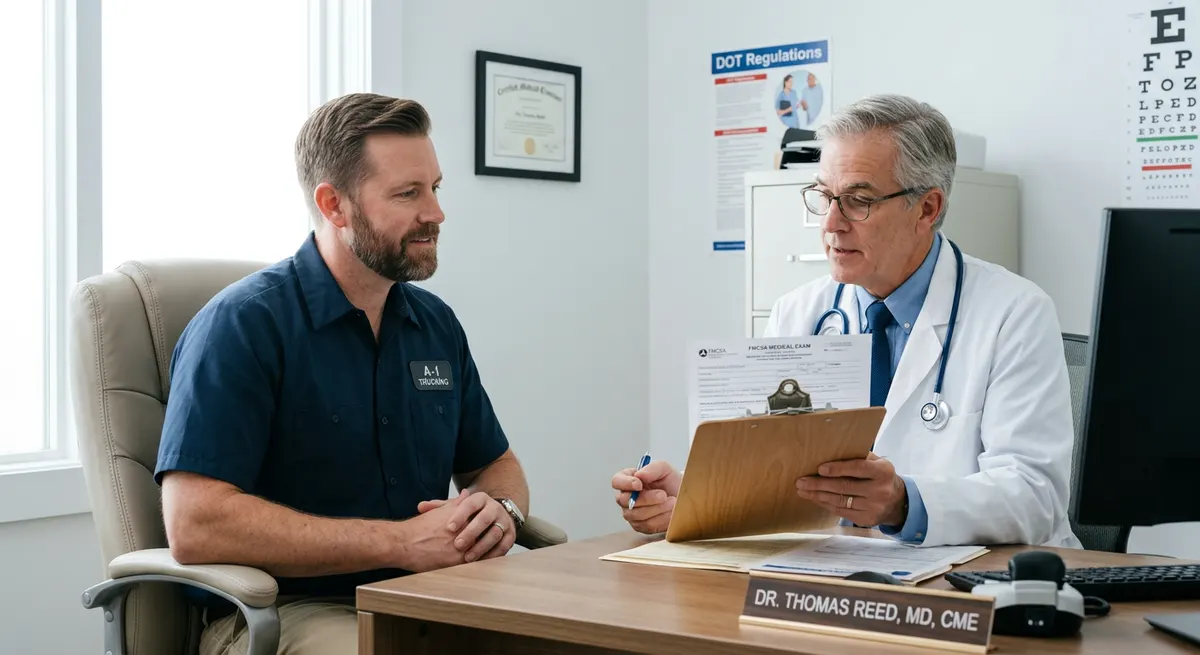
A certified medical examiner reviews a commercial driver's medical history during a routine DOT physical consultation.
DOT physical exam is a federally mandated medical assessment that determines whether a commercial motor vehicle (CMV) driver is physically and mentally fit to operate safely on public roads. According to the Federal Motor Carrier Safety Administration (FMCSA), all interstate CMV drivers operating vehicles over 10,000 pounds gross vehicle weight rating are required to hold a valid Medical Examiner's Certificate. With approximately 3.06 million truck drivers employed in the United States as of 2024, the DOT physical is one of the most consequential routine health assessments in any profession.
This guide covers everything you need to know — who needs the exam, what it involves, how to prepare, what can disqualify you, and what happens after you pass. Whether you are sitting for your first exam or renewing your certification, this resource gives you the clarity and confidence to walk in prepared.
What Is a DOT Physical Exam?

A certified medical examiner conducts a comprehensive DOT physical examination for a commercial motor vehicle driver.
A DOT physical exam is a comprehensive health assessment required by the FMCSA to confirm that a commercial driver meets the medical standards set out under 49 CFR Part 391. The exam evaluates your vision, hearing, blood pressure, cardiovascular health, neurological function, and overall physical fitness to ensure you can safely manage the demands of commercial driving.
Not sure if sleep apnea applies to you?
Take our 2-minute sleep risk quiz to see whether sleep apnea could affect your DOT physical. No account required.
The DOT medical exam is not a general wellness check. Its purpose is specifically to identify conditions that could impair a driver's ability to operate a large commercial vehicle safely. As defined by the FMCSA's Medical Examiner's Handbook 2024 Edition, the exam applies the physical qualification standards and advisory criteria set out in Appendix A to 49 CFR Part 391.
DOT physical exam is a standardised, federally regulated process conducted by a Certified Medical Examiner (CME) listed on the FMCSA's National Registry of Certified Medical Examiners (NRCME). The exam covers multiple body systems simultaneously. The outcome is binary: you either receive a Medical Examiner's Certificate (MEC) confirming your fitness to drive, or you receive guidance on the steps needed to qualify.
DID YOU KNOW: According to occupational health research cited across multiple provider networks, more than 80% of commercial truck drivers live with at least one chronic health condition, making the DOT medical exam a critical safety checkpoint for both drivers and the public.
A valid DOT physical certification lasts up to 24 months for drivers in good health. Drivers with managed conditions such as hypertension may receive shorter certification periods of 12 months or three months, depending on the severity of their readings at the time of examination.
KEY TAKEAWAY: A DOT physical exam is a federally mandated, multi-system health assessment that must be passed and renewed periodically to maintain the legal right to drive a commercial motor vehicle in interstate commerce.
Understanding what the exam involves is the foundation for passing it — the next section explains exactly who is required to take it and why.
Who Needs a DOT Physical and Why?
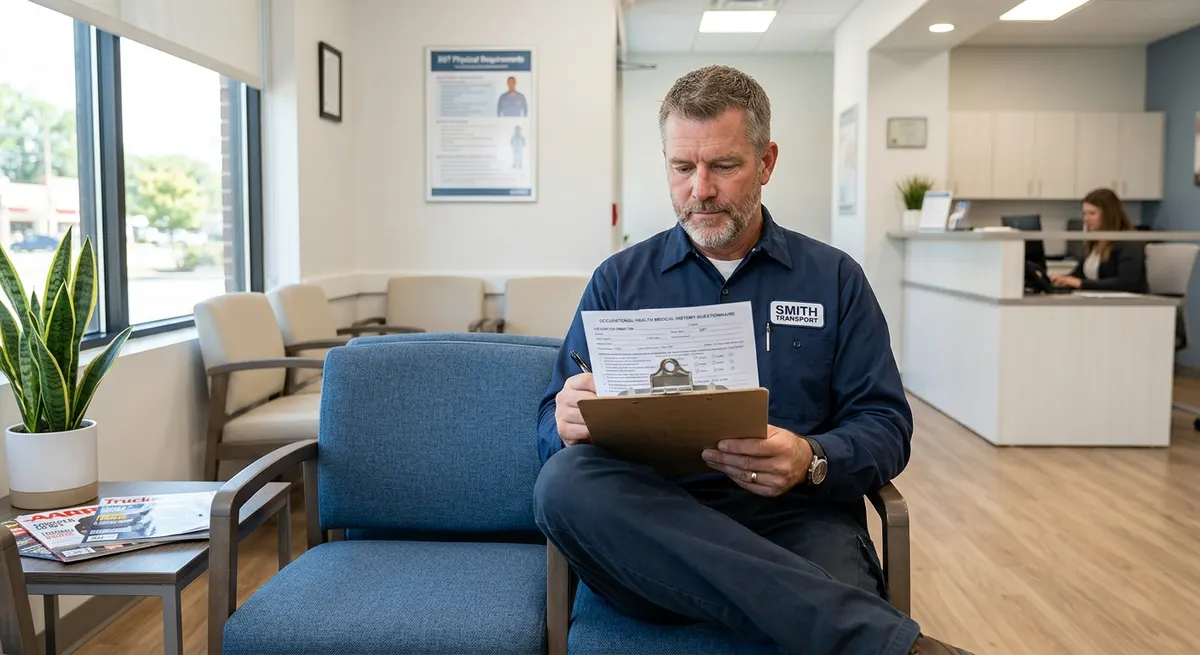
A commercial driver reviews and completes required medical history forms before his scheduled DOT physical exam.
Any driver operating a commercial motor vehicle in interstate commerce must pass a DOT physical exam if they fall into one of the federally defined categories. You are required to hold a valid Medical Examiner's Certificate if you operate a vehicle with a gross vehicle weight rating (GVWR) of more than 10,000 pounds, transport hazardous materials requiring a placard, or operate a vehicle designed to carry 16 or more passengers including the driver, or are employed to carry more than eight passengers for compensation.
The requirement exists because commercial vehicles present a significantly elevated risk when operated by a driver whose medical condition is not properly managed. A sudden loss of consciousness, impaired vision, or cardiac event behind the wheel of a tractor-trailer can have catastrophic consequences for the driver and everyone else on the road. The trucking industry moves over 70% of all freight in the United States, making the health of its drivers a matter of national public safety.
IMPORTANT: Intrastate-only drivers may be subject to different rules depending on their state. Always confirm your State Driver Licensing Agency (SDLA) requirements before assuming federal standards apply to your specific operation.
The FMCSA's Medical Examiner's Certification Integration Rule, effective June 23, 2025, now requires certified medical examiners to electronically transmit exam results directly to the FMCSA, which forwards them to state licensing agencies for integration into each driver's CDL record. This ends decades of paper-based reporting and tightens the link between your medical status and your commercial driving licence.
Drivers must carry their Medical Examiner's Certificate at all times while on duty. Employers are also required to maintain a copy of the MEC in the driver's qualification file and verify that the examining provider is listed on the NRCME. If you carry a CDL, your medical certification status is now electronically linked to your licence record following the June 2025 integration rule.
Already diagnosed and need CPAP support?
Dumbo Health helps patients start CPAP without the usual confusion, paperwork, or upfront cost. Equipment, setup, supplies, and ongoing support are all handled in one place.
KEY TAKEAWAY: Any driver operating an interstate commercial motor vehicle over 10,000 pounds GVWR, carrying hazardous materials, or transporting passengers for hire must hold a current, valid DOT medical certificate.
Knowing that you need the exam is one thing — understanding who is authorised to perform it is equally critical, which brings us to the role of the Certified Medical Examiner.
The Role of the Certified Medical Examiner

A certified medical examiner performs the vision test component of the DOT physical exam in a professional clinical setting.
Only a Certified Medical Examiner (CME) listed on the FMCSA's National Registry of Certified Medical Examiners (NRCME) is legally authorised to perform a DOT physical exam. Attempting to obtain certification from an unlisted provider will result in an invalid certificate, which carries serious legal and employment consequences.
The NRCME was established by the FMCSA to standardise DOT medical evaluations across the country. To become a CME, a qualified medical professional must complete an accredited NRCME training course, pass a 120-question multiple-choice certification exam with a minimum score of 71%, and be approved and listed on the national registry. Eligible practitioners include Doctors of Medicine (MD), Doctors of Osteopathic Medicine (DO), Nurse Practitioners (NP), Physician Assistants (PA), and Doctors of Chiropractic (DC), provided they are licensed under applicable state laws to perform physical examinations.
The Certified Medical Examiner applies evidence-based FMCSA medical standards to evaluate whether a driver is physically qualified. The CME does not advocate for the driver or the employer — their role is to assess medical fitness impartially. As confirmed by the FMCSA's official guidance, only the FMCSA itself has the authority to grant waivers under Section 381.205 of the FMCSRs.
TIP: Before your appointment, verify that your examiner is listed and in good standing on the FMCSA National Registry at nationalregistry.fmcsa.dot.gov. An unlisted provider cannot issue a valid DOT medical certificate.
You can find a certified medical examiner near you at urgent care centres, occupational health clinics, chiropractic offices, and private medical practices. Many providers in your area offer walk-in appointments, though booking in advance is recommended to secure a convenient time slot.
KEY TAKEAWAY: Only a provider currently listed on the FMCSA National Registry of Certified Medical Examiners can legally perform a DOT physical and issue a valid Medical Examiner's Certificate — always verify before booking.
With the right examiner identified, you will want to understand exactly what happens during the appointment — which the next section covers step by step.
What Happens During a DOT Physical? A Detailed Overview

A DOT physical exam includes a detailed cardiovascular and respiratory assessment to confirm a driver's fitness to operate commercially.
A DOT physical exam takes approximately 30 to 45 minutes on average, though the process may run longer if you have a complex medical history or if additional testing is required. The examination follows a standardised protocol set by the FMCSA and covers every major body system relevant to safe commercial driving.
The Comprehensive Medical History Review
The examination begins with a thorough medical history review. You will complete the FMCSA Medical Examination Report Form (MCSA-5875), disclosing past and present conditions, surgical history, medications, and any conditions that may affect driving ability. This includes sleep disorders, cardiovascular conditions, neurological history, diabetes, musculoskeletal issues, and substance use history.
Medical notes and documentation from specialist providers are reviewed at this stage. If you have a managed condition — such as controlled hypertension or treated sleep apnea — your examiner will review your treatment records and compliance data. Drivers with sleep apnea must bring the last 90 days of CPAP compliance data showing at least 70% usage. You can explore what sleep apnea is and how it affects health to understand the clinical picture your examiner will be evaluating.
Medical reports from your primary care physician or relevant specialist provide critical context for the examiner. Gaps in documentation can result in conditional certification or a temporary deferral until the required medical notes are obtained.
Sensory Function Tests: Vision and Hearing
The vision test requires a minimum 20/40 visual acuity in each eye, with or without corrective lenses, as specified under 49 CFR Part 391 Section 391.41(b)(10)(i). You must also demonstrate a minimum peripheral field of vision of at least 70 degrees in the horizontal meridian in each eye, and must be able to distinguish between standard traffic signal colours.
The hearing test requires you to perceive a forced whisper from a distance of at least five feet, with or without a hearing aid. In cases where the forced whisper test is inconclusive, an audiometric test may be performed. The maximum allowable average hearing loss in the better ear is 40 decibels at 500 Hz, 1,000 Hz, and 2,000 Hz.
Vision and hearing tests form a critical part of the sensory evaluation. Bring your corrective lenses and hearing aids to the appointment without fail. Failing to bring corrective devices results in an automatic failure of the corrective-assisted vision or hearing standard.
Cardiovascular and Respiratory Health Assessment
blood pressure is measured and evaluated against FMCSA thresholds. A reading below 140/90 qualifies for a standard two-year certification. Stage 1 hypertension (140/90 to 159/99) results in a one-year certificate. Stage 2 hypertension (160/100 to 179/109) results in a conditional three-month certificate. Stage 3 hypertension at 180/110 or above is disqualifying, though drivers may retest every six months.
The cardiovascular assessment also examines heart rate and pulse rhythm, and evaluates for signs of cardiac disease. Drivers with a history of cardiac events must typically provide cardiologist clearance and evidence of adequate cardiac function, including an exercise tolerance test demonstrating the ability to exceed 6 METS on a standard Bruce protocol, as defined in FMCSA cardiovascular guidelines.
Respiratory health is assessed through examination of the chest and lung function. Conditions such as poorly controlled asthma or chronic obstructive pulmonary disease (COPD) that could cause sudden incapacitation during driving are evaluated carefully and may require specialist documentation.
The General Physical Examination
The general physical exam covers the eyes, skin, ears, mouth, throat, thyroid, lymph nodes, heart, lungs and chest, abdomen and viscera, the vascular system, genito-urinary system, extremities, spine, musculoskeletal system, and neurological function. The examiner checks for signs of conditions that could impair driving ability, including enlarged organs, hernias, impaired reflexes, or limited range of motion.
A urinalysis is performed to screen for glucose, protein, and blood — not controlled substances. This test checks for metabolic and renal conditions such as unmanaged diabetes or kidney disease. Drivers should not void their bladder immediately before arriving for the exam, as a fresh urine sample is required.
DID YOU KNOW: The urinalysis component of the DOT medical exam specifically screens for health conditions such as unmanaged diabetes — it is not a drug test. Controlled substance testing is a separate, employer-mandated process governed by 49 CFR Part 382.
KEY TAKEAWAY: The DOT physical exam is a standardised, multi-system assessment covering medical history, vision, hearing, blood pressure, cardiovascular health, and a full-body physical examination — all evaluated against federally defined FMCSA standards.
Understanding what the exam covers makes it far easier to prepare effectively — which is exactly what the next section is designed to help you do.
Preparing for Your DOT Physical: Tips for Success

Thorough document preparation before a DOT physical exam helps drivers avoid delays, deferrals, and conditional certification outcomes.
Preparation is the single most controllable factor in your DOT physical outcome. Many drivers who fail or receive conditional certification do so not because of serious underlying conditions, but because of avoidable oversights — missing documentation, unmanaged blood pressure, or forgotten corrective lenses.
Gather Essential Medical Documents and Information
Bring the following documents to your appointment without exception:
•Valid driver's licence or government-issued photo ID
•Complete list of all medications — prescription, over-the-counter, and supplements — including prescribing doctor names, dosages, and contact details
•Medical records relevant to any disclosed conditions
•Previous Medical Examiner's Certificate (for renewals)
•Completed FMCSA Medical Examination Report Form (MCSA-5875), available on the FMCSA website
If you have specific managed conditions, additional documentation is mandatory:
•Sleep apnea: CPAP compliance report covering the last 90 days, showing at least 70% usage
•Diabetes: recent blood glucose readings and a current HbA1c result, ideally no older than three months
•Cardiac history: cardiologist clearance letter and results of a stress test within the past two years
•Neurological conditions: neurologist's letter confirming the condition does not interfere with safe driving performance
•sleep apnea (undiagnosed): if you have symptoms such as loud snoring or excessive daytime sleepiness, review the most common sleep apnea symptoms before your exam
Proactive Health Management Leading Up to the Exam
In the days before your appointment, avoid caffeine and nicotine for at least 30 minutes prior to blood pressure measurement. If you are taking antihypertensive medication, take it consistently as prescribed and do not skip doses before the exam. Poor sleep temporarily elevates blood pressure, so aim for a full night of rest before your appointment.
Do not void your bladder immediately before arriving, as a urine sample is required during the exam. Bring your corrective lenses or hearing aids if you use them. Wear comfortable clothing that allows the examiner easy access to your arms for blood pressure measurement and your back for musculoskeletal assessment.
TIP: If you have borderline blood pressure or a known medical condition, schedule a consultation with your primary care physician several weeks before your DOT exam. Addressing manageable issues in advance is far more effective than trying to resolve them on exam day.
Communicate with Your Primary Care Physician
Your primary care provider is one of your most valuable allies when preparing for a DOT physical. Clinicians frequently observe that drivers who arrive with current specialist notes and documented treatment plans are far more likely to receive a standard two-year certification. Medical accommodations and formal exemptions are more accessible to drivers who come prepared with coordinated care documentation.
If you are taking any medications that may affect your fitness to drive — including sedatives, opioids, or certain antidepressants — discuss these with both your prescribing physician and your DOT medical examiner in advance. Some medications are disqualifying, while others are acceptable with proper documentation of condition stability.
Many patients report that their primary care provider was unaware of the specific documentation the DOT physical requires. Sharing the FMCSA's documentation checklist with your doctor in advance allows them to prepare the correct letters and records before your exam date.
KEY TAKEAWAY: Success at a DOT physical begins weeks before the appointment — gather all medical documentation, manage known conditions proactively, and arrive prepared with corrective lenses, medication lists, and specialist clearance letters where required.
Knowing how to prepare is valuable, but understanding the specific requirements and conditions that affect certification is equally critical to making informed decisions.
Understanding DOT Physical Requirements and Common Disqualifying Conditions

Managing conditions like hypertension before the DOT physical is critical to avoiding disqualification or receiving only a conditional certificate.
The DOT physical requirements are defined under 49 CFR Part 391 and cover a comprehensive set of physical and health standards that every commercial driver must meet. Understanding these standards in advance helps you address manageable conditions proactively rather than being caught off-guard at the exam.
Key DOT Physical Requirements at a Glance
The table below summarises the core standards evaluated during a DOT physical exam:
| Requirement | Standard | Notes |
|---|---|---|
| Vision acuity | 20/40 in each eye | With or without corrective lenses |
| Peripheral vision | 70 degrees horizontal in each eye | Each eye tested independently |
| Colour distinction | Red, green, amber | Standard traffic signal colours |
| Hearing | Forced whisper at 5 feet | With or without hearing aid; max 40 dB loss |
| Blood pressure | Below 140/90 | Stage-based certification periods apply |
| Cardiovascular | No disqualifying cardiac conditions | Managed conditions require specialist clearance |
| Urinalysis | No abnormal glucose, protein, or blood | Screens for diabetes and kidney conditions |
| Neurological | No conditions causing sudden incapacitation | Epilepsy is a specific disqualifier |
| Substance use | No disqualifying drug or alcohol use | Habit-forming drugs and narcotics disqualify |
Common Disqualifying Conditions and Management Strategies
Under 49 CFR 391.41, as confirmed by the FMCSA's official medical guidance, five conditions are specifically and automatically disqualifying: uncorrectable hearing loss, uncorrectable vision loss below 20/40 in each eye, epilepsy, insulin-dependent diabetes, and the use of any habit-forming drugs including narcotics and amphetamines.
Beyond these five conditions, other health issues can result in disqualification or conditional certification. Stage 3 hypertension (180/110 or above) is disqualifying until controlled. Cardiac conditions — including a history of myocardial infarction, unstable angina, or an ejection fraction below 40% — can disqualify a driver unless cardiologist clearance and acceptable exercise tolerance test results are provided.
sleep apnea, when untreated, can be a barrier to certification. Drivers diagnosed with obstructive sleep apnea who are compliant with CPAP therapy typically receive certification. Understanding what causes sleep apnea and how it is managed is valuable context for any commercial driver who has been told they may have the condition.
Many patients report anxiety about common, manageable conditions such as hypertension or controlled diabetes. In real-world practice, a well-managed and well-documented chronic condition is far less likely to result in disqualification than the same condition that is undisclosed or unmanaged.
Exploring Medical Accommodations and Waivers
Medical accommodations and formal exemptions exist for drivers who cannot meet one or more FMCSA medical standards but are otherwise capable of safe commercial operation. The FMCSA currently accepts exemption applications for a defined set of conditions including seizure disorders, hearing impairments, and certain limb impairments.
The exemption process involves completing a DOT physical exam, submitting a formal application to the FMCSA, undergoing a public comment period, FMCSA review, and receiving a final decision — a process that can take several months. Approved exemptions are valid for up to two years and must be renewed before expiry.
Drivers with physical impairments affecting their limbs may also be eligible for a Skill Performance Evaluation (SPE) certificate, which is a specific type of variance for drivers with impaired or missing limbs. The SPE certificate must be carried at all times during commercial operation.
KEY TAKEAWAY: The DOT physical requirements are clearly defined under 49 CFR Part 391 — knowing the specific standards for vision, hearing, blood pressure, and disqualifying conditions allows drivers to prepare strategically and pursue the appropriate accommodation pathways if needed.
Once you understand what can affect your certification, the next logical step is understanding what happens after the exam is complete.
Common Myths About DOT Physicals Debunked
A persistent set of misconceptions leads many drivers to delay preparation, avoid disclosing conditions, or make decisions that ultimately harm their certification outcome. Each myth below reflects a real fear or misunderstanding observed in commercial driving communities.
MYTH: If you have any chronic condition, you will automatically fail the DOT physical.
FACT: The FMCSA differentiates between unmanaged and managed conditions. Only five conditions are automatically disqualifying without the possibility of an exemption. Conditions such as controlled hypertension, non-insulin-dependent type 2 diabetes, and treated sleep apnea are routinely compatible with DOT certification, provided they are managed, documented, and reported transparently. The key variable is evidence of management, not the condition itself.
MYTH: The DOT physical includes a drug test.
FACT: A standard DOT physical exam does not include a drug test. The urinalysis performed during the DOT medical exam checks for metabolic health indicators such as glucose, protein, and blood — not controlled substances. Drug and alcohol testing is a separate, employer-mandated process governed by 49 CFR Part 382 and is completely independent of the medical examination.
MYTH: You can use any licensed doctor for a DOT physical.
FACT: Only a Certified Medical Examiner listed on the FMCSA's National Registry of Certified Medical Examiners (NRCME) is authorised to conduct a DOT physical and issue a legally valid Medical Examiner's Certificate. A physical performed by an unlisted provider — even a highly qualified medical doctor — will not be accepted by your employer or state licensing agency.
MYTH: Failing the DOT physical ends your commercial driving career.
FACT: A failed DOT physical is not necessarily permanent. Many drivers who do not pass on the first attempt address the underlying condition — such as bringing blood pressure under control, beginning CPAP therapy, or obtaining specialist clearance — and return successfully for re-examination. The FMCSA also offers formal waiver and exemption pathways for specific conditions.
MYTH: Once you pass the DOT physical, you are certified indefinitely.
FACT: A DOT Medical Examiner's Certificate is valid for a maximum of 24 months. Drivers with managed conditions may receive shorter certification periods of 12 months or three months. At the end of each certification period, drivers must undergo a new DOT physical examination and receive a new MEC to continue operating legally. Allowing a certificate to lapse can result in a CDL downgrade.
KEY TAKEAWAY: Many of the most common fears about DOT physicals are based on misconceptions — managed chronic conditions, the exam's actual scope, and the ongoing renewal process are all better understood with accurate, FMCSA-sourced information.
After the Exam: Certification and Next Steps

Passing the DOT physical results in a Medical Examiner's Certificate that must be carried at all times while operating commercially.
The period immediately after your DOT physical determines your certification status and next compliance steps. Understanding this process protects you from the gaps that can result in your CDL being downgraded.
Receiving Your Medical Examiner's Certificate (MEC)
If you pass the DOT physical, your Certified Medical Examiner will issue a Medical Examiner's Certificate (MEC). This document is your formal proof of medical qualification to operate a commercial motor vehicle. You are required to carry a copy at all times while on duty and to provide a copy to your employer for inclusion in your Driver Qualification File (DQF).
As of June 23, 2025, under the FMCSA's Medical Examiner's Certification Integration Rule, your examiner is required to electronically transmit your exam results directly to the FMCSA, which forwards them to your state licensing agency for integration into your CDL record. This digital transmission replaces the paper-based reporting system and provides faster, more secure confirmation of your medical certification status.
The MEC examiner keeps a copy on file for three years. Your certification period begins on the date of the exam: up to 24 months for drivers in good health, 12 months for drivers with managed conditions requiring annual review, and three months for those with Stage 2 hypertension requiring closer monitoring.
What If You Don't Pass the First Time?
Not passing the DOT physical on the first attempt does not mean your commercial driving career is over. Many drivers receive a deferred outcome rather than an outright disqualification. A deferral typically gives you up to 45 days to gather additional documentation, obtain specialist clearance, or address a specific condition before returning for re-evaluation.
If a condition is identified as disqualifying, review the FMCSA's exemption and waiver pathways carefully. Only the FMCSA — not the examining physician — can grant a formal waiver or exemption. Working with your primary care physician and relevant specialists to document a structured treatment plan significantly improves your prospects for eventual certification.
People who undergo this process often find that the DOT physical, while initially stressful, identifies health conditions they were not previously aware of. Managing these conditions proactively improves both long-term health outcomes and future certification prospects.
Maintaining Your Certification
Track your MEC expiration date carefully and schedule your next DOT physical well in advance of the expiry date. Certification renewal can take additional time if specialist documentation is required, and a lapse in your medical certificate can result in your CDL being downgraded by your state licensing agency.
If your health status changes significantly between certification periods — for example, a new diagnosis, a new medication, or a cardiac event — you may be required to seek re-evaluation before your current certificate expires. Maintaining regular contact with your primary care provider throughout your certification cycle keeps you best positioned to renew successfully.
KEY TAKEAWAY: After passing a DOT physical, you receive a Medical Examiner's Certificate valid for up to 24 months. Proactively tracking renewal dates and managing your health throughout the certification cycle ensures uninterrupted commercial driving compliance.
With certification secured, the final considerations relate to the practical logistics of the exam process itself — cost, finding a provider, and long-term preparedness.
Practical Considerations and Final Tips

Finding a certified DOT medical examiner close to you is straightforward using the FMCSA National Registry search tool.
Understanding the practical side of the DOT physical — cost, location, duration, and ongoing safety preparedness — removes the last barriers to a confident examination experience.
Cost and Duration of a DOT Physical
A DOT physical exam costs between $50 and $150 on average, depending on the provider type, geographic location, and whether additional testing is required. The breakdown by provider type is as follows:
| Provider Type | Average Cost Range |
|---|---|
| Chiropractor's office | $50 - $80 |
| Urgent care / walk-in clinic | $75 - $125 |
| Occupational health service | $80 - $160 |
| Private medical practice | $100 - $150 |
If your employer requires separate DOT drug testing, add approximately $30 to $85 to the total. DOT physicals are generally not covered by standard health insurance plans. Many employers, particularly larger motor carriers, cover the cost directly or offer reimbursement.
The exam itself typically takes 30 to 45 minutes. Allow additional time for check-in, paperwork, and waiting, particularly at clinics with high patient volumes. Total time from arrival to departure is commonly between 45 minutes and 75 minutes.
In real-world use, drivers who complete the FMCSA Medical Examination Report Form before arriving and bring all required documentation consistently report shorter total visit times and fewer complications with their certification outcome.
Finding a Certified Medical Examiner
You can find a certified DOT medical examiner close to you using the FMCSA National Registry search tool at nationalregistry.fmcsa.dot.gov. Providers near you may include urgent care centres, occupational health clinics, chiropractic offices, and private medical practices. When selecting a provider, confirm that your chosen examiner is currently listed and in good standing on the registry before booking.
Some employers direct drivers to specific preferred providers. While this is common practice, you are not legally obligated to use an employer-recommended examiner — any CME listed on the NRCME can legally perform your DOT physical.
Beyond the Physical: General Safety and Medical Emergency Preparedness
Commercial drivers spend extended periods alone behind the wheel under physically and mentally demanding conditions. Medical emergency preparedness extends beyond the DOT physical itself. The FMCSA makes clear that drivers must not operate a CMV when experiencing symptoms that could impair their ability to drive safely, regardless of their current certificate status.
Clinicians frequently observe that drivers who maintain regular primary care appointments between DOT physical cycles are better positioned for renewal and less likely to face unexpected disqualification. Conditions such as hypertension, type 2 diabetes, and sleep apnea can progress between certification periods if left unmonitored. If sleep-related issues are a concern, exploring resources such as how at-home sleep studies work can help you understand whether further evaluation may be appropriate before your next exam.
Keeping a current list of your medications and emergency contact information in your vehicle, and ensuring that specialist notes or treatment letters are accessible when operating, aligns with both FMCSA compliance expectations and general road safety best practices.
KEY TAKEAWAY: A DOT physical costs $50 to $150 on average, takes 30 to 45 minutes, and can be completed at any NRCME-listed provider in your area — preparation and provider verification are the two most controllable factors in the experience.
Frequently Asked Questions
What does a full DOT physical consist of?
A full DOT physical exam consists of a comprehensive medical history review, vision and hearing tests, blood pressure and cardiovascular assessment, urinalysis, and a complete physical examination covering the eyes, ears, throat, cardiovascular system, lungs, abdomen, musculoskeletal system, neurological function, and extremities. The exam is conducted by a Certified Medical Examiner listed on the FMCSA National Registry and takes approximately 30 to 45 minutes. The outcome determines whether you receive a Medical Examiner's Certificate, a conditional certificate, or a deferral pending additional documentation.
What are the 5 basic physical exam areas covered in a DOT physical?
The five core assessment areas of a DOT physical exam are: vision testing (minimum 20/40 acuity in each eye with or without corrective lenses), hearing assessment (forced whisper at five feet), blood pressure and cardiovascular evaluation, urinalysis, and a full-body physical examination covering all major organ systems. Each area corresponds to FMCSA standards defined under 49 CFR Part 391. Additional specialised assessments may be required based on your disclosed medical history.
What will cause a driver to fail a DOT physical?
The five conditions that automatically disqualify a driver under 49 CFR 391.41 are uncorrectable hearing loss, uncorrectable vision loss below 20/40 in each eye, epilepsy, insulin-dependent diabetes, and the use of habit-forming drugs including narcotics. Additional conditions that can result in a failed or deferred exam include Stage 3 hypertension (180/110 or above), unmanaged cardiovascular disease, untreated sleep apnea, and neurological conditions creating a risk of sudden incapacitation. Many conditions are manageable and do not result in permanent disqualification.
What are common mistakes drivers make during DOT physicals?
The most common mistakes include failing to bring required medical documents or medication lists, not bringing corrective lenses or hearing aids, taking blood pressure medication inconsistently before the exam, consuming caffeine or nicotine before blood pressure measurement, and voiding the bladder before arriving when a urine sample is required. Drivers also frequently fail to disclose managed conditions, which can result in incomplete certification or legal complications. Transparency with your examiner and thorough advance preparation are the most effective ways to avoid these outcomes.
What documentation do I need for a DOT physical exam?
Required documentation for a DOT physical includes a valid government-issued photo ID, a complete list of all medications with prescribing doctor information, relevant medical records, and the completed FMCSA Medical Examination Report Form (MCSA-5875). Drivers with specific managed conditions must bring additional documents: CPAP compliance reports for sleep apnea, HbA1c results for diabetes, cardiologist clearance letters for cardiac history, and neurologist letters for neurological conditions.
How long is a DOT Medical Examiner's Certificate valid?
A DOT Medical Examiner's Certificate is valid for a maximum of 24 months (two years) for drivers in good health. The certification period may be shortened to 12 months for drivers with managed conditions such as hypertension, or to three months for drivers with Stage 2 hypertension requiring closer follow-up. Drivers must renew their DOT physical before the certificate expires to maintain uninterrupted CDL eligibility and commercial driving compliance.
Can I find a DOT physical provider near me on the same day?
Many urgent care clinics and occupational health providers in your area offer same-day or walk-in DOT physical appointments. Booking in advance is strongly recommended to secure a convenient time slot and avoid delays. Use the FMCSA National Registry search tool at nationalregistry.fmcsa.dot.gov to find a certified provider close to you. Confirm the examiner's current listing status before attending, as registry standing can change.
What happens if I don't pass my DOT physical?
Not passing your DOT physical does not automatically end your commercial driving career. A deferred outcome typically gives you 45 days to gather additional documentation, obtain specialist clearance, or address the flagged condition before returning for re-evaluation. If a specific standard cannot be met, you may be eligible to apply for an FMCSA-granted waiver or exemption — only the FMCSA, not your medical examiner, can grant this. Working with your primary care physician and specialists to document stable treatment significantly improves your prospects for eventual certification.
Is a DOT physical covered by health insurance?
Standard health insurance plans generally do not cover the cost of a DOT physical exam. The exam is typically classified as an occupational compliance requirement rather than a medical treatment, placing it outside standard insurance coverage. Many employers, particularly larger motor carriers, cover the cost directly or offer reimbursement after payment. If you are paying out of pocket, the average cost ranges from $50 to $150 depending on provider type and geographic location.
Conclusion

A successful DOT physical certification keeps commercial drivers safely on the road and in full compliance with federal regulations.
A DOT physical exam is more than a regulatory checkbox — it is a meaningful health assessment that protects you, your livelihood, and everyone you share the road with. By understanding the FMCSA requirements, preparing your documentation, managing known health conditions proactively, and working with a qualified Certified Medical Examiner, you give yourself the best possible foundation for a smooth certification outcome.
The process is standardised, transparent, and manageable for the vast majority of commercial drivers when approached with the right information. If sleep-related conditions such as obstructive sleep apnea are a relevant concern for your DOT physical preparation, explore the comprehensive guide to obstructive sleep apnea in adults at dumbo.health for evidence-based information on symptoms, causes, and treatment options that can support your certification goals.
Related DOT Physical Topics
- Your Complete Guide What's Included in a DOT Physical Exam
- DOT Physical Insurance or Self Pay How to Choose the Right Payment Option for Your Exam
- Is a DOT physical the same as a regular physical
- What Happens During the DOT Physical Exam The Complete Guide for Drivers
- DOT Physical Texas The Essential Guide to Your Exam, Medical Card, and CDL Compliance
- What Does DOT Stand for in a DOT Physical
- What Is the Difference Between a DOT and Non-DOT Physical
- The DOT Physical Exam Ensuring You're Fit for the Road
- Can You Get a DOT Physical in Any State The Complete Guide for Commercial Drivers
- Can You Get a DOT Physical Online The Complete Guide for Commercial Drivers
- How Do You Submit Your DOT Physical to the DMV
- Does a DOT Physical Test for Weed or THC The Complete Guide for Commercial Drivers
- What Can Disqualify You From a DOT Physical
- Does a DOT physical include a drug test
- Can You Pass a DOT Physical with Epilepsy
- DOT Physical Self Pay Cost
- Remote DOT Physical The Complete Guide for Commercial Drivers
- Can You Pass a DOT Physical With a Hernia
- Is a drug test required for a DOT physical
- DOT Physical Cost Breakdown What Drivers Pay & Why
- DOT Physical ICD-10 & Billing Codes The Complete Guide for Accurate Compliance and Reimbursement
- Can You Pass a DOT Physical With One Eye
- Can You Pass a DOT Physical With a Pacemaker
- Telehealth Dot Physical
- DOT Physical Forms & Paperwork The Complete Guide for Commercial Drivers
- Who needs a DOT physical
- What Forms Do You Need for a DOT Physical
- DOT Physical & Alcohol Requirements
- Online DOT Physical Without Insurance A Complete Guide for Commercial Drivers
- DOT Physical Out of Pocket What Commercial Drivers Actually Pay
- Why do they measure your neck during a DOT physical
- Navigating Your DOT Physical with Common Medical Conditions
- How can drivers with sleep apnea qualify again after a failed DOT physical
- Navigating the Florida DOT Physical Your Essential Guide for CDL Drivers
- What Is the Urine Test for in a DOT Physical
- DOT Physical Online Cost
- Walk In DOT Physical Self Pay
- Online DOT Physical Self-Pay The Complete Guide for CDL Drivers and Owner-Operators
- What Should You Bring to a DOT Physical
- DOT physical self pay guide for commercial drivers paying out of pocket
- Can You Get a DOT Physical Online
- Can You Fail a DOT Physical for Being Overweight
- New DOT Physical Requirements What Drivers MUST Know About New Updates
- DOT Physical Insurance & Recertification The Complete Driver's Guide
- DOT Physical Cash Pay
- Same Day DOT Physical
- Virtual DOT Physical
- DOT Physical Vision & Eye Requirements
- Can you fail a DOT physical because of sleep apnea
- What blood pressure do you need to pass a DOT physical
- When Can Sleep Apnea Affect a DOT Physical
- DOT Medical Exam Self-Pay A Complete Guide for Commercial Drivers
- Online DOT Exam What Drivers and Medical Examiners Need to Know
- Do They Check Your Private Parts During a DOT Physical
- DOT Physical Blood Pressure Requirements What Drivers Need to Know
- DOT Physical Chiropractor Your Complete Guide to CDL Exams
- Can You Fail a DOT Physical for High Blood Pressure
- How to Pass a DOT Physical The Complete Commercial Driver's Guide
- Can you pass a DOT physical with sleep apnea
- What should I expect at a DOT physical
- What Does a DOT Physical Consist Of
- What happens if you fail a DOT physical due to sleep apnea
- DOT Physical at Urgent Care What Commercial Drivers Need to Know
- Can You Pass a DOT Physical with Diabetes
- Can You Pass a DOT Physical with High Blood Pressure
- BMI for DOT Physical What Commercial Drivers Need to Know
- What Happens If Your DOT Physical Expires Compliance Guide for Commercial Drivers
- Does insurance cover a DOT physical
- DOT Physical & Drug Test What Drivers Need to Know
- DOT Physical Duration and Validity How Long Your Medical Card Lasts
- The Ultimate DOT Physical Guide for Commercial Drivers (2025–2026)
- Non-DOT Physical A Comprehensive Guide to Workforce Health and Safety
- DOT Physical Requirements A Complete Guide for CDL Drivers
- Is a Sleep Study Required for a DOT Physical
- What Happens If You Fail a DOT Physical Twice The Complete Guide for Commercial Drivers
- Do They Check for Hernia During a DOT Physical
- Do You Have to Pee During a DOT Physical
- What Are the Requirements to Pass a DOT Physical
- How Long Does a DOT Physical Take A Complete Guide for Commercial Drivers
- What eye chart is used for a DOT physical
- Can You Get a Second Opinion on Your DOT Physical A Complete Guide for Commercial Drivers
- What Do They Check During a DOT Physical
- Cheap DOT Physical Online
- Online DOT Physical The Complete Guide for Commercial Drivers and Medical Examiners
- Failing a DOT Physical What Every Commercial Driver Needs to Know
- Can You Fail a DOT Physical
- What is DOT Physical
- What drugs do they test for in a DOT drug test
- Are There New DOT Rules or Laws on Sleep Apnea Testing
- Essential 171 DOT Definitions for Commercial Drivers
- 2026 DOT Inspection Dates
- Navigating DOT Stroke Guidelines for CMV Drivers What You Need To Know
- Why DOT Sleep Tests at Home Matter for Your Career and Health
- CDL PHYSICAL SELF PAY
- DOT Hypertension Guidelines The Complete Blood Pressure Guide for Commercial Drivers
- The Ultimate DOT Preparation Checklist for Motor Carriers and Commercial Drivers
- What Are the DOT Requirements for Drivers With Sleep Apnea
- Sleep Apnea Tests for DOT Compliance What tests are accepted
- Online CDL Physical
- What are the current DOT requirements for sleep apnea testing for commercial drivers
Take the next step before your DOT physical
Start with the free quiz if you are unsure about your risk, or order an at-home sleep test if you have already been flagged for possible sleep apnea.
AI summary
A DOT physical exam is an FMCSA-required medical evaluation that determines if a commercial motor vehicle driver is medically qualified under 49 CFR Part 391. It is performed only by a Certified Medical Examiner (CME) listed on the National Registry of Certified Medical Examiners (NRCME) and results in a Medical Examiner’s Certificate (MEC) or a deferred/conditional outcome. Key components include completion of the Medical Examination Report Form (MCSA-5875), a medical history review, vision testing (at least 20/40 each eye, 70-degree field, traffic-signal color recognition), hearing testing (forced whisper at 5 feet or audiometry), blood pressure staging (under 140/90 for up to 24 months; higher stages shorten certification; 180/110 is disqualifying until controlled), cardiovascular and respiratory assessment, urinalysis for glucose/protein/blood, and a full physical exam. Automatic disqualifiers listed include uncorrectable vision or hearing loss, epilepsy, insulin-dependent diabetes, and use of habit-forming drugs. Managed conditions (hypertension, type 2 diabetes, obstructive sleep apnea with CPAP compliance) may qualify with documentation. As of June 23, 2025, exam results are electronically transmitted to FMCSA for CDL record integration.

Nicolas Nemeth
Co-Founder
Nico is the co-founder of Dumbo Health, a digital sleep clinic that brings the entire obstructive sleep apnea journey home. Patients skip the sleep lab and the long wait to see a specialist. Dumbo Health ships an at home test, connects patients with licensed sleep clinicians by video, and delivers CPAP or a custom oral appliance with ongoing coaching and automatic resupply in one clear subscription.
Keep reading

How Long Does a DOT Physical Take? A Complete Guide for Commercial Drivers

What Happens If You Fail a DOT Drug Test? The Complete Guide for Commercial Drivers


