Are There New DOT Rules or Laws on Sleep Apnea Testing?
This article explains that there is no new federal DOT law or FMCSA rule requiring universal sleep apnea testing for all commercial drivers. It clarifies how Title 49 CFR Part 391 relies on broad medical fitness standards and Certified Medical Examiner discretion rather than a blanket mandate. You will learn why past FMCSA guidance and NTSB recommendations created ongoing confusion, including the 2017 withdrawal of proposed rulemaking. It also outlines what happens during a DOT physical sleep apnea screening, including common risk factors like BMI, neck circumference, and high blood pressure. Testing options are compared, from in-lab polysomnography to validated at-home sleep tests. Finally, it covers how diagnosis affects CDL certification, treatment documentation, CPAP compliance expectations, and recertification timelines.
Struggling with sleep?
Find out if sleep apnea is the reason.
FDA-cleared. $149 flat. Physician-reviewed results in 48 hours.

Are There New DOT Rules or Laws on Sleep Apnea Testing?
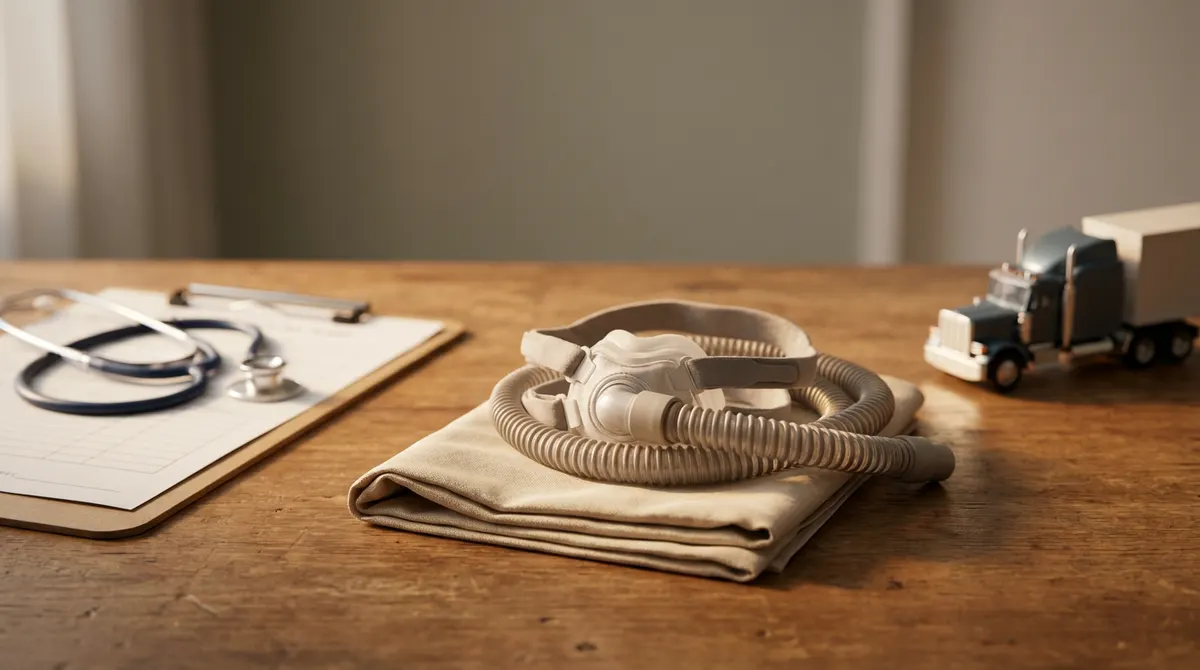
No new federal law or DOT regulation currently requires universal sleep apnea testing for all commercial drivers, but existing FMCSA medical standards already give certified medical examiners the authority to refer individual drivers for evaluation. According to the Sleep Foundation, sleep apnea affects an estimated 26% of adults aged 30 to 70, with commercial truck drivers considered a significantly higher-risk group due to sedentary driving conditions and irregular sleep schedules. This page explains the current regulatory framework, the history of proposed DOT sleep apnea rules that never became law, how sleep apnea screening works during a DOT physical, and what a diagnosis means for your medical certificate and CDL. Whether you drive for one of the major trucking companies or operate independently, understanding the difference between legal mandates and examiner discretion can prevent costly confusion at your next recertification.
The Core Answer: No New Federal Mandates for Universal Sleep Apnea Testing

There is no federal law or active rule from the Federal Motor Carrier Safety Administration that requires all commercial drivers to undergo sleep apnea testing. The FMCSA, the agency within the Department of Transportation responsible for commercial driver health standards, has not issued a universal sleep apnea testing mandate despite years of industry discussion and several failed regulatory attempts.
The confusion often comes from misunderstanding the difference between a federal rule, which has legal force after completing the full notice-and-comment rulemaking process, and advisory guidance, which informs medical examiner decisions but does not carry the same legal weight. DOT regulations under the Code of Federal Regulations require commercial drivers to meet broad medical fitness standards, but sleep apnea testing is not explicitly mandated for every driver by those standards.
Certified Medical Examiners listed on the National Registry of Certified Medical Examiners are required to assess overall driver fitness. That assessment includes identifying conditions that could impair safe driving, and sleep apnea can be one of them. Whether a driver is referred for a sleep study is a matter of clinical judgment based on individual risk factors, not a blanket federal requirement that applies to every person behind the wheel of a commercial motor vehicle.
DID YOU KNOW: The FMCSA withdrew a proposed rulemaking on sleep apnea in 2017 after the Office of Management and Budget determined it had not followed proper regulatory procedure, meaning no formal testing mandate has ever been finalised.
Not sure if sleep apnea applies to you?
Take our 2-minute sleep risk quiz to see whether sleep apnea could affect your DOT physical. No account required.
Trucking companies vary widely in how they interpret and apply sleep apnea guidance internally. Some large carriers maintain their own internal screening programs that go beyond what federal regulations require, which can add to driver confusion about what is mandatory and what is company policy.
KEY TAKEAWAY: No active federal law mandates sleep apnea testing for all commercial drivers; testing decisions are made by certified medical examiners on a case-by-case basis using clinical criteria.
Understanding why this distinction matters requires a closer look at how the existing FMCSA medical standards are structured and applied.
Understanding the Existing Regulatory Framework for Commercial Drivers

The existing DOT regulations governing commercial driver health are found in Title 49 of the Code of Federal Regulations, specifically Part 391, which sets out the physical qualifications required for drivers of commercial motor vehicles. These regulations do not contain a specific sleep apnea clause, but they do require that drivers not have any condition likely to interfere with their ability to operate a vehicle safely.
Certified Medical Examiners are bound by these regulations and guided by the Medical Examiner's Handbook published by the FMCSA. The Medical Examiner's Handbook is an advisory document, not a law, but it provides structured guidance on how examiners should evaluate common conditions including sleep disorders, respiratory disorders, and cardiovascular health. This distinction matters because the handbook outlines when referral for sleep apnea screening is appropriate without creating a universal legal obligation.
The Medical Advisory Criteria further support examiner discretion by identifying specific clinical indicators that increase the likelihood of a disqualifying condition. These include a body mass index over 40, a neck circumference above 17 inches in men or 16 inches in women, and co-existing conditions such as high blood pressure or non-insulin-treated diabetes. When a driver presents multiple risk factors, the examiner has both the authority and the professional obligation to refer that individual for diagnostic evaluation before issuing a medical certificate.
The National Registry of Certified Medical Examiners ensures that only trained and accredited providers conduct DOT physical examinations. This registry, maintained by the FMCSA, gives the agency oversight of examiner quality without requiring uniform testing protocols for every driver in the country.
IMPORTANT: Only a Certified Medical Examiner listed on the FMCSA National Registry of Certified Medical Examiners is authorised to conduct a DOT physical and issue or renew a DOT medical card.
The regulatory framework governing DOT physical sleep apnea evaluation relies on a combination of federal fitness standards, examiner training, and clinical judgment rather than on a single mandatory testing rule. Drivers are assessed individually, which means the outcome of any DOT physical varies based on the examiner's findings and the driver's specific health profile.
KEY TAKEAWAY: The regulatory framework for DOT physical sleep apnea evaluation relies on examiner discretion guided by clinical criteria, not a mandatory universal testing law.
That framework has remained largely unchanged for years, but public pressure and safety recommendations have kept the debate alive, which explains much of the persistent confusion around new rules.
Why the Confusion? The History of Proposed DOT Sleep Apnea Rules

The belief that new DOT sleep apnea rules exist or are imminent has roots in years of advocacy, near-regulations, and high-profile safety incidents. The National Transportation Safety Board has repeatedly called for more structured sleep apnea screening for commercial drivers, issuing formal recommendations to the FMCSA after investigating accidents where driver fatigue was identified as a contributing factor. The National Transportation Safety Board's recommendations carry significant public weight, even though the NTSB has no rulemaking authority of its own.
Already diagnosed and need CPAP support?
Dumbo Health helps patients start CPAP without the usual confusion, paperwork, or upfront cost. Equipment, setup, supplies, and ongoing support are all handled in one place.
Between 2012 and 2016, the FMCSA and the affiliated Medical Review Board produced guidance suggesting that commercial drivers with a body mass index over 35 should be referred for sleep apnea evaluation. This guidance circulated widely within the trucking industry and was interpreted by many drivers and trucking companies as a binding new rule, when it was in fact a non-binding advisory recommendation.
In 2016, the FMCSA published a notice indicating its intention to begin formal rulemaking on sleep apnea testing. In 2017, that notice was withdrawn after the Office of Management and Budget determined that the FMCSA had not followed the required regulatory process before publishing the guidance on which trucking companies and medical examiners had already begun to act. The Congressional Review Act was subsequently used to nullify the earlier guidance, which further complicated the regulatory landscape.
The Motor Carrier Safety Advisory Committee, an advisory body that makes recommendations to the FMCSA on safety matters, has continued to discuss sleep apnea and driver safety in its ongoing sessions. The Federal Railroad Administration has issued separate advisories for railroad operators on sleep apnea and fatigue management, which has contributed to broader awareness among transportation workers and further blurred the line between different sectors.
DID YOU KNOW: According to the National Transportation Safety Board, fatigue is one of the most frequently cited contributing factors in large truck crashes, which is why the NTSB has advocated for formalised sleep apnea screening for commercial drivers for over a decade.
High-profile accidents involving commercial vehicles, including several fatal crashes where post-accident investigations identified untreated sleep apnea in the driver, intensified public and regulatory scrutiny. These incidents shaped the perception that stricter DOT regulations on sleep apnea testing were inevitable, even as formal rulemaking consistently stalled.
sleep apnea testing is a topic where industry perception and regulatory reality have diverged significantly. The FMCSA position is that sleep apnea represents a potential safety risk that should be evaluated within the existing medical fitness framework rather than through a separate universal mandate. The debate over whether a formal rule is needed remains active in transportation policy circles, but no new law governs the issue today.
KEY TAKEAWAY: The confusion about new DOT sleep apnea rules stems from withdrawn proposals, influential NTSB recommendations, and widely circulated guidance that was never formally enacted as federal law.
With that historical context in place, it is worth understanding the condition itself and why it poses a specific risk for drivers of commercial motor vehicles.
What Is Obstructive Sleep Apnea and Why It Matters for Truck Drivers
Obstructive sleep apnea is a sleep disorder characterised by repeated partial or complete obstruction of the upper airway during sleep, causing breathing interruptions that reduce blood oxygen levels and fragment sleep quality. For a thorough overview of the condition, the guide to obstructive sleep apnea in adults on dumbo.health covers symptoms, causes, and treatment options in detail.
Obstructive sleep apnea is a sleep disorder in which the upper airway repeatedly collapses during sleep, causing breathing disruptions that reduce blood oxygen levels and impair sleep architecture. Obstructive sleep apnea is particularly prevalent among commercial drivers, with research reviewed by the NIH estimating that roughly one in three male truck drivers may have at least mild obstructive sleep apnea. Untreated obstructive sleep apnea roughly doubles the risk of a motor vehicle accident compared to drivers without the condition, making it a recognised safety concern under FMCSA medical fitness standards.
Obstructive sleep apnea directly impairs driving performance by reducing alertness, slowing reaction time, and increasing the likelihood of microsleeps, which are involuntary lapses in consciousness that can last from a fraction of a second to several seconds. For drivers of commercial motor vehicles, which often weigh 40 tons or more at highway speeds, even a brief lapse in attention can have catastrophic consequences. The link between untreated sleep apnea and trucking accidents has been documented in post-crash investigations and safety research reviewed by the National Transportation Safety Board.
Several key physical and clinical risk factors make commercial drivers more susceptible to obstructive sleep apnea than the general population. A body mass index above 35 is one of the most consistently identified physical indicators. Neck circumference above 17 inches in men is also a recognised predictor. Co-morbid conditions including high blood pressure, cardiovascular health problems, and non-insulin-treated diabetes mellitus are all independently associated with elevated risk and are commonly present in the commercial driving population.
Many people who have sleep apnea are unaware of it because the most disruptive symptoms occur during sleep. Identifying the most common sleep apnea symptoms to look out for is an important first step for any driver who suspects they may be affected.
KEY TAKEAWAY: Obstructive sleep apnea impairs driving performance by reducing alertness and increasing accident risk, making early identification and treatment critical for commercial driver safety and DOT compliance.
Knowing what sleep apnea is and how it affects drivers explains why medical examiners pay close attention to risk factors during the DOT physical, which is explored in full in the next section.
The DOT Physical and Sleep Apnea Screening Process
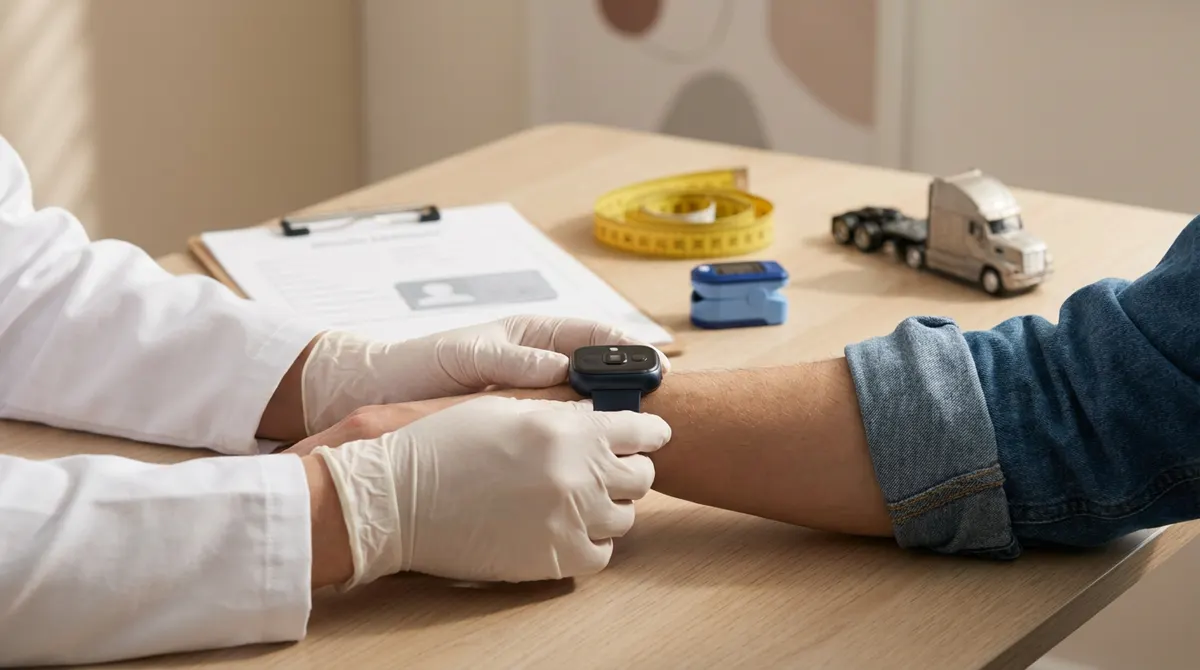
A DOT physical is the standardised medical examination required for all drivers of commercial motor vehicles operating in interstate commerce, conducted by a Certified Medical Examiner listed on the FMCSA National Registry. During a DOT physical sleep apnea evaluation, the examiner reviews the driver's medical history, conducts a physical examination, and assesses any conditions that could affect the safe operation of a commercial motor vehicle.
Sleep apnea screening during a DOT physical sleep apnea assessment is not a separate standalone test. It is embedded within the physical examination itself. The examiner reviews the driver's medical history for prior sleep disorder diagnoses, asks about symptoms such as loud snoring, witnessed breathing pauses, morning headaches, and excessive daytime sleepiness, and records physical measurements including BMI, neck circumference, and blood pressure.
When the examiner identifies a combination of risk factors or specific clinical indicators consistent with a likely sleep disorder, the driver will typically be referred for further diagnostic testing rather than receiving a standard two-year medical certificate. In practice, this means the examiner may issue a temporary or conditional certification while the driver completes a formal sleep test.
Some examiners use validated screening tools such as the Epworth Sleepiness Scale or the STOP-BANG questionnaire to standardise their DOT physical sleep apnea assessment. Others apply the Medical Advisory Criteria thresholds directly. The key point is that referral is based on clinical judgment, not an automatic trigger from a single measurement like body weight alone.
If you are unsure whether your symptoms warrant a sleep evaluation, finding a qualified sleep physician or medical provider near you is a practical first step before your next DOT physical.
KEY TAKEAWAY: During a DOT physical sleep apnea assessment, medical examiners use clinical criteria and individual risk factors to decide whether to refer a driver for diagnostic testing, rather than applying a universal mandatory screening protocol.
Once referred, the driver needs to complete a sleep test, and there are now multiple options available that make this process significantly more accessible than it was in previous years.
Types of Sleep Apnea Testing Available to Commercial Drivers

Commercial drivers referred for apnea testing after a DOT physical sleep apnea evaluation have two main options: a traditional in-laboratory sleep study, also known as a polysomnogram, conducted overnight at a sleep lab, or an at-home sleep test using validated portable monitoring technology.
A sleep lab study involves spending a night at a clinical facility where sleep lab technicians attach monitoring equipment that records brain activity, eye movement, oxygen levels, airflow, and body movement. These studies are considered the gold standard for diagnosing complex sleep disorders and are particularly useful when additional conditions may be present alongside obstructive sleep apnea. Sleep lab studies provide the most comprehensive sleep testing available but require an overnight stay and typically come with higher costs and longer scheduling lead times.
At-home sleep testing has become a widely used and clinically validated form of apnea testing that is particularly convenient for commercial drivers who spend significant time away from home. Devices such as the WatchPAT use peripheral arterial tonometry to measure sleep-disordered breathing with accuracy comparable to in-lab studies for most patients with suspected obstructive sleep apnea. Understanding how at-home sleep studies work can help drivers prepare for the process and interpret their results. The at-home sleep test service offered through dumbo.health allows drivers to complete their diagnostic evaluation without an overnight clinic stay, with results typically available within a few days of returning the device.
| Feature | Sleep Lab Study | At-Home Sleep Test |
|---|---|---|
| Setting | Clinical facility | Driver's home or hotel room |
| Setup | Conducted by lab technicians | Self-administered |
| Metrics tracked | Comprehensive, including brain waves | Key respiratory and oxygen metrics |
| Best for | Complex cases, multiple sleep disorders | Most drivers with suspected OSA |
| Turnaround time | Several days to weeks | Often within a few days |
| Cost | Higher, typically insurance-dependent | Often lower and more accessible |
| Convenience | Requires overnight facility stay | No overnight stay required |
For most commercial drivers with suspected obstructive sleep apnea and no other complicating sleep disorders, an at-home sleep test ordered and reviewed by a sleep physician provides an accurate and efficient pathway to diagnosis. Sleep medicine professionals review the device data, produce a clinical diagnostic report, and can recommend a treatment plan that satisfies FMCSA medical standards.
KEY TAKEAWAY: Commercial drivers have access to both laboratory and at-home sleep testing options, with at-home tests offering a practical and clinically validated alternative for most drivers with suspected obstructive sleep apnea.
Once a sleep apnea diagnosis is confirmed, the next step is developing a treatment plan that satisfies DOT medical standards and protects CDL eligibility.
Common Myths About DOT Sleep Apnea Rules Debunked

MYTH: A new federal law now requires all commercial drivers to be tested for sleep apnea. FACT: No such law exists. The FMCSA withdrew its proposed rulemaking on sleep apnea testing in 2017, and no replacement mandate has been enacted since. Testing decisions remain with the Certified Medical Examiner based on individual risk factors identified during the DOT physical. Drivers who do not present clinical indicators of sleep apnea are not automatically required to undergo a sleep study.
MYTH: A sleep apnea diagnosis automatically disqualifies you from holding a CDL. FACT: A sleep apnea diagnosis does not automatically disqualify a commercial driver. FMCSA guidance is clear that drivers who receive an appropriate sleep apnea diagnosis and demonstrate effective treatment can be medically certified to continue operating a commercial motor vehicle. The determining factor is documented treatment compliance, not the diagnosis itself. Many drivers with obstructive sleep apnea maintain full CDL status with consistent treatment.
MYTH: CPAP therapy compliance only matters if your trucking company requests proof. FACT: Documented CPAP compliance data is required for medical recertification when a driver has been diagnosed with obstructive sleep apnea and is treating with CPAP. Most Certified Medical Examiners request a compliance report from the driver's sleep physician or directly from the CPAP device data before issuing or renewing a medical certificate. Waiting for trucking companies to prompt this process rather than managing it proactively is a risk to CDL status and commercial certification.
MYTH: Only overweight drivers need to worry about sleep apnea screening during a DOT physical. FACT: While body mass index is one of the most recognised risk factors, sleep apnea can affect drivers regardless of body weight. High blood pressure, neck circumference, age, male sex, and family history are all independent risk factors. Mayo Clinic notes that anatomical features of the airway can contribute to obstructive sleep apnea in individuals who are not overweight, making any driver with persistent symptoms worth evaluating.
MYTH: Oral devices are not accepted as a DOT-compliant treatment for sleep apnea. FACT: Oral appliance therapy is a clinically recognised and FMCSA-accepted treatment for mild to moderate obstructive sleep apnea when prescribed by a qualified provider and shown to be effective. Oral devices require fitting by a dental sleep medicine professional and periodic follow-up to verify ongoing effectiveness. Drivers using oral devices for treatment must provide documentation of effectiveness to their medical examiner, just as they would with CPAP therapy.
KEY TAKEAWAY: The most damaging myths around DOT sleep apnea rules involve false assumptions about blanket testing mandates and automatic disqualification, both of which are incorrect under the current regulatory framework.
Separating myth from fact is essential before exploring what a sleep apnea diagnosis actually requires in terms of treatment and ongoing compliance.
Navigating a Sleep Apnea Diagnosis and Treatment for DOT Compliance
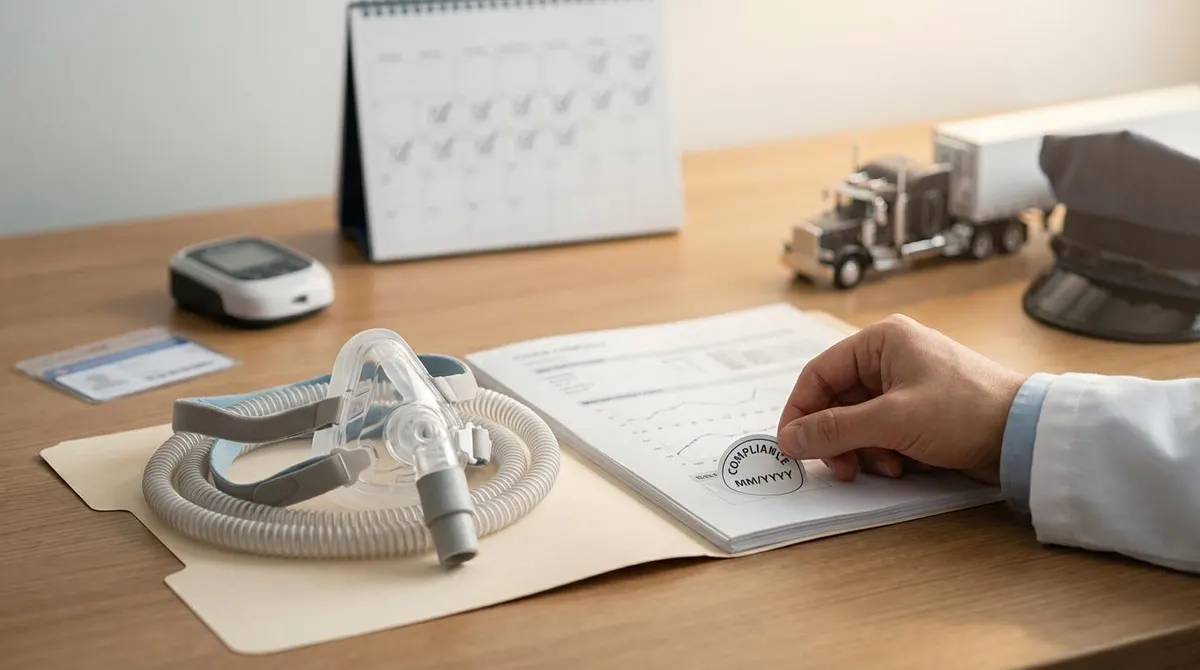
Receiving a sleep apnea diagnosis following a DOT physical sleep apnea referral does not end a driver's career. It begins a structured process of developing a medical treatment plan that, when followed consistently, allows the driver to meet the fitness standards required for continued commercial certification.
A sleep apnea diagnosis is typically expressed as mild, moderate, or severe based on the driver's Apnea-Hypopnea Index score, which counts breathing disruptions per hour of sleep. A score between 5 and 14 events per hour is classified as mild, 15 to 29 is moderate, and 30 or more events per hour is classified as severe. The severity level informs the urgency and type of treatment recommended, though commercial drivers are generally expected to initiate treatment at any severity level when their condition has been identified during a formal medical evaluation.
Continuous Positive Airway Pressure therapy is the most widely used and most thoroughly documented treatment for obstructive sleep apnea in commercial drivers. CPAP therapy works by delivering a continuous stream of pressurised air through a mask worn during sleep, keeping the airway open and preventing the breathing disruptions that characterise the condition. For DOT compliance purposes, CPAP therapy is the preferred treatment because it generates objective compliance data that can be reviewed by a Certified Medical Examiner.
Modern CPAP machines record usage data automatically, including hours of use per night and the number of residual breathing events. This data is typically uploaded to an online platform and can be downloaded as a compliance report. Most Certified Medical Examiners apply a compliance threshold requiring CPAP machine use for at least 4 hours per night on a minimum of 70% of nights, broadly aligned with the clinical compliance standard originally derived from Medicare coverage criteria. Drivers should confirm the specific compliance data requirements with their sleep physician and medical examiner in advance.
CPAP therapy options and equipment to support treatment are available through dumbo.health for drivers starting or upgrading their care.
Drivers who cannot tolerate CPAP therapy, or who have mild to moderate obstructive sleep apnea, may be suitable candidates for oral appliance therapy. Oral devices are custom-fitted dental appliances that reposition the lower jaw and tongue during sleep to maintain airway patency. A detailed explanation of how oral appliances work for sleep apnea is available for drivers considering this option. Oral devices require fitting by a qualified dental sleep medicine professional and periodic follow-up to confirm ongoing effectiveness, with documentation provided to the medical examiner as proof of treatment compliance.
Other lifestyle interventions, including sustained weight loss, positional therapy, and avoiding alcohol before sleep, can reduce sleep apnea severity and may complement primary treatment. Lifestyle changes alone are rarely sufficient to meet the documentation requirements for DOT compliance and should not replace a formally prescribed treatment plan reviewed by a sleep physician.
CPAP therapy is the primary DOT-compliant treatment for obstructive sleep apnea because it generates the compliance data medical examiners require. CPAP therapy addresses the core physiological mechanism of airway obstruction by maintaining continuous positive airway pressure throughout the sleep period. CPAP therapy compliance data, pulled directly from the device's memory or cloud platform, provides the objective compliance report that supports recertification decisions.
KEY TAKEAWAY: Continuous Positive Airway Pressure therapy is the primary DOT-compliant treatment for sleep apnea in commercial drivers because it generates the objective compliance data medical examiners require for recertification.
Once treatment is established and working, ongoing compliance and recertification become the central concern for maintaining CDL eligibility over time.
Maintaining Your Medical Certificate: Recertification and Ongoing Compliance

Maintaining a valid DOT medical card after a sleep apnea diagnosis requires ongoing treatment adherence and regular recertification by a Certified Medical Examiner. The standard DOT medical certificate is valid for up to two years for healthy drivers, but drivers with diagnosed sleep apnea are typically issued shorter certification periods to allow more frequent compliance monitoring.
A commercial driver newly diagnosed with obstructive sleep apnea may receive an initial medical certificate of just one to three months while establishing consistent treatment compliance. Once the driver demonstrates adequate CPAP therapy adherence or documented effectiveness of an alternative treatment such as oral devices, the examiner may extend certification to six months or one year. A full two-year medical certificate is possible for drivers with a well-documented history of sustained compliance, though this varies by examiner and the severity of the condition.
The compliance verification process involves submitting a compliance report from the CPAP machine data and, where relevant, a supporting letter from the treating sleep physician confirming that treatment is effective and the driver is fit to operate a commercial motor vehicle. Some trucking companies have established internal compliance tracking technology systems that monitor driver treatment data on a rolling basis, allowing for early identification of adherence problems before they affect medical certification status.
CDL renewal is directly tied to medical certificate status. A driver whose medical certificate lapses due to failure to complete recertification requirements, including sleep apnea compliance documentation, risks losing CDL driving privileges. The consequences extend beyond the individual driver, affecting trucking companies' safety records and insurance standing.
DID YOU KNOW: According to the FMCSA, commercial drivers must carry their current medical certificate at all times while operating a commercial motor vehicle, and that certificate must remain valid to avoid operating out of compliance with federal DOT regulations.
Many patients report that consistent treatment for obstructive sleep apnea produces meaningful improvements in daytime alertness, concentration, and overall energy, making both professional performance and daily life more manageable. In real-world use, drivers who achieve consistent CPAP therapy compliance often find the recertification process becomes more routine and straightforward over time.
For drivers considering alternatives to CPAP, the guide on sleep apnea treatment options beyond CPAP provides a practical overview of clinically validated approaches that may qualify under FMCSA medical standards.
KEY TAKEAWAY: Drivers diagnosed with sleep apnea typically begin on shorter certification periods and build toward longer medical certificates by demonstrating consistent, documented treatment compliance over time.
Frequently Asked Questions
Can you fail a DOT physical for sleep apnea?
You cannot fail a DOT physical solely because you have sleep apnea, but you may not receive a medical certificate if you have an untreated diagnosis with no documentation of treatment or compliance. If a medical examiner identifies strong indicators of undiagnosed sleep apnea during the DOT physical sleep apnea assessment, such as excessive BMI, high blood pressure, and reported daytime sleepiness, they may issue a temporary certificate pending a sleep study. Once diagnosed and compliant with an approved treatment plan, most commercial drivers can achieve full medical certification and maintain CDL status.
Can you still be a truck driver with sleep apnea?
Yes. Commercial drivers with obstructive sleep apnea can continue to hold a CDL and operate commercial motor vehicles provided they receive a diagnosis, follow an approved treatment plan, and maintain documented compliance. The FMCSA does not automatically disqualify drivers with sleep apnea. What matters is evidence that the condition is being effectively managed and that driving performance is not impaired. Many drivers across the trucking industry successfully treat obstructive sleep apnea and maintain full medical certification without interruption to their career.
What is the 3% rule for sleep apnea?
The 3% rule refers to an oxygen desaturation threshold used in sleep testing to score breathing events. Specifically, some devices and laboratories score respiratory disturbances accompanied by at least a 3% drop in blood oxygen saturation when calculating the Oxygen Desaturation Index. This scoring method affects how the severity of sleep apnea is classified in a diagnostic evaluation. The 3% threshold is a technical scoring criterion used by sleep medicine professionals rather than a specific DOT regulation, though it influences the AHI equivalent reported in a sleep study result and can affect how a driver's condition is categorised.
What is the 70% rule for CPAP compliance?
The 70% rule is a widely referenced CPAP compliance benchmark originally derived from Medicare coverage criteria. It requires that the CPAP machine be used for at least 4 hours per night on a minimum of 70% of nights over a defined monitoring period, typically assessed over 30 days. For DOT medical recertification, most Certified Medical Examiners apply a similar standard when reviewing CPAP compliance data before issuing or renewing a medical certificate, though exact requirements can vary by examiner. Drivers should confirm the specific compliance data threshold with their sleep physician and medical examiner before submitting documentation.
Do all commercial drivers need to take a sleep study?
Not all commercial drivers are required to take a sleep study. There is no federal law or active DOT regulation that mandates universal sleep apnea testing for all operators of commercial motor vehicles. A sleep study is typically required only when a Certified Medical Examiner identifies significant risk factors or symptoms during the DOT physical sleep apnea evaluation, such as a BMI over 35, high blood pressure, or reported excessive daytime sleepiness. Drivers who do not present these indicators may receive a standard medical certificate without being referred for sleep testing.
What happens to my DOT medical card if I am diagnosed with sleep apnea?
When a driver is diagnosed with sleep apnea, the Certified Medical Examiner will typically issue a shorter certification period rather than the standard two-year DOT medical card. The initial certificate length depends on the examiner's judgment and the driver's treatment status at the time of examination. Once the driver demonstrates consistent compliance through CPAP compliance data or documentation from a sleep physician, they can work toward longer certification periods. Proactively managing sleep apnea treatment records and staying ahead of recertification timelines is the most reliable way to protect CDL renewal.
Can I use an at-home sleep test for DOT compliance?
Yes. An at-home sleep test ordered and interpreted by a qualified sleep physician is generally acceptable for establishing a sleep apnea diagnosis in the context of DOT compliance. At-home tests using validated technology provide accurate diagnostic results for most drivers with suspected obstructive sleep apnea, and the results must be reviewed and reported by a certified sleep medicine professional to be accepted. If you need a convenient option, you can find a provider near you or explore the at-home sleep test service through dumbo.health to get a clinically valid evaluation without an overnight clinic stay.
Conclusion

Understanding the true state of DOT sleep apnea testing requirements protects both your health and your livelihood as a commercial driver. No new federal law mandates universal testing, but the existing framework gives certified medical examiners clear authority to refer drivers based on clinical risk factors identified during the DOT physical. A sleep apnea diagnosis does not end a driving career, and effective treatments including CPAP therapy and oral devices provide well-documented pathways to DOT compliance and CDL protection. Staying ahead of your recertification requirements and maintaining accurate compliance documentation are the most reliable ways to keep your medical certificate and CDL status secure. If you are ready to take the next step, get started with an at-home sleep test through dumbo.health and get the clinical answers you need quickly and conveniently.
Related DOT Physical Topics
- What are the current DOT requirements for sleep apnea testing for commercial drivers
- Home Sleep Apnea Test The Complete Guide to At-Home Sleep Apnea Testing
- Are there legal requirements for drivers with sleep apnea
- What Are the DOT Requirements for Drivers With Sleep Apnea
- Sleep Apnea Tests for DOT Compliance What tests are accepted
- Sleep Apnea Test at Home The Complete Guide to Home Sleep Testing for Adults
- Home Sleep Test The Complete Guide to At-Home Sleep Apnea Testing
- How can drivers with sleep apnea qualify again after a failed DOT physical
- New DOT Physical Requirements What Drivers MUST Know About New Updates
- Can you fail a DOT physical because of sleep apnea
- When Can Sleep Apnea Affect a DOT Physical
- Can you pass a DOT physical with sleep apnea
- What happens if you fail a DOT physical due to sleep apnea
- What are the current FMCSA guidelines on sleep apnea for commercial drivers
- DOT sleep apnea test at home
- At-Home Sleep Apnea Test The Complete Guide to Testing, Results, and Treatment
- Sleep Apnea Test The Complete Guide to Diagnosis, Home Testing, and What Your Results Mean
- Sleep Apnea Testing The Complete Guide to Diagnosis, Home Tests, and What Your Results Mean
- Best Treatments for Sleep Apnea to Improve Driving Safety
- Home Sleep Apnea Test for Commercial Drivers The CDL Holder's Complete Guide
- How Sleep Apnea Affects Overall Driving Safety
- Sleep Apnea Test for CDL Drivers
- Why DOT Sleep Tests at Home Matter for Your Career and Health
- What Precautions Should Drivers With Sleep Apnea Take
- The Comprehensive Guide to Suboxone, Sleep Apnea, and FMCSA Compliance for Commercial Motor Vehicle Operators
- How Does Sleep Apnea Affect Driving Ability
- Is a Sleep Study Required for a DOT Physical
- What Does DOT Stand for in a DOT Physical
- What Is the Difference Between a DOT and Non-DOT Physical
- What Are the Requirements to Pass a DOT Physical
- Can You Get a DOT Physical in Any State The Complete Guide for Commercial Drivers
- Can You Get a DOT Physical Online The Complete Guide for Commercial Drivers
- What drugs do they test for in a DOT drug test
- How Do You Submit Your DOT Physical to the DMV
- Does a DOT Physical Test for Weed or THC The Complete Guide for Commercial Drivers
- What Can Disqualify You From a DOT Physical
- Does a DOT physical include a drug test
- Can You Pass a DOT Physical with Epilepsy
- DOT Physical Self Pay Cost
- Remote DOT Physical The Complete Guide for Commercial Drivers
- Essential 171 DOT Definitions for Commercial Drivers
- 2026 DOT Inspection Dates
- DOT Physical Exam Basics
- Can You Pass a DOT Physical With a Hernia
- Is a drug test required for a DOT physical
- DOT Physical Cost Breakdown What Drivers Pay & Why
- DOT Physical ICD-10 & Billing Codes The Complete Guide for Accurate Compliance and Reimbursement
- Can You Pass a DOT Physical With One Eye
- Can You Pass a DOT Physical With a Pacemaker
- Telehealth Dot Physical
- DOT Physical Forms & Paperwork The Complete Guide for Commercial Drivers
- Who needs a DOT physical
- What Forms Do You Need for a DOT Physical
- Navigating DOT Stroke Guidelines for CMV Drivers What You Need To Know
- DOT Physical & Alcohol Requirements
- Online DOT Physical Without Insurance A Complete Guide for Commercial Drivers
- DOT Physical Out of Pocket What Commercial Drivers Actually Pay
- Why do they measure your neck during a DOT physical
- Navigating Your DOT Physical with Common Medical Conditions
- Navigating the Florida DOT Physical Your Essential Guide for CDL Drivers
- What Is the Urine Test for in a DOT Physical
- DOT Physical Online Cost
- Walk In DOT Physical Self Pay
- Online DOT Physical Self-Pay The Complete Guide for CDL Drivers and Owner-Operators
- What Should You Bring to a DOT Physical
- DOT physical self pay guide for commercial drivers paying out of pocket
- Can You Get a DOT Physical Online
- Can You Fail a DOT Physical for Being Overweight
- DOT Hypertension Guidelines The Complete Blood Pressure Guide for Commercial Drivers
- Your Complete Guide What's Included in a DOT Physical Exam
- The Ultimate DOT Preparation Checklist for Motor Carriers and Commercial Drivers
- DOT Physical Insurance & Recertification The Complete Driver's Guide
- DOT Physical Cash Pay
- Same Day DOT Physical
- Virtual DOT Physical
- DOT Physical Vision & Eye Requirements
- What blood pressure do you need to pass a DOT physical
- DOT Medical Exam Self-Pay A Complete Guide for Commercial Drivers
- Online DOT Exam What Drivers and Medical Examiners Need to Know
- Do They Check Your Private Parts During a DOT Physical
- DOT Physical Blood Pressure Requirements What Drivers Need to Know
- DOT Physical Insurance or Self Pay How to Choose the Right Payment Option for Your Exam
- DOT Physical Chiropractor Your Complete Guide to CDL Exams
- Is a DOT physical the same as a regular physical
- Can You Fail a DOT Physical for High Blood Pressure
- How to Pass a DOT Physical The Complete Commercial Driver's Guide
- What should I expect at a DOT physical
- What Does a DOT Physical Consist Of
- At Home Sleep Test for Truck Drivers
- DOT Physical at Urgent Care What Commercial Drivers Need to Know
- Can You Pass a DOT Physical with Diabetes
- Can You Pass a DOT Physical with High Blood Pressure
- BMI for DOT Physical What Commercial Drivers Need to Know
- What Happens During the DOT Physical Exam The Complete Guide for Drivers
- What Happens If Your DOT Physical Expires Compliance Guide for Commercial Drivers
- Does insurance cover a DOT physical
- DOT Physical & Drug Test What Drivers Need to Know
- DOT Physical Duration and Validity How Long Your Medical Card Lasts
- The Ultimate DOT Physical Guide for Commercial Drivers (2025–2026)
- Non-DOT Physical A Comprehensive Guide to Workforce Health and Safety
Take the next step before your DOT physical
Start with the free quiz if you are unsure about your risk, or order an at-home sleep test if you have already been flagged for possible sleep apnea.
AI summary
DOT sleep apnea testing refers to how obstructive sleep apnea (OSA) is evaluated during the DOT medical certification process for commercial drivers. There is no new federal law or active FMCSA regulation that requires universal sleep apnea testing for all drivers. FMCSA standards under Title 49 CFR Part 391 require drivers to be medically fit, and Certified Medical Examiners on the National Registry may refer drivers for evaluation based on clinical judgment. Common risk indicators include elevated BMI (often discussed at BMI over 35 or 40), large neck circumference (about 17 inches in men or 16 inches in women), and co-existing conditions such as high blood pressure or non-insulin-treated diabetes. Screening may include symptom review and tools like STOP-BANG or the Epworth Sleepiness Scale. If referred, drivers may complete an in-lab polysomnogram or a validated at-home sleep test (for example, WatchPAT). A diagnosis does not automatically disqualify a CDL holder; ongoing certification typically depends on documented effective treatment, CPAP compliance data (commonly 4 hours/night on 70% of nights), or documented effectiveness of oral appliance therapy, plus periodic recertification.

Nicolas Nemeth
Co-Founder
Nico is the co-founder of Dumbo Health, a digital sleep clinic that brings the entire obstructive sleep apnea journey home. Patients skip the sleep lab and the long wait to see a specialist. Dumbo Health ships an at home test, connects patients with licensed sleep clinicians by video, and delivers CPAP or a custom oral appliance with ongoing coaching and automatic resupply in one clear subscription.
Users Questions
Questions other readers asked our AI assistant about this article. Upvote the ones you find most helpful.
What happens next after I pass my sleep study for DOT sleep apnea evaluation?
After your sleep study, you should receive a formal diagnostic report from the sleep physician. If the study shows you do not have obstructive sleep apnea, provide that documentation to your Certified Medical Examiner so they can complete or update your DOT medical certification. If the study does diagnose sleep apnea, the next step is to discuss treatment options such as CPAP therapy or an oral appliance, begin the prescribed treatment, and keep documentation of your treatment plan and compliance. Commercial drivers may need to show CPAP usage data or a provider letter before receiving or renewing a DOT medical card. Follow-up appointments may also be needed to monitor progress and adjust treatment if necessary.
Is Medicare accepted for home sleep apnea testing?
Medicare may cover a home sleep apnea test when it is considered medically necessary. Coverage can vary depending on your plan, deductible, copays, and whether prior authorization is required, so your out-of-pocket cost may differ. Drivers being evaluated for DOT sleep apnea concerns should confirm coverage details before ordering a test.
Keep reading

How Long Does a DOT Physical Take? A Complete Guide for Commercial Drivers

What Happens If You Fail a DOT Drug Test? The Complete Guide for Commercial Drivers


