DOT Physical Insurance & Recertification: The Complete Driver's Guide
This guide explains what a DOT physical is and why the FMCSA requires it for commercial motor vehicle drivers under 49 CFR Part 391. It breaks down what the exam includes, key pass standards for blood pressure, vision, hearing, and urinalysis, and how results tie to the DOT medical card. It clarifies why most standard health plans, including Medicaid and Medicare, do not cover the exam and when occupational health benefits might. You will see typical out-of-pocket price ranges and how to check coverage using CPT 99455 and 99456. It also outlines recertification timing, downgrade risk if your card expires, and how conditions like diabetes, hypertension, and sleep apnea affect certification and documentation.
Struggling with sleep?
Find out if sleep apnea is the reason.
FDA-cleared. $149 flat. Physician-reviewed results in 48 hours.

DOT Physical Insurance & Recertification: The Complete Driver's Guide

The DOT physical is a federal requirement for every commercial driver operating a CMV.
DOT physical requirements are federally mandated health examinations that every commercial driver must pass to legally operate a commercial motor vehicle (CMV) in the United States. According to the Federal Motor Carrier Safety Administration (FMCSA), more than 3.5 million commercial drivers are required to maintain a valid Medical Examiner's Certificate to stay on the road. This guide covers every critical intersection between the DOT physical, your health insurance, and the recertification process. You will learn what insurers typically cover, how to manage medical conditions that affect certification, and exactly what to do when renewal time comes. Whether you are a first-time CDL holder or a veteran driver facing a complex medical situation, this resource gives you the full picture.
Understanding the Foundation: What Is a DOT Physical?

Only FMCSA-listed medical examiners can perform a legally valid DOT physical.
Decoding DOT Physical Insurance: What Your Health Plan Covers (and What It Doesn't)

Understanding your insurance coverage before your DOT physical prevents unexpected out-of-pocket costs.
Most standard health insurance plans do not cover a DOT physical because the examination is classified as an occupational or regulatory requirement rather than a medical necessity. Whether your insurer covers it depends entirely on your specific plan type, your employer's occupational health benefits, and how the exam is coded by the provider.
Not sure if sleep apnea applies to you?
Take our 2-minute sleep risk quiz to see whether sleep apnea could affect your DOT physical. No account required.
This is one of the most widely misunderstood aspects of the DOT physical process. Many drivers assume their health insurance will absorb the cost, only to discover afterwards that the claim was denied. Understanding coverage categories before you schedule the exam saves time, money, and frustration.
Standard Health Insurance vs. Occupational Health Coverage
Standard health insurance plans, including those provided through employers or purchased on the ACA marketplace, are designed to cover treatment of illness and injury. The DOT physical is a regulatory compliance exam. Because it is not diagnosing or treating a condition, most plans categorise it as a non-covered service.
Occupational health coverage, by contrast, is specifically designed for employer-mandated health services, workplace injury management, and regulatory compliance exams. If your employer provides occupational health benefits or contracts with an occupational medicine provider, the DOT physical is far more likely to be covered in full.
●Employer-sponsored occupational health plans: often fully covered
●Standard individual health insurance: rarely covered
●Medicaid and Medicare: generally not covered, as DOT physicals are not medically indicated services
●Union health plans: coverage varies by collective bargaining agreement; review your plan documents
| IMPORTANT: Always call your insurance provider before your appointment and request a pre-authorisation confirmation in writing. Ask specifically whether CPT code 99455 or 99456, the standard occupational examination codes, are covered under your plan. |
|---|
Navigating Out-of-Pocket Costs and Payment Options
When insurance does not cover the exam, you will pay out-of-pocket. The cost of a DOT physical varies by provider and location. Based on reported rates across occupational health clinics and urgent care facilities, typical pricing falls in the following ranges:
| Provider Type | Typical Cost Range | Notes |
|---|---|---|
| Occupational health clinic | $75 to $150 | Most common setting; examiners list on FMCSA registry |
| Urgent care clinic | $100 to $200 | Convenient; verify FMCSA registration first |
| Primary care physician | $100 to $250 | Requires FMCSA registration; not all PCPs are listed |
| Community health centre | $35 to $75 | Sliding scale fees may apply for qualifying individuals |
| Free or low-cost DOT physical | $0 to $50 | Rare; available through select employer programmes, union benefits, or community clinics in your area |
If cost is a concern, community health centres funded by the Health Resources and Services Administration (HRSA) sometimes offer DOT physicals on a sliding scale basis. Searching for HRSA-funded centres close to you through the HRSA health centre finder is the most reliable way to locate a low-cost provider in your area.
Insurance for Follow-Up Care and Specialist Referrals
When a medical examiner identifies a condition during the DOT physical that requires specialist sign-off before certification, such as a cardiac evaluation or a sleep study for suspected sleep apnea, the follow-up appointments are treated differently by insurance. Those referrals are medical services, not occupational exams, and most standard health insurance plans do cover them under normal cost-sharing rules.
This means that while the initial DOT physical may be out-of-pocket, any specialist evaluation triggered by its findings should be covered by your insurer, subject to your deductible and co-insurance. Retaining all documentation from these referrals is essential for both your insurance claims and your recertification file.
The Distinction of DOT Drug Testing and Insurance
DOT drug and alcohol testing is a legally separate process from the DOT physical examination, governed by 49 CFR Part 40. Drug tests are virtually never covered by personal health insurance because they are employer compliance requirements. Employers are legally required to fund DOT drug testing for their drivers. If you are an owner-operator, the cost falls to you directly and is typically $30 to $60 per test at a certified collection site.
Already diagnosed and need CPAP support?
Dumbo Health helps patients start CPAP without the usual confusion, paperwork, or upfront cost. Equipment, setup, supplies, and ongoing support are all handled in one place.
| KEY TAKEAWAY: Most standard health insurance plans do not cover the DOT physical examination itself, but specialist referrals triggered by exam findings are typically covered as standard medical services. |
|---|
Understanding the cost and coverage landscape gives you the tools to plan financially. Next, you need to understand the recertification process and how to stay ahead of your medical card's expiration date.
The Recertification Rollercoaster: Maintaining Your DOT Medical Card
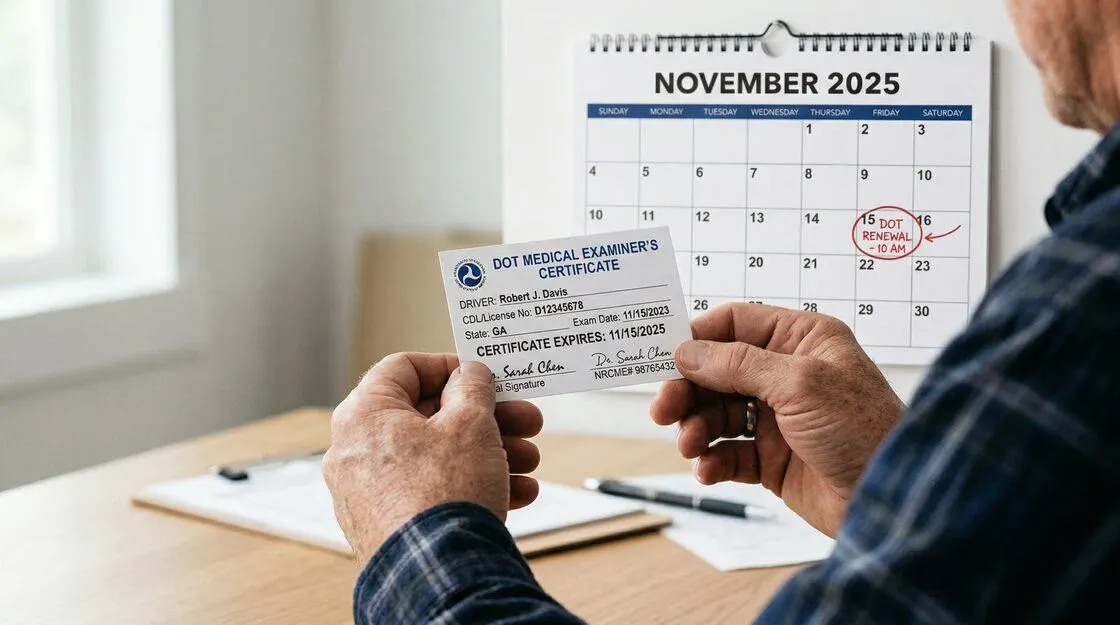
Your DOT medical card expiration date should be in your calendar at least 90 days in advance.
The DOT Medical Examiner's Certificate is valid for a maximum of 24 months, but many drivers receive shorter certification periods based on their health status. The recertification process requires you to repeat the full DOT physical with an FMCSA-registered examiner before your current card expires.
A DOT medical card is not a one-time credential. It is a living document tied to your ongoing health status, and it must be actively maintained for your CDL to remain valid and your employment to continue uninterrupted.
Understanding Your Medical Examiner's Certificate (Medical Card)
The Medical Examiner's Certificate, commonly called the DOT medical card, is issued on FMCSA Form MCSA-5876. It contains your name, the date of examination, the expiration date, and any restrictions or conditions noted by the examiner. Since January 2014, examiners have been required to report the results directly to the FMCSA National Registry, which links to your state's CDL records.
Your CDL record will reflect your medical certification status. If your card expires and no new certificate is reported to the FMCSA, your CDL will be downgraded from a commercial classification to a non-commercial one within 60 days. At that point, you legally cannot operate a CMV until your medical certification is renewed and the CDL is reinstated.
The DOT Physical Renewal Process: Steps and Timeline
The renewal process follows a predictable sequence. Knowing each step in advance allows you to schedule proactively rather than reactively.
●Schedule your appointment with an FMCSA-registered medical examiner at least 60 to 90 days before your card expires.
●Gather all required documents: current medications list, specialist letters, monitoring results, and your insurance information.
●Attend the examination and complete all components.
●If you pass, you receive a new Medical Examiner's Certificate immediately. The examiner submits results to the FMCSA registry within 24 hours.
●Provide a copy of the new certificate to your employer's safety department within the required timeframe, typically within 15 business days.
●Confirm that your CDL record has been updated in your state's DMV system within 10 business days.
| TIP: Set a recurring calendar reminder 90 days before your card's expiration date. Scheduling early gives you time to address any unexpected findings or gather specialist documentation without risking your certification status. |
|---|
Common Reasons for Recertification Challenges
Several situations commonly cause delays or difficulties during recertification. Being aware of these in advance allows you to address them proactively.
●New or worsening medical conditions identified since the last exam
●Lapsed monitoring for a previously disclosed condition, such as failing to provide updated HbA1c results for diabetes
●New medications that require additional review, particularly controlled substances or cardiovascular drugs
●Weight gain that raises concerns about obstructive sleep apnea risk
●blood pressure readings that exceed certification thresholds at the time of exam
●Failure to disclose a new diagnosis on the medical history form, which can trigger additional scrutiny
Many patients report that recertification challenges are far less stressful when all relevant health records are organised and available at the appointment. Examiners are required to follow FMCSA guidelines, and demonstrating well-managed, documented health conditions significantly improves outcomes.
| KEY TAKEAWAY: DOT medical cards expire every 12 to 24 months depending on your health status. Missing the renewal deadline results in your CDL being downgraded, which means you cannot legally operate a commercial motor vehicle until recertification is complete. |
|---|
Knowing the recertification timeline is only part of the picture. How specific medical conditions interact with your certification eligibility and your insurance coverage is where many drivers need the most detailed guidance.
Intersecting Worlds: How Medical Conditions Affect Both Insurance and Recertification

Well-documented, managed medical conditions rarely prevent certification when paired with proper specialist oversight.
Managing a chronic medical condition as a commercial driver involves navigating both your health insurance coverage and your FMCSA certification requirements simultaneously. The good news is that most common chronic conditions do not automatically disqualify you from certification. The critical factor is how well the condition is managed and documented.
The FMCSA evaluates medical conditions on the basis of whether they create a risk of sudden incapacitation or significantly impair the physical or cognitive demands of driving. This means that a well-managed condition with proper documentation and stable clinical indicators is treated very differently from an unmanaged or newly diagnosed one.
Managing Diabetes for DOT Certification and Insurance
Diabetes mellitus is one of the most commonly encountered conditions during DOT physicals. Historically, insulin-dependent diabetes was an automatic disqualification. As of 2018, the FMCSA amended its rules to allow insulin-treated diabetics to obtain commercial driving certification through the Insulin-Treated Diabetes Mellitus (ITDM) exemption programme.
To qualify, drivers must:
●Have no severe hypoglycaemic episodes in the preceding 12 months
●Be under the care of a treating clinician who completes FMCSA Form MCSA-5870 (Insulin-Treated Diabetes Mellitus Assessment Form)
●Demonstrate stable blood glucose control, typically through HbA1c results
●Agree to follow specific monitoring protocols while driving
From an insurance perspective, the ongoing care required to maintain this exemption, including HbA1c testing, endocrinology visits, and continuous glucose monitoring where indicated, is covered by standard health insurance as routine diabetes management.
Hypertension (High Blood Pressure) and Your Driving Future
Hypertension is the most common disqualifying finding at DOT physicals. The FMCSA uses a three-stage framework to determine certification periods based on blood pressure levels:
| Blood Pressure Stage | Systolic/Diastolic Reading | Certification Period |
|---|---|---|
| Stage 1 | 140-159 / 90-99 mmHg | 1 year (with follow-up) |
| Stage 2 | 160-179 / 100-109 mmHg | 3-month certificate; recheck required |
| Stage 3 | 180+ / 110+ mmHg | Not certified until controlled |
If you are prescribed antihypertensive medication to bring readings within the certifiable range, the medication cost and monitoring visits are covered by most health insurance plans as standard chronic disease management.
Sleep Apnea: Compliance, Certification, and Coverage
Obstructive sleep apnea (OSA) is one of the most scrutinised conditions in commercial driving because of its direct link to daytime drowsiness and impaired alertness. The FMCSA does not have a specific published standard for OSA, but medical examiners are directed to evaluate any driver who presents risk factors. If a medical examiner refers you for a sleep study, that study is a medical service covered by most health insurance plans. To understand how at-home sleep studies work, the dumbo.health guide to at-home sleep studies covers the process in detail.
CPAP compliance is non-negotiable for continued certification. Drivers who are diagnosed with sleep apnea but remain untreated cannot be certified. If you have already been diagnosed and are exploring treatment pathways, reviewing the sleep apnea treatment options beyond CPAP available on dumbo.health may offer useful context for your clinical discussions.
Vision and Hearing Standards: What You Need to Know
vision requirements mandate at least 20/40 acuity in each eye with or without corrective lenses, a field of vision of at least 70 degrees in the horizontal meridian, and the ability to distinguish standard traffic colours. Corrective lenses are permitted, but the examiner will note the restriction on your certificate.
Hearing standards require the ability to perceive a forced whispered voice in the better ear at no less than 5 feet without a hearing aid. Hearing aids are permitted. Any hearing device worn while driving must be noted on the certificate.
Other Key Medical Conditions and Their Implications
●Epilepsy and seizure disorders: Disqualifying unless seizure-free for a defined period and approved under waiver; follow your treating neurologist's guidance closely.
●Cardiovascular disease: History of myocardial infarction, cardiac surgery, or arrhythmia requires specialist clearance via FMCSA Form MCSA-5875.
●Mental health conditions: Treated and stable anxiety or depression does not automatically disqualify; the key is demonstrating that the condition and its treatment do not impair driving capacity.
●Methadone treatment: Drivers currently prescribed methadone as part of an opioid treatment programme are disqualified from commercial driving under current FMCSA guidelines, as methadone is classified as a Schedule II controlled substance with sedating effects incompatible with commercial vehicle operation.
| KEY TAKEAWAY: The vast majority of chronic conditions do not automatically disqualify a driver. Well-managed, well-documented health conditions paired with specialist oversight give medical examiners what they need to grant certification. |
|---|
With a thorough understanding of how conditions affect your status, the next step is preparing practically and strategically to ensure your DOT physical goes as smoothly as possible.
Preparing for a Smooth DOT Physical and Insurance Experience

Arriving with complete documentation is the single most effective way to ensure a successful DOT physical.
Preparation is the single most effective strategy for a successful DOT physical outcome. Drivers who arrive with complete documentation, well-managed conditions, and a clear understanding of what to expect consistently report a smoother experience than those who arrive unprepared.
The DOT physical process rewards organisation. The medical examiner's job is to assess your fitness to drive; your job is to provide accurate, complete information that supports that assessment. Withholding or underreporting medical information is not only counterproductive, it constitutes a federal regulatory violation under 49 CFR 391.43.
Choosing the Right FMCSA-Certified Medical Examiner
Not every physician or healthcare provider can perform a legally valid DOT physical. Since May 2014, medical examiners must be listed on the FMCSA National Registry of Certified Medical Examiners. When selecting a provider near you, verify their name on the FMCSA National Registry before booking. Many occupational health clinics, urgent care centres, and some primary care practices in your area employ FMCSA-registered examiners.
Essential Documents to Bring
Arriving prepared with the right documents removes the most common sources of delay and uncertainty. Bring the following to every DOT physical appointment:
●A complete, current list of all medications with dosages and prescribing provider details
●Contact information for all treating specialists or primary care providers
●Most recent lab results relevant to any managed condition (HbA1c for diabetes, lipid panel for cardiovascular disease, blood pressure logs for hypertension)
●Any FMCSA specialist assessment forms completed by treating clinicians, such as MCSA-5870 for insulin-treated diabetes
●CPAP compliance report if applicable (printed from your device or downloaded from your provider's portal)
●Corrective lenses or hearing aids if worn
●Your current medical card if you are renewing
If you use a sleep tracking device or wearable that records sleep quality data, some examiners appreciate being able to see trends. For guidance on what sleep tracking tools capture, the dumbo.health wearable sleep tracker comparison provides a helpful overview.
Proactive Health Management
In real-world use, drivers who approach the DOT physical as a clinical partnership rather than a compliance hurdle tend to have significantly better outcomes. Proactive health management between certification periods includes:
●Monitoring blood pressure regularly and keeping a log if you are in Stage 1 hypertension
●Maintaining HbA1c below 10% if you are on the ITDM exemption programme
●Using CPAP consistently every night if you have been diagnosed with sleep apnea, and downloading compliance reports monthly
●Scheduling follow-up appointments with specialists at least 60 days before your medical card expiry
●Reviewing your medications with your primary care provider before the exam to understand how any controlled substances or sedating medications may affect your eligibility
| TIP: Ask your treating physician to write a brief, dated letter summarising your condition's current status and treatment plan. Medical examiners find these letters extremely helpful and they can significantly accelerate the certification decision. |
|---|
| KEY TAKEAWAY: Arriving at your DOT physical with complete documentation, current specialist letters, and well-managed conditions is the most reliable strategy for receiving full certification at renewal. |
|---|
Even well-prepared drivers sometimes face unexpected challenges. Understanding how to respond to a failed exam or an insurance denial is equally important knowledge.
Common Myths About DOT Physicals Debunked

Many DOT physical concerns are based on myths that prevent drivers from seeking timely certification.
Misinformation about the DOT physical process creates unnecessary anxiety, leads to poor preparation, and sometimes causes drivers to avoid seeking certification altogether. The following myth and fact pairs address the most common misconceptions that arise in clinical consultations and online forums.
| MYTH: If you take prescription medication for blood pressure or diabetes, you will automatically fail the DOT physical. FACT: The FMCSA explicitly permits commercial drivers to be certified while on antihypertensive and diabetes medications, provided the condition is well-managed and documented. According to FMCSA guidelines, the examiner assesses your current controlled status, not simply the presence of a condition. Thousands of drivers with managed hypertension and insulin-treated diabetes hold valid DOT medical cards every year. |
|---|
| MYTH: A single high blood pressure reading at the appointment means you will not be certified. FACT: White coat hypertension, meaning temporarily elevated blood pressure caused by the stress of the appointment itself, is a recognised phenomenon. If your reading is elevated, many examiners will allow a brief rest period and recheck the measurement. Bringing a log of home blood pressure readings taken over the preceding two to four weeks demonstrates your typical resting blood pressure and can support certification. |
|---|
| MYTH: Sleep apnea always disqualifies you from driving commercially. FACT: Untreated, unmanaged sleep apnea creates significant safety concerns. However, treated sleep apnea with demonstrated CPAP compliance does not disqualify a driver. The FMCSA guidance directs examiners to evaluate whether the treatment is effective and whether the driver is compliant, not simply whether the diagnosis exists. |
|---|
| MYTH: You must disclose all past medical conditions, even resolved ones, or face penalties. FACT: You are required to disclose conditions that are currently active or being treated, or that have ongoing implications for your fitness to drive. A fully resolved, non-recurring condition with no current impact on your health or driving ability does not typically require disclosure. Consult your primary care physician before the exam to clarify what needs to be disclosed. |
|---|
| MYTH: The DOT physical is covered by all major health insurance plans. FACT: The DOT physical is an occupational compliance exam and is not covered by most standard health insurance plans. Occupational health plans or employer-sponsored programmes are far more likely to cover it. Always verify your specific plan benefits before your appointment and ask for coverage confirmation in writing. |
|---|
| KEY TAKEAWAY: Most fears about the DOT physical are based on inaccurate assumptions. Well-managed conditions, documented compliance, and proactive preparation resolve the vast majority of certification challenges. |
|---|
Understanding what is myth and what is fact gives you the confidence to approach the process clearly. Now, consider what options are available when things do not go as planned.
Navigating Challenges: What If You Fail or Face Insurance Denials?

Both failed DOT physicals and insurance denials have structured appeal processes with meaningful options.
A failed DOT physical or an insurance coverage denial are setbacks, not endpoints. Both situations have defined response pathways, and understanding those pathways gives you the ability to act decisively rather than accept an outcome that may be reversible.
The most important thing to know: a disqualifying finding at a DOT physical does not mean permanent disqualification. And an insurance denial does not mean you cannot access the coverage you need.
Understanding a Failed DOT Physical
A failed DOT physical means the medical examiner could not certify you as medically qualified under current FMCSA standards at that appointment. The reason matters enormously, as it determines your next step.
Common reasons for a failed or deferred DOT physical include:
●Blood pressure exceeding Stage 2 or 3 thresholds at examination
●Uncontrolled blood glucose or HbA1c outside the acceptable range
●Evidence of sleep apnea without current treatment or compliance data
●Cardiovascular findings requiring specialist clearance
●Missing documentation for a known condition
●Medication side effects that raise concern about cognitive or physical impairment
In many cases, a deferred exam, where the examiner cannot certify you but has not issued a permanent disqualification, is resolved within weeks. The examiner provides a list of required documentation or follow-up steps. Once those are completed, a repeat examination can result in full certification.
Addressing Insurance Coverage Denials
When your insurer denies a claim related to DOT physical follow-up care or a referred specialist visit, you have the right to appeal. Most insurance plans are required under the Affordable Care Act to have a formal internal appeals process and, if the internal appeal fails, an external independent review.
When appealing a denial:
●Request the specific denial reason code and the clinical criteria used to make the decision.
●Ask your treating provider for a letter of medical necessity explaining why the referred service is clinically required.
●Submit the appeal within the plan's stated timeframe, typically 60 to 180 days from the denial notice.
●If your internal appeal fails, request an external review through your state's insurance commissioner or the independent review organisation specified in your plan documents.
The Importance of Accurate Medical Records
The quality and accuracy of your medical records directly affects both your certification outcomes and your insurance claim outcomes. Medical examiners rely on your disclosed history; insurers rely on your clinical record when processing claims and appeals.
Request copies of your medical records before your DOT physical renewal to verify accuracy. Under HIPAA, you have the right to access, review, and request corrections to your medical records. Errors in your clinical record, such as an outdated diagnosis or a medication you no longer take, can create unnecessary complications during both the DOT physical and insurance processes.
| KEY TAKEAWAY: A failed DOT physical or an insurance denial is not a final outcome. Structured appeal processes, specialist documentation, and FMCSA exemption programmes offer meaningful paths forward for drivers facing both types of setbacks. |
|---|
Frequently Asked Questions
What is a DOT physical recertification?
DOT physical recertification is the process of repeating the full FMCSA-mandated medical examination before your current Medical Examiner's Certificate expires. Most certificates are valid for up to 24 months, but drivers with certain managed conditions may receive a 12-month certificate requiring annual renewal. The recertification process is identical to the initial examination: you visit an FMCSA-registered medical examiner, complete all components, and receive a new certificate if you pass. Missing the recertification deadline results in your CDL being downgraded automatically, which means you cannot legally operate a commercial motor vehicle until recertification is completed and your state DMV updates your record.
Will my insurance cover a DOT physical?
Standard health insurance plans, including most employer-sponsored, ACA marketplace, Medicaid, and Medicare plans, do not cover the DOT physical because it is classified as an occupational compliance examination rather than a medically necessary service. Occupational health plans or employer-provided occupational benefits are more likely to cover it. Always call your insurer before the appointment and ask specifically whether CPT code 99455 or 99456 is covered under your plan. If no coverage applies, out-of-pocket costs typically range from $75 to $150 at occupational health clinics in your area.
Is methadone disqualifying for DOT?
Yes. Drivers currently prescribed methadone as part of an opioid treatment programme are disqualified from commercial driving under current FMCSA regulations. Methadone is classified as a Schedule II controlled substance. The FMCSA Advisory Criteria state that any Schedule II controlled substance that may cause sedation, reduced alertness, or impaired coordination is incompatible with commercial vehicle operation. There is currently no exemption pathway for active methadone use. If a driver is in recovery and has been off methadone for an extended period with supporting documentation from their treating clinician, the medical examiner will evaluate fitness on a case-by-case basis under general advisory criteria.
Can you get a DOT medical card with diabetes?
Yes. Both non-insulin-treated and insulin-treated diabetics can obtain a DOT medical card, provided their condition is well-managed and documented. Non-insulin-treated diabetics are assessed under general standards. Insulin-treated diabetics must qualify through the FMCSA Insulin-Treated Diabetes Mellitus (ITDM) exemption programme, which requires no severe hypoglycaemic episodes in the past 12 months, a completed FMCSA Form MCSA-5870 from the treating clinician, and a commitment to specific monitoring protocols. Certification under the ITDM programme is typically granted for 12-month periods.
How much does it cost to pay for a DOT physical out-of-pocket?
When insurance does not apply, DOT physical costs typically range from $75 to $200 depending on provider type and location. Occupational health clinics are usually at the lower end of this range, while urgent care facilities and private practices may charge more. Community health centres funded by HRSA sometimes offer the examination at reduced or sliding scale fees for qualifying individuals. If you are looking for a lower-cost option, searching for HRSA-funded health centres and federally qualified health centres close to you is the most reliable starting point for affordable DOT physical providers in your area.
Are there free or low-cost DOT physicals available?
Free or low-cost DOT physicals exist but are not widely available. Employer-sponsored programmes sometimes cover the cost entirely for CDL drivers as part of occupational health benefits. Union members should review their collective bargaining agreements, as some union health plans cover occupational exams including DOT physicals. Community health centres participating in the HRSA programme may offer sliding scale pricing based on income. Some truck stops and travel centres have partnered with occupational health providers to offer reduced-rate physicals as a driver convenience service.
What happens if you let your DOT medical card expire?
If your DOT medical card expires without a new certificate being filed with the FMCSA registry, your state DMV will receive notification of the lapse. Under federal regulations, your CDL is automatically downgraded from commercial to non-commercial status within 60 days of the expiration. Once downgraded, you cannot legally operate a commercial motor vehicle until you complete a new DOT physical, receive a passing certificate, and have your CDL reinstated by your state DMV. The reinstatement process varies by state and may take several business days.
Do you lose your CDL if your medical card expires?
Your CDL is not permanently revoked, but it is downgraded. When a CDL is downgraded due to an expired medical card, it is converted to a standard non-commercial licence. The CDL endorsements and classifications remain on record, but the commercial driving privilege is inactive. Once you obtain a new Medical Examiner's Certificate, provide it to your state DMV, and pay any applicable reinstatement fees, your CDL is restored to active commercial status. The process is administrative and fully reversible. However, the downgrade is automatic and your employer is legally prohibited from allowing you to operate a CMV during the downgraded period.
Conclusion: Staying on the Road, Safely and Securely
The DOT physical is not a bureaucratic hurdle. It is the framework that ensures every commercial driver operating on public roads meets a defined standard of physical and cognitive fitness. Understanding the examination, knowing what insurance covers, maintaining your medical card proactively, and managing your health conditions with proper documentation gives you control over a process that can otherwise feel opaque and stressful.
The key principles are straightforward: verify your insurance coverage before every appointment, schedule recertification at least 60 days before your card expires, arrive with complete documentation for every managed condition, and treat any failed exam or insurance denial as the beginning of an appeal process rather than a final decision.
For drivers navigating sleep-related conditions that affect DOT physical eligibility, including sleep apnea and fatigue management, the dumbo.health sleep apnea resource centre offers clinically grounded, actionable information to support your care. Stay proactive, stay informed, and stay on the road.
Related DOT Physical Topics
- DOT Physical ICD-10 & Billing Codes The Complete Guide for Accurate Compliance and Reimbursement
- Online DOT Physical Self-Pay The Complete Guide for CDL Drivers and Owner-Operators
- How to Pass a DOT Physical The Complete Commercial Driver's Guide
- What Happens During the DOT Physical Exam The Complete Guide for Drivers
- Online DOT Physical The Complete Guide for Commercial Drivers and Medical Examiners
- DOT Physical Forms & Paperwork The Complete Guide for Commercial Drivers
- Can You Get a DOT Physical in Any State The Complete Guide for Commercial Drivers
- Can You Get a DOT Physical Online The Complete Guide for Commercial Drivers
- Does a DOT Physical Test for Weed or THC The Complete Guide for Commercial Drivers
- Remote DOT Physical The Complete Guide for Commercial Drivers
- Online DOT Physical Without Insurance A Complete Guide for Commercial Drivers
- DOT Physical Texas The Essential Guide to Your Exam, Medical Card, and CDL Compliance
- What Is the Difference Between a DOT and Non-DOT Physical
- Navigating the Florida DOT Physical Your Essential Guide for CDL Drivers
- Your Complete Guide What's Included in a DOT Physical Exam
- DOT Physical Insurance or Self Pay How to Choose the Right Payment Option for Your Exam
- DOT Physical Chiropractor Your Complete Guide to CDL Exams
- Is a DOT physical the same as a regular physical
- The Ultimate DOT Physical Guide for Commercial Drivers (2025–2026)
- Non-DOT Physical A Comprehensive Guide to Workforce Health and Safety
- DOT Physical Requirements A Complete Guide for CDL Drivers
- Can You Get a Second Opinion on Your DOT Physical A Complete Guide for Commercial Drivers
- The DOT Physical Exam Ensuring You're Fit for the Road
- Medical Examiner's Certificate (Form MCSA-5876) The Complete Guide for Commercial Drivers
- Home Sleep Apnea Test for Commercial Drivers The CDL Holder's Complete Guide
- What Is the Urine Test for in a DOT Physical
- DOT physical self pay guide for commercial drivers paying out of pocket
- How Do You Submit Your DOT Physical to the DMV
- DOT Medical Exam Self-Pay A Complete Guide for Commercial Drivers
- The Comprehensive Guide to Suboxone, Sleep Apnea, and FMCSA Compliance for Commercial Motor Vehicle Operators
- What Happens If Your DOT Physical Expires Compliance Guide for Commercial Drivers
- Does insurance cover a DOT physical
- Medical Examination Report (MER) – Form MCSA-5875 The Complete Guide for Commercial Drivers
- DOT Physical Duration and Validity How Long Your Medical Card Lasts
- What Does DOT Stand for in a DOT Physical
- Guide to Obtaining and Managing Your DOT Medical Card Online
- What Are the Requirements to Pass a DOT Physical
- Failing a DOT Physical What Every Commercial Driver Needs to Know
- DOT Physical Cost Breakdown What Drivers Pay & Why
- DOT Physical & Alcohol Requirements
- DOT Physical Vision & Eye Requirements
- DOT Physical & Drug Test What Drivers Need to Know
- What Can Disqualify You From a DOT Physical
- Does a DOT physical include a drug test
- Can You Pass a DOT Physical with Epilepsy
- DOT Physical Self Pay Cost
- DOT Physical Out of Pocket What Commercial Drivers Actually Pay
- When Can Sleep Apnea Affect a DOT Physical
- Is a drug test required for a DOT physical
- Can You Pass a DOT Physical With a Pacemaker
- What Should You Bring to a DOT Physical
- Can You Pass a DOT Physical With One Eye
- Telehealth Dot Physical
- Who needs a DOT physical
- What Forms Do You Need for a DOT Physical
- DOT Physical Online Cost
- Navigating Your DOT Physical with Common Medical Conditions
- Can You Fail a DOT Physical for Being Overweight
- Why do they measure your neck during a DOT physical
- How can drivers with sleep apnea qualify again after a failed DOT physical
- Why DOT Sleep Tests at Home Matter for Your Career and Health
- Walk In DOT Physical Self Pay
- Can You Get a DOT Physical Online
- New DOT Physical Requirements What Drivers MUST Know About New Updates
- DOT Physical Exam Basics
- Can You Pass a DOT Physical With a Hernia
- Same Day DOT Physical
- Virtual DOT Physical
- DOT Physical Cash Pay
- Can you fail a DOT physical because of sleep apnea
- What blood pressure do you need to pass a DOT physical
- Online DOT Exam What Drivers and Medical Examiners Need to Know
- Do They Check Your Private Parts During a DOT Physical
- DOT Physical Blood Pressure Requirements What Drivers Need to Know
- Can You Fail a DOT Physical for High Blood Pressure
- Can you pass a DOT physical with sleep apnea
- What should I expect at a DOT physical
- What Does a DOT Physical Consist Of
- What happens if you fail a DOT physical due to sleep apnea
- DOT Physical at Urgent Care What Commercial Drivers Need to Know
- Can You Pass a DOT Physical with Diabetes
- Can You Pass a DOT Physical with High Blood Pressure
- BMI for DOT Physical What Commercial Drivers Need to Know
- What are the current DOT requirements for sleep apnea testing for commercial drivers
- Is a Sleep Study Required for a DOT Physical
- Do They Check for Hernia During a DOT Physical
- Do You Have to Pee During a DOT Physical
- What eye chart is used for a DOT physical
- What Do They Check During a DOT Physical
- Cheap DOT Physical Online
- Can You Fail a DOT Physical
- What is DOT Physical
- What drugs do they test for in a DOT drug test
- Are There New DOT Rules or Laws on Sleep Apnea Testing
- Essential 171 DOT Definitions for Commercial Drivers
- 2026 DOT Inspection Dates
- CDL PHYSICAL SELF PAY
- What are the current FMCSA guidelines on sleep apnea for commercial drivers
- Online CDL Physical
- DOT sleep apnea test at home
Take the next step before your DOT physical
Start with the free quiz if you are unsure about your risk, or order an at-home sleep test if you have already been flagged for possible sleep apnea.
AI summary
A DOT physical is an FMCSA-mandated medical exam required for CDL holders and other interstate commercial drivers to confirm fitness to operate a commercial motor vehicle under 49 CFR Part 391. A certified examiner listed on the FMCSA National Registry performs the exam and issues the Medical Examiner’s Certificate (MCSA-5876), valid up to 24 months. Core components include blood pressure and pulse, vision (20/40 each eye with a 70-degree field), hearing (forced whisper at 5 feet), urinalysis, physical exam, medical history review, and drug/alcohol compliance requirements. Insurance: most standard health plans (including ACA plans, Medicaid, Medicare) do not cover the DOT physical because it is an occupational compliance exam. Employer occupational health coverage is more likely to pay. Verify benefits in advance and ask about CPT 99455/99456. Typical self-pay costs range from $75 to $200 depending on setting; HRSA-funded community health centers may offer sliding-scale fees. Recertification requires repeating the exam before expiration; missed renewals can trigger CDL downgrade within 60 days. Common certification-impact conditions include hypertension (staged certification periods), diabetes (ITDM program and MCSA-5870), sleep apnea (sleep study and CPAP compliance), and cardiovascular disease (MCSA-5875 clearance).

Nicolas Nemeth
Co-Founder
Nico is the co-founder of Dumbo Health, a digital sleep clinic that brings the entire obstructive sleep apnea journey home. Patients skip the sleep lab and the long wait to see a specialist. Dumbo Health ships an at home test, connects patients with licensed sleep clinicians by video, and delivers CPAP or a custom oral appliance with ongoing coaching and automatic resupply in one clear subscription.
Keep reading

How Long Does a DOT Physical Take? A Complete Guide for Commercial Drivers

What Happens If You Fail a DOT Drug Test? The Complete Guide for Commercial Drivers


