How to Pass a DOT Physical: The Complete Commercial Driver's Guide
This guide explains what a DOT physical is and why the FMCSA requires commercial drivers to keep a current medical examiner’s certificate. It outlines who must complete the exam, including key vehicle weight, passenger, and hazmat thresholds, and the role of an FMCSA National Registry certified medical examiner. You’ll learn what happens during the exam, from medical history and vitals to vision, hearing, urinalysis, and the full physical. It details common issues that affect outcomes, especially blood pressure, diabetes, and sleep apnea documentation. It also covers medical card timelines, DMV submission requirements, and what to do after a disqualification.
Struggling with sleep?
Find out if sleep apnea is the reason.
FDA-cleared. $149 flat. Physician-reviewed results in 48 hours.

how to pass a DOT physical: The Complete Commercial Driver's Guide
A DOT Physical is a federally mandated medical evaluation that determines whether a commercial driver is physically and mentally fit to safely operate a commercial motor vehicle. According to the Federal Motor Carrier Safety Administration (FMCSA), more than 3.5 million commercial drivers in the United States must maintain a valid medical examiner's certificate to stay legally qualified behind the wheel. This guide covers everything you need to know, from FMCSA standards and pre-exam preparation to managing medical conditions, understanding your certificate, and knowing what to do if you receive a disqualification. Whether you are sitting your first DOT physical exam or renewing after years on the road, the steps outlined here will give you every practical advantage going in.
What Is a DOT Physical and Why Is It Essential?
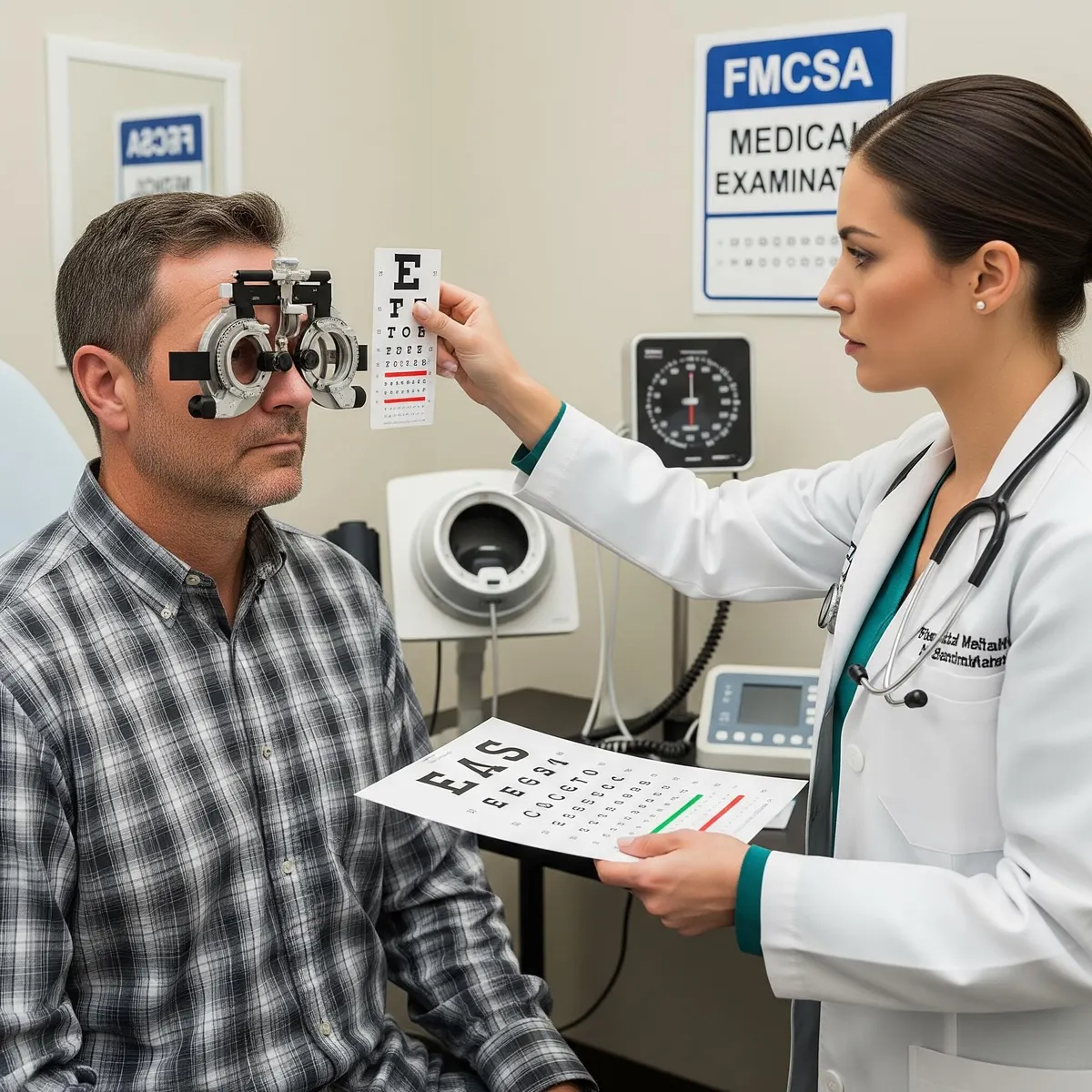
A DOT physical is a comprehensive medical assessment required by the FMCSA for all drivers who operate a commercial motor vehicle in interstate commerce. It confirms that your health does not pose a risk to yourself or other road users.
The Department of Transportation created this requirement because commercial vehicles carry significant public safety consequences. Unlike a standard annual checkup, the DOT physical exam evaluates a defined set of health criteria tied directly to the demands of commercial driving, including cardiovascular health, vision, hearing, and neurological function.
The DOT physical exam is not optional, and driving without a current medical examiner's certificate is a federal violation. Carriers who allow drivers to operate without valid certification face substantial fines, and drivers themselves risk losing their commercial driver's license.
Not sure if sleep apnea applies to you?
Take our 2-minute sleep risk quiz to see whether sleep apnea could affect your DOT physical. No account required.
DID YOU KNOW: The FMCSA requires all commercial motor vehicle operators who drive interstate to carry a current medical examiner's certificate, with renewal required at least every 24 months for drivers in full health.
Most DOT physicals take between 30 and 45 minutes and, if all standards are met, you leave the same day with your medical card in hand. Understanding what the examiner assesses in advance removes uncertainty and allows you to arrive fully prepared.
KEY TAKEAWAY: A DOT physical is a federally required health evaluation that certifies a commercial driver is medically fit to operate a commercial motor vehicle, and failing to maintain a valid certificate can cost you your licence and your livelihood.
Knowing exactly who is required to take this exam is the logical first step before you prepare.
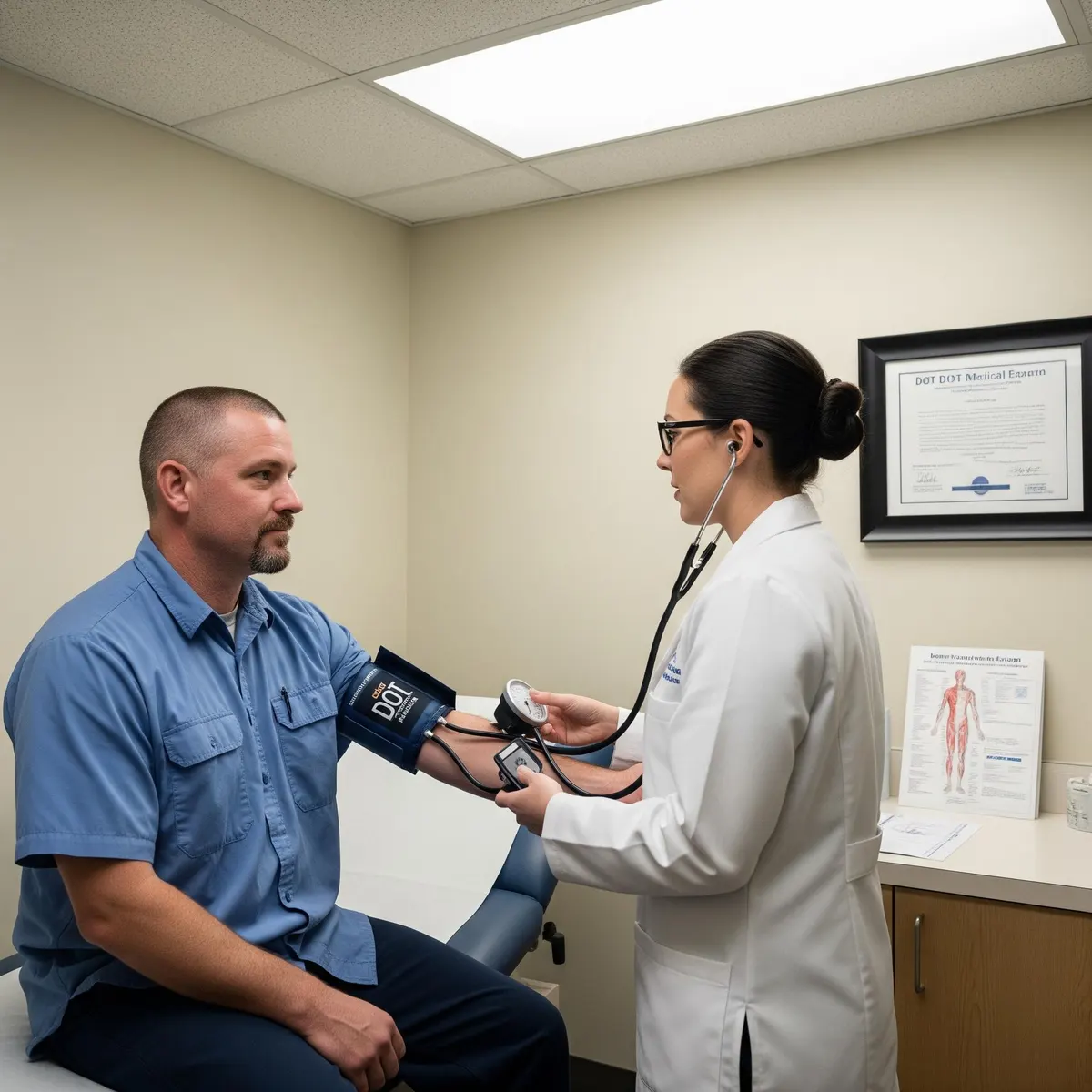
Any driver who operates a commercial motor vehicle in interstate commerce is required to pass a DOT physical and maintain a current medical examiner's certificate. The specific thresholds set by the FMCSA are straightforward.
You are required to complete a DOT physical exam if you drive a vehicle that:
- Has a gross vehicle weight rating or gross combination weight rating over 10,001 pounds
- Is designed to transport 16 or more passengers, including the driver, for non-compensation purposes
- Is designed to transport 9 or more passengers, including the driver, for compensation
- Transports hazardous materials in quantities requiring placarding under federal law
This requirement applies to drivers with a commercial driver's license (CDL) as well as non-CDL drivers who meet the vehicle weight or passenger thresholds. Bus drivers, tanker operators, flatbed haulers, and long-haul truck drivers are all covered.
IMPORTANT: Intrastate drivers are subject to their state's individual rules, which may mirror or differ from FMCSA standards. Always confirm the specific requirements for your state with your employer or a certified medical examiner in your area.
Seasonal workers, new CDL applicants, and drivers returning from a medical leave all need to complete or renew the DOT physical before resuming commercial driving duties. Providers in your area who are listed on the FMCSA National Registry are the only examiners authorised to issue a valid medical examiner's certificate.
KEY TAKEAWAY: Any driver of a commercial motor vehicle above the FMCSA weight or passenger threshold must hold a current medical examiner's certificate, regardless of CDL status.
Understanding the regulatory framework behind this requirement helps you approach the exam with the right expectations.
Already diagnosed and need CPAP support?
Dumbo Health helps patients start CPAP without the usual confusion, paperwork, or upfront cost. Equipment, setup, supplies, and ongoing support are all handled in one place.
FMCSA requirements and the Role of the Certified Medical Examiner
The Federal Motor Carrier Safety Administration sets the physical qualification standards that every commercial driver must meet. These standards are codified in 49 CFR Part 391 and cover vision, hearing, blood pressure, cardiovascular health, neurological function, and the use of specific medications.
A certified medical examiner (CME) is the only professional authorised to perform a DOT physical and issue the resulting medical examiner's certificate. Certified medical examiners include medical doctors, physician assistants, osteopathic physicians, advanced practice nurses, and chiropractors, all of whom must be listed on the FMCSA National Registry of Certified Medical Examiners.
The National Registry was established to standardise training and improve the quality of DOT physical exams nationwide. Examiners must complete FMCSA-accredited training and pass a certification test before they can legally conduct exams. When you search for a provider near you, always verify their listing on the official FMCSA National Registry before booking your appointment.
After completing the DOT physical, the certified medical examiner submits the results electronically to the FMCSA within 24 hours. This digital reporting requirement, introduced in 2016, ensures your medical status is linked directly to your commercial driving record.
KEY TAKEAWAY: Only a certified medical examiner listed on the FMCSA National Registry can conduct a valid DOT physical and issue the medical examiner's certificate that keeps you legally qualified to drive.
With the regulatory foundation clear, your next priority is building a thorough preparation plan.
Your Pre-Exam Checklist for DOT Physical Success
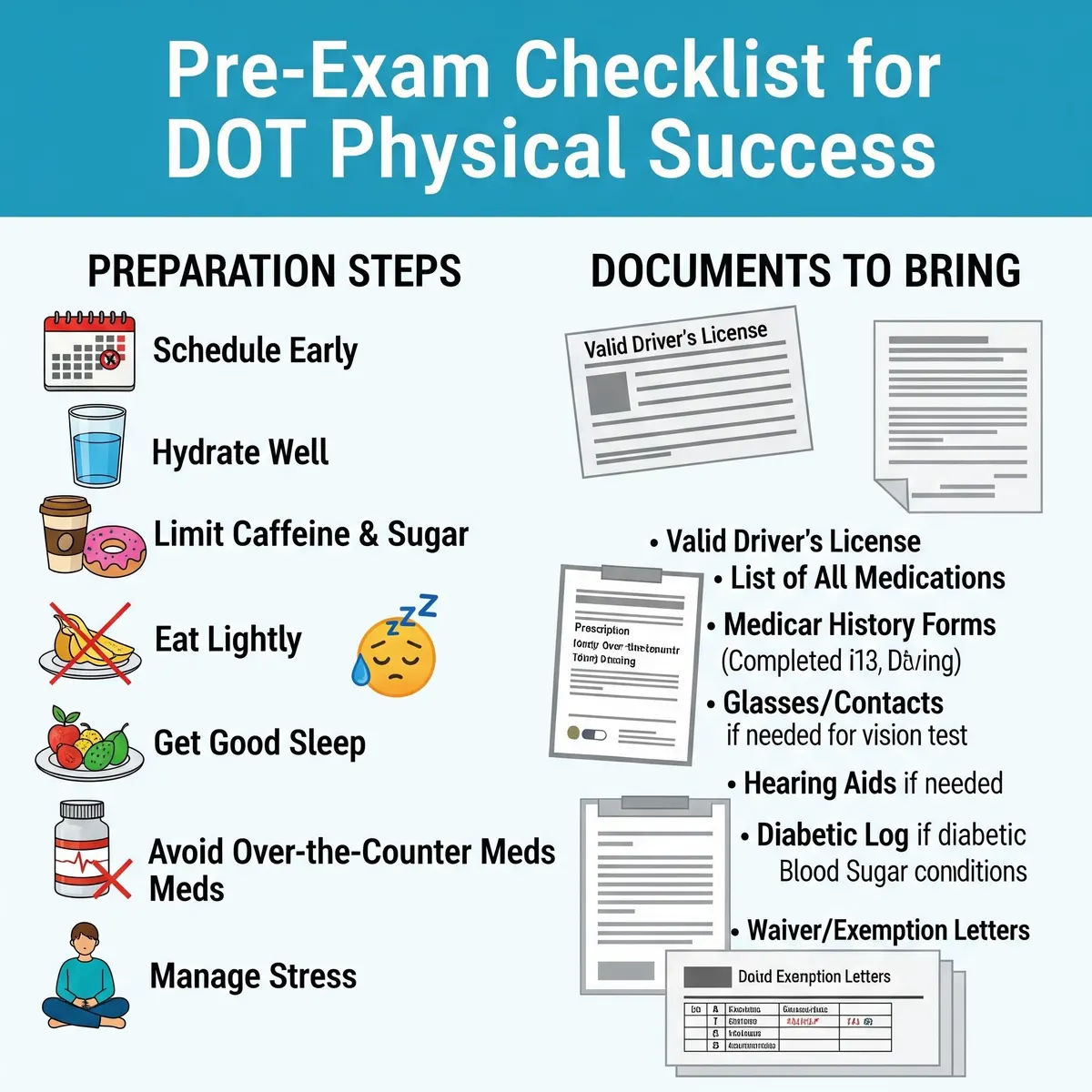
Thorough preparation is the single most controllable factor in passing your DOT physical. Arriving disorganised or unprepared is one of the leading causes of temporary delays and short-term certifications.
Bring the following documents to your appointment:
- A valid driver's license
- A written list of all current medications, including dosages and prescribing physicians
- Medical records for any chronic conditions such as diabetes, heart disease, or sleep apnea
- CPAP compliance reports if you have been diagnosed with obstructive sleep apnea
- Specialist clearance letters if you have had recent cardiac events, surgeries, or neurological episodes
- INR test results if you are on anticoagulant therapy
- A1c results and recent blood sugar readings if you have diabetes
- The CMV driver medication form completed by your treating physician if applicable
- Corrective lenses or hearing aids if you use them
Schedule your appointment for a time when you can arrive rested and calm. Elevated blood pressure is one of the most common reasons drivers receive a short-term card rather than a full two-year certificate, and stress or poor sleep the night before an exam can push borderline readings over the threshold.
TIP: In the two weeks before your DOT physical, focus on reducing sodium intake, improving sleep quality, staying well-hydrated, and avoiding heavy alcohol consumption. These lifestyle adjustments can meaningfully reduce blood pressure on the day of the exam.
For drivers managing specific conditions, your preparation goes further. If you have high blood pressure, your physician should confirm that your readings are stable and within acceptable ranges in the days before your exam. Drivers managing insulin-treated diabetes mellitus must bring the completed insulin-treated diabetes mellitus assessment form signed by their endocrinologist, as this is a FMCSA-specific requirement.
Find a certified medical examiner near you through the FMCSA National Registry and confirm in advance that they are familiar with your specific medical history, particularly if your case is complex.
KEY TAKEAWAY: Arriving at your DOT physical with complete, organised documentation for every chronic condition is the most effective way to avoid delays, short-term cards, and temporary disqualifications.
With your documents ready, the next step is understanding exactly what the physical exam itself involves.
What to Expect During the DOT Physical Exam
The DOT physical exam follows a standardised format defined by the FMCSA. Knowing each step in advance removes anxiety and helps you participate actively in the process.
The exam typically proceeds in this order:
- Medical history review
- Vision test
- Hearing test
- Vital signs including blood pressure, pulse, and blood oxygen level
- Urinalysis
- Full physical examination
The medical history review is the first component. You will complete a detailed medical history form covering prior surgeries, medical conditions, hospitalisations, medications, and any history of chronic pain, neurological events, or mental health treatment. Be honest and thorough. Withholding information does not help you pass and can result in your certificate being revoked if discovered later.
The vision test requires a minimum visual acuity of 20/40 in each eye with or without corrective lenses. The examiner will assess peripheral vision and colour recognition. If you use corrective lenses, your medical examiner's certificate will note this requirement. Drivers who cannot meet the standard with corrective lenses may need to obtain a vision evaluation form from an ophthalmologist.
The hearing test determines whether you can hear a forced whispered voice at five feet or more in one ear, with or without a hearing aid. Drivers who require a hearing aid must wear it while driving, and this restriction appears on the certificate. Some examiners also perform an audiometry test for a more precise evaluation.
blood pressure thresholds determine your certification length. According to FMCSA medical standards:
| Blood Pressure Reading | Certification Outcome |
|---|---|
| Below 140/90 | Full 24-month certificate |
| 140-159 / 90-99 | One-year certificate with monitoring |
| 160-179 / 100-109 | Three-month temporary card for treatment |
| 180/110 or above | No certification until controlled |
The urinalysis screens for protein, glucose, and other markers that may indicate kidney disease or uncontrolled diabetes. It is not a drug test, though many clinics conduct a separate drug and alcohol testing screen in the same appointment.
The physical examination covers cardiovascular health, respiratory functions, abdomen, musculoskeletal structure, and a neurological exam. The examiner listens to your heart and lungs, assesses your reflexes, and checks for signs of conditions that could impair safe driving.
KEY TAKEAWAY: The DOT physical exam follows a fixed sequence covering vision, hearing, blood pressure, urinalysis, and a full physical examination, and understanding each step allows you to prepare specifically for the areas most likely to affect your result.
Many of the most common disqualification triggers come down to how well you manage specific medical conditions in the lead-up to the exam.
Common Medical Conditions and How to Manage Them
Most DOT physical disqualifications are not permanent. They are temporary delays caused by medical conditions that are either poorly controlled or poorly documented. The four most common areas are blood pressure, diabetes, sleep apnea, and vision or hearing.
Hypertension and Blood Pressure Management
High blood pressure is the most frequent reason drivers receive a short-term card rather than a full two-year certificate. The Mayo Clinic defines hypertension as blood pressure consistently at or above 130/80, though the FMCSA uses different thresholds that are specific to commercial driving qualification.
Drivers with blood pressure in the Stage 1 range (140-159/90-99) receive a one-year certificate and must demonstrate controlled readings at the next exam. Drivers in the Stage 2 range (160-179/100-109) receive a three-month temporary card during which they must achieve control through medication or lifestyle changes and return for re-evaluation.
Many drivers report that simple changes in the weeks before their exam, including reducing sodium intake, cutting alcohol, increasing physical activity, and improving sleep, produce meaningful reductions in blood pressure. Clinicians frequently observe that stress and poor sleep on the night before the exam can add 10 to 15 points to a systolic reading. If you are on blood pressure medicine, confirm with your prescribing physician that your regimen is optimised well before your exam date.
Diabetes and Blood Sugar Control
Insulin-treated diabetes mellitus has historically been a disqualifying condition for commercial drivers, but the FMCSA now allows drivers to apply for a federal exemption. The insulin-treated diabetes mellitus assessment form must be completed by your treating endocrinologist and submitted to the FMCSA for review. Without this completed form and supporting A1c results, a driver using insulin will not receive certification.
Drivers managing Type 2 diabetes with oral medications or diet alone can qualify without an exemption, provided their blood sugar levels are stable, their A1c level is within an acceptable range, and they have no disqualifying complications such as severe peripheral neuropathy or significant hypoglycaemic episodes.
Sleep Apnea and CPAP Compliance
Sleep apnea is a significant concern in commercial driving because untreated obstructive sleep apnea impairs alertness and reaction time, directly affecting road safety. To understand what sleep apnea is and how it affects the body, the condition involves repeated interruptions to breathing during sleep that fragment rest and reduce oxygen levels.
Drivers who have been diagnosed with sleep apnea can qualify for their DOT physical, but only if they demonstrate active treatment compliance. The FMCSA does not publish a universal sleep apnea policy, but most certified medical examiners require CPAP compliance reports showing consistent usage, typically defined as four or more hours of use on at least 70 percent of nights over any 30-day period.
If you experience common sleep apnea symptoms such as excessive daytime sleepiness, loud snoring, or waking with headaches, disclose this proactively and arrange a sleep study before your exam. Arriving with a completed study and compliance documentation is far better than being sent for an evaluation after your exam.
Drivers who need a convenient way to confirm a diagnosis before their appointment can learn how at-home sleep studies work, which provides a less disruptive and often faster path to documentation than an in-lab polysomnogram.
Drivers currently on CPAP therapy should bring their CPAP data download, usually a 90-day report from the device's built-in compliance software, to every DOT physical exam.
Vision and Hearing
Drivers who do not meet the 20/40 standard must present vision evaluation reports from a licensed ophthalmologist or optometrist confirming that corrective lenses bring them within range. Drivers with monocular vision may apply for a federal vision exemption.
For hearing, drivers who use a hearing aid qualify as long as they meet the whisper test standard while wearing the device. If you wear a hearing aid, bring it to the exam and confirm its batteries are working. An audiometry test may be performed for more precise measurement.
KEY TAKEAWAY: The majority of DOT physical disqualifications are preventable through proactive management of blood pressure, blood sugar levels, sleep apnea treatment compliance, and vision or hearing correction, combined with thorough documentation at the time of exam.
Understanding the myths surrounding medical conditions and the DOT physical prevents drivers from making avoidable mistakes.
Common Myths About DOT Physicals Debunked
MYTH: You can hide a medical condition on the DOT physical by simply not mentioning it.
FACT: Certified medical examiners are trained to identify signs of undisclosed conditions during the physical examination. Withholding information is a federal violation under FMCSA regulations and can result in permanent disqualification and potential criminal liability. Honesty is both the ethical and strategically correct approach.
MYTH: Any blood pressure reading above 140/90 automatically disqualifies you.
FACT: Elevated blood pressure triggers a shorter certification period, not automatic disqualification. Drivers with Stage 1 high blood pressure (140-159/90-99) still receive a one-year certificate. Only readings at Stage 3 (180/110 or above) result in immediate non-certification, and even then, drivers can return once their blood pressure is controlled.
MYTH: A diagnosis of sleep apnea automatically disqualifies a commercial driver.
FACT: Sleep apnea is not a disqualifying condition when it is treated and documented. Drivers who provide CPAP compliance reports demonstrating consistent use are routinely certified. According to the American Academy of Sleep Medicine, treated sleep apnea does not impair driving performance to a disqualifying degree. Many drivers have held their medical examiner's certificate continuously for years while managing sleep apnea with CPAP therapy.
MYTH: The DOT physical includes a drug test.
FACT: The urinalysis performed during the DOT physical screens for protein, glucose, and other health markers. It is not a Department of Transportation drug test. Federal drug testing for commercial drivers is conducted separately under 49 CFR Part 40 and typically involves a urine collection sent to a certified laboratory.
MYTH: Once you fail a DOT physical, you can never drive commercially again.
FACT: Most disqualifications are temporary. Drivers who receive a short-term card or are denied certification can address the underlying medical condition, gather the required documentation, and return for re-examination. A permanent disqualification is reserved for conditions that cannot be controlled or treated to a standard consistent with safe commercial vehicle operation.
KEY TAKEAWAY: The vast majority of DOT physical concerns stem from missing documentation or poorly managed conditions rather than true permanent disqualification, and drivers who prepare honestly and thoroughly face far fewer obstacles.
With the most common misconceptions addressed, the next step is understanding what happens after the exam.
After the Exam: Your medical card and Next Steps
Once you pass the DOT physical exam, the certified medical examiner issues your medical examiner's certificate, commonly called the medical card. This card serves as proof of your physical qualification to drive a commercial vehicle and must be carried with you while driving.
The standard certification period is 24 months. You must renew your DOT physical before your current certificate expires to maintain uninterrupted qualification. Driving after expiration is a federal violation.
Short-term certifications are issued for drivers with conditions requiring monitoring, including:
- A three-month card for blood pressure in the Stage 2 range, requiring re-examination once controlled
- A one-year card for Stage 1 blood pressure, diabetes requiring monitoring, or certain cardiac conditions
- A certificate valid only while wearing corrective lenses or a hearing aid, noted directly on the card
If you receive a short-term card, treat it as an action plan rather than a failure. It specifies exactly what needs to be addressed before your next examination.
Drivers are required to provide a copy of their medical certificate to their state department of motor vehicles (DMV) within 15 days of issuance. The state then updates the CDL record to reflect the new expiry date. Since 2014, the FMCSA requires all interstate CDL holders to have their medical certificate information recorded on their driving record by their state driver's license agency.
KEY TAKEAWAY: Your medical examiner's certificate is valid for up to 24 months in full health, and submitting a copy to your state DMV is a mandatory step that many drivers overlook, risking an administrative flag on their driving record.
Knowing what to do if your result is less than a full certificate is just as important as knowing how to prepare.
What If You Don't Pass? Disqualification and Appeals
A disqualification from the DOT physical is not the end of your commercial driving career in most cases. Understanding why disqualifications occur and what options are available positions you to act quickly and effectively.
The most common reasons for disqualification or delayed certification include:
- Blood pressure above 180/110 on the day of exam
- Missing CPAP compliance reports for known sleep apnea
- Absent or incomplete insulin-treated diabetes mellitus assessment form
- A vision problem that does not meet the 20/40 standard without an exemption
- A seizure history without adequate documented seizure-free periods
- Certain heart conditions requiring a prior exercise tolerance test or cardiologist clearance
- Missing specialist clearance for a recent cardiac event or surgery
For conditions that are manageable, the path forward involves working with your treating physician to stabilise the condition, gather required documentation, and schedule a follow-up DOT physical exam.
The FMCSA operates a formal exemption programme for certain conditions including vision impairment, hearing loss, seizure disorders, and insulin-treated diabetes. Applying for an exemption requires submitting medical evidence that your condition is stable and that you can operate a commercial vehicle safely. The Federal Motor Carrier Safety Administration reviews each application individually, and approval is not guaranteed.
The appeal process for a disqualification typically involves requesting a second opinion from another certified medical examiner, gathering additional specialist documentation, and potentially submitting a formal exemption application to the FMCSA. This process can take several months, so begin immediately if you receive a disqualification.
If you are managing obstructive sleep apnea and your CPAP compliance reports are insufficient, explore whether a different therapy option is appropriate. Dumbo.health's guide on treating sleep apnea without CPAP covers alternative approaches that may still satisfy examiner requirements when properly documented.
KEY TAKEAWAY: Most DOT physical disqualifications are addressable through proper documentation, treatment compliance, or a formal FMCSA exemption application, and drivers who act promptly and work closely with their physician typically return to full certification.
The best long-term strategy is to invest in your health consistently rather than treating the DOT physical as a single-event hurdle.
Proactive Health Management for Long-Term DOT Physical Success
Passing a single DOT physical exam is a short-term goal. Maintaining your certification over a full driving career requires treating your health as an ongoing professional priority.
Clinicians frequently observe that drivers who actively monitor their health metrics between exams experience fewer surprises and fewer short-term cards. The key metrics to track include:
- Blood pressure, measured at least monthly, ideally using a home cuff
- Blood sugar levels, including annual A1c testing if you have any risk factors for diabetes
- Body weight, since excess weight increases the risk of high blood pressure, sleep apnea, and cardiovascular disease
- Sleep quality, because persistent daytime fatigue may indicate untreated or undertreated sleep apnea
Driver health is directly tied to driver safety. Commercial vehicles cause a disproportionate share of fatal road incidents when the driver is impaired by fatigue or unmanaged cardiovascular disease. Taking your health seriously protects not only your career but the lives of others on the road.
A consistent exercise routine significantly reduces blood pressure and blood sugar levels over time. Even moderate activity, such as 30 minutes of walking five days a week, produces clinically meaningful improvements. Pair this with a diet lower in sodium intake, processed foods, and added sugars to address the metabolic risk factors most likely to affect your DOT physical outcomes.
Work with your primary care physician between DOT physical exams to manage ongoing conditions proactively. Communicate any new prescriptions, diagnoses, or health events immediately, as changes to your medical status may affect your qualification at any time.
For drivers managing sleep disorders, wearable tracking tools and home diagnostics have made it easier than ever to monitor sleep quality. Dumbo.health provides resources on obstructive sleep apnea in adults to help drivers stay informed and take early action when symptoms develop.
KEY TAKEAWAY: Long-term DOT physical success depends on continuous health monitoring, consistent management of blood pressure and blood sugar, and proactive communication with your physician rather than last-minute preparation before each exam.
Frequently Asked Questions
What will fail you on a DOT physical?
The most common causes of failure or temporary disqualification at a DOT physical include blood pressure at or above 180/110, missing CPAP compliance reports for untreated sleep apnea, absent diabetes documentation for insulin-treated drivers, vision below 20/40 without a valid exemption, and undisclosed or poorly managed medical conditions. Missing specialist clearance letters after recent cardiac events, surgeries, or seizure history also triggers delays. The most important point is that most of these are preventable with proper preparation and documentation rather than true permanent health disqualifications.
How do you beat a DOT physical?
There is no trick to passing a DOT physical, and attempting to deceive the examiner is a federal violation. The correct approach is preparation. Arrive with complete documentation for every medical condition, ensure your blood pressure has been consistently controlled in the weeks before the exam, bring CPAP compliance data if relevant, and be honest on the medical history form. Drivers who prepare thoroughly, manage their chronic conditions proactively, and work closely with their treating physicians consistently achieve full two-year certifications.
How strict is the DOT physical?
The DOT physical exam follows FMCSA standards that are standardised and non-negotiable in their core requirements. However, the process is not designed to disqualify drivers unnecessarily. The goal is to ensure that medical conditions are properly managed and that drivers are safe to operate a commercial vehicle. Borderline results, such as mildly elevated blood pressure or early-stage conditions, typically result in shorter certification periods rather than outright disqualification. Drivers with well-documented, treated conditions regularly pass and maintain their certification without interruption.
Is methadone disqualifying for DOT?
Methadone is listed as a Schedule II controlled substance and is considered disqualifying under FMCSA medical standards when used as part of a methadone maintenance programme for opioid use disorder. The FMCSA Advisory Criteria state that any drug or substance that may affect the nervous system or impair the driver's ability to operate a commercial vehicle safely is grounds for disqualification. Drivers currently prescribed methadone should consult with an FMCSA-registered certified medical examiner or the FMCSA directly for the most current guidance, as individual circumstances vary.
What is a useful preparation checklist for a DOT physical?
A preparation checklist for a DOT physical should include: a current driver's license, a complete medication list with dosages, medical records for chronic conditions, CPAP compliance reports if applicable, A1c results and the insulin-treated diabetes mellitus assessment form if relevant, specialist clearance letters for cardiac or neurological history, corrective lenses or hearing aids if used, and a completed medical history form. In the two weeks before the exam, focus on blood pressure management through reduced sodium intake, adequate hydration, regular moderate exercise, and sufficient sleep.
What are the best tips for passing the DOT physical blood pressure test?
Controlling blood pressure before your DOT physical requires a multi-week approach rather than last-minute measures. Work with your physician to confirm your medications are optimised at least one month in advance. Reduce sodium intake to below 2,300 milligrams per day, limit alcohol, prioritise consistent sleep, and engage in regular aerobic exercise. On the day of the exam, arrive early, avoid caffeine for at least two hours, and rest for five minutes before measurement. Many certified medical examiners will take a second reading if the first is elevated, particularly if anxiety appears to be a contributing factor. Providers in your area who are familiar with DOT physical protocols can provide additional personalised guidance.
Can I pass a DOT physical if I have had a spinal fusion?
Having had a spinal fusion does not automatically disqualify a commercial driver from the DOT physical. The certified medical examiner will assess whether the surgery has resulted in functional limitations that affect your ability to safely operate a commercial vehicle. You should bring operative notes, post-operative follow-up records, and a clearance letter from your treating orthopaedic surgeon or neurosurgeon confirming your physical capacity and any restrictions. Drivers with chronic pain following spinal fusion should also disclose any pain management medications, as these are evaluated separately for their potential effect on alertness and reaction time.
I failed my DOT physical due to high blood sugar. What are my next steps?
If you did not receive certification because of elevated blood sugar or an inadequate diabetes record, your immediate next step is scheduling an appointment with your endocrinologist or primary care physician. Work to stabilise your A1c level and blood sugar readings within the range your physician recommends. If you use insulin, obtain the insulin-treated diabetes mellitus assessment form, have it completed by your specialist, and submit it with your supporting lab results at your next DOT physical exam. Drivers with Type 2 diabetes managed with oral medication who bring complete documentation with recent A1c results routinely qualify without issue.
Should I avoid any specific type of clinic when going for my DOT physical?
Yes. You should only use a clinic whose examiner is listed on the FMCSA National Registry of Certified Medical Examiners. A DOT physical performed by an unlisted examiner is not valid, regardless of the examiner's medical credentials. Avoid clinics that offer guaranteed passes or that seem to skip required components of the exam such as the vision test, hearing test, or urinalysis. These shortcuts invalidate the certificate and put your commercial driver's license at risk. When searching for a provider near you, verify listing status directly through the FMCSA National Registry website before booking.
Conclusion
Passing the DOT physical comes down to three things: knowing what the FMCSA requires, managing your medical conditions consistently, and arriving fully prepared with the right documentation. Drivers who treat their health as a continuous professional responsibility rather than a box to check every two years are the ones who achieve uninterrupted certification and long, productive careers behind the wheel.
If sleep apnea has been raised as a concern at your exam or by your physician, addressing it early puts you in a far stronger position. Dumbo.health's guide to obstructive sleep apnea in adults covers symptoms, causes, and treatment options in detail and is a practical starting point for drivers who want to get ahead of this common disqualifying condition before their next DOT physical exam.
Related DOT Physical Topics
- Does a DOT Physical Test for Weed or THC The Complete Guide for Commercial Drivers
- Remote DOT Physical The Complete Guide for Commercial Drivers
- DOT Physical Forms & Paperwork The Complete Guide for Commercial Drivers
- DOT Physical Insurance & Recertification The Complete Driver's Guide
- Online DOT Physical The Complete Guide for Commercial Drivers and Medical Examiners
- What Happens During the DOT Physical Exam The Complete Guide for Drivers
- The Ultimate DOT Physical Guide for Commercial Drivers (2025–2026)
- DOT Physical ICD-10 & Billing Codes The Complete Guide for Accurate Compliance and Reimbursement
- Online DOT Physical Without Insurance A Complete Guide for Commercial Drivers
- Online DOT Physical Self-Pay The Complete Guide for CDL Drivers and Owner-Operators
- Can You Get a Second Opinion on Your DOT Physical A Complete Guide for Commercial Drivers
- What Happens If Your DOT Physical Expires Compliance Guide for Commercial Drivers
- Navigating the Florida DOT Physical Your Essential Guide for CDL Drivers
- How Do You Submit Your DOT Physical to the DMV
- Home Sleep Apnea Test for Commercial Drivers The CDL Holder's Complete Guide
- What Are the Requirements to Pass a DOT Physical
- Your Complete Guide What's Included in a DOT Physical Exam
- DOT physical self pay guide for commercial drivers paying out of pocket
- DOT Medical Exam Self-Pay A Complete Guide for Commercial Drivers
- DOT Physical Insurance or Self Pay How to Choose the Right Payment Option for Your Exam
- DOT Physical Chiropractor Your Complete Guide to CDL Exams
- Is a DOT physical the same as a regular physical
- Medical Examination Report (MER) – Form MCSA-5875 The Complete Guide for Commercial Drivers
- DOT Physical Texas The Essential Guide to Your Exam, Medical Card, and CDL Compliance
- DOT Physical Requirements A Complete Guide for CDL Drivers
- What Is the Difference Between a DOT and Non-DOT Physical
- The DOT Physical Exam Ensuring You're Fit for the Road
- Failing a DOT Physical What Every Commercial Driver Needs to Know
- How can drivers with sleep apnea qualify again after a failed DOT physical
- Can You Pass a DOT Physical with Epilepsy
- DOT Physical Out of Pocket What Commercial Drivers Actually Pay
- What Does DOT Stand for in a DOT Physical
- Can You Pass a DOT Physical With One Eye
- Can You Pass a DOT Physical With a Pacemaker
- DOT Physical Duration and Validity How Long Your Medical Card Lasts
- What Is the Urine Test for in a DOT Physical
- Can You Pass a DOT Physical With a Hernia
- What blood pressure do you need to pass a DOT physical
- DOT Physical at Urgent Care What Commercial Drivers Need to Know
- The Comprehensive Guide to Suboxone, Sleep Apnea, and FMCSA Compliance for Commercial Motor Vehicle Operators
- Can you pass a DOT physical with sleep apnea
- Can You Pass a DOT Physical with Diabetes
- Can You Pass a DOT Physical with High Blood Pressure
- BMI for DOT Physical What Commercial Drivers Need to Know
- What are the current DOT requirements for sleep apnea testing for commercial drivers
- Non-DOT Physical A Comprehensive Guide to Workforce Health and Safety
- DOT Physical Online Cost
- DOT Physical Vision & Eye Requirements
- What Can Disqualify You From a DOT Physical
- Navigating Your DOT Physical with Common Medical Conditions
- Does a DOT physical include a drug test
- DOT Physical Self Pay Cost
- Essential 171 DOT Definitions for Commercial Drivers
- When Can Sleep Apnea Affect a DOT Physical
- Walk In DOT Physical Self Pay
- Is a drug test required for a DOT physical
- DOT Physical Cost Breakdown What Drivers Pay & Why
- Can You Get a DOT Physical Online
- What Should You Bring to a DOT Physical
- Telehealth Dot Physical
- What Forms Do You Need for a DOT Physical
- DOT Physical Exam Basics
- Does insurance cover a DOT physical
- DOT Physical & Alcohol Requirements
- Can You Fail a DOT Physical for Being Overweight
- Why do they measure your neck during a DOT physical
- Cheap DOT Physical Online
- Do They Check for Hernia During a DOT Physical
- DOT Physical Cash Pay
- DOT Physical Blood Pressure Requirements What Drivers Need to Know
- New DOT Physical Requirements What Drivers MUST Know About New Updates
- Can You Fail a DOT Physical for High Blood Pressure
- Same Day DOT Physical
- Virtual DOT Physical
- Who needs a DOT physical
- Can you fail a DOT physical because of sleep apnea
- Do They Check Your Private Parts During a DOT Physical
- What should I expect at a DOT physical
- What Does a DOT Physical Consist Of
- What happens if you fail a DOT physical due to sleep apnea
- What are the current FMCSA guidelines on sleep apnea for commercial drivers
- DOT Physical & Drug Test What Drivers Need to Know
- Is a Sleep Study Required for a DOT Physical
- Guide to Obtaining and Managing Your DOT Medical Card Online
- Do You Have to Pee During a DOT Physical
- What eye chart is used for a DOT physical
- What Do They Check During a DOT Physical
- Can You Fail a DOT Physical
- What is DOT Physical
- What drugs do they test for in a DOT drug test
- Online CDL Physical
- Are There New DOT Rules or Laws on Sleep Apnea Testing
- 2026 DOT Inspection Dates
- How Sleep Apnea Affects Overall Driving Safety
- Why DOT Sleep Tests at Home Matter for Your Career and Health
- Online DOT Exam What Drivers and Medical Examiners Need to Know
- CDL PHYSICAL SELF PAY
- How Does Sleep Apnea Affect Driving Ability
- DOT sleep apnea test at home
- Expected 2027 DOT Inspection Dates
Take the next step before your DOT physical
Start with the free quiz if you are unsure about your risk, or order an at-home sleep test if you have already been flagged for possible sleep apnea.
AI summary
A DOT physical is an FMCSA-mandated medical evaluation that determines whether a commercial driver is medically qualified to operate a commercial motor vehicle in interstate commerce. The result is a medical examiner’s certificate (medical card), typically valid up to 24 months. Key components include a medical history review, vision and hearing testing, vital signs (including blood pressure), urinalysis for health markers (not a drug test), and a full physical exam assessing cardiovascular, respiratory, musculoskeletal, and neurological function. FMCSA standards include vision of at least 20/40 in each eye and hearing sufficient to pass the forced-whisper test at five feet. Certification length depends on findings, especially blood pressure: under 140/90 may qualify for 24 months; 140–159/90–99 for 1 year; 160–179/100–109 for a 3-month temporary card; 180/110 or higher requires control before certification. Drivers with insulin-treated diabetes mellitus need the required assessment form and A1c documentation. Sleep apnea is typically certifiable with CPAP compliance reports. After issuance, drivers must submit the certificate to their state DMV within 15 days.

Nicolas Nemeth
Co-Founder
Nico is the co-founder of Dumbo Health, a digital sleep clinic that brings the entire obstructive sleep apnea journey home. Patients skip the sleep lab and the long wait to see a specialist. Dumbo Health ships an at home test, connects patients with licensed sleep clinicians by video, and delivers CPAP or a custom oral appliance with ongoing coaching and automatic resupply in one clear subscription.
Keep reading

How Long Does a DOT Physical Take? A Complete Guide for Commercial Drivers

What Happens If You Fail a DOT Drug Test? The Complete Guide for Commercial Drivers


