DOT Physical Texas: The Essential Guide to Your Exam, Medical Card, and CDL Compliance
This guide explains DOT physical requirements in Texas using FMCSA medical standards and how the results connect to Texas Department of Public Safety CDL records. It clarifies who needs a DOT exam based on non-excepted interstate or intrastate commerce and Texas self-certification categories. You will learn what happens during the exam, including medical history, vision and hearing checks, blood pressure, and urinalysis, and why the urine test is not automatic drug testing. It outlines common reasons for short-term certification or disqualification, such as uncontrolled hypertension, diabetes, cardiovascular disease, medication risks, and sleep apnea. The article debunks myths about grace periods and who can sign the exam, and stresses using an FMCSA National Registry certified medical examiner. It also covers what to do after you receive Form MCSA-5876 and how to avoid CDL downgrade by renewing early and following current DPS instructions.
Struggling with sleep?
Find out if sleep apnea is the reason.
FDA-cleared. $149 flat. Physician-reviewed results in 48 hours.

DOT Physical Texas: The Essential Guide to Your Exam, Medical Card, and CDL Compliance

DOT physical Texas requirements are the FMCSA medical standards Texas commercial drivers must meet to keep driving legally and safely. According to the Federal Motor Carrier Safety Administration, interstate commercial motor vehicle drivers must be examined by a certified medical examiner and, when qualified, receive a Medical Examiner's Certificate, Form MCSA-5876. In Texas, that federal medical certification connects directly to your CDL status, self-certification category, and Texas Department of Public Safety record. This guide explains who needs the exam, what happens during the DOT physical exam, what can cause problems, how Texas DPS rules work, and what to do if your medical card expires. Keep reading to avoid expensive mistakes and protect your ability to drive. (FMCSA)
What Is a DOT Physical and Why Is It Needed in Texas?

A DOT physical is a federally required medical exam that determines whether a commercial driver is physically qualified to operate a commercial motor vehicle safely. In Texas, the exam matters because your medical certification can affect whether your Commercial Driver's License remains valid for the type of driving you do. (FMCSA)
The Department of Transportation framework for driver fitness comes from the Federal Motor Carrier Safety Administration, not from a separate Texas-only medical standard for most interstate drivers. The purpose of the DOT physical exam is to identify medical conditions, physical impairment, or medication-related risks that could interfere with safe operation of commercial motor vehicles. The medical examiner reviews your medical history, performs a physical exam, and decides whether you meet FMCSA Physical Qualifications standards. (FMCSA)
For most drivers, the result is a medical certificate, also called a DOT Medical Card or medical card, that proves you are medically qualified. The medical examiner's certificate expires at midnight on the date printed on the form, and FMCSA states there is no grace period. That detail matters because even a short lapse can create compliance problems. (FMCSA)
Texas DOT Physicals still follow Federal DOT Regulations for interstate commerce, while some intrastate commerce categories use Texas self-certification rules and State Regulations. If you are unsure which category applies, your Texas Department of Public Safety record and self-certification paperwork matter as much as the exam itself. (dps.texas.gov)
Not sure if sleep apnea applies to you?
Take our 2-minute sleep risk quiz to see whether sleep apnea could affect your DOT physical. No account required.
KEY TAKEAWAY: A DOT physical in Texas is the medical gatekeeper for legal CDL operation, and the exam result directly affects your medical certification status and driving eligibility.
The next step is understanding whether you personally need one and which Texas category applies to your work.
Who Needs a DOT Physical in Texas?

Most people need a DOT physical in Texas when they operate a commercial motor vehicle in non-excepted interstate commerce or in certain non-excepted intrastate commerce roles. The key question is not where you live, but what type of driving you do and how you self-certify with Texas DPS. (dps.texas.gov)
A commercial motor vehicle generally includes vehicles used in commerce that meet federal CDL or medical qualification thresholds. If you hold a Commercial Driver License, a Commercial Learner Permit, drive Class A equipment, transport hazardous materials, or operate in interstate commerce, a current medical certificate is commonly required. Texas DPS states that applicants must certify their medical status using CDL-4, CDL-5, or CDL-10, and a Medical Examiner's Certificate is required depending on the category selected. (dps.texas.gov)
The distinction between interstate commerce and intrastate commerce is critical. Texas DPS explains that some excepted intrastate commerce categories do not require a medical examiner's certificate, while non-excepted interstate and non-excepted intrastate categories generally do. This is where many commercially licensed drivers make mistakes. They assume the same rule applies to every job, endorsement, and route. It does not. (dps.texas.gov)
If you drive a commercial vehicle only inside Texas, you still may need medical certification depending on the type of operation. If you transport placarded hazardous materials, move goods tied to interstate business, or work under a category that requires federal qualification, do not guess. Review the Texas CDL Section guidance or confirm with the driver license office before you let a medical card lapse. (dps.texas.gov)
DID YOU KNOW: Texas DPS says you must certify to only one medical status form category, and that category determines whether a Medical Examiner's Certificate is required. (dps.texas.gov)
KEY TAKEAWAY: Whether you need a DOT physical in Texas depends on your CDL category, your self-certification choice, and whether your driving is excepted or non-excepted.
Once you know you need the exam, the next issue is understanding who sets the rules and who is allowed to certify you.
The Federal Motor Carrier Safety Administration and Texas Compliance
The Federal Motor Carrier Safety Administration sets the medical qualification standards, and Texas enforces CDL-related compliance through its licensing system. In practice, FMCSA sets the exam rules and Texas DPS manages the license consequences. (FMCSA)
The Federal Motor Carrier Safety Administration requires interstate commercial motor vehicle drivers to be examined by certified medical examiners listed on the National Registry of Certified Medical Examiners. That means not every physician or clinic automatically qualifies to issue a valid medical examiner's certificate for interstate CMV use. The National Registry exists to improve consistency and highway safety. (FMCSA)
Texas then ties that federal medical certification to your driver's license record. Texas DPS requires self-certification of medical status and may require proof of a valid medical certificate depending on the category. Texas also explains that some drivers whose CDL was downgraded because of an expired medical certificate may be eligible to restore CDL status without retesting if the license has not been expired for more than two years. (dps.texas.gov)
Already diagnosed and need CPAP support?
Dumbo Health helps patients start CPAP without the usual confusion, paperwork, or upfront cost. Equipment, setup, supplies, and ongoing support are all handled in one place.
This relationship between federal and state systems is widely misunderstood. A passing DOT physical does not help if your Texas self-certification category is wrong. Likewise, correct DPS paperwork does not help if the exam was not completed by one of the certified medical examiners recognized through the FMCSA National Registry. Texas DOT compliance is both medical and administrative. (FMCSA)
KEY TAKEAWAY: FMCSA controls the medical standards, while Texas DPS controls how those standards affect your CDL record and eligibility.
With that framework in place, you can prepare for the exam in a way that reduces surprises.
Preparing for Your Texas DOT Physical Examination
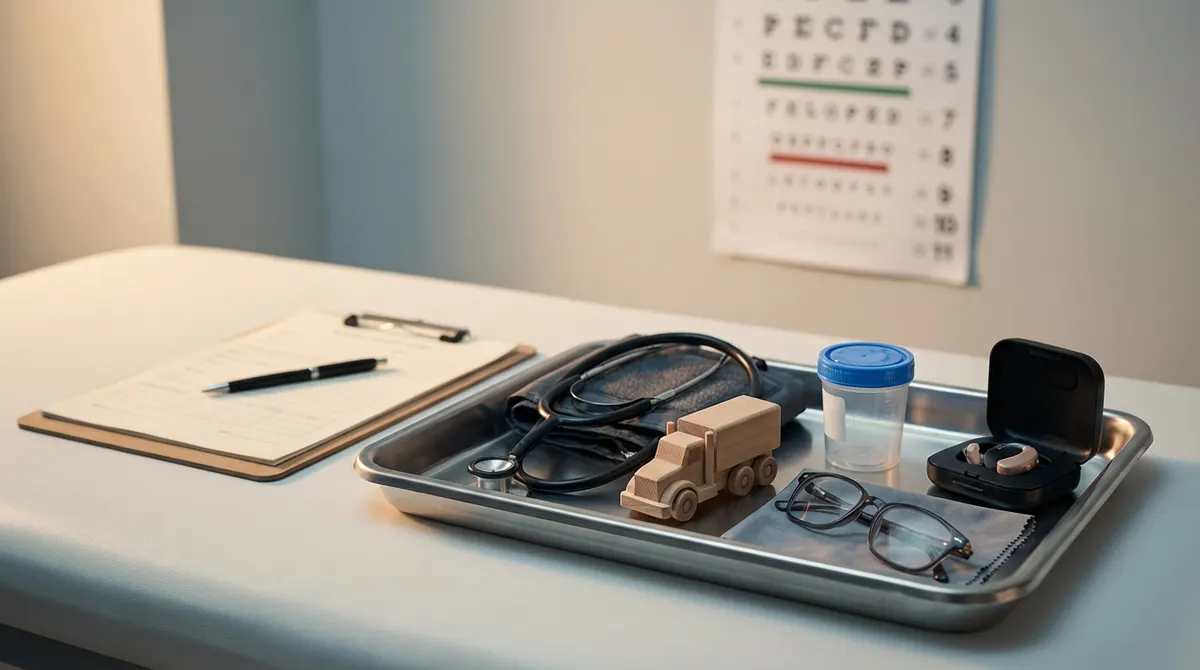
The best way to prepare for a DOT physical is to arrive with accurate health information, relevant medical records, and a clear medication list. Preparation helps the medical examiner make a faster, safer, and more favorable certification decision. (FMCSA)
Bring identification, your Commercial Driver's License or Commercial Learner Permit if you have one, eyeglasses or Corrective lenses if you use them, hearing aids if you wear them, and recent medical records that support ongoing treatment. The FMCSA Medical Examination Report asks about surgeries, medications, prior denials, and whether your certificate has ever been issued for less than 2 years. Bring a full list of prescription drugs and non-prescription drugs, including supplements. (FMCSA)
If you have diabetes, high blood pressure, cardiovascular health concerns, sleep apnea, or another ongoing condition, bring documentation that shows the condition is stable. Clinicians frequently observe that certification problems happen less because of the diagnosis itself and more because records are incomplete. A medical examiner may need recent notes, lab work, or treating-provider clearance before finalizing medical certification. (FMCSA)
Many patients report avoidable delays because they assume the clinic will already know their history. Do not rely on that. A clean medication list, specialist letters, and proof of compliance with treatment can make a major difference, especially if you are renewing a CDL and want to avoid a short-term certificate.
If you are concerned that untreated sleep apnea may affect your exam or daytime alertness, you can review Dumbo Health's guide to an at-home sleep test before your appointment. That can be especially useful if you are trying to find a provider near you and want to understand testing options before the DOT visit.
TIP: Check your blood pressure, refill essential medications, and sleep normally the night before the exam to avoid preventable abnormal findings.
KEY TAKEAWAY: Good preparation means bringing the right documents, the right medical records, and proof that any chronic condition is stable and well managed.
After preparation, the next question is what actually happens once you walk into the exam room.
Inside the Exam Room: What to Expect During Your DOT Physical in Texas
A DOT physical exam usually includes a medical history review, vision and hearing checks, blood pressure and pulse, urinalysis, and a general physical exam. The goal is fitness for safe driving, not a full primary care workup. (FMCSA)
The medical examiner starts with your medical history. FMCSA requires the Medical Examination Report, Form MCSA-5875, to capture health history, medication use, examination details, and the final qualification decision. Expect follow-up questions about surgeries, fainting, seizures, heart disease, mental health, diabetes, sleep apnea, alcohol history, and medication side effects. (FMCSA)
The physical exam portion typically checks your height, weight, pulse rate and rhythm, blood pressure, vision tests, hearing test, and urinalysis. FMCSA's 2024 handbook says urinalysis records specific gravity, protein, blood, and sugar. That matters because the urine test in a DOT physical is generally about medical screening, not automatic Drug Testing. (FMCSA)
DOT physicals also review your ability to safely perform the job. The medical examiner may assess movement, coordination, breathing, and signs of neurological or cardiovascular health problems. If a condition raises safety concerns, further documentation or shorter certification may follow. In real-world use, many medical exams end with either full certification, temporary certification, or a request for more records rather than an immediate permanent failure. (FMCSA)
A DOT physical is not the same as a pre-employment drug test. Employers may require both, but they are different processes with different purposes. That distinction is one of the most common mistakes drivers make when comparing occupational medicine clinics or urgent care options in your area. (FMCSA)
KEY TAKEAWAY: The DOT physical focuses on whether you can operate a commercial vehicle safely, using a structured history, exam, and screening process rather than a general wellness visit.
The most closely watched parts of the exam usually involve vision, hearing, blood pressure, and chronic disease risk.
Vision, Hearing, Blood Pressure, and Urinalysis Standards

The most important DOT physical requirements are measurable standards for visual acuity, peripheral vision, hearing, and blood pressure, plus a urinalysis that screens for health issues. These are the checkpoints most likely to affect certification length. (FMCSA)
FMCSA says standard vision qualification requires at least 20/40 visual acuity in each eye, binocular acuity of at least 20/40, field of vision of at least 70 degrees in each eye, and the ability to recognize red, green, and amber traffic colors. If you meet the standard only with Corrective lenses, that restriction is documented on the certificate. FMCSA also allows an alternative vision pathway under certain conditions for drivers whose worse eye does not meet the standard. (FMCSA)
Hearing can be qualified through a forced whispered voice test at not less than 5 feet in the better ear or an audiometric standard of 40 dB or less in one ear at 500, 1,000, and 2,000 Hz, with or without hearing aids. FMCSA states that drivers may qualify while using hearing aids if they meet the standard. (FMCSA)
Blood pressure is a major issue because FMCSA treats uncontrolled hypertension as a safety risk. According to the FMCSA handbook, Stage 2 blood pressure of 160 to 179 systolic or 100 to 109 diastolic may lead to a one-time 3-month certificate so treatment can be started or adjusted. Stage 3 blood pressure at or above 180 systolic or 110 diastolic should not be certified until reduced to 140/90 or less, after which certification may be limited to 6 months. (FMCSA)
Urinalysis records specific gravity, protein, blood, and sugar. FMCSA explains that protein, blood, or sugar in the urine may indicate diabetes, uncontrolled hypertension, or kidney disease and may trigger more evaluation. This is why even drivers who feel fine can be delayed by unexpected lab findings. (FMCSA)
| Exam component | FMCSA benchmark | Why it matters |
|---|---|---|
| Vision tests | 20/40 in each eye, 20/40 binocular, 70° peripheral vision, color vision | Confirms safe recognition of hazards and signals |
| Hearing test | Whispered voice at 5 feet or average hearing loss of 40 dB or less in one ear | Confirms ability to detect warnings and conversation |
| Blood pressure | Uncontrolled hypertension can shorten or block certification | Reduces crash risk tied to acute cardiovascular events |
| Urinalysis | Specific gravity, protein, blood, sugar recorded | Flags hidden medical conditions needing follow-up |
For most drivers, the best fit is simple: control blood pressure, bring glasses or hearing aids, and address abnormal findings before the exam rather than after.
KEY TAKEAWAY: Vision, hearing, blood pressure, and urine findings are measurable FMCSA standards, and small problems in these areas can change the outcome of your certification.
Those standards lead directly into the bigger question of what can actually disqualify you.
Understanding DOT Physical Requirements and Potential Disqualifications in Texas

You can fail a DOT physical in Texas when a condition, symptom, or medication is likely to interfere with safe driving under FMCSA Physical Qualifications rules. Many drivers are not permanently disqualified, but they may receive a short certificate, need more records, or be temporarily not qualified. (FMCSA)
Common trouble areas include uncontrolled blood pressure, serious cardiovascular disease, poorly managed diabetes, severe vision or hearing deficits, seizure history, substance misuse, significant physical impairment, and some psychiatric conditions that affect safe operation. FMCSA also states that a person is not physically qualified if certain scheduled drugs or habit-forming drugs are used in a way that conflicts with the rule, or if there is a current clinical diagnosis of alcoholism. (FMCSA)
Sleep apnea deserves special attention because it is often underdiagnosed. FMCSA states that a motor carrier may not require or permit a driver to operate a CMV if the driver has a condition, including sleep apnea, that affects safe operation. FMCSA also says commercial drivers are at increased risk of sleep apnea and cites agency research showing that almost one-third of commercial drivers have some degree of sleep apnea. (FMCSA)
Sleep apnea is a sleep-related breathing disorder that can cause fragmented sleep and daytime sleepiness. Sleep apnea matters in a DOT physical because untreated excessive sleepiness can impair alertness, reaction time, and judgment. If you snore heavily, have witnessed apneas, wake unrefreshed, or struggle with daytime sleepiness, you may need evaluation before or after the exam. Dumbo Health's article on sleep apnea symptoms can help you spot common warning signs.
Medical certification is not all-or-nothing. Many patients with chronic medical conditions still qualify when treatment is stable and documented. The issue is whether the medical examiner can reasonably conclude that the condition will not impair safe driving right now.
IMPORTANT: A diagnosis alone does not always disqualify you, but untreated symptoms, poor control, missing records, or medication side effects often create the real barrier.
KEY TAKEAWAY: The biggest DOT physical risks are uncontrolled conditions, unsafe symptoms, and incomplete documentation rather than the mere existence of a diagnosis.
Because confusion is common, it helps to separate myths from the actual rules.
Common Myths About DOT Physicals in Texas Debunked
A lot of drivers misunderstand what a Texas DOT physical does and does not include. Clearing up these myths can prevent lost time, extra cost, and avoidable CDL problems.
MYTH: Every DOT physical automatically includes a drug screening.
FACT: FMCSA's physical qualification exam includes urinalysis for specific gravity, protein, blood, and sugar, not an automatic employment drug screen. Employers may order separate Drug Testing or a pre-employment drug test, but that is not the same as the urinalysis required in the DOT physical exam. (FMCSA)
MYTH: If your medical card expires, Texas gives you a grace period.
FACT: FMCSA states the Medical Examiner's Certificate expires at midnight on the date listed and has no grace period. Texas DPS also warns that expired medical certification can lead to CDL downgrade, although some drivers may be able to restore status without retesting if the license has not been expired for more than two years. (FMCSA)
MYTH: Any doctor can sign off your DOT physical.
FACT: FMCSA requires interstate drivers to obtain the exam and Medical Examiner's Certificate from a provider listed on the National Registry of Certified Medical Examiners. A regular doctor may be helpful for treatment records, but the qualifying examiner must be an approved provider for interstate certification. (FMCSA)
MYTH: sleep apnea always means you lose your CDL.
FACT: FMCSA does not say every driver with sleep apnea is automatically disqualified. The real issue is whether sleep apnea is untreated or severe enough to affect safe driving. Drivers who are evaluated, treated, and compliant often remain certifiable, while untreated excessive daytime sleepiness creates the bigger risk. (FMCSA)
KEY TAKEAWAY: The biggest mistakes come from mixing up the DOT physical with drug testing, assuming there is a grace period, or thinking a diagnosis always means disqualification.
Once myths are out of the way, the practical issue is finding the right examiner.
Finding a Certified Medical Examiner in Texas
The safest way to find a valid DOT physical provider in Texas is to use the FMCSA National Registry and choose a clinic that regularly handles commercial driver medical exams. A valid examiner matters as much as the exam result itself. (FMCSA)
FMCSA states that interstate drivers can search for certified medical examiners by city, state, or ZIP code through the National Registry. That locator tool is the most reliable starting point if you want DOT physical locations close to you or providers in your area. Many drivers also compare occupational medicine clinics, occupational medicine providers, urgent care centers, and some primary care physicians, but the first filter should always be National Registry status. (FMCSA)
When choosing a provider, look beyond price. Ask whether the clinic routinely handles commercial vehicle medical exams, whether same-day appointments are available, whether they understand Texas CDL paperwork, and what on-site resources they have for follow-up testing. Some clinics market broad Medical Professionals services, but you need a provider who is efficient with regulatory evaluations and employee health regulatory evaluations, not just general walk-in care.
The key difference between a convenient clinic and the right clinic is experience with DOT workflows. A team CME process that knows how to handle medical records, restrictions, short-term cards, and follow-up documentation can save you a repeat visit. People who undergo this exam often find that expertise matters more than the cheapest advertised price.
KEY TAKEAWAY: Choose a Texas DOT provider from the FMCSA National Registry and prioritize DOT-specific experience, not just convenience or low upfront cost.
After the exam, the biggest Texas-specific issue is what to do with the paperwork and your DPS record.
Your Medical Card and Texas DPS: Critical Post-Exam Steps

After a passing exam, your medical examiner should issue the Medical Examiner's Certificate, Form MCSA-5876, and you must make sure your Texas licensing record matches your medical status. Passing the exam is only half of Texas compliance. (FMCSA)
Form MCSA-5876 is the official medical examiner's certificate that proves you are medically qualified. FMCSA says the original must be furnished to the driver when qualified. Keep a copy of the medical card and verify the expiration date immediately. (FMCSA)
Texas also requires a Self-Certification Affidavit pathway through forms such as CDL-4, CDL-5, or CDL-10 depending on your operation type. Texas DPS says applicants must certify to only one form, and whether a medical certificate is required depends on that category. For many drivers, this is where the administrative risk begins. Older advice about faxing, mailing, or emailing the card directly to DPS may now be outdated. Texas DPS FAQ states that, effective June 23, 2025, direct submission of medical certificates to DPS by CDL and CLP drivers was discontinued. (dps.texas.gov)
That means you should follow the current Texas Department of Public Safety instructions, not old forum threads. If you are applying, renewing a CDL, or updating status, confirm whether you need CDL-4, CDL-5, or another License Eligibility Application step at the driver license office. Texas DPS checklists still reference proof of self-certification and a valid Medical Examiner's Certificate when required. (dps.texas.gov)
This is also the point where many drivers start asking about cost, timing, and next steps if a sleep disorder is suspected. If snoring, fatigue, or witnessed breathing pauses are part of your story, Dumbo Health's page on what sleep apnea is is a useful next step before symptoms affect certification or safety.
KEY TAKEAWAY: After your exam, keep Form MCSA-5876, confirm your Texas self-certification category, and follow current DPS instructions instead of outdated submission advice.
The final long-term challenge is keeping your certification active year after year.
Maintaining Your Medical Certification and CDL in Texas
Most drivers can receive a medical certificate for up to 24 months, but shorter certification is common when a condition needs closer monitoring. The safest strategy is to renew early and manage health issues before they affect your CDL. (FMCSA)
The FMCSA framework allows certification for up to 24 months when the medical examiner determines the driver is fully qualified. Shorter periods are often used for blood pressure follow-up, diabetes monitoring, recent treatment changes, or other medical conditions that need observation. That means your medical certification timeline may not match your license renewal timeline. Always check your actual expiration date, not your memory. (FMCSA)
If your medical card expires and your CDL is downgraded, Texas DPS says you may be able to upgrade without repeating knowledge and skills tests if the license has not been expired for more than two years. That can save major hassle, but it is still far better to avoid the downgrade in the first place. Set reminders 60 to 90 days before expiration, especially if you need specialist records. (dps.texas.gov)
Beyond the exam, proactive health management matters. Many patients report that stable blood pressure, better sleep, weight management, and medication review make future DOT physicals much easier. Sleep apnea is especially important because untreated daytime sleepiness can threaten both certification and real-world safety. If you are exploring treatment options, Dumbo Health's guide to sleep apnea treatment without CPAP may help you understand next steps.
Texas DOT and FMCSA compliance are ongoing, not one-time events. Renewing a CDL successfully often depends on habits you build between exams, not just what happens on exam day.
KEY TAKEAWAY: Medical certification is easiest to maintain when you renew early, monitor chronic conditions closely, and treat symptoms before they disrupt your CDL status.
That brings us to the most common Texas-specific questions drivers ask.
Frequently Asked Questions
How long is a DOT physical valid in Texas?
A DOT physical in Texas is commonly valid for up to 24 months, but the actual period depends on the medical examiner's judgment and your health status. FMCSA allows up to a 24-month certification period, yet shorter cards are often issued when blood pressure, diabetes, sleep apnea, or another condition needs closer follow-up. The Medical Examiner's Certificate expires at midnight on the date listed, with no grace period. That is why many commercial driver schedules include early renewal reminders instead of waiting until the last week. (FMCSA)
What happens if my medical card expires before I renew my CDL?
If your medical card expires, you can face serious CDL consequences even if your plastic license card itself has not expired. FMCSA says the medical certificate has no grace period, and Texas DPS explains that expired medical certification can result in CDL downgrade. Texas also states that some drivers may restore CDL status without retesting if the license has not been expired for more than two years. The practical answer is simple: renew the DOT physical before expiration and confirm your status with Texas DPS if you are close to the deadline. (FMCSA)
Can I get my CDL suspended or downgraded for not having a valid medical card in Texas?
Yes, Texas can downgrade CDL privileges when required medical certification is not current. Texas DPS materials state that failure to submit or maintain required medical certification can result in downgrade to a non-commercial driver's license, depending on the situation and category. This usually affects drivers in non-excepted categories that require a valid medical examiner's certificate. If your CDL has already been downgraded, contact Texas DPS quickly and gather your current medical certificate, self-certification documents, and any requested paperwork before visiting a driver license office. (dps.texas.gov)
Is drug testing always part of a DOT physical in Texas?
No. A DOT physical and Drug Testing are related only in the broad safety sense, not because they are the same exam. The FMCSA physical includes urinalysis for specific gravity, protein, blood, and sugar, which helps identify medical conditions such as diabetes or kidney disease. A separate drug screening or pre-employment drug test may be required by an employer, consortium, or federal testing program, but that is different from the medical exam itself. This distinction matters when you compare clinics in your area or ask what the visit actually includes. (FMCSA)
Where can I find the official Texas DPS forms like CDL-4 and CDL-5?
You can find the official Texas DPS forms through the Texas Department of Public Safety CDL pages. Texas DPS specifically references CDL-4, CDL-5, and CDL-10 for self-certification of medical status, and the correct form depends on whether you operate in excepted or non-excepted interstate commerce or intrastate commerce. Texas DPS also states that applicants must certify to only one of those forms. Use the official DPS site, not reposted copies on random websites, so you are working from the current version and current instructions. (dps.texas.gov)
What if I do not pass my DOT physical? What are my options in Texas?
Not passing a DOT physical does not always mean the end of your CDL path. In many cases, the medical examiner may ask for more medical records, specialist clearance, treatment changes, or proof that a condition is controlled before issuing certification. Short-term certificates are also possible for some issues, especially blood pressure management. If the concern is sleep apnea, blood pressure, medication side effects, or another treatable condition, the most effective path is usually targeted follow-up and re-evaluation rather than giving up. Start with the reason for disqualification, then gather the exact documentation needed for the next exam. (FMCSA)
Conclusion
A DOT physical in Texas is more than a checkbox. It is the process that protects your medical certification, your CDL status, and your ability to keep operating a commercial motor vehicle safely. The smartest approach is to understand your Texas category, use a National Registry medical examiner, prepare strong records, and renew before the medical card expires. If fatigue, snoring, or suspected sleep apnea could complicate your next exam, a practical next step is reviewing Dumbo Health's at-home sleep test options so you can address symptoms early and stay on the road with confidence.
Related DOT Physical Topics
- Navigating the Florida DOT Physical Your Essential Guide for CDL Drivers
- DOT Physical ICD-10 & Billing Codes The Complete Guide for Accurate Compliance and Reimbursement
- DOT Physical Duration and Validity How Long Your Medical Card Lasts
- Online DOT Physical Self-Pay The Complete Guide for CDL Drivers and Owner-Operators
- Online DOT Physical The Complete Guide for Commercial Drivers and Medical Examiners
- What Happens During the DOT Physical Exam The Complete Guide for Drivers
- Guide to Obtaining and Managing Your DOT Medical Card Online
- DOT Physical Chiropractor Your Complete Guide to CDL Exams
- Your Complete Guide What's Included in a DOT Physical Exam
- DOT Physical Insurance or Self Pay How to Choose the Right Payment Option for Your Exam
- What Is the Difference Between a DOT and Non-DOT Physical
- The DOT Physical Exam Ensuring You're Fit for the Road
- DOT Physical Forms & Paperwork The Complete Guide for Commercial Drivers
- DOT Physical Insurance & Recertification The Complete Driver's Guide
- How Do You Submit Your DOT Physical to the DMV
- Remote DOT Physical The Complete Guide for Commercial Drivers
- The Ultimate DOT Physical Guide for Commercial Drivers (2025–2026)
- Navigating Your DOT Physical with Common Medical Conditions
- How to Pass a DOT Physical The Complete Commercial Driver's Guide
- Can You Get a Second Opinion on Your DOT Physical A Complete Guide for Commercial Drivers
- Online DOT Exam What Drivers and Medical Examiners Need to Know
- The Comprehensive Guide to Suboxone, Sleep Apnea, and FMCSA Compliance for Commercial Motor Vehicle Operators
- DOT Medical Exam Self-Pay A Complete Guide for Commercial Drivers
- Is a DOT physical the same as a regular physical
- Non-DOT Physical A Comprehensive Guide to Workforce Health and Safety
- DOT Physical Requirements A Complete Guide for CDL Drivers
- What Does DOT Stand for in a DOT Physical
- Home Sleep Apnea Test for Commercial Drivers The CDL Holder's Complete Guide
- DOT Physical Exam Basics
- What Are the Requirements to Pass a DOT Physical
- Why do they measure your neck during a DOT physical
- Online DOT Physical Without Insurance A Complete Guide for Commercial Drivers
- Why DOT Sleep Tests at Home Matter for Your Career and Health
- What Is the Urine Test for in a DOT Physical
- DOT physical self pay guide for commercial drivers paying out of pocket
- Medical Examination Report (MER) – Form MCSA-5875 The Complete Guide for Commercial Drivers
- Do They Check Your Private Parts During a DOT Physical
- DOT Physical Vision & Eye Requirements
- DOT Physical Cost Breakdown What Drivers Pay & Why
- DOT Physical & Alcohol Requirements
- DOT Physical & Drug Test What Drivers Need to Know
- How can drivers with sleep apnea qualify again after a failed DOT physical
- DOT Physical Online Cost
- Can You Pass a DOT Physical with Epilepsy
- What Can Disqualify You From a DOT Physical
- Virtual DOT Physical
- Online CDL Physical
- DOT Physical Out of Pocket What Commercial Drivers Actually Pay
- Who needs a DOT physical
- DOT Physical Self Pay Cost
- Does a DOT physical include a drug test
- Essential 171 DOT Definitions for Commercial Drivers
- When Can Sleep Apnea Affect a DOT Physical
- Can you pass a DOT physical with sleep apnea
- What happens if you fail a DOT physical due to sleep apnea
- Can you fail a DOT physical because of sleep apnea
- Can You Get a DOT Physical Online
- Walk In DOT Physical Self Pay
- Can You Pass a DOT Physical With a Pacemaker
- What Should You Bring to a DOT Physical
- Telehealth Dot Physical
- What should I expect at a DOT physical
- Can You Pass a DOT Physical With One Eye
- What Forms Do You Need for a DOT Physical
- Can You Fail a DOT Physical for Being Overweight
- Can You Pass a DOT Physical with High Blood Pressure
- Cheap DOT Physical Online
- Can You Pass a DOT Physical With a Hernia
- Do They Check for Hernia During a DOT Physical
- What blood pressure do you need to pass a DOT physical
- DOT Physical Cash Pay
- CDL PHYSICAL SELF PAY
- Is a drug test required for a DOT physical
- DOT Physical Blood Pressure Requirements What Drivers Need to Know
- Can You Fail a DOT Physical for High Blood Pressure
- What are the current DOT requirements for sleep apnea testing for commercial drivers
- Same Day DOT Physical
- DOT Physical at Urgent Care What Commercial Drivers Need to Know
- New DOT Physical Requirements What Drivers MUST Know About New Updates
- What Does a DOT Physical Consist Of
- Is a Sleep Study Required for a DOT Physical
- BMI for DOT Physical What Commercial Drivers Need to Know
- Can You Pass a DOT Physical with Diabetes
- Navigating Your CDL Health Requirements
- Do You Have to Pee During a DOT Physical
- What eye chart is used for a DOT physical
- What Do They Check During a DOT Physical
- Failing a DOT Physical What Every Commercial Driver Needs to Know
- Can You Fail a DOT Physical
- What is DOT Physical
- Are There New DOT Rules or Laws on Sleep Apnea Testing
- Sleep Apnea Test for CDL Drivers
- 2026 DOT Inspection Dates
- DOT sleep apnea test at home
- What are the current FMCSA guidelines on sleep apnea for commercial drivers
- Expected 2027 DOT Inspection Dates
- How Sleep Apnea Affects Overall Driving Safety
- Best Treatments for Sleep Apnea to Improve Driving Safety
- Are there legal requirements for drivers with sleep apnea
- How Does Sleep Apnea Affect Driving Ability
Take the next step before your DOT physical
Start with the free quiz if you are unsure about your risk, or order an at-home sleep test if you have already been flagged for possible sleep apnea.
AI summary
A DOT physical in Texas is a federally required medical exam used to determine whether a commercial motor vehicle driver meets FMCSA Physical Qualifications. Passing drivers receive a Medical Examiner’s Certificate (Form MCSA-5876), which affects CDL eligibility and Texas Department of Public Safety (DPS) records. Key points: - Who needs it: Drivers in non-excepted interstate commerce and many non-excepted intrastate roles, depending on Texas DPS self-certification category (CDL-4, CDL-5, CDL-10). - Examiner requirement: Interstate drivers must use a provider listed on the FMCSA National Registry of Certified Medical Examiners. - What the exam includes: Medical history (Form MCSA-5875), vision and hearing tests, blood pressure and pulse, urinalysis (specific gravity, protein, blood, sugar), and a general physical exam. - Standards highlighted: Vision 20/40 each eye and binocular, 70-degree field of vision each eye; hearing by whispered voice or audiometry; hypertension stages can limit certification. - Compliance risks: No FMCSA grace period; expired medical certification can trigger Texas CDL downgrade. Renew early, keep documentation for chronic conditions, and follow current DPS submission procedures.

Nicolas Nemeth
Co-Founder
Nico is the co-founder of Dumbo Health, a digital sleep clinic that brings the entire obstructive sleep apnea journey home. Patients skip the sleep lab and the long wait to see a specialist. Dumbo Health ships an at home test, connects patients with licensed sleep clinicians by video, and delivers CPAP or a custom oral appliance with ongoing coaching and automatic resupply in one clear subscription.
Keep reading

How Long Does a DOT Physical Take? A Complete Guide for Commercial Drivers

What Happens If You Fail a DOT Drug Test? The Complete Guide for Commercial Drivers


