What Forms Do You Need for a DOT Physical?
DOT physical requirements include completing the exam and bringing the correct FMCSA paperwork. This article explains the two core forms used in every DOT medical exam: the Medical Examination Report Form (MCSA-5875) and the Medical Examiner’s Certificate (MCSA-5876). It also covers when additional documentation is commonly required for insulin-treated diabetes, cardiovascular conditions, sleep apnea, vision or hearing impairments, and medication review. You’ll learn key timing rules, including 45-day windows for certain specialist forms and how certificate expiration works. The guide also outlines what to bring to avoid “determination pending” delays and what to submit after the exam for employer Driver Qualification File compliance.
Struggling with sleep?
Find out if sleep apnea is the reason.
FDA-cleared. $149 flat. Physician-reviewed results in 48 hours.

What Forms Do You Need for a DOT Physical?

DOT physical requirements include both the exam itself and the correct paperwork, especially the Medical Examination Report Form and the Medical Examiner's Certificate. According to the Federal Motor Carrier Safety Administration, interstate drivers of a commercial motor vehicle must maintain current medical certification to drive legally, and the official forms were updated and republished by FMCSA in April 2025. This means your paperwork matters before, during, and after the appointment. This guide explains the core DOT physical exam forms, the extra documentation that may be required for diabetes, heart disease, sleep apnea, vision impairments, hearing loss, and medications, and what to submit after the visit. Keep reading so you can show up prepared and avoid delays that are easy to prevent. (FMCSA)
The Foundation: Core Forms for Every DOT Physical

The two forms that matter most in a DOT medical exam are the Medical Examination Report Form and the Medical Examiner's Certificate. These documents record your medical history, exam findings, and final medical certification status.
The Medical Examination Report Form, MCSA-5875 is the long form that captures your health history and the certified medical examiners' findings. FMCSA states that drivers must complete the medical history portion of this form as part of the DOT Exam process. The form covers past surgeries, current medical conditions, medications, substance abuse history, and basic safety-relevant findings such as blood pressure, vision test, hearing test, and urine test results. For many commercial drivers, this is the form that causes the most confusion because it is longer and more detailed than the medical card. (FMCSA)
The Medical Examiner's Certificate, MCSA-5876 is your official DOT medical card. FMCSA explains that if the examiner finds you physically qualified to drive a commercial vehicle in accordance with the standards, the examiner completes this certificate and gives you the original. This DOT Medical Examiner's Certificate includes your certification expiration date and any driving restrictions, such as wearing corrective lenses, using hearing aids, or operating under a Skill Performance Evaluation. In everyday language, this is the medical card that proves your current DOT certification. (FMCSA)
A simple way to think about the difference is this:
Not sure if sleep apnea applies to you?
Take our 2-minute sleep risk quiz to see whether sleep apnea could affect your DOT physical. No account required.
| Form | Official Name | What It Does | Who Completes It | Why It Matters |
|---|---|---|---|---|
| MCSA-5875 | Medical Examination Report Form | Records your health history and exam details | You and the examiner | Supports the qualification decision |
| MCSA-5876 | Medical Examiner's Certificate | Shows whether you are medically qualified | Examiner | Serves as your DOT medical card |
| MCSA-5850 | CMV Driver Medical Examination Results Form | Electronic results submission to FMCSA systems | Examiner electronically | Supports medical certification reporting |
For most drivers, the minimum paperwork needed for DOT physicals is a government-issued driver's license, the medical history information needed to complete MCSA-5875, and any supporting records for conditions under treatment. If you want more background before your appointment, Dumbo Health's guide to what is a DOT physical explains the overall purpose and process in plain language.
DID YOU KNOW: FMCSA requires the Medical Examiner's Certificate and the Medical Examination Report to be retained by the examiner for at least 3 years, which is why accurate paperwork matters long after the appointment ends. (FMCSA)
KEY TAKEAWAY: Every DOT physical exam starts with the Medical Examination Report and ends, if you qualify, with the Medical Examiner's Certificate that serves as your DOT medical card.
Once you understand the two core forms, the next step is knowing which extra documents may be required for specific medical conditions.
The Medical Examination Report Form MCSA-5875: Your Comprehensive Health Record
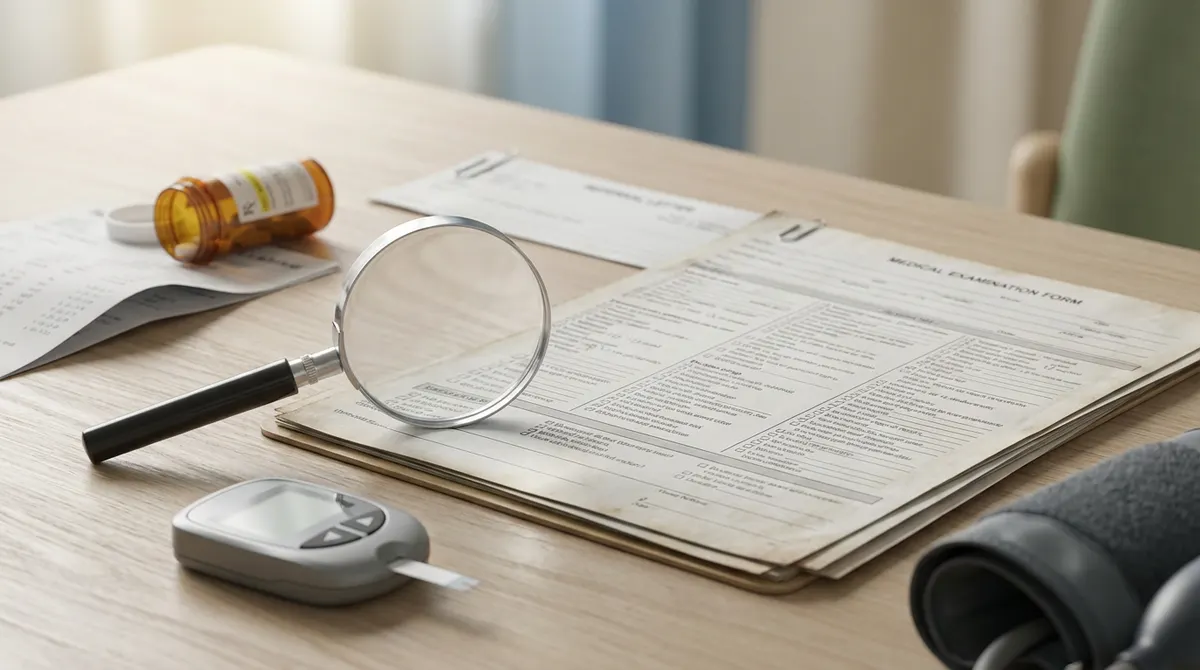
The Medical Examination Report Form is the main health document for a DOT physical exam. The Medical Examination Report matters because it gives the examiner the evidence needed to decide whether you meet DOT physical requirements safely.
The MCSA-5875 is where your medical history becomes part of the official record. You will usually disclose prior diagnoses, surgeries, medications, symptoms, and past health events that could affect safe operation of a commercial motor vehicle. The form also supports the physical exam itself, including blood pressure, pulse, urinalysis, and examiner notes on body systems such as cardiovascular, neurological, respiratory, vision, and hearing. FMCSA requires this form for every driver physical qualification examination performed under 49 CFR 391.41. (FMCSA)
Medical Examination Report is not just paperwork for paperwork's sake. Medical Examination Report is the document that connects your answers, the examiner's findings, and the final certification decision. Medical Examination Report errors, omissions, or missing attachments can delay the completion of a DOT medical exam even when the driver is otherwise healthy.
In practical terms, this is the form where being organized helps most. Many patients report that the hardest part is not the physical exam itself, but remembering every prescription, dosage, prior surgery, specialist visit, and diagnosis date. Clinicians frequently observe that incomplete medication lists and vague medical history are among the most common reasons a DOT Exam becomes "determination pending" instead of being completed on the same day.
IMPORTANT: Do not guess on the long form. If you are unsure about a prescription strength, surgery date, or specialist diagnosis, bring the record or ask your medical provider for a summary before the appointment.
KEY TAKEAWAY: The Medical Examination Report Form is the official long form that turns your health history and exam findings into a documented qualification decision.
The next form is shorter, but it is the document you and your employer usually care about most after the exam.
The Medical Examiner's Certificate MCSA-5876: Your Official DOT Medical Card
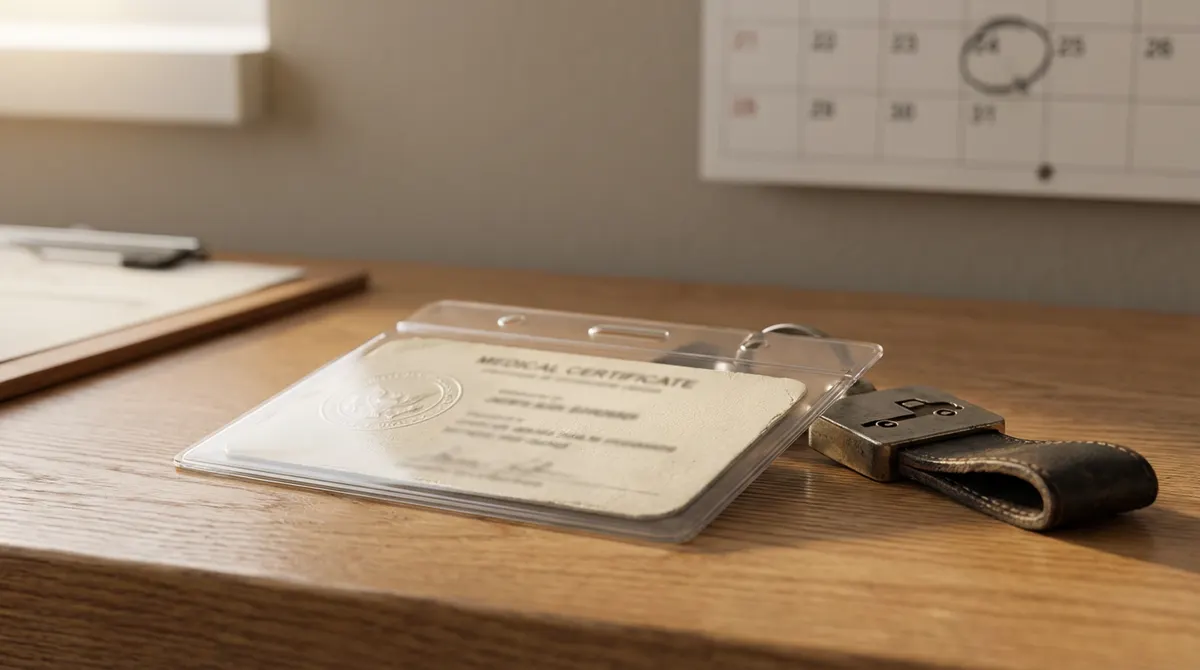
The Medical Examiner's Certificate is the document that proves your current medical certification status. The DOT Medical Examiner's Certificate matters because it is the form that shows whether you are qualified to drive a commercial vehicle.
Already diagnosed and need CPAP support?
Dumbo Health helps patients start CPAP without the usual confusion, paperwork, or upfront cost. Equipment, setup, supplies, and ongoing support are all handled in one place.
FMCSA states that the examiner completes and provides the Medical Examiner's Certificate, Form MCSA-5876, when the driver is physically qualified. This form is often called the DOT medical card or medical card. It includes your name, driver's license details, certification expiration date, and any restrictions. If you need prescription glasses, contact lenses, or hearing aids to meet the standards, that limitation can appear directly on the certificate. If you qualify through a Skill Performance Evaluation or another exemption pathway, that is also reflected. (FMCSA)
One detail that drivers often miss is expiration timing. According to the FMCSA Medical Examiner's Handbook, the certificate expires at midnight on the printed date and there is no grace period. That means a late renewal can interrupt your ability to drive a commercial motor vehicle in interstate commerce even if you had every intention of renewing "that week." (FMCSA)
As of August 2025, FMCSA also said certified medical examiners should continue issuing paper MCSA-5876 certificates in addition to electronic submission during the transition period. That means keeping a paper or PDF copy is still practical, and many employers still ask for a copy for their records. (FMCSA)
If you are trying to plan around renewal timing, Dumbo Health's guide to DOT physical forms and paperwork can help you create a simple checklist before your next DOT medical exam.
TIP: Store your DOT medical card in two places, one paper copy and one digital copy, so you can provide it quickly to an employer or licensing office if asked.
KEY TAKEAWAY: The Medical Examiner's Certificate is your DOT medical card and the most important proof that you currently meet DOT physical requirements.
Once the core forms are clear, the most important question becomes whether your condition requires extra paperwork.
Additional Forms and Documentation for Specific Medical Conditions
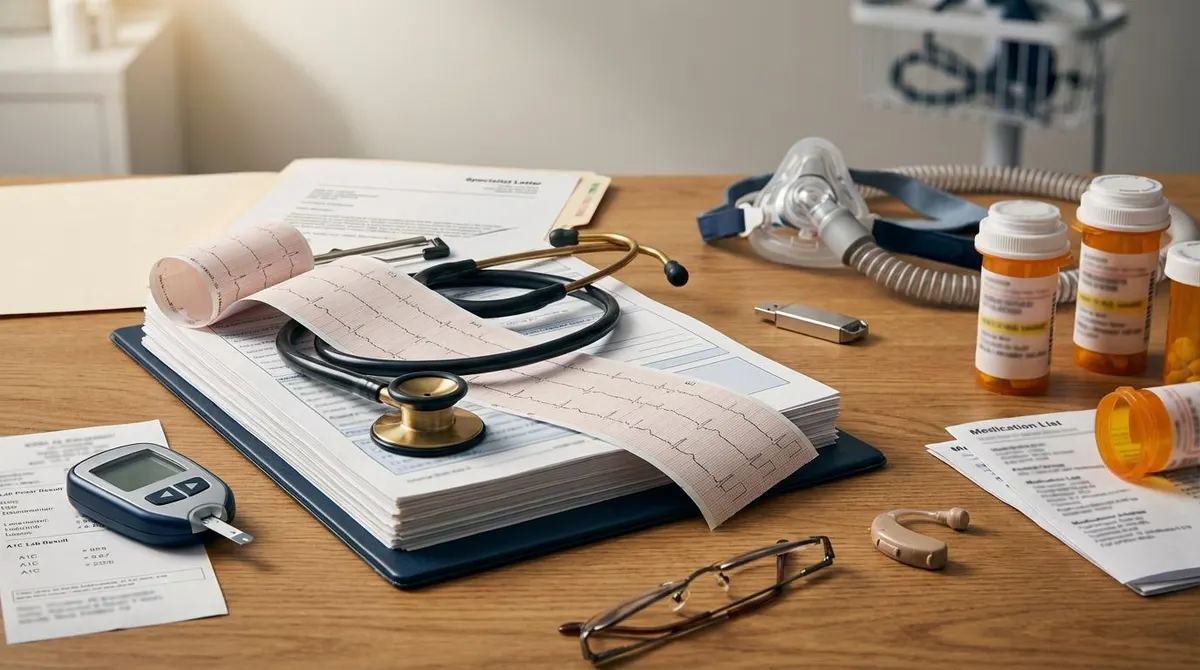
Many DOT physicals require more than the two core forms when a driver has an ongoing condition, treatment plan, or specialist follow-up. Additional documentation matters because the examiner must have enough evidence to decide whether a medical condition is stable and safe for driving.
The FMCSA medical applications and forms page lists the major supporting forms used in medical certification. These include the Insulin-Treated Diabetes Mellitus Assessment Form, the Vision Evaluation Report, and the optional 391.41 CMV Driver Medication Form. In real-world use, not every driver needs these forms, but drivers with diabetes, vision impairments, significant medication use, or other chronic medical conditions often need more than the standard long form and medical card. (FMCSA)
This is where many drivers get tripped up. A driver may arrive with no obvious illness, pass the basic physical exam, and still leave without a completed certification because a required treating-clinician form was missing. A DOT physical exam is not just a snapshot. A DOT physical exam is also a documentation process that asks whether the examiner has enough evidence to support a safe certification decision.
The main condition-specific categories usually include:
diabetes treated with insulin
cardiovascular disease or heart disease follow-up
sleep apnea treatment records
vision standards support documents
hearing loss or hearing aids documentation
medication clarification from a prescribing clinician
limb impairment paperwork such as Skill Performance Evaluation or SPE Program documentation when applicable
If you already know a condition may need review, the most effective way to prepare is to gather the forms before your appointment rather than waiting for the examiner to request them afterward.
KEY TAKEAWAY: The right supporting documents can be the difference between same-day certification and a delayed decision.
The sections below explain exactly which forms tend to matter for the most common scenarios.
Diabetes Management: The Insulin-Treated Diabetes Mellitus Assessment Form MCSA-5870
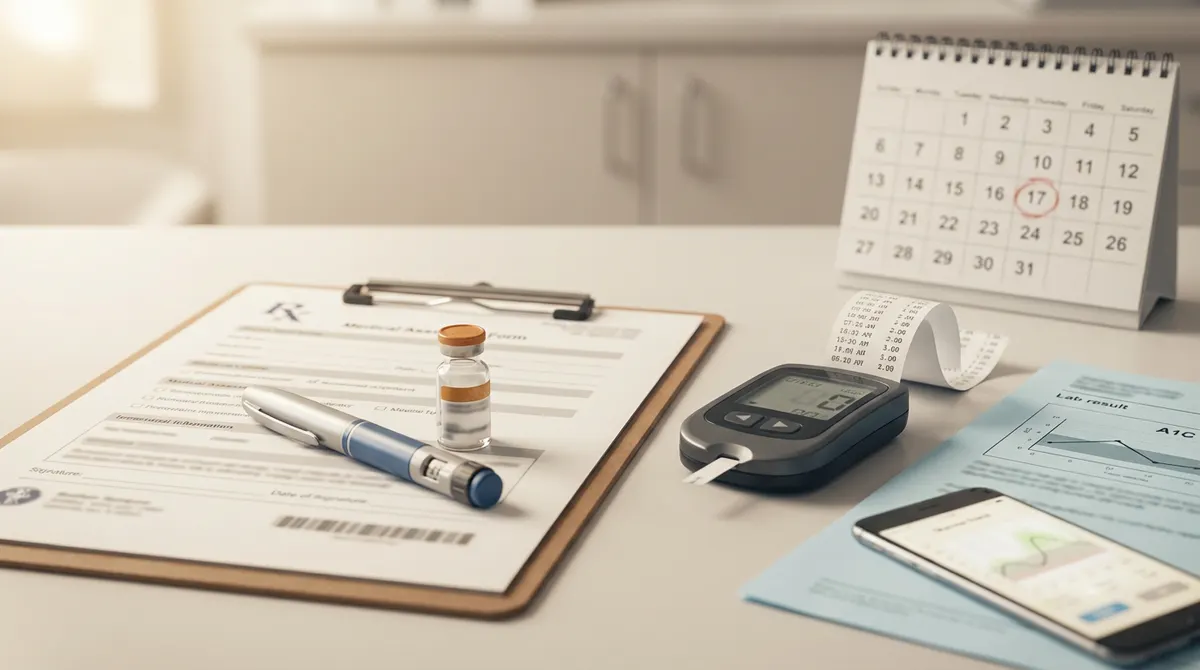
Drivers who use insulin may still qualify for a DOT medical card, but they usually need a specific diabetes form. The Insulin-Treated Diabetes Mellitus Assessment Form matters because FMCSA requires it for insulin-treated diabetes mellitus cases during medical certification review.
FMCSA states that individuals with insulin-treated diabetes mellitus must provide Form MCSA-5870 to the certified medical examiner within 45 days of completion by the treating clinician. The form asks about insulin use history, severe hypoglycemic episodes, monitoring records, and whether the driver has at least the preceding 3 months of blood glucose self-monitoring records from an electronic glucometer that stores date and time readings. That is why bringing A1C lab results, A1c results, and a blood pressure log can help, but they do not replace the required MCSA-5870 when insulin is involved. (FMCSA)
Can you get a DOT medical card with diabetes? Often yes, but it depends on stability, treatment, and documentation. FMCSA's diabetes standard allows certification when the examiner determines the condition is properly managed and the required treating-clinician assessment supports that conclusion. The maximum certification period under the insulin rule is commonly 12 months, not 24 months, so drivers with insulin-treated diabetes mellitus should expect more frequent follow-up than some other drivers. (FMCSA)
This is also a good example of why medical certification is condition-specific rather than diagnosis-specific. Diabetes alone does not automatically disqualify commercial drivers. Poorly documented diabetes, recent severe hypoglycemia, or missing records can create a problem even when the driver feels well.
KEY TAKEAWAY: Insulin-treated diabetes mellitus usually requires Form MCSA-5870 plus stable monitoring records before a DOT medical exam can be fully evaluated.
Cardiovascular paperwork works similarly, but it often depends more on specialist clearance and recent testing.
Cardiovascular Conditions: Specialist Reports and Test Results
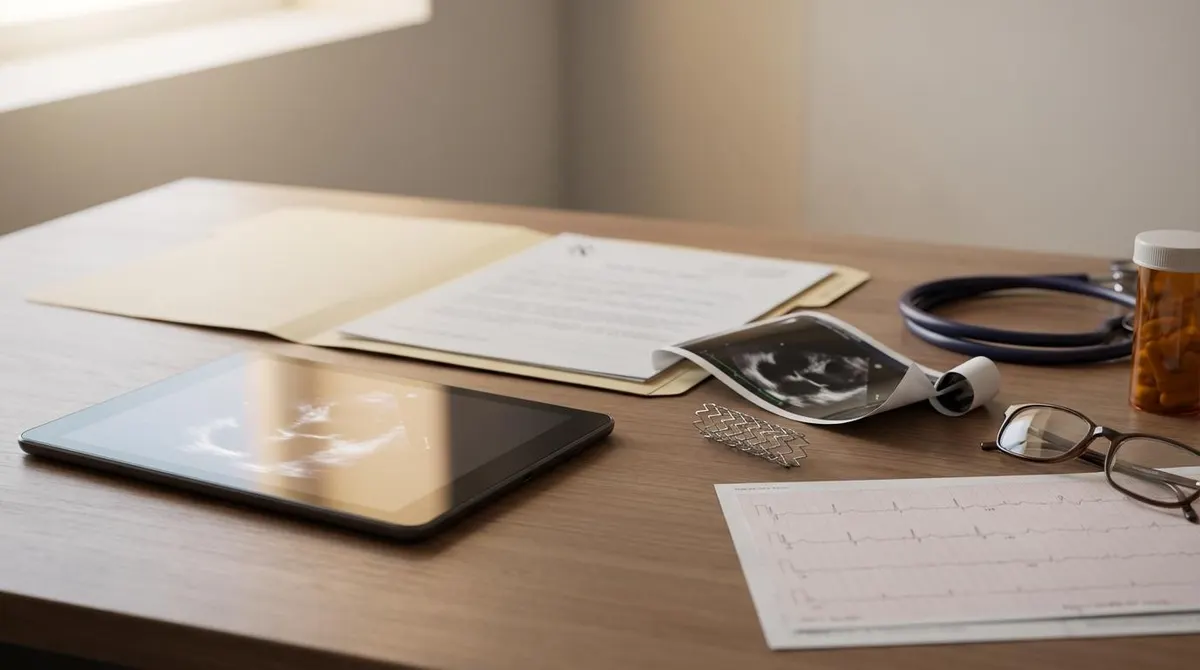
Heart disease does not automatically prevent DOT certification, but it often requires recent specialist documentation. Cardiovascular records matter because the examiner must determine whether the condition could raise the risk of sudden impairment or medical emergency while driving.
The DOT physical exam is designed to protect driver safety and commercial vehicle safety, so cardiovascular review tends to be conservative. If you have a history of heart disease, arrhythmia, heart failure, coronary artery disease, stent placement, valve surgery, or a major cardiac event, the examiner may request a cardiologist note, stress test results, echocardiogram reports, medication lists, and confirmation that the condition is stable. Many long-haul drivers find that the issue is not the diagnosis itself but whether the supporting records are recent and clearly worded.
Blood pressure is one of the most common cardiovascular issues flagged during the DOT Exam. FMCSA guidance states that Stage 2 blood pressure, defined as 160 to 179 systolic or 100 to 109 diastolic, may lead to only a one-time 3-month certification. FMCSA also states that Stage 3 blood pressure above 180/110 is disqualifying until the blood pressure comes down, after which certification may be issued at shorter intervals. Those thresholds matter because even a routine recertification can change if the blood pressure reading on exam day is too high. (FMCSA)
Many patients report white-coat spikes, so bringing home readings, treatment notes, and a recent blood pressure log can help your medical provider or FMCSA-approved medical examiner understand the bigger picture. Dumbo Health's guide to blood pressure at a DOT physical can help you prepare if hypertension is a concern.
IMPORTANT: If you have a cardiac history, bring the latest specialist note and test results rather than assuming the examiner can certify you from memory or verbal explanation.
KEY TAKEAWAY: Cardiovascular certification usually depends on current stability, recent specialist evidence, and blood pressure control rather than the diagnosis name alone.
Sleep-related conditions are another common source of delayed paperwork, especially when treatment records are missing.
Sleep Apnea: Documentation for CPAP Users and Diagnosed Conditions
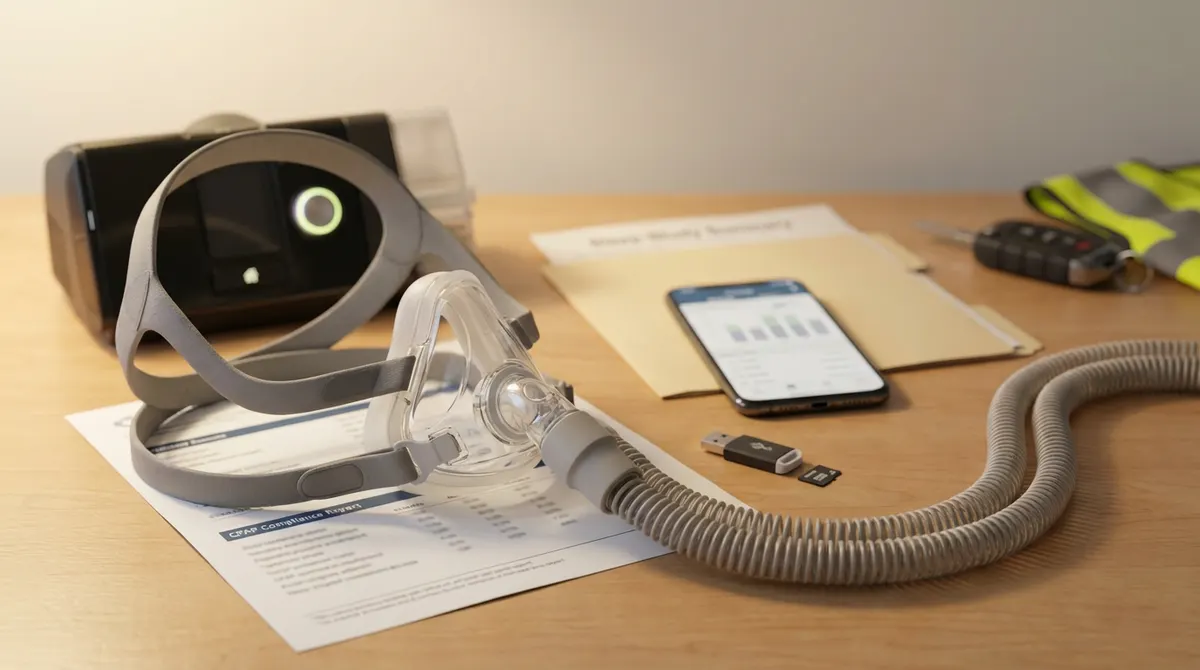
sleep apnea paperwork can matter even when you already use treatment successfully. Sleep apnea documentation matters because untreated or poorly controlled symptoms may affect alertness, safety, and the examiner's confidence in your fitness to drive.
According to the National Heart, Lung, and Blood Institute, sleep apnea is a condition in which breathing stops and restarts many times during sleep. In DOT settings, the concern is usually not the label alone but whether symptoms such as excessive daytime sleepiness, witnessed apneas, poor sleep quality, or treatment nonadherence could affect safe driving. If you have diagnosed sleep apnea, the examiner may ask for sleep apnea test results, a treating-provider note, and CPAP machine compliance data showing regular use. (NHLBI, NIH)
CPAP machine records are often the most important practical document in this category. People who undergo this exam often find that simply saying "I use my machine every night" is not enough. Certified medical examiners may want printed or downloadable usage data from the CPAP machine, especially if your prior certification was contingent on treatment compliance. Research and clinical guidance increasingly connect sleep apnea with broader cardiometabolic risk as well, which is why sleep apnea review is often stricter when obesity, type 2 diabetes, or uncontrolled blood pressure are also present. NHLBI notes that sleep apnea affects more than 80% of people who have obesity and type 2 diabetes in one research context, which helps explain why this issue gets attention during medical certification. (NHLBI, NIH)
sleep apnea is common, but sleep apnea documentation is what turns a known diagnosis into an evaluable case. Sleep apnea treatment records help the examiner decide whether the condition is managed well enough for driving.
If you are still early in the process, Dumbo Health's at-home sleep test is a helpful starting point for understanding testing options and next steps, including ways to find a provider near you.
KEY TAKEAWAY: Diagnosed sleep apnea often requires test records and CPAP machine compliance documentation, not just a verbal update at the appointment.
vision and hearing paperwork follows the same principle: the examiner needs objective proof that you meet the standards.
Vision and Hearing Impairments: Specialist Evaluations and Reports

vision impairments and hearing loss do not always block certification, but they often require careful documentation. Vision and hearing paperwork matters because the examiner must confirm that you meet the federal safety thresholds with or without correction.
FMCSA's current materials state that the vision standard is at least 20/40 visual acuity in each eye with or without correction, at least 70 degrees of peripheral vision in the horizontal meridian in each eye, and the ability to recognize red, green, and amber traffic signals. If you meet the standard with prescription glasses or contact lenses, that corrective-lens requirement should be noted on the certificate. FMCSA's materials also note a hearing standard of hearing loss less than or equal to 40 dB in the better ear, with or without hearing aids. (FMCSA)
For certain vision cases, FMCSA requires the Vision Evaluation Report, Form MCSA-5871. FMCSA states that the Medical Examiner must receive a completed MCSA-5871 signed and dated by an ophthalmologist or optometrist before each required physical qualification examination, and the DOT medical exam must begin within 45 days after that specialist signs the report. That timeline is important if you are coordinating a specialist visit and a DOT Exam close together. (FMCSA)
Drivers with a prosthetic device or limb impairment may also need Skill Performance Evaluation documentation. The SPE Program allows some drivers to operate a commercial motor vehicle when they can safely compensate for certain limb impairments, but the paperwork must be in order. Similarly, drivers using hearing aids should bring them to the appointment, because the actual hearing test and documented correction status affect certification wording.
KEY TAKEAWAY: Vision standards and hearing standards can often be met with correction, but the examiner needs the right form, specialist report, and documented restriction.
Medication review is the next major area where missing paperwork can create avoidable delays.
Other Chronic Conditions and Medications: Physician Letters and Prescription Lists
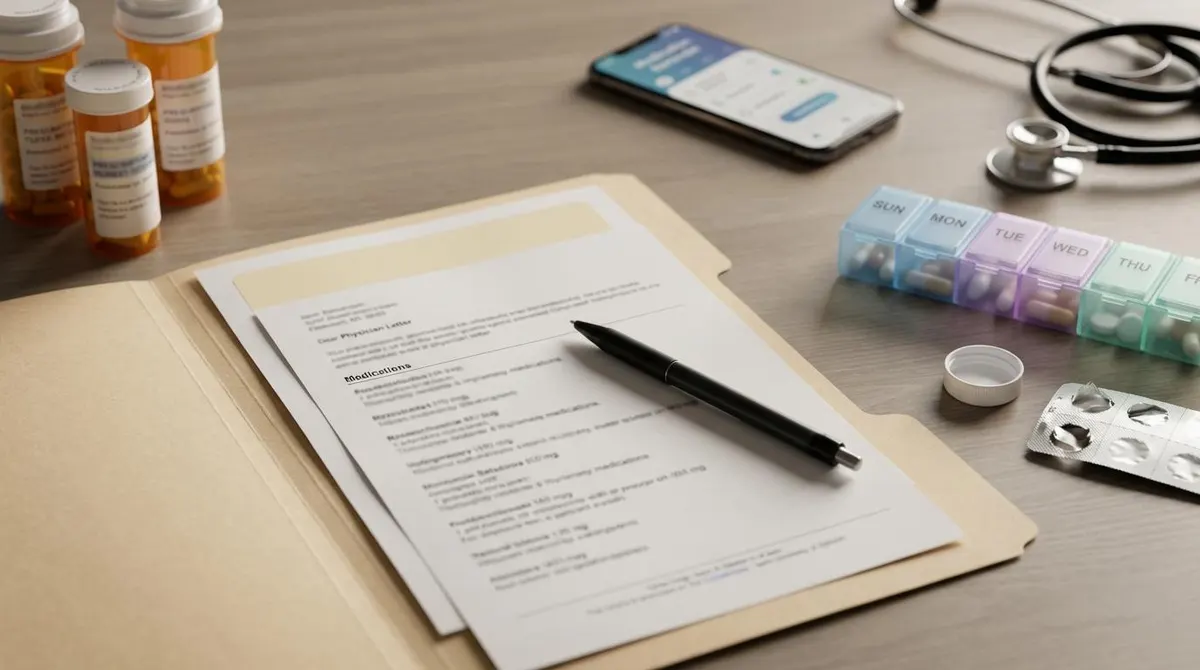
Medication use is one of the most common reasons examiners ask for more documents after the visit. Medication documentation matters because the examiner must determine whether a drug, dose, or side effect could interfere with safe operation of a commercial motor vehicle.
FMCSA provides the optional 391.41 CMV Driver Medication Form, MCSA-5895 so a certified medical examiner can request additional information from a prescribing clinician. FMCSA explains that this form is voluntary, but it can be used to clarify prescribed medications and whether the driver is medically qualified under the regulation. In real-world use, this often comes up with pain medications, psychiatric medications, seizure history, anticoagulants, sleep medications, and drugs with sedating effects. (FMCSA)
This is also where nuance matters. A medication is not automatically disqualifying just because it sounds serious. At the same time, a medication is not automatically acceptable just because it was prescribed. The examiner looks at the underlying condition, dose, side effects, timing, substance abuse history if relevant, and whether the treating medical provider can document safe use. If your medication list is complex, bring a complete prescriptions list with dose, frequency, diagnosis, and prescribing clinician name. If a medication has changed recently, bring updated instructions.
Midway through your preparation, the smartest move is often to book your paperwork before your appointment, not after. Dumbo Health's get started page can help you organize next steps if you are sorting through testing, treatment, or documentation questions.
TIP: Bring medication bottles, a printed pharmacy list, or a current after-visit summary so the examiner sees exact spellings and dosages rather than partial memory.
KEY TAKEAWAY: A complete medication list and, when needed, a physician letter or MCSA-5895 form can prevent a routine DOT medical exam from turning into a delayed review.
Understanding why the paperwork is so detailed makes the process feel more logical and less arbitrary.
Why the Paperwork Exists: FMCSA Regulations and Driver Safety

DOT paperwork exists to support safety, not just compliance. FMCSA regulations matter because they are designed to reduce the risk that a medical emergency, untreated condition, or functional impairment could affect safe driving.
The Department of Transportation framework for driver medical qualification focuses on whether a driver can safely operate a commercial motor vehicle, not whether the driver has a perfectly clean health record. That is why the paperwork asks about medical history, medical conditions, medications, vision, hearing, cardiovascular risk, and other factors tied to real driving demands. The Federal Motor Carrier Safety Administration uses this structure because commercial vehicles are large, heavy, and capable of causing serious harm if a driver becomes impaired. Gross Vehicle Weight Rating also matters in the broader DOT physical requirements discussion because vehicles at higher weight thresholds are more likely to fall within regulated CMV categories. (FMCSA)
The medical examination is also a legal record. Certified medical examiners on the National Registry are responsible for documenting how they reached the decision, retaining records, and making them available when required by regulation. That is why medical records and attachments matter so much. The process has to be defensible, consistent, and tied to federal standards rather than informal judgment alone. (FMCSA)
Commercial vehicle safety depends on documentation because documentation is how examiners prove the condition was reviewed properly. Compliance depends on documentation because documentation is how employers, agencies, and licensing systems verify medical certification.
DID YOU KNOW: FMCSA's National Registry allows drivers to search for certified medical examiners in your area or find a provider near you by city, state, or ZIP code. (FMCSA)
KEY TAKEAWAY: DOT forms exist to document that a driver meets FMCSA regulations in a way that protects both the driver and the public.
Once you understand the why, it becomes much easier to prepare strategically.
Preparing for Your DOT Exam: How to Manage Forms Before the Appointment
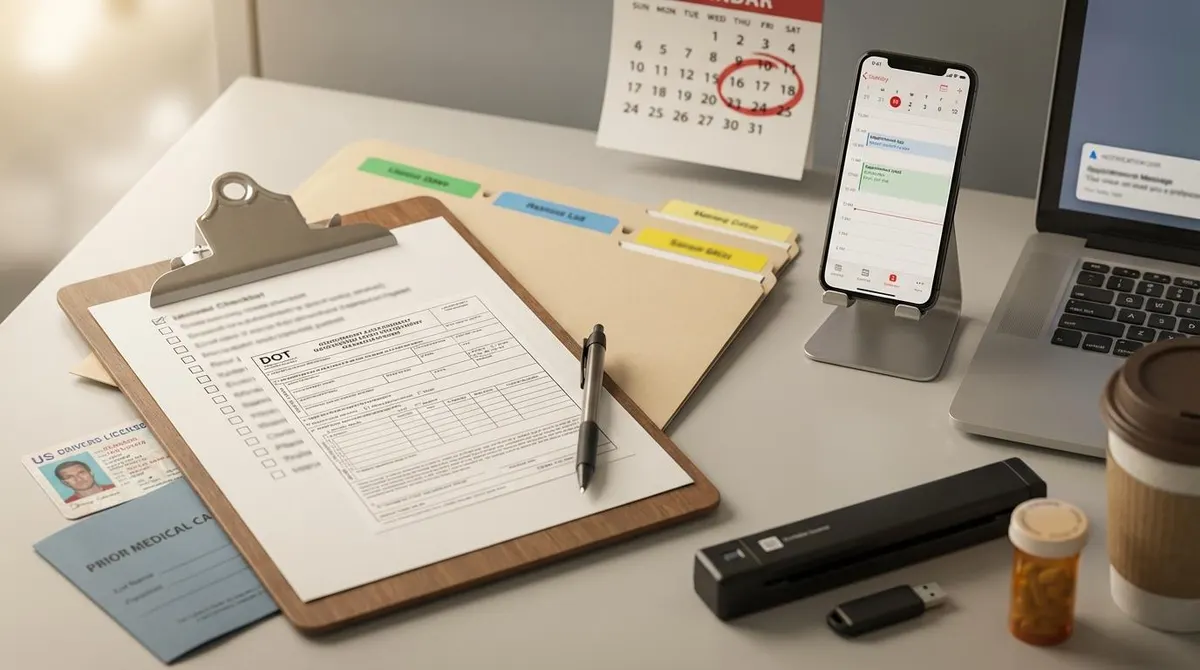
The best way to prepare for a DOT Exam is to organize your records before the visit. Proactive form management matters because same-day certification is much more likely when the examiner receives complete, current documentation.
Start with your core personal documents. Bring your driver's license, any prior DOT medical card, and enough information to complete the medical history section accurately. Then gather your medical records, test results, and specialist letters for any condition under treatment. A detailed list of past surgeries, ongoing medical conditions, current prescriptions, dosage amounts, and significant health events can save time and reduce follow-up calls. For a DOT medical exam, details matter more than broad summaries.
A practical checklist looks like this:
driver's license
prior Medical Examiner's Certificate if you have one
full prescriptions list with dosages
names and contact details for your medical provider and specialists
recent medical records relevant to any chronic condition
blood pressure log if hypertension is being monitored
A1C lab results or A1c results if diabetes is relevant
CPAP machine usage report if you have sleep apnea
vision specialist report if you have vision impairments
hearing aids or prescription glasses or contact lenses if you use them
any required FMCSA forms already completed by the treating clinician
Many patients report that bringing too much is better than bringing too little. That is especially true for long-haul drivers who cannot easily return for repeat visits. If the appointment is with a new examiner or a walk-in clinic, assume the office does not already have your file.
IMPORTANT: If you know you may need condition-specific forms, call the clinic in advance and ask exactly what they want brought to the appointment. That one phone call can prevent a wasted trip and unnecessary out-of-pocket service costs.
KEY TAKEAWAY: A well-prepared driver brings identification, medical history, prescriptions, and condition-specific records so the examiner can make a same-day decision whenever possible.
After the exam, the paperwork still has one more job to do inside your employment records.
After the Physical: Integrating Forms Into Your Driver Qualification File
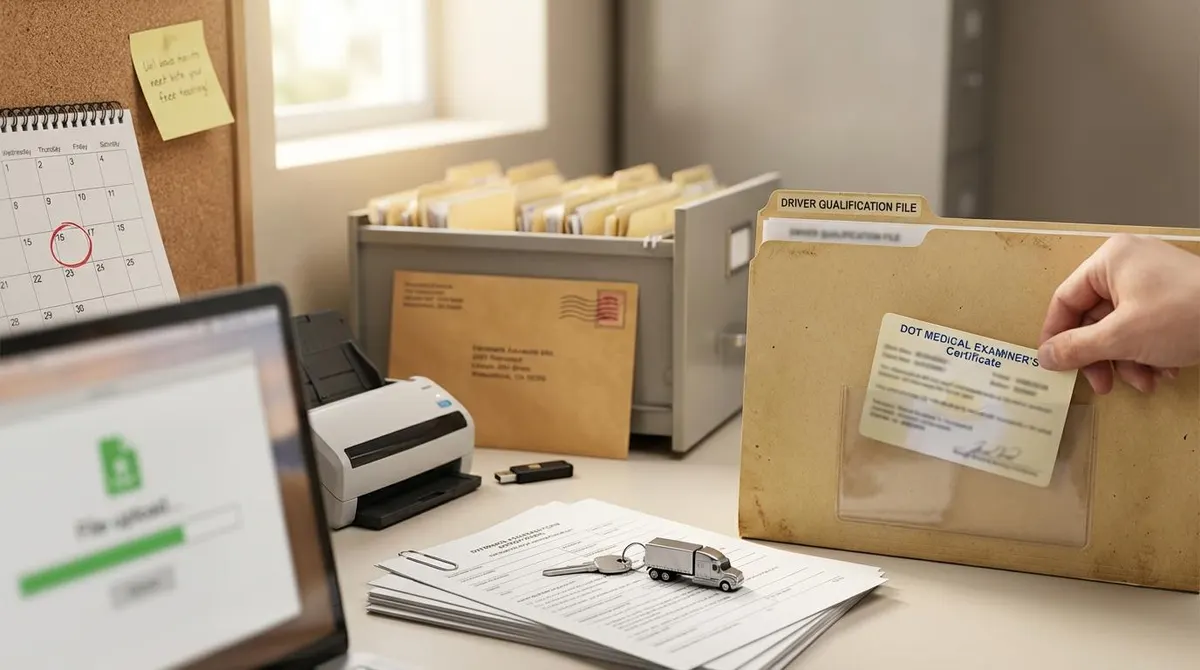
Your DOT paperwork does not stop mattering once the appointment ends. Post-exam handling matters because the Medical Examiner's Certificate often needs to reach your employer, licensing records, or Driver Qualification File promptly.
For non-CDL holders, FMCSA says the carrier must keep a copy of the Medical Examiner's Certificate in the Driver Qualification File. For CDL holders, the medical certification information is generally connected through state licensing and CDLIS records, but employers still commonly request a copy for internal compliance and scheduling. FMCSA's Driver Qualification File checklist also notes employer responsibilities related to verifying the examiner's National Registry status. (csa.fmcsa.dot.gov)
Driver Qualification File is the employer-side compliance record that helps document that commercial drivers are properly qualified to drive commercial vehicles. Driver Qualification File requirements matter because missing medical certification can become an operational problem even after a valid exam was completed. That is why you should submit the Medical Examiner's Certificate quickly, keep your own copy, and confirm that the correct expiration date is recorded.
Responsibility is shared here. The examiner issues the forms. The employer manages parts of compliance. You still need to protect your own DOT certification by checking that the paperwork was delivered, saved, and understood correctly. A missed upload, a wrong expiration date, or an unreadable scan can create avoidable disruptions.
KEY TAKEAWAY: After the exam, submit your Medical Examiner's Certificate promptly and keep your own copy so your Driver Qualification File and DOT certification stay current.
Before the FAQ, it helps to clear up a few myths that regularly create confusion.
Common Myths About DOT Physical Forms Debunked

Many drivers misunderstand DOT physical paperwork because they hear simplified advice from coworkers or old forum posts. Clearing up these myths matters because the wrong assumption can delay certification even when the health issue itself is manageable.
MYTH: You only need a medical card for a DOT physical.
FACT: The medical card is only the final certificate. FMCSA requires the Medical Examination Report Form, MCSA-5875, as part of the examination record, and many drivers also need attachments such as MCSA-5870, MCSA-5871, or medication clarification forms depending on their situation. (FMCSA)
MYTH: If you feel healthy, missing forms will not matter.
FACT: Missing forms can absolutely matter. A driver can appear medically well and still leave without completed medical certification because the examiner lacks the documentation required to support the decision safely and legally.
MYTH: Diabetes automatically means you cannot get a DOT medical card.
FACT: FMCSA allows certification for many drivers with insulin-treated diabetes mellitus when the condition is properly managed and Form MCSA-5870 is completed by the treating clinician. The key issue is stability and documentation, not the diagnosis name alone. (FMCSA)
MYTH: A paper copy of the certificate no longer matters.
FACT: FMCSA said in August 2025 that certified medical examiners should continue issuing paper MCSA-5876 certificates during the transition to electronic reporting. Keeping a paper or PDF copy is still practical for drivers and employers. (FMCSA)
MYTH: High blood pressure always means automatic failure.
FACT: FMCSA guidance uses staged blood pressure thresholds rather than one blanket rule. Some elevated readings may lead to shorter certification periods, while very high readings above 180/110 are disqualifying until controlled. (FMCSA)
KEY TAKEAWAY: Most DOT form problems come from misunderstanding documentation rules, not from the existence of a diagnosis by itself.
The most common remaining questions are practical ones, so the FAQ below addresses them directly.
Frequently Asked Questions
Where can I find official FMCSA forms for download?
The safest place to find official DOT physical forms is the FMCSA medical applications and forms page on the Federal Motor Carrier Safety Administration website. That page includes the Medical Examination Report Form MCSA-5875, the Medical Examiner's Certificate MCSA-5876, the Insulin-Treated Diabetes Mellitus Assessment Form MCSA-5870, the Vision Evaluation Report MCSA-5871, and the optional medication form MCSA-5895. Using official FMCSA forms matters because outdated PDFs and third-party copies can create confusion. If you want to avoid mistakes, download forms only from FMCSA and confirm the clinic accepts the current version. (FMCSA)
What if I forget some forms or necessary documentation at my appointment?
If you forget required documentation, the examiner may still complete parts of the physical exam, but full medical certification may be delayed. This is especially common when a driver has diabetes, sleep apnea, heart disease, or a medication that needs clarification from the prescribing medical provider. In many offices, the result is not an automatic failure but an incomplete review or pending determination until records arrive. The best next step is to send the missing documents quickly and ask whether a return visit is required. Drivers looking for providers in your area should also ask the clinic in advance what records they expect you to bring.
Can you fail a DOT physical due to missing forms even if you are healthy?
Yes, you can fail to receive same-day certification because of missing forms even if you otherwise seem healthy. A DOT physical exam is both a medical examination and a documentation-based qualification process. Certified medical examiners must support the qualification decision with records that fit FMCSA regulations, especially for chronic medical conditions, specialist follow-up, or medication review. In practice, this often means the issue is not your exam finding but the lack of a required treating-clinician form, vision report, CPAP machine record, or prescriptions list. Good preparation reduces this risk significantly.
How long do I need to keep my DOT medical card and Medical Examination Report?
You should keep your own copy of the DOT medical card for the full certification period and ideally longer for personal records. FMCSA states that the examiner keeps copies of the Medical Examiner's Certificate and Medical Examination Report for at least 3 years. Employers may also retain records as part of compliance systems or the Driver Qualification File. Keeping your own paper and digital copies is wise because a replacement request can take time, and expired or prior certificates may still be useful if there is a question about dates, restrictions, or continuity of medical certification. (FMCSA)
Do I need a doctor's letter for a DOT physical?
Not every driver needs a doctor's letter, but many drivers with chronic medical conditions benefit from one. A physician letter can help explain stability, treatment, medication side effects, work restrictions, and whether a condition is controlled well enough for safe driving. This is common for heart disease, psychiatric medications, seizure history, recent surgery, sleep apnea treatment, and complex prescriptions. FMCSA also provides the optional MCSA-5895 medication form to request information from a prescribing clinician when needed. If your condition is likely to raise questions, a clear, recent letter can prevent delays and reduce back-and-forth after the appointment. (FMCSA)
Is methadone disqualifying for DOT?
Methadone is a high-scrutiny medication in DOT settings because the examiner must decide whether the medication and the underlying condition are compatible with safe driving. The key issue is not just the drug name, but impairment risk, stability, dose, side effects, and the treating clinician's documentation. Because FMCSA places strong emphasis on medication safety under the qualification standard, drivers taking methadone should expect detailed review and should bring a current physician letter, full prescriptions list, and any supporting records. In practice, this is not a casual medication review, so you should plan ahead rather than assume the medication will be accepted automatically. (FMCSA)
Can you get a DOT medical card with diabetes?
Yes, many drivers can get a DOT medical card with diabetes, including insulin-treated diabetes mellitus, if the condition is stable and the paperwork is complete. For insulin use, FMCSA requires Form MCSA-5870 from the treating clinician, and the driver must provide it to the examiner within 45 days of completion. Bringing glucose records, A1C lab results, and a current treatment summary can make the review smoother. The examiner still makes the final certification decision, but diabetes alone is not the automatic barrier many drivers fear. Good control and complete records matter most. (FMCSA)
Do I need a paper DOT medical card or is a PDF enough?
A PDF is useful, but keeping a paper copy is still a smart move. FMCSA said certified medical examiners should continue issuing paper Medical Examiner's Certificates during the transition to electronic reporting, which means paper copies still have practical value for drivers and employers. A PDF can help with email submission, employer uploads, and backup storage, but a paper copy is easier to present on the spot if someone requests proof. The most reliable approach is to keep both formats and make sure the expiration date is legible in each one. (FMCSA)
Conclusion
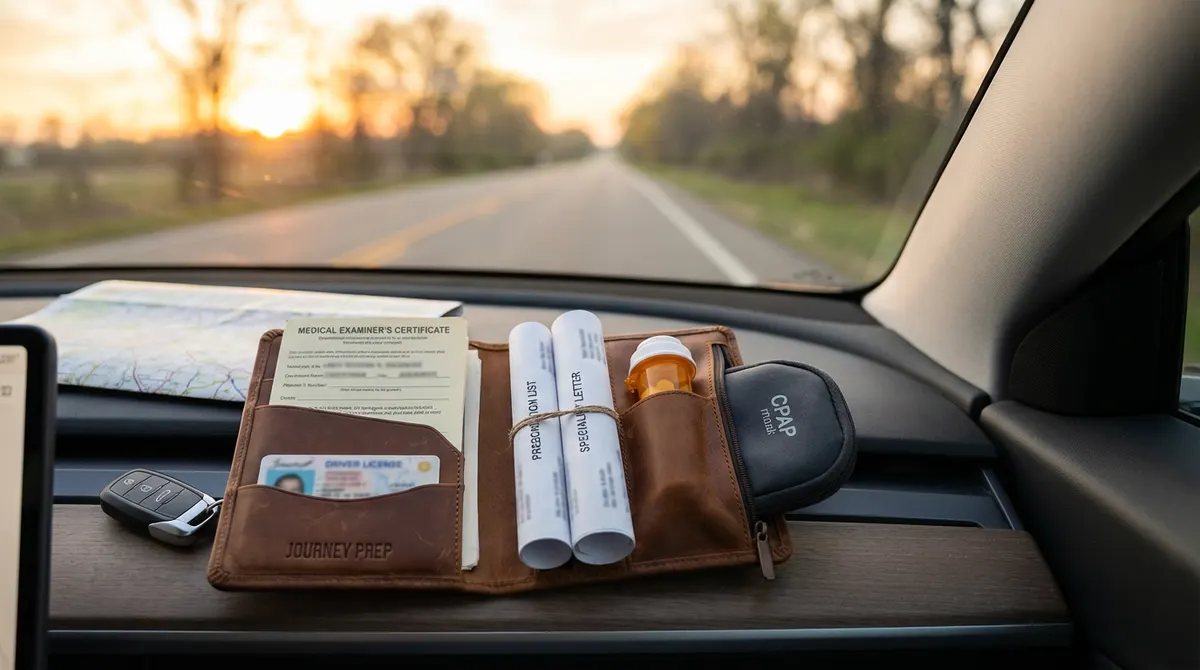
The forms you need for a DOT physical usually start with the Medical Examination Report Form and end with the Medical Examiner's Certificate, but many commercial drivers also need condition-specific paperwork. The smoother your DOT medical exam preparation, the easier it becomes to protect your DOT certification, compliance, and safety on the road. Bring your driver's license, medical history, prescriptions, and any specialist documentation that supports stable treatment. If you are also sorting through related health questions such as sleep apnea testing or treatment planning, Dumbo Health's at-home sleep test resource is a useful next step for understanding options and finding a provider close to you.
Related DOT Physical Topics
- Navigating DOT Stroke Guidelines for CMV Drivers What You Need To Know
- What blood pressure do you need to pass a DOT physical
- BMI for DOT Physical What Commercial Drivers Need to Know
- What Does DOT Stand for in a DOT Physical
- What Happens If You Fail a DOT Physical Twice The Complete Guide for Commercial Drivers
- Can You Get a DOT Physical in Any State The Complete Guide for Commercial Drivers
- Can You Get a DOT Physical Online The Complete Guide for Commercial Drivers
- Does a DOT Physical Test for Weed or THC The Complete Guide for Commercial Drivers
- What Can Disqualify You From a DOT Physical
- DOT Physical Forms & Paperwork The Complete Guide for Commercial Drivers
- What Is the Urine Test for in a DOT Physical
- What Should You Bring to a DOT Physical
- Can You Fail a DOT Physical for Being Overweight
- DOT Physical Blood Pressure Requirements What Drivers Need to Know
- Can You Fail a DOT Physical for High Blood Pressure
- What happens if you fail a DOT physical due to sleep apnea
- DOT Physical at Urgent Care What Commercial Drivers Need to Know
- What Happens During the DOT Physical Exam The Complete Guide for Drivers
- What Happens If Your DOT Physical Expires Compliance Guide for Commercial Drivers
- DOT Physical & Drug Test What Drivers Need to Know
- What are the current DOT requirements for sleep apnea testing for commercial drivers
- What Is the Difference Between a DOT and Non-DOT Physical
- What Happens If You Fail a DOT Drug Test The Complete Guide for Commercial Drivers
- What eye chart is used for a DOT physical
- Can You Get a Second Opinion on Your DOT Physical A Complete Guide for Commercial Drivers
- The DOT Physical Exam Ensuring You're Fit for the Road
- What drugs do they test for in a DOT drug test
- How Do You Submit Your DOT Physical to the DMV
- Can You Pass a DOT Physical with Epilepsy
- Remote DOT Physical The Complete Guide for Commercial Drivers
- Can You Pass a DOT Physical With a Hernia
- Is a drug test required for a DOT physical
- DOT Physical Cost Breakdown What Drivers Pay & Why
- DOT Physical ICD-10 & Billing Codes The Complete Guide for Accurate Compliance and Reimbursement
- Can You Pass a DOT Physical With a Pacemaker
- Can You Pass a DOT Physical With One Eye
- Online DOT Physical Without Insurance A Complete Guide for Commercial Drivers
- DOT Physical Out of Pocket What Commercial Drivers Actually Pay
- Navigating the Florida DOT Physical Your Essential Guide for CDL Drivers
- Online DOT Physical Self-Pay The Complete Guide for CDL Drivers and Owner-Operators
- DOT physical self pay guide for commercial drivers paying out of pocket
- Can You Get a DOT Physical Online
- Your Complete Guide What's Included in a DOT Physical Exam
- New DOT Physical Requirements What Drivers MUST Know About New Updates
- What Are the DOT Requirements for Drivers With Sleep Apnea
- Can you fail a DOT physical because of sleep apnea
- Online DOT Exam What Drivers and Medical Examiners Need to Know
- DOT Physical Insurance or Self Pay How to Choose the Right Payment Option for Your Exam
- Is a DOT physical the same as a regular physical
- Can you pass a DOT physical with sleep apnea
- What should I expect at a DOT physical
- What Does a DOT Physical Consist Of
- Sleep Apnea Tests for DOT Compliance What tests are accepted
- Can You Pass a DOT Physical with Diabetes
- Can You Pass a DOT Physical with High Blood Pressure
- The Ultimate DOT Physical Guide for Commercial Drivers (2025–2026)
- DOT Physical Requirements A Complete Guide for CDL Drivers
- Is a Sleep Study Required for a DOT Physical
- Do They Check for Hernia During a DOT Physical
- Do You Have to Pee During a DOT Physical
- What Are the Requirements to Pass a DOT Physical
- What Do They Check During a DOT Physical
- Online DOT Physical The Complete Guide for Commercial Drivers and Medical Examiners
- Failing a DOT Physical What Every Commercial Driver Needs to Know
- Can You Fail a DOT Physical
- What is DOT Physical
- Does a DOT physical include a drug test
- DOT Physical Self Pay Cost
- Essential 171 DOT Definitions for Commercial Drivers
- DOT Physical Exam Basics
- Telehealth Dot Physical
- Who needs a DOT physical
- DOT Physical & Alcohol Requirements
- Navigating Your DOT Physical with Common Medical Conditions
- Why do they measure your neck during a DOT physical
- How can drivers with sleep apnea qualify again after a failed DOT physical
- Why DOT Sleep Tests at Home Matter for Your Career and Health
- DOT Physical Online Cost
- Walk In DOT Physical Self Pay
- DOT Hypertension Guidelines The Complete Blood Pressure Guide for Commercial Drivers
- The Ultimate DOT Preparation Checklist for Motor Carriers and Commercial Drivers
- DOT Physical Insurance & Recertification The Complete Driver's Guide
- DOT Physical Cash Pay
- Same Day DOT Physical
- Virtual DOT Physical
- DOT Physical Vision & Eye Requirements
- When Can Sleep Apnea Affect a DOT Physical
- DOT Medical Exam Self-Pay A Complete Guide for Commercial Drivers
- Do They Check Your Private Parts During a DOT Physical
- DOT Physical Chiropractor Your Complete Guide to CDL Exams
- How to Pass a DOT Physical The Complete Commercial Driver's Guide
- What are the current FMCSA guidelines on sleep apnea for commercial drivers
- Does insurance cover a DOT physical
- DOT Physical Duration and Validity How Long Your Medical Card Lasts
- Non-DOT Physical A Comprehensive Guide to Workforce Health and Safety
- DOT Physical Texas The Essential Guide to Your Exam, Medical Card, and CDL Compliance
- Cheap DOT Physical Online
- Are There New DOT Rules or Laws on Sleep Apnea Testing
- 2026 DOT Inspection Dates
- Best Treatments for Sleep Apnea to Improve Driving Safety
Take the next step before your DOT physical
Start with the free quiz if you are unsure about your risk, or order an at-home sleep test if you have already been flagged for possible sleep apnea.
AI summary
A DOT physical is a federally regulated medical qualification exam for commercial motor vehicle drivers, and it requires specific FMCSA forms and supporting documentation. The core documents are the Medical Examination Report Form MCSA-5875 (health history and exam findings) and the Medical Examiner’s Certificate MCSA-5876 (the DOT medical card with expiration date and restrictions). Examiners also submit results electronically using MCSA-5850. Some drivers need condition-specific paperwork: insulin-treated diabetes mellitus requires the Insulin-Treated Diabetes Mellitus Assessment Form MCSA-5870, completed by a treating clinician and provided to the examiner within 45 days. Certain vision cases require the Vision Evaluation Report MCSA-5871, signed by an ophthalmologist or optometrist, with the exam starting within 45 days. Sleep apnea may require sleep study records and CPAP compliance reports. Medication questions may trigger the optional 391.41 CMV Driver Medication Form MCSA-5895 or physician letters. After the exam, drivers should promptly submit the certificate to employers for the Driver Qualification File and keep both paper and digital copies.

Nicolas Nemeth
Co-Founder
Nico is the co-founder of Dumbo Health, a digital sleep clinic that brings the entire obstructive sleep apnea journey home. Patients skip the sleep lab and the long wait to see a specialist. Dumbo Health ships an at home test, connects patients with licensed sleep clinicians by video, and delivers CPAP or a custom oral appliance with ongoing coaching and automatic resupply in one clear subscription.
Keep reading

How Long Does a DOT Physical Take? A Complete Guide for Commercial Drivers

What Happens If You Fail a DOT Drug Test? The Complete Guide for Commercial Drivers


