DOT Physical ICD-10 & Billing Codes: The Complete Guide for Accurate Compliance and Reimbursement
This guide explains how to code and bill FMCSA-mandated DOT physicals using ICD-10-CM and CPT. It clarifies why the encounter is administrative, making Z codes the correct primary diagnosis for most claims. You will learn when to use Z02.4 versus Z02.89 and the required sequencing rules that place Z02 codes first-listed. It reviews common secondary diagnoses documented during exams, including hypertension, type 2 diabetes, obstructive sleep apnea, vision issues, hearing loss, and obesity. It connects diagnosis coding to CPT 99456 and 99455, plus modifier guidance for separately identifiable E/M services. It also covers payer realities, denial triggers, and documentation requirements tied to MCSA-5875 and MCSA-5876.
Struggling with sleep?
Find out if sleep apnea is the reason.
FDA-cleared. $149 flat. Physician-reviewed results in 48 hours.

DOT Physical ICD-10 & Billing Codes: The Complete Guide for Accurate Compliance and Reimbursement

A certified medical examiner conducting a DOT physical evaluation for a commercial motor vehicle driver.
DOT physical ICD-10 coding is the process of assigning the correct diagnosis and procedure codes to commercial driver medical examinations required under Federal Motor Carrier Safety Administration (FMCSA) regulations. According to the National Center for Health Statistics, ICD-10-CM contains more than 70,000 diagnosis codes, giving providers far greater specificity than the older ICD-9-CM system ever allowed. Accurate coding for DOT physicals affects your revenue cycle, your compliance record, and the quality of health data used across the transportation and healthcare system. This guide covers the full spectrum of ICD-10-CM diagnosis codes, the CPT codes paired with them, payer rules, documentation requirements, and best practices for preventing claim denials. Whether you are a certified medical examiner, a medical coder, or a billing specialist, understanding how these codes work together is the foundation of efficient DOT physical billing.
Understanding the DOT Physical and Its Regulatory Landscape

A driver receiving their DOT Medical Examiner's Certificate after a successful physical examination.
The DOT physical is a mandatory medical examination that determines whether a commercial motor vehicle (CMV) driver meets the health standards required to operate safely on public roads. According to the Federal Motor Carrier Safety Administration (FMCSA), any driver who operates a CMV in interstate commerce that carries more than 15 passengers, is paid to transport more than 8 passengers, transports hazardous materials requiring a placard, or exceeds a gross vehicle weight rating of 10,000 pounds must hold a valid Medical Examiner's Certificate.
FMCSA regulations under 49 CFR Part 391 establish the qualification standards, and only certified medical examiners (MEs) listed on the FMCSA's National Registry of Certified Medical Examiners are authorised to conduct these examinations and issue Medical Examiner's Certificates (Form MCSA-5876). The Medical Examiner's Handbook, last updated in January 2024, provides the current regulatory framework all certified examiners must follow.
Not sure if sleep apnea applies to you?
Take our 2-minute sleep risk quiz to see whether sleep apnea could affect your DOT physical. No account required.
The DOT physical is fundamentally an administrative examination rather than a diagnostic encounter. The certified ME evaluates vision, hearing, blood pressure, cardiovascular function, neurological health, urinalysis, and overall physical fitness, then determines whether the driver is qualified, temporarily qualified, or disqualified. Clinicians frequently observe that the non-diagnostic nature of the exam is precisely what makes its coding distinct from a standard office visit, and this distinction drives every ICD-10-CM and CPT code selection that follows.
DID YOU KNOW: Starting June 23, 2025, the FMCSA's Medical Examiner's Certification Integration Rule requires certified medical examiners to electronically transmit exam results directly to FMCSA, which then forwards them to state licensing agencies for integration into each driver's CDL record.
The DOT Medical Certificate itself signifies that a driver has met FMCSA's physical qualification standards at the time of examination. Certificates are valid for up to two years, though drivers with conditions such as controlled Stage 1 hypertension may receive shorter certifications. Employers are required to retain a copy of the certificate in the Driver Qualification File, and drivers must carry their certificate and present it to authorised enforcement personnel upon request.
KEY TAKEAWAY: The DOT physical is a federally mandated administrative examination conducted only by FMCSA-certified medical examiners, and its non-diagnostic nature is the primary driver of how it is coded under ICD-10-CM.
Understanding the regulatory landscape makes the next layer of complexity clear: because the DOT physical sits at the intersection of federal transportation law and healthcare billing rules, the correct application of ICD-10-CM codes is both a compliance matter and a revenue integrity issue.
The Foundation: What Is ICD-10-CM?

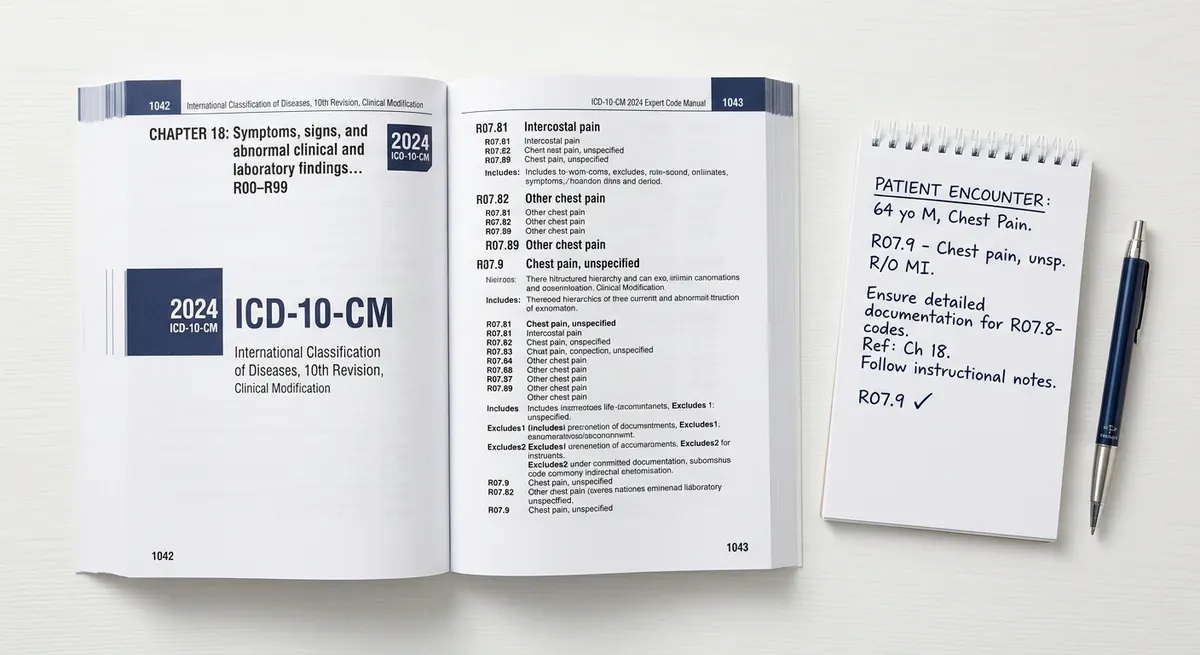
A coding professional consulting ICD-10-CM reference materials for accurate diagnosis code assignment.
ICD-10-CM is the International Classification of Diseases, Tenth Revision, Clinical Modification, which serves as the United States standard for reporting and cataloguing diagnoses in all healthcare settings. The National Center for Health Statistics (NCHS), operating under the Centers for Disease Control and Prevention (CDC), maintains ICD-10-CM for morbidity classification and billing purposes in the United States.
ICD-10-CM is based on the World Health Organization's (WHO) ICD-10, first adopted globally in 1994 by more than 153 countries. The United States transitioned from ICD-9-CM to ICD-10-CM on October 1, 2015, following a final rule published by the U.S. Department of Health and Human Services in 2009. The shift was significant: ICD-9-CM contained approximately 17,000 codes, while ICD-10-CM contains more than 70,000 codes, providing a level of clinical specificity that ICD-9-CM could not support.
The Structure of an ICD-10-CM Code
The alphanumeric structure of ICD-10-CM codes communicates progressively detailed clinical information.
Every ICD-10-CM code follows a precise alphanumeric structure that communicates progressively more clinical detail the longer the code becomes. The structure works as follows:
•Characters 1 to 3 form the category and indicate the broad disease or condition grouping
•Characters 4 to 6 provide etiology, anatomic site, severity, or other clinical details
Already diagnosed and need CPAP support?
Dumbo Health helps patients start CPAP without the usual confusion, paperwork, or upfront cost. Equipment, setup, supplies, and ongoing support are all handled in one place.
•Character 7 is the extension character, used for injuries and certain other code categories
•A decimal point always follows the third character
•The first character is always alphabetic; the second is always numeric; characters 3–7 may be either
•When a code requires a seventh character but has fewer than six characters, a placeholder "X" must fill empty positions
A practical example illustrates this clearly: the code S52.521A breaks down as S52 (fracture of forearm category), S52.5 (lower end of radius), S52.52 (torus fracture), S52.521 (right side, adding laterality), and the final "A" extension indicating the initial encounter.
The seventh character for injury-related codes carries particular clinical weight: "A" indicates an initial encounter during which the patient is receiving active treatment, "D" indicates a subsequent encounter for routine care after the active phase, and "S" indicates sequelae or complications arising directly from the original condition.
IMPORTANT: ICD-10-CM codes must be assigned to their highest level of specificity. Using a three-character category code when a four-, five-, or six-character code exists is considered an incomplete and invalid code submission.
The ICD-10-CM coding guidelines, published jointly by the NCHS and the Centers for Medicare and Medicaid Services (CMS), are updated annually and take effect each October 1. Staying current with these guidelines is the single most effective way to prevent coding errors and claim denials in any specialty, including DOT physical billing.
KEY TAKEAWAY: ICD-10-CM is an alphanumeric system of up to seven characters, maintained by the NCHS, which replaced ICD-9-CM in 2015 and provides the diagnostic specificity that modern healthcare billing and research require.
The structure of ICD-10-CM codes is the foundation upon which all DOT physical coding decisions rest, and understanding the Z code category within that structure is the essential next step.
Core ICD-10-CM Codes for the DOT Physical Encounter

A physician documenting a Z-code administrative examination encounter using a digital health record system.
The primary ICD-10-CM code for a DOT physical is Z02.4, which the ICD-10-CM system classifies as the encounter for examination for driving license. This code belongs to the Z02 category, "Encounter for administrative examination," which sits within the broader Z00-Z99 range of codes covering factors influencing health status and contact with health services.
Z codes represent reasons for encounters rather than diagnoses of disease. As defined by the official ICD-10-CM guidelines, Z categories Z00-Z99 are provided for occasions when circumstances other than a disease, injury, or external cause are recorded as the reason for a visit. For a DOT physical, no disease is being treated or diagnosed during the examination itself, making a Z code the appropriate primary code.
Differentiating Z02.4 and Z02.89
The two most commonly used codes for DOT physical encounters are Z02.4 and Z02.89, and understanding the distinction between them is critical for accurate billing.
| Code | Full Description | Best Used When |
|---|---|---|
| Z02.4 | Encounter for examination for driving license | The exam is specifically for a commercial driving certification or driving license renewal requirement |
| Z02.89 | Encounter for other administrative examinations | The exam is an administrative evaluation not captured by a more specific Z02 sub-code |
| Z02.1 | Encounter for pre-employment examination | The exam is conducted solely for pre-employment qualification (not always applicable to DOT) |
| Z02.79 | Encounter for issue of other medical certificate | When the primary purpose is certificate issuance distinct from the examination itself |
Z02.4 is the most clinically accurate code for a standard FMCSA-mandated DOT physical because the examination directly serves the purpose of determining fitness for a commercial driving licence or certification. Z02.89 is appropriate when the administrative examination does not fit neatly into any more specific Z02 subcategory, and coding guidance from the American Hospital Association Coding Clinic supports its use for certain occupational evaluation contexts.
Per the ICD-10-CM Official Coding Guidelines, the Z02 category must be reported as the principal or first-listed diagnosis. This is a mandatory sequencing rule: the administrative examination code leads the claim, and any underlying conditions found during the exam are reported as additional diagnoses.
When a DOT exam is the sole reason for the visit and no separate evaluation and management service is provided, the Z code alone may suffice as the primary code on the claim. If the provider also addresses a separately identifiable medical concern during the same encounter, modifier -25 can be appended to the evaluation and management code to distinguish the two services.
DID YOU KNOW: According to CMS and the NCHS, Z codes in the Z02 category may only be reported as the principal or first-listed diagnosis, not as a secondary or supplementary code on a claim for a different primary encounter.
KEY TAKEAWAY: Z02.4 is the primary ICD-10-CM code for a standard DOT physical examination, and it must always be listed as the first-listed or principal diagnosis when the DOT exam is the reason for the encounter.
Correctly assigning the primary Z code is only the first layer of DOT physical coding; the next layer requires documenting any underlying health conditions that affect driving fitness.
Coding for Underlying Health Conditions and Other Findings During a DOT Physical

A physician reviewing health condition findings documented as secondary diagnoses during a DOT physical exam.
When a certified medical examiner identifies an underlying health condition that is relevant to a driver's fitness for duty, that condition must be documented and coded as an additional diagnosis alongside the primary Z code. Accurate secondary coding reflects the full clinical picture and supports both compliance documentation and revenue integrity.
The most common conditions certified medical examiners encounter and must document include hypertension, type 2 diabetes, obstructive sleep apnea, vision impairments, and hearing loss. Each carries its own ICD-10-CM code that is added to the claim as a secondary code after the primary Z02.4 or Z02.89.
Clinicians frequently observe that drivers with Stage 1 hypertension (blood pressure 140/90 to 159/99 mm Hg) can still receive a one-year medical certificate, but the hypertension must be coded accurately using the essential hypertension code I10. Drivers with Stage 2 hypertension (160/100 to 179/109 mm Hg) may receive a one-time three-month temporary certification while the condition is addressed. According to FMCSA blood pressure guidelines, Stage 3 hypertension at or above 180/110 mm Hg results in disqualification, and the certification cannot be issued until blood pressure is controlled.
Common Secondary Codes Used in DOT Physical Encounters
| Condition | ICD-10-CM Code | Notes |
|---|---|---|
| Essential hypertension | I10 | Most common finding; certification period depends on stage |
| Type 2 diabetes mellitus without complications | E11.9 | Additional specificity codes required if complications are documented |
| Obstructive sleep apnea | G47.33 | May require further sleep evaluation before certification |
| Abnormal vision finding | H53.9 / H54 range | Use most specific code based on documented findings |
| Sensorineural hearing loss, unspecified | H90.5 | Bilateral hearing loss commonly documented |
| Obesity, unspecified | E66.9 | BMI code (Z68 range) may be added for specificity |
TIP: When a new finding is identified during the DOT physical that was not previously known, the medical examiner should document it clearly in the clinical notes and use the appropriate ICD-10-CM code as a secondary diagnosis. This protects both the provider and the driver by ensuring the health record is complete.
Laterality and the Seventh Character in DOT Exam Contexts
Laterality coding applies when a condition affects one specific side of the body, and it is mandatory for certain ICD-10-CM codes. For example, a documented right-sided visual field defect requires the code that specifies right eye involvement. Using a non-specific or unspecified code when the clinical documentation supports a lateralised code constitutes under-coding and may trigger payer scrutiny.
The seventh character applies primarily to injury and trauma codes in Chapter 19 of ICD-10-CM. If a driver reports a musculoskeletal injury or a recent trauma relevant to driving fitness, the coder must assign the appropriate seventh character: "A" for an initial encounter, "D" for subsequent encounter, or "S" for sequelae. Many people who undergo DOT exams with a history of work-related injuries find that their past trauma codes require the "S" sequelae character rather than an active encounter character.
KEY TAKEAWAY: All underlying health conditions relevant to driving fitness must be coded as secondary diagnoses using the most specific ICD-10-CM code available, with mandatory laterality and seventh character extensions applied where the code set requires them.
With the ICD-10-CM diagnosis codes assigned correctly, connecting them to the right CPT procedure codes is the next critical step in building a clean and reimbursable DOT physical claim.
Connecting ICD-10-CM to CPT Codes for DOT Physical Billing
Current Procedural Terminology (CPT) codes describe the services a provider performs, while ICD-10-CM codes describe the reason for the encounter. For DOT physical billing, both must appear on the claim, and they must align logically to avoid payer denial.
CPT codes are maintained by the American Medical Association (AMA) and updated annually. The CPT code set is the universal language of procedure billing across virtually all payers in the United States. For DOT physicals, the relevant CPT codes fall within the Special Evaluation and Management Services category.
Primary CPT Codes for DOT Physicals
| CPT Code | Description | Who Uses It |
|---|---|---|
| 99455 | Work-related or medical disability examination by the treating physician | Treating physician who manages the driver's existing conditions |
| 99456 | Work-related or medical disability examination by other than the treating physician | An independent certified ME who is not the driver's regular treating physician |
| 99213 / 99214 | Office or outpatient visit, established patient | Used when a separate, identifiable E/M service is provided beyond the DOT exam |
| 99202 – 99205 | Office or outpatient visit, new patient | For new patient E/M when a separately identifiable service is rendered |
CPT 99455 is used when the examining physician has an established treatment relationship with the driver and is providing the DOT evaluation. CPT 99456 is the more commonly used code in DOT physical billing because the majority of certified medical examiners conducting DOT exams are not the driver's primary care physician.
Both 99455 and 99456 are primarily used for workers' compensation and occupational health claims. Payer-specific billing rules, forms, and fee schedules vary significantly by state and insurance company, and providers should verify requirements with the specific payer before submitting any claim. The national average Medicare reimbursement for CPT 99456 is approximately $155, though private payer rates vary widely.
Billing Scenario: Standard DOT Physical with No Additional Findings
When a driver presents for a routine DOT physical, passes without any disqualifying conditions, and no separately identifiable E/M service is provided, the clean claim structure is straightforward:
•CPT: 99456 (or 99455 if the treating physician conducts the exam)
•ICD-10-CM Primary: Z02.4
•No secondary diagnosis codes are required if no additional conditions are documented
Billing Scenario: DOT Physical with Hypertension Identified
•CPT: 99456
•ICD-10-CM Primary: Z02.4
•ICD-10-CM Secondary: I10 (essential hypertension)
If the provider then also addresses the hypertension as a separate service, modifier -25 must be appended to the E/M code to signal to the payer that a significant, separately identifiable evaluation and management service was provided on the same date. Modifier -59 may be applied to a secondary procedure code when it is distinct from the primary service and needs to be identified as a separate procedural service.
If your practice is managing a high volume of commercial drivers, reviewing your revenue cycle management workflow for DOT physical encounters can significantly reduce claim processing time and denial rates.
KEY TAKEAWAY: CPT 99456 is the most commonly used procedure code for DOT physicals conducted by a non-treating physician, and it must be paired with Z02.4 as the primary ICD-10-CM diagnosis code on every clean DOT physical claim.
Correct code pairing is essential, but it is only part of the billing picture. Documentation quality and payer-specific rules determine whether a correctly coded claim is ultimately reimbursed.
Ensuring Accurate Billing and Maximising Reimbursement for DOT Physicals

A billing team reviewing documentation requirements to prevent DOT physical claim denials.
Payer Considerations: Who Pays for a DOT Physical?
Most health insurance companies do not cover DOT physicals because the examination is classified as a work-related compliance requirement rather than a medical treatment or preventive health service. The FMCSA describes the exam explicitly as a safety requirement, not a standard preventive health visit, which means insurance providers typically categorise it outside of covered services.
The cost of a DOT physical out of pocket typically ranges from $60 to $150 depending on region, clinic type, and whether additional services such as digital paperwork are included. When a carrier mandates the examination, the employer typically covers the cost. Independent owner-operators almost always pay the full cost themselves.
The FMCSA's FAQ states clearly that federal regulations do not address who is legally responsible for paying for the DOT medical examination, leaving the financial arrangement to the driver and employer. This means billing staff must clarify the payer arrangement before any claim is submitted to avoid misdirected billing.
Common Claim Denials and How to Prevent Them
Research shows that up to 84% of claim denials in the United States are potentially avoidable. In DOT physical billing, the most common denial triggers include:
•Using a non-specific Z code (Z02.9) when a more specific code such as Z02.4 exists
•Failing to sequence the Z02 code as the first-listed diagnosis
•Submitting CPT 99455 when the examiner is not actually the treating physician
•Missing modifier -25 when an E/M service is provided on the same date as the DOT exam
•Incomplete documentation that does not support the billed level of service
•Submitting to health insurance when the examination is self-pay or employer-pay
Many patients report confusion about why their health insurance denied a DOT physical claim. The answer is almost always the same: health insurers categorise the exam as non-medical. Coders should confirm the payer type before billing and route self-pay or employer-pay encounters through the appropriate workflow rather than through health insurance.
IMPORTANT: The National Correct Coding Initiative (NCCI) edits published by CMS govern which codes can be billed together. Before submitting any DOT physical claim that includes an additional E/M service, verify that the code pairing does not conflict with NCCI bundling rules.
Thorough Documentation as the Foundation of Reimbursement
The medical examiner's documentation must clearly support every code billed. This includes a completed FMCSA Medical Examination Report Form (MCSA-5875), documentation of all physical findings, a record of any conditions identified and how they affect certification, and a clear statement of the certification decision. Without this documentation, any additional diagnosis codes added to the claim will be unsubstantiated and vulnerable to audit.
KEY TAKEAWAY: Most DOT physicals are not covered by health insurance and are either self-pay or employer-pay. Preventing denials requires correct Z code sequencing, proper CPT code selection, modifier use where applicable, and documentation that supports every code on the claim.
Documentation and payer rules are the operational layer of DOT physical billing. The practical tools available to coders, and the best practices for keeping up with annual updates, form the final layer of a complete coding strategy.
Common Myths About DOT Physical Coding Debunked
Misconceptions about DOT physical coding are widespread, and they lead to billing errors, claim denials, and compliance risks. The following myth-and-fact pairs address the most persistent misunderstandings in this space.
MYTH: Z02.4 is not a billable code and should not be submitted on a claim.
FACT: Z02.4 is a fully billable ICD-10-CM diagnosis code valid for HIPAA-covered transaction submission. According to the Centers for Medicare and Medicaid Services and the National Center for Health Statistics, Z02.4 has been a valid, payable code since the ICD-10-CM transition in October 2015. It is exempt from present-on-admission (POA) reporting and is the correct primary code for a DOT driving licence examination encounter.
MYTH: If a driver has hypertension, the ME should only code I10 and omit the Z02.4.
FACT: The ICD-10-CM Official Coding Guidelines require that Z02 codes be listed as the principal or first-listed diagnosis when the reason for the encounter is an administrative examination. The hypertension code I10 is added as a secondary diagnosis, not as the primary. Reversing this sequence misrepresents the purpose of the encounter and can trigger a payer audit or denial.
MYTH: Any licensed physician can conduct a DOT physical and bill CPT 99456.
FACT: Only medical examiners listed on the FMCSA's National Registry of Certified Medical Examiners are authorised to conduct DOT physical qualification examinations and issue Medical Examiner's Certificates. According to the FMCSA, this includes MDs, DOs, PAs, APNs, and chiropractors, provided they are certified and listed on the registry. Conducting and billing for a DOT exam without this certification violates FMCSA regulations and creates significant compliance exposure.
MYTH: The DOT physical is the same as a routine annual physical exam and can be coded identically.
FACT: A routine annual physical is coded under Z00.00 or Z00.01 (encounter for general adult medical examination), while a DOT physical is coded under Z02.4 (encounter for examination for driving licence). The two examinations have entirely different purposes: the annual physical addresses the patient's personal health, while the DOT physical determines fitness for a federally regulated occupational role. Coding them interchangeably creates an inaccurate health record and may constitute fraudulent billing.
MYTH: A DOT physical claim should always be submitted to the driver's health insurance.
FACT: Health insurers overwhelmingly deny DOT physical claims because they classify the exam as a work-related compliance requirement rather than a covered medical service. The FMCSA's own guidance describes the DOT physical as a safety requirement, not a preventive health visit. Providers should route DOT physical claims to the employer or bill the driver directly, depending on the agreed arrangement, rather than submitting to health insurance as a default.
KEY TAKEAWAY: The most costly DOT physical coding myths involve incorrect code sequencing, submitting to the wrong payer, and misunderstanding who is authorised to perform and bill for these examinations. Correcting these misconceptions protects both revenue and compliance.
Separating myth from fact in DOT physical coding is part of a broader commitment to evidence-based billing practices, which leads naturally into the resources and tools that support ongoing coding accuracy.
Practical Resources and Best Practices for DOT Physical Coders
Maintaining coding accuracy in DOT physical billing requires active use of authoritative tools, continuous education, and systematic practice-level workflows that reduce the risk of errors entering the claims pipeline.
Navigating the ICD-10-CM Manual and Digital Search Tools
The ICD-10-CM code set is published in two formats: the Tabular Index, which lists codes numerically with clinical notes, and the Alphabetic Index, which allows lookup by condition or keyword. Coding always begins in the Alphabetic Index and is then confirmed in the Tabular Index, where additional instructional notes, "use additional code" directives, and exclusion notes are found.
The ICD-10-CM Browser Tool maintained by the National Library of Medicine allows coders to search ICD-10-CM by code, by condition name, or by clinical keyword. CMS also publishes a free searchable version of the current fiscal year's code set. For DOT-specific code lookups, searching for "administrative examination," "driving license," or "examination for" in any digital ICD-10-CM search tool will surface the relevant Z02 subcategories immediately.
In real-world use, many coding teams integrate these tools into their electronic health record workflows so that code validation happens at the point of documentation rather than at billing. This integration reduces the gap between clinical documentation and the codes that ultimately appear on the claim.
Staying Current with Official Coding Guidelines and Standards
The ICD-10-CM Official Guidelines for Coding and Reporting are updated annually and published jointly by NCHS and CMS. New guidelines take effect on October 1 of each year. The most reliable sources for staying current include:
•The CMS website, which publishes updated ICD-10-CM code files and guidelines each fiscal year
•The American Academy of Professional Coders (AAPC), which provides coding education, certification, and annual update resources
•The American Health Information Management Association (AHIMA), which publishes coding practice briefs and guidance
•The FMCSA's Medical Examiner's Handbook, updated in January 2024, which provides the clinical framework examiners must document against
Providers near you who specialise in occupational medicine or commercial driver health may also participate in regional coding workshops that address DOT-specific billing scenarios.
Implementing Best Practices for Revenue Cycle Management
Effective revenue cycle management for DOT physical encounters involves several structural practices:
•Establish a dedicated charge capture workflow for DOT physicals that defaults to Z02.4 as the primary code
•Use encounter-specific documentation templates that prompt the ME to record all relevant secondary conditions
•Conduct quarterly billing audits to identify patterns of denial and trace them to documentation or coding gaps
•Verify that every billing physician is listed on the FMCSA National Registry before submitting any DOT physical claim
•Maintain a payer matrix that identifies which carriers, employers, and self-pay arrangements apply to DOT physical encounters in your patient population
KEY TAKEAWAY: Accurate DOT physical coding requires using both the ICD-10-CM Alphabetic Index and Tabular Index for code selection, staying current with annual CMS and NCHS guideline updates, and implementing systematic revenue cycle workflows that validate codes before claim submission.
Frequently Asked Questions
What is the ICD-10 code for a DOT physical exam?
The primary ICD-10-CM code for a DOT physical exam is Z02.4, which stands for "Encounter for examination for driving license." This code belongs to the Z02 category for administrative examinations and must be listed as the first-listed or principal diagnosis on the claim. It is a fully billable code valid for HIPAA-covered transaction submission. If underlying conditions such as hypertension or diabetes are documented during the exam, additional ICD-10-CM codes for those conditions are added as secondary diagnoses. In some contexts where a more general occupational examination is performed, Z02.89 may be used instead.
What is the difference between Z02.4 and Z02.89 for DOT physicals?
Z02.4 specifically describes an encounter for examination for a driving license and is the most accurate code for an FMCSA-mandated DOT physical. Z02.89 covers other administrative examinations that do not fit a more specific Z02 subcategory, such as certain occupational health evaluations. For standard DOT CDL physicals, Z02.4 is the correct and preferred code. Z02.89 may be appropriate if the examination is a more general occupational fitness evaluation that does not specifically target a commercial driving licence. Always confirm the clinical context before selecting between these two codes.
What CPT codes are used for DOT physical billing?
The two primary CPT codes for DOT physical billing are 99455 and 99456, both under the Special Evaluation and Management Services category. CPT 99455 is used when the examination is performed by the driver's treating physician, while CPT 99456 applies when the exam is conducted by any other physician, which is the more common scenario in DOT physical practice. If a separately identifiable evaluation and management service is provided on the same date, standard E/M codes (99202 to 99215) may be added with modifier -25 to distinguish the two services.
Does health insurance cover DOT physicals?
Most health insurance companies do not cover DOT physicals. The FMCSA classifies the DOT exam as a safety and compliance requirement rather than a medical treatment or preventive health service, which places it outside the scope of standard health insurance coverage. DOT physicals are typically paid out of pocket by the driver or covered by the employer. Costs generally range from $60 to $150 depending on region and clinic type. If you are looking for DOT physical providers in your area, clinics specialising in occupational medicine typically offer transparent pricing for commercial drivers.
What are ICD-10 billing codes and how do they work?
ICD-10-CM billing codes are alphanumeric diagnosis codes that identify the reason for a patient encounter in the United States healthcare system. Maintained by the National Center for Health Statistics, they replaced the older ICD-9-CM system on October 1, 2015. Each code contains three to seven characters, with the first character always being alphabetic and the second always numeric. In medical billing, every claim submitted to a payer must include at least one ICD-10-CM diagnosis code that justifies the services performed. Payers use these codes to determine whether a service is medically necessary, how to classify the encounter, and whether it falls within covered benefits.
How do CPT, ICD, and HCPCS codes work together in DOT physical billing?
In DOT physical billing, these three code sets serve distinct but complementary roles. ICD-10-CM codes (such as Z02.4) describe why the patient came in. CPT codes (such as 99456) describe what the provider did. HCPCS Level II codes cover services, equipment, and supplies not included in the CPT set. A complete claim includes at least one ICD-10-CM code as the diagnosis, one or more CPT codes as the procedure, and HCPCS codes only when applicable. All three must align with the documented clinical service to pass payer adjudication. Misalignment between these code sets is one of the leading causes of claim denials in occupational medicine billing.
What should I do if my physician incorrectly coded my DOT physical?
If you believe your DOT physical was incorrectly coded, your first step is to contact the billing department of the clinic that performed the exam and request a review of the claim. Ask for an explanation of each code billed and compare it against the services you received. If a coding error resulted in an incorrect charge or insurance denial, the provider can submit a corrected claim with amended codes. For significant billing disputes, the Office of Inspector General (OIG) of the U.S. Department of Health and Human Services provides guidance on patient rights in healthcare billing. Providers near you who specialise in occupational medicine coding can also offer a secondary review.
Are there ICD-10 codes specifically for sleep apnea findings during a DOT physical?
Yes. Obstructive sleep apnea is coded with ICD-10-CM code G47.33. If a certified medical examiner identifies signs or symptoms consistent with sleep apnea during a DOT physical, this code may be added as a secondary diagnosis alongside the primary Z02.4 code. FMCSA guidance indicates that drivers with untreated moderate-to-severe obstructive sleep apnea may not be certified until the condition is evaluated and managed. Understanding what sleep apnea is and how it is assessed through tools such as an at-home sleep study can help both drivers and clinicians navigate this certification pathway effectively.
Conclusion
Accurate DOT physical ICD-10 coding is the difference between a clean claim and a preventable denial, between compliant documentation and an audit risk. The foundation is straightforward: use Z02.4 as the primary code for every FMCSA-mandated DOT physical, add secondary ICD-10-CM codes for any underlying conditions documented during the exam, and pair those diagnosis codes with the correct CPT code, most commonly 99456 for non-treating physicians. Correct modifier use, annual guideline updates, and a clear understanding of who is responsible for payment complete the picture. If you are navigating sleep-related conditions as part of a driver's DOT certification process, explore the full range of sleep apnea causes and testing resources at dumbo.health to understand how diagnostic findings connect to coding and certification decisions.
Related DOT Physical Topics
- Does a DOT Physical Test for Weed or THC The Complete Guide for Commercial Drivers
- Online DOT Physical Self-Pay The Complete Guide for CDL Drivers and Owner-Operators
- What Happens During the DOT Physical Exam The Complete Guide for Drivers
- Online DOT Physical The Complete Guide for Commercial Drivers and Medical Examiners
- DOT Physical Forms & Paperwork The Complete Guide for Commercial Drivers
- Can You Get a DOT Physical in Any State The Complete Guide for Commercial Drivers
- Can You Get a DOT Physical Online The Complete Guide for Commercial Drivers
- Remote DOT Physical The Complete Guide for Commercial Drivers
- DOT Physical Texas The Essential Guide to Your Exam, Medical Card, and CDL Compliance
- What Happens If You Fail a DOT Physical Twice The Complete Guide for Commercial Drivers
- DOT Physical Insurance & Recertification The Complete Driver's Guide
- Online DOT Physical Without Insurance A Complete Guide for Commercial Drivers
- Navigating the Florida DOT Physical Your Essential Guide for CDL Drivers
- DOT Hypertension Guidelines The Complete Blood Pressure Guide for Commercial Drivers
- The Comprehensive Guide to Suboxone, Sleep Apnea, and FMCSA Compliance for Commercial Motor Vehicle Operators
- How to Pass a DOT Physical The Complete Commercial Driver's Guide
- What Happens If Your DOT Physical Expires Compliance Guide for Commercial Drivers
- The Ultimate DOT Physical Guide for Commercial Drivers (2025–2026)
- DOT Physical Requirements A Complete Guide for CDL Drivers
- What Is the Difference Between a DOT and Non-DOT Physical
- What Happens If You Fail a DOT Drug Test The Complete Guide for Commercial Drivers
- How Long Does a DOT Physical Take A Complete Guide for Commercial Drivers
- Can You Get a Second Opinion on Your DOT Physical A Complete Guide for Commercial Drivers
- The DOT Physical Exam Ensuring You're Fit for the Road
- Home Sleep Apnea Test for Commercial Drivers The CDL Holder's Complete Guide
- Medical Examiner's Certificate (Form MCSA-5876) The Complete Guide for Commercial Drivers
- What Is the Urine Test for in a DOT Physical
- DOT physical self pay guide for commercial drivers paying out of pocket
- Your Complete Guide What's Included in a DOT Physical Exam
- The Ultimate DOT Preparation Checklist for Motor Carriers and Commercial Drivers
- DOT Medical Exam Self-Pay A Complete Guide for Commercial Drivers
- DOT Physical Insurance or Self Pay How to Choose the Right Payment Option for Your Exam
- DOT Physical Chiropractor Your Complete Guide to CDL Exams
- Is a DOT physical the same as a regular physical
- What are the current DOT requirements for sleep apnea testing for commercial drivers
- Medical Examination Report (MER) – Form MCSA-5875 The Complete Guide for Commercial Drivers
- Non-DOT Physical A Comprehensive Guide to Workforce Health and Safety
- What Does DOT Stand for in a DOT Physical
- How Do You Submit Your DOT Physical to the DMV
- Is a drug test required for a DOT physical
- What Forms Do You Need for a DOT Physical
- Why DOT Sleep Tests at Home Matter for Your Career and Health
- Can You Fail a DOT Physical for Being Overweight
- What Are the DOT Requirements for Drivers With Sleep Apnea
- Can You Fail a DOT Physical for High Blood Pressure
- Sleep Apnea Tests for DOT Compliance What tests are accepted
- BMI for DOT Physical What Commercial Drivers Need to Know
- DOT Physical Duration and Validity How Long Your Medical Card Lasts
- Is a Sleep Study Required for a DOT Physical
- Guide to Obtaining and Managing Your DOT Medical Card Online
- Do They Check for Hernia During a DOT Physical
- What Are the Requirements to Pass a DOT Physical
- What eye chart is used for a DOT physical
- DOT Physical Cost Breakdown What Drivers Pay & Why
- DOT Physical & Alcohol Requirements
- DOT Physical Vision & Eye Requirements
- DOT Physical & Drug Test What Drivers Need to Know
- What drugs do they test for in a DOT drug test
- What Can Disqualify You From a DOT Physical
- Does a DOT physical include a drug test
- Can You Pass a DOT Physical with Epilepsy
- DOT Physical Self Pay Cost
- Essential 171 DOT Definitions for Commercial Drivers
- DOT Physical Exam Basics
- Can You Pass a DOT Physical With a Hernia
- Can You Pass a DOT Physical With One Eye
- Can You Pass a DOT Physical With a Pacemaker
- Telehealth Dot Physical
- Who needs a DOT physical
- Navigating DOT Stroke Guidelines for CMV Drivers What You Need To Know
- DOT Physical Out of Pocket What Commercial Drivers Actually Pay
- Why do they measure your neck during a DOT physical
- Navigating Your DOT Physical with Common Medical Conditions
- How can drivers with sleep apnea qualify again after a failed DOT physical
- DOT Physical Online Cost
- Walk In DOT Physical Self Pay
- What Should You Bring to a DOT Physical
- Can You Get a DOT Physical Online
- New DOT Physical Requirements What Drivers MUST Know About New Updates
- DOT Physical Cash Pay
- Same Day DOT Physical
- Virtual DOT Physical
- Can you fail a DOT physical because of sleep apnea
- What blood pressure do you need to pass a DOT physical
- When Can Sleep Apnea Affect a DOT Physical
- Online DOT Exam What Drivers and Medical Examiners Need to Know
- Do They Check Your Private Parts During a DOT Physical
- DOT Physical Blood Pressure Requirements What Drivers Need to Know
- Can you pass a DOT physical with sleep apnea
- What should I expect at a DOT physical
- What Does a DOT Physical Consist Of
- What happens if you fail a DOT physical due to sleep apnea
- DOT Physical at Urgent Care What Commercial Drivers Need to Know
- Can You Pass a DOT Physical with Diabetes
- Can You Pass a DOT Physical with High Blood Pressure
- What are the current FMCSA guidelines on sleep apnea for commercial drivers
- Does insurance cover a DOT physical
- Do You Have to Pee During a DOT Physical
- What Do They Check During a DOT Physical
- Cheap DOT Physical Online
Take the next step before your DOT physical
Start with the free quiz if you are unsure about your risk, or order an at-home sleep test if you have already been flagged for possible sleep apnea.
AI summary
DOT physical coding is the assignment of ICD-10-CM diagnosis codes and CPT procedure codes for FMCSA-required commercial driver medical examinations. The DOT exam is an administrative encounter, not a diagnostic visit, so Z codes are used to describe the reason for the encounter. Primary ICD-10-CM: Z02.4 (encounter for examination for driving license) is the standard first-listed code for an FMCSA DOT physical. Z02.89 may be used for other administrative examinations when a more specific Z02 code does not apply. Z02 codes must be sequenced as the principal or first-listed diagnosis. Secondary ICD-10-CM: Add clinically relevant conditions documented during the exam, such as I10 (essential hypertension), E11.9 (type 2 diabetes without complications), G47.33 (obstructive sleep apnea), H53.9/H54 (vision findings), H90.5 (sensorineural hearing loss), and E66.9 (obesity), using laterality and seventh-character rules when required. CPT coding: Common DOT billing uses 99456 (non-treating examiner) or 99455 (treating physician). Use modifier -25 when a separately identifiable E/M service is provided. Claims depend on payer rules, NCCI edits, and documentation (MCSA-5875 and Medical Examiner’s Certificate MCSA-5876).

Nicolas Nemeth
Co-Founder
Nico is the co-founder of Dumbo Health, a digital sleep clinic that brings the entire obstructive sleep apnea journey home. Patients skip the sleep lab and the long wait to see a specialist. Dumbo Health ships an at home test, connects patients with licensed sleep clinicians by video, and delivers CPAP or a custom oral appliance with ongoing coaching and automatic resupply in one clear subscription.
Keep reading

How Long Does a DOT Physical Take? A Complete Guide for Commercial Drivers

What Happens If You Fail a DOT Drug Test? The Complete Guide for Commercial Drivers


