Home Sleep Apnea Test for Commercial Drivers: The CDL Holder's Complete Guide
This guide explains how physician-supervised home sleep apnea testing works for commercial truck drivers and why untreated obstructive sleep apnea can jeopardize DOT certification and road safety. It reviews common screening triggers at a DOT physical, including high BMI, large neck circumference, loud snoring, daytime sleepiness, and STOP-BANG scores. You will learn what the apnea-hypopnea index (AHI) measures and how mild, moderate, and severe sleep apnea are classified. The article outlines FMCSA examiner discretion under 49 CFR Part 391 and how conditional medical cards are issued. It also covers DOT-accepted treatments, especially CPAP, and the documentation needed to stay compliant. Practical tips address using CPAP on the road and counter common myths that delay testing.
Struggling with sleep?
Find out if sleep apnea is the reason.
FDA-cleared. $149 flat. Physician-reviewed results in 48 hours.

Home Sleep Apnea Test for Commercial Drivers: The CDL Holder's Complete Guide
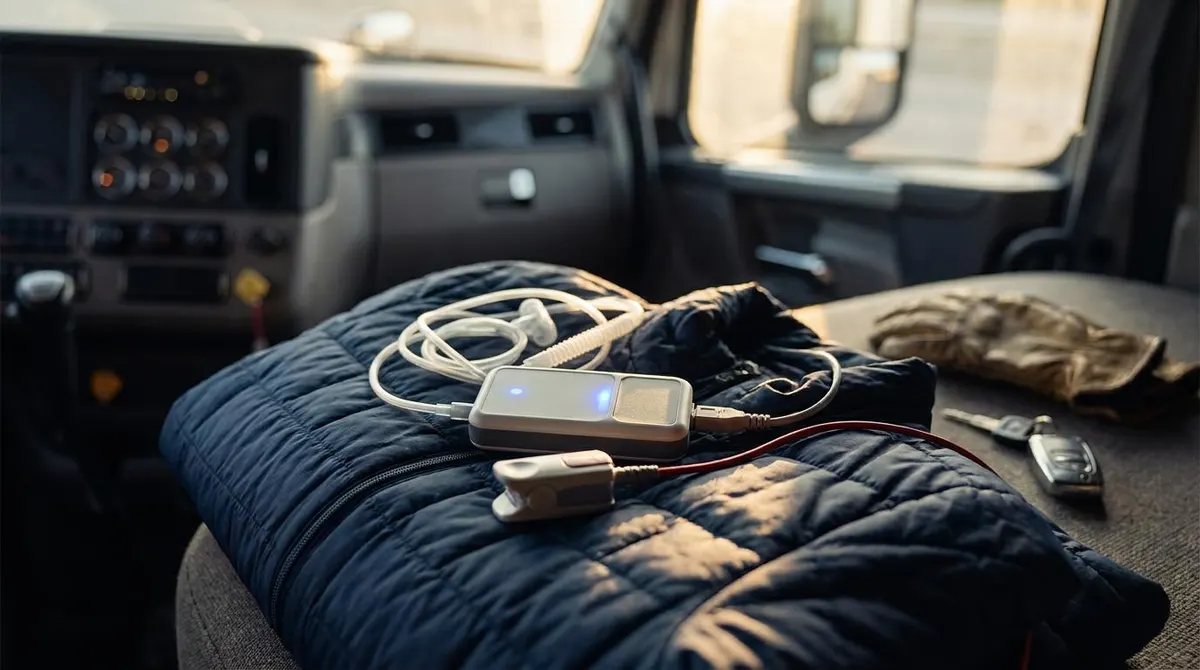
A home sleep apnea test for commercial drivers is a physician-supervised, overnight diagnostic tool that detects obstructive sleep apnea without requiring an overnight stay in a sleep lab. According to the Federal Motor Carrier Safety Administration, untreated sleep disorders are among the leading medical reasons commercial drivers fail to maintain certification. Sleep apnea affects an estimated 28 percent of commercial truck drivers, compared to roughly 5 percent of the general population, according to research published in the Journal of Occupational and Environmental Medicine. This page explains how home testing works, what FMCSA regulations require, and how diagnosis and treatment protect both your CDL and your health. Whether you have been flagged during a DOT physical or are being proactive about your certification, this guide covers everything you need to know.
The Link Between Sleep Apnea, Fatigue, and Road Safety

Untreated sleep apnea significantly raises crash risk for commercial truck drivers, making it one of the most consequential medical conditions in the transportation industry. Research supported by the American Academy of Sleep Medicine indicates that drivers with moderate to severe obstructive sleep apnea are up to five times more likely to be involved in a serious crash compared to drivers without the condition.
sleep apnea is a sleep disorder in which breathing repeatedly stops and starts during sleep, often dozens or hundreds of times per night. The most common form is obstructive sleep apnea, caused by the collapse of soft tissue at the back of the throat, blocking the upper airway and disrupting the normal sleep cycle. The result is fragmented, non-restorative sleep that produces significant daytime fatigue even when a driver believes they have had a full night in the bunk.
For commercial truck drivers who routinely operate vehicles weighing 80,000 pounds or more, drowsy driving is not a personal inconvenience. It is a public safety hazard. The National Highway Traffic Safety Administration estimates that drowsy driving contributes to tens of thousands of crashes annually, with commercial motor vehicles carrying disproportionate risk due to vehicle size, operational hours, and schedule demands.
Clinicians frequently observe that drivers with untreated sleep apnea report waking up feeling unrefreshed, struggling to stay alert during long hauls, and experiencing poor concentration on routes they have driven hundreds of times. Sleep deprivation impairs reaction time in ways that mirror or exceed alcohol intoxication, a fact that makes early sleep apnea testing a safety imperative, not merely a regulatory formality.
Not sure if sleep apnea applies to you?
Take our 2-minute sleep risk quiz to see whether sleep apnea could affect your DOT physical. No account required.
DID YOU KNOW: According to the AASM, commercial truck drivers with untreated obstructive sleep apnea have crash rates nearly five times higher than drivers who have been treated and are compliant with therapy.
KEY TAKEAWAY: Untreated sleep apnea dramatically increases crash risk for commercial drivers, making early testing a critical safety step rather than an optional health measure.
Understanding why the stakes are this high for CDL holders sets the context for the regulations and testing options that follow.
Why Commercial Drivers Face Higher Sleep Apnea Risk

Commercial truck drivers are at elevated risk for obstructive sleep apnea due to a combination of occupational and physiological factors that are more concentrated in this population than in most other professions.
Several physical risk factors are strongly associated with obstructive sleep apnea. A neck circumference above 17 inches in men and 16 inches in women is a recognised screening threshold, and many CMV drivers fall above this measurement. High BMI is another major risk factor. Research published via PubMed consistently identifies obesity as the strongest predictor of obstructive sleep apnea severity, and obesity rates are higher among long-haul commercial truck drivers than in the general workforce. Age, male sex, and high blood pressure also increase risk, all of which are prevalent in the trucking demographic.
Occupational factors compound the problem further. Irregular shift schedules, night driving, time zone changes, and long sedentary periods in the cab all disrupt circadian rhythms and worsen sleep quality. Many drivers rely on poor-quality sleep in a bunk berth with vibration, noise, and temperature fluctuations that fragment rest even without an underlying sleep disorder. When obstructive sleep apnea is layered on top of these already stressful sleep conditions, the cumulative impact on daytime alertness can become severe.
The STOP-BANG questionnaire, a validated eight-question screening tool used by many certified medical examiners, assesses snoring, tiredness, observed apnea, blood pressure, BMI, age, neck circumference, and gender. A score of 3 or higher indicates elevated risk for obstructive sleep apnea and often triggers a referral for formal sleep apnea testing. Understanding your personal risk profile is the first step toward addressing the condition before it affects your CDL certification.
Many patients report that they were unaware of how severely their sleep was disrupted until a home sleep test confirmed dozens or hundreds of apnea events per night. In real-world use, drivers frequently underestimate symptom severity because chronic fatigue has become their baseline.
TIP: If you snore loudly, wake with headaches, or feel exhausted after a full night of sleep, ask your medical examiner about a sleep apnea screening before your next DOT physical renewal.
KEY TAKEAWAY: Commercial truck drivers face a disproportionately high risk of obstructive sleep apnea due to physical risk factors and occupational sleep disruption, making proactive screening especially important.
Knowing your risk helps you prepare for what the FMCSA expects from CDL holders when sleep apnea is identified or suspected.
FMCSA Regulations and Your DOT Medical Card

The FMCSA does not currently have a single formal federal regulation that mandates sleep apnea testing for all commercial drivers, but the regulatory framework under 49 CFR Part 391 gives certified medical examiners broad authority to require a sleep study when clinical indicators of a sleep disorder are present.
Already diagnosed and need CPAP support?
Dumbo Health helps patients start CPAP without the usual confusion, paperwork, or upfront cost. Equipment, setup, supplies, and ongoing support are all handled in one place.
Under FMCSA guidelines, a certified medical examiner must determine that a commercial driver is physically qualified to operate a commercial motor vehicle safely. Sleep disorders, including obstructive sleep apnea, are explicitly listed as conditions that can affect this determination. If a medical examiner identifies risk factors such as elevated BMI, large neck circumference, loud snoring, or reported daytime sleepiness, they are authorised to require sleep apnea testing before issuing or renewing a DOT medical card.
A DOT medical card, formally called the Medical Examiner's Certificate, is valid for up to 24 months for a driver who meets all health standards without conditions. However, when a driver is diagnosed with obstructive sleep apnea and placed on treatment such as CPAP therapy, the medical examiner typically issues a conditional certification with a validity period of three to twelve months, requiring documented evidence of treatment compliance before full certification is restored or renewed. You can review what can disqualify you from a DOT physical to understand the full range of conditions that affect certification.
Drivers who are flagged and do not undergo sleep apnea testing risk losing their medical certification entirely, which means losing their CDL and their livelihood. The consequences of untreated sleep apnea extend well beyond safety. Failing to act on a medical examiner's recommendation for a sleep study can result in disqualification from operating a commercial motor vehicle. For a full overview of how this process can affect your certification, see what every commercial driver needs to know about failing a DOT physical.
IMPORTANT: A certified medical examiner listed on the FMCSA National Registry must conduct your DOT physical. Their authority to require sleep apnea testing is broad, and failing to follow through on a referral can result in loss of your DOT medical certification.
KEY TAKEAWAY: While no single federal rule mandates universal sleep apnea testing for all CDL holders, FMCSA medical examiners have the authority to require a sleep study based on clinical indicators, and untreated sleep apnea can result in CDL disqualification.
Once a sleep study is recommended or you choose to be proactive, the most practical and driver-friendly option is home sleep apnea testing.
Home Sleep Apnea Testing: How It Works for CDL Holders
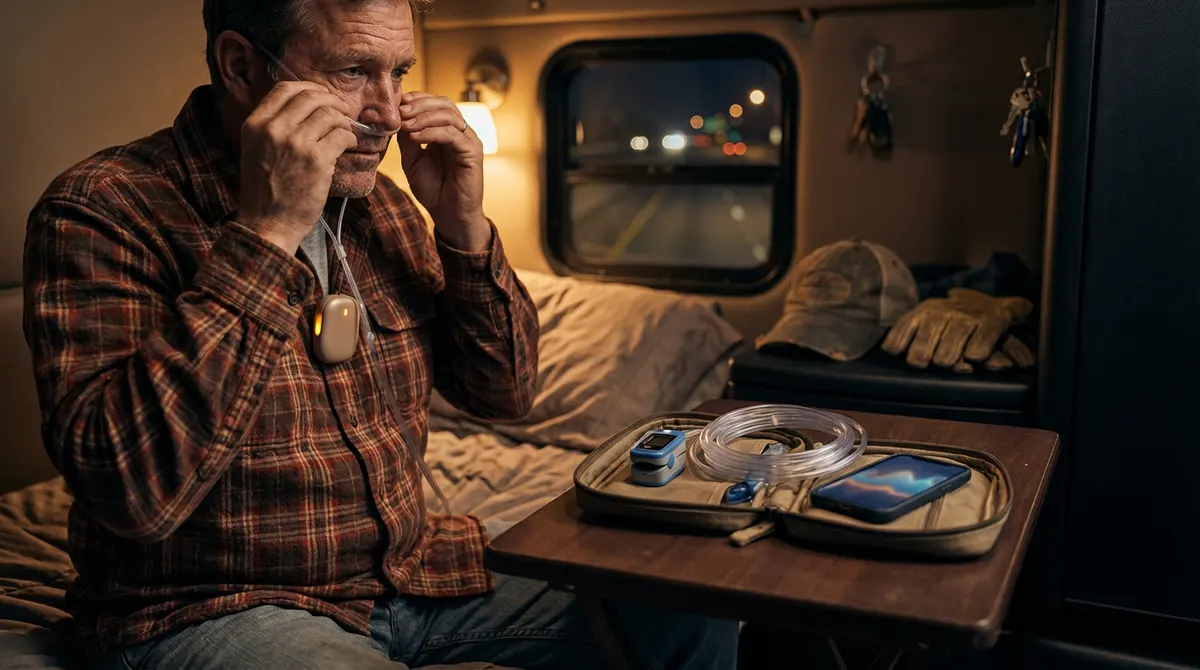
Home sleep apnea testing is the most accessible and convenient form of sleep apnea testing for commercial drivers who cannot afford extended time away from work for an in-lab sleep study.
A home sleep apnea test kit is a compact, portable device provided by a sleep medicine provider or telehealth platform. The driver wears the device at home, in a hotel, or in their bunk berth overnight. Most home testing equipment measures airflow, blood oxygen levels, respiratory effort, heart rate, and body position. The data is recorded during sleep and then analysed by a sleep physician or board-certified sleep medicine clinician who interprets the results and produces a formal diagnosis.
The central metric from any sleep study, whether home or in-lab, is the apnea-hypopnea index. The apnea-hypopnea index measures the number of apnea and hypopnea events per hour of sleep. An AHI of 5 to 14 indicates mild obstructive sleep apnea, an AHI of 15 to 29 indicates moderate obstructive sleep apnea, and an AHI of 30 or above indicates severe obstructive sleep apnea. These thresholds inform both the diagnosis and the urgency of treatment.
For commercial truck drivers specifically, home sleep apnea testing offers a practical advantage over traditional sleep lab studies. An in-lab polysomnography study requires an overnight stay in a clinical facility, often involves weeks of waiting for an appointment, and requires the driver to be off the road and away from their schedule. By contrast, a home sleep apnea test can typically be completed within one to two nights in a familiar sleeping environment, with results delivered within a few days. Services like dumbo.health's at-home sleep test are designed specifically to accommodate drivers who need fast, affordable access to medically valid sleep apnea testing without disrupting their work schedule.
The Sleep Foundation notes that home sleep apnea tests are clinically validated for diagnosing moderate to severe obstructive sleep apnea in adults without significant comorbidities. For the majority of commercial truck drivers who are referred for sleep apnea testing after a DOT physical, home testing is a medically appropriate and physician-accepted diagnostic option.
If you have ever asked whether a sleep study is required after a DOT physical, the answer depends on what your medical examiner observes during the exam. The page is a sleep study required for a DOT physical explains how this decision is made and what triggers a referral.
DID YOU KNOW: A home sleep apnea test typically costs significantly less than an in-lab polysomnography study, and many insurance plans cover home testing when prescribed by a licensed physician.
KEY TAKEAWAY: Home sleep apnea testing is a clinically validated, accessible, and cost-effective option for commercial truck drivers who need a formal diagnosis without the delays or disruptions of an in-lab sleep study.
Once your results are ready, understanding what they mean for your health and your CDL becomes the next critical step.
Understanding Your Diagnosis and AHI Score
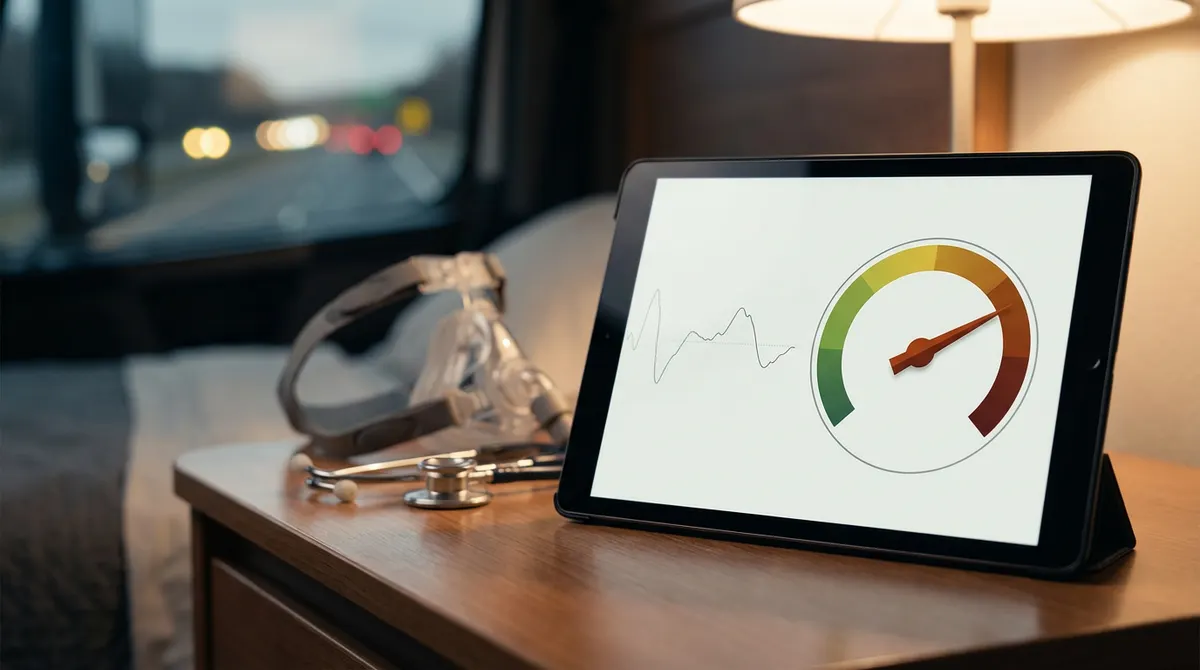
Receiving your sleep apnea test results means understanding a number that directly shapes your treatment plan, your DOT compliance status, and your long-term health. The apnea-hypopnea index is the primary diagnostic marker used by sleep physicians to classify obstructive sleep apnea severity and recommend treatment.
Obstructive sleep apnea is defined by the American Academy of Sleep Medicine as a disorder characterised by repeated episodes of partial or complete upper airway obstruction during sleep, producing fragmented sleep and oxygen desaturation. An AHI below 5 is generally considered within normal limits for adults. An AHI between 5 and 14 is classified as mild sleep apnea. Moderate sleep apnea falls between 15 and 29, while an AHI of 30 or above is classified as severe.
For CDL holders, the specific AHI threshold that triggers a treatment requirement can vary based on the medical examiner's judgment and the presence of other health conditions. Many medical examiners will defer certification and require treatment evidence when moderate or severe obstructive sleep apnea is confirmed. Some examiners apply stricter thresholds, particularly when a driver reports significant daytime sleepiness or has had prior safety incidents.
Central sleep apnea and mixed sleep apnea are less common forms of the condition and may require different treatment approaches. Home sleep testing equipment is primarily validated for diagnosing obstructive sleep apnea, so drivers with complex sleep presentations may be referred for full in-lab polysomnography for a more comprehensive assessment.
In real-world use, many drivers report relief at receiving a clear diagnosis after years of unexplained fatigue. A diagnosis also opens the door to treatment options that can genuinely restore sleep quality and daytime alertness, with measurable benefits for both personal health and professional performance.
KEY TAKEAWAY: Your AHI score from a sleep study is the key number that determines your diagnosis severity, your treatment plan, and whether your DOT medical certification is affected.
With a diagnosis confirmed, the next step is choosing a treatment approach that is both clinically effective and compatible with life on the road.
DOT-Approved Sleep Apnea Treatment Options
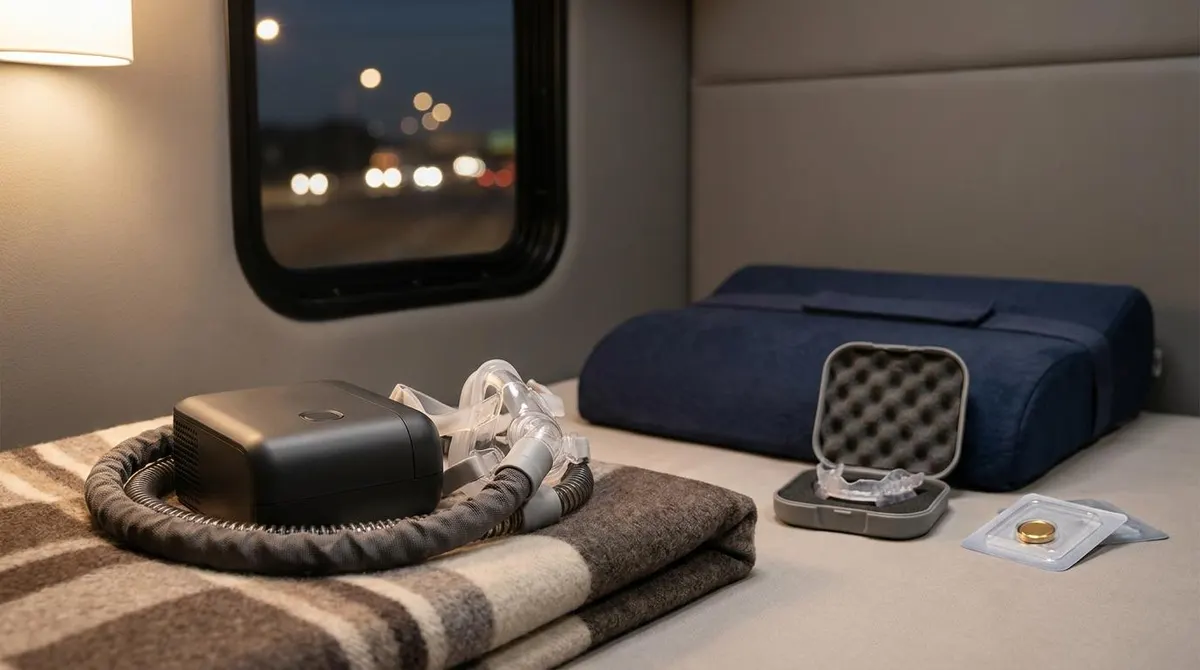
Effective sleep apnea treatment is available for commercial drivers at every severity level, and several options are recognised by medical examiners as DOT-compliant when properly documented.
CPAP therapy, or continuous positive airway pressure, is the gold-standard first-line treatment for moderate to severe obstructive sleep apnea. A CPAP device delivers a continuous stream of pressurised air through a mask, keeping the upper airway open throughout the night and preventing apnea events. The NIH identifies CPAP therapy as the most effective non-surgical treatment for obstructive sleep apnea, with studies showing AHI reductions of more than 90 percent in compliant users. An AutoPAP device functions similarly but automatically adjusts air pressure in response to the user's breathing patterns throughout the night, which many drivers find more comfortable during travel.
For drivers who cannot tolerate CPAP therapy, there are several alternative DOT-compliant treatment options. Oral appliance therapy, sometimes called a mandibular advancement device, repositions the lower jaw during sleep to keep the airway open. Custom oral appliances are fitted by dental sleep medicine specialists and are particularly effective for mild to moderate obstructive sleep apnea. Positional therapy devices are another option for drivers whose apnea primarily occurs when sleeping on their back. Hypoglossal nerve stimulation is a surgically implanted device approved for moderate to severe obstructive sleep apnea in patients who cannot tolerate CPAP, and it has shown strong efficacy in clinical trials.
Weight loss and lifestyle modifications can reduce AHI in some patients, but they are rarely sufficient as standalone treatments for moderate or severe obstructive sleep apnea and are not typically accepted as sole evidence of compliance by medical examiners.
The most important rule for CDL holders is that treatment must be documented. A CPAP prescription alone is not sufficient. Medical examiners typically require objective compliance data, usually showing that the driver is using their CPAP device for a minimum of four hours per night on at least 70 percent of nights, often referred to in practice as the 70 rule. Compliance data is downloaded directly from the CPAP device's data card or cloud monitoring system and presented to the medical examiner at each DOT physical renewal.
KEY TAKEAWAY: CPAP therapy is the most widely accepted DOT-compliant treatment for obstructive sleep apnea, but alternatives including oral appliance therapy and hypoglossal nerve stimulation are available for drivers who cannot use CPAP, provided treatment is properly documented.
Achieving initial compliance is only part of the equation. Maintaining consistent treatment on the road requires practical strategies and ongoing medical support.
Achieving and Maintaining DOT Medical Compliance On The Road
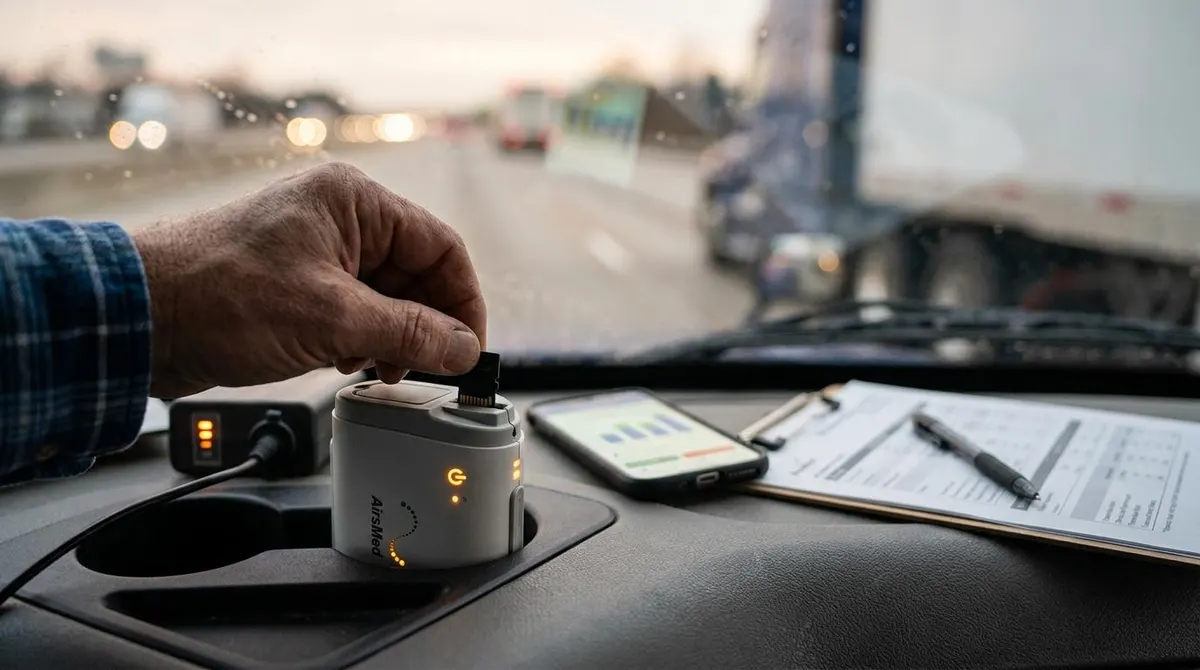
Maintaining DOT medical compliance with a sleep apnea diagnosis requires consistent treatment use, accurate documentation, and ongoing communication with both your sleep physician and your certified medical examiner.
The compliance standard most commonly applied by medical examiners mirrors the CMS definition used by insurance providers: a minimum of four hours of CPAP use per night on at least 70 percent of nights during any consecutive 30-day period. This is what is often referred to as the 70 rule for CPAP compliance in the context of commercial driver certification. Drivers who fall below this threshold risk conditional or failed certification at their next DOT physical review.
Modern CPAP and AutoPAP devices record usage data automatically. Many devices connect to smartphone apps or cloud platforms that allow real-time monitoring by the treating sleep physician. This data serves as the primary compliance evidence for DOT physical renewals. Drivers should establish a regular schedule for downloading and reviewing this data with their sleep medicine provider, and keep printed or digital compliance reports readily available for medical examiner appointments.
Strategies for sustained compliance on the road include travelling with a compact CPAP device designed for use in vehicles, using a DC power adapter or battery pack to operate the device from the truck cab, and ensuring the device is properly cleaned and maintained to prevent mask leaks that reduce effectiveness. Trucking companies and safety managers increasingly recognise the value of supporting driver compliance by providing resources and time for sleep health management, which reduces both absenteeism and crash rates across their fleets.
If you have been issued a conditional DOT medical card with a shortened certification period due to a sleep apnea diagnosis, consistent compliance documentation is what enables your medical examiner to restore a full 12 or 24-month certification period. Many patients report that once they adapt to CPAP therapy over the first two to four weeks, they would not return to sleeping without it given the substantial improvement in how they feel and perform.
KEY TAKEAWAY: The 70 rule, meaning CPAP use for at least four hours per night on 70 percent of nights, is the compliance benchmark most medical examiners use when evaluating a commercial driver's DOT medical certification with a sleep apnea diagnosis.
Beyond regulatory compliance, addressing sleep apnea produces health and performance benefits that extend well beyond any single DOT physical.
Common Myths About Sleep Apnea and Commercial Drivers Debunked
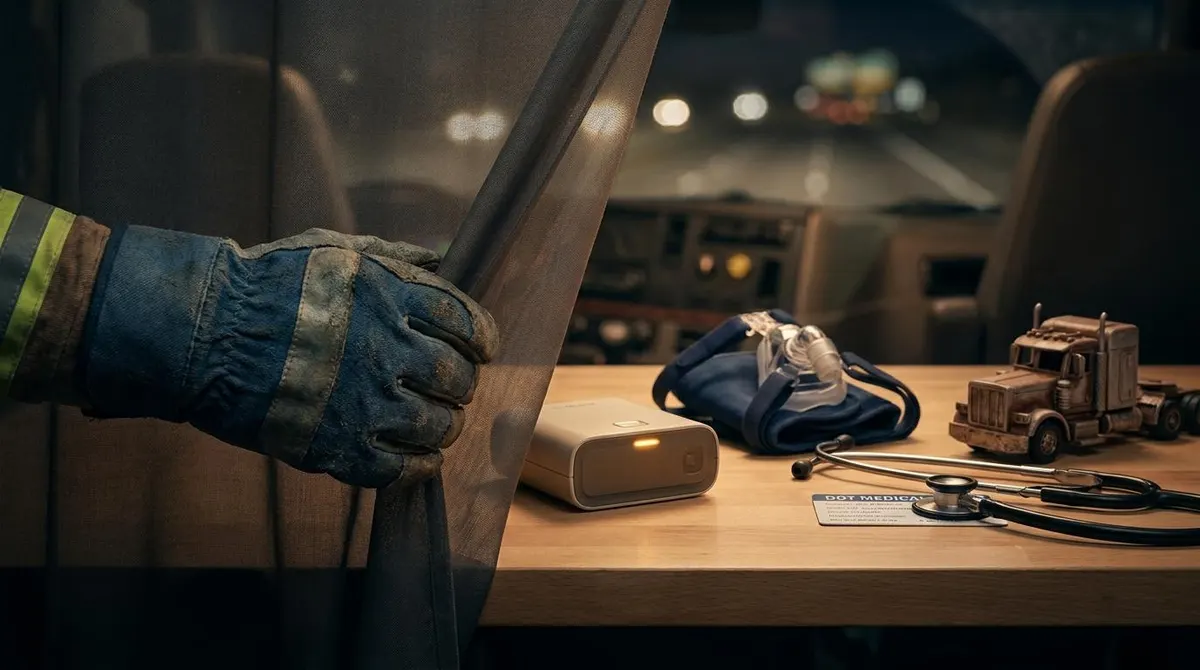
sleep apnea is surrounded by persistent misconceptions that stop drivers from seeking testing and treatment. Addressing these myths directly is essential for making informed decisions about your health and your CDL.
MYTH: Only overweight drivers develop sleep apnea. FACT: While high BMI is the strongest single risk factor for obstructive sleep apnea, the condition affects drivers across a wide range of body types. The Sleep Foundation confirms that anatomical factors such as jaw structure, neck circumference, and airway geometry can produce significant obstructive sleep apnea even in drivers with a healthy BMI. Relying solely on weight as a screening proxy means many at-risk drivers are missed.
MYTH: Having sleep apnea means losing your CDL permanently. FACT: A diagnosis of obstructive sleep apnea does not automatically disqualify a driver from operating a commercial motor vehicle. FMCSA regulations allow medical examiners to issue conditional certification to drivers who are actively treating their sleep apnea and providing documented proof of compliance. Many drivers with diagnosed and treated sleep apnea maintain uninterrupted careers. Learn more about how a sleep disorder affects your status by reviewing can you pass a DOT physical with sleep apnea.
MYTH: Home sleep tests are less accurate than in-lab sleep studies. FACT: The American Academy of Sleep Medicine endorses home sleep apnea testing as a validated diagnostic tool for detecting obstructive sleep apnea in adults who do not have significant comorbid conditions. Research published on PubMed demonstrates that home testing achieves diagnostic accuracy comparable to in-lab polysomnography for moderate to severe obstructive sleep apnea, which is the severity range most relevant for CDL compliance decisions.
MYTH: CPAP therapy is impractical for drivers who sleep in their trucks. FACT: Modern CPAP devices are compact, travel-ready, and designed for use in vehicle environments. Many devices operate on both AC and DC power, work effectively with 12-volt adapters, and have built-in humidifiers that function without a water supply. Drivers who invest in appropriate equipment consistently report that compliance on the road is achievable with minimal adjustment to their existing sleep routine.
MYTH: If you feel fine, you do not need a sleep test. FACT: Many people with moderate to severe obstructive sleep apnea do not recognise their own symptoms because chronic sleep deprivation alters their perception of what normal alertness feels like. Research from the NIH indicates that subjective sleepiness scores often underestimate objective impairment in individuals with untreated sleep apnea. A driver who feels fine may still be operating with significantly impaired reaction time and cognitive function.
KEY TAKEAWAY: The most harmful sleep apnea myths encourage drivers to delay testing and treatment. The facts consistently show that home testing is accurate, treatment is practical on the road, and a diagnosis does not mean the end of a driving career.
Clearing up these misconceptions also helps trucking companies and safety managers build more effective, evidence-based sleep health programmes for their workforce.
The Broader Benefits: Health, Performance, and Fleet Safety

Addressing sleep apnea benefits commercial truck drivers and the companies that employ them in ways that extend well beyond regulatory compliance.
For individual drivers, effective sleep apnea treatment produces measurable improvements in sleep quality, daytime alertness, cardiovascular health, and cognitive performance. The NIH links untreated obstructive sleep apnea to elevated risk of high blood pressure, heart disease, type 2 diabetes, and stroke. Treating the condition with CPAP therapy or an alternative reduces these long-term risks while also producing immediate improvements in energy, mood, and on-road performance. Many patients report that consistent treatment transforms how they feel within the first two weeks.
For trucking companies and safety managers, a proactive approach to sleep apnea screening and treatment reduces accident risk, lowers insurance liability, and decreases driver turnover linked to health-related CDL disqualification. The American Trucking Association and the American Transportation Research Institute have both published research demonstrating that crash-related costs far exceed the cost of implementing structured sleep health programmes. Companies that provide drivers with access to affordable sleep apnea testing services near them and treatment support retain safer, healthier drivers while reducing fleet-wide crash rates.
Fleet-level sleep health programmes typically include risk screening tools such as the STOP-BANG questionnaire, access to home sleep apnea testing for flagged drivers, streamlined pathways to CPAP prescription and compliance monitoring, and custom reporting dashboards that allow safety managers to track programme outcomes. This kind of compliance solution represents a meaningful investment in driver welfare and operational safety simultaneously.
For drivers seeking testing providers in their area, telehealth-based sleep medicine services have made access to diagnosis and treatment faster and more geographically flexible than ever before. Whether you are based at a terminal or living out of your cab, you can now complete a home sleep apnea test and consult with a sleep physician without visiting a clinic. Find a provider near you or start the process directly through dumbo.health's at-home sleep test.
KEY TAKEAWAY: Treating sleep apnea delivers long-term health benefits for individual drivers and measurable safety and financial benefits for trucking companies, making it a sound investment at both the personal and fleet level.
Conclusion

A home sleep apnea test for commercial drivers is the fastest, most practical route to diagnosis, treatment, and DOT medical compliance for CDL holders who need to protect both their health and their livelihood. Sleep apnea affects a significant portion of the commercial driver population, raises crash risk substantially, and can result in loss of certification if left unaddressed. The good news is that home testing is clinically validated, affordable, and designed to fit around a driver's schedule. Treatment options are more driver-friendly than ever, and documented compliance keeps your DOT medical card active. Taking the first step does not have to be complicated. If you are ready to know where you stand and protect your career, start with dumbo.health's at-home sleep test and get results that your medical examiner will accept.
Frequently Asked Questions
Do you have to take a sleep apnea test for a CDL?
There is no universal federal law that requires every CDL holder to take a sleep apnea test. However, FMCSA regulations give certified medical examiners the authority to require sleep apnea testing when clinical indicators are present during a DOT physical. Risk factors such as large neck circumference, high BMI, reported loud snoring, or observed daytime sleepiness can all trigger a referral for a formal sleep study. Drivers who are referred and do not complete testing risk losing their DOT medical certification. Proactive testing is always preferable to waiting until a medical examiner requires it.
What is the 3% rule for sleep apnea?
The 3% rule refers to the oxygen desaturation criterion used in scoring sleep studies. An apnea or hypopnea event is counted toward the apnea-hypopnea index when breathing reduction is accompanied by a drop in blood oxygen saturation of at least 3 percent, or followed by an arousal. Some scoring systems use a 4% threshold, and the choice between them can affect the final AHI score and diagnosis severity. The American Academy of Sleep Medicine has published guidance on recommended scoring criteria. Drivers should be aware that the scoring rules applied can influence how their sleep study results are interpreted by a sleep physician.
What is the 70 rule for CPAP?
The 70 rule for CPAP refers to the compliance standard commonly used to determine whether a commercial driver is meeting their DOT medical requirements for sleep apnea treatment. In practice, most certified medical examiners expect drivers to use their CPAP device for a minimum of four hours per night on at least 70 percent of nights during any 30-day period. This standard mirrors the Medicare compliance definition and is enforced through objective usage data downloaded from the CPAP device. Drivers who fall below this threshold may receive a shortened or denied DOT medical certification at their next review.
Can commercial drivers have sleep apnea and keep their CDL?
Yes. A diagnosis of obstructive sleep apnea does not automatically disqualify a commercial driver from holding a CDL. Under FMCSA guidelines, drivers who are actively treating their sleep apnea and can provide documented evidence of treatment compliance can be medically certified to operate a commercial motor vehicle. Medical examiners typically issue conditional certification with a shorter validity period, which is renewed when compliance data confirms adequate treatment use. Many thousands of commercial truck drivers across the country maintain active CDLs while successfully managing diagnosed sleep apnea with CPAP therapy or an alternative treatment.
How quickly can a commercial driver get a diagnosis and start treatment?
With a home sleep apnea test, the process from order to results typically takes between three and seven business days for most drivers. The driver wears the testing device at home or in their truck for one or two nights, returns the equipment, and the data is reviewed by a sleep physician who produces a formal diagnostic report. If sleep apnea is confirmed, a CPAP prescription can be issued rapidly, often within days of the result. Some telehealth-based sleep medicine platforms offer end-to-end services where diagnosis, prescription, and equipment delivery happen within one to two weeks, significantly faster than the traditional sleep lab pathway.
What if I cannot tolerate CPAP therapy?
CPAP intolerance is a recognised clinical challenge and several alternatives are available for commercial drivers who cannot adapt to CPAP therapy. Oral appliance therapy using a custom mandibular advancement device is accepted by many medical examiners as a compliant treatment for mild to moderate obstructive sleep apnea. Positional therapy devices are effective when apnea events are concentrated in the supine position. For moderate to severe cases where CPAP fails, hypoglossal nerve stimulation is a surgically implanted device that has demonstrated strong clinical outcomes. Any alternative to CPAP must be formally prescribed, documented, and ideally accompanied by a follow-up sleep study or objective data showing that the AHI has been brought to an acceptable level under the new treatment.
Where can I find reputable sleep testing services close to me?
Reputable sleep apnea testing services are available through telehealth platforms, accredited sleep medicine programmes, and in-person clinics. For commercial truck drivers who need convenient access without disrupting their schedule, home sleep apnea testing through a physician-supervised telehealth service is the most practical option regardless of where you are based. Services in your area may be available through hospital-based sleep medicine programmes, independent sleep clinics, or online platforms designed specifically for working adults. Dumbo.health offers a physician-reviewed home sleep apnea test that drivers can complete anywhere, with results accepted by DOT medical examiners. Providers in your area can also be identified through referrals from your primary care physician or your trucking company's occupational health programme.
Related DOT Physical Topics
- Does a DOT Physical Test for Weed or THC The Complete Guide for Commercial Drivers
- What are the current DOT requirements for sleep apnea testing for commercial drivers
- What Happens If You Fail a DOT Drug Test The Complete Guide for Commercial Drivers
- Can You Get a DOT Physical in Any State The Complete Guide for Commercial Drivers
- Can You Get a DOT Physical Online The Complete Guide for Commercial Drivers
- Remote DOT Physical The Complete Guide for Commercial Drivers
- DOT Physical Forms & Paperwork The Complete Guide for Commercial Drivers
- Sleep Apnea Test for CDL Drivers
- Medical Examiner's Certificate (Form MCSA-5876) The Complete Guide for Commercial Drivers
- Online DOT Physical Self-Pay The Complete Guide for CDL Drivers and Owner-Operators
- DOT Hypertension Guidelines The Complete Blood Pressure Guide for Commercial Drivers
- The Comprehensive Guide to Suboxone, Sleep Apnea, and FMCSA Compliance for Commercial Motor Vehicle Operators
- What Happens During the DOT Physical Exam The Complete Guide for Drivers
- What are the current FMCSA guidelines on sleep apnea for commercial drivers
- Medical Examination Report (MER) – Form MCSA-5875 The Complete Guide for Commercial Drivers
- What Happens If You Fail a DOT Physical Twice The Complete Guide for Commercial Drivers
- Online DOT Physical The Complete Guide for Commercial Drivers and Medical Examiners
- Online DOT Physical Without Insurance A Complete Guide for Commercial Drivers
- Navigating the Florida DOT Physical Your Essential Guide for CDL Drivers
- What Are the DOT Requirements for Drivers With Sleep Apnea
- DOT Medical Exam Self-Pay A Complete Guide for Commercial Drivers
- At Home Sleep Test for Truck Drivers
- The Ultimate DOT Physical Guide for Commercial Drivers (2025–2026)
- DOT Physical Requirements A Complete Guide for CDL Drivers
- Can You Get a Second Opinion on Your DOT Physical A Complete Guide for Commercial Drivers
- DOT Physical ICD-10 & Billing Codes The Complete Guide for Accurate Compliance and Reimbursement
- Are there legal requirements for drivers with sleep apnea
- DOT physical self pay guide for commercial drivers paying out of pocket
- The Ultimate DOT Preparation Checklist for Motor Carriers and Commercial Drivers
- How to Pass a DOT Physical The Complete Commercial Driver's Guide
- What Happens If Your DOT Physical Expires Compliance Guide for Commercial Drivers
- DOT sleep apnea test at home
- What drugs do they test for in a DOT drug test
- Essential 171 DOT Definitions for Commercial Drivers
- Best Treatments for Sleep Apnea to Improve Driving Safety
- How can drivers with sleep apnea qualify again after a failed DOT physical
- Why DOT Sleep Tests at Home Matter for Your Career and Health
- What Precautions Should Drivers With Sleep Apnea Take
- What Is the Urine Test for in a DOT Physical
- DOT Physical Insurance & Recertification The Complete Driver's Guide
- DOT Physical Chiropractor Your Complete Guide to CDL Exams
- Sleep Apnea Tests for DOT Compliance What tests are accepted
- BMI for DOT Physical What Commercial Drivers Need to Know
- DOT Physical Texas The Essential Guide to Your Exam, Medical Card, and CDL Compliance
- The DOT Physical Exam Ensuring You're Fit for the Road
- Are There New DOT Rules or Laws on Sleep Apnea Testing
- Is a drug test required for a DOT physical
- How Sleep Apnea Affects Overall Driving Safety
- Navigating DOT Stroke Guidelines for CMV Drivers What You Need To Know
- DOT Physical Out of Pocket What Commercial Drivers Actually Pay
- Your Complete Guide What's Included in a DOT Physical Exam
- Can you fail a DOT physical because of sleep apnea
- When Can Sleep Apnea Affect a DOT Physical
- DOT Physical Insurance or Self Pay How to Choose the Right Payment Option for Your Exam
- Can you pass a DOT physical with sleep apnea
- What happens if you fail a DOT physical due to sleep apnea
- DOT Physical at Urgent Care What Commercial Drivers Need to Know
- How Does Sleep Apnea Affect Driving Ability
- DOT Physical & Drug Test What Drivers Need to Know
- Is a Sleep Study Required for a DOT Physical
- How Do You Submit Your DOT Physical to the DMV
- Does a DOT physical include a drug test
- DOT Physical Cost Breakdown What Drivers Pay & Why
- What Forms Do You Need for a DOT Physical
- Can You Fail a DOT Physical for Being Overweight
- CDL PHYSICAL SELF PAY
- New DOT Physical Requirements What Drivers MUST Know About New Updates
- Online DOT Exam What Drivers and Medical Examiners Need to Know
- DOT Physical Blood Pressure Requirements What Drivers Need to Know
- Is a DOT physical the same as a regular physical
- Can You Fail a DOT Physical for High Blood Pressure
- Navigating Your CDL Health Requirements
- Online CDL Physical
- Non-DOT Physical A Comprehensive Guide to Workforce Health and Safety
- What Does DOT Stand for in a DOT Physical
- What Is the Difference Between a DOT and Non-DOT Physical
- Guide to Obtaining and Managing Your DOT Medical Card Online
- Do They Check for Hernia During a DOT Physical
- What Are the Requirements to Pass a DOT Physical
- What eye chart is used for a DOT physical
- Failing a DOT Physical What Every Commercial Driver Needs to Know
- What Can Disqualify You From a DOT Physical
- Can You Pass a DOT Physical with Epilepsy
- DOT Physical Self Pay Cost
- DOT Physical Exam Basics
- 2026 DOT Inspection Dates
- Can You Pass a DOT Physical With a Hernia
- Can You Pass a DOT Physical With a Pacemaker
- Can You Pass a DOT Physical With One Eye
- Telehealth Dot Physical
- Who needs a DOT physical
- DOT Physical & Alcohol Requirements
- Navigating Your DOT Physical with Common Medical Conditions
- Why do they measure your neck during a DOT physical
- DOT Physical Online Cost
- Walk In DOT Physical Self Pay
- What Should You Bring to a DOT Physical
- Can You Get a DOT Physical Online
- DOT Physical Cash Pay
- Same Day DOT Physical
Take the next step before your DOT physical
Start with the free quiz if you are unsure about your risk, or order an at-home sleep test if you have already been flagged for possible sleep apnea.
AI summary
A home sleep apnea test (HSAT) is a physician-supervised, overnight study that helps diagnose obstructive sleep apnea (OSA) without an in-lab polysomnography stay. For commercial drivers, OSA is a common reason DOT medical certification can be delayed or denied, and moderate to severe OSA is associated with higher crash risk. Key points: - Risk screening: certified medical examiners may use clinical indicators (high BMI, large neck circumference, loud snoring, daytime sleepiness) and the STOP-BANG questionnaire; a score of 3 or higher suggests elevated OSA risk. - FMCSA context: there is no universal federal rule requiring testing for every CDL holder, but examiner authority under 49 CFR Part 391 allows referrals when sleep disorder risk is present. - Diagnosis metric: the apnea-hypopnea index (AHI) classifies severity (5–14 mild, 15–29 moderate, 30+ severe). Scoring may use the 3% oxygen desaturation rule in some studies. - Treatment and compliance: CPAP (and AutoPAP) is the standard DOT-accepted therapy; alternatives include oral appliance therapy, positional therapy, and hypoglossal nerve stimulation when documented. - Documentation: many examiners apply the “70 rule” (at least 4 hours/night on 70% of nights) using objective CPAP usage reports.

Nicolas Nemeth
Co-Founder
Nico is the co-founder of Dumbo Health, a digital sleep clinic that brings the entire obstructive sleep apnea journey home. Patients skip the sleep lab and the long wait to see a specialist. Dumbo Health ships an at home test, connects patients with licensed sleep clinicians by video, and delivers CPAP or a custom oral appliance with ongoing coaching and automatic resupply in one clear subscription.
Keep reading

How Long Does a DOT Physical Take? A Complete Guide for Commercial Drivers

What Happens If You Fail a DOT Drug Test? The Complete Guide for Commercial Drivers


