Can You Pass a DOT Physical With a Hernia?
A hernia does not automatically disqualify you from a DOT physical; certification is based on safety and functional ability. The Certified Medical Examiner evaluates whether the hernia is stable, reducible, and minimally symptomatic, or if it limits movement, lifting, or driving tasks. The FMCSA Medical Examination Report and 2024 Medical Examiner’s Handbook include an inguinal hernia check for males as part of the standard exam. Higher-risk findings include worsening pain, an enlarging or nonreducible bulge, or symptoms suggesting incarceration or strangulation. The article explains how to manage the condition, what documentation to bring, and how certification outcomes can range from full approval to temporary disqualification.
Struggling with sleep?
Find out if sleep apnea is the reason.
FDA-cleared. $149 flat. Physician-reviewed results in 48 hours.

Can You Pass a DOT Physical With a Hernia?

DOT Physical with a hernia is often still passable when the hernia is stable, not causing functional impairment, and does not create a safety risk while driving. The Federal Motor Carrier Safety Administration requires the Certified Medical Examiner to perform a physical qualification examination and specifically includes an inguinal hernia check for all males. This means the real issue is not simply whether a hernia exists, but whether the hernia affects safe commercial driving, lifting, movement, or the risk of a sudden medical emergency. This guide explains how the hernia exam fits into the DOT physical exam, what can lead to certification or disqualification, what records help your case, and how to prepare. Knowing the standards before your appointment can protect both your health and your driver certification. (FMCSA)
Navigating Your DOT Physical With a Hernia

Yes, you may pass a DOT physical with a hernia if the hernia is well managed and the Medical Examiner believes you can safely operate a commercial motor vehicle. A hernia alone is not an automatic disqualifier.
A hernia is a weakness or opening in tissue that allows part of an organ or fat to push through. For a commercial driver, the question is whether that weakness creates pain, restricted movement, sudden worsening, or a risk while operating a commercial vehicle.
The FMCSA Medical Examination Report form specifically tells the Medical Examiner to assess the abdomen and viscera for hernia and significant abdominal wall muscle weakness. The 2024 FMCSA handbook also says the examination should include visualization of the body and an inguinal hernia check for all males. That matters because the decision is based on present function and safety, not fear or guesswork. (FMCSA)
For many truck driver applicants, the biggest mistake is assuming that any bulge means immediate failure. In real-world use, clinicians frequently observe that reducible, minimally symptomatic hernias can be certified when the medical condition is documented and stable. Problems are more likely when pain is worsening, lifting is limited, or the hernia appears incarcerated, strangulated, or otherwise progressive. Mayo Clinic explains that a strangulated hernia can be life-threatening, which is exactly why the Medical Examiner focuses on risk, not just diagnosis. (Mayo Clinic)
Not sure if sleep apnea applies to you?
Take our 2-minute sleep risk quiz to see whether sleep apnea could affect your DOT physical. No account required.
A DOT Physical is broader than a hernia exam. A full DOT physical exam also reviews your medical history, blood pressure, pulse, urinalysis test, vision and hearing tests, and other signs that may affect safe commercial driving. The hernia check is one part of a larger medical examination designed to protect you and everyone else on the road. (FMCSA)
KEY TAKEAWAY: A hernia does not automatically fail a DOT Physical, but the Medical Examiner must decide whether the hernia creates a safety risk during commercial driving.
To understand that decision, it helps to know what the DOT physical exam actually includes.
Understanding the DOT Physical Examination
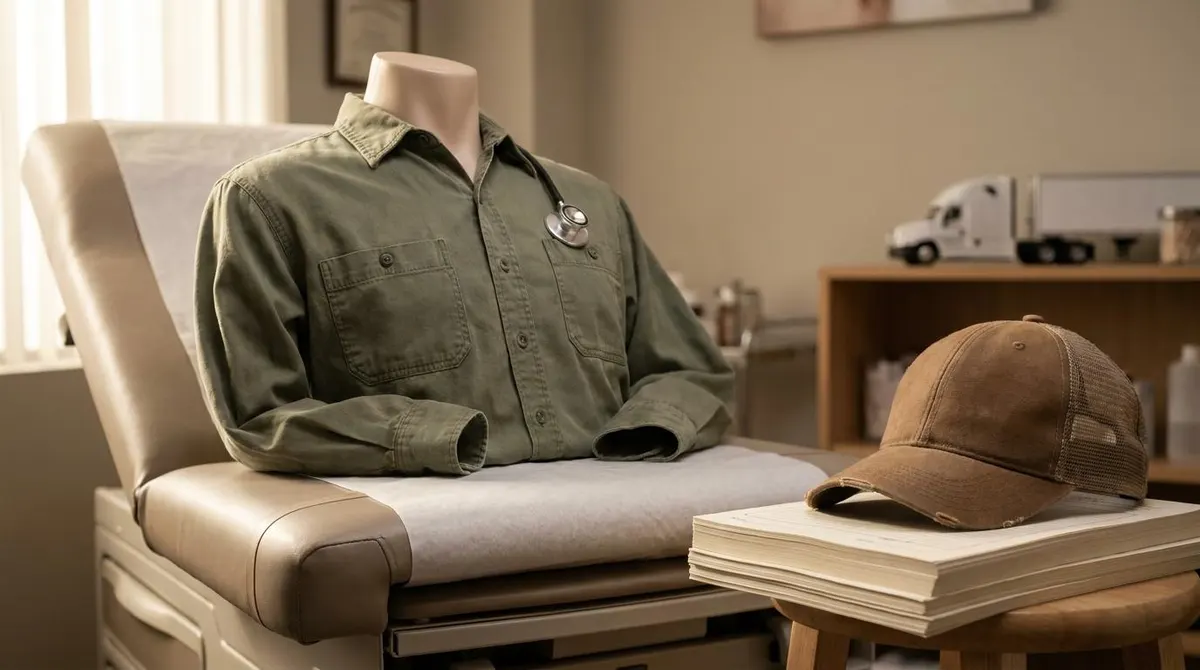
A DOT physical exam is a federally regulated health screening used to decide whether you can safely operate a commercial motor vehicle. The exam looks at the whole driver, not just one diagnosis.
The Department of Transportation medical qualification process is built around safety. According to the FMCSA handbook, only a Certified Medical Examiner listed on the National Registry can perform the federal exam and issue medical certification for qualified drivers. That certification can be valid for up to 24 months in standard cases, but shorter periods may apply when periodic monitoring is needed. (FMCSA)
A commercial driver usually needs this exam when operating a commercial vehicle or commercial motor vehicle in interstate commerce. The process is common for drivers with a Class A CDL, drivers transporting hazardous materials, and drivers whose company policy requires current certification even when state rules vary. The physical exam reviews blood pressure, pulse, urine specimen findings, hearing, vision, neurological status, respiratory functions, and other body systems. The FMCSA form also notes that urinalysis is required and that protein, blood, or sugar in the urine may point to an underlying medical condition needing more review. (FMCSA)
The DOT exam is also where other conditions may matter. High blood pressure, insulin-treated diabetes, heart disease, cardiovascular disease, limb impairment, hearing aid use, anticonvulsant medication history, Macular Degeneration, and sleep disorder concerns may all affect certification length or trigger extra documentation. For example, FMCSA guidance states that drivers with blood pressure below 140/90 may be certified for 2 years, while stage 1, stage 2, and stage 3 hypertension can shorten certification periods. (FMCSA)
DID YOU KNOW: The FMCSA blood pressure table on the medical exam form lists stage 1 as 140-159/90-99, stage 2 as 160-179/100-109, and stage 3 as 180/110 or higher, with shorter recertification timelines as readings rise.
A DOT certificate is never just about passing a checklist. A DOT certificate reflects whether the Medical Examiner believes your current medical condition allows safe operation of commercial vehicles over time.
KEY TAKEAWAY: The DOT physical exam evaluates total driving fitness, so a hernia is judged in the context of your full medical examination and overall risk.
That makes the hernia check easier to understand in practical terms.
Is a Hernia Exam Part of the DOT Physical?
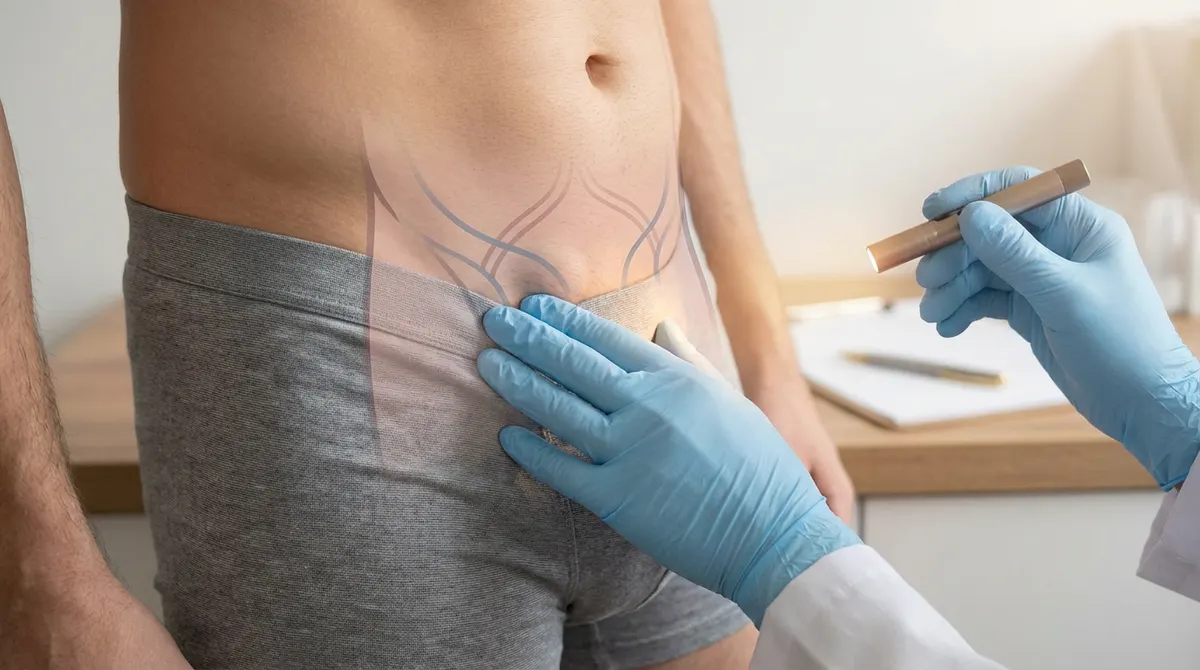
Yes, a hernia exam is part of the DOT Physical, and the form specifically includes hernia under the abdominal and genito-urinary checks. The purpose is to find hernias or abdominal wall weakness that could interfere with safe driving.
Already diagnosed and need CPAP support?
Dumbo Health helps patients start CPAP without the usual confusion, paperwork, or upfront cost. Equipment, setup, supplies, and ongoing support are all handled in one place.
A hernia check is a focused part of the physical exam. On the FMCSA Medical Examination Report, the abdomen and viscera section includes hernia and significant abdominal wall muscle weakness, and the genito-urinary section also lists hernias. The 2024 FMCSA handbook further states that the examination should include an inguinal hernia check for all males. That language matters because it confirms that the hernia examination is not optional or unusual. (FMCSA)
An inguinal hernia is a groin hernia caused by tissue pushing through a weak spot in the lower abdominal wall. This matters for a commercial driver because groin pain, pressure, or swelling can worsen with coughing, climbing, straining, or repeated entry and exit from a cab.
During the hernia check, the Medical Examiner is usually assessing location, size, tenderness, reducibility, visible bulging, and whether the hernia appears to affect movement or work demands. Many patients report the exam is brief but awkward rather than painful. The point is to identify whether the hernia is a stable finding or a risk that could suddenly worsen during commercial driving. (Mayo Clinic)
Common types include inguinal hernias, femoral hernias, incisional hernias, and other abdominal wall hernias. Inguinal hernias are especially relevant because the FMCSA handbook specifically calls for an inguinal hernia check in males, while abdominal wall hernias and incisional hernias may matter when there is prior surgery, scar tissue, pain, or weakness. Femoral hernias are less common but can still matter if they are painful or at higher risk of complications. Mayo Clinic notes that small hernias that are not causing problems may sometimes be managed with watchful waiting, while more symptomatic cases may need surgical repair. (Mayo Clinic)
KEY TAKEAWAY: The hernia examination is a standard part of the DOT physical exam because the Medical Examiner must identify hernias that could affect safe vehicle operation.
The next question is the one drivers care about most, which is when certification is still possible.
Passing Your DOT Physical With a Hernia: When Certification Is Likely

You are more likely to pass with a hernia when the hernia is stable, reducible, minimally symptomatic, and well documented. The Medical Examiner wants evidence that the medical condition does not interfere with safe driving.
A reducible hernia is a hernia that can be gently pushed back or that decreases when you lie down. For DOT purposes, that often suggests lower immediate risk than a fixed, tender, or worsening bulge. Many patients with a small hernia continue working while following a treatment plan, especially when pain is limited and daily function remains intact. Mayo Clinic explains that a small hernia that is not causing problems may be managed with watchful waiting, and a supportive truss may help relieve symptoms when properly fitted. (Mayo Clinic)
Documentation matters almost as much as the hernia itself. A note from your treating clinician that explains the diagnosis, current symptoms, work restrictions if any, whether the hernia is stable, and whether surgery is recommended can make the Medical Examiner's decision easier. The FMCSA handbook says the ME may obtain reports and recommendations from treating providers or specialists, but the ME remains the final decision-maker for certification. (FMCSA)
A hernia belt or truss may help symptom control in selected cases, but it is not a cure. A hernia belt can show that you are actively managing symptoms, though the Medical Examiner will still focus on actual function. If a driver can sit, climb, brace, steer, and perform essential work tasks without significant pain or risk, the case for medical certification is stronger. If fatigue or a suspected sleep disorder is also part of your DOT workup, a dumbo.health at-home sleep test may help you move faster on that separate issue.
A safe commercial driver is not judged by diagnosis alone. A safe commercial driver is judged by whether the diagnosis causes impairment, instability, or sudden danger behind the wheel. A stable hernia with strong documentation often looks very different from a painful hernia that limits movement.
TIP: Bring your most recent medical records, imaging reports if available, surgeon or primary care notes, and a simple symptom timeline to the appointment.
KEY TAKEAWAY: Certification is most likely when the hernia is stable, controlled, and supported by clear medical records that show low driving risk.
The opposite is also true, and some hernias raise immediate certification concerns.
When a Hernia Can Lead to DOT Physical Disqualification

A hernia can lead to disqualification when it creates pain, impaired function, or a meaningful risk of sudden worsening during driving or work duties. The Medical Examiner is looking for risk, not just presence.
The highest-risk cases are usually symptomatic hernias that affect bending, climbing, braking posture, or lifting. If you cannot perform routine job tasks without significant pain, the Medical Examiner may conclude the medical condition is not compatible with safe commercial driving at that time. That concern becomes stronger if the bulge is growing, tender, nonreducible, or associated with nausea, vomiting, or bowel symptoms. (Mayo Clinic)
An incarcerated hernia is a hernia that becomes trapped and cannot be pushed back in. A strangulated hernia is an incarcerated hernia with reduced blood flow, and it can become a medical emergency. Mayo Clinic lists warning signs such as sudden worsening pain, nausea, vomiting, fever, discoloration of the bulge, and inability to pass stool or gas. A truck driver with those symptoms should seek urgent care rather than try to complete a CDL exam. (Mayo Clinic)
The FMCSA examination form states that the presence of a certain condition may not necessarily disqualify a driver if it is controlled and unlikely to worsen, but it also warns that neglected conditions can result in serious illness that may affect driving. That is the core logic behind temporary disqualification. If the Medical Examiner believes the hernia could deteriorate during long shifts, loading activity, or repeated strain, the driver may be deferred until treatment is completed or stability is confirmed.
A disqualification does not always mean the end of your career. It often means the Medical Examiner wants the condition addressed before issuing a medical card.
KEY TAKEAWAY: A painful, irreducible, progressive, or potentially strangulated hernia is much more likely to delay or prevent certification.
That is why management before the appointment matters so much.
Managing Your Hernia to Meet DOT Standards
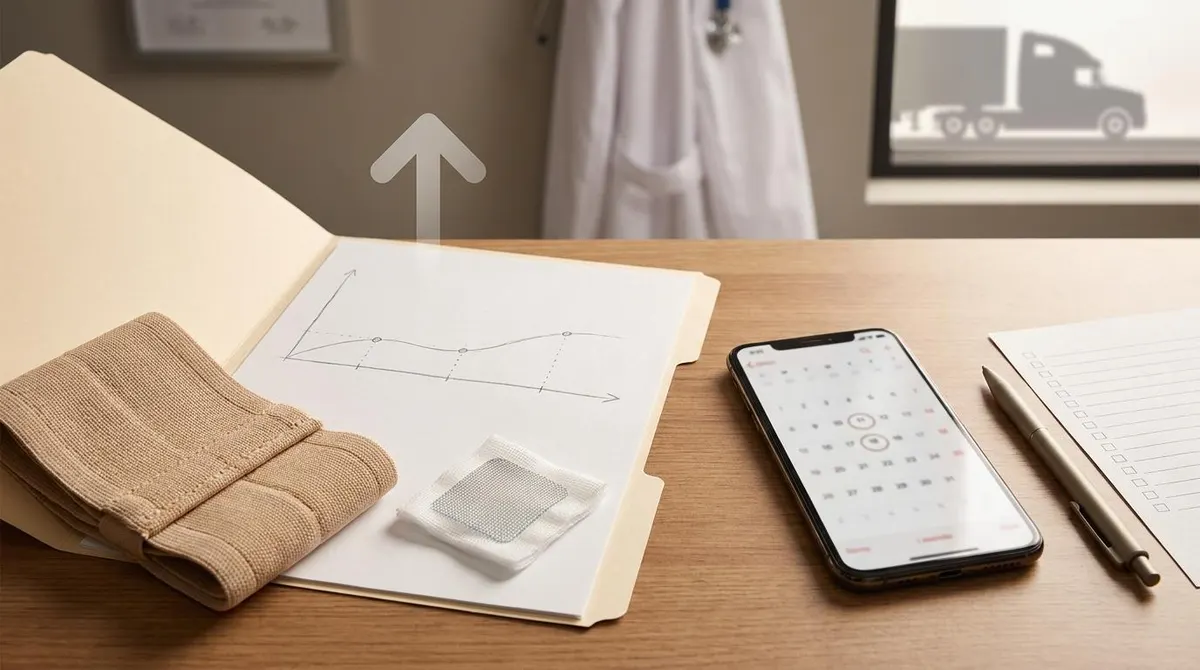
The best way to improve your odds is to manage the hernia before the exam and show the Medical Examiner a clear treatment plan. Preparation reduces uncertainty, and reduced uncertainty improves certification decisions.
Start with your own clinician or surgeon. Ask whether the hernia is reducible, whether watchful waiting is reasonable, whether a hernia operation is advised, and whether you have any activity restrictions. If surgery is recommended, ask whether open repair or laparoscopic surgery is more appropriate, what recovery usually looks like, and when you may safely return to commercial driving. Mayo Clinic notes that surgery is generally recommended for painful or enlarging hernias, while watchful waiting may be considered for small, minimally symptomatic cases. (Mayo Clinic)
Non-surgical management can still matter. Watchful waiting, weight control, avoiding heavy straining, bowel regularity, smoking reduction if relevant, and a properly fitted hernia belt may reduce symptoms in selected patients. Many patients report that consistent symptom control and activity adjustments help them continue working while planning follow-up. A hernia belt may support the area, but it does not close the defect, so the Medical Examiner will still want to know whether the underlying medical condition is stable. (Mayo Clinic)
If you have already had surgical repair, bring records that explain the procedure, whether scar tissue is present, whether there were complications, and whether your surgeon cleared you for full duty. Scar tissue after repair does not automatically cause a problem, but persistent pain, recurrent bulging, or significant weakness may lead to more questions. In practical terms, a post-operative driver who can move normally and has documented clearance often has a stronger case than a driver with a newly worsening untreated hernia.
IMPORTANT: Do not try to hide symptoms at the exam. The FMCSA handbook states that the Medical Examiner must not certify an individual who provides information the examiner believes is not true or correct. (FMCSA)
KEY TAKEAWAY: Good hernia management means showing that the condition is being monitored, treated when needed, and unlikely to create sudden impairment on the job.
Once the hernia is managed, the next step is presenting that case well at the exam.
How to Prepare for Your DOT Physical With a Hernia
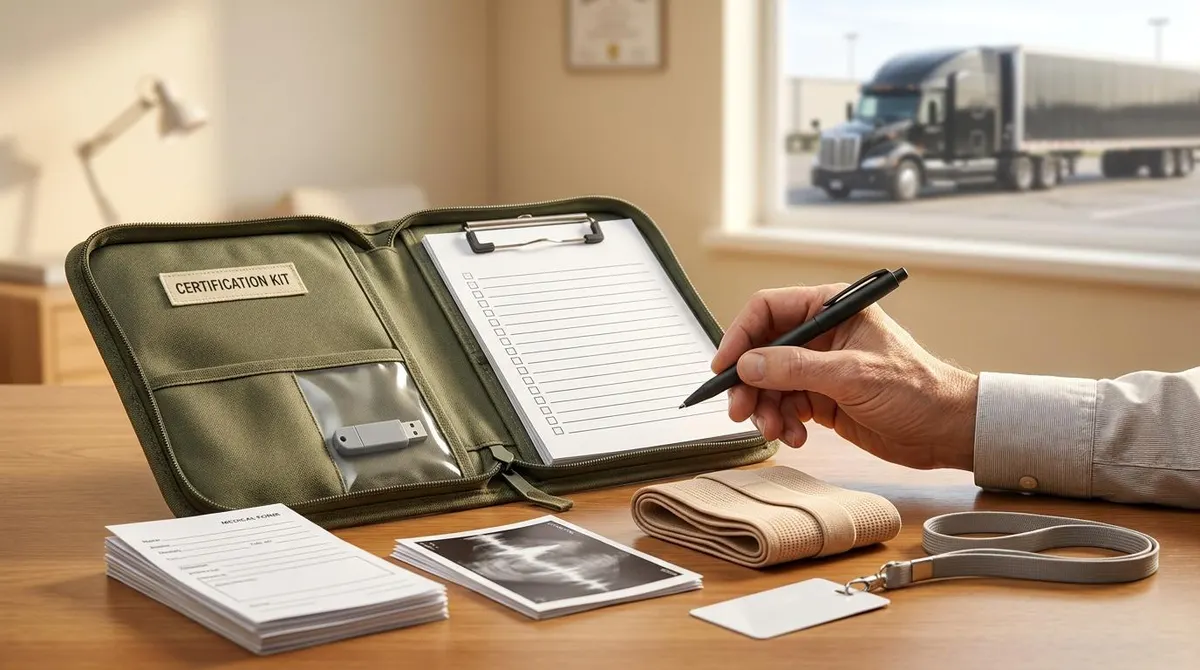
Preparation for a DOT physical with a hernia means showing stability, documentation, and honesty. The more complete your file, the easier it is for the Certified Medical Examiner to assess risk.
Bring all relevant medical records. That includes office notes, imaging if you had any, operative reports if you had surgical repair, medication lists, and a short note from your clinician summarizing whether the hernia is stable and whether commercial driving is reasonable. If symptoms have changed over time, write down when the bulge started, how often pain occurs, and what triggers it. A short timeline is often more useful than trying to remember details under stress.
Remember that the DOT physical exam is not limited to a hernia check. The examiner may also review blood pressure, high blood pressure treatment, blood sugar findings, urine protein or blood sugar from the urinalysis test, vision and hearing tests, pupillary equality, hearing aid use, limb impairment, cardiovascular disease risk, prior heart attack history, and respiratory functions. Drivers with insulin-treated diabetes mellitus may need the insulin-treated diabetes mellitus assessment form, and FMCSA states that the form must be given to the Certified Medical Examiner within 45 days of completion by the treating clinician. (FMCSA)
If sleep symptoms are also part of your medical history, address those early rather than waiting for a delay. Sleep disorder concerns can affect safety because untreated fatigue raises crash risk. The NHTSA drowsy driving guidance estimates that 91,000 police-reported crashes in 2017 involved drowsy drivers, with about 50,000 injuries and nearly 800 deaths. If you need a convenient next step, dumbo.health get started can help you begin the process of evaluating sleep-related issues separately from the hernia question. (NHTSA)
A DOT exam is easier when the story is simple and consistent. A DOT exam is harder when the Medical Examiner has to guess what is happening. Clear records, clear symptoms, and clear follow-up plans usually work in your favor.
KEY TAKEAWAY: Strong preparation means bringing records, anticipating broader exam questions, and showing the Certified Medical Examiner that your hernia and overall health are being managed responsibly.
After the exam, the decision can still vary depending on overall risk and monitoring needs.
The Medical Examiner's Decision and Certification Outcomes

The Certified Medical Examiner has the final authority to determine certification under federal standards. The outcome can range from full certification to temporary disqualification.
According to the FMCSA handbook, the ME decides whether the individual meets the physical qualification standards, even when treating providers or specialists submit supporting opinions. That is why a surgeon can recommend return to work, yet the Medical Examiner may still shorten the certification period or request more follow-up based on total risk. The ME is also allowed to certify for less than the maximum period when more frequent monitoring is appropriate. (FMCSA)
Possible outcomes generally include:
Meets standards and qualifies for a 2-year certificate
Meets standards, but periodic monitoring is required
Temporarily disqualified pending treatment, recovery, or more records
Does not meet standards at this time
The 2024 FMCSA handbook says maximum certification under the standard rule must not exceed 24 months. It also states that some conditions, including insulin-treated diabetes mellitus under the FMCSA diabetes rule, cap certification at 12 months. In other words, a hernia may not be your only issue, and your final Medical card length can be shaped by multiple findings from the same medical examination. (FMCSA)
If you are disqualified, that is not always final. The handbook states that the FMCSRs do not prohibit an individual from obtaining a second physical qualification examination from another certified ME, though you are expected to provide the same medical information both times. A second opinion can be reasonable if the first examination seemed incomplete or if new treatment records are available. (FMCSA)
KEY TAKEAWAY: The Medical Examiner, not your employer or treating doctor, decides certification, and the outcome can depend on both the hernia and every other relevant medical condition found during the exam.
That makes long-term prevention just as important as short-term exam prep.
Long-Term Health and Prevention for Commercial Drivers

Long-term prevention matters because hernias and other DOT-relevant conditions often worsen gradually, not all at once. Consistent monitoring protects both certification and daily quality of life.
Self-awareness helps. Regular self-examination, follow-up medical exams, and early discussion of new groin pain, bulging, weakness, or pressure can keep a manageable problem from becoming urgent. Many patients report that they ignored a small bulge for months because work stayed busy, but untreated progression can lead to longer downtime later. Hernia monitoring is especially important if you do frequent lifting, climb into trailers, or brace your core throughout the day.
Lifestyle habits also matter across the full DOT Physical. Weight management, hydration, bowel regularity, sleep quality, and routine health screening all reduce strain on the body. FMCSA hypertension guidance uses concrete thresholds, so keeping blood pressure under control can protect your Medical card length. The same logic applies to blood glucose monitoring, A1C level tracking when relevant, and managing conditions such as heart disease, cardiovascular disease, and insulin-treated diabetes mellitus before they become certification barriers. (FMCSA)
Sleep also affects driving safety. Sleep Foundation states that most healthy adults need 7 to 9 hours of sleep each night, and NHTSA urges 7 to 8 hours as the best protection against drowsy driving. For commercial driving, that matters because fatigue can magnify pain perception, reduce concentration, and worsen recovery after a hernia operation or other physical stressor. Providers in your area may also want to rule out sleep apnea if daytime sleepiness becomes part of the picture. (Sleep Foundation)
KEY TAKEAWAY: The best way to protect your long-term driver certification is to manage the hernia early and keep the rest of your health metrics under control.
Before finishing, it helps to clear up a few myths that confuse many drivers.
Common Myths About Sleep Apnea and DOT Hernia Rules Debunked

No, a DOT physical with a hernia is not an automatic fail, and sleep apnea is not the only condition that affects certification. Both hernia risk and total medical fitness matter.
MYTH: Any hernia means you automatically fail the DOT Physical. FACT: FMCSA materials do not say that every hernia is disqualifying. The exam form specifically tells the Medical Examiner to assess hernia and abdominal wall weakness, and the final decision depends on whether the condition is controlled, likely to worsen, or capable of causing serious illness that affects driving. Stable hernias are often handled very differently from painful or progressive ones.
MYTH: The hernia check is optional and you can refuse it without consequences. FACT: The 2024 FMCSA handbook states that the physical qualification examination should include visualization of the body and an inguinal hernia check for all males. Refusing a required part of the physical exam may prevent the Certified Medical Examiner from making a complete determination, which can delay or stop medical certification.
MYTH: If the bulge does not hurt today, it cannot be serious. FACT: Mayo Clinic explains that an incarcerated hernia can become strangulated, and a strangulated hernia can be life-threatening. Warning signs include worsening pain, nausea, vomiting, fever, discoloration of the bulge, and inability to pass gas or stool. A painless history does not guarantee a low-risk future. (Mayo Clinic)
MYTH: Only the hernia matters during this exam. FACT: A DOT physical exam also looks at blood pressure, blood sugar on urinalysis, hearing, vision, pupillary equality, cardiovascular disease risks, limb impairment, and many other findings. A driver may pass the hernia exam but still receive a shorter Medical card because of high blood pressure, insulin-treated diabetes, or another medical condition that requires periodic monitoring.
KEY TAKEAWAY: Most confusion comes from treating the hernia as the whole exam, when the real FMCSA decision is about total risk and safe driving function.
The final step is answering the most common follow-up questions drivers still ask.
Frequently Asked Questions
Do they check for hernias at DOT physicals?
Yes. The FMCSA Medical Examination Report includes hernia in the abdomen and genito-urinary sections, and the 2024 FMCSA handbook states that the physical qualification examination should include an inguinal hernia check for all males. In practice, the Certified Medical Examiner is looking for visible bulging, tenderness, abdominal wall weakness, and whether the hernia appears likely to impair commercial driving or worsen on duty. The exam is usually brief, but it is a routine part of the DOT physical exam rather than an unusual extra step. (FMCSA)
Will a hernia prevent me from passing a DOT physical?
Not always. A hernia may still allow certification when it is stable, reducible, minimally symptomatic, and supported by medical records showing low functional risk. The problem becomes more serious when the hernia is painful, enlarging, irreducible, or associated with symptoms that suggest incarceration or strangulation. The Medical Examiner is deciding whether the medical condition could interfere with sitting, climbing, bracing, or handling emergencies while driving a commercial motor vehicle. That is why documentation from your clinician can make a major difference. (Mayo Clinic)
What will disqualify you from a DOT physical?
Disqualification can happen when any medical condition creates a meaningful safety risk, not just a hernia. For example, a severe or unstable hernia, uncontrolled high blood pressure, some seizure-related issues, untreated vision or hearing problems, certain cardiovascular disease concerns, or poorly documented insulin-treated diabetes may all affect certification. The FMCSA handbook also notes that the Medical Examiner must not certify someone who does not meet the standards or who provides information the examiner believes is not true or correct. That is why honesty and complete records matter. (FMCSA)
Can I do physical work with a hernia?
Sometimes, but it depends on the hernia type, symptoms, and the strain involved. Many patients with small, reducible hernias continue normal activity with limits, while painful or enlarging hernias may require reduced lifting or surgical repair. Mayo Clinic notes that strenuous activity and heavy lifting can worsen symptoms in some people, and a supportive truss may help selected patients with symptom relief. If your work includes climbing, tarping, repeated heavy lifting, or prolonged bracing, ask your clinician for specific restrictions before returning to full commercial driving. (Mayo Clinic)
What is the 6 2 rule for hernia?
The phrase "6 2 rule" is not an FMCSA certification rule for hernias. Drivers often see this phrase online in mixed or inaccurate discussions, but the DOT hernia decision is based on the Medical Examiner's judgment, the exam findings, and whether the condition affects safe operation of a commercial vehicle. If a clinic mentions a local protocol or company policy, ask for the written basis and whether it comes from FMCSA guidance or from employer standards. If the answer is unclear, a second opinion from another Certified Medical Examiner near you may be reasonable. (FMCSA)
What happens if I refuse the hernia exam during a DOT physical?
Refusing the hernia exam can prevent the Certified Medical Examiner from completing the required physical examination. The 2024 FMCSA handbook says the exam should include an inguinal hernia check for all males, and the Medical Examination Report is designed around a full body-system review. If a required part of the physical exam is missing, the examiner may be unable to determine whether you meet the federal standard. In practical terms, refusal can lead to an incomplete exam, delay, or failure to receive a medical card that day.
Can a disabled veteran pass the DOT physical?
Yes, many disabled veterans can pass, but the answer depends on function, not veteran status alone. The DOT physical exam looks at whether you can safely perform the demands of commercial driving. If you have limb impairment, use a hearing aid, have prior heart attack history, take anticonvulsant medication, or manage another medical condition, the Medical Examiner may request more records or apply a shorter certification period. In some limb impairment situations, FMCSA's Skill Performance Evaluation process may also be relevant. (FMCSA)
Can sleep apnea or fatigue affect my DOT physical even if my main issue is a hernia?
Yes. A hernia may be the reason you booked the exam, but fatigue and sleep disorder concerns can still affect the final decision because the DOT physical exam evaluates total driving fitness. NHTSA estimates that drowsy driving was involved in 91,000 police-reported crashes in 2017, and FMCSA guidance treats overall driver alertness as a safety issue. If snoring, daytime sleepiness, or witnessed breathing pauses are part of your history, you may want to find a provider near you or explore an at-home sleep study before your next exam cycle. (NHTSA)
Conclusion: Drive Safely, Drive Certified

Passing a DOT Physical with a hernia is often possible when the hernia is stable, well documented, and does not interfere with safe commercial driving. The key is to treat the hernia seriously before it becomes a bigger problem, bring complete medical records, and let the Certified Medical Examiner assess the full picture honestly. If symptoms are worsening, get evaluated early instead of hoping the problem will stay quiet. If sleep symptoms are also part of your health screening, start with dumbo.health so you can address every part of the DOT process with a clear plan.
Related DOT Physical Topics
- Can You Pass a DOT Physical with Epilepsy
- Can You Pass a DOT Physical With One Eye
- Can You Pass a DOT Physical With a Pacemaker
- Can you pass a DOT physical with sleep apnea
- Can You Pass a DOT Physical with Diabetes
- Can You Pass a DOT Physical with High Blood Pressure
- Can You Get a DOT Physical in Any State The Complete Guide for Commercial Drivers
- Can You Get a DOT Physical Online The Complete Guide for Commercial Drivers
- What Can Disqualify You From a DOT Physical
- How can drivers with sleep apnea qualify again after a failed DOT physical
- Can You Get a DOT Physical Online
- Can You Fail a DOT Physical for Being Overweight
- Can you fail a DOT physical because of sleep apnea
- What blood pressure do you need to pass a DOT physical
- Can You Fail a DOT Physical for High Blood Pressure
- Can You Get a Second Opinion on Your DOT Physical A Complete Guide for Commercial Drivers
- Can You Fail a DOT Physical
- How Do You Submit Your DOT Physical to the DMV
- What Forms Do You Need for a DOT Physical
- Navigating Your DOT Physical with Common Medical Conditions
- What Should You Bring to a DOT Physical
- When Can Sleep Apnea Affect a DOT Physical
- Is a DOT physical the same as a regular physical
- How to Pass a DOT Physical The Complete Commercial Driver's Guide
- What happens if you fail a DOT physical due to sleep apnea
- What Does DOT Stand for in a DOT Physical
- What Happens If You Fail a DOT Physical Twice The Complete Guide for Commercial Drivers
- What Is the Difference Between a DOT and Non-DOT Physical
- Do They Check for Hernia During a DOT Physical
- Do You Have to Pee During a DOT Physical
- What Are the Requirements to Pass a DOT Physical
- The DOT Physical Exam Ensuring You're Fit for the Road
- Does a DOT Physical Test for Weed or THC The Complete Guide for Commercial Drivers
- Does a DOT physical include a drug test
- DOT Physical Self Pay Cost
- Remote DOT Physical The Complete Guide for Commercial Drivers
- DOT Physical Exam Basics
- Is a drug test required for a DOT physical
- DOT Physical Cost Breakdown What Drivers Pay & Why
- DOT Physical ICD-10 & Billing Codes The Complete Guide for Accurate Compliance and Reimbursement
- Telehealth Dot Physical
- DOT Physical Forms & Paperwork The Complete Guide for Commercial Drivers
- Who needs a DOT physical
- Navigating DOT Stroke Guidelines for CMV Drivers What You Need To Know
- DOT Physical & Alcohol Requirements
- Online DOT Physical Without Insurance A Complete Guide for Commercial Drivers
- DOT Physical Out of Pocket What Commercial Drivers Actually Pay
- Why do they measure your neck during a DOT physical
- Navigating the Florida DOT Physical Your Essential Guide for CDL Drivers
- What Is the Urine Test for in a DOT Physical
- DOT Physical Online Cost
- Walk In DOT Physical Self Pay
- Online DOT Physical Self-Pay The Complete Guide for CDL Drivers and Owner-Operators
- DOT physical self pay guide for commercial drivers paying out of pocket
- Your Complete Guide What's Included in a DOT Physical Exam
- New DOT Physical Requirements What Drivers MUST Know About New Updates
- DOT Physical Insurance & Recertification The Complete Driver's Guide
- DOT Physical Cash Pay
- Same Day DOT Physical
- Virtual DOT Physical
- DOT Physical Vision & Eye Requirements
- What Are the DOT Requirements for Drivers With Sleep Apnea
- Do They Check Your Private Parts During a DOT Physical
- DOT Physical Blood Pressure Requirements What Drivers Need to Know
- DOT Physical Insurance or Self Pay How to Choose the Right Payment Option for Your Exam
- DOT Physical Chiropractor Your Complete Guide to CDL Exams
- What should I expect at a DOT physical
- What Does a DOT Physical Consist Of
- DOT Physical at Urgent Care What Commercial Drivers Need to Know
- BMI for DOT Physical What Commercial Drivers Need to Know
- What Happens During the DOT Physical Exam The Complete Guide for Drivers
- What Happens If Your DOT Physical Expires Compliance Guide for Commercial Drivers
- Does insurance cover a DOT physical
- DOT Physical & Drug Test What Drivers Need to Know
- DOT Physical Duration and Validity How Long Your Medical Card Lasts
- The Ultimate DOT Physical Guide for Commercial Drivers (2025–2026)
- Non-DOT Physical A Comprehensive Guide to Workforce Health and Safety
- DOT Physical Texas The Essential Guide to Your Exam, Medical Card, and CDL Compliance
- DOT Physical Requirements A Complete Guide for CDL Drivers
- Is a Sleep Study Required for a DOT Physical
- What Happens If You Fail a DOT Drug Test The Complete Guide for Commercial Drivers
- How Long Does a DOT Physical Take A Complete Guide for Commercial Drivers
- What eye chart is used for a DOT physical
- What Do They Check During a DOT Physical
- Cheap DOT Physical Online
- Online DOT Physical The Complete Guide for Commercial Drivers and Medical Examiners
- Failing a DOT Physical What Every Commercial Driver Needs to Know
- What is DOT Physical
- What drugs do they test for in a DOT drug test
- Are There New DOT Rules or Laws on Sleep Apnea Testing
- Essential 171 DOT Definitions for Commercial Drivers
- 2026 DOT Inspection Dates
- Why DOT Sleep Tests at Home Matter for Your Career and Health
- What Precautions Should Drivers With Sleep Apnea Take
- Are there legal requirements for drivers with sleep apnea
- CDL PHYSICAL SELF PAY
- DOT Hypertension Guidelines The Complete Blood Pressure Guide for Commercial Drivers
- The Ultimate DOT Preparation Checklist for Motor Carriers and Commercial Drivers
- DOT Medical Exam Self-Pay A Complete Guide for Commercial Drivers
- Online DOT Exam What Drivers and Medical Examiners Need to Know
Take the next step before your DOT physical
Start with the free quiz if you are unsure about your risk, or order an at-home sleep test if you have already been flagged for possible sleep apnea.
AI summary
A DOT physical with a hernia can be passable when the hernia is stable and does not create a safety risk for commercial driving. FMCSA guidance requires a Certified Medical Examiner to complete the physical qualification exam, and the FMCSA Medical Examination Report includes hernia and abdominal wall weakness checks; the 2024 FMCSA Medical Examiner’s Handbook specifies an inguinal hernia check for males. Certification is more likely when the hernia is reducible, minimally symptomatic, and well documented. Examiners assess location, size, tenderness, reducibility, visible bulging, and impact on essential tasks such as sitting, climbing, bracing, steering, and lifting. Disqualification or delay is more likely with pain, impaired function, progression, a nonreducible bulge, or symptoms concerning for incarceration or strangulation (e.g., worsening pain, nausea, vomiting, fever, discoloration, bowel symptoms). Preparation includes bringing clinic or surgeon notes, imaging or operative reports, medication lists, and a symptom timeline. Outcomes can include up to a 24-month certificate, shorter monitoring intervals, temporary disqualification pending treatment, or non-certification.

Nicolas Nemeth
Co-Founder
Nico is the co-founder of Dumbo Health, a digital sleep clinic that brings the entire obstructive sleep apnea journey home. Patients skip the sleep lab and the long wait to see a specialist. Dumbo Health ships an at home test, connects patients with licensed sleep clinicians by video, and delivers CPAP or a custom oral appliance with ongoing coaching and automatic resupply in one clear subscription.
Keep reading

How Long Does a DOT Physical Take? A Complete Guide for Commercial Drivers

What Happens If You Fail a DOT Drug Test? The Complete Guide for Commercial Drivers


