What Precautions Should Drivers With Sleep Apnea Take?
Drivers with sleep apnea need precautions focused on maintaining safe alertness and preventing drowsy driving. The article explains how untreated obstructive sleep apnea disrupts sleep, lowers attention, and slows reaction time, increasing crash risk. It outlines how diagnosis is made with home sleep apnea tests or in-lab polysomnography and how severity is graded using the Apnea-Hypopnea Index. It reviews treatment options, emphasizing consistent CPAP or other Positive Airway Pressure use, and notes evidence of reduced crash incidence with adequate nightly use. Practical guidance covers getting 7 to 8 hours of sleep, avoiding alcohol near bedtime, and improving sleep routines. It also details on-road fatigue warning signs and when to stop driving, plus FMCSA expectations and documentation needs for commercial drivers.
Struggling with sleep?
Find out if sleep apnea is the reason.
FDA-cleared. $149 flat. Physician-reviewed results in 48 hours.

What Precautions Should Drivers With Sleep Apnea Take?
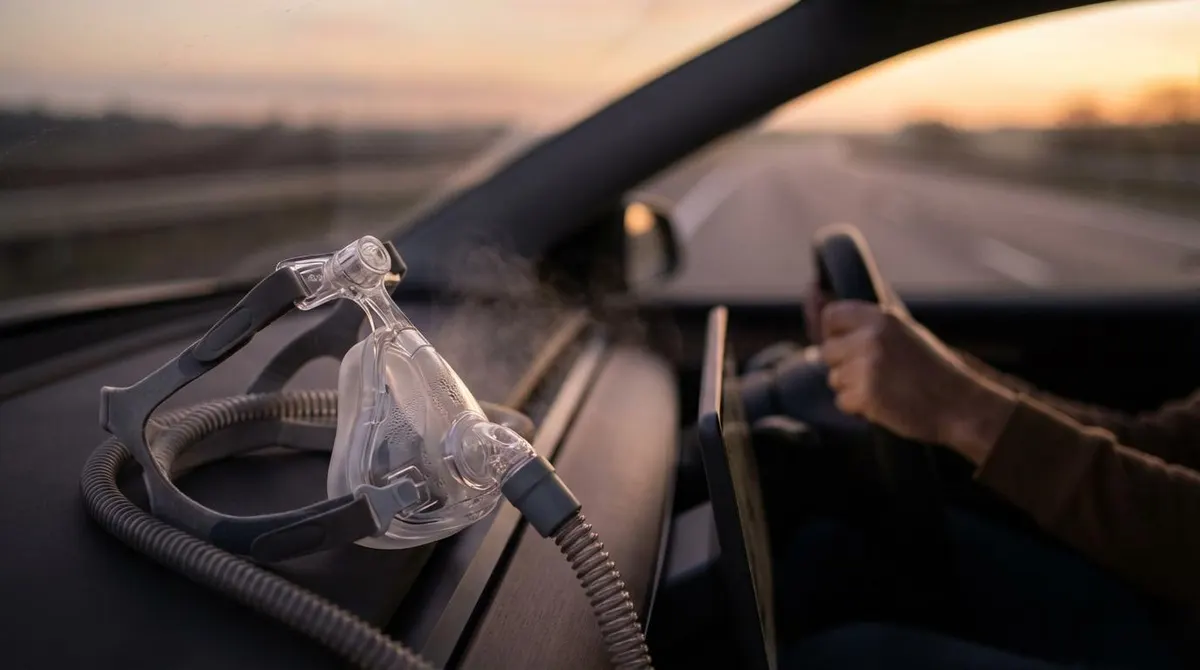
Sleep apnea precautions for drivers center on one goal: staying alert enough to drive safely and consistently. According to the CDC, adults generally need at least 7 hours of sleep per day, and untreated sleep-related breathing problems can make safe wakefulness much harder to maintain. For drivers, that matters because sleep apnea can reduce attention, slow reaction time, and raise the risk of drowsy driving. This guide explains how sleep apnea affects driving, how a sleep apnea diagnosis is made, which treatments protect driving performance, and what commercial drivers need to know about FMCSA expectations. The deeper you understand the condition, the easier it becomes to protect both your health and everyone else on the road. (CDC)
The Silent Roadblock: Understanding Sleep Apnea’s Impact on Drivers
sleep apnea can make driving less safe because sleep apnea disrupts sleep quality, increases daytime sleepiness, and reduces driving performance. Untreated obstructive sleep apnea is especially concerning when you spend long hours behind the wheel.
Sleep apnea is a breathing-related sleep disorder that causes repeated pauses in breathing during sleep. The Federal Motor Carrier Safety Administration explains that these pauses can last at least 10 seconds and may occur hundreds of times in a night, which helps explain why untreated cases can lead to poor alertness the next day. (FMCSA)
Obstructive sleep apnea is the most common form of sleep apnea, and obstructive sleep apnea happens when airway obstructions repeatedly narrow or close the upper airway during sleep. Airway obstructions lead to sleep fragmentation, drops in blood oxygen, and disrupted breathing patterns. According to Mayo Clinic, the repeated drops in blood oxygen can increase blood pressure and strain the cardiovascular system, which is one reason untreated sleep apnea is linked with high blood pressure and heart disease. (Mayo Clinic)
Untreated obstructive sleep apnea lowers alertness, slows reaction time, and raises driving risk. Untreated obstructive sleep apnea also worsens daytime sleepiness, making attention and concentration less reliable during highway driving, stop and go traffic, and overnight trips.
Not sure if sleep apnea applies to you?
Take our 2-minute sleep risk quiz to see whether sleep apnea could affect your DOT physical. No account required.
The safety issue is not theoretical. The National Highway Traffic Safety Administration estimates that in 2017, 91,000 police-reported crashes involved drowsy drivers, leading to about 50,000 injuries and nearly 800 deaths, while also noting that drowsy driving is likely undercounted. NHTSA also notes that drowsy-driving crashes often happen between midnight and 6 a.m. or in the late afternoon, two periods that matter for truck drivers, shift workers, and anyone covering long routes. (NHTSA)
The risk is also higher in people with untreated sleep apnea specifically. The American Academy of Sleep Medicine reported that motor vehicle accident risk is higher in people with sleep apnea, and a study highlighted by AASM found crash incidence fell by 70% among patients who used CPAP therapy for an average of at least 4 hours per night. That is one of the clearest reasons consistent treatment matters for drivers, not just symptom relief. (AASM)
Common warning signs include loud snoring, gasping, morning headaches, irritability, memory problems, and daytime sleepiness. The FMCSA also lists concentration and memory problems among the symptoms that can show up in affected drivers. Sleep apnea can therefore affect more than sleep quality alone. Sleep apnea can affect judgment, reaction times, and the ability to stay steady during monotonous driving conditions. (FMCSA)
DID YOU KNOW: The NHTSA says the only true way to protect yourself from drowsy driving is to get adequate sleep on a daily basis. (NHTSA)
KEY TAKEAWAY: The main danger for drivers is not just snoring. The main danger is that untreated sleep apnea can reduce alertness, slow reaction time, and raise the risk of motor vehicle accidents.
The next step is understanding how sleep apnea testing and diagnosis work, because you cannot take the right precautions until you know how severe the problem is.
Understanding Your Condition: The Foundation for Safe Driving
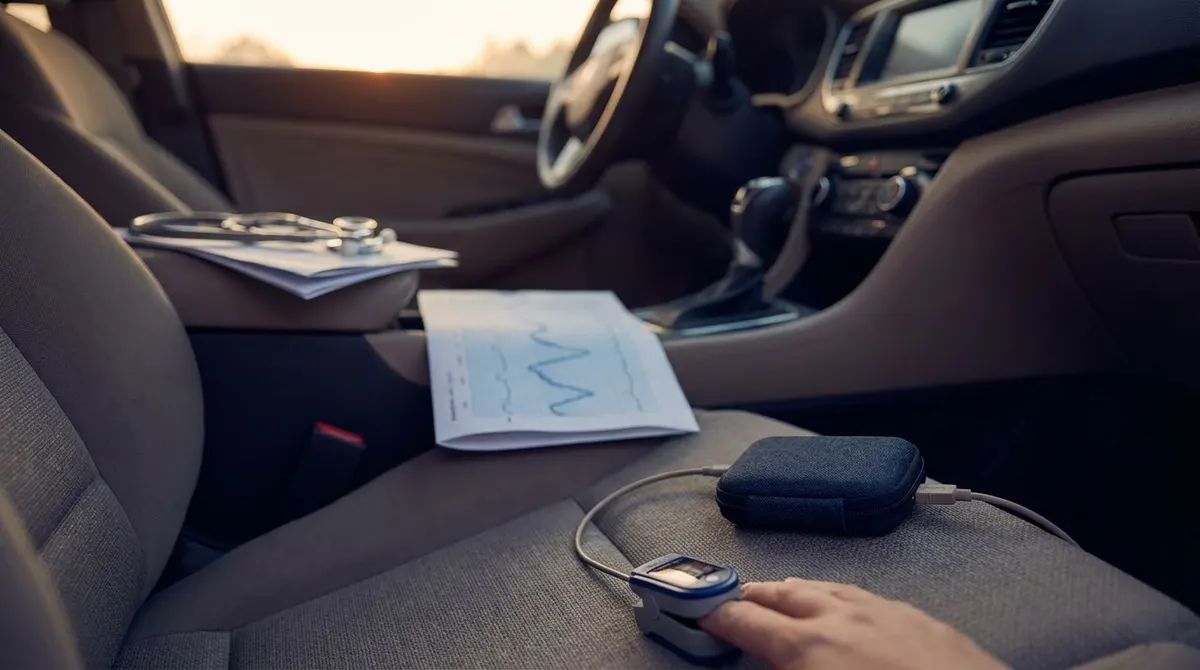
A proper sleep apnea diagnosis gives you the information needed to protect driving performance, choose the right treatment plan, and reduce avoidable driving risk. Diagnosis matters because symptoms alone do not show how severe sleep apnea really is.
Sleep apnea diagnosis usually starts with symptoms, risk factors, and a sleep test. A sleep test is a recording of breathing patterns and related signals during sleep, and a sleep study can be done in a sleep lab or through home-based sleep apnea testing for appropriate patients. The AASM diagnostic guideline supports polysomnography or home sleep apnea testing in uncomplicated adults with signs and symptoms suggesting moderate to severe obstructive sleep apnea. (AASM)
The key number in most reports is the Apnea-Hypopnea Index, or AHI. The Sleep Foundation explains that AHI measures the number of apneas and hypopneas per hour of sleep. An AHI below 5 is generally considered normal, 5 to 14 is mild sleep apnea, 15 to 29 is moderate sleep apnea, and 30 or more is severe sleep apnea. Those thresholds matter because driving risk, treatment urgency, and regulatory scrutiny usually increase as severity rises. (Sleep Foundation)
Drivers also benefit from understanding two related scoring terms that often cause confusion online. The 3% rule and the 4% rule refer to how hypopneas are counted during sleep apnea testing. The AASM says the recommended adult scoring rule counts a hypopnea when airflow drops by at least 30% for at least 10 seconds and there is a 3% oxygen desaturation and or an arousal. The AASM also says it is acceptable for accredited centers to use a 4% desaturation criterion. That means different reports can look slightly different even when describing the same patient. (AASM)
Blood oxygen is another important signal. Blood oxygen levels often dip during repeated breathing interruptions, which helps explain why untreated sleep apnea can leave you tired even after what seems like a full night in bed. If your report includes residual AHI, that usually refers to how many breathing events still occur while you are on treatment, often with Positive Airway Pressure therapy.
A sleep apnea screener may be used before formal testing. Screening tools do not diagnose sleep disorders on their own, but they help identify who needs sleep diagnostics or a formal medical evaluation. Risk factors commonly considered include body mass index, neck size, witnessed breathing pauses, daytime sleepiness, and high blood pressure. The FMCSA notes that a large neck size, defined on its driver safety page as 17 inches or greater for men and 16 inches or greater for women, is one of several factors associated with higher risk. (FMCSA)
Already diagnosed and need CPAP support?
Dumbo Health helps patients start CPAP without the usual confusion, paperwork, or upfront cost. Equipment, setup, supplies, and ongoing support are all handled in one place.
When symptoms point strongly toward obstructive sleep apnea, comparing testing pathways can make the next step easier.
| Option | Best For | Convenience | Turnaround Time | Accuracy Context | Recommended When |
|---|---|---|---|---|---|
| At-home sleep test | Adults with a strong suspicion of obstructive sleep apnea and no major complicating conditions | High | Often faster | Good for identifying obstructive sleep apnea in appropriate patients | When you want a simpler first step from home |
| In-lab sleep study | People with complex symptoms, other possible sleep disorders, or unclear results | Lower | May take longer | Most comprehensive | When diagnosis needs more detail or home testing may miss important issues |
| Screening questionnaire | Initial risk check only | Very high | Immediate | Not diagnostic | When you need to decide whether formal testing should be booked |
For many drivers, the most practical starting point is an at-home sleep test, especially when convenience affects follow-through. If symptoms are complicated, or if other sleep disorders may be involved, a sleep lab study remains the stronger option.
TIP: If fatigue, snoring, and witnessed breathing pauses are already affecting work, book sleep apnea testing before your next long trip rather than waiting for symptoms to worsen.
KEY TAKEAWAY: A sleep apnea diagnosis should be based on proper testing, not guesswork, because AHI, blood oxygen changes, and symptom severity guide both treatment and safe driving decisions.
Once diagnosis is clear, the most important precautions are the ones that improve sleep quality and keep treatment consistent.
Essential Precautions: Prioritizing Treatment and Health for Safe Driving
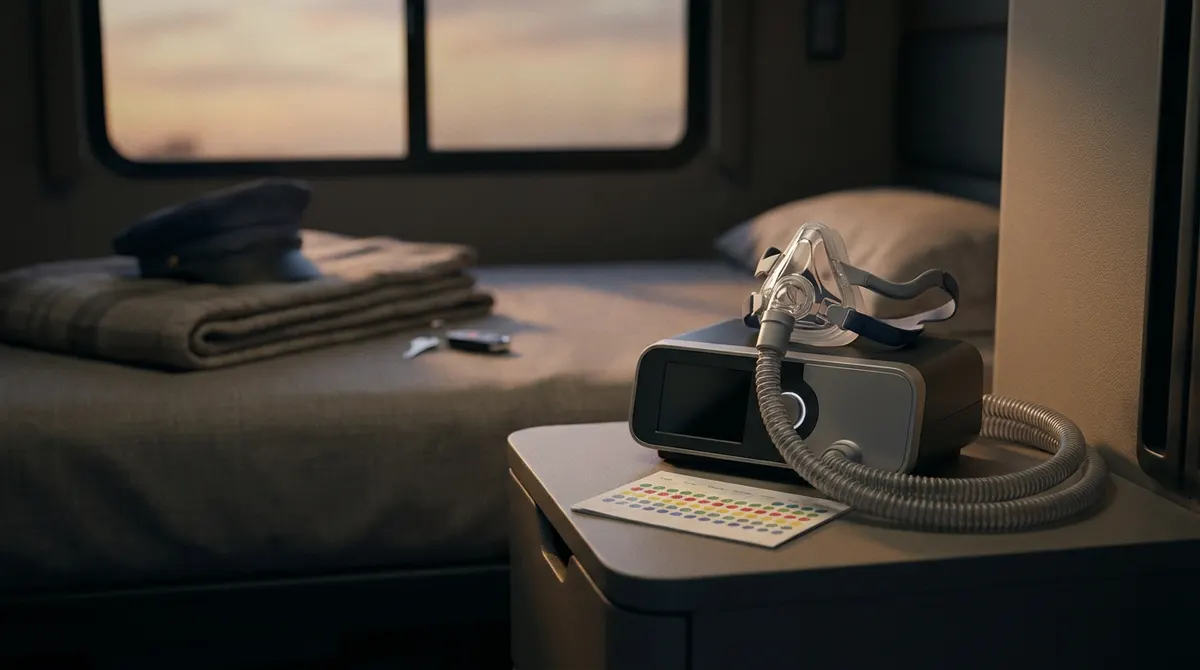
The most important precaution for drivers with sleep apnea is consistent treatment adherence. Consistent treatment lowers daytime sleepiness, improves reaction time, and reduces driving risk.
Continuous positive airway pressure is the standard treatment for many people with moderate to severe obstructive sleep apnea. The NHLBI states that a PAP machine is the most common treatment for sleep apnea, and the AASM sleep apnea factsheet says CPAP is the standard treatment option for moderate to severe cases and a good option for mild sleep apnea as well. A CPAP machine works by delivering pressurized air that helps keep the airway open during sleep. (NHLBI, NIH)
Positive Airway Pressure is an umbrella term for treatments that use airflow to prevent airway collapse during sleep. Positive Airway Pressure can improve sleep quality, lower residual fatigue, and support safer driving performance when used consistently.
For drivers, adherence matters more than owning the device. The AASM report on crash risk noted a 70% reduction in motor vehicle accident incidence among patients who used CPAP therapy for an average of at least 4 hours per night. That threshold also mirrors a common compliance benchmark used in payer and device discussions, which is why commercial drivers are often asked for usage data rather than simply stating that they have a CPAP machine. (AASM)
Other effective options may be appropriate depending on severity and anatomy. The NHLBI says treatment may also include healthy lifestyle changes, an oral device, surgery, or other approaches depending on the case. Oral appliances, including mandibular advancement devices, can help some people with obstructive sleep apnea by moving the lower jaw forward. In real-world use, oral appliances are often most helpful for selected patients with milder disease or for people who cannot tolerate CPAP therapy. (NHLBI, NIH)
Lifestyle changes also matter because treatment is rarely just one device. Weight loss can reduce symptom burden in some patients. Alcohol close to bedtime can worsen airway obstructions. Sleeping pills can sometimes make breathing-related sleep problems harder to detect or worsen sedation, so any use of sleeping pills should be discussed with a sleep medicine specialist or prescribing clinician.
Optimizing your sleep environment is another practical precaution. A sleep environment that is dark, quiet, cool, and consistent helps protect sleep quality. Many patients report that sleep apnea treatment works better when bedtime is regular, equipment is prepared before bed, and last-minute driving or screen-heavy work is reduced.
sleep apnea treatment works best when the treatment regimen is boringly consistent. Sleep apnea treatment also protects driving performance best when used every night, not only before especially long trips.
Midway through the process, many drivers benefit from simple access to treatment education and next-step options. If you are comparing device pathways, insurance questions, or setup expectations, Dumbo Health’s CPAP information page is a useful next step.
IMPORTANT: If daytime sleepiness continues even after starting treatment, do not assume the problem is solved. Persistent symptoms may mean poor mask fit, inconsistent use, pressure issues, another sleep disorder, or a need for follow-up medical evaluations.
KEY TAKEAWAY: The strongest precaution for drivers with sleep apnea is a treatment plan you can actually follow every night, because effective treatment improves sleep quality and helps restore safe alertness.
Even the best treatment plan needs strong day-to-day habits, especially when long hours and route pressure enter the picture.
Optimizing Your Sleep Environment and Habits
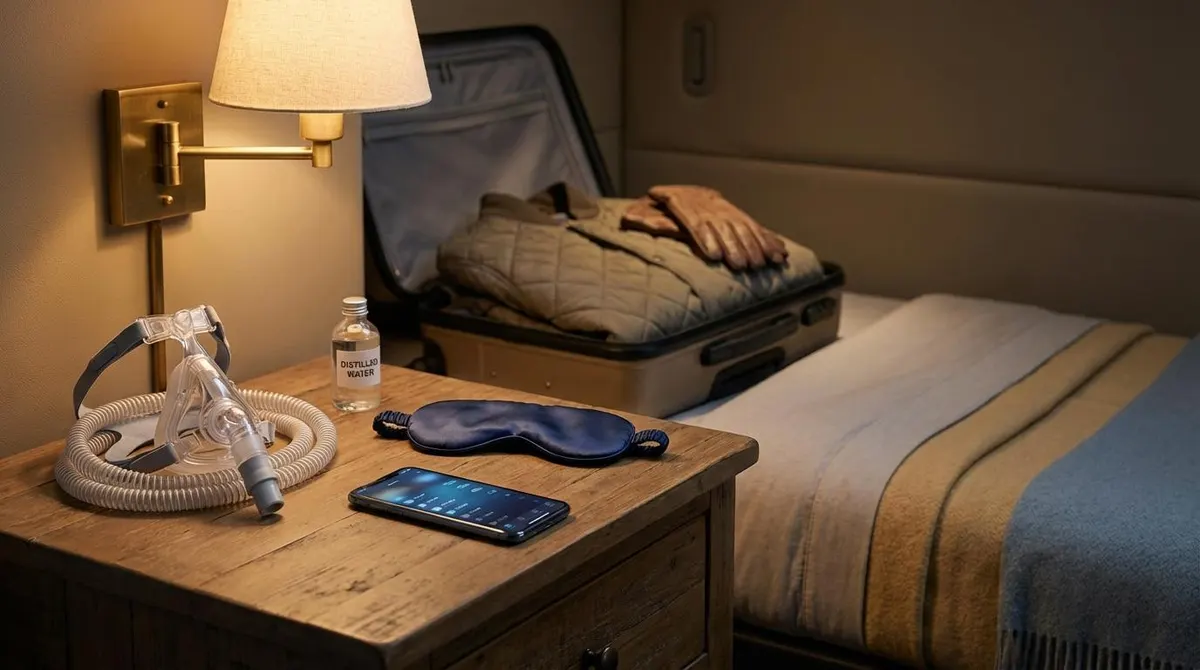
Better driving starts before the engine turns on. Sleep habits, routine, and sleep environment directly influence alertness, attention, and driving performance the next day.
The CDC says adults generally need at least 7 hours of sleep each day. The NHTSA similarly tells drivers that getting seven to eight hours of sleep per night is the only true protection against drowsy driving. For people with sleep apnea, that guidance matters even more because fragmented sleep can make a nominally long night feel much shorter in functional terms. (CDC)
A practical nightly routine should include:
Setting a stable bedtime and wake time
Using CPAP machines or other prescribed treatment every time you sleep
Avoiding alcohol close to bedtime
Reviewing mask fit, tubing, or battery needs before bed if you use a PAP device
Leaving enough time for uninterrupted sleep before an early departure
Many drivers underestimate the effect of irregular sleep timing. Long haul schedules, split sleep, overnight loading delays, and rotating shifts can worsen daytime sleepiness even when a driver is motivated to do everything right. Clinicians frequently observe that sleep apnea symptoms feel worse when treatment lapses combine with chronic short sleep.
A healthy sleep environment also reduces the temptation to skip therapy. If equipment is uncomfortable, troubleshoot early. If noise, dryness, or pressure settings are interfering, speak with a sleep specialist or sleep medicine dentist where appropriate for device-related alternatives such as Oral Appliance Therapy. Comfort problems are common, but unmanaged comfort problems often turn into compliance problems.
People who undergo this exam and treatment process often find that small logistics matter. Keeping distilled water, filters, power backup, and cleaning supplies organized can make treatment much easier to maintain during travel or changing routes.
DID YOU KNOW: The CDC notes that adults sleeping fewer than 7 hours are more likely to report health problems including heart attack, and some of those health problems also raise the risk for heart disease. (CDC)
KEY TAKEAWAY: sleep apnea treatment protects you best when it is paired with enough sleep, a stable routine, and a sleep environment that makes adherence easier.
When fatigue still appears on the road, immediate in-cab decisions become the next line of defense.
On-the-Road Strategies: Navigating Fatigue and Staying Alert
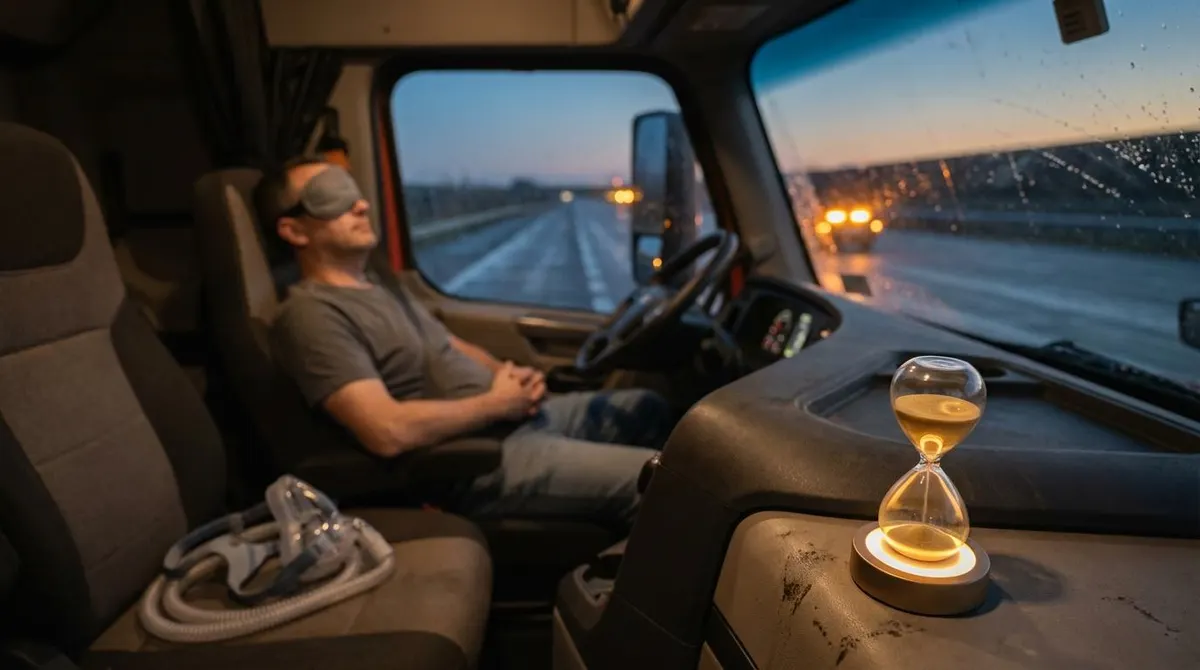
On-road precautions matter because treatment reduces risk but does not eliminate the need for smart fatigue management. If daytime sleepiness starts building while you drive, act early rather than testing your limits.
Drowsy driving is any reduction in safe driving performance caused by sleepiness, reduced alertness, or fatigue. The NHTSA says drowsy-driving crashes often involve a single vehicle leaving the road at high speed with no sign of braking, which shows how quickly attention can fail when fatigue takes over. (NHTSA)
Early warning signs include:
Heavy eyelids
Frequent yawning
Drifting in your lane
Missing exits or traffic signs
Variable speed without noticing
Trouble remembering the last few miles
Reduced attention and concentration
Reaction time is one of the first things fatigue affects. Slower reaction times matter for merges, sudden braking, work zones, bad weather, and pedestrian-heavy areas. sleep apnea can therefore turn routine driving into higher driving risk much sooner than many drivers expect.
If fatigue hits, the safest action is simple:
Pull over somewhere safe as soon as possible
Do not try to power through another hour
Use a short nap if needed
Reassess whether you should continue driving that day
Resume only when alertness is genuinely restored
Planning ahead also helps. Build regular breaks into the route. Avoid stacking the hardest driving segment into the lowest-alertness part of the day. The NHTSA says drowsy-driving crashes occur most often between midnight and 6 a.m. and in the late afternoon, so these windows deserve extra caution. (NHTSA)
Truck drivers and other commercial vehicle operators often face extra pressure because schedules, dispatch windows, and customer commitments can make it feel harder to stop. That is exactly why preplanned regular breaks matter. Strategic breaks are not lost time. Strategic breaks are a form of vehicle safety and occupational health protection.
If symptoms are recurring and you need formal evaluation or a fresh look at your treatment regimen, consider getting started with sleep apnea care or finding a provider near you who can review your symptoms, data, and current device settings.
TIP: Caffeine can temporarily increase alertness, but caffeine cannot replace real sleep or effective sleep apnea treatment.
KEY TAKEAWAY: The right on-road precaution is to recognize fatigue early, stop safely, and reset before driving performance drops into dangerous territory.
Commercial drivers face one more layer of responsibility, because the consequences extend beyond personal safety to licensing and regulatory compliance.
Special Considerations for Commercial Drivers

Commercial drivers with sleep apnea can often continue working, but commercial drivers must show that the condition is being managed well enough to support safe operation. FMCSA-related decisions focus on safety, function, and medical fitness, not on diagnosis alone.
The FMCSA states that a person with a medical history or clinical diagnosis of any condition likely to interfere with safe driving cannot be medically qualified to operate a commercial motor vehicle in interstate commerce. The same FMCSA page also says that once successfully treated, a driver may regain medically qualified status. That is why the practical question is not only "Do you have sleep apnea?" but also "Is sleep apnea controlled well enough for safe driving?" (FMCSA)
The Federal Motor Carrier Safety Administration does not use one short website sentence to settle every case. The FMCSA Medical Examiner’s Handbook 2024 Edition makes clear that the medical examiner makes the ultimate certification decision for interstate commercial motor vehicle drivers under current regulations and guidance. That is important because online advice can oversimplify what a medical examiner actually reviews. (FMCSA)
The FMCSA driver sleep apnea page also says the disqualifying level of sleep apnea is moderate to severe sleep apnea that interferes with safe driving. It tells drivers to contact the medical examiner once they learn they have sleep apnea and stresses that people with sleep apnea should fully use the treatment provided by their doctor. The page also says they should not drive if they are not being treated. (FMCSA)
For CDL holders, precautions often include:
Completing a sleep study when recommended
Bringing treatment documentation to the DOT physical exam or follow-up medical evaluations
Downloading CPAP machine usage reports when requested
Reporting persistent daytime sleepiness honestly
Following the medical examiner’s timeline for reassessment
A medical examiner may also consider risk factors such as body mass index, neck size, high blood pressure, and symptom history when deciding whether more evaluation is needed. The FMCSA publicly lists neck size and excessive daytime sleepiness among the notable risk considerations on its driver sleep apnea page. (FMCSA)
Commercial Driver’s License protection depends on regulatory compliance as much as diagnosis. Commercial Driver’s License protection is strongest when a driver completes testing promptly, follows the treatment plan, and keeps documentation ready for the Department of Transportation medical process.
IMPORTANT: A diagnosis does not automatically mean you lose your Commercial Driver’s License, but ignoring diagnosis, treatment, or medical examiner instructions can put certification at risk.
KEY TAKEAWAY: For commercial drivers, the key precaution is documented control of sleep apnea, because safe function and regulatory compliance matter more than diagnosis alone.
That regulatory picture becomes easier to manage when you know how employers, clinicians, and your own support network fit into the process.
Employer Responsibilities, Support, and Long-Term Monitoring

Long-term safety improves when treatment, self-monitoring, and employer expectations all work together. Sleep apnea management is easier to sustain when responsibility is shared rather than isolated.
The FMCSA says a motor carrier may not require or permit a driver to operate a commercial motor vehicle if the driver has a condition, including sleep apnea, that would affect the ability to operate the vehicle safely. That means trucking safety is not only an individual issue. It is also a workplace safety issue linked to scheduling, reporting culture, and follow-up expectations. (FMCSA)
Employer support can help through:
Sane route planning that reduces pressure to drive through fatigue
Access to health screenings and occupational health resources
Respect for medical check-ups and follow-up appointments
Encouragement to report symptoms before a fatigue-related crash occurs
Self-monitoring also matters. A sleep diary can help track total sleep, mask use, symptoms, and how alert you feel before driving. Many patients report that a simple diary helps them connect missed treatment nights with worse daytime function. If you want a structured way to do that, Dumbo Health’s article on whether you should keep a sleep journal is a practical companion resource.
Collaboration with a sleep specialist is especially useful if symptoms persist. A sleep medicine specialist can review residual AHI, pressure settings, mask leak, blood oxygen trends, or whether another sleep disorder may be present. For drivers using oral appliances, a sleep medicine dentist may help adjust fit and effectiveness, especially when a dental device, mouth guard, or oral device therapy is part of the plan.
Some people also benefit from family and friends who notice warning signs first. Bed partners may report snoring, choking, or breathing pauses. Family and friends may also notice mood changes, concentration issues, or worsening fatigue before the driver fully recognizes the pattern.
If you need to compare non-CPAP pathways or understand where oral appliances fit, these resources on whether sleep apnea can be treated without CPAP and how an oral appliance for sleep apnea works can help you understand the tradeoffs.
DID YOU KNOW: The FMCSA notes that sleep apnea often goes unrecognized and undiagnosed, which is one reason early reporting and proper sleep diagnostics matter so much for safety-sensitive jobs. (FMCSA)
KEY TAKEAWAY: The safest long-term approach combines treatment adherence, self-monitoring, clinician follow-up, and a work environment that supports reporting and fatigue prevention.
Before wrapping up, it helps to clear out a few myths that often stop drivers from acting early.
Common Myths About Sleep Apnea Debunked
Many drivers delay action because common myths make sleep apnea sound less serious or more career-threatening than it really is. The facts are more practical and more reassuring.
MYTH: A sleep apnea diagnosis means you automatically lose your license.
FACT: The FMCSA says a driver may regain medically qualified status once sleep apnea is successfully treated. The issue is not diagnosis by itself. The issue is whether the condition is likely to interfere with safe driving and whether treatment is effective enough to support safe function. (FMCSA)
MYTH: If you are not falling asleep at the wheel, driving risk is not a real concern.
FACT: The FMCSA explicitly says you do not have to fall asleep to have a crash. Reduced alertness, poorer focus, and slower reaction times are enough to create driving risk, especially during long hours, rural highways, or low-stimulation driving. (FMCSA)
MYTH: Mild snoring is the only thing sleep apnea affects.
FACT: Mayo Clinic explains that obstructive sleep apnea can increase blood pressure and strain the cardiovascular system, and repeated episodes can raise the risk of heart disease and heart attack. Sleep apnea is a whole-body issue, not just a noise issue. (Mayo Clinic)
MYTH: CPAP therapy is optional if you can just drink more coffee.
FACT: Coffee may temporarily increase alertness, but coffee does not treat airway obstructions, sleep fragmentation, or drops in blood oxygen. The AASM highlighted evidence that CPAP therapy was associated with a 70% reduction in motor vehicle accident incidence among treated patients meeting the average use threshold reported in that study. (AASM)
MYTH: Sleep apnea testing is only for severe cases.
FACT: The AASM supports formal testing when symptoms suggest moderate to severe obstructive sleep apnea, and the Sleep Foundation notes that even an AHI of 5 to 14 qualifies as mild sleep apnea. Earlier sleep apnea testing can prevent worse symptoms, better protect driving performance, and reduce delays in treatment planning. (AASM)
KEY TAKEAWAY: The biggest myths about sleep apnea usually delay care, but the safest path is simple: get tested, follow the treatment plan, and treat alertness as a non-negotiable part of safe driving.
The remaining questions drivers ask most often are practical, specific, and closely tied to daily decisions.
Frequently Asked Questions
Can you still drive a car with sleep apnea?
Yes, many people can still drive a car with sleep apnea, but safe driving depends on whether symptoms are controlled. The FMCSA says successful treatment can allow a commercial driver to regain medically qualified status, and the same logic applies more broadly to personal driving: alertness matters more than diagnosis alone. If daytime sleepiness, poor concentration, or microsleep episodes are still happening, driving risk remains high. The safest approach is to complete a sleep test, follow the treatment regimen, and avoid driving whenever sleepiness is active. (FMCSA)
What should a driver do immediately after a sleep apnea diagnosis?
After a sleep apnea diagnosis, the first steps are to understand severity, start the recommended treatment plan, and review how symptoms affect your driving performance. If you are a commercial driver, the FMCSA says you and or your doctor should contact the medical qualifying examiner to determine fitness to operate a commercial motor vehicle. That often means sharing sleep study findings, beginning CPAP therapy or another appropriate treatment, and preparing documentation for future medical evaluations. Quick action helps reduce daytime sleepiness sooner and lowers the chance of certification delays. (FMCSA)
What is the 4% rule for sleep apnea?
The 4% rule refers to one accepted way of scoring hypopneas during sleep apnea testing. The AASM says accredited sleep centers may score hypopneas using a criterion of at least a 4% oxygen desaturation, while the recommended adult rule uses at least a 3% oxygen desaturation and or an arousal. In plain terms, the rule affects how breathing events are counted on a sleep study report. That means two reports can sometimes produce slightly different AHI values depending on the scoring rule used, even when the underlying breathing problem is similar. (AASM)
What is the 3% rule for sleep apnea?
The 3% rule is the AASM’s recommended adult hypopnea scoring approach. The AASM says a hypopnea can be scored when airflow drops by at least 30% for at least 10 seconds and there is at least a 3% oxygen desaturation and or an arousal. This rule matters because it can identify clinically meaningful breathing events that may not meet the stricter 4% threshold. For drivers, the practical takeaway is to ask which rule was used if your results seem borderline, because the rule can affect whether obstructive sleep apnea looks mild, moderate, or more significant. (AASM)
Will you lose your CDL if diagnosed with sleep apnea?
A diagnosis alone does not automatically mean you lose your CDL. The FMCSA says moderate to severe sleep apnea that interferes with safe driving is disqualifying, but it also says a driver may regain medically qualified status once successfully treated. In practice, the medical examiner looks at function, symptoms, and treatment adherence. Many commercial drivers continue working after diagnosis by completing sleep apnea testing, starting therapy, and providing compliance data when requested. If you are worried about next steps, find a provider near you and address the issue early rather than waiting for a failed DOT physical. (FMCSA)
What precautions help most during long haul or overnight driving?
The most effective precautions during long haul driving are effective treatment, enough total sleep, and early response to fatigue. The NHTSA says drowsy-driving crashes occur most often between midnight and 6 a.m. and in the late afternoon, so route planning should account for those higher-risk periods. Use CPAP therapy every time you sleep, build regular breaks into the trip, and stop immediately if daytime sleepiness builds. Caffeine can be a short-term tool, but it does not correct sleep fragmentation, poor sleep quality, or untreated airway obstructions. (NHTSA)
Do you need a sleep study if you only snore and feel a little tired?
Not everyone who snores needs a sleep study, but loud snoring plus daytime fatigue, witnessed pauses in breathing, morning headaches, or high blood pressure should raise suspicion. The AASM supports formal testing in adults with signs and symptoms suggesting obstructive sleep apnea, and the Sleep Foundation notes that mild disease can begin at an AHI of 5 events per hour. If symptoms are adding up, a home sleep test or in-lab study can provide much more useful information than guesswork. That is especially important for truck drivers and other commercial vehicle operators. (AASM)
Are oral appliances a real option for drivers who cannot tolerate CPAP?
Yes, oral appliances can be a real option for some drivers, especially when obstructive sleep apnea is mild to moderate or when CPAP therapy is difficult to tolerate. The NHLBI lists oral devices among treatment options for sleep apnea, and CMS coverage guidance recognizes custom mandibular advancement oral appliances for obstructive sleep apnea under defined criteria. The best option depends on severity, anatomy, and follow-up results, not preference alone. If CPAP is difficult, a sleep specialist or sleep medicine dentist can help determine whether Oral Appliance Therapy is a safe alternative in your area. (NHLBI, NIH)
Conclusion

Drivers with sleep apnea can protect themselves and others by treating sleep apnea as a safety issue, not just a sleep issue. The essential precautions are straightforward: get proper sleep apnea testing, follow the treatment plan consistently, protect sleep quality, stop driving when fatigue appears, and stay current with medical check-ups if you are a commercial driver. For many people, the safest first move is simply getting a clear diagnosis and a realistic next-step plan. If you want a convenient place to start, explore Dumbo Health’s at-home sleep test to take the next step toward a healthier, safer future on the road.
Related DOT Physical Topics
- What Are the DOT Requirements for Drivers With Sleep Apnea
- How can drivers with sleep apnea qualify again after a failed DOT physical
- Are there legal requirements for drivers with sleep apnea
- What are the current FMCSA guidelines on sleep apnea for commercial drivers
- What are the current DOT requirements for sleep apnea testing for commercial drivers
- Home Sleep Apnea Test for Commercial Drivers The CDL Holder's Complete Guide
- Sleep Apnea Test for CDL Drivers
- Can you pass a DOT physical with sleep apnea
- What happens if you fail a DOT physical due to sleep apnea
- Sleep Apnea Tests for DOT Compliance What tests are accepted
- Are There New DOT Rules or Laws on Sleep Apnea Testing
- DOT Physical Cost Breakdown What Drivers Pay & Why
- Best Treatments for Sleep Apnea to Improve Driving Safety
- How Sleep Apnea Affects Overall Driving Safety
- Navigating DOT Stroke Guidelines for CMV Drivers What You Need To Know
- DOT Physical Out of Pocket What Commercial Drivers Actually Pay
- What Should You Bring to a DOT Physical
- New DOT Physical Requirements What Drivers MUST Know About New Updates
- Can you fail a DOT physical because of sleep apnea
- When Can Sleep Apnea Affect a DOT Physical
- Online DOT Exam What Drivers and Medical Examiners Need to Know
- DOT Physical Blood Pressure Requirements What Drivers Need to Know
- The Comprehensive Guide to Suboxone, Sleep Apnea, and FMCSA Compliance for Commercial Motor Vehicle Operators
- What should I expect at a DOT physical
- At Home Sleep Test for Truck Drivers
- DOT Physical at Urgent Care What Commercial Drivers Need to Know
- BMI for DOT Physical What Commercial Drivers Need to Know
- What Happens During the DOT Physical Exam The Complete Guide for Drivers
- How Does Sleep Apnea Affect Driving Ability
- What Happens If Your DOT Physical Expires Compliance Guide for Commercial Drivers
- DOT Physical & Drug Test What Drivers Need to Know
- DOT sleep apnea test at home
- What Happens If You Fail a DOT Physical Twice The Complete Guide for Commercial Drivers
- What Happens If You Fail a DOT Drug Test The Complete Guide for Commercial Drivers
- Can You Get a DOT Physical in Any State The Complete Guide for Commercial Drivers
- Can You Get a DOT Physical Online The Complete Guide for Commercial Drivers
- What drugs do they test for in a DOT drug test
- Does a DOT Physical Test for Weed or THC The Complete Guide for Commercial Drivers
- What Can Disqualify You From a DOT Physical
- Can You Pass a DOT Physical with Epilepsy
- Remote DOT Physical The Complete Guide for Commercial Drivers
- Essential 171 DOT Definitions for Commercial Drivers
- Can You Pass a DOT Physical With a Hernia
- Can You Pass a DOT Physical With a Pacemaker
- Can You Pass a DOT Physical With One Eye
- DOT Physical Forms & Paperwork The Complete Guide for Commercial Drivers
- What Forms Do You Need for a DOT Physical
- Medical Examiner's Certificate (Form MCSA-5876) The Complete Guide for Commercial Drivers
- Navigating Your DOT Physical with Common Medical Conditions
- Online DOT Physical Without Insurance A Complete Guide for Commercial Drivers
- Why DOT Sleep Tests at Home Matter for Your Career and Health
- Navigating the Florida DOT Physical Your Essential Guide for CDL Drivers
- What Is the Urine Test for in a DOT Physical
- Online DOT Physical Self-Pay The Complete Guide for CDL Drivers and Owner-Operators
- DOT physical self pay guide for commercial drivers paying out of pocket
- DOT Hypertension Guidelines The Complete Blood Pressure Guide for Commercial Drivers
- Your Complete Guide What's Included in a DOT Physical Exam
- The Ultimate DOT Preparation Checklist for Motor Carriers and Commercial Drivers
- What blood pressure do you need to pass a DOT physical
- DOT Medical Exam Self-Pay A Complete Guide for Commercial Drivers
- What Does a DOT Physical Consist Of
- Can You Pass a DOT Physical with Diabetes
- Can You Pass a DOT Physical with High Blood Pressure
- Medical Examination Report (MER) – Form MCSA-5875 The Complete Guide for Commercial Drivers
- The Ultimate DOT Physical Guide for Commercial Drivers (2025–2026)
- DOT Physical Requirements A Complete Guide for CDL Drivers
- Is a Sleep Study Required for a DOT Physical
- What Does DOT Stand for in a DOT Physical
- What Is the Difference Between a DOT and Non-DOT Physical
- What Are the Requirements to Pass a DOT Physical
- What eye chart is used for a DOT physical
- Can You Get a Second Opinion on Your DOT Physical A Complete Guide for Commercial Drivers
- What Do They Check During a DOT Physical
- Online DOT Physical The Complete Guide for Commercial Drivers and Medical Examiners
- Failing a DOT Physical What Every Commercial Driver Needs to Know
- What is DOT Physical
- How Do You Submit Your DOT Physical to the DMV
- Does a DOT physical include a drug test
- DOT Physical Self Pay Cost
- DOT Physical Exam Basics
- 2026 DOT Inspection Dates
- Is a drug test required for a DOT physical
- DOT Physical ICD-10 & Billing Codes The Complete Guide for Accurate Compliance and Reimbursement
- Telehealth Dot Physical
- Who needs a DOT physical
- DOT Physical & Alcohol Requirements
- Why do they measure your neck during a DOT physical
- DOT Physical Online Cost
- Walk In DOT Physical Self Pay
- Can You Get a DOT Physical Online
- Can You Fail a DOT Physical for Being Overweight
- CDL PHYSICAL SELF PAY
- DOT Physical Insurance & Recertification The Complete Driver's Guide
- DOT Physical Cash Pay
- Same Day DOT Physical
- Virtual DOT Physical
- DOT Physical Vision & Eye Requirements
- Do They Check Your Private Parts During a DOT Physical
- DOT Physical Insurance or Self Pay How to Choose the Right Payment Option for Your Exam
- DOT Physical Chiropractor Your Complete Guide to CDL Exams
Take the next step before your DOT physical
Start with the free quiz if you are unsure about your risk, or order an at-home sleep test if you have already been flagged for possible sleep apnea.
AI summary
Sleep apnea is a breathing-related sleep disorder that causes repeated pauses in breathing during sleep and can lead to daytime sleepiness and impaired driving performance. For drivers, untreated obstructive sleep apnea reduces attention and reaction time and increases drowsy driving risk. Key points: - Diagnosis uses symptoms, risk factors, and sleep testing (home sleep apnea testing or in-lab polysomnography per AASM guidance for uncomplicated adults with suspected moderate to severe OSA). - Severity is commonly reported as Apnea-Hypopnea Index (AHI): <5 normal, 5–14 mild, 15–29 moderate, ≥30 severe. - Hypopnea scoring may use AASM’s recommended 3% desaturation or arousal rule, or an acceptable 4% desaturation rule, which can change AHI values. - Primary precaution is consistent treatment adherence. CPAP/PAP is standard for moderate to severe OSA; oral appliances may help selected mild to moderate cases or CPAP-intolerant patients. - Practical safeguards include 7–8 hours of sleep, regular schedules, avoiding alcohol near bedtime, and stopping driving when fatigue signs appear. - Commercial drivers must follow FMCSA expectations, communicate with the medical examiner, and provide treatment documentation and CPAP usage data when requested.

Nicolas Nemeth
Co-Founder
Nico is the co-founder of Dumbo Health, a digital sleep clinic that brings the entire obstructive sleep apnea journey home. Patients skip the sleep lab and the long wait to see a specialist. Dumbo Health ships an at home test, connects patients with licensed sleep clinicians by video, and delivers CPAP or a custom oral appliance with ongoing coaching and automatic resupply in one clear subscription.
Keep reading

How Long Does a DOT Physical Take? A Complete Guide for Commercial Drivers

What Happens If You Fail a DOT Drug Test? The Complete Guide for Commercial Drivers


