Best Treatments for Sleep Apnea to Improve Driving Safety
Sleep apnea causes repeated breathing interruptions that fragment sleep and can lead to excessive daytime sleepiness, slower reaction times, and reduced concentration while driving. The article explains how untreated obstructive sleep apnea raises crash risk, including microsleeps and impaired vigilance, and outlines key warning signs and the diagnostic role of sleep studies and the Apnea-Hypopnea Index. It reviews CPAP therapy as the most evidence-based treatment and emphasizes that consistent, full-night use is critical for safer driving and measurable improvements. It also covers oral appliance therapy, surgery, hypoglossal nerve stimulation, positional therapy, and orofacial therapy. Lifestyle steps such as weight loss and sleep hygiene are presented as essential supports. Commercial driver DOT and FMCSA expectations, including documentation of CPAP adherence, are also clarified.
Struggling with sleep?
Find out if sleep apnea is the reason.
FDA-cleared. $149 flat. Physician-reviewed results in 48 hours.

Best Treatments for Sleep Apnea to Improve Driving Safety

Sleep apnea is a sleep disorder that causes repeated breathing interruptions during sleep, creating significant driving risk for millions of people each day. According to the American Academy of Sleep Medicine, obstructive sleep apnea affects roughly 26% of adults between the ages of 30 and 70 in the United States. Left untreated, this condition produces excessive daytime sleepiness, slowed reaction times, and reduced concentration that directly compromise the ability to drive safely. This page covers the most effective treatments available, how each option supports driver safety, what commercial drivers need to know about federal regulations, and how to choose the approach that best fits your situation. If sleep apnea symptoms are affecting your alertness behind the wheel, this guide gives you everything you need to take action.
The Silent Threat: How Sleep Apnea Impacts Drivers

sleep apnea creates a direct and measurable driving risk by disrupting restorative sleep every night, leaving drivers dangerously underrested before they ever start the engine. The condition causes the airway to collapse or become obstructed repeatedly during sleep, triggering brief arousals that prevent the brain from completing full sleep cycles. These interruptions reduce sleep quality even when total hours in bed appear adequate, which is why many people with sleep apnea do not realise how severely impaired they are.
sleep apnea is a chronic sleep disorder characterised by repeated episodes of partial or complete airway obstruction during sleep. Each obstruction reduces oxygen delivery to the brain and disrupts normal sleep architecture. The cumulative effect of these disruptions produces daytime sleepiness that can rival the impairment associated with alcohol intoxication.
The Sleep Foundation notes that people with untreated obstructive sleep apnea are up to three times more likely to be involved in motor vehicle accidents than those without the condition. This elevated driving risk affects not only the individual driver but every other person sharing the road. Whether you drive recreationally or professionally, understanding the full impact of sleep apnea on driving is the first step toward protecting yourself and others.
Many patients report not realising how fatigued they had become until after beginning treatment, at which point the contrast in alertness is often striking. Clinicians frequently observe that people with moderate to severe sleep apnea develop a tolerance to chronic tiredness over months or years, which makes self-assessment unreliable as a safety measure.
Not sure if sleep apnea applies to you?
Take our 2-minute sleep risk quiz to see whether sleep apnea could affect your DOT physical. No account required.
DID YOU KNOW: According to the National Highway Traffic Safety Administration, drowsy driving is responsible for thousands of crashes, injuries, and fatalities on United States roads every year, and sleep apnea is one of the leading medical contributors to driver fatigue.
KEY TAKEAWAY: sleep apnea is a medically recognised driver safety hazard that significantly increases crash risk, making timely diagnosis and treatment a priority for anyone who drives regularly.
Understanding how severely this condition can impair performance prepares you to appreciate why the right treatment makes such a dramatic difference on the road.
The Critical Stakes: Drowsy Driving and Motor Vehicle Accidents

Drowsy driving caused by sleep disorders such as sleep apnea is among the most underreported and dangerous conditions affecting road safety today. The National Highway Traffic Safety Administration estimates that drowsy driving contributed to 684 fatalities in the United States in a single recent year, though experts believe the true figure is substantially higher because drowsiness is difficult to detect during crash investigations.
sleep apnea stands out among sleep disorders as a particularly serious contributor to drowsy driving because it operates silently. Unlike someone who chooses to drive after an all-night shift, many drivers with untreated sleep apnea do not feel acutely sleepy in the way they recognise as dangerous. Instead, they experience microsleeps, brief episodes of unconscious inattention lasting one to several seconds, which are enough to cross a lane or miss a braking vehicle entirely at highway speed.
Research published through the NIH has shown that untreated obstructive sleep apnea impairs simulated driving performance to a degree comparable to a blood alcohol level of 0.05%, a threshold above which driving is illegal in many countries. The risk of motor vehicle accidents rises sharply with the severity of untreated sleep apnea. Drivers with an Apnea-Hypopnea Index above 15, indicating moderate to severe obstructive sleep apnea, face a substantially elevated crash risk compared to drivers without sleep disordered breathing.
Drowsy driving affects far more than long-haul truck drivers. Commercial drivers, daily commuters covering long distances, and night shift workers all face elevated risk. Critically, no amount of caffeine or willpower reliably compensates for the cognitive and physiological impairment that untreated sleep apnea produces during waking hours.
KEY TAKEAWAY: Drowsy driving linked to untreated sleep apnea contributes to thousands of motor vehicle accidents every year, and this risk extends to any driver regardless of experience or profession.
With the stakes this clear, the next step is understanding exactly how sleep apnea alters the physiology and cognition that safe driving depends on.
Understanding the Danger: How Untreated Sleep Apnea Impairs Driving Performance

Untreated sleep apnea consistently degrades the specific cognitive and physical functions that safe driving requires, including sustained attention, reaction times, and decision-making under pressure. This impairment is cumulative and often invisible to the person experiencing it.
The Physiological Impact on Alertness and Cognitive Functions
Each episode of obstructed breathing during sleep triggers a brief arousal from deep sleep as the brain responds to falling oxygen levels. These arousals fragment sleep architecture, cutting short the slow-wave and REM stages that are most restorative for cognitive recovery. Over time, this sleep fragmentation produces a measurable deficit in daytime alertness and cognitive function that grows progressively worse with each night of disrupted sleep.
The areas of the brain most affected include the prefrontal cortex, which governs executive function, impulse control, and risk assessment. Mayo Clinic notes that chronic sleep deprivation impairs judgement and slows reaction times in ways that can persist throughout the waking day even after what appears to be a full night of sleep. For drivers, this translates to delayed braking, narrowed field of attention, and a reduced ability to process multiple inputs simultaneously.
Already diagnosed and need CPAP support?
Dumbo Health helps patients start CPAP without the usual confusion, paperwork, or upfront cost. Equipment, setup, supplies, and ongoing support are all handled in one place.
People with untreated obstructive sleep apnea frequently experience impaired vigilance, meaning their ability to sustain focused attention over extended periods declines significantly. Driving on familiar roads or motorways tends to amplify this effect because the monotony of the environment reduces the external stimulation that might otherwise help maintain wakefulness.
Recognizing the Warning Signs: Symptoms for Drivers
Recognising the warning signs of sleep apnea early is critical to preventing a driving-related incident. The most commonly reported symptoms include loud snoring, gasping or choking during sleep, waking with a dry mouth or sore throat, morning headaches, and persistent daytime sleepiness that does not improve with additional rest.
For drivers specifically, the warning signs most relevant to road safety include difficulty staying awake on the highway, struggling to keep the eyes focused, drifting across lane markings without awareness, and feeling a strong urge to pull over and rest after only short distances. You can find a comprehensive overview of the 9 most common sleep apnea symptoms to help identify whether your experience matches the clinical picture.
Clinicians frequently observe that people with sleep apnea significantly underestimate their own daytime sleepiness because gradual impairment can become normalised over months or years. External prompts from a partner, colleague, or driving companion who notices unusual fatigue are often the first reliable signal.
The Diagnostic Process: Confirming Sleep Apnea
Confirming a sleep apnea diagnosis typically begins with a consultation with a sleep specialist, followed by a sleep study that measures breathing patterns, oxygen levels, and sleep stages overnight. A sleep study can be completed in a supervised sleep lab or at home using a home sleep test, a portable device worn in your own bed that produces diagnostic-quality data for most adults with clinical risk factors.
Home sleep testing has become the standard first-line diagnostic tool for adults with a high clinical suspicion of obstructive sleep apnea. The Apnea-Hypopnea Index produced by the study quantifies the number of breathing interruptions per hour and determines the severity classification. Most results are reviewed by a sleep specialist within a few business days.
If you are ready to begin the diagnostic process without waiting for a clinic appointment, you can take an at-home sleep test through dumbo.health from the comfort of your own home.
KEY TAKEAWAY: Untreated sleep apnea systematically degrades the alertness, reaction times, and decision-making that safe driving depends on, and these impairments often go unrecognised by the person experiencing them.
Now that the risks are clearly established, the most important question becomes which treatments are most effective at restoring safe levels of alertness for drivers.
The Gold Standard: Continuous Positive Airway Pressure (CPAP) Therapy
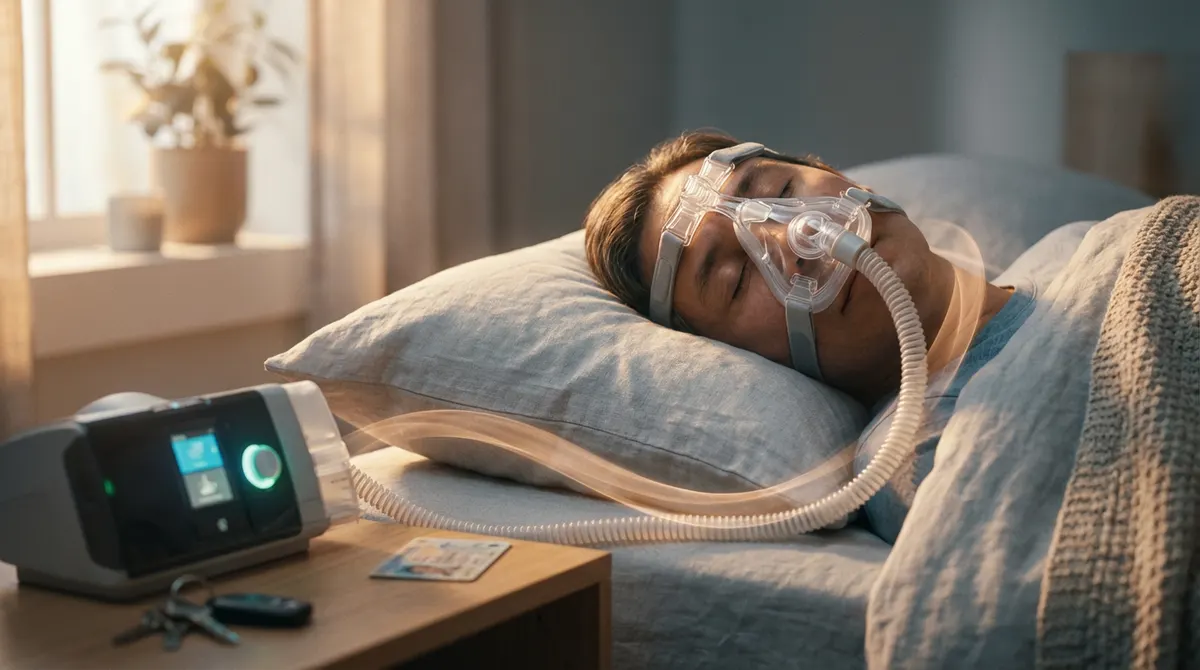
CPAP therapy is the most widely recommended and extensively researched treatment for obstructive sleep apnea, with consistent clinical evidence showing significant improvements in daytime alertness, sleep quality, and driving performance. A CPAP machine delivers a continuous stream of pressurised air through a mask worn during sleep, preventing the airway from collapsing and eliminating the breathing interruptions that fragment restorative sleep.
How CPAP Works to Secure Airways and Improve Sleep Quality
The mechanism behind CPAP therapy is straightforward. Pressurised air acts as a pneumatic splint for the upper airway, maintaining an open passage throughout the night so that breathing remains uninterrupted. This allows the brain to complete full sleep cycles, including the deep slow-wave and REM stages that restore cognitive function, mood regulation, and physical health.
When airway obstructions are eliminated, the brain no longer triggers micro-arousals in response to falling oxygen levels. Sleep quality improves measurably within the first few nights of effective CPAP use, and most patients report a noticeable improvement in morning alertness within one to two weeks. For drivers, this means waking with a level of cognitive readiness that untreated sleep apnea had been quietly eroding over months or years.
Clinicians typically assess treatment effectiveness by reviewing residual AHI, the number of breathing events per hour that persist during CPAP use. A well-titrated CPAP prescription should reduce the residual AHI to fewer than 5 events per hour, effectively normalising sleep-disordered breathing and restoring the restorative sleep architecture that optimal performance requires.
Driving Safety Benefits of Consistent CPAP Use
The driving safety benefits of consistent CPAP therapy are well established. Studies reviewed by the NIH have shown that CPAP treatment significantly improves performance on driving simulator tasks, including lane-keeping, reaction times, and hazard detection. Drivers who use their CPAP machines consistently report substantial reductions in daytime sleepiness, reduced frequency of microsleep episodes, and greater confidence during long-distance driving.
Research involving commercial drivers with obstructive sleep apnea found that those who used CPAP machines regularly had motor vehicle crash rates comparable to drivers without the condition. The critical variable was adherence. Drivers who used their CPAP machines for fewer than 4 hours per night showed significantly less improvement in driving safety outcomes than those achieving the recommended minimum. Full-night adherence is not a technicality; it is the direct mechanism through which treatment benefits are realised.
In real-world use, many drivers with sleep apnea report that CPAP therapy transformed their experience on long journeys and early morning commutes, exactly the conditions where fatigue is highest and reaction times matter most.
Practical Considerations for Drivers Using CPAP
For drivers who travel frequently, there are practical factors to address when integrating CPAP therapy into a mobile routine. Travel-compatible CPAP machines are lightweight, compact, and often available with battery backup options for use in vehicles, aircraft, and locations without reliable mains power access.
If you want to understand how different pressure delivery formats compare, the guide on CPAP versus APAP versus BiPAP explains each option and the circumstances in which one format may suit you better. You can also explore CPAP options through dumbo.health to find a device suited to your lifestyle and clinical needs.
IMPORTANT: Consistent CPAP use means wearing the device for the full night of sleep, including during daytime naps if taken. Many of the most restorative sleep stages occur in the later portions of the night, and removing the CPAP machine prematurely can undermine treatment effectiveness and limit the driving safety benefits of the therapy.
KEY TAKEAWAY: CPAP therapy is the most effective evidence-based treatment for obstructive sleep apnea, with direct and measurable improvements in driving safety, reaction times, and daytime alertness for those who use CPAP machines consistently every night.
For drivers who find CPAP difficult to tolerate or who are exploring complementary options, several effective alternatives exist that can support or replace CPAP therapy depending on the severity and nature of the condition.
Beyond CPAP: Effective Alternative and Complementary Treatments
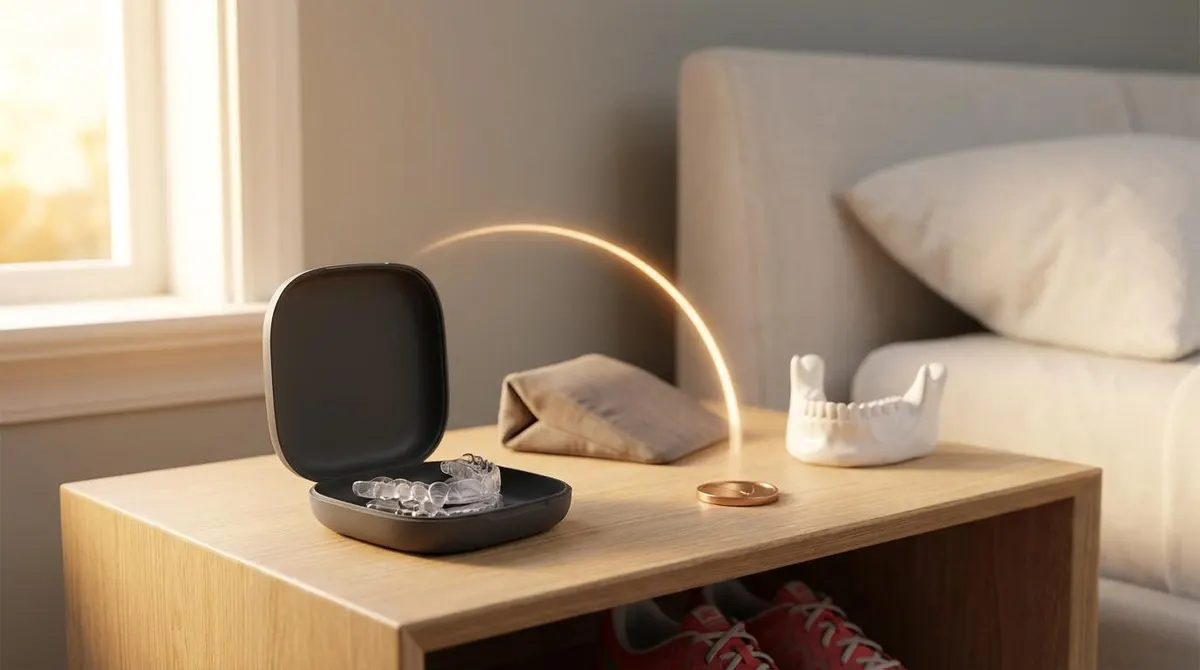
CPAP therapy is not the only effective option for sleep apnea. Several alternative and complementary treatments can meaningfully reduce sleep apnea severity, improve sleep quality, and lower driving risk, particularly for patients with mild to moderate obstructive sleep apnea or those who have difficulty maintaining consistent CPAP use.
Oral Appliance Therapy (OAT)
Oral appliance therapy uses a custom-fitted device worn in the mouth during sleep to reposition the lower jaw and tongue, preventing the airway from collapsing. These oral appliances are prescribed by dentists trained in dental sleep medicine and are most effective for mild to moderate obstructive sleep apnea, though some patients with more severe presentations also respond well.
The two main categories of oral appliances are mandibular repositioning devices, which advance the lower jaw forward to open the throat, and tongue-retaining devices, which hold the tongue in a forward position away from the airway. Custom-fit oral appliances fabricated from dental impressions are significantly more effective and comfortable than over-the-counter alternatives. For a detailed explanation of how oral appliance therapy works and who benefits most, the comprehensive guide on oral appliances for sleep apnea covers the clinical process and outcomes in full.
Many patients choose oral appliances over CPAP machines because they are silent, require no electricity, and are highly portable, making them a practical option for truck drivers, frequent flyers, and anyone whose routine involves overnight travel.
Surgical Interventions for Structural Issues
Surgery is considered when structural abnormalities in the upper airway are contributing to sleep apnea and when other treatments have not produced adequate results. Common surgical approaches include uvulopalatopharyngoplasty, which removes excess soft tissue from the throat to widen the airway, and maxillomandibular advancement, which repositions the jaw bones to permanently enlarge the airway.
Surgical outcomes vary depending on the anatomy involved and the severity of the sleep disorder. Surgery is typically reserved for patients who have not responded adequately to CPAP machines or oral appliances, or for those with clearly identifiable causes such as enlarged tonsils, severe nasal obstruction, or significant jaw structure abnormalities.
Emerging and Adjunctive Therapies
Hypoglossal nerve stimulation, delivered through an implanted nerve stimulator that activates the tongue muscles during sleep, has become an established option for patients with moderate to severe obstructive sleep apnea who cannot tolerate CPAP machines. The small device is implanted during a brief surgical procedure and activated nightly using a handheld remote.
Positional therapy targets sleep apnea that occurs predominantly when the person sleeps on their back. Specialised positional aids encourage side sleeping, which can significantly reduce apnea events in position-dependent cases without any medication or medical device. Orofacial therapy uses targeted exercises to strengthen the muscles of the tongue, throat, and face, reducing the tendency for airway collapse during sleep.
For a broader overview of evidence-based non-CPAP approaches, the guide on treating sleep apnea without CPAP explains each option in detail and identifies which patient profiles are most likely to benefit from each.
KEY TAKEAWAY: Multiple effective alternatives to CPAP therapy exist for sleep apnea, and the best choice depends on the severity of the condition, the patient's anatomy, lifestyle preferences, and long-term adherence potential.
Whichever medical treatment you pursue, lifestyle and behavioural strategies provide a critical additional layer of support that can significantly amplify clinical results.
Lifestyle and Behavioral Strategies: Foundational Support for Driving Safety

Lifestyle changes are a foundational component of sleep apnea management and can meaningfully reduce driving risk, particularly when combined with prescribed medical treatment. These strategies address the underlying conditions that worsen sleep apnea and contribute to persistent daytime sleepiness.
Weight Loss: A Key Intervention
Excess body weight, particularly around the neck and upper airway, is one of the most significant modifiable risk factors for obstructive sleep apnea. Fat deposits around the throat increase the likelihood of airway collapse during sleep, and a neck circumference greater than 40 centimetres in women or 43 centimetres in men is associated with meaningfully elevated obstructive sleep apnea risk.
Research published through the NIH has shown that a 10% reduction in body weight can lead to a 26% reduction in the Apnea-Hypopnea Index. For drivers carrying excess weight, addressing this through structured dietary changes and physical activity is one of the most impactful long-term steps available. In some cases of mild to moderate sleep apnea, significant weight loss can reduce severity to the point where additional interventions are no longer needed. You can read more about how weight loss affects sleep apnea and what the clinical evidence shows.
Optimizing Sleep Hygiene and Habits
Sleep hygiene encompasses the behavioural and environmental practices that support consistent, high-quality sleep. For people with sleep apnea, sleep hygiene improvements work alongside medical treatment to maximise sleep quality and minimise the daytime sleepiness that threatens driving safety.
Key sleep hygiene practices include maintaining a consistent sleep and wake schedule seven days a week, creating a dark and cool sleeping environment, avoiding alcohol within three hours of bedtime, limiting caffeine after early afternoon, and eliminating screen exposure in the hour before sleep. Alcohol deserves particular attention because it relaxes pharyngeal muscles and worsens airway collapse during sleep, increasing both apnea events and snoring severity even in people without a formal diagnosis.
Drivers who work irregular shifts or rotate between day and night schedules face additional challenges because circadian disruption independently compounds daytime sleepiness beyond what sleep apnea alone produces. If your driving schedule includes night work, speak with a sleep specialist in your area about strategies specific to shift workers.
Addressing Comorbid Conditions
Several conditions commonly co-occur with sleep apnea and compound both the sleep disorder itself and the resulting driving risk. These include obesity, hypothyroidism, chronic nasal congestion, hypertension, and type 2 diabetes. Effective management of these conditions through a primary care physician or specialist can reduce sleep apnea severity and improve the effectiveness of primary treatments.
TIP: If your driving alertness seems to be affected by a combination of factors beyond sleep apnea alone, speak with your doctor about a comprehensive health review. Managing comorbid conditions alongside targeted sleep apnea treatment consistently produces better outcomes than addressing either issue in isolation.
KEY TAKEAWAY: Lifestyle changes including weight management, improved sleep hygiene, and treatment of comorbid conditions enhance the effectiveness of any medical sleep apnea treatment and support sustainable improvements in driving safety.
For commercial drivers, the stakes of managing sleep apnea extend beyond personal health to federal compliance requirements that directly govern eligibility to operate a commercial vehicle.
Navigating Regulations: Sleep Apnea and Commercial Driver Compliance

Commercial drivers with sleep apnea face regulatory requirements designed to protect driver safety and public road safety. Understanding these requirements clearly is essential for maintaining a commercial driver's licence and protecting a driving career.
Federal Motor Carrier Safety Administration (FMCSA) and Department of Transportation (DOT) Regulations
The Federal Motor Carrier Safety Administration sets the medical fitness standards for commercial motor vehicle operators in the United States. Under current FMCSA guidelines, commercial drivers are required to pass a physical examination conducted by a certified medical examiner. This examination evaluates conditions that may impair driving safety, including sleep disorders such as obstructive sleep apnea.
While the FMCSA does not yet have a single mandatory sleep apnea regulation applicable to all commercial drivers, medical examiners are required to evaluate drivers for conditions that could cause sudden incapacitation or sustained impairment of alertness. A driver who presents with risk factors for obstructive sleep apnea, such as obesity, a large neck size, or reported daytime sleepiness, may be referred for a sleep study before certification is granted or renewed.
The FMCSA may issue a medical certificate for up to 24 months for drivers who do not have disqualifying conditions. Drivers identified as having obstructive sleep apnea will typically receive a shorter certification period, often 12 months or less, until they can demonstrate effective treatment compliance through documented CPAP machine data downloads showing consistent nightly use.
Maintaining a Commercial Driver's License (CDL) with Sleep Apnea
A sleep apnea diagnosis does not automatically disqualify a driver from holding a CDL. Commercial drivers who are diagnosed and actively treated for sleep apnea, particularly those using CPAP therapy with documented adherence, are generally considered medically fit to drive provided their symptoms are well controlled and their residual AHI is within acceptable limits.
Truck drivers who are already treating sleep apnea should carry documentation of their diagnosis and treatment adherence when attending a DOT physical examination. Compliance data from a CPAP machine is typically reviewed by the medical examiner and serves as the primary evidence confirming that the sleep disorder is being effectively managed.
Many truck drivers delay seeking evaluation out of fear that a diagnosis will end their career. The evidence consistently points in the opposite direction. A study conducted through the Virginia Tech Transportation Institute found that truck drivers with untreated sleep apnea had five times the crash rate of adequately treated drivers over the same driving exposure period. Untreated sleep apnea poses a far greater threat to commercial driving careers through accidents, progressive health deterioration, and potential disqualification on safety grounds than a properly managed diagnosis ever would. Finding a sleep specialist close to you who has experience working with commercial drivers can make the process straightforward and professionally manageable.
DID YOU KNOW: Some estimates suggest that up to 28% of commercial drivers in the United States may have sleep apnea, compared to around 5 to 10% of the general working adult population, according to research reviewed by the FMCSA. The elevated prevalence is linked to sedentary driving conditions, irregular schedules, and dietary patterns common in the long-haul industry.
KEY TAKEAWAY: Commercial drivers diagnosed with sleep apnea can maintain their CDL through documented treatment adherence, and seeking diagnosis proactively is a career-protecting decision rather than a career-ending one.
With regulations clarified, the next step is selecting the specific treatment approach that best fits your clinical needs, lifestyle demands, and driving responsibilities.
Choosing the Best Treatment for You: A Driver-Centric Approach
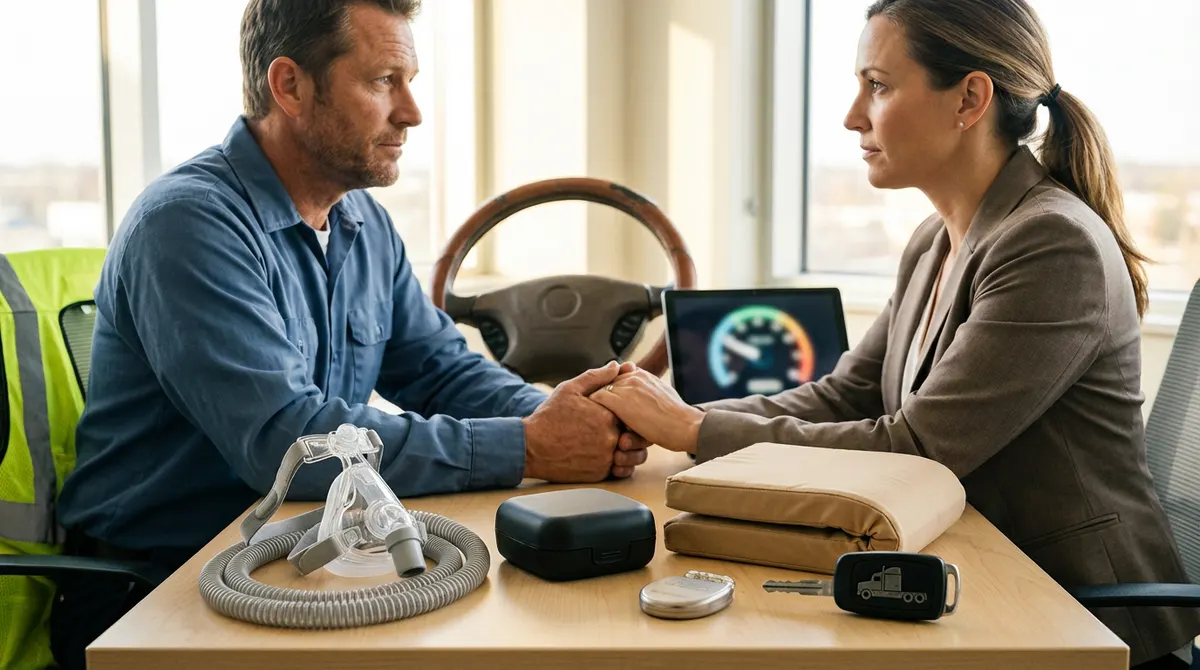
The best treatment for sleep apnea is the one that effectively reduces the Apnea-Hypopnea Index, is used consistently, and integrates practically into the demands of your driving life. A sleep specialist should guide this decision based on objective sleep study data and your personal circumstances.
The following table compares the primary treatment options across the factors most relevant to drivers.
| Treatment | Best For | Effectiveness | Portability | Long-Term Adherence | Typical Cost Range |
|---|---|---|---|---|---|
| CPAP Therapy | Moderate to severe OSA | Very High | Good (travel devices available) | Around 50-70% | Varies with insurance |
| Oral Appliance Therapy | Mild to moderate OSA | High | Excellent | Around 75-85% | Custom: $1,800 to $2,500 |
| Hypoglossal Nerve Stimulator | CPAP-intolerant moderate-severe OSA | High | Excellent (no nightly device) | Very High (implanted) | $30,000 or more |
| Positional Therapy | Position-dependent sleep apnea | Moderate | Excellent | Moderate | $50 to $200 |
| Weight Loss and Lifestyle | Mild OSA or adjunct use | Moderate to High (long-term) | Not applicable | Varies | Low direct cost |
| Surgery | Structural airway issues | Variable by anatomy | Not applicable | Not applicable | Varies by procedure |
For most drivers with moderate to severe sleep apnea, CPAP therapy remains the first-line recommendation due to its strong evidence base and the most directly documented improvements in driving safety. Oral appliances are the preferred alternative for drivers with mild to moderate sleep apnea who travel frequently or find CPAP machines impractical for their routine.
Factors for Personalized Treatment Decisions
Several clinical and lifestyle factors influence which treatment is most appropriate for a given driver. These include the severity of sleep apnea as indicated by the Apnea-Hypopnea Index, the presence of positional or weight-related contributions, anatomical factors such as jaw structure and neck size, whether comorbid conditions are present, and the patient's realistic ability to maintain consistent adherence over the long term.
Age and overall health also play a role in treatment selection. Younger patients with mild positional sleep apnea may respond well to lifestyle modifications and positional therapy, while older patients with severe obstructive sleep apnea and significant comorbidities are more likely to require CPAP therapy or a surgical option to achieve adequate control.
The Indispensable Role of Your Healthcare Team
Working with a sleep specialist is essential for any driver managing sleep apnea. A sleep specialist can interpret sleep study results, prescribe and titrate CPAP therapy, refer for oral appliance fitting with a qualified dentist, and coordinate with a certified medical examiner for CDL compliance purposes when required.
If you have not yet been evaluated and are concerned about how sleep disorders may be affecting your driving, reaching out to a sleep specialist or sleep clinic in your area is the most important immediate step. You can also begin the process at home by starting your assessment through dumbo.health to determine whether a home sleep test is appropriate for your situation.
Prioritizing Driving Safety in Your Treatment Plan
Every treatment decision should be evaluated through the lens of driving safety. Ask your sleep specialist how quickly the proposed treatment is expected to produce measurable improvements in daytime alertness, whether any temporary precautions around driving are recommended during the initial adjustment period, and how treatment effectiveness will be monitored over time through follow-up sleep data.
KEY TAKEAWAY: The best sleep apnea treatment for drivers is the one that is clinically effective for your severity level, practically sustainable within your lifestyle, and overseen by a sleep specialist who understands your specific driving demands.
Common Myths About Sleep Apnea and Driving Debunked
Persistent misconceptions about sleep apnea and its relationship to driving safety prevent many people from seeking diagnosis and effective treatment at the point when intervention would make the greatest difference.
MYTH: Sleep apnea only affects overweight or elderly people. FACT: While obesity and older age increase the risk of developing obstructive sleep apnea, the condition affects people across all body types, ages, and fitness levels. The American Academy of Sleep Medicine notes that anatomical factors including jaw structure, neck size, nasal obstruction, and tongue position can produce obstructive sleep apnea in lean adults and children. A healthy BMI does not rule out the diagnosis.
MYTH: If you snore, you have sleep apnea. If you do not snore, you do not. FACT: Loud snoring is a common symptom of sleep apnea, but the relationship is not one-to-one in either direction. Some people with clinically significant obstructive sleep apnea have relatively quiet breathing, particularly those with central rather than obstructive patterns. Others snore loudly without meeting the diagnostic threshold for the condition. A sleep study conducted by or interpreted by a sleep specialist is the only reliable way to confirm or exclude a diagnosis.
MYTH: Mild sleep apnea does not impair driving and does not require treatment. FACT: Research reviewed by the NIH indicates that even mild obstructive sleep apnea can impair reaction times and increase error rates on driving simulator tests. The Apnea-Hypopnea Index threshold for a clinical diagnosis begins at 5 events per hour, but impaired vigilance and slower reaction times have been documented at levels below this boundary in studies examining sustained attention performance. Severity categories are clinical guidelines, not guarantees of driving safety.
MYTH: You can compensate for sleep apnea fatigue with caffeine, cold air, or short rest breaks. FACT: Caffeine can temporarily mask the subjective feeling of sleepiness but does not restore the cognitive performance deficits caused by fragmented sleep. The Sleep Foundation explains that caffeine improves alertness scores on subjective measures but does not meaningfully restore reaction times, working memory, or sustained attention to levels seen in fully rested individuals. A 15 to 20 minute nap offers modest short-term improvement, but neither strategy substitutes for addressing the underlying sleep disorder.
MYTH: Telling your doctor about sleep apnea symptoms will automatically result in losing your driving licence. FACT: In the United States, a sleep apnea diagnosis alone does not disqualify drivers from holding a private or commercial driving licence. The FMCSA approach for commercial drivers focuses specifically on whether the condition is effectively treated and controlled, not simply on the existence of a diagnosis. Drivers who demonstrate consistent treatment adherence through documented CPAP use or an alternative therapy are generally considered medically fit to operate commercial motor vehicles. Seeking diagnosis proactively is consistently the safer and more career-protective choice.
KEY TAKEAWAY: The most common fears about sleep apnea and driving are not supported by clinical evidence, and addressing the condition through diagnosis and treatment is both safer and more practical than avoiding assessment.
Sustaining Safety: Adherence and Long-Term Management
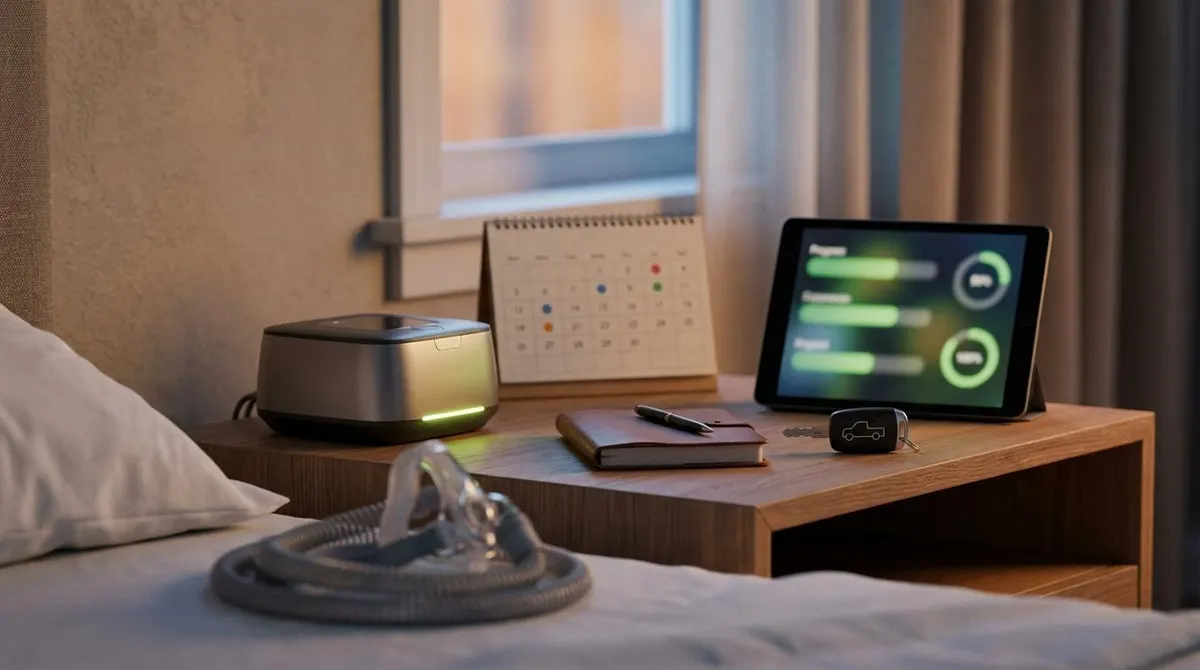
Long-term adherence to sleep apnea treatment is the single most important factor in determining whether the driving safety benefits of treatment are maintained over time. CPAP machines left unused or oral appliances worn only occasionally cannot reliably protect driving safety or satisfy regulatory compliance requirements for commercial drivers.
The Lifelong Commitment to Treatment Adherence
CPAP therapy is most effective when used every night for the full duration of sleep, including during daytime naps. Research consistently shows that CPAP adherence of at least 4 hours per night is associated with significantly better outcomes in daytime sleepiness, cognitive function, and driving performance compared to partial or inconsistent use. The improvement in reaction times that adherent users experience compared to those who skip nights is clinically meaningful for driving safety.
In real-world use, adherence challenges are common and are most often related to mask fit, pressure comfort, nasal congestion, or adjustment to wearing a device during sleep. Most of these barriers are addressable through follow-up with a sleep specialist, who can adjust pressure settings, recommend a different mask style, add heated humidification, or suggest strategies for building tolerance. Drivers should not discontinue CPAP therapy without first consulting their healthcare team.
Many patients find that adherence improves significantly after the first two to four weeks once the subjective improvements in sleep quality and daytime alertness become consistently apparent. The contrast between treated and untreated sleep is often the most powerful motivator for sustained use over the long term.
Proactive Management for Optimal Driving Performance
Ongoing monitoring is an important part of long-term sleep apnea management. Modern CPAP machines record nightly data on usage duration, mask seal quality, residual AHI, and pressure events, which can be reviewed remotely by a sleep specialist to confirm that treatment remains effective as circumstances change over time.
Weight changes, new medications, seasonal nasal congestion, and shifts in alcohol consumption can all alter the effectiveness of sleep apnea treatment over months or years. Drivers should schedule regular medical check-ups with their sleep specialist, typically every 6 to 12 months, to review treatment data and adjust settings or devices as needed. If symptoms of daytime sleepiness or impaired alertness return, a prompt appointment should be arranged rather than waiting until the next scheduled review.
For commercial drivers, proactive management also means staying ahead of CDL renewal requirements by ensuring treatment compliance documentation is current before each DOT physical. Providers in your area who specialise in working with commercial drivers can often coordinate directly with certified medical examiners to streamline the certification process and minimise disruption to your schedule.
TIP: Set a recurring reminder every six months to review your CPAP data with your sleep specialist or schedule a follow-up check. Proactive management prevents symptoms from returning unnoticed and is far easier to manage than responding to a recurrence of drowsy driving symptoms.
KEY TAKEAWAY: Long-term treatment adherence and regular monitoring with a sleep specialist are essential for maintaining the driving safety gains that effective sleep apnea treatment provides, and for meeting the ongoing compliance requirements that commercial licences demand.
Frequently Asked Questions
What is the 3% or 4% rule for sleep apnea, and does it affect my driving?
The 3% and 4% rules refer to the oxygen desaturation threshold used when scoring hypopnea events during a sleep study to calculate the Apnea-Hypopnea Index. A 4% desaturation threshold counts an event only if oxygen levels drop by 4% or more, while the 3% threshold captures more events and typically produces a higher AHI score for the same recording. The choice of threshold can influence how severe your sleep apnea appears on paper. For driving safety purposes, the clinically relevant figure is your total AHI and how effectively treatment reduces it, rather than which scoring threshold was applied.
Why do so many truck drivers have sleep apnea?
Truck drivers have disproportionately high rates of sleep apnea due to a combination of occupational and lifestyle factors that interact over time. Long hours of sedentary driving promote weight gain, which is a primary risk factor for obstructive sleep apnea. Irregular schedules disrupt circadian rhythms, independently worsening sleep quality and daytime sleepiness. Meal choices on the road tend to be calorie-dense and nutritionally poor, contributing to metabolic and weight-related risk over the course of a career. Some research estimates that up to 28% of commercial drivers in the United States have sleep apnea, compared to around 5 to 10% of the general working adult population.
Can I lose my commercial driver's licence because of sleep apnea?
A sleep apnea diagnosis does not automatically result in CDL disqualification under FMCSA guidelines. Commercial drivers must demonstrate that any identified medical condition is adequately treated and controlled to obtain or renew medical certification. Drivers with sleep apnea who are actively using CPAP machines or another documented treatment and can provide evidence of adherence are generally certified to drive. The risk to your commercial driver's licence is significantly greater from untreated sleep apnea leading to a crash than from voluntarily seeking evaluation and beginning treatment.
How quickly does CPAP therapy improve driving safety?
Most drivers using CPAP therapy report subjective improvements in alertness and daytime sleepiness within the first one to two weeks of consistent use. Research published through the NIH has shown that measurable improvements in driving simulator performance, including faster reaction times and more accurate lane-keeping, can appear within two to three weeks of effective treatment. Full recovery of cognitive performance to baseline levels may take several months of consistent CPAP use in cases of longstanding severe sleep apnea, but meaningful functional improvement typically begins well within the first month.
Are oral appliances as effective as CPAP machines for driver safety?
For mild to moderate obstructive sleep apnea, oral appliances can achieve comparable improvements in daytime sleepiness and driving-related performance to CPAP therapy. The advantage of oral appliances for many drivers is higher long-term adherence because they are silent, compact, require no power source, and are straightforward to use while travelling. For severe obstructive sleep apnea, CPAP therapy generally achieves better control of the Apnea-Hypopnea Index and produces greater improvements in reaction times and sustained alertness. A sleep specialist can advise on which option is more appropriate based on your specific AHI, anatomy, and lifestyle.
Is it illegal to drive with untreated sleep apnea?
There is no federal law in the United States that explicitly prohibits private individuals from driving with a sleep apnea diagnosis. However, commercial drivers are subject to DOT and FMCSA medical fitness standards, and a medical examiner who identifies untreated sleep apnea with significant daytime sleepiness may decline to certify a driver as medically fit until the condition is treated and compliance is documented. For all drivers, liability considerations apply if a drowsy driving incident occurs and a previously identified and untreated sleep disorder is established. Consulting a sleep specialist near you and beginning treatment is the responsible choice for both safety and legal protection.
What should I do if I feel unable to stop myself from falling asleep while driving?
Feeling unable to stay awake while driving is a medical emergency requiring immediate action. Pull over in a safe location right away and do not continue driving until you have rested and the urge to sleep has passed. Speak with a doctor or sleep specialist as soon as possible and request a sleep study to identify the underlying cause. Persistent episodes of uncontrollable drowsiness at the wheel may indicate obstructive sleep apnea, narcolepsy, or another sleep disorder that requires formal diagnosis and treatment. A home sleep test can confirm whether sleep apnea is contributing and help you begin effective treatment promptly.
Conclusion
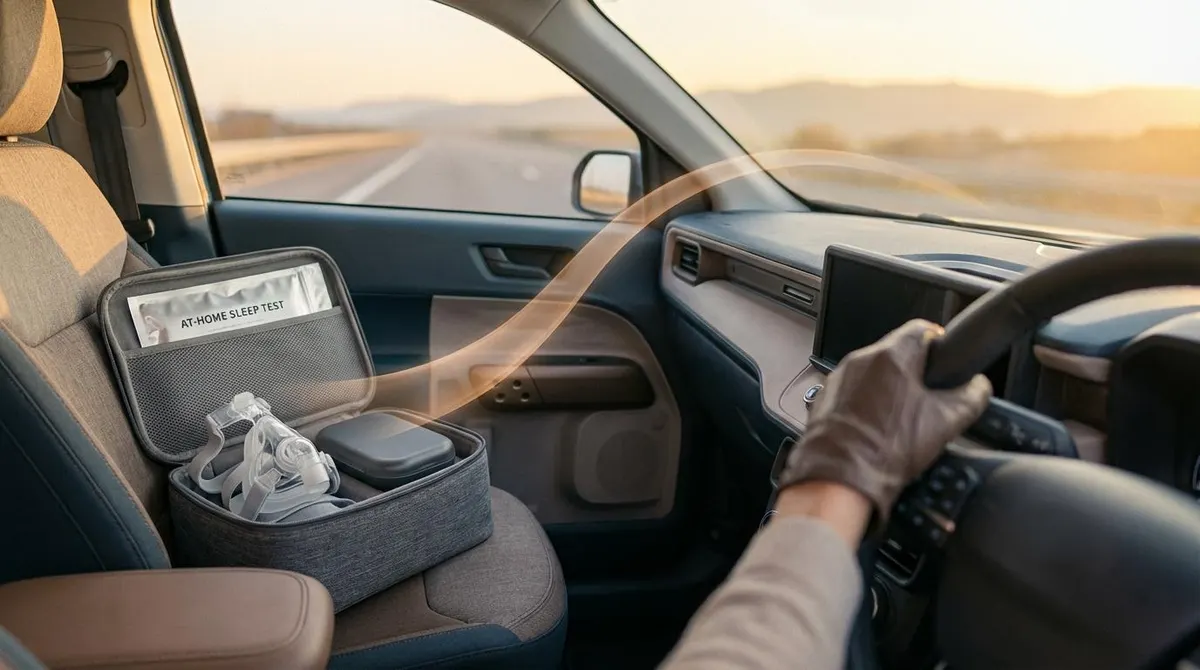
Effective treatment for sleep apnea is one of the most direct and evidence-based ways to improve driving safety for anyone affected by this common but often unrecognised sleep disorder. From CPAP therapy and oral appliances to lifestyle changes and surgical options, the range of available treatments means that virtually every driver can find an approach that works for their clinical needs and practical circumstances. Commercial drivers have additional regulatory incentives to seek diagnosis and maintain documented treatment compliance. Whatever your driving situation, addressing sleep apnea symptoms protects you, your passengers, and everyone sharing the road with you. If you are ready to take the first step, you can begin with an at-home sleep test through dumbo.health today and have results reviewed by a sleep specialist within days.
Related DOT Physical Topics
- How Sleep Apnea Affects Overall Driving Safety
- What are the current DOT requirements for sleep apnea testing for commercial drivers
- Home Sleep Apnea Test for Commercial Drivers The CDL Holder's Complete Guide
- Sleep Apnea Test for CDL Drivers
- Are there legal requirements for drivers with sleep apnea
- What Are the DOT Requirements for Drivers With Sleep Apnea
- The Comprehensive Guide to Suboxone, Sleep Apnea, and FMCSA Compliance for Commercial Motor Vehicle Operators
- Sleep Apnea Tests for DOT Compliance What tests are accepted
- How Does Sleep Apnea Affect Driving Ability
- What are the current FMCSA guidelines on sleep apnea for commercial drivers
- Does a DOT Physical Test for Weed or THC The Complete Guide for Commercial Drivers
- Are There New DOT Rules or Laws on Sleep Apnea Testing
- Why DOT Sleep Tests at Home Matter for Your Career and Health
- What Precautions Should Drivers With Sleep Apnea Take
- How can drivers with sleep apnea qualify again after a failed DOT physical
- Can you fail a DOT physical because of sleep apnea
- When Can Sleep Apnea Affect a DOT Physical
- Can you pass a DOT physical with sleep apnea
- What happens if you fail a DOT physical due to sleep apnea
- At Home Sleep Test for Truck Drivers
- Is a Sleep Study Required for a DOT Physical
- DOT sleep apnea test at home
- Can You Get a DOT Physical in Any State The Complete Guide for Commercial Drivers
- Can You Get a DOT Physical Online The Complete Guide for Commercial Drivers
- What drugs do they test for in a DOT drug test
- Remote DOT Physical The Complete Guide for Commercial Drivers
- Essential 171 DOT Definitions for Commercial Drivers
- Is a drug test required for a DOT physical
- DOT Physical ICD-10 & Billing Codes The Complete Guide for Accurate Compliance and Reimbursement
- DOT Physical Forms & Paperwork The Complete Guide for Commercial Drivers
- What Forms Do You Need for a DOT Physical
- Navigating DOT Stroke Guidelines for CMV Drivers What You Need To Know
- Medical Examiner's Certificate (Form MCSA-5876) The Complete Guide for Commercial Drivers
- Online DOT Physical Without Insurance A Complete Guide for Commercial Drivers
- Navigating the Florida DOT Physical Your Essential Guide for CDL Drivers
- What Is the Urine Test for in a DOT Physical
- Online DOT Physical Self-Pay The Complete Guide for CDL Drivers and Owner-Operators
- DOT physical self pay guide for commercial drivers paying out of pocket
- Can You Fail a DOT Physical for Being Overweight
- DOT Hypertension Guidelines The Complete Blood Pressure Guide for Commercial Drivers
- The Ultimate DOT Preparation Checklist for Motor Carriers and Commercial Drivers
- DOT Medical Exam Self-Pay A Complete Guide for Commercial Drivers
- DOT Physical Insurance or Self Pay How to Choose the Right Payment Option for Your Exam
- Can You Fail a DOT Physical for High Blood Pressure
- BMI for DOT Physical What Commercial Drivers Need to Know
- What Happens During the DOT Physical Exam The Complete Guide for Drivers
- What Happens If Your DOT Physical Expires Compliance Guide for Commercial Drivers
- Medical Examination Report (MER) – Form MCSA-5875 The Complete Guide for Commercial Drivers
- The Ultimate DOT Physical Guide for Commercial Drivers (2025–2026)
- Non-DOT Physical A Comprehensive Guide to Workforce Health and Safety
- DOT Physical Requirements A Complete Guide for CDL Drivers
- What Does DOT Stand for in a DOT Physical
- What Happens If You Fail a DOT Physical Twice The Complete Guide for Commercial Drivers
- Do They Check for Hernia During a DOT Physical
- What Happens If You Fail a DOT Drug Test The Complete Guide for Commercial Drivers
- How Long Does a DOT Physical Take A Complete Guide for Commercial Drivers
- What eye chart is used for a DOT physical
- Can You Get a Second Opinion on Your DOT Physical A Complete Guide for Commercial Drivers
- The DOT Physical Exam Ensuring You're Fit for the Road
- Online DOT Physical The Complete Guide for Commercial Drivers and Medical Examiners
- How Do You Submit Your DOT Physical to the DMV
- What Can Disqualify You From a DOT Physical
- Does a DOT physical include a drug test
- Can You Pass a DOT Physical with Epilepsy
- DOT Physical Self Pay Cost
- DOT Physical Exam Basics
- 2026 DOT Inspection Dates
- Can You Pass a DOT Physical With a Hernia
- DOT Physical Cost Breakdown What Drivers Pay & Why
- Can You Pass a DOT Physical With One Eye
- Can You Pass a DOT Physical With a Pacemaker
- Telehealth Dot Physical
- Who needs a DOT physical
- DOT Physical & Alcohol Requirements
- DOT Physical Out of Pocket What Commercial Drivers Actually Pay
- Why do they measure your neck during a DOT physical
- Navigating Your DOT Physical with Common Medical Conditions
- DOT Physical Online Cost
- Walk In DOT Physical Self Pay
- What Should You Bring to a DOT Physical
- Can You Get a DOT Physical Online
- CDL PHYSICAL SELF PAY
- Your Complete Guide What's Included in a DOT Physical Exam
- New DOT Physical Requirements What Drivers MUST Know About New Updates
- DOT Physical Insurance & Recertification The Complete Driver's Guide
- DOT Physical Cash Pay
- Same Day DOT Physical
- Virtual DOT Physical
- DOT Physical Vision & Eye Requirements
- What blood pressure do you need to pass a DOT physical
- Online DOT Exam What Drivers and Medical Examiners Need to Know
- Do They Check Your Private Parts During a DOT Physical
- DOT Physical Blood Pressure Requirements What Drivers Need to Know
- DOT Physical Chiropractor Your Complete Guide to CDL Exams
- Is a DOT physical the same as a regular physical
- How to Pass a DOT Physical The Complete Commercial Driver's Guide
- What should I expect at a DOT physical
- What Does a DOT Physical Consist Of
- DOT Physical at Urgent Care What Commercial Drivers Need to Know
- Can You Pass a DOT Physical with Diabetes
Take the next step before your DOT physical
Start with the free quiz if you are unsure about your risk, or order an at-home sleep test if you have already been flagged for possible sleep apnea.
AI summary
Sleep apnea is a sleep disorder marked by repeated breathing interruptions that reduce oxygen levels and fragment restorative sleep. Untreated obstructive sleep apnea (OSA) increases drowsy driving risk through excessive daytime sleepiness, impaired vigilance, slower reaction time, and microsleeps. Key clinical concepts include sleep studies (lab or home sleep test) and the Apnea-Hypopnea Index (AHI), which classifies severity; AHI above 15 indicates moderate to severe OSA. CPAP therapy is the first-line treatment for moderate to severe OSA. It splints the airway open, and effective titration aims for residual AHI under 5. Driving-related benefits depend on adherence; use under 4 hours per night shows less improvement. Alternatives and adjuncts include custom oral appliance therapy (mandibular repositioning or tongue-retaining devices), positional therapy, weight loss, sleep hygiene, hypoglossal nerve stimulation for CPAP-intolerant moderate to severe OSA, and selected surgeries (uvulopalatopharyngoplasty, maxillomandibular advancement). Commercial drivers may need DOT/FMCSA medical certification review and documented CPAP compliance data.

Nicolas Nemeth
Co-Founder
Nico is the co-founder of Dumbo Health, a digital sleep clinic that brings the entire obstructive sleep apnea journey home. Patients skip the sleep lab and the long wait to see a specialist. Dumbo Health ships an at home test, connects patients with licensed sleep clinicians by video, and delivers CPAP or a custom oral appliance with ongoing coaching and automatic resupply in one clear subscription.
Keep reading

How Long Does a DOT Physical Take? A Complete Guide for Commercial Drivers

What Happens If You Fail a DOT Drug Test? The Complete Guide for Commercial Drivers


