Essential 171 DOT Definitions for Commercial Drivers
This plain-English reference explains the DOT and FMCSA vocabulary commercial drivers and carriers see in training, onboarding, inspections, audits, and daily operations. It defines core regulatory terms like Commercial Motor Vehicle, FMCSRs, and interstate vs intrastate commerce to clarify when rules apply. It walks through registration and authority language, including USDOT Number, MC Number, operating authority, UCR, IRP, IFTA, and the New Entrant Safety Assurance Program. It also covers driver qualification concepts such as CDL classes, endorsements, restrictions, Medical Examiner’s Certificate, and Driver Qualification Files. Practical sections summarize testing steps, vehicle weight and equipment terms, inspection and out-of-service criteria, Hours of Service and ELD logging, drug and alcohol testing and the Clearinghouse, and hazmat freight documentation. Common myths are corrected to reduce compliance mistakes.
Struggling with sleep?
Find out if sleep apnea is the reason.
FDA-cleared. $149 flat. Physician-reviewed results in 48 hours.

Essential 171 DOT Definitions for Commercial Drivers

DOT definitions are the official and everyday terms that explain how commercial driving, licensing, safety, inspections, and compliance work in the United States. According to the Federal Motor Carrier Safety Administration, commercial drivers and carriers operate under a connected system of registration, medical qualification, Hours of Service, vehicle safety, and drug and alcohol rules. This guide translates those terms into plain English so you can understand what they mean in real operations. You will learn the vocabulary used in CDL training, roadside inspections, carrier onboarding, compliance audits, and freight movement. You will also see how related terms connect so the rules make more practical sense. Keep reading for a true 101-term reference guide you can actually use.
Introduction and core industry language

The most important DOT terms define who regulates commercial transportation, which vehicles are covered, and what type of carrier or operation is involved. These definitions matter because they shape nearly every licensing, inspection, and DOT compliance decision that follows. According to the Federal Motor Carrier Safety Administration, understanding whether you are operating a regulated carrier or Commercial Motor Vehicle is the foundation of compliance.
Department of Transportation is the federal department that oversees transportation policy, regulation, and safety in the United States.
Federal Motor Carrier Safety Administration is the agency within the United States Department of Transportation that regulates and enforces safety rules for many commercial motor vehicles and drivers.
Commercial Motor Vehicle is a vehicle used in commerce to transport passengers or property that meets federal size, passenger, or hazardous materials thresholds.
Not sure if sleep apnea applies to you?
Take our 2-minute sleep risk quiz to see whether sleep apnea could affect your DOT physical. No account required.
Federal Motor Carrier Safety Regulations are the formal FMCSRs that govern safety for interstate motor carriers, drivers, and commercial motor vehicles.
DOT regulations is the plain-language term many drivers use to describe the wider set of federal regulations that apply to commercial transportation.
Interstate Commerce is transportation that crosses state lines or directly affects trade, traffic, or transportation between states.
Intrastate Commerce is transportation that takes place entirely within one state, although state government rules may still mirror federal requirements.
For-Hire Carrier is a carrier that transports cargo or passengers for compensation.
Private Carrier is a business that transports its own property rather than hauling for the public.
Motor Carrier is a person or business that provides commercial transportation of passengers or property.
Registrant is the person or company registered in a transportation system, program, permit, or filing.
DOT compliance starts with classification. DOT compliance becomes much easier when you know whether a rule applies to interstate carriers, private fleets, or specific commercial motor vehicles. That is why these basic terms matter before you move on to numbers, permits, and credentials.
KEY TAKEAWAY: Core industry terms tell you who regulates the operation, what kind of vehicle is involved, and which legal framework applies.
The next section explains the identification and registration terms that determine whether a carrier can legally operate.
Identification, registration, and authority

Registration and authority terms explain how carriers are identified, tracked, and authorized to operate. These definitions matter because incorrect registration can stop a business from hauling freight even before the first load is booked. According to the Federal Motor Carrier Safety Administration registration portal, first-time applicants often need to understand USDOT registration, authority, and related filings together.
Already diagnosed and need CPAP support?
Dumbo Health helps patients start CPAP without the usual confusion, paperwork, or upfront cost. Equipment, setup, supplies, and ongoing support are all handled in one place.
DOT Number, also called a USDOT Number, is the identification number used to track a carrier's safety information, inspections, audits, and compliance history.
Motor Carrier Number, often called an MC Number, is a number tied to operating authority for certain interstate for-hire carriers.
Operating Authority is federal permission to transport regulated property or passengers in interstate commerce under specific business conditions.
Unified Carrier Registration is the annual registration system used by covered interstate carriers, brokers, and related businesses.
International Registration Plan is the apportioned registration agreement that lets qualified fleets register for travel in multiple jurisdictions.
International Fuel Tax Agreement is the tax reporting agreement that simplifies fuel use tax reporting across member jurisdictions.
Apportioned Plates are registration plates issued under the International Registration Plan for fleets operating in multiple jurisdictions.
BOC-3 Filing is the designation of process agents in each state where a carrier may operate.
Process Agent is the person or company authorized to receive legal documents on behalf of a carrier.
New Entrant Registration is the initial registration stage for a newly established carrier entering the federal safety system.
New Entrant Safety Assurance Program is the FMCSA program that monitors new motor carriers and requires a safety audit during the early operating period. According to the FMCSA New Entrant Safety Assurance Program, new entrants are monitored during their first 18 months.
DOT safety audit is the review conducted during the new entrant period to check whether required safety-management controls and records are in place.
Safety Measurement System is the FMCSA data and scoring framework used within CSA to monitor carrier safety performance.
Safety information systems is the broad term for databases and digital records used to track inspections, violations, crashes, and carrier status.
safety-management controls are the internal policies, procedures, and corrective actions a carrier uses to maintain safe operations.
MCS-90 form is an endorsement attached to a liability insurance policy that demonstrates financial responsibility for certain motor carriers.
Insurance requirements are the minimum financial responsibility rules that apply to covered motor carriers based on operation type and cargo.
DID YOU KNOW: FMCSA says new entrants are subject to a safety audit during the first 18 months of operation, which is why early recordkeeping matters so much. FMCSA
KEY TAKEAWAY: Registration terms determine whether a carrier is identified, authorized, insured, and ready for federal oversight.
Once the carrier is properly registered, the next step is understanding the licensing and qualification language used for drivers.
Driver qualification and licensing essentials

Driver qualification terms explain whether a person is legally licensed, medically qualified, and properly documented to operate a CMV. These definitions matter because DOT driver qualifications affect hiring, roadside enforcement, and long-term eligibility to work. According to the FMCSA medical certification page, licensing and medical status are closely linked in commercial driving.
Commercial Driver's License is the license required to operate certain regulated commercial motor vehicles.
Commercial Learner's Permit is the permit that allows supervised CDL training before a full skills test is passed.
CDL Class A is the class generally used for many combination vehicles, including tractor trailer operations.
CDL Class B is the class generally used for many heavy single vehicles such as straight trucks and some buses.
CDL Class C is the class used for certain smaller regulated vehicles carrying passengers or placarded hazardous materials when Class A or Class B does not apply.
CDL classes is the everyday term for the three main federal commercial licensing categories: Class A, Class B, and Class C.
CDL classifications is another common term for the same license categories.
Class A is the highest standard CDL class for many combination vehicle operations.
Class B is the CDL category for many large single-unit vehicles.
Class C is the CDL category for certain smaller commercial motor vehicles that still require a CDL.
Class A license is a common plain-language way to refer to a CDL Class A credential.
Class B license is a common plain-language way to refer to a CDL Class B credential.
Endorsements are added permissions on a CDL for specialized cargo, vehicle, or passenger operations.
Restrictions are limits placed on a CDL based on testing, vehicle type, or other qualification conditions.
Hazmat Endorsement (H) is the endorsement required for drivers who transport certain hazardous materials.
Tank Vehicle Endorsement (N) is the endorsement required for operating qualifying tank vehicle equipment.
Combination Hazmat and Tank Endorsement (X) is the combined endorsement covering both Hazmat and tank vehicle operation.
Passenger Endorsement (P) is the endorsement required for operating qualifying passenger vehicles.
School Bus Endorsement (S) is the endorsement required for operating a school bus in covered situations.
Doubles/Triples Endorsement (T) is the endorsement required to operate qualifying double or Triple Trailers where permitted.
school bus is a bus used to transport students and requiring special licensing and safety rules in covered operations.
Triple Trailers are multi-trailer combinations involving three trailers, allowed only in certain jurisdictions and operations.
manual transmission restriction is a CDL limitation that can apply if the driver tests in an automatic-only setup or otherwise does not qualify for manual transmission operation.
Medical Examiner's Certificate is the official certificate issued after a qualifying DOT physical exam by a certified medical examiner.
DOT medical certificate is the common driver term for the same Medical Examiner's Certificate.
National Registry is the official National Registry of Certified Medical Examiners maintained by FMCSA.
FMCSA National Registry of Certified Medical Examiners is the federal system that lists certified examiners authorized to perform interstate CMV physical qualification examinations. According to FMCSA, interstate CMV drivers must obtain their examination and MEC from a certified examiner listed on the registry.
Driver Qualification is the process of proving a driver meets licensing, medical, experience, and record requirements.
Driver Qualification File is the employer-maintained file containing the records that support a driver's qualification status.
Driver qualification files is the plural form used when referring to the full set of qualification files a carrier maintains.
DOT driver qualifications is the broad phrase describing the full federal qualification standard for commercial drivers.
Motor Vehicle Record is the official driving history record obtained from a state licensing authority.
Commercial Driver's License Information System is the interstate information system used to exchange CDL status and conviction data among states.
disqualifying offense is an offense that can remove or suspend a driver's legal ability to hold or use a CDL.
Serious Traffic Violation is a defined category of offense that can lead to CDL disqualification under federal and state rules.
disqualifying factors is the plain-language term for violations, conditions, or record issues that can prevent qualification or certification.
MEC expiration dates are the dates on which a Medical Examiner's Certificate expires and must be updated to maintain valid certification status.
DOT physical exam is the physical qualification examination required for covered interstate commercial drivers.
If you want a practical overview of medical issues that may affect certification, Dumbo Health's guide to sleep apnea symptoms is a useful reference because fatigue-related symptoms can matter in driver health evaluations.
KEY TAKEAWAY: Driver qualification combines CDL class, endorsements, records, and medical certification into one legal standard for driving eligibility.
Once licensing is clear, the next step is understanding how drivers are tested and judged ready for real-world operation.
Testing, skills, and driver readiness
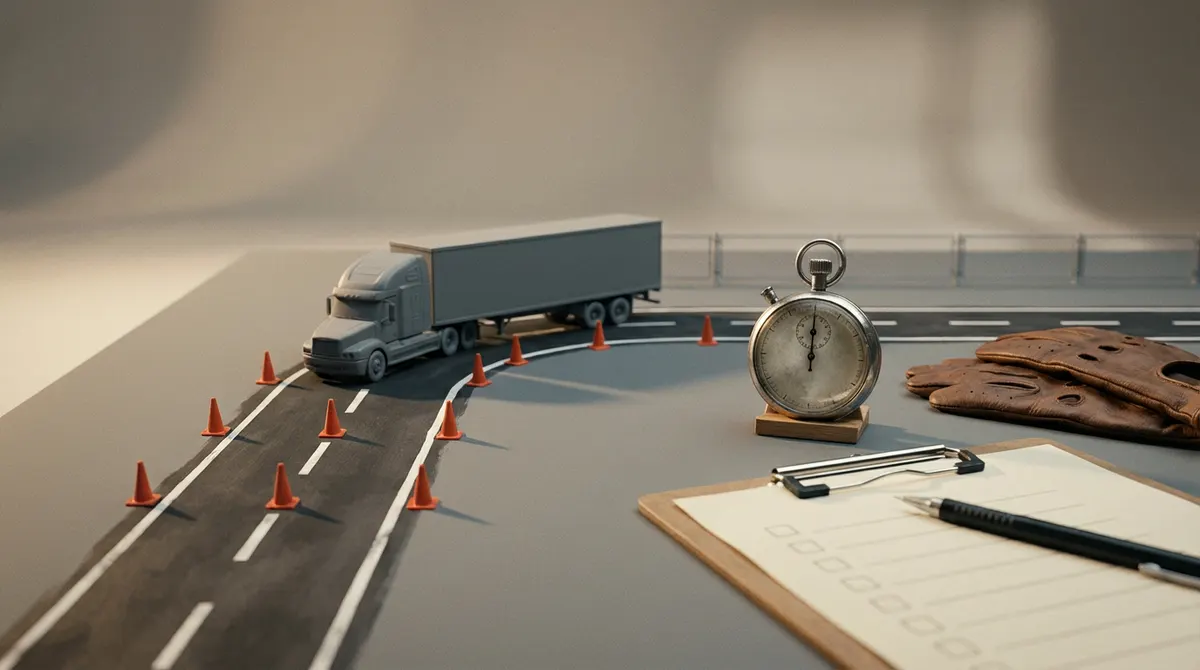
Testing terms explain how a driver proves knowledge, control, and safe road behavior before operating independently. These definitions matter because the route from permit to employment depends on passing the right tests in the right sequence. According to the FMCSA Entry-Level Driver Training page, some applicants must complete federal training before obtaining certain CDL credentials.
Knowledge Test is the written exam that measures understanding of commercial driving rules, signs, and safe operation.
Skills Test is the practical exam that measures inspection ability, vehicle control, and road driving.
Pre-Trip Inspection Test is the part of the skills test where the driver identifies and explains safety-related vehicle components and defects.
Vehicle Inspections Test is a common plain-language term for the inspection portion of CDL testing.
Basic Control Skills Test is the part of the CDL exam that measures low-speed vehicle control such as backing, parking, and lane positioning.
Basic Controls Test is another common term drivers use for the same basic control portion of CDL testing.
Road Test is the on-road part of the CDL skills exam that evaluates safe driving in traffic.
Air Brake Test is the knowledge and or skills component covering air brake systems and operation.
Entry-Level Driver Training is the federal training requirement for certain first-time CDL and endorsement applicants.
Behind-the-Wheel Training is the hands-on driving and range training portion of ELDT.
Third Party Skills Assessment is CDL skills testing conducted by an approved third-party tester rather than only by the state itself.
defensive driving is the practice of anticipating hazards, maintaining space, and making risk-reducing driving decisions.
Driver Fitness for Duty is the condition of being physically, mentally, and legally ready to perform safety-sensitive driving work.
physical fitness is the driver's physical condition as it relates to the safe operation of a CMV.
driver fatigue is reduced alertness or performance caused by insufficient sleep, long work periods, or circadian disruption.
unsafe driver behavior is any behavior that increases crash risk, such as distraction, aggressive driving, speeding, or failure to inspect equipment properly.
Drivers often find that the biggest jump in confidence comes when training terms stop feeling abstract. Once Pre-Trip Inspection, Basic Control Skills, and Road Test are understood as parts of one progression, CDL preparation becomes much more manageable.
KEY TAKEAWAY: Testing terms describe the full path from classroom knowledge to safe, controlled, and legally qualified road operation.
After driver readiness comes the equipment language that affects vehicle class, handling, and safety performance.
Vehicle types, weights, and equipment
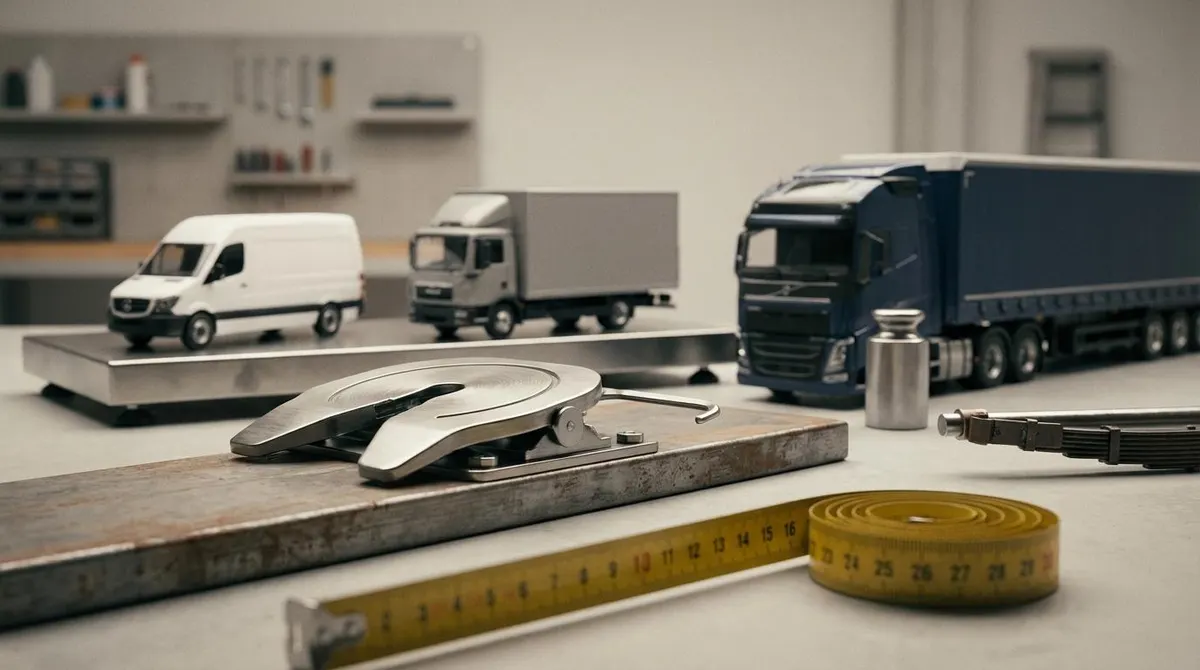
Vehicle and equipment terms explain what a driver is operating and how that equipment is measured, connected, and controlled. These definitions matter because license class, inspection steps, and handling risk often depend on weight and configuration. According to the FMCSA Hours of Service and CMV guidance, classifications and vehicle thresholds determine when rules apply.
Gross Vehicle Weight Rating is the manufacturer's maximum loaded weight rating for a single vehicle.
Gross Combination Weight Rating is the manufacturer's maximum combined loaded weight rating for a power unit and trailers.
Gross Vehicle Weight is the actual operating weight of a single loaded vehicle.
Gross Combination Weight is the actual operating weight of a loaded power unit plus trailers.
Axle Weight is the amount of weight carried by a single axle or axle group.
Trailer is a non-powered vehicle designed to be towed.
Semi-Trailer is a trailer designed so part of its weight rests on the towing vehicle.
Combination Vehicle is a power unit connected to one or more trailers.
Power Unit is the self-propelled vehicle that provides motive power to a commercial combination.
Vehicle Identification Number is the unique serial identifier assigned to a vehicle.
Vehicle identification numbers is the plural term for VIN records across one or more vehicles.
air brakes are braking systems that use compressed air rather than hydraulic pressure.
Fifth Wheel is the coupling assembly mounted on a tractor that connects to a semi-trailer.
Coupling Device is the general term for the equipment used to connect towing and towed units.
pintle hook is a type of coupling device often used on certain trailers and equipment.
Anti-lock Braking System is the braking technology that helps prevent wheel lock during hard braking or slippery conditions.
Weight Restrictions are legal or route-based limits on vehicle or axle weight that affect where and how a vehicle may travel.
center of gravity is the balance point of a vehicle and load that affects stability.
commercial truck rollover is a rollover event involving a commercial truck, often influenced by speed, load shift, or a high center of gravity.
Battery-Electric Vehicle is a commercial vehicle powered primarily by electric batteries and motors rather than a conventional combustion engine.
Commercial Vehicle Safety Alliance is the inspection and enforcement alliance whose standards influence roadside inspection practice across North America.
TIP: Learn vehicle terms during a real walk-around whenever possible because names attached to visible parts are easier to remember and apply.
KEY TAKEAWAY: Vehicle terminology determines how a CMV is classified, how it handles, and which safety checks and route limits apply.
Now that the vehicle language is clear, the next section covers the inspection and maintenance terms that keep equipment roadworthy.
Inspections, maintenance, and mechanical compliance

Inspection and maintenance terms explain how safety defects are identified, documented, and corrected before they cause breakdowns or violations. These definitions matter because roadside enforcement often focuses on what should have been found earlier in the yard. The FMCSA Safety Planner glossary connects maintenance, inspection, and driver qualification to broader compliance reviews.
Pre-Trip Inspection is the inspection a driver performs before operating a vehicle to identify visible defects or unsafe conditions.
En Route Inspection is an inspection performed during a trip when conditions, equipment, or cargo need to be checked again.
Post-Trip Inspection is the inspection performed after a trip to identify issues needing repair or reporting.
Driver Vehicle Inspection Report is the report used to document vehicle condition and post-trip defect findings where required.
Vehicle inspection reports is the broader term for the written records documenting inspection findings.
Annual Inspection is the required formal inspection of a commercial vehicle at least once every 12 months.
Periodic Inspection is a scheduled inspection performed at recurring intervals as part of a maintenance program.
Preventive Maintenance is the planned servicing and repair work intended to prevent breakdowns and unsafe defects.
vehicle maintenance is the broader process of servicing, repairing, and preserving commercial equipment in safe condition.
Vehicle Maintenance File is the carrier's maintenance record for a vehicle or fleet unit.
Vehicle Inspection and Maintenance is the combined compliance concept that inspections must lead to corrective maintenance and documented follow-up.
Out-of-Service Criteria are the defect standards that can place a driver or vehicle out of service during an inspection.
Out-of-Service Violation is a violation based on a condition serious enough to prohibit continued operation until corrected.
Out of Service is the operational status applied when a vehicle or driver is not legally allowed to continue operating.
Brake Violation is a cited defect involving brakes or related braking components.
Tire Violation is a cited defect involving tire condition, inflation, tread, or related wheel-end issues.
DOT compliance in maintenance is not only about paperwork. DOT compliance also means finding defects early, documenting them clearly, and making sure repairs are completed before the vehicle returns to service.
KEY TAKEAWAY: Inspection and maintenance terms describe how defects are found, documented, repaired, and enforced.
The next section covers the timekeeping terms that drivers work with every day through logs, ELDs, and Hours of Service limits.
Hours of Service and driver timekeeping

Hours of Service terms define how long a driver may drive, work, rest, and record each duty status. These definitions matter because HOS mistakes can create violations even when the trip itself seems routine. According to the FMCSA Hours of Service summary, property-carrying drivers are subject to specific daily and weekly limits.
Hours of Service is the federal rule framework that limits driving and on-duty time and requires minimum rest periods.
Hours of Service regulations is the full phrase often used when referring to the federal HOS rule set.
Electronic Logging Device is the device used to record duty status electronically.
ELD Mandate is the federal requirement that covered drivers use compliant electronic logging devices instead of only paper logs in many situations.
Record of Duty Status is the official record showing a driver's duty categories across time.
Driver logs is the plain-language term for duty status records, whether electronic or paper where allowed.
14-Hour Rule is the rule that limits how long after coming on duty a property-carrying driver may continue driving.
11-Hour Driving Limit is the rule that caps actual driving time after the required off-duty period.
30-Minute Break Rule is the break requirement that applies before additional driving in covered operations.
60/70-Hour Rule is the weekly cumulative limit on on-duty hours over 7 or 8 days.
34-Hour Restart is the off-duty period that can reset the 60 or 70-hour cycle in covered situations.
Sleeper Berth Provision is the rule allowing qualifying split-rest combinations involving sleeper berth time.
Personal Conveyance is the off-duty movement of a CMV for personal use within FMCSA guidance limits.
On-Duty Time is time spent working or being required to work for a motor carrier, whether driving or not.
Off-Duty Time is time during which the driver is completely relieved from work and responsibility.
The main HOS numbers are easier to understand side by side:
| Term | Core limit or meaning | Why it matters |
|---|---|---|
| 11-Hour Driving Limit | Caps actual driving after required rest | Controls wheel time |
| 14-Hour Rule | Caps the driving window after coming on duty | Limits workday span |
| 30-Minute Break Rule | Requires a qualifying break before more driving in covered cases | Helps reduce fatigue buildup |
| 60/70-Hour Rule | Caps weekly on-duty accumulation | Prevents overwork |
| 34-Hour Restart | Resets the 7 or 8 day cycle | Restores available hours |
According to FMCSA, the 11-hour and 14-hour limits work together. That practical detail matters because a driver can still run out of legal driving time due to the 14-hour window even without using all 11 driving hours.
KEY TAKEAWAY: HOS terms are the daily language of fatigue prevention, legal trip planning, and accurate logging.
Timekeeping is only one side of safety, so the next section covers controlled substances, alcohol, and return-to-duty vocabulary.
Controlled substances, alcohol, and testing

Drug and alcohol terms explain when testing happens, how violations are tracked, and what must happen before a driver can return to safety-sensitive work. These definitions matter because violations affect employability, licensing status, and legal eligibility to drive. According to the FMCSA Drug and Alcohol Clearinghouse, the system provides real-time violation information to authorized parties.
Drug and Alcohol Clearinghouse is the FMCSA database that tracks drug and alcohol program violations for CDL and CLP holders.
Drug and Alcohol Testing is the federally regulated testing framework used for safety-sensitive transportation employees.
Pre-Employment drug test is the drug test required before a driver first performs safety-sensitive functions for an employer in covered operations.
Random drug test is a test selected by chance from an approved random program.
Post-Accident Drug and Alcohol Test is testing that may be required after certain qualifying accidents.
Reasonable Suspicion Testing is testing based on specific observations suggesting alcohol misuse or controlled substance use.
Return-to-Duty Process is the required process a driver must complete after a qualifying drug or alcohol violation before returning to safety-sensitive work.
Substance Abuse Professional is the qualified professional who evaluates a driver after a violation and prescribes education, treatment, or follow-up steps.
drug and alcohol procedures is the general term for the carrier policies and federally required processes governing testing, reporting, and return to duty.
IMPORTANT: A negative test later does not erase a covered violation. Under FMCSA rules, a driver generally must complete the formal return-to-duty process before resuming safety-sensitive work. FMCSA
KEY TAKEAWAY: Drug and alcohol terms define when testing is required, how violations are recorded, and what must happen before a driver can legally return to duty.
The final main section covers freight, hazmat, and logistics terms that affect cargo handling, documentation, and routing.
Cargo, freight, and hazmat terms

Cargo and hazmat terms explain how freight is secured, classified, documented, and moved through the supply chain. These definitions matter because regulated cargo creates extra training, documentation, and risk-management requirements. According to PHMSA hazardous materials guidance, hazardous materials transportation depends on proper classification, communication, and safe handling.
Load Securement is the process of fastening or blocking cargo so it does not shift, fall, or create instability during transport.
Hazardous materials are substances or materials that pose an unreasonable risk to health, safety, or property when transported in commerce.
Hazardous Materials Regulations are the federal rules governing the classification, packaging, marking, labeling, placarding, and transportation of hazardous materials.
HazMat Regulations is a common alternate styling for the same hazardous materials rule set.
Hazzardous Materials is a common misspelling of hazardous materials and not the correct regulatory spelling.
Hazmat Shipping Papers are the transport documents that identify regulated hazardous materials and communicate key safety information.
hazardous materials shipping papers is the lower-case form of the same term often used in training or compliance writing.
Hazmat training is the required training for hazmat employees involved in preparing, offering, or transporting regulated materials.
hazmat procedures are the documented steps used to classify, package, mark, communicate, handle, and transport hazardous materials safely.
hazardous materials transportation records are the records created and retained in connection with hazmat training, shipments, and compliance obligations.
dangerous goods is the international term often used outside the United States for what domestic U.S. rules usually call hazardous materials.
Pipeline and Hazardous Materials Safety Administration is the DOT agency that oversees hazardous materials safety and pipeline safety.
Full Truckload is a shipment that uses most or all of a trailer's capacity for one shipper.
Less-Than-Truckload is freight that shares trailer space with shipments from other shippers.
Transportation Management System is software used to plan, assign, monitor, and optimize freight movements.
Distribution Center is a facility where freight is received, sorted, stored, and redistributed.
backhauling terminology refers to freight language connected to loads carried on the return leg of a route.
self-contained freight is a business phrase sometimes used to describe freight packaged or prepared in a contained, self-sufficient format rather than an official DOT classification.
packaging supplies is the general term for materials used to package and protect freight.
Owner Operator is a driver who owns or leases the truck used in their business and often also manages dispatch, compliance, and operating costs.
Trucking Industry is the broader commercial sector involved in freight transportation by truck.
National Highway Traffic Safety Administration is the DOT agency focused on roadway safety standards, crash prevention, and traffic safety more broadly.
American Trucking Association is a common shorthand used for the American Trucking Associations, a trade group representing segments of the trucking industry.
Compliance Training Online is a generic phrase for web-based compliance education and not a specific legal category in FMCSA rules.
Toll Management is the process of tracking, paying, and administrating toll usage across routes and fleets.
El Paso is a city name that may appear in freight, border, and regional compliance contexts but is not itself a DOT regulatory term.
Border Trucking Compliance is a practical industry phrase referring to the compliance needs of carriers operating across or near border freight corridors.
Barrera Law Firm is a private legal entity name and not an official DOT definition, but it may appear in search behavior related to trucking compliance or legal help.
A simple freight comparison helps clarify how common shipment types differ:
| Freight term | Best for | Main advantage | Main tradeoff |
|---|---|---|---|
| Full Truckload | Larger or dedicated shipments | Faster handling and more direct movement | Can cost more for smaller loads |
| Less-Than-Truckload | Smaller shipments | Better space efficiency and lower cost for partial loads | More handling and more terminal touches |
| Hazardous materials shipment | Regulated cargo with specific risks | Legally structured movement of dangerous cargo | More training, paperwork, and compliance demands |
For most routine freight, Full Truckload is simplest when one shipper needs direct capacity. For regulated cargo, the most important difference is not trailer space but whether the load triggers hazardous materials rules and extra compliance.
If fatigue, snoring, or daytime sleepiness are affecting how alert you feel on the road, Dumbo Health's guide to what sleep apnea is can help you understand one health issue that drivers often discuss during certification and safety conversations.
KEY TAKEAWAY: Freight and hazmat terms determine how cargo is classified, secured, documented, and legally transported.
Before wrapping up, it helps to correct a few common misconceptions that still cause confusion for drivers and carriers.
Common myths about DOT definitions debunked

Many DOT terms sound similar, but similar wording does not mean the same legal meaning. Clearing up a few high-friction myths can prevent expensive compliance mistakes.
MYTH: A DOT Number and an MC Number are the same thing.
FACT: A DOT Number identifies the carrier for safety tracking, while an MC Number relates to operating authority for certain interstate for-hire operations. According to FMCSA registration guidance, a carrier may need one, the other, or both depending on how it operates.
MYTH: A regular driver's license is basically enough for short commercial trips.
FACT: A regular driver's license is not a Commercial Driver's License. If the vehicle and operation meet CMV and CDL thresholds, the proper CDL class, endorsements, and restrictions still apply even for local work.
MYTH: Hours of Service only means how many hours you drive.
FACT: Hours of Service also includes the 14-hour duty window, the break rule, and weekly limits. According to FMCSA, on-duty time and driving time are related but not identical.
MYTH: A DOT medical certificate always lasts the same amount of time.
FACT: Certification length can vary based on the medical examiner's determination and the driver's health circumstances. That is why MEC expiration dates must be tracked carefully.
MYTH: Passing the CDL road test means training rules no longer matter.
FACT: Entry-Level Driver Training, qualification files, annual record checks, and ongoing compliance still matter after a license is issued. Passing the Road Test proves competence, but it does not replace continuing compliance duties.
KEY TAKEAWAY: The most costly misunderstandings usually come from assuming two similar terms mean the same thing when they do not.
The FAQ below answers the search-style questions commercial drivers and new carriers ask most often.
Frequently Asked Questions
What is the difference between a DOT Number and an MC Number?
A DOT Number, also called a USDOT Number, identifies a carrier in FMCSA safety and compliance systems. An MC Number is tied to operating authority for certain interstate for-hire operations. The practical difference is that one number tracks safety identity while the other may authorize specific business activity. According to FMCSA registration guidance, the exact requirement depends on what the business hauls, where it operates, and whether it transports passengers or property for compensation.
What does Commercial Motor Vehicle mean in plain English?
Commercial Motor Vehicle means a vehicle used for business transportation that meets federal thresholds for weight, passenger transport, or hazardous materials. In plain English, it is the kind of vehicle that can pull you into federal commercial safety rules. CMV status matters because it can trigger licensing, inspection, medical certification, and Hours of Service requirements all at once. That is why understanding whether a truck is a CMV is one of the first practical steps in DOT compliance.
How do I know whether I need Class A, Class B, or Class C?
The class depends on the vehicle configuration, weight, passenger use, and whether placarded hazardous materials are involved. Class A usually covers many combination vehicles, Class B usually covers many heavy single vehicles, and Class C covers certain smaller but still regulated operations. The best approach is to match the license to the exact vehicle and job rather than relying on a job title alone. That simple check often prevents testing for the wrong CDL class or carrying the wrong endorsement.
What is a Driver Qualification File and who keeps it?
A Driver Qualification File is the employer-maintained record showing that a driver meets qualification requirements. It generally includes items tied to driving history, licensing, and qualification status. The motor carrier keeps the file, although the driver supplies much of the underlying information. This matters because qualification files are central to audits, hiring checks, and ongoing compliance reviews. In practice, a missing file can create problems even when the driver is otherwise qualified.
What are the most important Hours of Service numbers to remember?
The most useful HOS numbers for many property-carrying drivers are 11, 14, 30, 60 or 70, and 34. These correspond to the 11-Hour Driving Limit, the 14-Hour Rule, the 30-Minute Break Rule, the weekly 60 or 70-hour cap, and the 34-Hour Restart. According to FMCSA, these rules work together rather than separately. That means you can run out of legal driving time because of the 14-hour window even if the full 11 driving hours were not used.
How can I find a certified DOT medical examiner near you?
The official starting point is the FMCSA National Registry of Certified Medical Examiners, which helps drivers find certified examiners near you or in your area. That registry matters because interstate CMV drivers generally need their examination and Medical Examiner's Certificate from a certified examiner listed there. If you want to better understand a common health topic before scheduling, Dumbo Health's at-home sleep test page is a practical educational resource for people concerned about sleep-related symptoms.
What happens after a drug or alcohol violation in the Clearinghouse?
A covered violation generally removes the driver from safety-sensitive CMV work until the formal return-to-duty process is completed. That process includes evaluation by a Substance Abuse Professional and the steps required before returning to work. The key point is that eligibility is restored through the regulated process, not simply by waiting or taking another test later. According to FMCSA, the Clearinghouse exists to make sure employers and licensing authorities can see those violations in real time.
Are hazardous materials rules the same as normal freight rules?
No. Hazardous materials rules are stricter because they cover classification, documentation, communication, training, and safe handling for regulated cargo. Load securement still matters for all freight, but a hazmat load can also require shipping papers, placards, employee training, and additional procedures. In U.S. domestic trucking, the formal regulatory term is usually hazardous materials rather than dangerous goods. That distinction matters when you are reading U.S. rules, training materials, and carrier procedures.
Conclusion

DOT definitions are not just vocabulary words. DOT definitions are the working language of commercial driving, safety, licensing, registration, logging, maintenance, and freight movement. Once you understand how terms such as Commercial Motor Vehicle, Driver Qualification File, Hours of Service, Medical Examiner's Certificate, and Hazardous Materials Regulations fit together, compliance becomes more logical and far easier to manage. Use this guide as a reference when you study, onboard, review a violation, or prepare for an audit. If you also want to understand health issues that can affect certification and fatigue, explore Dumbo Health's guide to sleep apnea basics as a practical next step.
Related DOT Physical Topics
- Does a DOT Physical Test for Weed or THC The Complete Guide for Commercial Drivers
- What are the current DOT requirements for sleep apnea testing for commercial drivers
- Can You Get a DOT Physical in Any State The Complete Guide for Commercial Drivers
- Can You Get a DOT Physical Online The Complete Guide for Commercial Drivers
- Remote DOT Physical The Complete Guide for Commercial Drivers
- DOT Physical Forms & Paperwork The Complete Guide for Commercial Drivers
- Online DOT Physical Without Insurance A Complete Guide for Commercial Drivers
- Navigating the Florida DOT Physical Your Essential Guide for CDL Drivers
- DOT physical self pay guide for commercial drivers paying out of pocket
- DOT Hypertension Guidelines The Complete Blood Pressure Guide for Commercial Drivers
- The Ultimate DOT Preparation Checklist for Motor Carriers and Commercial Drivers
- DOT Medical Exam Self-Pay A Complete Guide for Commercial Drivers
- BMI for DOT Physical What Commercial Drivers Need to Know
- What Happens If Your DOT Physical Expires Compliance Guide for Commercial Drivers
- The Ultimate DOT Physical Guide for Commercial Drivers (2025–2026)
- What Happens If You Fail a DOT Physical Twice The Complete Guide for Commercial Drivers
- What Happens If You Fail a DOT Drug Test The Complete Guide for Commercial Drivers
- How Long Does a DOT Physical Take A Complete Guide for Commercial Drivers
- Can You Get a Second Opinion on Your DOT Physical A Complete Guide for Commercial Drivers
- Online DOT Physical The Complete Guide for Commercial Drivers and Medical Examiners
- Home Sleep Apnea Test for Commercial Drivers The CDL Holder's Complete Guide
- Navigating DOT Stroke Guidelines for CMV Drivers What You Need To Know
- Medical Examiner's Certificate (Form MCSA-5876) The Complete Guide for Commercial Drivers
- DOT Physical Out of Pocket What Commercial Drivers Actually Pay
- Online DOT Physical Self-Pay The Complete Guide for CDL Drivers and Owner-Operators
- What Are the DOT Requirements for Drivers With Sleep Apnea
- DOT Physical at Urgent Care What Commercial Drivers Need to Know
- What Happens During the DOT Physical Exam The Complete Guide for Drivers
- What are the current FMCSA guidelines on sleep apnea for commercial drivers
- Medical Examination Report (MER) – Form MCSA-5875 The Complete Guide for Commercial Drivers
- DOT Physical Requirements A Complete Guide for CDL Drivers
- What Does DOT Stand for in a DOT Physical
- What drugs do they test for in a DOT drug test
- Is a drug test required for a DOT physical
- DOT Physical Cost Breakdown What Drivers Pay & Why
- DOT Physical ICD-10 & Billing Codes The Complete Guide for Accurate Compliance and Reimbursement
- Sleep Apnea Test for CDL Drivers
- What Forms Do You Need for a DOT Physical
- Why DOT Sleep Tests at Home Matter for Your Career and Health
- How can drivers with sleep apnea qualify again after a failed DOT physical
- What Is the Urine Test for in a DOT Physical
- Are there legal requirements for drivers with sleep apnea
- Can You Fail a DOT Physical for Being Overweight
- New DOT Physical Requirements What Drivers MUST Know About New Updates
- Online DOT Exam What Drivers and Medical Examiners Need to Know
- DOT Physical Blood Pressure Requirements What Drivers Need to Know
- DOT Physical Insurance or Self Pay How to Choose the Right Payment Option for Your Exam
- The Comprehensive Guide to Suboxone, Sleep Apnea, and FMCSA Compliance for Commercial Motor Vehicle Operators
- Can You Fail a DOT Physical for High Blood Pressure
- How to Pass a DOT Physical The Complete Commercial Driver's Guide
- At Home Sleep Test for Truck Drivers
- Sleep Apnea Tests for DOT Compliance What tests are accepted
- DOT Physical & Drug Test What Drivers Need to Know
- DOT Physical Texas The Essential Guide to Your Exam, Medical Card, and CDL Compliance
- Is a Sleep Study Required for a DOT Physical
- What Is the Difference Between a DOT and Non-DOT Physical
- Do They Check for Hernia During a DOT Physical
- What eye chart is used for a DOT physical
- The DOT Physical Exam Ensuring You're Fit for the Road
- Failing a DOT Physical What Every Commercial Driver Needs to Know
- How Do You Submit Your DOT Physical to the DMV
- Are There New DOT Rules or Laws on Sleep Apnea Testing
- What Can Disqualify You From a DOT Physical
- Does a DOT physical include a drug test
- Can You Pass a DOT Physical with Epilepsy
- DOT Physical Self Pay Cost
- 2026 DOT Inspection Dates
- DOT Physical Exam Basics
- Can You Pass a DOT Physical With a Hernia
- Best Treatments for Sleep Apnea to Improve Driving Safety
- Can You Pass a DOT Physical With One Eye
- Can You Pass a DOT Physical With a Pacemaker
- Telehealth Dot Physical
- Who needs a DOT physical
- DOT Physical & Alcohol Requirements
- Why do they measure your neck during a DOT physical
- Navigating Your DOT Physical with Common Medical Conditions
- What Precautions Should Drivers With Sleep Apnea Take
- DOT Physical Online Cost
- Walk In DOT Physical Self Pay
- What Should You Bring to a DOT Physical
- Can You Get a DOT Physical Online
- Your Complete Guide What's Included in a DOT Physical Exam
- DOT Physical Insurance & Recertification The Complete Driver's Guide
- DOT Physical Cash Pay
- Same Day DOT Physical
- Virtual DOT Physical
- DOT Physical Vision & Eye Requirements
- Can you fail a DOT physical because of sleep apnea
- What blood pressure do you need to pass a DOT physical
- When Can Sleep Apnea Affect a DOT Physical
- Do They Check Your Private Parts During a DOT Physical
- DOT Physical Chiropractor Your Complete Guide to CDL Exams
- Is a DOT physical the same as a regular physical
- Can you pass a DOT physical with sleep apnea
- What should I expect at a DOT physical
- What Does a DOT Physical Consist Of
- What happens if you fail a DOT physical due to sleep apnea
- Can You Pass a DOT Physical with Diabetes
- Can You Pass a DOT Physical with High Blood Pressure
Take the next step before your DOT physical
Start with the free quiz if you are unsure about your risk, or order an at-home sleep test if you have already been flagged for possible sleep apnea.
AI summary
DOT definitions are the official and common terms used to apply U.S. commercial driving rules, especially FMCSA requirements. This guide organizes key vocabulary used in CDL training, roadside inspections, carrier onboarding, compliance audits, and freight movement. Core concepts include: Department of Transportation, Federal Motor Carrier Safety Administration, Commercial Motor Vehicle, FMCSRs, and interstate vs intrastate commerce. Registration and authority terms cover USDOT Number, MC Number, operating authority, Unified Carrier Registration, IRP, IFTA, BOC-3 filing, MCS-90, and the New Entrant Safety Assurance Program and safety audit. Driver qualification terms include CDL and CLP, CDL Class A/B/C, endorsements and restrictions, Medical Examiner’s Certificate, FMCSA National Registry of Certified Medical Examiners, Driver Qualification File, MVR, and disqualifying offenses. Operational sections define testing steps (knowledge, pre-trip, basic control skills, road test, ELDT), vehicle weights (GVWR, GCWR), inspections (DVIR, annual inspection, out-of-service criteria), Hours of Service and ELD terms (11-hour, 14-hour, 30-minute break, 60/70, 34-hour restart), drug and alcohol testing and the Clearinghouse, and hazmat terminology (Hazardous Materials Regulations, shipping papers, training, load securement).

Nicolas Nemeth
Co-Founder
Nico is the co-founder of Dumbo Health, a digital sleep clinic that brings the entire obstructive sleep apnea journey home. Patients skip the sleep lab and the long wait to see a specialist. Dumbo Health ships an at home test, connects patients with licensed sleep clinicians by video, and delivers CPAP or a custom oral appliance with ongoing coaching and automatic resupply in one clear subscription.
Keep reading

How Long Does a DOT Physical Take? A Complete Guide for Commercial Drivers

What Happens If You Fail a DOT Drug Test? The Complete Guide for Commercial Drivers


