DOT Physical at Urgent Care: What Commercial Drivers Need to Know
A DOT physical is a federally required Commercial Driver Medical Examination that determines whether you can safely and legally operate a commercial motor vehicle. This guide explains why urgent care clinics are often the fastest option, including walk-in access and occupational medicine workflows. It outlines what the exam includes, such as medical history review, blood pressure, vision and hearing checks, and a urine test for health markers. It also details how conditions like sleep apnea and hypertension can affect certification length. You will learn what to bring to avoid delays and how outcomes range from immediate certification to temporary or denied certification. Practical tips cover confirming a certified medical examiner on the National Registry, asking about pricing, and planning for documentation needs.
Struggling with sleep?
Find out if sleep apnea is the reason.
FDA-cleared. $149 flat. Physician-reviewed results in 48 hours.

DOT Physical at Urgent Care: What Commercial Drivers Need to Know
DOT physical is a federally required medical exam for people who operate a commercial motor vehicle and need medical certification to keep driving legally. According to the Federal Motor Carrier Safety Administration, interstate commercial drivers must complete a Commercial Driver Medical Examination with a certified medical examiner listed on the National Registry. This guide explains what a DOT Physical Exam includes, why urgent care clinics are often the fastest option, how medical conditions such as sleep apnea and high blood pressure can affect the result, what to bring, and what happens after the exam. This page is designed to help you prepare well, avoid delays, and make confident decisions about your next certification visit.
What Is a DOT Physical?
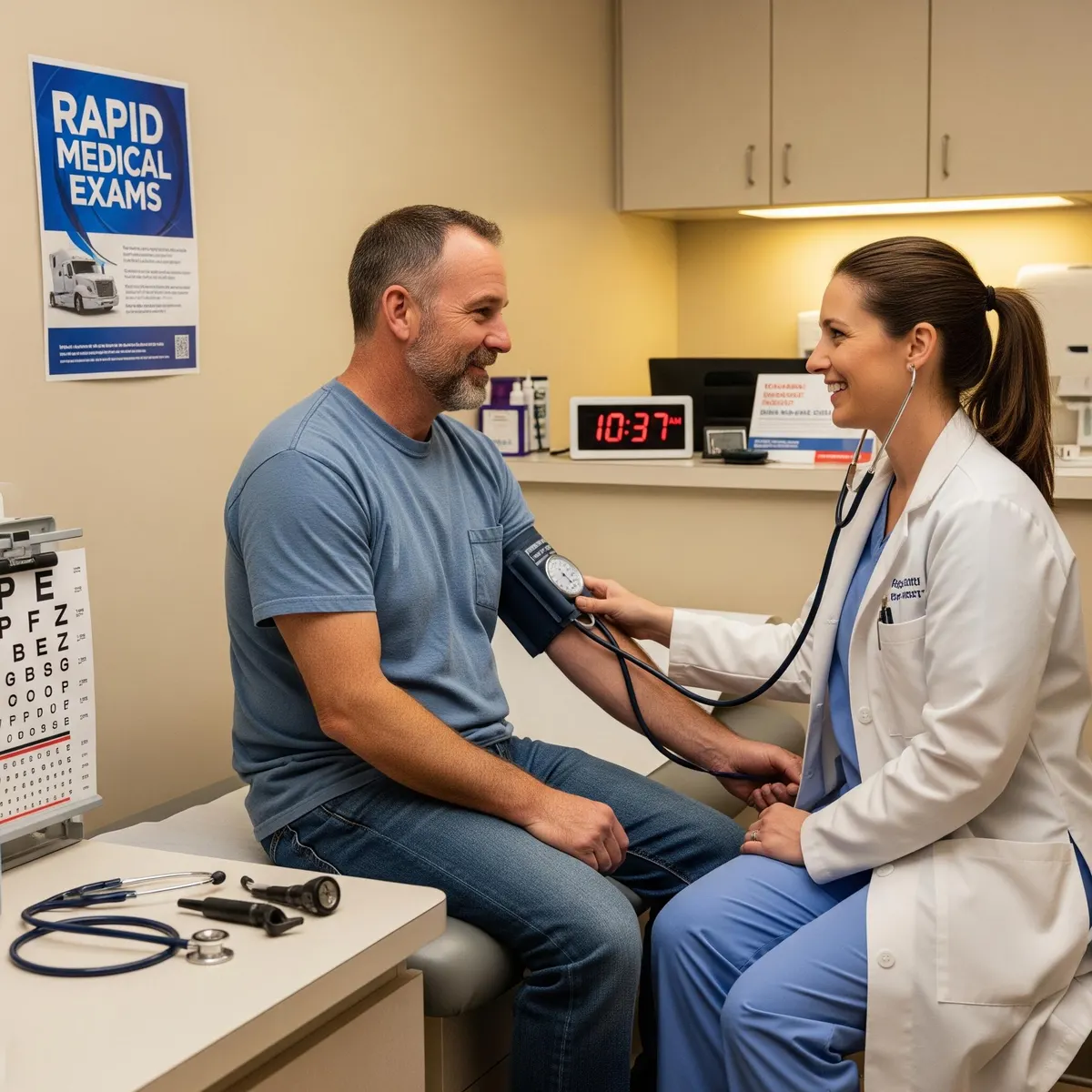
A DOT physical is a safety-focused medical exam that determines whether you are medically qualified to operate a commercial motor vehicle. A DOT physical matters because an expired, delayed, or failed exam can interrupt your ability to work.
The Department of Transportation medical certification process is tied to the Federal Motor Carrier Safety Administration, which sets the medical standards for interstate drivers. The exam is officially called the Commercial Driver Medical Examination. The goal is not to provide a full wellness exam or diagnose every possible illness. The goal is to determine whether your current physical condition allows safe operation of commercial motor vehicles on public roads.
DOT physical is the term most commercial drivers, truck drivers, employers, and clinics use when referring to this required exam. After a successful physical examination, the certified medical examiner can issue a medical certificate, often called a medical card. That certificate is what proves you meet the federal medical standard at the time of the visit. A clinic may advertise CDL Physicals, DOT testing, or Commercial Driver Medical Examination services, but the most important detail is whether the examiner is listed on the National Registry.
Certified medical examiner is a licensed medical provider who has completed FMCSA-required training and testing to perform these exams. National Registry is the federal directory that confirms whether the examiner is authorized to conduct the exam and issue the certificate. These two terms matter because a routine physical exam from a non-qualified clinician does not satisfy the DOT requirement.
Not sure if sleep apnea applies to you?
Take our 2-minute sleep risk quiz to see whether sleep apnea could affect your DOT physical. No account required.
KEY TAKEAWAY: A DOT physical is a federally required Commercial Driver Medical Examination that determines whether you can safely and legally operate a commercial vehicle.
The next question is why so many commercial drivers choose urgent care instead of waiting for a traditional appointment.
The Stakes: Why Passing Your DOT Physical Matters
Passing your DOT physical matters because medical certification is directly tied to your ability to keep working. For commercial drivers, the exam is both a legal requirement and a road safety safeguard.
A failed or delayed DOT Physical Exam can affect income, scheduling, and compliance with employer or licensing requirements. If your certificate expires, you may not be able to continue operating commercial vehicles until the issue is resolved. That is why many truck drivers treat the DOT physical as a business-critical appointment, not a routine medical visit.
The Federal Motor Carrier Safety Administration uses the exam to reduce the risk that untreated medical conditions, functional limitations, or medication side effects will impair safe driving. Conditions involving blood pressure, vision, hearing, sleep disorders, cardiac risk, neurological symptoms, and medication use all matter because the driver of a commercial motor vehicle may spend long hours on the road and is responsible for a large vehicle, passengers, cargo, or heavy machinery.
In real-world use, clinicians frequently observe that drivers are less likely to run into trouble because of rare diseases and more likely to face delays because of missing records, poor preparation, or uncontrolled common issues. high blood pressure is one of the clearest examples. According to the CDC, hypertension often has no warning signs or symptoms. That means a driver may feel fine and still face a shorter certification period or a temporary delay if the reading is too high at the appointment.
DID YOU KNOW: FMCSA guidance states that a driver with blood pressure below 140/90 may be certified for up to two years, while higher readings can lead to shorter certification periods or temporary disqualification.
KEY TAKEAWAY: Passing the DOT physical protects both your legal ability to work and the safety of everyone who shares the road with commercial vehicles.
Once you understand the stakes, urgent care starts to make sense as a speed-focused solution.
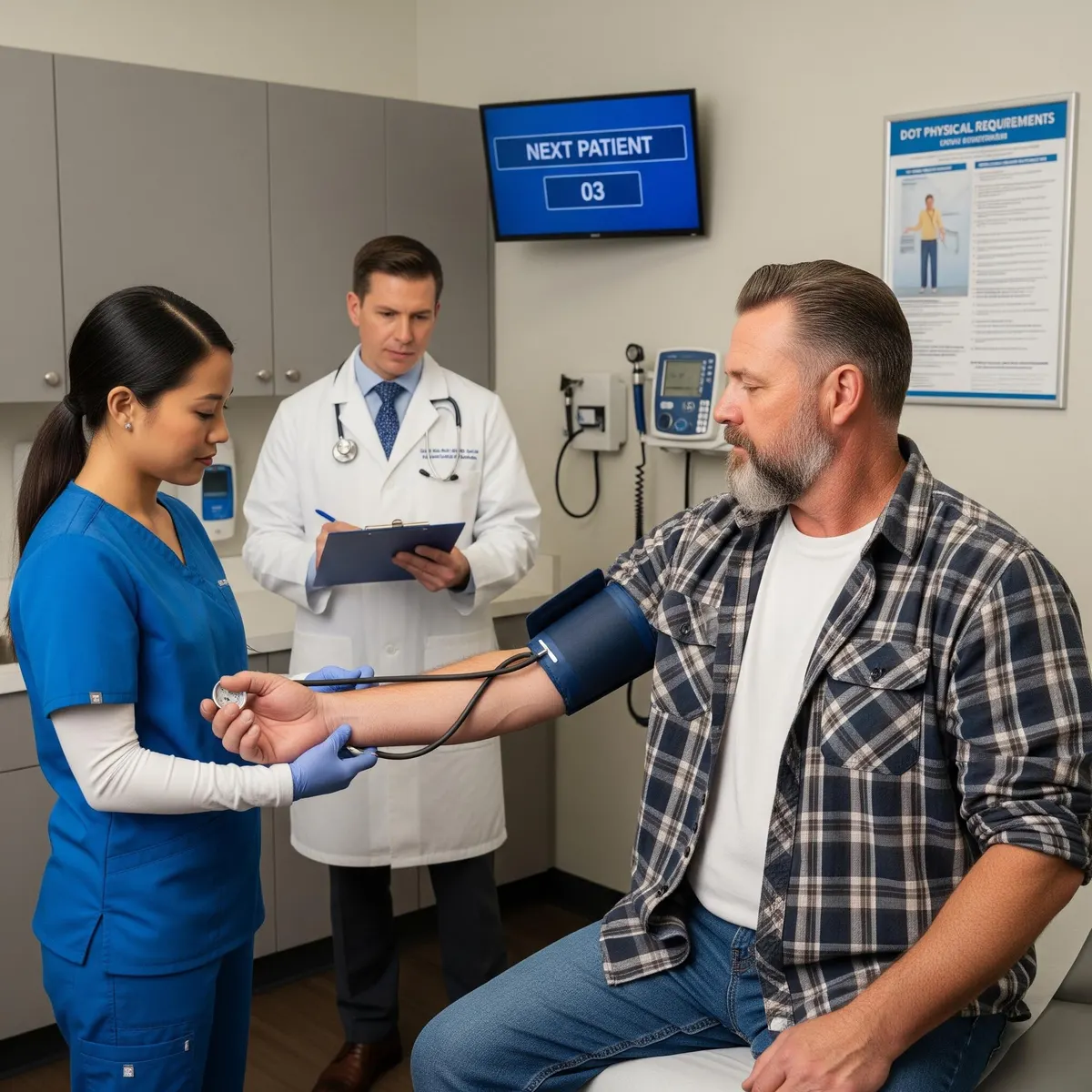
Urgent Care and Walk-In Access: The Fastest Route to DOT Certification
Urgent care is often the fastest route to DOT certification because many urgent care clinics offer same-day access, walk-in availability, and occupational medicine services. For commercial drivers on irregular schedules, urgent care can reduce the time between exam and certification.
Urgent care clinics are designed for fast, non-emergency care. Many sites also provide occupational medicine, Employer Services, drug and alcohol testing, flu shots, wellness exam visits, and work-related screening services. That structure makes urgent care a strong fit for DOT testing because staff are often used to handling Medical forms, employment workflows, and time-sensitive visits.
The walk-in advantage is practical. Commercial drivers do not always know days in advance when they will be available. A clinic that accepts walk-ins or short-notice appointments may fit better than a primary care office with limited scheduling options. If you need a provider near you, urgent care may be the easiest way to get seen quickly without waiting weeks for an opening.
Already diagnosed and need CPAP support?
Dumbo Health helps patients start CPAP without the usual confusion, paperwork, or upfront cost. Equipment, setup, supplies, and ongoing support are all handled in one place.
The key difference between a general clinic visit and a DOT-focused urgent care visit is process. A routine office may be set up for broad preventive care. An urgent care location that offers DOT testing is more likely to be set up for fast paperwork, vision testing, hearing checks, urine test collection, and certification follow-up. That is why urgent care is often the most efficient option for self-pay DOT Physicals and other out-of-pocket service visits.
If a sleep issue is likely to come up during your visit, review DOT sleep apnea testing information from dumbo.health before the appointment so you know what documentation may help.
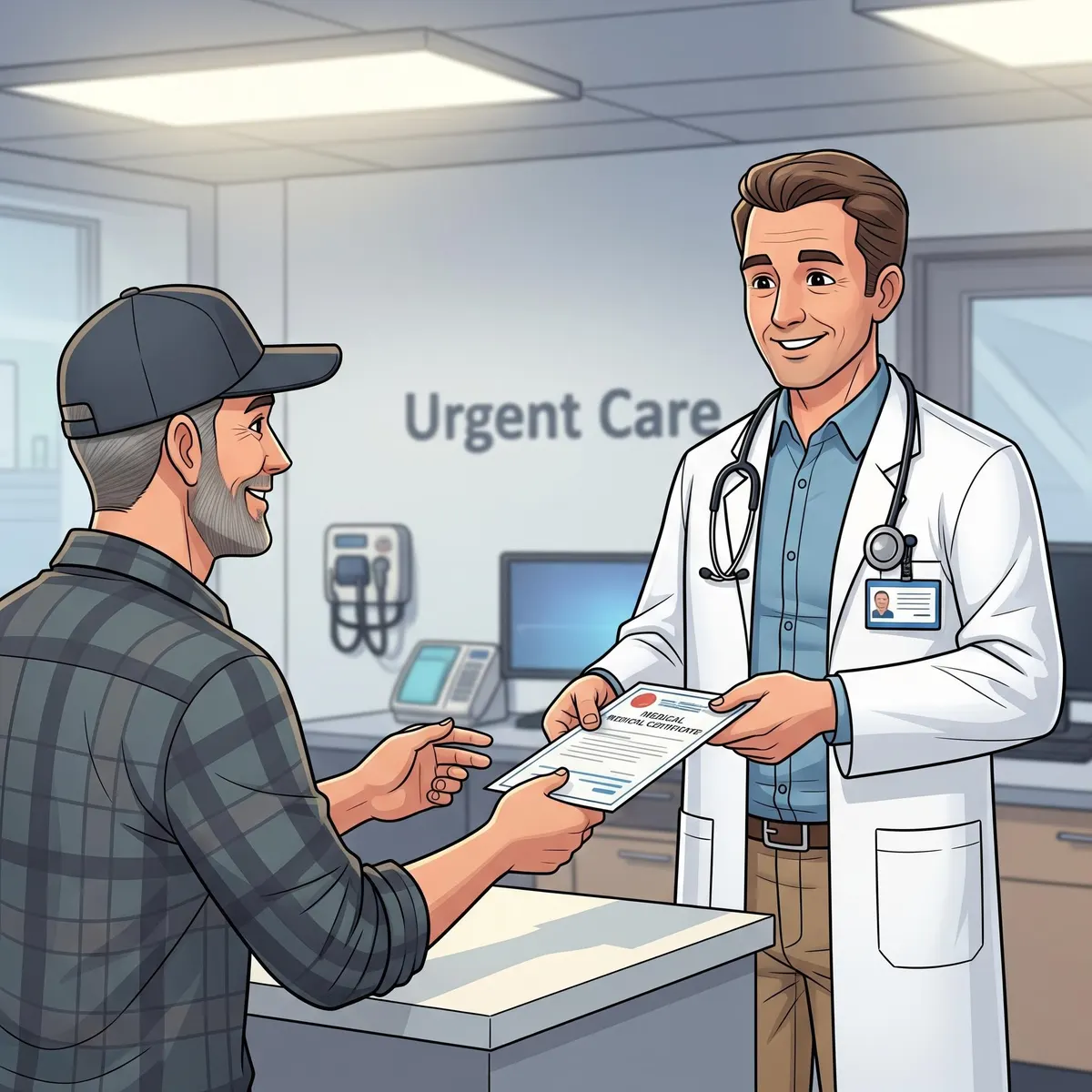
KEY TAKEAWAY: Urgent care is often the best fit for routine DOT testing because it combines speed, walk-in convenience, and work-focused medical processes.
Fast access helps, but knowing exactly what happens during the exam is what reduces stress and surprises.
The Walk-In Advantage: Convenience on Your Schedule
Walk-in DOT testing is valuable because it matches the unpredictable schedules of commercial drivers. Walk-in access can make the difference between keeping your certification current and losing time on the road.
Many commercial drivers work early mornings, late evenings, overnight routes, or variable delivery schedules. Traditional primary care offices often do not align with that reality. Urgent care clinics are more likely to offer extended hours, weekend availability, and a faster intake process, which makes them appealing for drivers who need a DOT physical close to you or in your area.
Convenience is not just about saving time. Convenience also helps reduce the chance that you delay the visit until the last minute. A DOT physical that is easy to schedule is more likely to get done before your current medical card expires. That matters because a lapsed certificate can affect your work status even if you are otherwise healthy and ready to drive.
Many patients report that urgent care feels more efficient for employment-related visits because the workflow is more standardized. The clinic may already be equipped for urine test collection, vision testing, hearing test checks, and other common occupational medicine services. That can make the appointment feel more direct and less like a full-service primary care visit.
TIP: When calling ahead, ask whether the clinic accepts walk-ins for DOT physical exam visits and whether a certified medical examiner is on site that day.
KEY TAKEAWAY: Walk-in urgent care makes DOT certification more accessible for drivers whose work schedules do not fit traditional office hours.
The convenience of urgent care matters even more when you understand why the setting fits the needs of commercial drivers so well.
Bridging the Gap: Why Urgent Care Is Perfect for Commercial Drivers
Urgent care fits commercial drivers well because urgent care combines accessibility, occupational medicine workflows, and same-day service. For many commercial drivers, that combination is more practical than waiting for a traditional office visit.
Commercial drivers often need healthcare that fits around work rather than the other way around. A DOT physical is not just a routine check. A DOT physical can affect dispatch schedules, route assignments, employer compliance, and income continuity. Urgent care addresses that reality by offering shorter lead times and simpler scheduling.
Urgent care clinics also tend to understand employment-driven medical procedure needs. Many offer occupational medicine, physical exam services, drug and alcohol testing, flu shots, and Employer Services in the same environment. That means clinic staff are often comfortable managing documentation, identity verification, Medical forms, and certification-related follow-up.
This matters for truck drivers, bus operators, and drivers of commercial vehicles because a small delay can become a larger work problem quickly. The most effective way to handle a DOT physical is to choose a clinic that understands the purpose of the visit and can keep the process moving.
Midway through your preparation, it may also help to review dumbo.health FAQs for broader health testing questions that often come up before a time-sensitive visit.
KEY TAKEAWAY: Urgent care works well for commercial drivers because it is built around fast, practical, and work-friendly care delivery.
Now it helps to know exactly what happens once the exam begins.

Demystifying the Exam: What to Expect During Your DOT Physical
A DOT physical exam checks whether you meet the federal medical standard for safe driving. The exam usually includes a medical history review, vital signs, vision test, hearing test, urine test, and a physical examination focused on functional safety.
The certified medical examiner begins with your medical history. Medical history includes past diagnoses, surgeries, symptoms, hospitalizations, prescription medications, over-the-counter drugs, and any current treatment plans. The examiner may ask about chronic health conditions, sleep problems, heart disease, diabetes, neurological symptoms, mental health history, and substance use. Medical advice or records from another clinician may be needed if a condition requires clarification.
The physical exam usually includes height, weight, pulse, blood pressure, vision testing, and hearing assessment. Visual acuity and peripheral vision matter because the examiner must determine whether you can see well enough to drive safely. If you use prescription glasses or Hearing aids, bring them to the exam.
The hearing test may be done with a forced whisper method or with audiometric testing when needed. The urine test in a DOT physical is usually not the same as a separate regulated drug screen. Instead, it generally looks for markers such as sugar, protein, blood, and hydration status that could signal an underlying health concern. The examiner may also assess strength, reflexes, range of motion, balance, abdomen, heart, lungs, and neurological function as part of the physical examination.
DOT physical works by combining documentation, functional screening, and clinical judgment into one certification decision. DOT physical is not designed to be a full annual wellness exam. DOT physical is designed to answer one practical question: can you safely operate commercial motor vehicles right now under federal standards.
IMPORTANT: A DOT physical is not a substitute for full preventive care, a specialist consultation, or treatment planning for every diagnosis. It is a compliance-focused medical procedure.
KEY TAKEAWAY: The DOT physical exam focuses on the health issues most likely to affect safe driving, including blood pressure, vision, hearing, urine findings, and your overall functional ability.
Once you know the structure of the exam, preparation becomes much easier and more effective.
The Certified Medical Examiner: Your Key to Compliance
A certified medical examiner is the only clinician who can issue a valid DOT medical certificate for interstate drivers. Choosing the right examiner matters because examiner qualifications directly affect compliance.
Certified medical examiner is a licensed medical provider who has completed FMCSA training and passed the required certification process. The medical provider may be a physician, nurse practitioner, physician assistant, chiropractor, or another approved professional, but the person must be listed on the National Registry to perform a DOT Physical Exam for interstate drivers.
This distinction matters because not every clinic that offers a physical exam or wellness exam can issue the medical certificate you need. A standard physical examination from a general office visit does not replace a Commercial Driver Medical Examination. The examiner must use the proper federal process and documentation.
Many drivers focus first on clinic convenience, but the better first question is whether the clinic has a certified medical examiner on site. A fast appointment at the wrong clinic is still the wrong appointment. When comparing providers in your area, look for a clinic that has both convenient scheduling and a qualified examiner.
KEY TAKEAWAY: A valid DOT physical depends on seeing a certified medical examiner listed on the National Registry, not just any clinic that offers physicals.
Once you confirm the right examiner, the next thing you can control is preparation.
Preparing for Your DOT Physical: Maximizing Your Chances of Certification
The best way to improve your chances of same-day certification is to arrive prepared with documents, medication details, and records for relevant medical conditions. Preparation reduces delays because the certified medical examiner can make a clear decision faster.
Start with essentials. Bring your driver's license, any employer paperwork, your medication list, and any Medical forms requested by the clinic. If you wear prescription glasses or use Hearing aids, bring them. If you have chronic health conditions, bring the records that show your condition is stable and treated appropriately.
Commercial drivers with sleep apnea, hypertension, diabetes, heart conditions, or other chronic health conditions often need extra documentation. For example, a sleep apnea concern may require treatment compliance details or specialist notes. If you want a plain-language overview before the visit, see what sleep apnea is and how it may relate to daytime alertness, breathing, and exam follow-up.
Blood pressure deserves special attention because it is one of the most common reasons for a shorter certification period. High blood pressure usually has no symptoms, which is why many drivers are caught off guard during the exam. If you are worried about hypertension, review high blood pressure information from dumbo.health and consider checking your readings before the appointment.
Bring the following items to your appointment:
- Driver's license
- Employer paperwork, if applicable
- Medication list including prescription medications and supplements
- Prescription glasses or contact lenses
- Hearing aids, if used
- Specialist letters for ongoing medical conditions
- Treatment compliance documents if sleep apnea has been flagged
- Recent logs or test results if requested by the clinic
DID YOU KNOW: Many certification delays are caused by missing documentation, not by the physical examination itself.
KEY TAKEAWAY: The strongest preparation strategy is to arrive with identification, treatment records, corrective devices, and clear documentation for any ongoing medical conditions.
Good preparation leads naturally into the question most drivers care about next: what result should you expect?
Understanding Certification Outcomes and Next Steps
Certification outcomes usually fall into three groups: immediate certification, temporary certification, or no certification at that visit. The outcome depends on whether your medical history, physical exam, and supporting records show safe fitness for duty.
Immediate certification means the examiner found no disqualifying issue and has enough information to issue your medical certificate. For many drivers, this is the ideal result because it allows a return to work without delay. Some drivers receive certification for up to two years, while others receive a shorter period based on the need for monitoring.
Temporary certification means the examiner is allowing driving for a shorter period or needs closer follow-up. This often happens when blood pressure is elevated, sleep apnea documentation is incomplete, or another condition needs monitoring. It does not always mean you are unfit to drive long term. It often means the examiner needs more reassurance or improved control.
If certification is denied at that visit, you still may have options. The next step is usually to ask exactly what records, follow-up care, or treatment changes are needed. Many drivers can return after improving control of a condition or providing specialist documentation.
| Outcome | What It Means | Common Reason | Next Step |
|---|---|---|---|
| Immediate certification | You meet the standard today | Stable health and complete records | Receive certificate and submit as required |
| Temporary certification | You qualify for a shorter period | Elevated blood pressure or monitored condition | Improve control and return with follow-up |
| Not certified at that visit | Examiner cannot certify safely today | Missing records or uncontrolled condition | Get treatment updates or specialist documentation |
For most routine drivers, urgent care is the best setting for speed. For more complex cases, the best strategy is to combine urgent care convenience with well-prepared documentation from your regular clinicians.
KEY TAKEAWAY: Certification outcomes depend not only on your health status but also on how clearly your treatment and records show safe driving fitness.
A lot of driver anxiety comes from myths, so it helps to correct those directly.
Common Myths About DOT Physicals Debunked
DOT physical myths often create unnecessary stress and bad preparation. The facts are usually more manageable than the rumors.
MYTH: Any doctor can sign off on a DOT physical. FACT: A valid DOT Physical Exam for interstate drivers must be performed by a certified medical examiner listed on the National Registry. A general physical exam from a non-qualified provider does not meet the federal requirement.
MYTH: A DOT physical always includes a drug test. FACT: A urine test is commonly part of the exam, but it is generally used to check health markers such as sugar, blood, protein, and hydration. Separate drug and alcohol testing may be required by an employer, but that is not automatically the same as the DOT physical itself.
MYTH: High blood pressure means automatic failure. FACT: High blood pressure can affect certification length, but it does not always mean immediate failure. Many commercial drivers receive shorter certification periods or return after improving control and providing updated readings.
MYTH: The DOT physical is the same as a wellness exam. FACT: A wellness exam is broad preventive care. A DOT physical is a standards-based medical procedure focused on whether you can safely drive a commercial motor vehicle.
IMPORTANT: The most common mistake is assuming the visit is routine enough to handle without records. Missing documents cause more trouble than the exam itself.
KEY TAKEAWAY: Most DOT physical concerns become easier to manage when you replace myths with the actual certification rules and preparation steps.
Once the myths are out of the way, cost becomes the next practical question.
Transparent Pricing and Payment Options at Urgent Care
DOT physical cost depends on the clinic, region, and whether the visit includes only the exam or additional occupational medicine services. For many drivers, the best value comes from choosing a clinic that combines transparent pricing with fast, reliable service.
Some urgent care clinics treat DOT physicals as self-pay DOT Physicals or another out-of-pocket service. Others may bundle the visit with related testing or employment screening. Before you go, ask whether the clinic accepts FSA/HSA cards, whether the quoted amount covers the full physical exam, and whether any repeat checks or forms create extra charges.
Cost-effectiveness matters because a low advertised fee is not always the lowest real cost. A clinic that has poor scheduling, unclear pricing, or no certified medical examiner may cost you far more in lost time. For commercial drivers, convenience, proper documentation, and same-day completion often matter as much as the sticker price.
| Factor | What to Ask | Why It Matters |
|---|---|---|
| Base exam cost | What is the self-pay price for the DOT physical? | Helps avoid surprise charges |
| Examiner availability | Is a certified medical examiner on site today? | Prevents wasted trips |
| Payment methods | Do you accept FSA/HSA cards? | Improves payment flexibility |
| Follow-up fees | Is a recheck or extra paperwork included? | Clarifies total cost |
| Timing | How long is the expected visit? | Helps with scheduling and work planning |
For most drivers, the right urgent care clinic is the one that is clear, efficient, and qualified. A slightly higher price may still be the most cost-effective option if it prevents lost work time.
KEY TAKEAWAY: The best DOT physical value comes from a clinic with transparent pricing, qualified examiners, and reliable same-day workflow.
The last step is knowing how to choose a clinic you can return to with confidence.
Finding Your Go-To Urgent Care for DOT Physicals
The best urgent care for a DOT physical is the clinic that combines certified examiners, dependable scheduling, and efficient documentation support. Choosing well can make every future renewal easier.
Start by confirming that the clinic actually performs DOT testing and not just general physical exam services. Then confirm that a certified medical examiner is available on the day you plan to go. Ask about walk-ins, wait times, and what documents to bring. If possible, choose a location close to you so follow-up is easier if any records are needed.
Look beyond convenience alone. A strong clinic should be familiar with occupational medicine, Medical forms, Commercial Driver Medical Examination workflows, and common issues such as blood pressure, hearing loss, vision testing, and sleep-related concerns. Providers in your area that understand these details are more likely to give you a smooth and predictable experience.
A good clinic also supports clear communication. You should know what the exam includes, what the cost covers, and what happens if additional documentation is needed. That combination makes the clinic more than a one-time stop. It becomes your go-to urgent care for future DOT testing.
KEY TAKEAWAY: The right clinic is one that offers a certified medical examiner, clear communication, and a repeatable process you can trust for future DOT renewals.
With the major decisions covered, the remaining questions are the ones drivers ask most often.
Frequently Asked Questions
Can you walk in for a DOT physical?
Yes, many urgent care clinics allow walk-in DOT physical visits, but walk-in access does not guarantee that a certified medical examiner is on site at that moment. The safest approach is to call first and confirm examiner availability, pricing, and expected wait time. A walk-in model is often ideal for commercial drivers who need fast scheduling, but a quick phone check can prevent a wasted trip. If you need to find a provider near you, ask specifically whether the clinic performs same-day DOT testing with a National Registry examiner.
How much is a DOT physical at urgent care?
DOT physical cost varies by clinic, location, and whether the exam is bundled with other occupational medicine services. Many drivers pay out of pocket, so it is smart to ask for the full self-pay amount before arrival and confirm whether repeat checks or extra paperwork cost more. Some clinics accept FSA/HSA cards, which can make payment easier. The best value usually comes from a clinic that combines clear pricing with a certified medical examiner and efficient paperwork support.
Do urgent care clinics do physicals for work?
Yes, many urgent care clinics provide work physicals, wellness exam visits, and DOT testing, but those services are not the same. A general work physical or wellness exam does not replace a DOT physical unless the exam is performed by a certified medical examiner using the required federal process. When booking, ask whether the clinic performs CDL Physicals or a Commercial Driver Medical Examination specifically. That wording helps the staff direct you to the right service.
Is there any place you should avoid for a DOT physical?
You should avoid any clinic that cannot confirm a certified medical examiner is available for the exam. You should also be cautious with clinics that give vague answers about pricing, wait times, or required documents. The best provider is not just the nearest one. The best provider is the one that understands DOT testing, can explain the process clearly, and has a reliable workflow. If you are comparing providers in your area, start with examiner credentials and transparent communication.
What do you need for a DOT physical medical card?
Bring your driver's license, corrective devices such as prescription glasses or Hearing aids, your medication list, and any records related to ongoing medical conditions. If you have sleep apnea, diabetes, heart disease, or another chronic issue, bring recent reports, treatment notes, and specialist letters if available. The examiner uses this information to decide whether the condition is stable enough for safe driving. Good preparation often makes the difference between same-day certification and a temporary delay.
Where can you get a DOT physical?
You can get a DOT physical from a certified medical examiner listed on the National Registry, including at some urgent care clinics, occupational medicine centers, and selected primary care or chiropractic offices. The key issue is not the clinic label but whether the examiner is federally qualified to perform the exam. If convenience matters most, many drivers choose urgent care because it is easier to find a provider near you with same-day access and shorter wait times.
Does a DOT physical include a drug test?
Not always. A DOT physical usually includes a urine test, but that urine test is generally used to check health markers such as sugar, protein, blood, and hydration status. Separate drug and alcohol testing may be required by an employer or another compliance program, but that is not automatically part of every DOT Physical Exam. When booking, ask whether the clinic is performing only the physical or bundling other DOT testing services into the same visit.
Can you pass a DOT physical with controlled medical conditions?
Yes, many commercial drivers pass a DOT physical with controlled medical conditions if treatment is stable and documentation is clear. Managed hypertension, corrected vision, treated sleep apnea, and other chronic health conditions do not always prevent certification. The main issue is whether the condition, treatment, and current physical condition support safe operation of a commercial motor vehicle. If you are unsure, bring records that show your condition is well managed.
Conclusion: Drive With Confidence and Prepare Early
A DOT physical is easier to manage when you treat the visit as a safety and documentation checkpoint rather than a last-minute formality. The best approach is to choose a certified medical examiner, prepare your medical history and medication list carefully, bring any corrective devices or specialist records, and schedule early enough to leave room for follow-up if needed. Urgent care is often the fastest path for routine DOT testing because it fits unpredictable schedules and supports same-day service. For broader answers before your next visit, explore the dumbo.health FAQs page and prepare for your next certification with more confidence.
If you want, I can also convert this into a cleaner CMS-ready markdown version with no meta labels at the top and tighter paragraph spacing.
Related DOT Physical Topics
- BMI for DOT Physical What Commercial Drivers Need to Know
- DOT Physical Blood Pressure Requirements What Drivers Need to Know
- DOT Physical & Drug Test What Drivers Need to Know
- What Happens If Your DOT Physical Expires Compliance Guide for Commercial Drivers
- DOT Physical Out of Pocket What Commercial Drivers Actually Pay
- Online DOT Exam What Drivers and Medical Examiners Need to Know
- New DOT Physical Requirements What Drivers MUST Know About New Updates
- Failing a DOT Physical What Every Commercial Driver Needs to Know
- Does a DOT Physical Test for Weed or THC The Complete Guide for Commercial Drivers
- The Ultimate DOT Physical Guide for Commercial Drivers (2025–2026)
- Remote DOT Physical The Complete Guide for Commercial Drivers
- What Does DOT Stand for in a DOT Physical
- DOT Physical Cost Breakdown What Drivers Pay & Why
- DOT Physical Forms & Paperwork The Complete Guide for Commercial Drivers
- What Forms Do You Need for a DOT Physical
- Online DOT Physical Without Insurance A Complete Guide for Commercial Drivers
- What blood pressure do you need to pass a DOT physical
- DOT physical self pay guide for commercial drivers paying out of pocket
- Can You Get a Second Opinion on Your DOT Physical A Complete Guide for Commercial Drivers
- Online DOT Physical The Complete Guide for Commercial Drivers and Medical Examiners
- What Happens During the DOT Physical Exam The Complete Guide for Drivers
- What are the current DOT requirements for sleep apnea testing for commercial drivers
- What Is the Difference Between a DOT and Non-DOT Physical
- What Can Disqualify You From a DOT Physical
- How can drivers with sleep apnea qualify again after a failed DOT physical
- Essential 171 DOT Definitions for Commercial Drivers
- Navigating the Florida DOT Physical Your Essential Guide for CDL Drivers
- What Should You Bring to a DOT Physical
- What Are the Requirements to Pass a DOT Physical
- Your Complete Guide What's Included in a DOT Physical Exam
- What Is the Urine Test for in a DOT Physical
- Online DOT Physical Self-Pay The Complete Guide for CDL Drivers and Owner-Operators
- How to Pass a DOT Physical The Complete Commercial Driver's Guide
- DOT Medical Exam Self-Pay A Complete Guide for Commercial Drivers
- Is a DOT physical the same as a regular physical
- What should I expect at a DOT physical
- What Does a DOT Physical Consist Of
- What happens if you fail a DOT physical due to sleep apnea
- What are the current FMCSA guidelines on sleep apnea for commercial drivers
- DOT Physical Requirements A Complete Guide for CDL Drivers
- What eye chart is used for a DOT physical
- What Do They Check During a DOT Physical
- What is DOT Physical
- What drugs do they test for in a DOT drug test
- DOT Physical Online Cost
- DOT Physical Vision & Eye Requirements
- Navigating Your DOT Physical with Common Medical Conditions
- Does a DOT physical include a drug test
- Can You Pass a DOT Physical with Epilepsy
- DOT Physical Self Pay Cost
- When Can Sleep Apnea Affect a DOT Physical
- Walk In DOT Physical Self Pay
- Is a drug test required for a DOT physical
- Can You Get a DOT Physical Online
- Can You Pass a DOT Physical With One Eye
- Can You Pass a DOT Physical With a Pacemaker
- How Do You Submit Your DOT Physical to the DMV
- Home Sleep Apnea Test for Commercial Drivers The CDL Holder's Complete Guide
- Telehealth Dot Physical
- DOT Physical Exam Basics
- Does insurance cover a DOT physical
- DOT Physical Duration and Validity How Long Your Medical Card Lasts
- DOT Physical & Alcohol Requirements
- DOT Physical Insurance & Recertification The Complete Driver's Guide
- DOT Physical ICD-10 & Billing Codes The Complete Guide for Accurate Compliance and Reimbursement
- Can You Fail a DOT Physical for Being Overweight
- Why do they measure your neck during a DOT physical
- What Precautions Should Drivers With Sleep Apnea Take
- Cheap DOT Physical Online
- Can You Pass a DOT Physical With a Hernia
- Do They Check for Hernia During a DOT Physical
- DOT Physical Cash Pay
- Can You Fail a DOT Physical for High Blood Pressure
- Same Day DOT Physical
- Virtual DOT Physical
- Who needs a DOT physical
- Can you fail a DOT physical because of sleep apnea
- Do They Check Your Private Parts During a DOT Physical
- DOT Physical Insurance or Self Pay How to Choose the Right Payment Option for Your Exam
- DOT Physical Chiropractor Your Complete Guide to CDL Exams
- Can you pass a DOT physical with sleep apnea
- Can You Pass a DOT Physical with Diabetes
- Can You Pass a DOT Physical with High Blood Pressure
- Medical Examination Report (MER) – Form MCSA-5875 The Complete Guide for Commercial Drivers
- Non-DOT Physical A Comprehensive Guide to Workforce Health and Safety
- DOT Physical Texas The Essential Guide to Your Exam, Medical Card, and CDL Compliance
- Is a Sleep Study Required for a DOT Physical
- Do You Have to Pee During a DOT Physical
- The DOT Physical Exam Ensuring You're Fit for the Road
- Can You Fail a DOT Physical
- Online CDL Physical
- Are There New DOT Rules or Laws on Sleep Apnea Testing
- 2026 DOT Inspection Dates
- Sleep Apnea Test for CDL Drivers
- Why DOT Sleep Tests at Home Matter for Your Career and Health
- Are there legal requirements for drivers with sleep apnea
- CDL PHYSICAL SELF PAY
- DOT sleep apnea test at home
- The Comprehensive Guide to Suboxone, Sleep Apnea, and FMCSA Compliance for Commercial Motor Vehicle Operators
- At Home Sleep Test for Truck Drivers
Take the next step before your DOT physical
Start with the free quiz if you are unsure about your risk, or order an at-home sleep test if you have already been flagged for possible sleep apnea.
AI summary
A DOT physical is a federally required Commercial Driver Medical Examination used to determine whether a commercial motor vehicle driver meets FMCSA medical standards for safe driving. For interstate drivers, the exam must be completed by a certified medical examiner listed on the National Registry to receive a DOT medical certificate (medical card). The exam typically includes a medical history review, vital signs (including blood pressure), vision testing, hearing assessment, a urine test for health markers (such as sugar, protein, blood, and hydration), and a functional physical exam. It is not a full wellness exam and is focused on driving safety. Urgent care clinics are often chosen because they can offer same-day visits, walk-in availability, extended hours, and standardized occupational medicine workflows. Certification outcomes include immediate certification, temporary certification (often for elevated blood pressure or monitored conditions), or no certification at that visit if records are missing or a condition is uncontrolled. Preparation centers on bringing ID, medication lists, corrective devices, and specialist documentation for conditions such as sleep apnea, hypertension, diabetes, or heart disease.

Nicolas Nemeth
Co-Founder
Nico is the co-founder of Dumbo Health, a digital sleep clinic that brings the entire obstructive sleep apnea journey home. Patients skip the sleep lab and the long wait to see a specialist. Dumbo Health ships an at home test, connects patients with licensed sleep clinicians by video, and delivers CPAP or a custom oral appliance with ongoing coaching and automatic resupply in one clear subscription.
Keep reading

How Long Does a DOT Physical Take? A Complete Guide for Commercial Drivers

What Happens If You Fail a DOT Drug Test? The Complete Guide for Commercial Drivers


