What is DOT Physical?
A DOT physical is an FMCSA-regulated medical exam that determines if a commercial motor vehicle driver is medically fit to drive safely. The article explains who must take it, including drivers over 10,001 pounds GVWR, passenger vehicles meeting FMCSA thresholds, and hazmat drivers needing placards. It walks through the exam components: MCSA-5875 medical history, vision and hearing standards, blood pressure thresholds that change certification length, a full physical, and urinalysis that is not a drug test. It outlines common disqualifiers such as uncontrolled hypertension and untreated obstructive sleep apnea, plus pathways like waivers and exemptions. It also covers preparation steps, required forms like MCSA-5870 and MCSA-5876, timing, costs, and renewal responsibilities.
Struggling with sleep?
Find out if sleep apnea is the reason.
FDA-cleared. $149 flat. Physician-reviewed results in 48 hours.

What is DOT Physical?

The DOT physical exam is a federally mandated medical evaluation that determines whether a commercial vehicle driver is physically and mentally fit to operate safely on public roads. According to the Federal Motor Carrier Safety Administration (FMCSA), all drivers of commercial motor vehicles above a certain weight threshold must pass this exam to legally operate. This guide covers every step of the process — from understanding who needs an exam and what it tests, to how to prepare, what disqualifying conditions mean for your certification, and what happens once you pass. Whether you are preparing for your first exam or approaching a renewal, you will find everything you need here to walk in confident and walk out certified.
What Is a DOT Physical Exam?
A DOT physical exam is a standardised medical evaluation regulated by the FMCSA under Title 49 of the Code of Federal Regulations (CFR Part 391). The exam assesses whether a commercial motor vehicle (CMV) driver meets the minimum health standards required to operate safely on public roads.

The DOT physical exam is not a standard annual check-up. It is a targeted evaluation designed specifically to identify medical conditions that could impair safe driving of large or hazardous commercial vehicles. The exam is governed by FMCSA standards and must be performed only by a healthcare provider listed on the FMCSA's National Registry of Certified Medical Examiners.
The exam covers vision, hearing, blood pressure, cardiovascular health, neurological function, urinalysis, and a complete review of your medical history. Each component is evaluated against established FMCSA standards, not general clinical norms. A driver who passes receives a Medical Examiner's Certificate (MEC), which authorises them to drive commercially for up to 24 months.
DID YOU KNOW: As of 2026, certified medical examiners are required to submit their findings electronically to the FMCSA National Registry, meaning drivers no longer need to carry a paper medical card as their primary proof of certification.
Not sure if sleep apnea applies to you?
Take our 2-minute sleep risk quiz to see whether sleep apnea could affect your DOT physical. No account required.
KEY TAKEAWAY: A DOT physical exam is a federally regulated medical evaluation required for commercial drivers, assessing vision, hearing, cardiovascular health, and overall fitness to drive safely.
Understanding what the exam tests is only part of the picture — knowing who is required to take it is equally important.
Who Needs a DOT Physical and Why?
Any driver operating a commercial motor vehicle (CMV) in interstate commerce is required by FMCSA regulations to hold a valid Medical Examiner's Certificate obtained through a DOT physical exam.
You are required to complete a DOT medical exam if you operate any vehicle that:
•Has a gross vehicle weight rating (GVWR) of over 10,001 pounds
•Is designed to transport 9 or more passengers including the driver for compensation
•Is designed to transport 16 or more passengers not for compensation
•Transports hazardous materials in a quantity requiring placards
This requirement applies to truck drivers, bus drivers, van drivers transporting passengers for hire, and drivers of hazardous materials vehicles. It is not limited to tractor-trailer operators. Drivers who operate only within a single state may be subject to state-specific medical requirements, which are often modelled on FMCSA standards.
IMPORTANT: Operating a commercial motor vehicle without a valid Medical Examiner's Certificate is a federal violation and can result in out-of-service orders, fines, and disqualification.
KEY TAKEAWAY: The DOT physical exam is required for any driver operating a commercial motor vehicle over 10,001 pounds GVWR, transporting passengers for hire, or carrying hazardous materials in interstate commerce.
Once you know you need the exam, the next step is understanding who is authorised to conduct it.
Already diagnosed and need CPAP support?
Dumbo Health helps patients start CPAP without the usual confusion, paperwork, or upfront cost. Equipment, setup, supplies, and ongoing support are all handled in one place.
The Role of the Certified Medical Examiner
A Certified Medical Examiner (CME) is a healthcare professional who has completed FMCSA-approved training and passed a certification examination to be listed on the National Registry of Certified Medical Examiners.
The CME's role is not simply to conduct a physical. They serve as the regulatory checkpoint between drivers and the road, evaluating health conditions within the specific context of commercial driving safety. Certified examiners can include Medical Doctors (MDs), Doctors of Osteopathic Medicine (DOs), Doctor of Chiropractic (DCs), Physician Assistants (PAs), and Advanced Practice Nurses (APNs), provided each holds current FMCSA certification.
You can search for a certified medical examiner near you using the FMCSA National Registry search tool. Not all urgent care centres or occupational health clinics are automatically listed, so verifying your examiner's credentials before your appointment is essential. Clinicians who are not on the National Registry cannot legally issue a Medical Examiner's Certificate, regardless of their qualifications.
TIP: Before booking your appointment, confirm that your chosen examiner is currently listed and active on the FMCSA National Registry. A lapsed or unlisted examiner cannot issue a valid certificate.
KEY TAKEAWAY: Only FMCSA-certified medical examiners on the National Registry can legally conduct a DOT physical exam and issue a Medical Examiner's Certificate.
With your examiner verified, you can move forward knowing exactly what the exam entails from start to finish.
What Happens During a DOT Physical? A Detailed Overview
A DOT physical exam follows a structured process defined by FMCSA guidelines and typically takes 30 to 45 minutes to complete.
The exam covers five core areas: medical history review, vision testing, hearing testing, cardiovascular and respiratory assessment, and a general physical examination. Each area is evaluated against specific FMCSA thresholds, not general population norms. The following sections break down each component in detail.
The Comprehensive Medical History Review

The medical history review is conducted using the MCSA-5875 form, which drivers are required to complete before the examination begins. This medical history review covers all current and past medical conditions, medications, surgeries, sleep disorders, cardiovascular conditions, and neurological history.
Many patients report that the medical history section is the component they are least prepared for. It is important to disclose all relevant conditions honestly. Withholding information is a federal violation and can result in disqualification if discovered later. If you have conditions such as sleep apnea, diabetes, epilepsy, or a history of heart surgery, bring supporting medical notes and letters from your treating physician documenting that the condition is managed and stable.
The examiner will review your complete medication list as part of this section. Certain medications, particularly narcotic pain medications, sedatives, anticoagulants, and some psychiatric medications, can trigger additional scrutiny or require clearance letters. Being transparent and well-prepared at this stage prevents delays and supports a smoother certification outcome.
KEY TAKEAWAY: Complete and honest disclosure during the medical history review is essential. Arriving with medical notes for any managed chronic condition ensures the examiner has the information needed to certify you.
Sensory Function Tests: Vision and Hearing
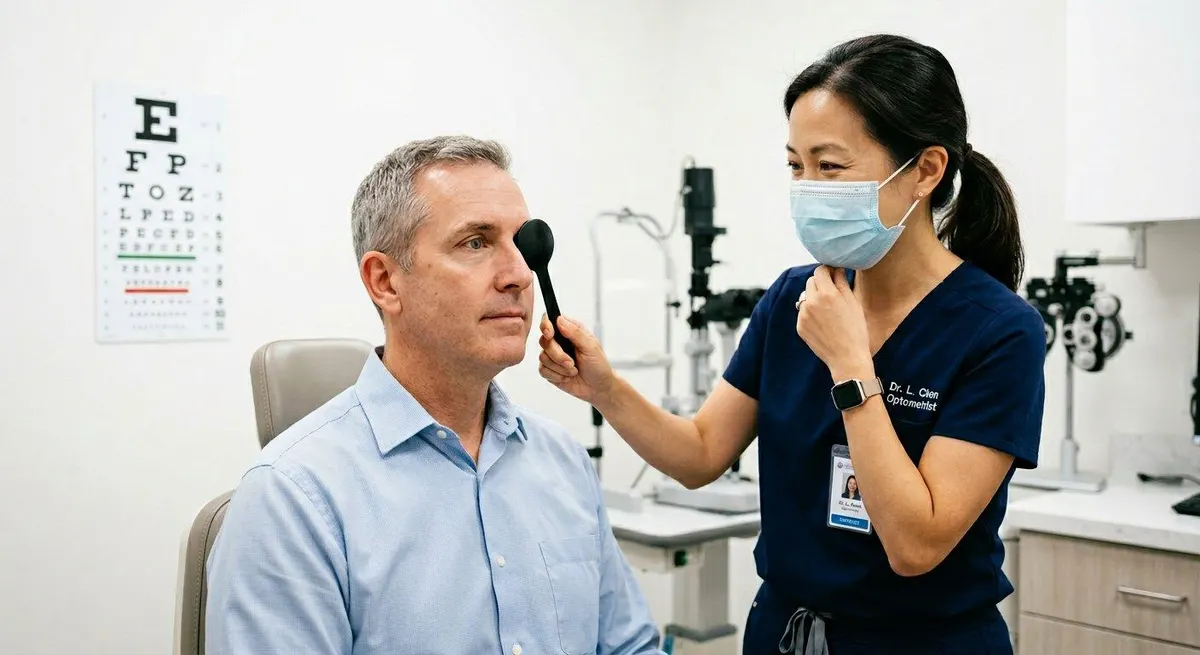
The DOT physical requires a minimum distant visual acuity of 20/40 in each eye, with or without corrective lenses. Peripheral vision must measure at least 70 degrees in the horizontal meridian in each eye. Drivers who fail unaided vision tests may use glasses or contact lenses to meet the standard.
For vision and hearing tests, the standard is clear and non-negotiable. Drivers who wear corrective lenses must wear them during the exam and will have a restriction noted on their certificate requiring corrective lenses while driving. Colour vision is also assessed, as the ability to recognise traffic signal colours is a safety requirement.
For hearing, the FMCSA requires drivers to perceive a forced whispered voice at a distance of no less than 5 feet in at least one ear, with or without a hearing aid. Alternatively, a pure tone audiometry threshold of 40 decibels or less in the better ear (without a hearing aid) satisfies the requirement. Clinicians frequently observe that drivers using hearing aids should bring them to the appointment and inform the examiner upfront.
KEY TAKEAWAY: Vision must meet 20/40 acuity in each eye and hearing must perceive a whisper at 5 feet. Corrective lenses and hearing aids are permitted and should be brought to the exam.
Cardiovascular and Respiratory Health Assessment

The cardiovascular assessment is one of the most closely scrutinised components of the DOT physical exam. blood pressure is measured during the exam, and the result directly determines the duration of your medical certification.
The FMCSA uses the following blood pressure thresholds to determine certification length:
| Blood Pressure Reading | Certification Outcome |
|---|---|
| Below 140/90 mmHg | 2-year certification |
| 140-159/90-99 mmHg | 1-year certification |
| 160-179/100-109 mmHg | 3-month temporary certificate |
| 180/110 mmHg or higher | Disqualified until controlled |
Drivers with a history of cardiac conditions, including prior heart attack, bypass surgery, arrhythmia, or pacemaker implantation, may require additional clearance from a cardiologist before certification. The examiner will also assess lung function, checking for conditions such as obstructive sleep apnea, severe asthma, or chronic obstructive pulmonary disease (COPD) that could impair alertness or respiratory capacity during driving.
According to research published by the American Academy of Sleep Medicine, untreated obstructive sleep apnea significantly increases crash risk in commercial drivers. Drivers who have been diagnosed with sleep apnea but are successfully treated with CPAP therapy can often be certified, provided they demonstrate compliance. If you suspect you may have undiagnosed sleep apnea, a home sleep study may help you assess your risk before your DOT exam.
KEY TAKEAWAY: blood pressure directly determines certificate duration, and untreated conditions such as sleep apnea can be disqualifying. Documented treatment and specialist clearance letters can support certification for drivers managing cardiac or respiratory conditions.
The General Physical Examination

The general physical examination covers a full head-to-toe clinical assessment. The examiner evaluates neurological function, musculoskeletal integrity, abdominal health, skin condition, and the presence of any abnormalities that could affect safe driving.
The neurological component checks reflexes, coordination, and balance. The musculoskeletal evaluation assesses whether the driver has sufficient range of motion, strength, and coordination to safely operate vehicle controls, including steering, braking, and shifting gears. Drivers who have had amputations or limb loss may qualify for a Skill Performance Evaluation (SPE) certificate, which assesses their ability to operate an adapted vehicle safely.
The general physical exam also includes a urinalysis. The urine test in a DOT physical checks for indicators of underlying health conditions, including glucose (a marker for uncontrolled diabetes), protein (a kidney health indicator), blood, specific gravity, and pH levels. This is not a drug test. The FMCSA conducts drug testing separately under a different regulatory framework. In real-world use, many drivers arrive assuming the urine test will detect recreational drug use. It will not. It is purely a health screening tool.
KEY TAKEAWAY: The general physical examination evaluates neurological, musculoskeletal, and metabolic health. The urinalysis is a health screening tool, not a drug test, and checks for indicators of conditions like diabetes or kidney disease.
Preparing for Your DOT Physical: Tips for Success
Preparing properly for your DOT medical exam significantly increases the likelihood of a straightforward certification outcome, particularly if you have any managed health conditions.

Gather Essential Medical Documents and Information
Bring the following to your appointment:
•A complete list of all current medications, including dosages and prescribing physicians
•Medical records for any chronic conditions such as diabetes, hypertension, sleep apnea, or heart disease
•Letters from treating specialists confirming that chronic conditions are stable and managed
•Corrective lenses or hearing aids if used
•Completed MCSA-5875 medical history form (many clinics allow you to download and complete this in advance)
•Any prior DOT medical certificates or exemption letters
If you have insulin-treated diabetes, you will need to complete the MCSA-5870 form and submit it to your examiner. As defined by the FMCSA, insulin-treated commercial drivers must meet specific monitoring requirements to be eligible for certification.
Proactive Health Management Leading Up to the Exam
In the days before your DOT physical, take the following steps to present your best health status:
•Avoid high-sodium foods and caffeine for 24 hours before the exam to support normal blood pressure readings
•Get adequate sleep the night before, as fatigue can temporarily elevate blood pressure
•Do not take any over-the-counter stimulants or decongestants, as these can raise blood pressure and heart rate
•Schedule your appointment in the morning when blood pressure readings tend to be more stable
•Bring your corrective lenses and hearing aids if you use them
People who undergo this exam often find that their blood pressure reads higher than usual due to anxiety or rushing to the appointment. Arriving early, hydrated, and calm makes a measurable difference.
Communicate with Your Primary Care Physician
If you have any conditions being managed by a specialist, ask your physician to provide a letter specifically addressed to the DOT medical examiner. The letter should confirm the diagnosis, the current treatment plan, dosages, and the physician's clinical opinion that the condition does not impair your ability to drive safely. Find a provider in your area who is familiar with FMCSA requirements, as specialist letters that reference DOT standards carry significantly more weight than generic summaries.
KEY TAKEAWAY: The most effective way to prepare for a DOT physical is to gather all relevant medical documentation, manage your health proactively in the days before the exam, and communicate transparently with your examining provider.
With preparation covered, the next critical area to understand is what specific conditions the FMCSA evaluates and how disqualifying conditions are handled.
Understanding DOT Physical Requirements and Common Disqualifying Conditions
The FMCSA sets minimum physical qualification standards under 49 CFR Part 391. These standards exist to ensure that drivers can safely control a commercial vehicle and respond appropriately in emergencies.

Key DOT Physical Requirements at a Glance
| Requirement Area | FMCSA Standard |
|---|---|
| Visual acuity | 20/40 minimum each eye, with or without correction |
| Peripheral vision | 70 degrees horizontal each eye |
| Colour recognition | Ability to identify traffic signal colours |
| Hearing | Whisper at 5 feet in one ear, or 40 dB threshold |
| Blood pressure | Below 140/90 for 2-year certification |
| Blood glucose | Must be controlled; insulin use requires MCSA-5870 form |
| Seizure history | Must be seizure-free for defined periods |
| Substance use | No current use of Schedule I drugs or other disqualifying substances |
Common Disqualifying Conditions and Management Strategies
Many conditions that appear disqualifying can be managed to achieve certification. The following are the most frequently encountered situations:
•Hypertension: Controlled blood pressure through medication or lifestyle changes allows certification. Uncontrolled readings of 180/110 mmHg or above result in immediate disqualification.
•Diabetes: Type 2 diabetes managed with oral medication is generally certifiable. Insulin-treated drivers must meet specific glucose monitoring requirements using the MCSA-5870 framework.
•Obstructive sleep apnea: Untreated sleep apnea is a disqualifying condition due to the risk of microsleep events. Drivers successfully treated with CPAP therapy and demonstrating compliance can be certified. If you are concerned about sleep apnea symptoms, addressing them before your exam is a practical first step.
•Cardiovascular disease: A history of coronary artery disease, bypass surgery, or stent placement may require a cardiologist's clearance letter confirming adequate functional capacity.
•Seizure disorders: Epilepsy or a history of unprovoked seizures is generally disqualifying unless the driver has been seizure-free for a defined period and has specialist clearance.
•Vision below standards: Monocular vision or acuity below 20/40 that cannot be corrected may require a federal vision exemption program application.
Exploring Medical Accommodations and Waivers
The FMCSA offers two types of medical accommodations for drivers who do not meet standard qualification criteria:
A federal waiver is a temporary authorisation that allows a driver to operate a CMV despite a specific condition that would otherwise disqualify them. Waivers are issued on a case-by-case basis and require documented evidence that the driver can operate safely.
A federal exemption is a longer-term accommodation based on demonstrated safe driving history. The vision exemption program, for example, allows monocular drivers with a consistent safety record to obtain certification despite not meeting the standard acuity requirement.
Medical accommodations ensure that drivers with well-managed conditions are not automatically excluded from commercial driving careers. Clinicians frequently observe that drivers who engage with these processes early have significantly better outcomes than those who wait until their certificate lapses.
KEY TAKEAWAY: Many conditions that appear disqualifying are manageable through documented treatment, specialist letters, or FMCSA waiver and exemption programs. Understanding your specific situation before the exam gives you the best opportunity for certification.
If you manage your health proactively and understand the requirements, what happens after the exam is a straightforward process.
After the Exam: Certification and Next Steps
Once your DOT physical exam is complete, the medical examiner determines your certification status and records the outcome in the FMCSA National Registry.

Receiving Your Medical Examiner's Certificate (MEC)
The Medical Examiner's Certificate (MEC) is the official document that confirms you have passed the DOT physical exam and are medically qualified to operate a commercial motor vehicle. The examiner completes the MCSA-5876 form, and as of current FMCSA regulations, must submit findings electronically to the National Registry.
The certificate is issued for up to 24 months for drivers who meet all standards without restriction. Shorter certification periods are issued when specific conditions require closer monitoring. For example:
•A driver with blood pressure in the Stage 1 range (140-159/90-99) receives a 1-year certificate
•A driver with blood pressure in the 160-179/100-109 range receives a 3-month temporary certificate
•A driver managing insulin-treated diabetes may receive a certificate for up to 12 months
What If You Don't Pass the First Time?
Not passing the DOT medical exam does not mean permanent disqualification. In most cases, it means there is a correctable condition or missing documentation that needs to be addressed. Common reasons for a deferred or declined certificate include:
•Uncontrolled blood pressure on the day of the exam
•Missing specialist clearance letter for a managed condition
•Untreated or undocumented sleep apnea
•Medications flagged for further review
Drivers who are deferred or declined can return to the examiner with additional documentation or, in the case of blood pressure, after a period of treatment. Many patients report successfully obtaining certification within 30 to 90 days after addressing the underlying issue.
Maintaining Your Certification
Your Medical Examiner's Certificate must be renewed before it expires. It is your responsibility, not your employer's, to track your renewal date and schedule your next exam in advance. Many drivers schedule their renewal exam 30 days before expiration to allow time to address any unexpected issues.
If your health status changes significantly during your certification period, such as a new cardiac diagnosis or a seizure, you are required to notify your employer and may need to undergo a new examination before your current certificate expires.
KEY TAKEAWAY: The Medical Examiner's Certificate is valid for up to 24 months, and renewal is the driver's responsibility. Not passing initially is often a correctable situation that can be resolved with documentation or treatment.
Understanding the practical side of the exam helps you plan effectively for what comes next.
Practical Considerations and Final Tips
Beyond the clinical examination itself, there are several practical elements that every commercial driver should understand before scheduling their DOT physical.

Cost and Duration of a DOT Physical
The cost of a DOT physical exam ranges from approximately $52 to $129 or more, depending on the clinic, geographic location, and whether any additional tests are required. Walk-in urgent care centres and occupational health clinics typically offer competitive pricing. Some larger trucking employers cover the cost of renewal exams as part of their driver benefits package.
The exam itself typically takes 30 to 45 minutes when documentation is complete and the driver arrives prepared. If additional time is needed to review complex medical records or obtain telephone clarification from a treating physician, the appointment may run longer. Scheduling your exam during a weekday morning when clinic volumes are lower can help minimise wait times and appointment delays.
Finding a Certified Medical Examiner
The FMCSA National Registry of Certified Medical Examiners is the official resource for locating a qualified examiner close to you. The search tool allows you to filter by location, examiner type, and availability. Always verify that your chosen provider is currently active before booking.
Many occupational health clinics, urgent care centres, and chiropractic offices in your area offer DOT physical services. When selecting a provider, prioritise those who specifically advertise DOT physical services, as they are more likely to have streamlined administrative processes and familiarity with documentation requirements.
Beyond the Physical: General Safety and Medical Emergency Preparedness
Commercial drivers have a responsibility to remain medically fit throughout their certification period, not only at exam time. Conditions can change, medications can change, and new diagnoses can arise. The FMCSA expects drivers to self-report significant health changes that may affect their ability to drive safely.
Drivers who experience a medical emergency while on duty, such as a cardiac event, loss of consciousness, or neurological episode, are required to be removed from service and re-evaluated before returning to commercial driving. Carriers are encouraged to implement basic medical emergency preparedness protocols and ensure drivers understand their reporting obligations under federal regulations.
Research published by the National Institutes of Health (NIH) indicates that untreated sleep disorders, including obstructive sleep apnea, are a significant risk factor for fatigue-related commercial vehicle incidents. Addressing sleep health proactively, including screening with a home sleep test if symptoms are present, is part of responsible medical self-management for any CDL driver.
KEY TAKEAWAY: Practical preparation, including knowing the cost, finding a certified examiner near you, and understanding ongoing medical obligations, ensures a smooth and compliant certification journey.
Common Myths About DOT Physicals Debunked
Many commercial drivers approach the DOT physical exam with misconceptions that cause unnecessary anxiety or lead to preventable certification failures.

MYTH: Any licensed doctor can perform a DOT physical.
FACT: Only healthcare providers listed on the FMCSA's National Registry of Certified Medical Examiners are legally authorised to conduct a DOT physical and issue a valid Medical Examiner's Certificate. As the FMCSA confirms, a physical conducted by an unlisted provider, regardless of their general medical credentials, does not satisfy federal requirements and cannot be used for CDL purposes.
MYTH: A single diagnosed condition automatically disqualifies you.
FACT: Many conditions that appear disqualifying are manageable. The FMCSA provides frameworks for certifying drivers who have controlled hypertension, insulin-treated diabetes, treated sleep apnea, and even certain cardiac conditions with specialist clearance. According to FMCSA guidelines, it is the management and documentation of a condition, not the diagnosis itself, that determines eligibility in most cases.
MYTH: The urinalysis in a DOT physical is a drug test.
FACT: The urine sample collected during a DOT physical is a health screening test only. As the FMCSA specifies, it checks for indicators of metabolic conditions such as diabetes or kidney disease, including glucose, protein, blood, specific gravity, and pH. Drug testing for commercial drivers is conducted under a completely separate FMCSA-regulated program and uses a different collection and analysis process.
MYTH: If you have a CDL, you are automatically medically certified to drive.
FACT: A Commercial Driver's License and a Medical Examiner's Certificate are separate qualifications. Holding a CDL does not mean you are currently medically qualified. The Medical Examiner's Certificate expires independently of the CDL, and drivers who allow their certificate to lapse are not legally permitted to operate a CMV even if their CDL remains valid.
MYTH: Only long-haul truck drivers need a DOT physical.
FACT: The DOT physical requirement applies to any driver operating a commercial motor vehicle meeting the FMCSA weight, passenger, or hazardous materials thresholds, regardless of route length. Bus drivers, hazmat drivers, delivery drivers in qualifying vehicles, and passenger van operators may all be subject to the requirement.
KEY TAKEAWAY: Most DOT physical myths centre on misunderstandings about who qualifies as an examiner, what conditions disqualify drivers, and what the urine test actually measures. Understanding the facts reduces exam anxiety and leads to better preparation outcomes.
Frequently Asked Questions
What does a full DOT physical consist of?
A full DOT physical exam consists of a medical history review using the MCSA-5875 form, vision testing (minimum 20/40 acuity per eye), hearing testing (whisper test at 5 feet), blood pressure and cardiovascular assessment, a general head-to-toe physical examination, and a urinalysis. The examiner also reviews all current medications and any specialist records for managed conditions. The entire exam typically takes 30 to 45 minutes when documentation is prepared in advance. Once completed, the examiner submits findings to the FMCSA National Registry electronically.
What are the 5 basic physical exams?
The five core assessment areas of a DOT physical are: medical history review and documentation check, vision and sensory function testing, hearing evaluation, cardiovascular and respiratory assessment, and general physical examination including neurological and musculoskeletal evaluation. The urinalysis, while technically a separate procedure, is also a required component under FMCSA regulations and is performed at the same appointment. Each area is evaluated against defined FMCSA standards, not standard clinical ranges.
What will fail DOT physical?
Conditions that can result in a failed or deferred DOT physical include: uncontrolled blood pressure at or above 180/110 mmHg, vision below 20/40 in either eye that cannot be corrected, inability to perceive a whisper at 5 feet in either ear, active epilepsy or recent unprovoked seizure, untreated obstructive sleep apnea, active cardiovascular disease without specialist clearance, current use of disqualifying medications or substances, and poorly controlled diabetes. Many of these conditions do not result in permanent disqualification and can be addressed with treatment, documentation, or an FMCSA waiver or exemption application.
What are common mistakes during DOT physicals?
The most common mistakes include arriving without a complete medication list, failing to bring corrective lenses or hearing aids, not disclosing managed conditions upfront, consuming caffeine or salty food before the exam which can elevate blood pressure, and not bringing specialist letters for chronic conditions. Drivers sometimes also forget to bring their completed MCSA-5875 medical history form, which adds time to the appointment. Scheduling the exam when you are unwell, rushing, or sleep-deprived can also result in readings that do not reflect your baseline health status.
What's involved in the DOT physical exam?
For CDL drivers, the DOT physical exam involves the same components as for any CMV operator: medical history review, vision and hearing testing, blood pressure and cardiovascular evaluation, a full physical examination, and urinalysis. CDL Class A and B drivers operating vehicles over specified weight thresholds are required to hold a current Medical Examiner's Certificate at all times. The certificate must be renewed before expiration, and any material change in health status during the certification period should be reported to the examiner. You can find a certified DOT examiner in your area through the FMCSA National Registry.
Can I get a DOT physical if I take prescription medication?
Yes, in most cases. Many prescription medications are compatible with DOT certification. However, certain medications require additional documentation or may trigger a closer review. These include opioid analgesics, benzodiazepines, sedating antihistamines, certain antipsychotics, and some anticoagulants. The examiner will assess each medication against FMCSA standards and may request a letter from your prescribing physician confirming that the medication does not impair your ability to drive safely. Bring a complete medication list, including dosages and prescribing physician names, to every DOT physical appointment.
How do I find a certified medical examiner for a DOT physical near me?
Use the official FMCSA National Registry search tool at nationalregistry.fmcsa.dot.gov to find certified examiners in your area. You can filter results by location and examiner type. Many occupational health clinics, urgent care centres, and chiropractic offices close to you offer DOT physical services and appear in the registry. Always verify that the provider is currently active on the registry before booking. An examiner who is not listed, regardless of their credentials, cannot issue a legally valid Medical Examiner's Certificate.
How long does a DOT physical take?
A DOT physical typically takes between 30 and 45 minutes when the driver arrives with complete documentation and is well-prepared. If the examiner needs to review complex medical records, contact a treating physician, or conduct additional assessments for a flagged condition, the appointment may take up to 90 minutes. Arriving early, completing the MCSA-5875 form in advance, and bringing all required documents is the most reliable way to keep your appointment within the standard timeframe.
Should I get my DOT physical exam and CDL-A knowledge test on the same day?
Scheduling both on the same day is possible but not recommended unless you are confident in your health status and fully prepared for both. Anxiety or physical fatigue from one assessment can affect performance on the other. The DOT physical and CDL knowledge test are separate processes administered by different entities. Prioritise your DOT physical first, as your Medical Examiner's Certificate is required to proceed with certain licensing steps. Clinicians frequently observe that drivers who split these appointments perform better on both.
Conclusion: Your Medical Certification Is Your Gateway to the Road
The DOT physical exam is a standardised, manageable process for any driver who understands what it involves and prepares accordingly. Meeting FMCSA medical standards is not about having a perfect health record — it is about demonstrating that your health is monitored, managed, and documented. Most conditions that cause concern can be addressed with the right medical team, the right documentation, and the right preparation strategy.

If sleep health is part of your certification journey, understanding conditions like obstructive sleep apnea in adults and your treatment options is an important first step before your next DOT medical exam. Explore dumbo.health's sleep health resources to take control of your sleep before your certification is at risk.
Related DOT Physical Topics
- What Does DOT Stand for in a DOT Physical
- What Is the Difference Between a DOT and Non-DOT Physical
- What Can Disqualify You From a DOT Physical
- DOT Physical Out of Pocket What Commercial Drivers Actually Pay
- DOT Physical Cost Breakdown What Drivers Pay & Why
- What happens if you fail a DOT physical due to sleep apnea
- What Should You Bring to a DOT Physical
- What should I expect at a DOT physical
- What Forms Do You Need for a DOT Physical
- What Are the Requirements to Pass a DOT Physical
- Your Complete Guide What's Included in a DOT Physical Exam
- What Is the Urine Test for in a DOT Physical
- What blood pressure do you need to pass a DOT physical
- DOT Physical Blood Pressure Requirements What Drivers Need to Know
- DOT Physical at Urgent Care What Commercial Drivers Need to Know
- New DOT Physical Requirements What Drivers MUST Know About New Updates
- Is a DOT physical the same as a regular physical
- What Does a DOT Physical Consist Of
- BMI for DOT Physical What Commercial Drivers Need to Know
- What Happens During the DOT Physical Exam The Complete Guide for Drivers
- DOT Physical & Drug Test What Drivers Need to Know
- What eye chart is used for a DOT physical
- What Do They Check During a DOT Physical
- Failing a DOT Physical What Every Commercial Driver Needs to Know
- How can drivers with sleep apnea qualify again after a failed DOT physical
- DOT Physical Online Cost
- Can You Pass a DOT Physical with Epilepsy
- How Do You Submit Your DOT Physical to the DMV
- Virtual DOT Physical
- DOT Physical Vision & Eye Requirements
- Remote DOT Physical The Complete Guide for Commercial Drivers
- The Ultimate DOT Physical Guide for Commercial Drivers (2025–2026)
- Who needs a DOT physical
- DOT Physical Self Pay Cost
- Navigating Your DOT Physical with Common Medical Conditions
- How to Pass a DOT Physical The Complete Commercial Driver's Guide
- Does a DOT physical include a drug test
- Navigating the Florida DOT Physical Your Essential Guide for CDL Drivers
- When Can Sleep Apnea Affect a DOT Physical
- DOT Physical Chiropractor Your Complete Guide to CDL Exams
- Can you pass a DOT physical with sleep apnea
- Can you fail a DOT physical because of sleep apnea
- Can You Get a Second Opinion on Your DOT Physical A Complete Guide for Commercial Drivers
- Can You Get a DOT Physical Online
- Walk In DOT Physical Self Pay
- Can You Pass a DOT Physical With a Pacemaker
- Telehealth Dot Physical
- DOT Physical Forms & Paperwork The Complete Guide for Commercial Drivers
- Can You Pass a DOT Physical With One Eye
- DOT Physical Exam Basics
- DOT Physical & Alcohol Requirements
- DOT Physical Duration and Validity How Long Your Medical Card Lasts
- DOT Physical Insurance & Recertification The Complete Driver's Guide
- Can You Fail a DOT Physical for Being Overweight
- Why do they measure your neck during a DOT physical
- Online DOT Physical Without Insurance A Complete Guide for Commercial Drivers
- Can You Pass a DOT Physical with High Blood Pressure
- Cheap DOT Physical Online
- Can You Pass a DOT Physical With a Hernia
- Do They Check for Hernia During a DOT Physical
- Online DOT Physical Self-Pay The Complete Guide for CDL Drivers and Owner-Operators
- DOT physical self pay guide for commercial drivers paying out of pocket
- DOT Physical Cash Pay
- Online DOT Exam What Drivers and Medical Examiners Need to Know
- Is a drug test required for a DOT physical
- Can You Fail a DOT Physical for High Blood Pressure
- What are the current DOT requirements for sleep apnea testing for commercial drivers
- Same Day DOT Physical
- Online DOT Physical The Complete Guide for Commercial Drivers and Medical Examiners
- Do They Check Your Private Parts During a DOT Physical
- DOT Physical ICD-10 & Billing Codes The Complete Guide for Accurate Compliance and Reimbursement
- DOT Physical Insurance or Self Pay How to Choose the Right Payment Option for Your Exam
- Is a Sleep Study Required for a DOT Physical
- Can You Pass a DOT Physical with Diabetes
- Non-DOT Physical A Comprehensive Guide to Workforce Health and Safety
- DOT Physical Texas The Essential Guide to Your Exam, Medical Card, and CDL Compliance
- DOT Physical Requirements A Complete Guide for CDL Drivers
- Do You Have to Pee During a DOT Physical
- The DOT Physical Exam Ensuring You're Fit for the Road
- Can You Fail a DOT Physical
- Online CDL Physical
- Are There New DOT Rules or Laws on Sleep Apnea Testing
- Essential 171 DOT Definitions for Commercial Drivers
- 2026 DOT Inspection Dates
- Why DOT Sleep Tests at Home Matter for Your Career and Health
- CDL PHYSICAL SELF PAY
- DOT sleep apnea test at home
- What are the current FMCSA guidelines on sleep apnea for commercial drivers
- DOT Medical Exam Self-Pay A Complete Guide for Commercial Drivers
- What Precautions Should Drivers With Sleep Apnea Take
- Guide to Obtaining and Managing Your DOT Medical Card Online
- Expected 2027 DOT Inspection Dates
- Sleep Apnea Test for CDL Drivers
- How Sleep Apnea Affects Overall Driving Safety
- Home Sleep Apnea Test for Commercial Drivers The CDL Holder's Complete Guide
- Best Treatments for Sleep Apnea to Improve Driving Safety
- Are there legal requirements for drivers with sleep apnea
- How Does Sleep Apnea Affect Driving Ability
- The Comprehensive Guide to Suboxone, Sleep Apnea, and FMCSA Compliance for Commercial Motor Vehicle Operators
- At Home Sleep Test for Truck Drivers
Take the next step before your DOT physical
Start with the free quiz if you are unsure about your risk, or order an at-home sleep test if you have already been flagged for possible sleep apnea.
AI summary
A DOT physical exam is a federally mandated medical evaluation regulated by the Federal Motor Carrier Safety Administration (FMCSA) under 49 CFR Part 391. It determines whether a commercial motor vehicle (CMV) driver meets minimum health standards to operate safely. Key components include a medical history review on the MCSA-5875 form, vision testing (20/40 in each eye; 70-degree peripheral vision; color recognition), hearing testing (whisper at 5 feet or audiometry threshold), cardiovascular and respiratory assessment, a general physical exam, and urinalysis for health markers (not a drug test). Blood pressure affects certification duration: under 140/90 can qualify for up to 24 months; higher readings may reduce duration or lead to temporary certification or disqualification. The exam must be performed by a provider listed on the FMCSA National Registry of Certified Medical Examiners. Common certification issues include uncontrolled hypertension, untreated obstructive sleep apnea, certain cardiac conditions without specialist clearance, and insulin-treated diabetes requiring the MCSA-5870 form. Results are recorded and a Medical Examiner’s Certificate is issued on MCSA-5876, with electronic submission to the National Registry.

Nicolas Nemeth
Co-Founder
Nico is the co-founder of Dumbo Health, a digital sleep clinic that brings the entire obstructive sleep apnea journey home. Patients skip the sleep lab and the long wait to see a specialist. Dumbo Health ships an at home test, connects patients with licensed sleep clinicians by video, and delivers CPAP or a custom oral appliance with ongoing coaching and automatic resupply in one clear subscription.
Keep reading

How Long Does a DOT Physical Take? A Complete Guide for Commercial Drivers

What Happens If You Fail a DOT Drug Test? The Complete Guide for Commercial Drivers


