DOT Physical & Alcohol Requirements
This guide explains how DOT physical exams and FMCSA alcohol testing are related but separate requirements for commercial drivers. It clarifies what the DOT medical exam evaluates, including medical history, blood pressure, vision, hearing, and conditions that may affect certification. It outlines when DOT drug and alcohol tests are legally triggered, such as random, post-accident, reasonable suspicion, return-to-duty, and follow-up testing. It summarizes FMCSA alcohol thresholds, including removal from duty at 0.02 to less than 0.04 and violations at 0.04 or higher. It also covers the DOT 5-panel drug test, what counts as a refusal, and the SAP and Clearinghouse return-to-duty process. Practical tips help drivers prepare, avoid common myths, and reduce compliance risk.
Struggling with sleep?
Find out if sleep apnea is the reason.
FDA-cleared. $149 flat. Physician-reviewed results in 48 hours.

DOT Physical & Alcohol Requirements
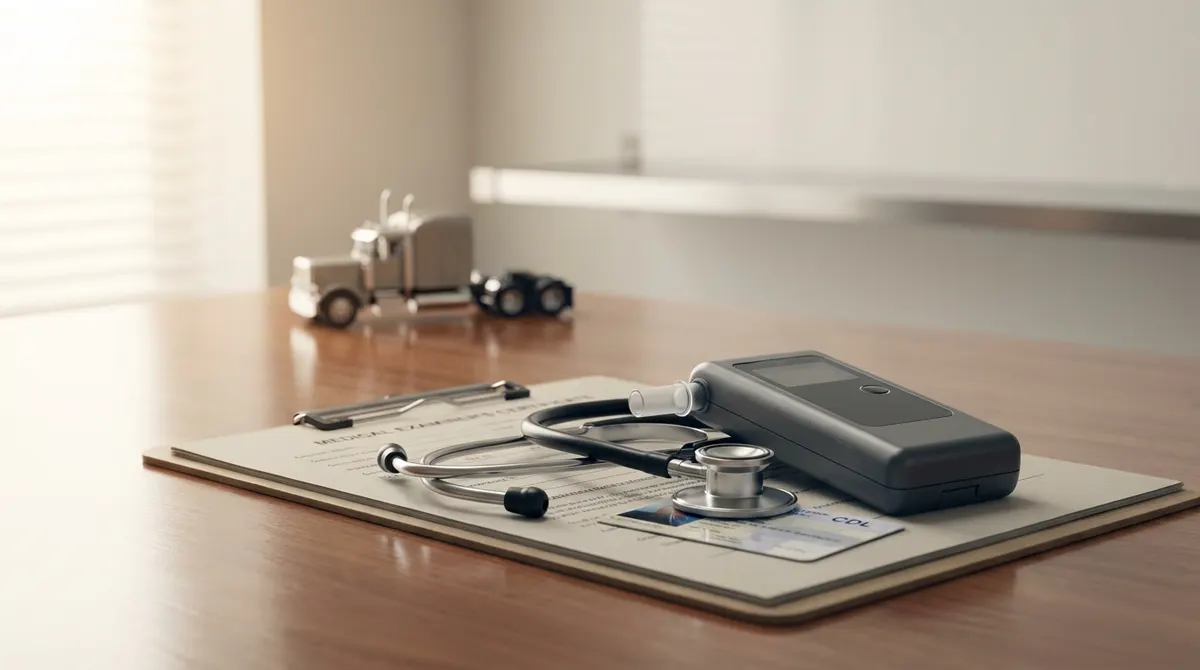
DOT physical alcohol requirements describe two connected but different safety systems for commercial drivers: the DOT physical exam for medical fitness and DOT alcohol testing for impairment prevention. According to the Federal Motor Carrier Safety Administration, many interstate drivers who operate a commercial motor vehicle must maintain medical certification, while separate FMCSA rules under 49 CFR Part 382 and 49 CFR Part 40 govern drug and alcohol testing. This guide explains what a DOT physical exam covers, whether alcohol can affect your certification, when alcohol testing happens, which substances are tested, what a refusal means, how the return-to-duty process works, and what employers must do to stay compliant. It also answers the most common questions drivers ask before a visit to urgent care, occupational health, or a provider near you. (FMCSA)
Why DOT Physicals and Alcohol Requirements Matter
DOT Physicals and alcohol requirements matter because the transportation industry depends on both medical fitness and impairment prevention. The Department of Transportation and the Federal Motor Carrier Safety Administration use these rules to reduce the risk that a driver with unsafe medical conditions or alcohol impairment will perform safety-sensitive functions in a commercial motor vehicle. (FMCSA)
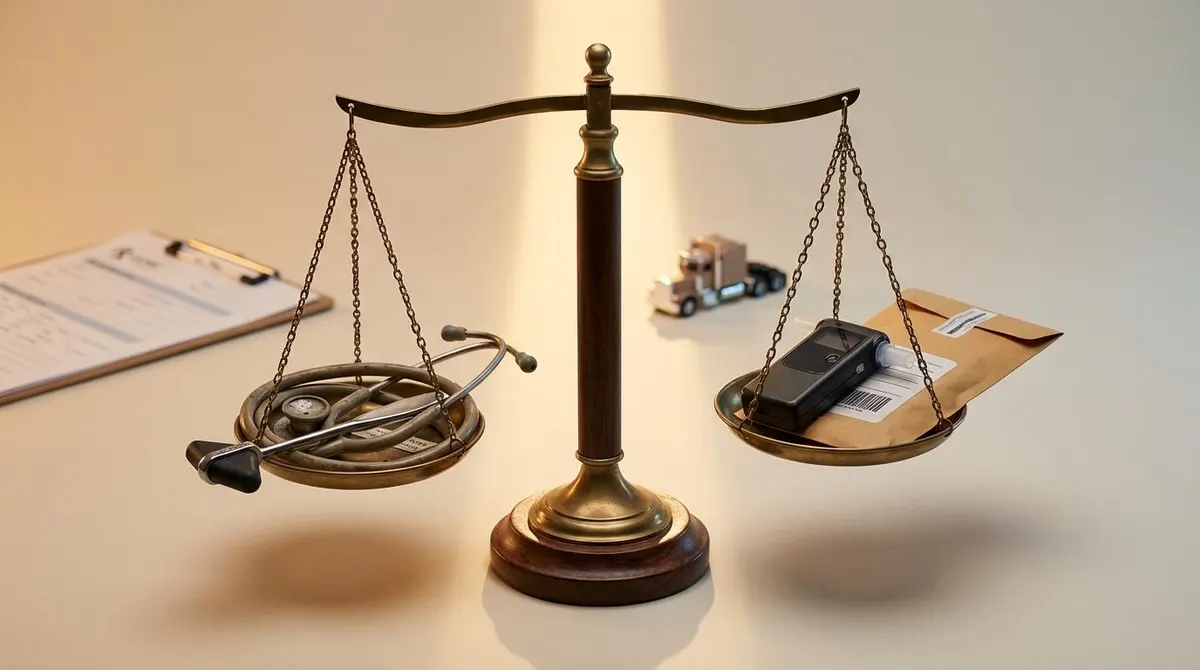
A DOT physical exam is a medical examination used to decide whether you are physically qualified to drive. Drug and alcohol testing is a separate compliance program used to detect impairment or prohibited substance use. That distinction is the most important concept on this page because many drivers incorrectly assume alcohol testing is built into every physical exam. (FMCSA)
The Department of Transportation is the federal department that oversees transportation safety rules in the United States. The Federal Motor Carrier Safety Administration is the DOT agency that regulates most interstate commercial trucks and other commercial motor vehicle operations covered here. A motor carrier must follow both medical qualification rules and drug and alcohol testing rules if its drivers perform covered safety-sensitive functions. (FMCSA)
According to the Federal Motor Carrier Safety Administration, DOT drug and alcohol testing includes pre-employment tests, post-accident testing, random testing, return-to-duty testing, and follow-up testing, depending on the situation. The practical takeaway is simple: passing a DOT physical exam does not replace a drug and alcohol test, and a negative drug screen does not replace medical certification. (FMCSA)
Not sure if sleep apnea applies to you?
Take our 2-minute sleep risk quiz to see whether sleep apnea could affect your DOT physical. No account required.
DID YOU KNOW: According to the Federal Motor Carrier Safety Administration, a driver with an alcohol concentration of 0.02 or greater but less than 0.04 must be removed from duty for 24 hours. (FMCSA)
KEY TAKEAWAY: DOT Physicals evaluate medical fitness, while DOT alcohol testing and drug and alcohol testing enforce impairment and compliance rules.
That foundation makes the actual DOT physical exam much easier to understand.
What the DOT Physical Exam Covers
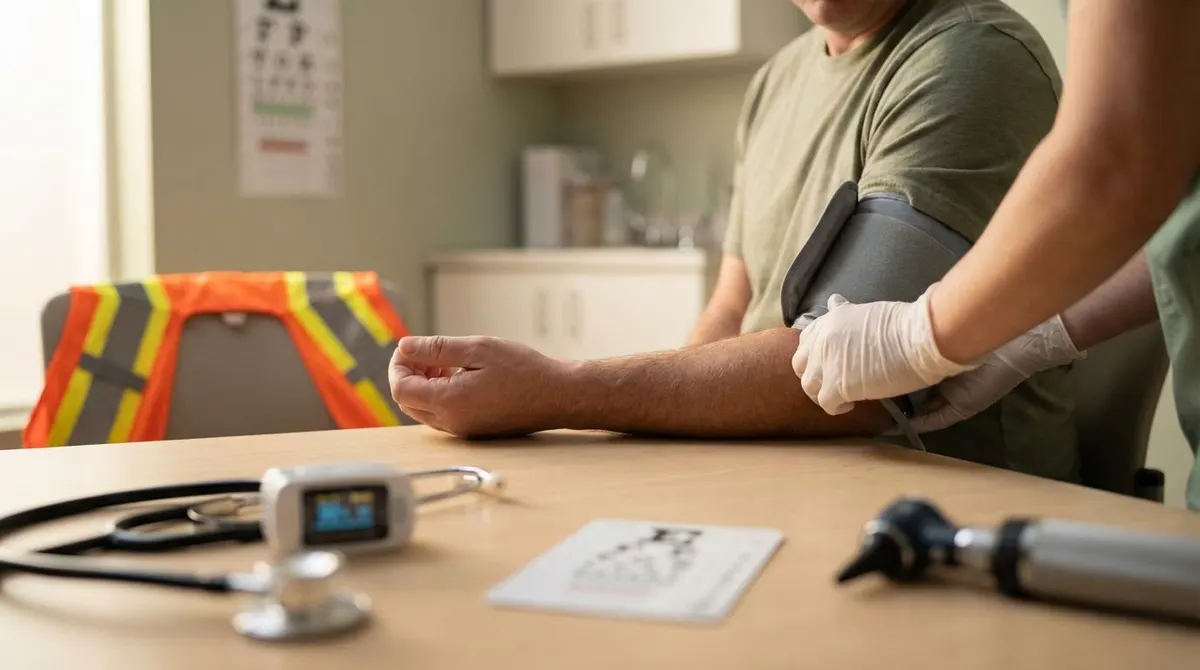
A DOT physical exam is the medical examination used to determine whether you meet FMCSA medical standards to operate a commercial motor vehicle safely. The DOT physical exam focuses on your current health status, functional ability, and medical risks, not on routine employer alcohol screening. (FMCSA)
The medical examiner reviews your medical history, asks about current symptoms and treatment, and completes the Medical Examination Report. The physical exam typically includes blood pressure, pulse, vision tests, hearing, general physical assessment, and a review of medical conditions that could interfere with safe driving. The FMCSA states that if the driver is physically qualified, the medical examiner completes the Medical Examiner's Certificate, also called the Medical Examiner's Certificate or MEC. (FMCSA)
Medical standards matter because some medical conditions can increase crash risk or reduce your ability to perform safely over long hours on the road. Blood pressure control, heart disease history, hearing loss, vision tests, diabetes, seizure disorders, sleep apnea risk, and other medical conditions may affect certification length or require additional documentation. Many patients report that the most stressful part of the DOT physical exam is not the exam itself, but uncertainty about what the medical examiner will focus on. (FMCSA)
A DOT physical exam is also not the same as a drug screen. A driver may complete a physical exam at urgent care or occupational health and still be separately subject to random testing or post-accident testing through the employer's drug and alcohol testing program. If you want to prepare in advance, what blood pressure you need to pass a DOT physical and what can disqualify you from a DOT physical are two of the most useful related topics to review before your appointment.
IMPORTANT: A medical examiner can consider whether alcohol use points to a broader medical issue, but routine DOT alcohol testing follows a separate testing process under FMCSA rules. (FMCSA)
KEY TAKEAWAY: The DOT physical exam checks medical fitness to drive, while alcohol testing checks for prohibited alcohol use under a separate federal program.
The next step is understanding how DOT drug and alcohol testing actually works.
DOT Alcohol and Drug Testing Rules Explained
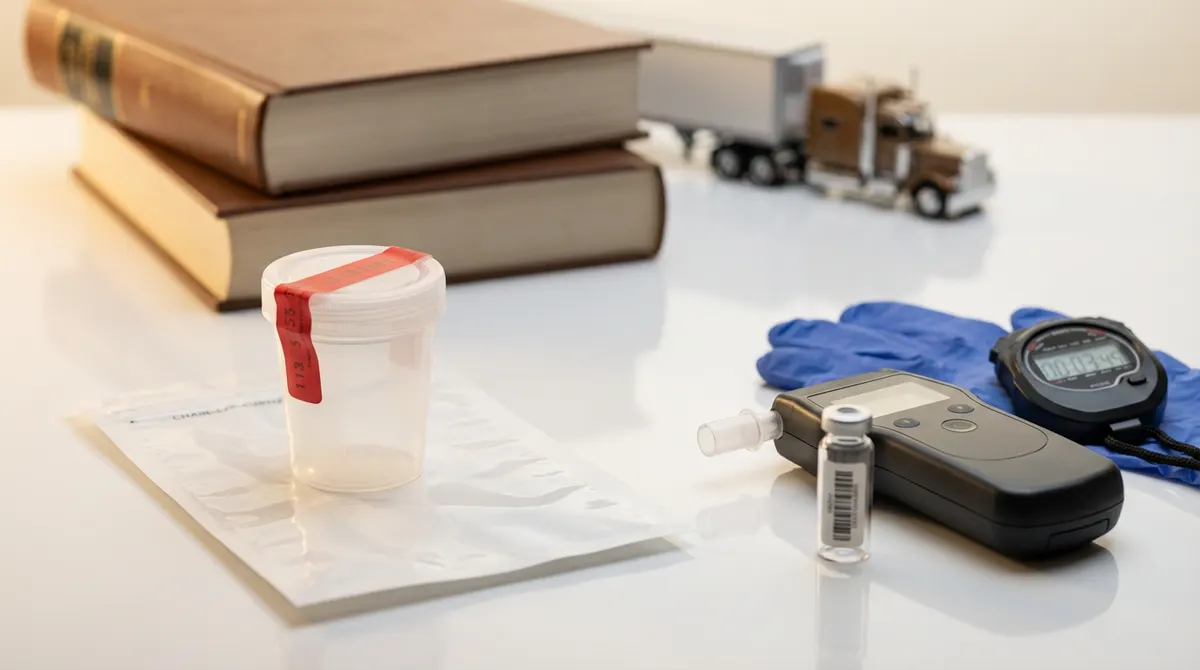
DOT alcohol testing and DOT Drug Testing are federal compliance programs that apply to covered drivers who perform safety-sensitive functions. Under FMCSA rules, the program is separate from the DOT physical exam and is governed primarily by 49 CFR Part 40 and 49 CFR Part 382. (eCFR)
49 CFR Part 40 is the rulebook for testing procedures across DOT agencies. It explains how collections, laboratory analysis, Medical Review Officer review, result handling, and other testing procedures must work. 49 CFR Part 382 applies those procedures to FMCSA regulated CDL Drivers and motor carrier operations. (eCFR)
Already diagnosed and need CPAP support?
Dumbo Health helps patients start CPAP without the usual confusion, paperwork, or upfront cost. Equipment, setup, supplies, and ongoing support are all handled in one place.
The current framework grew out of the Omnibus Transportation Employee Testing Act, which led DOT agencies to adopt standardized drug and alcohol testing requirements for safety-sensitive transportation employees. That structure also helps explain why related agencies such as the Federal Aviation Administration and the Federal Transit Authority have parallel testing programs, even though the details on this page focus on the FMCSA rules for commercial driver's license holders and commercial motor vehicle operators. (eCFR)
Safety-sensitive functions include more than driving alone. FMCSA rules cover time spent waiting to be dispatched, inspecting equipment, loading or unloading, remaining in readiness to operate, and other duties directly tied to safe commercial motor vehicle operation. This is why a driver can violate the alcohol rules before the wheels ever start moving. (eCFR)
The key difference between the two systems is this: the DOT physical exam answers whether you are medically fit to drive, while drug and alcohol testing answers whether you are compliant and unimpaired when federal testing rules apply. That difference shapes nearly every question drivers ask about recent drinking, medication use, and when a test can be ordered. (FMCSA)
KEY TAKEAWAY: DOT drug and alcohol testing rules are a separate federal compliance system with their own legal triggers, procedures, and consequences.
Once that is clear, the most practical question becomes when you can actually be tested.
When Testing Happens and What the Process Looks Like
DOT drug and alcohol testing happens only in specific federally defined situations. According to the Federal Motor Carrier Safety Administration, the required categories are pre-employment tests, reasonable suspicion, post-accident testing, random testing, return-to-duty, and follow-up testing. (FMCSA)
Pre-employment tests are controlled substances tests, not alcohol tests. An employer must receive a negative drug test result before permitting a CDL driver to operate a commercial motor vehicle. Alcohol testing is more likely to appear in random testing, Reasonable Suspicion Testing, post-accident testing, return-to-duty testing, and follow-up testing. (FMCSA)
Random testing is exactly what it sounds like. A covered driver can be selected without warning and must report promptly. Post-accident testing can be required after certain crashes, depending on the outcome and circumstances. Reasonable suspicion must be based on specific trained observations. That is why supervisor training is so important in the transportation industry. (FMCSA)
The testing process depends on the type of test. DOT Drug Testing uses a urine drug screen analyzed by certified laboratories. DOT alcohol testing typically begins with a screening test using a breath or saliva sample, followed by confirmation with an Evidential Breath Testing device when required. Test results from the laboratory drug screen are reviewed by a Medical Review Officer, while alcohol testing relies on approved devices and procedural safeguards rather than MRO verification. (FMCSA)
Here is the clearest side by side comparison for drivers:
| Requirement | DOT Physical Exam | DOT Drug Test | DOT Alcohol Test |
|---|---|---|---|
| Main purpose | Assess medical fitness | Detect controlled substances | Measure alcohol concentration |
| Governing rules | FMCSA medical qualification rules | 49 CFR Part 40 and FMCSA Part 382 | 49 CFR Part 40 and FMCSA Part 382 |
| Typical method | Physical exam and medical history review | Laboratory urine drug screen | Breath or saliva sample, with EBT confirmation when required |
| Common triggers | Certification or renewal | Pre-employment, random, post-accident, return-to-duty, follow-up | Random, reasonable suspicion, post-accident, return-to-duty, follow-up |
| Main decision outcome | Qualified, limited certification, or disqualified | Negative, positive, or refusal related consequences | Below 0.02, 0.02 to less than 0.04, or 0.04 and above consequences |
For most CDL Drivers, the best fit is to think of these as complementary safety tools, not interchangeable requirements. If you are scheduling an exam and want to avoid surprises, reviewing failing a DOT physical can help you separate medical examination concerns from employer testing concerns.
TIP: If a clinic advertises both CDL physical exams and drug and alcohol testing, ask which service you are being scheduled for because the purpose, paperwork, and consequences are different.
KEY TAKEAWAY: DOT testing only happens under specific triggers, and the test method depends on whether the issue is medical fitness, drugs, or alcohol.
The next issue is the one drivers search most often: the actual alcohol limits and what they mean.
DOT Alcohol Limits, Prohibitions, and What Counts as a Violation
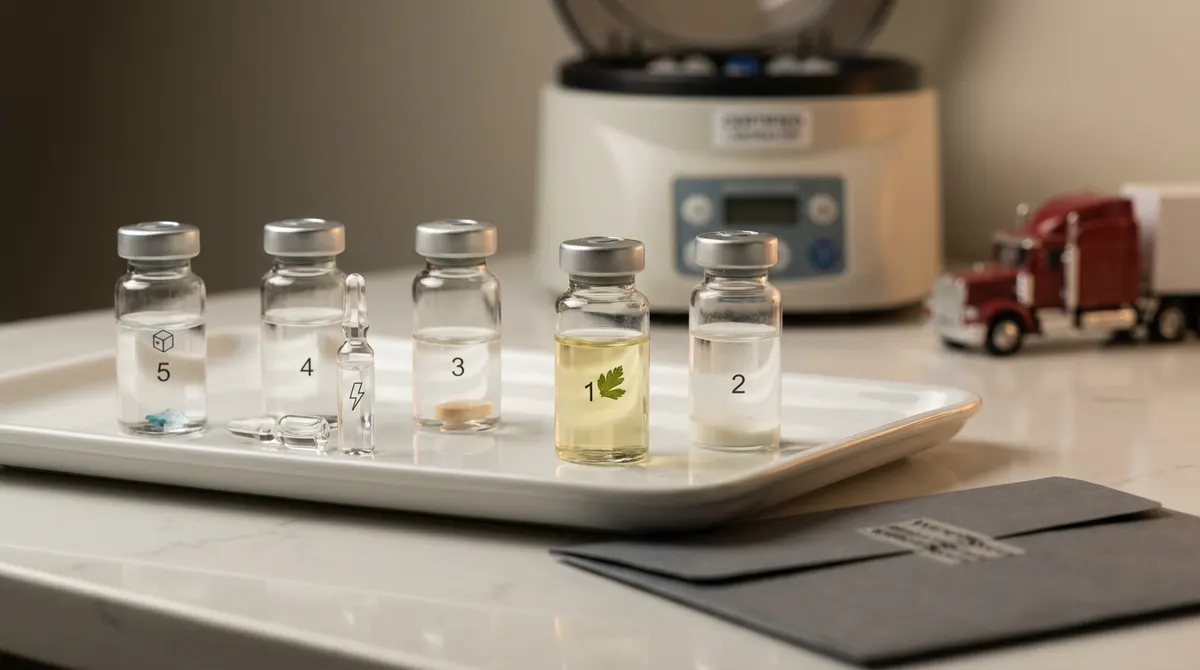
DOT alcohol limits are stricter than many drivers expect because the rules are designed for safety-sensitive transportation employees, not the general public. Under FMCSA rules, an alcohol concentration of 0.02 or greater but less than 0.04 requires removal from duty for 24 hours, while 0.04 or greater is a formal violation that can trigger the return-to-duty process. (FMCSA)
The most important alcohol prohibitions are practical and strict. A driver may not report for duty or remain on duty requiring performance of safety-sensitive functions with an alcohol concentration of 0.04 or greater. A driver also may not use alcohol while performing safety-sensitive functions, use alcohol within 4 hours before going on duty or operating a commercial motor vehicle, or use alcohol for 8 hours after an accident or until post-accident testing is completed, whichever comes first. (eCFR)
This is why the question "How many drinks is 0.08 blood alcohol level?" does not really solve the compliance issue for commercial driver's license holders. FMCSA rules are centered on 0.02 and 0.04, not 0.08. More importantly, blood alcohol concentration varies based on body size, food intake, sex, metabolism, medication, and time since drinking. Counting drinks is not a reliable way to stay compliant. (FMCSA)
DOT alcohol limits also matter when drivers try to fit an exam or a shift into a tight timeline after drinking. People who undergo this process often find that trying to calculate when alcohol will clear only increases risk. The safer decision is to avoid alcohol before any work related testing situation, especially if you may be subject to random testing, post-accident testing, or Reasonable Suspicion Testing in your area. (FMCSA)
DOT alcohol limits are one of the most cited areas of FMCSA compliance because they create immediate, objective consequences. DOT alcohol limits shape scheduling, shift start decisions, and employer actions after a test. DOT alcohol limits also matter even below 0.04, which is the nuance many drivers miss. (FMCSA)
KEY TAKEAWAY: DOT alcohol limits start affecting your work status at 0.02, and 0.04 or greater creates a far more serious FMCSA violation.
That leads to the next crucial issue: which substances are actually tested and how the results are handled.
What the DOT 5 Panel Drug Test Includes
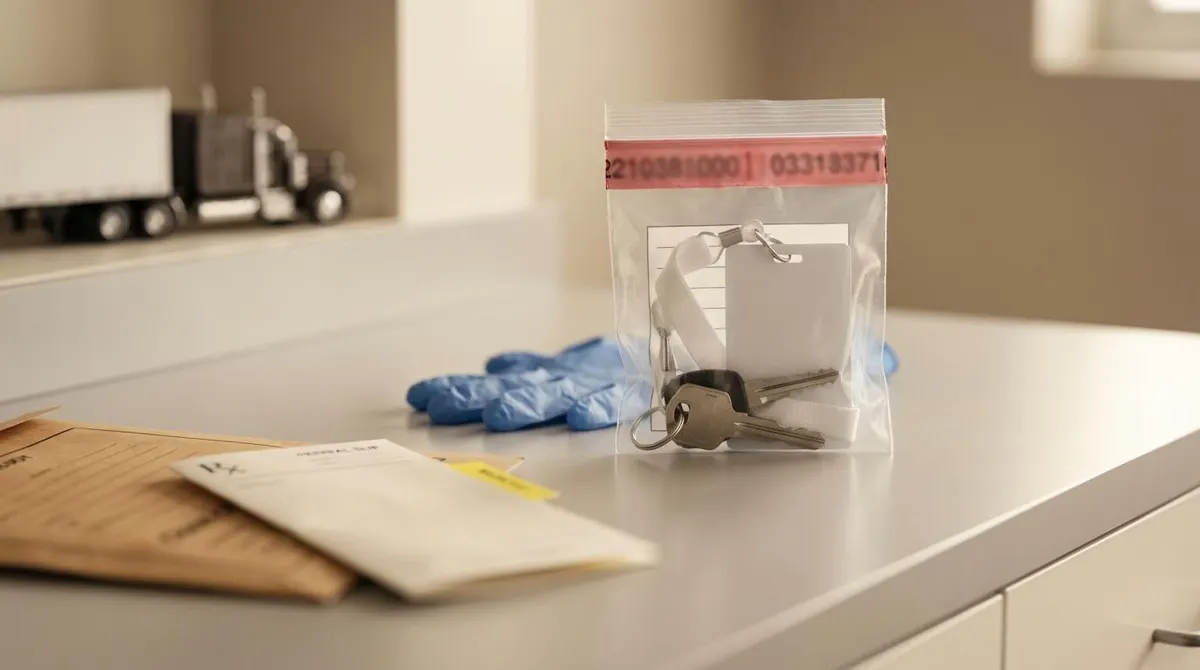
The DOT 5 Panel Drug Test is the standard federal drug testing panel used in DOT Drug Testing. According to the Federal Motor Carrier Safety Administration, the five categories are marijuana, cocaine, opiates, amphetamines and methamphetamines, and PCP. (FMCSA)
The testing panel matters because many drivers assume alcohol is part of the same screen. It is not. Alcohol and drug screen processes are separated under DOT rules. Alcohol testing identifies alcohol concentration of 0.02 and greater, while the 5 Panel Drug Test looks for controlled substances through approved drug testing methods and laboratory analysis. (FMCSA)
A 10 Panel Drug Test is different from the DOT 5 Panel Drug Test. Some non DOT employers may order a 10 Panel Drug Test, but DOT regulated FMCSA testing is built around the federally required five classes listed above. That distinction matters if you are comparing job requirements or trying to understand why an occupational health clinic offers multiple testing options. (FMCSA)
Certified laboratories perform the analysis for DOT drug tests, and the Medical Review Officer reviews certain non negative results to determine whether there is a legitimate medical explanation. The Medical Review Officer is not the same person as the medical examiner who performs your DOT physical exam, even though both may work through the same clinic network. (FMCSA)
If you are also dealing with other health concerns, can you pass a DOT physical with high blood pressure and can you pass a DOT physical with diabetes can help you separate medical certification issues from testing issues.
KEY TAKEAWAY: The DOT 5 Panel Drug Test does not test for alcohol, and DOT drug testing uses a federally defined laboratory process with Medical Review Officer oversight.
The next section covers what happens when the result is positive or the driver refuses to test.
What Happens After a Positive Test or Refusal
A positive drug and alcohol test or a refusal to submit can immediately remove you from safety-sensitive functions. For a motor carrier, that means the driver cannot legally continue covered work until the required FMCSA return-to-duty steps are completed. (FMCSA)
Refusal to submit is not a harmless technical issue. Under DOT rules, refusal can carry consequences similar to a positive result because it is treated as a serious compliance failure. Drivers sometimes assume delay is safer than a possible positive result, but the federal system is built to prevent that loophole. (Drug & Alcohol Clearinghouse)
The return-to-duty process is structured. First, the driver is removed from covered duties. Then the driver is evaluated by a Substance Abuse Professional, often called a SAP. The SAP recommends education, treatment, or both. After the driver completes those steps, the SAP performs a follow up evaluation. Only then can the employer arrange a return-to-duty test. A negative return-to-duty result must then be reported to the CDL Drug and Alcohol Clearinghouse before the driver resumes safety-sensitive work. (Drug & Alcohol Clearinghouse)
The FMCSA Clearinghouse is the national database used to track certain drug and alcohol program violations and return-to-duty status for commercial driver's license holders. Employers must conduct required queries of driver records, and the system makes it much harder for unresolved violations to remain hidden between employers. (Drug & Alcohol Clearinghouse)
A driver who has a medical issue at the same time may also need a new or updated medical examination depending on the facts. That is one reason drivers should not assume a positive alcohol result is only a testing problem. In some cases it can also raise questions about broader driver's health and medical standards. (Drug & Alcohol Clearinghouse)
IMPORTANT: A refusal can be just as disruptive as a confirmed positive result because both can block you from performing safety-sensitive functions and trigger Clearinghouse consequences. (Drug & Alcohol Clearinghouse)
KEY TAKEAWAY: Positive test results and refusals can both stop a driver from working, and the SAP plus Clearinghouse process controls the path back.
That is why prescription medication and alcohol related health concerns also need careful attention.
Prescription Medication, Alcohol Use Problems, and Medical Qualification
Prescription medication does not automatically disqualify a driver, but it can affect both medical qualification and safety decisions. FMCSA guidance states that a driver cannot use a Schedule I drug and that even prescribed medications can be disqualifying if they adversely affect the ability to safely operate a commercial motor vehicle. (FMCSA)
This is one of the most misunderstood areas in DOT Physicals. Many drivers hear that any prescription is fine if it is legal, while others hear that any controlled substances use automatically ends certification. The accurate answer is more nuanced. The medical examiner evaluates the medication, dose, condition being treated, side effects, and whether safe driving is still possible. (FMCSA)
Alcohol can also become a medical qualification issue even when the immediate question is not a formal DOT alcohol test. If the medical examiner identifies signs of an alcohol-use problem, poor judgment, unstable health, or functional impairment, that can affect the physical exam outcome. This is different from a random alcohol testing violation, but it can still affect whether a Medical Examiner's Certificate is issued. (FMCSA)
Medical privacy still matters. Employers do not need unrestricted access to every detail of your medical history, but they do need the information required for federal compliance decisions, fitness for duty determinations, and testing program administration. In practice, the medical examiner, employer, Medical Review Officer, and SAP each handle different pieces of information for different legal purposes. (eCFR)
Preemption of state and local laws is another point worth understanding. Because DOT and FMCSA rules are federal transportation safety rules, they can override conflicting local approaches in covered interstate operations. That is why a driver may see similar federal standards applied across providers in your area even if other workplace screening rules differ. (eCFR)
If sleep issues, fatigue, or neck measurements are part of your exam, a soft next step is to explore at home sleep testing from Dumbo Health, especially if a provider near you raises possible sleep apnea concerns during the DOT physical exam.
KEY TAKEAWAY: Prescription medication and alcohol related concerns are judged by how they affect safe driving, not by simple labels, and full documentation helps the medical examiner make a fair decision.
One final step is clearing up the myths that cause the most confusion.
Common Myths About DOT Physicals and Alcohol Requirements Debunked
DOT physical alcohol requirements are often misunderstood because people mix up medical qualification with employer testing. The fastest way to avoid mistakes is to separate what the medical examiner checks from what the FMCSA testing program enforces. (FMCSA)
MYTH: A DOT physical always includes a formal alcohol test.
FACT: A DOT physical exam is a medical examination, not a routine DOT alcohol test. Alcohol testing usually happens only under specific FMCSA program triggers such as random testing, Reasonable Suspicion Testing, post-accident testing, return-to-duty, or follow-up. (FMCSA)
MYTH: If you are below 0.04, the result does not matter.
FACT: FMCSA rules say an alcohol concentration of 0.02 or greater but less than 0.04 still requires removal from duty for 24 hours. The rule is stricter than many drivers assume, which is why last minute decisions about drinking can create real compliance problems. (FMCSA)
MYTH: Alcohol shows up on the DOT 5 Panel drug test.
FACT: The DOT 5 Panel Drug Test does not test for alcohol. FMCSA states that alcohol testing is separate and identifies alcohol concentration of 0.02 and greater, while the drug testing panel covers five federally defined drug classes. (FMCSA)
MYTH: Refusing a test is safer than risking a positive result.
FACT: A refusal can trigger consequences similar to a positive result and can lead to removal from safety-sensitive functions. It can also create a Clearinghouse record that blocks a driver from returning to covered duties until the SAP and return-to-duty process is completed. (Drug & Alcohol Clearinghouse)
KEY TAKEAWAY: The biggest errors happen when drivers assume the DOT physical exam, drug screen, and alcohol testing are all the same thing.
That brings us to the most common search questions drivers still ask.
Frequently Asked Questions
Will alcohol fail a DOT physical?
Alcohol does not automatically fail a DOT physical exam in the same way a formal alcohol test can trigger a program violation. The DOT physical exam is a medical examination focused on whether you are medically qualified to operate a commercial motor vehicle. However, alcohol can still affect the outcome if the medical examiner believes alcohol use points to an alcohol-use problem, unsafe judgment, or another health issue that affects safe driving. In practical terms, the exam may not be a routine alcohol test, but showing up impaired or medically unstable can still create serious certification problems. (FMCSA)
How does a DOT physical test for alcohol?
A DOT physical exam does not routinely test for alcohol as part of the standard FMCSA medical qualification process. Instead, alcohol testing usually happens through the employer's DOT alcohol testing program under triggers such as random testing, reasonable suspicion, post-accident testing, return-to-duty, or follow-up testing. During the physical exam, the medical examiner may ask about alcohol use as part of your medical history and overall driver's health review, but that is not the same as a formal DOT alcohol test with an approved testing device and federal alcohol result thresholds. (FMCSA)
How many drinks is 0.08 blood alcohol level?
There is no reliable fixed number of drinks that always equals 0.08 blood alcohol concentration because the result depends on body size, sex, food intake, metabolism, medications, and time since drinking. For CDL Drivers, the more important point is that FMCSA compliance is built around 0.02 and 0.04, not 0.08. A driver can be removed from duty at 0.02 to less than 0.04 and face more serious consequences at 0.04 or greater. The safest compliance strategy is not to estimate by drink count at all. (FMCSA)
Will alcohol show up on a DOT drug test?
Alcohol will not show up on a DOT drug test because DOT Drug Testing and DOT alcohol testing are separate processes under federal rules. FMCSA states that the DOT 5 Panel Drug Test checks for marijuana, cocaine, opiates, amphetamines and methamphetamines, and PCP. Alcohol testing uses a separate breath or saliva based process and is interpreted under different federal thresholds. If you are searching for testing close to you, ask the clinic which test is being ordered because a drug screen and an alcohol test answer different compliance questions. (FMCSA)
What happens if you refuse a DOT alcohol or drug test?
A refusal can trigger removal from safety-sensitive functions and may lead to the same kind of work interruption as a confirmed positive test. In the FMCSA system, refusal is treated as a serious compliance failure, not a harmless delay. The driver may need a SAP evaluation, recommended education or treatment, a return-to-duty test, and follow-up testing before resuming covered duties. A refusal can also appear in the FMCSA Clearinghouse, which employers use to review driver compliance status. (Drug & Alcohol Clearinghouse)
What if you are taking prescription medication before a DOT physical or DOT test?
Prescription medication is not automatically disqualifying, but it can affect the medical examiner's decision if it impairs safe operation of a commercial motor vehicle. The key issues are what the medication is, why you take it, how it affects alertness or coordination, and whether the treating clinician can support safe driving. Bring an updated medication list and any relevant clinical documentation to the exam. This is especially useful if you are seeing a provider near you who may not know your full history at the start of the appointment. (FMCSA)
Can a positive alcohol result force you into the return-to-duty process?
Yes, a qualifying positive alcohol result can trigger the FMCSA return-to-duty process. That process usually includes immediate removal from safety-sensitive functions, evaluation by a Substance Abuse Professional, completion of recommended education or treatment, a return-to-duty test, and follow-up testing. The employer must also handle the required Clearinghouse reporting steps. For commercial driver's license holders, this is one of the most important compliance pathways to understand because it affects both employability and legal work status. (FMCSA)
Where can you find a DOT physical or follow up care related to sleep concerns?
You can usually find a DOT physical through urgent care, occupational health, or another FMCSA certified provider in your area. If the exam raises possible sleep apnea concerns because of symptoms, weight, neck size, or daytime sleepiness, the next step may involve a separate sleep evaluation rather than an alcohol related issue. Dumbo Health provides at-home sleep test information, which can be useful if you need to understand sleep related follow up after a physical exam or want to find a provider near you for the next stage. (FMCSA)
Conclusion
DOT physical alcohol requirements are easiest to manage when you understand the two systems clearly. The DOT physical exam checks whether you are medically fit to drive, while DOT alcohol testing and drug and alcohol testing determine whether you are compliant and safe to perform covered duties in the transportation industry. For commercial driver's license holders and other CDL Drivers, the smartest approach is to arrive medically prepared, avoid alcohol before any work related testing situation, disclose medications honestly, and treat any employer ordered test seriously. If your exam raises questions about fatigue or sleep apnea, a practical next step is reviewing whether a sleep study is required for a DOT physical.
Related DOT Physical Topics
- What Is the Difference Between a DOT and Non-DOT Physical
- DOT Physical ICD-10 & Billing Codes The Complete Guide for Accurate Compliance and Reimbursement
- DOT Physical Vision & Eye Requirements
- Online DOT Physical Self-Pay The Complete Guide for CDL Drivers and Owner-Operators
- New DOT Physical Requirements What Drivers MUST Know About New Updates
- DOT Physical Blood Pressure Requirements What Drivers Need to Know
- Is a DOT physical the same as a regular physical
- DOT Physical Duration and Validity How Long Your Medical Card Lasts
- Non-DOT Physical A Comprehensive Guide to Workforce Health and Safety
- DOT Physical Texas The Essential Guide to Your Exam, Medical Card, and CDL Compliance
- DOT Physical Requirements A Complete Guide for CDL Drivers
- What Does DOT Stand for in a DOT Physical
- What Are the Requirements to Pass a DOT Physical
- Online DOT Physical The Complete Guide for Commercial Drivers and Medical Examiners
- DOT Physical Cost Breakdown What Drivers Pay & Why
- DOT Physical Forms & Paperwork The Complete Guide for Commercial Drivers
- DOT Physical Insurance & Recertification The Complete Driver's Guide
- DOT Physical & Drug Test What Drivers Need to Know
- Can You Get a DOT Physical in Any State The Complete Guide for Commercial Drivers
- Can You Get a DOT Physical Online The Complete Guide for Commercial Drivers
- How Do You Submit Your DOT Physical to the DMV
- Does a DOT Physical Test for Weed or THC The Complete Guide for Commercial Drivers
- What Can Disqualify You From a DOT Physical
- Does a DOT physical include a drug test
- Can You Pass a DOT Physical with Epilepsy
- DOT Physical Self Pay Cost
- Remote DOT Physical The Complete Guide for Commercial Drivers
- DOT Physical Exam Basics
- Can You Pass a DOT Physical With a Hernia
- Is a drug test required for a DOT physical
- Can You Pass a DOT Physical With a Pacemaker
- Can You Pass a DOT Physical With One Eye
- Telehealth Dot Physical
- Who needs a DOT physical
- What Forms Do You Need for a DOT Physical
- Navigating Your DOT Physical with Common Medical Conditions
- Online DOT Physical Without Insurance A Complete Guide for Commercial Drivers
- DOT Physical Out of Pocket What Commercial Drivers Actually Pay
- Why do they measure your neck during a DOT physical
- How can drivers with sleep apnea qualify again after a failed DOT physical
- Why DOT Sleep Tests at Home Matter for Your Career and Health
- Navigating the Florida DOT Physical Your Essential Guide for CDL Drivers
- What Is the Urine Test for in a DOT Physical
- DOT Physical Online Cost
- Walk In DOT Physical Self Pay
- What Should You Bring to a DOT Physical
- DOT physical self pay guide for commercial drivers paying out of pocket
- Can You Get a DOT Physical Online
- Can You Fail a DOT Physical for Being Overweight
- Your Complete Guide What's Included in a DOT Physical Exam
- The Ultimate DOT Preparation Checklist for Motor Carriers and Commercial Drivers
- DOT Physical Cash Pay
- Same Day DOT Physical
- Virtual DOT Physical
- What Are the DOT Requirements for Drivers With Sleep Apnea
- Can you fail a DOT physical because of sleep apnea
- What blood pressure do you need to pass a DOT physical
- When Can Sleep Apnea Affect a DOT Physical
- Online DOT Exam What Drivers and Medical Examiners Need to Know
- Do They Check Your Private Parts During a DOT Physical
- DOT Physical Insurance or Self Pay How to Choose the Right Payment Option for Your Exam
- DOT Physical Chiropractor Your Complete Guide to CDL Exams
- Can You Fail a DOT Physical for High Blood Pressure
- How to Pass a DOT Physical The Complete Commercial Driver's Guide
- Can you pass a DOT physical with sleep apnea
- What should I expect at a DOT physical
- What Does a DOT Physical Consist Of
- What happens if you fail a DOT physical due to sleep apnea
- DOT Physical at Urgent Care What Commercial Drivers Need to Know
- Can You Pass a DOT Physical with Diabetes
- Can You Pass a DOT Physical with High Blood Pressure
- BMI for DOT Physical What Commercial Drivers Need to Know
- What Happens During the DOT Physical Exam The Complete Guide for Drivers
- What Happens If Your DOT Physical Expires Compliance Guide for Commercial Drivers
- Does insurance cover a DOT physical
- What are the current DOT requirements for sleep apnea testing for commercial drivers
- The Ultimate DOT Physical Guide for Commercial Drivers (2025–2026)
- Is a Sleep Study Required for a DOT Physical
- What Happens If You Fail a DOT Physical Twice The Complete Guide for Commercial Drivers
- Guide to Obtaining and Managing Your DOT Medical Card Online
- Do They Check for Hernia During a DOT Physical
- Do You Have to Pee During a DOT Physical
- What eye chart is used for a DOT physical
- Can You Get a Second Opinion on Your DOT Physical A Complete Guide for Commercial Drivers
- What Do They Check During a DOT Physical
- Cheap DOT Physical Online
- The DOT Physical Exam Ensuring You're Fit for the Road
- Failing a DOT Physical What Every Commercial Driver Needs to Know
- Can You Fail a DOT Physical
- What is DOT Physical
- What drugs do they test for in a DOT drug test
- Are There New DOT Rules or Laws on Sleep Apnea Testing
- Essential 171 DOT Definitions for Commercial Drivers
- 2026 DOT Inspection Dates
- Navigating DOT Stroke Guidelines for CMV Drivers What You Need To Know
- Are there legal requirements for drivers with sleep apnea
- CDL PHYSICAL SELF PAY
- DOT Hypertension Guidelines The Complete Blood Pressure Guide for Commercial Drivers
- DOT Medical Exam Self-Pay A Complete Guide for Commercial Drivers
- The Comprehensive Guide to Suboxone, Sleep Apnea, and FMCSA Compliance for Commercial Motor Vehicle Operators
Take the next step before your DOT physical
Start with the free quiz if you are unsure about your risk, or order an at-home sleep test if you have already been flagged for possible sleep apnea.
AI summary
DOT physical and alcohol requirements refer to two separate FMCSA safety systems for commercial drivers. The DOT physical exam determines medical qualification to operate a commercial motor vehicle and results in a Medical Examiner’s Certificate (MEC) when standards are met. The exam includes medical history review, blood pressure and pulse, vision and hearing tests, and evaluation of conditions such as diabetes, seizure disorders, heart disease, and sleep apnea risk. DOT alcohol testing is a compliance program governed by 49 CFR Part 382 and testing procedures in 49 CFR Part 40. Testing occurs only under defined triggers: random, reasonable suspicion, post-accident, return-to-duty, and follow-up; pre-employment testing is for controlled substances, not alcohol. Alcohol testing uses approved breath or saliva screening with evidential breath testing confirmation when required. Alcohol concentration of 0.02 to less than 0.04 requires a 24-hour removal from duty; 0.04 or greater is a violation that can trigger return-to-duty steps. The DOT 5-panel drug test covers marijuana, cocaine, opiates, amphetamines/methamphetamines, and PCP. Refusals and positives can remove drivers from safety-sensitive functions and require SAP evaluation and Clearinghouse reporting before return to duty.

Nicolas Nemeth
Co-Founder
Nico is the co-founder of Dumbo Health, a digital sleep clinic that brings the entire obstructive sleep apnea journey home. Patients skip the sleep lab and the long wait to see a specialist. Dumbo Health ships an at home test, connects patients with licensed sleep clinicians by video, and delivers CPAP or a custom oral appliance with ongoing coaching and automatic resupply in one clear subscription.
Keep reading

How Long Does a DOT Physical Take? A Complete Guide for Commercial Drivers

What Happens If You Fail a DOT Drug Test? The Complete Guide for Commercial Drivers


