Do They Check for Hernia During a DOT Physical?
A DOT physical may include a hernia assessment because the exam is meant to identify medical issues that could affect safe commercial driving. FMCSA guidance in the 2024 Medical Examiner’s Handbook states that an inguinal hernia check should be performed for all males. The article explains what the exam typically looks like, including brief inspection and palpation while standing, coughing, or bearing down to identify a bulge, tenderness, or weakness. It reviews why hernias matter for driving and job tasks like lifting and climbing, and how complication risk can influence decisions. It also covers certification outcomes, common myths, and how to prepare with clear symptom details and supporting medical records.
Struggling with sleep?
Find out if sleep apnea is the reason.
FDA-cleared. $149 flat. Physician-reviewed results in 48 hours.

Do They Check for Hernia During a DOT Physical?
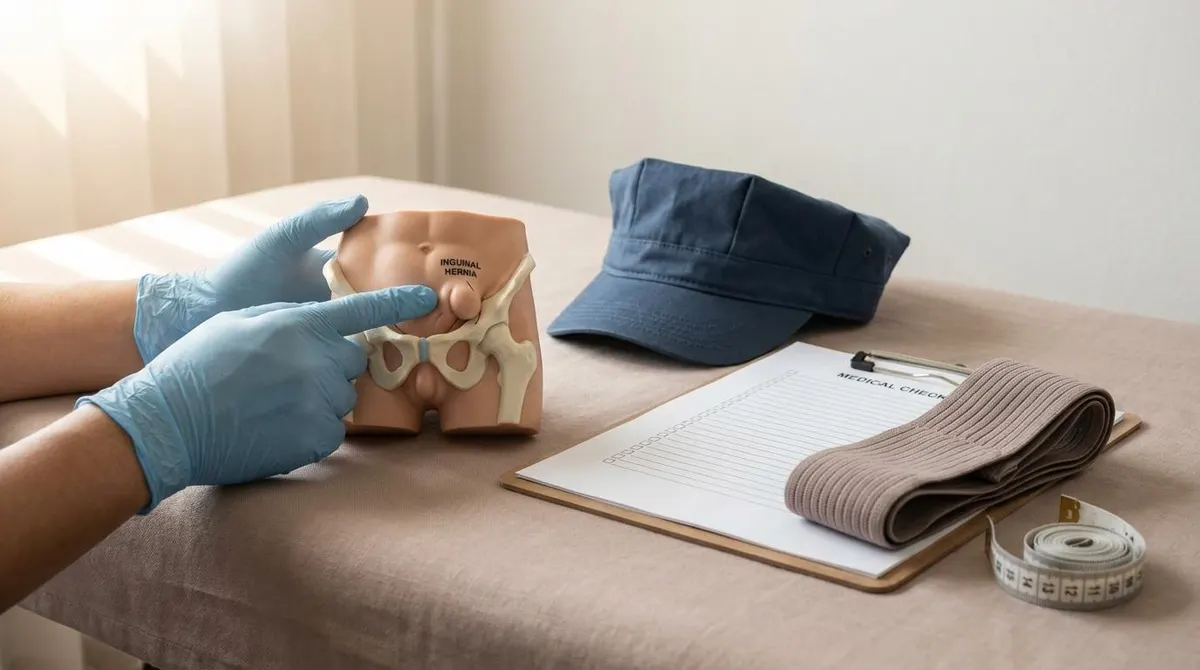
DOT physical checks can include a hernia assessment because the exam is designed to identify conditions that could affect safe commercial driving. The Federal Motor Carrier Safety Administration says the physical qualification exam should be thorough, and the 2024 Medical Examiner’s Handbook specifically states that the examination should include an inguinal hernia check for all males. This guide explains what the hernia check involves, why it matters for a commercial driver, what happens if a hernia is found, and how to prepare with the right medical documents. You will also learn how hernias fit into the broader DOT physical exam, including blood pressure, vision and hearing tests, urinalysis, and evaluation of other medical conditions that may affect certification. (FMCSA)
Understanding the Purpose of the DOT Physical for Commercial Drivers
A DOT physical exam is a federal medical examination used to determine whether you can safely operate a commercial motor vehicle. The goal is not to screen for every disease, but to identify medical conditions that could increase crash risk, sudden incapacitation, or inability to perform job duties.
The Department of Transportation physical qualification process is governed by the Federal Motor Carrier Safety Administration for interstate drivers in the United States. A Certified Medical Examiner listed on the National Registry reviews your medical history, performs a physical exam, and decides whether you meet DOT physical requirements for a Medical Examiner's Certificate. The exam commonly includes a vision test, hearing test, blood pressure test, urinalysis test, and review of neurological, cardiovascular, and musculoskeletal health. (FMCSA)
A commercial driver often does more than steer a commercial vehicle. The FMCSA medical form explains that work can include loading, unloading, climbing, crouching, coupling equipment, and handling hazardous materials. That broader functional demand is one reason the Medical Examiner looks beyond a simple clinic checkup. A condition that seems manageable in daily life may still matter for commercial driving if it worsens with lifting, prolonged sitting, or straining. (FMCSA)
hernia check is relevant because abdominal wall weakness can become painful, limit movement, or create a medical emergency during a long route. Hernia check matters most when symptoms, instability, or work demands could interfere with safe driving.
Not sure if sleep apnea applies to you?
Take our 2-minute sleep risk quiz to see whether sleep apnea could affect your DOT physical. No account required.
DID YOU KNOW: The FMCSA Medical Examination Report specifically includes hernia and significant abdominal wall muscle weakness in the body system review. (FMCSA)
KEY TAKEAWAY: A DOT physical exam is a safety screening for commercial driving, and hernia concerns matter when they could affect function or create risk on the road.
That leads directly to the question most drivers ask next: do they actually check for a hernia during the appointment?
Do They Check for Hernia During a DOT Physical?
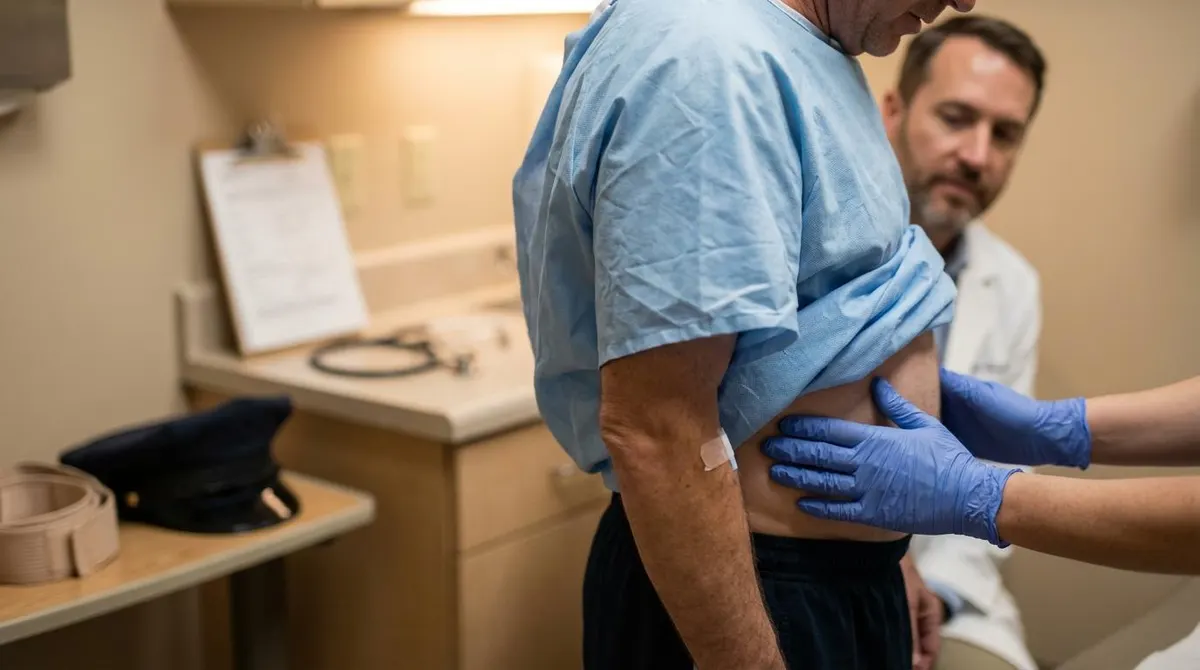
Yes, a hernia exam may be part of the DOT physical, especially when the Medical Examiner is assessing the abdomen, groin, and related function. For male drivers, FMCSA guidance states that the physical examination should include an inguinal hernia check.
According to the FMCSA 2024 Medical Examiner’s Handbook, the examination should include visualization of the body and an inguinal hernia check for all males. The Medical Examination Report also lists hernia and significant abdominal wall muscle weakness under abdomen and viscera, and hernias again under the genito-urinary system. This means a hernia check is not an odd add-on. It sits inside the normal structure of the DOT physical exam. (FMCSA)
In practice, the hernia examination is usually brief and clinical. The Medical Examiner may inspect the groin or abdominal area, ask you to stand, cough, or bear down lightly, and look for a bulge, tenderness, or weakness. Mayo Clinic notes that physical exam is often enough to detect an inguinal hernia, and standing or coughing can make a hernia more obvious. (Mayo Clinic)
Many patients report that this part of the exam is quick but awkward rather than painful. Clinicians frequently observe that the most useful part is not only the physical finding but also your explanation of symptoms, pain with lifting, prior hernia operation, or recent changes in size.
IMPORTANT: If you have groin pain, a visible bulge, or worsening discomfort with lifting, tell the Medical Examiner before the exam starts.
KEY TAKEAWAY: Yes, the DOT physical can include a hernia check, and FMCSA guidance specifically supports that assessment for male drivers.
Once the check is confirmed, the more important question becomes why the hernia matters so much for a commercial driver.
Why a Hernia Check Matters for Driving Safety

A hernia check matters because some hernias can impair movement, worsen under strain, or create an urgent complication while you are operating a commercial motor vehicle. Safety risk rises when pain, restriction, or sudden worsening affects your ability to work or respond on the road.
Commercial driving is not only about sitting behind the wheel. The FMCSA describes real-world duties such as lifting heavy loads, bending, stooping, climbing, and repeated cab entry and exit. Those demands can aggravate abdominal wall hernias, especially inguinal hernias and femoral hernias. A painful or enlarging hernia may reduce your ability to brace, twist, or safely manage cargo. (FMCSA)
Already diagnosed and need CPAP support?
Dumbo Health helps patients start CPAP without the usual confusion, paperwork, or upfront cost. Equipment, setup, supplies, and ongoing support are all handled in one place.
The safety concern is not just discomfort. Cleveland Clinic explains that some hernias can become trapped or strangulated, which can turn into a medical emergency. That is the kind of acute problem no Medical Examiner wants developing during a long haul. For the same reason, the examiner also reviews other high-risk medical conditions such as heart disease, cardiovascular disease, high blood pressure, Sleep Apnea, Insulin Dependent Diabetes, hearing loss, and vision-limiting disease. DOT medical decisions are about total fitness, not one body part in isolation. (Cleveland Clinic)
Sleep-related alertness matters too. The American Academy of Sleep Medicine reports that untreated obstructive sleep apnea is associated with increased motor vehicle accident risk, which is why fatigue-related conditions often come up during medical exams for drivers. If sleepiness is part of your broader health picture, a provider near you may recommend further evaluation such as a DOT sleep apnea testing pathway. (AASM)
DOT physical safety screening works by identifying conditions that may impair driving, lifting, braking, or emergency response. Hernia risk matters when abdominal wall weakness, pain, or complication risk could reduce safe job performance.
KEY TAKEAWAY: A hernia check matters because a hernia can affect both driving safety and the physical demands surrounding commercial work.
The next step is understanding what the Medical Examiner is actually looking for during that part of the exam.
What Happens During the Hernia Examination

The hernia examination is usually a short hands-on assessment of the groin or abdominal wall for bulges, weakness, pain, or tenderness. The Medical Examiner is checking whether the finding is stable, symptomatic, and relevant to safe commercial driving.
The Medical Examiner starts with the broader medical examination. That often includes review of your driver's license, medical history, medications, blood pressure cuff readings, urine drug screen or urinalysis test paperwork depending on the visit type, and standard physical checks. The DOT controlled substance screen or drug test is often handled separately from the DOT physical exam itself, but drivers frequently encounter both in the same visit. The physical exam usually also includes vision and hearing tests, a vision check-up of visual acuity, questions about contact lenses or vision glasses, and confirmation of whether Hearing aids are used or required. (FMCSA)
When the examiner reaches the abdomen and groin, the hernia exam is focused on function and risk. You may be asked to stand while the clinician inspects for a bulge, coughs are sometimes used to increase pressure, and the examiner may gently palpate the area. Mayo Clinic notes that coughing or straining can make an inguinal hernia easier to detect on physical exam. That same logic explains why the hernia check is often simple but deliberate. (Mayo Clinic)
People who undergo this exam often find that honest communication helps more than trying to minimize symptoms. If a certain movement triggers pain, if your bulge appears after a shift, or if you already use a hernia belt, say so clearly. A hernia belt may support symptoms, but it does not automatically resolve the underlying certification question.
TIP: Wear clothing that allows an efficient physical exam and be ready to describe when the bulge appears, whether it reduces, and whether pain worsens with lifting.
KEY TAKEAWAY: The hernia examination is usually quick, but clear symptom reporting helps the Medical Examiner judge safety and certification more accurately.
To understand the decision, it helps to know which hernia types raise concern most often.
Types of Hernias and What They Mean for Certification
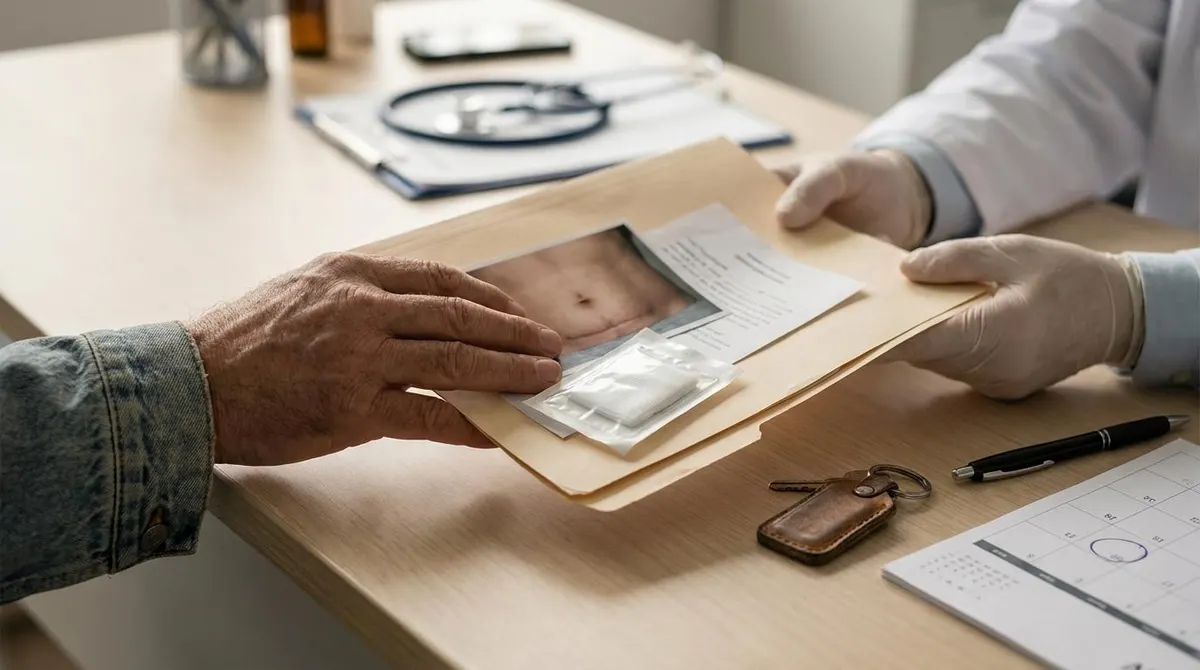
Not all hernias carry the same practical risk during commercial driving. Inguinal hernias are the most common, femoral hernias often carry higher concern for complications, and incisional hernias raise questions about prior surgery, scar tissue, and stability.
Inguinal hernias occur in the groin and are the most common type, especially in men. Mayo Clinic describes them as tissue pushing through a weak spot in the lower abdominal muscles, often creating a bulge that may worsen with coughing, bending, or lifting. These are the hernias most directly associated with the FMCSA inguinal hernia check. (Mayo Clinic)
Femoral hernias occur lower in the groin or upper thigh. Cleveland Clinic notes that femoral hernias are less common but more concerning because they can become incarcerated or strangulated more easily. For a commercial driver, that can influence how cautious a Medical Examiner is, even when symptoms seem mild. (Cleveland Clinic)
Incisional hernias appear at or near a previous surgical site. These cases often involve questions about scar tissue, surgical repair strength, activity limits, and whether symptoms have returned after a hernia operation or laparoscopic surgery. Other abdominal wall hernias, including umbilical hernias, may also come up if they are large, painful, or associated with abdominal wall weakness.
| Hernia type | Common location | Main DOT concern | Typical certification issue |
|---|---|---|---|
| Inguinal hernias | Groin | Pain, bulge, strain with lifting | Often depends on symptoms and stability |
| Femoral hernias | Upper thigh or low groin | Higher complication risk | May prompt faster referral or caution |
| Incisional hernias | Prior surgery site | Scar tissue weakness, recurrence | Depends on healing and functional stability |
| Other abdominal wall hernias | Abdomen | Size, pain, reducibility | Case-by-case review |
For most drivers, the best option is not guessing which type you have. A certified medical practitioner or medical provider near you can clarify whether the finding is stable before your exam.
KEY TAKEAWAY: Hernia type matters because certification decisions depend on symptoms, complication risk, and how stable the abdominal wall appears.
That brings us to a critical rule that affects passing more than most drivers realize: disclosure.
Medical History, Prior Surgery, and Why Honesty Matters

Honest medical history disclosure gives the Medical Examiner the context needed to judge whether a hernia is safe, stable, and compatible with commercial driving. Withholding symptoms or past treatment can delay certification more than the hernia itself.
Your medical history should include prior diagnosis, current symptoms, pain level, use of a hernia belt, prior hernia operation, surgical repair date, activity restrictions, medications, and any medical releases from your treating clinician. The FMCSA handbook makes clear that the Medical Examiner can obtain additional reports from the treating provider or specialists, but the final certification decision remains with the examiner. (FMCSA)
This is especially important after surgery. A repaired hernia is not automatically disqualifying. What matters is whether recovery is complete, whether the repair is stable, and whether you can perform commercial driving duties safely. Medical records, medical documents, an operative note, or a physician letter may help if the case is recent or complicated. If your examiner needs a Medical Examination Report Form update or supporting paperwork, having it ready can prevent a temporary delay.
Mid-page, the most practical next step for drivers with broader sleep or cardiometabolic concerns is to review related screening topics such as high blood pressure and commercial driver health, since high blood pressure often affects certificate length even when a hernia does not.
IMPORTANT: The Medical Examiner must not certify a driver based on information the examiner believes is not true or correct. (FMCSA)
KEY TAKEAWAY: Honest disclosure and organized medical records often improve the certification process when a hernia or prior repair is involved.
Next, the real decision point is whether a hernia can actually keep you from passing.
Can You Pass a DOT Physical If You Have a Hernia?

Yes, you may pass a DOT physical with a hernia if the hernia is stable, not functionally limiting, and not likely to interfere with safe commercial driving. A hernia becomes a bigger problem when pain, progression, or complication risk makes driving or physical job tasks unsafe.
FMCSA guidance does not create a simple one-line rule saying every hernia fails or passes. Instead, the Medical Examiner evaluates whether the condition affects safe operation of a commercial motor vehicle. The FMCSA medical form notes that the presence of a condition may not necessarily disqualify a driver, especially if it is adequately controlled, not likely to worsen quickly, or is amenable to treatment. (FMCSA)
Many patients report that small, reducible, asymptomatic hernias create fewer certification issues than painful, enlarging, or nonreducible ones. A driver with no pain, no functional limitation, and strong documentation may still receive a DOT medical card. By contrast, a driver with worsening groin pain, recurrent bulging under strain, or concern for incarceration may be temporarily disqualified pending treatment or specialist clearance.
The key difference between a manageable hernia and a certification problem is whether the condition threatens safe performance of your job. The Medical Examiner's Certificate depends on function, stability, and risk, not on the word hernia alone.
DID YOU KNOW: The FMCSA form allows outcomes such as full qualification, shorter certification, periodic monitoring, or temporary disqualification depending on the condition. (FMCSA)
KEY TAKEAWAY: You can pass a DOT physical with a hernia, but the outcome depends on symptoms, safety impact, and examiner judgment.
A few common myths create unnecessary anxiety here, so it helps to clear them up directly.
Common Myths About DOT Physical Hernia Checks Debunked
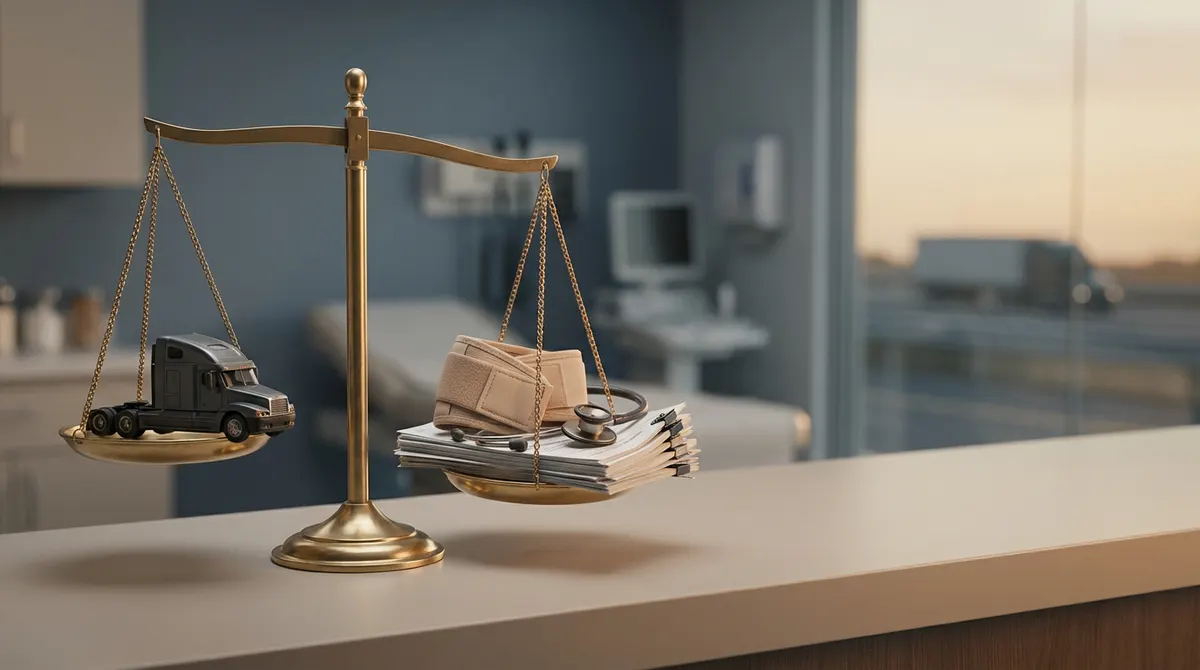
Misunderstandings about hernia check rules often make drivers more anxious than the exam itself. Most confusion comes from assuming every hernia is disqualifying or that support devices automatically solve the issue.
MYTH: Any hernia means automatic failure.
FACT: FMCSA materials do not say every hernia is disqualifying. The examiner considers whether the condition is controlled, likely to worsen, or likely to affect safe operation of a commercial motor vehicle. Stable cases may still be certified, while risky cases may need treatment first. (FMCSA)
MYTH: A hernia check is not really part of the DOT physical exam.
FACT: The FMCSA 2024 Medical Examiner’s Handbook says the exam should include an inguinal hernia check for all males. The Medical Examination Report also lists hernia findings in the body system review. (FMCSA)
MYTH: A hernia belt guarantees you will pass.
FACT: A hernia belt may reduce symptoms, but it does not remove the examiner’s duty to assess risk, pain, reducibility, and functional limitation. Support devices can be part of management, but they are not a guarantee of certification.
MYTH: Old surgery means no one will ask about it.
FACT: Prior surgical repair still matters if there is recurrence, scar tissue pain, lifting restriction, or unresolved symptoms. The Medical Examiner may ask for medical records or a treating-provider note when recent or relevant surgery could affect commercial driving.
KEY TAKEAWAY: The biggest myth is that hernia decisions are automatic, when in reality they are safety-based and highly dependent on symptoms and stability.
The best way to reduce uncertainty is to prepare for the appointment the same way you would prepare for any safety-sensitive exam.
How to Prepare for a DOT Physical When You Have Hernia Concerns
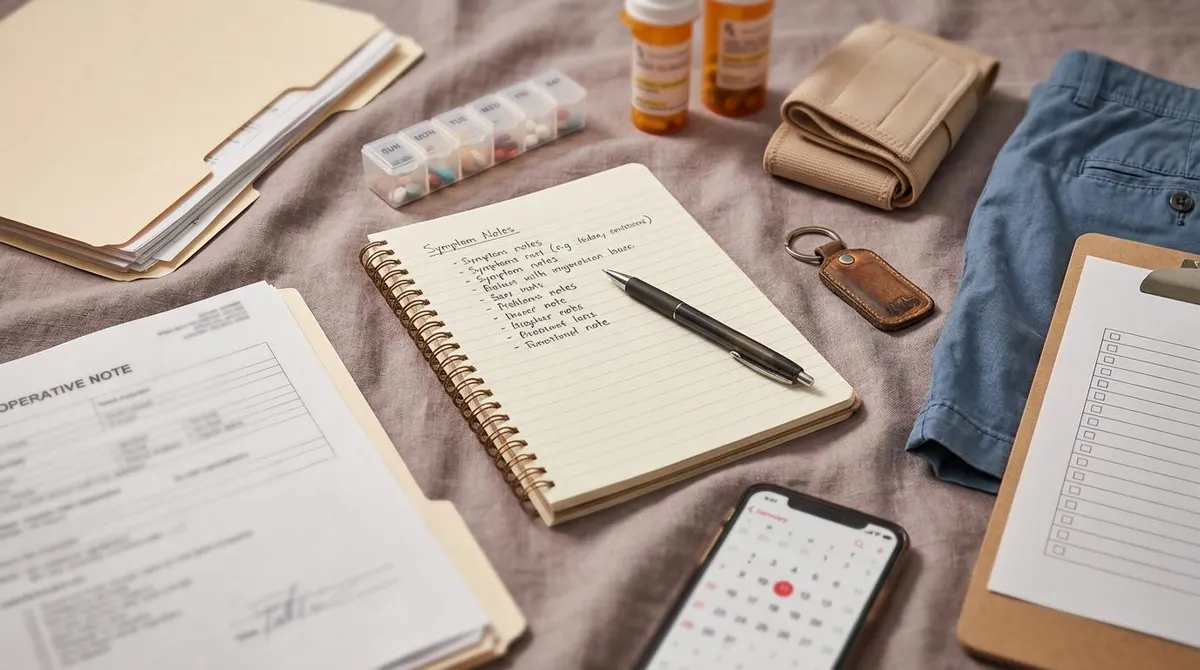
Preparation improves your odds of a smooth DOT physical because it gives the Medical Examiner clear evidence about symptoms, stability, and treatment status. Most delays happen when the examiner needs more history, more records, or more confidence about safety.
Bring your driver's license, medication list, surgical notes if relevant, medical records, recent imaging if you have it, and any medical releases or physician letters that explain your current status. If you had a hernia operation recently, include the procedure type, recovery timeline, work restrictions, and whether you have been cleared for lifting and commercial driving. If symptoms changed recently, note when, how often, and what activities trigger pain.
It also helps to understand the broader exam so nothing catches you off guard. The appointment may also involve blood pressure, pulse, vision test, color test, hearing assessment, audiometry test when needed, urinalysis test, and review of related conditions such as high blood pressure, Sleep Apnea, cardiovascular disease, or neurological exam findings. If you use Hearing aids, contact lenses, or blood glucose monitoring, bring what you normally use. (FMCSA)
If you are not sure where to start, a provider close to you can review whether repair should happen before the DOT physical or whether documentation is enough. Drivers with possible fatigue symptoms should also consider sleep apnea symptoms to look out for and what sleep apnea is if sleepiness is affecting alertness behind the wheel.
TIP: Write down whether the bulge is visible, reducible, painful, and worse with lifting, coughing, or prolonged sitting before your appointment.
KEY TAKEAWAY: Good preparation means bringing clear records, understanding your symptoms, and being ready to explain how the hernia affects daily work.
With that foundation, the most common remaining questions are usually very specific.
Frequently Asked Questions
Can you fail a DOT physical for a hernia?
Yes, you can fail or be temporarily disqualified if a hernia makes commercial driving unsafe. The Medical Examiner is looking at more than the diagnosis itself. Pain, enlarging bulge, poor reducibility, concern for incarceration, recent surgery without full recovery, or inability to perform work tasks can all affect the decision. FMCSA materials allow the examiner to withhold certification when a condition does not meet safety standards, but stable hernias may still be certified. The result depends on function, risk, and documentation rather than a blanket yes or no. (FMCSA)
Can I get a DOT medical card with a small hernia?
You may still get a DOT medical card if the small hernia is asymptomatic or minimally symptomatic and does not limit safe commercial driving. Many Medical Examiners focus on whether the hernia is stable, whether pain interferes with driving or lifting, and whether the risk of sudden worsening appears low. Bringing medical documents helps if the hernia has already been evaluated. A small hernia is not automatically disqualifying, but the Medical Examiner's Certificate decision is always case-specific.
Is a hernia belt enough to pass the DOT physical?
A hernia belt can support symptoms, but it is not a guaranteed pass. The examiner still has to decide whether the condition is stable and whether the underlying abdominal wall weakness could affect safe driving or physical job duties. In some real-world cases, a hernia belt may be part of a management strategy that allows certification, especially when symptoms are controlled. In other cases, ongoing pain or progression means more evaluation or surgical repair may be the safer path. Documentation from your medical provider can help clarify that distinction.
What if a hernia is discovered during the DOT physical exam?
If a hernia is first noticed during the DOT physical exam, the Medical Examiner will usually assess symptoms, size, tenderness, and likely impact on commercial driving. You might still be certified if the finding appears stable and not functionally significant. If the examiner is concerned, you may be asked to get further evaluation, imaging, or a surgeon’s opinion before receiving or renewing your DOT certificate. Temporary delay is often used when the issue seems treatable but not yet clearly safe.
How long after hernia surgery can I return to commercial driving?
There is no universal number of days that applies to every driver after hernia surgery. Return to commercial driving depends on the type of repair, whether it was open or laparoscopic surgery, lifting restrictions, pain control, and your surgeon’s clearance. The Medical Examiner wants evidence that recovery is complete enough for steering, braking, climbing, and cargo-related tasks. Recent surgery usually requires medical records or a release letter. If you are trying to find a provider near you for follow-up, choose one who can document work readiness clearly.
Do they check your groin during a DOT physical?
They may, because the DOT physical can include a hernia examination. For male drivers, FMCSA guidance specifically says the exam should include an inguinal hernia check. The purpose is clinical and safety-based, not intrusive for its own sake. The examiner may inspect or palpate the groin area briefly and may ask you to cough or strain to reveal a bulge. If you are anxious, say so early. Most examiners explain what they are doing and keep the exam as brief and professional as possible. (FMCSA)
Is the DOT physical the same as a drug test?
No, the DOT physical exam and a drug test are different requirements, even though they are often scheduled together. The physical evaluates medical fitness for driving, including blood pressure, vision and hearing tests, medical history, and physical examination findings such as a hernia check. A urine drug screen is part of controlled substance testing, not the physical qualification decision itself. Drivers often confuse the two because both may occur at the same clinic visit, but they serve different regulatory purposes.
What other conditions can affect certification besides a hernia?
A hernia is only one part of the bigger medical review. The examiner may also assess high blood pressure, heart disease, cardiovascular disease, hearing loss, visual acuity, sleepiness, neurological exam findings, diabetes management, and other medical conditions that could affect safe operation of a commercial motor vehicle. Sleep-related concerns matter because untreated fatigue can affect reaction time and alertness. Drivers looking for providers in your area often benefit from addressing these issues before the exam rather than waiting for a delayed certificate.
Conclusion
Yes, they do check for hernia during a DOT physical, and the reason is simple: the exam is designed to protect both you and the public by identifying conditions that could affect safe commercial driving. A hernia does not automatically end your certification, but symptoms, instability, and poor documentation can create problems. The strongest approach is to understand your condition, bring the right medical records, and communicate clearly with the Medical Examiner. For broader driver health questions, including sleep-related concerns that can also affect certification, review dumbo.health FAQs for practical next-step guidance.
Related DOT Physical Topics
- Do They Check Your Private Parts During a DOT Physical
- What Do They Check During a DOT Physical
- Does a DOT Physical Test for Weed or THC The Complete Guide for Commercial Drivers
- What Does DOT Stand for in a DOT Physical
- Why do they measure your neck during a DOT physical
- What Happens During the DOT Physical Exam The Complete Guide for Drivers
- What drugs do they test for in a DOT drug test
- What Happens If Your DOT Physical Expires Compliance Guide for Commercial Drivers
- The Ultimate DOT Physical Guide for Commercial Drivers (2025–2026)
- Remote DOT Physical The Complete Guide for Commercial Drivers
- Navigating the Florida DOT Physical Your Essential Guide for CDL Drivers
- Is a drug test required for a DOT physical
- DOT Physical Forms & Paperwork The Complete Guide for Commercial Drivers
- What Forms Do You Need for a DOT Physical
- DOT Physical ICD-10 & Billing Codes The Complete Guide for Accurate Compliance and Reimbursement
- Online DOT Physical Without Insurance A Complete Guide for Commercial Drivers
- Can You Fail a DOT Physical for Being Overweight
- What Is the Urine Test for in a DOT Physical
- Online DOT Physical Self-Pay The Complete Guide for CDL Drivers and Owner-Operators
- DOT physical self pay guide for commercial drivers paying out of pocket
- Can You Pass a DOT Physical With a Hernia
- Can You Get a Second Opinion on Your DOT Physical A Complete Guide for Commercial Drivers
- Online DOT Physical The Complete Guide for Commercial Drivers and Medical Examiners
- DOT Physical Insurance or Self Pay How to Choose the Right Payment Option for Your Exam
- Is a DOT physical the same as a regular physical
- Can You Fail a DOT Physical for High Blood Pressure
- Can You Get a DOT Physical in Any State The Complete Guide for Commercial Drivers
- BMI for DOT Physical What Commercial Drivers Need to Know
- What are the current DOT requirements for sleep apnea testing for commercial drivers
- DOT Physical Requirements A Complete Guide for CDL Drivers
- Is a Sleep Study Required for a DOT Physical
- What Is the Difference Between a DOT and Non-DOT Physical
- Do You Have to Pee During a DOT Physical
- What eye chart is used for a DOT physical
- The DOT Physical Exam Ensuring You're Fit for the Road
- What Can Disqualify You From a DOT Physical
- Does a DOT physical include a drug test
- Can You Pass a DOT Physical with Epilepsy
- DOT Physical Self Pay Cost
- DOT Physical Out of Pocket What Commercial Drivers Actually Pay
- Essential 171 DOT Definitions for Commercial Drivers
- When Can Sleep Apnea Affect a DOT Physical
- DOT Physical Cost Breakdown What Drivers Pay & Why
- Can You Pass a DOT Physical With One Eye
- Can You Pass a DOT Physical With a Pacemaker
- What Should You Bring to a DOT Physical
- Telehealth Dot Physical
- Who needs a DOT physical
- Does insurance cover a DOT physical
- DOT Physical & Alcohol Requirements
- DOT Physical Online Cost
- DOT Physical Duration and Validity How Long Your Medical Card Lasts
- DOT Physical Vision & Eye Requirements
- Navigating Your DOT Physical with Common Medical Conditions
- Your Complete Guide What's Included in a DOT Physical Exam
- Why DOT Sleep Tests at Home Matter for Your Career and Health
- How can drivers with sleep apnea qualify again after a failed DOT physical
- Walk In DOT Physical Self Pay
- Can You Get a DOT Physical Online
- How Do You Submit Your DOT Physical to the DMV
- What Are the Requirements to Pass a DOT Physical
- New DOT Physical Requirements What Drivers MUST Know About New Updates
- DOT Physical Exam Basics
- DOT Physical Insurance & Recertification The Complete Driver's Guide
- Cheap DOT Physical Online
- Same Day DOT Physical
- Virtual DOT Physical
- DOT Physical Cash Pay
- Can you fail a DOT physical because of sleep apnea
- What blood pressure do you need to pass a DOT physical
- DOT Medical Exam Self-Pay A Complete Guide for Commercial Drivers
- DOT Physical Blood Pressure Requirements What Drivers Need to Know
- DOT Physical Chiropractor Your Complete Guide to CDL Exams
- How to Pass a DOT Physical The Complete Commercial Driver's Guide
- Can you pass a DOT physical with sleep apnea
- What should I expect at a DOT physical
- What Does a DOT Physical Consist Of
- What happens if you fail a DOT physical due to sleep apnea
- DOT Physical at Urgent Care What Commercial Drivers Need to Know
- Can You Pass a DOT Physical with Diabetes
- Can You Pass a DOT Physical with High Blood Pressure
- DOT Physical & Drug Test What Drivers Need to Know
- Non-DOT Physical A Comprehensive Guide to Workforce Health and Safety
- DOT Physical Texas The Essential Guide to Your Exam, Medical Card, and CDL Compliance
- Failing a DOT Physical What Every Commercial Driver Needs to Know
- Can You Fail a DOT Physical
- What is DOT Physical
- Online CDL Physical
- Are There New DOT Rules or Laws on Sleep Apnea Testing
- 2026 DOT Inspection Dates
- Best Treatments for Sleep Apnea to Improve Driving Safety
- Home Sleep Apnea Test for Commercial Drivers The CDL Holder's Complete Guide
- Sleep Apnea Test for CDL Drivers
- DOT sleep apnea test at home
- Are there legal requirements for drivers with sleep apnea
- CDL PHYSICAL SELF PAY
- Online DOT Exam What Drivers and Medical Examiners Need to Know
- The Comprehensive Guide to Suboxone, Sleep Apnea, and FMCSA Compliance for Commercial Motor Vehicle Operators
- At Home Sleep Test for Truck Drivers
- What are the current FMCSA guidelines on sleep apnea for commercial drivers
Take the next step before your DOT physical
Start with the free quiz if you are unsure about your risk, or order an at-home sleep test if you have already been flagged for possible sleep apnea.
AI summary
A hernia check during a DOT physical is a clinical assessment used to identify abdominal wall weakness that could affect safe commercial driving. FMCSA’s 2024 Medical Examiner’s Handbook states the exam should include an inguinal hernia check for all males, and the Medical Examination Report includes hernia findings under abdomen/viscera and genito-urinary review. The Medical Examiner typically inspects and may palpate the groin/abdominal area while the driver stands, coughs, or bears down to look for a bulge, tenderness, pain, or weakness. Hernias matter because commercial driving can involve lifting, climbing, and repeated cab entry/exit, and some hernias can become incarcerated or strangulated. Certification is case-specific. Drivers may pass if the hernia is stable, reducible, and not functionally limiting. Pain, enlargement, poor reducibility, or recent surgery without documented recovery may lead to additional evaluation, shorter certification, monitoring, or temporary disqualification. Preparation includes honest disclosure and bringing medications, surgical notes, imaging, and treating-provider clearance when relevant.

Nicolas Nemeth
Co-Founder
Nico is the co-founder of Dumbo Health, a digital sleep clinic that brings the entire obstructive sleep apnea journey home. Patients skip the sleep lab and the long wait to see a specialist. Dumbo Health ships an at home test, connects patients with licensed sleep clinicians by video, and delivers CPAP or a custom oral appliance with ongoing coaching and automatic resupply in one clear subscription.
Keep reading

How Long Does a DOT Physical Take? A Complete Guide for Commercial Drivers

What Happens If You Fail a DOT Drug Test? The Complete Guide for Commercial Drivers


