What Should You Bring to a DOT Physical?
This guide explains how to prepare for a DOT physical by organizing the documents and medical details a certified medical examiner needs to complete FMCSA medical certification. It covers the essential IDs to bring, plus what to include for renewals such as your current Medical Examiner’s Certificate. It outlines how to prepare a complete medical history, including a written medication list with dosages and prescriber information, and when a doctor letter may prevent delays. It also details condition-specific paperwork for diabetes, sleep apnea, heart conditions, kidney disease, neurological history, and recent surgery. You will learn what the urinalysis checks and why it is not a DOT drug test. Practical day-of tips and a final checklist help reduce incomplete exams and deferred decisions.
Struggling with sleep?
Find out if sleep apnea is the reason.
FDA-cleared. $149 flat. Physician-reviewed results in 48 hours.

What Should You Bring to a DOT Physical?
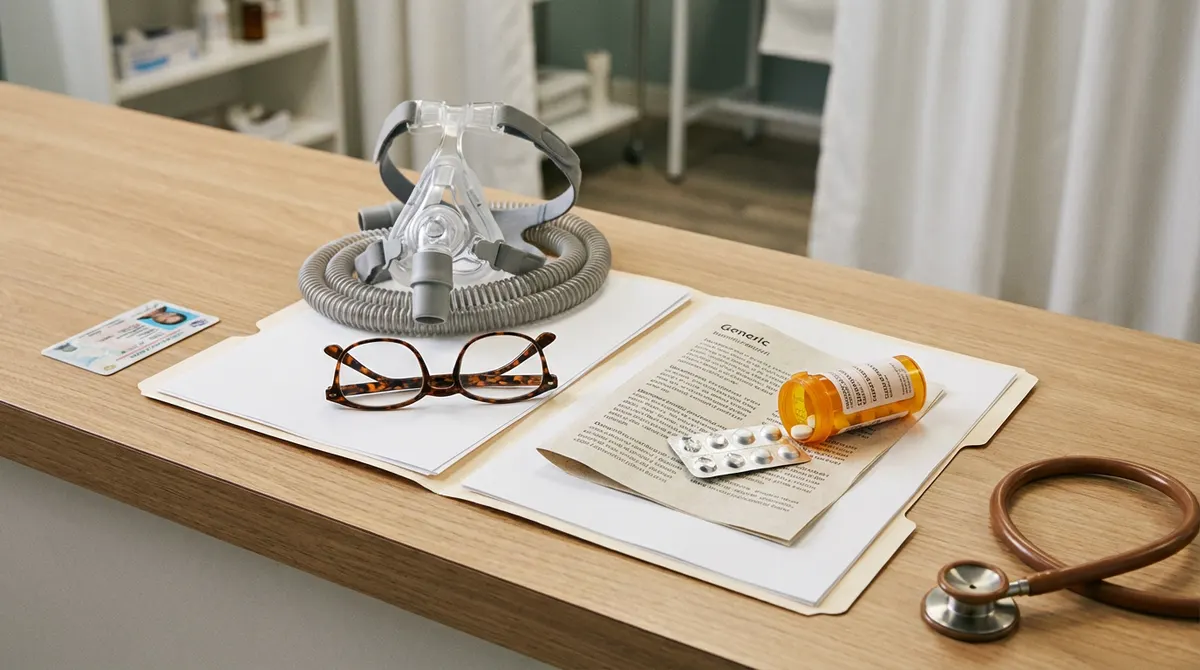
DOT physical preparation starts with bringing the right identification, medical records, medication details, and condition-specific documents to your appointment. According to the Federal Motor Carrier Safety Administration, the medical certification process relies on specific forms such as the Medical Examination Report Form MCSA-5875, the Medical Examiner's Certificate MCSA-5876, the Insulin-Treated Diabetes Mellitus Assessment Form MCSA-5870, and the Vision Evaluation Form MCSA-5871. If you arrive organized, the DOT physical exam is usually faster, clearer, and less stressful. This guide explains exactly what to bring, what to prepare for common medical conditions, what the urinalysis does and does not mean, and how to avoid preventable delays. Keep reading so you can show up ready for your DOT Examination and protect your medical certification.
Essential Identification and Existing Documentation
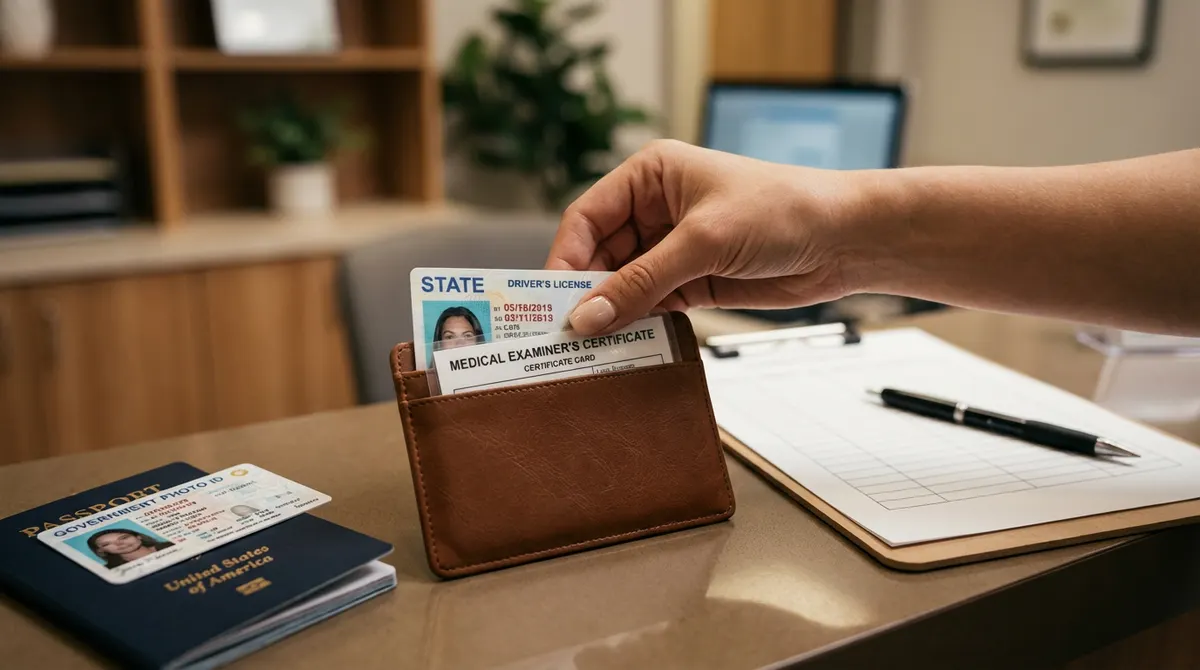
You should bring valid identification and any current certification documents because the DOT physical exam cannot move smoothly without confirming who you are and what your current status is.
A DOT physical is a federally required medical examination for many people who operate a commercial motor vehicle in interstate commerce. Identification matters because the examiner must match your records, forms, and certification decision to the correct commercial driver.
At minimum, bring your State-issued Driver's License or CDL and a Government-issued photo ID. In most cases, your driver's license covers both needs, but if your name has changed or your CDL license information does not match other records, a second ID can help avoid paperwork problems. A current Commercial Driver's License is especially important if you are renewing rather than applying for a first Medical Examiner's Certificate.
Bring your current Medical Examiner's Certificate if you are renewing. The FMCSA lists the Medical Examiner's Certificate, Form MCSA-5876, and the Medical Examination Report, Form MCSA-5875, as core medical certification documents used in the process. According to the FMCSA forms page, these forms remain central to the driver qualification workflow.
Not sure if sleep apnea applies to you?
Take our 2-minute sleep risk quiz to see whether sleep apnea could affect your DOT physical. No account required.
If you operate a commercial vehicle for interstate commerce, document consistency matters. A mismatch in name, birth date, or license status can slow down the physical exam even when your health is otherwise stable.
DID YOU KNOW: The FMCSA specifically identifies the Medical Examination Report MCSA-5875 and Medical Examiner's Certificate MCSA-5876 as the standard forms used in the DOT Exam process.
KEY TAKEAWAY: Bring a valid State-issued Driver's License or CDL, a Government-issued photo ID if needed, and your current Medical Examiner's Certificate if you are renewing.
Once your identity documents are in order, the next priority is proving that your medical history and treatment details are accurate.
Comprehensive Medical History and Supporting Records

You should bring a complete, up-to-date medical history because the examiner decides whether your medical conditions are compatible with safe operation of a commercial motor vehicle.
Medical history is the record of your diagnoses, treatment, symptoms, surgeries, and medications that may affect fitness to drive. Medical history matters because the medical examiner can only make a sound qualification decision when the record is complete.
Bring a written list of all medications, dosages, and prescribing doctors. Do not rely on memory. Include prescription drugs, over-the-counter products, and supplements. According to the FMCSA medication FAQ, the Medical Examiner reviews each medication and may request a letter from the prescribing doctor. The FMCSA 391.41 CMV Driver Medication Form MCSA-5895 is an optional tool designed to gather more information about prescribed medications when needed.
A prescribing doctor letter can be especially useful if you take a potentially sedating or habit-forming medication. The FMCSA states that a driver cannot use a controlled substance or prescription medication without a prescription, and that the prescribing doctor can write that the driver is safe to be a commercial driver while taking the medication, although the Medical Examiner may still choose whether to certify. That is why bringing medication documentation up front often prevents delays.
You should also bring medical records from your primary care physician or specialists when you have ongoing medical conditions. Useful records include recent office notes, test results, discharge summaries, clearance letters, and any medical release opinion letter that explains stability, treatment, and functional status.
Many patients report that the hardest part of the DOT physical exam is not the physical exam itself. The hardest part is realizing too late that the examiner needed one more letter, one more report, or one more medication clarification.
IMPORTANT: Bring documents that explain stability, control, and safety. A short specialist note is often more useful than a large stack of unrelated records.
KEY TAKEAWAY: A complete medication list, prescribing doctor information, and relevant medical records help the examiner evaluate your medical conditions quickly and accurately.
Already diagnosed and need CPAP support?
Dumbo Health helps patients start CPAP without the usual confusion, paperwork, or upfront cost. Equipment, setup, supplies, and ongoing support are all handled in one place.
Once your general records are ready, the next step is condition-specific paperwork for the issues that most often trigger follow-up.
Specific Documentation for Chronic Health Conditions
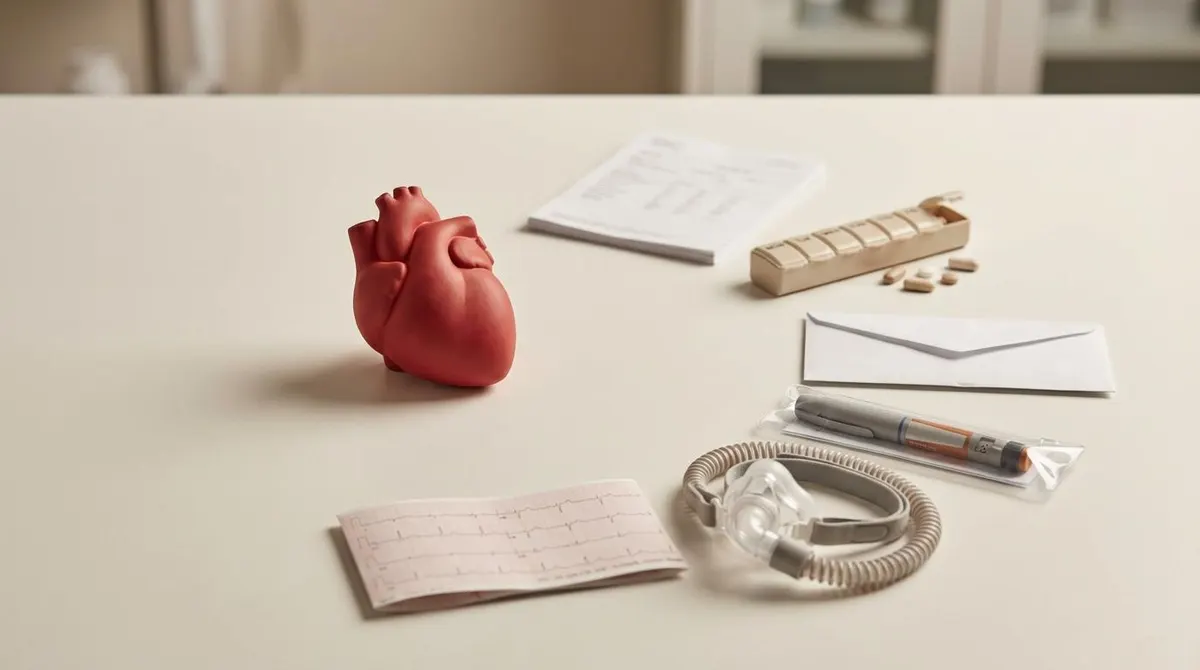
You should bring condition-specific records whenever you have a chronic diagnosis because the examiner must decide whether the condition is stable enough for safe driving.
Chronic medical conditions are long-term health issues such as diabetes, heart conditions, kidney disease, neurological condition history, and sleep apnea. Chronic medical conditions matter because even a stable diagnosis can require proof of treatment, control, and follow-up.
The table below shows the most useful documents to bring for common high-scrutiny conditions.
| Condition | What to Bring | Why It Matters | Timing Detail |
|---|---|---|---|
| Insulin-treated diabetes mellitus | Insulin-Treated Diabetes Mellitus Assessment Form MCSA-5870, treating clinician note, blood sugar recording logs, A1c results | Shows stable insulin regimen and diabetes control | FMCSA requires MCSA-5870 to be provided within 45 days of completion by the treating clinician |
| Sleep apnea or obstructive sleep apnea | Sleep apnea test or sleep test report, treating provider note, CPAP machine log, CPAP therapy documentation | Helps show whether treatment is adequate, effective, safe, and stable | Bring the most recent compliance and follow-up records |
| Heart conditions, heart disease, hypertension, heart failure, history of heart attack | Cardiologist note, stress test or EKG/ECG results, medication list, blood pressure records | Helps document safety risk, symptoms, treatment tolerance, and follow-up | Recent results are more persuasive than outdated records |
| Kidney disease | Nephrology records, lab summaries, medication list, clearance note if relevant | Helps clarify severity, symptoms, and complications | Recent notes are best |
| Neurological condition or seizure-related history | Neurology records, imaging or evaluation summary, medication list, medical release opinion letter | Helps assess whether episodes, deficits, or medications could impair driving | Bring the latest stability update |
| Recent surgeries or serious injuries | Operative report, discharge summary, return-to-work note, specialist clearance | Helps show recovery and functional ability | Bring records from the treating surgeon or specialist |
For insulin-treated diabetes mellitus, the rule is specific. According to the FMCSA MCSA-5870 page, the treating clinician must complete the Insulin-Treated Diabetes Mellitus Assessment Form MCSA-5870, and the driver must provide it to the Certified Medical Examiner within 45 days. Bringing blood sugar recording logs and recent A1c results is also practical because they support the story of control, even when the form is the formal requirement.
For sleep apnea, the issue is not simply whether you have a diagnosis. The issue is whether treatment is adequate and symptoms are controlled. The 2024 FMCSA Medical Examiner's Handbook explains that untreated moderate-to-severe obstructive sleep apnea may contribute to fatigue and unintended sleep episodes, while treated moderate-to-severe OSA does not preclude certification. FMCSA also notes that multiple risk factors such as obesity, large neck size, hypertension, cardiovascular disease, loud snoring, and witnessed apneas can justify referral for a sleep apnea test. If you are already treated, bring your CPAP machine log and CPAP therapy records.
Obstructive sleep apnea is a sleep-related breathing disorder in which airflow repeatedly drops or stops during sleep. Obstructive sleep apnea matters in the DOT physical because untreated symptoms can reduce alertness and affect safe driving.
If you still need testing or updated documentation, Dumbo Health's at-home sleep test can help you understand the next step before you try to certify again. If you already have a diagnosis, resources on what sleep apnea is and CPAP treatment options can also help you prepare the right records.
For heart conditions, heart disease, high blood pressure, heart failure, or a prior heart attack, bring the latest cardiology evidence that shows you are stable. That may include a stress test, EKG/ECG results, recent blood pressure logs, medication tolerance notes, and a specialist opinion. According to FMCSA hypertension guidance, a CMV driver with blood pressure below 140/90 may be certified for up to 2 years, Stage 1 blood pressure of 140 to 159 over 90 to 99 typically supports 1 year, Stage 2 can lead to a one-time 3 month certificate, and Stage 3 above 180/110 is disqualifying until blood pressure improves.
Heart conditions are disorders that may affect circulation, rhythm, exertion tolerance, or risk of sudden impairment. Heart conditions matter because the DOT physical requirements focus on whether the condition or treatment could interfere with safe operation of commercial vehicles.
Kidney disease and any neurological condition deserve the same organized approach. Bring concise, recent records that explain diagnosis, stability, symptoms, treatment, and whether there is any risk of sudden incapacity or impaired function.
KEY TAKEAWAY: If you have chronic medical conditions, bring targeted documentation that proves stability, treatment, and safe function rather than hoping the examiner can fill in the gaps.
The next category is simpler but just as important because vision and hearing standards often depend on what you use every day.
Vision and Hearing Aids or Corrective Lenses
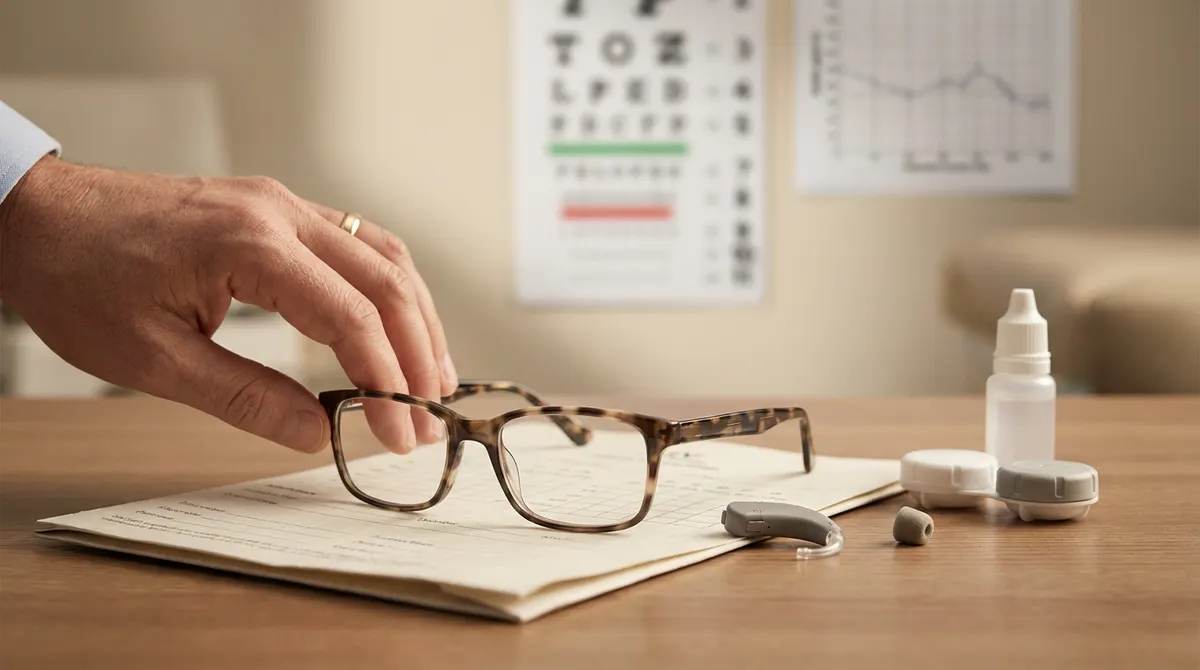
You should bring the same corrective devices you use for driving because the examiner must test you under real-world conditions.
Corrective lenses and hearing aids are devices that help you meet the DOT physical requirements for sight and hearing. Corrective devices matter because if you need them to meet the standard, you must use them while driving.
Bring your prescription glasses and or contact lenses if you use them. The 2024 FMCSA Medical Examiner's Handbook states that distant visual acuity must be at least 20/40 in each eye, or corrected to 20/40 or better with corrective lenses, with at least 70 degrees horizontal field of vision in each eye and recognition of red, green, and amber traffic signal colors. The handbook also notes that contact lenses are permissible if you tolerate them well and meet the standard.
Bring hearing aids if you use them. The same handbook states that a person can meet the hearing requirement by perceiving a forced whispered voice in the better ear at not less than 5 feet, with or without the use of a hearing aid, or by meeting the audiometric standard of an average hearing loss of 40 dBs or less in the better ear at 500 Hz, 1,000 Hz, and 2,000 Hz. If you need hearing aids to pass, you need them with you for the hearing test and for driving.
Hearing requirements are the federal minimum auditory standards used to judge whether a driver can hear speech or test tones well enough for safe CMV operation. Hearing requirements matter because hearing problems can lead to referrals, repeat testing, or exemption pathways if you arrive unprepared.
If you are being examined under the alternative vision standard, the timing is strict. According to the FMCSA handbook, the Vision Evaluation Form MCSA-5871 must be completed by an ophthalmologist or optometrist, and the medical examiner must begin the examination no more than 45 days after that signature date. Bring the completed Vision Evaluation Form MCSA-5871 with you. Without it, the alternative vision pathway cannot move forward.
Vision tests are standardized checks of acuity, field of vision, and color recognition. Vision tests matter because a missed pair of prescription glasses can turn a manageable exam into a failed or incomplete visit.
TIP: Put your prescription glasses, contact lenses, lens case, and hearing aids in your bag the night before so you do not forget the very devices needed to pass.
KEY TAKEAWAY: Bring every visual or hearing device you actually use for driving, plus the Vision Evaluation Form MCSA-5871 if that alternative standard applies to you.
After the sensory standards, it helps to understand the urinalysis so you know what the examiner is actually checking.
Understanding the Urinalysis and What to Expect
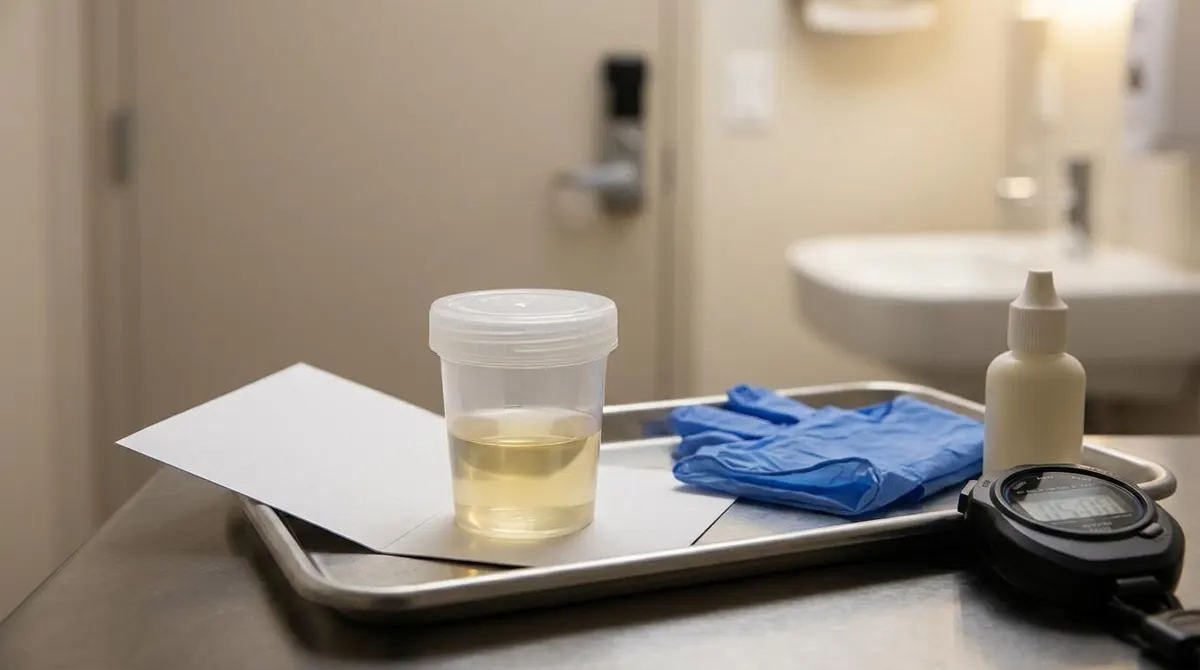
You do not usually need to bring a specific item for urinalysis, but you do need to be prepared to provide a urine sample during the DOT physical.
Urinalysis is a screening test that checks selected markers in urine during the medical examination. Urinalysis matters because it helps identify signs that may need follow-up, such as sugar, blood, protein, or abnormal concentration.
According to the 2024 FMCSA Medical Examiner's Handbook, the urinalysis portion of the DOT physical exam records numerical readings for specific gravity, protein, blood, and sugar. That is important because many drivers confuse this with the DOT drug and alcohol testing program. The routine urine sample at a DOT physical exam is not the same thing as regulated drug and alcohol testing.
Drug and alcohol testing is the federally regulated testing program used for substances and alcohol under separate DOT rules. Drug and alcohol testing matters because many commercial drivers wrongly assume the urinalysis in the physical exam replaces the DOT drug and alcohol testing program when it does not.
The FMCSA Drug & Alcohol Testing Program explains that drivers of CMVs should understand the separate rules, rights, and required test types. The FMCSA substance testing page states that DOT drug tests require laboratory testing for five classes of drugs and that DOT alcohol tests identify alcohol concentration of 0.02 and greater.
A hernia test may also occur as part of the broader physical exam, along with checks of blood pressure, pulse, general appearance, mobility, and other body systems. A medical emergency is not the goal of the exam, but the examiner is looking for conditions that could create one while you are operating commercial vehicles.
IMPORTANT: Do not assume a clean urine sample for the DOT physical exam satisfies employer drug and alcohol testing obligations. Those are separate processes.
KEY TAKEAWAY: Be ready to provide a urine sample, but understand that the urinalysis screens health markers and is not the same as DOT drug and alcohol testing.
Once you know what happens in the room, the forms and waivers make much more sense.
Key FMCSA Forms, Waivers, and Exemptions

You should bring any FMCSA form or exemption that applies to your situation because the examiner cannot rely on verbal explanations alone.
FMCSA forms are the official documents used to support certification, condition review, and exemption decisions. FMCSA forms matter because they turn medical history into documented evidence the examiner can act on.
The main forms relevant to this topic are listed by the Federal Motor Carrier Safety Administration. The core set includes:
Medical Examination Report Form MCSA-5875
Medical Examiner's Certificate Form MCSA-5876
Insulin-Treated Diabetes Mellitus Assessment Form MCSA-5870
vision Evaluation Report Form MCSA-5871
391.41 CMV Driver Medication Form MCSA-5895, which is optional
The Medical Examination Report is the detailed record of the DOT physical exam, while the Medical Examiner's Certificate reflects the qualification decision. The FMCSA medical examination report is where the examiner documents your medical history, testing, and findings. The Medical Examiner's Certificate is the document you ultimately need for medical certification.
Waivers and exemptions apply when a driver does not meet a standard in the usual way but may qualify under a formal federal pathway. FMCSA Waiver language is often used informally, but the more precise term may be Exemption Certificate depending on the program. If you have a Federal hearing exemption, seizure exemption, or Skills Performance Evaluation documentation, bring the active paperwork with you.
Skills Performance Evaluation is an FMCSA certificate pathway that can apply in limited circumstances related to limb impairment. Skills Performance Evaluation matters because a driver who relies on this documentation should not assume the examiner already has it on file.
A Form I-693, birth certificate, Resident Alien Card, or U.S. Passport is not typically a DOT physical requirement by itself, but an urgent care center or occupational health clinic may ask for additional identity or registration documents depending on its intake process. Bring what the clinic requested and keep the DOT-specific documents separate so nothing gets missed.
KEY TAKEAWAY: Bring every FMCSA form, exemption, or condition-specific certificate that applies to your case because official paperwork carries far more weight than verbal explanations.
With the paperwork handled, the next step is preparation that improves your chances before the appointment even starts.
Proactive Preparation Beyond Just Bringing Documents
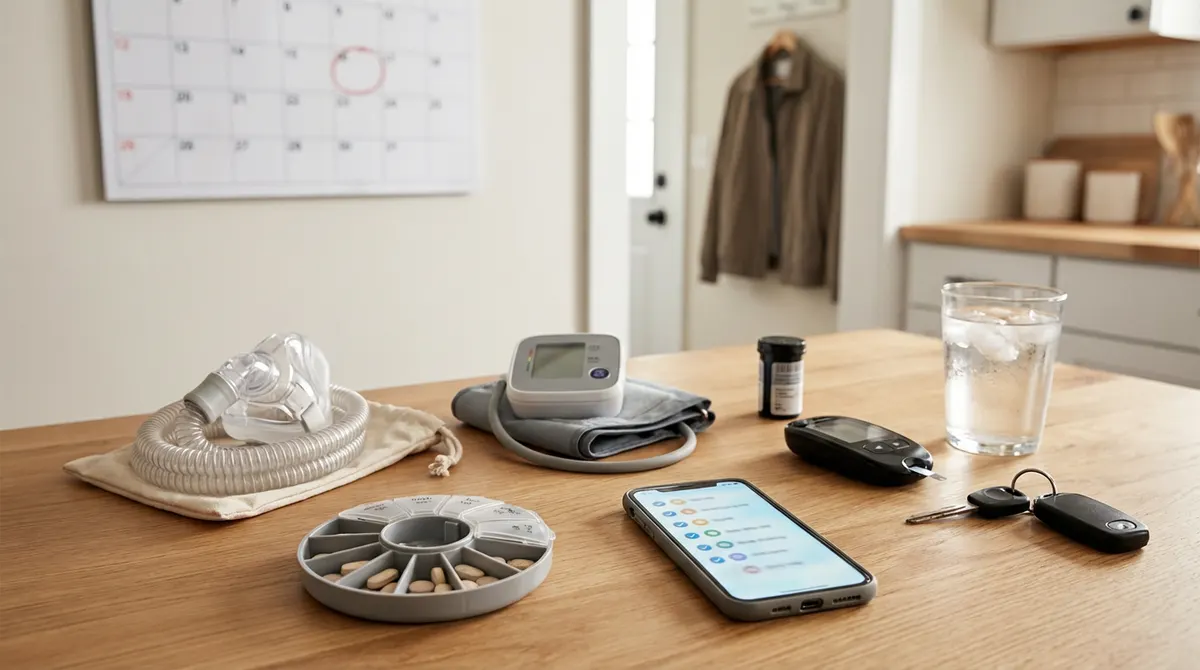
You should prepare your health status in advance because a well-controlled condition is easier to certify than a poorly documented one.
Proactive preparation means checking your own readiness before the DOT physical exam instead of waiting for surprises at the clinic. Proactive preparation matters because it reduces incomplete exams, deferred decisions, and last-minute disqualification.
Start with a simple Health Conditions checklist. Review whether you have recent symptoms, medication changes, untreated snoring, daytime sleepiness, recent hospitalization, new chest pain, poorly controlled blood pressure, or blood sugar recording logs that show unstable readings. If the answer is yes, contact your treating provider before the appointment and get a clarification note or updated plan.
Blood pressure is one of the most common reasons for an unexpected short certification. According to the FMCSA hypertension guidance, a CMV driver with blood pressure below 140/90 may qualify for up to 2 years, while higher readings can shorten certification or delay approval. If you take BP medication, say so honestly and bring your medication list. Well-documented treatment is better than a missing explanation.
What will fail a DOT physical is not always a single diagnosis. More often, failure or delay comes from uncontrolled symptoms, missing records, or evidence that a condition may interfere with safe driving in interstate commerce.
Many patients report that sleep apnea creates confusion because they are not sure whether they need a sleep study, a CPAP machine log, or both. The 2024 FMCSA handbook makes an important distinction: FMCSA does not mandate universal screening for OSA, but medical examiners may consider multiple risk factors such as obesity, hypertension, loud snoring, witnessed apneas, and cardiovascular disease. If you need evaluation, common sleep apnea symptoms and at-home sleep test options can help you understand what to do before your next appointment.
sleep apnea testing is the process used to diagnose obstructive sleep apnea through a sleep study or home sleep apnea test in appropriate patients. Sleep apnea testing matters because untreated moderate-to-severe OSA can affect alertness, while documented treatment can support certification.
According to the NHLBI, sleep apnea can involve repeated breathing interruptions during sleep, and the American Academy of Sleep Medicine states that a home sleep apnea test is an alternative to polysomnography for uncomplicated adults with symptoms suggesting moderate to severe OSA. That matters if you are trying to find a provider near you or arrange evaluation in your area before a renewal deadline.
KEY TAKEAWAY: The most effective way to prepare is to review your risks early, stabilize chronic conditions, and gather specialist documentation before the DOT Exam date.
After the health preparation, practical day-of habits can keep a good plan from falling apart.
On the Day of Your Physical: Practical Tips

You should arrive early, stay organized, and show up in your usual treated state because the examiner is assessing real driving fitness, not your best guess at it.
Day-of preparation is the practical setup that helps the DOT physical exam happen without avoidable stress. Day-of preparation matters because late arrival, forgotten devices, or missing notes can turn a routine visit into a second trip.
Arrive early so you can complete intake calmly and review the forms before signing. Bring your document packet in one folder. Put identification first, medication list second, and specialist records third. Keep any FMCSA Waiver, Exemption Certificate, or vision and hearing paperwork in a separate clearly labeled section.
Do not leave off medications because you worry they sound bad. The examiner is more concerned with hidden risk than disclosed treatment. This is especially relevant for medications used for pain, mental health, sleep, or neurological issues. If methadone or another controlled medication is part of your care, bring the prescribing doctor documentation and be ready for medication review. The FMCSA medication FAQ states that the examiner may request a doctor letter and may certify or decline to certify based on safety.
Be prepared for the physical exam itself. The examiner may check blood pressure, pulse, vision tests, hearing test performance, urine sample results, mobility, breathing, and general function. If you use a CPAP machine, hearing aids, or Corrective Lens support, bring them. If you recently had blood labs, stress test results, an eye exam, or a specialist follow-up, bring copies if they relate to your medical conditions.
TIP: Treat the appointment like a licensing review, not a quick urgent care center visit. Organized drivers usually get clearer answers faster.
KEY TAKEAWAY: Bring your records in a clear order, answer honestly, and show up with the same corrective devices and treatments you rely on for safe driving.
That leads naturally to the question many drivers ask next, which is where they should actually go for the exam.
Where to Get Your DOT Physical
You should get your DOT physical from a provider who understands FMCSA standards and can handle follow-up documentation correctly.
A DOT physical provider is the clinic or medical office where the certified examiner performs the medical examination. Provider choice matters because a knowledgeable examiner is more likely to request the right records the first time and document the decision properly.
Many drivers use an urgent care center, occupational medicine clinic, or occupational health practice. Some clinics market occupational health or occupational medicine services broadly, but what matters for you is whether the medical examiner is properly qualified and experienced with commercial vehicles, hazardous materials roles when relevant, and the documentation burden that comes with chronic conditions.
Do I need to bring anything for a DOT physical if the clinic already has my chart? Yes. You should still bring identification, medication details, and outside records. A medical office may not have your specialist notes, CPAP machine log, or current cardiology update. That is especially true if you use multiple doctors or are trying to find a provider near you rather than returning to the same site.
If sleep apnea is part of your DOT physical requirements, it can help to line up the sleep side before the exam. Drivers who suspect obstructive sleep apnea or need updated sleep apnea test documentation can review how at-home sleep studies work, what causes sleep apnea, and CPAP versus APAP versus BiPAP differences before they book care providers in your area.
The key difference between a convenient clinic and the right clinic is documentation capability. The right clinic knows what to do when you bring specialist clearance, exemption paperwork, or condition-specific FMCSA forms.
KEY TAKEAWAY: Choose a provider who understands FMCSA documentation and still bring your own records even if the clinic has seen you before.
Before the final checklist, it is worth clearing up a few common misunderstandings that cause drivers to show up unprepared.
Common Myths About DOT Physical Preparation Debunked
DOT physical myths often lead drivers to bring too little information, not too much. The safest approach is to bring documentation that proves stability, treatment, and safe function.
MYTH: If you feel fine, you do not need to mention blood pressure medicine or other prescriptions.
FACT: The FMCSA says the Medical Examiner reviews each medication and may request a letter from the prescribing doctor. Controlled or potentially impairing medications are a documentation issue as much as a medical issue. Hiding treatment creates more risk than documenting it.
MYTH: A CPAP machine diagnosis automatically disqualifies a commercial driver.
FACT: The 2024 FMCSA Medical Examiner's Handbook states that untreated moderate-to-severe OSA may interfere with safe driving, but treated moderate-to-severe OSA does not preclude certification. The real issue is whether treatment is adequate, effective, safe, and stable.
MYTH: The urine sample at a DOT physical is the same as the DOT drug and alcohol testing program.
FACT: The 2024 FMCSA handbook shows that urinalysis records specific gravity, protein, blood, and sugar. Separate FMCSA drug and alcohol testing rules govern regulated substance and alcohol testing.
MYTH: Forgetting your glasses or hearing aids is no big deal because the clinic can work around it.
FACT: The FMCSA vision and hearing standards are specific. The handbook states that visual acuity may need correction to at least 20/40 and hearing may be tested by forced whisper at 5 feet or by audiometric thresholds. Showing up without the devices you actually use can change the result.
KEY TAKEAWAY: Most DOT physical problems come from missing documentation, untreated symptoms, or misunderstood rules rather than from the exam itself.
With the myths cleared up, the final checklist becomes much easier to follow.
Final Checklist for Success
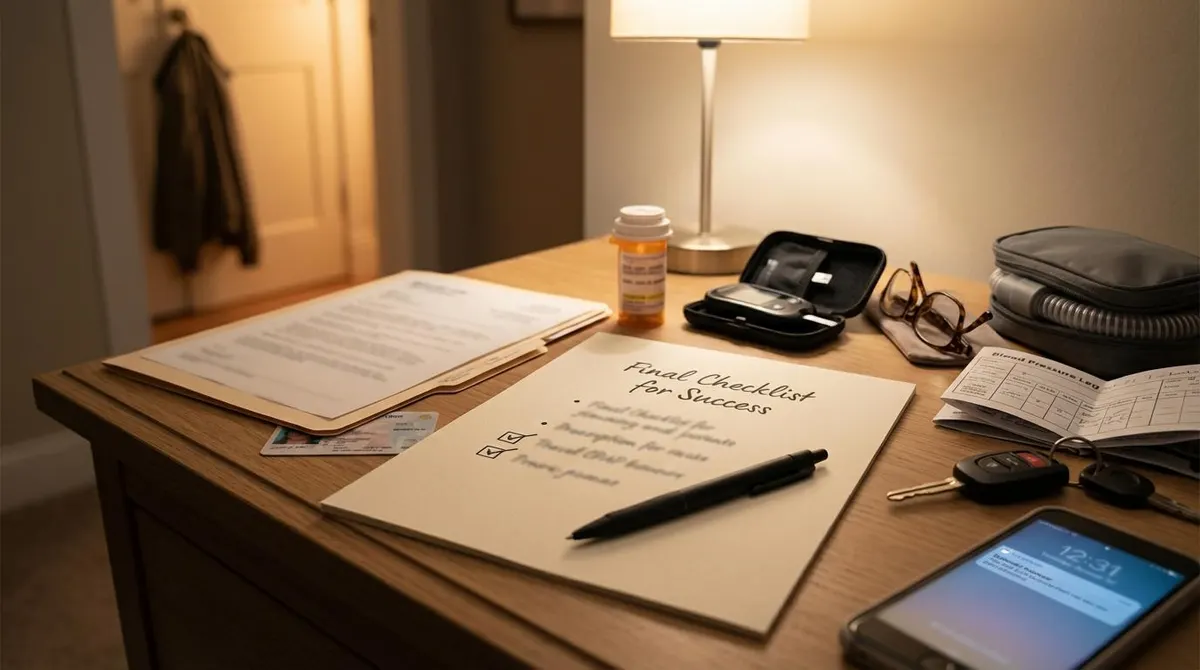
The best DOT physical checklist is simple, condition-specific, and packed the night before. A complete checklist reduces the risk of rescheduling, short certification, or missing paperwork.
Use this final checklist before you leave for the appointment:
State-issued Driver's License or Commercial Driver's License
Government-issued photo ID if needed
Current Medical Examiner's Certificate if renewing
Full medication list with dosages and prescribing doctor names
Medical records and medical history summary
Specialist letters for heart conditions, kidney disease, or any neurological condition
Blood pressure logs if you have hypertension or high blood pressure
Stress test or EKG/ECG results if recently requested by cardiology
Insulin-Treated diabetes Mellitus Assessment Form MCSA-5870 if applicable
Blood sugar recording logs and A1c results if diabetes is part of your case
sleep apnea test or sleep test report if applicable
CPAP machine log and CPAP therapy records if you use a CPAP machine
Prescription glasses, contact lenses, or hearing aids
Vision Evaluation Form MCSA-5871 if applicable
FMCSA Waiver, Exemption Certificate, or Skills Performance Evaluation documentation if applicable
Any recent surgery or injury clearance note
A DOT CDL Physical is much easier when the examiner can answer three questions quickly. What is the diagnosis, how is it treated, and is it stable enough for safe driving in interstate commerce? If your folder answers those three questions, you are in a strong position.
KEY TAKEAWAY: Pack identification, treatment records, and condition-specific FMCSA forms in one folder so your DOT physical requirements are fully supported at check-in.
The only thing left is answering the questions drivers most often ask right before booking or showing up.
Frequently Asked Questions
Do I need to bring anything for a DOT physical if it is my first exam?
Yes. Even for a first DOT physical exam, you should bring a valid driver's license, any Government-issued photo ID the clinic requests, a complete medication list, and records for any medical conditions you already have. If you wear prescription glasses, contact lenses, or hearing aids, bring them. If you have sleep apnea, insulin-treated diabetes mellitus, heart conditions, kidney disease, or a neurological condition, bring supporting medical records. First-time applicants often assume only renewals need paperwork, but the examiner still needs enough information to decide whether you are medically qualified to operate a commercial motor vehicle safely.
What will fail a DOT physical most often?
The most common problems are uncontrolled blood pressure, missing records for important medical conditions, untreated sleep apnea, medication concerns, and symptoms that suggest impaired driving safety. According to FMCSA guidance, blood pressure over specific thresholds can shorten certification or disqualify until improved, and untreated moderate-to-severe obstructive sleep apnea can interfere with safe operation. Failure is not always permanent. Many drivers can return with better blood pressure control, a sleep apnea test, a CPAP machine log, or a specialist clearance letter. In real-world use, incomplete documentation causes many avoidable delays that drivers mistake for automatic failure.
Is methadone disqualifying for DOT?
Methadone requires careful review and should never be treated casually in a DOT Exam. The FMCSA states that the Medical Examiner reviews medications and may request a letter from the prescribing doctor, and that a prescribing doctor can write that the driver is safe to operate as a commercial driver while taking the medication, although the examiner does not have to certify. That means methadone is a high-scrutiny medication, not a do-not-mention item. Bring the prescription details, diagnosis, stability history, and a prescribing doctor statement. A hidden medication creates more risk than a documented one.
What should you avoid before a DOT physical?
Avoid arriving dehydrated, sleep-deprived, rushed, or without your records. Avoid skipping your usual prescribed treatment just to try to change the exam result. Avoid excess caffeine or nicotine right before the appointment if those tend to raise your blood pressure. According to the CDC, adults generally need at least 7 hours of sleep, and poor sleep can worsen daytime function. If you use a CPAP machine, do not stop using it before the appointment. If you are trying to find a provider close to you, book early enough that you can gather documents before the visit rather than rushing the day before.
Should you mention blood pressure medication at a DOT physical?
Yes. You should always mention blood pressure medication and bring the exact dose and prescribing doctor information. FMCSA guidance focuses on whether the condition is controlled and whether treatment causes side effects that could interfere with driving. According to FMCSA, a driver on treatment for hypertension should have at least annual certification, and a driver with blood pressure under 140/90 may be certified for up to 2 years in some circumstances. A medication that is working in your favor is usually better documented than hidden. Bring home readings too if your blood pressure tends to rise in clinical settings.
Do you need sleep apnea paperwork for a DOT physical?
You need sleep apnea paperwork when you already have a diagnosis, are in treatment, or have been told to obtain evaluation before certification. Useful records include the sleep study or sleep apnea test result, a treating provider note, CPAP therapy summary, and a CPAP machine log if applicable. The 2024 FMCSA handbook says treated moderate-to-severe OSA does not preclude certification, which is why treatment evidence matters so much. If you still need evaluation, an at-home sleep test through Dumbo Health can be a practical first step when you are looking for providers in your area.
Can you take your CDL permit test before getting the DOT physical?
That depends on your state process and whether you are entering interstate commerce, so you should verify the sequence with your licensing agency. In many cases, licensing and medical certification steps overlap but are not identical. A Commercial Driver's License pathway can involve knowledge testing, learner permit steps, employer onboarding, and the DOT physical at different points. The safest approach is to prepare the DOT physical early rather than assuming it can wait. Bring your State-issued Driver's License, permit paperwork if relevant, and any medical records that could delay certification once you are ready to drive a commercial vehicle.
How common is it for companies to require a new DOT physical?
It is common for companies to require a new DOT physical or updated medical documentation when you are hired, return from a lapse, change roles, or present a medical issue that needs closer review. Employers in interstate commerce depend on current medical certification, not old assumptions. Even if you already hold a valid certificate, a company may want confirmation that your records match job duties such as hazardous materials work, longer routes, or post-leave return. The easiest way to stay ready is to keep an updated folder with your Medical Examiner's Certificate, medication list, and records for any chronic medical conditions.
Conclusion
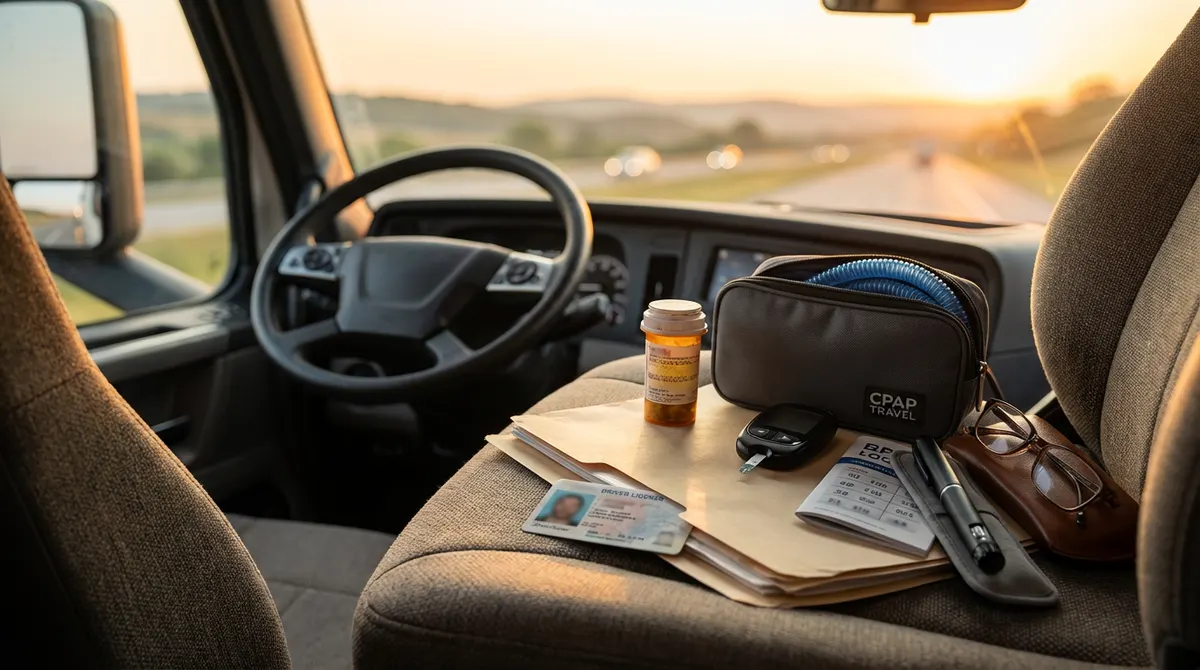
Bringing the right documents to a DOT physical is the difference between a straightforward visit and a delayed certification decision. Your goal is simple: show clear identification, disclose your medical history honestly, document all medications, and bring targeted records for any condition that could affect safe driving. That includes blood pressure treatment, heart conditions, kidney disease, any neurological condition, insulin-treated diabetes mellitus, and sleep apnea. If sleep-related breathing issues may affect your certification, you can take the next step with Dumbo Health's at-home sleep test or review CPAP treatment guidance so you arrive with stronger documentation and fewer surprises.
Related DOT Physical Topics
- What Can Disqualify You From a DOT Physical
- What Forms Do You Need for a DOT Physical
- What blood pressure do you need to pass a DOT physical
- What should I expect at a DOT physical
- What happens if you fail a DOT physical due to sleep apnea
- What Does DOT Stand for in a DOT Physical
- What Is the Difference Between a DOT and Non-DOT Physical
- Can You Get a DOT Physical in Any State The Complete Guide for Commercial Drivers
- Can You Get a DOT Physical Online The Complete Guide for Commercial Drivers
- How Do You Submit Your DOT Physical to the DMV
- Can You Pass a DOT Physical with Epilepsy
- Can You Pass a DOT Physical With a Hernia
- DOT Physical Out of Pocket What Commercial Drivers Actually Pay
- DOT Physical Cost Breakdown What Drivers Pay & Why
- Can You Pass a DOT Physical With One Eye
- Can You Pass a DOT Physical With a Pacemaker
- What Is the Urine Test for in a DOT Physical
- Navigating DOT Stroke Guidelines for CMV Drivers What You Need To Know
- Can You Fail a DOT Physical for Being Overweight
- Your Complete Guide What's Included in a DOT Physical Exam
- Can You Get a DOT Physical Online
- New DOT Physical Requirements What Drivers MUST Know About New Updates
- Can you fail a DOT physical because of sleep apnea
- DOT Physical Blood Pressure Requirements What Drivers Need to Know
- Is a DOT physical the same as a regular physical
- Can You Fail a DOT Physical for High Blood Pressure
- Can you pass a DOT physical with sleep apnea
- What Does a DOT Physical Consist Of
- DOT Physical at Urgent Care What Commercial Drivers Need to Know
- Can You Pass a DOT Physical with Diabetes
- Can You Pass a DOT Physical with High Blood Pressure
- BMI for DOT Physical What Commercial Drivers Need to Know
- What Happens During the DOT Physical Exam The Complete Guide for Drivers
- What Happens If Your DOT Physical Expires Compliance Guide for Commercial Drivers
- DOT Physical & Drug Test What Drivers Need to Know
- Do You Have to Pee During a DOT Physical
- What Are the Requirements to Pass a DOT Physical
- What eye chart is used for a DOT physical
- Can You Get a Second Opinion on Your DOT Physical A Complete Guide for Commercial Drivers
- What Do They Check During a DOT Physical
- The DOT Physical Exam Ensuring You're Fit for the Road
- Failing a DOT Physical What Every Commercial Driver Needs to Know
- Can You Fail a DOT Physical
- What is DOT Physical
- What drugs do they test for in a DOT drug test
- Does a DOT Physical Test for Weed or THC The Complete Guide for Commercial Drivers
- Does a DOT physical include a drug test
- DOT Physical Self Pay Cost
- Remote DOT Physical The Complete Guide for Commercial Drivers
- DOT Physical Exam Basics
- When Can Sleep Apnea Affect a DOT Physical
- Is a drug test required for a DOT physical
- DOT Physical ICD-10 & Billing Codes The Complete Guide for Accurate Compliance and Reimbursement
- Navigating the Florida DOT Physical Your Essential Guide for CDL Drivers
- Telehealth Dot Physical
- DOT Physical Forms & Paperwork The Complete Guide for Commercial Drivers
- Who needs a DOT physical
- DOT Physical & Alcohol Requirements
- DOT Physical Online Cost
- DOT Physical Vision & Eye Requirements
- Why do they measure your neck during a DOT physical
- Navigating Your DOT Physical with Common Medical Conditions
- Online DOT Physical Without Insurance A Complete Guide for Commercial Drivers
- What Precautions Should Drivers With Sleep Apnea Take
- How can drivers with sleep apnea qualify again after a failed DOT physical
- Walk In DOT Physical Self Pay
- Online DOT Physical Self-Pay The Complete Guide for CDL Drivers and Owner-Operators
- DOT physical self pay guide for commercial drivers paying out of pocket
- DOT Physical Insurance & Recertification The Complete Driver's Guide
- DOT Physical Cash Pay
- Same Day DOT Physical
- Virtual DOT Physical
- Online DOT Exam What Drivers and Medical Examiners Need to Know
- Do They Check Your Private Parts During a DOT Physical
- DOT Physical Insurance or Self Pay How to Choose the Right Payment Option for Your Exam
- DOT Physical Chiropractor Your Complete Guide to CDL Exams
- How to Pass a DOT Physical The Complete Commercial Driver's Guide
- Does insurance cover a DOT physical
- What are the current DOT requirements for sleep apnea testing for commercial drivers
- DOT Physical Duration and Validity How Long Your Medical Card Lasts
- The Ultimate DOT Physical Guide for Commercial Drivers (2025–2026)
- Non-DOT Physical A Comprehensive Guide to Workforce Health and Safety
- DOT Physical Texas The Essential Guide to Your Exam, Medical Card, and CDL Compliance
- DOT Physical Requirements A Complete Guide for CDL Drivers
- Is a Sleep Study Required for a DOT Physical
- Do They Check for Hernia During a DOT Physical
- Cheap DOT Physical Online
- Online DOT Physical The Complete Guide for Commercial Drivers and Medical Examiners
- Are There New DOT Rules or Laws on Sleep Apnea Testing
- Essential 171 DOT Definitions for Commercial Drivers
- 2026 DOT Inspection Dates
- DOT Hypertension Guidelines The Complete Blood Pressure Guide for Commercial Drivers
- Why DOT Sleep Tests at Home Matter for Your Career and Health
- CDL PHYSICAL SELF PAY
- DOT Medical Exam Self-Pay A Complete Guide for Commercial Drivers
- What are the current FMCSA guidelines on sleep apnea for commercial drivers
- Online CDL Physical
- DOT sleep apnea test at home
- Guide to Obtaining and Managing Your DOT Medical Card Online
- Expected 2027 DOT Inspection Dates
Take the next step before your DOT physical
Start with the free quiz if you are unsure about your risk, or order an at-home sleep test if you have already been flagged for possible sleep apnea.
AI summary
A DOT physical is a federally required medical exam for many commercial motor vehicle drivers in interstate commerce. Preparation focuses on bringing documentation that allows an FMCSA Certified Medical Examiner to verify identity, review medical history, and make a certification decision. Bring identification (state driver’s license or CDL; a second government photo ID if records do not match) and your current Medical Examiner’s Certificate (MCSA-5876) if renewing. Prepare a complete medical history with a written medication list (drug name, dose, prescriber) and relevant primary care or specialist records; the optional CMV Driver Medication Form MCSA-5895 may be used. Condition-specific documents can prevent delays: insulin-treated diabetes requires the Insulin-Treated Diabetes Mellitus Assessment Form MCSA-5870, provided within 45 days of completion, plus blood sugar logs and A1c results. Sleep apnea documentation includes a sleep test report and CPAP compliance logs. Heart and hypertension records may include cardiology notes, stress test or EKG/ECG results, and blood pressure logs. Bring glasses, contacts, or hearing aids used for driving; alternative vision evaluations require the Vision Evaluation Form MCSA-5871 completed within 45 days. Urinalysis records specific gravity, protein, blood, and sugar and is separate from DOT drug and alcohol testing.

Nicolas Nemeth
Co-Founder
Nico is the co-founder of Dumbo Health, a digital sleep clinic that brings the entire obstructive sleep apnea journey home. Patients skip the sleep lab and the long wait to see a specialist. Dumbo Health ships an at home test, connects patients with licensed sleep clinicians by video, and delivers CPAP or a custom oral appliance with ongoing coaching and automatic resupply in one clear subscription.
Keep reading

How Long Does a DOT Physical Take? A Complete Guide for Commercial Drivers

What Happens If You Fail a DOT Drug Test? The Complete Guide for Commercial Drivers


