Can you pass a DOT physical with sleep apnea?
Commercial drivers can pass a DOT physical with sleep apnea when the condition is controlled and treatment compliance is documented. The article explains how FMCSA guidance treats respiratory dysfunction, and why untreated symptoms like excessive daytime sleepiness can lead to disqualification. It outlines how DOT medical examiners screen for risk using history, reported fatigue, BMI, and neck circumference thresholds. It reviews diagnosis pathways, including in-lab studies and home sleep apnea tests that many examiners accept. Treatment options are compared, with CPAP highlighted for its digital usage logs and typical compliance benchmark of 4 hours per night on 70% of nights. Readers learn how conditional certification works, what paperwork to bring, and why staying compliant reduces crash and cardiovascular risks.
Struggling with sleep?
Find out if sleep apnea is the reason.
FDA-cleared. $149 flat. Physician-reviewed results in 48 hours.

Can you pass a DOT physical with sleep apnea?
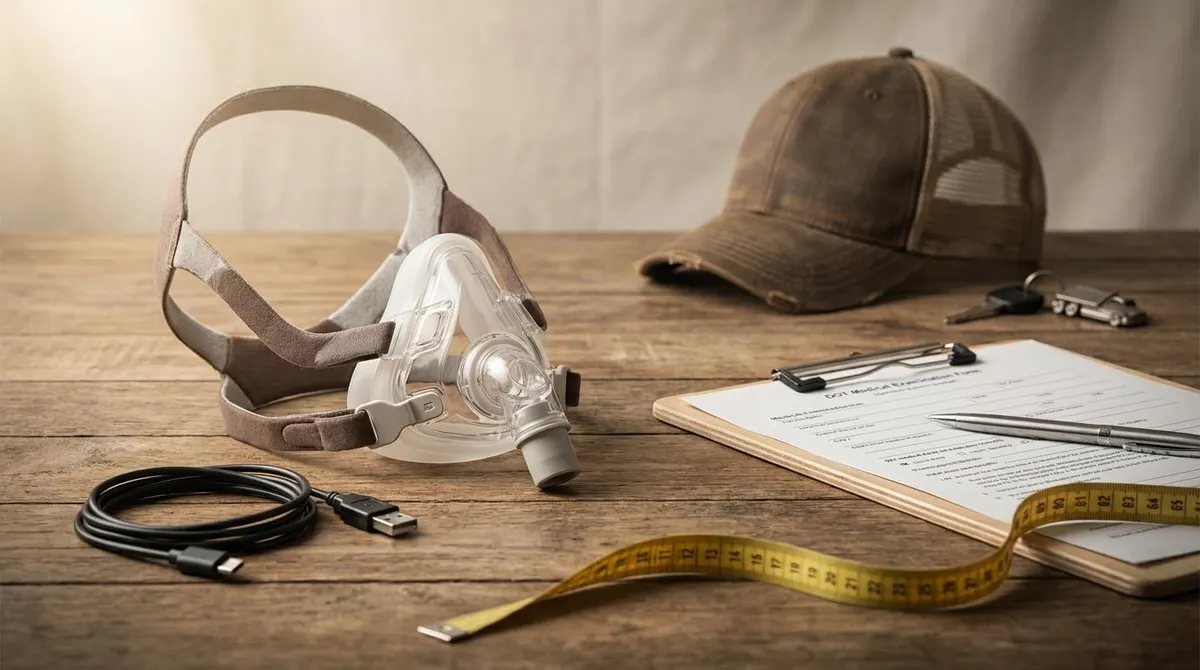
You can pass if you demonstrate that your condition is effectively managed and you remain compliant with prescribed treatment. According to the Federal Motor Carrier Safety Administration (FMCSA), drivers with a respiratory dysfunction that interferes with safe driving are disqualified unless the condition is controlled. This comprehensive guide covers the specific screening criteria, diagnosis requirements, treatment options, and compliance standards necessary to secure your medical card. We will explore how to navigate the examination process and what specific markers medical examiners look for during the screening. Understanding these rules ensures you can protect your livelihood while maintaining public safety on the road. Read on to discover the essential steps to keep your career moving forward.
The Critical Role of the DOT Physical for Commercial Drivers

Drivers can pass the medical exam by showing that their sleep apnea is under control and does not cause excessive daytime sleepiness. This allows a truck driver to safely operate a commercial motor vehicle without the risk of fatigue related incidents.
A DOT physical is a mandatory health examination required by the Department of Transportation to ensure that a truck driver is physically fit for duty. This screening protects public safety by identifying health risks that could lead to accidents on high speed roads.
DOT physical is a medical evaluation conducted by a certified examiner to verify that commercial drivers meet federal health standards. This process ensures that every operator is capable of handling the rigors of long distance driving.
Every commercial vehicle operator must meet specific health standards to maintain a valid medical card. The FMCSA provides the guidelines that a medical examiner uses to determine if a driver is fit for duty. While a diagnosis is not an automatic disqualification, untreated symptoms like loud snoring or gasping during sleep often trigger a requirement for further testing.
Not sure if sleep apnea applies to you?
Take our 2-minute sleep risk quiz to see whether sleep apnea could affect your DOT physical. No account required.
DID YOU KNOW: According to the FMCSA, nearly one third of commercial driver disqualifications are related to cardiovascular or respiratory conditions.
KEY TAKEAWAY: The physical exam is a safety hurdle designed to confirm you are healthy enough to drive, and sleep apnea is manageable within these regulations.
Understanding the specific health criteria helps you prepare for what the examiner will evaluate during your appointment.
Understanding Sleep Apnea: A Critical Health Concern for Drivers

sleep apnea is a chronic respiratory disorder where breathing repeatedly stops and starts during sleep. This condition is a major safety concern for commercial drivers because it leads to severe daytime fatigue and reduced reaction times.
Obstructive sleep apnea is the most common form of the disorder, occurring when throat muscles intermittently relax and block the airway. According to the Sleep Foundation, nearly 25 percent of men and 10 percent of women suffer from some form of this condition. For those in the transportation industry, the prevalence can be higher due to lifestyle factors.
Common signs include morning headaches, irritability, and 9 most common sleep apnea symptoms to look out out for such as persistent daytime sleepiness. If a truck driver ignores these signs, the risk of a crash increases significantly. The FMCSA notes that drivers with untreated apnea have a much higher rate of involvement in traffic accidents compared to those who receive treatment.
sleep apnea is a medical condition characterized by repeated interruptions in breathing during the sleep cycle. Identifying this disorder is vital for drivers to prevent sudden fatigue while operating heavy machinery.
KEY TAKEAWAY: Recognizing the symptoms of this respiratory disorder is the first step in protecting both your health and your commercial driver license.
If you suspect you have this condition, the next step involves the specific screening process used during your medical certification.
The DOT Physical Examination and Sleep Apnea Screening

A medical examiner evaluates your history and physical health to determine if you have a high risk for sleep disorders. If the examiner identifies specific risk factors, they may issue a conditional certification pending a sleep study.
The role of the DOT medical examiner is to apply the FMCSA standards to each driver. During the physical examination, they check your blood pressure, vision, and hearing. They also look at physical attributes like your neck circumference and Body Mass Index.
Many examiners use a screening tool to identify drivers who need a formal sleep study. According to the American Academy of Sleep Medicine, a neck size over 17 inches for men or 16 inches for women is often considered a significant risk factor. If you meet these thresholds or report high levels of fatigue, the examiner will likely require a diagnostic evaluation before granting a long term medical card.
Already diagnosed and need CPAP support?
Dumbo Health helps patients start CPAP without the usual confusion, paperwork, or upfront cost. Equipment, setup, supplies, and ongoing support are all handled in one place.
TIP: Bring your recent medical records and a list of medications to your appointment to help the medical examiner understand your overall health profile.
KEY TAKEAWAY: Screening is based on objective physical measurements and your reported symptoms to ensure no underlying sleep issues compromise road safety.
Once a risk is identified, obtaining an official diagnosis becomes the priority for maintaining your certification.
Getting a Sleep Apnea Diagnosis: The First Step Towards Compliance
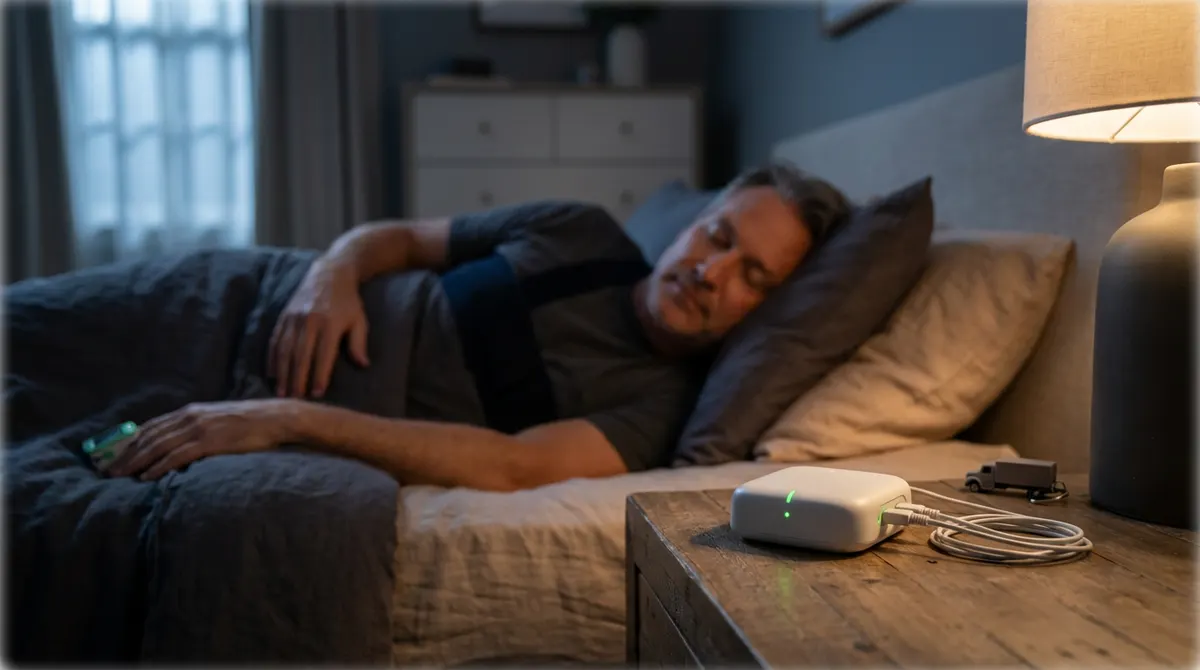
A formal sleep apnea diagnosis is required to prove that you are receiving the necessary care to remain a safe driver. This process usually involves a sleep study that monitors your breathing and oxygen levels overnight.
A sleep study is a diagnostic test used to record brain waves, heart rate, and breathing during sleep. It is essential because it provides the clinical data needed to determine the severity of your condition and the required treatment.
Drivers often have two options for testing: a traditional sleep lab or a home sleep test which allows for monitoring in a familiar environment. Mayo Clinic explains that at home tests are often used to diagnose obstructive sleep apnea because they are more convenient for people with busy schedules. If you are looking for a provider near you, these at home options can often speed up the certification process.
Home sleep testing is a medical evaluation performed in a driver's own home using a portable diagnostic kit. This method allows for a more natural sleep environment while collecting necessary data for a medical examiner.
KEY TAKEAWAY: Securing a clinical diagnosis through a sleep study provides the evidence your medical examiner needs to clear you for driving.
After the diagnosis is confirmed, you must begin a treatment plan that meets the federal compliance standards.
Treatment Options and Meeting FMCSA Requirements
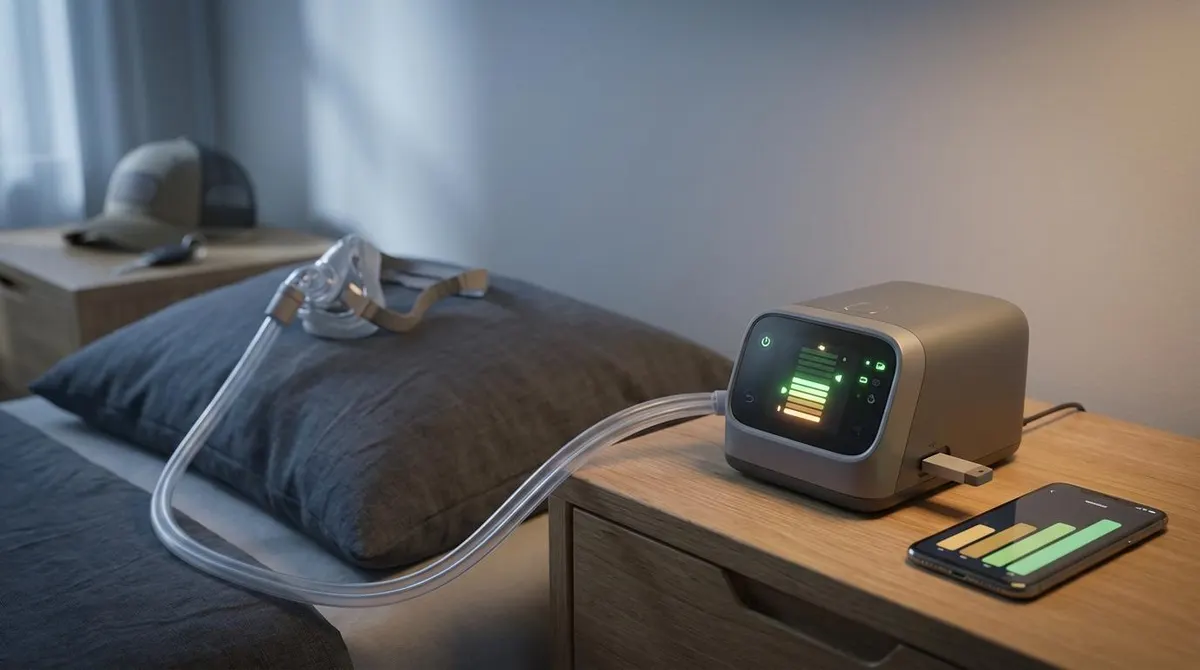
Compliance with a treatment plan is the primary way a truck driver can pass a DOT physical with a sleep disorder. The most common and accepted treatment is the use of a CPAP machine to keep the airway open.
Continuous Positive Airway Pressure is a treatment that uses a machine to deliver air through a mask to keep the throat open during sleep. It is the gold standard for DOT compliance because it provides a digital record of usage that medical providers can verify.
For drivers who cannot tolerate a standard machine, an AutoPAP machine may be an option. There is also oral appliance therapy which uses custom fitted oral devices to reposition the jaw. However, the FMCSA requires that any alternative treatment must be proven effective through a follow up sleep study to ensure your respiratory dysfunction is fully addressed.
| Treatment Option | Best For | Convenience | Compliance Tracking |
|---|---|---|---|
| CPAP Machine | All severity levels | Moderate | Digital logs (Standard) |
| Oral Appliance | Mild to moderate cases | High | Requires follow up test |
| Surgery | Specific physical issues | Low | Physical exam |
For most commercial drivers, a CPAP machine is the most reliable way to satisfy medical examiner requirements because of its built in data logging.
IMPORTANT: To be considered compliant, you must typically use your PAP therapy for at least 4 hours per night on 70 percent of nights.
KEY TAKEAWAY: While multiple treatments exist, CPAP remains the preferred choice for DOT regulators because it offers clear proof of daily use.
Understanding how to maintain this compliance is essential for your initial and future medical certifications.
Passing and Maintaining Your DOT Medical Certification with Sleep Apnea

To maintain your medical certification, you must provide a compliance report showing you use your treatment device as prescribed. This documentation proves to the medical examiner that your condition is not causing daytime impairment.
Initial medical certification for a driver with apnea is often limited to a shorter duration, such as 90 days, to establish a history of treatment. Once you show consistent use, the examiner may issue a medical card for one year. According to industry standards, compliance typically means using the device for at least 4 hours per night on 70 percent of nights.
You should always bring your compliance report to your physical examination to avoid delays. If you are using a CPAP, most modern machines allow you to download this data to an app or a USB drive. If you need assistance with the latest equipment, you can view CPAP options to ensure you have a compliant device.
TIP: Request your compliance report from your sleep medicine professionals at least two weeks before your DOT physical to ensure you are prepared.
KEY TAKEAWAY: Regular use of your therapy device and consistent data tracking are the keys to keeping your medical card active.
Clearing up common misunderstandings can further help you navigate the rules without unnecessary stress.
Common Myths About Sleep Apnea Debunked

Drivers can maintain their commercial driving career with sleep apnea if they follow the correct medical and regulatory steps. Separating facts from myths helps prevent anxiety during the recertification process.
MYTH: A sleep apnea diagnosis will immediately end your career as a commercial driver.
FACT: The FMCSA does not disqualify drivers simply for having the condition. Disqualification only occurs if the condition is untreated or poorly managed. According to the FMCSA, as long as the driver is compliant with treatment and doesn't show symptoms of daytime sleepiness, they can continue to drive.
MYTH: You must spend a night in a hospital sleep lab to get a valid diagnosis for your DOT physical.
FACT: Many medical examiners now accept results from a Home sleep apnea Test Kit for the diagnosis of obstructive sleep apnea. These tests are often more comfortable for the driver and provide sufficient data for clinical medical evaluation.
MYTH: If you have a high BMI, you will automatically fail your DOT physical.
FACT: A high Body Mass Index is a screening trigger, not a reason for failure. While a BMI over 35 may lead an examiner to request a sleep study, you can still pass the physical by completing the study and following any necessary treatment plans.
MYTH: CPAP is the only treatment the DOT accepts for commercial drivers.
FACT: While CPAP is the gold standard, other options like oral appliance therapy or surgery are acceptable if a follow up sleep test proves they effectively resolve the respiratory disorder. Medical providers must document that the alternative treatment has successfully eliminated symptoms of daytime sleepiness.
KEY TAKEAWAY: Most barriers to medical certification are based on misconceptions rather than the actual federal regulations regarding driver health.
Failing to address the condition not only risks your license but also carries significant safety and health dangers.
The Risks of Non-Compliance and Untreated Sleep Apnea

Untreated sleep apnea creates a high risk for sudden onset fatigue, which can lead to severe driver violations and accidents. The Department of Transportation views untreated respiratory dysfunction as a major liability for road safety.
The primary danger is the increased likelihood of a heart attack or stroke due to the strain on the cardiovascular system. Mayo Clinic notes that the sudden drops in blood oxygen levels that occur during sleep apnea increase blood pressure and strain the heart. For a truck driver, these health issues can lead to a medical emergency while behind the wheel.
Furthermore, driver fatigue caused by poor sleep quality is a leading cause of commercial vehicle crashes. The NHTSA reports that drowsy driving is responsible for thousands of crashes annually. Staying compliant with your treatment plan protects your health, your career, and the safety of everyone in your area.
Continuous Positive Airway Pressure therapy is a medical treatment designed to keep the airway open during sleep. Using this therapy reduces the risk of cardiovascular events and improves overall cognitive function for commercial drivers.
KEY TAKEAWAY: The risks of ignoring sleep apnea include life threatening health events and a significantly higher chance of being involved in a road accident.
Taking a proactive approach to your health is the best way to ensure long term success in the trucking industry.
Empowering Your Journey: Proactive Steps for Drivers

Drivers who take charge of their health often find that managing sleep apnea improves their overall quality of life and job performance. Partnering with sleep medicine professionals ensures you stay ahead of regulatory changes.
Start by having an honest conversation with your primary care provider or a medical examiner about your sleep patterns. If you frequently feel tired or have been told you snore loudly, do not wait for your next DOT physical to seek help. You can find providers in your area who specialize in driver health and understand the specific FMCSA requirements.
Utilizing modern technology, such as wearable trackers or an at home sleep test, can help you monitor your progress. Many drivers find that once they begin treatment, they have more energy and focus, which leads to better driving performance and career longevity.
DID YOU KNOW: Research published in the Journal of Clinical Sleep Medicine shows that treated drivers have accident rates similar to those without the condition.
KEY TAKEAWAY: Being proactive about your sleep health allows you to manage your medical certification on your own terms rather than reacting to a failed exam.
By following these steps, you can confidently navigate the medical requirements of your profession.
Conclusion: Drive Safely, Stay Certified

You can pass a DOT physical with sleep apnea by prioritizing treatment and maintaining consistent compliance. The FMCSA regulations are designed to keep the roads safe while allowing healthy, treated drivers to continue their careers. By understanding the screening process, obtaining a proper diagnosis, and utilizing effective therapy like CPAP, you can secure your medical card and protect your long term health. Do not let a manageable condition stand in the way of your livelihood or safety. If you are ready to take the next step toward compliance, you can get started with a screening today to ensure you are ready for your next physical.
Frequently Asked Questions
How many hours of CPAP use do I need to pass my DOT physical?
To satisfy most medical examiners and FMCSA guidelines, you must use your CPAP machine for at least 4 hours per night for at least 70 percent of the nights in a given period. This usage is tracked via a compliance report that you must present during your DOT physical. According to the Sleep Foundation, this level of use is considered the minimum necessary to effectively reduce daytime sleepiness and ensure driver safety. If you use your machine for 30 days and show this level of consistency, you can often receive a conditional or one year medical card. Consistent usage is the most important factor in proving you are fit for duty.
Can a DOT medical examiner require a sleep study based only on my BMI?
Yes, a medical examiner can require a sleep study if they believe you have a high risk of sleep apnea, and a high Body Mass Index is a common screening trigger. While there is no specific federal law that mandates a test based on BMI alone, the FMCSA gives examiners the discretion to order testing if they identify risk factors like a BMI over 35, a large neck circumference, or high blood pressure. If you are asked to take a test, you can often find testing options in your area that are quick and convenient. Completing the test is necessary to move forward with your medical certification.
What happens if I am diagnosed with sleep apnea during my DOT physical?
If you are diagnosed with sleep apnea during or as a result of your DOT physical, you will likely be issued a short term or conditional medical card while you begin treatment. This period, often 30 to 90 days, allows you to start therapy and generate a compliance report. Once you provide evidence that your treatment is effective and you are using it regularly, the examiner can extend your medical certification for a full year. The goal is not to disqualify you but to ensure that the condition is managed so you can safely operate a commercial motor vehicle.
Is an at home sleep test acceptable for DOT physical requirements?
Most DOT medical examiners accept a home sleep apnea test for the initial diagnosis of obstructive sleep apnea, provided the test meets specific clinical standards. An at home sleep test monitors your heart rate, oxygen levels, and breathing patterns while you sleep in your own bed. This is often a preferred option for drivers because it is more convenient and less expensive than a lab based study. According to the American Academy of Sleep Medicine, these tests are highly accurate for diagnosing moderate to severe cases of obstructive sleep apnea. Always check with your specific examiner to ensure the test kit they recommend is approved for your certification.
Will I lose my CDL if I have sleep apnea?
No, you will not lose your CDL simply because you have a sleep apnea diagnosis. You only risk losing your medical certification, which is required to use your CDL, if you refuse to get tested when required or if you fail to comply with your prescribed treatment. As long as you are actively managing the condition and can prove it with a compliance report, you remain eligible to drive. Many successful commercial drivers manage this condition for their entire careers. The key is to be proactive and follow the treatment plan outlined by your medical provider.
Can I use an oral appliance instead of a CPAP for DOT compliance?
You can use an oral appliance for DOT compliance, but it usually requires more documentation than a CPAP machine. Since oral appliances do not always have built in data logging, a medical examiner may require a follow up sleep study while you are wearing the device to prove it effectively treats your apnea. The FMCSA allows for alternative treatments as long as the medical examiner is satisfied that the respiratory dysfunction is controlled. If you prefer an oral appliance, work closely with a sleep medicine professional to ensure you have the clinical evidence needed to maintain your medical card.
Related DOT Physical Topics
- How can drivers with sleep apnea qualify again after a failed DOT physical
- Can You Pass a DOT Physical with Epilepsy
- Can You Pass a DOT Physical With One Eye
- Can You Pass a DOT Physical With a Pacemaker
- Can You Pass a DOT Physical With a Hernia
- Can you fail a DOT physical because of sleep apnea
- Can You Pass a DOT Physical with Diabetes
- Can You Pass a DOT Physical with High Blood Pressure
- When Can Sleep Apnea Affect a DOT Physical
- What happens if you fail a DOT physical due to sleep apnea
- What Can Disqualify You From a DOT Physical
- Can You Get a DOT Physical Online
- Can You Fail a DOT Physical for Being Overweight
- What blood pressure do you need to pass a DOT physical
- Can You Get a Second Opinion on Your DOT Physical A Complete Guide for Commercial Drivers
- Can You Fail a DOT Physical for High Blood Pressure
- Can You Fail a DOT Physical
- Navigating Your DOT Physical with Common Medical Conditions
- Are There New DOT Rules or Laws on Sleep Apnea Testing
- What Does DOT Stand for in a DOT Physical
- How Do You Submit Your DOT Physical to the DMV
- What Should You Bring to a DOT Physical
- What Forms Do You Need for a DOT Physical
- What Are the Requirements to Pass a DOT Physical
- What Precautions Should Drivers With Sleep Apnea Take
- Are there legal requirements for drivers with sleep apnea
- DOT sleep apnea test at home
- How to Pass a DOT Physical The Complete Commercial Driver's Guide
- Is a DOT physical the same as a regular physical
- What are the current DOT requirements for sleep apnea testing for commercial drivers
- Is a Sleep Study Required for a DOT Physical
- What Is the Difference Between a DOT and Non-DOT Physical
- Do You Have to Pee During a DOT Physical
- The DOT Physical Exam Ensuring You're Fit for the Road
- Does a DOT Physical Test for Weed or THC The Complete Guide for Commercial Drivers
- DOT Physical Online Cost
- What Happens If Your DOT Physical Expires Compliance Guide for Commercial Drivers
- DOT Physical Vision & Eye Requirements
- Does a DOT physical include a drug test
- DOT Physical Self Pay Cost
- Remote DOT Physical The Complete Guide for Commercial Drivers
- DOT Physical Out of Pocket What Commercial Drivers Actually Pay
- Navigating the Florida DOT Physical Your Essential Guide for CDL Drivers
- The Ultimate DOT Physical Guide for Commercial Drivers (2025–2026)
- How Sleep Apnea Affects Overall Driving Safety
- Walk In DOT Physical Self Pay
- DOT Physical Cost Breakdown What Drivers Pay & Why
- Is a drug test required for a DOT physical
- Home Sleep Apnea Test for Commercial Drivers The CDL Holder's Complete Guide
- Telehealth Dot Physical
- DOT Physical Forms & Paperwork The Complete Guide for Commercial Drivers
- DOT Physical Exam Basics
- DOT Physical & Alcohol Requirements
- DOT Physical Duration and Validity How Long Your Medical Card Lasts
- DOT Physical Insurance & Recertification The Complete Driver's Guide
- DOT Physical ICD-10 & Billing Codes The Complete Guide for Accurate Compliance and Reimbursement
- Online DOT Physical Without Insurance A Complete Guide for Commercial Drivers
- Why do they measure your neck during a DOT physical
- Your Complete Guide What's Included in a DOT Physical Exam
- Sleep Apnea Test for CDL Drivers
- Why DOT Sleep Tests at Home Matter for Your Career and Health
- Do They Check for Hernia During a DOT Physical
- Cheap DOT Physical Online
- What Is the Urine Test for in a DOT Physical
- DOT physical self pay guide for commercial drivers paying out of pocket
- Online DOT Physical Self-Pay The Complete Guide for CDL Drivers and Owner-Operators
- DOT Physical Cash Pay
- DOT Physical Blood Pressure Requirements What Drivers Need to Know
- How Does Sleep Apnea Affect Driving Ability
- New DOT Physical Requirements What Drivers MUST Know About New Updates
- Best Treatments for Sleep Apnea to Improve Driving Safety
- Same Day DOT Physical
- Virtual DOT Physical
- Online DOT Physical The Complete Guide for Commercial Drivers and Medical Examiners
- Who needs a DOT physical
- DOT Physical at Urgent Care What Commercial Drivers Need to Know
- Do They Check Your Private Parts During a DOT Physical
- DOT Physical Chiropractor Your Complete Guide to CDL Exams
- DOT Physical Insurance or Self Pay How to Choose the Right Payment Option for Your Exam
- The Comprehensive Guide to Suboxone, Sleep Apnea, and FMCSA Compliance for Commercial Motor Vehicle Operators
- What should I expect at a DOT physical
- What Does a DOT Physical Consist Of
- What Happens During the DOT Physical Exam The Complete Guide for Drivers
- BMI for DOT Physical What Commercial Drivers Need to Know
- What are the current FMCSA guidelines on sleep apnea for commercial drivers
- DOT Physical & Drug Test What Drivers Need to Know
- Non-DOT Physical A Comprehensive Guide to Workforce Health and Safety
- DOT Physical Texas The Essential Guide to Your Exam, Medical Card, and CDL Compliance
- DOT Physical Requirements A Complete Guide for CDL Drivers
- What eye chart is used for a DOT physical
- What Do They Check During a DOT Physical
- Failing a DOT Physical What Every Commercial Driver Needs to Know
- What is DOT Physical
- What drugs do they test for in a DOT drug test
- Online CDL Physical
- Essential 171 DOT Definitions for Commercial Drivers
- 2026 DOT Inspection Dates
- Online DOT Exam What Drivers and Medical Examiners Need to Know
- CDL PHYSICAL SELF PAY
- DOT Medical Exam Self-Pay A Complete Guide for Commercial Drivers
Take the next step before your DOT physical
Start with the free quiz if you are unsure about your risk, or order an at-home sleep test if you have already been flagged for possible sleep apnea.
AI summary
A DOT physical is a required medical exam that confirms a commercial driver meets federal health standards to operate a commercial motor vehicle. Sleep apnea is a chronic breathing disorder that can cause excessive daytime sleepiness, slower reaction time, and increased crash risk. FMCSA guidance allows drivers with sleep apnea to be certified when the condition is effectively treated and does not impair safe driving. DOT medical examiners may screen for sleep apnea risk using symptoms (fatigue, loud snoring, gasping), medical history, Body Mass Index, and neck circumference (often >17 inches for men or >16 inches for women). High risk findings can lead to conditional certification pending a sleep study. Diagnosis is typically confirmed with an in-lab sleep study or a home sleep apnea test. Treatment commonly involves CPAP (Continuous Positive Airway Pressure), which is preferred because it produces objective compliance data. Typical compliance is at least 4 hours per night on 70% of nights. Alternative treatments (AutoPAP, oral appliances, surgery) may require follow-up testing to document effectiveness. Ongoing certification depends on providing a compliance report and demonstrating no daytime impairment.

Nicolas Nemeth
Co-Founder
Nico is the co-founder of Dumbo Health, a digital sleep clinic that brings the entire obstructive sleep apnea journey home. Patients skip the sleep lab and the long wait to see a specialist. Dumbo Health ships an at home test, connects patients with licensed sleep clinicians by video, and delivers CPAP or a custom oral appliance with ongoing coaching and automatic resupply in one clear subscription.
Keep reading

How Long Does a DOT Physical Take? A Complete Guide for Commercial Drivers

What Happens If You Fail a DOT Drug Test? The Complete Guide for Commercial Drivers


