What Is the Urine Test for in a DOT Physical
The DOT urine test is a required urinalysis used in a DOT Physical Exam to screen for health issues that could affect safe commercial driving. It measures specific gravity, glucose (sugar), protein, and blood, and may also note pH or ketones depending on the clinic. The article explains that this is a medical screening, not a DOT drug test, and clarifies why the two are often confused. It outlines what abnormal results can mean, including possible diabetes, kidney disease, dehydration, or urinary tract issues. Most abnormal findings lead to follow-up evaluation rather than automatic disqualification. Practical guidance includes arriving normally hydrated, disclosing medications and conditions, and bringing relevant records such as MCSA-5870 for insulin-treated diabetes.
Struggling with sleep?
Find out if sleep apnea is the reason.
FDA-cleared. $149 flat. Physician-reviewed results in 48 hours.

What Is the Urine Test for in a DOT Physical?
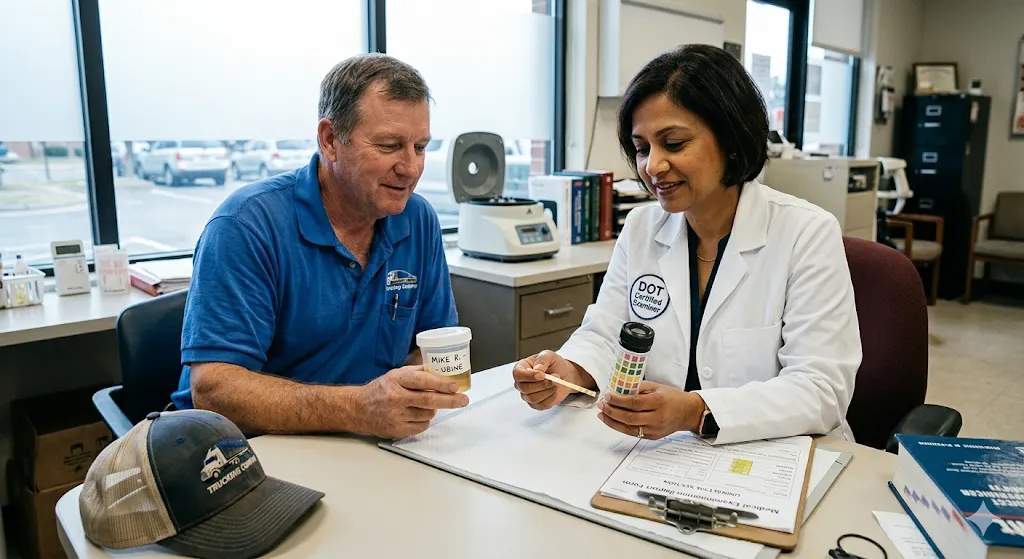
A DOT urine test is a routine health screening used during a DOT Physical Exam to look for signs of medical conditions that may affect safe driving. According to the Federal Motor Carrier Safety Administration, urinalysis during the medical exam records readings for specific gravity, protein, blood, and sugar in urine, and abnormal findings may require follow-up evaluation. (FMCSA)
If you are a Commercial Driver, truck driver, or one of the many bus drivers who need a DOT medical certificate, this screening is meant to support driver health and road safety. This guide explains what the urine sample checks, what the test is not, how Medical Examiners use the results, what abnormal findings may mean, and how the full DOT medical exam fits into medical certification. The details matter because early detection can protect both your health and your Medical Examiner's Certificate. Keep reading to understand exactly what shows up on a DOT urine test and what happens next.
Understanding the DOT Physical Exam and Its Purpose
The DOT Physical Exam is a federal medical exam that determines whether you are physically qualified to operate a Commercial Motor Vehicle safely. The Department of Transportation medical process is overseen by the Federal Motor Carrier Safety Administration, and interstate drivers must be examined by professionals on the National Registry of Certified Medical Examiners. (FMCSA)
Not sure if sleep apnea applies to you?
Take our 2-minute sleep risk quiz to see whether sleep apnea could affect your DOT physical. No account required.
A DOT physical is not one isolated urine test. A DOT medical exam also reviews blood pressure, heart rate, vision tests, hearing, medical history, medications, and other health parameters that may affect driving performance. FMCSA guidance makes clear that the urinalysis is only one part of a broader medical certification decision. (FMCSA)
DOT physical requirements exist because untreated health conditions can create real risk behind the wheel. Clinicians frequently observe that fatigue, uncontrolled diabetes, high blood pressure, kidney issues, and sleep apnea can all affect reaction time, alertness, and cardiovascular health. That is why physical exams for commercial vehicle and Commercial Motor Vehicle operators focus on both current symptoms and future safety implications.
KEY TAKEAWAY: The DOT Physical Exam is a full driver fitness assessment, and the urine test is one important screening tool within that larger process.
That broader context makes it easier to understand why the urine test matters. What the Urine Test Is Really For in a DOT Physical
The urine test in a DOT physical is mainly used to screen for signs of diabetes, kidney disease, kidney dysfunction, hydration status, and other medical conditions. The FMCSA Medical Examination Report states that urinalysis is required and that protein, blood, or sugar in the urine may indicate an underlying medical problem needing further testing. (FMCSA)
Urinalysis is a screening tool, not a diagnosis. According to Mayo Clinic, a urinalysis helps detect and manage conditions such as diabetes, urinary tract infections, and kidney disease. That is why a urine sample can reveal health issues even if you feel fine on the day of the medical exam. (Mayo Clinic)
Many patients report confusion here because search results often mix DOT Urine Test questions with employer drug testing questions. The key difference is simple: the standard urine test performed during a DOT Physical Exam is checking health markers that matter for medical certification, not automatically performing a DOT drug test panel.
DOT urine test screening works by checking urine concentration and content for clues about blood sugar levels, kidney function, blood in urine, and hydration levels. DOT urine test screening matters because some medical conditions can interfere with safe operation of a commercial vehicle long before a driver notices symptoms.
KEY TAKEAWAY: The true purpose of the DOT Urine Test is early health screening that supports safe driving and FMCSA compliance.
The next section clears up the biggest myth drivers hear about this exam.
DOT Urine Test vs Drug Test: The Most Common Misunderstanding
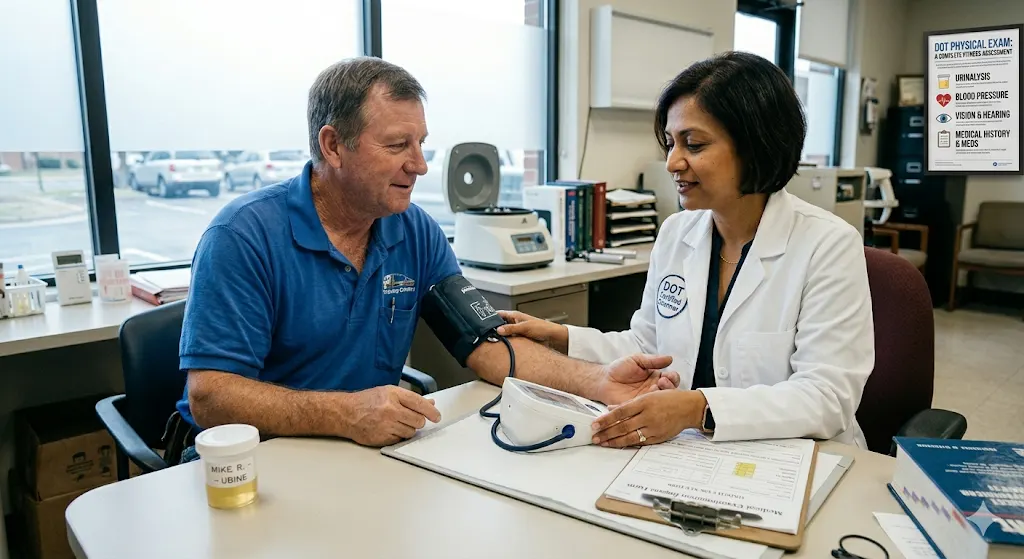
The DOT urine test in the physical is not the same thing as DOT drug testing. A medical urinalysis looks for health indicators, while regulated drug and alcohol testing looks for drug metabolites and follows a separate testing process. (FMCSA)
Already diagnosed and need CPAP support?
Dumbo Health helps patients start CPAP without the usual confusion, paperwork, or upfront cost. Equipment, setup, supplies, and ongoing support are all handled in one place.
This distinction matters because drivers often search phrases like "dot physical drug tested?" or "does DOT drug test for buprenorphine?" The answer depends on which test is being discussed. The DOT Physical Exam urinalysis records sugar, blood, protein, and specific gravity for health screening. A separate employer or pre-hire process may include drug testing under DOT regulations or company policy, but that is not the same as the urine sample collected for the physical.
| Test Type | Main Purpose | What It Looks For | Who Uses It | Recommended When |
|---|---|---|---|---|
| DOT physical urinalysis | Health screening | Glucose levels, protein, blood, specific gravity | Certified Medical Examiner | During a DOT medical exam |
| DOT drug test | Substance screening | Drug metabolites from regulated panels | Employer or testing program | Pre-employment, random, post-accident, return-to-duty |
| Employer health screening | Workplace policy | Varies by employer | Employer clinic or vendor | Hiring or wellness programs |
For most drivers, the most important point is this: you should not try to "pass" the urine test by gaming the sample. The most effective way to approach the DOT Urine Test is to treat it as a routine screening for driver health.
IMPORTANT: If an employer orders a separate drug test during the pre-hire process, that test may happen close to the same time as your DOT medical exam, but the purposes are different.
KEY TAKEAWAY: A DOT physical urinalysis is a medical screening, while DOT drug test programs are separate substance screening programs.
Once that misconception is removed, the actual urine markers make much more sense.
What Your Urine Sample Can Reveal About Your Health
A urine sample in the DOT medical exam is checked for markers that can point to hidden health conditions. FMCSA guidance focuses on protein, blood, sugar, and specific gravity, while broader urinalysis can also report ketones and pH level depending on the clinic workflow. (FMCSA)
Glucose levels in urine can suggest diabetes screening needs, especially when blood sugar levels are not well controlled
Protein can be a window into kidney function and may point toward kidney disease or other kidney issues
Blood in urine may suggest urinary tract issues, urinary tract infections, stones, or other internal problems that need follow-up
Specific gravity reflects hydration status and how well the kidneys are concentrating urine
pH level and ketones can add context about metabolic state, hydration status, and possible illness
Mayo Clinic notes that urinalysis can help detect kidney disease, diabetes, and urinary tract infections. (Mayo Clinic) These findings do not automatically disqualify a Commercial Driver, but they do tell the medical examiner to look closer.
DID YOU KNOW: According to Mayo Clinic, abnormal urinalysis findings often lead to more testing because the screening test itself is not diagnostic. (Mayo Clinic)
KEY TAKEAWAY: The urine sample helps uncover health conditions early so the medical examiner can decide whether more evaluation is needed.
That matters most when those findings could affect safety on the road.
Why These Health Markers Matter for Road Safety
The urine test matters because untreated medical conditions can affect road safety, alertness, and long-haul stamina. FMCSA standards are designed to identify health risks before they lead to crashes or sudden impairment. (FMCSA)
For example, uncontrolled diabetes can cause unstable blood sugar levels and symptoms that interfere with concentration. High blood pressure can raise cardiovascular risk, which is why blood pressure is checked separately during the DOT medical exam and may affect certification length. FMCSA guidance also highlights that moderate to severe sleep apnea can interfere with safe driving, which is why sleep apnea history and CPAP data may matter for some drivers. (FMCSA)
People who undergo this exam often find that the urine test becomes an early warning system rather than a barrier. A finding that points to kidney issues, liver health concerns, or diabetes may allow you to get treatment before the condition affects your work. If you are also concerned about fatigue-related risk factors, dumbo.health's sleep apnea overview and at-home sleep study guide can help you understand next steps and find a provider near you.
KEY TAKEAWAY: The urine test supports road safety by helping identify health conditions that could affect driver fitness before they become emergencies.
The next step is knowing how to prepare without overthinking it.
How to Prepare for the DOT Urine Test
The best way to prepare for the DOT Urine Test is to arrive normally hydrated, bring relevant medical records, and answer questions honestly. Trying to manipulate hydration or hide a condition can create misleading results and more delays.
Hydration is important, but overhydration is not helpful. If you drink extreme amounts of water right before the exam, the urine sample may be overly diluted and less useful for screening hydration levels and specific gravity. A normal intake of water is usually enough. Coffee is not automatically prohibited, but heavy caffeine intake right before the medical exam may not be ideal if it affects blood pressure, heart rate, or dehydration.
You should also disclose medications, recent illness, medical history, and any known health conditions. This includes insulin-treated diabetes, urinary tract infections, kidney disease, high blood pressure, and sleep apnea. If you have insulin-treated diabetes mellitus, FMCSA requires the insulin-treated diabetes mellitus assessment form, MCSA-5870, to be provided to the Certified Medical Examiner within 45 days of completion by your treating clinician. (FMCSA)
TIP: Bring medication lists, recent lab results if available, and any relevant CPAP data or specialist notes to make the exam smoother.
KEY TAKEAWAY: Normal hydration, honest disclosure, and good documentation are the best preparation for an accurate DOT urine test.
Preparation helps, but you also need to know what abnormal findings actually mean.
What Happens if the DOT Urine Test Is Abnormal
An abnormal DOT Urine Test usually triggers follow-up evaluation, not instant disqualification. The medical examiner considers the urine findings together with your medical history, blood pressure, symptoms, and the rest of the DOT Physical Exam. (FMCSA)
What counts as abnormal depends on the marker. Sugar in urine may prompt further diabetes screening or blood testing. Protein may raise concern about kidney function or kidney issues. Blood may lead to evaluation for urinary tract infections or other urinary tract issues. The point is not to punish you. The point is to determine whether a health condition could interfere with safe operation of a Commercial Motor Vehicle.
In real-world use, drivers with treatable findings may still receive medical certification, shorter-term certification, or conditional certification depending on the situation. FMCSA also explains that if a driver is physically qualified, the medical examiner issues the Medical Examiner's Certificate, Form MCSA-5876. (FMCSA)
A DOT physical abnormal glucose result can lead to more testing
A DOT physical abnormal protein result can lead to kidney evaluation
A DOT physical abnormal blood result can lead to urinary or internal follow-up
Many drivers who search "Failed DOT Physical due to Sugar, What next?" are really facing a follow-up path, not a final stop.
KEY TAKEAWAY: Abnormal urine findings usually lead to more evaluation and a tailored certification decision rather than an automatic denial.
Because confusion is so common, myths deserve their own section.
Common Myths About DOT Physicals Debunked
The biggest myths about the DOT medical exam come from mixing medical certification with employer screening and internet hearsay. Clear FMCSA guidance makes the real process much less mysterious. (FMCSA)
Myth: The urine test in every DOT physical is a drug test
Fact: The routine urinalysis in the DOT Physical Exam records sugar, blood, protein, and specific gravity for health screening. A separate DOT drug test may also be required, but it is a different process with a different purpose. (FMCSA)
Myth: Sugar in urine means you automatically lose your medical card
Fact: Glucose levels in a urine sample may indicate the need for further diabetes screening, but medical certification decisions depend on the full clinical picture. FMCSA allows certification pathways for properly managed insulin-treated diabetes and other controlled conditions. (FMCSA)
Myth: You can pass by drinking huge amounts of water
Fact: Overdilution can make hydration status and specific gravity less useful. The better approach is normal hydration and honest disclosure so the Certified Medical Examiner can interpret the test accurately.
Myth: The clinic sends all of your detailed medical records to your employer
Fact: Employers typically need fitness-for-duty or certification status, not your full medical records. You should still ask the clinic how information is handled if privacy is a concern.
KEY TAKEAWAY: Most DOT urine test fears come from misunderstanding the difference between health screening, certification, and separate employer drug testing.
From there, it helps to zoom back out to the full exam.
The DOT Physical Exam Is a Holistic Driver Fitness Check
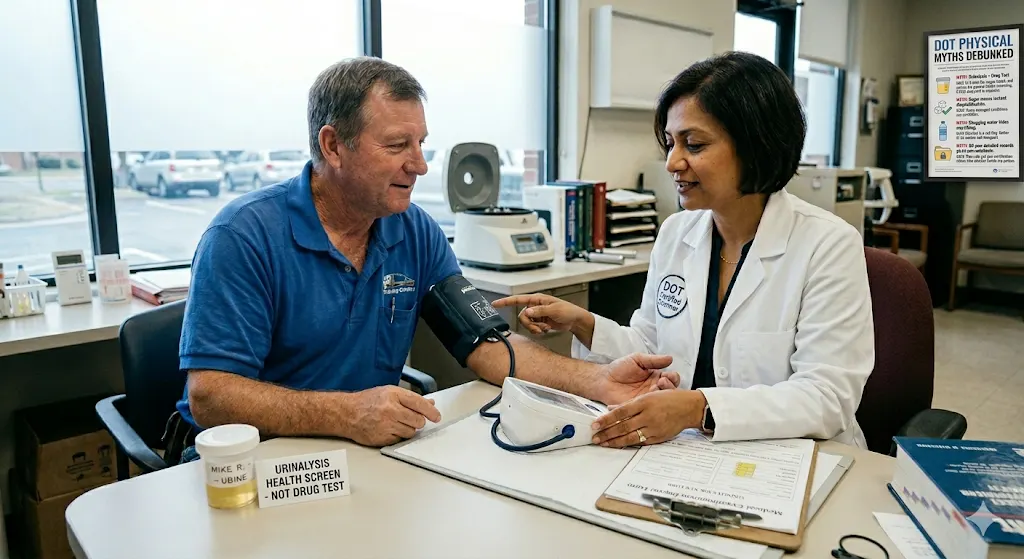
The DOT medical exam is holistic because safe driving depends on many systems, not one lab result. A urine test is important, but so are blood pressure, cardiovascular health, vision tests, hearing aid use if needed, respiratory functions, heart rate, and medical history.
The medical examiner looks at whether you can safely perform the job of operating a commercial vehicle over time. That includes whether health conditions are stable, whether medications are compatible with safe driving, and whether follow-up is needed. For some drivers, sleep apnea, high blood pressure, diabetes, or substance abuse history may matter more than the urine sample alone.
If you are trying to keep your DOT medical certificate active, proactive care matters. That may mean treating high blood pressure, improving blood sugar control, getting evaluated for sleep apnea, or following up on kidney issues before the next CDL exam. If you are concerned about breathing-related sleep risk, dumbo.health's guide to obstructive sleep apnea in adults and sleep apnea symptom checklist are useful next reads for providers in your area.
KEY TAKEAWAY: DOT Certification depends on the whole health picture, and the urine test is only one part of a broader fitness decision.
That leads naturally to the questions drivers ask most often.
Frequently Asked Questions
Can I drink coffee before the DOT urine test?
Yes, you usually can drink coffee before the DOT Urine Test, but moderation is sensible. Coffee does not automatically invalidate a urine sample in a DOT Physical Exam. The practical issue is that caffeine may affect hydration status, heart rate, or blood pressure in some people, which can matter during the larger medical exam. If you already have high blood pressure or tend to feel dehydrated after caffeine, choose a lighter intake and drink some water as well. Normal habits are generally better than trying to change everything on exam day.
What if I have a urinary tract infection during the test?
A urinary tract infection can affect a urine sample and may cause blood in urine or other abnormal findings. If you suspect urinary tract infections or have symptoms such as burning, urgency, or pelvic discomfort, tell the medical examiner before the test. The DOT urine test is a screening tool, so the examiner may recommend follow-up rather than making assumptions from one result. A UTI does not always block medical certification, but it may need to be addressed before final decisions are made.
How long do DOT urine test results typically take?
DOT urine test screening results in a routine clinic setting are often available during the same appointment because dipstick urinalysis is commonly read on site. If the clinic needs confirmatory testing or additional lab work, final answers can take longer. The important point is that the immediate screening result is only part of the decision. The Certified Medical Examiner uses that result alongside blood pressure, medical history, symptoms, and the rest of the DOT medical exam to determine certification status.
Will my employer see my specific health results from the urine test?
Your employer usually needs to know whether you are medically qualified and whether you received a medical certificate or DOT medical certificate. Employers do not automatically need your full medical records or every specific urinalysis detail. Privacy practices can vary by clinic, employer process, and legal context, so it is reasonable to ask what is shared before the exam. If you are in a pre-hire process, ask whether there is also separate drug testing so you understand exactly which results go where.
Can I fail the urine test part of the DOT physical and still get my medical card?
Yes, in many cases an abnormal urine test does not mean you automatically lose your medical card. A urine test is a screening step, not a standalone pass or fail event. The medical examiner may request follow-up care, temporary documentation, or additional testing before deciding on medical certification. Some drivers receive short-term certification or certification after treatment, depending on the underlying issue. The final decision depends on whether the condition could interfere with safe operation of a Commercial Motor Vehicle.
Does a DOT urine test detect sugar?
Yes, the DOT urine test checks for sugar in urine, which is why glucose levels are part of the standard urinalysis during the DOT Physical Exam. FMCSA guidance refers to recording blood and sugar in the urine, along with protein and specific gravity. Sugar in urine can suggest that blood sugar levels need further evaluation, especially if diabetes is undiagnosed or poorly controlled. A positive finding does not diagnose diabetes by itself, but it often leads to follow-up testing.
How do I pass a DOT urine test near you?
The best way to pass a DOT urine test near you is not to try to beat the screening. Instead, arrive normally hydrated, disclose medications and health conditions honestly, and bring any relevant records for diabetes, blood pressure, or sleep apnea. The urine sample is meant to identify medical conditions that matter for safety, not trick you. If you think a known condition may affect results, speak with the clinic beforehand and find a provider near you who can explain the documentation you should bring.
Conclusion
The urine test for in a DOT physical is a practical health screen designed to protect you, your certification, and the public. It helps Medical Examiners spot signs of diabetes, kidney disease, blood in urine, and hydration problems that could affect safe driving, while the larger DOT Physical Exam evaluates your overall fitness for work. The best approach is simple: stay proactive, keep your health conditions managed, and bring clear documentation when needed. If sleep-related risk factors may also affect your DOT medical certificate, explore dumbo.health's sleep apnea resources for supportive next steps.
Related DOT Physical Topics
- Does a DOT Physical Test for Weed or THC The Complete Guide for Commercial Drivers
- What Happens During the DOT Physical Exam The Complete Guide for Drivers
- What drugs do they test for in a DOT drug test
- What are the current DOT requirements for sleep apnea testing for commercial drivers
- What Does DOT Stand for in a DOT Physical
- What Is the Difference Between a DOT and Non-DOT Physical
- The DOT Physical Exam Ensuring You're Fit for the Road
- Can You Get a DOT Physical in Any State The Complete Guide for Commercial Drivers
- Can You Get a DOT Physical Online The Complete Guide for Commercial Drivers
- Remote DOT Physical The Complete Guide for Commercial Drivers
- Is a drug test required for a DOT physical
- DOT Physical ICD-10 & Billing Codes The Complete Guide for Accurate Compliance and Reimbursement
- Navigating the Florida DOT Physical Your Essential Guide for CDL Drivers
- DOT Physical Forms & Paperwork The Complete Guide for Commercial Drivers
- What Forms Do You Need for a DOT Physical
- Online DOT Physical Self-Pay The Complete Guide for CDL Drivers and Owner-Operators
- DOT Physical Insurance or Self Pay How to Choose the Right Payment Option for Your Exam
- Is a DOT physical the same as a regular physical
- BMI for DOT Physical What Commercial Drivers Need to Know
- What Happens If Your DOT Physical Expires Compliance Guide for Commercial Drivers
- DOT Physical & Drug Test What Drivers Need to Know
- The Ultimate DOT Physical Guide for Commercial Drivers (2025–2026)
- What Are the Requirements to Pass a DOT Physical
- What eye chart is used for a DOT physical
- Online DOT Physical The Complete Guide for Commercial Drivers and Medical Examiners
- How Do You Submit Your DOT Physical to the DMV
- What Can Disqualify You From a DOT Physical
- Does a DOT physical include a drug test
- DOT Hypertension Guidelines The Complete Blood Pressure Guide for Commercial Drivers
- DOT Physical Out of Pocket What Commercial Drivers Actually Pay
- DOT Physical Cost Breakdown What Drivers Pay & Why
- Home Sleep Apnea Test for Commercial Drivers The CDL Holder's Complete Guide
- What Should You Bring to a DOT Physical
- Navigating DOT Stroke Guidelines for CMV Drivers What You Need To Know
- Can You Fail a DOT Physical for Being Overweight
- Online DOT Physical Without Insurance A Complete Guide for Commercial Drivers
- Your Complete Guide What's Included in a DOT Physical Exam
- DOT physical self pay guide for commercial drivers paying out of pocket
- New DOT Physical Requirements What Drivers MUST Know About New Updates
- DOT Physical Insurance & Recertification The Complete Driver's Guide
- What blood pressure do you need to pass a DOT physical
- DOT Physical Blood Pressure Requirements What Drivers Need to Know
- Can You Fail a DOT Physical for High Blood Pressure
- How to Pass a DOT Physical The Complete Commercial Driver's Guide
- What should I expect at a DOT physical
- What Does a DOT Physical Consist Of
- What happens if you fail a DOT physical due to sleep apnea
- DOT Physical at Urgent Care What Commercial Drivers Need to Know
- What are the current FMCSA guidelines on sleep apnea for commercial drivers
- DOT Physical Texas The Essential Guide to Your Exam, Medical Card, and CDL Compliance
- DOT Physical Requirements A Complete Guide for CDL Drivers
- Is a Sleep Study Required for a DOT Physical
- Do They Check for Hernia During a DOT Physical
- Can You Get a Second Opinion on Your DOT Physical A Complete Guide for Commercial Drivers
- What Do They Check During a DOT Physical
- Failing a DOT Physical What Every Commercial Driver Needs to Know
- What is DOT Physical
- Can You Pass a DOT Physical with Epilepsy
- DOT Physical Self Pay Cost
- Essential 171 DOT Definitions for Commercial Drivers
- DOT Physical Exam Basics
- When Can Sleep Apnea Affect a DOT Physical
- Can You Pass a DOT Physical With a Hernia
- Medical Examiner's Certificate (Form MCSA-5876) The Complete Guide for Commercial Drivers
- Can You Pass a DOT Physical With One Eye
- Can You Pass a DOT Physical With a Pacemaker
- Telehealth Dot Physical
- Sleep Apnea Test for CDL Drivers
- Who needs a DOT physical
- DOT Physical & Alcohol Requirements
- DOT Physical Online Cost
- DOT Physical Vision & Eye Requirements
- Why do they measure your neck during a DOT physical
- Navigating Your DOT Physical with Common Medical Conditions
- How can drivers with sleep apnea qualify again after a failed DOT physical
- Why DOT Sleep Tests at Home Matter for Your Career and Health
- Walk In DOT Physical Self Pay
- Can You Get a DOT Physical Online
- DOT Physical Cash Pay
- Same Day DOT Physical
- Virtual DOT Physical
- Can you fail a DOT physical because of sleep apnea
- DOT Medical Exam Self-Pay A Complete Guide for Commercial Drivers
- Online DOT Exam What Drivers and Medical Examiners Need to Know
- Do They Check Your Private Parts During a DOT Physical
- The Comprehensive Guide to Suboxone, Sleep Apnea, and FMCSA Compliance for Commercial Motor Vehicle Operators
- DOT Physical Chiropractor Your Complete Guide to CDL Exams
- Can you pass a DOT physical with sleep apnea
- At Home Sleep Test for Truck Drivers
- Can You Pass a DOT Physical with Diabetes
- Can You Pass a DOT Physical with High Blood Pressure
- Does insurance cover a DOT physical
- Medical Examination Report (MER) – Form MCSA-5875 The Complete Guide for Commercial Drivers
- DOT Physical Duration and Validity How Long Your Medical Card Lasts
- Non-DOT Physical A Comprehensive Guide to Workforce Health and Safety
- DOT sleep apnea test at home
- Do You Have to Pee During a DOT Physical
- Cheap DOT Physical Online
- Can You Fail a DOT Physical
- Are There New DOT Rules or Laws on Sleep Apnea Testing
Take the next step before your DOT physical
Start with the free quiz if you are unsure about your risk, or order an at-home sleep test if you have already been flagged for possible sleep apnea.
AI summary
A DOT physical urine test is a required urinalysis performed during the DOT Physical Exam to screen for medical conditions relevant to commercial driver medical certification. It is overseen under FMCSA guidance and is interpreted by a Certified Medical Examiner as part of a broader fitness evaluation. Core markers recorded include specific gravity, glucose (sugar), protein, and blood in urine. These findings can indicate hydration status, possible diabetes or poor blood sugar control, kidney disease or kidney dysfunction, and urinary tract issues such as urinary tract infections or stones. Some clinics may also report pH level and ketones to add metabolic context. This urinalysis is a screening tool, not a diagnosis, and it is not the same as DOT drug testing, which is a separate regulated process looking for drug metabolites. Abnormal results typically trigger follow-up evaluation and may lead to certification decisions such as standard, short-term, or conditional certification. Preparation focuses on normal hydration, honest disclosure of medical history and medications, and bringing documentation (for example, MCSA-5870 for insulin-treated diabetes mellitus).

Nicolas Nemeth
Co-Founder
Nico is the co-founder of Dumbo Health, a digital sleep clinic that brings the entire obstructive sleep apnea journey home. Patients skip the sleep lab and the long wait to see a specialist. Dumbo Health ships an at home test, connects patients with licensed sleep clinicians by video, and delivers CPAP or a custom oral appliance with ongoing coaching and automatic resupply in one clear subscription.
Keep reading

How Long Does a DOT Physical Take? A Complete Guide for Commercial Drivers

What Happens If You Fail a DOT Drug Test? The Complete Guide for Commercial Drivers


