What Do They Check During a DOT Physical?
A DOT physical is an FMCSA-required fitness-for-duty exam for CDL drivers operating commercial motor vehicles in interstate commerce. This guide explains what the medical examiner evaluates, including medical history, a head-to-toe physical, vision and hearing standards, blood pressure staging, urinalysis, and basic neurological and mental health screening. It outlines how common conditions like insulin-treated diabetes, hypertension, sleep apnea, and heart disease affect certification length and documentation needs. You will learn what is disqualifying, when exemptions may apply, and why urinalysis is not a drug test. Practical preparation tips cover records, medication lists, CPAP compliance, and timing your exam before your card expires.
Struggling with sleep?
Find out if sleep apnea is the reason.
FDA-cleared. $149 flat. Physician-reviewed results in 48 hours.

What Do They Check During a DOT Physical?

A DOT physical is a federally mandated medical examination that determines whether a commercial driver is physically and mentally fit to operate a commercial motor vehicle (CMV) safely on public roads.
According to the Federal Motor Carrier Safety Administration (FMCSA), every driver who operates a CMV in interstate commerce and requires a Commercial Driver's License (CDL) must pass this exam and maintain a valid Medical Examiner's Certificate. The physical covers a broad range of health areas — from cardiovascular function and vision to neurological health and sleep disorders. This page explains every component of the DOT physical exam in detail, what medical conditions matter, how certification works, and exactly how to prepare. Whether you are approaching your first exam or preparing for a renewal, the information below gives you a clear and complete picture of what to expect.
The Foundation: Why a DOT Physical Is a Requirement

A DOT physical is a legal requirement under FMCSA regulations for any driver who operates a CMV in interstate commerce. The Department of Transportation established these standards to protect both drivers and the public — commercial vehicles weighing over 10,001 lbs, carrying hazardous materials, or transporting 16 or more passengers fall under these rules. The exam must be performed by an FMCSA-certified medical examiner listed on the National Registry of Certified Medical Examiners.
The DOT physical exam is valid for up to 24 months for most drivers. However, drivers with certain medical conditions — such as high blood pressure or sleep apnea being managed with a CPAP machine — may receive a shorter certification period of 12 months or less, requiring more frequent re-evaluation. Drivers must carry their Medical Examiner's Certificate (the "DOT medical card") with them at all times while operating a CMV.
DID YOU KNOW: The FMCSA's National Registry lists thousands of certified medical examiners across the United States. You can find a provider near you by searching the official FMCSA National Registry at nrcme.fmcsa.dot.gov.
Not sure if sleep apnea applies to you?
Take our 2-minute sleep risk quiz to see whether sleep apnea could affect your DOT physical. No account required.
The exam is not a general wellness check. It is a fitness-for-duty evaluation focused specifically on whether a driver can safely control a large commercial vehicle, respond to emergencies, and maintain sustained concentration over long driving periods.
KEY TAKEAWAY: A DOT physical is a federal requirement for CDL drivers in interstate commerce and must be conducted by an FMCSA-certified medical examiner — not just any physician.
Understanding why the exam exists helps you appreciate what the medical examiner looks for in each of the core examination components covered next.
The Core Examination Components: A Detailed Look at What the Medical Examiner Checks

The DOT physical exam covers nine distinct areas of health. Each one is evaluated because it directly relates to a driver's ability to safely operate a heavy commercial motor vehicle. The FMCSA Medical Examiner's Handbook specifies what the certified examiner must assess under each category, and results are recorded on the Medical Examination Report Form (MCSA-5875).
Medical History Review: The Comprehensive Conversation

The medical history review is the first and most important step of every DOT physical exam. Before the hands-on examination begins, you are required to complete the health history section of the MCSA-5875 form, disclosing all current and past medical conditions, surgeries, hospitalisations, and medications — including over-the-counter drugs and supplements.
The examiner will review your medical history carefully and ask follow-up questions about any conditions you list. Conditions that require disclosure include diabetes, high blood pressure, heart disease, sleep disorders, seizures, vision or hearing impairments, mental health conditions, and substance use history. Failing to disclose a relevant condition is not only grounds for disqualification — it is a federal violation.
The FMCSA evaluates medical history within the full context of your current health status. For drivers managing conditions such as obstructive sleep apnea, bringing relevant treatment records — such as CPAP compliance data — can support a positive certification outcome.
General Physical Examination: A Head-to-Toe Assessment
The general physical examination is the hands-on component of the DOT physical. The medical examiner systematically assesses all major body systems to identify any condition that could impair safe driving. This includes evaluation of the head, eyes, ears, mouth, and throat; the cardiovascular system (heart sounds, rhythm, and blood vessels); the respiratory system (lung sounds and breathing quality); the abdomen (for organ abnormalities); and the musculoskeletal system (mobility, limb function, and any signs of impairment).
The examiner also checks for varicose veins, hernias, neurological reflexes, and any physical deformities that could limit your ability to operate foot pedals, steering controls, or emergency equipment. Skin condition, temperature, and any signs of intravenous drug use are also noted. The physical examination provides the clinical evidence that supports the medical history review.
Vision Assessment: Can You Clearly See the Road Ahead?
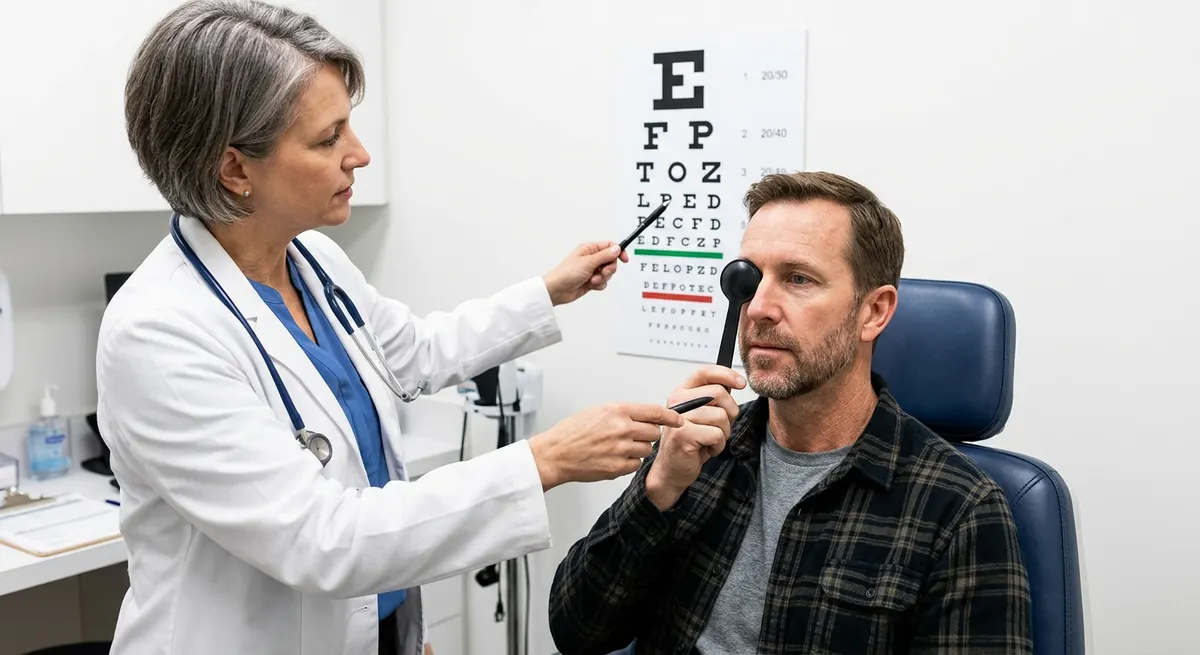
vision is one of the most critical components of the DOT physical exam. The FMCSA requires that commercial drivers have distant visual acuity of at least 20/40 in each eye, with or without corrective lenses, and a field of vision of at least 70 degrees in the horizontal meridian in each eye. Drivers must also be able to recognise the colours of traffic signals and devices showing standard red, green, and amber.
Vision tests during the DOT physical include a Snellen chart test for visual acuity, a peripheral vision test, and a colour recognition check. If you wear prescription glasses or contact lenses, you may use them during the exam — but your certificate will note the corrective lens requirement. Drivers who do not meet the standard vision requirements may be referred for a vision evaluation report from a licensed ophthalmologist or optometrist.
TIP: Bring your prescription glasses or contact lenses to your DOT physical. If you have had recent eye surgery or a change in prescription, bring documentation from your eye doctor to support your vision evaluation report.
Already diagnosed and need CPAP support?
Dumbo Health helps patients start CPAP without the usual confusion, paperwork, or upfront cost. Equipment, setup, supplies, and ongoing support are all handled in one place.
Hearing Assessment: Can You Hear Critical Safety Cues?
The hearing test during a DOT physical exam requires that you perceive a forced whispered voice in the better ear at not less than 5 feet away, with or without the use of a hearing aid. Alternatively, a driver may pass using audiometric testing that shows hearing a pure tone at 500 Hz, 1,000 Hz, and 2,000 Hz with average hearing loss no greater than 40 dB in the better ear, with or without a hearing aid.
If you use a hearing aid, bring it to your exam. Your medical examiner will note the use of a hearing aid on your certificate. Hearing loss alone does not automatically disqualify a driver — what matters is whether the functional hearing standard is met with or without amplification. Drivers who rely on a hearing aid and meet the standard are fully eligible for DOT certification.
Blood Pressure and Pulse Rate: Indicators of Cardiovascular Health
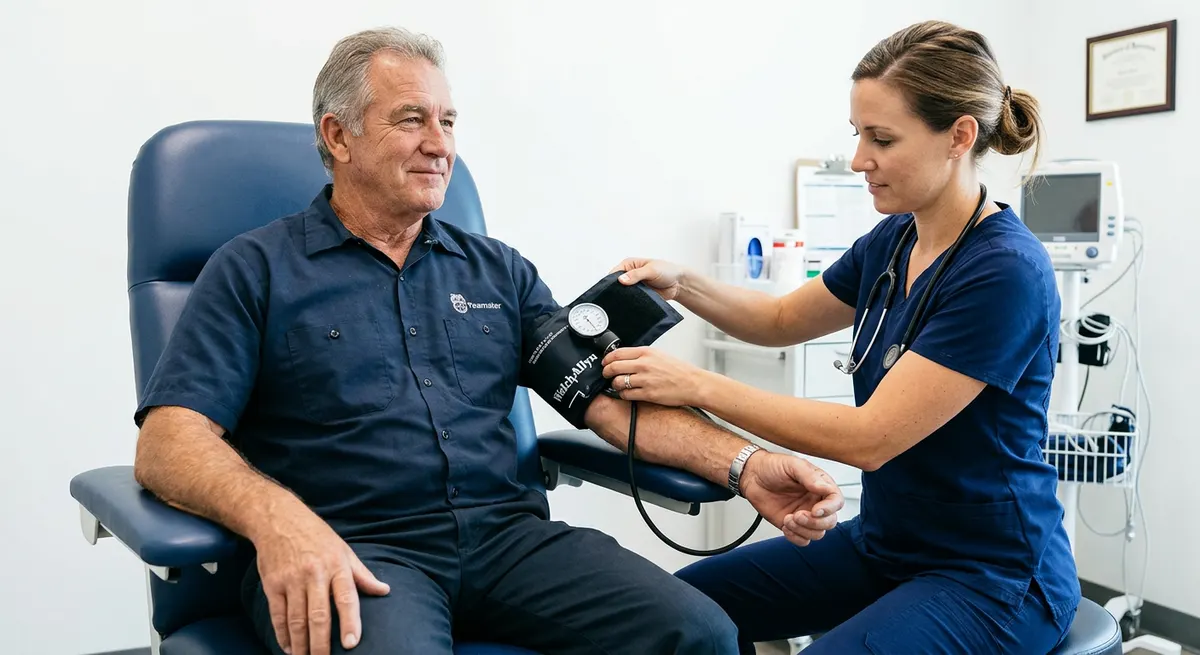
blood pressure is one of the most carefully evaluated components of the DOT physical. The FMCSA uses a staged approach to blood pressure readings that directly determines the length — or denial — of your medical certification. The certification outcome depends on both the systolic and diastolic readings recorded during the exam.
| Blood Pressure Stage | Reading (mmHg) | Certification Period | Notes |
|---|---|---|---|
| Stage 1 (Normal–Mild) | Systolic <140 / Diastolic <90 | Up to 24 months | Standard full certification |
| Stage 2 (Moderate) | 140–159 / 90–99 | 12 months (one-time) | Treated & reduced BP required for recertification |
| Stage 3 (Severe) | 160–179 / 100–109 | 3-month temporary | Must reduce BP before recertification |
| Stage 4 (Critical) | ≥180 / ≥110 | Disqualified | Not certified until BP is reduced below Stage 3 |
Pulse rate is also recorded during the exam. An irregular pulse or arrhythmia detected at rest may trigger additional cardiovascular evaluation before certification is granted. Drivers with known heart rhythm disorders should bring documentation from their cardiologist to providers in your area who conduct DOT physicals.
Urinalysis: Screening for Underlying Health Markers
The urinalysis test is a mandatory component of every DOT physical exam. The urine test screens for protein, blood (haematuria), and glucose — each of which can indicate underlying kidney disease, urinary tract infections, or uncontrolled diabetes. Importantly, the urinalysis performed during the DOT physical is not a drug test. DOT drug and alcohol testing is conducted separately under a different protocol and is not part of the DOT physical itself.
If your urinalysis shows abnormal glucose levels, the examiner may request additional information about diabetes management before certifying you. Protein in the urine may prompt follow-up with a specialist. A single abnormal reading does not automatically disqualify you — context and clinical history matter.
IMPORTANT: The urinalysis at a DOT physical is NOT a drug test. DOT drug testing (for marijuana, cocaine, opioids, amphetamines, and PCP) is conducted under a completely separate program regulated by DOT's Office of Drug and Alcohol Policy and Compliance.
Neurological Assessment: Brain-Body Connection and Control
The neurological assessment evaluates whether a driver has any condition affecting cognitive function, muscle control, coordination, or consciousness that could create a safety risk on the road. The examiner checks reflexes, muscle strength, coordination, and balance. Drivers with a history of epilepsy, seizures, loss of consciousness, or significant head trauma will be subject to closer scrutiny.
According to FMCSA regulations, a driver with epilepsy or a seizure disorder is generally disqualified unless they have been seizure-free for a specified period without medication, or qualify for a federal exemption. The neurological health assessment also considers the effects of any prescribed medications on alertness, reaction time, and cognitive performance.
Mental and Behavioral Health Evaluation: Stability for the Road
The mental health component of the DOT physical does not involve formal psychiatric testing. Instead, the examiner looks for clinical signs of conditions that could impair safe driving — including severe anxiety disorders, psychosis, schizophrenia, significant depression, or conditions requiring medication that causes sedation or impairs judgement. Drivers are asked to disclose current and past mental health conditions and current medications.
Mental disorders that are well-managed and unlikely to interfere with driving safety do not automatically disqualify a driver. The examiner evaluates the nature of the condition, how well it is controlled, and whether any prescribed medications could affect driving ability. Many patients report that disclosing a managed condition with supporting documentation from a mental health professional leads to a straightforward certification outcome.
KEY TAKEAWAY: The core DOT physical exam covers nine areas: medical history, general physical, vision, hearing, blood pressure, urinalysis, neurological health, mental health, and respiratory function — each tied directly to safe driving.
These core components form the framework of the exam — but what matters most to many drivers is how specific medical conditions are handled, which is what the next section addresses in detail.
Navigating Common Medical Conditions: Preparing for Success

Many commercial drivers manage one or more chronic health conditions. Having a medical condition does not automatically disqualify you from DOT certification — but it does require transparency, documented treatment, and in some cases specialist confirmation. The sections below explain how the most common conditions are evaluated.
Managing Diabetes for Your DOT Physical
Diabetes management has become more flexible under current FMCSA regulations. As of 2003 and further clarified in 2019, the FMCSA eliminated the federal diabetes exemption program and returned authority to individual medical examiners. Drivers with insulin-treated diabetes mellitus (ITDM) can now be certified if they meet specific criteria set out under 49 CFR 391.46.
To receive DOT certification as an ITDM driver, you must demonstrate that your condition is stable and that you have no hypoglycaemic episodes requiring assistance within the past 12 months. You will need to provide blood sugar recording logs, a current A1C result, and a completed Form MCSA-5870 (the Insulin-Treated Diabetes Mellitus Assessment Form) signed by your treating endocrinologist or diabetes specialist. Drivers with diet-controlled or oral-medication-controlled diabetes generally face fewer documentation requirements.
Hypertension (High Blood Pressure) Guidelines
Hypertension is one of the most common reasons commercial drivers receive shortened certification periods. As shown in the blood pressure table in the previous section, Stage 2 hypertension (140-159/90-99 mmHg) results in a one-time 12-month certificate, after which the driver must demonstrate controlled blood pressure to receive a standard 24-month certification.
If you are managing high blood pressure with medication, bring your prescription information and a letter from your treating physician. Certain antihypertensive medications can cause dizziness or fatigue, which the examiner will factor into the overall assessment. Drivers who proactively manage their cardiovascular health consistently achieve better certification outcomes.
Sleep Apnea and Driving Safety
Sleep apnea is a significant concern in DOT physical evaluations because untreated obstructive sleep apnea dramatically increases the risk of drowsy driving and vehicular accidents. The FMCSA has not issued a formal sleep apnea rule, but medical examiners are required to evaluate a driver's risk of sleep-disordered breathing and may refer high-risk drivers for a sleep apnea test before granting certification.
Drivers who have already been diagnosed with sleep apnea and are using a CPAP machine can achieve full DOT certification by providing CPAP compliance data showing adequate nightly usage (typically defined as more than 4 hours per night on 70% of nights). Understanding what sleep apnea is and how it is diagnosed is an important first step for any driver who snores loudly, experiences daytime fatigue, or has been told they stop breathing during sleep.
If you suspect you have undiagnosed sleep apnea, a home sleep study is a convenient and cost-effective way to get tested from home, without an overnight stay in a sleep clinic. Early diagnosis and treatment protect both your health and your commercial driving career.
DID YOU KNOW: Research published by the Federal Motor Carrier Safety Administration suggests that untreated severe obstructive sleep apnea can increase crash risk by up to 2.5 times compared to treated or non-apnea drivers. A sleep apnea test and CPAP treatment can protect your livelihood.
Cardiovascular Health: Heart Conditions and Considerations
Heart disease is a serious consideration during the DOT physical exam. The FMCSA disqualifies drivers with current or recent myocardial infarction (heart attack), unstable angina, congestive heart failure, or certain cardiac arrhythmias. However, drivers with a history of heart disease who have undergone successful treatment — such as bypass surgery, stent placement, or cardiac rehabilitation — may be eligible for certification with appropriate specialist documentation.
Cardiovascular health is assessed through the blood pressure reading, pulse rate evaluation, and physical auscultation (listening to heart sounds). Drivers with a history of cardiac events should bring a detailed letter from their cardiologist stating current functional status, any exercise tolerance test results, and current medications.
Medications and Prescriptions: Transparency Is Key
All medications — including prescription drugs, over-the-counter medicines, and supplements — must be disclosed during the DOT physical. The medical examiner evaluates whether any medication could impair your ability to operate a commercial vehicle safely. Medications that commonly raise concern include narcotic analgesics, benzodiazepines, sedating antihistamines, anticonvulsants, and certain psychiatric medications.
Methadone is specifically disqualifying for DOT certification because it is a Schedule II controlled substance with sedating effects that are incompatible with commercial vehicle operation. Similarly, cannabis — regardless of state law or prescription status — is federally prohibited and disqualifying. Bring a complete and current medication list, and be prepared to discuss the indication and dosage of each item listed.
Other Conditions and Relevant Health Information
Additional conditions that may affect DOT certification include respiratory disorders such as severe chronic obstructive pulmonary disease (COPD) or asthma, kidney disease, liver conditions, and any condition causing sudden loss of consciousness or motor control. The FMCSA provides detailed guidance for each in the Medical Examiner's Handbook. Drivers with complex or multiple conditions should consider consulting an occupational medicine specialist before their exam.
KEY TAKEAWAY: Having a chronic medical condition does not automatically disqualify a driver — documentation, transparent disclosure, and evidence of controlled management are the keys to DOT certification success.
Understanding how common conditions are handled leads naturally to the question of what happens when a condition leads to potential disqualification — and whether there are pathways around it.
Understanding Potential Disqualifications and Pathways to Certification (Exemptions)

Certain medical conditions are automatically disqualifying under FMCSA regulations — meaning no medical examiner can certify a driver who has them, regardless of how well managed they appear. Understanding these absolute disqualifiers, and the exemptions available in some cases, is essential information for any commercial driver.
The table below summarises the major disqualifying conditions and exemption availability:
| Condition | Disqualification Basis | Exemption Available? |
|---|---|---|
| Epilepsy/Seizure Disorder | 49 CFR 391.41(b)(8) | Federal Epilepsy Exemption Program |
| Vision below 20/40 (each eye) | 49 CFR 391.41(b)(10) | Vision Exemption Program |
| Hearing below whisper test | 49 CFR 391.41(b)(11) | Hearing Exemption Program (limited) |
| Stage 4 Hypertension (BP ≥180/110) | FMCSA Blood Pressure Guidance | No — must reduce BP first |
| Insulin-Treated Diabetes (historically) | 49 CFR 391.46 | Yes — via MCSA-5870 process |
| Active methadone use | 49 CFR 391.41(b)(12) | No exemption available |
| Established diagnosis of psychosis | 49 CFR 391.41(b)(9) | Case-by-case evaluation only |
| Limb impairment affecting vehicle control | 49 CFR 391.41(b)(1) | FMCSA Limb Exemption Program |
Federal exemption programs are administered by the FMCSA and allow eligible drivers to operate commercially despite a condition that would otherwise disqualify them. Exemptions are not automatic — they require a formal application, supporting medical documentation, and in most cases a demonstrated safety record. Drivers operating under an exemption must carry their exemption letter in the commercial vehicle at all times alongside their medical card.
IMPORTANT: A federal FMCSA exemption overrides the standard DOT physical disqualifying criteria — but only for the specific condition and the period stated in the exemption. Drivers must renew exemptions on schedule and continue meeting all other DOT physical standards.
KEY TAKEAWAY: Absolute disqualifiers exist under FMCSA regulations, but federal exemption programs create pathways for some drivers to achieve certification even with conditions that would otherwise disqualify them.
Knowing what can disqualify you is important — but so is knowing exactly who is authorised to make these decisions, which brings us to the role of the certified medical examiner.
The Role of the FMCSA-Certified Medical Examiner (ME)

An FMCSA-certified medical examiner (ME) is the only professional legally authorised to conduct a DOT physical examination and issue a Medical Examiner's Certificate. The term "DOT physical" specifically refers to the examination performed under FMCSA standards — not just any occupational health exam or general physical performed by any doctor.
Medical examiners must be listed on the FMCSA's National Registry of Certified Medical Examiners (National Registry). To be listed, they must complete FMCSA-accredited training and pass a certification exam. Eligible healthcare professionals include medical doctors (MDs), doctors of osteopathy (DOs), physician assistants (PAs), advanced practice nurses (APNs), chiropractors, and doctors of optometry — provided they have completed the required FMCSA training.
To find a DOT-certified medical examiner near you, use the official FMCSA National Registry search tool at nrcme.fmcsa.dot.gov. You can filter by location, specialty, and availability. Providers in your area who are listed on the National Registry are the only individuals who can issue a legally valid DOT medical certificate.
KEY TAKEAWAY: Only an FMCSA-certified medical examiner listed on the National Registry of Certified Medical Examiners can legally conduct a DOT physical and issue a valid Medical Examiner's Certificate.
Once the medical examiner completes the exam, the process moves to certification — and understanding the two key forms involved will help you navigate what comes next.
After the Exam: Understanding Your Certification and Next Steps
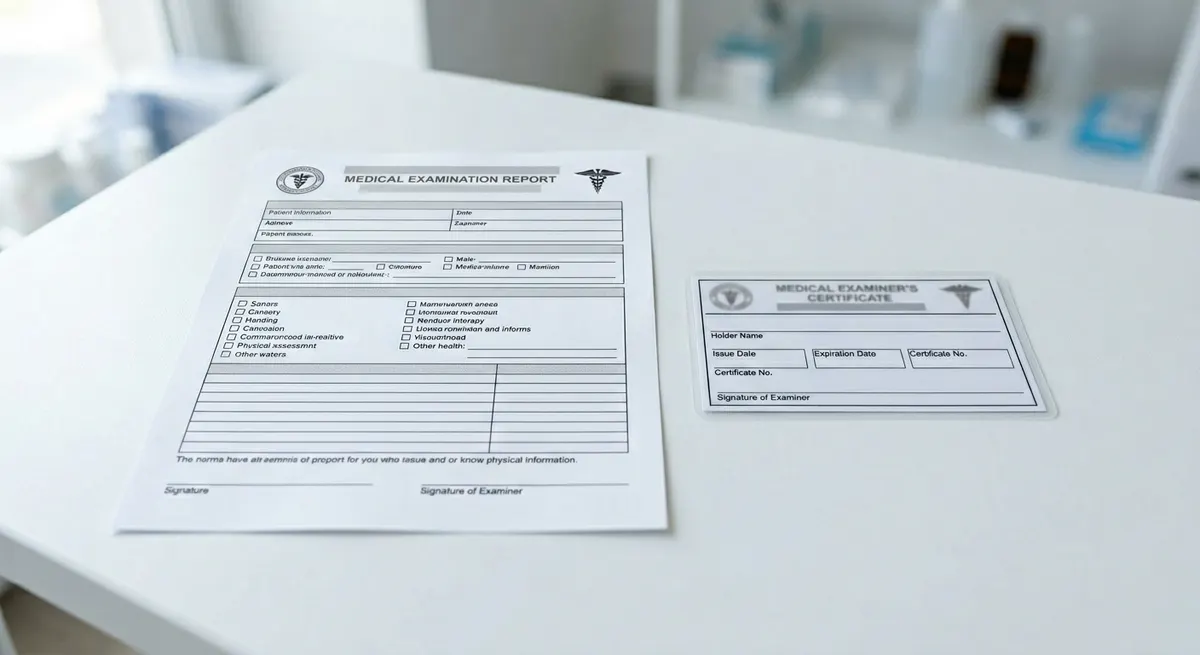
After the DOT physical exam is complete, two official documents are generated. Understanding what they are, what they mean, and how to use them is essential for every commercial driver.
The Medical Examination Report (MER) Form, MCSA-5875
The Medical Examination Report (MER) Form, MCSA-5875, is the detailed record of the entire DOT physical examination. It includes all findings from every component of the exam, the driver's disclosed medical history, any conditions noted, medications recorded, and the examiner's final determination. This form is completed by the medical examiner and retained in the examiner's records for a minimum of three years.
Drivers are entitled to receive a copy of the MCSA-5875. It is a comprehensive record of your health status at the time of the exam and can serve as useful documentation if your employer, a state licensing agency, or a future examiner requests a history of your medical certifications. The FMCSA Medical Examination Report form was updated and revised, with the current version designated as MCSA-5875.
The Medical Examiner's Certificate (MEC) Form, MCSA-5876 (Your Medical Card)
The Medical Examiner's Certificate (MEC), Form MCSA-5876, is commonly called the "DOT medical card" or "CDL medical card." This is the wallet-sized certificate that certifies you as medically qualified to operate a commercial motor vehicle. It states the certification period — the date of issue and the expiry date — and may include restrictions such as "must wear corrective lenses" or "must use hearing aid."
You must carry the original MCSA-5876 in your commercial vehicle at all times. The medical examiner is required to electronically transmit the certification information to the FMCSA within 24 hours of issuing the certificate. This data is then accessible to state licensing agencies and law enforcement. A medical examiner's certificate that has expired renders the driver ineligible to operate a CMV until recertification is obtained.
If You Pass: Receiving Your Medical Certification
If you meet all FMCSA medical standards, the medical examiner will issue the MCSA-5876 certificate on the same day as the exam. The certification period will be noted — typically 24 months for drivers with no disqualifying conditions or up to 12 months for those with managed conditions requiring closer monitoring. The examiner transmits the results to the FMCSA National Registry within 24 hours, and this information is forwarded to your state's driver licensing agency.
If You Don't Pass Immediately: Conditional Certification or Disqualification
If the examiner cannot certify you at the time of the exam, there are several possible outcomes. You may receive a conditional or temporary certification pending additional testing or specialist documentation. You may be deferred, meaning the examiner needs more information before making a decision. Or you may be disqualified, meaning you are not currently medically qualified to operate a CMV.
A disqualification is not always permanent. In many cases, addressing the underlying condition, obtaining specialist clearance, adjusting medications, or successfully applying for a federal exemption can lead to future certification. Drivers who are disqualified should request a written explanation from the examiner and consult an occupational medicine specialist to understand their options. Clinicians frequently observe that drivers who come prepared with complete documentation have significantly better certification outcomes.
KEY TAKEAWAY: The MCSA-5875 report records the full examination findings and is retained by the examiner, while the MCSA-5876 medical card is your portable proof of certification and must be carried in your vehicle at all times.
Knowing what happens after the exam motivates a final, critical question: what practical steps can you take before the exam to maximise your chances of passing?
Common Myths About DOT Physicals Debunked

Misinformation about the DOT physical exam is widespread in the trucking community and frequently deters drivers from seeking the healthcare they need. The following myth and fact pairs address the most common misconceptions, drawing on FMCSA regulations and clinical practice.
MYTH: Any doctor can perform a DOT physical.
FACT: Only a medical examiner listed on the FMCSA's National Registry of Certified Medical Examiners is legally authorised to conduct a DOT physical and issue a valid Medical Examiner's Certificate. A general physician who has not completed FMCSA-required training and passed the certification exam cannot issue a DOT medical card, regardless of their qualifications. Always verify that your examiner is listed on the National Registry before your appointment.
MYTH: Having sleep apnea will automatically disqualify you from driving commercially.
FACT: Sleep apnea is not automatically disqualifying under FMCSA regulations. Drivers who have been diagnosed with obstructive sleep apnea and are effectively treated — typically with a CPAP machine — can be fully certified. The key requirement is demonstrating CPAP compliance through data downloaded from the device. The American Academy of Sleep Medicine recommends that drivers with sleep apnea receive prompt evaluation and treatment to maintain both their health and their CDL.
MYTH: The urinalysis during the DOT physical tests for drugs.
FACT: The urine test conducted during the DOT physical exam screens for glucose, protein, and blood — markers of potential kidney disease and diabetes. It is not a drug and alcohol test. DOT drug testing is conducted under a completely separate federal program with its own protocols, collection procedures, and laboratory requirements. A positive DOT drug test does not come from the urinalysis performed at the physical exam.
MYTH: A single high blood pressure reading will end your driving career.
FACT: A single elevated blood pressure reading during a DOT physical does not result in permanent disqualification. Stage 2 hypertension (140-159/90-99 mmHg) results in a one-time 12-month certification, not a disqualification. Stage 3 (160-179/100-109 mmHg) triggers a temporary 3-month certificate. Only Stage 4 (BP 180/110 or higher) results in immediate disqualification — and even that is reversible once blood pressure is controlled. Drivers with managed hypertension routinely maintain full 24-month certifications.
MYTH: Disclosing a medical condition will automatically fail you.
FACT: The DOT physical is not designed to disqualify drivers for having health conditions — it is designed to ensure that conditions are identified and managed appropriately. Many patients report that honest disclosure, combined with supporting documentation from their treating physician, results in straightforward certification. Concealing a material health condition, on the other hand, is a federal violation that can result in permanent disqualification and civil penalties.
KEY TAKEAWAY: The most common DOT physical myths — about who can conduct the exam, what the urine test screens for, and whether having a condition means automatic failure — are all demonstrably false under FMCSA regulations.
With the myths clarified, the final preparation section gives you a practical, actionable checklist to walk into your DOT physical with confidence.
Preparing for Success: Key Tips for Your DOT Physical

CAPTION: Arriving at your DOT physical with organised documentation, a complete medication list, and rested blood pressure dramatically improves your outcome.
FILE NAME SUGGESTION: dot-physical-prep.jpg
Preparation is the single most controllable factor in a successful DOT physical exam outcome. Drivers who arrive organised, informed, and medically optimised consistently achieve better results than those who treat the exam as a formality. The following tips are based on FMCSA guidance and the practical experience of occupational health professionals.
•Bring complete documentation: Gather all relevant medical records, specialist letters, medication lists (including dosages), and any recent lab results. If you have been treating a chronic condition, bring evidence of management — for example, a CPAP compliance report for sleep apnea, blood sugar logs for diabetes, or a cardiologist's clearance letter for heart disease.
•Know your medications inside and out: Prepare a written list of every medication you take, including the condition it treats, the dosage, and the prescribing physician's name. This applies to over-the-counter drugs, vitamins, and herbal supplements as well.
•Get adequate sleep before your exam: Blood pressure readings are sensitive to sleep deprivation, stress, and caffeine. Aim for 7 to 8 hours of sleep the night before. Avoid excessive caffeine in the hours before your appointment.
•Address known health conditions in advance: If you know you have high blood pressure, undiagnosed sleep apnea, or uncontrolled diabetes, address these before your exam date. Starting treatment and building a documented record of compliance strengthens your certification case significantly.
•Be honest and complete on the health history form: Incomplete or inaccurate disclosure is a federal violation. Complete the MCSA-5875 health history section fully. If you are unsure whether something is relevant, disclose it and let the examiner make the clinical determination.
•Choose an FMCSA-certified examiner near you: Verify that your examiner is listed on the National Registry at nrcme.fmcsa.dot.gov. Providers in your area who specialise in occupational medicine or commercial driver health evaluations are often the best choice for complex cases.
•Schedule a test if you suspect sleep apnea: If you snore loudly, feel excessively tired during the day, or have been told you stop breathing at night, get screened before your DOT physical. An at-home sleep test is far less disruptive than being deferred at the exam and required to test before certification.
Already concerned about sleep apnea? Learn about the 9 most common sleep apnea symptoms and understand whether you should get tested before your next DOT physical.
TIP: Schedule your DOT physical at least 30 to 60 days before your current medical card expires. This gives you time to address any borderline conditions, gather additional documentation, or appeal a deferred outcome without losing your ability to drive commercially.
KEY TAKEAWAY: Arriving at your DOT physical prepared — with full documentation, managed health conditions, and honest disclosures — is the most effective strategy for achieving and maintaining commercial driving certification.
With preparation covered, the FAQ section below answers the most specific and frequently searched questions about the DOT physical exam.
Frequently Asked Questions
What will fail a DOT physical?
Several conditions can result in failing a DOT physical exam. The most common include Stage 4 hypertension (blood pressure of 180/110 mmHg or higher), active use of disqualifying medications such as methadone, untreated and uncontrolled epilepsy, severe uncorrected vision loss below 20/40 in each eye, and active psychosis or severe mental health disorders. Uncontrolled diabetes with hypoglycaemic episodes, significant heart disease without specialist clearance, and failure to meet the hearing standard also result in disqualification. However, many of these conditions can be addressed with treatment and documentation to achieve future certification.
Does the DOT physical check for drugs?
No. The DOT physical exam does not include a drug test. The urinalysis performed during the physical screens only for glucose, protein, and blood as health markers. DOT drug and alcohol testing is a completely separate process governed by 49 CFR Part 40 and is conducted independently. Drug testing uses a different collection process, a federally certified laboratory, and a Medical Review Officer (MRO) for result verification. You may be subject to both a DOT physical and DOT drug testing as part of your employment requirements, but they are distinct programs.
Is methadone disqualifying for a DOT physical?
Yes. Methadone is classified as a Schedule II controlled substance and is specifically disqualifying for DOT certification under FMCSA regulations. The FMCSA position is that methadone maintenance therapy is incompatible with commercial motor vehicle operation due to its sedating effects and addiction treatment context. There is currently no federal exemption program for methadone use. Drivers receiving methadone treatment are ineligible for DOT certification while using the medication, and this position has been consistently upheld by the FMCSA.
Can I drive commercially if I have sleep apnea?
Yes, in most cases. Sleep apnea is not automatically disqualifying for DOT certification. If you have been diagnosed with obstructive sleep apnea and are being treated — typically with a CPAP machine — you can qualify for full certification by providing your CPAP compliance report showing adequate nightly use. The American Academy of Sleep Medicine defines adequate CPAP compliance as more than 4 hours of use per night on at least 70% of nights over a 30-day period. Untreated sleep apnea, however, may result in a temporary or conditional certification pending evaluation and treatment. Find out more about home sleep testing options close to you if you suspect you may have undiagnosed sleep apnea.
How long is a DOT physical valid?
A standard DOT physical certification is valid for up to 24 months. However, drivers with certain managed medical conditions may receive a shorter certification period. Stage 2 hypertension results in a one-time 12-month certificate. Stage 3 hypertension results in a 3-month temporary certificate. Drivers with insulin-treated diabetes or those using a CPAP machine for sleep apnea may also receive annual certifications while the examiner monitors their condition. Once the certification expires, the driver must complete a new DOT physical before operating a commercial motor vehicle.
Do they check your private parts during a DOT physical?
A DOT physical does not include a genital examination. The physical assessment covers external systems relevant to safe commercial driving — cardiovascular health, respiratory function, musculoskeletal fitness, neurological reflexes, and sensory capabilities. A hernia check (which involves brief palpation of the inguinal area) may be performed if clinically indicated as part of the abdominal examination, but this is not universally included in every exam. The DOT physical is a fitness-for-duty assessment, not a comprehensive preventive care physical.
What documents should I bring to my DOT physical?
You should bring a government-issued photo ID, your current eyeglasses or contact lenses if you use them, your current hearing aid if you use one, a complete written list of all medications with dosages, any relevant specialist letters or recent test results (such as a cardiologist clearance or CPAP compliance report), and your most recent blood sugar logs if you have diabetes. If you have a history of any disqualifying condition and have received specialist treatment, bring the supporting documentation. Having records from providers in your area or treating physicians speeds up the certification process significantly.
Can I get a DOT physical if I have high blood pressure?
Yes. High blood pressure does not automatically disqualify you from DOT certification. The outcome depends on the severity of the reading at the time of the exam. Stage 1 (below 140/90 mmHg) qualifies for a standard 24-month certificate. Stage 2 (140-159/90-99 mmHg) results in a one-time 12-month certification — the driver must demonstrate controlled blood pressure to receive a standard 24-month certificate at renewal. Stage 3 (160-179/100-109 mmHg) results in a temporary 3-month certificate. Only Stage 4 (180/110 mmHg or higher) leads to immediate disqualification, and this is reversible once blood pressure is adequately controlled under medical supervision.
Conclusion: Prioritising Your Health for the Long Haul

The DOT physical exam is one of the most important health evaluations a commercial driver will undergo. It covers a comprehensive range of health areas — from vision and hearing to cardiovascular function, neurological health, and sleep disorders — because each one directly affects the safety of the driver, their cargo, and everyone sharing the road. Understanding what the exam involves, what conditions matter, and how the certification process works puts you in the strongest possible position to succeed.
Preparation, honesty, and proactive health management are the three pillars of DOT physical success. Drivers who address borderline conditions before the exam, arrive with complete documentation, and work with an FMCSA-certified medical examiner consistently achieve better outcomes. If sleep apnea, fatigue, or snoring are a concern before your next exam, an
If you are preparing for a DOT physical and have concerns about sleep apnea, consider taking a home sleep study with dumbo.health — a convenient, clinically validated way to identify and address sleep-disordered breathing before it becomes a barrier to your certification. Your health is your career, and taking it seriously pays dividends on every journey.
Related DOT Physical Topics
- Do They Check for Hernia During a DOT Physical
- Do They Check Your Private Parts During a DOT Physical
- What Does DOT Stand for in a DOT Physical
- Why do they measure your neck during a DOT physical
- What Happens During the DOT Physical Exam The Complete Guide for Drivers
- What Is the Difference Between a DOT and Non-DOT Physical
- What Can Disqualify You From a DOT Physical
- DOT Physical Out of Pocket What Commercial Drivers Actually Pay
- DOT Physical Cost Breakdown What Drivers Pay & Why
- What happens if you fail a DOT physical due to sleep apnea
- What Should You Bring to a DOT Physical
- What should I expect at a DOT physical
- What Forms Do You Need for a DOT Physical
- What Are the Requirements to Pass a DOT Physical
- Your Complete Guide What's Included in a DOT Physical Exam
- What Is the Urine Test for in a DOT Physical
- What blood pressure do you need to pass a DOT physical
- DOT Physical Blood Pressure Requirements What Drivers Need to Know
- DOT Physical at Urgent Care What Commercial Drivers Need to Know
- New DOT Physical Requirements What Drivers MUST Know About New Updates
- Is a DOT physical the same as a regular physical
- What Does a DOT Physical Consist Of
- BMI for DOT Physical What Commercial Drivers Need to Know
- DOT Physical & Drug Test What Drivers Need to Know
- Do You Have to Pee During a DOT Physical
- What eye chart is used for a DOT physical
- Failing a DOT Physical What Every Commercial Driver Needs to Know
- What is DOT Physical
- How can drivers with sleep apnea qualify again after a failed DOT physical
- DOT Physical Online Cost
- Can You Pass a DOT Physical with Epilepsy
- How Do You Submit Your DOT Physical to the DMV
- Virtual DOT Physical
- DOT Physical Vision & Eye Requirements
- Remote DOT Physical The Complete Guide for Commercial Drivers
- The Ultimate DOT Physical Guide for Commercial Drivers (2025–2026)
- Who needs a DOT physical
- DOT Physical Self Pay Cost
- Navigating Your DOT Physical with Common Medical Conditions
- How to Pass a DOT Physical The Complete Commercial Driver's Guide
- Does a DOT physical include a drug test
- Navigating the Florida DOT Physical Your Essential Guide for CDL Drivers
- When Can Sleep Apnea Affect a DOT Physical
- DOT Physical Chiropractor Your Complete Guide to CDL Exams
- Can you pass a DOT physical with sleep apnea
- Can you fail a DOT physical because of sleep apnea
- Can You Get a Second Opinion on Your DOT Physical A Complete Guide for Commercial Drivers
- Can You Get a DOT Physical Online
- Walk In DOT Physical Self Pay
- Can You Pass a DOT Physical With a Pacemaker
- Telehealth Dot Physical
- DOT Physical Forms & Paperwork The Complete Guide for Commercial Drivers
- Can You Pass a DOT Physical With One Eye
- DOT Physical Exam Basics
- DOT Physical & Alcohol Requirements
- DOT Physical Duration and Validity How Long Your Medical Card Lasts
- DOT Physical Insurance & Recertification The Complete Driver's Guide
- Can You Fail a DOT Physical for Being Overweight
- Online DOT Physical Without Insurance A Complete Guide for Commercial Drivers
- Can You Pass a DOT Physical with High Blood Pressure
- Cheap DOT Physical Online
- Can You Pass a DOT Physical With a Hernia
- Online DOT Physical Self-Pay The Complete Guide for CDL Drivers and Owner-Operators
- DOT physical self pay guide for commercial drivers paying out of pocket
- DOT Physical Cash Pay
- Online DOT Exam What Drivers and Medical Examiners Need to Know
- Is a drug test required for a DOT physical
- Can You Fail a DOT Physical for High Blood Pressure
- What are the current DOT requirements for sleep apnea testing for commercial drivers
- Same Day DOT Physical
- Online DOT Physical The Complete Guide for Commercial Drivers and Medical Examiners
- DOT Physical ICD-10 & Billing Codes The Complete Guide for Accurate Compliance and Reimbursement
- DOT Physical Insurance or Self Pay How to Choose the Right Payment Option for Your Exam
- Is a Sleep Study Required for a DOT Physical
- Can You Pass a DOT Physical with Diabetes
- Non-DOT Physical A Comprehensive Guide to Workforce Health and Safety
- DOT Physical Texas The Essential Guide to Your Exam, Medical Card, and CDL Compliance
- DOT Physical Requirements A Complete Guide for CDL Drivers
- The DOT Physical Exam Ensuring You're Fit for the Road
- Can You Fail a DOT Physical
- Online CDL Physical
- Are There New DOT Rules or Laws on Sleep Apnea Testing
- Essential 171 DOT Definitions for Commercial Drivers
- 2026 DOT Inspection Dates
- Why DOT Sleep Tests at Home Matter for Your Career and Health
- CDL PHYSICAL SELF PAY
- DOT sleep apnea test at home
- What are the current FMCSA guidelines on sleep apnea for commercial drivers
- DOT Medical Exam Self-Pay A Complete Guide for Commercial Drivers
- What Precautions Should Drivers With Sleep Apnea Take
- Guide to Obtaining and Managing Your DOT Medical Card Online
- Expected 2027 DOT Inspection Dates
- Sleep Apnea Test for CDL Drivers
- How Sleep Apnea Affects Overall Driving Safety
- Home Sleep Apnea Test for Commercial Drivers The CDL Holder's Complete Guide
- Best Treatments for Sleep Apnea to Improve Driving Safety
- Are there legal requirements for drivers with sleep apnea
- How Does Sleep Apnea Affect Driving Ability
- The Comprehensive Guide to Suboxone, Sleep Apnea, and FMCSA Compliance for Commercial Motor Vehicle Operators
- At Home Sleep Test for Truck Drivers
Take the next step before your DOT physical
Start with the free quiz if you are unsure about your risk, or order an at-home sleep test if you have already been flagged for possible sleep apnea.
AI summary
A DOT physical is an FMCSA-mandated medical exam used to determine whether a commercial driver is medically qualified to operate a commercial motor vehicle safely. The exam must be performed by an FMCSA-certified medical examiner listed on the National Registry and results are documented on the Medical Examination Report (MCSA-5875) and the Medical Examiner’s Certificate (MCSA-5876). Core elements assessed include medical history disclosure, general physical exam, vision (at least 20/40 in each eye and 70-degree horizontal field), hearing (whisper test at 5 feet or audiometry average loss 40 dB or less), blood pressure and pulse, urinalysis for glucose/protein/blood (not a drug test), and basic neurological and mental/behavioral evaluation. Certification is typically up to 24 months, but may be shorter with monitored conditions (for example hypertension or CPAP-treated sleep apnea). The article explains condition-specific requirements such as insulin-treated diabetes documentation (MCSA-5870, A1C and logs), CPAP compliance data, and cardiology clearance for certain heart conditions. It also summarizes absolute disqualifiers (for example Stage 4 hypertension, active methadone use) and outlines FMCSA exemption pathways for select issues such as vision, hearing, seizures, and limb impairment.

Nicolas Nemeth
Co-Founder
Nico is the co-founder of Dumbo Health, a digital sleep clinic that brings the entire obstructive sleep apnea journey home. Patients skip the sleep lab and the long wait to see a specialist. Dumbo Health ships an at home test, connects patients with licensed sleep clinicians by video, and delivers CPAP or a custom oral appliance with ongoing coaching and automatic resupply in one clear subscription.
Keep reading

How Long Does a DOT Physical Take? A Complete Guide for Commercial Drivers

What Happens If You Fail a DOT Drug Test? The Complete Guide for Commercial Drivers


