What Happens During the DOT Physical Exam: The Complete Guide for Drivers
A DOT physical is a federally required medical exam that verifies commercial motor vehicle drivers are fit to operate safely. This guide explains what the exam includes, from the Medical Examination Report and medical history review to vital signs, vision, hearing, urinalysis, and a full physical exam. It outlines how to prepare by bringing medication lists, prior surgery details, and needed documentation such as stress test results or CPAP compliance reports. It also covers how conditions like high blood pressure, insulin-treated diabetes mellitus, and obstructive sleep apnea can affect certification. You will learn the difference between routine urinalysis and separate employer drug testing. The article explains possible outcomes: up to 24-month certification, conditional 3–12 month cards, or disqualification, plus how to choose an FMCSA National Registry examiner.
Struggling with sleep?
Find out if sleep apnea is the reason.
FDA-cleared. $149 flat. Physician-reviewed results in 48 hours.

What Happens During the DOT Physical Exam: The Complete Guide for Drivers
DOT physical is a federally mandated medical examination ensuring commercial motor vehicle drivers are physically fit to operate safely. The Centers for Disease Control and Prevention notes that regular health screenings reduce the risk of on-the-road medical emergencies. This comprehensive guide covers what the DOT physical exam entails, how to properly prepare your medical history, and the necessary steps to secure your medical certificate. We will explore the vital signs assessment, vision and hearing requirements, and how chronic medical conditions impact your results. Understanding the entire physical examination process reduces stress and helps prevent unexpected career delays. Let us explore everything you need to know to pass your assessment and stay compliant on the road.
What is a DOT Physical?
A DOT physical is a comprehensive health assessment required by the Department of Transportation to verify a commercial vehicle driver is fit for duty. This medical exam prevents accidents caused by a sudden medical emergency on the highway.
The physical examination evaluates your cardiovascular health, respiratory system, and neurological health. A certified medical examiner conducts the assessment to ensure you meet all DOT physical requirements. Drivers who pass receive a Medical Examiner's Certificate, which is valid for up to 24 months. These examiners can be medical doctors or physician assistants, provided they maintain proper federal certification.
DID YOU KNOW: The FMCSA National Registry lists all certified healthcare providers authorized to conduct your physical exam.
KEY TAKEAWAY: The DOT physical is a required health assessment that ensures commercial drivers are physically safe to operate large vehicles. This mandatory evaluation requires careful preparation to avoid certification delays.
Not sure if sleep apnea applies to you?
Take our 2-minute sleep risk quiz to see whether sleep apnea could affect your DOT physical. No account required.
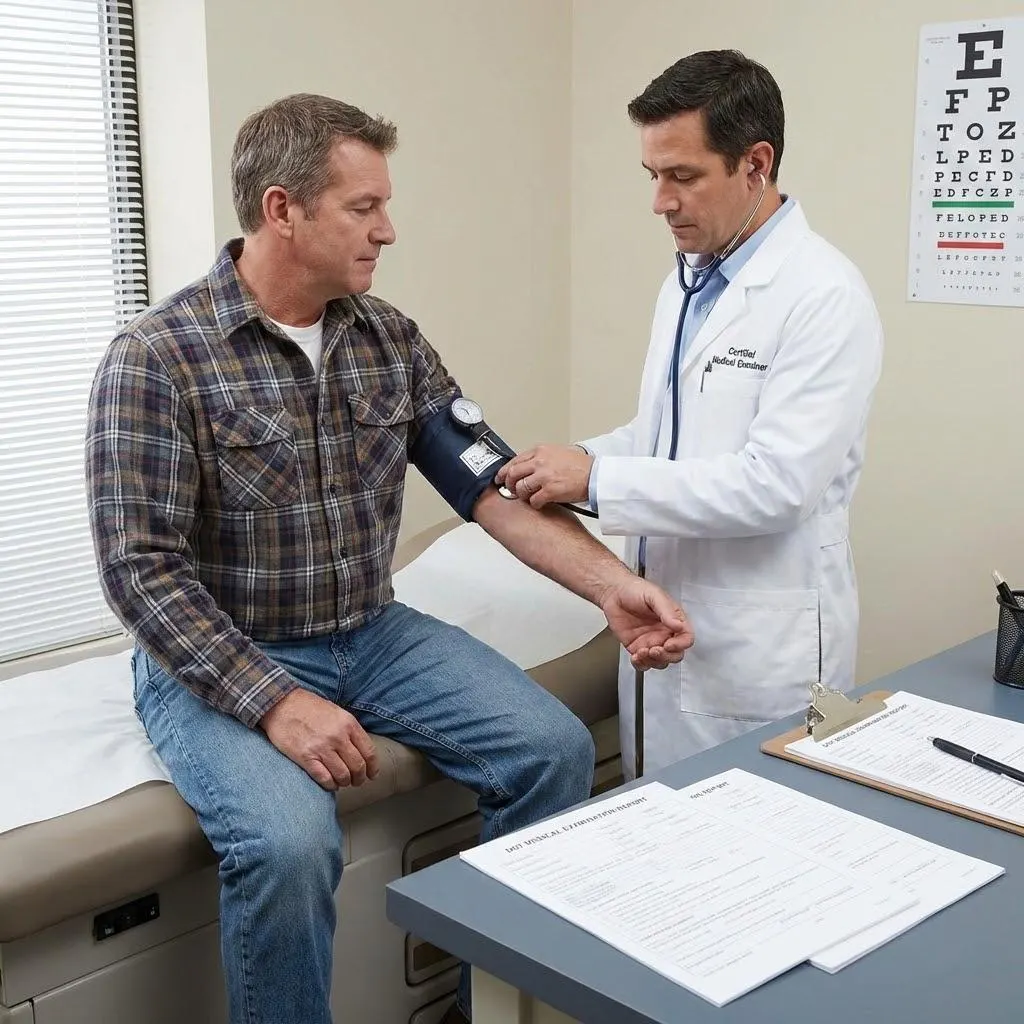
Preparing for Your DOT Physical: A Strategic Checklist for Success
Preparing for your DOT Exam requires gathering your complete medical history and actively managing any existing medical conditions. Proper preparation minimizes the risk of failing or receiving a shortened certification.
Begin by compiling a list of all current medications, past surgeries, and any ongoing treatments for mental disorders or heart disease. If you wear contact lenses or a hearing aid, bring them to your appointment. Drivers treating sleep apnea must provide at least 90 days of CPAP compliance reports. Reviewing these CPAP compliance reports ensures treatment adherence is maintained. Avoid caffeine and high sodium foods the day before your blood pressure testing to ensure accurate vital signs.
If you have a history of cardiovascular issues, your medical professional may require a recent Stress Test. Providing a passing Stress Test proves your heart can handle the physical demands of driving. Failing to bring your Stress Test results to the DOT Exam can result in an immediate temporary disqualification until the paperwork is provided.
KEY TAKEAWAY: Arriving with complete medical records and managed health conditions significantly improves your chances of passing the exam on the first try.
The Day of Your Exam: A Step-by-Step Walkthrough
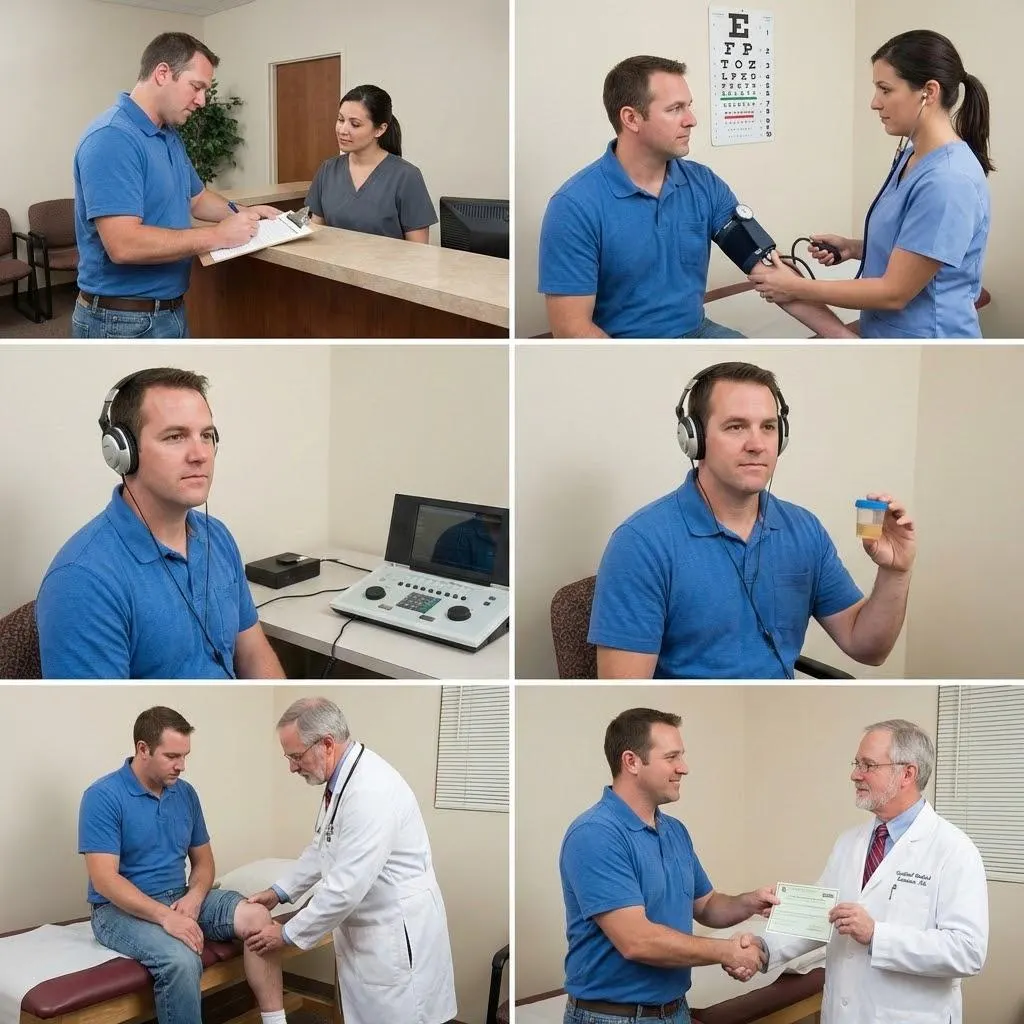
The day of your DOT physical exam involves a structured review of your health, starting with paperwork and ending with a full physical examination. Knowing the exact steps helps you remain calm and focused during the appointment.
Upon arrival, you will complete a detailed Medical Examination Report and undergo a medical history review. Next, you will meet your FMCSA-certified medical examiner. The core components include a vital signs assessment to check for high blood pressure. The vision and hearing tests are strict but straightforward. The vision test measures your visual acuity and peripheral vision, requiring at least 20/40 vision in each eye.
The hearing test, often an audiometry test, ensures you do not suffer from profound hearing loss and can hear a forced whisper from five feet away. Finally, a urinalysis test is conducted. The medical examiner then completes the full physical examination to check your overall mobility and joint health.
KEY TAKEAWAY: The exam systematically evaluates your vision, hearing, vital signs, and overall physical health to confirm you are fit to drive.
Deeper Dive: Managing Specific Conditions for DOT Compliance and Certification
Managing specific conditions like high blood pressure, insulin-treated diabetes mellitus, or sleep apnea is essential for obtaining your medical certification. Unmanaged chronic medical conditions are the most common reasons for failing the physical exam.
Drivers must keep their blood pressure below 140/90 to receive a standard certificate. Diabetic drivers must provide an Insulin-Treated Diabetic Mellitus Assessment Form and recent A1c results. While a routine blood test is not standard, your Hemoglobin A1C must be well-managed to prove your condition is stable.
For respiratory concerns, obstructive sleep apnea in adults requires strict management. If your examiner suspects an issue, a sleep apnea test may be ordered. Most drivers successfully use CPAP machines to maintain their health. A reliable CPAP machine keeps your airway open, ensuring you are rested and compliant.
KEY TAKEAWAY: Proactive management of chronic conditions like sleep apnea and diabetes is vital for passing your DOT physical.
Already diagnosed and need CPAP support?
Dumbo Health helps patients start CPAP without the usual confusion, paperwork, or upfront cost. Equipment, setup, supplies, and ongoing support are all handled in one place.
Understanding Drug and Alcohol Testing in the DOT Context
Drug and alcohol testing is not a standard part of the DOT physical, but your employer may require it simultaneously. The standard urine test conducted during the physical only screens for medical conditions like kidney disease or diabetes.
The mandatory urine test checks for specific gravity, protein, blood, and sugar. If your company hauls hazardous materials, they will likely mandate a separate drug screening. This requires a separate chain of custody protocol overseen by a qualified medical professional. The evaluating medical professional will simply review your history for signs of alcoholism, which is a disqualifying factor.
KEY TAKEAWAY: The routine urine test checks for underlying health issues, while drug testing is a separate requirement dictated by employers.
After the Exam: Outcomes and Next Steps
After the exam, the medical examiner determines if you meet the standards to receive your Medical Examiner's Certificate. Your certification status directly impacts your ability to operate commercial motor vehicles.
If you pass, you receive a certificate valid for up to 24 months. This is required to maintain your active Commercial Driver's License. If you have borderline conditions, you might receive a conditional certification lasting 3 to 12 months. Failing the exam means a disqualifying condition was found. To protect your driver's license, practice ongoing health management and schedule re-certification before your current clearance expires.
KEY TAKEAWAY: Your exam results in a full pass, a temporary conditional pass, or a failure, depending on your current health status.
Choosing Your Medical Examiner and Facility
Choosing the right healthcare provider involves ensuring they are actively listed on the National Registry. Only exams performed by certified professionals are valid for a commercial vehicle driver.
You can find a provider near you by searching the FMCSA National Registry database. Types of medical facilities offering these exams include primary care offices, urgent care centers, and specialized occupational health clinics.

Comparing DOT Physical Providers and Options
Selecting the right facility for your DOT physical is essential for a timely certification. The choice often depends on your medical complexity and your need for convenience.
Facility Type Who It Is Best For Turnaround Time cost Convenience
urgent care Centers Drivers needing immediate walk-in appointments Fast (same day) Moderate High
Occupational Health Clinics Fleets and drivers with complex medical history Moderate Varies by employer High
Primary Healthcare Provider Drivers with multiple chronic medical conditions Slower (requires booking) Varies by insurance Medium
KEY TAKEAWAY: Always verify that your chosen medical professional is actively listed on the FMCSA National Registry before booking your exam.
Common Myths About DOT Physicals Debunked
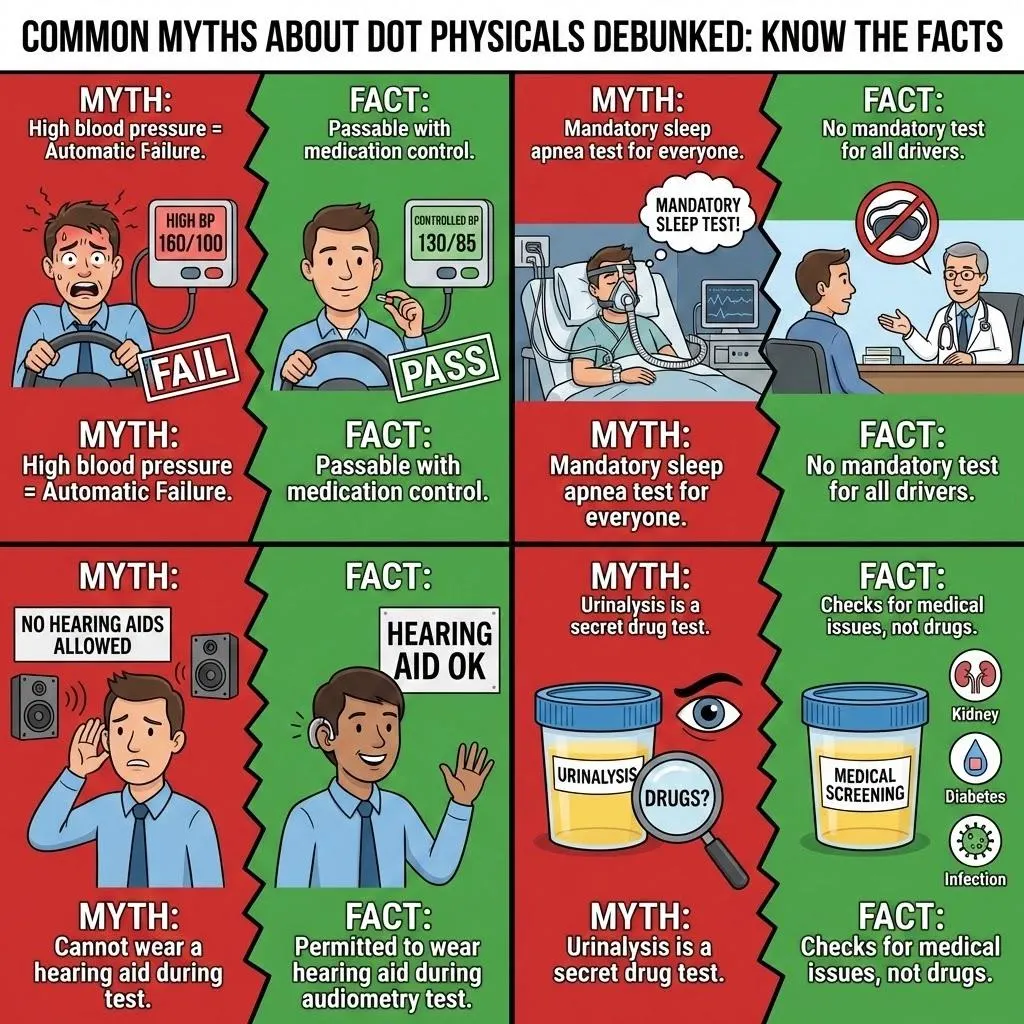
Common myths about the DOT physical often cause unnecessary anxiety for a commercial driver. Understanding the facts helps you prepare effectively.
MYTH: high blood pressure means an automatic failure. FACT: You can still pass if your blood pressure is controlled with medication.
MYTH: The DOT physical includes a mandatory sleep apnea test for everyone. FACT: There is no mandatory sleep apnea test for all drivers.
MYTH: You cannot wear a hearing aid during the hearing test. FACT: You are permitted to wear a hearing aid during the audiometry test.
MYTH: The urinalysis test is a secret drug test. FACT: The standard urinalysis test strictly checks for medical issues, not drugs.
KEY TAKEAWAY: Knowing the factual requirements prevents misinformation from complicating your certification process.
Frequently Asked Questions
What will fail a DOT physical?
Failing a DOT physical usually results from uncontrolled chronic medical conditions. Common disqualifying conditions include severe heart disease, uncontrolled high blood pressure, unmanaged epilepsy, or profound vision deterioration.
What all is done during a DOT physical exam?
A DOT physical exam includes a comprehensive medical history review, a vision test, a hearing test, a vital signs assessment, and a full physical examination. A urinalysis test is also performed.
Do they check your privates in a DOT physical?
A DOT physical may include a hernia check involving the lower abdomen or groin area. It is not an invasive genital exam.
What are common mistakes during DOT physicals?
Common mistakes include forgetting medical documents, not bringing corrective devices, consuming caffeine before the test, and providing incomplete medical history.
Is a sleep apnea test required for a DOT physical?
No, it is not required for everyone. However, it may be requested if risk factors are identified.
Can I pass a DOT physical with high blood pressure?
Yes, if it is properly managed. Controlled blood pressure can still qualify you for certification.
Related DOT Physical Topics
- Does a DOT Physical Test for Weed or THC The Complete Guide for Commercial Drivers
- What Happens If Your DOT Physical Expires Compliance Guide for Commercial Drivers
- Remote DOT Physical The Complete Guide for Commercial Drivers
- DOT Physical Forms & Paperwork The Complete Guide for Commercial Drivers
- Online DOT Physical Self-Pay The Complete Guide for CDL Drivers and Owner-Operators
- Online DOT Physical The Complete Guide for Commercial Drivers and Medical Examiners
- Navigating the Florida DOT Physical Your Essential Guide for CDL Drivers
- The Ultimate DOT Physical Guide for Commercial Drivers (2025–2026)
- DOT Physical ICD-10 & Billing Codes The Complete Guide for Accurate Compliance and Reimbursement
- Online DOT Physical Without Insurance A Complete Guide for Commercial Drivers
- Your Complete Guide What's Included in a DOT Physical Exam
- Can You Get a Second Opinion on Your DOT Physical A Complete Guide for Commercial Drivers
- DOT Medical Exam Self-Pay A Complete Guide for Commercial Drivers
- What are the current DOT requirements for sleep apnea testing for commercial drivers
- DOT Physical Requirements A Complete Guide for CDL Drivers
- The DOT Physical Exam Ensuring You're Fit for the Road
- What Does DOT Stand for in a DOT Physical
- Home Sleep Apnea Test for Commercial Drivers The CDL Holder's Complete Guide
- DOT Physical Insurance & Recertification The Complete Driver's Guide
- What Is the Urine Test for in a DOT Physical
- DOT physical self pay guide for commercial drivers paying out of pocket
- How to Pass a DOT Physical The Complete Commercial Driver's Guide
- DOT Physical Insurance or Self Pay How to Choose the Right Payment Option for Your Exam
- BMI for DOT Physical What Commercial Drivers Need to Know
- Medical Examination Report (MER) – Form MCSA-5875 The Complete Guide for Commercial Drivers
- DOT Physical Texas The Essential Guide to Your Exam, Medical Card, and CDL Compliance
- What Is the Difference Between a DOT and Non-DOT Physical
- DOT Physical Out of Pocket What Commercial Drivers Actually Pay
- DOT Physical Cost Breakdown What Drivers Pay & Why
- What Forms Do You Need for a DOT Physical
- What Are the Requirements to Pass a DOT Physical
- Do They Check for Hernia During a DOT Physical
- Online DOT Exam What Drivers and Medical Examiners Need to Know
- DOT Physical Blood Pressure Requirements What Drivers Need to Know
- New DOT Physical Requirements What Drivers MUST Know About New Updates
- DOT Physical at Urgent Care What Commercial Drivers Need to Know
- DOT Physical Chiropractor Your Complete Guide to CDL Exams
- Is a DOT physical the same as a regular physical
- What happens if you fail a DOT physical due to sleep apnea
- What are the current FMCSA guidelines on sleep apnea for commercial drivers
- DOT Physical & Drug Test What Drivers Need to Know
- What eye chart is used for a DOT physical
- What Do They Check During a DOT Physical
- What drugs do they test for in a DOT drug test
- What Can Disqualify You From a DOT Physical
- How can drivers with sleep apnea qualify again after a failed DOT physical
- Essential 171 DOT Definitions for Commercial Drivers
- Is a drug test required for a DOT physical
- How Do You Submit Your DOT Physical to the DMV
- What Should You Bring to a DOT Physical
- DOT Physical Exam Basics
- Why do they measure your neck during a DOT physical
- Can You Fail a DOT Physical for Being Overweight
- What blood pressure do you need to pass a DOT physical
- Can You Fail a DOT Physical for High Blood Pressure
- Do They Check Your Private Parts During a DOT Physical
- The Comprehensive Guide to Suboxone, Sleep Apnea, and FMCSA Compliance for Commercial Motor Vehicle Operators
- What should I expect at a DOT physical
- What Does a DOT Physical Consist Of
- Non-DOT Physical A Comprehensive Guide to Workforce Health and Safety
- Is a Sleep Study Required for a DOT Physical
- Do You Have to Pee During a DOT Physical
- Failing a DOT Physical What Every Commercial Driver Needs to Know
- What is DOT Physical
- DOT Physical Online Cost
- DOT Physical Vision & Eye Requirements
- Does a DOT physical include a drug test
- Can You Pass a DOT Physical with Epilepsy
- DOT Physical Self Pay Cost
- Navigating Your DOT Physical with Common Medical Conditions
- When Can Sleep Apnea Affect a DOT Physical
- Walk In DOT Physical Self Pay
- Can You Pass a DOT Physical With One Eye
- Can You Get a DOT Physical Online
- Can You Pass a DOT Physical With a Pacemaker
- Telehealth Dot Physical
- DOT Physical & Alcohol Requirements
- DOT Physical Duration and Validity How Long Your Medical Card Lasts
- Sleep Apnea Test for CDL Drivers
- What Precautions Should Drivers With Sleep Apnea Take
- Why DOT Sleep Tests at Home Matter for Your Career and Health
- Cheap DOT Physical Online
- Can You Pass a DOT Physical With a Hernia
- Are there legal requirements for drivers with sleep apnea
- DOT Physical Cash Pay
- Same Day DOT Physical
- Virtual DOT Physical
- Can you fail a DOT physical because of sleep apnea
- Who needs a DOT physical
- Can you pass a DOT physical with sleep apnea
- At Home Sleep Test for Truck Drivers
- Can You Pass a DOT Physical with Diabetes
- Can You Pass a DOT Physical with High Blood Pressure
- Guide to Obtaining and Managing Your DOT Medical Card Online
- Can You Fail a DOT Physical
- Online CDL Physical
- Are There New DOT Rules or Laws on Sleep Apnea Testing
- 2026 DOT Inspection Dates
- CDL PHYSICAL SELF PAY
- DOT sleep apnea test at home
Take the next step before your DOT physical
Start with the free quiz if you are unsure about your risk, or order an at-home sleep test if you have already been flagged for possible sleep apnea.
AI summary
A DOT physical is a Department of Transportation medical exam used to confirm a commercial motor vehicle driver is medically fit for duty and to reduce risk of on-road medical emergencies. The exam must be performed by an FMCSA-certified medical examiner listed on the National Registry and, if passed, results in a Medical Examiner’s Certificate valid up to 24 months. The process includes completing a Medical Examination Report, a medical history review, vital signs assessment (including blood pressure), vision testing (at least 20/40 in each eye plus peripheral vision), hearing evaluation (audiometry or forced whisper at 5 feet), urinalysis, and a full physical exam assessing mobility and joint health. Preparation focuses on bringing medication lists, prior surgery and treatment history, corrective devices (contacts, hearing aid), and condition-specific documents. Key constraints include keeping blood pressure under 140/90 for standard certification, providing an Insulin-Treated Diabetic Mellitus Assessment Form with recent A1c for insulin-treated diabetes, and supplying at least 90 days of CPAP compliance for sleep apnea. Drug testing is not part of the standard DOT physical; employer drug screens may occur separately. Outcomes include full certification, conditional 3–12 month certification, or disqualification for unmanaged conditions.

Nicolas Nemeth
Co-Founder
Nico is the co-founder of Dumbo Health, a digital sleep clinic that brings the entire obstructive sleep apnea journey home. Patients skip the sleep lab and the long wait to see a specialist. Dumbo Health ships an at home test, connects patients with licensed sleep clinicians by video, and delivers CPAP or a custom oral appliance with ongoing coaching and automatic resupply in one clear subscription.
Keep reading

How Long Does a DOT Physical Take? A Complete Guide for Commercial Drivers

What Happens If You Fail a DOT Drug Test? The Complete Guide for Commercial Drivers


