Does a DOT Physical Test for Weed or THC? The Complete Guide for Commercial Drivers
This guide clarifies a common CDL misconception: the DOT physical exam is not a THC or marijuana drug test, even though urine is collected. It explains what the Certified Medical Examiner evaluates under FMCSR 49 Part 391, including vision, hearing, blood pressure, and a dipstick urinalysis for glucose, protein, and blood. It then breaks down the separate DOT 5-panel drug test under 49 CFR Part 40 and Part 382, which does screen for marijuana metabolites. You will learn how cutoff levels and detection windows work, why state marijuana laws and medical cards do not protect drivers, and why CBD and delta-8 can still trigger positives. It also outlines MRO review, required testing triggers, and the SAP return-to-duty process after a verified THC positive.
Struggling with sleep?
Find out if sleep apnea is the reason.
FDA-cleared. $149 flat. Physician-reviewed results in 48 hours.

Does a DOT Physical Test for Weed or THC? The Complete Guide for Commercial Drivers
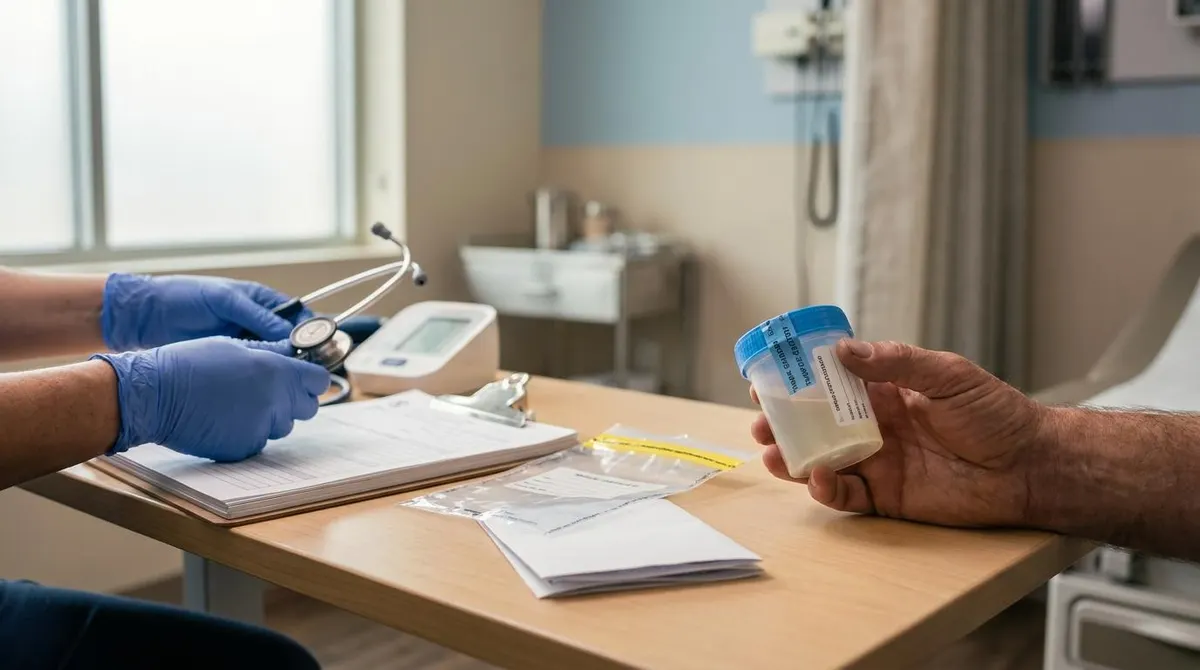
A DOT physical does not include a standard drug test for THC or marijuana, but every commercial driver who operates under FMCSA regulations is still subject to a mandatory DOT drug test that screens for marijuana metabolites. According to the Federal Motor Carrier Safety Administration (FMCSA), a single appointment can combine both procedures, which is the source of widespread confusion among CDL holders. This guide explains exactly what is tested during the DOT physical exam itself, how the separate DOT drug screen works, what federal law says about THC regardless of your state's marijuana laws, and what happens to your CDL if a laboratory returns a positive result. Whether you are a new applicant, an owner-operator, or a driver approaching renewal, this page gives you the complete picture you need to stay compliant and protect your career.
The Quick Answer: Distinguishing the Physical Exam from the Drug Test
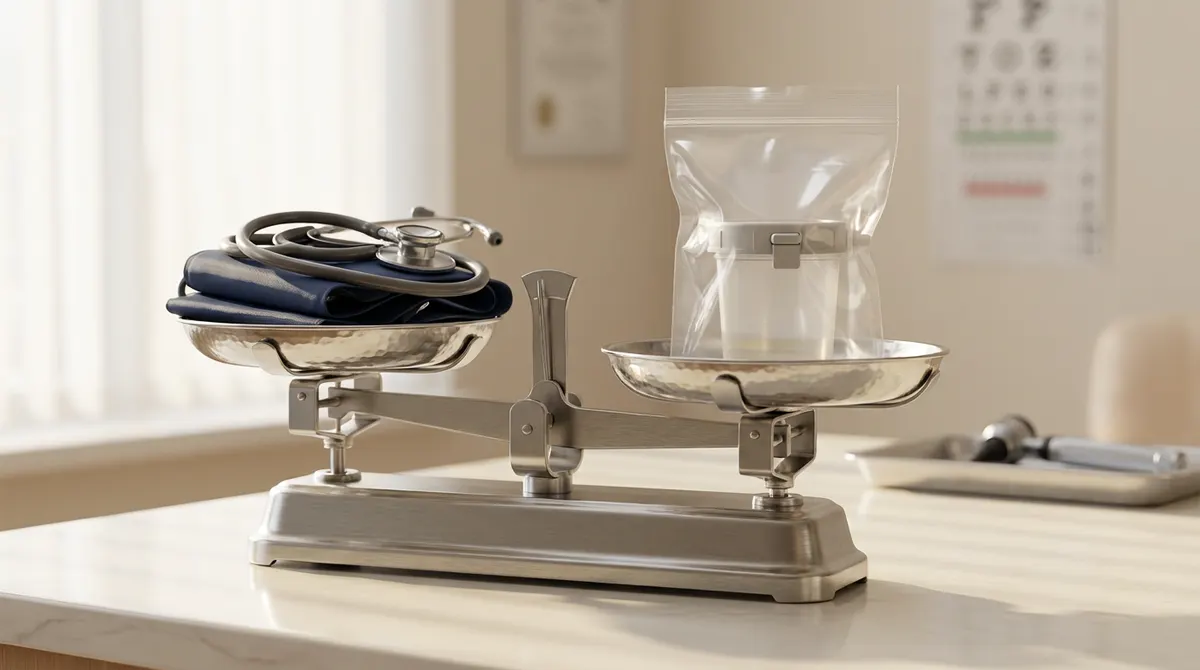
The DOT physical exam and the DOT drug test are two legally separate procedures governed by different regulations. The physical exam, governed by FMCSR 49 Part 391, assesses your overall medical fitness to operate a commercial motor vehicle. The drug test, governed by 49 CFR Part 40, screens your urine for five specific drug classes including marijuana. Understanding the difference between these two procedures protects your rights and prepares you for both appointments.
The DOT physical exam is conducted by a Certified Medical Examiner (CME) who is registered with the FMCSA. The CME reviews your medical history, measures your blood pressure, evaluates your vision and hearing, and collects a urine sample via a dipstick test that checks for glucose, protein, and blood. That dipstick urinalysis is not a drug test. It is a health screen. The DOT 5-panel drug test is a separate collection event that uses a Chain of Custody Form, sends the urine specimen to an HHS-certified laboratory, and requires review by a Medical Review Officer (MRO) before results are reported.
Many clinics and DOT-certified providers conduct both procedures on the same day, using a single office visit and one urine collection session. The physical exam collection and the drug test collection are logged under different forms and serve entirely different purposes. However, both matter for your commercial driver's license and your continued ability to perform safety-sensitive functions.
KEY TAKEAWAY: The DOT physical exam does not include a drug test for marijuana, but the separate DOT 5-panel drug screen, which does test for THC, is required before you can drive commercially and at multiple points throughout your career.
The next section takes a closer look at exactly what the federal drug screen requires and why state marijuana laws offer zero protection to CDL holders.
The DOT Physical vs. The DOT Drug Screen: Understanding the Difference
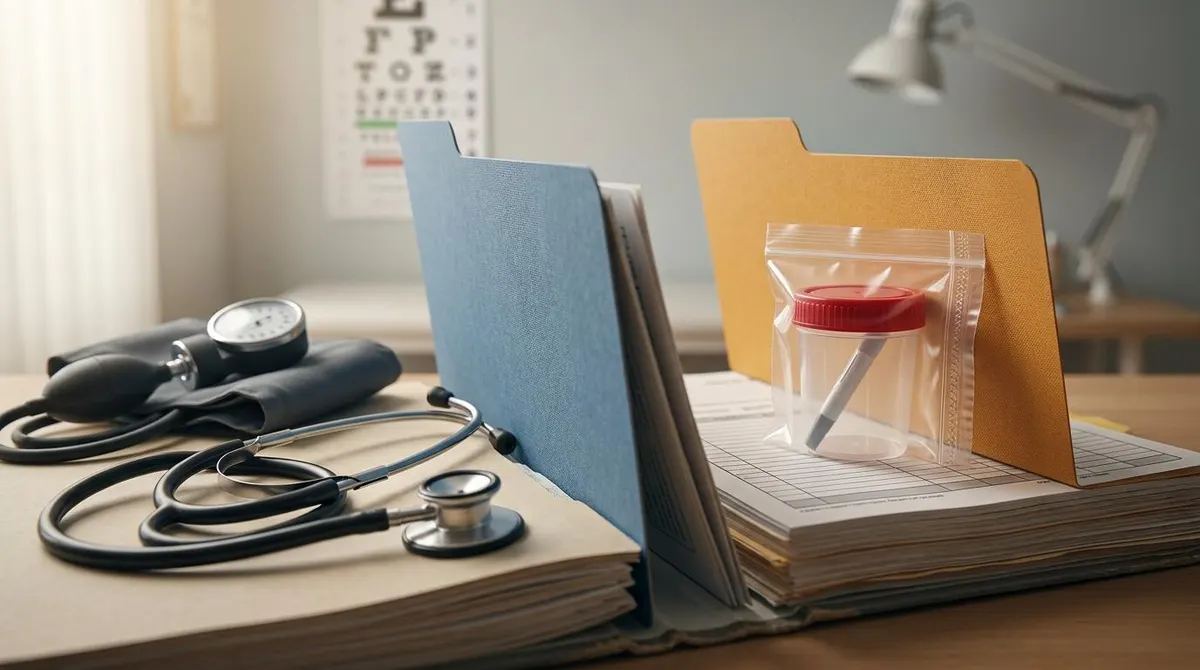
The DOT physical exam and the DOT drug screen exist side by side in commercial driver compliance but serve completely different functions. The physical exam certifies your medical fitness. The drug screen certifies your sobriety from prohibited substances. Each is required by a different section of the federal code, and each has its own documentation, laboratory process, and legal consequences.
The DOT physical exam is required under FMCSR 49 Part 391, which sets out the medical standards every commercial motor vehicle (CMV) driver must meet. It is conducted by a CME who is listed on the FMCSA National Registry of Certified Medical Examiners. The DOT drug test is mandated under 49 CFR Part 40 and the Omnibus Transportation Employee Testing Act of 1991, which created the framework for safety-sensitive testing across all transport sectors. The FMCSA administers testing requirements for motor carriers specifically under 49 CFR Part 382.
The table below summarises the key differences so you can see exactly how these two procedures compare.
| Feature | DOT Physical Exam | DOT 5-Panel Drug Test |
|---|---|---|
| Governing regulation | FMCSR 49 Part 391 | 49 CFR Part 40 and 49 CFR Part 382 |
| Purpose | Assess medical fitness to drive | Screen for prohibited substances |
| Who conducts it | Certified Medical Examiner (CME) | Collector at a DOT-approved collection site |
| What the urine tests for | Glucose, protein, and blood (health screen) | THC, cocaine, opioids, amphetamines, PCP |
| Who reviews results | CME on-site | Medical Review Officer (licensed physician) |
| Where specimen goes | No lab submission required | HHS-certified laboratory |
| Outcome document | Medical Examiner's Certificate (MCSA-5876) | MRO-verified result reported to employer |
| Frequency | Every 1 to 2 years depending on health status | Pre-employment, random, post-accident, return-to-duty |
When a clinic offers a combined DOT physical and drug test appointment, they are fulfilling both regulatory requirements in a single visit. This is convenient but the two procedures remain legally distinct. A driver can pass the physical exam and fail the drug test, or vice versa.
KEY TAKEAWAY: The DOT physical exam uses a dipstick urinalysis to check kidney health, not to detect drugs. The DOT 5-panel drug test is a separate federally regulated screen that does test for THC and marijuana metabolites.
Understanding both procedures clearly is the foundation for the next section, which breaks down exactly what the DOT physical examiner looks at during your appointment.
What the DOT Physical Exam (FMCSR 49 Part 391) Actually Checks
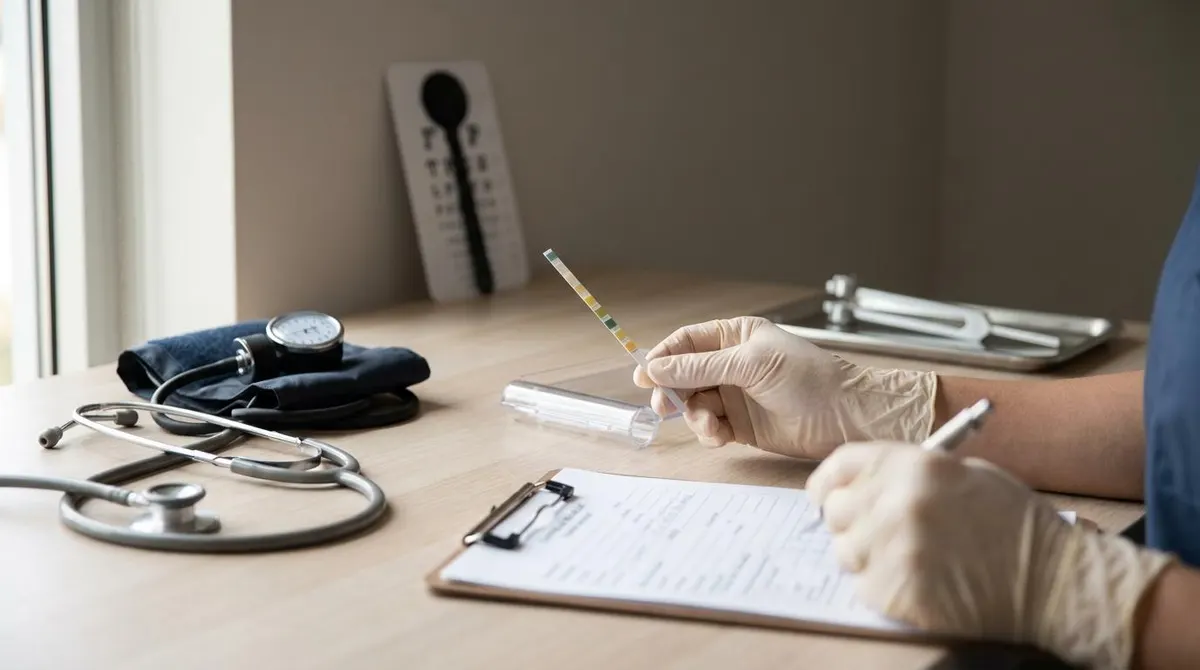
The DOT physical examination is one of the most comprehensive health screens in occupational medicine. It is designed to identify medical conditions that could impair your ability to operate a commercial motor vehicle safely. The CME is legally required to follow the FMCSA Medical Examiner Handbook and document all findings on the Medical Examination Report Form MCSA-5875.
Vision and Hearing Standards
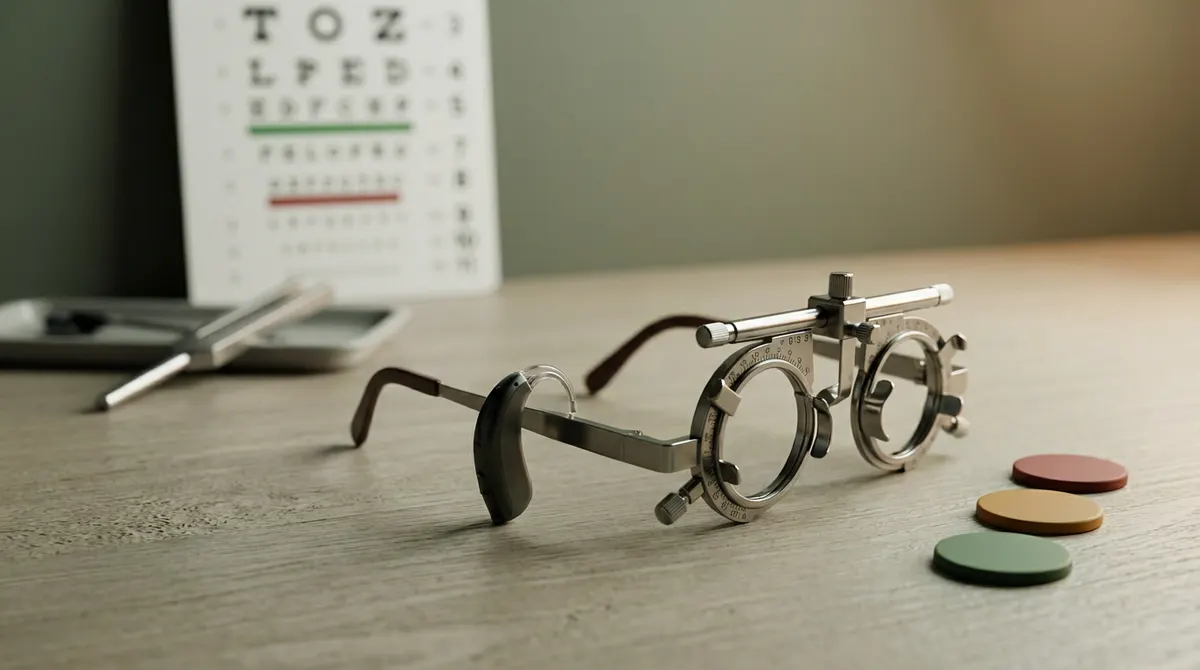
Your vision must meet a minimum of 20/40 visual acuity in each eye, with or without corrective lenses. The CME also tests for peripheral vision, requiring at least 70 degrees of horizontal meridian in each eye, and colour recognition sufficient to distinguish traffic signals. For hearing, you must be able to perceive a forced whisper at a distance of 5 feet or less, with or without a hearing aid. This corresponds to a hearing loss threshold of fewer than 40 decibels in the better ear. Drivers who use a hearing aid may be certified, provided the device is worn while driving.
Blood Pressure and Cardiovascular Health
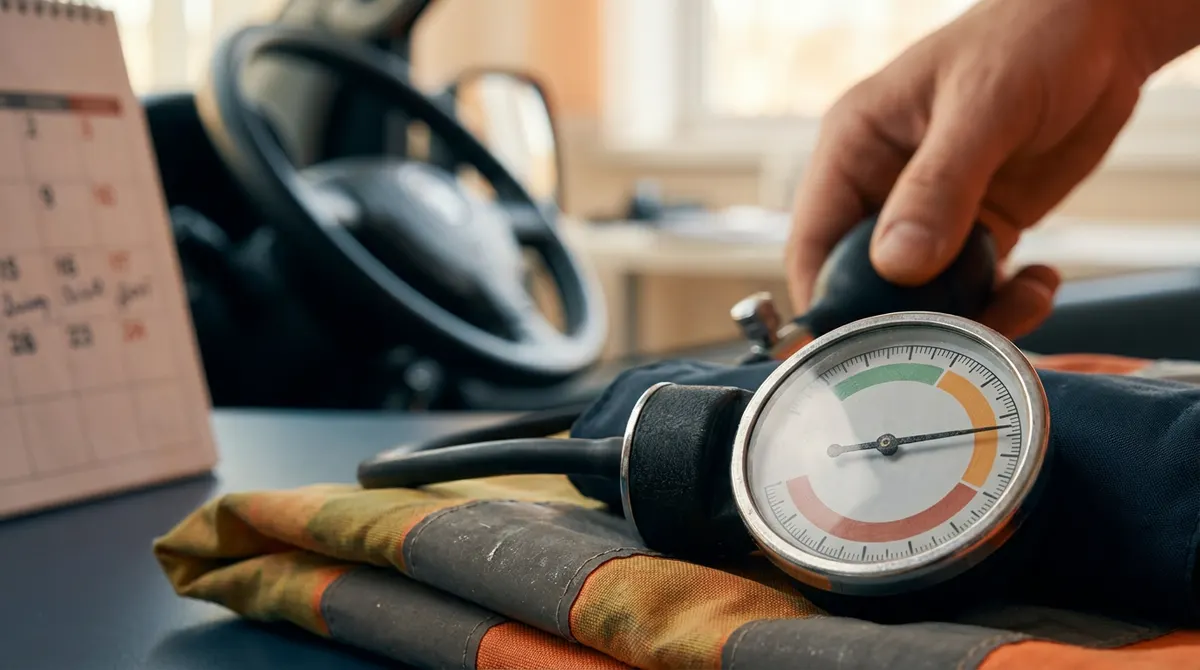
blood pressure is one of the most common reasons drivers receive a shortened certification period. According to FMCSA guidelines, a driver whose blood pressure is below 140/90 may be certified for the standard 2-year period. Stage 1 hypertension, measured between 140-159 systolic or 90-99 diastolic on a first reading, results in a 1-year certification. Stage 2 hypertension, between 160-179 systolic or 100-109 diastolic, results in a 3-month certification and requires treatment before full recertification. Stage 3 hypertension above 180 systolic or 110 diastolic is disqualifying until the condition is treated and brought under control.
The Purpose of the Urinalysis During a Physical (The Dipstick Test)
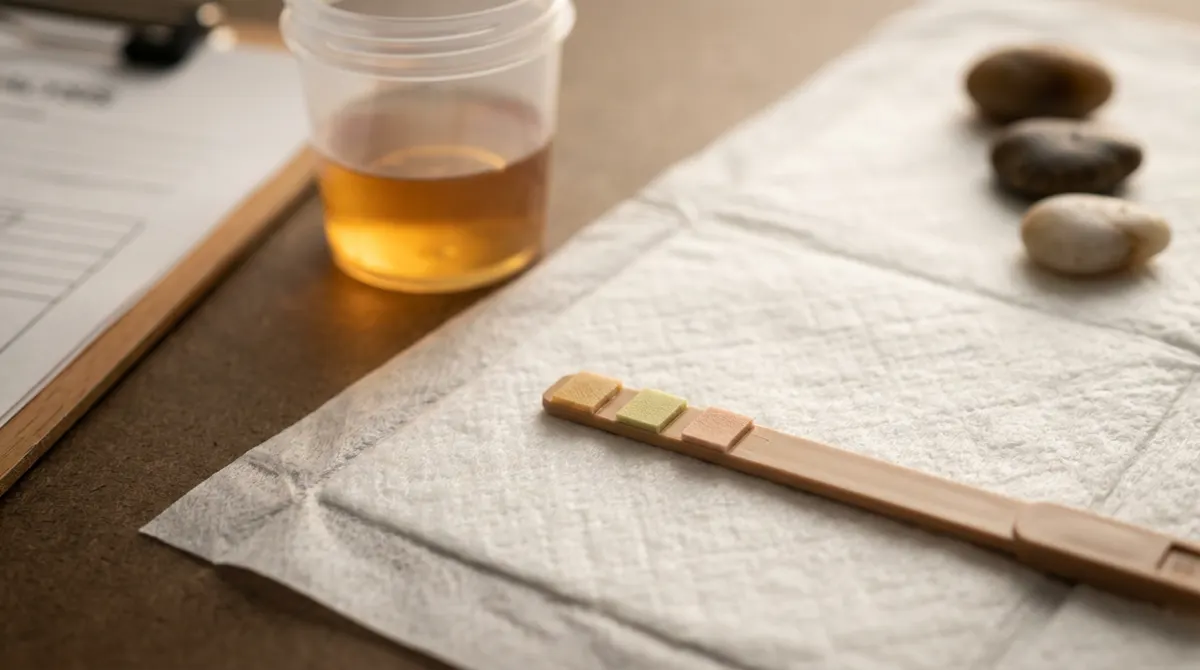
The urinalysis conducted during the DOT physical is a dipstick test, not a drug screen. The Certified Medical Examiner tests your urine for three specific markers: glucose, protein, and blood. Glucose in the urine, known as glycosuria, can signal uncontrolled diabetes mellitus. Protein in the urine, known as proteinuria, can indicate kidney damage often caused by hypertension or diabetes. Blood in the urine, known as hematuria, may suggest kidney stones, urinary tract infections, or more serious conditions requiring follow-up. None of these findings constitute a positive drug test result. Many patients arrive expecting a drug test and are surprised to learn the urine collected during the physical is used purely for health monitoring. In real-world use, clinicians frequently observe patients who confuse the two collections, which is why understanding the distinction matters before your appointment.
Diabetes and Glucose Monitoring
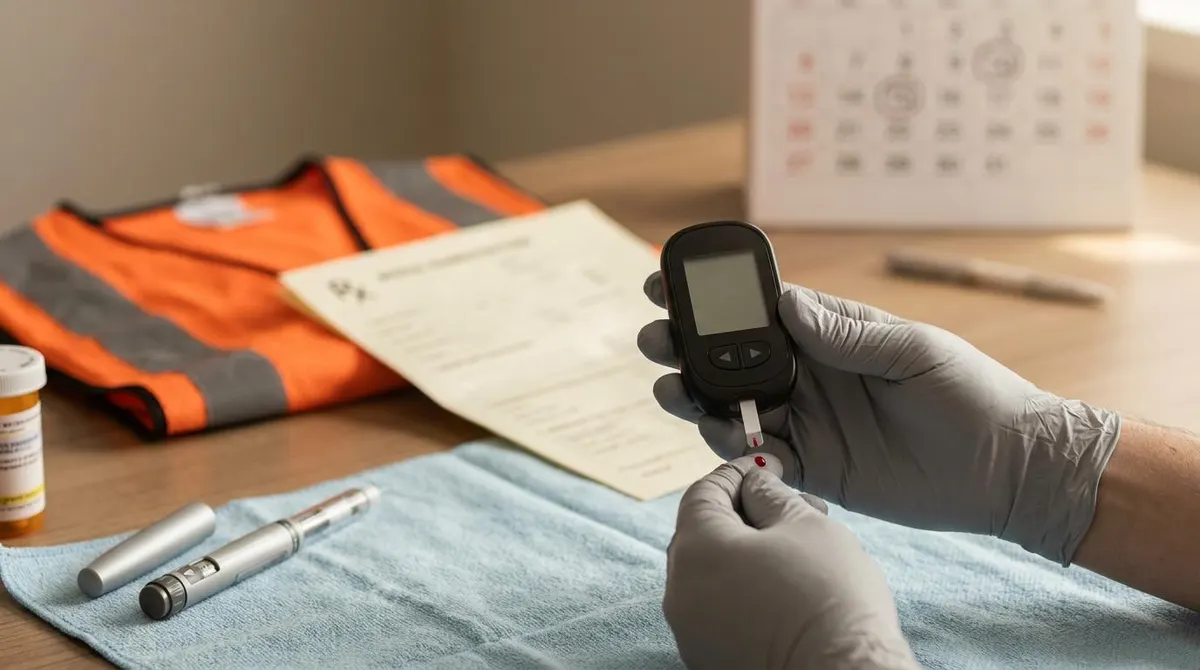
Drivers with diabetes who require insulin must follow specific FMCSA exemption procedures. The FMCSA Federal Diabetes Exemption Program allows insulin-treated diabetic drivers to operate CMVs in interstate commerce, provided they meet the programme's eligibility criteria and maintain documentation of glycaemic control. Uncontrolled diabetes with a history of hypoglycaemic episodes is disqualifying.
Neurological and Respiratory Function
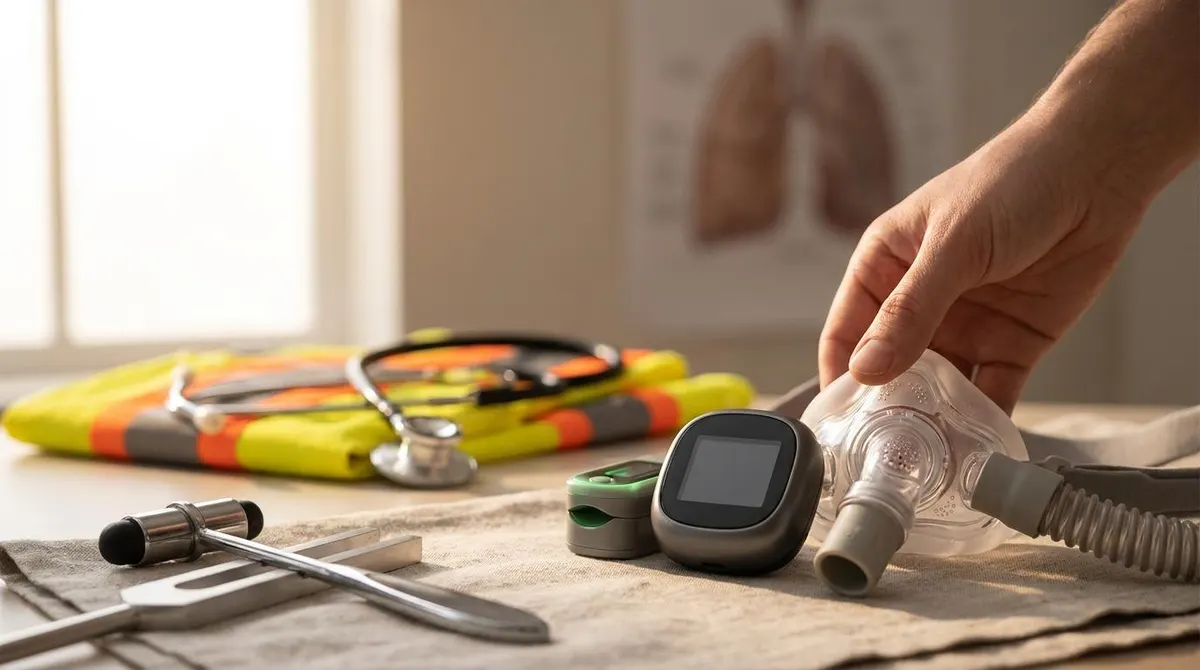
The CME examines neurological reflexes and overall neurological function, looking for conditions such as epilepsy, multiple sclerosis, or other disorders that could cause sudden incapacitation. Respiratory examination covers the lungs and thorax for conditions such as chronic obstructive pulmonary disease or sleep apnea that may impair alertness and oxygenation during long-haul driving. The FMCSA notes that moderate to severe obstructive sleep apnea is potentially disqualifying unless the driver demonstrates successful treatment, typically through CPAP therapy with documented compliance. If your CME identifies risk factors for sleep apnea, they may recommend a home sleep apnea test. Dumbo Health provides at-home sleep tests for commercial drivers starting at $149, with physician-reviewed results within 48 hours and affordable ongoing CPAP treatment plans starting at $59 per month.
DID YOU KNOW: According to the FMCSA Medical Examiner Handbook, the four required tests recorded on the Medical Examination Report are vision, hearing, blood pressure and pulse, and urinalysis. A DOT drug screen is not listed among these four required components.
KEY TAKEAWAY: The DOT physical exam checks your vision, hearing, blood pressure, neurological and respiratory health, and urine for glucose, protein, and blood. None of these components tests for marijuana or THC.
The physical exam gives you your medical certificate. But before you can ever sit behind the wheel of a CMV, you must also pass the separate drug screen covered in the next section.
The DOT 5-Panel Drug Test: What Is Being Screened?
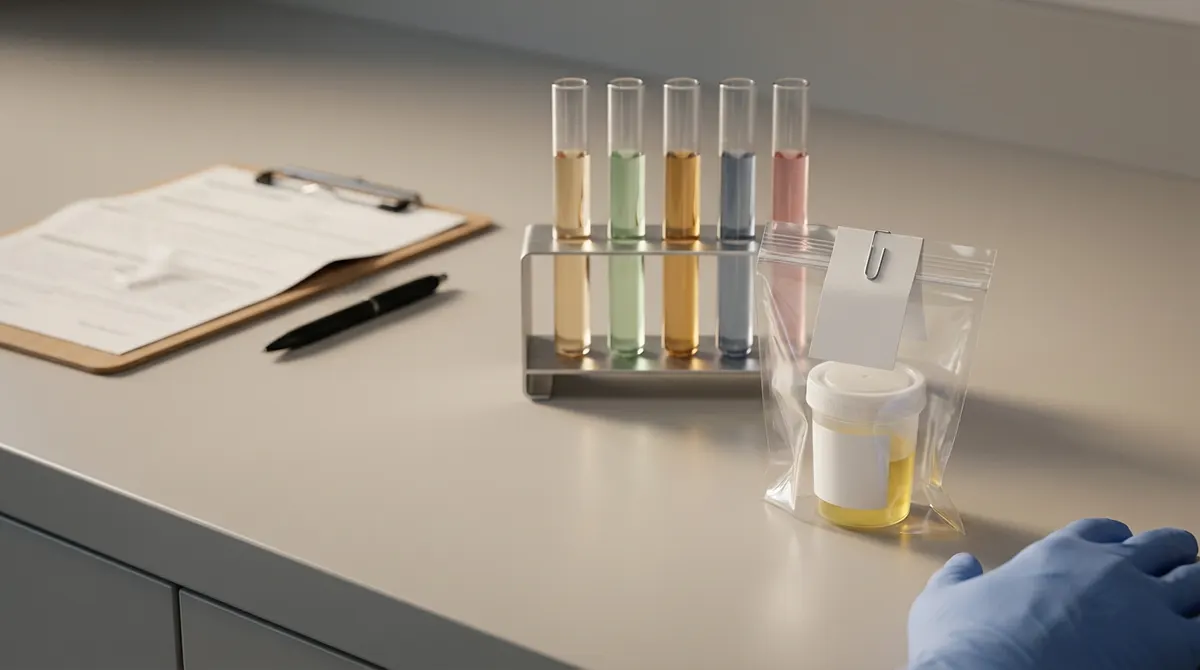
The DOT 5-panel drug test is a federally standardised urine screen defined under 49 CFR Part 40. It tests for five drug classes, and the panel cannot be modified by employers, states, or individual clinics. The test uses a urine specimen collected under controlled chain-of-custody conditions, analysed by an HHS-certified laboratory, and reviewed by a licensed Medical Review Officer before results are reported.
As of 2025, the FMCSA maintains a random drug testing rate of 50% for CDL drivers annually, meaning approximately half of all drivers in a random pool will be tested each year. The five substances tested are as follows.
Marijuana Metabolites (THC)
The DOT drug test screens for THC-COOH, the primary metabolite of tetrahydrocannabinol, at a cutoff concentration of 50 ng/mL on initial screening and 15 ng/mL on confirmatory GC-MS analysis. This is a critical distinction: the test does not measure active impairment or intoxication. It detects metabolites, which are the breakdown products of THC that remain in your system after the psychoactive effect has long passed. For a single-use event, THC metabolites are typically detectable in urine for 3 to 4 days. For moderate weekly users, the detection window extends to 5 to 7 days. For daily or chronic users, metabolites can remain detectable for 10 to 30 days or longer, with documented cases extending beyond 30 days in heavy multiple-daily users. This variability means that complete abstinence is the only reliable strategy for CDL holders.
Cocaine and Amphetamines (including Methamphetamine and MDEA)
The cocaine metabolite benzoylecgonine is tested at 150 ng/mL on initial screening. Amphetamines, including methamphetamine and MDMA (also called MDEA), are screened at 500 ng/mL. It is worth noting that the opioid category was expanded in 2018 to include additional synthetic opioids not previously covered.
Opioids (Codeine, Morphine, and Synthetic Opioids like Oxycodone)
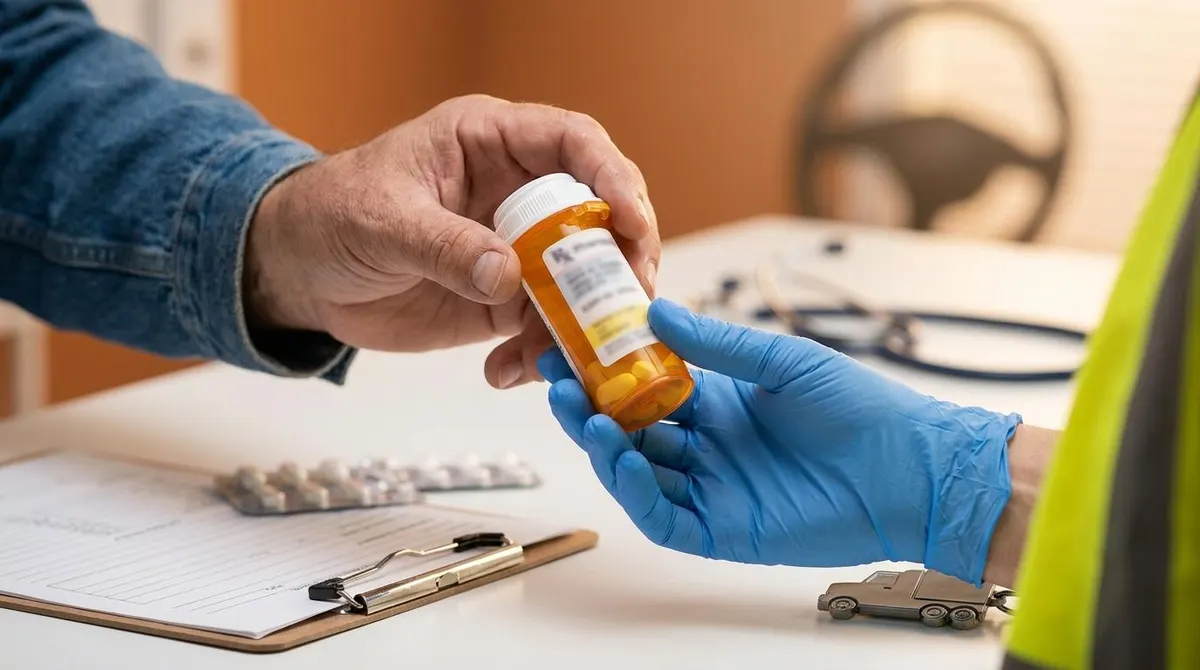
The opioid panel covers codeine, morphine, hydrocodone, hydromorphone, oxycodone, oxymorphone, and 6-acetylmorphine (the heroin metabolite). Drivers with legitimate prescriptions for these medications must be prepared to discuss them with the Medical Review Officer. A valid prescription for codeine or hydrocodone does not automatically result in a disqualifying outcome, but the MRO must verify the prescription and assess whether it is consistent with safe driving.
Phencyclidine (PCP)
Phencyclidine is screened at 25 ng/mL. PCP use is extremely rare among the general population but remains part of the federally mandated panel.
The table below shows when each type of DOT drug test is required.
| Testing Trigger | When It Occurs |
|---|---|
| Pre-employment | Before performing any safety-sensitive function for the first time |
| Random | Unannounced selections from testing pool, minimum 50% rate annually |
| Post-accident | Following accidents involving fatalities or bodily injury with citation |
| Reasonable suspicion | When a trained supervisor observes signs of impairment |
| Return-to-duty | After completing SAP evaluation, under direct observation |
| Follow-up | Minimum 6 unannounced tests in the first 12 months after return to duty |
KEY TAKEAWAY: The DOT 5-panel drug test screens for THC metabolites, not active intoxication, which means a positive result can follow marijuana use that occurred days or weeks before the test, long after any subjective effect has worn off.
With the drug test framework established, the most important question for drivers in legal states becomes the one addressed next: does state law protect you from a positive THC result?
Marijuana and Federal Law: Why State Legality Does Not Matter
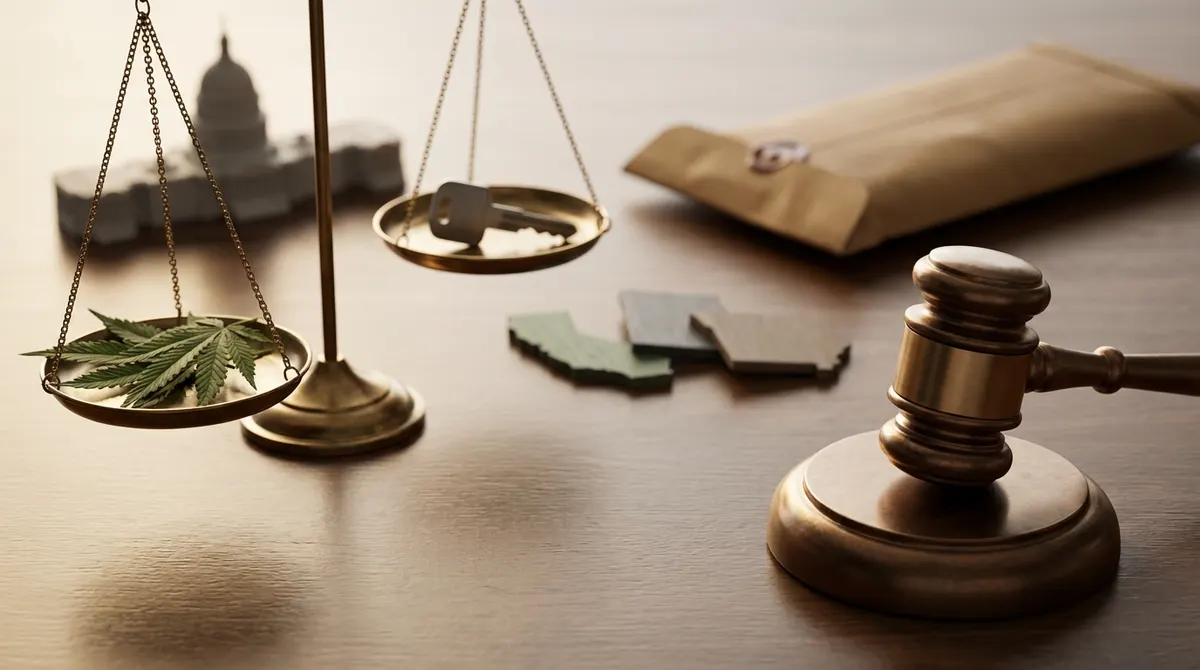
State marijuana laws have no effect on your DOT drug testing obligations. Commercial drivers are regulated by federal law, and under federal law, marijuana remains a controlled substance regardless of what any individual state has legislated. As the FMCSA states directly: a person is not physically qualified to drive a commercial motor vehicle if they use any Schedule I controlled substance.
Note: In April 2026, the DEA rescheduled marijuana from Schedule I to Schedule III of the Controlled Substances Act. However, the Department of Transportation has explicitly confirmed that this rescheduling does not change DOT drug testing requirements. DOT regulations specify marijuana by name in the testing panel, which means the substance will continue to be screened regardless of its federal scheduling status.
The FMCSA Position on Recreational and Medical Marijuana
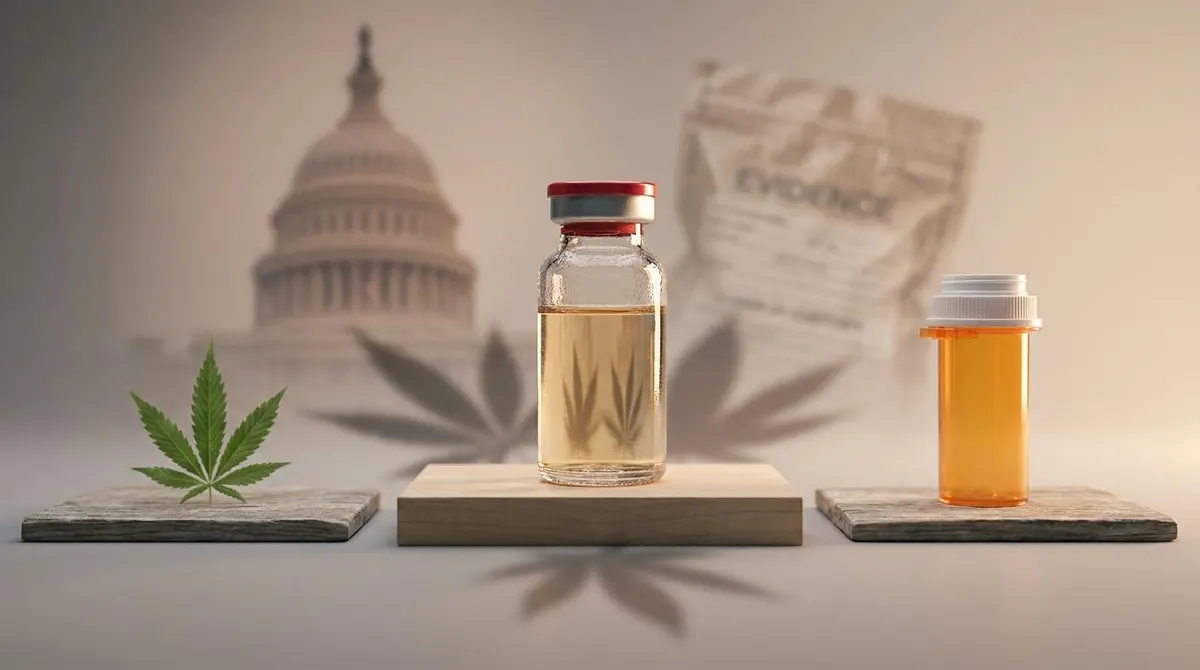
The FMCSA's published FAQ on marijuana is unambiguous: state legalisation of marijuana for recreational or medical use has not modified the application of DOT drug testing regulations under 49 CFR Parts 40 and 382. A driver who tests positive for THC metabolites in a DOT drug test will receive the same outcome whether they live in a state where marijuana is fully legal or fully prohibited.
The "Safety-Sensitive" Designation for CDL Holders
CDL drivers are classified as safety-sensitive employees under the Omnibus Transportation Employee Testing Act of 1991. This designation places them under the strictest possible federal oversight for drug and alcohol use. The logic is straightforward: a driver operating a vehicle weighing up to 80,000 pounds on public roads poses a significant public safety risk if impaired. The National Highway Traffic Safety Administration (NHTSA) consistently identifies drugged driving as a contributor to fatal truck accidents, which is why the federal government maintains a zero-tolerance stance for all safety-sensitive transportation workers regardless of state law.
Why a Medical Review Officer Cannot Accept a Medical Marijuana Card
The U.S. Department of Transportation's medical marijuana notice states clearly that it remains unacceptable for any safety-sensitive employee subject to DOT drug testing to use marijuana. A Medical Review Officer is a licensed physician whose role includes evaluating whether a legitimate medical explanation exists for a confirmed positive result. However, the MRO cannot accept a state-issued medical marijuana card as a valid medical explanation under DOT regulations. The DOT does not authorise the use of Schedule I drugs for any reason in the context of safety-sensitive employment, and a medical marijuana card does not change this position.
IMPORTANT: Even if your physician has recommended medical marijuana for a legitimate medical condition, this recommendation provides no protection under DOT drug testing regulations. A positive THC result is a positive THC result, regardless of the card in your wallet.
KEY TAKEAWAY: Federal law governs DOT drug testing for all CDL drivers, and state marijuana laws provide no exemption. A medical marijuana card cannot be used as a valid medical explanation for a positive DOT drug test result.
This federal-first framework extends beyond whole marijuana to include derived products, which introduces an especially important risk covered in the next section.
The CBD and Delta-8 Warning for Commercial Drivers
One of the most widely misunderstood risks for commercial drivers in the current marketplace is the potential for CBD and hemp-derived products to trigger a positive DOT drug test result. Many drivers assume that because a product is labelled as THC-free or hemp-derived, it is safe to use. This assumption has ended careers.
The Lack of FDA Regulation in CBD Products
The U.S. Food and Drug Administration (FDA) does not certify THC levels in CBD products sold in the United States. Manufacturers are not held to a federal standard that would guarantee the THC content listed on a label is accurate. Independent testing of commercially available CBD products has found that many contain measurably higher concentrations of THC than their labels claim. A driver who consumes a product marketed as containing 0.0% THC may still be ingesting enough THC to produce a positive urine test result.
How "THC-Free" Products Can Lead to a Positive Result
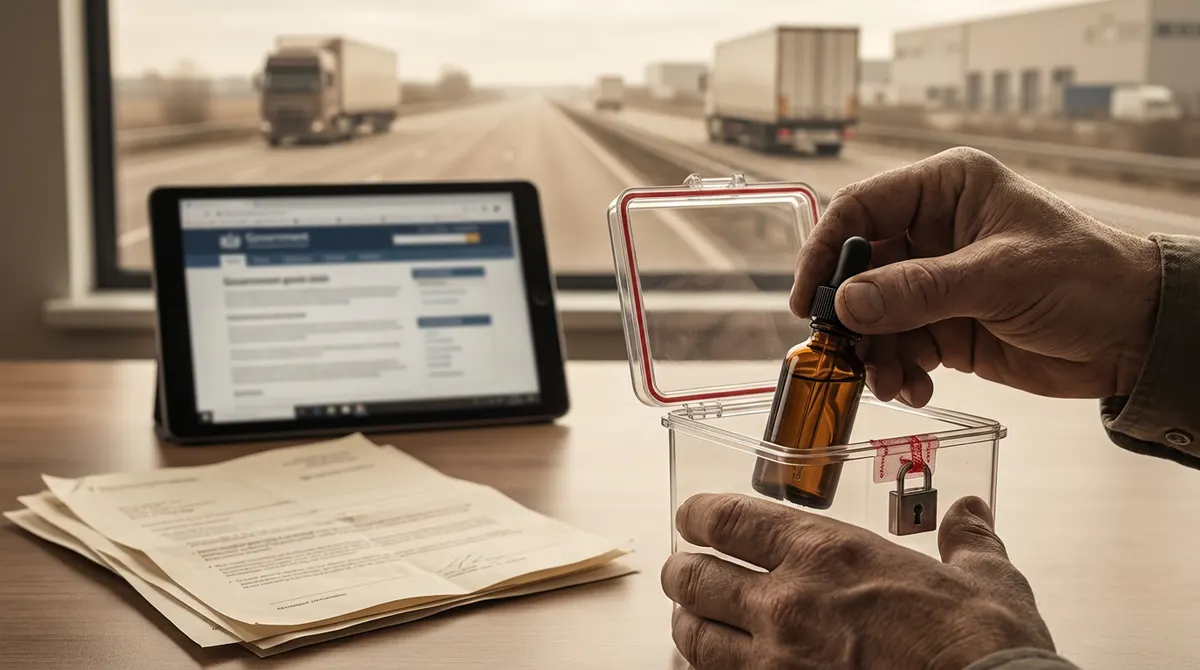
The 2018 Farm Bill removed hemp from the definition of marijuana under the Controlled Substances Act, meaning hemp-derived products containing up to 0.3% THC by dry weight are federally legal. However, CBD oils, gummies, capsules, and topicals that fall within this 0.3% threshold are not necessarily free from detection risk. Because product labelling is not federally verified, a driver cannot rely on a label claim alone to assess their testing risk. The U.S. Supreme Court addressed a directly related case in April 2025 involving a truck driver who used a CBD product for pain relief, tested positive for marijuana, and was terminated. The outcome of that case reinforced that CMV drivers cannot ingest THC and that a positive CBD-related test result does not exempt a driver from the return-to-duty process.
Delta-8 THC, which is synthesised from hemp-derived CBD and is sold widely in convenience stores and petrol stations, carries the same risk. Delta-8 products can cause positive results for THC metabolites on DOT drug tests. The DOT has issued no exemption for delta-8 or any other hemp-derived cannabinoid.
The DOT's Official Notice on CBD Use
The FMCSA Drug and Alcohol Clearinghouse has issued a reminder to all CDL drivers: since the use of CBD products could lead to a positive drug test result, DOT-regulated CDL drivers should exercise caution when considering whether to use CBD products. The DOT Office of Drug and Alcohol Policy and Compliance (ODAPC) has also issued its own CBD notice confirming that CBD use is not a legitimate medical explanation for a laboratory-confirmed positive marijuana result.
TIP: The only reliable way to avoid a CBD-related positive DOT drug test is to avoid all CBD and hemp-derived cannabinoid products entirely. The risk to your CDL and livelihood is not worth the uncertainty of unregulated labelling.
KEY TAKEAWAY: CBD and delta-8 THC products can cause a positive DOT drug test result because the FDA does not verify label claims. A driver cannot use CBD product consumption as a valid defence against a confirmed positive result.
The role of the MRO in reviewing these results is covered in detail next, including when a legitimate medical explanation can change the outcome.
The Role of the Medical Review Officer (MRO) in the Testing Process
The Medical Review Officer is a licensed physician who serves as an independent gatekeeper in the DOT drug testing process. As defined by the U.S. Department of Transportation, the MRO is responsible for receiving and reviewing laboratory results, evaluating medical explanations for certain drug test results, and ensuring the accuracy and integrity of the entire testing chain. The MRO acts on behalf of the testing process, not on behalf of the employer or the driver.
Verification of Legitimate Prescriptions (Opioids and Amphetamines)
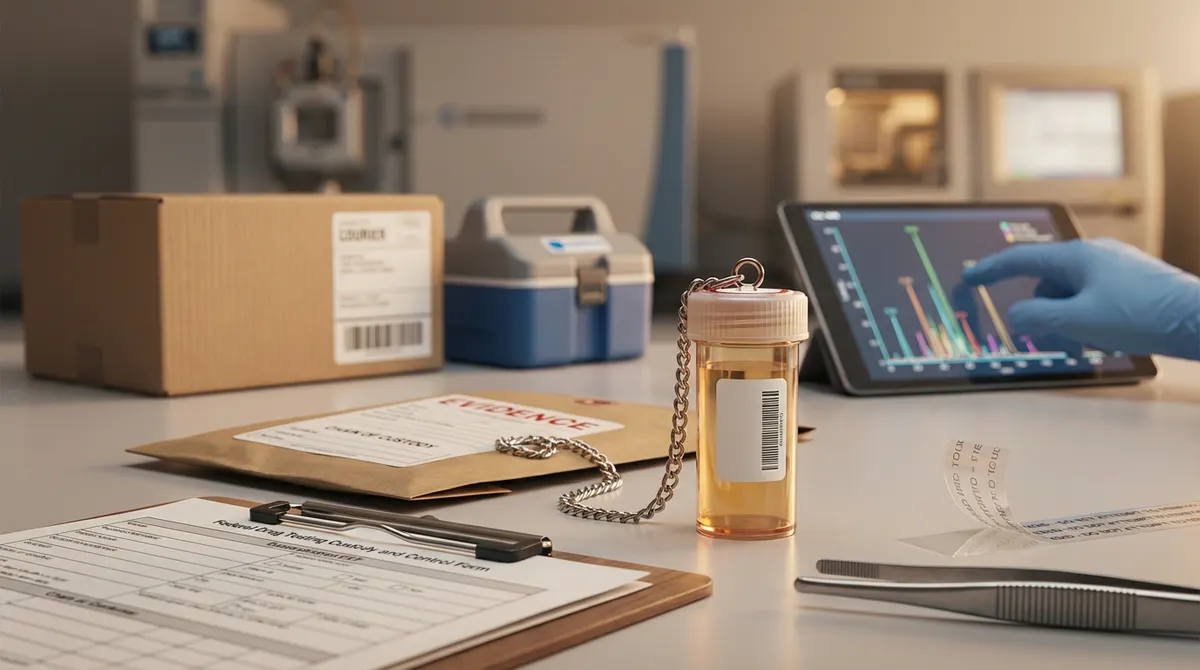
When a laboratory returns a non-negative result for opioids or amphetamines, the MRO contacts the driver directly to determine whether a legitimate medical explanation exists. If a driver has a valid prescription for hydrocodone or prescribed amphetamines for ADHD, the MRO verifies the prescription by contacting the prescribing physician and the dispensing pharmacy. If the prescription is confirmed, verified as legitimate, and consistent with safe driving, the MRO may report the result as negative. However, this verification process does not apply to marijuana. There is no prescription route for marijuana under federal law that the MRO can accept.
The Chain of Custody Process and Lab Analysis
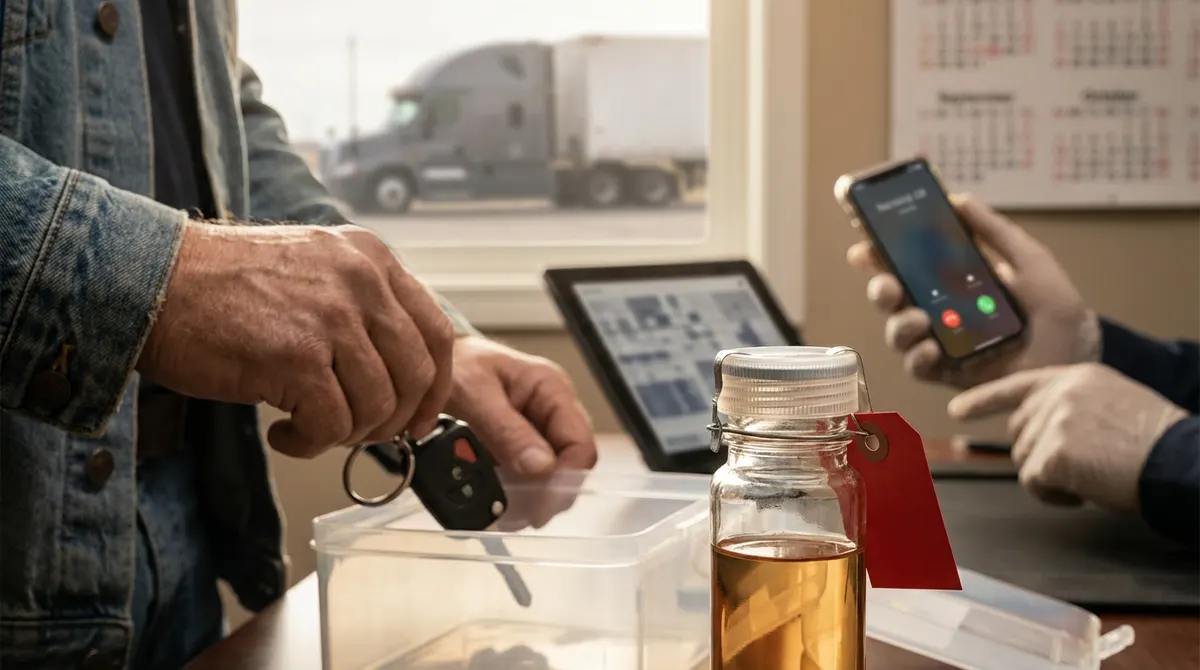
The chain of custody is the documented process that tracks a urine specimen from the moment of collection to the final reported result. Every DOT drug test must be collected using a Federal Drug Testing Custody and Control Form (CCF). The specimen is sealed in the presence of the donor, labelled with a unique identification number, and shipped under controlled conditions to an HHS-certified laboratory. Under 49 CFR Part 40, the MRO is required to review all laboratory-reported drug test results, including negatives, ensuring procedural compliance throughout the chain.
What Happens When a Laboratory Result Returns Positive for THC

When a laboratory confirms a THC-positive result at or above the confirmatory cutoff, the MRO attempts to contact the driver directly. The MRO will ask the driver whether there is a legitimate medical explanation. For THC, there is none under DOT regulations. A state medical marijuana card, a recommendation from a physician, or a personal belief that the test was inaccurate are not grounds for the MRO to report the result as negative. Once the MRO reports a verified positive result, the employer is notified, the driver must be immediately removed from safety-sensitive functions, and the violation is reported to the FMCSA Drug and Alcohol Clearinghouse. Most SAP evaluations run 2 to 6 months before a driver can begin the return-to-duty process.
KEY TAKEAWAY: The MRO is an independent physician who can accept legitimate medical explanations for some drug results but cannot accept a medical marijuana card or state prescription for THC under any circumstances.
Knowing how the MRO process works helps you understand what to expect and how to respond if a result is ever questioned. The next section addresses who must take a DOT drug test and exactly when each testing scenario is triggered.
When Are You Required to Take a DOT Drug Test?

DOT drug testing applies across six distinct scenarios, each governed by specific regulatory triggers. Commercial drivers who fall under FMCSA jurisdiction are required to participate at every stage of this testing framework. Understanding when each test is required helps you prepare and ensures your employer is meeting their obligations under federal law.
Pre-employment Screening

Under 49 CFR Part 382, Section 382.301, every CDL driver must produce a negative pre-employment drug test result before performing any safety-sensitive function for a new employer. The test must occur after a conditional employment offer but before the driver performs any commercial driving. This applies to new hires, drivers returning after a gap of 30 or more days outside a DOT random testing pool, and drivers who have completed the return-to-duty process. This rule applies to owner-operators and family members who drive for a business, not only to employees of large carriers.
Random Testing Pools and the Drug and Alcohol Consortium
The FMCSA requires carriers to randomly test at least 50% of their CDL drivers for drugs and at least 10% for alcohol each calendar year. Random selection must be genuinely random and unannounced. Owner-operators without employees are required to join a Drug and Alcohol Consortium that manages their random testing pool on their behalf. A driver selected for random testing must report to the collection site immediately upon notification, typically within the same business day.
Post-Accident Testing Requirements
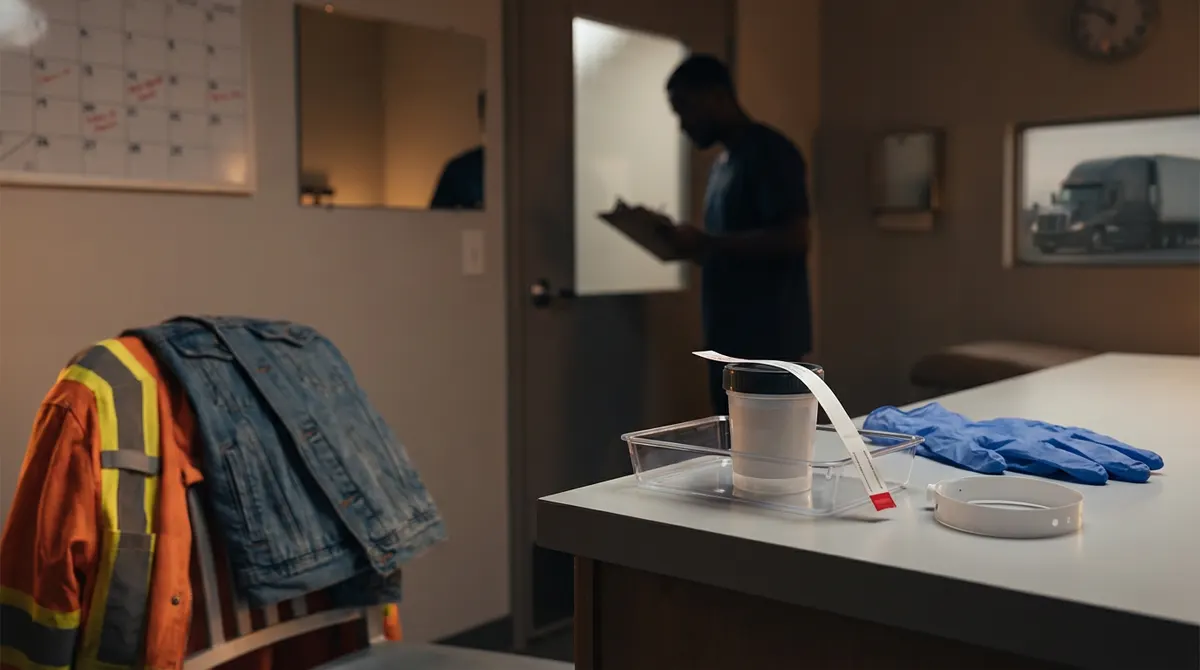
Post-accident drug testing is required when a commercial vehicle accident results in a human fatality, when a driver receives a citation for a moving violation in connection with an accident that caused bodily injury requiring immediate medical treatment away from the scene, or when an accident caused disabling damage to one or more vehicles requiring towing. Drug tests must be completed within 32 hours of the accident and alcohol tests within 8 hours. If a test cannot be administered within these deadlines, the employer must document the reason.
Reasonable Suspicion and Return-to-Duty Testing

Reasonable suspicion testing is required when a trained supervisor observes specific, articulable signs of drug or alcohol use in a driver who is about to perform, is performing, or has just performed a safety-sensitive function. Return-to-duty testing occurs after a driver has completed the SAP process following a violation. This test must be conducted under direct observation by the collector and must return a verified negative result before the driver is permitted to resume safety-sensitive duties.
If you are preparing for an upcoming DOT physical near you or need to locate providers in your area, reviewing your full compliance requirements in advance makes the process significantly smoother. The ultimate DOT physical guide for commercial drivers on Dumbo Health walks through every aspect of the exam in detail.
KEY TAKEAWAY: DOT drug testing is required at six specific trigger points across a commercial driver's career. Pre-employment testing is the most universal: no driver can perform safety-sensitive functions before producing a negative result.
The next section covers what happens to your career if a DOT drug test returns positive for THC.
Common Myths About DOT Drug Testing and Marijuana Debunked

The intersection of commercial driving regulations, marijuana laws, and workplace drug testing produces a significant volume of misinformation. The myths below represent real decision barriers that have cost drivers their CDLs, their jobs, and their ability to return to duty.
MYTH: If marijuana is legal in my state, I cannot fail a DOT drug test for THC.
FACT: Federal law governs DOT drug testing, not state law. The FMCSA has explicitly confirmed that state legalisation of marijuana for recreational or medical use has not modified the application of 49 CFR Parts 40 and 382. A positive THC result in a DOT drug test carries the same consequences in Colorado or California as it does in a state where marijuana remains fully illegal. There are no state-level exceptions and no pending federal changes that alter this position for CDL holders.
MYTH: A small amount of THC from a CBD product will not trigger a positive DOT drug test.
FACT: The DOT has issued a direct notice through its ODAPC confirming that CBD use is not a legitimate medical explanation for a laboratory-confirmed positive marijuana result. Because the FDA does not certify THC levels in CBD products, a product labelled as THC-free may still contain detectable quantities of THC. Drivers who have tested positive after using CBD products cannot use that fact as a defence. As the FMCSA Drug and Alcohol Clearinghouse states, CDL drivers should exercise caution before using any CBD product.
MYTH: The DOT physical urine sample is tested for drugs.
FACT: The urine collected during the DOT physical exam is a dipstick test that checks for glucose, protein, and blood. According to the FMCSA Medical Examiner Handbook, this urinalysis is a health screen, not a drug screen. The four required recorded tests during the DOT physical are vision, hearing, blood pressure and pulse, and urinalysis for health markers. The DOT drug screen uses a separate collection process, a separate custody form, and is analysed at an HHS-certified laboratory by a Medical Review Officer.
MYTH: I can use marijuana the week before my DOT drug test as long as I feel sober on the test day.
FACT: The DOT drug test measures THC metabolites, not active intoxication. For moderate weekly users, metabolites remain detectable for 5 to 7 days. For daily users, the window extends to 10 to 15 days or beyond. For chronic heavy users, detection has been documented in published research for over 30 days. Feeling sober does not indicate that metabolites have cleared your system. Complete abstinence in advance of testing is the only reliable approach.
MYTH: Once you fail a DOT drug test, your CDL is permanently revoked.
FACT: A positive DOT drug test does not automatically result in permanent CDL revocation. However, it triggers immediate removal from safety-sensitive functions and mandatory evaluation by a DOT-qualified Substance Abuse Professional (SAP). After completing the SAP's recommended education or treatment programme, passing a return-to-duty test under direct observation, and meeting follow-up testing requirements, a driver can return to safety-sensitive duties. The violation is reported permanently to the FMCSA Drug and Alcohol Clearinghouse, which all prospective employers are required to query before hiring a CDL driver.
KEY TAKEAWAY: State marijuana laws, CBD labels, and the subjective feeling of sobriety offer no protection under DOT drug testing regulations. The federal framework applies uniformly to all CDL holders, and the only reliable compliance strategy is complete abstinence from cannabis in all forms.
The full consequences of a positive result are examined in detail in the following section.
Consequences of a Positive THC Test Result
A verified positive DOT drug test result for THC triggers an immediate and structured sequence of federal consequences. These consequences apply regardless of the driver's years of experience, the quantity of THC detected, or the state in which the positive test occurred.
Immediate Removal from Safety-Sensitive Functions

As soon as the MRO reports a verified positive result to the employer, the employer is required to immediately remove the driver from all safety-sensitive functions. The driver cannot operate a commercial motor vehicle, dispatch, or perform any other safety-sensitive duty until the full return-to-duty process is completed. There is no grace period and no exception for drivers mid-trip or between jobs.
The Substance Abuse Professional (SAP) Program
The driver must undergo evaluation by a DOT-qualified Substance Abuse Professional (SAP). The SAP is a licensed clinician who assesses the driver's substance use history and prescribes a course of education, counselling, or treatment. Drivers bear the cost of the SAP evaluation and any prescribed treatment programme unless the employer voluntarily agrees to cover expenses. According to the DOT's guidance under 49 CFR Part 40 Subpart O, only after the SAP confirms that all recommendations have been completed can an employer schedule a return-to-duty test. This test is conducted under direct observation. Most SAP evaluations and treatment programmes take between 2 and 6 months to complete, and sometimes longer depending on the assessment findings. After returning to duty, the driver is subject to a minimum of 6 unannounced follow-up tests during the first 12 months of active service, with the possibility of unannounced testing continuing for up to 60 months as directed by the SAP.
The FMCSA Drug and Alcohol Clearinghouse: Your Permanent Record
The FMCSA Drug and Alcohol Clearinghouse is an online database that gives employers and government agencies real-time access to information about CDL driver drug and alcohol programme violations. All positive drug test results, refusals to test, and adulterated specimen findings are reported to the Clearinghouse by the employer. Every prospective employer is required to query the Clearinghouse before hiring a CDL driver and must run annual queries for all existing CDL employees. A positive result stays in the Clearinghouse permanently. A driver's status changes from "prohibited" to "not prohibited" only after completing the full return-to-duty process, which requires a verified negative return-to-duty test and SAP sign-off. Violations remain visible to any employer who queries the driver's record, making full transparency about your compliance history essential when seeking new employment after a positive result.
KEY TAKEAWAY: A positive DOT drug test triggers immediate removal from safety-sensitive functions, mandatory SAP evaluation, a return-to-duty process lasting several months, ongoing follow-up testing for up to 60 months, and a permanent record in the FMCSA Drug and Alcohol Clearinghouse.
With the consequences clearly understood, the final guidance section covers how to prepare for both your physical exam and your drug test to give yourself the best chance of a smooth, compliant appointment.
Tips for Drivers: Preparing for Your DOT Physical and Drug Test
Preparation for both the DOT physical exam and the DOT drug screen reduces the risk of surprises, delays, and disqualification. Many drivers encounter problems that could have been avoided with proper documentation, honest disclosure, and accurate knowledge of the rules.
Disclosing Your Medical History and Current Medications
The medical history portion of the DOT physical exam requires you to disclose all current medications, including prescription drugs, over-the-counter medicines, and supplements. The CME uses your medical history to assess whether any condition or medication affects your ability to drive safely. Failing to disclose a condition or medication can result in the CME withdrawing your medical certificate if the information surfaces later. Many patients report that being upfront about managed conditions such as high blood pressure, diabetes, or sleep apnea leads to a straightforward certification process, often with a shorter certification period requiring a follow-up appointment.
The Importance of Honesty with the Certified Medical Examiner
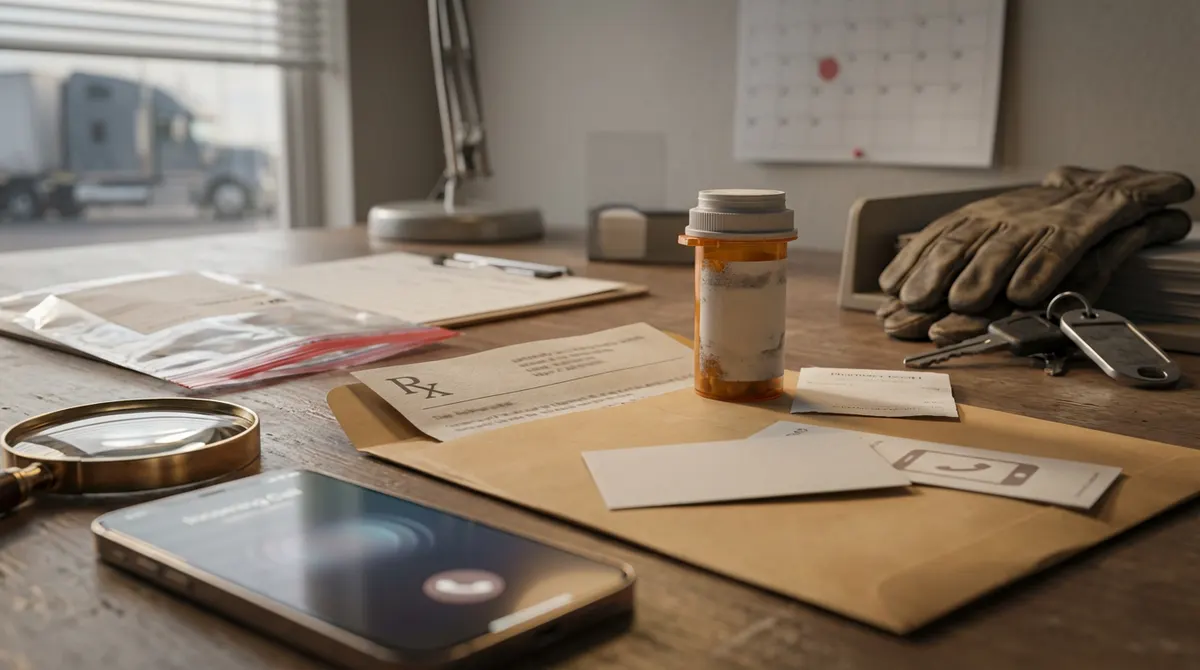
The Certified Medical Examiner conducts the DOT physical as an independent assessment of your medical fitness. Clinicians frequently observe that drivers who arrive prepared with their medical documentation, compliance reports, and specialist letters from treating physicians move through the exam more efficiently than those who arrive without documentation. If you have a condition such as sleep apnea, bring your CPAP compliance report showing usage of at least 4 hours per night on 70% or more of nights within the last 30 days. If you have been treated for hypertension, bring evidence of your current blood pressure readings and medication adherence.
If you have not yet been tested for sleep apnea but your CME identifies risk factors, you may be referred for a sleep study before your medical certificate can be issued. Dumbo Health offers a complete sleep apnea care solution for commercial drivers, including a $149 at-home sleep test, physician interpretation, and ongoing CPAP support through affordable sleep apnea care plans. You can also take a free sleep assessment quiz to identify your risk level before your DOT physical appointment.
How to Handle a Prescription That May Flag the Screen
If you take a prescription medication that could produce a non-negative result on the DOT drug test, such as prescribed opioid pain medication or an amphetamine-based ADHD medication, bring your prescription documentation to your appointment. Although the MRO contacts you independently to verify, having your prescribing physician's information and pharmacy documentation readily available speeds the verification process. The MRO will contact your prescribing physician and pharmacy directly to confirm the legitimacy of the prescription. If verified, the result may be reported as negative. Do not assume this process will happen automatically. Being proactive with documentation protects your timeline.
If you are looking for a certified provider near you for your DOT physical, many occupational health clinics, urgent care centres, and telehealth providers in your area now offer both the physical exam and drug test collection in a single appointment. Review the walk-in DOT physical self-pay options and online DOT physical guides on Dumbo Health to find the most convenient and cost-effective option for your situation.
KEY TAKEAWAY: Preparation, documentation, and honest disclosure with your Certified Medical Examiner are the most effective strategies for a smooth DOT physical exam. For the drug test, complete abstinence from all cannabis products is the only reliable protection.
Conclusion: Protecting Your Career and Your CDL
The DOT physical exam does not test for weed or THC. However, the separate and mandatory DOT 5-panel drug test absolutely does, and a positive result carries immediate, serious, and lasting consequences for your commercial driving licence and your career. Federal law applies uniformly to all CDL holders, regardless of state marijuana laws, medical marijuana cards, or the perceived safety of CBD products. The only reliable strategy for staying compliant is complete abstinence from all cannabis and hemp-derived cannabinoid products. If you have a medical condition that needs attention before your next DOT physical, act early and arrive with documentation. And if your CME identifies sleep apnea risk factors, do not wait. Explore the at-home sleep test and CPAP care options at Dumbo Health to address the issue quickly, affordably, and on your own schedule, so you can stay on the road with confidence.
Frequently Asked Questions
Can you fail a DOT physical for THC?
You cannot fail the DOT physical exam itself for THC, because the physical exam does not include a drug test. The urinalysis collected during the DOT physical is a dipstick test that screens for glucose, protein, and blood as health markers. However, a separate DOT 5-panel drug test is required before you can perform safety-sensitive functions, and that test does screen for THC metabolites. A positive THC result on the drug test leads to immediate removal from safety-sensitive duties and triggers the SAP return-to-duty process, which effectively prevents you from driving commercially until the process is complete.
Does a DOT drug test look for THC?
Yes. The DOT 5-panel drug test screens for THC metabolites in urine as one of its five mandatory drug classes. The other four are cocaine, opioids, amphetamines, and phencyclidine (PCP). The test is defined under 49 CFR Part 40 and cannot be modified by employers, states, or individual collection sites. THC metabolites are detected at a screening cutoff of 50 ng/mL and confirmed by GC-MS analysis at 15 ng/mL. A positive result is reported to the employer by a Medical Review Officer and entered into the FMCSA Drug and Alcohol Clearinghouse.
Can you smoke weed if you have a DOT card?
No. Holding a DOT medical examiner's certificate does not change your obligations under the federal drug testing programme. Commercial drivers classified as safety-sensitive employees under the Omnibus Transportation Employee Testing Act of 1991 are prohibited from using marijuana regardless of state law. The FMCSA has confirmed that recreational and medical marijuana laws in individual states have no effect on DOT drug testing regulations. Using marijuana while holding a DOT medical card and a CDL exposes you to a positive drug test result, immediate removal from safety-sensitive functions, and a permanent entry in the FMCSA Drug and Alcohol Clearinghouse.
What do they check for in a DOT physical urine test?
The urine test during the DOT physical exam is a dipstick urinalysis that checks for three health markers: glucose, which may indicate diabetes; protein, which may indicate kidney damage or hypertension-related kidney disease; and blood, which may signal kidney stones, urinary tract infections, or other conditions requiring follow-up. This test is not a drug screen. It is a health assessment tool used by the Certified Medical Examiner to identify underlying medical conditions that may affect your ability to drive safely. If abnormal findings are detected, the CME may place your certification on hold until you receive follow-up care from a primary care physician.
Can a DOT physical detect recent marijuana use?
No. The DOT physical exam does not include drug testing and cannot detect recent marijuana use. The urinalysis conducted during the physical exam checks only for health markers. However, many clinics combine the physical exam and the DOT drug test in a single appointment. If you are asked to provide a urine sample at a DOT physical appointment, it is important to understand whether that sample is being collected for the health dipstick test, the drug test, or both. Ask the collection site staff directly if you are unsure which procedure is being performed at any given moment.
How long does THC stay detectable in a DOT drug test?
Detection windows for THC metabolites in urine vary based on frequency of use. For single-use events, metabolites are typically detectable for 3 to 4 days. For moderate weekly users, the window extends to 5 to 7 days. For daily users, the detection period ranges from 10 to 15 days or longer. Heavy chronic users consuming multiple times daily have shown detectable metabolites for over 30 days in documented cases. The DOT drug test uses a confirmatory cutoff of 15 ng/mL analysed by GC-MS, which is a sensitive threshold. Because individual metabolism, body composition, and frequency of use all affect detection time, complete abstinence is the only reliable approach for CDL holders.
Do I need to join a Drug and Alcohol Consortium as an owner-operator?
Yes. Owner-operators without employees are required to join a DOT-compliant Drug and Alcohol Consortium that manages random testing pool participation on their behalf. Federal regulations require all drivers operating commercial motor vehicles subject to FMCSA jurisdiction to be enrolled in a random testing pool, and a consortium provides this compliance infrastructure for independent drivers. If you are an owner-operator looking for information on self-pay DOT compliance options, the DOT physical self-pay guide on Dumbo Health covers the costs and steps in detail.
Is there any legal marijuana use allowed for CDL holders under any circumstances?
No. There are no circumstances under current DOT regulations in which a CDL holder may legally use marijuana and remain compliant with federal drug testing requirements. State medical marijuana programmes, physician recommendations, personal medical necessity, and the rescheduling of marijuana from Schedule I to Schedule III in April 2026 have not changed the DOT's testing requirements. The Department of Transportation has explicitly confirmed that marijuana will continue to be screened in all DOT drug tests regardless of its federal scheduling status. The zero-tolerance position applies to all forms of marijuana, including edibles, oils, vaporised flower, and any product containing THC or THC-derived compounds.
Related DOT Physical Topics
- Can You Get a DOT Physical in Any State The Complete Guide for Commercial Drivers
- Can You Get a DOT Physical Online The Complete Guide for Commercial Drivers
- Remote DOT Physical The Complete Guide for Commercial Drivers
- DOT Physical Forms & Paperwork The Complete Guide for Commercial Drivers
- What Happens During the DOT Physical Exam The Complete Guide for Drivers
- What Happens If You Fail a DOT Physical Twice The Complete Guide for Commercial Drivers
- What Happens If You Fail a DOT Drug Test The Complete Guide for Commercial Drivers
- How Long Does a DOT Physical Take A Complete Guide for Commercial Drivers
- Online DOT Physical The Complete Guide for Commercial Drivers and Medical Examiners
- Home Sleep Apnea Test for Commercial Drivers The CDL Holder's Complete Guide
- Online DOT Physical Without Insurance A Complete Guide for Commercial Drivers
- Online DOT Physical Self-Pay The Complete Guide for CDL Drivers and Owner-Operators
- DOT Hypertension Guidelines The Complete Blood Pressure Guide for Commercial Drivers
- The Ultimate DOT Physical Guide for Commercial Drivers (2025–2026)
- Can You Get a Second Opinion on Your DOT Physical A Complete Guide for Commercial Drivers
- DOT Physical ICD-10 & Billing Codes The Complete Guide for Accurate Compliance and Reimbursement
- Medical Examiner's Certificate (Form MCSA-5876) The Complete Guide for Commercial Drivers
- Navigating the Florida DOT Physical Your Essential Guide for CDL Drivers
- DOT physical self pay guide for commercial drivers paying out of pocket
- DOT Medical Exam Self-Pay A Complete Guide for Commercial Drivers
- How to Pass a DOT Physical The Complete Commercial Driver's Guide
- What Happens If Your DOT Physical Expires Compliance Guide for Commercial Drivers
- What are the current DOT requirements for sleep apnea testing for commercial drivers
- Medical Examination Report (MER) – Form MCSA-5875 The Complete Guide for Commercial Drivers
- DOT Physical Requirements A Complete Guide for CDL Drivers
- What Is the Urine Test for in a DOT Physical
- The Ultimate DOT Preparation Checklist for Motor Carriers and Commercial Drivers
- DOT Physical Insurance & Recertification The Complete Driver's Guide
- BMI for DOT Physical What Commercial Drivers Need to Know
- What Does DOT Stand for in a DOT Physical
- The DOT Physical Exam Ensuring You're Fit for the Road
- Sleep Apnea Test at Home The Complete Guide to Home Sleep Testing for Adults
- What drugs do they test for in a DOT drug test
- Does a DOT physical include a drug test
- Essential 171 DOT Definitions for Commercial Drivers
- Is a drug test required for a DOT physical
- DOT Physical Out of Pocket What Commercial Drivers Actually Pay
- Your Complete Guide What's Included in a DOT Physical Exam
- What Are the DOT Requirements for Drivers With Sleep Apnea
- DOT Physical Insurance or Self Pay How to Choose the Right Payment Option for Your Exam
- The Comprehensive Guide to Suboxone, Sleep Apnea, and FMCSA Compliance for Commercial Motor Vehicle Operators
- DOT Physical Chiropractor Your Complete Guide to CDL Exams
- Is a DOT physical the same as a regular physical
- DOT Physical at Urgent Care What Commercial Drivers Need to Know
- What are the current FMCSA guidelines on sleep apnea for commercial drivers
- DOT Physical & Drug Test What Drivers Need to Know
- DOT Physical Texas The Essential Guide to Your Exam, Medical Card, and CDL Compliance
- What Is the Difference Between a DOT and Non-DOT Physical
- Home Sleep Apnea Test The Complete Guide to At-Home Sleep Apnea Testing
- At-Home Sleep Apnea Test The Complete Guide to Testing, Results, and Treatment
- Sleep Apnea Test The Complete Guide to Diagnosis, Home Testing, and What Your Results Mean
- Home Sleep Test The Complete Guide to At-Home Sleep Apnea Testing
- How Do You Submit Your DOT Physical to the DMV
- DOT Physical Cost Breakdown What Drivers Pay & Why
- Sleep Apnea Test for CDL Drivers
- What Forms Do You Need for a DOT Physical
- Navigating DOT Stroke Guidelines for CMV Drivers What You Need To Know
- How can drivers with sleep apnea qualify again after a failed DOT physical
- Can You Fail a DOT Physical for Being Overweight
- New DOT Physical Requirements What Drivers MUST Know About New Updates
- DOT Physical Blood Pressure Requirements What Drivers Need to Know
- Can You Fail a DOT Physical for High Blood Pressure
- What Does a DOT Physical Consist Of
- At Home Sleep Test for Truck Drivers
- Does insurance cover a DOT physical
- Non-DOT Physical A Comprehensive Guide to Workforce Health and Safety
- Is a Sleep Study Required for a DOT Physical
- Do They Check for Hernia During a DOT Physical
- What Are the Requirements to Pass a DOT Physical
- What eye chart is used for a DOT physical
- Failing a DOT Physical What Every Commercial Driver Needs to Know
- Sleep Apnea Testing The Complete Guide to Diagnosis, Home Tests, and What Your Results Mean
- What Can Disqualify You From a DOT Physical
- Can You Pass a DOT Physical with Epilepsy
- DOT Physical Self Pay Cost
- DOT Physical Exam Basics
- Can You Pass a DOT Physical With a Hernia
- Can You Pass a DOT Physical With One Eye
- Can You Pass a DOT Physical With a Pacemaker
- Telehealth Dot Physical
- Who needs a DOT physical
- DOT Physical & Alcohol Requirements
- Why do they measure your neck during a DOT physical
- Navigating Your DOT Physical with Common Medical Conditions
- Why DOT Sleep Tests at Home Matter for Your Career and Health
- DOT Physical Online Cost
- Walk In DOT Physical Self Pay
- Are there legal requirements for drivers with sleep apnea
- What Should You Bring to a DOT Physical
- Can You Get a DOT Physical Online
- DOT Physical Cash Pay
- Same Day DOT Physical
- Virtual DOT Physical
- DOT Physical Vision & Eye Requirements
- Can you fail a DOT physical because of sleep apnea
- What blood pressure do you need to pass a DOT physical
- When Can Sleep Apnea Affect a DOT Physical
- Online DOT Exam What Drivers and Medical Examiners Need to Know
- Do They Check Your Private Parts During a DOT Physical
- Can you pass a DOT physical with sleep apnea
AI summary
A DOT physical exam is a medical fitness evaluation for commercial drivers and is governed by FMCSR 49 Part 391. It is performed by a Certified Medical Examiner (CME) and includes medical history review, vision and hearing testing, blood pressure assessment, and a dipstick urinalysis for glucose, protein, and blood. This urinalysis is a health screen and does not test for marijuana or THC. DOT drug testing is a separate federal process governed by 49 CFR Part 40 and FMCSA rules in 49 CFR Part 382. The DOT 5-panel urine drug test screens for marijuana metabolites (THC-COOH), cocaine, opioids, amphetamines, and PCP, using chain-of-custody, an HHS-certified laboratory, and Medical Review Officer (MRO) verification. THC-COOH cutoffs are 50 ng/mL (screen) and 15 ng/mL (confirmatory GC-MS). Detection reflects metabolites, not impairment. State marijuana legality and medical marijuana cards do not change DOT requirements. CBD and delta-8 products can still lead to THC positives due to labeling variability. A verified THC positive triggers removal from safety-sensitive duties, SAP evaluation, return-to-duty testing under observation, follow-up testing, and reporting to the FMCSA Drug and Alcohol Clearinghouse.

Nicolas Nemeth
Co-Founder
Nico is the co-founder of Dumbo Health, a digital sleep clinic that brings the entire obstructive sleep apnea journey home. Patients skip the sleep lab and the long wait to see a specialist. Dumbo Health ships an at home test, connects patients with licensed sleep clinicians by video, and delivers CPAP or a custom oral appliance with ongoing coaching and automatic resupply in one clear subscription.
Keep reading

How Long Does a DOT Physical Take? A Complete Guide for Commercial Drivers

What Happens If You Fail a DOT Drug Test? The Complete Guide for Commercial Drivers


