DOT Physical Vision & Eye Requirements
DOT vision requirements are federal standards CDL and other commercial drivers must meet to receive or renew a medical certificate under FMCSA rules. The article explains the core thresholds: at least 20/40 distance acuity in each eye and both eyes together, 70 degrees of horizontal field of vision per eye, and the ability to recognize red, green, and amber signal colors. It clarifies that glasses and contact lenses are allowed, but you must bring the correction you drive with and keep prescriptions current. It also covers the Alternative Vision Standard for monocular drivers, including Form MCSA-5871 and timing rules. Finally, it outlines what happens after a failed screen, debunks common myths, and shares practical eye-health habits to avoid renewal surprises.
Struggling with sleep?
Find out if sleep apnea is the reason.
FDA-cleared. $149 flat. Physician-reviewed results in 48 hours.

DOT Physical Vision Requirements: The Complete Guide for CDL Drivers
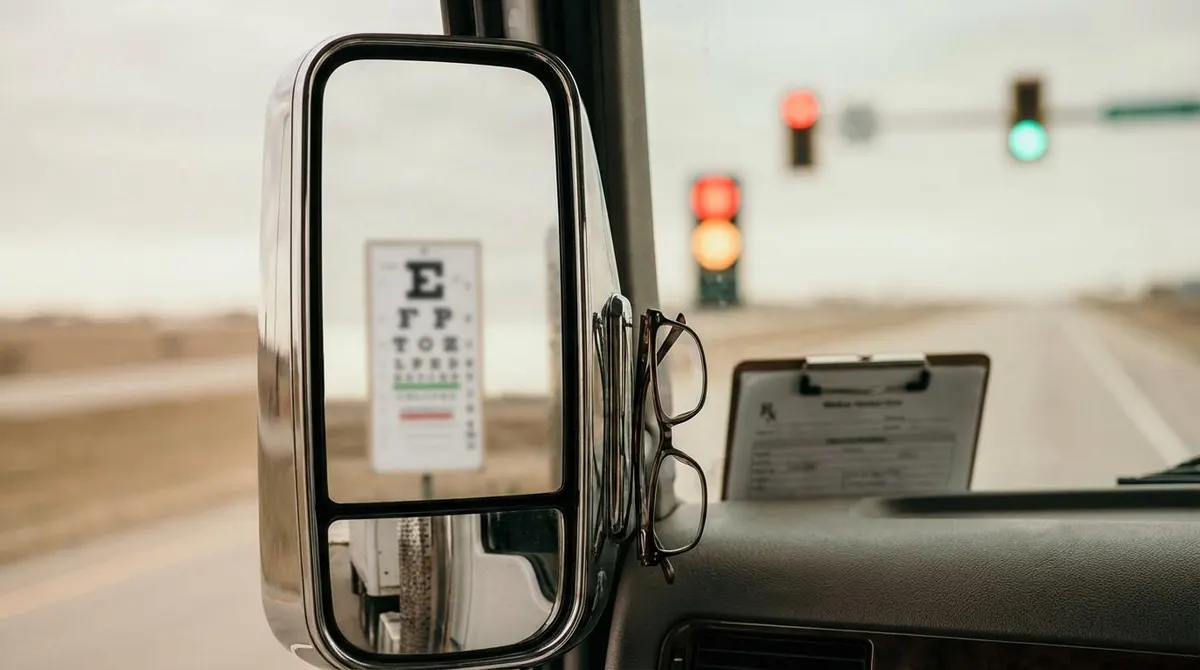
Introduction
DOT physical vision requirements are federally mandated standards that every commercial motor vehicle driver must meet to hold a valid medical certificate and operate legally on U.S. roads. According to the Federal Motor Carrier Safety Administration, these standards are codified under 49 CFR 391.41(b)(10) and apply to drivers seeking or renewing commercial medical certification. This guide explains the 20/40 acuity threshold, peripheral vision rules, color recognition requirements, corrective lens policies, the Alternative Vision Standard for monocular drivers, and how eye surgeries are evaluated under FMCSA rules. Whether you are preparing for your first DOT physical or renewing your medical certificate, understanding these requirements helps you arrive better prepared for certification.
Understanding the Foundation: Why Vision Matters for Commercial Drivers
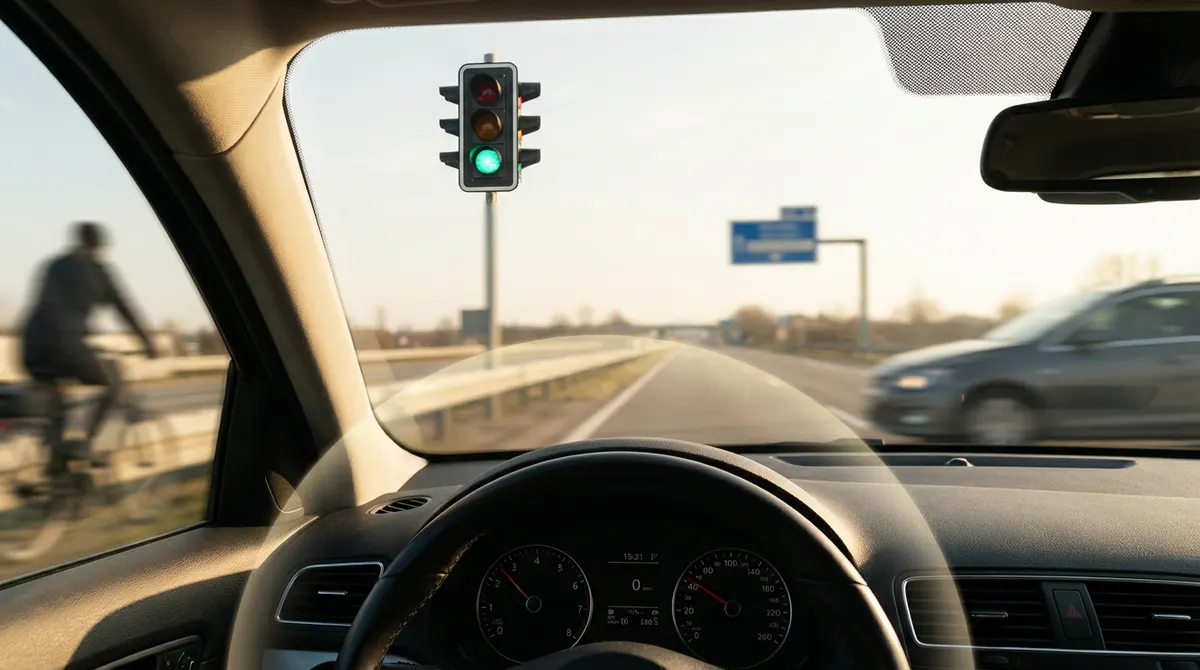
Clear, reliable vision is one of the most critical physical qualifications for operating a commercial motor vehicle safely. Commercial drivers operate heavy vehicles at highway speeds and must constantly process visual information from the road, mirrors, signals, and surrounding traffic.
The Critical Role of Vision in Road Safety
Commercial truck driving places unique demands on visual performance. Drivers must read road signs at distance, detect pedestrians and cyclists in low-light conditions, monitor multiple mirrors, and identify signal colors quickly and accurately.
Adequate vision helps drivers detect hazards early, maintain lane position, and respond safely to road changes. FMCSA's medical qualification rules are designed to reduce risk by setting a minimum functional standard for vision in commercial driving.
DID YOU KNOW: FMCSA vision rules are based on functional driving safety, not on achieving perfect eyesight.
Not sure if sleep apnea applies to you?
Take our 2-minute sleep risk quiz to see whether sleep apnea could affect your DOT physical. No account required.
Who Needs to Meet These Standards?
Any driver operating a commercial motor vehicle in interstate commerce is generally subject to FMCSA medical qualification standards, including vision requirements. This includes many drivers of large trucks, certain passenger vehicles, and placarded hazardous materials vehicles.
Drivers who operate only intrastate may be subject to state-specific rules, though many states align closely with FMCSA standards. If you are unsure which standard applies, a certified medical examiner in your area can confirm the requirement for your license and job type.
The Governing Body: Federal Motor Carrier Safety Administration
The Federal Motor Carrier Safety Administration is the U.S. Department of Transportation agency responsible for commercial motor vehicle safety regulation, including driver medical qualifications. Certified Medical Examiners listed on the National Registry apply these standards during DOT physicals.
Historical Context and Importance of Vision Standards
The current vision requirement is rooted in 49 CFR 391.41, which sets minimum physical qualification standards for drivers. FMCSA updated the vision framework through a final rule that took effect in March 2022, replacing the older exemption process for certain drivers with the Alternative Vision Standard under 49 CFR 391.44.
KEY TAKEAWAY: DOT physical vision requirements are federally defined by FMCSA and apply to commercial driving fitness decisions under 49 CFR 391.41.
The next section breaks down the exact thresholds drivers must meet.
The Core DOT Vision Requirements Explained

The DOT physical vision standard requires acceptable distance acuity, sufficient peripheral vision, and the ability to recognize red, green, and amber traffic signal colors.
Visual Acuity: The 20/40 Standard
Under 49 CFR 391.41(b)(10), a driver must have distant visual acuity of at least 20/40 in each eye separately and 20/40 in both eyes together, with or without corrective lenses. This standard is intended to ensure a driver can see road information and hazards at usable distances for safe operation.
Peripheral Vision: Your Field of View
The FMCSA standard also requires at least 70 degrees of horizontal field of vision in each eye. Peripheral awareness matters because drivers must detect vehicles, people, and movement approaching from the sides without relying only on head turns.
Color Recognition: Interpreting Critical Signals
Drivers must be able to recognize the standard red, green, and amber colors used in traffic signals and devices. This is a functional safety requirement focused on traffic signal recognition, not a general requirement for perfect color vision.
| DOT Vision Standard | Requirement | Can Be Corrected With Lenses? |
|---|---|---|
| Distance acuity in each eye | 20/40 or better | Yes |
| Distance acuity with both eyes | 20/40 or better | Yes |
| Peripheral vision in each eye | At least 70 degrees | No |
| Color recognition | Red, green, and amber | No |
KEY TAKEAWAY: The core standard combines acuity, field of vision, and traffic signal color recognition into one functional driving test.
Knowing these baseline numbers makes it easier to understand how glasses, contacts, and special conditions affect certification.
Already diagnosed and need CPAP support?
Dumbo Health helps patients start CPAP without the usual confusion, paperwork, or upfront cost. Equipment, setup, supplies, and ongoing support are all handled in one place.
How Corrective Lenses Impact Your DOT Vision Test

Corrective lenses are allowed under FMCSA rules as long as they bring the driver to the required standard.
Glasses and Contact Lenses: Essential Tools for Meeting Standards
Many CDL drivers qualify while wearing prescription glasses or contact lenses. If corrective lenses are needed to meet the standard, the medical certificate reflects that the driver must wear them while driving.
Bring your current glasses or contacts to every DOT physical. If you forget them, you may fail the acuity portion even if your corrected vision would otherwise qualify.
TIP: Keep a backup pair of glasses in your truck so you stay compliant if contacts become unusable during a trip.
Important Considerations for the Exam with Corrective Lenses
A current prescription matters. Vision can change gradually, and an outdated prescription may no longer correct your acuity to 20/40 or better at the time of the exam.
Many drivers avoid avoidable certification problems by scheduling an eye exam before DOT renewal. If you need help preparing for the larger process, dumbo.health also explains what equipment you need for a home sleep study and other health screening topics in a practical, patient-friendly format.
KEY TAKEAWAY: Glasses and contacts are not a problem under DOT rules. The key is meeting the minimum standard consistently while using the correction you actually drive with.
Some drivers, however, need a different qualification pathway because one eye does not meet the standard.
Special Vision Conditions and the Alternative Vision Standard
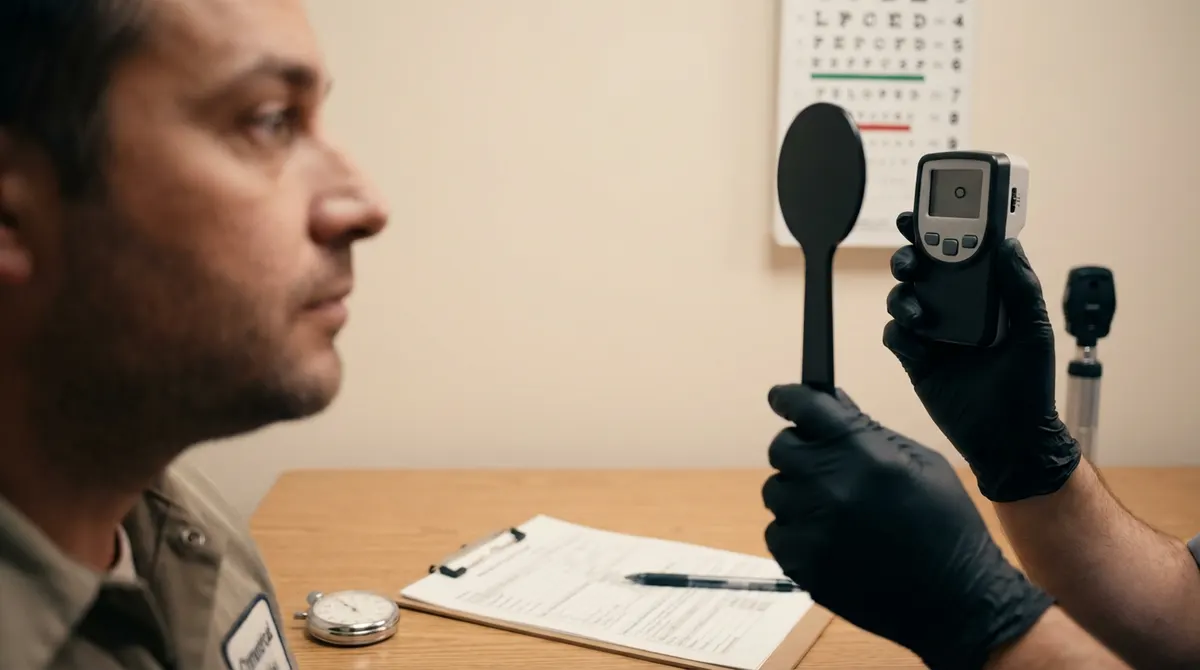
The Alternative Vision Standard provides a pathway for certain drivers whose worse eye does not meet the usual standard, as long as the better eye meets the required benchmarks and the condition is stable.
The Evolution of Monocular Vision Standards
Before 2022, many drivers with monocular vision had to seek a Federal Vision Exemption. FMCSA's 2022 rule replaced that process with the Alternative Vision Standard under 49 CFR 391.44. That change made the process more direct for eligible drivers.
The Vision Evaluation Report Form MCSA-5871
Drivers using the Alternative Vision Standard must have an ophthalmologist or optometrist complete Form MCSA-5871, the Vision Evaluation Report. The form documents acuity, field of vision, the diagnosis, and whether the condition is stable.
FMCSA states that the medical qualification exam must begin within 45 calendar days after the eye specialist signs the form. Drivers qualified under this pathway are generally certified for up to one year at a time.
Vision-Correcting Surgeries: LASIK and Other Procedures
LASIK and other refractive surgeries are not automatically disqualifying under FMCSA rules. The important issue is whether post-operative vision is stable and whether the driver meets the required acuity, field, and color standards at the time of certification.
Other Medical Conditions Affecting Vision
Conditions such as glaucoma, cataracts, retinopathy, or macular degeneration are not automatic disqualifiers in every case. What matters is whether the condition reduces acuity or field of vision below the regulatory minimum and whether the condition is stable and documented appropriately.
KEY TAKEAWAY: Drivers with monocular vision or certain one-eye deficits may still qualify through FMCSA's Alternative Vision Standard using Form MCSA-5871.
The next section explains what actually happens during the exam itself.
The Vision Evaluation Process During Your DOT Physical

The vision portion of a DOT physical is short, structured, and focused on the exact FMCSA criteria the examiner must document.
What to Expect During the Eye Exam Portion of the DOT Physical
The examiner usually reviews vision history, checks distance acuity, assesses field of vision, and confirms signal color recognition. If you wear corrective lenses, the test is commonly performed with them on.
People who undergo this exam often find it is one of the fastest parts of the DOT physical when they arrive prepared. If you are looking for a provider near you, using the FMCSA registry helps you find certified examiners in your area.
The Medical Examiner's Role in Assessing Vision
A Certified Medical Examiner does not rely on guesswork. The examiner applies the federal standard, reviews any supporting documentation, and determines whether the driver meets the qualification rules.
The Crucial Vision Evaluation Report
When the Alternative Vision Standard applies, Form MCSA-5871 is central to the decision. FMCSA specifically requires the Vision Evaluation Report to be completed by an ophthalmologist or optometrist and brought into the certification workflow within the allowed time window.
KEY TAKEAWAY: The DOT vision exam is targeted and rule-based. Most of the outcome depends on whether you meet the exact federal thresholds and bring the right documentation when needed.
If you do not meet the standard on exam day, there are still defined next steps.
What Happens If You Do Not Meet the Vision Standard?

Failing the initial standard does not always mean the end of certification. In some cases, the issue can be corrected with updated lenses or handled through the Alternative Vision Standard process.
Understanding Vision Waivers and Exemptions
FMCSA no longer uses the older exemption approach for new applicants with certain one-eye vision deficits, because the Alternative Vision Standard now covers that pathway. The current regulatory route is the 391.44 process with Form MCSA-5871.
Steps to Take After a Conditional Pass or Failure
If you do not meet the standard, schedule a full eye evaluation promptly, update your prescription if needed, and ask whether the Alternative Vision Standard applies to your case. Return with the required documentation within the allowed timeline if your eye specialist completes Form MCSA-5871.
IMPORTANT: Do not operate a commercial motor vehicle if your certification is not valid. Certification status must be current before you drive in commerce.
KEY TAKEAWAY: A failed vision screen can often be clarified through updated correction, specialist documentation, or the Alternative Vision Standard when the better eye qualifies.
Accurate information is important here because many drivers worry about problems that are often misunderstood.
Common Myths About DOT Vision Requirements Debunked

Several common beliefs about DOT vision rules are inaccurate or incomplete. FMCSA standards focus on functional ability under defined federal criteria, not on broad assumptions.
MYTH: Color blindness automatically disqualifies a CDL driver.
FACT: The rule requires recognition of red, green, and amber traffic signal colors. The rule does not say every form of color vision deficiency automatically disqualifies a driver.
MYTH: LASIK automatically disqualifies you.
FACT: FMCSA focuses on stable, qualifying post-surgical vision rather than banning a procedure itself.
MYTH: Drivers with vision in only one eye can never qualify.
FACT: FMCSA created the Alternative Vision Standard specifically to provide a qualification path for some drivers whose worse eye does not meet the ordinary standard.
MYTH: Wearing glasses means the certification is weak or unusual.
FACT: Corrective lenses are explicitly allowed under the federal standard if they bring the driver to the required threshold.
KEY TAKEAWAY: Most DOT vision myths come from misunderstanding how FMCSA evaluates function, correction, and documented stability.
The best long-term strategy is not guessing. It is protecting your eye health before renewal ever becomes urgent.
Maintaining Optimal Eye Health for Long-Term CDL Certification
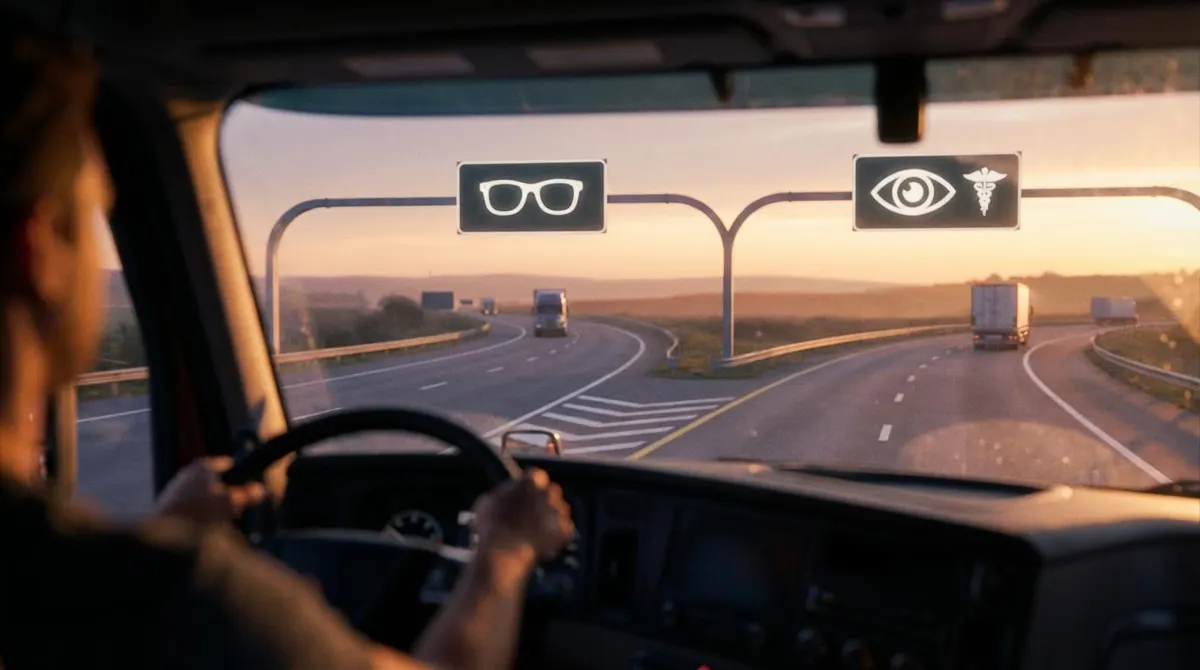
The best way to avoid surprises at renewal is to protect eye health between exams with routine care, current correction, and quick response to changing symptoms.
Proactive Eye Care Beyond the DOT Physical
Annual eye exams help catch changing prescriptions and developing eye disease before a DOT renewal problem appears. That matters for conditions such as glaucoma, cataracts, diabetic eye disease, and macular degeneration.
Addressing Advanced Visual Performance Benchmarks
The FMCSA standard is a minimum threshold, not necessarily ideal visual performance for long hours, glare, or night driving. Many drivers function better with sharper corrected vision than the minimum required score.
Lifestyle Factors and Overall Well-being for Eye Health
Hydration, good sleep, regular follow-up, and consistent use of appropriate corrective lenses all support better functional vision. If sleep quality is part of the issue, dumbo.health also explains what sleep apnea is and how sleep problems can affect everyday performance.
KEY TAKEAWAY: Passing the DOT eye test matters, but maintaining stable long-term vision is what protects your certification over the length of your driving career.
Frequently Asked Questions
Can I use colored contact lenses for my DOT physical?
Colored contacts are only acceptable if they still allow you to meet the required visual acuity and do not interfere with signal color recognition. If there is any doubt, standard clear prescription correction is the safer choice for the exam.
What if my vision fluctuates day to day?
Fluctuating vision should be evaluated before the DOT physical, especially if the cause may be uncontrolled diabetes, dry eye, or recent surgery. If symptoms vary, an eye care provider near you can help document whether the condition is stable enough for certification.
How often do I need a vision exam if I wear corrective lenses?
Your vision is checked as part of every DOT physical, and routine eye exams between renewals are a practical way to prevent surprises. Drivers using the Alternative Vision Standard are generally evaluated at least annually for certification purposes.
Does color blindness automatically disqualify me?
No. The key issue is whether you can recognize red, green, and amber traffic signal colors as required by FMCSA.
What if I had recent eye surgery?
Recent surgery does not automatically disqualify you, but certification depends on stable healing and meeting the federal thresholds at the time of the exam.
Can glaucoma or diabetic retinopathy disqualify me?
These conditions can affect qualification if they reduce acuity or field of vision below the standard. Stable cases with adequate function and proper documentation may still qualify depending on the facts.
Are there providers in my area who handle DOT physicals with vision concerns?
Yes. Use the FMCSA National Registry to find certified medical examiners near you, and work with an ophthalmologist or optometrist in your area if Form MCSA-5871 may be needed.
Conclusion: Prioritizing Vision for a Safe Commercial Driving Career
DOT physical vision requirements exist to make sure commercial drivers can see well enough to drive safely under real road conditions. FMCSA's rules in 49 CFR 391.41 and 391.44 create both a standard pathway and an alternative pathway for some drivers with one-eye vision deficits.
The best preparation starts before the exam. Current corrective lenses, routine eye care, and early follow-up for new symptoms give you the best chance of smooth certification. For broader guidance on health screening and sleep-related risks that can affect driver well-being, dumbo.health also offers practical education on obstructive sleep apnea in adults.
KEY TAKEAWAY: Vision is a core commercial driving safety requirement. The strongest long-term strategy is proactive eye care, current correction, and early action when vision changes appear.
Related DOT Physical Topics
- What Is the Difference Between a DOT and Non-DOT Physical
- DOT Physical ICD-10 & Billing Codes The Complete Guide for Accurate Compliance and Reimbursement
- DOT Physical & Alcohol Requirements
- Can You Pass a DOT Physical With One Eye
- Online DOT Physical Self-Pay The Complete Guide for CDL Drivers and Owner-Operators
- New DOT Physical Requirements What Drivers MUST Know About New Updates
- DOT Physical Blood Pressure Requirements What Drivers Need to Know
- Is a DOT physical the same as a regular physical
- DOT Physical Duration and Validity How Long Your Medical Card Lasts
- Non-DOT Physical A Comprehensive Guide to Workforce Health and Safety
- DOT Physical Texas The Essential Guide to Your Exam, Medical Card, and CDL Compliance
- DOT Physical Requirements A Complete Guide for CDL Drivers
- What Does DOT Stand for in a DOT Physical
- What Are the Requirements to Pass a DOT Physical
- What eye chart is used for a DOT physical
- Online DOT Physical The Complete Guide for Commercial Drivers and Medical Examiners
- DOT Physical Cost Breakdown What Drivers Pay & Why
- DOT Physical Forms & Paperwork The Complete Guide for Commercial Drivers
- DOT Physical Insurance & Recertification The Complete Driver's Guide
- DOT Physical & Drug Test What Drivers Need to Know
- Can You Get a DOT Physical in Any State The Complete Guide for Commercial Drivers
- Can You Get a DOT Physical Online The Complete Guide for Commercial Drivers
- How Do You Submit Your DOT Physical to the DMV
- Does a DOT Physical Test for Weed or THC The Complete Guide for Commercial Drivers
- What Can Disqualify You From a DOT Physical
- Does a DOT physical include a drug test
- Can You Pass a DOT Physical with Epilepsy
- DOT Physical Self Pay Cost
- Remote DOT Physical The Complete Guide for Commercial Drivers
- DOT Physical Exam Basics
- When Can Sleep Apnea Affect a DOT Physical
- Can You Pass a DOT Physical With a Hernia
- Is a drug test required for a DOT physical
- Can You Pass a DOT Physical With a Pacemaker
- Telehealth Dot Physical
- Who needs a DOT physical
- What Forms Do You Need for a DOT Physical
- Why do they measure your neck during a DOT physical
- Navigating Your DOT Physical with Common Medical Conditions
- Online DOT Physical Without Insurance A Complete Guide for Commercial Drivers
- DOT Physical Out of Pocket What Commercial Drivers Actually Pay
- How can drivers with sleep apnea qualify again after a failed DOT physical
- Why DOT Sleep Tests at Home Matter for Your Career and Health
- Navigating the Florida DOT Physical Your Essential Guide for CDL Drivers
- What Is the Urine Test for in a DOT Physical
- DOT Physical Online Cost
- Walk In DOT Physical Self Pay
- What Should You Bring to a DOT Physical
- DOT physical self pay guide for commercial drivers paying out of pocket
- Can You Get a DOT Physical Online
- Can You Fail a DOT Physical for Being Overweight
- Your Complete Guide What's Included in a DOT Physical Exam
- The Ultimate DOT Preparation Checklist for Motor Carriers and Commercial Drivers
- DOT Physical Cash Pay
- Same Day DOT Physical
- Virtual DOT Physical
- Can you fail a DOT physical because of sleep apnea
- What blood pressure do you need to pass a DOT physical
- Online DOT Exam What Drivers and Medical Examiners Need to Know
- Do They Check Your Private Parts During a DOT Physical
- DOT Physical Insurance or Self Pay How to Choose the Right Payment Option for Your Exam
- DOT Physical Chiropractor Your Complete Guide to CDL Exams
- Can You Fail a DOT Physical for High Blood Pressure
- How to Pass a DOT Physical The Complete Commercial Driver's Guide
- Can you pass a DOT physical with sleep apnea
- What should I expect at a DOT physical
- What Does a DOT Physical Consist Of
- What happens if you fail a DOT physical due to sleep apnea
- DOT Physical at Urgent Care What Commercial Drivers Need to Know
- Can You Pass a DOT Physical with Diabetes
- Can You Pass a DOT Physical with High Blood Pressure
- BMI for DOT Physical What Commercial Drivers Need to Know
- What Happens During the DOT Physical Exam The Complete Guide for Drivers
- What Happens If Your DOT Physical Expires Compliance Guide for Commercial Drivers
- Does insurance cover a DOT physical
- What are the current DOT requirements for sleep apnea testing for commercial drivers
- The Ultimate DOT Physical Guide for Commercial Drivers (2025–2026)
- Is a Sleep Study Required for a DOT Physical
- Guide to Obtaining and Managing Your DOT Medical Card Online
- Do They Check for Hernia During a DOT Physical
- Do You Have to Pee During a DOT Physical
- Can You Get a Second Opinion on Your DOT Physical A Complete Guide for Commercial Drivers
- What Do They Check During a DOT Physical
- Cheap DOT Physical Online
- The DOT Physical Exam Ensuring You're Fit for the Road
- Failing a DOT Physical What Every Commercial Driver Needs to Know
- Can You Fail a DOT Physical
- What is DOT Physical
- What drugs do they test for in a DOT drug test
- Are There New DOT Rules or Laws on Sleep Apnea Testing
- Essential 171 DOT Definitions for Commercial Drivers
- 2026 DOT Inspection Dates
- Navigating DOT Stroke Guidelines for CMV Drivers What You Need To Know
- Are there legal requirements for drivers with sleep apnea
- CDL PHYSICAL SELF PAY
- DOT Hypertension Guidelines The Complete Blood Pressure Guide for Commercial Drivers
- DOT Medical Exam Self-Pay A Complete Guide for Commercial Drivers
- The Comprehensive Guide to Suboxone, Sleep Apnea, and FMCSA Compliance for Commercial Motor Vehicle Operators
- Navigating Your CDL Health Requirements
- Online CDL Physical
Take the next step before your DOT physical
Start with the free quiz if you are unsure about your risk, or order an at-home sleep test if you have already been flagged for possible sleep apnea.
AI summary
DOT physical vision requirements are the FMCSA medical qualification standards that commercial motor vehicle drivers must meet to obtain or renew a DOT medical certificate. The governing rules are in 49 CFR 391.41(b)(10), with an Alternative Vision Standard in 49 CFR 391.44. Core criteria include: distant visual acuity of at least 20/40 in each eye and 20/40 in both eyes together (with or without corrective lenses), at least 70 degrees of horizontal field of vision in each eye, and the ability to recognize red, green, and amber traffic signal colors. Corrective lenses are permitted; if needed, the medical certificate indicates the driver must wear them while driving. For monocular vision or one-eye deficits, the Alternative Vision Standard may apply when the better eye meets required benchmarks and the condition is stable. This pathway requires an ophthalmologist or optometrist to complete Form MCSA-5871 (Vision Evaluation Report), and the DOT exam must begin within 45 calendar days of the specialist’s signature; certification is generally up to one year. LASIK and other eye surgeries are not automatically disqualifying if post-operative vision is stable and meets standards.

Nicolas Nemeth
Co-Founder
Nico is the co-founder of Dumbo Health, a digital sleep clinic that brings the entire obstructive sleep apnea journey home. Patients skip the sleep lab and the long wait to see a specialist. Dumbo Health ships an at home test, connects patients with licensed sleep clinicians by video, and delivers CPAP or a custom oral appliance with ongoing coaching and automatic resupply in one clear subscription.
Keep reading

How Long Does a DOT Physical Take? A Complete Guide for Commercial Drivers

What Happens If You Fail a DOT Drug Test? The Complete Guide for Commercial Drivers


