Online CDL Physical
This guide explains what people mean by an online CDL physical and why the DOT Medical Exam still must be done in person. It outlines FMCSA requirements, including using a certified Medical Examiner listed on the National Registry and how long a medical card can be valid. You will learn what the exam covers, from vital signs and vision/hearing standards to urinalysis and system-by-system review. It also details why documentation matters for common conditions like hypertension, diabetes, and obstructive sleep apnea. Practical preparation tips cover what to bring, how pending decisions work, and how to avoid renewal delays. It closes with what to do after the exam to stay compliant with state filing and self-certification.
Struggling with sleep?
Find out if sleep apnea is the reason.
FDA-cleared. $149 flat. Physician-reviewed results in 48 hours.

Online CDL Physical
An online cdl physical is not a fully virtual physical exam, but it can make the DOT Medical Exam process faster by helping you find a certified examiner, complete intake steps, and manage follow-up documents online. The Federal Motor Carrier Safety Administration states that the actual exam must be completed by a certified examiner listed on the National Registry, and the certification may be valid for up to 24 months in eligible cases. If you drive a commercial vehicle or plan to operate one with a Commercial Driver's License, this guide explains what the exam includes, what “online” really means, how medical certification works, and what to do if a condition such as diabetes, high blood pressure, or Sleep Apnea needs extra documentation. The goal is to help you prepare well, avoid delays, and stay compliant. The details below show how to move through the process with confidence. (FMCSA)
Understanding the Essential CDL Physical Exam
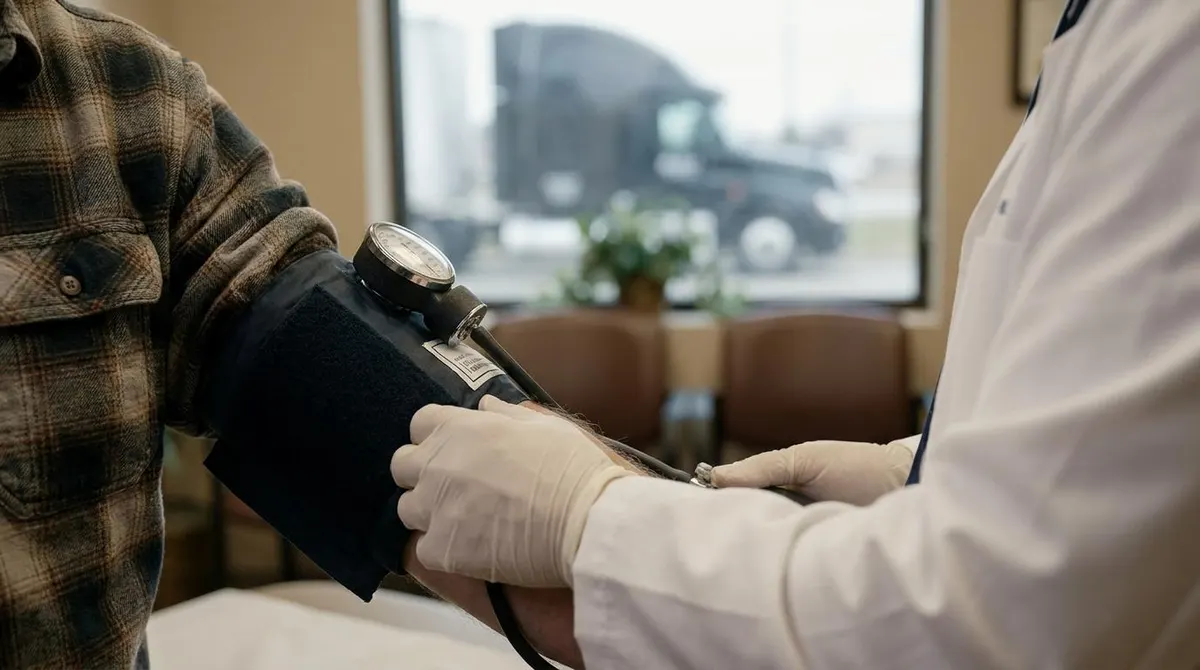
An online CDL physical still ends with an in-person medical exam because a licensed examiner must evaluate whether you meet federal safety standards. For a commercial driver, the exam is both a health review and a legal requirement tied to safe operation of a commercial vehicle.
A DOT Physical is the medical examination used to determine whether a commercial driver is physically qualified to operate a commercial vehicle. A DOT Physical matters because passing the exam supports medical certification, licensing compliance, and safe driving in interstate commerce or, in some cases, intrastate commerce.
The Department of Transportation medical process is commonly called a DOT Physical, a CDL physical, or a DOT Medical Exam. In practice, these phrases usually point to the same core physical exam used to assess a driver’s physical qualifications. The medical exam is separate from the CDL permit process, the knowledge and skills tests, and separate from federal drug and alcohol testing rules under 49 CFR Part 40. Those are related compliance areas, but they are not the same step.
Many people search for an online CDL physical because they want convenience. The key point is that the online part usually means online scheduling, online forms, online contact details, and online document follow-up. The actual hands-on medical examination still happens face to face with a certified Medical Examiner.
Not sure if sleep apnea applies to you?
Take our 2-minute sleep risk quiz to see whether sleep apnea could affect your DOT physical. No account required.
KEY TAKEAWAY: An online CDL physical is best understood as a digital shortcut to a required in-person DOT Medical Exam, not as a fully virtual exam.
Once you understand that, the next question is why the exam is required at all.
What is a DOT Physical and Why is it Required?

A DOT Physical is required for many drivers because federal and state safety rules require proof that a driver can safely handle the demands of operating a commercial vehicle. The DOT Physical matters because the exam connects medical fitness with public road safety.
The Federal Motor Carrier Safety Administration explains that a driver who operates in interstate commerce may need a current Medical Examiner's Certificate to show that the driver meets the Physical Qualifications standard. The exam looks at issues such as blood pressure, vision, hearing, urinalysis findings, medication use, neurological history, and other risk factors that could affect safe driving. That is why the exam is not just routine preventive care. It is a safety-focused medical examination built around commercial driving duties. (FMCSA)
A Commercial Driver's License does not replace the need for medical certification. The license proves driving qualification. The medical certificate supports medical status. For many drivers, both are needed. If you haul freight, transport passengers, or operate based on Gross Vehicle Weight or Gross Vehicle Weight Rating thresholds, medical certification may be part of the overall CDL certification process.
If you are not sure whether you fall under interstate commerce, intrastate commerce, Excepted Interstate, or Excepted Intrastate categories, check your state licensing agency guidance. requirements can differ when you are exempt from some medical certification rules, but many drivers still need a current medical certificate and updated self-certification on file.
DID YOU KNOW: The FMCSA states that a DOT physical can be valid for up to 24 months, but shorter certification periods are common when a condition such as hypertension needs closer monitoring. (FMCSA)
KEY TAKEAWAY: A DOT Physical is required because safe driving, medical fitness, and licensing compliance are closely linked for many CDL-related roles.
To see how this works in practice, it helps to understand who is allowed to perform the exam.
The Role of the Certified Medical Examiner

A certified Medical Examiner is the professional who performs the DOT Medical Exam and decides whether you meet the federal medical standard. The examiner matters because the exam is only valid for covered drivers when completed by a provider listed on the National Registry of Certified Medical Examiners.
A Medical Examiner is a licensed clinician who has completed the FMCSA certification process. The National Registry is the official federal database used to verify whether that examiner is authorized to complete the exam for covered drivers. If a treating physician is not NRCME certified, that treating physician can still provide records, treatment notes, or clearance letters, but that provider cannot issue the DOT Medical Exam result unless the provider is also on the National Registry.
This distinction matters for drivers with ongoing conditions. A treating physician may manage your diabetes, blood pressure, heart problems, or respiratory issues. A certified Medical Examiner reviews that information in the context of commercial driving safety. The roles overlap, but they are not identical.
Already diagnosed and need CPAP support?
Dumbo Health helps patients start CPAP without the usual confusion, paperwork, or upfront cost. Equipment, setup, supplies, and ongoing support are all handled in one place.
When you search online, you may see clinics offering Occupational Medicine, urgent care, or employer health services. Some are excellent medical provider options for the DOT Medical Exam, but the only point that matters for compliance is whether the examiner is on the National Registry of Certified Medical Examiners. Search results can also surface Virtual Urgent Care pages, Denver Health listings, North Oaks Occupational Health Services, expert providers pages, MyChart Users resources, or unrelated services such as IV Vitamin Infusion, Wound Care, or STD Testing. Those pages may be useful for scheduling or clinic information, but they do not change the core rule that the exam itself must be completed by a certified examiner.
TIP: When comparing providers in your area, verify the examiner’s National Registry status before booking, even if the clinic looks reputable online.
KEY TAKEAWAY: The certified Medical Examiner is the decision-maker for DOT fitness, while your regular clinician supports the process with records and treatment history when needed.
That leads directly to the document you receive when you pass.
The Medical Examiner's Certificate (Medical Card)
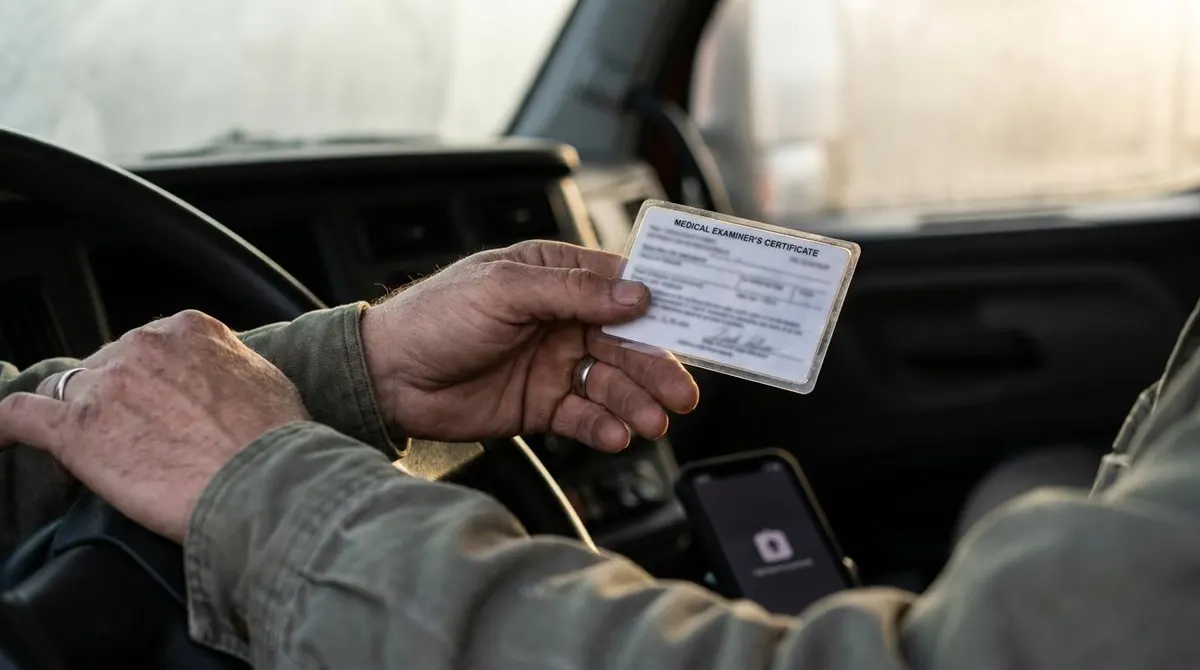
The Medical Examiner's Certificate is the official document that shows you were found physically qualified to drive. The Medical Examiner's Certificate matters because it is the proof many drivers need to maintain active medical certification and CDL-related compliance.
The Medical Examiner's Certificate, often called a Medical Card or medical card, is the form issued after a successful medical examination. FMCSA identifies this as Form MCSA-5876. The longer exam record is the Medical Examination Report Form, or Form MCSA-5875. The examiner completes the report, makes the qualification decision, and then issues the certificate when appropriate. (FMCSA)
Some drivers and fleet managers also refer to these as Medical Examiner Certificates in conversation, especially when discussing renewals in bulk. The important point is that the medical certificate reflects your current medical status at the time of the exam. If your health changes materially after the exam, you may need follow-up review even before the certificate expires.
Certification length varies. A healthy driver may receive up to 24 months. A driver with conditions that need monitoring may receive a shorter period such as 12 months, 6 months, 3 months, or a pending status while more records are reviewed. According to the FMCSA Medical Examination Report form, a pending determination can be held for up to 45 days while the examiner waits for additional information. (FMCSA)
KEY TAKEAWAY: The Medical Examiner's Certificate is the practical result of the exam and the document you must keep current to remain compliant.
Before booking, it helps to understand what “online” really means in this process.
The "Online" Advantage: How Technology is Streamlining Your CDL Physical

The online advantage is speed and convenience, not a virtual substitute for the hands-on exam. An online CDL physical search helps you compare clinics, confirm National Registry status, book faster, and handle paperwork more efficiently.
What makes the process feel online today is the amount of preparation you can do before arriving. You can search the FMCSA website or clinic directories, review office hours, submit intake details, upload forms, check reminders, and sometimes receive follow-up instructions through a portal. That can reduce missed appointments and reduce the chance that your medical history documentation is incomplete on exam day.
For many drivers, the biggest online benefit is better preparation. Online clinic pages often explain out-of-pocket service pricing, accepted payment methods, required documents, and whether same-day appointments are available close to you. That is especially useful if you need a fast renewal while on a tight work schedule.
A second benefit is clearer follow-up. If the examiner needs records from a treating physician, CPAP compliance information, diabetes documentation, or medication details, secure online messaging or portal uploads can make that process faster. That still does not change the rule that the physical exam itself happens in person.
If you are also sorting through sleep-related concerns, Dumbo Health’s at-home sleep test can help you understand next steps when a sleep apnea evaluation is appropriate.
KEY TAKEAWAY: The online advantage is less friction before and after the exam, even though the exam itself still happens face to face.
To avoid confusion, the next section defines the phrase more precisely.
What Does "Online CDL Physical" Truly Mean?
An online CDL physical means digitally supported booking, intake, and follow-up around an in-person DOT Medical Exam. The phrase matters because many search results imply a virtual exam when federal rules still require an in-person physical exam.
Online scheduling means you can reserve an appointment and compare timing, clinic location, and sometimes cost. Online intake means you may be able to complete forms before arrival. Online follow-up means you may be able to send medical records, clearance notes, or compliance documents after the visit. Those are real conveniences, but they are not the physical exam itself.
A fully virtual medical exam is not enough for the DOT qualification decision because the examiner must personally assess vital signs, visual acuity, peripheral vision, hearing, urinalysis, and system-by-system findings. A clinic may offer telehealth for general questions or follow-up logistics, but not as a replacement for the DOT Medical Exam.
This distinction is one of the most misunderstood parts of the process. People often search “Can a DOT physical be done online?” because they hope to save time. The accurate answer is that parts of the process can be handled online, but the qualifying exam cannot be completed entirely online under the standard federal process.
IMPORTANT: Be careful with search results that blur the difference between online scheduling and online examination. The scheduling can be online. The DOT qualification exam itself is in person.
KEY TAKEAWAY: “Online CDL physical” is a convenience phrase, not a regulatory category, and it should never be confused with a fully remote exam.
The best use of the online process is finding the right certified examiner quickly.
Finding an NRCME Medical Examiner Online

Finding an NRCME Medical Examiner online is one of the most useful parts of the digital process. The right search helps you find a compliant provider near you without wasting time on clinics that cannot issue a valid certificate.
The FMCSA’s National Registry of Certified Medical Examiners is the best starting point because it is the official source. If you search the National Registry or the FMCSA website, you can confirm whether a provider is certified. That check matters more than marketing language on a clinic page. A clinic may advertise occupational exams or CDL services, but what matters is the examiner’s current National Registry status.
When you compare providers in your area, focus on five factors:
Confirmed National Registry listing
Appointment availability
Experience handling complex medical history cases
Clear out-of-pocket service pricing
Reliable online contact details and follow-up process
People who undergo this exam often find that the best clinic is not always the cheapest clinic. If you have diabetes, obstructive sleep apnea, hearing loss, a hearing aid, medication questions, or prior heart problems, a provider with stronger exam experience can reduce delays and repeat visits.
Midway through your preparation, it also helps to review related guidance on what can disqualify you from a DOT physical so you know which issues may need extra records before the appointment.
KEY TAKEAWAY: The smartest way to find a provider online is to verify National Registry status first and then compare experience, timing, and document handling.
Once you find the right examiner, preparation becomes the biggest success factor.
Benefits of an Online Approach to Your CDL Physical

The main benefit of an online approach is better preparation and less administrative friction. For a commercial driver, that can mean fewer delays, fewer missing documents, and a faster path to updated medical certification.
A strong online process gives you time to organize your medical history before the appointment. That matters because incomplete records are one of the most common reasons a decision becomes delayed or pending. If you have diabetes, blood pressure treatment, sleep testing, cardiac follow-up, seizure history, or medication concerns, advance preparation is often the difference between a smooth visit and a prolonged review.
Online booking also makes comparison easier. Some clinics clearly state whether they provide same-day appointments, whether they handle employer paperwork, and whether they are used to working with commercial vehicle drivers. That helps you find a provider near you who matches your needs rather than choosing blindly.
Another benefit is better renewal timing. Drivers frequently wait too long and then scramble. Online reminders, saved portal records, and faster communication make it easier to keep your medical card current before work eligibility becomes an issue.
Many patients report that the stress of the process drops when they know exactly what the examiner will ask for. That is why the next section focuses on the documents and records you should gather in advance.
KEY TAKEAWAY: The online approach improves organization, speed, and renewal planning, even though the physical exam still happens in person.
The easiest way to pass smoothly is to arrive with the right records the first time.
Preparing for Your CDL Physical: A Comprehensive Checklist for Success
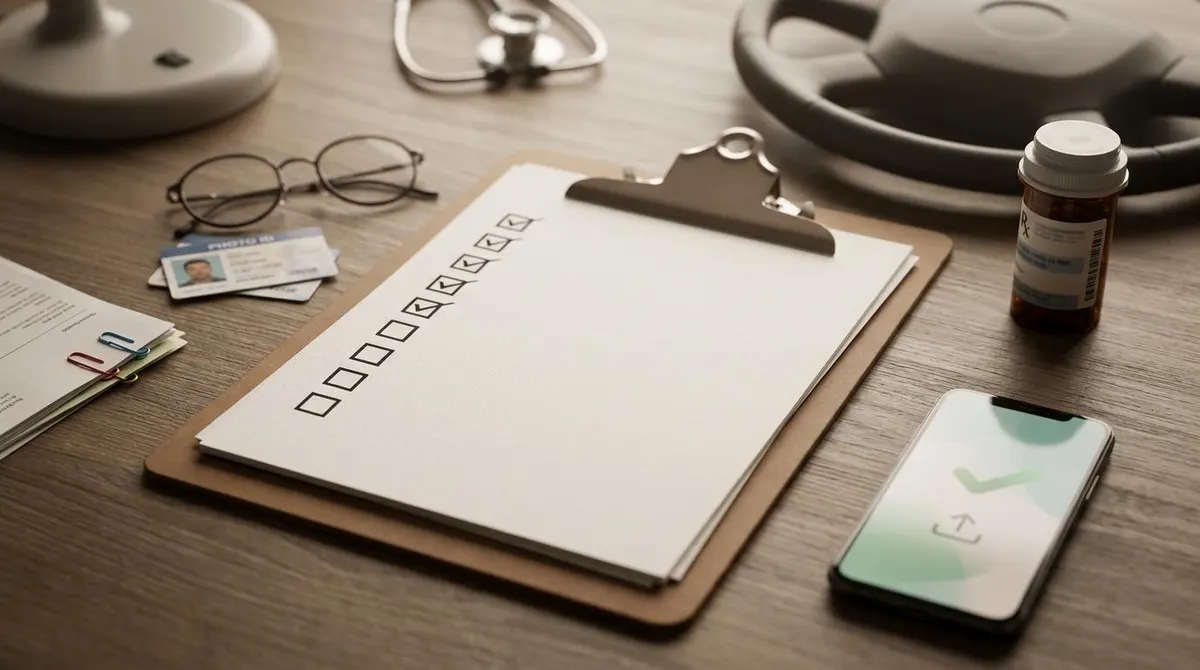
Good preparation reduces the risk of delays, pending decisions, or repeat appointments. For an online CDL physical workflow, the most effective step is gathering your documents and health details before the medical exam.
A preparation checklist is a structured way to make sure the examiner has enough information to assess your health safely and efficiently. A checklist matters because missing records can slow the qualification decision even when your condition is stable.
Start with identity and licensing basics. Bring your driver identification, Commercial Driver's License or CDL permit information if applicable, and any employer documents required for the visit. If you are renewing, bring your current or recently expired Medical Card if you still have it.
Next, organize your health history. Bring a full medication list with dosages, names of prescribing clinicians, recent specialist notes if relevant, and records related to diabetes, cardiac care, neurological history, pulmonary care, or sleep treatment. Your health history and medical history should be accurate and complete. Clinicians frequently observe that honest, organized documentation helps the review move faster than vague or incomplete explanations.
Finally, think in terms of decision support. If a condition could raise questions, bring the supporting record before it is requested. For example, a diabetes follow-up form, recent blood pressure log, CPAP compliance printout, vision note, or hearing documentation can prevent delays.
KEY TAKEAWAY: The best way to prepare is to treat the exam like a regulated safety review and arrive with complete records, not just basic ID.
The most important records are usually your health history and any condition-specific documents.
Gathering Your Medical History and Documents

Gathering your medical history in advance is one of the highest-value steps you can take. A complete medical history helps the examiner make a faster and more accurate certification decision.
Your medical history should include diagnoses, surgeries, medications, prior hospitalizations, treating physician names, and any recent changes in symptoms or treatment. Your health history should also include conditions that feel controlled right now, because the examiner needs the full picture, not just current complaints.
The Medical Examination Report Form asks detailed questions about past and present conditions. That means you should prepare for questions about diabetes, heart problems, respiratory issues, neurological issues, mental health treatment, vision, hearing loss, sleep apnea, and medication side effects. If you wear corrective lenses or a hearing aid, bring them. If a hearing aid is required to meet the standard, it must be used while driving.
For insulin-treated diabetes, FMCSA requires the Insulin-Treated Diabetes Mellitus Assessment Form, MCSA-5870, to be completed by the treating clinician and provided to the certified examiner within 45 days of completion. FMCSA also identifies Form MCSA-5876 as the Medical Examiner's Certificate and Form MCSA-5875 as the Medical Examination Report Form. Those details matter because form timing can affect whether the decision is completed without delay. (FMCSA)
If you have questions about documentation around diabetes, can you pass a DOT physical with diabetes is a useful internal guide before the appointment.
KEY TAKEAWAY: A complete medical history gives the examiner the evidence needed to assess you fairly and efficiently.
Some conditions need extra attention because they are more likely to trigger follow-up review.
Managing Specific Health Conditions for the Exam
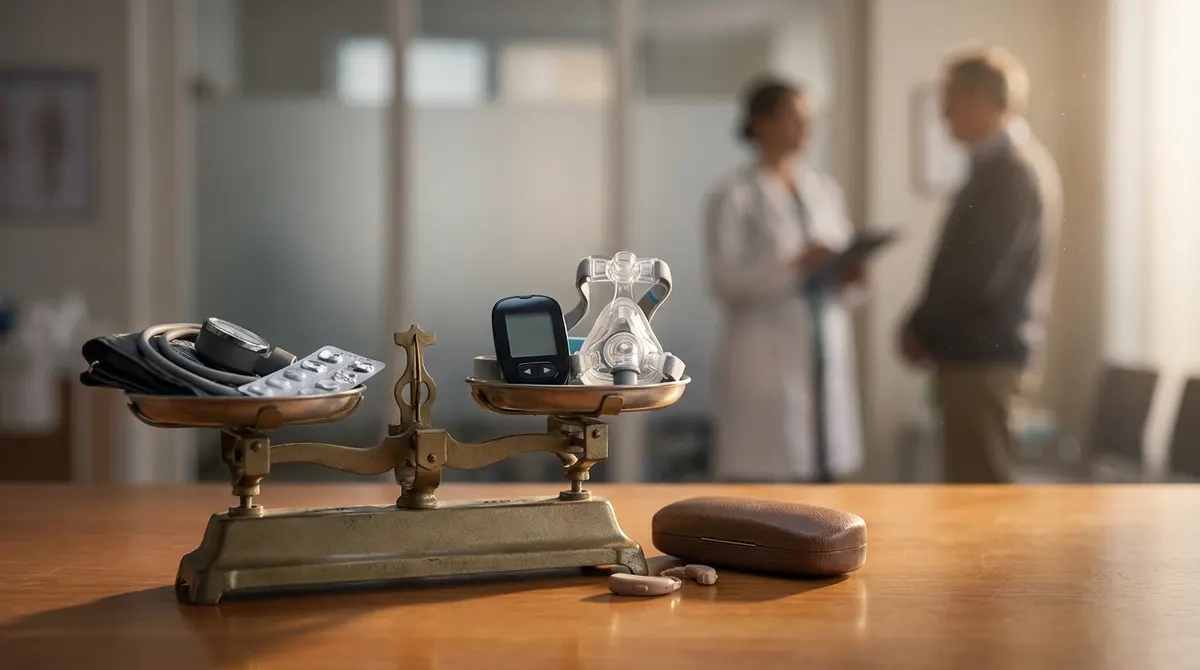
Specific health conditions do not automatically mean failure, but they often require stronger documentation and closer review. The best strategy is to show stability, treatment adherence, and safe functional status.
The most common conditions requiring extra attention include high blood pressure, diabetes, obstructive sleep apnea, seizure history, vision impairment, hearing loss, and certain heart problems. A stable condition with good records is very different from an unstable condition with missing records. That is why drivers with known diagnoses should prepare more thoroughly than drivers with no active conditions.
Blood pressure is a clear example. FMCSA hypertension guidance states that Stage 1 blood pressure of 140 to 159 over 90 to 99 can support 1-year certification, Stage 2 of 160 to 179 over 100 to 109 can support a one-time 3-month certificate, and Stage 3 above 180 over 110 is disqualifying until control improves. Those numbers matter because one elevated reading can change certification length even when you feel fine. (FMCSA)
Diabetes is another area where detail matters. If you use insulin, the examiner may need the proper FMCSA form from the treating clinician. If you do not use insulin, some examiners still want evidence that the condition is stable. An A1C reading can be useful supportive information even when not the only deciding factor.
Sleep Apnea deserves special attention because the issue is often missed until a DOT Medical Exam raises concern. The National Heart, Lung, and Blood Institute explains that sleep apnea involves repeated breathing interruptions during sleep and can cause excessive daytime sleepiness. For a commercial driver, daytime sleepiness can directly affect driving safety. (NHLBI, NIH)
KEY TAKEAWAY: The goal is not perfect health. The goal is documented stability, safe function, and condition-specific evidence when a risk factor is present.
With preparation handled, it helps to know exactly what to bring on the day.
What to Bring to Your Appointment
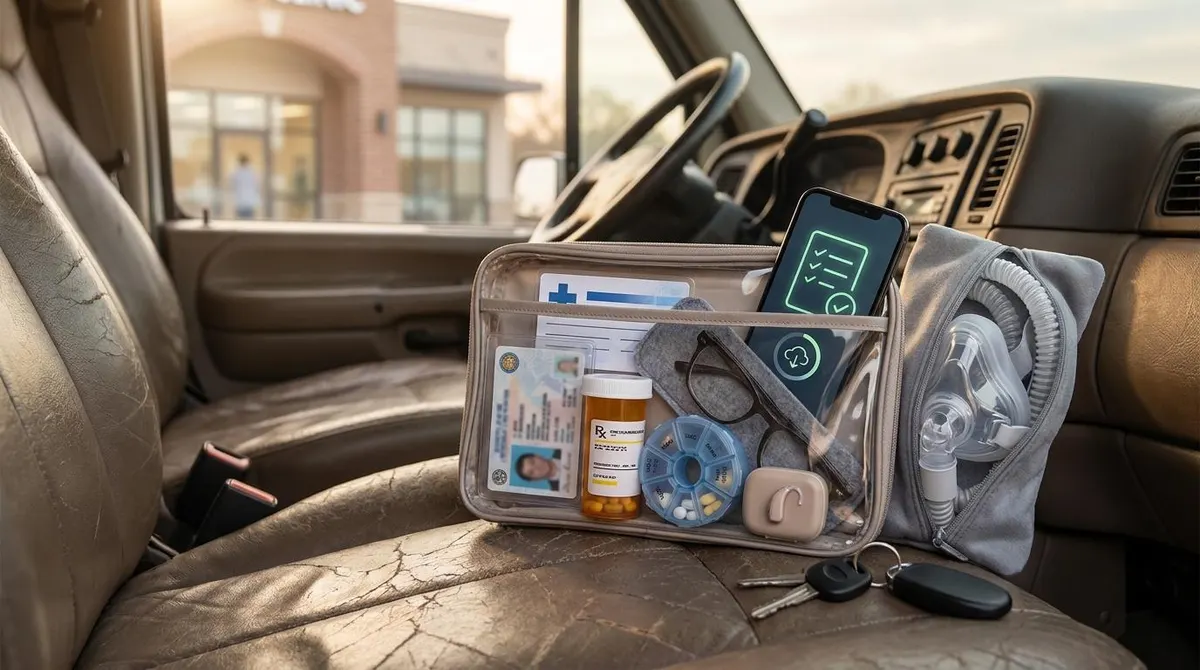
Bring identification, your medication list, corrective devices, and any condition-specific records that support your case. A well-prepared appointment gives the examiner the information needed to complete the medical examination without avoidable delay.
Your appointment checklist should usually include:
Photo ID
Commercial Driver's License, CDL permit, or employer paperwork as applicable
Current medical card or old medical certificate if renewing
Eyeglasses or contact lenses
Hearing aid if you use one
Medication list with dose and prescribing clinician
Specialist letters or testing reports if relevant
Diabetes forms or logs if applicable
CPAP compliance report or sleep evaluation records if applicable
If you recently changed medications or developed a new condition, bring updated notes from the medical provider managing the issue. A treating physician letter can help clarify stability, side effects, and work capacity. That is particularly useful if you are worried about failing a DOT physical due to a condition that is controlled but still likely to raise questions.
Many people underestimate how often the exam turns on documentation rather than symptoms. Organized records can save you time, reduce stress, and lower the risk of a pending decision.
KEY TAKEAWAY: Bring more documentation than you think you need, especially if you have a chronic condition, recent medication changes, or a previous delay.
Once you arrive, the exam follows a fairly predictable structure.
What to Expect During the CDL Physical Examination
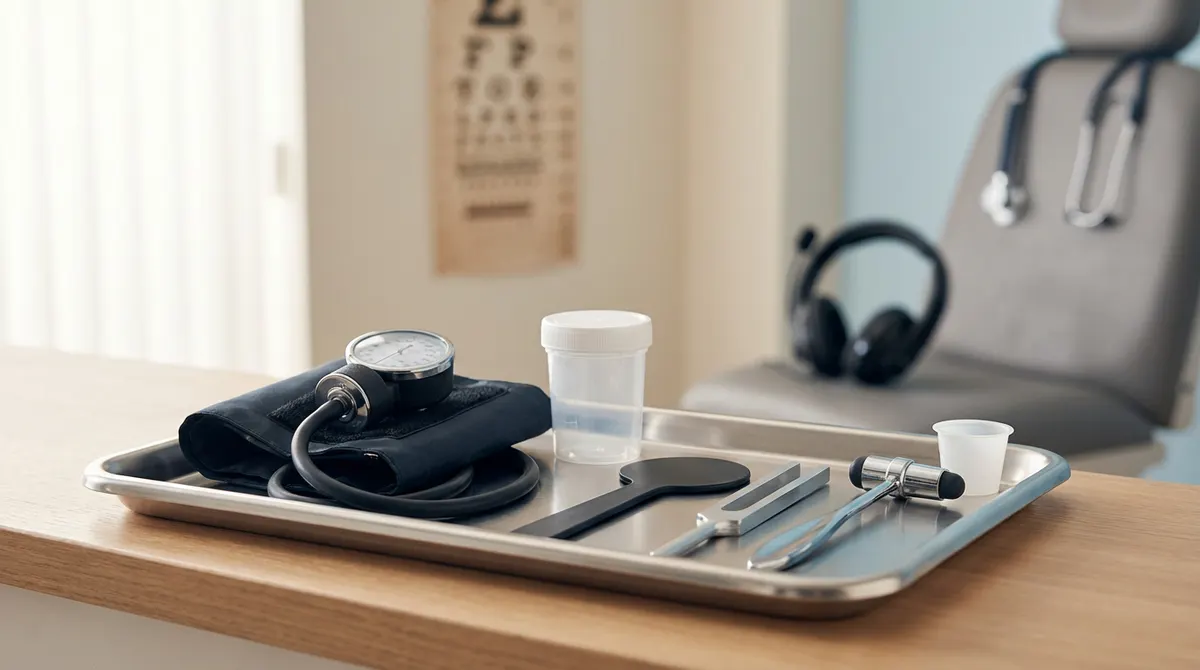
The CDL physical examination is structured, practical, and focused on driving safety. The exam usually reviews vital signs, vision, hearing, urine screening, body systems, and your ability to perform commercial driving duties safely.
A DOT medical exam is not a deep diagnostic workup for every disease. It is a functional and safety-focused physical exam. The examiner reviews your history, asks follow-up questions, checks current findings, and then decides whether you meet the standard, need a shorter certificate, need more information, or do not currently qualify.
The medical exam often feels straightforward for drivers with no active conditions. For drivers with ongoing diagnoses, the key issue is usually whether the condition is stable and documented. That is why the same diagnosis can lead to different outcomes depending on treatment control, recent testing, and specialist input.
People who undergo this exam often find that the visit is less intimidating once they know the structure. The sections below break down the most important components one by one.
KEY TAKEAWAY: The exam is a safety review built around function, stability, and documentation, not a search for perfect health.
The first part usually focuses on baseline measurements and general observations.
Vital Signs and General Physical Assessment
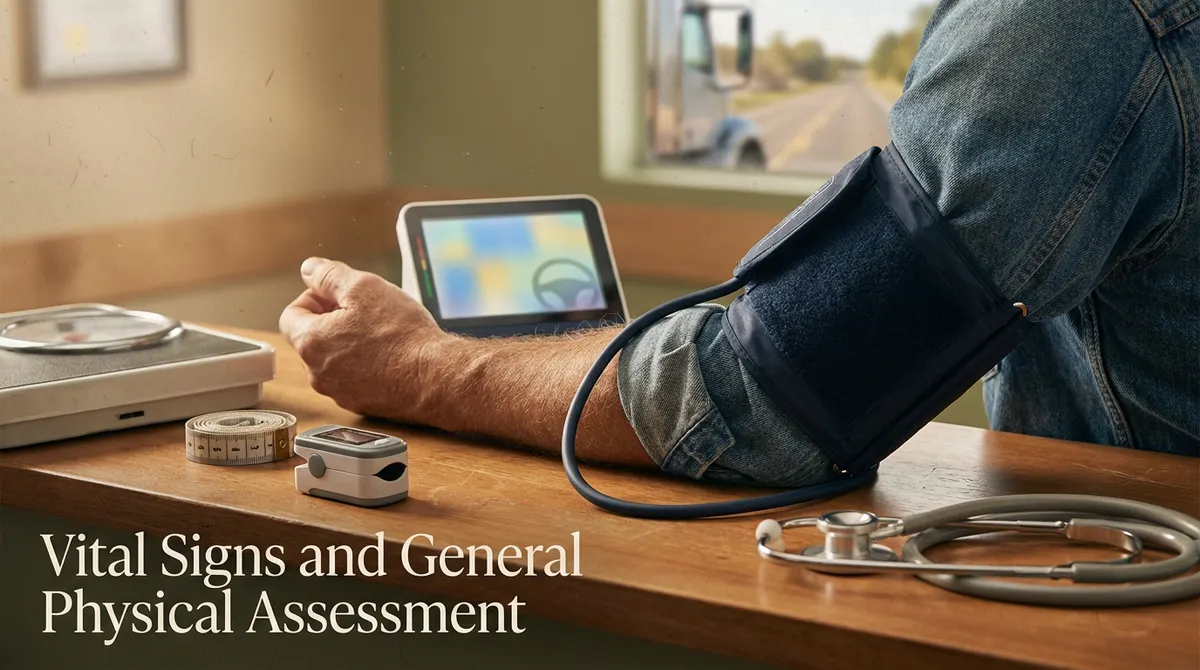
Vital signs and general assessment help the examiner identify immediate safety concerns and chronic risk patterns. These checks matter because blood pressure, pulse, weight, and visible physical function can affect certification length and follow-up needs.
Vital signs are the baseline measurements collected during the medical exam, including blood pressure and pulse. Vital signs matter because they provide objective evidence about cardiovascular stability and general health risk.
Blood pressure is one of the most important numbers in the entire DOT Medical Exam. As FMCSA guidance explains, certain blood pressure thresholds affect how long a certificate can be issued, or whether certification must wait until control improves. Weight is also reviewed because it may relate to obesity-related risk, mobility, and possible sleep-disordered breathing, though weight alone is not an automatic failure.
The general physical assessment may include posture, gait, breathing pattern, limb function, and Back and spine observations. The examiner is checking for functional limitations that could interfere with climbing, steering, braking, securing loads, or responding quickly in an emergency.
If your blood pressure tends to run high in clinical settings, arrive early, avoid rushing, and take prescribed medication as directed. Good exam-day habits do not replace long-term treatment, but they can help reflect your true baseline.
KEY TAKEAWAY: Vital signs and general assessment often shape the certification timeline, especially when blood pressure or functional issues are present.
The next part focuses on two sensory standards that have specific measurable thresholds.
Vision and Hearing Tests

Vision and hearing tests are core parts of the DOT Medical Exam because safe driving depends on both. These tests matter because FMCSA sets specific standards for visual acuity, peripheral vision, color recognition, and hearing ability.
According to FMCSA examination standards, a driver must have at least 20/40 visual acuity in each eye with or without correction, at least 70 degrees of peripheral vision in the horizontal meridian in each eye, and the ability to recognize traffic signal colors. FMCSA hearing guidance states that a driver can qualify by perceiving a forced whispered voice at not less than 5 feet in the better ear, with or without a hearing aid, or by passing audiometric thresholds. (FMCSA)
Visual acuity is the clarity of vision measured during the exam. Peripheral vision is the ability to detect objects to the side without turning your head. Both matter because a commercial vehicle operator must monitor lane position, mirrors, hazards, and signal changes continuously.
If you normally wear corrective lenses, wear them. If you use a hearing aid, bring it and use it as directed. FMCSA specifically recognizes qualification with a hearing aid when the standard is met with the device in place. That means the device is not a problem by itself. The issue is whether hearing function meets the standard safely.
KEY TAKEAWAY: Vision and hearing standards are measurable and specific, so bringing corrective devices can be the difference between a pass and a preventable delay.
Another common source of confusion is the urine test.
Urinalysis: What It Screens For
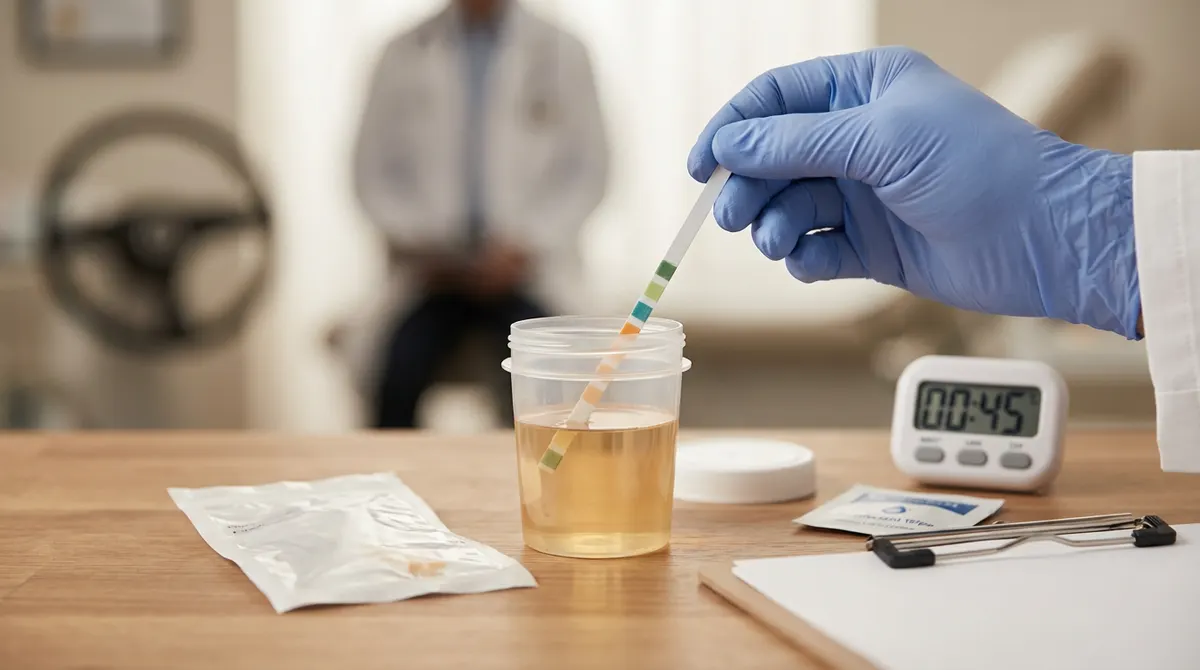
Urinalysis in a DOT physical is a health screening tool, not the same thing as federally regulated drug testing. The urine check matters because it can reveal issues such as blood, protein, or glucose that may require further evaluation.
Urinalysis is a simple urine screening performed during the medical exam to look for markers related to health risk. Urinalysis matters because findings can prompt questions about diabetes, kidney issues, or other conditions that may affect safe driving.
Many drivers confuse this test with drug screening. The DOT Medical Exam urine test is generally used to screen for protein, blood, and sugar. A separate employer or regulatory process handles drug and alcohol testing under 49 CFR Part 40 and the Omnibus Transportation Employee Testing Act framework for safety-sensitive transportation programs.
A urine result does not automatically determine the final outcome by itself. Instead, it gives the examiner additional information about possible underlying conditions. For example, glucose in urine may lead to more questions about diabetes control. The result is part of the whole medical exam, not a stand-alone pass or fail event.
KEY TAKEAWAY: Urinalysis during the DOT Medical Exam is about health screening, not routine drug testing for the certification decision.
After sensory and urine screening, the examiner reviews body systems more broadly.
System-by-System Examination
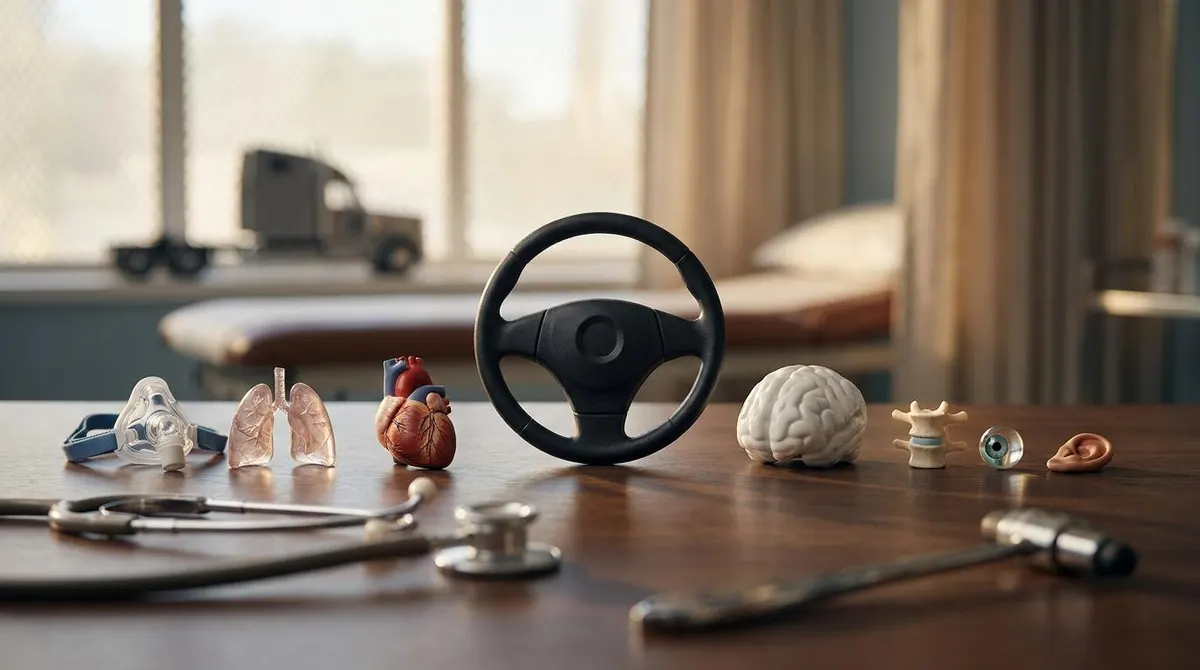
The system-by-system exam checks whether any body system creates a safety concern for commercial driving. This review matters because the examiner is looking at function, stability, and risk across the whole body.
The examiner may review cardiovascular, respiratory, neurological, musculoskeletal, and abdominal findings. This can include questions about heart problems, respiratory issues, dizziness, fainting, seizure history, limb weakness, or mobility limitations. The exam also considers how symptoms affect real driving tasks such as alertness, reaction time, climbing into the cab, turning the head, and using controls.
Obstructive sleep apnea is a strong example of a system-level issue. Obstructive sleep apnea is a disorder in which breathing repeatedly stops or decreases during sleep because the airway narrows or collapses. Obstructive sleep apnea matters because untreated sleep disruption and excessive daytime sleepiness can raise safety concerns for a commercial driver. According to the NHLBI, sleep apnea causes breathing to stop and restart many times during sleep, which can reduce oxygen levels and worsen daytime symptoms. (NHLBI, NIH)
The examiner may also review whether medications cause sedation or other side effects. In real-world use, the question is not just diagnosis. The question is whether the total condition and treatment plan support safe operation.
KEY TAKEAWAY: The system-by-system exam focuses on whether your body and treatment plan support safe, reliable driving performance.
That becomes most important when a known condition may affect qualification.
Navigating Medical Conditions and Potential Disqualifications
Medical conditions can lead to shorter certification, additional documentation, temporary delay, or disqualification depending on severity and control. The outcome depends less on the label of the condition and more on whether the condition is stable and compatible with safe driving.
Potential disqualifications are medical findings that prevent the examiner from certifying a driver at that time. Potential disqualifications matter because many are temporary and can change after treatment, documentation, or specialist review.
A common mistake is assuming that a diagnosis alone always causes failure. That is not how many cases work. A well-controlled condition with strong records often receives a better outcome than an uncontrolled condition with no documentation. That applies to hypertension, diabetes, certain cardiac histories, seizure-related cases, and suspected sleep apnea.
This is also where the online process helps. If the examiner needs extra records, a fast digital follow-up can keep the process moving. The most productive mindset is to prepare as if the examiner will need proof, not just your verbal explanation.
For deeper condition-specific reading, what blood pressure do you need to pass a DOT physical and can you pass a DOT physical with sleep apnea are two useful next-step guides.
KEY TAKEAWAY: A medical condition does not always stop certification, but undocumented or uncontrolled conditions create the biggest risk of delay or failure.
The next section looks at the conditions most likely to trigger closer scrutiny.
Common Medical Conditions Requiring Special Attention

Some conditions consistently require extra review because they can affect alertness, cardiovascular stability, sensory function, or risk of sudden impairment. These conditions matter because they are common and often manageable, but they need evidence of control.
high blood pressure is one of the most frequent issues. FMCSA guidance ties certification length to specific blood pressure ranges, so control matters directly. Diabetes is another major issue, especially when insulin is involved. The examiner may want the proper FMCSA form, recent treatment information, and evidence of stability.
Sleep Apnea is often under-recognized until a driver is screened. The NHLBI notes that loud snoring, gasping, and excessive daytime sleepiness are common warning signs. The CDC states that adults generally need at least 7 hours of sleep each day, which helps explain why chronic poor sleep can impair daytime functioning. Those facts matter because untreated sleep problems can overlap with safety concerns during long driving shifts. (NHLBI, NIH)
Hearing loss and vision impairment also deserve attention because the standards are measurable. If you qualify with correction or a hearing aid, bring the device and any needed specialist documentation. For some drivers, the exam is straightforward once corrective devices are used properly.
KEY TAKEAWAY: The conditions that get the most attention are the ones most likely to affect alertness, stability, or safe vehicle control, and many can still be managed successfully with strong records.
Federal standards and waiver processes determine what happens next in more complex cases.
Understanding FMCSA Medical Standards and Waivers

FMCSA medical standards determine whether a driver meets federal qualification rules, while waivers or exemptions can create a path for some drivers with specific conditions. These rules matter because they shape whether you receive full certification, short-term certification, or need additional review.
Physical Qualifications are the federal standards used to judge whether a commercial driver is medically fit to operate. A waiver or exemption is a formal process that may apply in certain specific situations when a standard is not met in the usual way.
The FMCSA website includes multiple medical forms and exemption pathways, including vision and diabetes-related materials. For insulin-treated diabetes, FMCSA states that drivers must provide the required assessment form to the certified examiner, and the maximum certification period under that standard is 12 months. FMCSA also identifies Form MCSA-5876 for the Medical Examiner's Certificate. (FMCSA)
You may also hear terms such as FMCSA Waiver or exemption certificate in online discussions. The exact pathway depends on the medical issue, the regulation involved, and whether federal exemption programs exist for that condition. The safest approach is to use the FMCSA website and your examiner’s guidance rather than relying on forum posts alone.
KEY TAKEAWAY: FMCSA standards are the foundation of the decision, and waiver or exemption pathways may help in selected cases, but they are condition-specific and documentation-heavy.
When certification does not happen immediately, the outcome is not always permanent.
What Happens if You Don't Pass?

Not passing a DOT Medical Exam does not always mean a permanent end to commercial driving. In many cases, it means the examiner needs more information, better treatment control, or a period of follow-up before certification can be reconsidered.
A non-passing result can take several forms. You may be temporarily disqualified, placed in a pending category, or given a shorter bridge period if the rules allow it. FMCSA materials indicate that a pending determination can remain open for up to 45 days while additional records are gathered. That can be important when a specialist letter, sleep evaluation, or diabetes form is still in progress. (FMCSA)
The most useful next question is why the decision happened. If the issue is high blood pressure, the plan may be treatment and repeat measurement. If the issue is sleep risk, the plan may be testing and documentation. If the issue is missing forms, the solution may simply be administrative.
A failed exam is often a pause point, not the final word. People who undergo this exam often find that better records and better timing produce a very different result on the next visit. The key is to respond quickly, understand the exact issue, and keep your documentation organized online and offline.
KEY TAKEAWAY: A non-passing result is often a temporary problem that can be addressed with treatment, documentation, or follow-up testing.
Once the exam is complete, compliance becomes the next priority.
After Your Exam: Certification and Compliance

After the exam, the main job is making sure the certification is documented correctly and stays current. Post-exam compliance matters because a valid certificate only helps if it is properly filed and renewed on time.
A passed exam typically results in a Medical Examiner's Certificate and a completed medical examination record. Depending on your state and driving category, you may need to submit the certificate to the licensing agency, confirm self-certification status, or both. Many states allow some form of online submission, but the exact process varies. That is why many drivers search phrases like “submit medical card online” after the appointment.
If you are unsure where to send the document, check your state portal or instructions linked to My License Status, Renewal, and Replacement tools. State agencies such as New York State DMV, Connecticut DMV, and Virginia DMV each publish their own operational steps. The federal exam standard comes from the Department of Transportation and FMCSA, but the filing process often runs through your state.
The practical rule is simple. Keep a copy of the medical certificate, confirm receipt if submission is required, and do not assume the system updated automatically unless you have proof.
KEY TAKEAWAY: Passing the exam is only half the job. The other half is making sure the certificate is filed, tracked, and renewed correctly.
The next sections break down the three post-exam steps that matter most.
Receiving Your Medical Examiner's Certificate

Receiving your Medical Examiner's Certificate means the examiner found you medically qualified under the standard used for your case. The certificate matters because it is the document that supports your active medical certification status.
The certificate may be issued for different lengths depending on the findings. A healthier driver may receive up to 24 months. A driver with conditions needing closer review may receive a shorter certificate. Drivers with insulin-treated diabetes under the applicable FMCSA standard are generally limited to a maximum certification period of 12 months. (FMCSA)
Check the form before leaving. Make sure your name, dates, restrictions, and corrective-device notes are accurate. If the certificate says corrective lenses or hearing aid are required, that is part of the qualification decision and must be followed while driving.
Keep both a physical and digital copy if possible. An online record system can be helpful, but you should still retain your own copy in case a portal issue or filing delay creates confusion later.
KEY TAKEAWAY: Review the certificate carefully, keep copies, and understand any listed restrictions before returning to work.
After receipt, your self-certification category also needs to match your work type.
Self-Certification of Driving Type
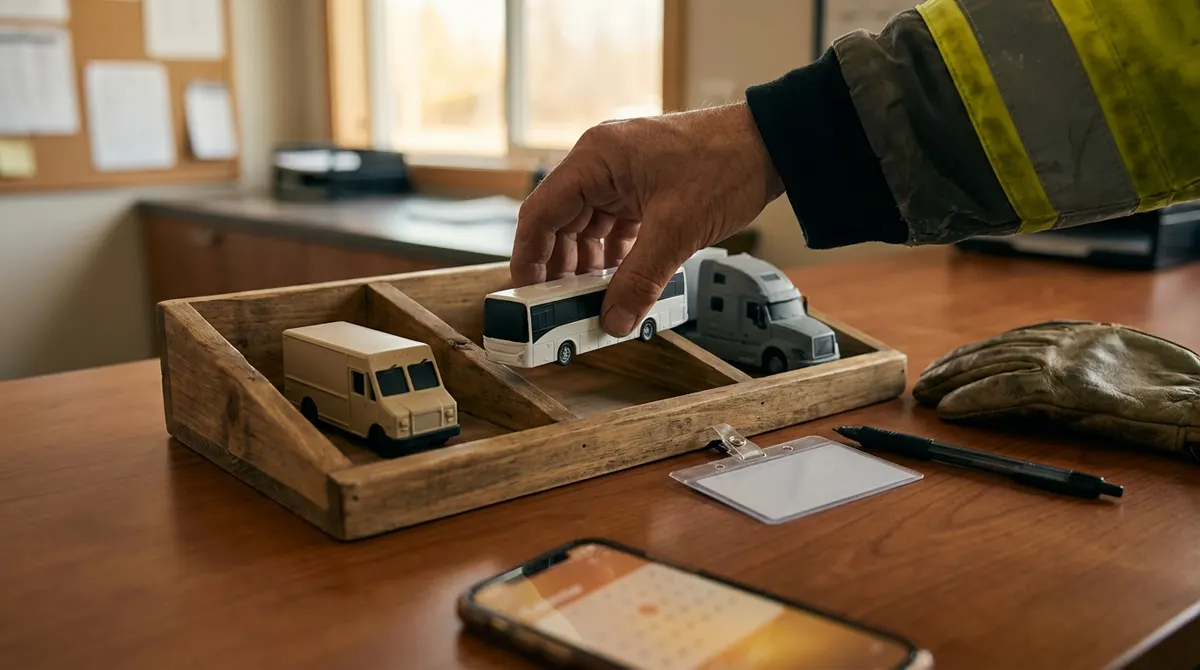
Self-certification of driving type tells the licensing agency how you operate and whether medical certification is required for that category. It matters because a mismatch between your work type and your filed status can create compliance problems even if your exam was valid.
Drivers may need to identify whether they operate in interstate commerce or intrastate commerce, and whether they are excepted or non-excepted. Terms such as Excepted Interstate and Excepted Intrastate are not just paperwork labels. They affect whether a medical certificate must be maintained with the state.
This step is easy to overlook, especially when a driver changes job type, stops driving commercially for a period, or returns after time away. If your work status changes, your filed category may need updating. That is one reason some drivers get confused after renewal and then search online about medical status problems.
The practical approach is to confirm your current driving category with your employer or state agency at the same time you renew your medical certification. Doing both together reduces mistakes.
KEY TAKEAWAY: Your self-certification category must match how you actually drive, or your medical paperwork may not be enough on its own.
The final compliance task is making sure the card never lapses unexpectedly.
Keeping Your Medical Card Current

Keeping your Medical Card current is one of the most important habits in commercial driving compliance. A current card matters because late renewal can disrupt work eligibility, delay payroll, or create licensing issues.
The best renewal system is proactive, not reactive. Put the expiration date on your phone calendar, use clinic reminders, and schedule early if you have any condition likely to require records. Drivers with diabetes, sleep treatment, high blood pressure, or specialist follow-up should plan even earlier because records may need time to gather.
This is where the online approach is most useful. Portals, reminders, uploads, and digital copies make it easier to avoid last-minute renewal stress. Many drivers who search for an online CDL physical are really searching for a more manageable renewal process, and that is a realistic goal.
A current card also protects flexibility. If you change employers, haul hazardous materials, or move between operating categories, having an active and traceable certificate makes transitions easier.
KEY TAKEAWAY: Early renewal and organized digital records are the best way to protect your work status and avoid preventable downtime.
Before the FAQ, it helps to clear up a few myths that often mislead drivers online.
Common Myths About Online CDL Physicals Debunked

An online CDL physical creates convenience, but it does not remove the federal requirement for an in-person exam. These myths matter because misunderstanding them leads to missed appointments, invalid exams, and delayed certification.
MYTH: A DOT Physical can be completed entirely online.
FACT: The federal standard still requires an in-person exam by a certified Medical Examiner listed on the National Registry. Online scheduling and online follow-up are common, but the hands-on physical exam is not fully virtual under the standard FMCSA process. (FMCSA)
MYTH: Any doctor can issue a valid CDL medical card.
FACT: A treating physician can provide records and support, but the qualifying exam for covered drivers must be completed by a certified examiner on the National Registry of Certified Medical Examiners. The examiner and the treating physician can be the same person only if that clinician is properly certified through the FMCSA process. (FMCSA)
MYTH: Diabetes or sleep apnea automatically means you will fail.
FACT: Many drivers with diabetes or obstructive sleep apnea still qualify when the condition is stable and well documented. FMCSA provides a specific diabetes assessment process for insulin-treated drivers, and sleep-related cases often depend on symptom control, testing, and treatment adherence rather than diagnosis alone. (FMCSA)
MYTH: The urine test in a DOT physical is the same as a DOT drug test.
FACT: The urine screening in the medical exam is generally used to look for health markers such as blood, protein, and sugar. Federally regulated drug testing follows a separate compliance framework under 49 CFR Part 40. (FMCSA)
KEY TAKEAWAY: Most CDL physical confusion comes from mixing online convenience, medical screening, and federal compliance into one idea, when each part follows different rules.
With the major misconceptions cleared up, the remaining questions are the ones drivers ask most often.
Frequently Asked Questions
How much does a CDL physical typically cost?
A CDL physical typically costs out of pocket when not covered by an employer, but pricing varies by clinic, region, and complexity. The online part of the process can help you compare providers close to you, but the price should be evaluated alongside National Registry status, appointment speed, and experience with commercial driver cases. A lower advertised price can become more expensive if the clinic cannot handle follow-up records efficiently. In practical terms, the exam is usually best treated as an out-of-pocket service unless your employer pays for it. Always ask whether the fee includes paperwork completion, retesting of blood pressure during the same visit, and any portal-based follow-up.
Can I really do any part of the physical online or virtually?
Yes, but only parts of the process can be handled online. You can usually search for a certified examiner, schedule the appointment, review instructions, complete intake forms, and sometimes upload records or communicate with the clinic online. The DOT Physical itself still requires an in-person medical examination because the Medical Examiner must personally assess vision, hearing, vital signs, urinalysis, and physical findings. That is the key distinction behind the term online CDL physical. If a search result suggests a fully virtual certification exam, treat that claim carefully and verify the provider’s National Registry credentials before booking.
What if my treating physician isn't NRCME certified?
If your treating physician is not NRCME certified, that physician can still support your case with medical records, treatment notes, medication explanations, and clearance letters. The physician just cannot issue the qualifying DOT Medical Exam result for covered drivers unless the physician is also listed on the National Registry of Certified Medical Examiners. In practical use, many drivers rely on a regular specialist or primary care clinician for disease management and then bring those records to the certified Medical Examiner. That is a normal and common process. The key is to bring complete documents so the examiner can review your medical history efficiently.
How often do I need a CDL physical?
How often you need a CDL physical depends on the certification period the examiner gives you. The FMCSA states that the maximum certification period is up to 24 months for eligible drivers, but shorter periods are common when a condition needs closer monitoring. Drivers with insulin-treated diabetes may face a maximum 12-month period under the applicable FMCSA standard. Some drivers receive shorter certificates for hypertension, pending records, or other follow-up needs. The safest approach is to check the exact expiration date on your Medical Examiner's Certificate, schedule early, and avoid waiting until the final weeks if your case requires specialist documentation. (FMCSA)
What's the difference between a DOT Physical and a CDL Physical?
For most practical purposes, a DOT Physical and a CDL physical mean the same core medical exam used to determine whether a commercial driver is medically qualified to operate a commercial vehicle. The phrase DOT Physical emphasizes the Department of Transportation regulatory context. The phrase CDL physical emphasizes the driver licensing context. The exam itself is typically the same DOT Medical Exam when used for commercial driver qualification. The important distinction is not between those two phrases. The important distinction is between the medical exam, the license testing process, and separate drug and alcohol compliance requirements under federal rules.
How do I handle new medical conditions or medication changes after my physical?
If you develop a new condition or have a major medication change after your physical, do not assume the old certificate automatically answers the issue. The safest next step is to speak with the medical provider managing the change and, when appropriate, contact the certified Medical Examiner who performed the exam. The impact depends on the condition, medication side effects, and whether alertness, blood pressure, glucose control, neurological stability, or driving safety could be affected. Keeping updated records online and offline helps. If the issue involves sleep symptoms, is a sleep study required for a DOT physical may help you understand whether further evaluation is likely.
Are there any specific requirements for hazardous materials endorsements?
A hazardous materials endorsement does not replace the need for normal medical certification rules. If you transport hazardous materials, you still need to meet the medical standards that apply to your driving category. In practice, this means your CDL-related qualification, security screening, and work-specific requirements can all matter at the same time. Because transporting hazardous materials raises the safety stakes, employers may be especially strict about keeping your Medical Card current and your medical status clearly documented. The best approach is to renew early, keep digital copies of your medical certificate, and confirm any employer-specific filing rules before your current certificate expires.
Can I find a provider near me and upload my medical card online afterward?
In many cases, yes. You can often find a provider near you or providers in your area through online search tools, clinic directories, and the National Registry. After the exam, some states allow online submission of the updated medical card, while others have their own portal or agency workflow. Because the state filing step varies, always confirm the exact process with your licensing agency rather than assuming it happens automatically. Keeping your own scanned copy is also smart. That protects you if a filing problem occurs or if you later need to prove your certificate was issued on time.
Conclusion
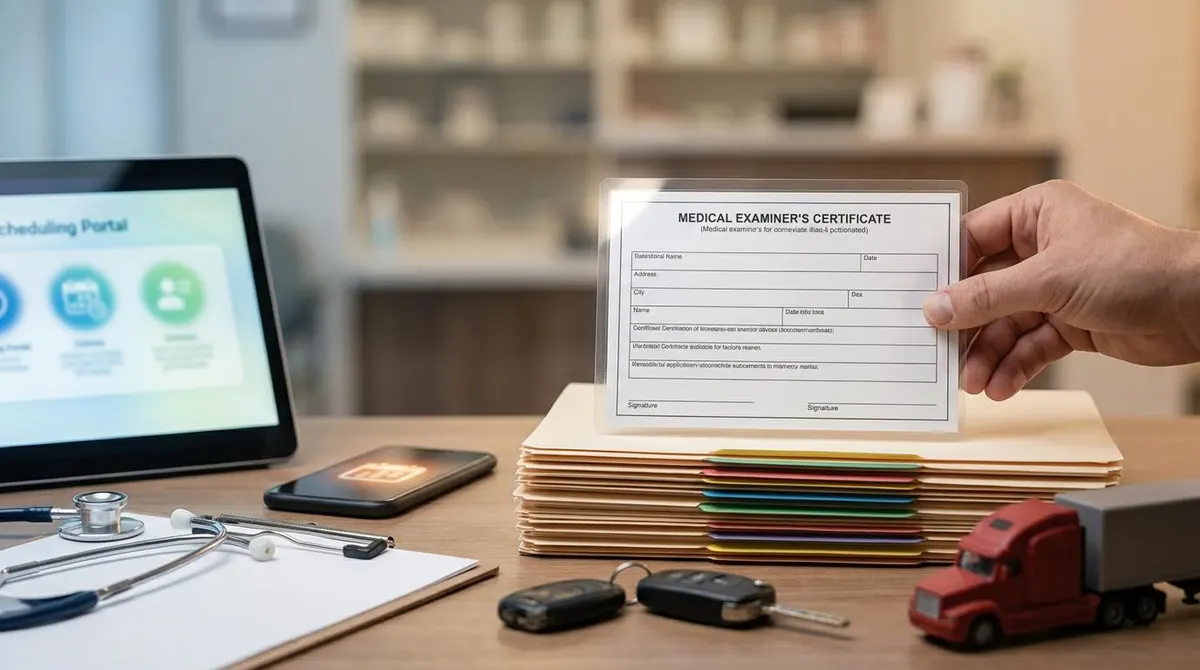
An online CDL physical is best viewed as a smarter, faster way to manage booking, paperwork, and follow-up around a required in-person DOT Medical Exam. The core process still depends on a certified Medical Examiner, a complete medical history, and clear documentation for any condition that may affect safe driving. If you prepare early, verify National Registry status, and keep your medical certificate current, the process becomes much easier to manage. For your next step, review what are the requirements to pass a DOT physical so you can arrive informed, organized, and ready for a smooth certification decision.
Related DOT Physical Topics
- Online DOT Physical Self-Pay The Complete Guide for CDL Drivers and Owner-Operators
- Navigating the Florida DOT Physical Your Essential Guide for CDL Drivers
- DOT Physical Online Cost
- Online DOT Physical Without Insurance A Complete Guide for Commercial Drivers
- Can You Get a DOT Physical Online
- CDL PHYSICAL SELF PAY
- Cheap DOT Physical Online
- Online DOT Physical The Complete Guide for Commercial Drivers and Medical Examiners
- DOT Physical Chiropractor Your Complete Guide to CDL Exams
- Is a DOT physical the same as a regular physical
- DOT Physical Texas The Essential Guide to Your Exam, Medical Card, and CDL Compliance
- DOT Physical Requirements A Complete Guide for CDL Drivers
- What Happens If Your DOT Physical Expires Compliance Guide for Commercial Drivers
- Does a DOT Physical Test for Weed or THC The Complete Guide for Commercial Drivers
- What Can Disqualify You From a DOT Physical
- Does a DOT physical include a drug test
- The Ultimate DOT Physical Guide for Commercial Drivers (2025–2026)
- Can You Pass a DOT Physical with Epilepsy
- DOT Physical Self Pay Cost
- Remote DOT Physical The Complete Guide for Commercial Drivers
- DOT Physical Out of Pocket What Commercial Drivers Actually Pay
- When Can Sleep Apnea Affect a DOT Physical
- What Does DOT Stand for in a DOT Physical
- Is a drug test required for a DOT physical
- DOT Physical Cost Breakdown What Drivers Pay & Why
- Can You Pass a DOT Physical With One Eye
- Can You Pass a DOT Physical With a Pacemaker
- What Should You Bring to a DOT Physical
- Home Sleep Apnea Test for Commercial Drivers The CDL Holder's Complete Guide
- Telehealth Dot Physical
- DOT Physical Forms & Paperwork The Complete Guide for Commercial Drivers
- Sleep Apnea Test for CDL Drivers
- Who needs a DOT physical
- What Forms Do You Need for a DOT Physical
- Does insurance cover a DOT physical
- DOT Physical & Alcohol Requirements
- DOT Physical Duration and Validity How Long Your Medical Card Lasts
- DOT Physical ICD-10 & Billing Codes The Complete Guide for Accurate Compliance and Reimbursement
- DOT Physical Vision & Eye Requirements
- Why do they measure your neck during a DOT physical
- Navigating Your DOT Physical with Common Medical Conditions
- Can You Fail a DOT Physical for Being Overweight
- Your Complete Guide What's Included in a DOT Physical Exam
- How can drivers with sleep apnea qualify again after a failed DOT physical
- What Is the Urine Test for in a DOT Physical
- Do They Check for Hernia During a DOT Physical
- Walk In DOT Physical Self Pay
- DOT physical self pay guide for commercial drivers paying out of pocket
- How Do You Submit Your DOT Physical to the DMV
- What Are the Requirements to Pass a DOT Physical
- New DOT Physical Requirements What Drivers MUST Know About New Updates
- DOT Physical Exam Basics
- DOT Physical Insurance & Recertification The Complete Driver's Guide
- Can You Pass a DOT Physical With a Hernia
- Can You Get a Second Opinion on Your DOT Physical A Complete Guide for Commercial Drivers
- Same Day DOT Physical
- Virtual DOT Physical
- DOT Physical Cash Pay
- Can you fail a DOT physical because of sleep apnea
- What blood pressure do you need to pass a DOT physical
- Online DOT Exam What Drivers and Medical Examiners Need to Know
- Do They Check Your Private Parts During a DOT Physical
- DOT Physical Blood Pressure Requirements What Drivers Need to Know
- DOT Physical Insurance or Self Pay How to Choose the Right Payment Option for Your Exam
- Can You Fail a DOT Physical for High Blood Pressure
- How to Pass a DOT Physical The Complete Commercial Driver's Guide
- Can you pass a DOT physical with sleep apnea
- What should I expect at a DOT physical
- What Does a DOT Physical Consist Of
- What happens if you fail a DOT physical due to sleep apnea
- DOT Physical at Urgent Care What Commercial Drivers Need to Know
- Can You Get a DOT Physical in Any State The Complete Guide for Commercial Drivers
- Can You Pass a DOT Physical with Diabetes
- Can You Pass a DOT Physical with High Blood Pressure
- BMI for DOT Physical What Commercial Drivers Need to Know
- What Happens During the DOT Physical Exam The Complete Guide for Drivers
- Navigating Your CDL Health Requirements
- DOT Physical & Drug Test What Drivers Need to Know
- Non-DOT Physical A Comprehensive Guide to Workforce Health and Safety
- Is a Sleep Study Required for a DOT Physical
- What Is the Difference Between a DOT and Non-DOT Physical
- Guide to Obtaining and Managing Your DOT Medical Card Online
- Do You Have to Pee During a DOT Physical
- What eye chart is used for a DOT physical
- What Do They Check During a DOT Physical
- The DOT Physical Exam Ensuring You're Fit for the Road
- Failing a DOT Physical What Every Commercial Driver Needs to Know
- Can You Fail a DOT Physical
- What is DOT Physical
- What drugs do they test for in a DOT drug test
- Are There New DOT Rules or Laws on Sleep Apnea Testing
- Essential 171 DOT Definitions for Commercial Drivers
- 2026 DOT Inspection Dates
- How Sleep Apnea Affects Overall Driving Safety
- Best Treatments for Sleep Apnea to Improve Driving Safety
- DOT sleep apnea test at home
- Why DOT Sleep Tests at Home Matter for Your Career and Health
- What Precautions Should Drivers With Sleep Apnea Take
- Are there legal requirements for drivers with sleep apnea
- How Does Sleep Apnea Affect Driving Ability
Take the next step before your DOT physical
Start with the free quiz if you are unsure about your risk, or order an at-home sleep test if you have already been flagged for possible sleep apnea.
AI summary
An online CDL physical is a digitally supported workflow for a required in-person DOT Medical Exam. FMCSA requires the hands-on exam to be completed by a certified Medical Examiner listed on the National Registry of Certified Medical Examiners (NRCME). The outcome is the Medical Examiner’s Certificate (medical card), Form MCSA-5876, supported by the Medical Examination Report Form MCSA-5875. Certification can be valid up to 24 months, but shorter periods are common when monitoring is needed; pending determinations may be held up to 45 days for added records. The exam typically includes vital signs (especially blood pressure), vision and hearing testing, urinalysis for health markers (not a DOT drug test under 49 CFR Part 40), and a system-by-system assessment. Common conditions needing extra documentation include hypertension, diabetes (insulin-treated drivers use Form MCSA-5870 within 45 days), and obstructive sleep apnea with CPAP compliance evidence. After passing, drivers must keep copies, file the certificate per state DMV rules, confirm self-certification category, and renew early to avoid lapses.

Nicolas Nemeth
Co-Founder
Nico is the co-founder of Dumbo Health, a digital sleep clinic that brings the entire obstructive sleep apnea journey home. Patients skip the sleep lab and the long wait to see a specialist. Dumbo Health ships an at home test, connects patients with licensed sleep clinicians by video, and delivers CPAP or a custom oral appliance with ongoing coaching and automatic resupply in one clear subscription.
Keep reading

How Long Does a DOT Physical Take? A Complete Guide for Commercial Drivers

What Happens If You Fail a DOT Drug Test? The Complete Guide for Commercial Drivers


