Who needs a DOT physical?
A DOT physical is a required medical exam used to confirm a driver can safely operate a commercial motor vehicle under FMCSA standards. This article explains who needs one based on interstate commerce rules, vehicle weight (10,001 pounds or more), passenger capacity, and hauling placardable hazardous materials. It clarifies that some drivers need certification even without a CDL, while some operations may be excepted. You will learn what the exam includes, such as vision and hearing checks, blood pressure, urinalysis, and a full systems evaluation. It also outlines how common conditions like hypertension, diabetes, and sleep apnea are assessed when controlled and documented. Practical guidance covers how to prepare, what certification outcomes mean, and how to find a Certified Medical Examiner on the FMCSA National Registry.
Struggling with sleep?
Find out if sleep apnea is the reason.
FDA-cleared. $149 flat. Physician-reviewed results in 48 hours.

Who needs a DOT physical?

Introduction: More Than a Check-Up, Why Your Health Is Your License to Drive

DOT physical is a mandatory medical examination that confirms you are healthy enough to safely operate a commercial motor vehicle. The Federal Motor Carrier Safety Administration (FMCSA) requires this medical certification for most commercial drivers in interstate commerce to protect public safety.
The exam reviews your medical history, current medical conditions, medications, and a complete physical exam to see whether anything could interfere with safe driving. On this page, you will learn who needs a DOT physical, what counts as a commercial motor vehicle, what happens during the exam, how different medical conditions are handled, and how to find certified healthcare providers in your area.
Understanding these rules helps you protect both your livelihood and everyone who shares the road with you.
A commercial motor vehicle is generally any self propelled or towed vehicle used on a highway in interstate commerce to transport passengers or property when it meets specific thresholds for weight, passengers, or hazardous materials. If your vehicle meets those thresholds, you are treated as a CMV driver and are usually subject to DOT medical certification requirements.
The Federal Motor Carrier Safety Administration (FMCSA) and Its Regulations
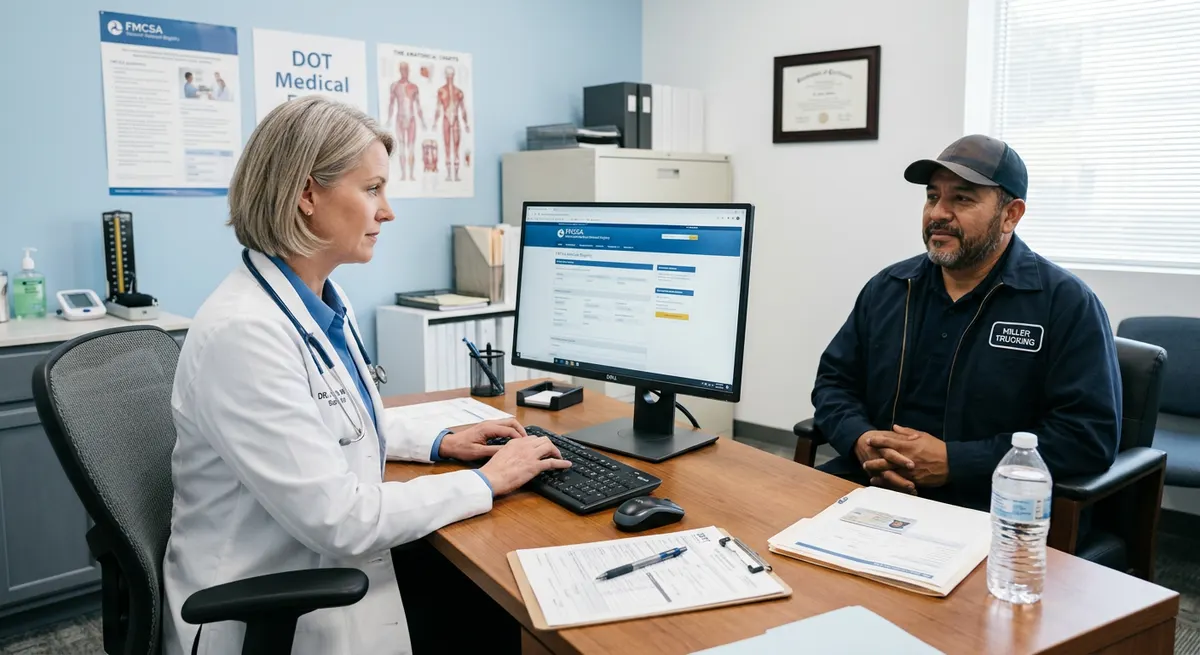
FMCSA is the United States agency that regulates commercial motor vehicle safety, including physical qualification standards, hours of service rules, and many other requirements for drivers and motor carriers. Only medical examiners who have completed FMCSA training and passed a test on the regulations can be listed in the National Registry and perform DOT physicals.
Not sure if sleep apnea applies to you?
Take our 2-minute sleep risk quiz to see whether sleep apnea could affect your DOT physical. No account required.
FMCSA also links medical certification to commercial driver records, especially for CDL holders. That means your medical status is not just a piece of paper, it is part of the data that enforcement officers and licensing agencies use to decide whether you are allowed to operate a commercial motor vehicle.
Key Criteria for Needing a DOT Physical: It Is About the Operation, Not Just the License

You generally need a DOT physical if you operate a commercial motor vehicle in interstate commerce with a gross vehicle weight rating or gross combination weight rating of 10,001 pounds or more, if you drive certain passenger vehicles, or if you haul placardable quantities of hazardous materials. These criteria apply whether or not you hold a CDL.
Some drivers are in excepted categories, such as certain farm or emergency vehicle operations, but most interstate freight and passenger roles are non excepted and require a valid medical examiner card. If you are unsure, it is safest to assume that a DOT physical is required and confirm with your employer or state licensing agency.
The Commercial Driver's License (CDL) Connection: An Automatic Requirement
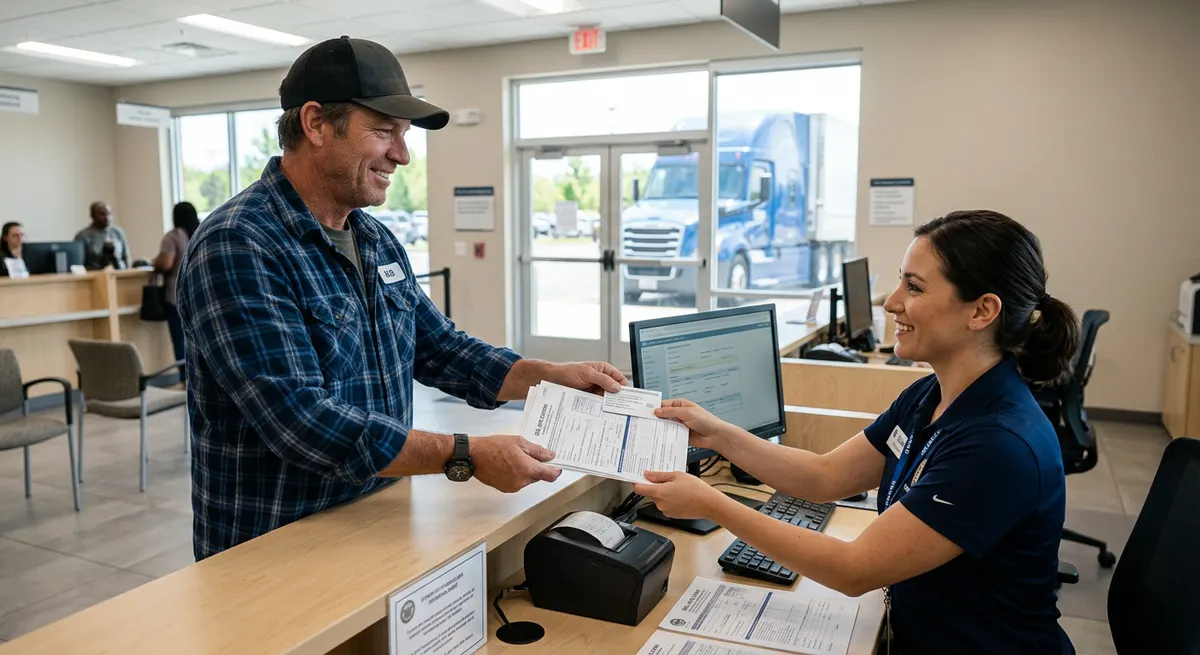
If you hold a Commercial Driver's License and drive commercial motor vehicles in interstate non excepted commerce, you are normally required to maintain a current DOT medical certificate. CDL holders must self certify the type of commerce they operate in and provide their medical examiner certificate information to their State Driver Licensing Agency.
If your medical card expires and is not updated in the state system, your CDL can be downgraded or your commercial driving privileges can be suspended until you complete a new DOT physical and regain medical certification.
Beyond the CDL: Other Safety-Sensitive Roles and Specific Vehicle Operations

You may need a DOT physical even if you do not have a CDL, as long as you operate a qualifying commercial motor vehicle in interstate commerce. Examples include drivers of some medium duty trucks, shuttle buses carrying enough passengers to meet the definition, and vehicles carrying hazardous materials that require placards.
Many logistics and delivery companies also choose to apply DOT physical standards to similar safety sensitive positions even when regulations are less clear, because they want a consistent level of medical oversight for everyone operating larger vehicles or carrying important loads.
What to Expect: A Comprehensive Look at the DOT Physical Examination
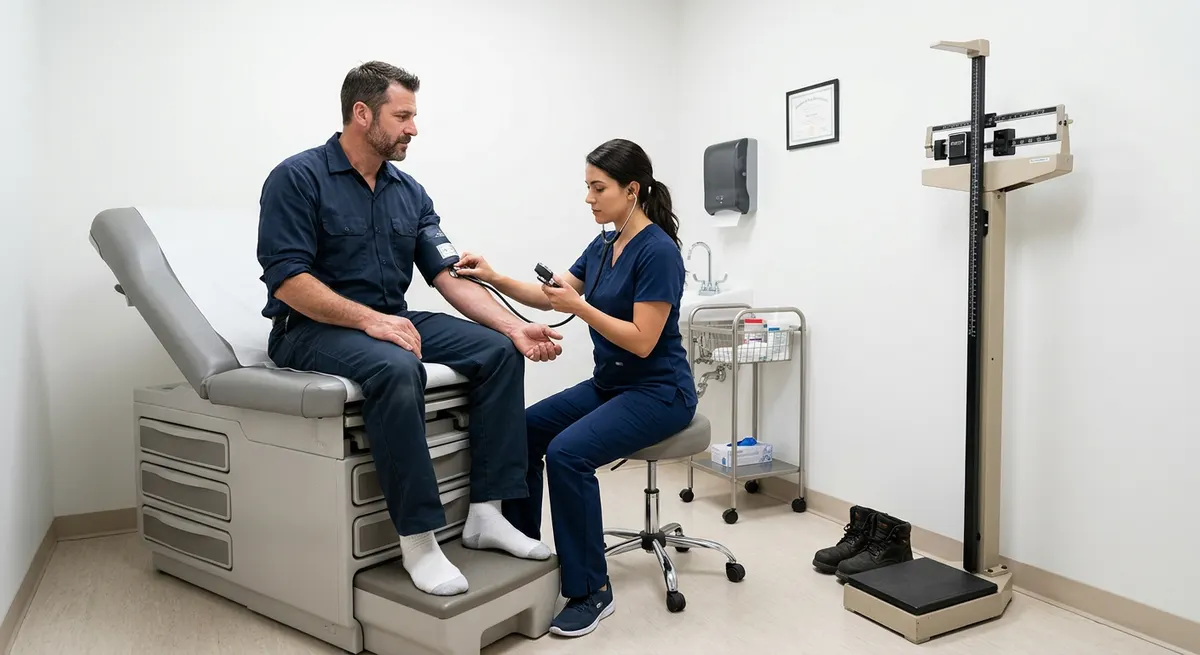
A DOT physical includes a detailed medical history review, measurement of vital signs such as blood pressure and pulse, a urinalysis, and a hands on physical examination of all major body systems. The medical examiner looks for any condition that could interfere with safe commercial driving over time.
vision and hearing are checked using standardized tests. The examiner also evaluates your heart, lungs, abdomen, spine, joints, and nervous system, looking for problems that might cause sudden incapacitation or make it difficult to control a heavy vehicle for long periods.
Navigating the Requirements: Key Medical Conditions and FMCSA Standards for Certification
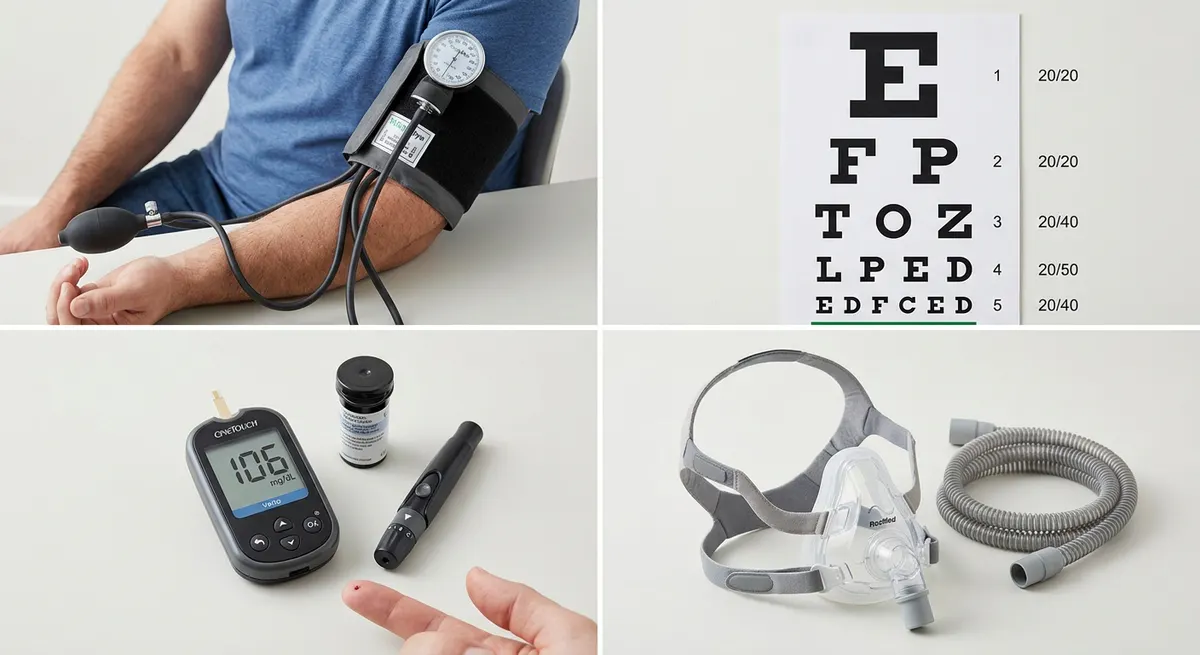
FMCSA medical standards focus on whether medical conditions are controlled well enough that they are unlikely to interfere with safe commercial motor vehicle operation. Many conditions, including high blood pressure, diabetes, and treated sleep apnea, can be compatible with certification if they are properly managed and documented.
The examiner pays close attention to cardiovascular health, neurological health, vision and hearing, and chronic conditions such as diabetes mellitus or sleep apnea. In many cases, drivers with stable conditions receive shorter term medical cards so that their status can be reviewed more frequently.
Common Myths About DOT Physicals Debunked

Many drivers avoid DOT physicals because of myths about automatic disqualification, invasive testing, or unfair standards. In reality, federal guidance shows that the focus is on managed risk and that many treated conditions remain compatible with commercial driving.
Already diagnosed and need CPAP support?
Dumbo Health helps patients start CPAP without the usual confusion, paperwork, or upfront cost. Equipment, setup, supplies, and ongoing support are all handled in one place.
For example, treated obstructive sleep apnea, well controlled hypertension, and insulin treated diabetes that meets the federal criteria can all be compatible with medical certification. Honest communication with your examiner, adequate documentation, and appropriate follow up are usually more important than the diagnosis alone.
Preparing for Your DOT Physical: Setting Yourself Up for Success

Preparing for a DOT physical means gathering your medical records, organizing a list of medications, and working on healthy habits in the weeks leading up to the exam. Bringing recent specialist reports and test results can prevent delays and help the examiner see that your conditions are stable.
Many drivers find that paying attention to sleep, diet, and stress before the exam improves blood pressure readings and overall comfort during the visit. If you have concerns about conditions such as sleep apnea, high blood pressure, or diabetes, it is wise to talk with your regular healthcare provider before your DOT appointment.
The Outcome: Your Medical Examiner's Certificate and Maintaining Compliance

At the end of your exam, the Certified Medical Examiner decides whether to issue a medical examiner card, to time limit certification, to request more information, or to disqualify you. A full term card can be valid for up to 24 months, but many drivers receive 12 month or shorter cards when they have chronic conditions that need monitoring.
If you do not pass, the examiner should explain why and may suggest that you follow up with a specialist or primary care provider. In many cases, improving control of blood pressure, blood sugar, or sleep apnea allows drivers to return for a new exam and regain certification.
Finding a Qualified Medical Examiner: The National Registry of Certified Medical Examiners

To schedule a DOT physical that will be accepted for federal medical certification, you must use a Certified Medical Examiner listed on the FMCSA National Registry of Certified Medical Examiners. The registry lets you search for providers in your area by location, name, or specialty.
Certified examiners include medical doctors, doctors of osteopathy, physician assistants, nurse practitioners, and some chiropractors who have completed the required FMCSA training and testing. Using a registry listed examiner ensures that your exam is performed according to the current federal standards.
Frequently Asked Questions
How do I know if I need a DOT physical?
You need a DOT physical if you operate a commercial motor vehicle in interstate commerce that meets federal thresholds for weight, passenger capacity, or hazardous materials, or if you hold a CDL and self certify as interstate non excepted. When in doubt, check with your employer or State Driver Licensing Agency and assume that a DOT physical is required if your role is safety sensitive and involves commercial motor vehicles.
What weight requires a DOT physical?
Under federal rules, a DOT medical certificate is required for drivers who operate commercial motor vehicles in interstate commerce with a gross vehicle weight rating, gross combination weight rating, gross vehicle weight, or gross combination weight of 10,001 pounds or more. Some states may also require a medical exam for intrastate operations at similar or slightly different weight thresholds.
Do I have to provide a urine sample for a DOT physical?
Yes. A simple urine test is a standard part of the DOT physical. It is used to screen for health indicators such as protein, blood, and glucose that can point to kidney disease or diabetes. Employers may perform separate urine drug tests under other regulations, but those are distinct from the basic urinalysis required for the DOT exam.
What medical conditions can disqualify you from a DOT physical?
Conditions that can disqualify you include uncontrolled high blood pressure, unstable heart disease, active epilepsy, poorly controlled diabetes with severe hypoglycemia episodes, untreated moderate to severe obstructive sleep apnea, and serious vision or hearing impairments that do not meet the standards or have not received exemptions. Many of these conditions become compatible with certification once they are properly treated and documented.
Does my DOT physical include a drug test?
The standard DOT physical requires a urinalysis, but that test is used to check for health indicators rather than to test for drugs. Separate DOT drug and alcohol testing programs may require urine or other types of testing for controlled substances, usually under employer or consortium management. Ask your employer in advance if a drug test will be done at the same visit as your physical.
Do I need a DOT physical to keep my CDL if I am not currently driving a truck?
Many states require CDL holders who self certify as interstate non excepted to maintain a current DOT medical certificate in order to keep long term commercial driving privileges. If you change your self certification to an excepted or intrastate only category, medical requirements may change, but your ability to take certain jobs can also be limited. Your State Driver Licensing Agency can explain how medical certification and CDL status interact in your situation.
Conclusion: Your Commitment to Safety, Your Path to the Future
A DOT physical is not just a formality, it is a structured way to confirm that your health supports the demands of operating a commercial motor vehicle. When you understand who needs a DOT physical, what happens during the exam, and how different medical conditions are evaluated, you can prepare effectively and avoid last minute surprises.
By working with Certified Medical Examiners listed on the FMCSA National Registry, following medical advice, and managing chronic conditions between exams, you protect your license, your career, and everyone who shares the road with you.
Related DOT Physical Topics
- Is a DOT physical the same as a regular physical
- What Does DOT Stand for in a DOT Physical
- What Is the Difference Between a DOT and Non-DOT Physical
- Failing a DOT Physical What Every Commercial Driver Needs to Know
- Can You Get a DOT Physical in Any State The Complete Guide for Commercial Drivers
- Can You Get a DOT Physical Online The Complete Guide for Commercial Drivers
- How Do You Submit Your DOT Physical to the DMV
- Does a DOT Physical Test for Weed or THC The Complete Guide for Commercial Drivers
- What Can Disqualify You From a DOT Physical
- Does a DOT physical include a drug test
- Can You Pass a DOT Physical with Epilepsy
- DOT Physical Self Pay Cost
- Remote DOT Physical The Complete Guide for Commercial Drivers
- DOT Physical Exam Basics
- Can You Pass a DOT Physical With a Hernia
- Is a drug test required for a DOT physical
- DOT Physical Cost Breakdown What Drivers Pay & Why
- DOT Physical ICD-10 & Billing Codes The Complete Guide for Accurate Compliance and Reimbursement
- Can You Pass a DOT Physical With a Pacemaker
- Can You Pass a DOT Physical With One Eye
- Telehealth Dot Physical
- DOT Physical Forms & Paperwork The Complete Guide for Commercial Drivers
- What Forms Do You Need for a DOT Physical
- DOT Physical & Alcohol Requirements
- Navigating Your DOT Physical with Common Medical Conditions
- Online DOT Physical Without Insurance A Complete Guide for Commercial Drivers
- DOT Physical Out of Pocket What Commercial Drivers Actually Pay
- Why do they measure your neck during a DOT physical
- How can drivers with sleep apnea qualify again after a failed DOT physical
- Navigating the Florida DOT Physical Your Essential Guide for CDL Drivers
- What Is the Urine Test for in a DOT Physical
- DOT Physical Online Cost
- Walk In DOT Physical Self Pay
- Online DOT Physical Self-Pay The Complete Guide for CDL Drivers and Owner-Operators
- What Should You Bring to a DOT Physical
- DOT physical self pay guide for commercial drivers paying out of pocket
- Can You Get a DOT Physical Online
- Can You Fail a DOT Physical for Being Overweight
- Your Complete Guide What's Included in a DOT Physical Exam
- New DOT Physical Requirements What Drivers MUST Know About New Updates
- DOT Physical Insurance & Recertification The Complete Driver's Guide
- DOT Physical Cash Pay
- Same Day DOT Physical
- Virtual DOT Physical
- DOT Physical Vision & Eye Requirements
- Can you fail a DOT physical because of sleep apnea
- What blood pressure do you need to pass a DOT physical
- When Can Sleep Apnea Affect a DOT Physical
- Do They Check Your Private Parts During a DOT Physical
- DOT Physical Blood Pressure Requirements What Drivers Need to Know
- DOT Physical Insurance or Self Pay How to Choose the Right Payment Option for Your Exam
- DOT Physical Chiropractor Your Complete Guide to CDL Exams
- Can You Fail a DOT Physical for High Blood Pressure
- How to Pass a DOT Physical The Complete Commercial Driver's Guide
- Can you pass a DOT physical with sleep apnea
- What should I expect at a DOT physical
- What Does a DOT Physical Consist Of
- What happens if you fail a DOT physical due to sleep apnea
- DOT Physical at Urgent Care What Commercial Drivers Need to Know
- Can You Pass a DOT Physical with Diabetes
- Can You Pass a DOT Physical with High Blood Pressure
- BMI for DOT Physical What Commercial Drivers Need to Know
- What Happens During the DOT Physical Exam The Complete Guide for Drivers
- What Happens If Your DOT Physical Expires Compliance Guide for Commercial Drivers
- Does insurance cover a DOT physical
- DOT Physical & Drug Test What Drivers Need to Know
- DOT Physical Duration and Validity How Long Your Medical Card Lasts
- The Ultimate DOT Physical Guide for Commercial Drivers (2025–2026)
- Non-DOT Physical A Comprehensive Guide to Workforce Health and Safety
- DOT Physical Texas The Essential Guide to Your Exam, Medical Card, and CDL Compliance
- DOT Physical Requirements A Complete Guide for CDL Drivers
- Is a Sleep Study Required for a DOT Physical
- What Happens If You Fail a DOT Physical Twice The Complete Guide for Commercial Drivers
- Do They Check for Hernia During a DOT Physical
- Do You Have to Pee During a DOT Physical
- What Are the Requirements to Pass a DOT Physical
- What eye chart is used for a DOT physical
- Can You Get a Second Opinion on Your DOT Physical A Complete Guide for Commercial Drivers
- What Do They Check During a DOT Physical
- Cheap DOT Physical Online
- The DOT Physical Exam Ensuring You're Fit for the Road
- Online DOT Physical The Complete Guide for Commercial Drivers and Medical Examiners
- Can You Fail a DOT Physical
- What is DOT Physical
- What drugs do they test for in a DOT drug test
- Are There New DOT Rules or Laws on Sleep Apnea Testing
- Essential 171 DOT Definitions for Commercial Drivers
- 2026 DOT Inspection Dates
- Navigating DOT Stroke Guidelines for CMV Drivers What You Need To Know
- Why DOT Sleep Tests at Home Matter for Your Career and Health
- CDL PHYSICAL SELF PAY
- DOT Hypertension Guidelines The Complete Blood Pressure Guide for Commercial Drivers
- The Ultimate DOT Preparation Checklist for Motor Carriers and Commercial Drivers
- What Are the DOT Requirements for Drivers With Sleep Apnea
- DOT Medical Exam Self-Pay A Complete Guide for Commercial Drivers
- Online DOT Exam What Drivers and Medical Examiners Need to Know
- Sleep Apnea Tests for DOT Compliance What tests are accepted
- Online CDL Physical
- What are the current DOT requirements for sleep apnea testing for commercial drivers
- DOT sleep apnea test at home
Take the next step before your DOT physical
Start with the free quiz if you are unsure about your risk, or order an at-home sleep test if you have already been flagged for possible sleep apnea.
AI summary
A DOT physical is a standardized medical exam required by the Federal Motor Carrier Safety Administration (FMCSA) to certify that a driver is physically qualified to operate a commercial motor vehicle (CMV) safely. The exam must be completed by a Certified Medical Examiner listed on the FMCSA National Registry. Who needs a DOT physical depends on the operation, not only the license. Certification is generally required for interstate commerce when a vehicle meets CMV thresholds, including gross vehicle weight rating (GVWR) or gross combination weight rating (GCWR) of 10,001 pounds or more, certain passenger-carrying vehicles, or transport of placardable hazardous materials. CDL holders operating in interstate non-excepted commerce must keep a current medical examiner’s certificate on file with their State Driver Licensing Agency; expiration can lead to CDL downgrade or suspension. The exam includes a medical history review, medication review, vision and hearing tests, blood pressure and pulse, urinalysis, and evaluation of cardiovascular, neurological, respiratory, and musculoskeletal systems. Conditions such as hypertension, diabetes mellitus, and treated obstructive sleep apnea may be certifiable when controlled and documented, sometimes with shorter certification intervals.

Nicolas Nemeth
Co-Founder
Nico is the co-founder of Dumbo Health, a digital sleep clinic that brings the entire obstructive sleep apnea journey home. Patients skip the sleep lab and the long wait to see a specialist. Dumbo Health ships an at home test, connects patients with licensed sleep clinicians by video, and delivers CPAP or a custom oral appliance with ongoing coaching and automatic resupply in one clear subscription.
Keep reading

How Long Does a DOT Physical Take? A Complete Guide for Commercial Drivers

What Happens If You Fail a DOT Drug Test? The Complete Guide for Commercial Drivers


