Navigating Your DOT Physical with Common Medical Conditions
A DOT physical is an FMCSA-required exam that determines whether a commercial driver is medically fit to operate a vehicle safely. This article explains what the exam covers, including health history, vision, hearing, blood pressure, mobility, and urinalysis used to screen for kidney issues and blood sugar. It details how common conditions are evaluated, including diabetes (A1C review and ITDM Form MCSA-5870 for insulin users), hernias (focus on function and pain), and hearing loss (whisper test or audiogram thresholds; hearing aids allowed). It also outlines certification outcomes, from 24-month cards to conditional certification, temporary disqualification, and possible waivers. Practical preparation tips and common myth corrections help drivers plan ahead.
Struggling with sleep?
Find out if sleep apnea is the reason.
FDA-cleared. $149 flat. Physician-reviewed results in 48 hours.

Navigating Your DOT Physical with Common Medical Conditions
A DOT physical is a mandatory medical examination evaluating a commercial driver's physical and mental fitness to operate large vehicles safely. The Federal Motor Carrier Safety Administration (FMCSA) requires this certification to ensure public safety on our highways. This assessment covers various health aspects, including cardiovascular health, vision, and chronic illnesses. By understanding the specific requirements for common conditions, you can better prepare for your appointment. Proper preparation helps you maintain your livelihood and stay safe on the road.
The Critical Role of the DOT Physical for Commercial Drivers
The DOT physical serves as a preventative safety measure by verifying that commercial drivers lack physical or mental impairments that could affect driving ability. This certification directly impacts a driver's legal ability to maintain their Commercial Driver's License (CDL).
Commercial driving is a demanding profession that requires long hours, intense focus, and the physical capability to handle heavy machinery. The FMCSA mandates these regular health checks to mitigate the risk of accidents caused by sudden medical emergencies. A Certified Medical Examiner (CME) conducts this evaluation to confirm that your baseline health meets federal standards.
KEY TAKEAWAY: Your DOT physical is a comprehensive health screening that requires honest disclosure of your medical history and current health status.
With a clear understanding of the general exam, we can look closer at how specific conditions are evaluated.
Not sure if sleep apnea applies to you?
Take our 2-minute sleep risk quiz to see whether sleep apnea could affect your DOT physical. No account required.

Diabetes and the DOT Physical: Strategic Management for Certification
Diabetes impacts DOT certification by requiring drivers to demonstrate strict blood sugar control to prevent hypoglycemic episodes while operating a commercial vehicle. Drivers with well-managed diabetes can successfully obtain their medical card.
Understanding diabetes is crucial for commercial drivers. Type 2 diabetes is common in the trucking industry due to sedentary lifestyles and limited dietary options on the road. The FMCSA regulations for diabetic drivers focus heavily on your A1C levels and your history of severe hypoglycemic reactions.
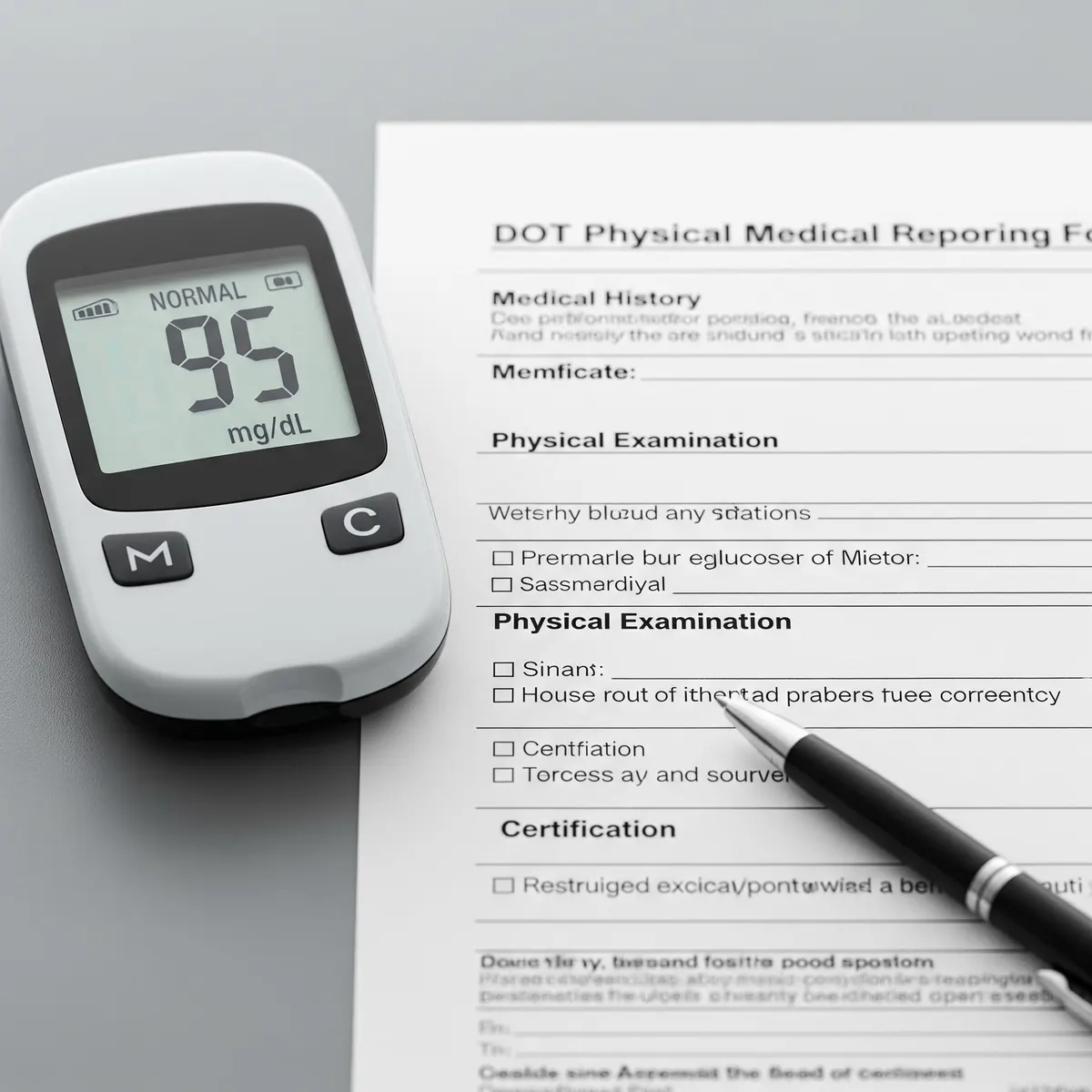
The medical examiner will assess your urinalysis for glucose. If sugar is present, or if you have a known diagnosis, you must provide specific documentation. Drivers taking insulin must have their treating clinician complete the ITDM (Insulin-Treated Diabetes Mellitus) Assessment Form MCSA-5870. You must prove that your condition is stable and that you diligently monitor your blood sugar.
DID YOU KNOW: According to the FMCSA, drivers with insulin-treated diabetes can be certified for up to a maximum of 12 months, rather than the standard 24 months.
KEY TAKEAWAY: Successfully passing a DOT physical with diabetes requires meticulous blood sugar management and properly completed medical paperwork from your treating physician.
Moving from metabolic health, physical structural integrity is another key assessment area.
Hernia and the DOT Physical: Assessing Physical Capacity and Safety
A hernia affects a DOT physical if it causes significant functional impairment or pain that could distract a driver or prevent them from performing heavy lifting safely. Most asymptomatic hernias will not disqualify you from driving.
A hernia occurs when an internal organ pushes through a weak spot in muscle or tissue. The FMCSA guidelines focus on functional impairment rather than the mere presence of the condition. During the exam, the medical examiner will check your abdomen to assess the size, location, and severity of any hernia.
If the hernia is large, painful, or at high risk of strangulation, the examiner may temporarily disqualify you until it is surgically repaired. Preparing for your DOT physical with a hernia involves consulting your primary doctor beforehand. If your doctor determines the hernia does not restrict your physical abilities, bring a clearance letter to your DOT appointment.
KEY TAKEAWAY: An asymptomatic hernia rarely disqualifies a driver, but symptomatic hernias may require medical clearance or surgical repair before certification.
Beyond physical strength and metabolic stability, sensory perception is vital for road safety.
Hearing and the DOT Physical: Ensuring Auditory Awareness on the Road
Hearing health dictates your ability to pass a DOT physical because commercial drivers must perceive crucial auditory signals like sirens, horns, and mechanical warnings. The FMCSA enforces strict hearing standards to prevent accidents related to hearing loss.
Already diagnosed and need CPAP support?
Dumbo Health helps patients start CPAP without the usual confusion, paperwork, or upfront cost. Equipment, setup, supplies, and ongoing support are all handled in one place.
The auditory system is complex. Sound waves travel through the outer ear and ear canal to reach the tympanic membrane. The vibrations then move through the middle ear to the inner ear, where the organ of Corti and the auditory nerve process auditory perception. The National Institute on Deafness and Other Communication Disorders notes that issues anywhere along this pathway can cause either conductive hearing loss or sensorineural hearing loss. Mixed hearing loss involves a combination of both.
To pass the exam, you must perceive a forced whispered voice at five feet in at least one ear, with or without hearing aids. Alternatively, if you undergo pure-tone testing, your average hearing loss in the better ear cannot exceed 40 decibels at 500, 1000, and 2000 Hz. If you rely on digital hearing aids, whether non-rechargeable styles or rechargeable styles, you must wear them during the test and while driving. A hearing care professional can help optimize your device speakers and sound settings for maximum speech quality over background noise.
Many drivers use hearing technology with AI technology and stabilization features to maintain their auditory processing on the road. If you fail the initial screening, you must visit a hearing healthcare professional for a formal audiogram. Protecting your ears from engine noise using proper hearing protection when outside the cab is a vital preventative step.
KEY TAKEAWAY: You must meet specific hearing thresholds in at least one ear to pass the DOT physical, and hearing aids are fully permitted to achieve this standard.
Managing these individual conditions often requires a comprehensive approach to your overall wellness.
Holistic Health for CDL Holders: Managing Multiple Conditions
Managing co-existing conditions requires a holistic health approach to ensure all DOT physical requirements are met simultaneously without medication conflicts. Comprehensive preparation is the key to passing when dealing with multiple health factors.
The interconnectedness of conditions like diabetes, vascular issues, and hearing loss is well documented. For instance, poorly managed diabetes can damage the delicate blood vessels in the inner ear, accelerating sensorineural hearing loss. Addressing your diet, exercise, and sleep habits improves your overall health baseline.
Sleep quality is particularly critical. Many drivers suffer from sleep apnea, which exacerbates blood pressure and metabolic issues. Understandingwhat is sleep apneaand seeking appropriate treatment can dramatically improve your DOT physical results. Taking a proactive stance on your health by working with specialists ensures that you are ready when your certification renewal approaches.
KEY TAKEAWAY: A holistic approach to diet, sleep, and medical management prevents minor health issues from becoming disqualifying conditions.
When your health is optimized, you must then understand the possible outcomes of your medical examination.
Understanding Outcomes: Waivers, Disqualification, and Appeals
A DOT physical outcome dictates your driving status by classifying you as certified, certified with conditions, or temporarily disqualified based on FMCSA criteria. Understanding these outcomes helps you navigate the necessary next steps.
If you meet all standards, you will receive a 24-month medical certificate. However, if you have a condition like high blood pressure or diabetes, you may be certified for a shorter period, such as 3, 6, or 12 months. This is known as being certified with conditions, requiring more frequent monitoring.
If you do not meet the standards, you will be disqualified. This is not always permanent. In many cases, you can seek treatment, stabilize your condition, and undergo a re-evaluation. For certain stable but non-correctable conditions, you might be eligible to apply for an FMCSA waiver or exemption. The waiver process is thorough and requires substantial documentation from your treating specialists.
| Condition Status | Certification Outcome | Typical Duration | Next Steps Required |
|---|---|---|---|
| Healthy, No Issues | Full Certification | 24 Months | Routine renewal in two years |
| Managed Diabetes/HTN | Conditional Certification | 3 to 12 Months | Continuous monitoring and short-term renewal |
| Uncontrolled Condition | Temporary Disqualification | None | Seek medical treatment and request re-evaluation |
| Permanent Impairment | Disqualified | None | Apply for FMCSA Federal Exemption or Waiver |
Based on FMCSA guidelines, drivers with manageable conditions should aim for conditional certification. The best option is to work closely with your doctor months before your exam to ensure your metrics fall within acceptable ranges.
KEY TAKEAWAY: Receiving a temporary disqualification is often a reversible outcome if you promptly address the underlying medical issue with your healthcare provider.
Knowing the administrative side of the exam empowers you to focus on your long-term career longevity.
Long-Term Health and Career Success for Commercial Drivers
Proactive long-term health monitoring ensures career success by keeping your body fit for the rigorous demands of commercial driving. Commitment to wellness prevents unexpected career interruptions.
Your health is your most valuable asset as a commercial driver. The value of regular medical check-ups with your healthcare professional cannot be overstated. Do not wait until the month of your DOT physical to address chronic pain, weight gain, or fatigue.
For drivers struggling with daytime fatigue, exploringobstructive sleep apnea in adultsis a critical step for long-term health. Regular exercise, even modifying routines to fit the constraints of a truck stop, keeps your cardiovascular system strong. Empower yourself by building a relationship with a medical team that understands the specific pressures of the transportation industry.
TIP: Keep a dedicated folder in your truck containing your most recent medical records, CPAP compliance reports, and A1C lab results to ensure you are always prepared for your exam.
KEY TAKEAWAY: Consistent, year-round health management is the most effective strategy for passing your DOT physical and enjoying a long, healthy career.
To further clarify this process, we must address the widespread misinformation surrounding the exam.
Common Myths About DOT Physicals Debunked
Many myths cause unnecessary anxiety by leading drivers to believe that minor health issues will automatically end their careers. Debunking these misconceptions helps you approach the exam with confidence.
MYTH: Having type 2 diabetes means you can never drive a commercial truck again.
FACT: The FMCSA allows drivers with type 2 diabetes to maintain their CDL. As long as your blood sugar is controlled and you provide the proper medical documentation, you can be certified.
MYTH: The hearing test is impossible to pass if you have any hearing loss.
FACT: The hearing standard is highly accommodating. You only need to pass the whisper test or audiogram in one ear, and you are fully permitted to wear hearing aids during the exam.
MYTH: The DOT physical includes a mandatory, comprehensive drug test.
FACT: The standard DOT physical requires a urinalysis to check for glucose, protein, and blood, primarily screening for diabetes and kidney issues. A separate DOT drug screen is a different process, though employers often request both at the same time.
MYTH: If you fail the physical, your CDL is permanently revoked that same day.
FACT: A failed physical results in a temporary medical disqualification, not an immediate CDL revocation. Once you correct the medical issue, you can be re-examined and recertified.
KEY TAKEAWAY: Understanding the actual FMCSA regulations alleviates exam anxiety and allows you to prepare effectively based on facts, not rumors.
With these myths cleared up, let's address the most common specific questions drivers have.
Frequently Asked Questions
Can you pass a dot physical with diabetes?
Yes, you can pass a DOT physical with diabetes. You must demonstrate that your condition is well-managed. If you use insulin, your prescribing clinician must fill out the ITDM Assessment Form (MCSA-5870) to verify your blood sugar is stable and you have not had recent severe hypoglycemic episodes.
What happens if you are type 2 diabetic?
If you are a type 2 diabetic managing your condition with diet or oral medication, the examiner will check your urine for high glucose levels. You may be asked to provide recent A1C test results from your doctor to prove your condition is controlled. You will typically receive a maximum of a one-year certification.
What's your A1C have to be to pass a dot physical?
The FMCSA does not mandate a specific, universal A1C cutoff number to pass the exam. However, most medical examiners consider an A1C level over 10% to be an indicator of poorly controlled diabetes. An examiner will require clearance from your treating physician if your levels are elevated.
Can you get a dot if you have diabetes?
Yes, you can get a DOT medical card if you have diabetes. The key factor is control. Drivers with a history of unstable blood sugar or diabetic complications that interfere with driving safety may face temporary disqualification until their health stabilizes.
Failed DOT Physical due to Sugar, What next?
If you fail due to high sugar in your urinalysis, you are temporarily disqualified. Your next step is to visit your primary care doctor immediately to adjust your medication, diet, or treatment plan. Once your doctor confirms your blood sugar is controlled, you can return to the medical examiner near you for a re-evaluation.
Will taking metFormin affect the DOT medical card exam?
Taking Metformin does not disqualify you from receiving a DOT medical card. Medical examiners look favorably upon drivers who actively manage their condition. You simply need to disclose the medication on your health history form and demonstrate that your diabetes is stable without causing dizzy spells or fatigue. If you experience daytime fatigue, reviewing the9 most common sleep apnea symptomsis also advisable.
is the DoT physical reliable for blood pressure and diabetes?
The DOT physical provides a reliable baseline screening for blood pressure and diabetes, but it is not a substitute for comprehensive medical care. The blood pressure check and urinalysis are effective at catching uncontrolled conditions that pose an immediate driving risk.
Does anyone have a "cheat sheet" for doing DOT physicals?
There is no legal or safe way to "cheat" a DOT physical. The best preparation is honest health management. A reliable preparation checklist includes taking your medications as prescribed, avoiding caffeine and high-sodium foods the day before to keep blood pressure down, and bringing all necessary clearance letters from your specialists.
DOT physical and many medications?
Taking multiple medications does not automatically disqualify you. The examiner will review your medication list to ensure none cause severe drowsiness or cognitive impairment. It is crucial to bring a letter from your prescribing doctor stating that your specific combination of medications does not interfere with your ability to drive safely.
Conclusion
Successfully passing your DOT physical while managing conditions like diabetes, hernias, or hearing loss requires proactive medical care and clear documentation. By understanding the FMCSA requirements and working closely with your healthcare providers, you can confidently maintain your certification. Do not let manageable medical conditions derail your career. Prioritize your health today to ensure you stay safely on the road tomorrow. If you are experiencing fatigue or suspect sleep issues are impacting your health, learn more about howat-home sleep studies workto take control of your well-being.
Related DOT Physical Topics
- Navigating the Florida DOT Physical Your Essential Guide for CDL Drivers
- DOT Physical Duration and Validity How Long Your Medical Card Lasts
- DOT Physical Texas The Essential Guide to Your Exam, Medical Card, and CDL Compliance
- How Do You Submit Your DOT Physical to the DMV
- Can You Pass a DOT Physical with Epilepsy
- Can You Pass a DOT Physical With a Hernia
- Can You Pass a DOT Physical With a Pacemaker
- Can You Pass a DOT Physical With One Eye
- Why do they measure your neck during a DOT physical
- How can drivers with sleep apnea qualify again after a failed DOT physical
- Your Complete Guide What's Included in a DOT Physical Exam
- Do They Check Your Private Parts During a DOT Physical
- DOT Physical Insurance or Self Pay How to Choose the Right Payment Option for Your Exam
- DOT Physical Chiropractor Your Complete Guide to CDL Exams
- Is a DOT physical the same as a regular physical
- Can you pass a DOT physical with sleep apnea
- Can You Pass a DOT Physical with Diabetes
- Can You Pass a DOT Physical with High Blood Pressure
- What Happens If Your DOT Physical Expires Compliance Guide for Commercial Drivers
- What Does DOT Stand for in a DOT Physical
- What Is the Difference Between a DOT and Non-DOT Physical
- Guide to Obtaining and Managing Your DOT Medical Card Online
- Can You Get a Second Opinion on Your DOT Physical A Complete Guide for Commercial Drivers
- Online DOT Physical The Complete Guide for Commercial Drivers and Medical Examiners
- Can You Get a DOT Physical in Any State The Complete Guide for Commercial Drivers
- Can You Get a DOT Physical Online The Complete Guide for Commercial Drivers
- Does a DOT Physical Test for Weed or THC The Complete Guide for Commercial Drivers
- What Can Disqualify You From a DOT Physical
- Does a DOT physical include a drug test
- DOT Physical Self Pay Cost
- Remote DOT Physical The Complete Guide for Commercial Drivers
- DOT Physical Exam Basics
- Is a drug test required for a DOT physical
- DOT Physical Cost Breakdown What Drivers Pay & Why
- DOT Physical ICD-10 & Billing Codes The Complete Guide for Accurate Compliance and Reimbursement
- Telehealth Dot Physical
- DOT Physical Forms & Paperwork The Complete Guide for Commercial Drivers
- Who needs a DOT physical
- What Forms Do You Need for a DOT Physical
- DOT Physical & Alcohol Requirements
- Navigating DOT Stroke Guidelines for CMV Drivers What You Need To Know
- Online DOT Physical Without Insurance A Complete Guide for Commercial Drivers
- DOT Physical Out of Pocket What Commercial Drivers Actually Pay
- Why DOT Sleep Tests at Home Matter for Your Career and Health
- What Is the Urine Test for in a DOT Physical
- DOT Physical Online Cost
- Walk In DOT Physical Self Pay
- Online DOT Physical Self-Pay The Complete Guide for CDL Drivers and Owner-Operators
- What Should You Bring to a DOT Physical
- DOT physical self pay guide for commercial drivers paying out of pocket
- Can You Get a DOT Physical Online
- Can You Fail a DOT Physical for Being Overweight
- New DOT Physical Requirements What Drivers MUST Know About New Updates
- DOT Physical Insurance & Recertification The Complete Driver's Guide
- DOT Physical Cash Pay
- Same Day DOT Physical
- Virtual DOT Physical
- DOT Physical Vision & Eye Requirements
- What Are the DOT Requirements for Drivers With Sleep Apnea
- Can you fail a DOT physical because of sleep apnea
- What blood pressure do you need to pass a DOT physical
- When Can Sleep Apnea Affect a DOT Physical
- DOT Medical Exam Self-Pay A Complete Guide for Commercial Drivers
- Online DOT Exam What Drivers and Medical Examiners Need to Know
- DOT Physical Blood Pressure Requirements What Drivers Need to Know
- Can You Fail a DOT Physical for High Blood Pressure
- How to Pass a DOT Physical The Complete Commercial Driver's Guide
- What should I expect at a DOT physical
- What Does a DOT Physical Consist Of
- What happens if you fail a DOT physical due to sleep apnea
- DOT Physical at Urgent Care What Commercial Drivers Need to Know
- BMI for DOT Physical What Commercial Drivers Need to Know
- What Happens During the DOT Physical Exam The Complete Guide for Drivers
- Navigating Your CDL Health Requirements
- Does insurance cover a DOT physical
- DOT Physical & Drug Test What Drivers Need to Know
- The Ultimate DOT Physical Guide for Commercial Drivers (2025–2026)
- Non-DOT Physical A Comprehensive Guide to Workforce Health and Safety
- DOT Physical Requirements A Complete Guide for CDL Drivers
- Is a Sleep Study Required for a DOT Physical
- What Happens If You Fail a DOT Physical Twice The Complete Guide for Commercial Drivers
- Do They Check for Hernia During a DOT Physical
- Do You Have to Pee During a DOT Physical
- What Are the Requirements to Pass a DOT Physical
- What eye chart is used for a DOT physical
- What Do They Check During a DOT Physical
- Cheap DOT Physical Online
- The DOT Physical Exam Ensuring You're Fit for the Road
- Failing a DOT Physical What Every Commercial Driver Needs to Know
- Can You Fail a DOT Physical
- What is DOT Physical
- What drugs do they test for in a DOT drug test
- Are There New DOT Rules or Laws on Sleep Apnea Testing
- Essential 171 DOT Definitions for Commercial Drivers
- 2026 DOT Inspection Dates
- Medical Examiner's Certificate (Form MCSA-5876) The Complete Guide for Commercial Drivers
- What Precautions Should Drivers With Sleep Apnea Take
- Are there legal requirements for drivers with sleep apnea
- CDL PHYSICAL SELF PAY
- DOT Hypertension Guidelines The Complete Blood Pressure Guide for Commercial Drivers
Take the next step before your DOT physical
Start with the free quiz if you are unsure about your risk, or order an at-home sleep test if you have already been flagged for possible sleep apnea.
AI summary
A DOT physical is a federally mandated medical exam required by the Federal Motor Carrier Safety Administration (FMCSA) to certify that commercial drivers can operate safely. A Certified Medical Examiner reviews medical history, surgeries, medications, chronic conditions, and performs vision and hearing screening, a blood pressure check, urinalysis, and a mobility assessment. Key condition considerations include diabetes, hernias, and hearing loss. For diabetes, examiners look for stable blood sugar control, urinalysis glucose findings, A1C information, and any history of severe hypoglycemia. Insulin-treated drivers must submit the ITDM (Insulin-Treated Diabetes Mellitus) Assessment Form MCSA-5870 and are typically certified for up to 12 months. For hernias, FMCSA guidance emphasizes functional impairment; asymptomatic hernias often qualify, while painful or high-risk hernias may require repair or a clearance letter. For hearing, drivers must pass a 5-foot forced-whisper test or meet pure-tone criteria (average loss no more than 40 dB at 500, 1000, and 2000 Hz in the better ear); hearing aids are permitted. Outcomes include full certification (up to 24 months), conditional certification (3–12 months), temporary disqualification with re-evaluation after treatment, and possible FMCSA waivers or exemptions for certain conditions.

Nicolas Nemeth
Co-Founder
Nico is the co-founder of Dumbo Health, a digital sleep clinic that brings the entire obstructive sleep apnea journey home. Patients skip the sleep lab and the long wait to see a specialist. Dumbo Health ships an at home test, connects patients with licensed sleep clinicians by video, and delivers CPAP or a custom oral appliance with ongoing coaching and automatic resupply in one clear subscription.
Keep reading

How Long Does a DOT Physical Take? A Complete Guide for Commercial Drivers

What Happens If You Fail a DOT Drug Test? The Complete Guide for Commercial Drivers


