What Does a DOT Physical Consist Of?
A DOT physical is a federally required medical exam used to decide if a commercial driver can operate a regulated vehicle safely. This article explains who needs the exam under FMCSA rules and how certification can be valid for up to 24 months or shortened for monitoring. It covers the medical history review, including medications, symptoms, and conditions like diabetes, heart disease, seizures, and sleep apnea. It also breaks down the required tests: vision, hearing, blood pressure and pulse, urinalysis, and a general physical exam. You will learn what can delay or disqualify certification, why documentation matters, and common myths such as drug testing and hernia checks. Practical preparation tips help reduce preventable delays.
Struggling with sleep?
Find out if sleep apnea is the reason.
FDA-cleared. $149 flat. Physician-reviewed results in 48 hours.

What Does a DOT Physical Consist Of?
DOT physical is a required medical examination that checks whether a commercial driver is healthy enough to operate a commercial motor vehicle safely. According to the Federal Motor Carrier Safety Administration, the exam follows federal standards for interstate drivers and supports road safety for drivers and the public. This guide explains what is checked during a DOT physical, which medical conditions may affect your outcome, how the paperwork works, and what to do before and after the appointment. You will also learn what many drivers misunderstand about the exam, including urinalysis, hernia concerns, blood pressure, and short-term certification. Keep reading so you can walk into your appointment prepared and avoid preventable delays.
What is a DOT physical?
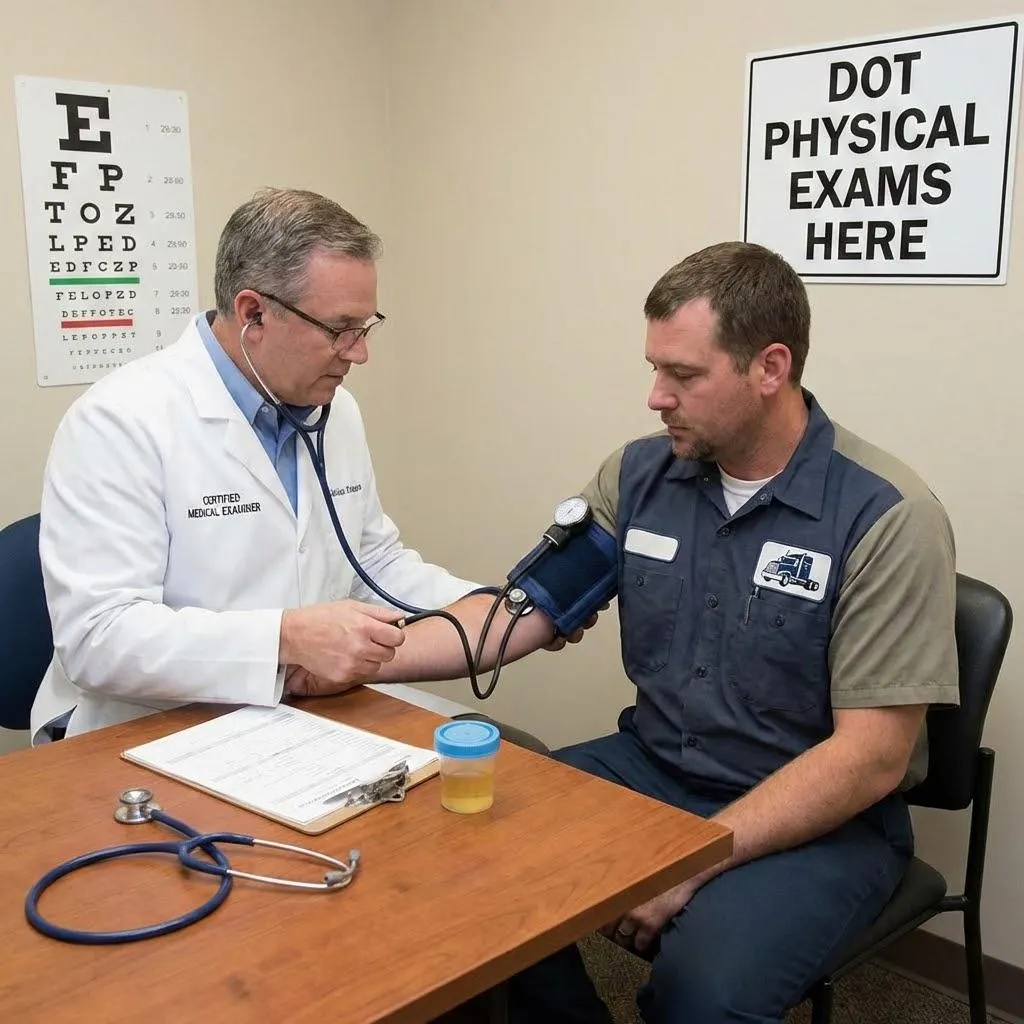
A DOT physical is a medical examination used to decide whether you can safely drive a commercial motor vehicle under federal rules. A DOT physical exam focuses on function, safety risk, and medical certification rather than general wellness screening.
DOT physical requirements come from the Department of Transportation framework and are administered through the Federal Motor Carrier Safety Administration. The goal is to determine whether a commercial driver can perform normal job duties without creating an unreasonable risk of a medical emergency on the road. That is why the medical examiner looks at both current symptoms and longer-term patterns such as treatment adherence, medication stability, and cardiovascular health.
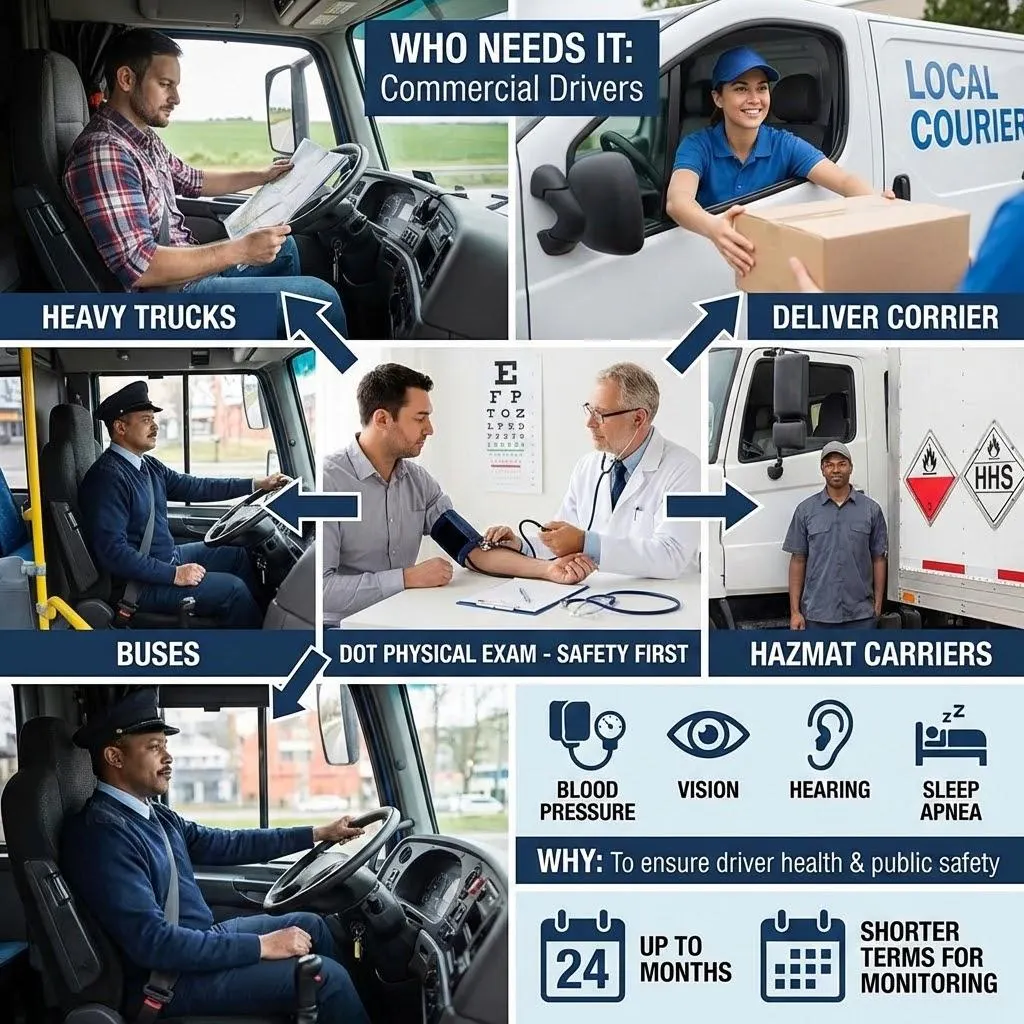
A commercial motor vehicle usually falls under these rules when you drive across state lines and meet federal thresholds for weight, passenger count, or hazardous materials. Many drivers with a Commercial Driver's License need current medical certification, but some non-CDL drivers of regulated commercial vehicles may need it too depending on the job. According to FMCSA, the exam can result in certification for up to 24 months, or a shorter period when monitoring is needed.
DOT physical exam is the term most drivers use, but the formal process also includes the Medical Examination Report and, when you qualify, the Medical Examiner's Certificate. In practical terms, the exam asks one simple question: can you operate a commercial vehicle safely right now, and are your medical conditions controlled well enough to remain safe until your next review?
Not sure if sleep apnea applies to you?
Take our 2-minute sleep risk quiz to see whether sleep apnea could affect your DOT physical. No account required.
KEY TAKEAWAY: A DOT physical is a safety-based medical examination that determines whether you can drive a regulated commercial motor vehicle without unacceptable health risk.
Who needs a DOT physical and why?
You usually need a DOT physical if your work involves driving a commercial motor vehicle in interstate commerce and your vehicle, passenger load, or cargo meets FMCSA thresholds. The exam matters because commercial vehicles can create greater public risk when a driver has an uncontrolled medical condition.
The key phrase is commercial motor vehicle. Under FMCSA rules, this can include heavy trucks, buses, and vehicles transporting hazardous materials. In everyday terms, the exam is designed for people whose work puts them behind the wheel of commercial vehicles where fainting, severe hearing loss, poor visual acuity, or untreated sleep apnea could affect safe driving.
A commercial driver often needs the exam before starting a role, during license renewal cycles, or when an employer requests updated driver certification records. You may also need a new DOT Exam if a previous certificate expires, if you receive a short-term certificate, or if a medical professional recommends follow-up for a condition such as high blood pressure. A valid driver's license is still required, but the DOT physical requirements are separate from your license itself.
People often assume the exam is only for long-haul truckers. That is not correct. Bus drivers, some delivery drivers, and drivers carrying hazardous materials may also need the same medical certification standard. If you are unsure, your employer, state licensing office, or an FMCSA-certified medical examiner can confirm whether your role triggers the rule.
DID YOU KNOW: FMCSA allows a DOT physical exam to be valid for up to 24 months, but many drivers receive shorter certification when a condition needs closer monitoring.
KEY TAKEAWAY: You may need a DOT physical whenever your driving role falls under federal commercial motor vehicle rules, not only when you hold a CDL.
What medical history is reviewed during a DOT physical?
The medical history review is the foundation of the DOT physical because it helps the medical examiner spot conditions that may affect safe driving. A complete medical history review can be just as important as the physical exam itself.
Medical history is the record of your past and current health issues, medications, surgeries, symptoms, and treatment status. Medical history matters because the examiner compares your answers with exam findings to judge whether your condition is stable, controlled, and compatible with safe driving.
During the Health History Review, you will usually complete the driver section of the Medical Examination Report. Expect questions about diabetes, heart disease, neurological health, mental disorders, sleep apnea, respiratory system problems, past surgeries, fainting, seizures, and any recent hospitalization. The examiner may also ask about alcohol use, substance history, tobacco use, and whether you have ever had a medical emergency while driving.
Current medications and treatments matter because treatment stability can support certification. Bring a medication list with names, doses, and the reason each medication is prescribed. If you use a hearing aid, contact lenses, CPAP, or another device, bring it with you. Missing paperwork, not the underlying diagnosis, is what causes many avoidable delays.
IMPORTANT: A DOT physical is not the same as drug and alcohol testing. Drug and alcohol testing is not required as part of the routine driver physical exam unless findings indicate a need for further evaluation.
Already diagnosed and need CPAP support?
Dumbo Health helps patients start CPAP without the usual confusion, paperwork, or upfront cost. Equipment, setup, supplies, and ongoing support are all handled in one place.
KEY TAKEAWAY: The medical history review helps the examiner judge real-world driving safety, treatment stability, and whether your records support certification.
What is checked during the physical exam?
A DOT physical exam checks the body systems and functional abilities most relevant to safe driving, including vision, hearing, blood pressure, pulse, urinalysis, and a broader physical exam. The purpose is to identify medical conditions that could impair alertness, judgment, coordination, or endurance.
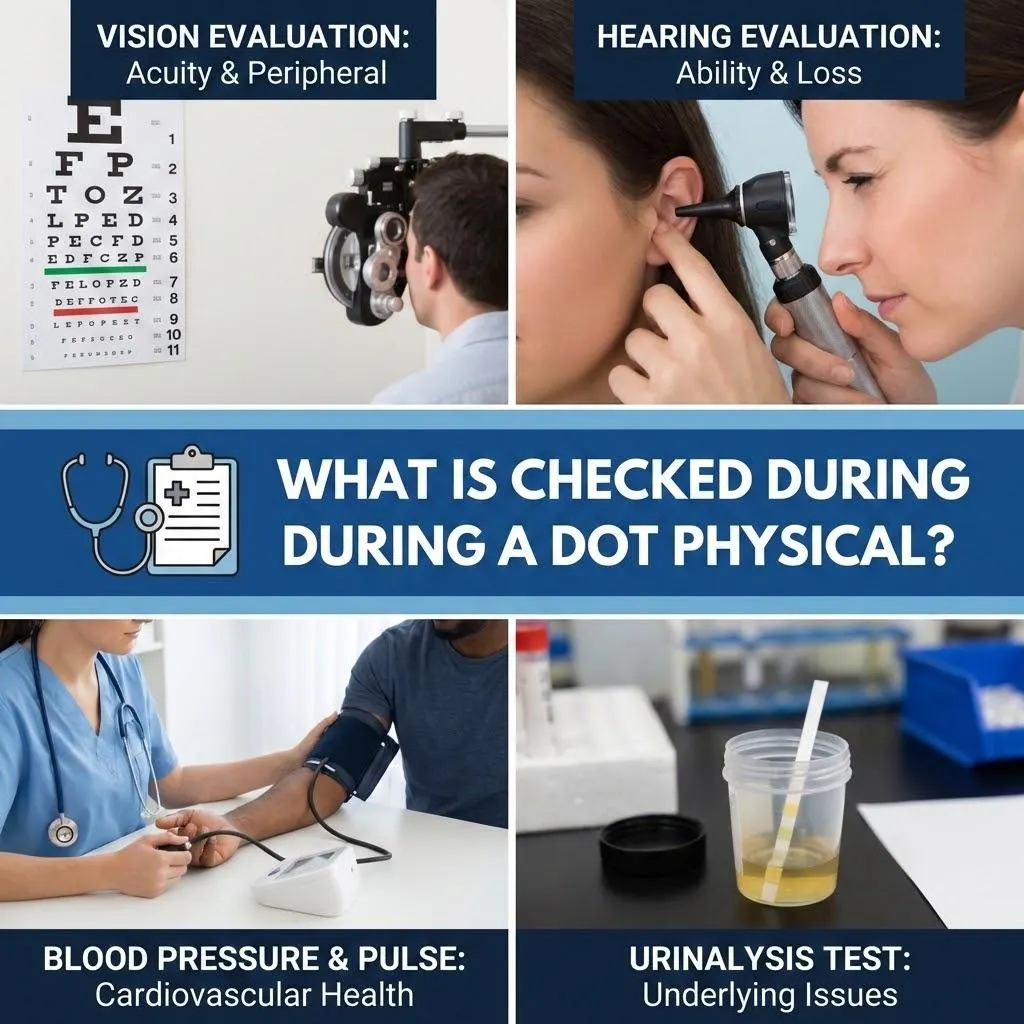
Physical exam means a structured hands-on assessment. Required tests include blood pressure and pulse, vision tests, hearing test measures, and a urinalysis test. The broader medical examination may also review neurological health, cardiovascular health, respiratory system, abdomen, spine, limbs, gait, skin, and general appearance.
Exam component What is checked Why it matters for driving
vision evaluation Visual acuity and peripheral vision Helps detect hazards and read road signs
Hearing evaluation Hearing ability and loss review Helps detect warnings and traffic cues
blood pressure and pulse Blood pressure and heart rhythm Assesses risk of sudden medical events
Urinalysis test Sugar, blood, protein Identifies underlying health issues
General physical exam Mobility and organ systems Ensures overall fitness for driving
KEY TAKEAWAY: A DOT physical checks the safety-critical body systems that affect driving.
How do vision, hearing, blood pressure, and urinalysis work in practice?
The required tests are straightforward but can affect certification if results fall outside acceptable ranges.
Vision tests assess acuity and peripheral vision. Hearing tests evaluate your ability to detect sounds or whispers. Blood pressure is closely monitored because high readings can lead to shorter certification. Urinalysis helps detect conditions like diabetes or kidney issues.
TIP: Avoid caffeine, nicotine, or stress before your exam if you have a history of high blood pressure.
KEY TAKEAWAY: Bringing corrective devices and medical records improves your chances of passing without delays.
What medical conditions can delay or fail a DOT physical?
A DOT physical can be delayed or denied when medical conditions create a safety concern that is uncontrolled or undocumented.
Common concerns include uncontrolled blood pressure, poorly managed diabetes, heart disease, untreated sleep apnea, seizure history, and neurological conditions that affect consciousness or coordination.
Certification depends on whether the condition is controlled, documented, and safe for driving.
KEY TAKEAWAY: Medical conditions do not automatically fail you, but poor control or missing documentation can delay certification.
Common myths about DOT physicals debunked
MYTH: A DOT physical always includes a drug screen FACT: Drug testing is separate from the physical exam
MYTH: High blood pressure means automatic failure FACT: It may result in shorter certification instead
MYTH: hernia checks always fail drivers FACT: Only if it affects safe driving
MYTH: Sleep apnea ends your driving career FACT: Managed sleep apnea can still allow certification
KEY TAKEAWAY: Understanding the facts reduces stress and improves preparation.
How should you prepare for a DOT physical?
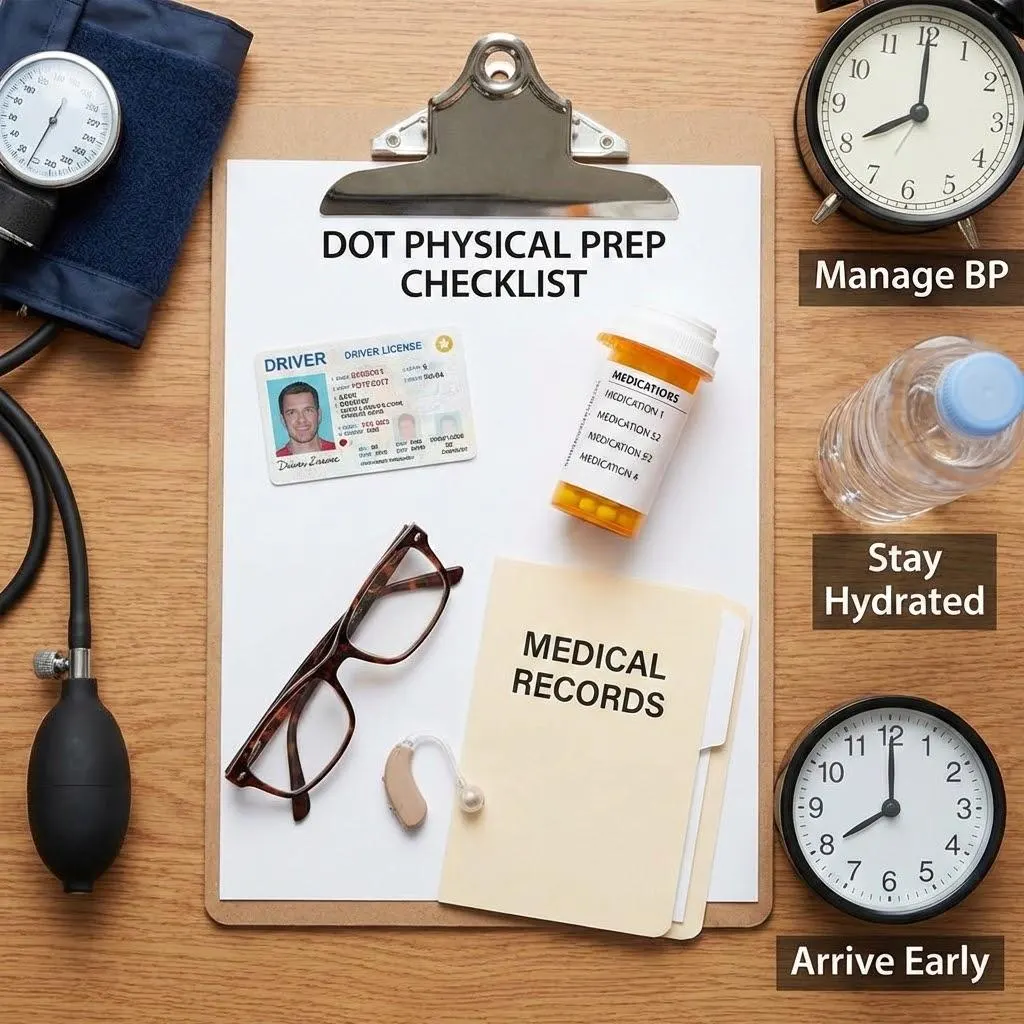
Bring your driver's license, medication list, corrective lenses, hearing aid, and any relevant medical records. Manage blood pressure, stay hydrated, and arrive early.
Preparation reduces delays and improves your chances of same-day certification.
KEY TAKEAWAY: Preparation helps the examiner make a safe and quick decision.
Who can perform a DOT physical and why certification matters?
Only certified medical examiners listed on the National Registry can perform DOT physicals for interstate drivers. This ensures federal standards are applied correctly.
KEY TAKEAWAY: Always verify your examiner is certified before booking.
What happens after your DOT physical?
After the exam, the examiner determines your certification status. You may receive full certification, short-term certification, a request for more information, or disqualification.
Certification can last up to 24 months depending on your health status.
KEY TAKEAWAY: The result is a formal certification decision, not just a routine checkup.
Frequently Asked Questions
What will fail you on a DOT physical?
Uncontrolled medical conditions such as severe hypertension, untreated sleep apnea, or serious heart conditions may result in failure.
What is checked during a DOT physical?
vision, hearing, blood pressure, urinalysis, medical history, and overall physical health.
Do DOT physicals check for hernia?
Yes, but only to assess whether it affects safe driving.
Do I have to pee for a DOT physical?
Yes, urinalysis is a standard part of the exam.
Can you pass a DOT physical with sleep apnea?
Yes, if it is properly treated and documented.
How long is a DOT physical good for?
Up to 24 months, depending on your health.
Where can I find a DOT physical near me?
Search for certified examiners on the National Registry.
What should I bring to a DOT physical?
Bring ID, medical records, medications list, and any required devices.
Related DOT Physical Topics
- What Does DOT Stand for in a DOT Physical
- What Is the Difference Between a DOT and Non-DOT Physical
- Does a DOT Physical Test for Weed or THC The Complete Guide for Commercial Drivers
- What Happens If Your DOT Physical Expires Compliance Guide for Commercial Drivers
- What Can Disqualify You From a DOT Physical
- Does a DOT physical include a drug test
- DOT Physical Out of Pocket What Commercial Drivers Actually Pay
- DOT Physical Cost Breakdown What Drivers Pay & Why
- What Should You Bring to a DOT Physical
- What Forms Do You Need for a DOT Physical
- What Are the Requirements to Pass a DOT Physical
- Your Complete Guide What's Included in a DOT Physical Exam
- What Is the Urine Test for in a DOT Physical
- What blood pressure do you need to pass a DOT physical
- DOT Physical Blood Pressure Requirements What Drivers Need to Know
- New DOT Physical Requirements What Drivers MUST Know About New Updates
- DOT Physical at Urgent Care What Commercial Drivers Need to Know
- Is a DOT physical the same as a regular physical
- What should I expect at a DOT physical
- What happens if you fail a DOT physical due to sleep apnea
- What Happens During the DOT Physical Exam The Complete Guide for Drivers
- BMI for DOT Physical What Commercial Drivers Need to Know
- DOT Physical & Drug Test What Drivers Need to Know
- What eye chart is used for a DOT physical
- What Do They Check During a DOT Physical
- Failing a DOT Physical What Every Commercial Driver Needs to Know
- What is DOT Physical
- What drugs do they test for in a DOT drug test
- DOT Physical Online Cost
- DOT Physical Vision & Eye Requirements
- How can drivers with sleep apnea qualify again after a failed DOT physical
- Can You Pass a DOT Physical with Epilepsy
- DOT Physical Self Pay Cost
- Remote DOT Physical The Complete Guide for Commercial Drivers
- Navigating Your DOT Physical with Common Medical Conditions
- Navigating the Florida DOT Physical Your Essential Guide for CDL Drivers
- The Ultimate DOT Physical Guide for Commercial Drivers (2025–2026)
- When Can Sleep Apnea Affect a DOT Physical
- Walk In DOT Physical Self Pay
- Can You Pass a DOT Physical With One Eye
- Is a drug test required for a DOT physical
- How Do You Submit Your DOT Physical to the DMV
- Can You Get a DOT Physical Online
- Can You Pass a DOT Physical With a Pacemaker
- Telehealth Dot Physical
- DOT Physical Forms & Paperwork The Complete Guide for Commercial Drivers
- DOT Physical Exam Basics
- DOT Physical & Alcohol Requirements
- DOT Physical Duration and Validity How Long Your Medical Card Lasts
- DOT Physical Insurance & Recertification The Complete Driver's Guide
- DOT Physical ICD-10 & Billing Codes The Complete Guide for Accurate Compliance and Reimbursement
- Online DOT Physical Without Insurance A Complete Guide for Commercial Drivers
- Why do they measure your neck during a DOT physical
- Can You Fail a DOT Physical for Being Overweight
- Do They Check for Hernia During a DOT Physical
- Cheap DOT Physical Online
- Can You Pass a DOT Physical With a Hernia
- DOT physical self pay guide for commercial drivers paying out of pocket
- Online DOT Physical Self-Pay The Complete Guide for CDL Drivers and Owner-Operators
- Online DOT Exam What Drivers and Medical Examiners Need to Know
- DOT Physical Cash Pay
- Can You Get a Second Opinion on Your DOT Physical A Complete Guide for Commercial Drivers
- Can You Fail a DOT Physical for High Blood Pressure
- Same Day DOT Physical
- Virtual DOT Physical
- Can you fail a DOT physical because of sleep apnea
- Online DOT Physical The Complete Guide for Commercial Drivers and Medical Examiners
- Who needs a DOT physical
- How to Pass a DOT Physical The Complete Commercial Driver's Guide
- Do They Check Your Private Parts During a DOT Physical
- DOT Physical Chiropractor Your Complete Guide to CDL Exams
- DOT Physical Insurance or Self Pay How to Choose the Right Payment Option for Your Exam
- Can you pass a DOT physical with sleep apnea
- Can You Pass a DOT Physical with Diabetes
- Can You Pass a DOT Physical with High Blood Pressure
- What are the current DOT requirements for sleep apnea testing for commercial drivers
- Non-DOT Physical A Comprehensive Guide to Workforce Health and Safety
- DOT Physical Texas The Essential Guide to Your Exam, Medical Card, and CDL Compliance
- DOT Physical Requirements A Complete Guide for CDL Drivers
- Is a Sleep Study Required for a DOT Physical
- Do You Have to Pee During a DOT Physical
- The DOT Physical Exam Ensuring You're Fit for the Road
- Can You Fail a DOT Physical
- Online CDL Physical
- Are There New DOT Rules or Laws on Sleep Apnea Testing
- Essential 171 DOT Definitions for Commercial Drivers
- 2026 DOT Inspection Dates
- What Precautions Should Drivers With Sleep Apnea Take
- Why DOT Sleep Tests at Home Matter for Your Career and Health
- CDL PHYSICAL SELF PAY
- How Does Sleep Apnea Affect Driving Ability
- DOT sleep apnea test at home
- DOT Medical Exam Self-Pay A Complete Guide for Commercial Drivers
- What are the current FMCSA guidelines on sleep apnea for commercial drivers
- Guide to Obtaining and Managing Your DOT Medical Card Online
- Expected 2027 DOT Inspection Dates
- How Sleep Apnea Affects Overall Driving Safety
- Home Sleep Apnea Test for Commercial Drivers The CDL Holder's Complete Guide
- Sleep Apnea Test for CDL Drivers
- Are there legal requirements for drivers with sleep apnea
Take the next step before your DOT physical
Start with the free quiz if you are unsure about your risk, or order an at-home sleep test if you have already been flagged for possible sleep apnea.
AI summary
A DOT physical is a safety-based medical examination used to determine whether a commercial driver can operate a commercial motor vehicle under federal standards. The requirements are administered by the Federal Motor Carrier Safety Administration (FMCSA) and focus on risk of medical events while driving. Key components include a health history review and completion of the Medical Examination Report, with questions about conditions such as diabetes, heart disease, sleep apnea, seizures, fainting, neurological conditions, mental disorders, respiratory problems, surgeries, and current medications. The physical exam evaluates vision (acuity and peripheral vision), hearing, blood pressure and pulse, and urinalysis (screening for sugar, blood, and protein), plus a general assessment of cardiovascular, respiratory, neurological, abdomen, spine, limbs, gait, skin, and overall function. Outcomes include certification for up to 24 months, short-term certification, requests for additional information, or disqualification. Delays often result from uncontrolled conditions or missing documentation. Drug and alcohol testing is separate from the DOT physical.

Nicolas Nemeth
Co-Founder
Nico is the co-founder of Dumbo Health, a digital sleep clinic that brings the entire obstructive sleep apnea journey home. Patients skip the sleep lab and the long wait to see a specialist. Dumbo Health ships an at home test, connects patients with licensed sleep clinicians by video, and delivers CPAP or a custom oral appliance with ongoing coaching and automatic resupply in one clear subscription.
Keep reading

How Long Does a DOT Physical Take? A Complete Guide for Commercial Drivers

What Happens If You Fail a DOT Drug Test? The Complete Guide for Commercial Drivers


