What drugs do they test for in a DOT drug test?
This article explains the federally mandated DOT 5-panel urine drug test required for safety-sensitive transportation workers under 49 CFR Part 40. It details the five drug categories screened and the 14 individual substances confirmed since 2018, including the expanded opioid panel. You will learn how SAMHSA-certified labs use immunoassay screening with GC-MS confirmation, and why metabolites and cutoffs affect detection windows. The guide clarifies CBD, hemp products, medical marijuana cards, and why passive exposure is not an accepted defense. It also covers alcohol testing thresholds, when testing is required, and how the MRO verifies results. Finally, it outlines consequences, Clearinghouse reporting, and the SAP return-to-duty process.
Struggling with sleep?
Find out if sleep apnea is the reason.
FDA-cleared. $149 flat. Physician-reviewed results in 48 hours.

What drugs do they test for in a DOT drug test?
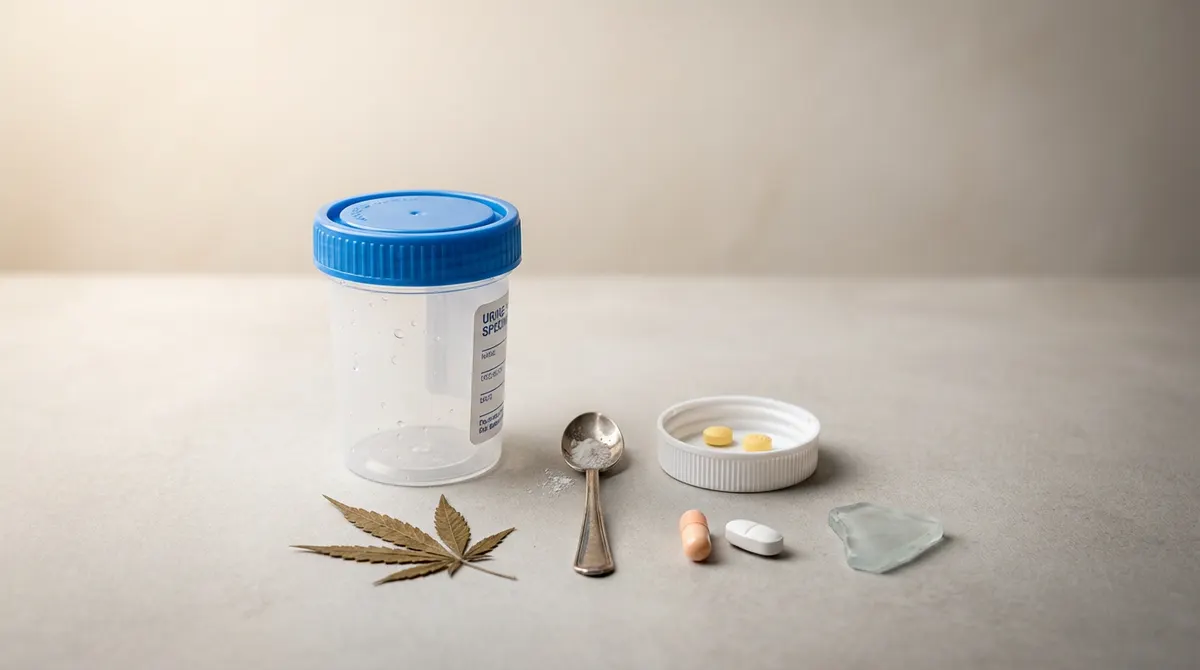
The DOT drug test is a federally mandated, five-panel urine screening required for all safety-sensitive transportation employees under 49 CFR Part 40, protecting public safety by detecting five specific classes of impairing substances. According to the Federal Motor Carrier Safety Administration (FMCSA), over 200,000 CDL drivers were in prohibited status as of January 2026, underscoring how high the stakes are for non-compliance. This guide covers everything drivers, employers, and fleet managers need to know: which substances are tested, how the collection and laboratory process works, what the Medical Review Officer does, and exactly what happens after a positive result. You will also find clear explanations of grey-area topics like CBD, medical marijuana, and passive exposure, plus a myth-vs-fact section that cuts through the most persistent misconceptions. Whether you are preparing for a pre-employment screening or managing a fleet-wide drug and alcohol program, the information below gives you a complete foundation for staying compliant and staying employed.
Understanding the DOT 5-Panel drug test Mandate
The DOT drug test mandate requires all safety-sensitive transportation employees to submit to a standardised urine-based drug screen governed by 49 CFR Part 40. Federal law establishes this requirement to ensure that people who operate aircraft, commercial motor vehicles, trains, pipelines, and transit systems do so without the influence of controlled substances.
The Role of 49 CFR Part 40 in Federal Safety
49 CFR Part 40 is the Department of Transportation's umbrella regulation that dictates exactly how workplace drug and alcohol testing must be conducted across every DOT-regulated industry. Codified as a single, unified procedural standard, Part 40 covers specimen collection protocols, laboratory certification requirements, Medical Review Officer responsibilities, and the return-to-duty process. The regulation applies uniformly, meaning a CDL driver, an airline pilot, and a railroad engineer all follow the same core testing procedures.
The Omnibus Transportation Employee Testing Act of 1991 created the legislative foundation for this framework. Congress enacted the law following a 1990 New York City subway derailment in which the train operator was found to have a blood alcohol concentration of 0.21, prompting immediate federal action to mandate testing across aviation, trucking, railroads, mass transit, and pipeline industries. Part 40 operationalises that mandate by standardising every procedural step of the testing process.
KEY TAKEAWAY: 49 CFR Part 40 is the single federal regulation that governs all DOT drug and alcohol testing procedures, applying uniformly across every transportation mode and every covered employer.
The scope of Part 40 directly connects to the next question drivers and employers commonly ask: which federal agencies actually enforce these rules?
Why the Department of Transportation Limits the Panel to Five Categories
The Department of Transportation restricts its drug test to five drug categories because those substances represent the highest documented risk of impairing the cognitive and physical functions required for safe transportation operations. Reaction time, depth perception, judgment under pressure, and sustained attention are the core capacities at stake when a driver, pilot, or rail operator is impaired.
The five-panel format is also a deliberate regulatory decision rooted in consistency and practicality. Using a standardised panel across all modes prevents inconsistency in enforcement, reduces cost for employers and employees, and ensures that SAMHSA-certified laboratories can apply identical cutoff concentrations and confirmatory methods regardless of which DOT agency covers the employee.
TIP: Employers must use SAMHSA-certified laboratories for all DOT-regulated testing. No other laboratory is legally authorised to process DOT specimens.
Which Agencies Follow DOT Testing Regulations?
The Omnibus Transportation Employee Testing Act of 1991 established drug and alcohol testing requirements across six primary DOT agencies, each covering a different segment of the transportation industry.
| Agency | Full Name | Industries Covered |
|---|---|---|
| FMCSA | Federal Motor Carrier Safety Administration | Commercial truck and bus drivers, CDL holders |
| FAA | Federal Aviation Administration | Airline pilots, flight crew, air traffic controllers |
| FRA | Federal Railroad Administration | Locomotive engineers, conductors, rail workers |
| FTA | Federal Transit Administration | Urban transit operators, bus and rail system workers |
| PHMSA | Pipeline and Hazardous Materials Safety Administration | Pipeline operators, hazardous materials handlers |
| USCG | United States Coast Guard | Merchant marine officers, commercial vessel crew |
Each agency sets its own random testing rates within the DOT framework. For 2026, the FMCSA and FTA each maintain a 50% minimum annual random drug testing rate, while the FAA applies a 25% rate, and the FRA applies varying rates by worker category ranging from 25% to 50%.
KEY TAKEAWAY: Six DOT agencies enforce drug and alcohol testing requirements under the Omnibus Act, each covering a distinct transportation sector with agency-specific random testing rates.
Understanding which agencies are covered sets the stage for understanding precisely what those tests screen for.
The Core Five: A Detailed Breakdown of Tested Substances
The DOT 5-panel drug test screens for five classes of controlled substances, as specified in 49 CFR Part 40 Subpart F. Since January 1, 2018, DOT has required confirmation testing for 14 individual drugs within those five categories, expanding the scope of the opioid panel significantly.
Marijuana (THC) and the Complexity of Modern Cannabis
DOT drug testing for marijuana detects THC-COOH, the primary metabolite of delta-9-tetrahydrocannabinol, which remains in the body long after psychoactive effects have passed. The initial urine screening cutoff is 50 nanograms per millilitre (ng/mL), with a confirmatory cutoff of 15 ng/mL under 49 CFR Part 40 Section 40.87.
Marijuana remains a Schedule I controlled substance under the federal Controlled Substances Act, regardless of individual state legislation. As the Department of Transportation has stated explicitly, state legalisation of recreational or medical marijuana has no effect on DOT testing requirements. A CDL driver in Colorado faces the same federal prohibition as one in a state with no legalisation law. As of 2026, there is no pathway under federal DOT regulations for a safety-sensitive employee to use marijuana for any reason without risking a positive result.
DID YOU KNOW: According to the FMCSA Clearinghouse, 1 in every 30 CDL holders registered in the Clearinghouse is currently in prohibited status, with marijuana remaining the most commonly detected substance.
Cocaine (Benzoylecgonine Metabolites)
DOT drug testing for cocaine targets benzoylecgonine, the primary metabolite produced as the body breaks down cocaine. The initial screening cutoff is 150 ng/mL, with a confirmatory threshold of 100 ng/mL. Benzoylecgonine is highly specific to cocaine use, meaning a positive confirmed result cannot be attributed to incidental environmental exposure under normal conditions.
Cocaine is a Schedule II controlled substance under federal law due to its limited medical applications, though its use outside licensed clinical settings is prohibited for safety-sensitive employees. The substance significantly impairs cardiovascular function, reaction time, and risk assessment, making its detection in transportation workers a direct public safety priority.
Amphetamines: From Methamphetamine to MDMA (Ecstasy/Molly)
The amphetamine panel tests for four individual substances: amphetamine, methamphetamine, MDMA (3,4-methylenedioxymethamphetamine), and MDA (methylenedioxyamphetamine). The initial screening cutoff for amphetamines is 500 ng/mL, with confirmatory cutoffs varying by specific compound as defined in Part 40.
This panel is clinically significant because it captures both illicit use and the potential misuse of prescription stimulants. Methamphetamine, classified as a Schedule II substance, has limited legitimate medical uses but is commonly encountered as an illicit drug. MDMA and MDA are Schedule I substances with no accepted medical use. When the Medical Review Officer receives a non-negative amphetamine result, the verification process will include a review of whether the employee holds a legitimate prescription for a covered stimulant medication.
Opioids: Tracking Natural Opiates and Semi-Synthetic Opioids
The opioid panel is the most extensive of the five, testing for seven individual substances: codeine, morphine, 6-acetylmorphine (heroin), hydrocodone, hydromorphone, oxycodone, and oxymorphone. This expansion was implemented on January 1, 2018, when the DOT added hydrocodone, hydromorphone, oxycodone, and oxymorphone to bring the panel in line with the realities of the prescription opioid crisis.
The initial cutoff for codeine and morphine is 2,000 ng/mL, while hydrocodone, hydromorphone, oxycodone, and oxymorphone have a combined initial cutoff of 300 ng/mL. The presence of 6-acetylmorphine at or above 10 ng/mL confirms heroin use specifically, as this metabolite is unique to heroin metabolism and does not result from prescription opioid use.
IMPORTANT: Holding a valid prescription for an opioid medication does not automatically protect a driver from a positive DOT test result. The Medical Review Officer will verify the prescription, but the employer retains discretion over whether a safety-sensitive employee can continue performing covered duties while taking an impairing medication.
Phencyclidine (PCP)
Phencyclidine, commonly known as PCP or angel dust, is a Schedule II dissociative anaesthetic that causes profound hallucinations, delusions, and unpredictable behaviour. The initial screening cutoff for PCP is 25 ng/mL, with a confirmatory threshold of 25 ng/mL. Although PCP is among the least commonly detected substances in DOT testing populations, its severe impairment profile justifies its inclusion in every panel.
KEY TAKEAWAY: The DOT 5-panel test covers 14 individual substances within five categories, with expanded opioid testing introduced in 2018 to address the prescription drug crisis in the transportation workforce.
Understanding which substances are tested is only the beginning. The science of how the body processes and retains those substances determines how long they remain detectable.
The Nuance of Metabolites: How Labs Detect Substance Use
DOT laboratories do not test for the active parent drug itself in most cases. They test for metabolites, which are the chemical byproducts the body produces while breaking down a substance. This distinction has major practical implications for detection windows and result interpretation.
What are Metabolites and Why Do They Matter?
A metabolite is a compound produced when the body chemically transforms a drug. Metabolites are often detectable in urine for longer periods than the parent substance itself, which is why a drug test can reveal use that occurred days or even weeks before the sample was collected. For example, THC-COOH, the metabolite tested in marijuana panels, is fat-soluble and can accumulate in adipose tissue, extending its detection window considerably beyond the period of impairment.
The metabolite approach is also more specific. Benzoylecgonine, for instance, is produced only from cocaine metabolism. Its presence in a urine specimen is a direct indicator of cocaine use, not an incidental cross-reaction with another compound. This specificity supports the accuracy of confirmatory testing.
Detection Windows: How Long Do Substances Stay in Your System?
Detection windows vary significantly by substance, frequency of use, the individual's metabolism, body composition, and hydration levels. The following ranges reflect typical urine detection windows for single-use and regular use scenarios.
| Substance | Single Use Detection | Regular Use Detection |
|---|---|---|
| Marijuana (THC-COOH) | 3 to 7 days | Up to 30 days or more for heavy users |
| Cocaine (Benzoylecgonine) | 2 to 4 days | Up to 12 days |
| Amphetamines | 1 to 3 days | Up to 5 days |
| Opioids (codeine, morphine) | 1 to 3 days | 2 to 5 days |
| Oxycodone / Hydrocodone | 2 to 4 days | 3 to 5 days |
| Phencyclidine (PCP) | 7 to 14 days | Up to 30 days |
These are typical ranges only. The Mayo Clinic notes that individual physiological factors, including kidney function, liver metabolism, and body mass index, can affect how quickly substances are cleared. No driver should rely on estimated detection windows as a strategy for passing a scheduled or random test.
Cutoff Levels: Understanding Initial vs. Confirmatory Testing
DOT urine drug testing uses a two-stage process mandated by Part 40. The initial test is an immunoassay screening conducted at a SAMHSA-certified laboratory. If the result meets or exceeds the initial cutoff concentration, the laboratory conducts a confirmatory test using gas chromatography-mass spectrometry (GC-MS), which is the gold standard for analytical specificity in forensic toxicology.
The initial cutoff level is higher than the confirmatory cutoff to minimise false positives at the screening stage. For example, the initial cutoff for marijuana metabolites is 50 ng/mL, but the confirmatory cutoff is 15 ng/mL. A specimen can screen positive initially but be confirmed negative if the more precise GC-MS analysis finds levels below the confirmatory threshold. Only a confirmed positive result from the GC-MS stage is reported to the Medical Review Officer as a non-negative.
KEY TAKEAWAY: A two-stage testing process, immunoassay screening followed by GC-MS confirmation, ensures that only analytically verified positives move forward to Medical Review Officer evaluation, protecting drivers from inaccurate results.
The detection window and cutoff system directly feeds into one of the most misunderstood areas of DOT testing: the risk posed by CBD products and the complexity of cannabis-related substances.
The "Grey Area" Substances: CBD, Hemp, and Medical Marijuana
Many commercial drivers encounter substances that seem legally or medically permissible but can still generate a positive DOT drug test result. The DOT has issued explicit guidance on all three of the most common grey-area substances, and the position is unambiguous in each case.
Why a Medical Marijuana Card Doesn't Protect a CDL Driver
A state-issued medical marijuana card provides no protection in the DOT drug testing process. The Department of Transportation confirmed in its official Medical Marijuana Notice that the MRO cannot verify a positive THC result as negative simply because a driver holds a state certification or has received a physician's recommendation for cannabis use.
Marijuana remains a Schedule I substance under the federal Controlled Substances Act, meaning it has no recognised medical use under federal law. Because DOT testing is governed entirely by federal regulations, state-level medical exemptions are legally irrelevant in this context. FMCSA has stated directly that the use of Schedule I drugs, including marijuana, is prohibited for safety-sensitive transportation employees with no exceptions for medical authorisation.
The Risks of CBD Products and THC-Free Claims
CBD products derived from hemp are legal to purchase and use under the Agricultural Improvement Act (the Farm Bill), provided they contain less than 0.3% THC. However, the FDA does not regulate CBD products for accuracy in labelling, and studies have found that many products contain higher levels of THC than their labels claim. The FMCSA has warned explicitly that CBD use may result in a positive DOT drug test and could be detrimental to a driver's career.
The core problem is that the DOT tests for THC metabolites, not for CBD. No amount of CBD concentration protects a driver if the product consumed also delivers enough THC to trigger the 50 ng/mL initial screen. Full-spectrum CBD products carry the highest risk because they are intentionally formulated to retain multiple cannabis compounds, including trace THC. Broad-spectrum and isolate products carry lower but not zero risk due to manufacturing contamination and labelling inconsistencies.
Passive Exposure vs. Active Use: Can a Second-Hand High Cause a Positive Result?
Under typical real-world conditions, passive exposure to marijuana smoke cannot cause a CDL driver to fail a DOT drug test. Research published by Johns Hopkins University researchers and cited in the Journal of Analytical Toxicology found that at the DOT's initial screening threshold of 50 ng/mL, non-smokers placed in an extreme, sealed, unventilated environment with heavy marijuana smoke still rarely produced positive urine results. At normal exposure levels, the outcome is essentially zero.
The legal position is equally clear: even in the rare scenario where a confirmed positive might theoretically be attributed to passive exposure, the DOT and MRO will not accept secondhand smoke as a verified medical explanation for a laboratory-confirmed positive result. As the DOT states, confirmed THC positivity is treated as a violation regardless of how exposure occurred.
KEY TAKEAWAY: CBD products, medical marijuana cards, and passive exposure to marijuana smoke do not provide valid defences under DOT testing regulations. A confirmed positive THC result carries full consequences in every case.
Understanding the substance rules provides the foundation for understanding the equally important alcohol component of DOT testing.
The DOT Alcohol Testing Component
DOT drug and alcohol testing are two distinct programs, and both apply to safety-sensitive employees. Alcohol testing uses a different collection method, different technology, and different threshold levels than the urine-based drug test.
Breath Alcohol Testing vs. Saliva Screening
The primary method for DOT alcohol testing is the evidential breath testing device (EBT), also called a breathalyser. Breath alcohol testing is conducted by a trained Breath Alcohol Technician (BAT) using a device approved by the National Highway Traffic Safety Administration (NHTSA) for DOT-regulated testing. FMCSA regulations specify a two-step process: a screening test followed by a confirmation test conducted at least 15 minutes later on an evidential device if the initial screen shows a result at or above 0.02.
Saliva-based screening tests may be used as an initial screen in some contexts, but any result at or above the 0.02 threshold must be confirmed using an approved evidential breath testing device before any action is taken against the employee.
The 0.02 and 0.04 Thresholds for Safety-Sensitive Duties
Two distinct thresholds govern what happens when a DOT alcohol test returns a non-zero result. A confirmed breath alcohol concentration (BAC) at or above 0.02 but below 0.04 requires the driver to be removed from safety-sensitive duties for a minimum of 24 hours. No SAP evaluation or return-to-duty process is triggered at this level, but the driver cannot perform covered functions during the 24-hour removal period.
A confirmed BAC of 0.04 or higher constitutes a violation of DOT regulations and triggers the full return-to-duty process, including a mandatory SAP evaluation, compliance with recommended education or treatment, and a negative return-to-duty test before the driver can resume safety-sensitive functions. This threshold is the same across all six DOT agencies.
KEY TAKEAWAY: Two separate alcohol thresholds apply under DOT testing. A BAC of 0.02 or above triggers a 24-hour removal, while a BAC of 0.04 or above triggers the full return-to-duty process equivalent to a positive drug test.
The alcohol rules connect directly to understanding when drivers are actually required to submit to any form of DOT testing.
When are Drivers Required to Submit to a DOT Test?
DOT regulations specify six distinct testing scenarios, each triggered by different circumstances and carrying different procedural requirements. Drivers and employers must understand all six to maintain compliance.
Pre-Employment Screening for New Hires
Before a CDL driver can operate a commercial motor vehicle for a new employer, the employer must receive a verified negative pre-employment drug test result. As of November 18, 2024, employers are also required to query the FMCSA Drug and Alcohol Clearinghouse before hiring any CDL driver to verify the driver has no unresolved violations from prior employment.
Pre-employment testing does not include an alcohol test unless the employer has a specific policy requiring one. If a driver fails to appear for a scheduled pre-employment test, this does not constitute a refusal to test under federal regulations, provided the driver leaves before the testing process begins.
Random Testing Pools and Selection Rates
Random testing is an unannounced requirement applied to a percentage of the safety-sensitive employee pool each calendar year. FMCSA maintains a 50% annual minimum random drug testing rate, meaning the number of completed random drug tests must equal at least 50% of the average number of covered driving positions over the year. The random alcohol testing rate for FMCSA-covered employees is 10%.
Selection for random testing must be made using a scientifically valid random selection method that ensures each covered employee has an equal probability of being selected each time a selection is made. Drivers do not receive advance notice of random tests. Once notified, a driver must proceed to the collection site immediately.
Post-Accident Testing requirements
Post-accident testing is required following accidents involving a commercial motor vehicle operating on a public road in commerce. Testing is always required when a fatality occurs. When no fatality is involved, testing is required if the driver receives a citation for a moving violation and either a vehicle was towed from the scene or a person required medical treatment away from the scene.
Time limits apply strictly: alcohol testing must be completed within 2 hours of the accident, and efforts must continue for up to 8 hours. Drug testing must be completed as soon as practicable, with efforts continuing for up to 32 hours. After these windows close, the employer must document why testing was not completed and stop attempts.
Reasonable Suspicion and Supervisor Training
Reasonable suspicion testing is required when a trained supervisor directly observes specific, contemporaneous, articulable physical or behavioural indicators of drug or alcohol use. Under 49 CFR Part 382.603, employers must provide supervisors with at least 120 minutes of training, consisting of 60 minutes on controlled substance indicators and 60 minutes on alcohol misuse indicators.
Supervisors may only direct an employee to testing based on documented observations made during, just before, or just after the performance of safety-sensitive functions. Reasonable suspicion testing is not based on hunches, rumour, or hearsay.
Return-to-Duty (RTD) and Follow-Up Testing
Return-to-duty testing is conducted under direct observation and must return a verified negative result before a driver can resume safety-sensitive functions after a violation. Following a successful RTD test, the driver enters a follow-up testing schedule determined by the Substance Abuse Professional, which requires a minimum of six unannounced tests in the first 12 months and may extend up to five years.
KEY TAKEAWAY: Six testing scenarios apply under DOT regulations, each with distinct triggers and procedural requirements. Random testing at 50% annually for FMCSA-covered drivers remains the most frequently encountered scenario for experienced CDL holders.
Understanding when testing is required leads naturally to understanding how that testing is actually conducted at the collection site.
The Collection Process: Protecting Specimen Integrity
The DOT specimen collection process is highly regulated to maintain chain of custody and prevent tampering, adulteration, or substitution. Every step from the moment the driver arrives at the collection site to the moment the specimen reaches the laboratory is documented on the Federal Drug Testing Custody and Control Form (CCF).
The Role of the Collection Site and Certified Personnel
Collection must occur at a site that meets DOT facility requirements, including a private collection area, direct access to a toilet facility, and procedures to prevent specimen tampering. The collector must be trained in accordance with Part 40 requirements and must follow a standardised protocol for every collection.
The driver provides a government-issued photo identification at the collection site. The collector instructs the driver to remove outer clothing, empty pockets into a designated secure location, and wash and dry hands in the presence of the collector before entering the collection area. The toilet water is typically blued with a dye agent to prevent dilution attempts, and the toilet tank is taped or otherwise secured.
The "Split Specimen" Requirement: Why the DOT Uses Two Bottles
DOT regulations require a split specimen collection for all urine drug tests. The driver provides a urine specimen of at least 45 mL, which is then split by the collector into two bottles: Bottle A (the primary specimen, approximately 30 mL) and Bottle B (the split specimen, approximately 15 mL). Both bottles are sealed with tamper-evident seals in the driver's presence.
The split specimen protects the driver's right to a second independent analysis. If Bottle A produces a positive, adulterated, or substituted result at the primary laboratory, the driver has the right to request that Bottle B be tested at a second SAMHSA-certified laboratory. This request must be made within 72 hours of the driver being notified of the positive result by the Medical Review Officer.
Maintaining the Chain of Custody (CCF)
The Federal Drug Testing Custody and Control Form is the paper trail that connects every entity that touches the specimen. The standard CCF includes five copies, each completed and signed by the relevant party as custody transfers: the collector, the courier or shipping service, the primary laboratory, the split laboratory (if applicable), and the Medical Review Officer. Every transfer of custody is documented with date, time, and signature.
If any step in the chain of custody is broken, improperly documented, or otherwise compromised, the MRO may report the result as cancelled, which means neither positive nor negative. A cancelled result typically triggers a retest under direct observation.
Security Protocols: From Photo I.D. to Temperature Verification
The collector must verify the temperature of the urine specimen within four minutes of collection. An acceptable specimen temperature falls between 90 and 100 degrees Fahrenheit. If the temperature falls outside this range, the collector must note the discrepancy on the CCF and may direct an immediate observed collection. Temperature verification is the primary on-site quality control step that guards against substituted specimens.
The collector must also note any unusual observations about the specimen's colour or appearance that could indicate adulteration or dilution. All observations are documented before the tamper-evident seal is applied and the specimen is packaged for shipping.
KEY TAKEAWAY: The split specimen requirement and multi-step chain of custody documentation give drivers a meaningful protection mechanism against laboratory errors while maintaining the integrity of the testing process.
Once the specimen reaches the laboratory, a distinct and equally rigorous verification process begins with the Medical Review Officer.
The Medical Review Officer (MRO): Your Safety Net
The Medical Review Officer is the licensed physician positioned between the laboratory result and the employer. The MRO receives all laboratory results and is responsible for verifying every non-negative finding before any consequence is applied to the employee.
What is a Medical Review Officer?
A Medical Review Officer is a licensed physician (MD or DO) who has completed specialised training in federal workplace drug testing regulations under 49 CFR Part 40 Subpart G. The MRO must pass a qualifying examination and complete continuing education to maintain certification. No employer may receive a laboratory-reported positive, adulterated, substituted, or invalid result without it first passing through MRO verification.
The Department of Transportation describes the MRO as an "independent and impartial gatekeeper and advocate for the accuracy and integrity of the drug testing process." This is not an honorary title. The MRO has the authority to change a laboratory-reported positive to a negative if a legitimate medical explanation is verified, and the MRO has the independent duty to protect both the accuracy of results and the confidentiality of the employee's health information.
The Verification Process for Prescribed Medications
When a laboratory reports a non-negative result, the MRO contacts the employee directly, using a private, confidential interview process. The MRO presents the confirmed result and gives the employee an opportunity to provide a legitimate medical explanation, which most commonly takes the form of a valid prescription from a licensed prescriber.
The MRO does not accept a photograph of a prescription label as the sole form of authentication. Under DOT guidance, the MRO must take reasonable and necessary steps to verify the authenticity of any prescription offered, which may include calling the prescribing pharmacy or the issuing physician. This process typically has a 72-hour timeframe for the employee to respond.
Navigating a Potential False Positive
False positives at the confirmatory stage are extremely rare because GC-MS analysis is highly specific. However, certain legally available substances can produce cross-reactions at the initial immunoassay screening stage. For example, some over-the-counter cold medications containing pseudoephedrine may produce an initial screen reaction for amphetamines, which the confirmatory GC-MS test will not confirm.
If a driver believes a result is inaccurate, the appropriate path is to contact the MRO directly, provide documentation of any prescribed or legally purchased substances, and request that the split specimen be tested at a second laboratory. The MRO verification process exists specifically to resolve these situations before an employer is notified of any adverse result.
How the MRO Protects Driver Privacy
The MRO communicates directly with the employee about sensitive medical information before reporting any verified result to the employer. The employer receives only the final verified result: negative, positive, adulterated, substituted, invalid, or cancelled. The employer does not receive information about what medications a driver disclosed or what medical conditions were discussed during the verification interview. This confidentiality protection is mandated by Part 40.
KEY TAKEAWAY: The MRO is not an adversary but a mandatory safeguard. The verification process allows drivers with legitimate medical explanations to have those explanations considered before any result is transmitted to the employer.
If the MRO verifies a result as positive, the consequences that follow are immediate and uniform across all DOT-regulated industries.
What Happens After a Positive Drug Test?
A verified positive DOT drug test result initiates a defined sequence of consequences, each specified in federal regulations. The process is the same whether the violation is a positive drug result, a positive alcohol test above 0.04, or a refusal to test.
Immediate Removal from Safety-Sensitive Functions
The employer must immediately remove the driver from all safety-sensitive duties upon receiving a verified positive result. There is no discretion and no waiting period. A driver cannot drive, dispatch, operate, or supervise safety-sensitive functions until the full return-to-duty process is completed, regardless of how long that process takes. If the driver changes employers, the prohibition follows them. Under FMCSA regulations, no employer may permit a driver in prohibited status to perform safety-sensitive functions.
The FMCSA Drug and Alcohol Clearinghouse Entry
The employer or the C/TPA must report verified violations to the FMCSA Drug and Alcohol Clearinghouse within three business days. As of November 18, 2024, State Driver Licensing Agencies (SDLAs) are also required to query the Clearinghouse before issuing, renewing, or upgrading any CDL, ensuring that prohibited drivers cannot obtain new credentials without resolving their violations. Any employer querying a driver for pre-employment or annual review will see the prohibited status.
If you are a CDL driver managing a DOT physical or medical certification, a Clearinghouse entry is visible to every prospective employer. You can review the complete guide to DOT physicals and compliance at dumbo.health for a broader picture of how medical and drug testing requirements interact.
The Role of the Substance Abuse Professional (SAP)
A Substance Abuse Professional is a licensed clinician qualified under 49 CFR Part 40 to evaluate employees who have violated DOT drug and alcohol regulations. The SAP's role is clinical and independent: the SAP does not work for the employer, does not advocate for discipline, and does not determine whether the driver returns to work. The SAP assesses the nature of the violation and any underlying substance use patterns, then prescribes a mandatory education or treatment plan tailored to the individual.
The SAP process typically begins with an initial one-hour face-to-face evaluation. After the driver completes all SAP-recommended steps, a follow-up evaluation of approximately 30 minutes determines whether the driver is eligible for a return-to-duty test. The timeline from violation to RTD test eligibility can range from a few weeks to several months depending on the SAP's recommendations and the driver's compliance.
The Return-to-Duty Process and Follow-Up Schedule
The return-to-duty drug or alcohol test is administered under direct observation and must return a verified negative result before the driver can resume any safety-sensitive function. The SAP then provides the employer with a follow-up testing plan. Under 49 CFR Part 40, the minimum requirement is at least six unannounced follow-up tests in the first 12 months following the return to duty. The SAP may extend this schedule for up to five years based on clinical assessment.
KEY TAKEAWAY: A verified positive DOT drug test triggers immediate removal from duty, a Clearinghouse entry visible to all future employers, a mandatory SAP evaluation, and a minimum of six unannounced follow-up tests over at least 12 months.
One category of violation that surprises many drivers is the refusal to test, which carries consequences identical to a positive result.
Refusal to Test: The Administrative Equivalent of a Positive Result
Refusing to take a DOT drug or alcohol test is treated legally and administratively as equivalent to testing positive. Under 49 CFR Part 40 Section 40.191, the consequences are identical, and the same return-to-duty process applies.
What Constitutes a "Refusal to Test"?
A refusal to test is broader than most drivers expect. Under federal regulations, a driver has refused to test if they fail to appear at the collection site within a reasonable time, leave the collection site before the testing process is complete, fail to provide a urine specimen without a medical explanation, fail to permit an observed collection when one is required, refuse to sign the certification on the Custody and Control Form, or admit to the collector or MRO that they adulterated or substituted a specimen.
A refusal to test must be reported to the FMCSA Clearinghouse in the same manner as a positive result. Employers are required to report refusals within three business days. Drivers seeking new employment will have refusals visible to prospective employers during pre-employment Clearinghouse queries.
Adulteration and Substitution: The Consequences of Tampering
If a laboratory identifies a specimen as adulterated (containing a foreign substance not normally found in human urine) or substituted (displaying creatinine and specific gravity values inconsistent with normal human physiology), the MRO treats the finding in the same way as a confirmed positive drug test result under 49 CFR Part 40 Section 40.145.
To challenge an adulteration finding, the employee must demonstrate that the substance entered the specimen through physiological means, which is extraordinarily difficult in practice. To challenge a substitution finding, the employee must demonstrate that they did produce urine meeting the identified biological markers through normal physiological function. Both burdens of proof rest with the employee, and neither is easily met without clinical documentation.
KEY TAKEAWAY: Adulteration, substitution, and behavioural refusals all carry the same consequences as a positive drug test result, including immediate removal from duty and a mandatory entry in the FMCSA Drug and Alcohol Clearinghouse.
Common Myths About the DOT Drug Test Debunked
Many drivers and employers make compliance decisions based on inaccurate assumptions about how DOT drug testing works. The following myth-fact pairs address the most widespread and consequential misconceptions.
MYTH: Drinking large amounts of water before a test will flush out drugs and produce a negative result.FACT: The DOT collection process measures specimen creatinine concentration and specific gravity in addition to drug metabolites. A urine specimen that is excessively diluted (creatinine below 2 mg/dL and specific gravity below 1.0010 or above 1.0200) is reported as a substituted specimen, which carries the same consequences as a positive drug test. Dilution attempts do not eliminate a positive result; they replace one violation with another.
MYTH: A positive DOT drug test result automatically ends a driver's career in transportation.FACT: A positive result triggers the return-to-duty process, which provides a defined pathway back to safety-sensitive work. The driver must complete a SAP evaluation, comply with recommended education or treatment, pass a directly observed RTD drug test, and complete a minimum of six follow-up tests over 12 months. The FMCSA website confirms that CDL drivers who successfully complete this process may return to safety-sensitive duties, though the employer retains discretion about reinstatement.
MYTH: Because marijuana is legal in my state, a positive THC result can be appealed or overturned.FACT: State legalisation laws have no effect on federal DOT testing requirements. As the Department of Transportation has stated in its official guidance, marijuana remains a Schedule I substance under federal law, and the MRO cannot verify a positive THC result as negative based on any state law or medical recommendation. No appeal pathway exists on the basis of state legalisation.
MYTH: The DOT drug test can detect drug use from weeks or months ago with equal reliability.FACT: Detection windows vary significantly by substance and by the individual's metabolism, body composition, and usage patterns. While heavy, chronic marijuana use can produce detectable metabolites for 30 days or longer in some individuals, most substances have detection windows of two to seven days for occasional use. The Mayo Clinic notes that factors including kidney function, body mass, and hydration all influence individual clearance rates.
MYTH: A driver can refuse a random test and simply pay a fine or accept a brief suspension.FACT: No administrative penalty exists as a substitute for completing a DOT drug test. A refusal carries the same legal consequences as a positive result, including mandatory removal from safety-sensitive duties, a Clearinghouse entry, and the full return-to-duty process. There is no opt-out mechanism and no fine that resolves the matter in place of the regulatory process.
KEY TAKEAWAY: The most dangerous misconceptions about DOT drug testing involve assuming that dilution, state law, or administrative alternatives can mitigate consequences. They cannot. The regulatory framework leaves no gap in enforcement.
Conclusion: Staying Compliant in the Transportation Industry
Compliance with DOT drug and alcohol testing regulations is not optional, negotiable, or subject to state-level exemptions. The 5-panel test, governed by 49 CFR Part 40 and enforced across six federal agencies, represents a standardised, evidence-based framework designed to keep impaired individuals out of safety-sensitive transportation roles. Drivers who understand the tested substances, the collection process, the MRO's role, and the consequences of violations are far better positioned to navigate their careers without interruption.
For CDL drivers managing the broader requirements of commercial driving, including the DOT physical and medical certification, you can explore the complete suite of resources and care options at dumbo.health. Taking a proactive approach to your health and compliance is always more straightforward than managing consequences after the fact.
Resources for Drivers and Motor Carriers
FMCSA Drug and Alcohol Testing Program
FMCSA Drug and Alcohol Clearinghouse
Department of Transportation 49 CFR Part 40
DOT Medical Review Officer Guidance
DOT Notice on Marijuana Testing
American Academy of Sleep Medicine
Final Thoughts on Safety and Professionalism
Every CDL driver working in the transportation industry is part of a system that moves goods, people, and materials safely across roads, rails, skies, waterways, and pipelines. The DOT drug and alcohol testing program is not an obstacle to that mission; it is one of its foundations. Staying current with your testing obligations, understanding your rights within the collection and MRO process, and knowing exactly what to do if you or a driver in your fleet receives a non-negative result are the hallmarks of professional compliance. If you have questions about maintaining your DOT physical and medical certification alongside your drug testing obligations, the dumbo.health DOT physical guide for commercial drivers is a strong starting point for keeping your career on track.
Frequently Asked Questions
What drugs does DOT check for?
The DOT drug test screens for five classes of controlled substances under 49 CFR Part 40: marijuana (THC metabolites), cocaine (benzoylecgonine), amphetamines (including methamphetamine, MDMA, and MDA), opioids (codeine, morphine, hydrocodone, hydromorphone, oxycodone, oxymorphone, and heroin metabolite 6-AM), and phencyclidine (PCP). Since January 1, 2018, the test has screened for 14 individual substances within these five categories. All DOT drug tests must be processed at a SAMHSA-certified laboratory using a two-stage process: an initial immunoassay screen followed by GC-MS confirmation of any non-negative result.
Will Seroquel show up on a urine drug test?
Seroquel (quetiapine) is an atypical antipsychotic medication. Standard DOT 5-panel drug tests are designed to detect the five federally specified drug categories and their metabolites, not prescription medications like quetiapine. Seroquel is not one of the tested substances under 49 CFR Part 40 and will not produce a positive result on a DOT drug test panel. However, drivers taking Seroquel should be aware that the Medical Review Officer may inquire about medications that could affect safety-sensitive duties. The key concern is not the drug test result but whether the condition being treated and the medication itself affect a driver's ability to perform safety-sensitive functions safely.
Will Mounjaro show up on a drug test?
Mounjaro (tirzepatide) is a GLP-1 and GIP receptor agonist used to treat type 2 diabetes and obesity. It is not a controlled substance and is not tested for under the DOT 5-panel drug testing protocol specified in 49 CFR Part 40. Mounjaro will not appear as a positive result on any standard DOT drug test. Drivers using Mounjaro should ensure their DOT medical examiner is aware of the medication during their physical examination, as the examiner may want to review blood glucose levels and any related conditions in the context of CDL medical certification requirements. Find a provider near you at dumbo.health for guidance on how ongoing medications interact with DOT medical standards.
Will mirtazapine show up on a drug test?
Mirtazapine is a tetracyclic antidepressant not included in the DOT 5-panel testing categories. It will not produce a positive result for any of the five screened substance classes on a standard DOT drug test under 49 CFR Part 40. Some general workplace immunoassay screens have documented cross-reactivity between mirtazapine and initial amphetamine screens in rare cases, but this would be resolved at the GC-MS confirmatory stage and would not result in a verified positive DOT drug test result. Drivers using mirtazapine should discuss the medication with their DOT medical examiner during their physical, as the examiner evaluates whether prescribed medications could affect alertness or performance in safety-sensitive roles.
How long does a DOT drug test take to get results?
The timeline for a verified DOT drug test result depends on the outcome. Negative results from the laboratory are typically reported to the Medical Review Officer within one to three business days of specimen receipt. If a result is non-negative and requires MRO verification, the driver has up to 72 hours to respond to the MRO interview, after which the MRO reports the verified result to the employer. In total, most negative results are reported to employers within two to five business days, while cases requiring MRO verification can take up to five to seven business days or longer if documentation of prescribed medications must be obtained.
Can a DOT drug test be done online or at home?
DOT drug tests cannot be completed entirely at home or online. Federal regulations under 49 CFR Part 40 require urine specimens to be collected at a certified collection site by trained personnel who can verify identity, observe the collection process when required, and complete the Federal Drug Testing Custody and Control Form. The specimen must then be tested at a SAMHSA-certified laboratory. There is no approved remote or mail-in option for DOT-regulated drug testing. However, if you are managing a sleep apnea evaluation alongside your DOT physical requirements, home-based testing is available and fully compliant for that purpose through providers in your area such as dumbo.health's at-home sleep test.
What happens if a driver tests positive for opioids but has a valid prescription?
A valid prescription does not automatically cancel a positive opioid result, but it does trigger a critical verification step. The Medical Review Officer will contact the driver to discuss the positive result and allow the driver to present documentation of their prescription. The MRO will verify the prescription's authenticity by contacting the prescribing physician or pharmacy. If the prescription is legitimate and the reported metabolites are consistent with the prescribed medication, the MRO may verify the result as negative. However, even a verified negative based on prescription use does not resolve all concerns. The employer retains the right to determine whether a driver taking an opioid medication can safely perform safety-sensitive functions, and DOT medical certification requirements address whether certain medications are compatible with continued CDL eligibility.
What is the FMCSA Drug and Alcohol Clearinghouse and why does it matter?
The FMCSA Drug and Alcohol Clearinghouse is a secure federal database that records drug and alcohol program violations for CDL holders. Employers, prospective employers, and State Driver Licensing Agencies must query the Clearinghouse before hiring a CDL driver, annually for current drivers, and before issuing, renewing, or upgrading a CDL. As of November 18, 2024, all employers of CMV drivers are required to ensure their drivers are registered in the Clearinghouse. Any verified positive drug test, confirmed alcohol violation, or refusal to test is reported and visible to all authorised queries until the driver completes the full return-to-duty process. Drivers in prohibited status cannot work in any safety-sensitive role under any DOT-regulated employer until the Clearinghouse record is updated to show RTD compliance.
Related DOT Physical Topics
- What Happens If You Fail a DOT Drug Test The Complete Guide for Commercial Drivers
- Does a DOT Physical Test for Weed or THC The Complete Guide for Commercial Drivers
- Is a drug test required for a DOT physical
- What Is the Urine Test for in a DOT Physical
- DOT Physical & Drug Test What Drivers Need to Know
- What are the current DOT requirements for sleep apnea testing for commercial drivers
- What Does DOT Stand for in a DOT Physical
- Does a DOT physical include a drug test
- What Forms Do You Need for a DOT Physical
- Navigating DOT Stroke Guidelines for CMV Drivers What You Need To Know
- What Are the DOT Requirements for Drivers With Sleep Apnea
- Sleep Apnea Tests for DOT Compliance What tests are accepted
- BMI for DOT Physical What Commercial Drivers Need to Know
- What Happens During the DOT Physical Exam The Complete Guide for Drivers
- What Happens If Your DOT Physical Expires Compliance Guide for Commercial Drivers
- What Happens If You Fail a DOT Physical Twice The Complete Guide for Commercial Drivers
- What Is the Difference Between a DOT and Non-DOT Physical
- Do They Check for Hernia During a DOT Physical
- What eye chart is used for a DOT physical
- What Do They Check During a DOT Physical
- Can You Get a DOT Physical in Any State The Complete Guide for Commercial Drivers
- Can You Get a DOT Physical Online The Complete Guide for Commercial Drivers
- What Can Disqualify You From a DOT Physical
- Remote DOT Physical The Complete Guide for Commercial Drivers
- Essential 171 DOT Definitions for Commercial Drivers
- DOT Physical Cost Breakdown What Drivers Pay & Why
- DOT Physical ICD-10 & Billing Codes The Complete Guide for Accurate Compliance and Reimbursement
- Home Sleep Apnea Test for Commercial Drivers The CDL Holder's Complete Guide
- DOT Physical Forms & Paperwork The Complete Guide for Commercial Drivers
- Sleep Apnea Test for CDL Drivers
- Online DOT Physical Without Insurance A Complete Guide for Commercial Drivers
- DOT Physical Out of Pocket What Commercial Drivers Actually Pay
- Why do they measure your neck during a DOT physical
- Why DOT Sleep Tests at Home Matter for Your Career and Health
- Navigating the Florida DOT Physical Your Essential Guide for CDL Drivers
- Online DOT Physical Self-Pay The Complete Guide for CDL Drivers and Owner-Operators
- What Should You Bring to a DOT Physical
- DOT physical self pay guide for commercial drivers paying out of pocket
- Can You Fail a DOT Physical for Being Overweight
- DOT Hypertension Guidelines The Complete Blood Pressure Guide for Commercial Drivers
- Your Complete Guide What's Included in a DOT Physical Exam
- New DOT Physical Requirements What Drivers MUST Know About New Updates
- The Ultimate DOT Preparation Checklist for Motor Carriers and Commercial Drivers
- What blood pressure do you need to pass a DOT physical
- DOT Medical Exam Self-Pay A Complete Guide for Commercial Drivers
- Online DOT Exam What Drivers and Medical Examiners Need to Know
- Do They Check Your Private Parts During a DOT Physical
- DOT Physical Blood Pressure Requirements What Drivers Need to Know
- DOT Physical Insurance or Self Pay How to Choose the Right Payment Option for Your Exam
- Can You Fail a DOT Physical for High Blood Pressure
- What should I expect at a DOT physical
- What Does a DOT Physical Consist Of
- What happens if you fail a DOT physical due to sleep apnea
- At Home Sleep Test for Truck Drivers
- DOT Physical at Urgent Care What Commercial Drivers Need to Know
- What are the current FMCSA guidelines on sleep apnea for commercial drivers
- The Ultimate DOT Physical Guide for Commercial Drivers (2025–2026)
- DOT Physical Requirements A Complete Guide for CDL Drivers
- Is a Sleep Study Required for a DOT Physical
- DOT sleep apnea test at home
- What Are the Requirements to Pass a DOT Physical
- How Long Does a DOT Physical Take A Complete Guide for Commercial Drivers
- Can You Get a Second Opinion on Your DOT Physical A Complete Guide for Commercial Drivers
- The DOT Physical Exam Ensuring You're Fit for the Road
- Online DOT Physical The Complete Guide for Commercial Drivers and Medical Examiners
- Failing a DOT Physical What Every Commercial Driver Needs to Know
- Sleep Apnea Test at Home The Complete Guide to Home Sleep Testing for Adults
- Sleep Apnea Test The Complete Guide to Diagnosis, Home Testing, and What Your Results Mean
- What is DOT Physical
- How Do You Submit Your DOT Physical to the DMV
- Are There New DOT Rules or Laws on Sleep Apnea Testing
- Can You Pass a DOT Physical with Epilepsy
- DOT Physical Self Pay Cost
- 2026 DOT Inspection Dates
- DOT Physical Exam Basics
- Can You Pass a DOT Physical With a Hernia
- Best Treatments for Sleep Apnea to Improve Driving Safety
- Can You Pass a DOT Physical With One Eye
- Can You Pass a DOT Physical With a Pacemaker
- Telehealth Dot Physical
- Who needs a DOT physical
- DOT Physical & Alcohol Requirements
- Medical Examiner's Certificate (Form MCSA-5876) The Complete Guide for Commercial Drivers
- Navigating Your DOT Physical with Common Medical Conditions
- What Precautions Should Drivers With Sleep Apnea Take
- How can drivers with sleep apnea qualify again after a failed DOT physical
- DOT Physical Online Cost
- Walk In DOT Physical Self Pay
- Are there legal requirements for drivers with sleep apnea
- Can You Get a DOT Physical Online
- DOT Physical Insurance & Recertification The Complete Driver's Guide
- DOT Physical Cash Pay
- Same Day DOT Physical
- Virtual DOT Physical
- DOT Physical Vision & Eye Requirements
- Can you fail a DOT physical because of sleep apnea
- When Can Sleep Apnea Affect a DOT Physical
- The Comprehensive Guide to Suboxone, Sleep Apnea, and FMCSA Compliance for Commercial Motor Vehicle Operators
- DOT Physical Chiropractor Your Complete Guide to CDL Exams
- Is a DOT physical the same as a regular physical
AI summary
A DOT drug test is a federally required urine test for safety-sensitive transportation employees, governed by 49 CFR Part 40 and enforced across agencies such as FMCSA, FAA, FRA, FTA, PHMSA, and USCG. The DOT 5-panel screens five drug classes: marijuana (THC-COOH), cocaine (benzoylecgonine), amphetamines (amphetamine, methamphetamine, MDMA, MDA), opioids (codeine, morphine, 6-acetylmorphine, hydrocodone, hydromorphone, oxycodone, oxymorphone), and PCP. Testing uses SAMHSA-certified laboratories with a two-step process: immunoassay screening followed by GC-MS confirmation; only confirmed positives are verified by a Medical Review Officer (MRO). DOT rules treat marijuana as prohibited regardless of state legalization; medical marijuana cards do not change verification. CBD products can still lead to THC positives due to labeling and contamination risk. A verified positive or refusal triggers immediate removal from duty, FMCSA Clearinghouse reporting, SAP evaluation, and a return-to-duty test with follow-up testing.

Nicolas Nemeth
Co-Founder
Nico is the co-founder of Dumbo Health, a digital sleep clinic that brings the entire obstructive sleep apnea journey home. Patients skip the sleep lab and the long wait to see a specialist. Dumbo Health ships an at home test, connects patients with licensed sleep clinicians by video, and delivers CPAP or a custom oral appliance with ongoing coaching and automatic resupply in one clear subscription.
Keep reading

How Long Does a DOT Physical Take? A Complete Guide for Commercial Drivers

What Happens If You Fail a DOT Drug Test? The Complete Guide for Commercial Drivers


