What are the current DOT requirements for sleep apnea testing for commercial drivers?
This article explains how sleep apnea is handled during the DOT physical for commercial drivers under current FMCSA guidance. It clarifies that there is no stand-alone federal DOT sleep apnea testing law, but certified medical examiners can recommend evaluation when safety risk is suspected. It reviews the multi-factor risk approach, including symptoms like loud snoring and daytime sleepiness plus factors such as obesity, large neck size, and hypertension. It outlines sleep testing options, including in-lab polysomnography and home sleep apnea testing for uncomplicated cases. It covers DOT-compliant treatments like CPAP and, for select drivers, custom titratable oral appliances. It also explains how CPAP compliance reports and treatment stability affect conditional certification and recertification, and addresses common myths such as fixed BMI triggers and the “70 rule” being a current regulation.
Struggling with sleep?
Find out if sleep apnea is the reason.
FDA-cleared. $149 flat. Physician-reviewed results in 48 hours.

What are the current DOT requirements for sleep apnea testing for commercial drivers?

Sleep apnea is a common sleep disorder that can put commercial drivers at risk when daytime alertness is affected. According to the Federal Motor Carrier Safety Administration, untreated moderate to severe Obstructive Sleep Apnea can impair attention, concentration, situational awareness, and memory, all of which matter for safe operation of a commercial motor vehicle. This guide explains how Sleep Apnea fits into the DOT physical exam, when a sleep apnea evaluation may be recommended, what a sleep study or sleep test involves, which treatment options are commonly accepted, and how compliance data can affect ongoing medical certification. The goal is simple: help you protect your health, your job, and road safety. (FMCSA)
Understanding Sleep Apnea and Its Impact on Commercial Drivers

Sleep Apnea is a sleep disorder that causes repeated breathing interruptions during sleep, and Sleep Apnea matters for commercial drivers because poor sleep can reduce alertness and reaction time. Obstructive Sleep Apnea is the most common form and happens when the upper airway repeatedly narrows or collapses during sleep. According to the NIH, Obstructive Sleep Apnea is marked by repeated episodes of complete or partial upper airway collapse that fragment sleep and lower sleep quality. (NCBI)
Obstructive sleep apnea is a concise medical term for repeated blocked breathing during sleep. Obstructive Sleep Apnea matters because a truck driver may feel unrefreshed even after spending enough hours in bed.
For commercial drivers, the safety issue is not only snoring. The real concern is daytime sleepiness, slower reaction time, lapses in attention, and impaired driving performance. FMCSA states that untreated moderate to severe OSA may contribute to fatigue and unintended sleep episodes, which can interfere with the ability to control and drive a CMV safely. The FMCSA also notes that a study sponsored by the Federal Motor Carrier Safety Administration and the American Transportation Research Institute of the American Trucking Associations found that almost one third, or 28 percent, of commercial truck drivers have mild to severe sleep apnea. (FMCSA)
Many patients report that symptoms build slowly. A truck driver may blame long hours, irregular schedules, or age, while the underlying problem is a treatable breathing condition. Mayo Clinic explains that loud snoring, witnessed breathing pauses, waking up gasping, and excessive daytime sleepiness are common warning signs, and those signs matter even more when your work depends on sustained alertness. What is sleep apnea is a helpful starting point if you want a simpler overview before diving into the DOT requirements. (Mayo Clinic)
Not sure if sleep apnea applies to you?
Take our 2-minute sleep risk quiz to see whether sleep apnea could affect your DOT physical. No account required.
DID YOU KNOW: According to the CDC, adults generally need at least 7 hours of sleep per day, which helps explain why chronic short sleep and untreated Sleep Apnea can compound fatigue risk. (CDC)
KEY TAKEAWAY: sleep apnea is not just a nighttime breathing issue, it is an occupational health and driver safety issue for commercial drivers.
The next step is understanding what the Department of Transportation and FMCSA actually require, and what they do not.
Clarifying DOT Requirements, Guidelines, and Safety Mandates

DOT requirements do not create a separate new sleep apnea law, but FMCSA guidance allows medical examiners to consider sleep apnea risk when deciding driver fitness. The Department of Transportation oversees FMCSA, and the Federal Motor Carrier Safety Administration sets the medical framework used in interstate commercial driving. (FMCSA)
The most important nuance is this: the current FMCSA Medical Examiner’s Handbook is guidance for medical examiners, not a stand-alone new regulation specific to sleep apnea. FMCSA states that its regulations are legally binding, while handbook recommendations and guidance do not have the force and effect of law and are advisory only. FMCSA also says the January 2024 handbook replaced prior handbook editions and replaced the earlier 2015 obstructive sleep apnea bulletin. This is why many commercial drivers hear mixed messages online about DOT physical sleep apnea. (FMCSA)
That does not mean the issue is optional. FMCSA also states that medical certification is generally required for interstate operation of a commercial motor vehicle, including vehicles with a gross vehicle weight rating of 10,001 pounds or more, certain passenger vehicles, and vehicles requiring a hazmat placard. If a condition is likely to interfere with safe driving, a driver may not be medically qualified until the condition is adequately controlled. FMCSA’s public guidance also says the disqualifying level of sleep apnea is moderate to severe when it interferes with safe driving. (FMCSA)
Commercial driver sleep apnea guidance is therefore best understood as a safety screening framework. Medical examiners look for risk factors, symptoms, treatment stability, and whether the driver can operate safely. Medical examiners do not need a separate sleep apnea regulation to make a medical certification decision.
IMPORTANT: DOT requirements focus on driver fitness and safe operation, not on punishing drivers for having a diagnosis. Treated Obstructive Sleep Apnea does not automatically prevent certification.
KEY TAKEAWAY: There is no stand-alone new DOT sleep apnea law, but FMCSA guidance clearly allows medical examiners to evaluate Sleep Apnea risk when issuing or renewing a medical certificate.
Once that foundation is clear, the DOT physical exam makes much more sense.
The DOT Physical Exam and the Role of the Certified Medical Examiner

The DOT physical exam is the main checkpoint where Sleep Apnea risk is often first identified. A certified medical examiner reviews your medical history, symptoms, physical exam findings, and safety risk before deciding whether you meet DOT requirements. (FMCSA)
The DOT physical is not a sleep study, but it is often where DOT physical sleep apnea concerns first come up. FMCSA says only medical examiners who are certified and listed on the National Registry can conduct the physical qualification examination and issue a medical certificate. The medical examiner, not your employer, ultimately decides whether the evidence supports medical certification. Treating medical providers can submit information, but the final call belongs to the examiner. (FMCSA)
Already diagnosed and need CPAP support?
Dumbo Health helps patients start CPAP without the usual confusion, paperwork, or upfront cost. Equipment, setup, supplies, and ongoing support are all handled in one place.
A certified medical examiner is the clinician authorized by FMCSA to conduct a driver qualification exam and issue a medical card. A certified medical examiner matters because the examiner decides whether a condition is likely to interfere with safe CMV operation.
During the DOT physical exam, the examiner records height, weight, blood pressure, urinalysis, vision, and other required findings. FMCSA’s handbook also makes clear that the medical history section and the physical exam can reveal sleep disorder concerns. A driver who reports a sleep disorder, loud snoring, witnessed pauses, or daytime sleepiness may trigger further questions. A driver with a high Body Mass Index, large neck size, High Blood Pressure, or a history that raises concern may also trigger closer review. (FMCSA)
Many clinicians frequently observe that drivers are surprised by how much the history matters. A normal blood pressure reading on the day of the exam does not cancel out a broader medical history that suggests a sleep-related breathing problem. The same is true for a driver who “feels fine” but has clear risk factors and poor sleep patterns reported by a partner.
TIP: Bring prior medical records, prior sleep study results, a compliance report if you use a CPAP machine, and any notes from a sleep physician or other sleep medicine professionals to the exam.
KEY TAKEAWAY: The DOT physical exam is not designed to diagnose Sleep Apnea on the spot, but it is the first line of defense for identifying risk factors and deciding whether more evaluation is needed.
That leads directly to the question most drivers ask next: what exactly triggers a sleep apnea referral?
Key Risk Factors and When a Sleep Apnea Evaluation Is Recommended

A sleep apnea evaluation is usually recommended when medical examiners identify multiple risk factors or symptoms that suggest moderate to severe OSA. FMCSA explicitly supports using multiple risk factors, not one single cutoff, when deciding whether a sleep study should be considered. (FMCSA)
According to the current FMCSA handbook, the multiple risk factors to consider may include a history of a small airway, loud snoring, witnessed apneas, self-reported episodes of sleepiness during major wake periods, obesity, high body mass index, large neck size, hypertension, cardiovascular disease, and a history of stroke, diabetes, or other co-morbid conditions. FMCSA says that if an ME observes multiple risk factors for moderate to severe OSA, the ME should consider recommending referral for a sleep study if the driver was not previously evaluated. (FMCSA)
Risk factors are measurable or observable features that raise the likelihood of a condition. Risk factors matter because one factor alone may not change your exam outcome, but several together may support sleep apnea testing or sleep apnea screening.
Mayo Clinic also notes that excess weight, loud snoring, witnessed breathing pauses, and daytime sleepiness are classic warning signs. In practical DOT physical sleep apnea cases, blood pressure and BMI often become part of the same conversation because obesity and High Blood Pressure commonly overlap with OSA risk. FMCSA does not impose one mandatory BMI trigger in the current handbook, which is why two drivers with the same Body Mass Index may still receive different next steps depending on the full picture. (Mayo Clinic)
sleep apnea risk for commercial drivers is shaped by symptom clusters, not by one number alone. Sleep Apnea risk increases when loud snoring, daytime sleepiness, hypertension, obesity, and witnessed apneas appear together. Sleep Apnea testing is more likely when several of these findings point toward moderate to severe disease.
If you want an easier way to review symptom patterns before an exam, common sleep apnea symptoms to look out for can help you prepare for the conversation with medical examiners.
KEY TAKEAWAY: FMCSA supports a multi-factor approach, so the combination of symptoms and risk factors matters more than any single screening rule.
Once referral is recommended, the next concern is usually how sleep apnea testing actually works.
Navigating Sleep Apnea Testing for Commercial Drivers
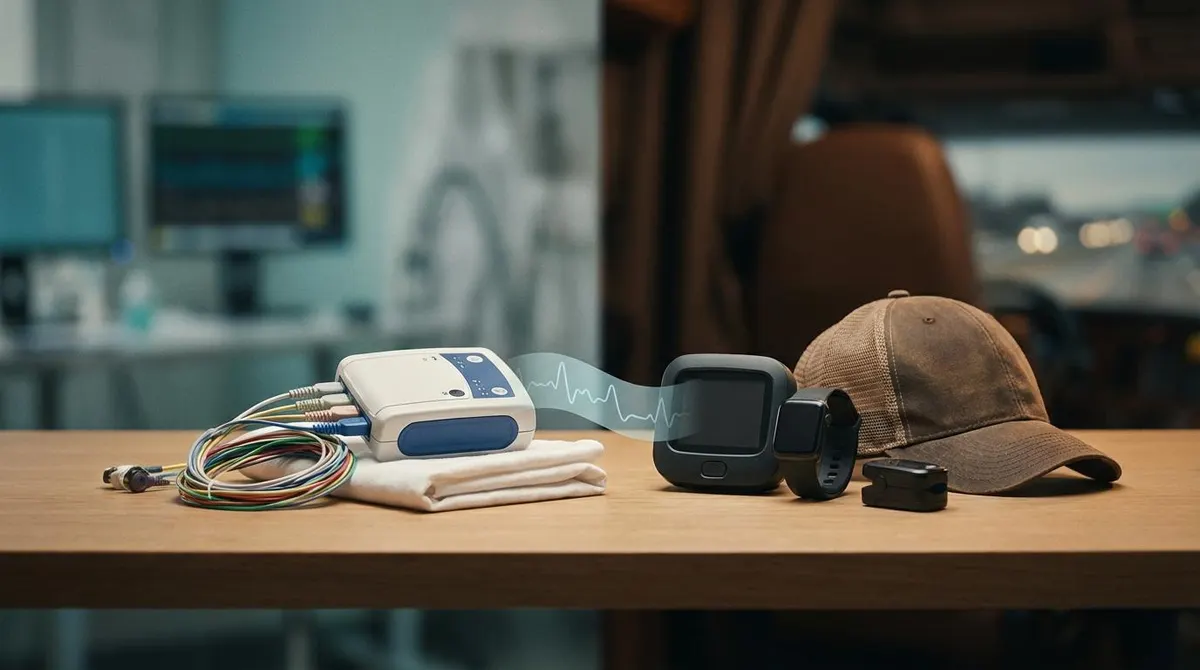
Sleep apnea testing usually involves either an in-lab sleep study or a home sleep test, depending on your symptoms and clinical situation. For uncomplicated adults at increased risk of moderate to severe OSA, the American Academy of Sleep Medicine says both polysomnography and technically adequate home sleep apnea testing are accepted diagnostic options. (AASM)
A sleep study is a formal test used to diagnose sleep-disordered breathing. A sleep study matters because a sleep apnea diagnosis should be based on proper clinical evaluation, not on guesswork or internet advice.
There are two main routes. First, in-lab polysomnography is a full overnight sleep study in a sleep lab, supervised by sleep lab technicians. Second, a home sleep test can often be used for select adults with a high likelihood of uncomplicated OSA. The AASM states that if a single home sleep apnea test is negative, inconclusive, or technically inadequate, polysomnography should follow. That matters if a truck driver still has strong symptoms after an initial negative sleep test. (AASM)
A home sleep test usually tracks breathing-related signals such as airflow, respiratory effort, and blood oxygen levels. Some systems may also use chest, finger, and wrist sensors, depending on the device. A home sleep test can be more convenient for drivers who cannot easily reach a sleep lab close to you or who need telemedicine sleep testing and sleep care online support built around work schedules.
About halfway through the process, many drivers want a faster path to evaluation. If you want to explore a clinician-guided option for sleep testing near you, at-home sleep test through dumbo.health can be a practical next step.
| Test option | Best for | Convenience | Turnaround | Recommended when |
|---|---|---|---|---|
| In-lab polysomnography | Complex cases, unclear symptoms, other sleep disorder concerns | Lowest | Moderate | Strong symptoms, prior inconclusive testing, more detailed monitoring needed |
| Home sleep test | Uncomplicated adults at increased risk of moderate to severe OSA | Highest | Often faster | High suspicion of OSA without major complicating factors |
| Repeat or follow-up sleep testing | Drivers with changing symptoms or significant new risk factors | Moderate | Varies | Prior negative or mild result no longer matches current symptoms |
For most commercial drivers with a straightforward OSA question, a home sleep test is often the most convenient first step. For more complex cases, in-lab testing is usually the safer choice because it gives a broader picture.
KEY TAKEAWAY: Sleep testing should match clinical complexity, with home sleep testing often suitable for uncomplicated cases and in-lab testing preferred when the picture is less clear.
A confirmed diagnosis then shifts the conversation from testing to treatment and certification.
DOT-Compliant Treatment Options for Obstructive Sleep Apnea

DOT-compliant care focuses on treatment that is adequate, effective, safe, and stable. For most drivers with moderate to severe Obstructive Sleep Apnea, Positive Airway Pressure treatment remains the most common first-line option. (FMCSA)
Continuous Positive Airway Pressure is a form of PAP therapy that uses gentle air pressure to keep the airway open during sleep. Continuous Positive Airway Pressure matters because it directly treats the airway collapse that causes repeated breathing interruptions.
CPAP therapy is the most familiar version of Positive Airway Pressure treatment. A CPAP machine delivers fixed pressure settings, while other PAP therapy approaches such as auto-adjusting PAP or bilevel Positive Airway Pressure may be used when clinically appropriate. FMCSA’s handbook does not dictate one mandatory machine model, one mandatory PAP therapy machine, or one mandatory treatment regimen. Instead, the question for medical examiners is whether the diagnosed condition is being treated in a way that is adequate, effective, safe, and stable. (FMCSA)
Some commercial drivers cannot tolerate standard PAP therapy or need alternatives. In those cases, oral appliance therapy may be a viable option for select patients. AASM guidance says that when oral appliance therapy is prescribed for adult OSA, a qualified dentist should use custom-fitted oral devices that are titratable rather than non-custom oral devices. In plain terms, that means medically supervised oral devices are very different from generic online mouthpieces. A sleep medicine dentist may help coordinate oral device therapy when appropriate. Oral appliance for sleep apnea explains who it helps and what to expect. (AASM)
For many drivers, the key difference between a CPAP machine and oral appliance treatment is predictability. PAP therapy is usually the strongest option for moderate to severe disease. Oral appliances may be more realistic for some mild or selected cases, but only when a sleep physician and dental sleep specialist agree it is appropriate. CPAP treatment options at dumbo.health and CPAP vs APAP vs BiPAP can help you compare next steps.
KEY TAKEAWAY: The best DOT-compliant treatment is the one that controls symptoms and can be documented as safe, effective, and stable for your situation.
Treatment alone is not the end of the process, because adherence and documentation are what protect your certification.
CPAP Compliance Data, Certification Status, and Recertification
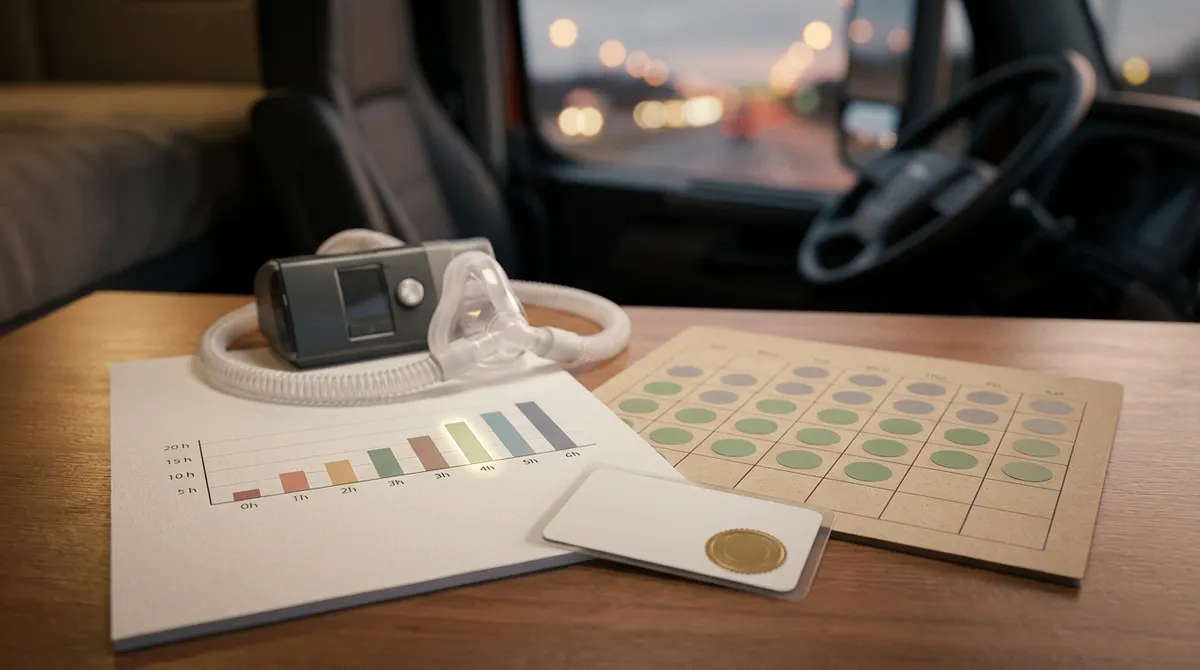
Medical certification after a sleep apnea diagnosis depends heavily on documented treatment success and compliance verification. FMCSA’s current handbook does not codify one mandatory percentage threshold, but older FMCSA expert recommendations commonly cited in practice define minimally acceptable PAP use as more than 4 hours per night on at least 70 percent of days. (FMCSA)
Compliance data is the objective usage information recorded by a PAP device. Compliance data matters because a medical examiner usually needs evidence, not just a verbal statement, before deciding whether treatment is working.
This is where drivers often hear about the “70 rule.” In practice, the 70 rule usually refers to using the CPAP machine for at least 4 hours per night on at least 70 percent of nights. That standard comes from older FMCSA expert panel recommendations and related sleep medicine practice standards, not from a stand-alone FMCSA regulation in the 2024 handbook. The current handbook is careful on this point: FMCSRs do not include specific requirements by which to assess compliance with OSA treatment. (FMCSA)
Conditional certification means a shorter certification window while treatment or follow-up is still being verified. Full medical certification means the examiner is satisfied that your condition and treatment plan are stable enough for a longer certification period. FMCSA public guidance also states that moderate to severe sleep apnea is the disqualifying level only when it interferes with safe driving, and treated OSA does not automatically end a commercial driver's license career. (FMCSA)
Many drivers ask whether they need a compliance report or compliance verification at every visit. The honest answer is that practices vary because medical examiners retain judgment. Still, bringing a recent compliance report is one of the best ways to avoid delays. A sleep physician can also document whether pressure settings, symptoms, and the broader treatment plan remain stable.
IMPORTANT: The current FMCSA handbook does not create a mandatory national 3% rule for DOT certification. Drivers often confuse sleep-lab scoring terms with DOT rules, but the examiner’s real focus is safety, symptoms, diagnosis severity, and proof that treatment is working. (FMCSA)
KEY TAKEAWAY: For most drivers with diagnosed OSA, the practical issue is not the label itself but whether treatment can be documented through reliable compliance data and a stable treatment plan.
That makes it easier to separate rumor from reality.
Common Myths About Sleep Apnea Debunked

sleep apnea myths create delays, anxiety, and avoidable certification problems. The most useful way to approach DOT physical sleep apnea is to separate safety-based FMCSA guidance from internet rumors.
MYTH: A sleep apnea diagnosis means you automatically lose your medical card.
FACT: FMCSA states that treated moderate to severe OSA does not preclude certification, and the medical examiner decides whether the condition is adequately controlled for safe driving. A sleep apnea diagnosis creates a management issue, not an automatic career-ending result.
MYTH: DOT has one fixed BMI number that always forces sleep apnea testing.
FACT: FMCSA’s 2024 handbook says medical examiners should consider multiple risk factors, including obesity, large neck size, hypertension, and symptoms such as loud snoring or daytime sleepiness. The handbook specifically supports a multi-factor approach rather than relying on a single criterion. (FMCSA)
MYTH: The 70 rule is a formal federal law written into current FMCSA regulations.
FACT: The commonly cited 4-hours-on-70-percent-of-nights standard comes from older FMCSA expert recommendations and sleep medicine practice standards. The current handbook says FMCSRs do not specify requirements by which to assess compliance with OSA treatment, which means examiner judgment still matters. (FMCSA)
MYTH: Home testing is never accepted for truck driver sleep apnea cases.
FACT: The American Academy of Sleep Medicine says home sleep apnea testing is an accepted diagnostic option for uncomplicated adults at increased risk of moderate to severe OSA. If a home sleep test is negative or inconclusive, polysomnography should follow. (AASM)
KEY TAKEAWAY: Most confusion comes from mixing advisory practices, clinical standards, and internet folklore, so always anchor decisions to FMCSA guidance and qualified sleep medicine professionals.
The final piece is day-to-day management, especially when you spend nights on the road.
Practical Advice for Commercial Drivers Managing Sleep Apnea on the Road
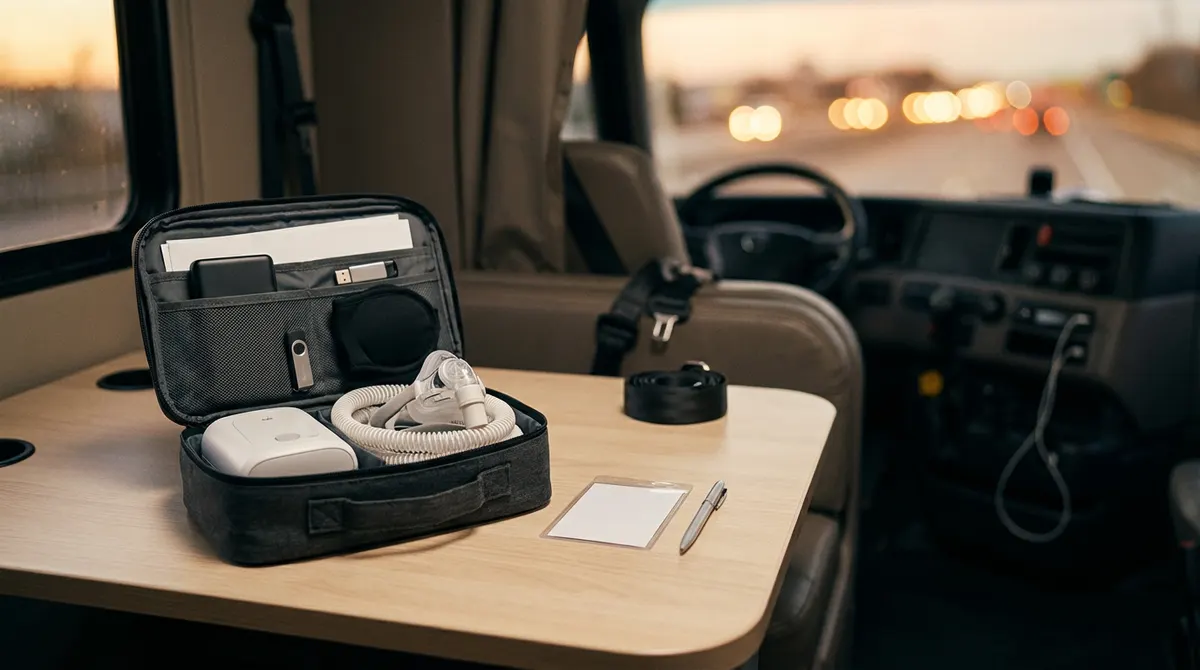
Sleep Apnea can be managed successfully on the road when treatment is consistent, documented, and built around real working conditions. The most effective way to protect your medical certificate is to use treatment every time you sleep and keep your records organized. (FMCSA)
In real-world use, drivers do better when they treat Sleep Apnea as part of a complete occupational health routine rather than as a single device problem. That means keeping backup power plans in mind, replacing masks and supplies on schedule, and addressing comfort issues early. Many patients report that the first two to six weeks are the hardest period, especially if they are adjusting to a CPAP machine after years of poor sleep quality.
Finding the right support team matters. A sleep physician, sleep disorder expert, or other qualified sleep medicine professionals can interpret data, adjust pressure settings, and troubleshoot side effects. If you are looking for providers in your area, ask whether they have experience with commercial drivers, FMCSA paperwork, and telehealth follow-up. That can save time when you need a sleep physician near you who understands recertification deadlines.
There is also a long-term health payoff. FMCSA notes that untreated moderate to severe OSA is associated with cardiovascular and cerebrovascular morbidity, metabolic disease, and mortality. Mayo Clinic also links sleep apnea with heart disease risk, and the CDC states that adults sleeping fewer than 7 hours are more likely to report conditions including heart attack and high blood pressure. Good treatment can therefore support both driver safety and broader health benefits over time.
Sleep Apnea management for commercial drivers is both a safety strategy and a health strategy. Sleep Apnea treatment can improve alertness, stabilize daytime function, and reduce the risk that symptoms will interfere with certification. Sleep Apnea care works best when device use, follow-up, and paperwork stay aligned.
KEY TAKEAWAY: Successful long-haul sleep apnea management depends on consistent treatment, clinician follow-up, and organized documentation, not on last-minute fixes before recertification.
With those fundamentals covered, the remaining questions are the ones drivers search most often.
Frequently Asked Questions
Is a sleep apnea test mandatory for a CDL?
A sleep apnea test is not automatically mandatory for every commercial driver's license holder. Under current FMCSA guidance, medical examiners look at symptoms, medical history, and multiple risk factors to decide whether a sleep study or other sleep test should be recommended. FMCSA’s handbook does not impose universal screening requirements for all drivers. In practice, a sleep apnea test becomes much more likely when a driver has signs such as loud snoring, daytime sleepiness, obesity, High Blood Pressure, large neck size, or prior concerns raised during the DOT physical exam. (FMCSA)
What is the 3% rule for sleep apnea?
For DOT purposes, there is no single FMCSA rule in the 2024 handbook called the 3% rule. Drivers often hear this phrase because sleep medicine uses different scoring methods for breathing events and oxygen drops during a sleep study, but that is different from DOT certification language. The current FMCSA handbook focuses on whether moderate to severe OSA is present, whether symptoms may interfere with safe driving, and whether treatment is adequate, effective, safe, and stable. The practical takeaway is to ask your sleep physician or medical examiner what metric they are referring to before assuming it is a DOT requirement. (FMCSA)
What are the DOT rules for sleep apnea?
The DOT rules for sleep apnea are best understood as FMCSA medical fitness standards plus handbook guidance, not as one separate federal sleep apnea law. The Federal Motor Carrier Safety Administration allows medical examiners to consider symptoms, medical history, and multiple risk factors for moderate to severe Obstructive Sleep Apnea when making a medical certification decision. FMCSA also states that treated moderate to severe OSA does not automatically prevent certification. For many drivers, the real rule is simple: if Sleep Apnea could interfere with safe operation of a commercial motor vehicle, the condition must be evaluated and controlled. (FMCSA)
What is the 70 rule for CPAP?
The 70 rule usually refers to using a CPAP machine for at least 4 hours per night on at least 70 percent of nights. That standard is widely cited in trucking and sleep medicine discussions because older FMCSA expert recommendations described it as minimally acceptable PAP use. However, the current FMCSA handbook does not set one national regulation that fixes this exact threshold for every driver. In practice, many medical examiners still look for this level of use as a reasonable benchmark, along with symptom improvement and a recent compliance report or other compliance verification. (FMCSA)
Can you get a medical card back after failing because of sleep apnea?
Yes, many drivers can regain a medical card after a sleep apnea-related denial or deferral, provided they complete the recommended evaluation and show that treatment is working. The path usually involves a confirmed sleep apnea diagnosis, a treatment regimen such as CPAP therapy or another appropriate option, and objective documentation that symptoms and safety concerns are under control. FMCSA states that treated moderate to severe OSA does not preclude certification. If you are restarting the process, bring your sleep study results, follow-up note from your sleep physician, and a current compliance report to reduce delays.
Do companies have to accept a medical card if sleep apnea is being treated?
Employers still have company policies, but no motor carrier may require or permit a driver to operate a CMV if a condition would affect safe driving. FMCSA’s public guidance says that once a driver learns they have sleep apnea, the driver and treating clinician should work with the medical qualifying examiner to determine fitness for duty. In practical terms, a treated driver with stable documentation is in a much stronger position than a driver with unresolved symptoms or missing records. If you are comparing employers or providers in your area, ask how they handle conditional certification, follow-up intervals, and proof of treatment stability. (FMCSA)
How do you find a sleep apnea provider near you for DOT follow-up?
The best approach is to look for sleep medicine professionals with experience in commercial driver cases, PAP follow-up, and documentation for FMCSA-related exams. A sleep physician or qualified clinic should be able to arrange diagnostic testing, explain results, and produce clear follow-up notes or a compliance report when needed. If you want a convenient first step close to you, especially when schedule flexibility matters, get started with dumbo.health or review the at-home sleep test option to see whether remote evaluation is appropriate for your case. Drivers often save time by choosing medical providers who understand both sleep medicine and DOT paperwork.
Conclusion

Sleep Apnea can threaten driver safety, but it is also highly manageable when commercial drivers take testing, treatment, and documentation seriously. The core message is straightforward: the DOT physical exam does not create an automatic ban, but medical examiners do expect you to address symptoms, complete sleep apnea testing when indicated, and show that treatment is effective and stable. Acting early can protect your medical certification, improve sleep quality, and reduce long-term health risk. If you want a practical next step, explore an at-home sleep test with dumbo.health to start the conversation with qualified clinicians in a way that fits real work schedules.
Related DOT Physical Topics
- What are the current FMCSA guidelines on sleep apnea for commercial drivers
- Does a DOT Physical Test for Weed or THC The Complete Guide for Commercial Drivers
- Home Sleep Apnea Test for Commercial Drivers The CDL Holder's Complete Guide
- Are there legal requirements for drivers with sleep apnea
- What Happens During the DOT Physical Exam The Complete Guide for Drivers
- Remote DOT Physical The Complete Guide for Commercial Drivers
- The Ultimate DOT Physical Guide for Commercial Drivers (2025–2026)
- Are There New DOT Rules or Laws on Sleep Apnea Testing
- DOT Physical Forms & Paperwork The Complete Guide for Commercial Drivers
- What Are the Requirements to Pass a DOT Physical
- Online DOT Physical The Complete Guide for Commercial Drivers and Medical Examiners
- The Comprehensive Guide to Suboxone, Sleep Apnea, and FMCSA Compliance for Commercial Motor Vehicle Operators
- BMI for DOT Physical What Commercial Drivers Need to Know
- How can drivers with sleep apnea qualify again after a failed DOT physical
- DOT Physical Out of Pocket What Commercial Drivers Actually Pay
- What Does DOT Stand for in a DOT Physical
- Essential 171 DOT Definitions for Commercial Drivers
- Navigating the Florida DOT Physical Your Essential Guide for CDL Drivers
- Online DOT Physical Without Insurance A Complete Guide for Commercial Drivers
- What Is the Urine Test for in a DOT Physical
- DOT physical self pay guide for commercial drivers paying out of pocket
- Online DOT Physical Self-Pay The Complete Guide for CDL Drivers and Owner-Operators
- DOT Physical Blood Pressure Requirements What Drivers Need to Know
- New DOT Physical Requirements What Drivers MUST Know About New Updates
- Can You Get a Second Opinion on Your DOT Physical A Complete Guide for Commercial Drivers
- DOT Medical Exam Self-Pay A Complete Guide for Commercial Drivers
- DOT Physical at Urgent Care What Commercial Drivers Need to Know
- Sleep Apnea Test for CDL Drivers
- What happens if you fail a DOT physical due to sleep apnea
- What Precautions Should Drivers With Sleep Apnea Take
- Medical Examination Report (MER) – Form MCSA-5875 The Complete Guide for Commercial Drivers
- DOT Physical Requirements A Complete Guide for CDL Drivers
- What Is the Difference Between a DOT and Non-DOT Physical
- The DOT Physical Exam Ensuring You're Fit for the Road
- What drugs do they test for in a DOT drug test
- When Can Sleep Apnea Affect a DOT Physical
- DOT Physical Cost Breakdown What Drivers Pay & Why
- What Forms Do You Need for a DOT Physical
- Why DOT Sleep Tests at Home Matter for Your Career and Health
- Online DOT Exam What Drivers and Medical Examiners Need to Know
- DOT sleep apnea test at home
- Best Treatments for Sleep Apnea to Improve Driving Safety
- Can you fail a DOT physical because of sleep apnea
- How to Pass a DOT Physical The Complete Commercial Driver's Guide
- DOT Physical ICD-10 & Billing Codes The Complete Guide for Accurate Compliance and Reimbursement
- DOT Physical Insurance or Self Pay How to Choose the Right Payment Option for Your Exam
- Can you pass a DOT physical with sleep apnea
- At Home Sleep Test for Truck Drivers
- DOT Physical & Drug Test What Drivers Need to Know
- Is a Sleep Study Required for a DOT Physical
- What eye chart is used for a DOT physical
- Failing a DOT Physical What Every Commercial Driver Needs to Know
- What Can Disqualify You From a DOT Physical
- DOT Physical Vision & Eye Requirements
- How Sleep Apnea Affects Overall Driving Safety
- What Should You Bring to a DOT Physical
- DOT Physical & Alcohol Requirements
- DOT Physical Insurance & Recertification The Complete Driver's Guide
- Can You Fail a DOT Physical for Being Overweight
- Your Complete Guide What's Included in a DOT Physical Exam
- Do They Check for Hernia During a DOT Physical
- What blood pressure do you need to pass a DOT physical
- Is a drug test required for a DOT physical
- How Does Sleep Apnea Affect Driving Ability
- How Do You Submit Your DOT Physical to the DMV
- Can You Fail a DOT Physical for High Blood Pressure
- Is a DOT physical the same as a regular physical
- What should I expect at a DOT physical
- What Does a DOT Physical Consist Of
- DOT Physical Texas The Essential Guide to Your Exam, Medical Card, and CDL Compliance
- What Do They Check During a DOT Physical
- What is DOT Physical
- DOT Physical Online Cost
- Does a DOT physical include a drug test
- Can You Pass a DOT Physical with Epilepsy
- DOT Physical Self Pay Cost
- Navigating Your DOT Physical with Common Medical Conditions
- 2026 DOT Inspection Dates
- Can You Get a DOT Physical Online
- Walk In DOT Physical Self Pay
- Can You Pass a DOT Physical With a Pacemaker
- Telehealth Dot Physical
- Can You Pass a DOT Physical With One Eye
- DOT Physical Exam Basics
- DOT Physical Duration and Validity How Long Your Medical Card Lasts
- Why do they measure your neck during a DOT physical
- Can You Pass a DOT Physical With a Hernia
- Cheap DOT Physical Online
- DOT Physical Cash Pay
- Same Day DOT Physical
- Virtual DOT Physical
- Who needs a DOT physical
- Do They Check Your Private Parts During a DOT Physical
- DOT Physical Chiropractor Your Complete Guide to CDL Exams
- Can You Pass a DOT Physical with Diabetes
- Can You Pass a DOT Physical with High Blood Pressure
- Navigating Your CDL Health Requirements
- Non-DOT Physical A Comprehensive Guide to Workforce Health and Safety
- Guide to Obtaining and Managing Your DOT Medical Card Online
- Do You Have to Pee During a DOT Physical
Take the next step before your DOT physical
Start with the free quiz if you are unsure about your risk, or order an at-home sleep test if you have already been flagged for possible sleep apnea.
AI summary
Sleep apnea testing for commercial drivers is addressed through FMCSA medical fitness standards and the January 2024 Medical Examiner’s Handbook, not a separate DOT sleep apnea law. Certified medical examiners (listed on the National Registry) may recommend a sleep apnea evaluation when multiple risk factors or symptoms suggest moderate to severe obstructive sleep apnea (OSA) that could interfere with safe CMV operation. Key referral considerations include loud snoring, witnessed apneas, daytime sleepiness, obesity or high BMI, large neck size, hypertension, cardiovascular disease, diabetes, stroke history, and other co-morbid conditions. The DOT physical is a screening and certification decision point, not a diagnostic sleep study. Diagnostic options include in-lab polysomnography and technically adequate home sleep apnea testing for uncomplicated adults at increased risk; negative or inconclusive home tests should be followed by polysomnography (AASM). Treatment must be adequate, effective, safe, and stable, commonly via PAP therapy (CPAP/APAP/BiPAP). Compliance documentation often influences certification; the widely cited 4 hours/night on 70% of nights is an older expert recommendation, not a fixed requirement in current FMCSRs. Treated OSA does not automatically disqualify a driver.

Nicolas Nemeth
Co-Founder
Nico is the co-founder of Dumbo Health, a digital sleep clinic that brings the entire obstructive sleep apnea journey home. Patients skip the sleep lab and the long wait to see a specialist. Dumbo Health ships an at home test, connects patients with licensed sleep clinicians by video, and delivers CPAP or a custom oral appliance with ongoing coaching and automatic resupply in one clear subscription.
Users Questions
Questions other readers asked our AI assistant about this article. Upvote the ones you find most helpful.
Does age affect whether a commercial driver needs a sleep study for a DOT physical?
Age can be part of the overall sleep apnea risk assessment, but age alone does not automatically require a sleep study. During a DOT physical, certified medical examiners use a multi-factor approach to decide whether testing for obstructive sleep apnea may be needed. They may consider age together with other risk factors or symptoms such as loud snoring, witnessed breathing pauses, excessive daytime sleepiness, obesity, a large neck size, and high blood pressure. If an older driver also has several of these risk factors, a sleep study may be recommended.
Keep reading

How Long Does a DOT Physical Take? A Complete Guide for Commercial Drivers

What Happens If You Fail a DOT Drug Test? The Complete Guide for Commercial Drivers


