Can You Pass a DOT Physical with Diabetes?
Many commercial drivers can still qualify for a DOT medical card with diabetes when their condition is stable, well documented, and does not create a risk of sudden impairment. The article explains how FMCSA evaluates diabetes during the DOT physical, with extra scrutiny for hypoglycemia risk, vision standards, and diabetes-related complications. It clarifies that diabetes is not an automatic disqualification and highlights the 2018 shift to individualized certification for insulin-treated drivers. You will learn what paperwork to bring, including glucose monitoring records and, for insulin users, the MCSA-5870 form completed by a treating clinician. It also covers how A1C is used as context, why one high reading may not mean failure, and how blood pressure and other coexisting conditions affect outcomes. Practical preparation steps focus on consistent monitoring, a realistic management plan, and renewal readiness.
Struggling with sleep?
Find out if sleep apnea is the reason.
FDA-cleared. $149 flat. Physician-reviewed results in 48 hours.

Can You Pass a DOT Physical with Diabetes?

Can you pass a DOT physical with diabetes? Yes, many drivers can pass if diabetes is stable, well documented, and does not create a safety risk for operating a commercial motor vehicle. According to the Federal Motor Carrier Safety Administration, drivers with properly controlled insulin-treated diabetes may qualify under current federal rules rather than facing an automatic ban. This page explains how the DOT physical works for diabetes, what forms and medical documentation you need, what medical examiners assess, and what can lead to delays or disqualification. You will also learn how blood sugar levels, Hemoglobin A1C, blood pressure, diabetic complications, and long-term follow-up affect your medical card. Keep reading to understand how to prepare well and protect your Commercial Driver's License. (FMCSA)
Navigating the Road Ahead with Diabetes and Your CDL

Passing a DOT physical with diabetes is usually possible when you show stable diabetic control, a safe treatment routine, and the right paperwork.
A DOT physical is the medical examination used to determine whether commercial drivers meet federal qualification standards for safe driving. Diabetes matters because low blood sugar, severe hyperglycemia, vision problems, and end organ damage can affect judgment, reaction time, and driving safety. The practical goal is not perfection. The practical goal is proving that your diabetes mellitus is controlled well enough for safe interstate commerce driving.
Many drivers worry that any diabetes diagnosis ends their career. Current Department of Transportation and FMCSA rules are more individualized than that. Drivers with Type 1 diabetes, insulin-treated diabetes, or non-insulin-treated diabetes may still receive medical certification when the evidence supports safe operation of commercial motor vehicles. According to the FMCSA diabetes standard, the key issue is whether the driver has a stable insulin regimen and properly controlled condition. (FMCSA)
KEY TAKEAWAY: Diabetes can be compatible with CDL driving when the condition is stable, documented, and medically safe.
Not sure if sleep apnea applies to you?
Take our 2-minute sleep risk quiz to see whether sleep apnea could affect your DOT physical. No account required.
The next step is understanding whether diabetes itself is disqualifying or whether the real issue is risk.
The Core Question: Is Diabetes an Automatic Disqualification for Commercial Drivers?

Diabetes is not an automatic disqualification for commercial drivers, but uncontrolled diabetes or serious complications may prevent certification.
The most important distinction is between diagnosis and risk. A diabetes diagnosis alone is not the same as failing the Driver Physical Qualification Standard. What matters is whether your medical condition creates an unacceptable risk of sudden impairment, especially from hypoglycemia episodes, hypoglycemia unawareness, severe vision problems, or other diabetes-related complications.
The FMCSA changed its approach in 2018. Before that rule change, many drivers using insulin needed an exemption. Under the current standard, a driver with insulin-treated diabetes may qualify if the driver has a stable insulin regimen and properly controlled diabetes mellitus, as defined under federal rules. That change opened the door for more individualized assessments during the DOT physical exam. (FMCSA)
DID YOU KNOW: The current federal rule replaced the older blanket-exemption approach with an individualized medical certification process for insulin-treated drivers. (FMCSA)
KEY TAKEAWAY: The diagnosis itself is usually not the reason for denial. The safety risk created by unstable diabetes is the real issue.
That leads directly into why the DOT physical exam is structured so carefully for safety-sensitive work.
Why the DOT Physical Matters for Commercial Drivers

The DOT physical matters because commercial drivers operate vehicles where sudden medical impairment can endanger both the driver and the public.
The DOT physical exam is not just a routine physical exam. It is a federal medical evaluation designed to identify whether a driver can safely operate a commercial vehicle in interstate commerce. Medical examiners look at your overall medical history, medications, blood pressure, vision standards, hearing impairments, cardiovascular disease risk, and any medical condition that could affect safe driving. Diabetes receives special attention because both high blood sugar and low blood sugar can impair performance.
This is also why diabetes is never reviewed in isolation. A driver may have acceptable blood sugar levels but still face concerns from heart disease, peripheral neuropathy, diabetic retinopathy, sleep disorder symptoms, or uncontrolled high blood pressure. If related conditions are present, the medical examiner may shorten the medical card period, request more records, or decline certification until the condition is better controlled. Sleep-related risk can also matter, especially if obesity and fatigue raise concern about sleep apnea. (FMCSA)
KEY TAKEAWAY: The DOT physical evaluates whether your full health profile supports safe commercial driving, not whether you have one diagnosis on paper.
To prepare well, you need to understand the exact FMCSA rules that apply to diabetes.
Already diagnosed and need CPAP support?
Dumbo Health helps patients start CPAP without the usual confusion, paperwork, or upfront cost. Equipment, setup, supplies, and ongoing support are all handled in one place.
Your Comprehensive Guide to Understanding and Preparing for the Exam

Preparing for a DOT physical with diabetes means combining documentation, daily control, and practical exam readiness.
Most drivers do better when they prepare in layers. The first layer is paperwork, including treatment history, medication details, blood sugar monitoring records, and any required forms. The second layer is diabetic control, including consistent blood sugar levels, follow-up care, and an organized management plan. The third layer is appointment readiness, including food, medications, devices, and a realistic understanding of what the examiner will review.
In real-world use, people who undergo this exam often find that preparation reduces stress as much as it improves outcomes. When you show a clear insulin regimen, recent self-monitoring records, and evidence of follow-up with your treating clinician, the evaluation becomes easier for the DOT-certifying physician or certified medical examiner to complete. That is especially important if you need to find a provider near you who is familiar with current DOT MEDICAL GUIDELINES.
KEY TAKEAWAY: A successful exam usually comes from preparation, not guesswork.
The most important rules come from FMCSA diabetes standards, so that is the right place to start.
Understanding the Federal Motor Carrier Safety Administration (FMCSA) Standards for Drivers with Diabetes

FMCSA standards allow many drivers with diabetes to qualify if treatment is stable and the condition does not interfere with safe driving.
The Federal Motor Carrier Safety Administration is the federal agency that sets qualification standards for interstate commercial motor vehicle drivers. The agency’s diabetes rule works alongside 49 CFR 391.41 and 49 CFR 391.46 to determine whether insulin-treated drivers can be medically certified. The key standard is stability and safety, not diagnosis alone. (FMCSA)
The FMCSA also provides the Insulin-Treated Diabetes Mellitus Assessment Form, MCSA-5870, which must be completed by the treating clinician for many insulin-treated drivers. The form asks whether the driver has at least the preceding 3 months of ongoing blood glucose self-monitoring records from an electronic glucometer with stored readings and downloadable data. That requirement makes blood sugar monitoring one of the most practical pieces of the entire evaluation. (FMCSA)
| Driver situation | Typical DOT concern | Common documentation need | Practical implication |
|---|---|---|---|
| Non-insulin-treated diabetes | Stability, symptoms, complications | Medical history, medication list, examiner review | May qualify if condition is controlled |
| Insulin-treated diabetes | Hypoglycemia risk, monitoring, regimen stability | MCSA-5870, glucose logs, treating clinician input | May qualify if regimen is stable and documented |
| Poorly controlled diabetes with complications | Safety, vision, nerve damage, sudden impairment | Extra evaluation or delayed certification | Higher risk of short certification or denial |
For most drivers, the best path is simple. Arrive with organized records, stable symptoms, and evidence that your blood sugar levels are being managed consistently.
KEY TAKEAWAY: FMCSA rules allow certification for many drivers with diabetes, but documentation and safety evidence are essential.
Now it helps to understand how the regulation developed and why individualized review matters.
The Role of the FMCSA and Department of Transportation (DOT) Regulations

FMCSA and Department of Transportation regulations set the qualification standards that medical examiners use during the DOT physical.
The Department of Transportation establishes the broader regulatory framework, while FMCSA applies the medical fitness rules for commercial motor vehicles in interstate commerce. These rules exist because a commercial motor vehicle can cause severe harm when a driver experiences sudden impairment. That is why Part 391, the Medical Advisory Criteria, and Appendix A remain central to certification decisions, even when guidance evolves over time. (FMCSA)
The FMCSA Medical Examiner’s Handbook helps explain how certified examiners should evaluate diabetes, vision standards, medication use, and coexisting disease. The handbook is especially useful because it shows that diabetes review is tied to overall function and safety, not to one isolated lab value. (FMCSA)
KEY TAKEAWAY: FMCSA rules turn diabetes review into a safety-based certification process rather than a simple diagnosis checklist.
That history becomes clearer when you look at how diabetes rules have changed.
The Evolution of Diabetes Regulations: From Blanket Bans to Individualized Assessments

FMCSA moved from broad restrictions to individualized review, which greatly improved access for insulin-treated drivers.
Before the 2018 diabetes standard, many insulin-treated drivers needed a federal exemption to operate in interstate commerce. The final rule changed that by allowing certification when a driver has a stable insulin regimen and properly controlled insulin-treated diabetes mellitus. This was a major shift in how DOT physical exams handle diabetes and medical certification. (FMCSA)
This change matters because it recognizes that good diabetic control can be demonstrated. A driver who performs regular blood sugar monitoring, follows a management plan, avoids severe hypoglycemia episodes, and maintains follow-up care is different from a driver with unstable control. Individualized review better reflects real medical risk and real driving capability.
KEY TAKEAWAY: Modern FMCSA rules recognize that stable diabetes can be compatible with safe commercial driving.
The next piece is understanding the specific category that triggers the most paperwork.
Defining "Insulin-Treated Diabetes Mellitus" and its Specific Requirements

Insulin-treated diabetes mellitus is diabetes managed with insulin, and it carries specific DOT documentation and monitoring requirements.
Insulin-treated diabetes is not automatically disqualifying, but it is subject to extra review because insulin can increase the risk of severe low blood sugar if treatment is not stable. Under FMCSA rules, the treating clinician must complete the Insulin-Treated Diabetes Mellitus Assessment Form, MCSA-5870, and the driver must provide it to the certified medical examiner within 45 days of completion. (FMCSA)
The form also asks whether the driver has at least 3 months of electronic blood glucose records. That means your insulin regimen and blood sugar levels should be trackable over time, not just described verbally on exam day. Type 1 diabetes drivers can qualify under this same framework if they meet the standard and present complete medical documentation. (FMCSA)
KEY TAKEAWAY: Insulin-treated diabetes can qualify, but only when the required form, monitoring history, and clinical stability are clearly documented.
The paperwork is so important that it deserves its own section.
Key Medical Documentation You MUST Provide for Your DOT Physical
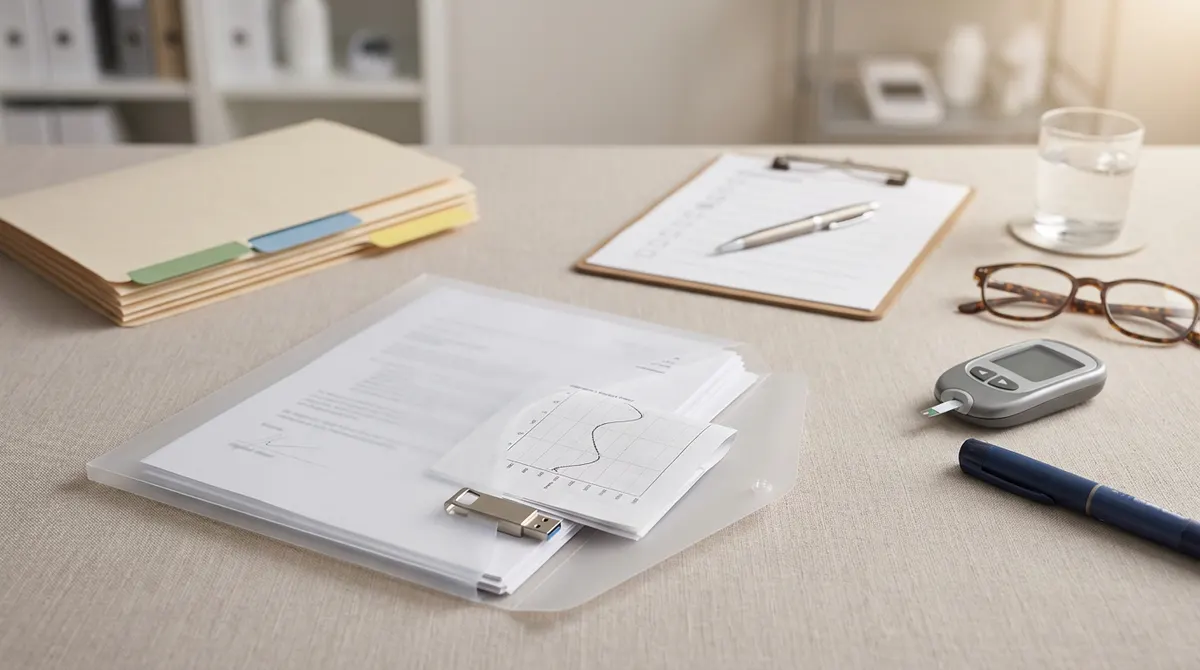
The right medical documentation can make the difference between a smooth certification and a delayed decision.
Medical documentation is the written proof that your diabetes is understood, monitored, and managed safely. For many drivers, that includes clinician notes, medication lists, recent blood sugar monitoring records, and evidence of a stable management plan. If you use insulin, documentation becomes even more important because the examiner must evaluate safety using the federal standard.
Bringing complete records also helps avoid unnecessary repeat appointments. Many drivers lose time because they arrive with partial information, outdated notes, or no download from their glucose device. If you are preparing for a DOT physical exam soon, organize everything before the visit and keep both digital and printed copies if possible.
TIP: Bring more documentation than you think you need, including logs, medication changes, eye records, and recent clinician notes.
KEY TAKEAWAY: Organized records reduce delays and help the examiner make a clear decision the first time.
The single most important diabetes form is the MCSA-5870.
The Critical Insulin-Treated Diabetes Mellitus Assessment Form (MCSA-5870)

The MCSA-5870 is the key federal form for drivers with insulin-treated diabetes seeking DOT medical certification.
The Insulin-Treated Diabetes Mellitus Assessment Form, MCSA-5870 is completed by your treating clinician, not by the medical examiner performing the DOT physical. It documents whether the insulin-treated diabetes is stable, whether the driver has the required blood sugar monitoring history, and whether there have been severe hypoglycemia episodes or complications that affect safe driving. FMCSA states that the completed form must be provided to the certified medical examiner within 45 days. (FMCSA)
This form matters because it connects your everyday diabetes care to the federal commercial driving standard. It also helps the examiner verify whether the diabetes mellitus is under adequate control and whether the medical condition requires restriction, shorter follow-up, or denial.
KEY TAKEAWAY: For insulin-treated drivers, the MCSA-5870 is not optional paperwork. It is central to certification.
Beyond the form itself, the examiner may need supporting records to confirm stability.
Essential Supporting Medical Records to Bring

Supporting records help prove that your diabetic control is stable over time rather than based on a single visit.
Useful records often include blood sugar monitoring downloads, recent office notes, medication lists, recent eye care records if vision problems exist, and any history related to hypoglycemia episodes. If you have a continuous glucose monitor, bring reports that show patterns rather than isolated readings. If you have changed treatment recently, bring notes explaining why.
The examiner may also look at Hemoglobin A1C or glycosylated hemoglobin results as part of the larger picture. According to the CDC, A1C reflects average blood sugar over roughly 2 to 3 months, with diabetes diagnosed at 6.5% or above. A1C level is useful context, but FMCSA rules do not set one universal A1C fail number that automatically disqualifies every driver. (CDC)
KEY TAKEAWAY: Supporting records strengthen your case by showing patterns, stability, and follow-up rather than one isolated snapshot.
Good records are strongest when they fit into a consistent daily routine.
The Importance of a Consistent Diabetes Management Plan

A consistent management plan helps show that diabetes is controlled in a way that supports safe driving.
A management plan is your day-to-day system for meals, medications, blood sugar monitoring, follow-up care, and response to abnormal readings. Medical examiners want to see that your approach is reliable, repeatable, and realistic for life on the road. If your insulin regimen changes often or you cannot explain how you handle low blood sugar, the examiner may question diabetic control.
In real-world driving, consistency matters because schedules can change, meals can be delayed, and long routes can make glucose control harder. A management plan that works only at home may not be enough for interstate commerce. That is why clinicians frequently advise regular meal timing, backup supplies, device readiness, and a healthy diet that supports predictable energy and safer blood sugar levels.
If related symptoms raise concern about fatigue or disturbed sleep, it may also help to review common sleep apnea symptoms or explore an at-home sleep test if your clinician suspects overlap with sleep apnea.
KEY TAKEAWAY: A documented and realistic diabetes management plan makes your certification case much stronger.
Once your records are ready, the next question is what happens during the actual examination.
What the DOT Medical Examiner Will Assess During Your Physical Examination

The DOT medical examiner will assess whether diabetes and any related complications could interfere with safe driving.
The physical examination includes a review of your medical history, medications, blood pressure, vision, urine testing, and signs of broader disease that could affect fitness for duty. For diabetes, the examiner focuses on stability, severe lows, treatment reliability, and whether complications create functional risk. A DOT physical is therefore broader than a standard office visit.
Examiners are also looking for risk patterns. A driver with recurrent hypoglycemia episodes, peripheral neuropathy affecting pedal control, diabetic retinopathy affecting vision standards, or cardiovascular disease may face extra scrutiny. The goal is not to punish drivers. The goal is to prevent predictable safety failures on the road.
KEY TAKEAWAY: The examiner is evaluating practical driving safety, not just whether you have diabetes listed in your chart.
That review starts with your history and your control over time.
Comprehensive Review of Your Medical History and Diabetic Control
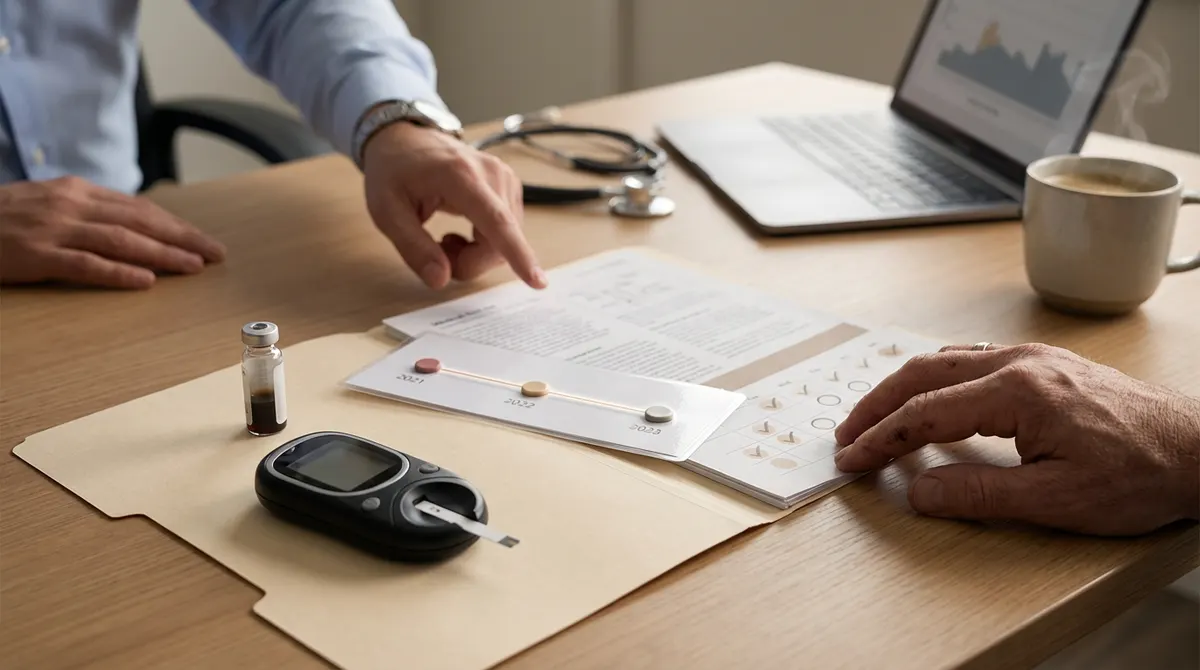
Your medical history and diabetic control tell the examiner whether your condition is predictable and safely managed.
Medical history includes diabetes type, treatment timeline, medication changes, past hospitalizations, severe low blood sugar events, and any complications involving eyes, nerves, kidneys, or circulation. This history matters because a stable condition is easier to certify than one marked by sudden changes or repeated emergencies.
Diabetic control is usually judged by patterns rather than one reading. Blood sugar levels, blood sugar monitoring, recent clinician follow-up, and any A1C level all contribute to the picture. According to the CDC, A1C reflects average glucose over about 2 to 3 months, which is why many clinicians use it as supporting evidence rather than as a standalone pass or fail tool. (CDC)
KEY TAKEAWAY: A strong history shows that your diabetes is stable over time, not just acceptable on the day of the exam.
The examiner then connects that history to physical findings.
Physical Examination Components Relevant to Diabetes
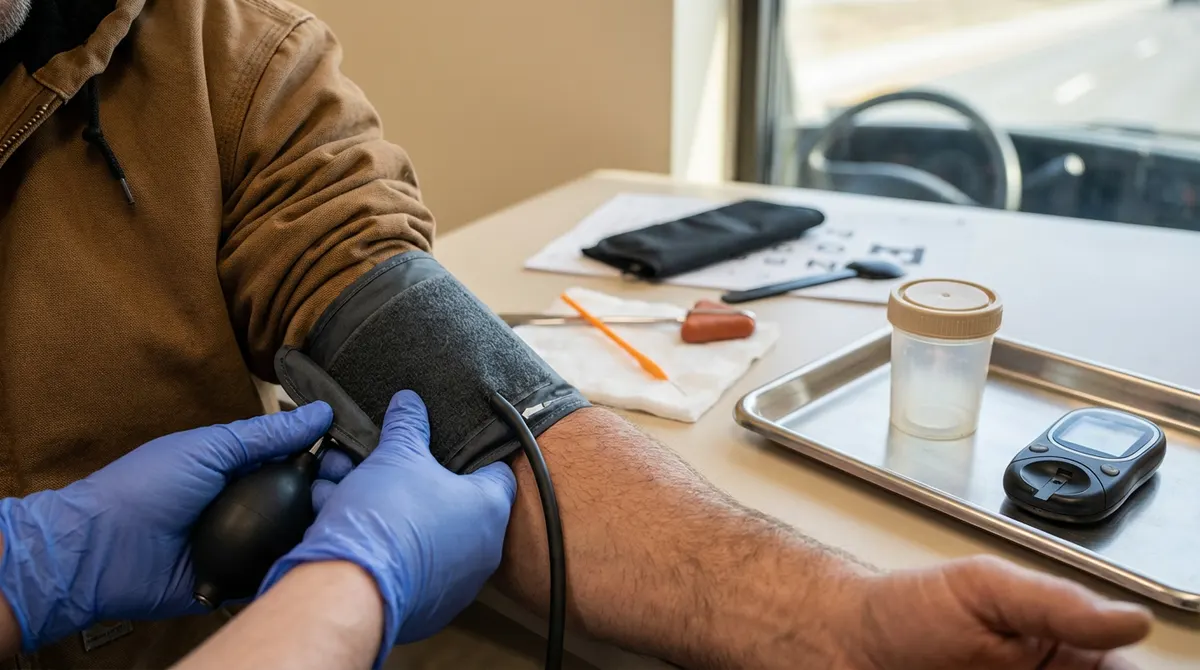
The physical exam looks for signs that diabetes has begun affecting driving-related function.
Relevant parts of the medical examination include blood pressure, vision, urine testing, neurologic function, circulation, and signs of end organ damage. Blood pressure matters because diabetes and high blood pressure often appear together, increasing cardiovascular disease risk. Vision matters because diabetic retinopathy, macular degeneration, or other vision problems can interfere with safe operation of commercial motor vehicles.
Peripheral neuropathy and peripheral vascular disease are also important. If diabetes affects sensation, balance, or foot control, that may matter for braking and pedal use. If you already know you have vision problems or nerve symptoms, it is better to bring records than to let the issue surprise the examiner.
KEY TAKEAWAY: Diabetes review is closely tied to vision, nerve function, circulation, and cardiovascular risk.
The examiner is ultimately asking one central question about safety.
The Medical Examiner's Focus: Safety, Diabetic Control, and Potential Complications
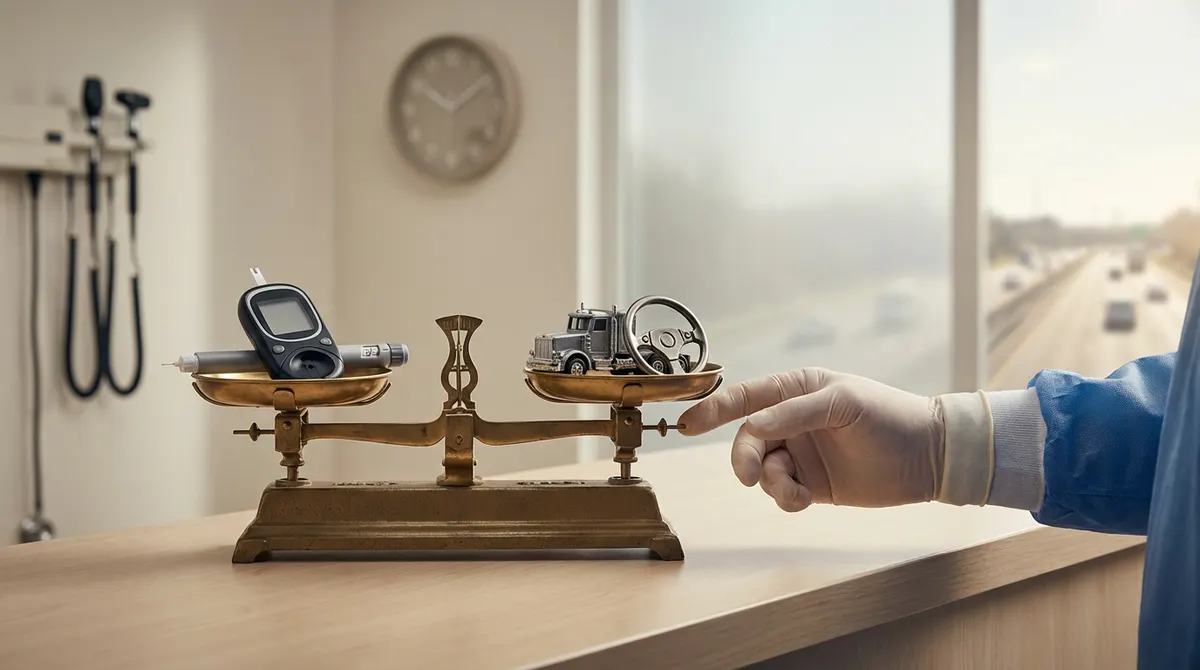
The medical examiner focuses on whether diabetic control is safe enough for commercial driving and whether complications raise the risk of sudden impairment.
This is why terms like diabetic control, hypoglycemia unawareness, end organ damage, heart disease, and vision standards matter so much. A driver may feel generally well but still have a pattern of dangerous lows, unstable blood sugar levels, or untreated complications that change the certification decision. The best outcome happens when treatment is stable and the examiner can clearly document safety.
This section is where many generic articles stop too early. The real issue is not simply blood sugar. The real issue is functional reliability under road conditions, schedule disruption, missed meals, stress, and long hours. That expert-level nuance is often what determines whether certification is granted, shortened, or denied.
KEY TAKEAWAY: Safety under real driving conditions is the central lens through which diabetes is evaluated.
The good news is that many of the biggest risks can be reduced before the appointment.
Proactive Strategies for Successfully Passing Your DOT Physical with Diabetes

The most effective way to improve your chances is to stabilize diabetes before the exam, not to hope for a favorable one-day reading.
Preparation starts weeks before the DOT physical. Keep consistent blood sugar monitoring records, follow your insulin regimen or medication plan exactly, attend follow-up visits, and address any gaps in your medical documentation. If your blood pressure runs high, work on that early too because high blood pressure can affect certification independently of diabetes.
Many patients report that the most helpful preparation is practical rather than technical. Pack glucose supplies, bring snacks, know your recent numbers, and understand your treatment plan well enough to explain it clearly. If you still need a diagnostic workup for fatigue, snoring, or possible sleep disorder symptoms, dumbo.health’s at-home sleep test can help you understand the next step without adding unnecessary clinic visits.
KEY TAKEAWAY: Passing with diabetes is often about preparation, stability, and proof of self-management.
The first area to tighten is your blood sugar routine.
Optimal Blood Sugar Management and Monitoring

Optimal blood sugar management means fewer dangerous swings, clearer records, and a stronger case for certification.
Blood sugar monitoring is one of the most practical parts of diabetic control because it shows what happens outside the clinic. FMCSA’s insulin-treated form specifically asks for 3 months of electronic glucose self-monitoring history. That requirement makes device records highly valuable during the DOT physical exam. (FMCSA)
According to the CDC, A1C reflects average glucose over roughly 2 to 3 months, but daily logs still matter because A1C does not always capture dangerous lows. A driver can have an acceptable A1C level and still experience risky hypoglycemia episodes. That is why both glycosylated hemoglobin and day-to-day patterns matter. (CDC)
KEY TAKEAWAY: The strongest evidence of diabetic control is a combination of steady daily readings and broader trend data.
Blood sugar control is also influenced by habits that extend beyond medication.
The Power of Lifestyle Changes for Diabetic Control

Lifestyle changes can improve diabetic control, support safer blood sugar levels, and reduce related risk factors.
Lifestyle changes include a healthy diet, regular physical activity, better sleep, medication adherence, and weight management when appropriate. These changes matter because diabetes, high blood pressure, cardiovascular disease, and sleep apnea often cluster together. Better daily habits can therefore improve more than one certification risk at the same time.
According to the CDC, diabetes care works best when monitoring, food choices, movement, and follow-up happen consistently over time. For commercial drivers, the challenge is making these habits portable. Meal planning, accessible snacks, hydration, and realistic physical activity during breaks often matter more than ambitious short-term changes. (CDC)
KEY TAKEAWAY: Lifestyle changes strengthen both medical control and your long-term ability to stay certified.
Those changes are easier to sustain when your care team is involved.
Working Closely with Your Healthcare Team

Working closely with your healthcare team improves documentation, treatment stability, and exam-day confidence.
Your treating clinician plays a central role if you use insulin because that clinician completes the MCSA-5870. More broadly, your healthcare team can adjust medication, clarify your insulin regimen, document complications, and help explain whether the medical condition is controlled. That is particularly important if you have Type 1 diabetes, vision problems, or a history of hypoglycemia unawareness.
If possible, schedule a diabetes follow-up before the DOT physical rather than after it. A pre-exam visit gives you time to correct missing records, discuss recent blood sugar levels, and update your management plan. It also helps if you need to find a provider near you who understands commercial driver requirements.
KEY TAKEAWAY: Strong clinician support turns your diabetes history into a clearer, more certifiable record.
With support in place, you can prepare for the appointment itself more effectively.
Preparing for the Appointment: Beyond Just Paperwork
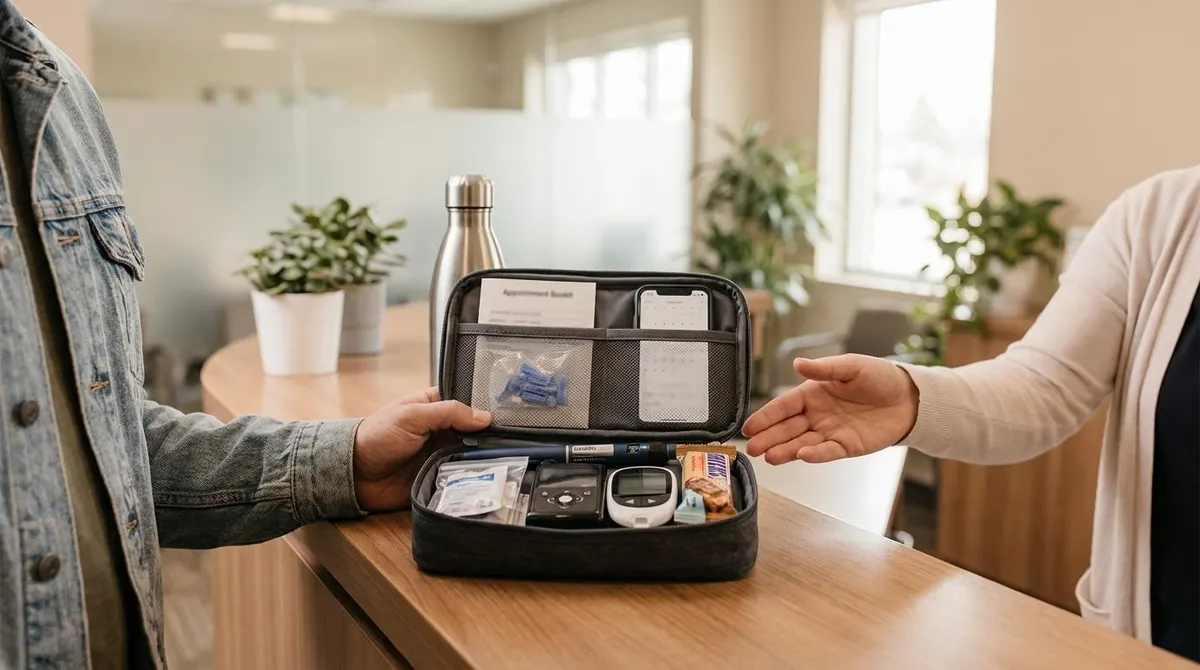
Preparation means showing up medically ready, not just administratively ready.
Eat appropriately for your treatment plan, take medications as prescribed, bring your glucose device, and avoid arriving dehydrated or rushed. If your appointment is early and fasting creates unstable blood sugar, plan ahead with your clinician. Also bring your medication list, records, forms, and backup supplies in case the visit runs long.
People who undergo this exam often find that calm preparation improves both the numbers and the conversation. You do not need to look perfect. You need to look organized, informed, and safe.
KEY TAKEAWAY: Exam-day readiness includes food, medications, equipment, records, and the ability to explain your routine clearly.
Even with good preparation, some drivers still face difficult scenarios.
Navigating Potential Challenges and What If Scenarios

Potential challenges usually involve unstable readings, missing records, or complications that need more review.
Not every difficult exam result means permanent disqualification. Some outcomes are temporary and can be corrected with follow-up documentation or improved control. Others may lead to a shorter medical card rather than a full denial. Understanding this difference helps reduce panic and improves your next step.
This section matters because many searchers are not asking in the abstract. Many are asking after a concerning glucose reading, a failed visit, or uncertainty about a medical card renewal. In that situation, the right response is usually structured follow-up, not guessing.
KEY TAKEAWAY: A difficult DOT physical result often creates a next step, not necessarily the end of your CDL path.
One common concern is an off reading on exam day.
What If Your Blood Sugar Is High on the Day of the Exam?

A high blood sugar reading on exam day does not automatically fail the DOT physical, but it may trigger closer review.
The examiner will usually look at context. One elevated reading may matter less if your overall blood sugar levels, medical history, and treatment pattern show stable diabetic control. One high number may matter more if it is paired with symptoms, missing records, repeated poor control, or evidence that the insulin regimen is not stable.
This is also where confusion about Hemoglobin A1C often appears. There is no single universal A1C fail cutoff written into FMCSA regulations that automatically disqualifies every driver. According to the CDC, A1C indicates average glucose over about 2 to 3 months, which helps with overall context but does not replace the examiner’s full safety judgment. (CDC)
KEY TAKEAWAY: One high reading may not fail you, but unstable patterns or missing context can create problems.
The more serious concern is when diabetes has already caused complications.
When Diabetes Complications May Lead to Disqualification

Diabetes complications may lead to disqualification when they impair vision, nerve function, judgment, or the ability to operate a commercial vehicle safely.
Common high-risk examples include severe hypoglycemia episodes, hypoglycemia unawareness, diabetic retinopathy affecting vision standards, peripheral neuropathy affecting pedal control, and advanced cardiovascular disease. Depending on severity, congestive heart disease, peripheral vascular disease, and other signs of end organ damage may also affect certification. The concern is not the label alone. The concern is how the complication changes real driving ability.
IMPORTANT: If complications exist, bring specialist records rather than hoping the examiner will overlook the issue.
KEY TAKEAWAY: Complications become disqualifying when they create real functional or safety impairment.
If certification is denied, you still may have options.
Seeking a Second Opinion or Review if Denied Certification

A second opinion can help when denial was based on missing information, unclear records, or an examiner’s interpretation that may be reconsidered.
A second opinion does not mean shopping for an easier result. It means ensuring that your records are complete, your medical evaluation is current, and the decision reflects the actual federal standard. If your first denial happened because the MCSA-5870 was incomplete, your blood sugar monitoring records were missing, or a complication was not fully explained, a second opinion may be reasonable.
Drivers often benefit from speaking first with the treating clinician who manages the diabetes. That clinician may be able to clarify diabetic control, update records, or explain why the medical condition is stable. If you need another certified examiner, look for providers in your area with DOT experience.
KEY TAKEAWAY: A denial should trigger review of the facts and records, not immediate resignation.
Long-term success depends on what you do after passing, not only before passing.
Common Myths About Diabetes and the DOT Physical Debunked

Diabetes myths cause unnecessary fear and often lead drivers to misunderstand what really affects certification.
MYTH: Any insulin use means automatic disqualification.
FACT: The FMCSA diabetes standard allows drivers with insulin-treated diabetes mellitus to qualify when they have a stable insulin regimen and properly controlled condition, supported by the required form and records. The old blanket approach no longer applies in the same way. (FMCSA)
MYTH: One high A1C level automatically fails the DOT physical.
FACT: The CDC states that A1C reflects average blood sugar over about 2 to 3 months, but FMCSA does not publish one universal A1C cutoff that automatically fails every driver. Medical examiners consider the larger safety picture, including daily blood sugar monitoring, symptoms, and complications. (CDC)
MYTH: The DOT physical only checks urine, so diabetes records do not matter.
FACT: The DOT physical includes a broader medical examination, review of medical history, and assessment of treatment stability. For insulin-treated drivers, the MCSA-5870 and glucose records are central to the process. (FMCSA)
MYTH: If you fail once, you can never drive again.
FACT: Some denials are temporary and related to missing paperwork, unstable control, or unresolved complications. Once the medical condition improves or the records are complete, re-evaluation may be possible.
KEY TAKEAWAY: Most diabetes myths confuse diagnosis with safety risk, and that confusion can lead drivers to the wrong conclusion.
The next step is understanding how to keep your certification once you have it.
Maintaining Your Commercial Driver's License (CDL) Medical Certification Long-Term

Long-term certification depends on stable diabetic control, regular follow-up, and early action when problems appear.
Passing once does not end the process. Medical certification for drivers with diabetes often requires ongoing documentation, especially if insulin is involved or if the examiner chooses a shorter certification period for closer monitoring. A medical card is easier to renew when your records are consistently organized and your blood sugar levels remain stable.
This is where many drivers benefit from routine systems. Schedule follow-ups before expiration dates, keep digital logs updated, and do not wait until the last week to request clinician forms. If you also struggle with fatigue or poor sleep, review related issues early, including how at-home sleep studies work or whether CPAP may become relevant through Dumbo Health CPAP support.
KEY TAKEAWAY: Staying certified long term is usually easier when monitoring and documentation become part of your routine.
Renewal is the first recurring checkpoint to plan for.
The Renewal Process for Your Medical Card with Diabetes
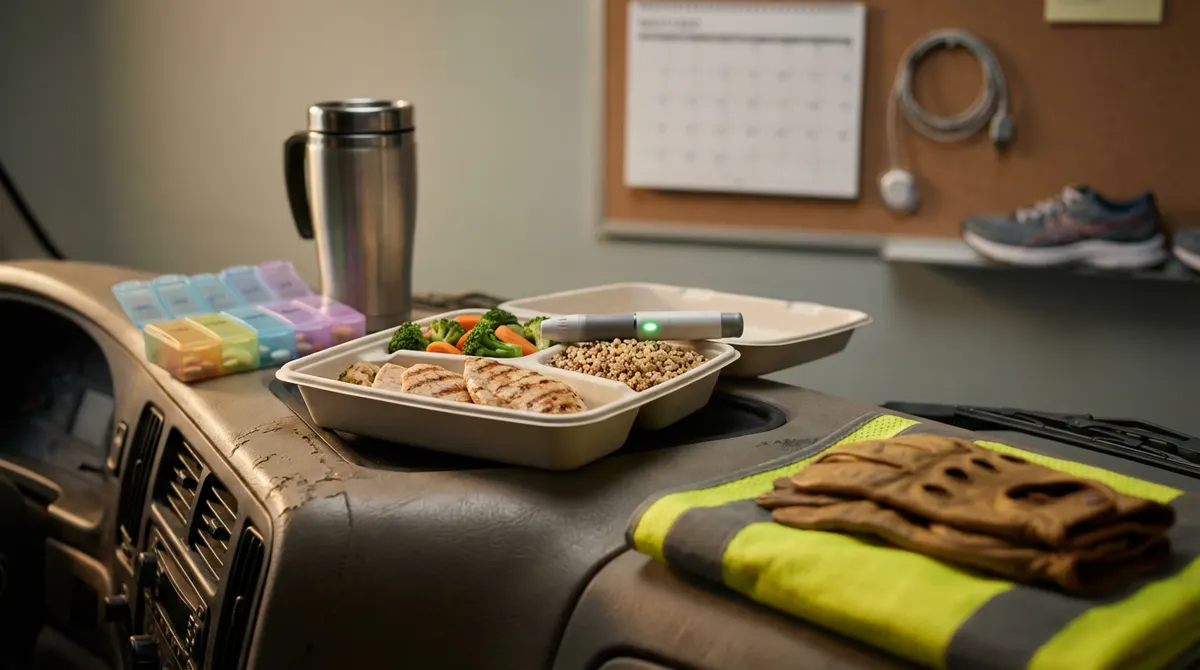
Medical card renewal with diabetes requires the same core proof as the first certification, often with even more emphasis on consistency.
Your examiner may issue a shorter medical card depending on risk, treatment, and history. At renewal, the examiner will look for continuity. That includes updated medical documentation, stable blood sugar monitoring records, no severe hypoglycemia episodes, and evidence that the management plan still works in real driving life.
If you use insulin, expect the MCSA-5870 process again. If you do not use insulin, expect the examiner to still review blood sugar levels, medication use, and any complications. Either way, do not assume renewal will be automatic just because you passed before.
KEY TAKEAWAY: Renewal favors drivers who maintain continuous records and do not let small issues become last-minute problems.
That long-term consistency depends on everyday habits.
Continuous Diabetic Control and Lifestyle Adherence

Continuous diabetic control protects both your health and your ability to keep driving legally.
Good control means more than avoiding one bad result. It means maintaining blood sugar monitoring, responding quickly to trends, following your insulin regimen or medication plan, and supporting overall health through physical activity and a healthy diet. These habits reduce the chance that high blood pressure, cardiovascular disease, or diabetes complications will interfere with your next DOT physical.
This is also why soft, steady habits usually beat short bursts of effort. Clinicians frequently observe that drivers who build a repeatable routine are easier to certify than drivers who scramble only before the appointment.
KEY TAKEAWAY: The best way to protect your CDL is to make diabetes control routine, trackable, and sustainable.
The final long-term skill is staying updated on changing guidance.
Staying Informed About Evolving FMCSA Medical Guidelines

Staying informed helps you avoid outdated assumptions and prepare according to current federal standards.
FMCSA guidance evolves over time through regulations, forms, handbook updates, and Federal Register notices. Because of that, drivers should not rely only on forum advice, old cheat sheets, or office hearsay. The current federal standard for insulin-treated diabetes is far more flexible than older rules, but only if you follow the current process correctly. (FMCSA)
A good practice is to review FMCSA materials before each renewal cycle and confirm any new requirements with the certified examiner or treating clinician. That is especially important if your medication, symptoms, or medical condition has changed.
KEY TAKEAWAY: Current guidance matters because outdated assumptions can cause preventable delays or denials.
The final section brings these points together into a practical conclusion.
Frequently Asked Questions
What will disqualify you from a DOT physical if you have diabetes?
Diabetes usually becomes disqualifying when it creates a clear safety risk. Common issues include severe hypoglycemia episodes, hypoglycemia unawareness, unstable blood sugar levels, diabetic retinopathy that affects vision standards, peripheral neuropathy that affects pedal control, or broader complications such as cardiovascular disease. The FMCSA does not treat every diabetes diagnosis the same way. The examiner looks at function, predictability, and safety. Missing medical documentation can also delay or block certification until the record is complete. If you are unsure, it helps to find a provider near you who understands DOT exams and diabetes documentation.
What A1C will fail a DOT physical?
There is no single FMCSA rule that says one exact A1C level automatically fails every DOT physical. According to the CDC, Hemoglobin A1C reflects average blood sugar over the previous 2 to 3 months, with diabetes diagnosed at 6.5% or above. In DOT certification, A1C level is usually one part of a larger safety review rather than the only deciding factor. Medical examiners also consider blood sugar monitoring, severe lows, symptoms, treatment stability, and complications. That is why one number alone rarely tells the whole certification story.
Do they check for diabetes on a DOT physical?
Yes, the DOT physical includes review for diabetes and related risk factors. The medical examiner reviews your medical history, medication use, urine results, blood pressure, and any signs that diabetes could affect safe driving. If you use insulin, the process becomes more specific because FMCSA requires the Insulin-Treated Diabetes Mellitus Assessment Form, MCSA-5870, along with blood sugar monitoring records. Even if you do not use insulin, the examiner may still review diabetic control and related complications. The exam is designed to determine whether the condition is compatible with safe operation of a commercial motor vehicle.
Can I be a truck driver if I have Type 1 diabetes?
Yes, many people with Type 1 diabetes can still be truck drivers if they meet the current FMCSA qualification standards. Type 1 diabetes is typically insulin-treated diabetes, which means the certification process usually requires the MCSA-5870 form completed by the treating clinician and evidence of stable blood sugar monitoring. The key issue is not the label Type 1 diabetes. The key issue is whether the insulin regimen is stable and whether the driver can manage the condition safely during commercial driving. Organized records and strong follow-up care are especially important.
Failed DOT physical due to sugar. What should I do next?
If you failed due to sugar, the next step is to identify whether the issue was one reading, a larger control problem, or incomplete records. A temporary setback may be fixable with updated medical documentation, a clinician follow-up, more consistent blood sugar monitoring, or clarification of your treatment plan. If you use insulin, review whether your MCSA-5870 and glucose records were complete. If complications were involved, specialist notes may help. Some drivers also seek a second opinion after addressing the missing information. The best response is a structured medical follow-up, not panic.
Is the DOT physical reliable for blood pressure and diabetes screening?
The DOT physical is useful as a safety screening and certification tool, but it is not a substitute for full diabetes care. Blood pressure and diabetes findings during the exam can be meaningful, especially if they reveal uncontrolled high blood pressure, abnormal urine results, or unstable blood sugar. At the same time, the DOT physical is a point-in-time evaluation. Long-term care still depends on your treating clinician, trend data, and consistent monitoring. If your results seem surprising, follow up with your usual healthcare team rather than relying only on the certification visit.
Can you pass a DOT physical if diabetes is controlled without insulin?
Yes, many drivers with non-insulin-treated diabetes can pass if the condition is stable and does not create a safety issue. The examiner will still look at blood sugar levels, medical history, medications, symptoms, and any complications such as vision problems or neuropathy. The process is often simpler than for insulin-treated diabetes because the MCSA-5870 is not usually required, but documentation still matters. Good daily control, a clear management plan, and regular clinician follow-up improve your chances. Providers in your area who understand DOT rules can also help you prepare more effectively.
Can sleep apnea affect a DOT physical if I already have diabetes?
Yes, sleep apnea can matter because it may add fatigue, daytime sleepiness, and cardiovascular risk to an already important medical condition. Diabetes, weight gain, and sleep apnea often overlap, which means the examiner may look at the bigger safety picture rather than one diagnosis alone. If snoring, daytime fatigue, or poor sleep are concerns, Dumbo Health’s at-home sleep test can be a useful next step. If you want to understand symptoms first, review obstructive sleep apnea in adults to see how overlap may affect your DOT physical.
Conclusion: Driving Forward Safely and Confidently
Passing a DOT physical with diabetes is achievable for many commercial drivers when diabetic control is stable, records are complete, and complications are addressed early. Current FMCSA rules focus on safety and function rather than automatic disqualification, which gives drivers with diabetes mellitus a fairer path to medical certification. The strongest approach is consistent blood sugar monitoring, a realistic management plan, close follow-up with your healthcare team, and early preparation before renewal. If sleep-related risk may also affect your overall fitness for duty, you can take the next step with Dumbo Health’s at-home sleep test or get started here for a practical next action.
Related DOT Physical Topics
- Can You Pass a DOT Physical with Epilepsy
- Can You Pass a DOT Physical With a Pacemaker
- Can You Pass a DOT Physical With One Eye
- Can You Pass a DOT Physical With a Hernia
- Can you pass a DOT physical with sleep apnea
- Can You Pass a DOT Physical with High Blood Pressure
- How can drivers with sleep apnea qualify again after a failed DOT physical
- What Can Disqualify You From a DOT Physical
- Can You Get a DOT Physical Online
- Can You Fail a DOT Physical for Being Overweight
- What blood pressure do you need to pass a DOT physical
- Can You Get a Second Opinion on Your DOT Physical A Complete Guide for Commercial Drivers
- Can You Fail a DOT Physical for High Blood Pressure
- Can you fail a DOT physical because of sleep apnea
- Can You Fail a DOT Physical
- What Does DOT Stand for in a DOT Physical
- Navigating Your DOT Physical with Common Medical Conditions
- When Can Sleep Apnea Affect a DOT Physical
- What Should You Bring to a DOT Physical
- What Forms Do You Need for a DOT Physical
- What Are the Requirements to Pass a DOT Physical
- How Do You Submit Your DOT Physical to the DMV
- How to Pass a DOT Physical The Complete Commercial Driver's Guide
- Is a DOT physical the same as a regular physical
- What happens if you fail a DOT physical due to sleep apnea
- What Is the Difference Between a DOT and Non-DOT Physical
- Do You Have to Pee During a DOT Physical
- The DOT Physical Exam Ensuring You're Fit for the Road
- DOT Physical Online Cost
- Does a DOT physical include a drug test
- Does a DOT Physical Test for Weed or THC The Complete Guide for Commercial Drivers
- DOT Physical Vision & Eye Requirements
- Remote DOT Physical The Complete Guide for Commercial Drivers
- DOT Physical Out of Pocket What Commercial Drivers Actually Pay
- The Ultimate DOT Physical Guide for Commercial Drivers (2025–2026)
- DOT Physical Self Pay Cost
- Navigating the Florida DOT Physical Your Essential Guide for CDL Drivers
- DOT Physical Cost Breakdown What Drivers Pay & Why
- Walk In DOT Physical Self Pay
- Telehealth Dot Physical
- DOT Physical Forms & Paperwork The Complete Guide for Commercial Drivers
- DOT Physical Exam Basics
- DOT Physical & Alcohol Requirements
- DOT Physical Duration and Validity How Long Your Medical Card Lasts
- DOT Physical Insurance & Recertification The Complete Driver's Guide
- Why do they measure your neck during a DOT physical
- Online DOT Physical Without Insurance A Complete Guide for Commercial Drivers
- Your Complete Guide What's Included in a DOT Physical Exam
- Do They Check for Hernia During a DOT Physical
- Cheap DOT Physical Online
- What Is the Urine Test for in a DOT Physical
- DOT physical self pay guide for commercial drivers paying out of pocket
- Online DOT Physical Self-Pay The Complete Guide for CDL Drivers and Owner-Operators
- DOT Physical Cash Pay
- DOT Physical Blood Pressure Requirements What Drivers Need to Know
- Is a drug test required for a DOT physical
- New DOT Physical Requirements What Drivers MUST Know About New Updates
- Same Day DOT Physical
- Virtual DOT Physical
- Online DOT Physical The Complete Guide for Commercial Drivers and Medical Examiners
- Who needs a DOT physical
- DOT Physical ICD-10 & Billing Codes The Complete Guide for Accurate Compliance and Reimbursement
- DOT Physical at Urgent Care What Commercial Drivers Need to Know
- Do They Check Your Private Parts During a DOT Physical
- DOT Physical Insurance or Self Pay How to Choose the Right Payment Option for Your Exam
- DOT Physical Chiropractor Your Complete Guide to CDL Exams
- What should I expect at a DOT physical
- What Does a DOT Physical Consist Of
- BMI for DOT Physical What Commercial Drivers Need to Know
- What Happens During the DOT Physical Exam The Complete Guide for Drivers
- DOT Physical & Drug Test What Drivers Need to Know
- Non-DOT Physical A Comprehensive Guide to Workforce Health and Safety
- DOT Physical Texas The Essential Guide to Your Exam, Medical Card, and CDL Compliance
- DOT Physical Requirements A Complete Guide for CDL Drivers
- Is a Sleep Study Required for a DOT Physical
- What eye chart is used for a DOT physical
- What Do They Check During a DOT Physical
- Failing a DOT Physical What Every Commercial Driver Needs to Know
- What is DOT Physical
- What drugs do they test for in a DOT drug test
- Online CDL Physical
- Are There New DOT Rules or Laws on Sleep Apnea Testing
- Essential 171 DOT Definitions for Commercial Drivers
- 2026 DOT Inspection Dates
- Why DOT Sleep Tests at Home Matter for Your Career and Health
- Are there legal requirements for drivers with sleep apnea
- Online DOT Exam What Drivers and Medical Examiners Need to Know
- CDL PHYSICAL SELF PAY
- DOT sleep apnea test at home
- DOT Medical Exam Self-Pay A Complete Guide for Commercial Drivers
- What Precautions Should Drivers With Sleep Apnea Take
- What are the current DOT requirements for sleep apnea testing for commercial drivers
- Guide to Obtaining and Managing Your DOT Medical Card Online
- Expected 2027 DOT Inspection Dates
- How Sleep Apnea Affects Overall Driving Safety
- Home Sleep Apnea Test for Commercial Drivers The CDL Holder's Complete Guide
- How Does Sleep Apnea Affect Driving Ability
- Best Treatments for Sleep Apnea to Improve Driving Safety
- Sleep Apnea Test for CDL Drivers
- The Comprehensive Guide to Suboxone, Sleep Apnea, and FMCSA Compliance for Commercial Motor Vehicle Operators
Take the next step before your DOT physical
Start with the free quiz if you are unsure about your risk, or order an at-home sleep test if you have already been flagged for possible sleep apnea.
AI summary
A DOT physical is a federal medical exam used to determine whether a commercial driver can safely operate a commercial motor vehicle in interstate commerce. For diabetes, certification is based on safety risk, not diagnosis alone. FMCSA standards allow many drivers with Type 1 diabetes, insulin-treated diabetes mellitus, or non-insulin-treated diabetes to qualify when the condition is stable and properly controlled. Insulin-treated drivers commonly need the Insulin-Treated Diabetes Mellitus Assessment Form (MCSA-5870), completed by the treating clinician, plus at least 3 months of electronic blood glucose self-monitoring records; the completed form must be provided to the certified medical examiner within 45 days. Medical examiners assess diabetes control patterns, severe hypoglycemia episodes, hypoglycemia unawareness, and complications that affect driving function. High-risk issues include diabetic retinopathy impacting vision standards, peripheral neuropathy affecting pedal control, cardiovascular disease, and other end organ damage. Hemoglobin A1C is reviewed as supporting context, and FMCSA does not set a single universal A1C cutoff that automatically fails every driver. Outcomes may include approval, shorter certification periods, delays for additional records, or denial when safety impairment is likely.

Nicolas Nemeth
Co-Founder
Nico is the co-founder of Dumbo Health, a digital sleep clinic that brings the entire obstructive sleep apnea journey home. Patients skip the sleep lab and the long wait to see a specialist. Dumbo Health ships an at home test, connects patients with licensed sleep clinicians by video, and delivers CPAP or a custom oral appliance with ongoing coaching and automatic resupply in one clear subscription.
Keep reading

How Long Does a DOT Physical Take? A Complete Guide for Commercial Drivers

What Happens If You Fail a DOT Drug Test? The Complete Guide for Commercial Drivers


