Your Complete Guide: What's Included in a DOT Physical Exam?
A DOT physical exam is an FMCSA-required medical evaluation that determines whether a commercial driver is fit to operate a CMV safely. This guide explains who needs a DOT exam based on GVWR, passenger capacity, and hazardous materials requirements, and why it supports road safety. It walks through preparation steps, including collecting medical records, medication lists, and required items like corrective lenses. You’ll learn what happens during the exam, from medical history review to vision, hearing, blood pressure, urinalysis, and a full physical. It also covers how common conditions like diabetes, hypertension, and sleep apnea are evaluated, plus waiver and exemption options. Finally, it clarifies certification outcomes, forms, costs, and next steps with the DMV.
Struggling with sleep?
Find out if sleep apnea is the reason.
FDA-cleared. $149 flat. Physician-reviewed results in 48 hours.

Your Complete Guide: What's Included in a DOT Physical Exam?
Embarking on a career as a commercial driver opens doors to vital industries that form the backbone of our economy. However, this profession comes with a significant responsibility: ensuring the safety of oneself, passengers, and the public on our roadways. Central to upholding this safety standard is the Department of Transportation (DOT) physical examination, a critical assessment designed to certify a driver's physical and mental fitness to operate a commercial motor vehicle (CMV). This guide serves as your definitive resource, demystifying the DOT physical exam process. We will delve into what it entails, who requires it, how to prepare, and what to expect during each stage of the examination. Our aim is to provide you with the knowledge and confidence needed to navigate this essential step in your commercial driving journey, ensuring your health and compliance with Federal Motor Carrier Safety Administration (FMCSA) regulations.
What is a DOT Physical Exam?
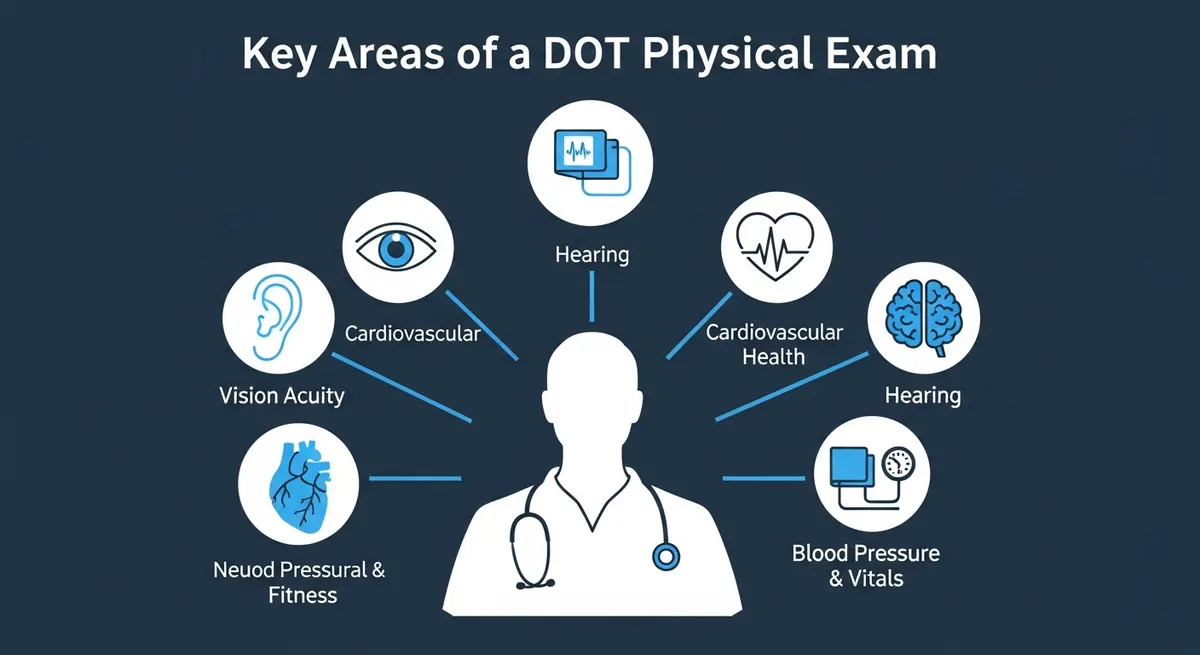
The DOT physical is a comprehensive health assessment focusing on functions critical for safe driving.
A DOT physical exam is a health assessment mandated by the Federal Motor Carrier Safety Administration (FMCSA) for individuals who operate commercial motor vehicles (CMVs) engaged in interstate commerce. The primary objective of this examination is to ensure that drivers meet the stringent medical qualifications necessary to safely operate large trucks, buses, and other CMV types. It is not a guarantee of perfect health, but rather an evaluation of whether a driver's physical and medical condition poses a risk to themselves or others on the road. The exam focuses on specific physical and mental attributes critical for safe CMV operation, such as vision, hearing, cardiovascular health, and the absence of conditions that could lead to sudden incapacitation.
Who Needs a DOT Physical?
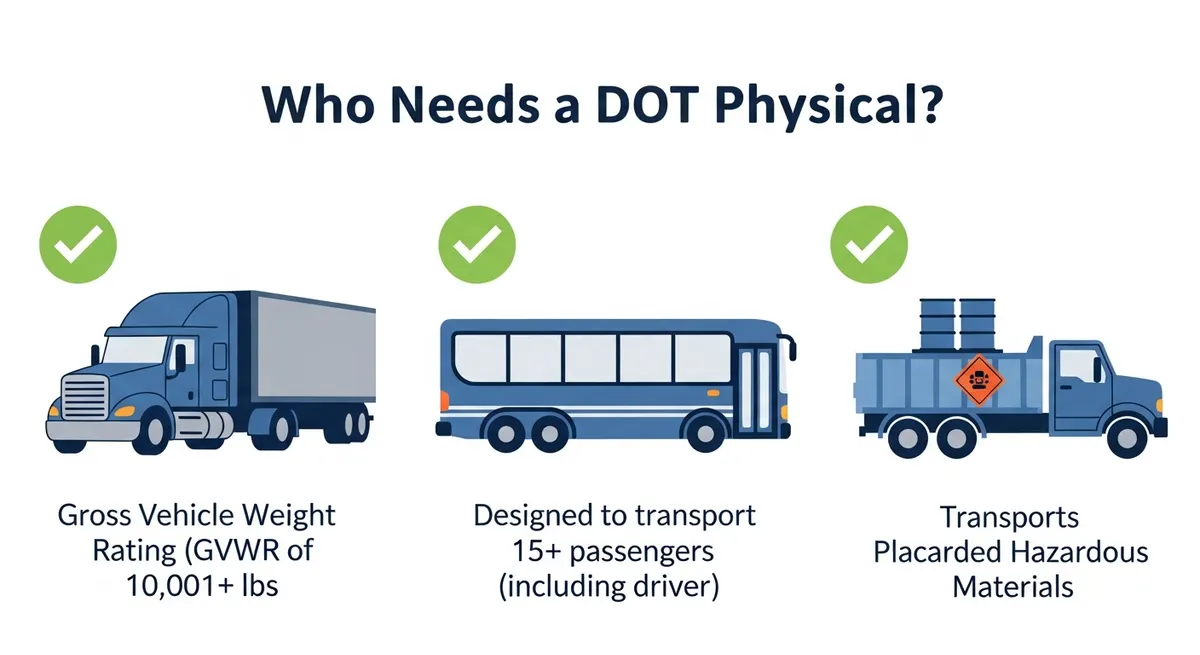
A DOT physical is required for drivers operating commercial motor vehicles that meet any of these federal criteria.
The requirement for a DOT physical exam extends to any individual who drives a commercial motor vehicle that meets certain criteria. Generally, this includes drivers operating vehicles with a gross vehicle weight rating (GVWR) of 10,001 pounds or more, vehicles designed to transport 15 or more passengers (including the driver), or vehicles used to transport hazardous materials that require a placard. This encompasses a wide range of professionals, from long-haul truck drivers and bus operators to delivery drivers and individuals transporting specialized cargo. Even if a driver operates a CMV intrastate, some states may have their own DOT physical requirements. Therefore, understanding the specific regulations applicable to your intended driving operations is crucial. The driver's license type, such as a Commercial Driver's License (CDL), is often a key indicator, but the vehicle's characteristics and the nature of the cargo are determinative factors.
Not sure if sleep apnea applies to you?
Take our 2-minute sleep risk quiz to see whether sleep apnea could affect your DOT physical. No account required.
The Crucial Role of DOT Physicals in Road Safety
The DOT physical exam is a cornerstone ofroad safety. By systematically evaluating a driver's health, it helps prevent accidents caused by medical incapacitation. Conditions such as sudden vision loss, a heart attack, a diabetic coma, or even debilitating fatigue can have catastrophic consequences when operating a heavy vehicle. The FMCSA, through these mandated physicals, aims to minimize the risk of such incidents. The examinations ensure that drivers have the necessary physical and mental capabilities to perform their duties safely, including reacting to emergencies, maintaining focus for extended periods, and navigating complex traffic situations. Ultimately, these rigorous medical standards protect not only the driver but also other motorists, passengers, and the general public, reinforcing the integrity and safety of the commercial transportation industry.
What This Guide Will Cover
This comprehensive guide aims to equip you with a thorough understanding of the DOT physical exam. We will begin by outlining the essential steps for preparing for your appointment, ensuring you arrive well-informed and ready. Subsequently, we will provide a detailed breakdown of the core components of the examination, from the medical history review to the physical assessment. A significant portion of this guide is dedicated to navigating common medical conditions and understanding the possibility of waivers and exemptions. Finally, we will cover what to expect after your exam, including understanding your results and certification. Our goal is to demystify every aspect of the DOT physical, making the process transparent and manageable for all commercial drivers.
Preparing for Your DOT Physical: Essential Steps for a Smooth Exam
A successful DOT physical examination hinges on thorough preparation. By taking proactive steps beforehand, you can streamline the process, reduce anxiety, and increase your chances of passing. This involves gathering crucial medical information, adopting healthy habits leading up to the exam, and ensuring you bring all necessary documentation to your appointment.
Gathering Your Medical History and Documents
Honesty and completeness are paramount when providing your medical history. Before your appointment, take time to compile a detailed record of your health, including past and present medical conditions, surgeries, hospitalizations, and any ongoing treatments. This also extends to your family's medical history, as certain conditions can have genetic predispositions. Keep a meticulous list of all medications you are currently taking, both prescription and over-the-counter, including dosages. It is also beneficial to have the contact information for your primary care physician and any specialists you have seen. For conditions requiring ongoing management, such as diabetes or heart disease, having recent medical records, lab results, or letters from your specialists detailing your management plan can be invaluable. This documentation demonstrates to the medical examiner that your conditions are well-controlled and do not pose an undue risk.
General Health Tips Before Your Exam
To present your best health profile on the day of your DOT physical, consider these general health tips in the days leading up to your appointment. Ensure you get adequate sleep the night before, as fatigue can impact your blood pressure and cognitive function. Staying well-hydrated is also important, but avoid excessive fluid intake immediately before the urine test.Maintaining a balanced diet and avoiding excessive salt or caffeine can help stabilize your blood pressure. If you have a known medical condition, ensure you are adhering to your prescribed treatment plan. If you are a smoker, refraining from smoking for at least a few hours before the exam may help your blood pressure readings. Minimizing stress, if possible, can also contribute to a more accurate assessment of your overall health.
What to Bring to Your Appointment
To ensure your DOT physical exam proceeds without unnecessary delays, it’s essential to bring the correct documentation. Your valid driver's license is a fundamental requirement. If you wear glasses or contact lenses for distance vision, bring them with you. If you use a hearing aid, ensure you have it with you as well. A comprehensive list of all your current medications, including dosages and the prescribing doctor, is critical. If you have any medical records pertaining to chronic conditions, such as diabetes management logs, recent cardiology reports, or specialist letters, these should be brought along. Some medical examiners may provide a specific FMCSA form for you to bring, so check with the examiner's office in advance. Arriving prepared not only demonstrates your responsibility but also aids the medical examiner in conducting a thorough and efficient evaluation.
The Core Components of Your DOT Physical Examination: A Detailed Breakdown
The DOT physical examination is a standardized process designed to assess a driver's fitness for duty. It comprises several distinct stages, each focusing on different aspects of your health. Understanding each component will help you anticipate the examination and approach it with confidence. The examination is performed by a certified medical examiner (CME) who is trained and registered with the FMCSA.
Step 1: The Comprehensive Medical History Review
The process typically begins with a thorough review of your medical history. The medical examiner will ask detailed questions about your past and present health. This includes inquiries about:
- Previous Medical Conditions: Any significant illnesses, chronic diseases (like diabetes, heart conditions, epilepsy), or past surgeries.
- Current Health Issues: Any ongoing symptoms, pain, or conditions you are currently experiencing.
- Mental Health: Acknowledging any history of mental health conditions, including depression, anxiety, or sleep disorders.
- Medications: A comprehensive list of all prescriptions, over-the-counter drugs, and supplements you take, including their dosages and frequency. The examiner will assess whether these medications could impair your driving ability.
- Lifestyle Habits: Questions about alcohol consumption, drug use, and smoking habits.
- Family Medical History: Certain conditions can have genetic links, and this information helps the examiner assess potential risks.
Honesty is crucial during this stage. Withholding information or providing inaccurate details can lead to disqualification or, more seriously, pose a safety risk if a condition is not properly managed. The medical history forms the foundation for the subsequent physical assessments, guiding the examiner's focus.
Step 2: The Vision Evaluation
vision is paramount for safe commercial driving. The DOT physical includes a comprehensive vision test to ensure your eyesight meets the required standards. The examination typically assesses:
- Visual Acuity: This measures how clearly you can see. The standard is 20/40 or better in each eye, with or without corrective lenses. You will likely be asked to read an eye chart from a specific distance.
- Peripheral Vision: This assesses your ability to see objects in your side vision. Drivers must have a horizontal field of vision of at least 70 degrees in each eye.
- Color Vision: While not always a strict disqualifier unless it directly impacts safety (e.g., distinguishing traffic signals), the examiner may test your ability to identify colors. The ability to differentiate red, green, and amber is important for interpreting traffic signals.
If your vision does not meet the standard, you may need to be examined by an eye specialist, and specific documentation may be required to demonstrate that your vision can be corrected to meet the DOT standards.
Step 3: The Hearing Evaluation
Adequate hearing is vital for a commercial driver's situational awareness. The examiner will conduct a hearing test, most commonly a "forced whisper" test. This involves the examiner standing a specific distance away (typically five feet) and whispering a few words. You will be asked to repeat these words.
Already diagnosed and need CPAP support?
Dumbo Health helps patients start CPAP without the usual confusion, paperwork, or upfront cost. Equipment, setup, supplies, and ongoing support are all handled in one place.
- The Standard: You must be able to hear the whispered words correctly.
- Alternative Testing: If you do not pass the whisper test, a formal audiometric test may be required. This test measures your ability to hear specific frequencies at different decibel levels. The FMCSA standard requires that a driver can hear an average of at least 40 decibels (dB) in each ear at 500 Hz, 1,000 Hz, and 2,000 Hz.
Failing the hearing test can be medically disqualifying if not adequately addressed through amplification devices like hearing aids.
Step 4: Blood Pressure Testing and Cardiovascular Health Assessment
Cardiovascular health is a critical concern for commercial drivers, as sudden cardiac events can lead to immediate incapacitation. The DOT physical includes an assessment of your blood pressure and overall cardiovascular health.
- Blood Pressure: Your blood pressure will be measured. While there isn't a strict maximum limit that immediately disqualifies a driver, the FMCSA has guidelines. Historically, blood pressure readings consistently above 140/90 mmHg have been subject to closer scrutiny and potential limitations on certification duration. Current guidelines encourage managing hypertension effectively.
- Cardiovascular Examination: The examiner will listen to your heart to detect any murmurs, irregular rhythms, or other abnormalities. They will also inquire about your history of heart conditions, such as heart attacks, strokes, or other cardiovascular diseases.
Effective management of hypertension through medication and lifestyle changes is crucial for drivers with elevated blood pressure.
Step 5: Urinalysis (Urine Test)
A urine sample is a standard part of the DOT physical. The urinalysis serves several important diagnostic purposes:
- Diabetes Screening: It screens for glucose (sugar) in the urine, which can be an indicator of diabetes or poorly controlled diabetes.
- Kidney Function: The test can detect protein or blood in the urine, which may suggest kidney disease or other renal issues.
- Hydration and General Health: It can provide insights into your hydration levels and overall health status.
- Drug Screening: While not always part of the standard physical exam, a urine test may also be used as a drug screen, particularly if required by the employer or the medical examiner. It's essential to clarify this before the exam.
Ensure you are adequately hydrated but try to provide a sample that is not diluted.
Step 6: The Thorough Physical Examination
Beyond the specific tests mentioned above, the DOT physical involves a comprehensive head-to-toe physical examination. The medical examiner will systematically assess various body systems to ensure you are physically capable of handling the demands of CMV operation:
- General Appearance: Observing your overall health, any signs of distress, or significant physical limitations.
- Head and Neck: Checking for any abnormalities.
- Respiratory System: Listening to your lungs to ensure they are clear and functioning properly.
- Abdomen: Palpating your abdomen to check for hernias, enlarged organs, or other issues.
- Neurological Examination: This is a critical component. The examiner will assess your reflexes, coordination, balance, and cognitive function. This is to identify any neurological conditions that could impair your driving ability, such as seizures, nerve damage, or impaired motor control.
- Musculoskeletal System: Evaluating your strength, range of motion in your limbs, and spine. They will check for any conditions that might limit your ability to operate the vehicle or perform essential job functions, such as severe back pain or significant joint limitations.
- Skin: Checking for any significant rashes, lesions, or other dermatological issues.
The examiner will document all findings on the official Medical Examination Report (MER) form.
Navigating Common Medical Conditions and Exemptions
The DOT physical exam is designed to ensure safety, but it doesn't automatically disqualify individuals with pre-existing medical conditions. The FMCSA has specific standards and guidelines for many common health issues, often allowing for certification if the condition is well-managed and does not pose a significant risk.
Diabetes Mellitus: Standards and Management
Diabetes is a common concern for commercial drivers. The FMCSA's regulations distinguish between insulin-treated and non-insulin-treated diabetes.
- Non-Insulin Treated Diabetes: Drivers who manage their diabetes through diet and oral medications generally face fewer restrictions. The primary concern is ensuring their blood sugar is well-controlled to prevent hypoglycemic (low blood sugar) episodes, which can cause confusion, dizziness, and loss of consciousness.
- Insulin-Treated Diabetes: Drivers requiring insulin face more stringent requirements. They must demonstrate a history of stable blood sugar control and have a management plan in place. A driver who uses insulin may be issued a certificate for no more than one year, provided they meet specific criteria and complete the Insulin-Treated Diabetes Mellitus Assessment Form (MCS-58E). This form requires the driver's treating physician to confirm that the diabetes is well-managed and the driver is safe to operate a CMV.
Regular monitoring, adherence to treatment plans, and open communication with your medical examiner are vital for diabetic drivers.
Hypertension (High Blood Pressure): Managing Your Condition
Hypertension, or high blood pressure, is a prevalent condition that can increase the risk of heart attack, stroke, and other serious health problems. For commercial drivers, uncontrolled hypertension can be a safety hazard due to the potential for sudden incapacitation.
- Acceptable Limits: While the FMCSA does not have an absolute disqualification limit, readings consistently above 140/90 mmHg require careful consideration. Current guidelines generally recommend that drivers should have their blood pressure managed to be at or below 140/90 mmHg.
- Management: Drivers with hypertension are encouraged to work closely with their physicians to manage their condition through medication, diet, and lifestyle changes. Regular monitoring of blood pressure is essential.
- Certification: Drivers whose blood pressure is controlled within acceptable limits are generally eligible for certification. In some cases, a driver with elevated blood pressure may be issued a shorter-term medical certificate to allow time to better manage their condition.
Sleep Apnea: Diagnosis and CPAP Compliance
sleep apnea is a disorder characterized by pauses in breathing during sleep, leading to disrupted sleep patterns and daytime fatigue. For commercial drivers, excessive daytime sleepiness can be extremely dangerous.
- Diagnosis: If a medical examiner suspects sleep apnea based on symptoms or history (e.g., snoring, obesity, observed pauses in breathing), they may require the driver to undergo a formal sleep study.
- CPAP Compliance: Drivers diagnosed with obstructive sleep apnea who use a Continuous Positive Airway Pressure (CPAP) machine are typically eligible for certification if they demonstrate compliance with their treatment. This often involves providing documentation of regular CPAP usage and follow-up with a sleep specialist. The goal is to ensure the driver is no longer experiencing significant daytime sleepiness.
Other Medical Conditions Requiring Special Attention
Beyond diabetes, hypertension, and sleep apnea, several other medical conditions are closely evaluated by medical examiners:
- Cardiovascular Conditions: History of heart attack, stroke, congestive heart failure, arrhythmias, or pacemakers requires careful assessment by a cardiologist and specific documentation to ensure stability and safety.
- Epilepsy and Seizure Disorders: Drivers with a history of seizures face strict regulations. Generally, a driver with a seizure disorder is disqualified unless they have been seizure-free for a specified period (typically 10 years without medication, or a shorter period with stable medication management confirmed by a neurologist).
- Neurological Disorders: Conditions like Multiple Sclerosis, Parkinson's disease, or brain injuries can affect motor skills, cognitive function, and reaction times, requiring a thorough neurological evaluation.
- Mental Health Conditions: Diagnosed conditions such as severe depression, anxiety disorders, bipolar disorder, or psychosis can be disqualifying if they impair judgment or operational capability. However, stable management of these conditions with appropriate treatment can sometimes allow for certification.
- Substance Abuse Disorders: A history of substance abuse requires a documented period of rehabilitation and sustained abstinence.
- Chronic Pain and Musculoskeletal Issues: Significant chronic pain or functional limitations in the back, neck, or limbs that impair the ability to operate the vehicle safely can be disqualifying.
Each of these conditions is evaluated on a case-by-case basis, focusing on the individual's specific health status, treatment efficacy, and overall risk to public safety.
Understanding Medical Waivers and Exemptions
For drivers who may not meet certain DOT medical standards due to a specific condition, the FMCSA offers avenues for potential certification through waivers and exemptions. These programs are designed to allow individuals with specific medical challenges to operate CMVs safely.
- Types of Waivers/Exemptions: These can include programs like the Federal Vision and Hearing Exemptions Program or specific waivers for certain medical conditions. For example, a driver with vision in only one eye might be eligible for a vision exemption.
- Application Process: Obtaining a waiver or exemption typically involves a rigorous application process. This includes providing extensive medical documentation from treating physicians, undergoing specialized evaluations, and demonstrating a track record of safe driving.
- Individualized Assessment: Each waiver or exemption is granted on an individual basis after a thorough review of the applicant's medical history and current health status. Approval is contingent upon proving that the condition, with appropriate management or accommodation, does not pose a safety risk.
- Periodic Review: Waivers and exemptions are often granted for a limited period and require periodic re-evaluation to ensure the driver's condition remains stable and safe for operating a CMV.
Navigating the waiver and exemption process can be complex, and it is often beneficial to work with specialists or organizations that assist drivers in this endeavor.
After Your Exam: Understanding Results and Certification
Once your DOT physical examination is complete, the medical examiner will review all the collected information. The outcome of the exam will determine whether you are medically certified to operate a commercial motor vehicle.
The Medical Examination Report (MER) Form
The medical examiner completes a standardized form known as the Medical Examination Report (MER) for Commercial Driver Fitness Determinations (FMCSA Form 5875). This document meticulously records all the findings from your examination, including your medical history, the results of each test performed (vision, hearing, blood pressure, urinalysis, etc.), and any diagnosed medical conditions. The examiner must document whether you meet the FMCSA's physical qualification standards outlined in 49 CFR §391.41. This comprehensive report is crucial for record-keeping and serves as the basis for issuing the Medical Examiner's Certificate.
The Medical Examiner's Certificate
If the medical examiner determines that you meet all the physical qualification standards, they will issue you a Medical Examiner's Certificate (MEC). This certificate is proof that you are medically fit to operate a commercial motor vehicle. The MEC typically indicates the duration of your certification, which is commonly one or two years, depending on your health status and any identified medical conditions. If you have specific medical limitations or require corrective lenses or hearing aids, these will be noted on the certificate. You are required to keep this certificate with you while operating a CMV, as it may be requested by law enforcement officials during roadside inspections.
What Happens If You Pass Your DOT Physical?
Passing your DOT physical exam means you have met the FMCSA's health requirements. The medical examiner will provide you with your Medical Examiner's Certificate (MEC). You must then ensure that this information is updated with your state's Department of Motor Vehicles (DMV) or equivalent agency, particularly if you hold a Commercial Driver's License (CDL). In many jurisdictions, you will need to submit a copy of your MEC to the DMV to update your driving record and ensure your CDL remains valid. Failure to update your record could lead to your CDL being downgraded or suspended.
What Happens If You Don't Pass Your DOT Physical Immediately?
If you do not pass your DOT physical exam on the first attempt, it doesn't necessarily mean the end of your driving career. The medical examiner will explain the specific reasons for their determination. Your options may include:
- Seeking Further Medical Evaluation: The examiner might recommend that you consult with a specialist for a more in-depth assessment of a particular condition. For example, if your blood pressure is too high, they may suggest working with your primary physician to manage it.
- Treatment and Re-testing: If a condition can be treated or managed, you may be given an opportunity to undergo treatment and then return for a re-examination once your health has improved to meet the standards.
- Appealing the Decision: In some cases, you may have the right to appeal the examiner's decision, particularly if you believe there was an error or misinterpretation of your medical information.
- Exploring Waivers or Exemptions: As discussed earlier, if your condition is stable but falls outside the standard criteria, you might be eligible for a medical waiver or exemption program.
It is important to have an open dialogue with the medical examiner to understand your options and the steps you need to take.
Practical Information and Frequently Asked Questions (FAQs)
This section addresses common questions and provides practical advice to help you navigate the DOT physical process with greater ease and confidence.
How to Find a Qualified DOT Medical Examiner
Finding a qualified DOT medical examiner is the first step in the process. The FMCSA maintains a national registry of Certified Medical Examiners (CMEs). You can access this registry online through the FMCSA's website. When choosing an examiner, consider:
- Certification Status: Ensure they are listed on the FMCSA National Registry and are certified.
- Experience: Some examiners specialize in DOT physicals and are more familiar with the nuances of the regulations.
- Convenience: Look for an examiner with convenient locations and appointment availability.
- Reputation: Reading reviews or asking for recommendations from other drivers can be helpful.
A CME is specifically trained to understand the FMCSA's medical standards and perform the required examinations.
What is the Cost of a DOT Physical Exam?
The cost of a DOT physical examination can vary significantly depending on the location, the medical examiner's fees, and whether any additional specialist consultations or tests are required. Typically, the exam fee can range from $75 to $200. It's important to note that this cost is generally the responsibility of the driver, although some employers may cover it as part of their employment benefits. Always inquire about the total cost, including any potential additional fees, when scheduling your appointment. The fee typically covers the standard examination components, but specific tests or follow-up visits for managed conditions will incur separate charges.
Does Age Play a Role in the DOT Physical?
The DOT physical examination does not have an age limit. The FMCSA's regulations focus on a driver's current physical and medical fitness, not their chronological age. While certain health conditions become more prevalent with age, the assessment is always based on whether the individual meets the specific medical standards at the time of the examination. A younger driver with a chronic health issue could potentially face more challenges than an older, healthier driver. The emphasis is on functional capacity and the absence of conditions that could impair safe CMV operation.
Are Drug & Alcohol Testing Part of the DOT Physical?
While the DOT physical exam itself is a medical evaluation of physical fitness, drug and alcohol testing are separate but often related requirements for commercial drivers. Employers typically conduct pre-employment drug and alcohol tests. Additionally, drivers are subject to random drug and alcohol testing throughout their employment, as mandated by the FMCSA. These tests are usually conducted at separate facilities, though some medical examination centers may offer integrated services. It is important to clarify with your employer or the medical examiner's office whether drug and alcohol testing is included or if you need to schedule it separately.
Do DOT Physicals Check for Hernia?
Yes, a hernia can be checked for during the physical examination component of the DOT physical. The medical examiner will palpate the abdominal area during the physical exam. If a hernia is discovered, it will be documented. The disqualification of a driver due to a hernia depends on its severity and whether it causes pain or functional impairment that could affect their ability to operate a commercial motor vehicle safely. Small, asymptomatic hernias may not prevent certification, but larger or symptomatic hernias might require surgical correction or lead to a temporary or permanent disqualification.
What About Driving Commercial Vehicles that Transport Hazardous Materials?
Drivers who transport hazardous materials often face more stringent medical requirements beyond the standard DOT physical. While the core physical examination components remain the same, the FMCSA may impose additional requirements or have stricter interpretations for drivers handling hazardous substances. This is because the consequences of an accident involving hazardous materials can be far more severe. It is essential for drivers intending to transport hazardous materials to confirm any specific medical documentation or additional assessments that may be required for their particular endorsements.
Final Thoughts
The DOT physical exam is a critical, non-negotiable component of a career in commercial driving. It serves as a vital gatekeeper, ensuring that individuals operating heavy vehicles on our nation's roadways are medically fit and pose minimal risk to public safety. This guide has illuminated the path through this essential process, from understanding its fundamental purpose and regulatory underpinnings to preparing for the examination, navigating its core components, and comprehending the outcomes.
We have detailed each step of the physical examination, including the crucial reviews of your medical history, vision, and hearing assessments, cardiovascular evaluations, urinalysis, and the comprehensive physical check. Furthermore, we've addressed common medical conditions such as diabetes, hypertension, and sleep apnea, emphasizing that many can be managed effectively, often allowing for continued certification when properly documented and controlled. The intricacies of medical waivers and exemptions were also explored, offering hope and pathways for drivers facing specific health challenges.
Key Takeaways:
- Safety First: The DOT physical is paramount for ensuring road safety and regulatory compliance.
- Preparation is Key: Thoroughly gather your medical history, list all medications, and maintain good health habits.
- Honesty is Essential: Provide accurate and complete information to the medical examiner.
- Managed Conditions Can Be Certified: Many medical conditions are manageable, and with proper documentation and adherence to treatment, drivers can still be certified.
- Know Your Examiner: Utilize the FMCSA National Registry to find a certified medical examiner.
The journey to obtaining and maintaining your DOT medical certification is an ongoing commitment to your health and the safety of others. By understanding the process thoroughly and proactively managing your health, you can navigate the DOT physical exam successfully and build a long, safe, and fulfilling career as a commercial driver. Regularly review your health status, communicate openly with your medical providers and the DOT medical examiner, and stay informed about any updates to FMCSA regulations. Your dedication to health and safety is fundamental to the integrity of the commercial transportation industry.
Related DOT Physical Topics
- What Happens During the DOT Physical Exam The Complete Guide for Drivers
- DOT Physical Chiropractor Your Complete Guide to CDL Exams
- What Happens If Your DOT Physical Expires Compliance Guide for Commercial Drivers
- DOT Physical Texas The Essential Guide to Your Exam, Medical Card, and CDL Compliance
- Can You Get a Second Opinion on Your DOT Physical A Complete Guide for Commercial Drivers
- Can You Get a DOT Physical in Any State The Complete Guide for Commercial Drivers
- Can You Get a DOT Physical Online The Complete Guide for Commercial Drivers
- Does a DOT Physical Test for Weed or THC The Complete Guide for Commercial Drivers
- Remote DOT Physical The Complete Guide for Commercial Drivers
- DOT Physical ICD-10 & Billing Codes The Complete Guide for Accurate Compliance and Reimbursement
- Navigating the Florida DOT Physical Your Essential Guide for CDL Drivers
- DOT Physical Forms & Paperwork The Complete Guide for Commercial Drivers
- Online DOT Physical Without Insurance A Complete Guide for Commercial Drivers
- Online DOT Physical Self-Pay The Complete Guide for CDL Drivers and Owner-Operators
- DOT Physical Insurance & Recertification The Complete Driver's Guide
- DOT Medical Exam Self-Pay A Complete Guide for Commercial Drivers
- DOT Physical Insurance or Self Pay How to Choose the Right Payment Option for Your Exam
- How to Pass a DOT Physical The Complete Commercial Driver's Guide
- DOT Physical Requirements A Complete Guide for CDL Drivers
- What Does DOT Stand for in a DOT Physical
- What Is the Difference Between a DOT and Non-DOT Physical
- Online DOT Physical The Complete Guide for Commercial Drivers and Medical Examiners
- How Do You Submit Your DOT Physical to the DMV
- What Can Disqualify You From a DOT Physical
- DOT Physical Exam Basics
- DOT Hypertension Guidelines The Complete Blood Pressure Guide for Commercial Drivers
- DOT Physical Out of Pocket What Commercial Drivers Actually Pay
- DOT Physical Cost Breakdown What Drivers Pay & Why
- What Is the Urine Test for in a DOT Physical
- What Should You Bring to a DOT Physical
- What Forms Do You Need for a DOT Physical
- Why do they measure your neck during a DOT physical
- Navigating Your DOT Physical with Common Medical Conditions
- DOT physical self pay guide for commercial drivers paying out of pocket
- New DOT Physical Requirements What Drivers MUST Know About New Updates
- What blood pressure do you need to pass a DOT physical
- Online DOT Exam What Drivers and Medical Examiners Need to Know
- Do They Check Your Private Parts During a DOT Physical
- DOT Physical Blood Pressure Requirements What Drivers Need to Know
- Is a DOT physical the same as a regular physical
- What should I expect at a DOT physical
- What Does a DOT Physical Consist Of
- What happens if you fail a DOT physical due to sleep apnea
- DOT Physical at Urgent Care What Commercial Drivers Need to Know
- BMI for DOT Physical What Commercial Drivers Need to Know
- DOT Physical & Drug Test What Drivers Need to Know
- DOT Physical Duration and Validity How Long Your Medical Card Lasts
- The Ultimate DOT Physical Guide for Commercial Drivers (2025–2026)
- Non-DOT Physical A Comprehensive Guide to Workforce Health and Safety
- Guide to Obtaining and Managing Your DOT Medical Card Online
- What Are the Requirements to Pass a DOT Physical
- What eye chart is used for a DOT physical
- What Do They Check During a DOT Physical
- The DOT Physical Exam Ensuring You're Fit for the Road
- Failing a DOT Physical What Every Commercial Driver Needs to Know
- What is DOT Physical
- What drugs do they test for in a DOT drug test
- Does a DOT physical include a drug test
- Can You Pass a DOT Physical with Epilepsy
- DOT Physical Self Pay Cost
- When Can Sleep Apnea Affect a DOT Physical
- Can You Pass a DOT Physical With a Hernia
- Medical Examiner's Certificate (Form MCSA-5876) The Complete Guide for Commercial Drivers
- Is a drug test required for a DOT physical
- Can You Pass a DOT Physical With One Eye
- Can You Pass a DOT Physical With a Pacemaker
- Home Sleep Apnea Test for Commercial Drivers The CDL Holder's Complete Guide
- Telehealth Dot Physical
- Who needs a DOT physical
- DOT Physical & Alcohol Requirements
- DOT Physical Online Cost
- Navigating DOT Stroke Guidelines for CMV Drivers What You Need To Know
- DOT Physical Vision & Eye Requirements
- Can You Fail a DOT Physical for Being Overweight
- How can drivers with sleep apnea qualify again after a failed DOT physical
- Why DOT Sleep Tests at Home Matter for Your Career and Health
- Walk In DOT Physical Self Pay
- Can You Get a DOT Physical Online
- DOT Physical Cash Pay
- Same Day DOT Physical
- Virtual DOT Physical
- Can you fail a DOT physical because of sleep apnea
- Can You Fail a DOT Physical for High Blood Pressure
- Can you pass a DOT physical with sleep apnea
- Can You Pass a DOT Physical with Diabetes
- Can You Pass a DOT Physical with High Blood Pressure
- Does insurance cover a DOT physical
- What are the current DOT requirements for sleep apnea testing for commercial drivers
- Medical Examination Report (MER) – Form MCSA-5875 The Complete Guide for Commercial Drivers
- Is a Sleep Study Required for a DOT Physical
- Do They Check for Hernia During a DOT Physical
- Do You Have to Pee During a DOT Physical
- Cheap DOT Physical Online
- Can You Fail a DOT Physical
- Are There New DOT Rules or Laws on Sleep Apnea Testing
- Essential 171 DOT Definitions for Commercial Drivers
- 2026 DOT Inspection Dates
- What Precautions Should Drivers With Sleep Apnea Take
- CDL PHYSICAL SELF PAY
- The Comprehensive Guide to Suboxone, Sleep Apnea, and FMCSA Compliance for Commercial Motor Vehicle Operators
Take the next step before your DOT physical
Start with the free quiz if you are unsure about your risk, or order an at-home sleep test if you have already been flagged for possible sleep apnea.
AI summary
A DOT physical exam is a standardized health assessment required by the Federal Motor Carrier Safety Administration (FMCSA) to certify a driver’s medical fitness to operate a commercial motor vehicle (CMV). It applies broadly to CMV drivers meeting federal criteria, including vehicles with a gross vehicle weight rating (GVWR) of 10,001 pounds or more, vehicles designed to transport 15 or more passengers, or placarded hazardous materials loads. Core exam components include a medical history review (conditions, medications, mental health, substance use), vision testing (20/40 acuity each eye and at least 70 degrees peripheral vision), hearing testing (forced whisper or audiometry averaging 40 dB at key frequencies), blood pressure and cardiovascular assessment, urinalysis (glucose, protein, blood; sometimes employer-required drug screening), and a full physical exam (respiratory, abdomen/hernia check, neurological and musculoskeletal function). Common conditions such as diabetes (including insulin-treated with the MCS-58E form), hypertension, and obstructive sleep apnea (CPAP compliance) may still allow certification when well controlled. Results are documented on the Medical Examination Report (FMCSA Form 5875) and, if qualified, a Medical Examiner’s Certificate (MEC) is issued, typically for one to two years.

Nicolas Nemeth
Co-Founder
Nico is the co-founder of Dumbo Health, a digital sleep clinic that brings the entire obstructive sleep apnea journey home. Patients skip the sleep lab and the long wait to see a specialist. Dumbo Health ships an at home test, connects patients with licensed sleep clinicians by video, and delivers CPAP or a custom oral appliance with ongoing coaching and automatic resupply in one clear subscription.
Keep reading

How Long Does a DOT Physical Take? A Complete Guide for Commercial Drivers

What Happens If You Fail a DOT Drug Test? The Complete Guide for Commercial Drivers


