2026 DOT Inspection Dates
This guide explains the key 2026 DOT inspection and enforcement windows that motor carriers and commercial drivers should track to avoid violations and out-of-service orders. It lists the confirmed CVSA campaign dates, including International Roadcheck (May 12 to 14), Operation Safe Driver Week (July 12 to 18), and Brake Safety Week (August 23 to 29), plus an unannounced Brake Safety Day. It details the 2026 Roadcheck focus areas: cargo securement and ELD tampering, falsification, or manipulation. You will learn how DOT inspection levels (I–V) differ, where inspections occur, and which documents and maintenance items are commonly reviewed. Practical planning tips cover year-round readiness, corrective action after violations, and CSA score risk reduction.
Struggling with sleep?
Find out if sleep apnea is the reason.
FDA-cleared. $149 flat. Physician-reviewed results in 48 hours.

2026 DOT Inspection Dates
2026 DOT inspection dates are the key 2026 enforcement windows that motor carriers and drivers should track to prepare for roadside inspections, compliance reviews, and seasonal blitzes. According to the Commercial Vehicle Safety Alliance, the largest confirmed 2026 campaign is International Roadcheck, scheduled for May 12 to 14 across North America. This guide explains the major 2026 inspection events, what inspectors are likely to focus on, how inspection levels work, and what you can do all year to reduce violations, out-of-service risk, and CSA exposure. It also covers where inspections happen, what paperwork matters most, and how to build a practical readiness plan before the next blitz begins. Keep reading to turn the 2026 schedule into an operating advantage, not a last-minute scramble. (cvsa.org)
The Importance of Proactive Readiness for Motor Carriers and Drivers

Proactive readiness matters because a DOT inspection is rarely just a one-day event. A failed inspection can trigger downtime, missed loads, repair costs, and reputational damage for a motor carrier and its drivers.
A DOT inspection is a safety and compliance review of a commercial motor vehicle, the driver, and required records. A strong inspection result matters because it reduces the chance of out-of-service conditions, delays, and enforcement escalation.
According to the Commercial Vehicle Safety Alliance, International Roadcheck is the largest targeted enforcement program on commercial motor vehicles in the world, with nearly 15 trucks and motorcoaches inspected per minute on average during the 72-hour campaign. That scale means 2026 preparation cannot start the week before the event. It should shape maintenance scheduling, driver coaching, document management, and dispatch planning months in advance. (cvsa.org)
In real-world use, fleets that treat every month like inspection month tend to perform better during a high-visibility inspection blitz. Drivers also benefit because a solid pre-trip inspection routine, current credentials, and clean records make roadside inspections faster and less stressful. A proactive approach also helps protect CSA score performance and reduce costly service interruptions.
Not sure if sleep apnea applies to you?
Take our 2-minute sleep risk quiz to see whether sleep apnea could affect your DOT physical. No account required.
KEY TAKEAWAY: The most effective way to handle 2026 DOT inspections is to prepare continuously, not react once enforcement starts.
That year-round mindset makes more sense when you understand why these inspections exist in the first place.
Understanding the Purpose of DOT Inspections and Blitzes
DOT inspections exist to identify unsafe vehicles, unsafe driving practices, and regulatory violations before they lead to crashes. Inspection blitzes matter because they concentrate law enforcement attention on the most common driver and vehicle risks.
Vehicle inspections are formal roadside or station-based checks performed under the North American Standard Inspection Program. Vehicle inspections matter because they help remove unsafe commercial motor vehicles and unsafe drivers from service before a failure becomes a crash.
According to the Commercial Vehicle Safety Alliance, the North American Standard Inspection Program was created to improve the safe operation of commercial motor vehicles by establishing a uniform and reciprocal roadside inspection program throughout North America. That shared framework is why the same core inspection logic applies across the United States, Canada, and Mexico, even though local enforcement procedures and legal references may differ. (cvsa.org)
For carriers, this means blitzes are not random publicity events. They are coordinated traffic enforcement and data collection initiatives that influence out-of-service rates, enforcement priorities, and future focus areas. For commercial motor vehicle drivers, the practical implication is simple: what gets emphasized in a campaign often becomes what inspectors scrutinize more closely on the roadside.
KEY TAKEAWAY: DOT inspections and blitzes are designed to prevent crashes by finding driver, vehicle, and cargo problems before they become emergencies.
Once that purpose is clear, the 2026 calendar becomes easier to prioritize.
Key National and International Inspection Blitzes for 2026

The major confirmed 2026 CVSA campaigns already give fleets a planning framework for the year. The most important dates are May 12 to 14 for International Roadcheck, July 12 to 18 for Operation Safe Driver Week, and August 23 to 29 for Brake Safety Week.
The Commercial Vehicle Safety Alliance is the nonprofit organization that coordinates many of the most important commercial vehicle enforcement campaigns in North America. The organization matters because it sets campaign schedules, inspection focus areas, and North American Standard Inspection Procedures used by certified inspectors.
According to the Commercial Vehicle Safety Alliance, Operation Safe Driver Week, and Brake Safety Campaigns, the confirmed 2026 schedule currently looks like this: (cvsa.org)
| 2026 campaign | Confirmed dates | Main purpose | Best preparation focus |
|---|---|---|---|
| International Roadcheck | May 12 to 14, 2026 | Broad roadside inspections of drivers and vehicles | Documents, cargo securement, ELD compliance, maintenance |
| Operation Safe Driver Week | July 12 to 18, 2026 | Unsafe driving behavior enforcement | Speed, seat belts, distracted driving, traffic stops |
| Brake Safety Week | August 23 to 29, 2026 | Brake systems and brake-related violations | Brake system inspections, maintenance logs, repairs |
| Brake Safety Day | Unannounced in 2026 | One-day brake enforcement initiative | Same brake readiness as full week campaigns |
| Human Trafficking Awareness Initiative | U.S. Jan. 12 to 16, Canada Feb. 23 to 27, Mexico March 16 to 20 | Awareness and outreach | Human trafficking awareness training |
| HM/DG Road Blitz | No public 2026 date found on CVSA pages reviewed as of April 14, 2026 | Hazardous materials and dangerous goods enforcement | Placarding, packaging, shipping papers, hazmat safety |
For most fleets, International Roadcheck is the anchor event because it combines driver and vehicle scrutiny at scale. Brake Safety Week and Operation Safe Driver Week are narrower, but they can still create significant risk if you neglect basic brake systems, seat belts, or driver behavior controls.
Already diagnosed and need CPAP support?
Dumbo Health helps patients start CPAP without the usual confusion, paperwork, or upfront cost. Equipment, setup, supplies, and ongoing support are all handled in one place.
KEY TAKEAWAY: The 2026 schedule allows you to plan by quarter, with May, July, and August as the most important confirmed enforcement windows.
The most important date on that list is International Roadcheck, which deserves its own detailed look.
The CVSA International Roadcheck 2026: The Main Event

International Roadcheck is the most important 2026 inspection blitz for most fleets because it combines driver checks, vehicle checks, and public reporting in one concentrated 72-hour window. International Roadcheck matters because it often shapes how carriers think about annual compliance risk.
International Roadcheck is CVSA’s annual three-day inspection, enforcement, and data-collection initiative across North America. International Roadcheck matters because it brings certified inspectors and law enforcement personnel together around common North American Standard Inspection Procedures.
According to the Commercial Vehicle Safety Alliance, International Roadcheck 2026 is scheduled for May 12 to 14. CVSA also states that the 2026 focus areas are cargo securement and ELD tampering, falsification, or manipulation. That means both the vehicle portion and the driver portion deserve extra attention this year. (cvsa.org)
Cargo Securement is the set of rules and practices that prevent cargo from shifting, leaking, or falling from a commercial motor vehicle. Cargo Securement matters because unsecured cargo can create immediate crash risk and instant out-of-service violations.
Electronic Logging Device compliance is the lawful and accurate recording of Hours of Service data through an engine-synchronized device. ELD compliance matters because false records of duty status, missing login behavior, and ELD tampering can expose a driver and a motor carrier to serious enforcement action.
IMPORTANT: For International Roadcheck 2026, do not treat ELD review as a paperwork formality. CVSA specifically announced a focus on ELD tampering and falsifications. (cvsa.org)
International Roadcheck also has a reputational effect. Publicly released results often highlight the most common vehicle violations and driver violations, which can influence shipper confidence and future internal audit priorities. A strong result during this inspection blitz can support a cleaner safety narrative across the rest of the year.
KEY TAKEAWAY: International Roadcheck 2026 runs May 12 to 14, and the two special focus areas are cargo securement and ELD tampering.
Because brakes remain one of the most common mechanical risk areas, the late-summer brake campaign is the next major checkpoint.
Brake Safety Week 2026: A Critical Focus on Braking Systems
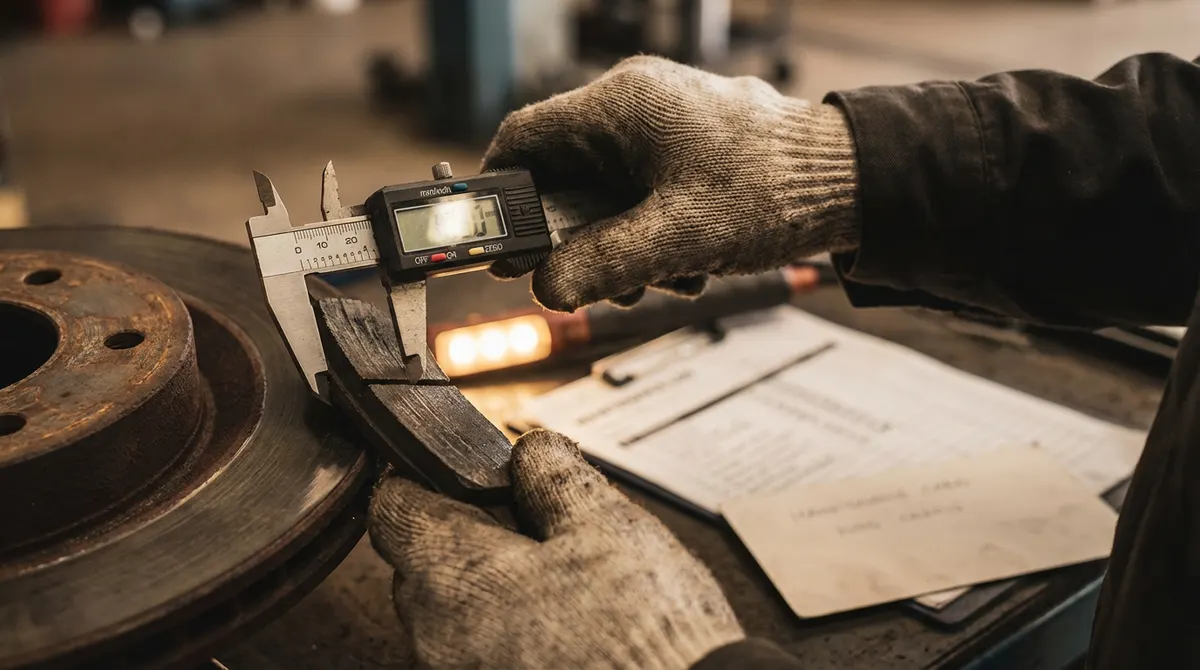
Brake Safety Week is the main 2026 event for brake systems, brake-related out-of-service violations, and specialized brake system inspections. Brake Safety Week matters because even a well-documented fleet can fail roadside scrutiny if brake components are not roadworthy.
Brake systems are the components that slow and stop a commercial motor vehicle safely, including service brakes, parking brakes, and related hardware. Brake systems matter because defective or improperly adjusted brakes can make a vehicle unsafe to operate immediately.
According to the Commercial Vehicle Safety Alliance, Brake Safety Week 2026 is scheduled for August 23 to 29, and there will also be an unannounced one-day Brake Safety Day at some point in 2026. CVSA states that during these campaigns, inspectors conduct brake system inspections, primarily Level IV Inspections, on large trucks and buses throughout North America. (cvsa.org)
Brake system inspections are specialized checks of brake-related vehicle components for compliance and safety defects. Brake system inspections matter because they can identify out-of-adjustment brakes, damaged components, brake pushrod travel problems, and other out-of-service conditions that ordinary dispatch reviews may miss.
Many fleets focus on tires and lights first, but brake systems often deserve even tighter tracking. Maintenance logs, technician signoff, and documented follow-up on driver defect reports help prove that brake safety is not being managed informally.
KEY TAKEAWAY: Brake Safety Week 2026 runs August 23 to 29, and brake readiness should be treated as a year-round maintenance discipline, not an August project.
After vehicle mechanics, the next major risk area is driver behavior on public roads.
Operation Safe Driver Week 2026: Emphasizing Driver Behavior

Operation Safe Driver Week is the major 2026 enforcement campaign focused on unsafe driving behavior by commercial motor vehicle drivers and passenger vehicle drivers. Operation Safe Driver Week matters because driver behavior violations can trigger traffic stops even when the vehicle is mechanically sound.
Operation Safe Driver Week is a CVSA campaign that combines education and traffic enforcement to reduce risky driving. The campaign matters because law enforcement officers actively look for behaviors such as speeding, distracted driving, seat belt violations, and other unsafe conduct.
According to the Commercial Vehicle Safety Alliance, Operation Safe Driver Week 2026 is scheduled for July 12 to 18, and the 2026 focus is reckless, careless, or dangerous driving. CVSA explains that law enforcement personnel will be on the lookout for both commercial motor vehicle drivers and passenger vehicle drivers engaging in risky behavior and may issue a citation or warning after traffic stops. (cvsa.org)
Seat belts remain a simple but high-stakes issue. Distracted driving and impaired driving remain central traffic enforcement targets because they are closely linked to fatal collisions and crash deaths. This is also the week when coaching on following distance, lane discipline, and speed management becomes especially important for every truck driver on the road.
DID YOU KNOW: CVSA’s 2025 results showed 8,739 vehicles were pulled over during Operation Safe Driver Week in Canada and the U.S., resulting in 2,504 tickets and 3,575 warnings. That scale shows how visible this campaign becomes once it starts. (cvsa.org)
KEY TAKEAWAY: Operation Safe Driver Week 2026 runs July 12 to 18, and driver behavior can attract enforcement even before an inspector looks at the vehicle.
Specialized cargo brings another layer of risk, especially for hazardous materials operations.
Hazardous Materials (HM/DG) Road Blitz: Specialized Safety Checks
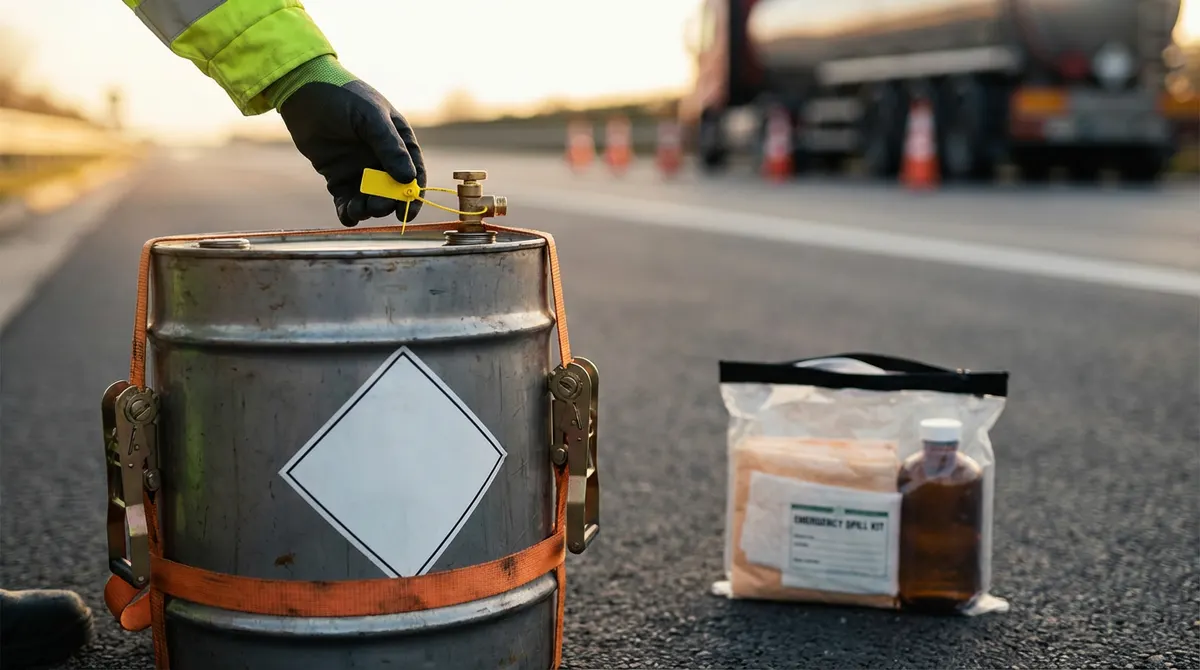
The HM/DG Road Blitz is the specialized campaign for hazardous materials and dangerous goods enforcement. The HM/DG Road Blitz matters because hazmat safety failures can create immediate public risk, higher enforcement scrutiny, and complex out-of-service exposure.
Hazardous materials are regulated substances that require special handling, packaging, marking, placarding, and documentation during transportation. Hazardous materials matter because noncompliance can endanger drivers, the public, and emergency responders.
CVSA’s recent HM/DG materials show that this campaign focuses on vehicles transporting hazardous materials or dangerous goods and on the trained law enforcement personnel who inspect them. However, based on the public CVSA pages surfaced and reviewed on April 14, 2026, a 2026 HM/DG Road Blitz date was not publicly listed in the reviewed results, calendar, or program pages. The safest editorial approach is to note the event, explain the preparation requirements, and avoid inventing a 2026 schedule. (cvsa.org)
For hazmat carriers, readiness should center on shipping papers, package integrity, placards, employee training, cargo tank requirements when applicable, and emergency-response awareness. This is also an area where one overlooked issue can create a much bigger enforcement problem than a routine light or paperwork defect.
KEY TAKEAWAY: The HM/DG Road Blitz remains important in 2026, but a public 2026 date was not visible in the reviewed CVSA materials as of April 14, 2026.
That same caution applies to smaller or targeted initiatives that may receive less public attention than the headline campaigns.
Other Targeted Enforcement Initiatives

Other targeted initiatives matter because they can broaden enforcement risk beyond the three biggest 2026 campaigns. Smaller initiatives often highlight issues that fleets overlook until they become audit questions or roadside findings.
The Human Trafficking Awareness Initiative is CVSA’s annual awareness and outreach campaign focused on prevention, identification, and reporting. The initiative matters because human trafficking awareness is increasingly embedded into commercial motor vehicle safety culture and driver education.
According to the Commercial Vehicle Safety Alliance, the 2026 Human Trafficking Awareness Initiative dates are January 12 to 16 in the U.S., February 23 to 27 in Canada, and March 16 to 20 in Mexico. CVSA states that the initiative educates commercial motor vehicle drivers, motor carriers, law enforcement officers, and the public about signs of trafficking and what to do if trafficking is suspected. (cvsa.org)
This type of initiative does not work like a standard truck inspection campaign, but it still matters operationally because training gaps can reflect poorly on a safety program. It is also a reminder that DOT Week or DOT Blitz Week are often informal phrases used in the industry, while the real enforcement calendar is built around specific named campaigns.
KEY TAKEAWAY: The 2026 calendar includes more than inspection blitzes, and targeted awareness initiatives can still shape training expectations and operational readiness.
With the schedule mapped out, the next step is to understand the issues most likely to draw attention in 2026.
Deep Dive into Likely 2026 Focus Areas

The likely 2026 focus areas are the issues that combine official campaign emphasis with high roadside violation risk. For most fleets, the top priorities are ELD compliance, cargo securement, brake systems, core vehicle maintenance, and driver records.
Focus areas are the specific driver and vehicle categories inspectors or campaign organizers highlight for added scrutiny. Focus areas matter because they help fleets decide where to spend limited training and maintenance time first.
According to CVSA’s 2026 focus-area material, International Roadcheck will emphasize cargo securement and ELD tampering. According to FMCSA, cargo securement rules are designed to prevent articles from shifting or falling from commercial motor vehicles, and an Electronic Logging Device automatically records driving time to support Hours of Service compliance. Those three official signals make a clear 2026 priority stack: secure the load, log the time accurately, and keep the vehicle mechanically sound. (cvsa.org)
This is also where under-covered risk appears. Many fleets prepare visible items such as lights, tires, and paper files, but miss pattern-based issues such as ELD tampering, driver medical card expiration, or recurring cargo securement violations across multiple trailers or terminals.
KEY TAKEAWAY: The safest 2026 strategy is to prioritize the problems inspectors have already said they plan to watch closely.
The first of those priorities is electronic log compliance.
Electronic Logging Devices (ELDs) and Hours-of-Service (HOS) Compliance
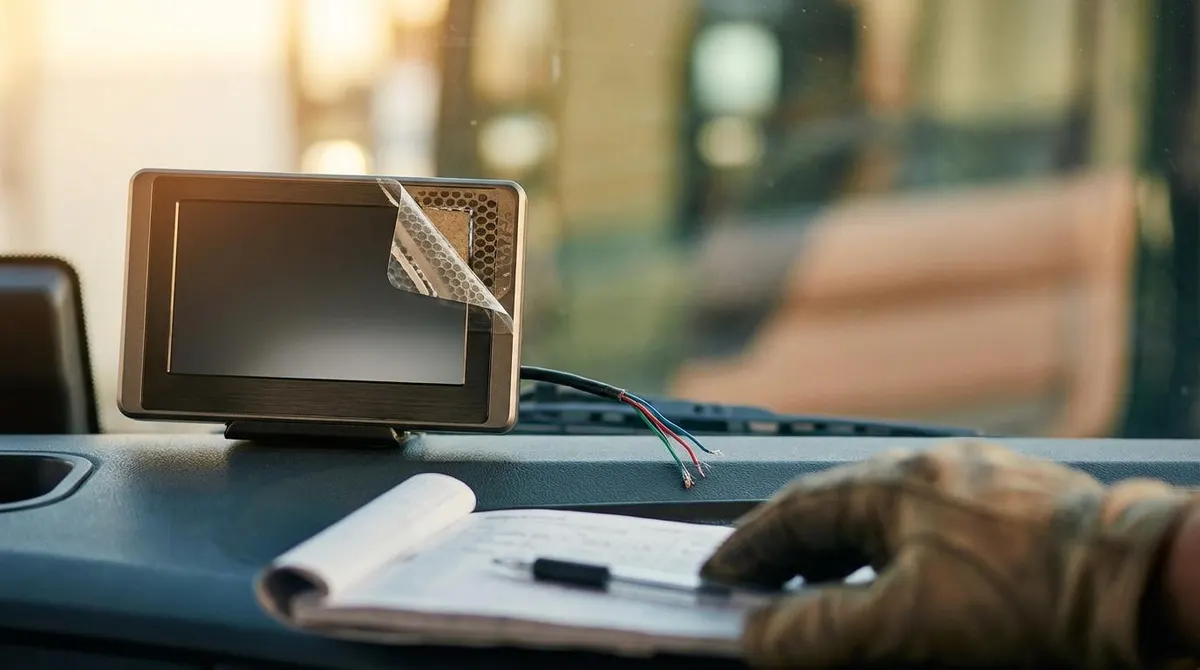
ELD and Hours of Service compliance will likely be one of the most important 2026 driver-side enforcement topics. ELD tampering and false records can quickly turn a routine roadside inspection into an out-of-service event.
An Electronic Logging Device is engine-synchronized technology that automatically records driving time and other Hours of Service data. The device matters because FMCSA requires ELD use for most drivers who must prepare records of duty status.
According to FMCSA, an ELD automatically records driving time by synchronizing with the vehicle engine. FMCSA also states that the ELD rule applies to most motor carriers and drivers who are currently required to keep records of duty status. For 2026, CVSA has gone further by specifically flagging ELD tampering, falsification, or manipulation as an International Roadcheck focus. (FMCSA)
Hours of Service is the legal limit framework that controls work and rest time for drivers. Hours of Service matters because HOS limits are central to fatigue prevention and a common enforcement trigger during roadside inspections.
If your operation has fatigue concerns, do not ignore the health angle. Conditions such as sleep apnea can affect alertness, sleep quality, and long-haul performance, which is why some drivers choose to review what sleep apnea is or explore an at-home sleep test when persistent daytime sleepiness becomes part of the bigger safety picture.
KEY TAKEAWAY: Accurate ELD compliance is not just a paperwork issue in 2026, it is a named inspection priority with direct out-of-service risk.
After the logbook, the next 2026 priority is the load itself.
Cargo Securement: Preventing Loads from Shifting
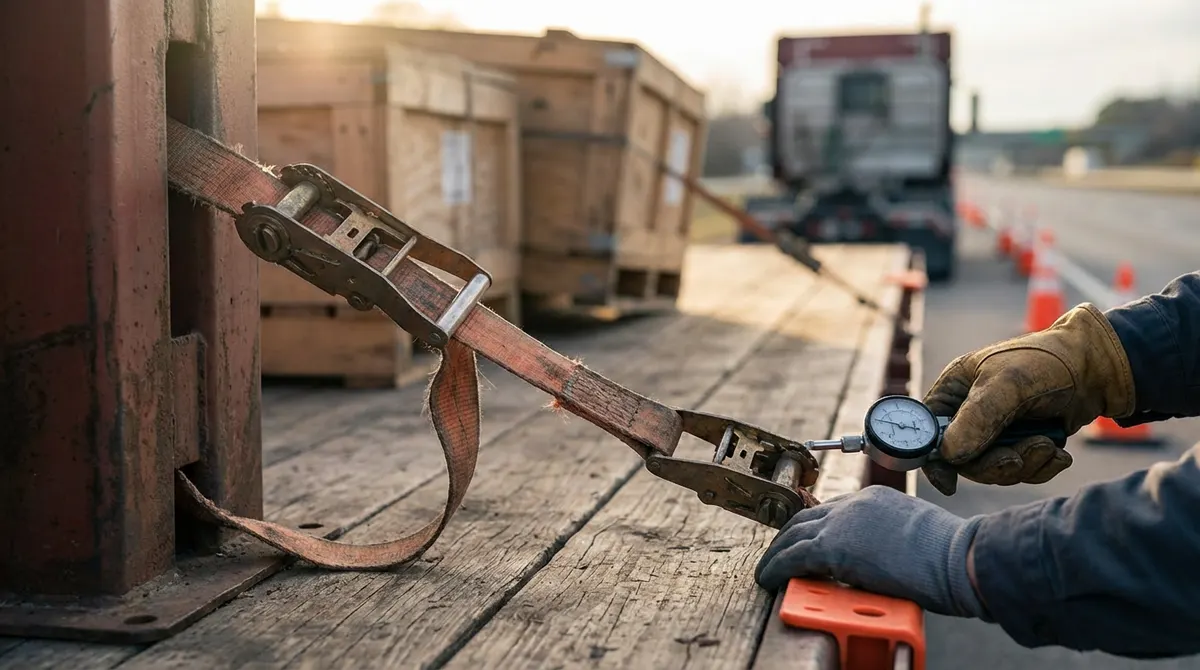
Cargo securement will be one of the most scrutinized vehicle-side issues during International Roadcheck 2026. Cargo securement failures matter because shifting or falling cargo can create immediate road hazards and serious liability exposure.
Cargo Securement is the system of tie-downs, anchor points, blocking, bracing, and commodity-specific restraints used to keep a load stable. Cargo Securement matters because FMCSA rules require cargo to stay in place and not leak, spill, blow, or fall from the vehicle.
According to FMCSA, cargo securement rules require motor carriers to prevent articles from shifting on or within, or falling from, commercial motor vehicles. CVSA’s 2026 International Roadcheck flyer also highlights wear and damage in tie-downs, fittings, and anchor points. That means load planning and visual checks need to go beyond a quick strap count. (FMCSA)
Cargo securement violations often come from routine shortcuts. Clinicians frequently observe that drivers normalize fatigue; safety managers often see a similar pattern with loads that looked acceptable on departure but were never truly inspected. A useful control is requiring a real pre-trip inspection of cargo securement, with photo evidence for high-risk loads or recurring lanes.
TIP: If your fleet regularly handles flatbed, mixed freight, or specialized cargo, run a mock audit on tie-down condition, anchor points, and commodity-specific securement before May.
KEY TAKEAWAY: Cargo securement is a 2026 headline issue, and load stability should be verified with the same discipline as brakes or driver documents.
The third core risk area is overall vehicle condition.
Vehicle Maintenance: Foundation of Roadworthiness
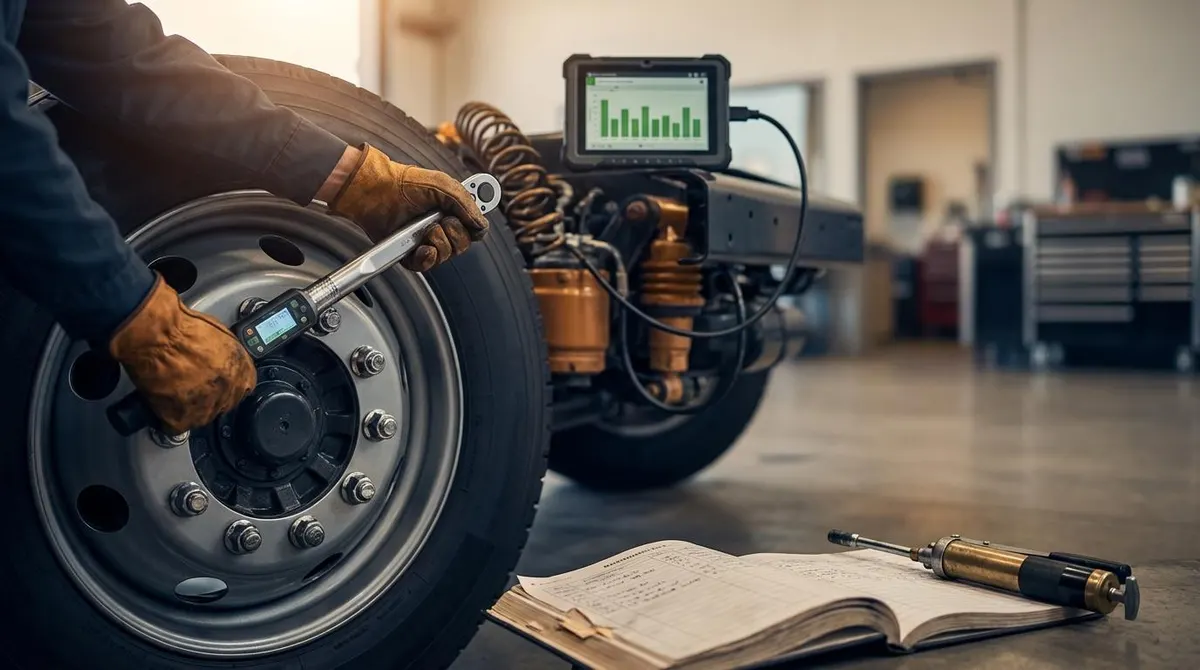
Vehicle maintenance remains the foundation of inspection performance in every season, not only during International Roadcheck or Brake Safety Week. Vehicle maintenance matters because even minor neglected defects can add up to out-of-service violations.
Vehicle maintenance is the scheduled and unscheduled repair, inspection, and documentation process that keeps a commercial motor vehicle safe and compliant. Vehicle maintenance matters because inspectors evaluate vehicle components such as tires, lighting, brake systems, steering, suspension, and related safety systems.
According to CVSA’s inspection materials, Level II inspections include brake systems, cargo securement, coupling devices, steering mechanisms, suspensions, tires, wheels, rims and hubs, lighting devices, windshield wipers, frames, fuel systems, and other vehicle components that can often reveal gaps in preventive maintenance. CVSA also notes that the North American Standard Level I, Level V and Level VI are the inspection types that may result in a CVSA decal when no critical violations are found. (cvsa.org)
A CVSA decal is a mark applied after a qualifying inspection that indicates the vehicle had no critical violations during that inspection. A CVSA decal matters because it signals recent compliance, although it does not eliminate future roadside inspections or excuse later defects.
KEY TAKEAWAY: Maintenance is the base layer of DOT readiness because nearly every inspection level can expose unresolved mechanical issues.
To make that practical, you need to know exactly what the different inspection levels include.
Understanding DOT Inspection Levels and Procedures

Inspection levels matter because they determine how deep an inspector goes into the driver portion, vehicle portion, or both. Once you understand the inspection levels, you can prepare documents, equipment, and coaching more precisely.
Inspection levels are standardized North American categories that define the scope of an inspection. Inspection levels matter because a Level I inspection is not the same event as a Level III or Level IV review.
According to the Commercial Vehicle Safety Alliance, the key categories are Level I, Level II, Level III, Level IV, and Level V, with Level I as the comprehensive North American Standard Inspection and Level IV used for special studies. That framework helps explain why some roadside inspections are quick credential checks while others become full vehicle examinations. (cvsa.org)
| Inspection level | What it includes | Most relevant risk |
|---|---|---|
| Level I inspection | Full driver and vehicle inspection | Broadest exposure to driver and vehicle violations |
| Level II inspection | Walk-around driver and vehicle inspection | Visible vehicle defects and paperwork gaps |
| Level III inspections | Driver, credential, and administrative review | License, medical, HOS, seat belt, carrier status |
| Level IV Inspections | Special one-time inspection or study item | Targeted enforcement on one issue |
| Level V inspection | Vehicle-only inspection without driver present | Maintenance and vehicle condition |
| Level I or Level V Inspection | Eligible for CVSA decal if passed | Opportunity to demonstrate strong vehicle condition |
For most trucking operations, the critical operational point is this: you cannot prepare only for one kind of stop. Drivers need to be ready for credential review, while shops and maintenance teams need vehicles ready for deeper roadside inspection.
KEY TAKEAWAY: Inspection levels define the scope of enforcement, so readiness should cover both documents and vehicle condition.
The most comprehensive version is still the Level I inspection.
North American Standard Level I Inspection: The Comprehensive Check
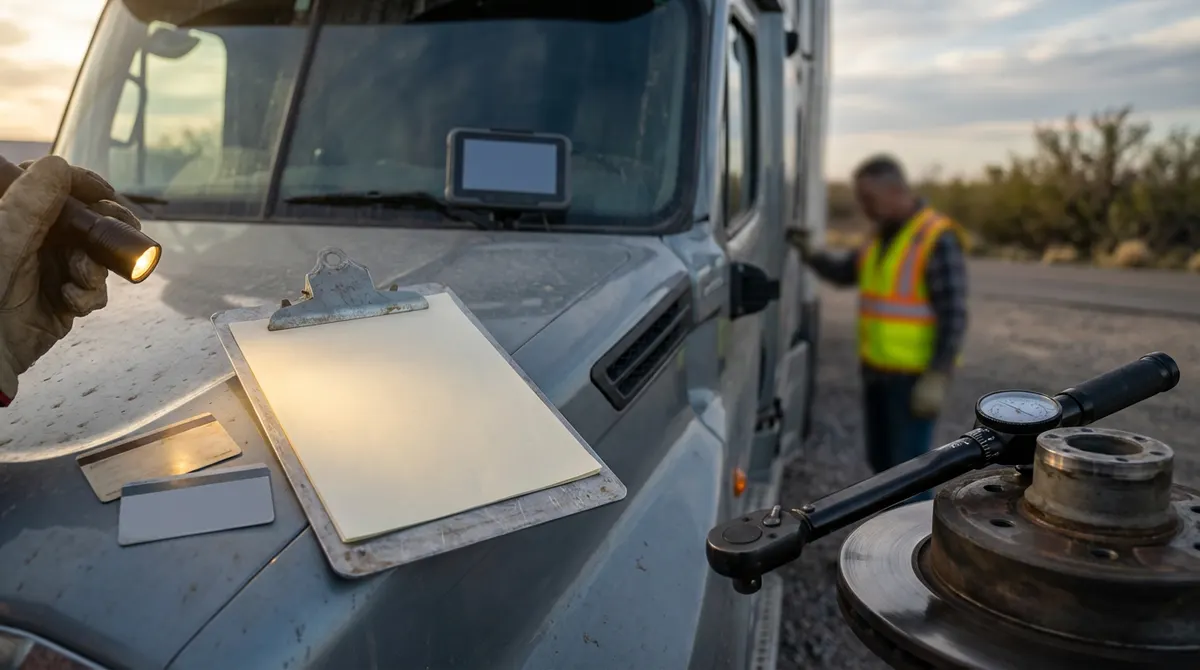
The Level I inspection is the most comprehensive standard roadside inspection for most carriers. A Level I inspection matters because it combines a detailed driver review with a detailed vehicle review in one event.
The North American Standard Level I Inspection is the full inspection procedure covering driver credentials, records, and the vehicle’s major safety systems. The Level I inspection matters because it is the closest thing to a complete roadside compliance snapshot.
According to CVSA, a Level I inspection includes the driver’s license, Medical examiner's certificate when applicable, alcohol and drugs, Hours of Service records, seat belts, and a wide range of vehicle inspection items. Those vehicle items include brake systems, cargo securement, driveline and steering components, suspensions, tires, wheels, lighting devices, fuel systems, and more. (cvsa.org)
The Medical examiner's certificate is the document showing that a driver has been found physically qualified when FMCSA medical certification applies. The certificate matters because expired or missing medical qualification documentation can create immediate compliance issues. According to FMCSA, drivers subject to the medical certification requirement must provide each new certificate before the current one expires. (FMCSA)
KEY TAKEAWAY: The Level I inspection is the highest-value preparation target because it tests both the driver and the vehicle at once.
Not every roadside encounter will be that extensive, but the lighter levels still matter.
Level II, III, and V Inspections: Roadside and Driver Focus
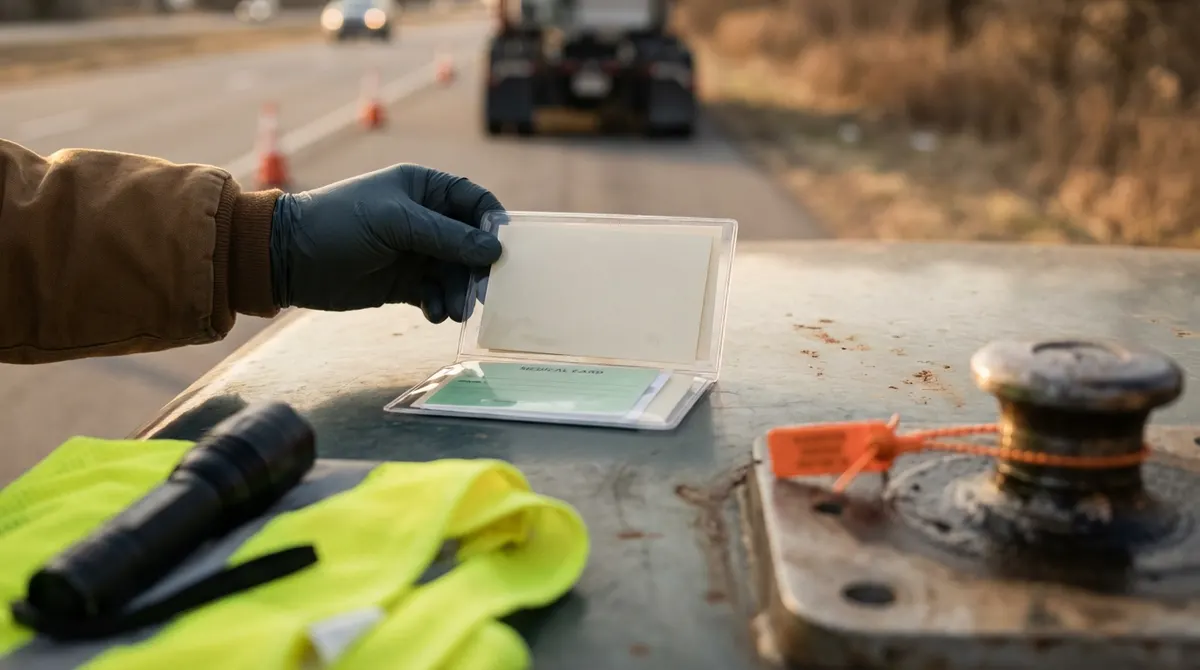
Level II, Level III, and Level V inspections are narrower than Level I, but they still create real compliance exposure. These inspections matter because they often catch the routine mistakes that fleets assume are too minor to matter.
A Level II inspection is a walk-around driver and vehicle inspection. A Level III inspection is a driver, credential, and administrative review. A Level V inspection is a vehicle-only inspection performed without the driver present. These levels matter because each one exposes a different type of weakness in your operation.
According to CVSA, Level II inspections include visible vehicle items plus driver documentation, while Level III inspections focus on the driver’s license, Medical Examiner’s Certificate, record of duty status, Hours of Service, seat belt, vehicle inspection reports, and carrier identification and status. CVSA also states that a Level V inspection includes all vehicle inspection items specified under the Level I inspection, but without a driver present. (cvsa.org)
This is why clean files alone are not enough. A vehicle parked at a terminal can still be examined under a vehicle-only approach, and a driver with a neat truck can still fail a driver portion review if credentials or logs are not correct.
KEY TAKEAWAY: Narrower inspection levels still create meaningful risk because they isolate the exact area where your compliance program is weakest.
The most targeted level is Level IV.
Level IV Inspections: Special Studies

Level IV Inspections are targeted inspections used for a special study or a specific trend. Level IV Inspections matter because they can concentrate enforcement on a single issue rather than reviewing the whole vehicle and driver package.
Level IV Inspections are one-time examinations of a particular item or suspected trend. The level matters because it allows inspectors to focus intensely on one problem area, such as brake systems, without conducting a full standard inspection.
According to CVSA, Level IV inspections are normally made in support of a study or to verify or refute a suspected trend. CVSA’s Brake Safety Campaigns page also states that brake safety campaigns involve brake system inspections, primarily Level IV Inspections, on large trucks and buses across North America. (cvsa.org)
That has an important implication for 2026. When a campaign publicly names a focus area, fleets should assume inspectors are being given a narrower lens and stronger reason to examine that issue closely.
KEY TAKEAWAY: Level IV Inspections are targeted by design, which makes announced focus areas especially important in 2026.
Knowing the inspection level helps, but location and enforcement context also matter.
Where Inspections Occur: Weigh Stations, Inspection Stations, and Roadside Stops
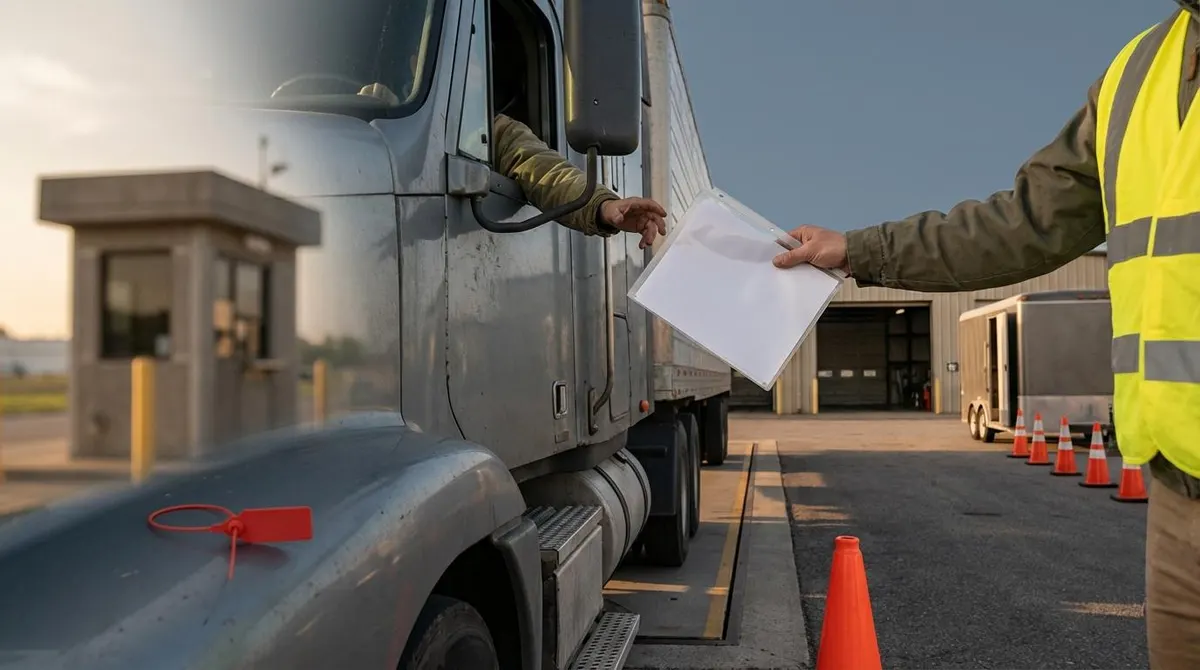
DOT inspections can happen at weigh stations, inspection stations, terminal sites, or roadside stops. Location matters because drivers need a repeatable process that works under pressure and not only at planned checkpoints.
Weigh stations and inspection stations are designated locations where commercial motor vehicles may be screened or inspected. Roadside inspections are enforcement encounters conducted away from fixed facilities. These locations matter because the process, timing, and stress level can vary even when the inspection rules do not.
According to CVSA inspection procedures, inspectors begin by choosing the inspection site, approaching the vehicle, preparing the driver, collecting documents, checking for hazardous materials, identifying the carrier, and reviewing driver records and required reports. That means inspection mode may vary, but the fundamentals remain the same. (cvsa.org)
For drivers, the practical rule is consistency. Whether you are stopped at weigh stations or pulled over during traffic enforcement, the best response is the same: organized paperwork, calm communication, current credentials, and a vehicle that has already been checked through a real pre-trip inspection.
KEY TAKEAWAY: You cannot predict exactly where an inspection will happen, but you can standardize how your drivers and vehicles show up.
That leads directly to preparation strategy.
Strategic Preparation for 2026 DOT Inspections: A Year-Round Mindset
The best preparation strategy for 2026 DOT inspections is a year-round operating system, not a seasonal scramble. Strategic preparation matters because recurring compliance habits outperform one-time cleanups.
Strategic preparation is the ongoing coordination of maintenance, documents, training, and dispatch discipline to reduce inspection risk. Strategic preparation matters because it lowers exposure to driver violations, vehicle violations, and preventable out-of-service conditions.
A practical 2026 schedule should work backward from the confirmed enforcement windows. Review ELD compliance and Hours of Service controls before May. Tighten behavior coaching before July. Complete deeper brake inspections before August. Then keep monthly mini-reviews running for medical certificates, Driver's License status, maintenance logs, and recurring defect trends.
Midway through the year is also a good time to address fatigue-related readiness. If chronic snoring, daytime sleepiness, or poor-quality sleep may be part of the risk picture, reviewing the most common sleep apnea symptoms or using an at-home sleep test can help you act before fatigue affects safety or medical qualification.
KEY TAKEAWAY: The most reliable 2026 plan is to map each quarter to the enforcement risk most likely to surface during that period.
That system starts at the carrier level.
For Motor Carriers: Building a Culture of Compliance
Motor carriers set the tone for whether inspection preparation is performative or real. A culture of compliance matters because drivers usually reflect the systems, incentives, and discipline built by the carrier.
A motor carrier is the business entity responsible for operating commercial motor vehicles and maintaining compliance with federal regulations. The carrier matters because enforcement risk is shaped by dispatch, maintenance, hiring, training, and document control decisions made above the driver level.
For carriers, the most effective controls are routine mock audit reviews, documented corrective action, maintenance scheduling tied to defect trends, and Compliance training that is short, frequent, and specific. Safety managers should monitor CSA scores, out-of-service rates, and repeat violation patterns by terminal, route type, and equipment class. Safety Score Monitor processes do not need to be fancy, but they do need to be consistent.
The FMCSA Drug and Alcohol Clearinghouse is another non-negotiable control. According to FMCSA, the Drug and Alcohol Clearinghouse is an online database that gives employers and government agencies real-time access to information about CDL driver drug and alcohol program violations. (Drug & Alcohol Clearinghouse)
KEY TAKEAWAY: Carriers that reduce inspection risk most effectively are the ones that treat compliance as a managed system, not a driver-only responsibility.
Drivers still play the most visible role during an actual stop.
For Commercial Motor Vehicle Drivers: Daily Readiness
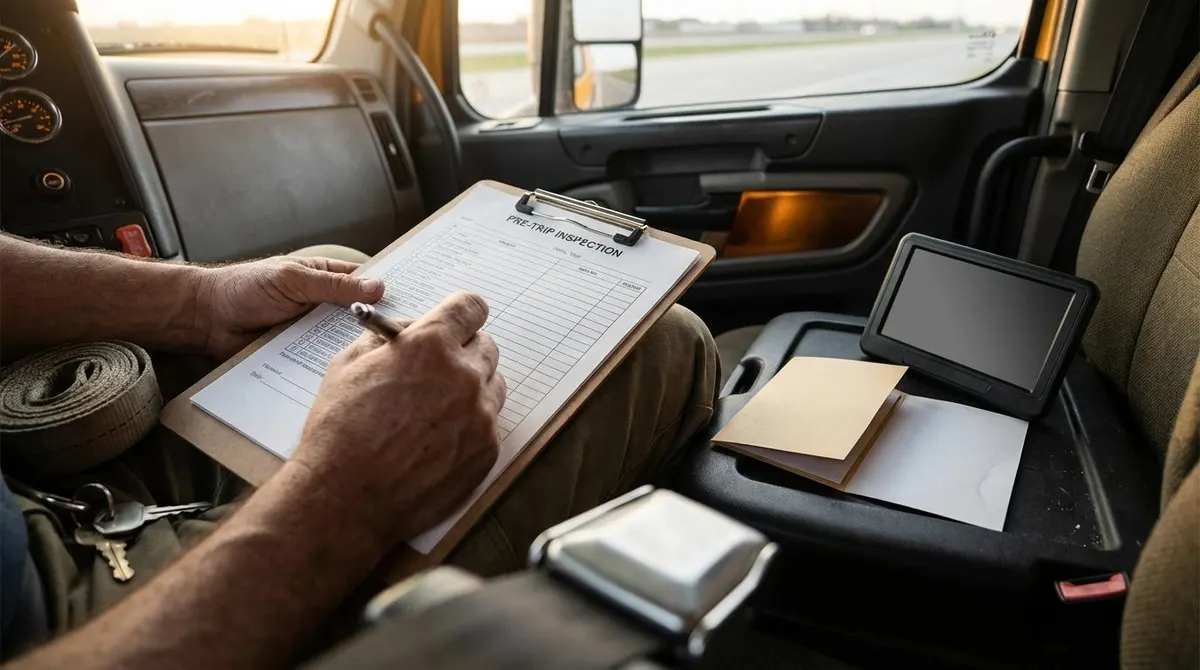
Commercial motor vehicle drivers need daily readiness because the success of an inspection often depends on what happens in the first few minutes. Daily readiness matters because simple misses, such as an expired certificate or poor pre-trip inspection habits, can trigger bigger problems.
A commercial motor vehicle driver is the operator responsible for the safe and lawful movement of the vehicle, cargo, and required records. The driver matters because the driver portion of an inspection often determines whether the encounter stays routine.
A strong daily routine should include a real pre-trip inspection, current Driver's License and medical card checks, accurate ELD use, seat belt compliance, and quick access to inspection paperwork. Drivers should also know how to answer basic questions without guessing, especially about cargo, Hours of Service, and recent defects.
Many drivers also overlook the health side of readiness. Daytime drowsiness, poor sleep quality, and untreated sleep issues can affect alertness and consistency behind the wheel. If those issues have been persistent, it can be reasonable to find a provider near you or learn more about sleep apnea in adults before the problem shows up in safety performance.
KEY TAKEAWAY: Daily driver readiness is built on small repeatable habits, not on last-minute document hunts before an inspection stop.
When those habits break down, the consequences can be immediate.
Out-of-Service Orders, Fines, and CSA Score Impact
Non-compliance can lead to out-of-service orders, fines, load delays, and damage to CSA performance. These outcomes matter because the business cost of one failed inspection often extends far beyond the citation itself.
Out-of-service conditions are defects or violations serious enough that the driver or vehicle should not continue operating until corrected. Out-of-service conditions matter because they stop movement immediately and often create cascading operational problems.
According to CVSA, the North American Standard Out-of-Service Criteria is updated annually and the 2026 edition became effective April 1, 2026. That timing matters because fleets that still train from outdated assumptions may miss new or clarified thresholds. CSA score exposure also matters because repeated driver violations and vehicle violations can affect how regulators and shippers view your safety performance. (cvsa.org)
A clean truck inspection record supports better operating discipline in both spot rate and contract environments. A poor one can increase friction with customers, insurers, and internal scheduling.
KEY TAKEAWAY: The direct cost of a violation is usually smaller than the total business cost of downtime, lost trust, and repeat safety exposure.
When something does go wrong, the response process matters almost as much as the violation itself.
Reinspection Procedures and Corrective Actions
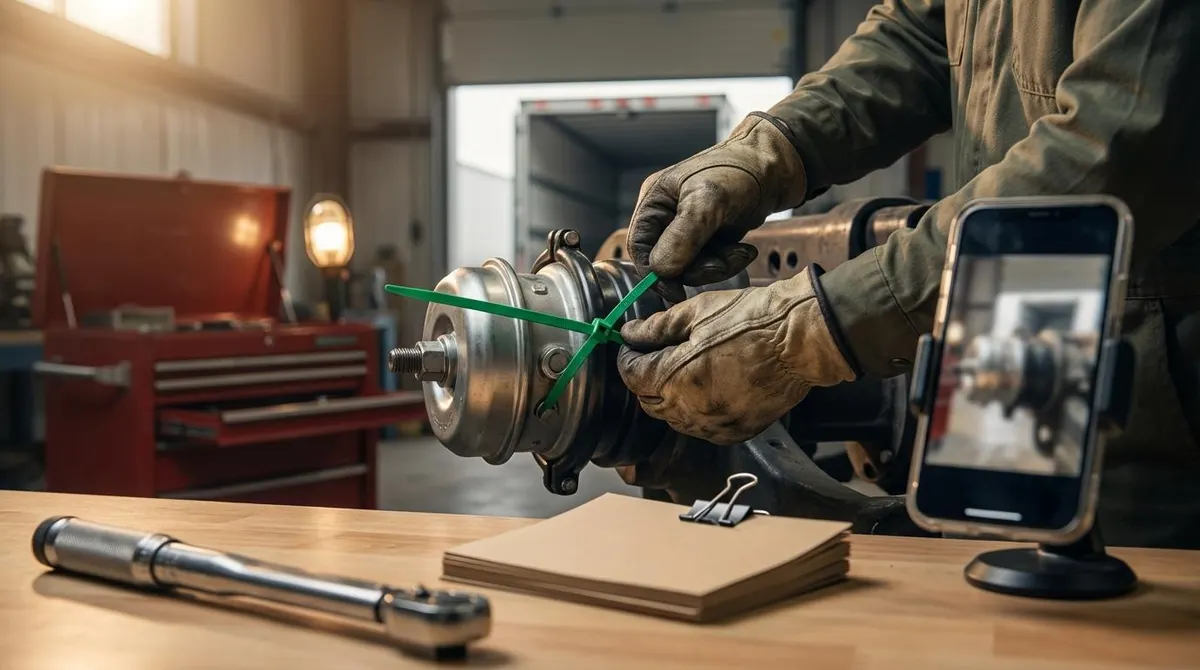
Reinspection and corrective action are where a compliance program proves whether it actually learns from failure. Reinspection matters because unresolved issues tend to come back in later roadside inspections and audits.
Corrective action is the documented process of identifying a violation, fixing the problem, and preventing recurrence. Corrective action matters because enforcement agencies and customers often care whether the issue was isolated or systemic.
The most effective corrective action process includes immediate repair or record correction, root-cause review, driver or technician coaching, and a documented check that the problem does not repeat. That is especially important for repeat issues such as tire tread depth, seat belt violations, medical card expirations, or maintenance logs that are consistently incomplete.
A mock audit can help here. A mock audit is an internal review that simulates enforcement scrutiny before a real inspection or compliance review. A mock audit matters because it catches routine issues while you still control the timeline.
KEY TAKEAWAY: The goal after a violation is not only to pass reinspection, but to make sure the same issue does not return in the next stop.
Done well, that creates measurable upside.
The Positive Impact: Enhanced Safety Rating, Reduced Operating Costs, and Industry Reputation

Strong inspection performance creates real operational benefits, not just fewer fines. Positive inspection results matter because they support a better safety narrative, fewer disruptions, and more predictable operations.
A safety rating is the regulator’s view of a carrier’s safety fitness based on compliance and operational evidence. A strong safety rating matters because it supports credibility with customers, drivers, and business partners.
Fewer roadside failures usually mean fewer breakdown-related delays, fewer emergency repairs, and better equipment utilization. A vehicle that regularly passes inspection is also more likely to be operating with stronger maintenance discipline overall. In many fleets, that translates into reduced operating costs over time because planned repair is usually cheaper than reactive repair.
This is also where health-related driver readiness can support the bigger safety picture. Drivers dealing with chronic fatigue or sleep disruption may benefit from learning whether sleep apnea can be treated without CPAP or starting with an at-home sleep test if symptoms keep affecting rest and recovery.
KEY TAKEAWAY: Better inspection performance strengthens safety, lowers avoidable costs, and improves how your operation is viewed by regulators and customers.
Before closing, it is worth clearing up a few myths that often distort preparation.
Common Myths About 2026 DOT Inspections Debunked

DOT inspection myths create preventable mistakes because they make carriers prepare for the wrong things. The most useful 2026 mindset is to replace folklore with official guidance and documented readiness.
MYTH: International Roadcheck is the only DOT Week that matters.
FACT: International Roadcheck is the largest inspection blitz, but it is not the only 2026 enforcement event. CVSA has also confirmed Operation Safe Driver Week for July 12 to 18, 2026, and Brake Safety Week for August 23 to 29, 2026. Those campaigns target different risks, so preparation needs to extend beyond one week in May. (cvsa.org)
MYTH: A clean truck means the driver has nothing to worry about.
FACT: CVSA’s Level III inspections focus on the driver portion, including the Driver's License, Medical examiner's certificate, Hours of Service, seat belts, and carrier identification. A mechanically sound vehicle does not protect a driver from credential or log violations. (cvsa.org)
MYTH: ELD issues are minor paperwork problems unless a crash happens.
FACT: CVSA named ELD tampering, falsification, and manipulation as a 2026 International Roadcheck focus area. FMCSA also states that ELDs are meant to produce easier, more accurate Hours of Service recording, so false entries can signal a deeper fatigue and compliance problem. (cvsa.org)
MYTH: Brake checks only matter during Brake Safety Week.
FACT: CVSA’s brake materials explain that brake safety campaigns include brake system inspections designed to identify brake-system violations, and the one-day Brake Safety Day may occur without advance public notice. That makes brake readiness an all-year requirement, not an August task. (cvsa.org)
KEY TAKEAWAY: The biggest DOT inspection mistakes usually come from assumptions, not from obscure rules.
That myth cleanup leads naturally into the most common follow-up questions.
Frequently Asked Questions
What are the confirmed 2026 DOT inspection dates I should put on my calendar?
The most important confirmed 2026 dates are May 12 to 14 for International Roadcheck, July 12 to 18 for Operation Safe Driver Week, and August 23 to 29 for Brake Safety Week. CVSA also lists the 2026 Human Trafficking Awareness Initiative as January 12 to 16 in the U.S., February 23 to 27 in Canada, and March 16 to 20 in Mexico. As of April 14, 2026, a public 2026 HM/DG Road Blitz date was not visible on the reviewed CVSA pages, so you should avoid relying on any unofficial schedule you see elsewhere. (cvsa.org)
What is the difference between a Level I inspection and a Level III inspection?
A Level I inspection is a full driver and vehicle inspection, while a Level III inspection focuses on the driver, credentials, and administrative items. According to CVSA, Level III inspections cover the driver’s license, Medical Examiner’s Certificate when applicable, record of duty status, Hours of Service, seat belt, vehicle inspection report, and carrier identification and status. A Level I inspection includes those driver-side items plus a more complete review of the vehicle portion, including brake systems, tires, steering, suspension, lighting devices, and cargo securement. (cvsa.org)
What will inspectors likely focus on most during International Roadcheck 2026?
Inspectors will likely focus most closely on cargo securement and ELD tampering during International Roadcheck 2026. CVSA explicitly named those two items as the 2026 focus areas. In practice, that means you should review tie-down condition, anchor points, cargo stability, record of duty status accuracy, login discipline, and any pattern that could look like ELD falsification or manipulation. If your fleet wants one priority list before May, start with cargo securement, Hours of Service records, current credentials, and visible maintenance defects. (cvsa.org)
Where do DOT inspections usually happen?
DOT inspections commonly happen at weigh stations, inspection stations, terminal locations, and roadside stops. CVSA’s inspection procedures show that the process starts with site selection, driver contact, document collection, and a review of the vehicle or driver items relevant to that inspection level. For drivers, the main lesson is that you should prepare for the same inspection fundamentals everywhere. Whether you are stopped at a fixed facility or along the roadside, inspectors will still care about safe vehicle condition, accurate records, and required credentials. (cvsa.org)
What documents should a driver always have ready during a roadside inspection?
A driver should always be ready with a valid Driver's License, Medical examiner's certificate when required, accurate Hours of Service records, and any other records or inspection reports relevant to the trip. According to CVSA and FMCSA, these items are central to standard roadside checks and can quickly become a problem if expired, missing, or inconsistent. A practical habit is to check document currency before every dispatch, not only during a blitz week. That is especially important if you work with different tractors, trailers, or customer procedures throughout the month. (cvsa.org)
How can a motor carrier reduce the risk of out-of-service violations in 2026?
The best way to reduce out-of-service violations in 2026 is to combine preventive maintenance, accurate ELD compliance, regular mock audit reviews, and tight credential management. CVSA’s 2026 out-of-service criteria took effect on April 1, 2026, so training should reflect the current standard rather than an older handbook or checklist. Fleets should also review repeat driver violations, repeat vehicle violations, and terminal-level patterns instead of treating every roadside event as isolated. That approach usually improves CSA scores and helps prevent the same defect from resurfacing at the next stop. (cvsa.org)
Can fatigue or sleep problems affect DOT readiness even if the inspection is about logs and paperwork?
Yes, fatigue and sleep problems can affect DOT readiness because alertness, consistency, and log accuracy are closely tied to safe operation. FMCSA’s Hours of Service framework exists to reduce fatigue-related risk, so repeated sleepiness, poor sleep quality, or untreated sleep issues should not be ignored. If you have ongoing symptoms and want to find a provider near you or understand whether sleep apnea could be part of the problem, resources such as what is sleep apnea or Dumbo Health’s at-home sleep test can be a practical next step. (FMCSA)
Conclusion: Embracing a Future of Safety and Compliance

The 2026 DOT inspection calendar is manageable when you break it into clear milestones: International Roadcheck in May, Operation Safe Driver Week in July, and Brake Safety Week in August. The bigger lesson is that successful fleets do not prepare for one inspection blitz, they build systems that make every roadside stop easier to pass. Strong ELD discipline, cargo securement, vehicle maintenance, current driver documents, and timely corrective action are the core levers that matter most. If fatigue or poor sleep may be affecting driver readiness, a practical next step is to get started with Dumbo Health or review the company’s at-home sleep test options as part of a broader safety-first approach.
Related DOT Physical Topics
- Expected 2027 DOT Inspection Dates
- What Does DOT Stand for in a DOT Physical
- What Is the Difference Between a DOT and Non-DOT Physical
- The Ultimate DOT Physical Guide for Commercial Drivers (2025–2026)
- Can You Get a DOT Physical in Any State The Complete Guide for Commercial Drivers
- Can You Get a DOT Physical Online The Complete Guide for Commercial Drivers
- What drugs do they test for in a DOT drug test
- How Do You Submit Your DOT Physical to the DMV
- Does a DOT Physical Test for Weed or THC The Complete Guide for Commercial Drivers
- Are There New DOT Rules or Laws on Sleep Apnea Testing
- What Can Disqualify You From a DOT Physical
- Does a DOT physical include a drug test
- Can You Pass a DOT Physical with Epilepsy
- DOT Physical Self Pay Cost
- Remote DOT Physical The Complete Guide for Commercial Drivers
- Essential 171 DOT Definitions for Commercial Drivers
- DOT Physical Exam Basics
- Can You Pass a DOT Physical With a Hernia
- Is a drug test required for a DOT physical
- DOT Physical Cost Breakdown What Drivers Pay & Why
- DOT Physical ICD-10 & Billing Codes The Complete Guide for Accurate Compliance and Reimbursement
- Can You Pass a DOT Physical With One Eye
- Can You Pass a DOT Physical With a Pacemaker
- Telehealth Dot Physical
- DOT Physical Forms & Paperwork The Complete Guide for Commercial Drivers
- Who needs a DOT physical
- What Forms Do You Need for a DOT Physical
- Navigating DOT Stroke Guidelines for CMV Drivers What You Need To Know
- DOT Physical & Alcohol Requirements
- Online DOT Physical Without Insurance A Complete Guide for Commercial Drivers
- DOT Physical Out of Pocket What Commercial Drivers Actually Pay
- Why do they measure your neck during a DOT physical
- Navigating Your DOT Physical with Common Medical Conditions
- Why DOT Sleep Tests at Home Matter for Your Career and Health
- How can drivers with sleep apnea qualify again after a failed DOT physical
- Navigating the Florida DOT Physical Your Essential Guide for CDL Drivers
- What Is the Urine Test for in a DOT Physical
- DOT Physical Online Cost
- Walk In DOT Physical Self Pay
- Online DOT Physical Self-Pay The Complete Guide for CDL Drivers and Owner-Operators
- What Should You Bring to a DOT Physical
- DOT physical self pay guide for commercial drivers paying out of pocket
- Can You Get a DOT Physical Online
- Can You Fail a DOT Physical for Being Overweight
- DOT Hypertension Guidelines The Complete Blood Pressure Guide for Commercial Drivers
- Your Complete Guide What's Included in a DOT Physical Exam
- New DOT Physical Requirements What Drivers MUST Know About New Updates
- The Ultimate DOT Preparation Checklist for Motor Carriers and Commercial Drivers
- DOT Physical Insurance & Recertification The Complete Driver's Guide
- DOT Physical Cash Pay
- Same Day DOT Physical
- Virtual DOT Physical
- DOT Physical Vision & Eye Requirements
- What Are the DOT Requirements for Drivers With Sleep Apnea
- Can you fail a DOT physical because of sleep apnea
- What blood pressure do you need to pass a DOT physical
- When Can Sleep Apnea Affect a DOT Physical
- DOT Medical Exam Self-Pay A Complete Guide for Commercial Drivers
- Online DOT Exam What Drivers and Medical Examiners Need to Know
- Do They Check Your Private Parts During a DOT Physical
- DOT Physical Blood Pressure Requirements What Drivers Need to Know
- DOT Physical Insurance or Self Pay How to Choose the Right Payment Option for Your Exam
- DOT Physical Chiropractor Your Complete Guide to CDL Exams
- Is a DOT physical the same as a regular physical
- Can You Fail a DOT Physical for High Blood Pressure
- How to Pass a DOT Physical The Complete Commercial Driver's Guide
- Can you pass a DOT physical with sleep apnea
- What should I expect at a DOT physical
- What Does a DOT Physical Consist Of
- What happens if you fail a DOT physical due to sleep apnea
- Sleep Apnea Tests for DOT Compliance What tests are accepted
- DOT Physical at Urgent Care What Commercial Drivers Need to Know
- Can You Pass a DOT Physical with Diabetes
- Can You Pass a DOT Physical with High Blood Pressure
- BMI for DOT Physical What Commercial Drivers Need to Know
- What Happens During the DOT Physical Exam The Complete Guide for Drivers
- What Happens If Your DOT Physical Expires Compliance Guide for Commercial Drivers
- Does insurance cover a DOT physical
- DOT Physical & Drug Test What Drivers Need to Know
- What are the current DOT requirements for sleep apnea testing for commercial drivers
- DOT Physical Duration and Validity How Long Your Medical Card Lasts
- Non-DOT Physical A Comprehensive Guide to Workforce Health and Safety
- DOT Physical Texas The Essential Guide to Your Exam, Medical Card, and CDL Compliance
- DOT Physical Requirements A Complete Guide for CDL Drivers
- Is a Sleep Study Required for a DOT Physical
- DOT sleep apnea test at home
- What Happens If You Fail a DOT Physical Twice The Complete Guide for Commercial Drivers
- Guide to Obtaining and Managing Your DOT Medical Card Online
- Do They Check for Hernia During a DOT Physical
- What Happens If You Fail a DOT Drug Test The Complete Guide for Commercial Drivers
- Do You Have to Pee During a DOT Physical
- What Are the Requirements to Pass a DOT Physical
- How Long Does a DOT Physical Take A Complete Guide for Commercial Drivers
- What eye chart is used for a DOT physical
- Can You Get a Second Opinion on Your DOT Physical A Complete Guide for Commercial Drivers
- What Do They Check During a DOT Physical
- Cheap DOT Physical Online
- The DOT Physical Exam Ensuring You're Fit for the Road
- Online DOT Physical The Complete Guide for Commercial Drivers and Medical Examiners
- Failing a DOT Physical What Every Commercial Driver Needs to Know
Take the next step before your DOT physical
Start with the free quiz if you are unsure about your risk, or order an at-home sleep test if you have already been flagged for possible sleep apnea.
AI summary
DOT inspection dates are the scheduled 2026 enforcement windows that increase roadside inspections and compliance checks for commercial motor vehicles. The article summarizes confirmed CVSA campaigns and how to prepare. Key 2026 dates (CVSA): International Roadcheck May 12 to 14; Operation Safe Driver Week July 12 to 18; Brake Safety Week August 23 to 29; and an unannounced one-day Brake Safety Day. The Human Trafficking Awareness Initiative runs Jan. 12 to 16 (U.S.), Feb. 23 to 27 (Canada), and March 16 to 20 (Mexico). A public 2026 HM/DG Road Blitz date was not listed in reviewed CVSA materials as of April 14, 2026. International Roadcheck 2026 focus areas are cargo securement and ELD tampering, falsification, or manipulation. The guide also explains North American Standard inspection levels (Level I–V), typical inspection locations (weigh stations, inspection stations, roadside, terminals), and common risk items: driver credentials, Medical Examiner’s Certificate, Hours of Service records, vehicle maintenance, and brake systems. It emphasizes year-round readiness, mock audits, and documented corrective action to reduce out-of-service risk and CSA exposure.

Nicolas Nemeth
Co-Founder
Nico is the co-founder of Dumbo Health, a digital sleep clinic that brings the entire obstructive sleep apnea journey home. Patients skip the sleep lab and the long wait to see a specialist. Dumbo Health ships an at home test, connects patients with licensed sleep clinicians by video, and delivers CPAP or a custom oral appliance with ongoing coaching and automatic resupply in one clear subscription.
Keep reading

How Long Does a DOT Physical Take? A Complete Guide for Commercial Drivers

What Happens If You Fail a DOT Drug Test? The Complete Guide for Commercial Drivers


