DOT Physical & Drug Test: What Drivers Need to Know
This guide explains how DOT physical exams and DOT drug testing work for commercial drivers under FMCSA rules. It outlines what the Certified Medical Examiner evaluates, including medical history, vision (typically 20/40), hearing, blood pressure, cardiovascular and neurological checks, BMI considerations, and urinalysis used to screen for health issues. It also clarifies the DOT five-panel drug test, the urine collection process, and the role of the Medical Review Officer in verifying prescriptions. You will learn how to prepare with records, medication disclosures, and condition management for diabetes, hypertension, sleep apnea, and cardiac or neurologic history. It also reviews medical card outcomes, conditional certification, disqualification, and return-to-duty consequences after a verified positive or refusal.
Struggling with sleep?
Find out if sleep apnea is the reason.
FDA-cleared. $149 flat. Physician-reviewed results in 48 hours.

DOT Physical & Drug Test: What Drivers Need to Know
The open road calls to many, offering a sense of freedom, independence, and a stable career. For Commercial Drivers, this career path is often built on a foundation of responsibility, skill, and adherence to stringent regulations. Among the most critical of these are the Department of Transportation (DOT) physical examination and the mandatory drug testing protocols. These aren't mere bureaucratic hurdles; they are essential safeguards for public safety, ensuring that those operating Commercial Motor Vehicles (CMVs) are physically and mentally capable of performing their duties without posing a risk to themselves or others.
For any Commercial Driver, understanding the intricacies of the DOT physical and drug test is not just a matter of compliance, but a vital component of career longevity and personal well-being. These examinations, overseen by the Federal Motor Carrier Safety Administration (FMCSA), a division of the Department of Transportation, are designed to identify potential health issues that could impair driving ability. Navigating this process successfully requires preparation, knowledge, and a proactive approach to health. This comprehensive guide will demystify the DOT physical and drug test, providing Commercial Drivers with the essential information needed to understand the requirements, prepare effectively, and maintain a long, safe, and successful career on the road.
The Critical Importance for Commercial Drivers
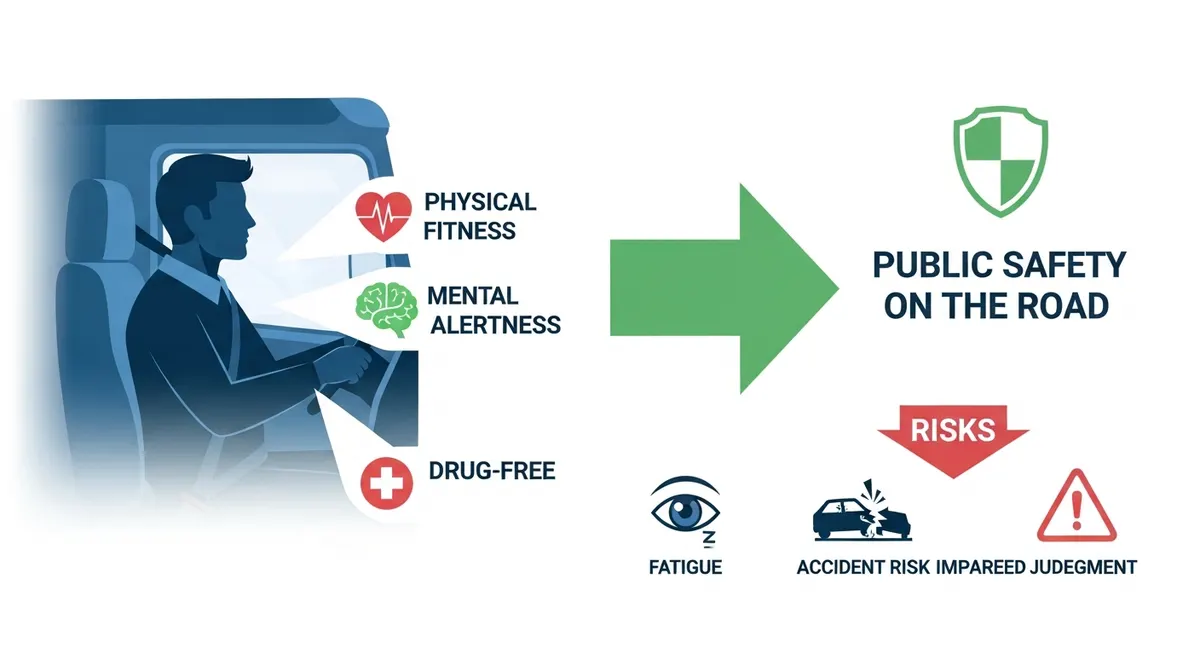
The DOT physical and drug test are critical safeguards connecting driver health directly to public safety.
The rationale behind mandatory DOT drug testing and the substances typically screened for.
The step-by-step process of undergoing a DOT drug test, including urinalysis procedures.
Not sure if sleep apnea applies to you?
Take our 2-minute sleep risk quiz to see whether sleep apnea could affect your DOT physical. No account required.
Effective strategies for preparing for both your physical and drug test, including how to manage existing medical conditions and medications.
How to interpret your results, understand conditional certifications, and navigate potential disqualifications.
The broader implications of maintaining good health for career longevity and safety in the trucking industry.
By the end of this guide, you will be equipped with the knowledge to approach your DOT physical and drug test with confidence, ensuring you meet the Department of Transportation's standards and safeguard your career.
Understanding the DOT Physical Exam: Ensuring You're Fit to Drive
The DOT physical examination is the primary mechanism by which the Department of Transportation (DOT) ensures that Commercial Drivers possess the necessary physical and mental capabilities to operate Commercial Motor Vehicles safely. It’s a comprehensive assessment designed to detect any medical condition that could potentially lead to a driver’s inability to perform their safety-sensitive job functions.
What is a DOT Physical and Why is it Required?
A DOT physical is a medical examination mandated by the FMCSA for all individuals who operate Commercial Motor Vehicles (CMVs) that require a Commercial Driver's License (CDL) and cross state lines, or operate in certain industries like interstate commerce. The purpose is straightforward: to certify that a driver meets the minimum medical standards established by the DOT to ensure they can drive safely. These standards address various physical and medical aspects that directly impact a driver's ability to perform their duties.
The requirement for these examinations stems from the FMCSA's commitment to highway safety. Operating a CMV is a demanding task that requires sustained attention, quick reflexes, and the ability to react appropriately to unexpected situations. Any medical condition that could compromise these abilities, such as vision impairment, hearing loss, cardiovascular issues, or neurological disorders, must be identified and evaluated. The physical exam acts as a gatekeeper, preventing drivers with disqualifying medical conditions from operating CMVs, thereby reducing the risk of accidents caused by medical incapacitation. For most drivers, this physical exam must be conducted every two years. However, drivers with certain medical conditions may require more frequent examinations or shorter certification periods determined by the medical examiner.
The Role of the Certified Medical Examiner (CME)
The DOT physical examination must be performed by a medical professional who has completed the required training and passed a certification test to become a Certified Medical Examiner (CME). These CMEs are listed on the FMCSA’s National Registry of Certified Medical Examiners. Their role is critical, as they are entrusted with the responsibility of conducting thorough examinations and making an objective medical determination regarding a driver’s fitness to operate a CMV.
A CME is not just a doctor; they are specifically trained on FMCSA regulations and medical standards pertaining to commercial driving. They must assess drivers based on a standardized protocol, evaluating all the required components of the examination. Their decision to issue, deny, or issue a medical certificate with restrictions is based on their professional medical judgment, applied within the framework of DOT regulations. Choosing a CME who is knowledgeable and up-to-date on FMCSA guidelines is crucial for a smooth and accurate evaluation.
Components of the DOT Physical Exam: What to Expect During Your Physical Exam
The DOT physical exam is a thorough assessment covering multiple aspects of a driver's health. Drivers should expect a detailed medical history review followed by a series of specific examinations.
Medical History Review: The CME will begin by asking about your past and present medical conditions, including any surgeries, hospitalizations, or significant illnesses. You will be asked about your current medications and any allergies. Honesty and completeness are vital during this stage, as this information helps the examiner understand your overall health profile.
vision Examinations: This is a critical component, as good vision is paramount for safe driving.
Already diagnosed and need CPAP support?
Dumbo Health helps patients start CPAP without the usual confusion, paperwork, or upfront cost. Equipment, setup, supplies, and ongoing support are all handled in one place.
Visual Acuity: You will be tested on your ability to see at a distance, typically using a Snellen eye chart. The requirement is generally 20/40 vision or better in each eye, with or without corrective lenses.
Field of Vision: Your peripheral vision will be assessed to ensure you can detect hazards on either side.
Color Vision: You will be tested to ensure you can distinguish traffic signals and road signs.
Hearing Examinations: Adequate hearing is necessary to perceive important auditory cues on the road, such as horns, sirens, and engine noises. The standard test involves hearing a forced whisper at a distance of at least 5 feet. If you do not meet this standard, you may be required to wear a hearing aid in the better ear.
blood pressure & Cardiovascular Health: Your blood pressure will be checked to ensure it is within acceptable limits. The FMCSA has specific guidelines for hypertension. Generally, blood pressure readings of 140/90 mmHg or higher may lead to a medical certificate with restrictions or a shorter certification period. The examiner will also assess your heart rate and rhythm to detect any significant abnormalities.
General Physical Assessment: This includes a general physical check-up.
Body Mass Index (BMI) and Weight: Your weight and height will be recorded to calculate your BMI, as obesity can be a risk factor for other health conditions. While there isn't a strict weight limit, significant obesity can raise concerns about conditions like sleep apnea.
Limbs and Spine: The examiner will check your limbs for any loss of strength, flexibility, or range of motion. Your spine will be examined for any deformities or conditions that could affect your ability to operate a vehicle.
Neurological Assessment: This involves checking your reflexes, coordination, and balance to detect any signs of neurological conditions that could impair driving. This might include tests for dizziness or vertigo.
Urinalysis: A urine sample is typically collected during the physical exam. This is not for drug testing (which is a separate process) but serves as a diagnostic tool for underlying medical conditions. The urinalysis checks for:
Glucose: High levels can indicate diabetes.
Protein and Blood: Elevated levels can suggest kidney problems.
Specific Gravity and pH: These indicators can provide insights into hydration and kidney function.
The comprehensive nature of these examinations ensures that potential health issues are identified early, allowing for proper management or determining a driver's fitness for duty.
The DOT Drug Test Explained: Demystifying the Process for Drivers
In conjunction with the DOT physical, Commercial Drivers are also subject to mandatory drug testing. This requirement is a critical component of the Department of Transportation’s commitment to safety and is enforced by the FMCSA. Understanding the drug testing process, the substances screened for, and the potential consequences is vital for every driver.
Why DOT Drug Testing is Mandatory for Commercial Drivers
The FMCSA mandates drug testing for Commercial Drivers to prevent substance abuse from compromising safety on our nation’s roadways. Operating a Commercial Motor Vehicle requires unimpaired judgment, alertness, and physical coordination. The presence of illegal drugs or the misuse of prescription drugs can severely impair these abilities, leading to catastrophic accidents.
The drug testing program serves as both a deterrent and a detection mechanism. By knowing they are subject to testing, drivers are less likely to use prohibited substances. When testing does occur, it helps identify those who may be using drugs, allowing employers and regulators to take appropriate action before an incident occurs. This is a proactive measure to enhance overall road safety. The FMCSA requires random testing as part of this program. For 2024, the FMCSA's random alcohol testing rate remained at 10%source text.
What Substances Are Screened For? The "Five-Panel" Test
The standard DOT drug test is a "five-panel" test. This means it screens for five specific classes of drugs that are known to impair driving ability and are prohibited by federal regulations. These classes include:
Marijuana: This is screened for, and it’s important to note that despite varying state laws, marijuana remains a prohibited substance under federal DOT regulations for individuals operating CMVs.
Cocaine: A stimulant that can impair judgment and reaction time.
Amphetamines and Methamphetamines: These stimulants can cause erratic behavior, aggression, and impaired judgment.
Opiates: This class includes drugs like heroin, morphine, and codeine, which can cause drowsiness and impaired coordination. Prescription painkillers fall under this category, and while legal prescription use can be addressed (see preparation section), illicit use or misuse is prohibited.
Phencyclidine (PCP): A dissociative drug that can cause hallucinations, delusions, and erratic behavior.
The test typically looks for the presence of metabolites in the urine, indicating that these substances have been consumed.
The DOT Urine Screen Test Process: What Happens at the Collection Site
Undergoing a DOT drug test is a strictly regulated process designed to ensure the integrity and accuracy of the results. Here’s what typically happens:
Selection and Notification: You will be notified that you are selected for a drug test. This could be a random selection, pre-employment, post-accident, or for-cause testing.
Arrival at the Collection Site: You will go to a DOT-certified collection facility.
Identification and paperwork: You will need to present a valid photo ID. The collector will verify your identity and initiate the Custody and Control Form (CCF), a crucial document that tracks the specimen from collection to laboratory analysis. You will be asked to provide your signature.
Specimen Collection: You will be taken to a private restroom. The collector will provide a collection cup and instructions. You will be asked to provide a urine sample (typically at least 45 ml). During collection, the collector will observe you from a distance to ensure the integrity of the sample. You will then seal the specimen bottle.
Temperature and Integrity Checks: The collector will check the temperature of the urine sample to ensure it is within the acceptable range (90-100°F or 32-38°C) and look for any signs of tampering.
Labeling and Sealing: The specimen bottle will be labeled with your information and a unique identification number. You will sign the label and the CCF, confirming that the specimen is yours and that the chain of custody has begun.
Shipping to the Laboratory: The collector will securely package the specimen and the CCF for transport to a certified laboratory for analysis.
A total of 69,178 drug and alcohol violations were reported to the FMCSA Clearinghouse in 2023, marking the highest number since its inception in 2020source text.
Understanding Positive Results and the Medical Review Officer (MRO)
If your initial urine screen test shows a potential positive result for a prohibited substance, it does not automatically mean you have failed the test. The laboratory performs a Gas Chromatography-Mass Spectrometry (GC-MS) test to confirm the presence of the substance.
If the confirmatory test is positive, the laboratory reports the result to a Medical Review Officer (MRO). The MRO is a licensed physician who is trained and certified in drug testing. The MRO’s role is to review all of the laboratory results and other relevant information. They will then contact you directly to discuss the result. This is your opportunity to explain the presence of the substance, particularly if it is due to a legally prescribed medication. The MRO will verify any valid prescriptions and assess if the prescribed medication could have impaired your driving ability.
If the MRO cannot find a legitimate medical explanation for the positive result, or if you refuse to provide a prescription or the MRO determines it's not a valid medical explanation, the result is considered a verified positive test. A verified positive drug test, or a refusal to test, has significant consequences for a Commercial Driver’s career. As of February 2024, approximately 156,000 commercial drivers are prohibited from operating CMVs due to drug and alcohol violations recorded in the Clearinghouse, with 75% yet to begin the return-to-duty processsource text. Drug test refusals among commercial drivers increased by nearly 40%, from 9,214 in 2022 to 12,804 in 2023source text.
Preparing for Your DOT Physical & Drug Test: A Driver's Action Plan
Successful completion of your DOT physical and drug test relies heavily on preparation. Being organized, informed, and proactive can significantly smooth the process and increase your chances of a favorable outcome. This section outlines key steps every Commercial Driver should take.
Gathering Essential Medical Records and Information
Before your appointment, diligently gather all relevant medical documentation. This includes:
Complete Medical History: Be ready to discuss all past and present medical conditions, surgeries, and hospitalizations.
Medication List: Create a detailed list of all prescription and over-the-counter medications you are currently taking, including dosage and the prescribing physician’s name and contact information.
Specialist Reports: If you have chronic conditions managed by specialists (e.g., cardiologist, endocrinologist, neurologist), bring copies of recent reports or clearance letters. These documents can provide essential context for the CME.
Corrective Lens Prescription: If you wear glasses or contact lenses, bring your current prescription.
Having this information readily available allows the medical examiner to conduct a more informed assessment and reduces the likelihood of delays or misunderstandings.
Managing Existing Medical Conditions for Exam Success
Certain medical conditions require careful management and documentation to ensure you meet the FMCSA’s standards.
Diabetes: If you have diabetes, your blood sugar control is paramount. The CME will want to see that your condition is well-managed, with stable blood glucose levels. For insulin-dependent diabetics, specific FMCSA guidelines apply, often requiring regular reports from your treating physician detailing your diabetes management, A1C levels, and any complications. Effective management, documented by your doctor, is key.
Hypertension (high blood pressure): Maintaining healthy blood pressure is crucial. You should be taking prescribed medication consistently and monitoring your readings. For certification, blood pressure should generally be at or below 140/90 mmHg. If your blood pressure is elevated on the day of the exam, it might lead to a conditional certification or require re-testing after medication adjustment.
Cardiovascular Conditions: Drivers with a history of heart attack, stroke, heart failure, or pacemakers will need a letter of medical clearance from their cardiologist, detailing their condition, treatment, and confirming they are medically qualified to drive.
Neurological Conditions: For conditions such as epilepsy, stroke, or severe migraines, the CME will require detailed information on the nature of the condition, frequency of episodes, any residual effects, and a letter of clearance from your neurologist confirming you are seizure-free and capable of safe driving.
Sleep Apnea: A significant number of Commercial Drivers suffer from Obstructive Sleep Apnea (OSA), with an estimated 26% of commercial drivers affected. If diagnosed with sleep apnea, you must be using your prescribed Continuous Positive Airway Pressure (CPAP) device regularly and provide documentation of compliance. Untreated sleep apnea can lead to excessive daytime drowsiness, a major safety hazard.
Obesity: While not a disqualifying condition in itself, obesity, with 73% of truck drivers classified as obese (BMI ≥ 30)source text, can be a risk factor for other conditions like sleep apnea, hypertension, and diabetes, which are closely monitored. Maintaining a healthy weight can contribute to overall eligibility.
Eighty percent of long-haul truck drivers have at least one major health problem, with more than half having two or moresource text, underscoring the importance of proactive health management.
Medications and Your DOT Physical: What You Must Disclose
Transparency about all medications you are taking is non-negotiable. The CME must be aware of any substance that could potentially affect your driving ability. This includes prescription drugs, over-the-counter medications, and even certain herbal supplements.
Disclosure is Crucial: Failing to disclose a medication can be considered falsifying information and may lead to disqualification.
Potential Concerns: Medications that cause drowsiness, dizziness, impair cognitive function, or affect vision are of particular concern. This includes many pain relievers, sedatives, tranquilizers, and certain antidepressants.
Prescription Documentation: For any prescribed medication, especially those on the DOT’s controlled substances list, you must have valid prescriptions and, often, a letter from your prescribing physician explaining the dosage, duration of treatment, and why the medication is medically necessary and unlikely to impair your driving. The physician should also address potential side effects relevant to driving.
The CME's Evaluation: The CME will evaluate whether your medication regimen is safe for operating a CMV. They may consult with your prescribing physician if necessary. Some medications, even if prescribed, may be disqualifying or require specific restrictions.
General Preparation Tips for Exam Day
To ensure you are in the best possible condition for your examination:
Get Adequate Rest: Aim for a full night’s sleep before your appointment. Fatigue can affect your blood pressure and overall performance during the examination.
Stay Hydrated: Drink plenty of water in the hours leading up to your physical. This helps ensure a good urine sample and can sometimes help regulate blood pressure. However, avoid excessive intake immediately before the test.
Eat a Balanced Meal: Avoid heavy, salty, or high-fat meals on the day of your exam, as these can temporarily affect blood pressure and other readings.
Avoid Caffeine and Nicotine: These substances can temporarily elevate blood pressure and heart rate. It's advisable to avoid them for several hours before your appointment.
Dress Comfortably: Wear loose-fitting clothing, as you may need to disrobe partially for certain parts of the exam.
Be Honest: As reiterated, honesty with the medical examiner about your medical history and medications is paramount.
By following these preparation steps, you can approach your DOT physical and drug test with confidence and increase your likelihood of a successful outcome.
Understanding Your Results: Passing, Conditions, or Disqualification
After undergoing your DOT physical and drug test, the next step is understanding the outcome and what it means for your career as a Commercial Driver. The results can range from a clear pass to a conditional certification, or in some cases, a disqualification.
Receiving Your DOT Medical Certificate (Medical Card)
If you successfully meet all the FMCSA’s medical standards during your DOT physical exam, the Certified Medical Examiner (CME) will issue you a DOT Medical Examiner's Certificate, commonly known as a medical card. This card is official proof that you are medically qualified to operate a Commercial Motor Vehicle.
The duration of your medical certificate is typically two years. However, this can vary. If the CME identifies a medical condition that requires monitoring or is borderline, they may issue a certificate for a shorter period (e.g., one year, six months, or even less) to allow for re-evaluation and ensure the condition remains stable and does not impair your driving ability. It is your responsibility to ensure your medical card remains current and to undergo a new physical exam before it expires to maintain your CDL privileges.
Conditional Certification: Managing Medical Conditions and Re-certification
A conditional certification means that you have met the minimum medical standards but with certain restrictions or requirements. This is common for drivers with well-managed chronic conditions.
Examples of Conditions Requiring Conditional Certification: This can include conditions like controlled diabetes, hypertension within a certain range, or a history of a stable cardiac event.
requirements for Conditional Certification: The CME may require specific actions, such as:
A letter of medical clearance from a specialist.
Regular monitoring and reporting of vital signs (e.g., blood sugar logs, blood pressure readings).
Use of prescribed medical devices (e.g., CPAP for sleep apnea).
Shorter re-certification periods to ensure ongoing compliance.
Managing Your Condition: If you receive a conditional certification, it is imperative that you diligently follow all the stipulated requirements. This includes attending follow-up appointments, adhering to your treatment plan, and providing necessary documentation to your CME. Proactive management is key to maintaining your certification and continuing your career.
Navigating a "Fail" or Disqualification from the Physical
If the CME determines that you do not meet the FMCSA’s medical standards, they will deny certification and you will not receive a medical card. This is known as disqualification.
Common Reasons for Disqualification:
Uncontrolled diabetes (especially requiring insulin, without proper management and documentation).
Uncontrolled hypertension (consistently above FMCSA limits).
Certain cardiovascular conditions that pose a significant risk.
Vision or hearing below the minimum required standards without correction.
A diagnosed medical condition that is likely to cause loss of consciousness or control (e.g., severe epilepsy).
Use of prohibited substances.
Certain neurological conditions that significantly impair driving.
What Happens Next: If disqualified, the CME will provide you with a formal notification explaining the reasons for denial. You may have options to appeal the decision or seek a second opinion from another CME. In some cases, you may be able to improve your condition (e.g., through medical treatment, lifestyle changes, or medication adjustments) and then reapply for the physical. However, some conditions are permanently disqualifying. It is crucial to understand the specific reasons for your disqualification and to consult with medical professionals about potential pathways to regain your medical certification.
Consequences of a Positive Drug Test or Refusal to Test
A verified positive drug test or a refusal to submit to a required DOT drug test results in immediate serious consequences.
Immediate Impact: You will be immediately removed from all safety-sensitive duties, meaning you cannot operate a CMV. Your employer will be notified, and it will likely lead to termination of employment.
FMCSA Clearinghouse Record: The violation will be recorded in the FMCSA Drug & Alcohol Clearinghouse, creating a permanent record.
Return-to-Duty Process: To return to safety-sensitive duties, you must successfully complete the DOT Return-to-Duty (RTD) process. This involves:
Evaluation by a Substance Abuse Professional (SAP).
Successful completion of the prescribed rehabilitation program by the SAP.
A negative RTD drug test.
Follow-up testing as determined by the SAP.
This process is lengthy, costly, and not guaranteed to result in eligibility to return to driving.
As of February 2024, a significant portion of drivers prohibited due to violations (75%) have yet to begin the return-to-duty processsource text. The trucking industry experienced a loss of approximately 91,000 workers during the pandemic, with health challenges contributing to retention issues, highlighting how disqualifications and health issues impact the workforcesource text.
Understanding these outcomes empowers you to take informed steps, whether it's continuing your career with a clean record, managing a conditional certification, or navigating the challenging path back after a violation.
Beyond Compliance: Maintaining Your Health for a Sustainable Career
The DOT physical and drug test are not merely compliance checkboxes; they are integral components of a long, successful, and safe career as a Commercial Driver. Beyond meeting the immediate requirements, focusing on proactive health management offers significant advantages for your professional future and personal well-being.
The Link Between Health, Safety, and Career Longevity
The demanding nature of commercial driving places considerable stress on the body and mind. A driver's health is directly linked to their ability to perform their job safely and consistently. Conditions like fatigue, poor vision, or impaired cognitive function due to chronic illness can lead to accidents. As previously noted, 73% of truck drivers are classified as obesesource text, and 80% have at least one major health problemsource text, underscoring the prevalence of issues that can impact driving safety and career sustainability.
Proactive health management translates directly into career longevity by:
Minimizing Disruptions: Regular health issues can lead to missed workdays, temporary disqualifications, and a loss of income. A healthier driver experiences fewer such interruptions.
Improving Performance: Good health supports better concentration, reaction times, and endurance, all critical for safe CMV operation.
Reducing Accident Risk: By identifying and managing health conditions, drivers significantly lower their risk of medical incapacitation leading to an accident. This protects not only their livelihood but also the lives of others.
Maintaining Employability: Employers value drivers who are reliable and medically fit. A strong health record makes you a more desirable and retained employee.
Proactive Health Management: An Investment in Your Future
Treating your health as an ongoing investment, rather than just an annual requirement, is a strategic approach for any Commercial Driver. This involves more than just showing up for your DOT physical.
Regular Medical Check-ups: Don't wait for your DOT physical to see a doctor. Schedule regular check-ups with your primary care physician to monitor any existing conditions and catch new ones early.
Healthy Lifestyle Choices: Focus on a balanced diet, regular physical activity, and sufficient sleep. These fundamental habits can help manage weight, improve cardiovascular health, boost energy levels, and enhance mental clarity.
Stress Management: The trucking lifestyle can be stressful. Implementing stress-reduction techniques, such as mindfulness, exercise, or hobbies, can contribute to overall well-being and reduce the impact of stress on your health.
Stay Informed: Keep abreast of changes in DOT regulations and medical guidelines. Understand how specific health conditions are evaluated and what steps you can take to manage them effectively.
Partner with Your Doctor: Maintain open and honest communication with your healthcare providers. Work collaboratively to develop and adhere to treatment plans that support both your health and your ability to drive safely.
By embracing proactive health management, you are not just ensuring compliance with the Department of Transportation's mandates; you are investing in a sustainable, safe, and rewarding career on the road. Your commitment to health is a commitment to your career and to the safety of everyone on the highway.
Conclusion
The Department of Transportation's requirements for physical examinations and drug testing are foundational to the safety and integrity of the commercial trucking industry. For every Commercial Driver, understanding and successfully navigating these processes is paramount to maintaining their livelihood and ensuring the safety of our roadways.
Recap of Key Takeaways for Every Commercial Driver
Throughout this guide, we have explored the multifaceted aspects of the DOT physical and drug test. Key takeaways include:
Mandatory Compliance: The DOT physical and drug test are legally required for individuals operating Commercial Motor Vehicles, enforced by the FMCSA.
Purpose of the Exam: The physical exam assesses your fitness to drive, covering vision, hearing, blood pressure, neurological function, and overall health, performed by a Certified Medical Examiner (CME).
Drug Testing Scope: Standard testing screens for five classes of drugs, including marijuana, which remains federally prohibited for CDL holders.
Preparation is Key: Gather medical records, manage existing conditions like diabetes and hypertension diligently, and be completely transparent about all medications.
Understanding Results: Outcomes range from a medical certificate (pass) to conditional certification (requiring ongoing management) or disqualification. Positive drug tests or refusals carry severe career consequences.
Beyond Compliance: Proactive health management, through regular check-ups and healthy lifestyle choices, is an investment in your career longevity and personal well-being.
Empowering Drivers for a Long and Healthy Career on the Road: Your commitment to health is a commitment to your career and public safety.
Successfully completing your DOT physical and drug test is more than just meeting a regulatory requirement; it is a proactive step towards ensuring your continued ability to work and contribute to the vital transportation sector. By staying informed, prepared, and committed to your health, you not only safeguard your career but also uphold the highest standards of safety for yourself and the public. Drive safely, drive smart, and prioritize your well-being—your future on the road depends on it.
Related DOT Physical Topics
- Online DOT Exam What Drivers and Medical Examiners Need to Know
- DOT Physical Blood Pressure Requirements What Drivers Need to Know
- DOT Physical at Urgent Care What Commercial Drivers Need to Know
- BMI for DOT Physical What Commercial Drivers Need to Know
- What drugs do they test for in a DOT drug test
- New DOT Physical Requirements What Drivers MUST Know About New Updates
- What Is the Difference Between a DOT and Non-DOT Physical
- DOT Physical Cost Breakdown What Drivers Pay & Why
- Does a DOT physical include a drug test
- Does a DOT Physical Test for Weed or THC The Complete Guide for Commercial Drivers
- DOT Physical Out of Pocket What Commercial Drivers Actually Pay
- What Does DOT Stand for in a DOT Physical
- What Forms Do You Need for a DOT Physical
- What Is the Urine Test for in a DOT Physical
- What blood pressure do you need to pass a DOT physical
- Online DOT Physical Self-Pay The Complete Guide for CDL Drivers and Owner-Operators
- Is a drug test required for a DOT physical
- Online DOT Physical The Complete Guide for Commercial Drivers and Medical Examiners
- What Happens During the DOT Physical Exam The Complete Guide for Drivers
- Failing a DOT Physical What Every Commercial Driver Needs to Know
- DOT Physical Forms & Paperwork The Complete Guide for Commercial Drivers
- DOT Physical ICD-10 & Billing Codes The Complete Guide for Accurate Compliance and Reimbursement
- How can drivers with sleep apnea qualify again after a failed DOT physical
- What Can Disqualify You From a DOT Physical
- Remote DOT Physical The Complete Guide for Commercial Drivers
- The Ultimate DOT Physical Guide for Commercial Drivers (2025–2026)
- Navigating the Florida DOT Physical Your Essential Guide for CDL Drivers
- What Should You Bring to a DOT Physical
- What Are the Requirements to Pass a DOT Physical
- DOT Physical Duration and Validity How Long Your Medical Card Lasts
- Online DOT Physical Without Insurance A Complete Guide for Commercial Drivers
- Your Complete Guide What's Included in a DOT Physical Exam
- DOT physical self pay guide for commercial drivers paying out of pocket
- Can You Get a Second Opinion on Your DOT Physical A Complete Guide for Commercial Drivers
- Is a DOT physical the same as a regular physical
- What should I expect at a DOT physical
- What Does a DOT Physical Consist Of
- What happens if you fail a DOT physical due to sleep apnea
- What are the current DOT requirements for sleep apnea testing for commercial drivers
- Non-DOT Physical A Comprehensive Guide to Workforce Health and Safety
- DOT Physical Texas The Essential Guide to Your Exam, Medical Card, and CDL Compliance
- DOT Physical Requirements A Complete Guide for CDL Drivers
- What eye chart is used for a DOT physical
- What Do They Check During a DOT Physical
- What is DOT Physical
- DOT Physical Vision & Eye Requirements
- DOT Physical & Alcohol Requirements
- DOT Physical Insurance & Recertification The Complete Driver's Guide
- DOT Physical Online Cost
- Can You Pass a DOT Physical with Epilepsy
- DOT Physical Self Pay Cost
- Navigating Your DOT Physical with Common Medical Conditions
- Essential 171 DOT Definitions for Commercial Drivers
- When Can Sleep Apnea Affect a DOT Physical
- Can You Get a DOT Physical Online
- Walk In DOT Physical Self Pay
- Can You Pass a DOT Physical With a Pacemaker
- Home Sleep Apnea Test for Commercial Drivers The CDL Holder's Complete Guide
- Telehealth Dot Physical
- Can You Pass a DOT Physical With One Eye
- DOT Physical Exam Basics
- Why do they measure your neck during a DOT physical
- Can You Fail a DOT Physical for Being Overweight
- Why DOT Sleep Tests at Home Matter for Your Career and Health
- Can You Pass a DOT Physical With a Hernia
- Do They Check for Hernia During a DOT Physical
- Cheap DOT Physical Online
- DOT Physical Cash Pay
- DOT sleep apnea test at home
- How Do You Submit Your DOT Physical to the DMV
- Can You Fail a DOT Physical for High Blood Pressure
- Same Day DOT Physical
- Virtual DOT Physical
- Who needs a DOT physical
- Can you fail a DOT physical because of sleep apnea
- How to Pass a DOT Physical The Complete Commercial Driver's Guide
- DOT Medical Exam Self-Pay A Complete Guide for Commercial Drivers
- Do They Check Your Private Parts During a DOT Physical
- Sleep Apnea Test for CDL Drivers
- DOT Physical Insurance or Self Pay How to Choose the Right Payment Option for Your Exam
- DOT Physical Chiropractor Your Complete Guide to CDL Exams
- Can you pass a DOT physical with sleep apnea
- At Home Sleep Test for Truck Drivers
- What Precautions Should Drivers With Sleep Apnea Take
- Can You Pass a DOT Physical with Diabetes
- Can You Pass a DOT Physical with High Blood Pressure
- What are the current FMCSA guidelines on sleep apnea for commercial drivers
- Is a Sleep Study Required for a DOT Physical
- Guide to Obtaining and Managing Your DOT Medical Card Online
- Do You Have to Pee During a DOT Physical
- The DOT Physical Exam Ensuring You're Fit for the Road
- Can You Fail a DOT Physical
- Online CDL Physical
- Are There New DOT Rules or Laws on Sleep Apnea Testing
- 2026 DOT Inspection Dates
- Are there legal requirements for drivers with sleep apnea
- CDL PHYSICAL SELF PAY
- The Comprehensive Guide to Suboxone, Sleep Apnea, and FMCSA Compliance for Commercial Motor Vehicle Operators
- Medical Examination Report (MER) – Form MCSA-5875 The Complete Guide for Commercial Drivers
- Expected 2027 DOT Inspection Dates
Take the next step before your DOT physical
Start with the free quiz if you are unsure about your risk, or order an at-home sleep test if you have already been flagged for possible sleep apnea.
AI summary
A DOT physical and DOT drug test are FMCSA requirements for many commercial drivers operating CMVs, intended to reduce safety risks from medical impairment or substance use. The DOT physical is performed by a Certified Medical Examiner (CME) listed on the FMCSA National Registry and typically renews every two years, with shorter intervals possible for monitored conditions. The physical exam reviews medical history and medications and includes vision testing (often 20/40 or better), field and color vision, hearing (forced whisper at 5 feet), blood pressure assessment (140/90 mmHg or higher may shorten certification), cardiovascular and neurological checks, and a general musculoskeletal exam. Urinalysis during the physical screens for health indicators such as glucose, protein, blood, specific gravity, and pH. DOT drug testing uses a regulated chain-of-custody process (CCF) and typically a urine five-panel screen for marijuana, cocaine, amphetamines/methamphetamines, opiates, and PCP. Confirmed positives are reviewed by a Medical Review Officer (MRO), who can verify legitimate prescriptions. Outcomes include a medical card, conditional certification with documentation (e.g., CPAP compliance for sleep apnea), or disqualification; verified positives or refusals trigger Clearinghouse reporting and a return-to-duty process involving a Substance Abuse Professional (SAP).

Nicolas Nemeth
Co-Founder
Nico is the co-founder of Dumbo Health, a digital sleep clinic that brings the entire obstructive sleep apnea journey home. Patients skip the sleep lab and the long wait to see a specialist. Dumbo Health ships an at home test, connects patients with licensed sleep clinicians by video, and delivers CPAP or a custom oral appliance with ongoing coaching and automatic resupply in one clear subscription.
Keep reading

How Long Does a DOT Physical Take? A Complete Guide for Commercial Drivers

What Happens If You Fail a DOT Drug Test? The Complete Guide for Commercial Drivers


