Is a drug test required for a DOT physical?
DOT physical exams and DOT drug tests are often scheduled together, but they are separate federal requirements with different rules. This article explains FMCSA Part 391 (medical certification) versus Part 382 (drug and alcohol testing) and clarifies that the urinalysis in a DOT physical is a health screen, not a drug test. It outlines what the dipstick urine test checks, including glucose, protein, blood, pH, and specific gravity. It also covers when CDL drivers must complete DOT drug testing, what the DOT 5-panel urine screen includes, and how non-negative results are handled by an MRO. Practical preparation tips and documentation needs are included.
Struggling with sleep?
Find out if sleep apnea is the reason.
FDA-cleared. $149 flat. Physician-reviewed results in 48 hours.

Is a drug test required for a DOT physical?
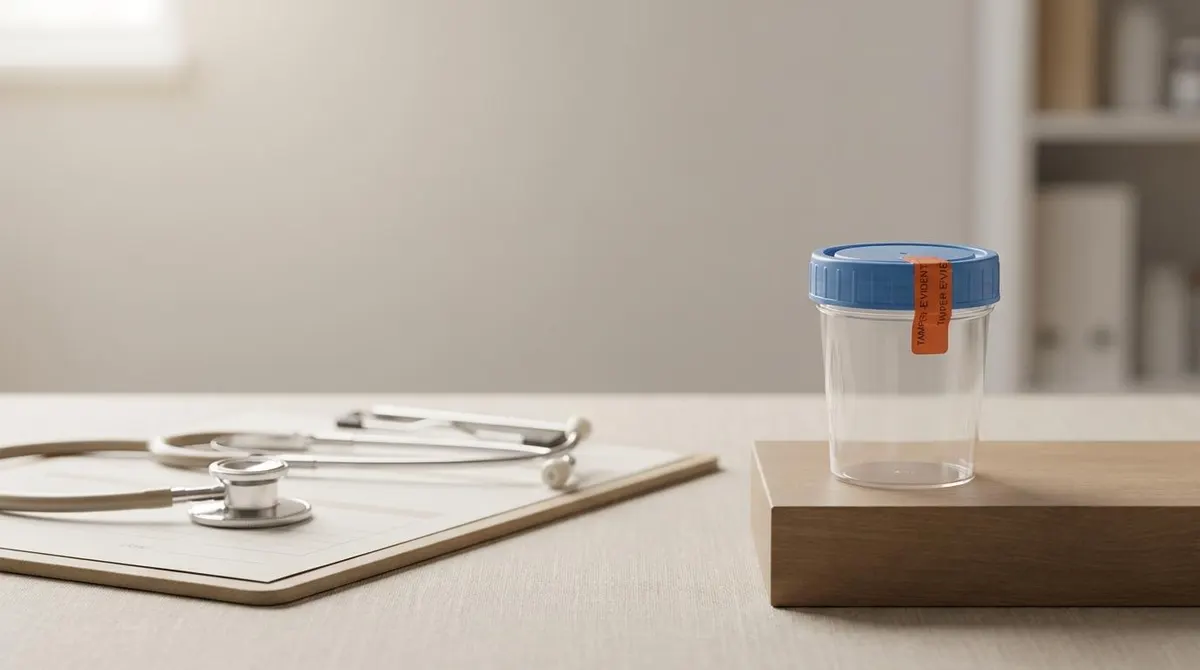
DOT Physical exams and DOT drug tests are two separate requirements under federal law that are frequently bundled together, causing widespread confusion among commercial drivers. According to the Federal Motor Carrier Safety Administration, every driver operating a commercial motor vehicle requiring a commercial driver's license must pass a DOT physical exam conducted under 49 CFR Part 391, while drug testing requirements fall under a completely separate regulation, 49 CFR Part 382. This guide covers the full scope of both requirements, including what your urine sample is actually testing for, how the 5-panel DOT drug screen works, what medical conditions affect certification, how to prepare, and exactly what happens when a test result comes back non-negative. Whether you are heading to a new carrier, managing a chronic condition, or simply trying to understand the rules, this page gives you the complete picture.
The Short Answer: Why the Physical and drug test Are Often Bundled But Legally Separate
The DOT physical exam and the DOT drug test are not the same thing, and they are not governed by the same regulation. The Federal Motor Carrier Safety Administration requires the physical examination under 49 CFR Part 391 to verify that a driver is medically qualified to operate a commercial motor vehicle. The drug testing program is governed by 49 CFR Part 382 and applies specifically to CDL drivers working for motor carriers. These two requirements often happen at the same location, on the same day, which is why so many drivers assume the urine sample collected during their physical is a drug test. It is not.
A Certified Medical Examiner evaluates your overall health during a physical examination. That evaluation includes a urinalysis that screens for medical conditions such as diabetes and kidney disease. The DOT drug test, by contrast, is administered separately by your employer or a designated collection site and is sent to a SAMHSA-certified laboratory for analysis.
KEY TAKEAWAY: The DOT physical and the DOT drug test are two distinct requirements regulated under different sections of federal law. The urinalysis during your physical checks your health, not your drug use.
Understanding this distinction helps you prepare correctly for both requirements and protects your certification from unexpected surprises.
Understanding FMCSA Part 391 vs. Part 382
49 CFR Part 391 and 49 CFR Part 382 each serve a specific function, and knowing the difference keeps you compliant across both obligations.
Part 391 sets the physical qualification standards for interstate commercial motor vehicle drivers. It requires drivers to be examined by a Certified Medical Examiner listed on the National Registry of Certified Medical Examiners and to obtain a Medical Examiner's Certificate demonstrating they meet the medical standards. The certificate is valid for up to 24 months, though medical conditions can shorten that period.
Part 382 covers controlled substance and alcohol use and testing for CDL drivers operating covered commercial motor vehicles. It defines the six testing scenarios, outlines who must test, specifies the substances screened for, and establishes the procedures for handling positive results. The FMCSA enforces Part 382 regardless of fleet size. According to FMCSA regulations, a one-truck owner-operator has the same drug testing obligations as a carrier running 500 units.
DID YOU KNOW: The 2025 minimum annual random drug testing rate under Part 382 is 50% of drivers for controlled substances and 10% for alcohol, as set by FMCSA's annual notice.
KEY TAKEAWAY: Part 391 governs your medical fitness, while Part 382 governs your substance testing. Both are mandatory, but they are satisfied through different processes.
Keeping this distinction clear helps you bring the right documentation to each appointment and understand exactly what each step requires.
Why Drivers Often Assume the Drug Test Is Part of the Physical
The confusion between the physical urinalysis and the DOT drug test is one of the most persistent misunderstandings in commercial trucking. It makes sense on the surface because many carriers schedule both on the same day and at the same location, and both involve a urine sample. When a driver provides a urine specimen at a clinic, it is natural to assume that one test covers both requirements. That assumption is incorrect and can have real consequences.
The physical urinalysis is performed and interpreted by the Certified Medical Examiner right there at the clinic using a standard dipstick test. Results are available immediately and become part of the Medical Examination Report Form. The DOT drug test, when required, is collected under strict chain of custody procedures, split into two vials, sealed, and shipped to a SAMHSA-certified laboratory. Results typically take 24 to 72 hours.
Many patients report arriving at a clinic for a physical expecting one urine sample and leaving surprised that a separate, observed collection was required for the drug test. Understanding this in advance removes the anxiety and ensures you are not caught off guard.
KEY TAKEAWAY: The physical urinalysis and the DOT drug test are separate collections with separate purposes, even if both happen on the same visit.
Knowing what each test involves ensures you are hydrated and prepared for both collections.
The Great Confusion: Urinalysis vs. Drug Testing
What the Medical Examiner Looks for in Your Urine Sample
The urine test conducted during a DOT physical examination is a general health screening. The Certified Medical Examiner uses a dipstick analysis to assess specific health markers relevant to your ability to safely operate a commercial motor vehicle. The results help identify conditions that could pose a safety risk on the road.
Protein, Blood, and Glucose: Checking Kidney Function and Diabetes
According to medical guidance for Certified Medical Examiners, the three primary markers assessed are glucose, protein, and blood. Glucose in the urine may indicate diabetes mellitus or uncontrolled blood sugar, both of which can impair judgment and cause sudden incapacitation during a long-haul drive. Protein in the urine, known as proteinuria, can signal kidney dysfunction often caused by hypertension or diabetes. Blood in the urine, known as hematuria, may indicate urinary tract infections, kidney stones, or more serious kidney disease. None of these findings automatically disqualifies a driver, but they may require follow-up testing or specialist documentation before certification is issued.
Specific Gravity and Urinary Tract Infections (UTIs)
Specific gravity measures how concentrated the urine is, which reflects hydration status and kidney function. According to NIH guidance, abnormal specific gravity can indicate the kidneys are not properly regulating water balance. pH levels may also be assessed to identify signs of a urinary tract infection or metabolic disorder. A UTI, while not disqualifying on its own, may require treatment before a clean specimen can be provided. Drivers are encouraged to arrive hydrated but not over-hydrated, which can dilute the sample and complicate the reading.
Why the Physical Urinalysis Does NOT Screen for Controlled Substances
The physical examination urinalysis is a health screening tool, not a drug screening tool. As confirmed by the FMCSA and numerous Certified Medical Examiners, the standard dipstick test used during the DOT physical cannot detect THC, cocaine, amphetamines, opioids, or PCP. Those substances require a separate laboratory-based analysis conducted under Part 40 procedures. If you pass the physical urinalysis, it means your health markers look acceptable. It says nothing about whether a separate DOT drug test would come back negative.
KEY TAKEAWAY: The physical urinalysis screens for health conditions including diabetes and kidney function, not for controlled substances.
Once you understand what the physical urine test does and does not test for, the next step is understanding exactly when a separate DOT drug test becomes legally required.
When a DOT Drug Test Is Legally Required for CDL Drivers
A DOT drug test is legally required for CDL drivers in six distinct scenarios defined under 49 CFR Part 382. Missing or refusing any required test carries the same consequences as a positive result and immediately removes the driver from safety-sensitive duties.
Pre-Employment Testing: The Most Common Scenario
Every CDL driver must receive a negative pre-employment drug test result before operating a commercial motor vehicle requiring a CDL for a new employer. The employer must also verify with the FMCSA Drug and Alcohol Clearinghouse that the driver has no unresolved violations from previous testing. A negative result must be confirmed before the first dispatch, without exception.
Random Testing Pools and Selection
Random testing requires that drivers be selected through a scientifically valid method in which each driver has an equal chance of selection each time a draw occurs. The 2025 minimum annual random drug testing rate is 50% for drugs and 10% for alcohol. Selection is unannounced, and drivers must proceed to the collection site immediately after notification.
Post-Accident Testing requirements
Post-accident drug testing is required following any accident that results in a fatality. For non-fatal accidents involving a tow-away or bodily injury, testing is required if the driver receives a citation. Specifically, a drug test must be completed within 32 hours of the accident, and an alcohol test must be completed within 8 hours.
Reasonable Suspicion and Return-to-Duty Testing
Reasonable suspicion testing is triggered when a trained supervisor has direct, contemporaneous observations of behavior or appearance suggesting drug or alcohol use. Return-to-duty testing is required before a driver who has violated Part 382 can return to safety-sensitive functions. Follow-up testing continues for at least 12 months and up to 60 months after return to duty, with a minimum of six unannounced tests in the first 12 months.
IMPORTANT: Refusing a DOT drug test is treated as a positive result under federal regulations. A refusal immediately disqualifies the driver from safety-sensitive duties and triggers the same return-to-duty requirements as a confirmed positive.
KEY TAKEAWAY: Six separate scenarios trigger a legally required DOT drug test, and all must be completed using the federally mandated 5-panel urine screen conducted at a certified collection site.
Understanding when testing is required helps drivers and carriers stay fully compliant and avoid inadvertent violations.
The 5-Panel DOT Drug Screen: What Is Being Tested?
The DOT drug test uses a standardized 5-panel screening protocol mandated by 49 CFR Part 40 and conducted at SAMHSA-certified laboratories. As of January 1, 2018, the Department of Transportation updated the opioid panel to include semi-synthetic opioids, bringing the total number of confirmed substances tested to 14 across five categories.
| Drug Class | Substances Tested |
|---|---|
| Marijuana | THC metabolites (THCA) |
| Cocaine | Benzoylecgonine metabolite |
| Amphetamines | Amphetamine, Methamphetamine, MDMA, MDA |
| Opioids | Codeine, Morphine, Hydrocodone, Hydromorphone, Oxycodone, Oxymorphone, 6-AM (heroin) |
| Phencyclidine (PCP) | PCP |
Marijuana and the Federal vs. State Law Conflict
Marijuana remains a prohibited substance under DOT regulations regardless of state law and regardless of whether a driver holds a medical marijuana card. The DOT's Office of Drug and Alcohol Policy and Compliance has confirmed that marijuana is identified by name in its testing regulations rather than by drug schedule, meaning that federal rescheduling discussions do not change DOT testing requirements. Forty states have legalized medical marijuana, but CDL holders are prohibited from its use both on and off duty. A positive result for THC metabolites is treated as a violation under federal regulations regardless of the source.
Cocaine and Phencyclidine (PCP)
Cocaine testing detects the metabolite benzoylecgonine, which remains detectable in urine for 2 to 4 days after single use and longer with heavy use. Phencyclidine, commonly known as PCP, is a dissociative hallucinogen included in the panel due to its severe impairment of perception and judgment. Detection windows for PCP range from 8 days for casual use to 30 or more days for chronic use.
Amphetamines and Methamphetamines
The amphetamines panel includes methamphetamine, MDMA (Ecstasy), and MDA. Legally prescribed medications including certain ADHD medications may produce a positive result. The Medical Review Officer process, described below, exists specifically to evaluate whether a valid prescription accounts for a positive laboratory result.
Opioids and Prescription Pain Medication Thresholds
As of 2018, the opioids panel was significantly expanded to include hydrocodone, hydromorphone, oxycodone, and oxymorphone, in addition to codeine and morphine. Brand names such as OxyContin, Vicodin, Norco, Percocet, and Dilaudid are now included in the confirmatory testing protocol. Heroin is detected through its unique metabolite 6-acetylmorphine (6-AM). Having a valid prescription does not prevent a positive laboratory result but does give the Medical Review Officer a basis to issue a negative verified result if documentation is legitimate.
KEY TAKEAWAY: The DOT 5-panel drug test screens for 14 substances across five categories, and a positive laboratory finding triggers a mandatory Medical Review Officer review before a final result is reported.
The MRO review process provides critical protections for drivers with valid prescriptions.
The Role of the Medical Review Officer (MRO)
The Medical Review Officer is a licensed physician who serves as an independent gatekeeper between the laboratory and the employer. As defined by the U.S. Department of Transportation, the MRO receives all laboratory results, evaluates medical explanations for non-negative findings, and ensures the accuracy and integrity of the drug testing process. The MRO's role is mandated under 49 CFR Part 40.
How the MRO Protects Drivers with Valid Prescriptions
When a laboratory returns a positive result, the MRO contacts the driver directly to conduct a verification interview. During this interview, the driver has the opportunity to present a legitimate medical explanation, including documentation of a valid prescription. The MRO will verify the prescription directly with the prescribing physician or pharmacy. If the MRO determines that the positive result has a legitimate medical explanation consistent with the confirmed drug and dosage, the result is reported to the employer as negative verified. This process protects drivers who are taking legally prescribed opioids, amphetamines, or other controlled substances and ensures that a prescription medication cannot be used as a false cover.
The Chain of Custody Process: From Laboratory to Result
The Chain of Custody Form (CCF) is a federal document that tracks every transfer of a urine specimen from the moment of collection through laboratory analysis and final result. The CCF contains five copies, one for each party involved: the test facility, the Medical Review Officer, the collector, the employer, and the driver. Every person who handles the specimen must document their involvement on the form. This creates a verifiable paper trail that protects against tampering, contamination, and error. A federal CCF is required for all DOT-mandated drug tests. Any missing or incorrect information on the CCF may result in delayed processing or a rejected test.
What Happens During a Medical Review Officer Report
When the MRO reports a verified positive result to the employer, the driver is immediately removed from safety-sensitive duties. The employer must report the violation to the FMCSA Drug and Alcohol Clearinghouse, creating a federal record accessible to future employers. The driver cannot return to safety-sensitive work until they have completed the return-to-duty process with a Substance Abuse Professional (SAP), demonstrated a negative return-to-duty test, and begun a follow-up testing schedule.
KEY TAKEAWAY: The MRO reviews every non-negative laboratory result before a final determination is made, providing an essential layer of protection for drivers with valid prescriptions.
With the drug testing process fully mapped, the next section covers exactly what a Certified Medical Examiner assesses during the DOT physical examination itself.
Components of the DOT physical exam: What to Expect
The DOT physical examination is a comprehensive health evaluation standardized by the FMCSA under 49 CFR Part 391. A Certified Medical Examiner listed on the FMCSA National Registry conducts the exam using the Medical Examination Report Form (MCSA-5875) and issues the Medical Examiner's Certificate (MCSA-5876) upon successful completion.
vision Screening and Visual Acuity Requirements
FMCSA standards require distant visual acuity of at least 20/40 in each eye separately and 20/40 binocular, with or without corrective lenses. Drivers must also demonstrate a horizontal field of vision of at least 70 degrees in each eye and the ability to distinguish red, green, and amber traffic signal colors. The standard Snellen eye chart is used for the distance assessment. Corrective lenses, glasses, and contact lenses are all acceptable provided the driver normally wears them while driving. An FMCSA vision exemption program exists for drivers who do not meet the standard acuity requirement in one eye but can demonstrate safe driving history.
Hearing Evaluation and Audiometry Standards
Drivers must be able to hear a forced whisper from a distance of at least 5 feet in the better ear, with or without a hearing aid. This standard is equivalent to a hearing loss of less than 40 decibels in the better ear as measured by an audiometric device. The forced whisper test is the standard method used by most Certified Medical Examiners, though audiometry may also be performed. Hearing aids are permitted, provided the driver wears the device while driving.
Blood Pressure Check: Understanding Systolic and Diastolic Limits
Blood pressure is one of the most closely evaluated metrics during the DOT physical exam. The FMCSA uses a tiered certification system based on blood pressure readings:
| Blood Pressure Stage | Reading (mmHg) | Certification Period |
|---|---|---|
| Normal / Stage 1 | Below 140/90 | Full 2-year certificate |
| Stage 1 Hypertension | 140-159 / 90-99 | 1-year certificate |
| Stage 2 Hypertension | 160-179 / 100-109 | 3-month temporary certificate |
| Stage 3 Hypertension | 180/110 or above | Disqualified until controlled |
According to FMCSA guidance, a driver with a reading below 140/90 without a hypertension diagnosis can receive the full two-year medical certificate. Drivers managing hypertension with medication may still qualify provided their readings fall within the acceptable ranges and treatment is documented.
Cardiovascular Fitness and Heart Rate Assessment
The examiner assesses cardiovascular health through a review of medical history, physical examination, and blood pressure and pulse measurement. Drivers with a history of heart disease, cardiac surgery, or arrhythmia may require a cardiologist clearance letter and recent stress test results before certification. Pacemakers are not automatically disqualifying, but the examiner will assess whether the underlying condition and device are compatible with the physical demands of commercial driving.
Respiratory Function and Neurological Health
Respiratory function is assessed through chest examination and a review of any diagnosed lung conditions. Drivers with severe sleep apnea, chronic obstructive pulmonary disease, or other respiratory disorders that could cause sudden impairment are evaluated carefully. The neurological assessment covers balance, coordination, reflexes, and speech. A history of seizures or epilepsy requires a waiting period and specialist documentation before certification can be issued, as a seizure behind the wheel of a commercial motor vehicle poses an unacceptable safety risk.
KEY TAKEAWAY: The DOT physical exam evaluates at least 12 body systems, from vision and hearing to cardiovascular and neurological health, to ensure the driver can safely operate a commercial vehicle.
Managing chronic medical conditions proactively is one of the most effective ways to protect your certification.
Managing Chronic Medical Conditions for DOT Compliance
Commercial drivers with chronic medical conditions can often maintain their certification, but compliance depends on documentation, treatment stability, and ongoing monitoring. Proactive management before your exam prevents delays and protects your medical card.
Hypertension and High Blood Pressure Management
Hypertension is among the most common conditions affecting commercial drivers. According to FMCSA medical advisory criteria, drivers with blood pressure between 140/90 and 159/99 (Stage 1 hypertension) can receive a one-year medical certificate. Drivers with readings between 160/100 and 179/109 receive a 3-month temporary certification period to bring their blood pressure under control. Any reading at or above 180/110 results in disqualification until the driver demonstrates controlled blood pressure on two separate visits. Drivers taking antihypertensive medications must bring documentation confirming their prescription and treatment history to the exam.
Diabetes: Insulin Use and Glucose Levels
Drivers with diabetes who do not use insulin may be certified with documentation showing controlled glucose levels and a recent HbA1c result. For insulin-treated drivers, the FMCSA requires completion of the Insulin-Treated Diabetes Mellitus Assessment Form (MCSA-5870) signed by a treating clinician. This form documents hypoglycemic risk, glucose monitoring practices, and the driver's ability to self-manage their condition safely on the road. The FMCSA has an insulin exemption program for drivers who meet strict eligibility criteria, including demonstrating stable glucose control over a defined monitoring period.
sleep apnea and CPAP Machine Compliance
The FMCSA reports that an estimated 28% of commercial truck drivers have sleep apnea, making it one of the most prevalent conditions affecting CDL holders. Obstructive sleep apnea does not automatically disqualify a driver, but the treating condition must be documented and treatment compliance must be proven. Drivers using CPAP therapy must demonstrate usage of at least 4 hours per night on at least 70% of nights, as recorded by the CPAP machine's data report. The usage report must cover the most recent 30 days. Drivers who fail to meet the compliance threshold may lose their medical certification until adequate adherence is demonstrated.
If you suspect you may have sleep apnea or have been referred for testing, the Dumbo.Health at-home sleep test provides a convenient, cash-pay option starting at $149 for the home sleep test device and one night of testing. No insurance, no prior authorizations, and no surprise bills. Once diagnosed, ongoing CPAP care is available through affordable monthly plans beginning at $59/month with no contracts and no hidden fees. Learn more about CPAP treatment options through Dumbo.Health.
Heart Disease and Medical Clearance Requirements
Drivers with a history of myocardial infarction, coronary artery bypass surgery, or stent placement require a cardiologist clearance letter and a current stress test dated within the past two years. According to FMCSA advisory criteria, the cardiologist's letter must confirm that the driver's cardiac condition is stable and that the demands of commercial driving do not pose an unacceptable cardiovascular risk. Heart conditions that result in sudden incapacitation, arrhythmias not controlled by medication, or conditions that significantly limit exertion are likely to result in disqualification.
KEY TAKEAWAY: Most chronic medical conditions can coexist with a valid DOT medical certificate provided the condition is documented, treated, and stable, and the driver brings required specialist documentation to the exam.
Medications raise their own specific concerns during the DOT physical process, which the next section addresses directly.
Medications and the DOT Physical
Prescription medication is one of the most underestimated factors in DOT physical outcomes. Many drivers are surprised to learn that a legally prescribed medication can affect their ability to obtain or maintain certification.
Disclosing Your Medical History Review
Drivers must complete the driver health history section of the Medical Examination Report Form (MCSA-5875) accurately and honestly. This section asks about current diagnoses, surgeries, symptoms, and all medications currently being taken. Withholding information, or providing inaccurate details, can invalidate a medical certification and in some cases may constitute a federal regulatory violation. Clinicians frequently observe that drivers underreport medications, often because they assume a common prescription drug poses no concern. Every medication should be disclosed.
Which Prescriptions Can Disqualify a Driver?
The DOT does not maintain an official list of disqualifying medications, but the Certified Medical Examiner has the authority to disqualify any driver whose medication impairs their ability to safely operate a commercial motor vehicle. Categories of medications that frequently raise concerns include opioid pain medications, benzodiazepines, sedative antidepressants, antipsychotics, muscle relaxants, and certain blood pressure medications that cause dizziness or orthostatic hypotension. Stimulant medications used to treat ADHD require careful evaluation because while they may improve function, they also indicate an underlying condition that the examiner must assess independently.
Obtaining Medical Records and Physician Clearances
Many conditions require specialist letters or specific forms completed by a treating clinician before the exam. Common documentation requirements include:
For diabetes: A current HbA1c result no more than 3 months old and, for insulin users, the MCSA-5870 form
For sleep apnea: A CPAP compliance report covering the past 30 days showing at least 70% of nights at 4 or more hours
For heart disease: A cardiologist clearance letter and stress test results no more than 2 years old
For neurological conditions: A neurologist's evaluation confirming the driver's fitness for commercial driving
For vision exemption: An optometrist or ophthalmologist evaluation and form submission to FMCSA
Gathering these documents before the appointment prevents delays, avoids rescheduling fees, and demonstrates to the examiner that you are managing your condition responsibly.
KEY TAKEAWAY: Full disclosure of all medications and medical history is legally required and protects both the driver and the examiner. Incomplete disclosure can invalidate a medical certificate.
With medications and medical conditions addressed, the next step is understanding exactly what outcome to expect at the end of the exam.
The Outcome of the Exam: The Medical Examiner's Certificate
Successful completion of the DOT physical examination results in the issuance of a Medical Examiner's Certificate, Form MCSA-5876. This certificate is the legal document that permits a driver to operate a commercial motor vehicle in interstate commerce. The Certified Medical Examiner must also record the results in the National Registry within 24 hours of issuing the certificate.
Qualifying for a Two-Year vs. One-Year Certificate
A full two-year Medical Examiner's Certificate is issued to drivers who meet all qualification standards without conditions. Drivers with managed chronic conditions such as Stage 1 hypertension, well-controlled diabetes, or sleep apnea with documented CPAP compliance may receive a one-year certificate, requiring annual re-examination rather than the standard 24-month cycle. The certification period reflects the examiner's assessment of how frequently the driver's condition needs monitoring.
Temporary Disqualification and Short-Term Med Cards
Drivers with Stage 2 hypertension receive a 3-month temporary medical certificate to allow time to bring blood pressure under control. Other conditions may result in a pending status for up to 45 days while additional documentation is gathered. If the required documentation is provided and the condition is adequately managed within that window, the examiner can issue a standard certificate. Temporary disqualification does not necessarily end a driving career but does require action.
What Leads to a Permanent Disqualification?
Permanent disqualification is reserved for conditions that cannot be adequately treated or managed to a level consistent with safe commercial driving. These include uncontrolled epilepsy without an established seizure-free period, loss of both eyes, the use of a Schedule I controlled substance without a valid federal exemption, insulin-treated diabetes without meeting exemption criteria, and certain severe cardiovascular conditions. Drivers who believe a disqualifying condition has been resolved may apply for an FMCSA exemption in specific circumstances.
KEY TAKEAWAY: The outcome of the DOT physical ranges from a full two-year certificate to a short-term card or disqualification, depending on the driver's health status and the quality of documentation provided.
Preparation before the exam is one of the most effective ways to secure a full certification on the first visit.
Common Myths About sleep apnea and DOT Testing Debunked
sleep apnea is one of the most misunderstood topics in CDL health compliance. Several persistent myths prevent drivers from seeking testing and treatment, putting both their certification and their health at risk.
MYTH: A sleep apnea diagnosis automatically ends your CDL career.
FACT: According to FMCSA guidance and the American Academy of Sleep Medicine, obstructive sleep apnea does not disqualify a driver automatically. Drivers who are diagnosed and demonstrate compliant CPAP use, meaning at least 4 hours per night on 70% of nights over 30 days, can continue to operate commercially. Many thousands of CDL holders successfully manage sleep apnea and maintain valid medical certifications. The condition becomes a problem only when left untreated or when compliance data cannot be produced at examination time.
MYTH: CBD oil is safe to use before a DOT drug test because it does not contain THC.
FACT: The DOT's Office of Drug and Alcohol Policy and Compliance issued an official notice stating that CBD use is not a legitimate medical explanation for a laboratory-confirmed marijuana positive result. Many CBD products labeled as THC-free have been found to contain detectable levels of THC. Because CBD products are not regulated by the FDA for purity or concentration, there is no reliable way to guarantee a product will not cause a positive test. The DOT's zero-tolerance policy applies regardless of the source of the THC.
MYTH: The urine test at your DOT physical is a drug screen.
FACT: As confirmed by multiple Certified Medical Examiners and the FMCSA, the urinalysis performed during the DOT physical is a health screening tool, not a drug test. It uses a standard dipstick to check for glucose, protein, blood, pH, and specific gravity. It cannot detect THC, cocaine, amphetamines, opioids, or PCP. A separate drug test using a SAMHSA-certified laboratory is required under Part 382 and is administered and processed under chain of custody procedures entirely separate from the physical exam.
MYTH: State marijuana legalization protects CDL drivers from testing positive.
FACT: Federal regulations govern DOT drug testing and supersede state law in all cases. Even in states where marijuana is fully legal for recreational and medical use, CDL drivers are prohibited from using marijuana both on and off duty. As of the most recent FMCSA guidance, marijuana remains identified by name in Part 40, meaning that federal rescheduling does not affect DOT testing protocols. A positive result for THC metabolites carries the same consequences regardless of the driver's state of residence or medical authorization.
MYTH: You can use a regular doctor's appointment to satisfy the DOT physical requirement.
FACT: The DOT physical must be conducted by a Certified Medical Examiner listed on the FMCSA National Registry of Certified Medical Examiners. A primary care physician who is not on the registry cannot issue a valid Medical Examiner's Certificate. Drivers must verify that their provider holds active status on the National Registry before their appointment.
KEY TAKEAWAY: The five myths above represent the most common decision barriers for CDL drivers. Addressing them directly protects both your certification and your health.
For drivers concerned about sleep apnea, taking action early is the most effective way to protect your career. Explore Dumbo.Health's sleep apnea care solutions for transparent, cash-pay testing and treatment options with no insurance required.
How to Prepare for Your DOT Physical and Drug Test
Preparation reduces the risk of delays, repeat visits, and unexpected disqualification. Drivers who arrive organized with the right documentation consistently have smoother, faster exams.
Documentation Checklist: Surgeries, Exemptions, and Specialist Letters
Before your appointment, compile the following:
A list of all current medications, including prescriptions, over-the-counter drugs, and supplements
Documentation of any diagnosed chronic conditions, including treatment records and recent lab results
Specialist clearance letters for heart disease, neurological conditions, or any condition requiring physician sign-off
HbA1c results dated within 3 months if you have diabetes
CPAP compliance reports covering the past 30 days if you have sleep apnea and use a device
Any FMCSA exemption letters or waivers currently in effect
A government-issued photo ID
Practical Tips: Hydration, Caffeine Intake, and Sleep
Clinicians frequently advise drivers to avoid excessive caffeine in the 24 hours before the exam, as caffeine can temporarily raise blood pressure readings. Drinking adequate water before the exam supports kidney function markers and ensures you can provide a urine sample comfortably. Reducing sodium intake in the days leading up to the exam helps keep blood pressure within normal ranges. Getting at least 7 hours of sleep the night before is also recommended, as sleep deprivation elevates blood pressure and impairs cognitive function. If you are managing blood pressure with medication, take your medication as prescribed on the day of the exam.
TIP: If your blood pressure is borderline, ask the examiner to take a second reading after a 5-minute rest. Medical examiners are permitted to take multiple readings and use the most accurate result.
Finding a Certified Medical Examiner on the National Registry
Only Certified Medical Examiners listed on the FMCSA National Registry are authorized to conduct DOT physical examinations and issue valid Medical Examiner's Certificates. You can search for a provider near you using the National Registry's online search tool. Providers include occupational health clinics, urgent care centers, primary care offices, and specialty DOT physical clinics. Confirm the provider's active registry status before booking, as some clinicians allow their certification to lapse.
KEY TAKEAWAY: Arriving prepared with complete documentation, well-hydrated, adequately rested, and with blood pressure medications taken on schedule gives you the best chance of passing your DOT physical on the first visit.
Frequently Asked Questions
Can I refuse a drug test during a DOT physical?
Refusing a DOT-mandated drug test is treated as a positive result under 49 CFR Part 382. The driver is immediately removed from safety-sensitive duties, the violation is recorded in the FMCSA Drug and Alcohol Clearinghouse, and the driver must complete the full return-to-duty process with a Substance Abuse Professional before operating a commercial motor vehicle again. Note that the urinalysis during the physical exam itself is a health screening, not the federally mandated drug test. A refusal of the physical urinalysis affects your medical certification process rather than triggering a Part 382 violation, though your examiner may decline to certify you.
Does CBD oil show up on a DOT drug screen?
CBD oil can cause a positive DOT drug test. Many CBD products contain trace amounts of THC that accumulate in the body over time and can exceed the DOT testing threshold for marijuana metabolites. The DOT's Office of Drug and Alcohol Policy and Compliance issued a formal notice stating that CBD use is not an acceptable medical explanation for a confirmed positive marijuana result. Even products labeled as THC-free are not FDA-regulated for purity and cannot be guaranteed to be completely free of THC. The consequence of a positive THC result from CBD use is identical to the consequence of confirmed marijuana use.
Can I use a primary care physician instead of a DOT provider?
No. The DOT physical must be conducted by a Certified Medical Examiner who holds active status on the FMCSA National Registry of Certified Medical Examiners. A primary care physician, internist, or specialist who is not listed on the National Registry is not authorized to issue a valid Medical Examiner's Certificate. An exam conducted by an uncertified provider has no legal standing under Part 391 regulations. You can find a provider in your area using the National Registry's online search tool at the FMCSA website.
Does a DOT card require a drug test?
Obtaining a DOT medical card through the physical examination does not require a drug test. The two are separate processes under separate regulations. The physical examination assesses your medical fitness under Part 391 and results in the Medical Examiner's Certificate. The DOT drug test under Part 382 is administered by your employer and is required for pre-employment and at defined intervals thereafter. You can complete and pass a DOT physical without a drug test being administered on that day, though your employer will still require a negative drug test before you begin operating a commercial motor vehicle.
Does DOT test for cyclobenzaprine?
The standard DOT 5-panel drug test does not screen for cyclobenzaprine (Flexeril). The 5-panel test covers marijuana, cocaine, amphetamines, opioids, and PCP only. Cyclobenzaprine is a prescription muscle relaxant that is not classified as a controlled substance and is not included in the standard SAMHSA testing panels. However, some extended drug test panels specifically ordered for forensic or clinical purposes may detect it within 3 to 4 days of last use. Drivers taking cyclobenzaprine should disclose the prescription to the Certified Medical Examiner and the MRO when relevant, as its sedative properties may be considered when evaluating fitness for duty.
Will Seroquel show up on a urine drug test?
Quetiapine (Seroquel) does not appear as one of the five substances tested in the standard DOT 5-panel drug screen. However, research published in PubMed and confirmed by clinical case reports indicates that quetiapine can cause false-positive results for tricyclic antidepressants and methadone on immunoassay-based urine drug screening tests due to structural similarities. The DOT testing process requires GC-MS confirmatory analysis for all non-negative results, and GC-MS testing can distinguish quetiapine from actual TCAs or methadone, resolving any false positive. Drivers taking Seroquel should disclose the prescription to the MRO during verification if contacted about a non-negative result.
Does DOT require a urine drug test?
Yes, the DOT requires a urine drug test for all CDL drivers under 49 CFR Part 382, though the timing depends on the testing scenario. Pre-employment testing must be completed before a driver operates a covered commercial motor vehicle for a new employer. Ongoing random testing, post-accident testing, reasonable suspicion testing, and return-to-duty testing are all required at specific regulatory triggers. Urine is the primary specimen type for DOT-mandated drug testing, with oral fluid testing authorized in principle under Part 40 amendments but not yet widely implemented due to laboratory certification requirements. All testing must be conducted at SAMHSA-certified laboratories under chain of custody procedures.
Conclusion
Understanding the difference between the DOT physical exam and the DOT drug test gives you a decisive advantage as a commercial driver. The physical urinalysis checks your health markers, while the 5-panel drug screen, conducted separately under strict chain of custody procedures, checks for controlled substances. Both requirements exist to protect you, other drivers, and the public. Meeting both confidently comes down to managing your health proactively, disclosing your medical history accurately, and knowing exactly what each test measures and when it is required.
If sleep apnea is part of your health picture, early diagnosis and proven CPAP compliance are the fastest routes to maintaining a valid medical certificate. Take the free sleep assessment quiz at Dumbo.Health to find out whether a home sleep test is right for you, or explore the full range of sleep apnea care solutions at Dumbo.Health for transparent, cash-pay testing and treatment options designed around drivers who need results without the insurance runaround.
Related DOT Physical Topics
- What drugs do they test for in a DOT drug test
- Does a DOT Physical Test for Weed or THC The Complete Guide for Commercial Drivers
- Does a DOT physical include a drug test
- What Is the Urine Test for in a DOT Physical
- DOT Physical & Drug Test What Drivers Need to Know
- Is a Sleep Study Required for a DOT Physical
- What Does DOT Stand for in a DOT Physical
- What Happens If You Fail a DOT Drug Test The Complete Guide for Commercial Drivers
- Can You Get a DOT Physical in Any State The Complete Guide for Commercial Drivers
- Can You Get a DOT Physical Online The Complete Guide for Commercial Drivers
- Remote DOT Physical The Complete Guide for Commercial Drivers
- DOT Physical ICD-10 & Billing Codes The Complete Guide for Accurate Compliance and Reimbursement
- DOT Physical Forms & Paperwork The Complete Guide for Commercial Drivers
- What Forms Do You Need for a DOT Physical
- Online DOT Physical Without Insurance A Complete Guide for Commercial Drivers
- Navigating the Florida DOT Physical Your Essential Guide for CDL Drivers
- Online DOT Physical Self-Pay The Complete Guide for CDL Drivers and Owner-Operators
- DOT physical self pay guide for commercial drivers paying out of pocket
- Can You Fail a DOT Physical for Being Overweight
- DOT Physical Insurance or Self Pay How to Choose the Right Payment Option for Your Exam
- Is a DOT physical the same as a regular physical
- Can You Fail a DOT Physical for High Blood Pressure
- BMI for DOT Physical What Commercial Drivers Need to Know
- What Happens During the DOT Physical Exam The Complete Guide for Drivers
- What Happens If Your DOT Physical Expires Compliance Guide for Commercial Drivers
- What are the current DOT requirements for sleep apnea testing for commercial drivers
- The Ultimate DOT Physical Guide for Commercial Drivers (2025–2026)
- DOT Physical Requirements A Complete Guide for CDL Drivers
- What Happens If You Fail a DOT Physical Twice The Complete Guide for Commercial Drivers
- What Is the Difference Between a DOT and Non-DOT Physical
- Do They Check for Hernia During a DOT Physical
- How Long Does a DOT Physical Take A Complete Guide for Commercial Drivers
- What eye chart is used for a DOT physical
- Can You Get a Second Opinion on Your DOT Physical A Complete Guide for Commercial Drivers
- The DOT Physical Exam Ensuring You're Fit for the Road
- Online DOT Physical The Complete Guide for Commercial Drivers and Medical Examiners
- How Do You Submit Your DOT Physical to the DMV
- What Can Disqualify You From a DOT Physical
- Can You Pass a DOT Physical with Epilepsy
- DOT Physical Self Pay Cost
- Essential 171 DOT Definitions for Commercial Drivers
- DOT Physical Exam Basics
- Can You Pass a DOT Physical With a Hernia
- DOT Physical Cost Breakdown What Drivers Pay & Why
- Can You Pass a DOT Physical With One Eye
- Can You Pass a DOT Physical With a Pacemaker
- Home Sleep Apnea Test for Commercial Drivers The CDL Holder's Complete Guide
- Telehealth Dot Physical
- Sleep Apnea Test for CDL Drivers
- Who needs a DOT physical
- Navigating DOT Stroke Guidelines for CMV Drivers What You Need To Know
- DOT Physical & Alcohol Requirements
- DOT Physical Out of Pocket What Commercial Drivers Actually Pay
- Why do they measure your neck during a DOT physical
- Navigating Your DOT Physical with Common Medical Conditions
- Why DOT Sleep Tests at Home Matter for Your Career and Health
- How can drivers with sleep apnea qualify again after a failed DOT physical
- DOT Physical Online Cost
- Walk In DOT Physical Self Pay
- What Should You Bring to a DOT Physical
- Can You Get a DOT Physical Online
- DOT Hypertension Guidelines The Complete Blood Pressure Guide for Commercial Drivers
- Your Complete Guide What's Included in a DOT Physical Exam
- New DOT Physical Requirements What Drivers MUST Know About New Updates
- The Ultimate DOT Preparation Checklist for Motor Carriers and Commercial Drivers
- DOT Physical Insurance & Recertification The Complete Driver's Guide
- DOT Physical Cash Pay
- Same Day DOT Physical
- Virtual DOT Physical
- DOT Physical Vision & Eye Requirements
- What Are the DOT Requirements for Drivers With Sleep Apnea
- Can you fail a DOT physical because of sleep apnea
- What blood pressure do you need to pass a DOT physical
- When Can Sleep Apnea Affect a DOT Physical
- DOT Medical Exam Self-Pay A Complete Guide for Commercial Drivers
- Do They Check Your Private Parts During a DOT Physical
- DOT Physical Blood Pressure Requirements What Drivers Need to Know
- DOT Physical Chiropractor Your Complete Guide to CDL Exams
- How to Pass a DOT Physical The Complete Commercial Driver's Guide
- Can you pass a DOT physical with sleep apnea
- What should I expect at a DOT physical
- What Does a DOT Physical Consist Of
- What happens if you fail a DOT physical due to sleep apnea
- At Home Sleep Test for Truck Drivers
- Sleep Apnea Tests for DOT Compliance What tests are accepted
- DOT Physical at Urgent Care What Commercial Drivers Need to Know
- Can You Pass a DOT Physical with Diabetes
- Can You Pass a DOT Physical with High Blood Pressure
- Does insurance cover a DOT physical
- DOT Physical Duration and Validity How Long Your Medical Card Lasts
- Non-DOT Physical A Comprehensive Guide to Workforce Health and Safety
- DOT Physical Texas The Essential Guide to Your Exam, Medical Card, and CDL Compliance
- DOT sleep apnea test at home
- Do You Have to Pee During a DOT Physical
- What Are the Requirements to Pass a DOT Physical
- What Do They Check During a DOT Physical
- Cheap DOT Physical Online
- Failing a DOT Physical What Every Commercial Driver Needs to Know
- Sleep Apnea Test at Home The Complete Guide to Home Sleep Testing for Adults
- Can You Fail a DOT Physical
AI summary
A DOT physical exam and a DOT drug test are separate federal requirements that are commonly bundled but regulated under different rules. The DOT physical is required under 49 CFR Part 391 and is performed by a Certified Medical Examiner on the FMCSA National Registry to determine medical fitness and issue a Medical Examiner’s Certificate (MCSA-5876). The urinalysis during the DOT physical is a dipstick health screen. It evaluates markers such as glucose, protein, blood, pH, and specific gravity to flag conditions like diabetes, kidney disease, hydration issues, or urinary tract infection. It does not test for controlled substances. DOT drug testing is governed by 49 CFR Part 382 and Part 40 procedures. It is employer-administered and sent to a SAMHSA-certified laboratory. Required scenarios include pre-employment, random, post-accident, reasonable suspicion, return-to-duty, and follow-up testing. The DOT 5-panel urine test covers marijuana (THC metabolites), cocaine, amphetamines (including methamphetamine, MDMA, MDA), opioids (including hydrocodone and oxycodone), and PCP. Non-negative results are reviewed by a Medical Review Officer (MRO) using prescription verification and chain-of-custody documentation.

Nicolas Nemeth
Co-Founder
Nico is the co-founder of Dumbo Health, a digital sleep clinic that brings the entire obstructive sleep apnea journey home. Patients skip the sleep lab and the long wait to see a specialist. Dumbo Health ships an at home test, connects patients with licensed sleep clinicians by video, and delivers CPAP or a custom oral appliance with ongoing coaching and automatic resupply in one clear subscription.
Keep reading

How Long Does a DOT Physical Take? A Complete Guide for Commercial Drivers

What Happens If You Fail a DOT Drug Test? The Complete Guide for Commercial Drivers


