What Is the Difference Between a DOT and Non-DOT Physical?
DOT and non-DOT physicals are workplace medical exams that can look similar but serve different goals and follow different rules. This article explains that DOT physicals are federally standardized, typically under FMCSA, and are used to determine medical qualification for regulated transportation work. It outlines who needs a DOT exam, the role of a Certified Medical Examiner on the National Registry, and the required checklist of core tests. It also clarifies that DOT drug and alcohol testing is separate and follows 49 CFR Part 40. In contrast, non-DOT physicals are employer-defined, customizable occupational medicine exams used for pre-employment, fit-for-duty, and return-to-work decisions. Readers also get practical preparation tips on records, medications, and confirming the exact exam type.
Struggling with sleep?
Find out if sleep apnea is the reason.
FDA-cleared. $149 flat. Physician-reviewed results in 48 hours.

What Is the Difference Between a DOT and Non-DOT Physical?
DOT and non-DOT physicals are different types of workplace health exams designed for different purposes. A DOT physical is a federally regulated exam for safety-sensitive transportation workers, while a non-DOT physical is a job-specific exam set by an employer. This guide explains who needs each exam, who can perform them, what happens during each visit, how drug testing differs, and how employers use both to support workplace health and safety. You will also learn how medical conditions, certification, and documentation are handled in each setting. The goal is to help you understand which exam applies to you and what to expect next.

Navigating Workplace Health and Safety Exams
DOT and non-DOT physical exams both assess fitness for work, but they do so under different rules and for different outcomes. Understanding the distinction helps you avoid compliance mistakes and unnecessary confusion.
Physical exams are medical evaluations used to assess whether you can safely perform job duties. Physical exams matter because some roles are governed by federal transportation rules, while others are guided by employer policy and occupational health needs.
In workplace settings, the purpose of an exam is not always general wellness. Many employment physical questions focus on job risk, safety, stamina, mobility, vision and hearing, and the ability to perform required tasks. In real-world use, that means the same clinic may offer both DOT physicals and Non-DOT Physical Exams, but the underlying rules, forms, and consequences are not the same.
Many patients report that the terms sound similar enough to be interchangeable. Clinicians frequently observe that this creates confusion during hiring, onboarding, and compliance reviews. That is why it helps to understand each exam in its own context before comparing them directly.
Not sure if sleep apnea applies to you?
Take our 2-minute sleep risk quiz to see whether sleep apnea could affect your DOT physical. No account required.
KEY TAKEAWAY: Workplace physical exams may look similar on the surface, but DOT and non-DOT exams are built for different regulatory and operational purposes.
The next step is to understand the federal structure behind the DOT physical.
The Foundation of Public Safety: Understanding the DOT Physical
A DOT physical is a federally standardized medical exam used to determine whether a worker can safely perform regulated transportation duties. DOT Physicals matter because they are tied to public safety and legal qualification.
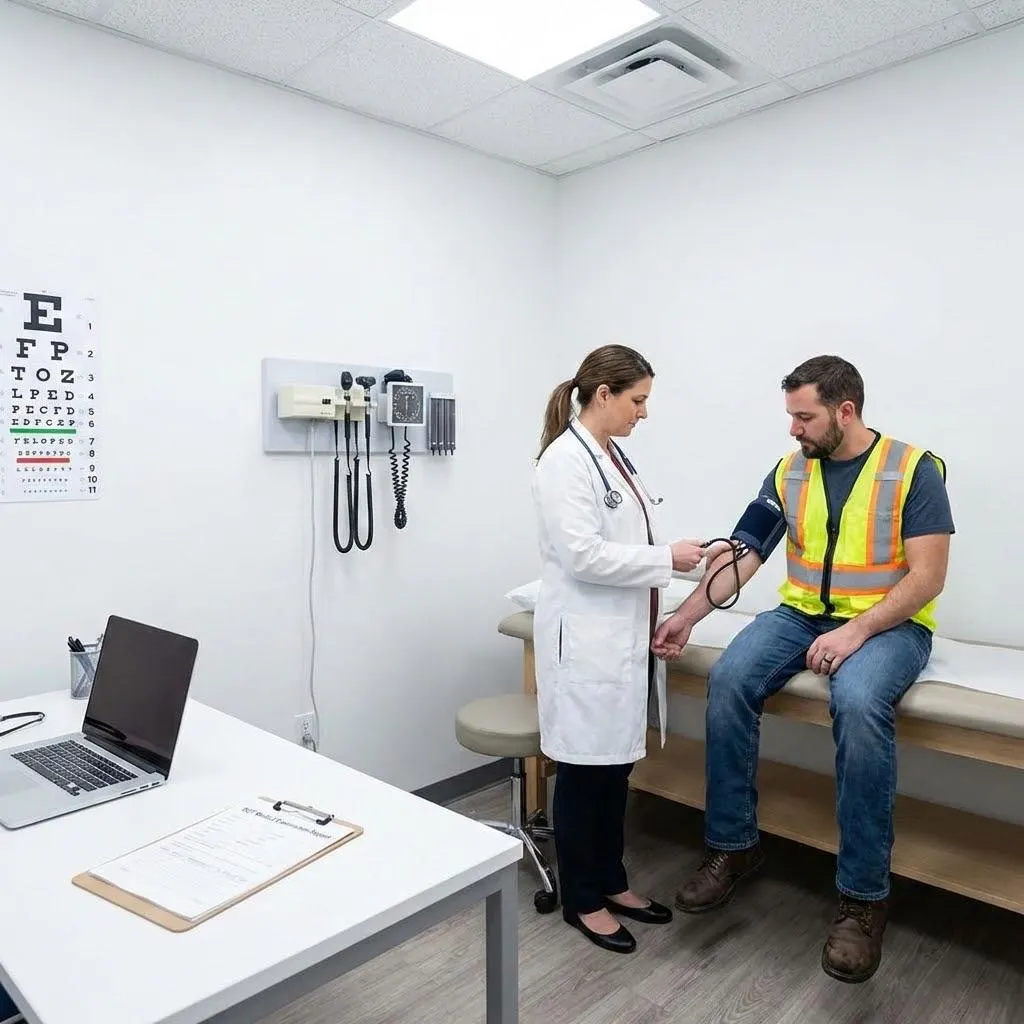
The Department of Transportation framework includes multiple safety-sensitive roles, but the DOT physical exam most people refer to is usually the exam governed by the Federal Motor Carrier Safety Administration for drivers operating a commercial motor vehicle. According to the FMCSA, the goal is to determine whether a worker is medically qualified to perform duties that affect road safety.
DOT physical requirements are standardized rather than employer-designed. The exam uses required forms, a defined medical history review, and specific clinical checkpoints tied to federal rules. That makes a DOT physical exam very different from employer-selected workplace screening.
DOT Physicals are medical qualification exams tied to federal transportation safety. DOT Physicals matter because passing the exam may determine whether you can legally continue in a regulated role.
KEY TAKEAWAY: A DOT physical is a public-safety compliance exam, not just a general workplace physical.
That leads directly to who is actually required to complete one.
Who Needs a DOT Physical?
A DOT physical is usually required for workers in regulated transportation roles, especially people who operate a commercial motor vehicle under FMCSA rules. The exam applies when public safety and federal transport compliance are involved.
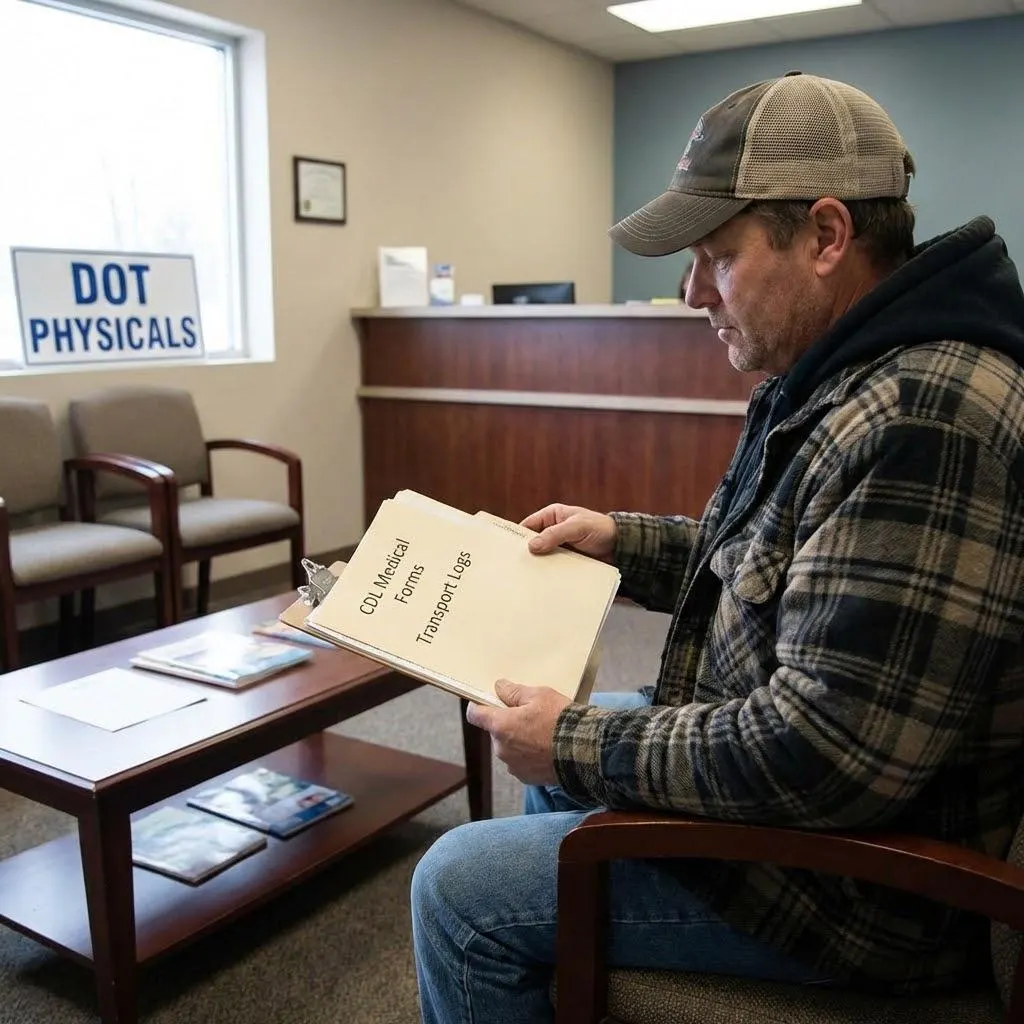
CDL drivers are the most widely recognized group associated with DOT physicals, but the requirement is tied to the type of work and vehicle operation, not just to whether you hold a Commercial Driver's License. In many cases, you may need both a valid driver's license or CDL and medical qualification through a DOT physical exam.
A Commercial Driver's License is a licensing credential for certain vehicles and duties. A DOT physical exam is a separate medical evaluation used to assess whether you are fit to perform those duties safely.
This distinction matters because workers often assume that holding a CDL automatically satisfies medical rules. It does not. If your role falls under federal transport rules, medical qualification may be required whether you are driving full time or as part of a broader job function.
Already diagnosed and need CPAP support?
Dumbo Health helps patients start CPAP without the usual confusion, paperwork, or upfront cost. Equipment, setup, supplies, and ongoing support are all handled in one place.
KEY TAKEAWAY: A DOT physical is tied to regulated job duties and vehicle use, not just to whether you hold a CDL.
Once you know who needs the exam, the next question is who is allowed to perform it.
The Role of the Certified Medical Examiner
A DOT physical must be performed by a Certified Medical Examiner listed on the National Registry when FMCSA medical certification rules apply. Examiner qualifications are one of the clearest differences between DOT and non-DOT physicals.
A Certified Medical Examiner is a licensed clinician who has completed the required training and certification process for FMCSA driver qualification exams. Certified examiners matter because only approved examiners can issue the documentation used for federal medical qualification.
This is one reason a DOT physical cannot be replaced by a similar-looking general clinic visit. A licensed clinician may be fully qualified to perform many occupational health evaluations, but DOT certification rules require the right examiner for the right exam. In practice, employers and workers should verify that the provider is performing DOT physicals under the correct framework.
IMPORTANT: A general licensed physician is not automatically interchangeable with a Certified Medical Examiner for DOT qualification purposes.
KEY TAKEAWAY: The person performing the exam matters because DOT physicals require certified examiners under the applicable federal framework.
Now it helps to look at what actually happens during the exam itself.
Core Components of a Standardized DOT Physical Exam
A DOT physical exam includes a required medical history review and a standardized set of checks tied to safe job performance. The structure is fixed, not customized by employer preference.
A DOT physical exam commonly includes vital signs, heart rate, blood pressure, visual acuity, vision and hearing tests, a urine sample, and a broader medical evaluation. The examiner also reviews your medical history, medications, symptoms, and medical conditions that may affect safe operation. Blood pressure testing, vision/hearing screening, and hearing tests are especially important because they directly affect transport safety decisions.
Medical history is the record of past illnesses, treatments, medications, surgeries, and ongoing symptoms. Medical history matters because the examiner uses it to judge risk, identify disqualifying concerns, and decide whether further records are needed.
Clinicians frequently observe that documentation gaps create delays more often than the exam itself. If you have heart disease, diabetes, sleep apnea, or another ongoing condition, the examiner may ask for follow-up records or treatment details. The exam is designed to produce a clear medical evaluation, not a vague impression of overall health.
KEY TAKEAWAY: The DOT physical exam follows a fixed checklist focused on safe performance in regulated transportation work.
drug testing is often confused with this exam, so it deserves its own section.
Drug and Alcohol Testing in DOT-Regulated Environments
Drug and alcohol testing in DOT settings is a separate compliance program governed by federal procedure. It is related to DOT work, but it is not the same thing as the DOT physical exam.
drug testing in DOT-regulated settings follows 49 CFR Part 40. That framework covers Collection Guidelines, specimen handling, confirmation testing, Medical Review Officers, and other procedural safeguards. A DOT drug screen is not just any workplace drug screening process. It follows a specific federal testing program.
A urine sample is commonly used for DOT-regulated drug tests. A urine sample matters because specimen collection, chain of custody, and lab confirmation rules are part of the federal compliance structure.
Drug and alcohol testing may happen before employment, after certain incidents, randomly, or under return-to-duty requirements. In real-world use, employers may also work with a third-party administrator to coordinate testing logistics and reporting. That administrative layer is common in large regulated programs.
DID YOU KNOW: DOT-regulated drug tests and DOT physicals often happen around the same time, but they are not interchangeable processes.
KEY TAKEAWAY: DOT drug and alcohol testing is a separate federally regulated system with its own rules, procedures, and documentation.
Once the exam is complete, the outcome must be documented properly.
Outcomes and Compliance: The DOT Medical Certificate
The main outcome of a successful DOT physical is documentation showing whether you are medically qualified for regulated duty. This documentation has compliance value, not just clinical value.
The DOT Medical Certificate, also called the Medical Examiner's Certificate, records whether you meet the medical standards required for the role. The examiner may issue full certification, a shorter certification period, temporary deferral, or disqualification depending on your medical conditions and supporting records. blood pressure, heart rate, vision and hearing, and ongoing treatment history can all affect the outcome.
A medical waiver may apply in limited circumstances when a worker needs a formal exception pathway for a condition under the relevant agency rules. A medical waiver matters because it may allow continued work when standard qualification is not straightforward.
Many patients report that this is the part of the process that feels most consequential because it affects job continuity. For employers, the certificate provides a clear compliance record. For workers, it defines the next step.
KEY TAKEAWAY: The DOT Medical Certificate is the compliance outcome that turns the medical exam into a work-eligibility decision.
The contrast becomes clearer when you look at the more flexible non-DOT side.
Tailored for the Workplace: Understanding the Non-DOT Physical
A non-DOT physical is a job-specific workplace exam designed around employer needs rather than federal DOT standards. Non-DOT Physicals are flexible and role-driven.
Non-DOT Physicals are commonly used in occupational health and occupational medicine programs for hiring, return-to-work clearance, job placement, and risk reduction. Unlike DOT physical requirements, Non-DOT Physical Exams can be customized for the work environment, physical demands, and employer policy.
Occupational medicine is the clinical field that supports employee fitness, workplace risk, and safe job placement. Occupational medicine matters because non-DOT screening is most effective when tied to actual task demands rather than generic testing.
This flexibility is useful, but it also creates more variation. Two employers may both request an employment physical, yet one may focus on lifting ability and hearing tests while another may prioritize respiratory health, vaccination history, or ergonomic assessments.
KEY TAKEAWAY: Non-DOT physicals are built around workplace needs, not federal transportation certification.
That flexibility starts with who usually needs one.
Who Typically Requires a Non-DOT Physical?
Non-DOT physicals are used for workers outside federally regulated transport roles when an employer needs a role-specific fitness assessment. They are common across many workforce segments.
Employers may require non-DOT physical Exams for warehouse staff, healthcare workers, manufacturing teams, hazardous material handlers, field technicians, and other roles with physical or safety-sensitive demands. These exams may be part of a Pre-Employment Physical, Post-Offer Physicals, Return-to-Work Assessment, or Fit-for-Duty Exams process.
A Pre-Employment Physical is a job-related medical evaluation performed during hiring or onboarding. A Pre-Employment Physical matters because it helps determine whether a worker can safely perform essential job functions.
Some workforce segments need higher screening because of noise exposure, lifting, repetitive movement, environmental exposure, or emergency response requirements. In those cases, a customized non-DOT medical evaluation can help employers reduce avoidable risk while supporting health and safety.
KEY TAKEAWAY: Non-DOT physicals are typically used when employers need role-specific screening for safety, fitness, or return-to-work decisions.
The next difference is who can legally perform the exam.
Who Can Perform a Non-DOT Physical?
A non-DOT physical can usually be performed by a licensed clinician who is qualified under state law and employer protocol. The examiner rules are broader than in DOT settings.
Unlike DOT physicals, Non-DOT Physical Exams do not usually require a Certified Medical Examiner. Employers often work with licensed physicians, nurse practitioners, physician assistants, or occupational health clinics depending on the exam scope and local rules. That flexibility supports faster scheduling and broader provider access.
If you need providers in your area, this wider provider pool may make it easier to find a clinic near you for a non-DOT exam than for a DOT-certified exam. Even so, employers should still ensure the provider understands the actual job demands and the purpose of the assessment.
TIP: Before booking a non-DOT physical, ask whether the clinic has experience with employment physical questions and job-specific screening protocols.
KEY TAKEAWAY: Non-DOT physicals can be performed by a broader range of licensed clinicians, which makes access easier but requires clearer employer instructions.
That flexibility also changes what the exam may include.
Customizable Components of a Non-DOT Physical Exam
A non-DOT physical can include different tests depending on the job, the risks, and the employer’s policy. Customization is the defining feature of the non-DOT model.
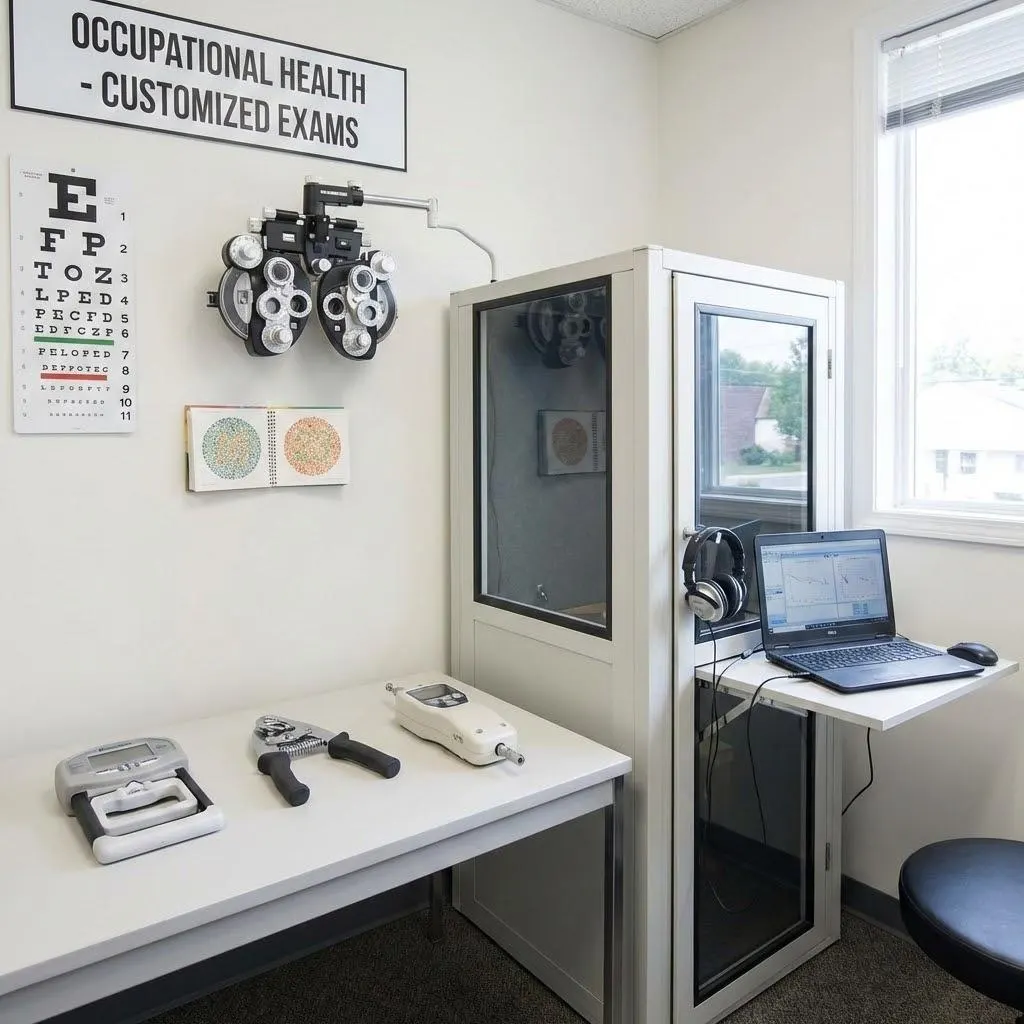
Non-DOT Physical Exams may include vital signs, medical history review, hearing tests, vision and hearing tests, musculoskeletal evaluation, Functional testing, lab tests, vaccination history, blood pressure testing, and broader health screenings. Some employers also request respiratory health checks, ergonomic assessments, or a comprehensive assessment of physical capacity.
Musculoskeletal evaluation is the review of strength, movement, pain, and physical function related to work demands. Musculoskeletal evaluation matters because many jobs require lifting, reaching, carrying, bending, or repetitive motion that general exams do not fully assess.
This is the best place for a mid-page CTA because many employers and workers need more context around related risk factors. For example, if sleep-related fatigue may affect performance, dumbo.health’s guide to how at-home sleep studies work can help you understand one relevant next step.
KEY TAKEAWAY: Non-DOT physicals can be narrow or extensive depending on the role, which makes good employer planning essential.
drug testing also differs on the non-DOT side.
Drug and Alcohol Testing in Non-DOT Settings
Non-DOT drug screening is shaped by employer policy, job risk, and state law rather than DOT federal testing rules. The process is more flexible, but also less standardized.
Employers may include drug screening in a broader employment physical, but the framework is different from DOT-regulated drug tests. A non-DOT drug screen may use different drug classes, different testing frequency, different specimen options, and different reporting structures. The aim is usually a drug-free work environment rather than compliance with transport-specific federal procedure.
Drug screening is an employer-selected substance testing process used outside DOT federal rules. Drug screening matters because employers must define clear policies and apply them consistently across the workforce.
In practice, employers may combine drug screening with background checks, health screenings, or other onboarding requirements. That can be efficient, but it also means workers should ask exactly what the testing program includes.
KEY TAKEAWAY: Non-DOT drug testing is flexible and policy-driven, not federally standardized like DOT drug testing.
That leads to the broader employer value of the non-DOT model.
Outcomes and Employer Benefits
The main outcome of a non-DOT physical is a job-related fitness decision that supports placement, safety, and workforce management. Employers use these exams as practical operational tools.
A non-DOT exam may result in clearance, restrictions, follow-up recommendations, or a return-to-work decision. Unlike a DOT Medical Certificate, the documentation is usually an internal health report or employer-facing determination rather than a federally recognized certificate.
For employers, the benefit is strategic. A well-designed medical evaluation can reduce placement mismatches, support health and safety goals, and improve documentation around physically demanding roles. In real-world use, this is especially valuable in jobs with lifting, exposure risk, or injury recurrence concerns.
KEY TAKEAWAY: Non-DOT physicals help employers make targeted fitness and placement decisions without using the DOT certification model.
Now the two models can be compared directly.
Side-by-Side Comparison: Key Differences at a Glance
DOT and non-DOT physicals differ in purpose, oversight, examiner requirements, testing structure, and final documentation. A side-by-side comparison makes the distinction easier to act on.
Here is the clearest summary of how the two exam types compare across the main decision points.
| Category | DOT Physical | Non-DOT Physical |
|---|---|---|
| Purpose | Public safety and legal qualification | Employer-specific job fitness |
| Driving force | Federal regulation | Employer policy and job demands |
| Oversight | FMCSA and other federal agency rules | Employer, occupational health, employment law |
| Examiner | Certified Medical Examiner | Licensed clinician as permitted |
| Structure | Standardized | Customizable |
| Test requirements | Mandated core checks | Job-specific assessments |
| Documentation | Medical Examiner's Certificate | Internal health report or clearance |
| Drug testing | 49 CFR Part 40 procedures | Employer drug-free work environment policy |
| Most common users | CDL drivers and regulated transport workers | General employees and return-to-work cases |
For most regulated driving roles, the DOT physical exam is the correct path because it creates a formal compliance outcome. For most other roles, a non-DOT physical is the better fit because it can be tailored to actual job demands.
KEY TAKEAWAY: DOT and non-DOT physicals may happen in similar clinics, but they are designed to solve very different workplace problems.
The comparison becomes even more useful when broken down into the specific decision areas below.
Purpose and Driving Force: Public Safety vs Employer-Specific Needs
The purpose of a DOT physical is public safety, while the purpose of a non-DOT physical is job-specific workforce screening. That single difference explains most of the structural differences between them.
A DOT physical exists because safety-sensitive transportation work can affect the public directly. A non-DOT physical exists because employers need a lawful way to assess job fitness, reduce injury risk, and support safe placement decisions.
KEY TAKEAWAY: DOT physicals protect the public, while non-DOT physicals protect employer operations and worker fit.
That difference is enforced through very different oversight systems.
Regulatory Oversight: Federal Agencies vs Employer Policy
DOT physicals are governed by federal agency rules, while non-DOT physicals are governed by employer policy and employment law. Oversight defines what can and cannot be changed.
DOT oversight may involve FMCSA, Part 391, Part 383, Part 392, and in broader transport contexts other agencies such as the Federal Aviation Administration, Federal Railroad Administration, Pipeline and Hazardous Materials Safety Administration, and Federal Transit Administration. Non-DOT oversight is more decentralized and usually shaped by employer practice, human resources, and occupational health partners.
KEY TAKEAWAY: Federal oversight makes DOT exams fixed, while employer policy makes non-DOT exams flexible.
That oversight also shapes who can conduct the exam.
Examiner Qualifications: Certified Medical Examiner vs Licensed Physician
Examiner requirements are stricter in DOT settings and broader in non-DOT settings. This is one of the most operationally important differences.
DOT physicals require properly certified examiners. Non-DOT exams may be handled by a licensed physician or other qualified occupational health clinician depending on local practice and employer needs. The exam may look similar, but the qualification pathway behind it is not.
KEY TAKEAWAY: The right examiner is part of compliance in DOT exams and part of operational flexibility in non-DOT exams.
The testing structure follows the same pattern.
Standardization vs Customization: Fixed Requirements vs Flexible Protocols
DOT exams use fixed requirements, while non-DOT exams use flexible protocols. That difference shapes the entire experience for employers and workers.
DOT physicals are designed to produce consistency across examiners and workers. Non-DOT Physical Exams are designed to reflect the role, the work environment, and the employer’s actual safety priorities. That makes non-DOT protocols more adaptable, but also more dependent on good planning.
KEY TAKEAWAY: DOT exams prioritize consistency, while non-DOT exams prioritize fit for the specific job.
The most visible result of this difference is what actually gets tested.
Specific Test Requirements: Mandated DOT Tests vs Job-Specific Assessments
DOT exams use mandated test elements, while non-DOT exams may add or remove components depending on the role. Test selection is where customization becomes most obvious.
DOT exams typically focus on vision and hearing, blood pressure, heart rate, urine sample review, and required medical history review. Non-DOT exams may expand into Functional testing, hearing tests, lab tests, ergonomic assessments, respiratory health checks, or a broader comprehensive assessment. For physical jobs, musculoskeletal evaluation is often far more central in non-DOT screening than in a DOT exam.
KEY TAKEAWAY: DOT testing is predefined, while non-DOT testing is chosen based on the job.
Documentation also follows separate logic.
Documentation and Certification: MEC vs Internal Health Report
DOT exams end in formal certification documents, while non-DOT exams usually end in internal employer documentation. The paperwork reflects the purpose of the exam.
The Medical Examiner's Certificate supports federal qualification in regulated roles. A non-DOT internal health report supports hiring, fitness, or return-to-work decision-making within the employer’s process. One is external-facing compliance documentation. The other is operational workplace documentation.
KEY TAKEAWAY: DOT documentation proves federal qualification, while non-DOT documentation supports internal employment decisions.
Drug testing uses a similarly different framework.
Drug Testing Framework: 49 CFR Part 40 vs Employer Policies
DOT drug testing uses 49 CFR Part 40, while non-DOT testing follows employer drug-free workplace rules. The framework determines how results are collected, reviewed, and acted on.
DOT-regulated drug tests use strict federal procedures and often involve Medical Review Officers and standardized lab workflows. Non-DOT testing may be broader or narrower, but it is not the same legal process. This is a common point of confusion during hiring.
KEY TAKEAWAY: DOT and non-DOT drug testing may look similar operationally, but they are governed by different systems.
There are also edge cases that make the picture more nuanced.
Beyond the Basics: Nuances and Broader Context
Some workplace physicals fall into a grey area because not all regulated exams are FMCSA driver exams. Broader context helps you avoid oversimplified assumptions.

The grey area includes roles influenced by other federal agency requirements, employer contracts, or special safety rules. Workers sometimes assume every regulated physical is a DOT driver physical, but that is not always true. Understanding the agency, role, and exact requirement matters more than relying on shorthand labels.
KEY TAKEAWAY: Not every workplace medical exam fits neatly into a simple DOT versus non-DOT label.
That grey area is easiest to see when other agencies enter the picture.
The Grey Area: Other Federal Agencies and Specialized Physicals
Other federal agency frameworks may create specialized physicals that are not standard FMCSA driver exams. This is where many workers and employers become confused.
Depending on the role, requirements may involve the Federal Aviation Administration, Federal Railroad Administration, Pipeline and Hazardous Materials Safety Administration, or other transport-linked rules. The key lesson is that exam labels are less important than the actual regulatory source and job duty.
KEY TAKEAWAY: The exact agency and job duty determine the right exam, not just the word DOT.
Medical conditions also play out differently across both paths.
How Medical Conditions Are Handled in Both Physical Types
Medical conditions are assessed in both DOT and non-DOT exams, but the decision standard is different. DOT focuses on regulated qualification, while non-DOT focuses on job fitness.
In DOT settings, the central question is whether the condition affects safe performance under federal transport standards. In non-DOT settings, the central question is whether the condition affects the essential tasks of the job or creates workplace risk. This is why the same condition may lead to different follow-up steps in different settings.
KEY TAKEAWAY: Medical conditions matter in both exam types, but they are judged against different standards.
That difference is also why employers use both models strategically.
The Employer’s Strategic Advantage: Why Both Matter
Employers benefit from using the correct exam for the correct role because it improves compliance, placement, and safety outcomes. DOT and non-DOT physicals solve different problems.
DOT exams protect against compliance failures in regulated transport roles. Non-DOT exams support smarter placement, safer return-to-work decisions, and better screening for physical job demands. Employers that understand the difference are more likely to build consistent health and safety processes.
KEY TAKEAWAY: Using the right exam for the right workforce segment creates operational clarity and reduces avoidable risk.
For individuals, the most useful next step is preparation.
Preparing for Your Physical: Tips for Individuals
The best way to prepare is to confirm the exact exam type, gather the right records, and understand the job context. Good preparation reduces delays and confusion.
People who undergo this exam often find that documentation matters as much as the appointment itself. Bring identification, medication lists, corrective lenses or hearing devices, and any relevant treatment records. If the exam is for a job, ask for the job description or employer instructions beforehand.
KEY TAKEAWAY: Preparation starts with knowing exactly which exam you are taking and why.
The details differ slightly depending on whether the exam is DOT or non-DOT.
For a DOT Physical: Knowing What to Expect
You should expect a standardized process, a detailed medical history review, and a compliance-focused outcome. DOT preparation is mostly about documentation and readiness.
Bring records for medications, treated medical conditions, sleep-related care, and any prior specialist evaluations that may affect the examiner’s decision. If you need a provider near you, verify that the clinic offers DOT physicals with certified examiners rather than general occupational exams.
KEY TAKEAWAY: DOT preparation is easiest when you bring complete records and confirm the clinic’s certification status.
Non-DOT preparation is more employer-specific.
For a Non-DOT Physical: Understanding Employer Expectations
You should expect a flexible exam based on the job and employer policy. Non-DOT preparation is mostly about understanding the requested scope.
Ask whether the appointment includes hearing tests, drug screening, lab tests, or a Fitness for Duty Exams component. If you want a clinic close to you, confirm whether the provider can complete all required testing in one visit. That saves time and reduces repeat scheduling.
KEY TAKEAWAY: Non-DOT preparation is strongest when you understand the employer’s exact expectations before the appointment.
Frequently Asked Questions
What happens during a non-DOT physical?
A non-DOT physical usually includes a medical history review, vital signs, and any job-specific checks the employer requires. The exam may include hearing tests, vision/hearing screening, blood pressure testing, Musculoskeletal evaluation, lab tests, or drug screening depending on the role. Unlike a DOT physical exam, the process is not federally standardized. That means the content can vary from one employer to another. If you want to avoid surprises, ask for the exam scope before your visit and confirm whether the clinic in your area can complete all required steps in one appointment.
Can I get a DOT medical card with diabetes?
Many workers with diabetes can still qualify for a DOT Medical Certificate if the condition is well managed and does not interfere with safe driving. The examiner will review treatment, symptoms, complications, and supporting records before making a decision. Diabetes is not automatically disqualifying, but poor control or missing documentation can delay the outcome. If you take medication or have recent test results, bring those records to the appointment so the medical examiner has what is needed to complete the evaluation properly.
Is methadone disqualifying for DOT work?
Methadone can create significant concerns in a DOT physical because the medical examiner must determine whether any medication could impair safe operation of a commercial motor vehicle. The issue is not only the medicine itself, but also the underlying condition, side effects, dose stability, and safety implications. That means the answer is case-specific rather than automatic. If methadone is part of your treatment, you should bring prescribing records and be prepared for a more detailed medical evaluation before the examiner decides whether certification is appropriate.
Do DOT physicals check for hernia?
A DOT physical may identify a hernia during the general physical exam if it is clinically relevant or affects safe job performance. The purpose is not to run a specialist hernia screening. The examiner is assessing whether any condition could interfere with movement, emergency response, or functional ability in a regulated role. If you already know you have a hernia, tell the examiner during the medical history review and explain whether it affects pain, lifting, or day-to-day work function.
What is the difference between a DOT and a CDL?
A DOT physical and a CDL are two different requirements. A Commercial Driver's License is a legal credential that allows you to operate certain vehicles, while a DOT physical exam is a medical qualification process that determines whether you are fit to perform regulated driving duties safely. Many CDL drivers need both, but one does not replace the other. A CDL relates to legal driving privilege. A DOT physical relates to medical fitness for the job.
Do you pay for your own DOT physical?
Payment depends on the employer, the hiring process, and company policy. Some employers cover the DOT physical exam and related drug testing, while others ask you to pay upfront and reimburse later. In some cases, applicants are expected to arrange the visit themselves. The best approach is to ask before booking so you know whether the company has a preferred provider near you, whether same-day documentation is needed, and whether other screening services are bundled into the appointment.
Conclusion: Ensuring a Safe and Healthy Workforce
The difference between a DOT and non-DOT physical comes down to purpose, oversight, examiner requirements, and outcomes. DOT Physicals are federally regulated and tied to public safety, while Non-DOT Physicals are flexible workplace exams built around employer needs and job demands. If you understand which model applies, the process becomes much easier to navigate. For broader context on one issue that can affect fatigue, screening, and work readiness, review dumbo.health’s guide to what sleep apnea is.
Related DOT Physical Topics
- What Happens During the DOT Physical Exam The Complete Guide for Drivers
- DOT Physical ICD-10 & Billing Codes The Complete Guide for Accurate Compliance and Reimbursement
- What Does DOT Stand for in a DOT Physical
- What Are the Requirements to Pass a DOT Physical
- What Is the Urine Test for in a DOT Physical
- Online DOT Physical Self-Pay The Complete Guide for CDL Drivers and Owner-Operators
- Online DOT Physical The Complete Guide for Commercial Drivers and Medical Examiners
- Is a DOT physical the same as a regular physical
- Non-DOT Physical A Comprehensive Guide to Workforce Health and Safety
- DOT Physical Texas The Essential Guide to Your Exam, Medical Card, and CDL Compliance
- The DOT Physical Exam Ensuring You're Fit for the Road
- DOT Physical Cost Breakdown What Drivers Pay & Why
- DOT Physical Forms & Paperwork The Complete Guide for Commercial Drivers
- DOT Physical Insurance & Recertification The Complete Driver's Guide
- DOT Physical & Drug Test What Drivers Need to Know
- How Do You Submit Your DOT Physical to the DMV
- What Can Disqualify You From a DOT Physical
- Remote DOT Physical The Complete Guide for Commercial Drivers
- DOT Physical Out of Pocket What Commercial Drivers Actually Pay
- The Ultimate DOT Physical Guide for Commercial Drivers (2025–2026)
- How to Pass a DOT Physical The Complete Commercial Driver's Guide
- Navigating the Florida DOT Physical Your Essential Guide for CDL Drivers
- What happens if you fail a DOT physical due to sleep apnea
- What Should You Bring to a DOT Physical
- What should I expect at a DOT physical
- What Forms Do You Need for a DOT Physical
- DOT Physical Duration and Validity How Long Your Medical Card Lasts
- Your Complete Guide What's Included in a DOT Physical Exam
- What blood pressure do you need to pass a DOT physical
- Online DOT Exam What Drivers and Medical Examiners Need to Know
- DOT Physical Blood Pressure Requirements What Drivers Need to Know
- What are the current DOT requirements for sleep apnea testing for commercial drivers
- DOT Physical at Urgent Care What Commercial Drivers Need to Know
- New DOT Physical Requirements What Drivers MUST Know About New Updates
- DOT Physical Insurance or Self Pay How to Choose the Right Payment Option for Your Exam
- What Does a DOT Physical Consist Of
- BMI for DOT Physical What Commercial Drivers Need to Know
- What eye chart is used for a DOT physical
- What Do They Check During a DOT Physical
- Failing a DOT Physical What Every Commercial Driver Needs to Know
- What is DOT Physical
- DOT Physical Vision & Eye Requirements
- DOT Physical & Alcohol Requirements
- How can drivers with sleep apnea qualify again after a failed DOT physical
- DOT Physical Online Cost
- Can You Pass a DOT Physical with Epilepsy
- Virtual DOT Physical
- Who needs a DOT physical
- DOT Physical Self Pay Cost
- Navigating Your DOT Physical with Common Medical Conditions
- Does a DOT physical include a drug test
- When Can Sleep Apnea Affect a DOT Physical
- DOT Physical Chiropractor Your Complete Guide to CDL Exams
- Can you pass a DOT physical with sleep apnea
- Can you fail a DOT physical because of sleep apnea
- Can You Get a Second Opinion on Your DOT Physical A Complete Guide for Commercial Drivers
- Can You Get a DOT Physical Online
- Walk In DOT Physical Self Pay
- Can You Pass a DOT Physical With a Pacemaker
- Telehealth Dot Physical
- Can You Pass a DOT Physical With One Eye
- DOT Physical Exam Basics
- Can You Fail a DOT Physical for Being Overweight
- Why do they measure your neck during a DOT physical
- Online DOT Physical Without Insurance A Complete Guide for Commercial Drivers
- Can You Pass a DOT Physical with High Blood Pressure
- Why DOT Sleep Tests at Home Matter for Your Career and Health
- Cheap DOT Physical Online
- Can You Pass a DOT Physical With a Hernia
- Do They Check for Hernia During a DOT Physical
- DOT physical self pay guide for commercial drivers paying out of pocket
- DOT Physical Cash Pay
- Is a drug test required for a DOT physical
- What are the current FMCSA guidelines on sleep apnea for commercial drivers
- Can You Fail a DOT Physical for High Blood Pressure
- Same Day DOT Physical
- The Comprehensive Guide to Suboxone, Sleep Apnea, and FMCSA Compliance for Commercial Motor Vehicle Operators
- Do They Check Your Private Parts During a DOT Physical
- Is a Sleep Study Required for a DOT Physical
- Can You Pass a DOT Physical with Diabetes
- DOT Physical Requirements A Complete Guide for CDL Drivers
- Guide to Obtaining and Managing Your DOT Medical Card Online
- Do You Have to Pee During a DOT Physical
- Can You Fail a DOT Physical
- Online CDL Physical
- Are There New DOT Rules or Laws on Sleep Apnea Testing
- Essential 171 DOT Definitions for Commercial Drivers
- 2026 DOT Inspection Dates
- Home Sleep Apnea Test for Commercial Drivers The CDL Holder's Complete Guide
- CDL PHYSICAL SELF PAY
- DOT sleep apnea test at home
- DOT Medical Exam Self-Pay A Complete Guide for Commercial Drivers
- Medical Examination Report (MER) – Form MCSA-5875 The Complete Guide for Commercial Drivers
- What Precautions Should Drivers With Sleep Apnea Take
- Expected 2027 DOT Inspection Dates
- Sleep Apnea Test for CDL Drivers
- How Sleep Apnea Affects Overall Driving Safety
- Best Treatments for Sleep Apnea to Improve Driving Safety
- Are there legal requirements for drivers with sleep apnea
- How Does Sleep Apnea Affect Driving Ability
Take the next step before your DOT physical
Start with the free quiz if you are unsure about your risk, or order an at-home sleep test if you have already been flagged for possible sleep apnea.
AI summary
DOT and non-DOT physicals are workplace health exams used to assess fitness for duty, but they operate under different oversight and produce different documentation. A DOT physical is a federally standardized medical qualification exam, most commonly under the Federal Motor Carrier Safety Administration (FMCSA) for commercial motor vehicle drivers. It must be performed by a Certified Medical Examiner on the National Registry. Typical components include medical history review, vital signs, blood pressure, heart rate, vision and hearing tests, and a urine sample. The outcome is the Medical Examiner’s Certificate (DOT Medical Certificate), which may be issued for full or shorter certification, deferred, or denied based on medical conditions and records. DOT drug and alcohol testing is separate from the physical and follows 49 CFR Part 40 procedures. A non-DOT physical is an employer-defined occupational medicine exam used for pre-employment, post-offer, return-to-work, and fit-for-duty decisions. It can be performed by licensed clinicians and may include job-specific testing such as musculoskeletal evaluation, functional testing, lab tests, or drug screening under employer policy and state law.

Nicolas Nemeth
Co-Founder
Nico is the co-founder of Dumbo Health, a digital sleep clinic that brings the entire obstructive sleep apnea journey home. Patients skip the sleep lab and the long wait to see a specialist. Dumbo Health ships an at home test, connects patients with licensed sleep clinicians by video, and delivers CPAP or a custom oral appliance with ongoing coaching and automatic resupply in one clear subscription.
Keep reading

How Long Does a DOT Physical Take? A Complete Guide for Commercial Drivers

What Happens If You Fail a DOT Drug Test? The Complete Guide for Commercial Drivers


