What blood pressure do you need to pass a DOT physical?
This article explains how blood pressure is evaluated during a DOT physical for commercial motor vehicle drivers and why the FMCSA uses strict cardiovascular thresholds. It defines systolic and diastolic readings and shows how results map to hypertension stages that determine medical card length. Drivers learn the exact cutoffs for a 2-year certificate, 1-year certification, a one-time 3-month certificate, or immediate disqualification. It also covers what happens after a failed exam, including National Registry reporting and potential CDL downgrade timelines. Practical exam-day steps include avoiding caffeine and nicotine, hydrating, reducing sodium, resting before the reading, and requesting a repeat measurement. Long-term guidance addresses lifestyle changes, medication tolerance, and sleep apnea treatment compliance.
Struggling with sleep?
Find out if sleep apnea is the reason.
FDA-cleared. $149 flat. Physician-reviewed results in 48 hours.

What Blood Pressure Do You Need to Pass a DOT Physical?

What blood pressure do you need to pass a DOT physical? A passing evaluation requires a reading strictly below 140/90 mmHg for commercial motor vehicle drivers to obtain a full two-year medical certification. According to the Federal Motor Carrier Safety Administration (FMCSA), stringent cardiovascular evaluations are necessary to mitigate the risk of acute incapacitation among operators navigating heavy machinery. The physical assessment categorizes vascular readings into specific hypertension stages that dictate the exact duration of the issued medical card. Understanding these regulatory thresholds, the underlying pathophysiology of hypertension, and the required lifestyle interventions ensures commercial drivers maintain continuous compliance. The subsequent analysis provides a comprehensive guide to navigating these clinical requirements, managing cardiovascular health, and safeguarding long-term occupational stability.
Understanding the DOT Physical and Its Importance for CMV Drivers

The physical examination is a mandatory cardiovascular and physiological assessment determining whether a commercial motor vehicle operator possesses the health required to drive safely. Commercial drivers face unique occupational hazards that systematically elevate the risk of cardiovascular disease and systemic hypertension. Extended periods of sedentary behavior, irregular sleep patterns, and limited access to nutritious food contribute to a higher prevalence of metabolic disorders among commercial motor vehicle operators. Federal regulations mandate these rigorous evaluations to mitigate the risk of sudden medical emergencies, such as a myocardial infarction or stroke, while operating heavy freight vehicles. Maintaining stringent health standards protects the driver, the motor carrier, and the general public navigating the national highway system.
Department of Transportation physical is a federally mandated medical evaluation required for commercial motor vehicle operators. Ensuring baseline physiological fitness prevents sudden incapacitation and catastrophic accidents on public roadways.
The comprehensive physical examination evaluates various biological systems to confirm functional capacity and occupational endurance. Certified medical examiners assess visual acuity, hearing loss, respiratory function, and overall cardiovascular health during the clinical consultation. The required vision and hearing tests ensure the driver possesses adequate peripheral vision and auditory perception to navigate complex traffic environments safely. Medical forms, such as the Medical Examination Report Form MCSA-5875, document the entire medical history and current physiological metrics of the applicant. Providers at recognized clinics frequently utilize these standardized protocols to document driver health accurately and transparently.
The Federal Motor Carrier Safety Administration operates as the primary federal agency regulating the trucking industry to reduce crashes, injuries, and fatalities. Strict adherence to their published medical guidelines is non-negotiable for anyone engaged in interstate commerce. Research published by the National Institute for Occupational Safety and Health indicates that commercial truck drivers exhibit significantly higher rates of heart disease, diabetes, hypertension, and obesity compared to the general adult working population. The regulatory framework established by the FMCSA relies heavily on data from cardiovascular advisory panels to set objective physical standards.
Not sure if sleep apnea applies to you?
Take our 2-minute sleep risk quiz to see whether sleep apnea could affect your DOT physical. No account required.
DID YOU KNOW: Data published by the National Institute for Occupational Safety and Health indicates that 88 percent of long-haul truck drivers report having at least one cardiometabolic risk factor, such as hypertension or obesity.
Medical examiners face the immense responsibility of applying these federal standards while considering the individual health trajectory of the driver. The medical professional must evaluate whether any diagnosed condition, including hypertension, is likely to interfere with the driver's ability to control a commercial motor vehicle safely. This clinical discretion ensures that drivers receive fair evaluations while the public remains protected from foreseeable health-related accidents. Understanding the specific biological metrics assessed during this exam provides absolute clarity on how medical professionals determine final certification eligibility.
KEY TAKEAWAY: A comprehensive medical evaluation ensures commercial drivers possess the cardiovascular health and physiological endurance required to operate heavy vehicles safely.
Transitioning from the broad purpose of the medical evaluation, the specific numerical thresholds utilized to grade cardiovascular fitness require detailed examination.
The Official Blood Pressure Requirements for the DOT Physical

The official blood pressure requirement for a full two-year medical certification mandates a reading strictly below 140/90 mmHg. Certified medical examiners follow specific cardiovascular advisory guidelines to categorize elevated readings into progressively restrictive hypertension stages. These established blood pressure guidelines dictate the maximum duration of the medical certificate issued to the commercial driver. Consistent blood pressure monitoring remains essential for commercial drivers to track their cardiovascular health over time and avoid surprise disqualifications. Clinical guidelines differentiate between normal ranges and progressive stages of hypertension to remove ambiguity and standardize the federal certification process.
Systolic pressure is the maximum force exerted against arterial walls when the heart muscle contracts during a heartbeat. Diastolic pressure is the minimum force within the arteries when the heart rests between beats.
Commercial drivers presenting with a reading below 140/90 mmHg receive a two-year certification, provided no other disqualifying medical conditions or comorbidities exist. If the reading falls between 140-159/90-99 mmHg, the medical examiner classifies the condition as Stage 1 hypertension. Stage 1 hypertension restricts the overall medical certification to a maximum of one year. Stage 2 hypertension, defined as vascular readings between 160-179/100-109 mmHg, results in a conditional three-month certification to allow the driver time to initiate medical treatment. Stage 3 hypertension occurs when readings reach 180/110 mmHg or higher, resulting in immediate clinical disqualification.
| Hypertension Stage | Blood Pressure Readings | Medical Certification Outcome | Follow-up Requirement |
|---|---|---|---|
| Normal | Below 140/90 mmHg | Full 2-year medical card | Re-evaluation in 24 months |
| Stage 1 | 140-159/90-99 mmHg | 1-year medical card | Annual monitoring required |
| Stage 2 | 160-179/100-109 mmHg | 3-month temporary medical card | Must lower below 140/90 |
| Stage 3 | 180/110 mmHg or higher | Immediate Disqualification | 6-month intervals once controlled |
The comparison table outlines the exact blood pressure levels utilized by the National Registry to determine driver eligibility across all jurisdictions. Medical examiners rely heavily on this precise matrix to remove subjectivity from the examination process and ensure uniform compliance. A full two-year certification represents the optimal outcome and is highly recommended when drivers maintain pristine cardiovascular health. Clinical practitioners performing occupational physicals reference these exact parameters during every consultation to assess fitness for duty. The regulations stipulate that an elevated blood pressure finding should be confirmed by at least two subsequent measurements before finalizing a certification decision.
IMPORTANT: The Federal Motor Carrier Safety Administration bases its hypertension standards on the Joint National Committee on Prevention, Detection, Evaluation, and Treatment of High Blood Pressure reports to ensure alignment with current medical consensus.
The evolution of these guidelines reflects a growing medical understanding of how chronic vascular tension damages target organs over time. Medical examiners document the readings directly on the Medical Examination Report Form MCSA-5875, creating a permanent federal record of the driver's cardiovascular baseline. This strict documentation process prevents drivers from concealing deteriorating health metrics across multiple exam cycles.
KEY TAKEAWAY: Blood pressure readings directly dictate the exact length of a driver's medical certification, ranging from a full two years to immediate disqualification.
When cardiovascular readings exceed the optimal threshold, commercial drivers must navigate complex conditional certifications and accelerated medical oversight.
Already diagnosed and need CPAP support?
Dumbo Health helps patients start CPAP without the usual confusion, paperwork, or upfront cost. Equipment, setup, supplies, and ongoing support are all handled in one place.
Navigating Stage 1 Hypertension and Conditional Certification

Stage 1 hypertension, defined as readings between 140-159/90-99 mmHg, restricts the driver to a one-year medical certification requiring annual monitoring. The certified medical examiner limits the medical card to a single year because vascular tension at this level indicates the early onset of cardiovascular disease. This reduction in certification length forces the driver to proactively monitor their blood vessels and heart health with their primary care physician. Annual clinical evaluations ensure that any progressive damage to the cardiovascular system is detected early before it causes sudden incapacitation. If the blood pressure levels remain in the Stage 1 category during the annual renewal, the examiner may exercise discretion to issue another one-year certificate, provided the driver is undergoing active evaluation.
The physiological implications of Stage 1 hypertension involve chronic stress on the arterial walls, leading to endothelial dysfunction and increased systemic vascular resistance. While the driver is usually asymptomatic at this stage, the sustained pressure forces the heart muscle to work harder to pump blood. The FMCSA guidelines emphasize that hypertension alone is unlikely to interfere with the ability to operate a commercial motor vehicle safely at this lower stage. However, the likelihood of an adverse event increases significantly when target organ damage, particularly cerebral vascular disease or left ventricular hypertrophy, begins to manifest.
Medical certification is the official authorization granted by a registered healthcare provider confirming an individual meets federal physical standards to operate commercial vehicles safely. This critical documentation remains essential for maintaining an active commercial driver's license.
To extend the certification back to a two-year cycle, the commercial driver must bring their blood pressure back below the 140/90 mmHg threshold. The one-year monitoring period provides ample opportunity for the driver to implement sustainable lifestyle modifications, such as dietary adjustments and weight loss protocols. Medical examiners actively review the driver's progress during the annual recertification, checking for compliance with any recommended interventions. Maintaining comprehensive medical records provides the examiner with vital context regarding the driver's cardiovascular trajectory over the preceding twelve months.
TIP: Drivers receiving a one-year certificate should purchase an accurate home blood pressure monitor to track their progress and share the physiological data with their primary care physician.
The collaborative effort between the commercial driver and their healthcare provider determines whether the hypertension resolves or progresses. Ignoring the warning signs presented by a Stage 1 diagnosis often leads to further cardiovascular deterioration.
KEY TAKEAWAY: Stage 1 hypertension triggers a shortened one-year certification period that demands lifestyle adjustments and proactive medical intervention to maintain driving privileges.
Failure to control rising cardiovascular metrics inevitably pushes the driver into higher risk categories with much stricter regulatory consequences.
Managing Stage 2 Hypertension and Shorter Certification Periods

Stage 2 hypertension, defined as readings between 160-179/100-109 mmHg, results in a conditional three-month medical certification to allow for immediate medical intervention. This highly restricted, temporary certification serves as an urgent grace period, allowing the driver time to seek medical advice and begin intensive medication management. The elevated pressure at this stage places the driver at a substantially higher risk for target organ damage and sudden cardiovascular events. The driver must return for a comprehensive follow-up physical exam before the strict three-month window expires. If the driver successfully lowers their reading below 140/90 mmHg during this period, the medical examiner will issue a subsequent one-year medical certificate.
Clinical observations confirm that a blood pressure reading in this elevated range represents an absolute clinical indication for the initiation of anti-hypertensive drug therapy. The physiological burden on the heart and blood vessels is severe, requiring pharmaceutical intervention to induce vasodilation and reduce circulatory volume. The driver must collaborate closely with a primary care provider to find an effective medication regimen that the body tolerates well. Providers in your area typically prioritize medications that stabilize the cardiovascular system without introducing side effects that could impair occupational performance.
Drivers must understand that the three-month certificate represents a singular opportunity for corrective action, not a rolling extension. If the individual returns after the three months elapse and the blood pressure remains persistently above 140/90 mmHg, the federal regulations mandate that the examiner disqualify the driver immediately. A commercial driver cannot receive consecutive three-month medical certificates for Stage 2 hypertension. This strict policy ensures that drivers cannot continuously operate heavy machinery while actively ignoring severe cardiovascular distress.
DID YOU KNOW: The FMCSA clarifies that the term one-time three-month certificate means a driver cannot receive consecutive temporary certificates, but they may receive another temporary certificate later in their career if their blood pressure spikes again.
The medical history documented during this intense intervention phase permanently alters how the driver approaches their occupational fitness. The driver's medical records must clearly demonstrate strict compliance with the newly prescribed treatment plan and a stabilized physiological response. Securing a one-year certificate after navigating Stage 2 hypertension requires ongoing vigilance and strict adherence to the medical provider's ongoing recommendations.
KEY TAKEAWAY: Stage 2 hypertension results in a strict, non-renewable three-month certificate that requires the immediate initiation of anti-hypertensive therapy to avoid total disqualification.
When cardiovascular tension exceeds these intermediate stages, the immediate threat to public safety forces medical examiners to take decisive regulatory action.
Understanding Disqualification When Blood Pressure is Too High

A reading of 180/110 mmHg or higher constitutes Stage 3 hypertension, which causes immediate disqualification from operating a commercial motor vehicle. Readings at this extreme level indicate an acute, imminent risk for a catastrophic cardiovascular event, such as a massive heart attack or hemorrhagic stroke. The Federal Motor Carrier Safety Administration strictly prohibits any individual with Stage 3 hypertension from operating a commercial vehicle due to the severe threat of sudden incapacitation. Medical examiners are legally mandated to withhold the medical examiner's certificate to protect both the driver and the general public navigating the roadways. This strict regulatory protocol is universally enforced across the United States to ensure consistent highway safety standards.
Once formally disqualified, the commercial driver must undergo aggressive medication management, intensive monitoring, and radical lifestyle changes to lower their blood pressure. A medical professional will prescribe complex antihypertensive therapy, often requiring multiple agents, to stabilize the severely strained cardiovascular system. The driver absolutely cannot return to occupational duty until their blood pressure is officially documented at or below the optimal 140/90 mmHg threshold. When the driver finally achieves this optimal reading and demonstrates tolerance to the medical regimen, the certified medical examiner can grant a new certification.
CDL license is the specialized permit required by the state and federal government to operate large, heavy, or placarded hazardous material vehicles in commerce. Maintaining active medical certification represents a fundamental prerequisite for keeping this license legally valid.
However, resolving a Stage 3 hypertensive crisis permanently alters the driver's future certification cycles. Drivers previously diagnosed with Stage 3 hypertension must undergo a rigorous physical examination every six months for the remainder of their driving career. This accelerated schedule ensures that the driver's condition remains tightly stabilized under the prescribed treatment plan. If the driver fails to maintain cardiovascular control at any subsequent six-month interval, they face immediate disqualification once again.
IMPORTANT: Evaluation by a specialist is warranted if an individual remains persistently hypertensive despite taking maximal doses of two to three distinct pharmacologic agents.
The medical history of a Stage 3 event requires the driver to maintain impeccable clinical records and prioritize their cardiovascular health above all other occupational concerns. The intense scrutiny associated with the six-month recertification cycle leaves no room for medical non-compliance.
KEY TAKEAWAY: A blood pressure reading of 180/110 mmHg or higher causes immediate disqualification and permanently restricts future medical certifications to six-month intervals.
To avoid these severe occupational disruptions, drivers must utilize proactive physiological strategies long before they step into the clinical assessment room.
Preparing for the DOT Physical and Optimizing Blood Pressure Readings

Proper hydration, avoiding stimulants, and practicing respiratory control represent the most effective methods to stabilize cardiovascular metrics prior to a medical evaluation. Commercial drivers frequently experience artificially elevated blood pressure levels on exam day due to severe situational anxiety regarding their career stability. Consuming a large glass of water forty-five minutes prior to the exam ensures proper blood volume and optimal hydration. Eliminating caffeine, energy drinks, and nicotine for at least twenty-four hours before the test prevents artificial spikes in heart rate and vascular constriction. Deep breathing exercises performed in the waiting room help activate the parasympathetic nervous system, naturally lowering the heart rate and relaxing arterial walls.
Drivers should drastically reduce their dietary sodium intake in the days leading up to the evaluation. High sodium intake causes the human body to retain excess fluid, which dramatically increases the hydrostatic pressure against fragile blood vessels. Consuming whole foods rich in potassium helps counterbalance the negative physiological effects of sodium retention. Clinical research suggests that consuming beet juice prior to an examination can provide beneficial cardiovascular stabilization. Beet juice contains high levels of naturally occurring dietary nitrates, which the body effectively converts into nitric oxide.
Nitric oxide is a vital molecular compound produced by the body that signals blood vessels to relax and dilate, effectively improving blood flow and reducing overall arterial pressure.
Drivers must wear loose, comfortable clothing to the clinic to ensure the medical examiner obtains the most accurate readings possible. Tight sleeves rolled up forcefully can physically compress the brachial artery, causing the equipment to artificially inflate the systolic pressure reading. Arriving at the clinic at least fifteen minutes early allows the driver to rest quietly and stabilize their cardiovascular system before the medical professional begins the formal assessment. Drivers seeking clinical evaluations can easily find a provider near you through the federal National Registry database to ensure compliance.
TIP: If the first blood pressure reading registers unexpectedly high, drivers should politely request the medical examiner to wait five minutes and take a second reading on the opposite arm to confirm accuracy.
Maintaining a calm demeanor and requesting a few minutes of quiet resting time before the cuff is inflated prevents inaccurate clinical assessments. Medical examiners understand the physiological impact of clinical settings and generally accommodate reasonable requests for verification.
KEY TAKEAWAY: Implementing short-term dietary adjustments, avoiding stimulants, and utilizing relaxation techniques effectively prevents artificial blood pressure spikes during the physical exam.
Despite adequate physical preparation, commercial drivers often encounter conflicting industry information regarding what clinical circumstances actually lead to regulatory disqualification.
Common Myths About DOT Physicals Debunked

Debunking pervasive misconceptions regarding the medical evaluation process ensures commercial drivers make evidence-based decisions about their cardiovascular health. The medical certification process is governed by strict federal guidelines, yet numerous misunderstandings persist throughout the trucking industry regarding blood pressure regulations. These pervasive myths often cause unnecessary anxiety and actively deter drivers from seeking appropriate preventative healthcare. Medical examiners operate under rigorous, evidence-based protocols designed to ensure public safety while keeping healthy drivers employed. Understanding the factual reality of the physical exam empowers commercial drivers to manage their health proactively. The following clarifications dispel the most common fears surrounding cardiovascular assessments.
MYTH: Taking prescription blood pressure medication automatically disqualifies a commercial driver.
FACT: The Federal Motor Carrier Safety Administration explicitly permits the use of antihypertensive medications, provided the treatment is effective and well-tolerated. Drivers utilizing medication are typically restricted to an annual certification to ensure ongoing clinical oversight, but they remain fully qualified to drive.
MYTH: White coat syndrome guarantees absolute failure during a medical examination.
FACT: Medical examiners are specifically trained to recognize transient hypertension caused by clinical anxiety. Examiners have the regulatory discretion to take multiple readings throughout the appointment, allowing the driver time to relax and provide an accurate cardiovascular baseline.
MYTH: A portable blood pressure monitor used at home is sufficient proof of controlled hypertension for the medical examiner.
FACT: While home monitoring logs are highly encouraged for overall medical history and primary care management, the certified medical examiner must record an official reading below 140/90 mmHg during the actual physical exam to grant full certification.
MYTH: You are permanently disqualified from driving if you fail the blood pressure test once.
FACT: Failing the blood pressure component results in a temporary delay or a shortened conditional certificate. Drivers can return for a formal re-evaluation and receive medical clearance once their condition is properly managed and their clinical readings return to acceptable levels.
KEY TAKEAWAY: Dispelling common misconceptions ensures that commercial drivers approach their physical evaluations with factual confidence rather than unfounded occupational fear.
Addressing these foundational truths allows drivers to focus exclusively on the daily lifestyle habits required to maintain their health over the entirety of their career.
Strategies for Long-Term Blood Pressure Management

Sustained cardiovascular health requires commercial drivers to implement dietary improvements, maintain routine physical activity, and adhere strictly to prescribed medication regimens. The most effective strategy for long-term blood pressure control involves sustained lifestyle changes that address the biological root causes of cardiovascular stress. Commercial vehicle operators must prioritize cardiovascular health to ensure career longevity and prevent the onset of chronic conditions like congestive heart failure. Reducing the intake of saturated fats and highly processed foods frequently consumed at truck stops significantly improves systemic metabolic health. Drivers should focus intensely on consuming lean proteins, whole grains, and fresh vegetables to maintain elastic blood vessels and reduce arterial plaque.
Routine physical activity, such as brisk walking around rest areas or utilizing resistance bands during downtime, helps manage body weight and significantly lowers the resting heart rate. When lifestyle changes prove insufficient to lower the readings, formal medication management becomes a necessary, life-saving component of blood pressure control. Medical professionals routinely prescribe antihypertensives to regulate arterial pressure safely and effectively. However, commercial drivers must remain hyper-vigilant regarding potential drug side effects that could impair cognitive function, reaction times, or motor skills.
Medication management involves the systematic medical oversight of pharmaceutical treatments to ensure therapeutic efficacy while minimizing adverse side effects that could interfere with occupational safety.
The FMCSA explicitly states that medications causing severe fatigue, dizziness, or syncope are entirely unacceptable for commercial vehicle operation. Drivers must collaborate closely with their primary care physician to identify pharmaceutical regimens that maintain optimal blood pressure without compromising overall driver safety. Stress management also plays a profoundly critical role in maintaining optimal blood pressure readings. The demanding nature of commercial driving chronically elevates cortisol levels, causing prolonged vasoconstriction and sustained hypertension. Healthcare providers in your area often recommend routine physiological tracking to catch emerging cardiovascular issues early.
DID YOU KNOW: According to guidelines published by the Centers for Disease Control and Prevention, incorporating just thirty minutes of moderate physical activity five days a week can significantly lower systemic systolic blood pressure.
Taking control of these lifestyle factors removes the unpredictability from the medical certification process. Commercial drivers who master these habits rarely struggle to pass their physical evaluations.
KEY TAKEAWAY: Sustainable diet modifications, carefully monitored medications, and proactive stress reduction are absolutely vital for maintaining medical certification and career longevity.
One frequently overlooked physiological factor that heavily influences cardiovascular stability is the quality of respiratory function during the sleep cycle.
Sleep Apnea and Its Connection to High Blood Pressure
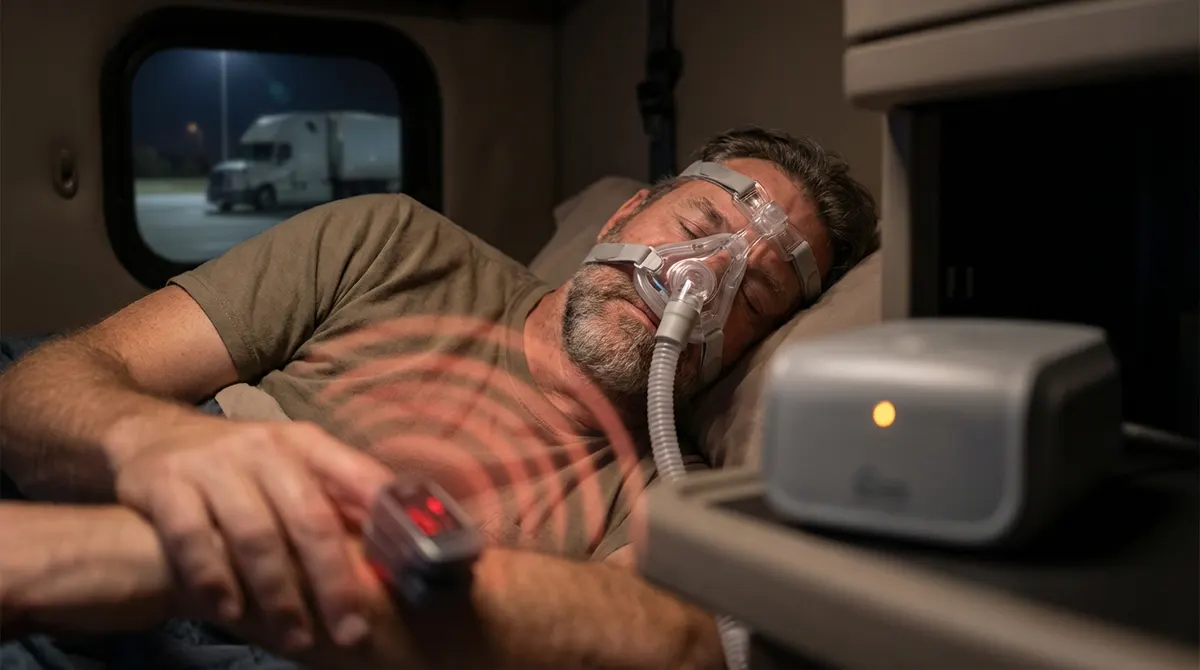
Untreated sleep apnea induces chronic nocturnal hypoxia, which directly elevates daytime blood pressure and threatens commercial driving certification. Clinical research indicates a profound, direct link between untreated sleep apnea and the development of severe hypertension in commercial motor vehicle operators. Obstructive sleep apnea causes repeated upper airway collapses during sleep, resulting in severe intermittent oxygen deprivation. This hypoxia triggers a massive sympathetic nervous system response, forcing the body to release stress hormones that drastically spike blood pressure levels throughout the night. Over time, this intense chronic nighttime cardiovascular stress translates directly into sustained, dangerous daytime hypertension.
sleep apnea is a serious sleep disorder characterized by repeated pauses in breathing during the sleep cycle. It severely disrupts restorative sleep patterns and significantly increases the biological risk of cardiovascular disease if left untreated.
Treating this underlying respiratory condition effectively lowers blood pressure and dramatically improves overall metabolic health. Medical examiners aggressively screen for this condition by evaluating neck circumference, body mass index, and subjective reports of daytime fatigue. To definitively diagnose the respiratory disorder, a driver may need to understand how at-home sleep studies work to secure a clinical evaluation without visiting a hospital sleep lab. Once formally diagnosed, the gold standard treatment involves utilizing a continuous positive airway pressure device to keep the airway mechanically open during rest.
Drivers interested in exploring distinct treatment options frequently compare the clinical differences between CPAP vs APAP therapies to find the most comfortable intervention. Consistent compliance with positive airway pressure therapy has been clinically proven to reduce both systolic and diastolic pressure within just a few weeks of initiation. Furthermore, substantial lifestyle interventions such as intentional weight loss can significantly decrease the physical severity of the airway obstruction over time.
TIP: Drivers actively using a positive airway pressure device must bring their digital compliance data report, covering at least the last 365 days, directly to their medical examination.
Medical examiners strictly require download reports from the therapy device to prove operational compliance before issuing a valid medical certificate. Understanding exactly what sleep apnea entails is critical for commercial drivers aiming to protect their cardiovascular health and maintain their commercial license long-term.
KEY TAKEAWAY: Effectively treating sleep apnea directly reduces chronic cardiovascular strain and helps commercial drivers lower their blood pressure to federally acceptable levels.
When these comprehensive management strategies fail or are ignored, commercial drivers face significant regulatory hurdles regarding the status of their licensure.
What Happens If a Driver Does Not Pass the Blood Pressure Test?

Failing the cardiovascular assessment initiates an electronic notification to the state licensing agency, triggering a mandatory downgrade of the commercial driver's license. If the certified medical examiner records a disqualifying blood pressure reading, federal law prohibits them from issuing a valid medical examiner's certificate. Without an active, valid medical card on file, the driver's commercial operational status is immediately compromised. Federal regulations rigidly mandate that all commercial operators hold a current medical certificate to legally engage in interstate commerce. The National Registry system digitally tracks these physical exam outcomes, ensuring that disqualifying conditions are documented and enforced uniformly across all state jurisdictions.
The State Driver Licensing Agency receives immediate electronic notification when a driver's medical certification expires, is denied, or is formally revoked. Once the state agency processes this negative medical status, they must legally initiate a downgrade of the commercial driver's license within sixty days. This regulatory downgrade strips the individual of their commercial driving privileges, restricting them entirely to operating standard passenger vehicles. Drivers attempting to transport hazardous materials or operate heavy freight vehicles with a downgraded license face severe legal penalties and immediate out-of-service orders.
The State Driver Licensing Agency is the specific governmental body responsible for issuing driver's licenses and maintaining accurate electronic records of medical certification status for commercial motor vehicle operators.
To reverse this debilitating CDL downgrade, the driver must undergo targeted, aggressive medical interventions to completely resolve the cardiovascular issue. Re-testing is fully permitted once the driver has collaborated extensively with a medical professional to establish verifiable blood pressure control. For drivers battling concurrent complex illnesses, such as insulin-treated diabetes, the medical guidelines demand even more stringent oversight to secure final clinical clearance. The medical examiner requires comprehensive, written documentation from the treating physician unequivocally proving the condition is stabilized before issuing a new certificate.
IMPORTANT: Attempting to bypass a failed medical exam by simply visiting a different clinic is entirely ineffective, as all examination results, including failures, are uploaded electronically to the federal National Registry.
Navigating these strict federal regulations requires constant vigilance and a profound commitment to long-term health maintenance. The electronic integration of these records ensures that safety standards are never compromised.
KEY TAKEAWAY: Failing the cardiovascular assessment results in the immediate revocation of medical certification and a subsequent mandatory downgrade of commercial driving privileges.
The rigid enforcement of these health standards exists to address the severe statistical realities regarding commercial vehicle safety.
The Broader Impact of Driver Safety and Long-Term Health

Maintaining optimal cardiovascular health prevents incapacitating medical emergencies and significantly reduces the statistical probability of commercial vehicle crashes. Compliance with federal blood pressure guidelines extends far beyond merely securing a piece of regulatory documentation; it fundamentally protects the driver's long-term physiological health and ensures public safety. Cardiovascular disease remains a leading cause of premature mortality among commercial drivers in the United States, exacerbated by the unique stresses of the profession. The rigorous clinical standards enforced by the Federal Motor Carrier Safety Administration serve as a highly critical preventative health screening mechanism for a vulnerable population.
Identifying severe hypertension early during a routine occupational exam allows medical examiners to intercept potentially fatal conditions before they culminate in a massive heart attack on the highway. Routine physicals frequently serve as the absolute only consistent healthcare interaction for highly transient long-haul drivers. The profound correlation between uncontrolled hypertension and severe vehicular accidents is meticulously documented within global occupational health research. Clinical data analyzed using the Framingham cardiovascular disease risk score indicates that elevated risk profiles drastically increase the exact likelihood of DOT-reportable commercial motor vehicle crashes.
The American Heart Association is a prominent non-profit organization that funds cardiovascular research and publishes peer-reviewed clinical guidelines utilized by federal agencies to establish safe blood pressure thresholds.
A sudden incapacitating event caused by untreated hypertension instantly transforms a heavy commercial vehicle into an uncontrollable, massive hazard. Federal regulations aggressively mitigate this risk by demanding strict medication management and routine compliance checks for all operators. Maintaining cardiovascular stability requires commercial drivers to integrate proactive, sustainable health habits into their exceptionally demanding occupational schedules. Routine, transparent engagement with healthcare providers ensures that minor physiological fluctuations in blood pressure readings are addressed medically before they become permanently disqualifying.
TIP: Commercial drivers should consistently request a full copy of their comprehensive medical records from the examiner to establish a personalized cardiovascular health baseline for future clinical comparison.
Drivers who prioritize their DOT physical examination as a vital, life-saving health check rather than a frustrating regulatory burden experience significantly longer, healthier, and more profitable careers. Understanding the full clinical scope of these guidelines empowers drivers to take absolute control of their occupational fitness.
KEY TAKEAWAY: Strict adherence to cardiovascular health standards prevents incapacitating medical emergencies and promotes a vastly safer transportation environment for everyone.
Embracing these health standards ensures that drivers can continue providing essential services without jeopardizing their own lives or the lives of others.
Frequently Asked Questions
What blood pressure will fail a DOT physical?
A blood pressure reading of 180/110 mmHg or higher will result in an immediate clinical failure of the DOT physical. This severe reading is medically classified as Stage 3 hypertension. When a commercial driver hits this dangerous threshold, the medical examiner must disqualify them from operating a commercial motor vehicle until the pressure is safely lowered to 140/90 mmHg or below. Once controlled through medical intervention, the driver is permanently restricted to a maximum six-month certification cycle for the remainder of their career to ensure continuous monitoring.
What is the acceptable blood pressure to pass a DOT test?
To receive a full two-year medical certificate, a commercial driver must present a blood pressure reading strictly below 140/90 mmHg during the examination. If the reading falls between 140-159/90-99 mmHg, the driver can still pass the physical but will only receive a shortened one-year medical certificate. Readings between 160-179/100-109 mmHg grant a highly restricted, one-time three-month certificate requiring immediate medical intervention. Readings above these levels result in immediate regulatory disqualification.
Can blood pressure medication be taken before the DOT physical?
Yes, commercial motor vehicle operators are legally permitted to take prescribed blood pressure medication to manage their cardiovascular condition prior to the exam. The Federal Motor Carrier Safety Administration allows antihypertensive use as long as the medication successfully controls the pressure and does not cause adverse side effects that impair driving ability, such as severe dizziness or chronic fatigue. Drivers relying on blood pressure medication to maintain acceptable readings are typically limited to an annual certification rather than the standard two-year card.
How can blood pressure be lowered quickly for the physical?
Short-term physiological strategies include strictly avoiding caffeine, energy drinks, and nicotine for at least twenty-four hours, drinking plenty of water to ensure hydration, and drastically reducing dietary sodium intake in the days leading up to the exam. Drivers should arrive at the clinic early to rest quietly and employ deep breathing techniques in the waiting room to counteract clinical anxiety. Some clinical research also suggests consuming beet juice, which boosts nitric oxide levels to naturally dilate blood vessels and reduce arterial tension.
What happens if white coat syndrome causes a blood pressure spike?
Medical examiners are highly aware of white coat syndrome, a documented clinical condition where situational anxiety artificially inflates blood pressure readings during medical appointments. If the initial reading is abnormally high, the driver can politely request the examiner to wait several minutes and take another reading to allow for relaxation. Examiners possess the regulatory discretion to record the lowest of multiple readings to provide an accurate, fair reflection of the driver's true baseline cardiovascular health.
Can a DOT physical be performed by any general doctor?
No, a commercial driver cannot use their standard primary care physician to complete the exam unless that specific doctor is officially registered as a certified medical examiner. The healthcare provider must be actively registered with the federal National Registry of Certified Medical Examiners to legally conduct the rigorous evaluation and issue a valid medical card. Drivers must search the federal registry database to locate approved, compliant providers in your area before scheduling an appointment.
Conclusion

The cardiovascular requirements of the DOT physical serve as a highly critical, life-saving checkpoint for commercial driver safety and long-term occupational health. Maintaining a blood pressure reading strictly below 140/90 mmHg is absolutely essential for securing a full two-year medical certification and actively avoiding the restrictive, stressful cycles of conditional approvals or outright disqualification. By diligently implementing proactive lifestyle changes, utilizing proper pharmaceutical medication management, and aggressively addressing underlying respiratory conditions such as sleep apnea, commercial drivers can consistently meet these rigorous federal standards.
Consistent medical compliance protects the commercial driver from severe, sudden cardiovascular events and prevents highly disruptive CDL downgrades that threaten their livelihood. For drivers actively looking to optimize their physiological health and ensure their respiratory fitness aligns perfectly with federal standards, understanding how at-home sleep studies work represents an excellent, proactive preliminary step toward maintaining an active, compliant, and healthy commercial driving career.
Related DOT Physical Topics
- DOT Physical Blood Pressure Requirements What Drivers Need to Know
- Can You Pass a DOT Physical with High Blood Pressure
- What Forms Do You Need for a DOT Physical
- Can You Fail a DOT Physical for High Blood Pressure
- What Can Disqualify You From a DOT Physical
- Can You Pass a DOT Physical with Epilepsy
- What Does DOT Stand for in a DOT Physical
- Can You Pass a DOT Physical With One Eye
- Can You Pass a DOT Physical With a Pacemaker
- What Should You Bring to a DOT Physical
- What Are the Requirements to Pass a DOT Physical
- Can You Pass a DOT Physical With a Hernia
- Can you pass a DOT physical with sleep apnea
- What happens if you fail a DOT physical due to sleep apnea
- DOT Physical at Urgent Care What Commercial Drivers Need to Know
- Can You Pass a DOT Physical with Diabetes
- BMI for DOT Physical What Commercial Drivers Need to Know
- DOT Physical & Drug Test What Drivers Need to Know
- What Is the Difference Between a DOT and Non-DOT Physical
- What Happens If Your DOT Physical Expires Compliance Guide for Commercial Drivers
- DOT Physical Out of Pocket What Commercial Drivers Actually Pay
- DOT Physical Cost Breakdown What Drivers Pay & Why
- Can You Fail a DOT Physical for Being Overweight
- Your Complete Guide What's Included in a DOT Physical Exam
- What Is the Urine Test for in a DOT Physical
- Can You Get a DOT Physical Online
- How Do You Submit Your DOT Physical to the DMV
- New DOT Physical Requirements What Drivers MUST Know About New Updates
- Can You Get a Second Opinion on Your DOT Physical A Complete Guide for Commercial Drivers
- Can you fail a DOT physical because of sleep apnea
- Online DOT Exam What Drivers and Medical Examiners Need to Know
- Is a DOT physical the same as a regular physical
- How to Pass a DOT Physical The Complete Commercial Driver's Guide
- What should I expect at a DOT physical
- What Does a DOT Physical Consist Of
- Can You Get a DOT Physical in Any State The Complete Guide for Commercial Drivers
- What Happens During the DOT Physical Exam The Complete Guide for Drivers
- Do You Have to Pee During a DOT Physical
- What eye chart is used for a DOT physical
- What Do They Check During a DOT Physical
- The DOT Physical Exam Ensuring You're Fit for the Road
- Failing a DOT Physical What Every Commercial Driver Needs to Know
- Can You Fail a DOT Physical
- What is DOT Physical
- What drugs do they test for in a DOT drug test
- Does a DOT Physical Test for Weed or THC The Complete Guide for Commercial Drivers
- Does a DOT physical include a drug test
- The Ultimate DOT Physical Guide for Commercial Drivers (2025–2026)
- DOT Physical Self Pay Cost
- Remote DOT Physical The Complete Guide for Commercial Drivers
- Navigating the Florida DOT Physical Your Essential Guide for CDL Drivers
- When Can Sleep Apnea Affect a DOT Physical
- Is a drug test required for a DOT physical
- Telehealth Dot Physical
- DOT Physical Forms & Paperwork The Complete Guide for Commercial Drivers
- Who needs a DOT physical
- Does insurance cover a DOT physical
- DOT Physical & Alcohol Requirements
- DOT Physical Online Cost
- DOT Physical Duration and Validity How Long Your Medical Card Lasts
- DOT Physical ICD-10 & Billing Codes The Complete Guide for Accurate Compliance and Reimbursement
- DOT Physical Vision & Eye Requirements
- Online DOT Physical Without Insurance A Complete Guide for Commercial Drivers
- Why do they measure your neck during a DOT physical
- Navigating Your DOT Physical with Common Medical Conditions
- How can drivers with sleep apnea qualify again after a failed DOT physical
- Do They Check for Hernia During a DOT Physical
- Walk In DOT Physical Self Pay
- Online DOT Physical Self-Pay The Complete Guide for CDL Drivers and Owner-Operators
- DOT physical self pay guide for commercial drivers paying out of pocket
- DOT Physical Exam Basics
- DOT Physical Insurance & Recertification The Complete Driver's Guide
- Cheap DOT Physical Online
- Same Day DOT Physical
- Virtual DOT Physical
- DOT Physical Cash Pay
- Online DOT Physical The Complete Guide for Commercial Drivers and Medical Examiners
- Do They Check Your Private Parts During a DOT Physical
- DOT Physical Insurance or Self Pay How to Choose the Right Payment Option for Your Exam
- DOT Physical Chiropractor Your Complete Guide to CDL Exams
- What are the current DOT requirements for sleep apnea testing for commercial drivers
- Non-DOT Physical A Comprehensive Guide to Workforce Health and Safety
- DOT Physical Texas The Essential Guide to Your Exam, Medical Card, and CDL Compliance
- DOT Physical Requirements A Complete Guide for CDL Drivers
- Is a Sleep Study Required for a DOT Physical
- Online CDL Physical
- Are There New DOT Rules or Laws on Sleep Apnea Testing
- Essential 171 DOT Definitions for Commercial Drivers
- 2026 DOT Inspection Dates
- DOT sleep apnea test at home
- Why DOT Sleep Tests at Home Matter for Your Career and Health
- What Precautions Should Drivers With Sleep Apnea Take
- CDL PHYSICAL SELF PAY
- DOT Medical Exam Self-Pay A Complete Guide for Commercial Drivers
- What are the current FMCSA guidelines on sleep apnea for commercial drivers
- Guide to Obtaining and Managing Your DOT Medical Card Online
- Expected 2027 DOT Inspection Dates
- How Sleep Apnea Affects Overall Driving Safety
- Best Treatments for Sleep Apnea to Improve Driving Safety
- Home Sleep Apnea Test for Commercial Drivers The CDL Holder's Complete Guide
Take the next step before your DOT physical
Start with the free quiz if you are unsure about your risk, or order an at-home sleep test if you have already been flagged for possible sleep apnea.
AI summary
DOT physical blood pressure requirements are FMCSA standards used to reduce the risk of sudden incapacitation in commercial motor vehicle (CMV) drivers. A reading strictly below 140/90 mmHg qualifies for a full 2-year medical certificate when no other disqualifying conditions exist. Key thresholds and outcomes: - Below 140/90: 2-year medical card. - 140–159/90–99 (Stage 1 hypertension): up to a 1-year card with annual monitoring. - 160–179/100–109 (Stage 2): a one-time 3-month certificate to start treatment; if reduced below 140/90, a 1-year card may be issued. - 180/110 or higher (Stage 3): immediate disqualification; once controlled, recertification occurs at 6-month intervals. Examiners may confirm elevated readings with at least two subsequent measurements and document results on Form MCSA-5875 in the National Registry. Preparation strategies include hydration, avoiding caffeine/nicotine for 24 hours, lowering sodium intake, resting before measurement, and requesting a repeat reading. The article also links uncontrolled hypertension with obstructive sleep apnea and notes that CPAP/APAP compliance data may be required for certification.

Nicolas Nemeth
Co-Founder
Nico is the co-founder of Dumbo Health, a digital sleep clinic that brings the entire obstructive sleep apnea journey home. Patients skip the sleep lab and the long wait to see a specialist. Dumbo Health ships an at home test, connects patients with licensed sleep clinicians by video, and delivers CPAP or a custom oral appliance with ongoing coaching and automatic resupply in one clear subscription.
Keep reading

How Long Does a DOT Physical Take? A Complete Guide for Commercial Drivers

What Happens If You Fail a DOT Drug Test? The Complete Guide for Commercial Drivers


